Farmers Earn While Reviving Native Forests Through a Blockchain-Powered App

Africa, Biodiversity, Civil Society, Development & Aid, Economy & Trade, Editors’ Choice, Environment, Featured, Food and Agriculture, Food Systems, Gender, Green Economy, Sustainable Development Goals, Trade & Investment, Women & Economy

Africa Climate Wire

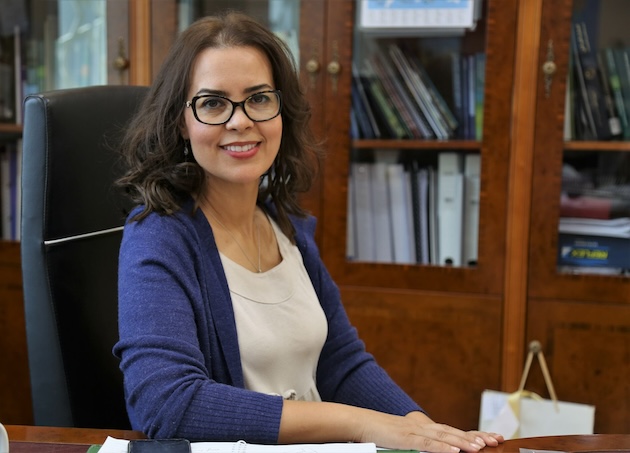
Caroline Awuor tends to tree seedlings on her farm in Siaya County, Western Kenya. She is a beneficiary of the My Farm Trees Project. Credit: Jackson Okata/IPS

Caroline Awuor tends to tree seedlings on her farm in Siaya County, Western Kenya. She is a beneficiary of the My Farm Trees Project. Credit: Jackson Okata/IPS

SIAYA, Kenya , Dec 8 2025 (IPS) – For years, Morris Onyango had been trying to reforest his degraded land on the shores of River Nzoia, in Siaya county, 430 kilometers from Kenya’s Capital, Nairobi. But every time he planted trees on his farm, his efforts bore little fruit, as floodwaters would not only wash away his tree seedlings but also fertile topsoil on his land.


“The land became unproductive and bare. I tried reclaiming the land through reforestation, but the trees’ survival rate was too low,” Onyango said.

Siaya County has a 5.23 percent forest cover and is ranked 44th out of Kenya’s 47 counties. Judy Ogeche, a scientist from the Kenya Forestry Research Institute (KEFRI), says that the compromised forest and tree cover in the county and the lack of any gazetted forests have discouraged the integration of tree and crop farming.

“Communities here do not see tree growing as a lucrative venture. Some myths and beliefs discourage tree growing. For example, some people believe that growing the Terminalia mentalis (often known as the Panga Uzazi) tree attracts death,” says Ogeche.

According to Ogeche, another challenge is gender inequality in land ownership, with men owning most available land and making decisions on what should be planted.

“We have many women interested in restoring tree cover, but their husbands would not allow it,” Ogeche said.

Across Africa, reforestation projects struggle to survive beyond the seedling stage. However, in parts of Kenya, a groundbreaking digital innovation is transforming the landscape by empowering rural farmers to earn a living while restoring degraded lands with native trees.

Tech and Reforestation

In a bid to restore lost biodiversity and enhance tree cover in Kenya, Alliance Bioversity International and CIAT, in partnership with the International Union for Conservation of Nature (IUCN), launched the My Farm Trees project, a blockchain-based platform that offers guidance to subsistence farmers on seed selection, planting, and post-plant care, ensuring that seedlings survive and thrive in harsh conditions.

Implemented in the counties of Siaya, Turkana and Laikipia, MFT emphasizes genetically robust native species that support biodiversity, improve soil health, and provide long-term ecological and economic benefits.

Ogeche observes that the My Farm Trees project has motivated communities in Siaya to grow trees.

“They are given free seedlings and taught how to plant and take care of them, and when the trees grow, they are paid,” she said.

To provide the right seedlings, the project is partnering with the Kenya Forestry Research Institute (KEFRI), the Kenya Forest Services (KFS) and private tree nursery operators in the respective counties.

For farmers like Onyango, the My Farm Trees Project gave them the much-needed solution to their degraded lands and soils

“The project gifted me 175 seedlings of various trees, which I planted along the riverbank. The trees have helped me reclaim my land, prevent erosion and get paid for taking care of my own trees,” Onyango says.

How it Works

In the My Farm Trees project, participating farmers are registered on the MyGeo Farm App, which allows them to monitor seedlings from planting to growing. Through the app, farmers can track and report progress.

Francis Oduor, the National Project Coordinator, says since its rollout, the project has seen over 1,300 farmers registered on the MyGeo Tree App, and over 100,000 seedlings have been planted across the three counties.

“The project is especially interested in using indigenous trees for landscape restoration, which are native to specific areas, and to enhance genetic diversity,” says Oduor.

Oduor explains that My Farm Trees uses monitoring, verification, and incentives to empower local communities to become leaders and stewards of tree-planting projects that provide immediate short-term benefits.

“The project does not just focus on payment to farmers but the long-term benefits of restored landscapes for improved agricultural productivity, water regulation, and climate resilience,” said Oduor.

To ensure the use of native varieties and guarantee the production of quality tree seedlings, the project team collaborates with KEFRI to provide technical assistance to local tree nursery operators.

Lawrence Ogoda, a tree nursery operator, is among the project beneficiaries. He has been trained on seed collection, raising seedlings and record keeping.

“Through the MyGeo Tree and MyGeo Nursery Apps, I can collect data and track progress on seed collection, propagation and development at the nurseries.”

Before joining the My Farm Trees project, Caroline Awuor had not given much attention to growing trees. She received 110 seedlings, 104 of which have successfully survived and are earning her cash incentives.

“Most of them are fruit trees, including mangoes, avocado and jackfruit, while there are also some timber trees. In addition to the incentives from the project, I also earn money by selling the fruit,” she says.

Caroline intends to plant an additional 1,000 tree seedlings on her land, strategically located near the River Nzoia.

According to Joshua Schneck, the Green Climate Fund (GCF) Portfolio Manager for Global Programs at IUCN, My Farm Trees is an innovative project driven towards sustainable transformation.

The Impact

In Kenya, My Farm Tree has supported 3,404 farmers, 56 percent of whom are women. A total of 210,520 trees have been planted, with a survival rate of over 60 percent beyond the first year, with 1,250 hectares of land being restored across Siaya, Turkana, and Laikipia counties.

The program has released KES 26 million (approximately USD 200,000) in digital payments, directly benefiting 1,517 farmers. Additionally, 13 local nurseries have been strengthened in partnership with the Kenya Forestry Research Institute.

Also implemented in Cameroon, the project has seen the restoration of 1,403 hectares of forest land with over 145,000 seedlings being planted and 2,200 farmers registered on the platform. The project has also seen the restoration of 423 community lands and 315 sacred forests, with USD 130,000 in incentives distributed to farmers.

Oduor noted that the My Farm Trees project offers a scalable blueprint for  forest restoration by combining science and Blockchain technology in tree selection, post-planting support, and farmer incentives, which gives it  global relevance.

“MFT is a scalable model that aligns with climate action, poverty reduction, and ecosystem recovery. This approach supports the goals of the Paris Agreement, the United Nations Convention to Combat Desertification, and the UN Decade on Ecosystem Restoration,” Oduor said.
IPS UN Bureau Report

  Source

Graduation Must Be a Springboard, Not a Stumbling Block

Climate Change Finance, Conferences, Development & Aid, Economy & Trade, Environment, Financial Crisis, Global, Headlines, Sustainability, Sustainable Development Goals, TerraViva United Nations, Trade & Investment

Opinion

UNITED NATIONS, Dec 1 2025 (IPS) – As we gather in Doha for the High-Level Meeting on “Forging Ambitious Global Partnerships for Sustainable and Resilient Graduation of Least Developed Countries,” the stakes could not be higher. A record number of fourteen countries-equally divided between Asia and Africa are now on graduation track. Graduation from the Least Developed Country (LDC) category is a landmark national achievement—a recognition of hard-won gains in income, human development, and resilience. Yet, for too many countries, this milestone comes with new vulnerabilities that risk undermining the very gains that enabled graduation.


Since the establishment of the LDC category in 1971, only eight countries have graduated. Today, 44 countries remain in the group, representing 14% of the world’s population, but contributing less than 1.3% to global GDP. The Doha Programme of Action (DPoA) charts an ambitious yet achievable target: enabling at least 15 additional countries to graduate by 2031. But as the DPoA underscores graduation must be sustainable, resilient and irreversible. It must serve as a springboard for transformation— not a moment of exposure to new risks.

USG Rabab Fatima

Graduation with momentum:
Graduation often coincides with a significant shift in the international support landscape. As preferential trade arrangements, concessional financing, and dedicated technical assistance begin to phase down, countries may face heightened fiscal pressures, reduced competitiveness, and increased exposure to external shocks. Without well-sequenced and forward-looking transition planning, these shifts can slow progress toward the Sustainable Development Goals (SDGs) and strain national systems.

Yet within these challenges also lie opportunities. With the right policies, partnerships, and incentives, graduation can catalyse deeper structural transformation, expand access to new financing windows, strengthen institutions, and unlock pathways to diversified, resilient, and inclusive growth. The task before us is to manage risks while harnessing these opportunities—ensuring that no country graduates without momentum.

Smooth Transition Strategies: A National Imperative
The DPoA calls for every graduating country to develop inclusive, nationally owned Smooth Transition Strategies (STS) well-ahead of the graduation date. These strategies must be fully integrated into national development plans and SDG frameworks, ensuring coherence and resilience. They should prioritize diversification, human capital investment, and adaptive governance, while placing women, youth, and local actors at the center of design and oversight. STS must be living documents—flexible, participatory, and backed by robust monitoring and financing.

Reinvigorated Global Partnerships: The essential Pillar
No country can navigate this transition alone. The Doha Programme of Action calls for an incentive-based international support structure that extends beyond graduation. For LDCs with high utilization of trade preferences – the withdrawal of preferential market access must be carefully sequenced to avoid abrupt disruptions. For climate-vulnerable SIDS and LLDCs, enhanced access to climate finance, debt solutions, and resilience support are key elements in their efforts to tackle post-graduation challenges.

Deepened South-South and triangular cooperation, innovative financing instruments, blended finance, and strengthened private-sector engagement will be essential to building productive capacities and unlocking opportunities in digital transformation, green and blue economies, and regional market integration.

iGRAD: A Transformative Tool
The operationalization of the Sustainable Graduation Support Facility—iGRAD—is a concrete step forward. By providing tailored advisory services, capacity-building, and peer learning, iGRAD can serve as a critical tool to help countries anticipate risks, manage transitions, and sustain development momentum. Its success, however, hinges on strong political support and adequate, predictable resourcing from development partners.

Graduation as a Catalyst for Transformation
Graduation should not be the end of the story—it should be the beginning of a new chapter of resilience and opportunity. With integrated national strategies and reinvigorated global partnerships, we can turn graduation into a catalyst for inclusive, sustainable development. Let us seize this moment in Doha to reaffirm our collective commitment: no country should graduate into vulnerability. Together, we can ensure that graduation delivers on its promise—for communities, for economies, and for future generations.

Rabab Fatima is UN Under Secretary General and High Representative for the Least Developed Countries, Landlocked Developing Countries and Small Island Developing States

IPS UN Bureau


Belém’s Hunger, Poverty Declaration Places World’s Most Vulnerable Populations at Centre of Global Climate Policy

Active Citizens, Africa, Aid, Artificial Intelligence, Asia-Pacific, Civil Society, Climate Action, Climate Change, COP30, Development & Aid, Editors’ Choice, Featured, Food and Agriculture, Food Systems, Global, Headlines, Humanitarian Emergencies, Latin America & the Caribbean, TerraViva United Nations, Trade & Investment

Food Systems


If we do not have our land and healthy territory, we do not have healthy food, and without food we do not survive. Food must become a centerpiece in the global climate discourse, and it is not just about any food, but healthy food that aligns with our ancestry and local traditions and spirituality. —Juliana Kerexu Mirim Mariano, activist

Juliana Kerexu Mirim Mariano, coordinator for the Guarani Yvyrupa Commission that advocates for the rights of Guarani peoples in southern and southeastern Brazil. Credit: Joyce Chimbi/IPS

Juliana Kerexu Mirim Mariano, coordinator for the Guarani Yvyrupa Commission that advocates for the rights of Guarani peoples in southern and southeastern Brazil. Credit: Joyce Chimbi/IPS

BELÉM, Brazil, Nov 14 2025 (IPS) – A young woman at COP30 speaks about retracing her father’s footsteps. At only 16, her father and her grandfather were among the first families displaced by an unfolding climatic crisis of erratic weather and worsening climate conditions that goes on to date from their ancestral village in Sundarbans. Nearly 60 years later, she is on a mission to reclaim her ancestral lands.


The Sundarbans is the world’s largest mangrove forest, located on the delta of the Ganges, Brahmaputra, and Meghna rivers in the Bay of Bengal, straddling the border of India and Bangladesh.

This complex ecosystem is a vital habitat for the Royal Bengal tiger and other wildlife, while also providing critical ecosystem services like storm protection and livelihoods for millions of people. It is a UNESCO World Heritage Site and faces threats from climate change, rising sea levels, and human activities.

She said farming activities in the Sundarbans have been severely disrupted and degraded by environmental changes, primarily increased soil and water salinity, more frequent and intense cyclones, and sea-level rise. These factors have led to a decline in crop productivity, changes in traditional farming patterns, and a shift in livelihoods towards aquaculture and migration.

But the Sundarbans do not stand alone. From across the global South, delegates are speaking about their shared tragedies of weather patterns out of joint with their farming systems.

Juliana Kerexu Mirim Mariano, the coordinator of the Guarani Yvyrupa Commission, told IPS her organization advocates “for the rights of Guarani peoples in southern and southeastern Brazil, particularly the recovery of their ancestral lands in the Atlantic Forest.

The Belém Declaration on Hunger, Poverty, and Human-Centered Climate Action, launched during the COP30 Leaders Summit, places the world’s most vulnerable populations at the center of global climate policy. Credit: Joyce Chimbi/IPS

The Belém Declaration on Hunger, Poverty, and Human-Centered Climate Action, launched during the COP30 Leaders Summit, places the world’s most vulnerable populations at the center of global climate policy. Credit: Joyce Chimbi/IPS

“Its mission is to organize a political struggle for land demarcation, which is vital for preserving cultural traditions and way of life. The commission works to secure land rights, and its efforts align with the preservation of the Atlantic Forest biome, as the Guarani have lived in the region for centuries and their culture is deeply connected to its biodiversity.”

“Within our territories, we do annual plantations for us to continue producing our sacred food, preserving our traditional ceremonies, which are linked to us and to spirituality. Our spirituality is directly connected to our food, to our plantations, to our land,” she explained.

“But all these are now under threat. We have seen this abrupt change and emergencies caused by climatic changes. So, for example, in our village, we have not been able to harvest food for more than three years.

“We have only managed to keep our sacred seeds because either it rains too much or it rains too little—at the time of the annual plantations, we have only managed to maintain the part of the traditional ceremonies that is spiritual.”

Njagga Touray, Party representative from the Gambia in West Africa, told IPS that “the food situation in the country, just like many others, is not very promising. Climate change leads to land degradation due to increasingly erratic rainfall, which decreases our production; we need to feed a growing population and plan for the next generation.”

The COP30 agenda is alive in this dire situation. The Belém Declaration on Hunger, Poverty, and Human-Centered Climate Action, announced and endorsed by 44 countries last week, launched a new Climate-Resilient Social Protection and Smallholder Agriculture Finance Partnership.

Delegates say this progress has instilled a renewed sense of optimism—proving that elevating adaptation and unleashing technology within the world’s farming systems helps the global community to redefine resilience, transforming vulnerability into strength and ambition into action.

Recognizing the fundamental role of combating hunger and poverty for climate justice, a new Climate-Resilient Social Protection and Smallholder Agriculture Finance Partnership has already been launched under the COP30 Action Agenda.

This partnership supports the Plan to Accelerate Solutions (PAS) by setting clear goals to encourage action and monitor progress, which includes helping countries like Benin, Ethiopia, Kenya, Zambia, and the Dominican Republic create plans for social protection, support small farms, and improve access to water.

The PAS brings countries together with international partners and subnational networks to align national ambition with local action, integrate local priorities into NDCs, and institutionalize multilevel governance as a foundation for achieving the Paris Agreement’s goals.

By 2028, the plan is expected to have established a joint coordination group of climate finance donors to align portfolios in support of efforts to combat hunger and poverty. Importantly, the launch builds on the November 7, 2025 adoption of the Belém Declaration on Hunger, Poverty, and Human-Centered Climate Action by 44 countries, a landmark commitment developed with the Global Alliance Against Hunger and Poverty during the COP30 Leaders Summit held just days before the start of the UN climate conference.

Furthermore, two innovative digital tools have also been launched to support climate-smart agriculture at scale. Brazil and the UAE, in partnership with the Gates Foundation, Google, and leading global agricultural institutions, announced the world’s first open-source AI Large Language Model (LLM) for agriculture, a breakthrough toward a more resilient and equitable global food system.

Secondly, the AIM for Scale, a farmer-centered AI forecasting tool, could empower over 100 million farmers by 2028 by providing real-time insights that strengthen climate-smart decision-making, risk preparedness, and inclusive innovation across agricultural systems worldwide.

The Agricultural Innovation Showcase high-level event will serve as a media and political platform for governments and philanthropic leaders to announce a multi-billion-dollar package of support to fund agricultural innovations that help farmers in lower-income regions adapt to the impacts of climate change and build resilience. Nearly USD 2.8bn has been announced for farmer adaptation and resilience to strengthen global food systems.

International donors have also announced over USD 2.8bn for farmer adaptation and resilience to strengthen global food systems. In support of the COP30 Brazil Presidency’s call to make COP30 the COP of implementation, the commitments are aimed at increasing support for smallholder farmers in poorer regions who are bearing the brunt of worsening weather extremes. The donor funds will be invested in technologies and tools to help farmers adapt, build resilience, and strengthen local food systems that feed and employ billions of people.

“Agricultural innovation is the engine of climate resilience,” Martin van Nieuwkoop, Director of Agricultural Development, Gates Foundation.

Back to those on the frontlines of climate change, where it intersects with food systems, ancestry, and traditions, like those of Mirim Mariano—it is a race against time.

“If we do not have our land and healthy territory, we do not have healthy food, and without food we do not survive. Food must become a centerpiece in the global climate discourse, and it is not just about any food, but healthy food that aligns with our ancestry and local traditions and spirituality.”

This feature is published with the support of Open Society Foundations.

IPS UN Bureau Report

  Source

The AI Revolution – A Way Forward

Artificial Intelligence, Civil Society, Development & Aid, Global, Headlines, Landlocked Developing Countries, Least Developed Countries, Small Island Developing States, Sustainable Development Goals, TerraViva United Nations, Trade & Investment

Opinion

GEBZE, Türkiye, Nov 14 2025 (IPS) – Artificial intelligence (AI) is rapidly changing our world. It has helped a few companies in developed countries set record-breaking profits. Last month, Nvidia, a leading US AI company, hit a market value of USD 5 trillion.


Nvidia, together with the other six technology companies known as the Magnificent Seven, reached a market capitalisation of USD22 trillion. This value easily eclipses the combined GDP of the world’s 44 Least Developed Countries (LDCs), Small Island Developing States and Landlocked Developing Countries.

These businesses continue to make massive investments in this transformational technology. Not only are investments being made in AI for the future, but benefits are also already being reaped as it accelerates global commerce and rapidly transforms markets.

According to the World Economic Forum, AI is streamlining supply chains, optimising production, and enabling data-driven trade decisions, giving companies a big competitive edge in global markets.

Thus far, the beneficiaries have been those living in the developed world, and a few developing countries with high technological capacities, like India.

By and large, developing countries have lagged far behind this technological revolution. The world’s 44 LDCs and the Small Island Developing States are those that have been almost completely left out.

According to UNCTAD, LDCs risk being excluded from the economic benefits or the AI revolution. Many LDCs and Small Island Developing States struggle with limited access to digital tools, relying on traditional methods for trade documentation, market analysis, and logistics. This is happening as others race ahead.

This widening gap threatens to marginalize these countries in international trade and underscores the urgency of ensuring they can participate fully in the AI-driven global economy.

AI holds transformative potential for developing countries across sectors critical to economic growth and trade. The World Bank has noted that in agriculture, AI-driven tools can improve crop yields, forecast market demand, and enhance supply chain efficiency. It can also strengthen food security and export earnings. In trade and logistics, AI can optimize operations, reduce transaction costs, and help local producers access new markets.

Beyond commercial applications, AI can bolster disaster preparedness, enabling governments and businesses to allocate resources efficiently and minimize losses. The use of AI can be a game changer in responding to massive natural disasters such as the one caused by Hurricane Melissa in Jamaica a few days ago.

Despite these opportunities, the poorest and most vulnerable countries face significant hurdles in accessing and benefiting from AI. The International Telecommunications Union has noted that many countries lack reliable electricity, broadband connectivity, and computing resources, impeding the deployment of AI technologies. This is compounded by human capacity constraints and limited fiscal space to make the requisite investments.

Given this, what is the best way forward for the world’s poorest and most vulnerable countries? Firstly, policy and governance frameworks for leveraging AI for development transformation are urgently, and we can learn from others.

For example, Rwanda, a leader in the field of using technology to drive transformation has developed a National Artificial Intelligence Policy. Another example is Trinidad and Tobago, which recently established a Ministry of Public Administration and Artificial Intelligence.

Secondly, capacity building, especially for policy leaders, is key. This must be augmented by making the requisite investments in universities and centers of excellence. Given the importance of low-cost and high-impact solutions, building partnerships with institutions in the global south is absolutely vital.

Finally, financing remains key. However, given the downward trends in overseas development assistance, accessing finance, especially grant and concessional resources from other sources will be important. Consequently, international financial institutions, especially the regional development banks, have a critical role to play.

Since the countries themselves are shareholders, every effort should be made to establish special purpose windows of grants and concessional financing to help accelerate adoption of relevant, low-cost, relevant and high-impact AI technological solutions.

In an adverse financing environment, achieving the above will be difficult. This is where Tech Diplomacy comes in and must be a central element of a country’s approach to foreign policy. This will be the subject of another piece.

In summary, AI is shaping and changing the world now. For the poorest and most vulnerable countries, all is not lost. With strategic investments, forward-looking and inclusive policies, and international cooperation via Tech Diplomacy, AI can become a powerful tool for their sustainable growth and development.

Deodat Maharaj, a national of Trinidad and Tobago, is presently the Managing Director of the United Nations Technology Bank for the Least Developed Countries. He can be contacted at: deodat.maharaj@un.org

IPS UN Bureau

  Source

Turning Indigenous Territories From ‘Sacrifice’ Zones to Thriving Forest Ecosystems

Biodiversity, Climate Change Finance, Climate Change Justice, Combating Desertification and Drought, Conferences, COP30, Economy & Trade, Editors’ Choice, Environment, Featured, Global, Headlines, Human Rights, Latin America & the Caribbean, Sustainable Development Goals, TerraViva United Nations, Trade & Investment


A new report, ‘Indigenous Territories and Local Communities on the Frontlines,’ calls for secure land rights, free and informed consent, direct financing to communities, protection of life, and recognition of traditional knowledge.

Brazil's Minister of Indigenous Peoples Sonia Guajajara attends a meeting during the UN Climate Change Conference COP 30. Credit: Hermes Caruzo/COP30

Brazil’s Minister of Indigenous Peoples, Sonia Guajajara, attends a meeting during the UN Climate Change Conference COP 30. Credit: Hermes Caruzo/COP30

SRINAGAR, India & BELÉM, Brazil, Nov 8 2025 (IPS) – A report by the Global Alliance of Territorial Communities (GATC) and Earth Insight paints a stark picture of how extractive industries, deforestation, and climate change are converging to endanger the world’s last intact tropical forests and the Indigenous Peoples who protect them.


The report, ‘Indigenous Territories and Local Communities on the Frontlines,’ combines geospatial analysis and community data to show that nearly one billion hectares of forests are under Indigenous stewardship, yet face growing industrial threats that could upend global climate and biodiversity goals.

Despite representing less than five percent of the world’s population, Indigenous Peoples and local communities (IPs and LCs) safeguard more than half of all remaining intact forests and 43 percent of global biodiversity hotspots.

These territories store vast amounts of carbon, regulate ecosystems, and preserve cultures and languages that have sustained humanity’s relationship with nature for millennia. But the report warns that governments and corporations are undermining this stewardship through unrestrained extraction of resources in the name of economic growth or even “green transition.”

One of the main report authors, Florencia Librizzi, who is also a Deputy Director at Earth Insight, told IPS that the perspectives and stories from each region are grounded in the lived realities of Indigenous Peoples and local communities and come directly from the organizations from each of the regions that the report focuses on in Mesoamerica, Amazonia, the Congo Basin, and Indonesia.

Across four critical regions—the Amazon, Congo Basin, Indonesia, and Mesoamerica—extractive industries overlap with millions of hectares of ancestral land. In the Amazon, oil and gas blocks cover 31 million hectares of Indigenous territories, while mining concessions sprawl across another 9.8 million.

In the Congo Basin, 38 percent of community forests are under oil and gas threat, endangering peatlands that store immense quantities of carbon. Indonesia’s Indigenous territories face 18 percent overlap with timber concessions, while in Mesoamerica, 19 million hectares—17 percent of Indigenous land—are claimed for mining, alongside rampant narcotrafficking and colonization.

These intrusions have turned Indigenous territories into sacrifice zones. From nickel extraction in Indonesia to oil drilling in Ecuador and illegal logging in the Democratic Republic of Congo, corporate incursions threaten lives, livelihoods, and ecosystems. Between 2012 and 2024, 1,692 environmental defenders were killed or disappeared across GATC countries, with 208 deaths linked to extractive industries and 131 to logging. The report calls this violence “the paradox of protection”—the act of defending nature now puts those defenders at deadly risk.

Yet the report also documents extraordinary resilience. In Guatemala’s Maya Biosphere Reserve, Indigenous forest communities have achieved near-zero deforestation—only 1.5 percent forest loss between 2014 and 2024, compared to 11 percent in adjacent areas. In Colombia, Indigenous Territorial Entities maintain over 99 percent of their forests intact.

The O’Hongana Manyawa of Indonesia continue to defend their lands against nickel mining, while the Guna people of Panama manage autonomous governance systems that integrate culture, tourism, and ecology.

In the Congo, the 2022 “Pygmy Law” has begun recognizing community rights to forest governance, a historic step toward justice.

The report’s findings were released ahead of the 30th UN Climate Conference (COP30), emphasizing the urgency of aligning international climate and biodiversity frameworks with Indigenous rights.

The 2025 Brazzaville Declaration, adopted at the First Global Congress of Indigenous Peoples and Local Communities from the Forest Basins, provides a roadmap for such alignment.

Signed by leaders from 24 countries representing 35 million people, it calls for five key commitments: secure land rights, free and informed consent, direct financing to communities, protection of life, and recognition of traditional knowledge.

These “Five Demands” are the cornerstone of what the GATC calls a shift “from extraction to regeneration.”

They demand an end to the violence and criminalization of Indigenous leaders and insist that global climate finance reach local hands.

The report notes that, despite the 2021 COP26 pledge of 1.7 billion dollars for forest protection, only 7.6 percent of that money reached Indigenous communities directly.

“Without financing that strengthens territorial governance, all global commitments will remain symbolic,” said the GATC in a joint statement.

Reacting to the announcement of the The Tropical Forest Forever Facility (TFFF) announced on the first day of the COP Leaders’ Summit and touted as a “new and innovative financing mechanism” that would see forest countries paid every single year in perpetuity for keeping forests standing, Juan Carlos Jintiach, Executive Secretary of the Global Alliance of Territorial Communities (GATC) said, “Even if the TFFF does not reach all its fundraising goals, the message it conveys is already powerful: climate and forest finance cannot happen without us Indigenous Peoples and local leadership at its core.

“This COP offers a crucial opportunity to amplify that message, especially as it takes place in the heart of the Amazon. We hope the focus remains on the communities who live there, those of us who have protected the forests for generations. What we need most from this COP is political will to guarantee our rights, to be recognized as partners rather than beneficiaries, to ensure transparency and justice in climate finance, and to channel resources directly to those defending the land, despite growing risks and violence.”

Deforestation in Acre State, Brazil. Credit: Victor Moriyama / Climate Visuals

Deforestation in Acre State, Brazil. Credit: Victor Moriyama / Climate Visuals

Jintiach, who is also the report’s author, told IPS  the Global Alliance has proposed establishing clear mechanisms to ensure that climate finance reaches Indigenous Peoples’ and local communities’ initiatives directly, not through layers of external actors.

“That’s why we have established our Shandia Platform, a global Indigenous-led mechanism designed to channel direct, predictable, and effective climate finance to our territories. Through the Shandia Funds Network, we ensure that funding is managed according to our priorities, governance systems, and traditional knowledge. The platform also includes a transparent system to track and monitor funding flows, with a specific indicator for direct finance to Indigenous Peoples and local communities,” he said.

The report also warns that global conservation goals such as the “30×30” biodiversity target—protecting 30 percent of Earth’s land and sea by 2030—cannot succeed without Indigenous participation. Policies under the Kunming-Montreal Global Biodiversity Framework and the Paris Agreement must, it says, embed Indigenous governance and knowledge at their core. Otherwise, climate strategies risk reinforcing historical injustices by excluding those who have sustained these ecosystems for centuries.

Jintiach said that based on his experience  at GATC, Indigenous Peoples’ and local communities’-led conservation models are not only vital but also deeply effective.

“In our territories, it is our peoples and communities who are conserving both nature and culture, protecting the forests, waters, and biodiversity that sustain all of us,” he said.

He added, “Multiple studies confirm what we already know from experience: Indigenous and local community lands have lower rates of deforestation and higher biodiversity than those managed under state or private models. Our success is rooted in ancestral knowledge, collective governance, and a deep spiritual connection to the land, principles that ensure true, lasting conservation.”

According to Jintiach, the GATC 5 demands and the Brazzaville Declaration are critical global reference points and we are encouraged by the level of interest and engagement displayed by political leaders in the lead-up to COP 30.

Map highlighting extractive threats faced by Indigenous Peoples and Local Communities across the Amazon basin. Credit: GATC

Map highlighting extractive threats faced by Indigenous Peoples and Local Communities across the Amazon basin. Credit: GATC

“We are hopeful that these principles will be uplifted and championed at COP 30, the UN Permanent Forum on Indigenous Issues, CBD COP 17 and on the long road ahead,” he said.

When asked about the rising violence against environmental defenders, Jintiach said that the Brazzaville Declaration calls for a global convention to protect Environmental Human Rights Defenders, including Indigenous Peoples and local community leaders.

According to him, the governments must urgently tackle the corruption and impunity fueling threats and violence while supporting collective protection and preventing rollback of rights.

“This also means upholding and strengthening the Escazú Agreement and UNDRIP, and ensuring long-term protection through Indigenous Peoples and local communities-led governance, secure land tenure, and accountability for human rights violations.”

Earth Insight’s Executive Director Tyson Miller described the collaboration as a call to action rather than another policy document. “Without urgent recognition of territorial rights, respect for consent, and protection of ecosystems, global climate and biodiversity goals cannot be achieved,” he said. “This report is both a warning and an invitation—to act with courage and stand in solidarity.”

The case studies highlight how Indigenous governance models already offer proven solutions to the climate crisis. In the Brazilian Amazon, Indigenous organizations have proposed a self-determined Nationally Determined Contribution (NDC) to reduce emissions through territorial protection. Their slogan, “Demarcation is Mitigation,” underlines how securing Indigenous land rights directly supports the Paris Agreement’s goals. Similarly, in Central Africa, communities have pioneered decolonized conservation approaches that integrate Indigenous leadership into national park management, reversing exclusionary models imposed since colonial times.

In Mesoamerica, the Muskitia region—known as “Little Amazon”—illustrates both crisis and hope. It faces deforestation from drug trafficking and illegal logging, yet community-based reforestation and forest monitoring are restoring ecosystems and livelihoods. Women and youth play leading roles in governance, showing how inclusive leadership strengthens resilience.

The report’s conclusion is unequivocal: where Indigenous rights are recognized, ecosystems thrive; where they are ignored, destruction follows. It argues that the fight for land is inseparable from the fight against climate change. Indigenous territories are not just sources of raw materials; they are “living systems of governance, culture, and biodiversity” essential to humanity’s survival.

The Brazzaville Declaration urges governments to ratify international human rights conventions, end deforestation by 2030, and integrate Indigenous territories into national biodiversity and climate plans. It also calls for a global convention to protect environmental human rights defenders, whose safety is central to planetary stability.

For GATC’s leaders, the message is deeply personal. “Our traditional knowledge is the language of Mother Earth,” said Joseph Itongwa, GATC Co-Chair from the Congo Basin. “We cannot protect the planet if our territories, our identity, and our livelihoods remain under threat.”

This feature is published with the support of Open Society Foundations.

IPS UN Bureau Report

IPS UN Bureau, IPS UN Bureau Report,

  Source

Inside Africa’s Big Bet on Youth to Feed the Continent and Who’s Actually Getting Funded

Africa, Conferences, Development & Aid, Economy & Trade, Editors’ Choice, Environment, Featured, Food and Agriculture, Food Systems, Gender, Headlines, Sustainable Development Goals, TerraViva United Nations, Trade & Investment, Women & Economy

Food Systems

Winnie Wambui, co-founder of Harcourt Agri-Eco Farm in Kenya, speaks to IPS outside the Dealroom at the Africa Food Systems Forum 2025, held at the Centre International de Conférences Abdou Diouf (CICAD) in Dakar, Senegal, September 4, 2025. Credit: Chemtai Kirui/IPS

Winnie Wambui, co-founder of Harcourt Agri-Eco Farm in Kenya, speaks to IPS outside the Dealroom at the Africa Food Systems Forum 2025, held at the Centre International de Conférences Abdou Diouf (CICAD) in Dakar, Senegal, September 4, 2025. Credit: Chemtai Kirui/IPS

DAKAR, Sep 15 2025 (IPS) – Winnie Wambui leans forward on the panel stage, microphone in hand, scanning the room until she spots a raised hand.


Everyone in the room wears headphones, each voice isolated so that discussions don’t clash with sessions in adjacent halls. A question cuts through: how did a student science project become a commercial business?

At 24, Wambui, a Kenyan agripreneur, runs Harcourt Agri-Eco Farm, which recycles organic waste into animal feed using black soldier flies.

“Back then, I didn’t know it would become a farm or a business,” she said to a room of agripreneurs, researchers, and investors, describing her first experiments in 2022 as an energy engineering student at Jomo Kenyatta University of Agriculture and Technology (JKUAT).

Today, her eight-person team processes around 30 tonnes of waste each month and monitors the carbon emissions avoided.

The enterprise now generates at least USD 1,000 in monthly revenue, a modest but steady profit by Kenyan standards.

Inside the calm Knowledge Hub, on a panel organized by the International Centre of Insect Physiology and Ecology (icipe), Wambui tells her story to a dozen listeners in an intimate, almost subdued setting. But just outside, at the leafy Centre International de Conference’s Abdou Diouf (CICAD) in Dakar, Senegal, the atmosphere is charged.

Presidents, cabinet ministers, development banks, and agribusiness executives pace the halls at the annual Africa Food Systems Forum (AFSF) 2025, the continent’s flagship platform for agricultural policy and investment.

This year, the forum positioned youth at the center of Africa’s food security agenda.

Wambui is part of a new generation of innovative agripreneurs that governments and financiers promise to support.

For the first time, youth agripreneurs joined heads of state on the Forum’s opening stage, a symbolic gesture of recognition in a region where nearly 400 million people are under 35.

“Our median age is just 19. And by 2050, one in three young people in the world will be African,” said Claver Gatete, Executive Secretary of the UN Economic Commission for Africa (UNECA).

He said that if given land, finance, technology and markets, the youths can feed not only Africa but also the world.

However, turning such vision into reality is where the continent struggles.

The African Development Bank (AfDB) often says that Africa holds roughly 60 percent of the world’s uncultivated arable land, yet poor infrastructure, limited financing, and climate shocks keep much of it idle.

With the continent collectively importing approximately USD50 billion worth of food annually, according to the African Export–Import Bank (Afreximbank), the stakes are high.

At the national level, countries like Kenya continue to face hunger crises at emergency levels.

At the start of the year, the World Food Programme estimated that around two million people were experiencing acute hunger—a recurring crisis in a country with relatively better infrastructure and higher investment flows than many of its East African neighbors.

Experts say that despite localized crises, structural issues in African agriculture worsen food insecurity across the continent.

“We have relied on grants and aid to keep agriculture afloat, and this has made the agriculture sector stuck in a risk perception trap,” said Adesuwa Ifedi, Vice President of Africa Programs at Heifer International.

Ifedi said that commercial banks and investors avoid the sector, leaving grants to fill the gap. But grant dependence can undermine ventures in the eyes of private financiers.

“Grants should leverage commercial capital so the ecosystem can thrive,” Ifedi said.

This year’s Forum coincided with the recent African Union’s rollout of its Kampala Comprehensive Africa Agriculture Development Programme (CAADP) Strategy & Action Plan (2026–2035), or CAADP 3.0.

The new 10-year plan aims to mobilize USD 100 billion in investment, raise farm output by 45 percent, cut post-harvest losses in half, triple intra-African agrifood trade by 2035, and place youth inclusion at the core of Africa’s food future under the AU’s Agenda 2063.

In Dakar, over 30 agriculture ministers gathered under the chairmanship of former Ethiopian Prime Minister Hailemariam Desalegn Boshem, pledging to move beyond policy drafting toward delivering tangible results for agribusiness investment.

Their top priority, they said, was to shrink Africa’s food import bill by strengthening regional value chains.

Dr. Janet Edeme, head of the Rural Economy Division at the African Union Commission, told IPS that the Forum provides mechanisms to operationalize CAADP 3.0, aiming to empower at least 30 percent of youth in the agri-food sector while closing a USD 65–70 billion annual financing gap for agricultural small and medium-sized enterprises (agri-SMEs).

She said AFSF offers a rare opportunity for youthful agripreneurs to showcase bankable projects, access mentorship, and meet investors who would otherwise be out of reach.

“There are dedicated spaces—deal rooms, youth innovation competitions, investment roundtables—where these innovators can connect with governments, development finance institutions, and private investors,” said Edeme.

Organizers pointed to new spaces for youth to meet investors, but agripreneurs like Wambui said those opportunities felt distant.

She had never heard of the AU’s new flagship plan.

“I’m only hearing about that from you. If it’s meant to guide Africa’s food future, why aren’t there clear materials or programs I can see and use?” Wambui said. “Otherwise, we leave without knowing what strategies exist to support our work.”

By day two of the six-day forum, she had found her way into the deal room, the flagship space to connect entrepreneurs with investors, but instead of streamlined matchmaking, she found confusion.

“We are looking for the investors, and they’re looking for us—yet we don’t meet. Deals still depend on connections. That’s why I came to Dakar.”

Wambui, who co-founded Harcourt Agri-Eco Farm with two other partners, said the business has grown enough to cover wages, taxes, and debt repayments. Banks now extend her loans.

But that access to financing remains an exception in a system stacked against most, said Dr. Eklou Attiogbevi-Somado, the African Development Bank’s Regional Manager for Agriculture and Agro-Industry in West Africa.

He said that AfDB data shows commercial banks in Africa channel just 3–4 percent of their lending into agriculture.

Dr. David Amudavi, CEO of Biovision Africa Trust, said this capital drought is a huge concern in a sector that drives most livelihoods on the continent.

Amudavi, whose non-profit organization promotes ecological agriculture, said that the squeeze leaves farmers, and especially young agripreneurs, struggling to access credit for starting or scaling their agribusinesses, even though nearly 60 percent of Africa’s unemployed are under 25.

“Without finance, many youth-led ventures stay stuck at micro-scale or collapse,” Amudavi said.

Not far from the Youth Dome, at the deal room, Tanzanian agripreneur Nelson Joseph Kisanga, the co-founder of Get Aroma Spices, is also navigating the same maze.

Seven years ago, he left a banking career to try poultry farming, losing almost everything in his first three years.

Kisanga regrouped, merged his venture with that of his wife, Deborah, also a young agripreneur, and built Get Aroma Spices, now working with more than 50,000 farmers across southern Tanzania.

“Agriculture back home is seen as not for young people,” he said. “Even now, scaling means loans at high interest rates. There’s no other way.”

The family-run company exports turmeric, ginger, cardamom, and avocado oil while operating a youth- and women-led agro-processing hub through a public-private partnership.

His presence at the AFSF forum has already borne fruit.

“My intention coming here was to break into the West African market, and I’m happy to say I have clinched a supply deal in Ghana. All that’s left is for the lawyers to finalize the contract.” Kisanga said, before moving to the Youth Dome, a separate pavilion for young participants.

Inside, some groups chatted, others played basketball and table tennis, while others listened as young agri-food innovators pitched their ideas to a panel of investors.

Despite the fanfare, the forum ended without revealing how much capital reached youth-led ventures.

The most visible funding for youth at the summit came via the GoGettaz Agripreneur Prize, a pan-African initiative under the Generation Africa movement. The prize awarded USD 50,000 each to Egypt’s Naglaa Mohammad, who turns agricultural waste into natural products, and Uganda’s Samuel Muyita, who uses nanotechnology to reduce post-harvest fruit and vegetable losses.

An additional USD 60,000 impact award brought total prizes to roughly USD 160,000.

Other announcements included a USD 6.7 million trade programme from the United Kingdom (UK), the Alliance for a Green Revolution in Africa (AGRA), and the African Union (AU).

Senegal also launched a USD 22.5 million pilot for Community Agricultural Cooperatives, with financing linked to the African Food Systems Resilience Fund.

Yet there was no breakdown showing how much, if any, flowed to youth-led ventures.

The opacity mirrors past patterns.

Public summaries from the 2023 deal room reported only USD 3.5 million in closed investments, with no traceable flows to youth-led enterprises.

With AFSF positioned as Africa’s premier delivery platform, observers measured the announcements against CAADP 3.0’s USD 100 billion mobilization target, saying the gap is stark.

“We have seen this pattern before: big pledges at the summit, but little clarity or follow-up on how much actually reaches youth and smallholder farmers—the backbone of African food production,” said Famara Diédhiou, a Senegal-based food systems program manager with a regional civil society network.

“Without such accountability and inclusion of all stakeholders, these forums risk becoming mere showcases rather than platforms that deliver,” he said.

For now, even with the youth-first theme, AFSF still leaves young founders stuck in the same cycle of chasing visibility, hustling for contacts, and stitching together their own contracts.

As Wambui found, Kisanga, who has attended three previous Forums, said that in AFSF access is everything: you need to know in advance who to meet and be in the right room at the right moment.

“All visibility is currency,” said Kisanga. “That’s how you survive.”

IPS UN Bureau Report

IPS UN Bureau, IPS UN Bureau Report, Senegal,