On this day: Several key events held on July 6, continue to impact our lives and affect the present geopolitical, social and economic scenario. The day witnessed Dadabhai Naoroji becoming the first Indian to become a member of the UK Parliament in 1892. A century later, the day marked the reopening of Nathula Pass, a strategic route separating India and China in 2006. The trading post was closed since the India-China war of 1962. Take a look at the key events held on July 6 in the past.
Dadabhai was first UK Parliamentarian
Dadabhai Naoroji was the first Indian to be elected to Parliament in Britain. Naoroji travelled to Britain in 1885 as a business partner if Cama and Cimpany. Later he began his career in academics in the UK and also founded journals like Rast Goftar in Bombay. During his stay in the UK, he became a staunch advocate of Indian rights regarding the ICS and trade. Naoroji was also a famous economist and the man behind ‘drain theory’.
He was also one of the founding members of the Indian National Congress in 1885 in Bombay. Dadabhai Naoroji contested UK elections from the seat of Central Finsbury, campaigning on Gladstone’s platform of Liberalism, and was successfully elected with a majority of five in 1892.
Reopening of Nathula Pass
Nathu La Pass connects Sikkim with China’s Tibet Autonomous Region. The route serves as a key link between India and Sikkim. The route was closed after Indo-China war, however, it reopened in 2006 for trade and other use. Nathu La is situated at an elevation of 4,310 meters (14,140 feet) above sea level. It is located on the Indo-China border, approximately 54 km east of Gangtok, the capital of Sikkim. The pass forms part of the ancient Silk Road, linking India and China. It has been a strategic trade route for centuries.
Malawi independence in 1964
Malawi, a Southeast African country, gained independence from the British on July 6, 1964. The nation was part of a British-controlled federation called the Federation of Rhodesia and Nyasaland. After the federation was dissolved, Naysaland gained independence and its name was changed to Malawi.
First African American woman to win Wimbledon
The day also marks a historic moment in the Wimbledon tennis tournament. On July 6, Althea Gibson claimed the women’s singles tennis title at Wimbledon and became the first African American to win a championship at London’s All England Lawn Tennis and Croquet Club
1189: Richard I is crowned King of England upon the death of King Henry II.
1249: Death of Alexander II, King of Scots, aged 50.
1483: Richard III is crowned King of England after deposing Edward V.
1484: Portuguese sea captain Diogo Cão finds the mouth of the Congo River.
1535: Sir Thomas More is beheaded for treason.
1553: Edward VI dies aged 15.
1560: England and Scotland sign the Treaty of Edinburgh.
1590: Admiral Francis Drake takes Portuguese Forts at Taag.
1673: French troops conquer Maastricht as part of the Franco-Dutch War.
1685: James II beats the Duke of Monmouth at the Battle of Sedgemoor.
1699: The pirate Captain William Kidd is captured in Boston, Mass.
1785: The US Congress unanimously resolves the name of US currency to the “dollar” and adopts decimal coinage.
1885: Louis Pasteur successfully administers an anti-rabies vaccine to 9-year-old Joseph Meister, saving his life.
1886: Horlick’s of Wisconsin offers the first malted milk to the public.
1887: Lottie Dod becomes youngest ever Wimbledon champion (15 years, 285 days) beating Blanche Bingley 6-2, 6-0.
1898: The US Senate agrees to annex Hawaii.
1907: Birth of Mexican artist Frida Kahlo.
1908: Robert Peary’s arctic expedition sails from New York for the north pole.
1912: The Olympic Games officially open Stockholm, Sweden even though events have been taking place since May 5.
1917: T E Lawrence captures the port of Aqaba from the Turks.
1919: The British R-34 lands in New York, becoming the first airship to cross the Atlantic.
1924: The first photo is sent experimentally across Atlantic from the US to England by radio.
1928: “Lights of New York”, the first all talking movie is shown in New York.
1931: Billy Burke wins the US Open.
1932: Death of author Kenneth Grahame aged 73.
1934: Britain’s Fred Perry beats Australian Jack Crawford 6-3, 6-0, 7-5 for the first of three straight Wimbledon titles.
1936: A major breach in the Manchester, Bolton and Bury Canal sends millions of gallons of water cascading 200 feet into the River Irwell.
1942: Anne Frank’s family goes into hiding in After House, Amsterdam.
1944: US General George Patton lands in France. On the same day, the world’s largest circus tent catches fire in Hartford, Connecticut, killing 168.
1949: A freak heatwave sends the central coast of Portugal to 158°F for two minutes.
1951: Max Faulkner wins the British Open at Portrush.
1952: After nearly a century, London trams are taken out of service.
Advertisement
1957: John Lennon and Paul McCartney meet for the first time at Woolton Church Parish Fete in Liverpool where The Quarry Men are appearing. Eager to impress the older teen, McCartney picks up a guitar and plays Twenty Flight Rock, but what seals it for Lennon is when the 15-year old youngster shows him how to tune his guitar. On the same day, Althea Gibson becomes the first black female athlete to win Wimbledon beating Darlene Hard 6-3, 6-2.
1962: Rod Laver beats fellow Australian Martin Mulligan 6-2, 6-2, 6-1 in the Wimbledon Men’s singles final for the third leg of his first Grand Slam. On the same day, author William Faulkner dies aged 64.
1964: The Beatles film A Hard Day’s Night premieres at The Pavilion in London. On the same day, Malawi declares independence from the UK.
1967: Civil War erupts as Nigerian forces invade the secessionist state of Biafra.
1968: The Woburn Music Festival features Donovan. Fleetwood Mac, Tyrannosaurus Rex, The Jimi Hendrix Experience and Family.
1971: Jazz trumpeter, singer and bandleader, Louis Armstrong dies aged 69.
1972: David Bowie appear on BBC TV’s Top Of The Pops with the Spiders From Mars, performing the song Starman. It is a pivotal moment for many aspiring musicians who more than a decade later would cite it as a major influence.
1978: A blaze on the Penzance to Paddington sleeper train leaves 11 dead.
1979: Record producer/songwriter, Van McCoy dies from a heart attack. On the same day, an IRA bomb explodes in the British consulate in Antwerp.
1986: In the 100th Wimbledon Men’s Tennis final, Boris Becker defends his title, beating Ivan Lendl 6-4, 6-3, 7-5.
Film: Victoria the Great (1937) starring Anna Neagle.
16.45
Durrell in Russia
17.15
News and weather
17.20
Wall of Light
18.15
Tour de France Stage three – Levallois-Pettet to Lievin, a 200 kilometres leg that stretches from the west of Paris to the Belgium border.
19.15
The Arabs, A Living History
20.15
People to People: Caught in a Web
21.15
Picturing Women
22.20
Film: Saboteur (1942) Chase thriller directed by Alfred Hitchcock.
BBC ONE
06.45
Open University
08.55
Play School
09.15
Knock Knock
09.30
This is the Day
10.00
Asian Magazine
10.30
The Great Palace: The Story of Parliament
11.20
Cameo
11.30
Seabrook’s Year
12.00
Cartoon
12.10
See Hear!
12.35
Farming
13.00
News Headlines
13.05
Bonanza 1960s Western series
13.55
Bugs Bunny
14.00
EastEnders
15.00
Film: Tiara Tahiti (1962) A pompous, self-made man, arrives in Tahiti to establish a luxury tourist hotel. There, to his horror, he discovers his old army and class enemy Brett Aimsley living an idyllic existence with a beautiful Tahitian girl. Stars James Mason.
16.35
Rolf Harris Cartoon Time
17.05
Great Railway Journeys of the World
18.05
Wild Britain
18.30
News
18.40
Home on Sunday
19.15
Film: A Deadly Puzzle (1983) TV movie – When her husband is reported killed in a plane crash off the coast of France, Linda Dobbins finds herself unable to believe the official explanation.
20.50
News
21.05
That’s Life Presented by Esther Rantzen.
21.50
Wimbledon 86 Match of the Day. Desmond Lynam introduces highlights of the afternoon’s finals,
22.50
Choices
23.30
Favourite Walks
23.55
Weather
BBC TWO
06.50
Open University
13.30
Pages from Ceefax
13.45
Sunday Grandstand Wimbledon Men’s Final
18.50
Foley Square
19.15
The World About Us
20.05
Favourite Things Jeffrey Archer in conversation with Richard Baker
20.35
Dancemakers
21.20
French Grand Prix From the Paul Ricard circuit in Southern France.
21.50
The AFI Salute to John Huston
23.05
Film: The Maltese Falcon (1941) Classic film noir starring Humphrey Bogart, Peter Lorre and Sidney Grenstreeet
1987: Pakistan cricketer and future prime minister, Imran Khan, reaches his 300th Test wicket milestone during the third test vs England at Headingley.
1988: In the world’s worst offshore oil disaster, a fire on the Piper Alpha oil rig in the North Sea claims 167 lives.
1992: The French Government mobilises the army and police to remove lorries blocking the nation’s major roads in a protest over new driving licence laws.
1997: A robot buggy is released from the Mars Pathfinder probe and begins to explore the surface.
Singles chart:
I’ll Be Missing You – Puff Daddy & Faith Evans
Ecuador – Sash! Ft Rodriguez
The Journey – 911
Free – Ultra Nate
Something Goin’ On – Todd Terry
Bitter Sweet Symphony – The Verve
Mmm Bop – Hanson
A Change Would Do You Good – Sheryl Crow
I Wanna Be The Only One – Eternal ft Bebe Winans
Just A Girl – No Doubt
1997: Radiohead – OK Computer
Album chart:
The Fat Of The Land – The Prodigy
OK Computer – Radiohead
Heavy Soul – Paul Weller
Spice – The Spice Girl
Before The Rain – Eternal
Some Other Sucker’s Parade – Del Amitri
Guns In The Ghetto – UB40
Destination Anywhere – Jon Bon Jovi
Stoosh – Skunk Anansie
Romanza – Andrea Bocelli
2000: Prime Minister Tony Blair’s eldest son, Euan, 16, is arrested for being drunk in Leicester Square. On the same day, West Ham United pay a record £1.8 million for late former skipper Bobby Moore’s collection of memorabilia including his 1966 World Cup winner’s medal.
2002: Serena Williams beats older sister Venus 7-6, 6-3 for her first Wimbledon singles title.
2003: Roger Federer beats Australian Mark Philippoussis 7-6, 6-2, 7-6 for his first Wimbledon Men’s title.
2004: Soul singer-songwriter Syreeta Wright dies aged 58 from bone cancer.
2005: The International Olympic Committee announces London will host the 2012 Olympic Games. On the same day, rapper Lil’ Kim is sentenced to a year in jail for lying to a grand jury to protect friends.
2008: Rafa Nadal ends Roger Federer’s five-year reign at Wimbledon 6-4, 6-4, 6-7, 6-7, 9-7.
2012: Carol Hawkins, the former personal assistant of U2 bassist Adam Clayton is jailed for seven years after embezzling 2.8m euros (£2.2m) of his money to fund a lavish lifestyle.
2013: 42 people are killed in an attack on a boarding school in Mamudo, Nigeria.
2014: An Israeli air strike kills seven Hamas militants in the Gaza Strip.
2015: Floyd Mayweather Jr is stripped of his WBO welterweight boxing title after failing to pay a $200k sanctioning fee and vacate his two junior middleweight titles.
2016: South African paralympian Oscar Pistorius is sentenced to six years in jail for the murder of his girlfriend Reeva Steenkamp in 2013. On the same day, the Chilcot Report into Britain’s part in the Iraq War concludes prime minister Tony Blair overstated the case for war and was unprepared. Also, African American Alton Sterling is filmed being shot by Louisiana police in Baton Rouge, while being restrained on the ground and African American Philando Castile is shot by police in St Paul, Minnesota after being pulled over for a broken rear light.
2017: France announces it will ban petrol and diesel cars by 2040.
2020: Singer-songwriter and multi-instrumentalist Charlie Daniels dies aged 83 of a haemorrhagic stroke.
2022: More than 40 government ministers and aides withdraw their support for PM Boris Johnson and resign. On the same day, The heads of MI5 and the FBI appear together for the first time warning that China is the “biggest long-term threat to our economic and national security” and actor James Caan dies aged 82.
BIRTHDAYS: Dalai Lama, spiritual leader of Tibet, 89; Vladimir Ashkenazy, concert pianist, 87; Lady Mary Peters, pentathlete, 85; Sylvester Stallone, actor/director/screenwriter, 78; George W Bush, former US president, 78; Geraldine James (Blatchley), actress, 74; Sir Jonathon Porritt, environmentalist, 73; Geoffrey Rush, actor, 73; Dame Hilary Mantel, author, 72; Jennifer Saunders, comedian/actress/screenwriter, 66; John Keeble, drummer (Spandau Ballet) 65; Georgi Kinkladze, footballer, 51; 50 Cent (Curtis Jackson), rapper, 49; Rory Delap, footballer, 48; Tia Mowry (Hardrict), actress, 46; Tamera Mowry (Housle) actress, 46; Kevin Hart, comedian/actor, 45; Eva Green, actress, 44; Kate Nash, singer-songwriter/actor, 37.
From differences in age and diverse partnerships to relationships influenced by Tinder, these figures are far from ordinary.
So, grab a drink and get comfortable, as we explore the “35 Facts About Relationships in 2024.” Whether you’re navigating the complexities of modern love or simply curious, there’s something here for everyone.
Teenage Relationship Stats
Let’s explore the realm of young romance, where hearts are just starting to flutter and bonds are forming. Here are some important relationship statistics for teenagers in 2024:
Teenage Dating Insights
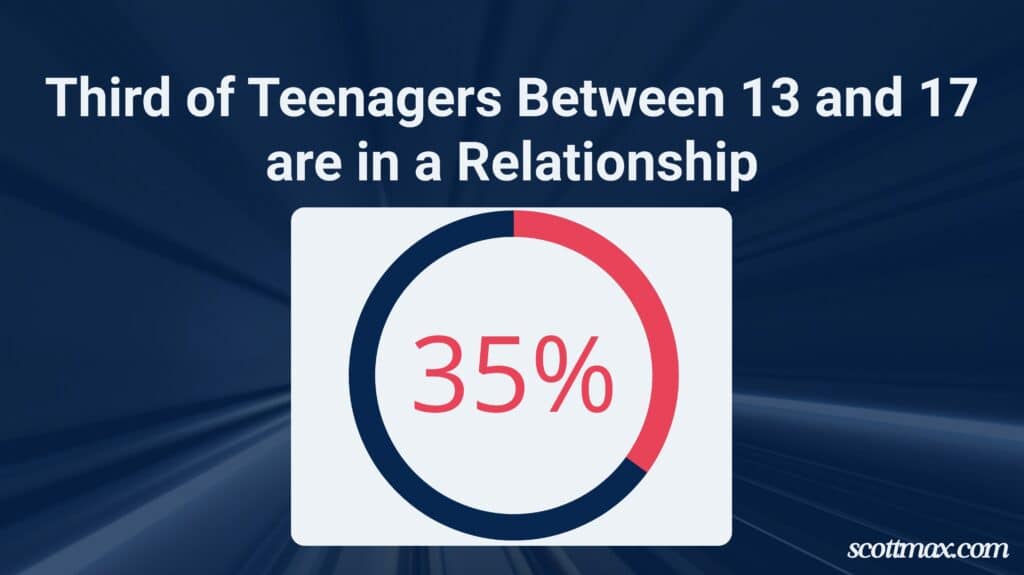
Surprisingly, 35% of teenagers aged 13 to 17 have some dating experience. This includes those currently in relationships and those who have explored casual or serious connections.
For those curious about sweethearts, 40% of teens are in committed relationships, while 16% have had past romantic involvements but are not currently dating.
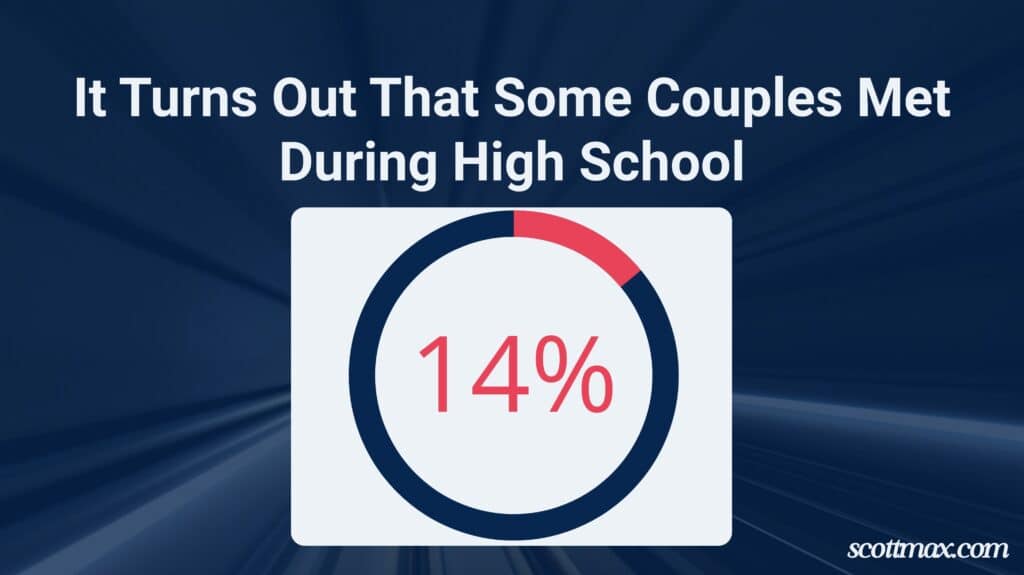
You may have heard of high school sweethearts getting together during their school years. Interestingly, 14% of couples met in high school, but only one out of five of these couples pursued further education together in college.
Even more intriguing, less than two percent of these high school couples graduated from college together. This suggests that marrying your high school sweetheart might mean a less competitive journey in the workforce.
Verified 2024 | 👨🎓Cite this data. This picture is available for public use.
Face-to-Face Connections Are Still Popular
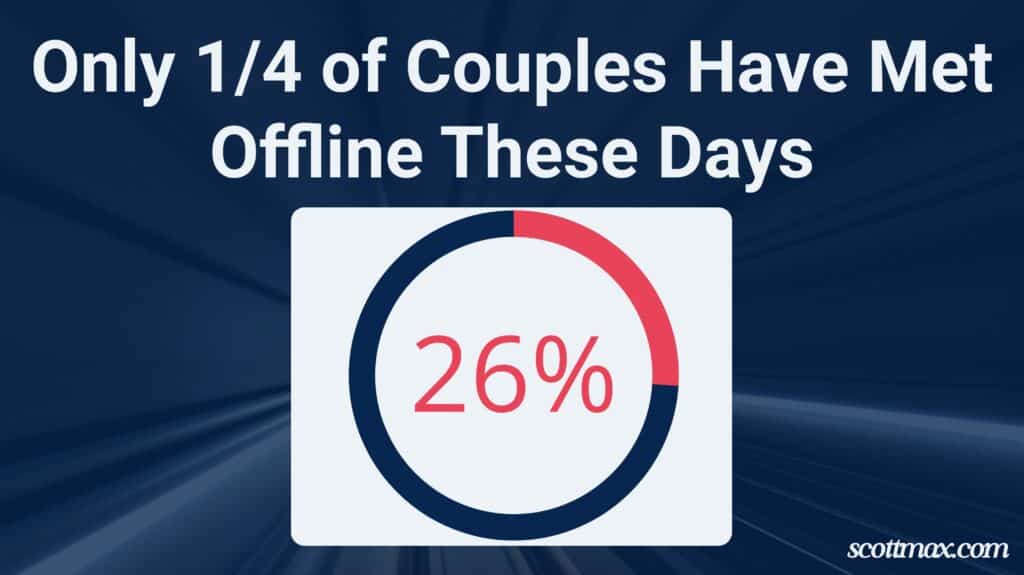
Even with the rise of online friendships, it’s interesting that 26% of teenagers met their partners in person. While a significant 57% of teens form friendships online, only 8% mention finding their partners there.
And when they did find them, it often happened through platforms like Facebook or other social media sites.
Verified 2024 | 👨🎓Cite this data. This picture is available for public use.
Romantic Interactions Among Teens
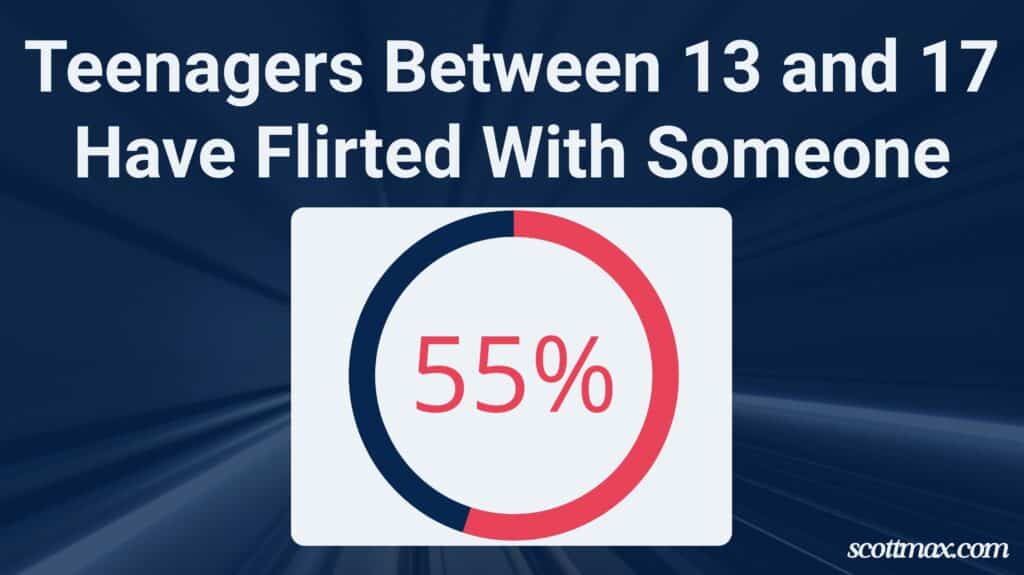
Ah, young love! Here’s an interesting fact: 55% of teenagers aged 13 to 17 have flirted with someone. What’s more surprising is that 50% of them did so through social media platforms like Instagram or Facebook.
Furthermore, almost half, 47%, conveyed their feelings for someone by engaging in activities such as comments and likes. It seems digital heart emojis are all the rage these days!
Verified 2024 | 👨🎓Cite this data. This picture is available for public use.
College Relationship Stats
Entering the college world, where life is a mix of self-discovery and the transition into adulthood. Below are some fascinating relationship statistics for college students in 2024:
Serious vs. Casual Relationships in College
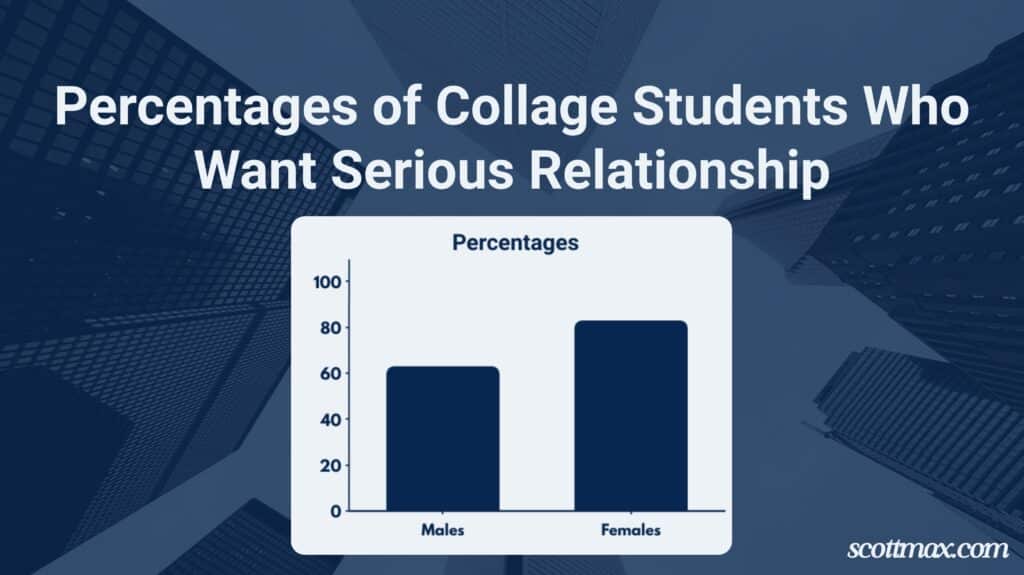
College years may appear to be all about casual encounters, but here’s a surprise: 63% of college males are actually looking for serious relationships.
Women in college are not far behind, with an impressive 83% seeking traditional relationships in the love department. However, many are open to short-term, casual affairs.
One reason for this trend is their intense focus on academic achievements and ambitions, which leave little time for long-term commitments.
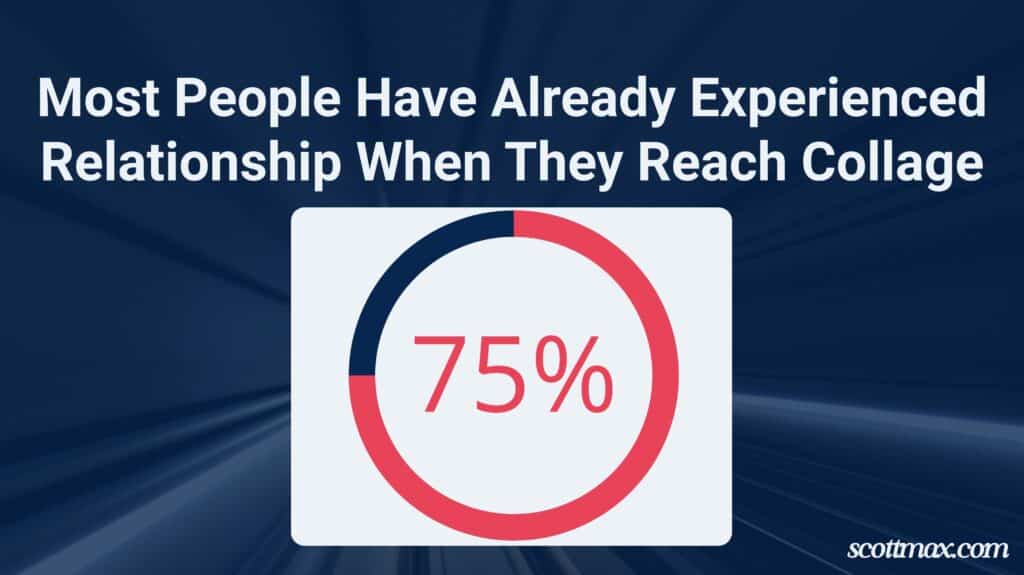
You might be amazed to find out that 75% of university students have had a long-distance relationship. Among these lovebirds, 66% found the biggest obstacle to be the lack of physical closeness, while 31% mentioned that not having sex was the most challenging part.
The good news is that more than half of these long-distance relationships managed to survive the distance and stay strong.
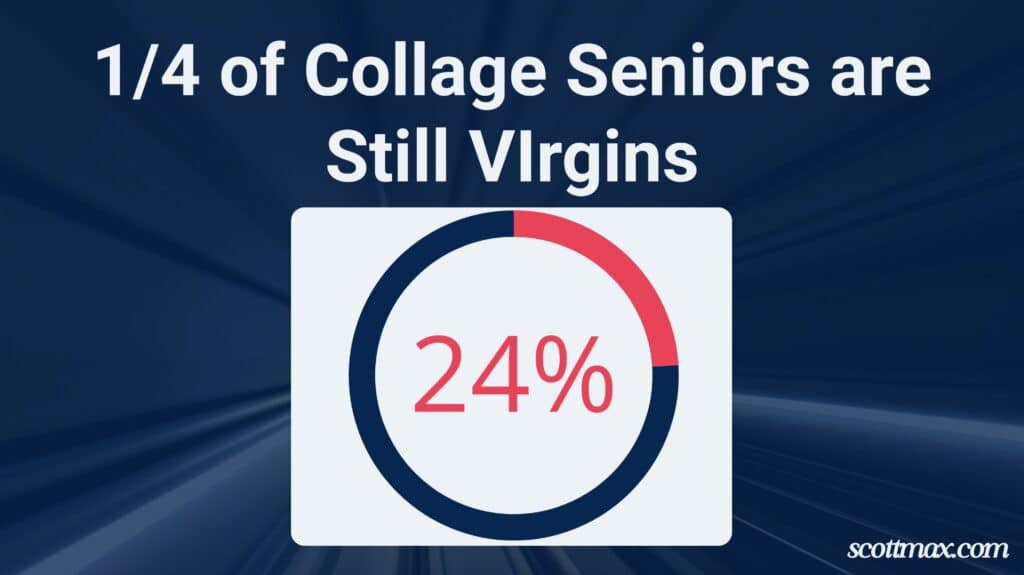
This might surprise you—24% of college seniors are still virgins. Yes, one-fourth of male and female students in their last year of college have never engaged in sexual activity before college.
For individuals aged between 20 and 24, 12% of women and 13% of men proudly consider themselves virgins.
Oh, millennials, the generation that keeps us guessing. They have their own unique set of relationship statistics from 2024 that reflect how they handle matters of the heart. Let’s explore:
Concerns About Financial Stability in Marriage
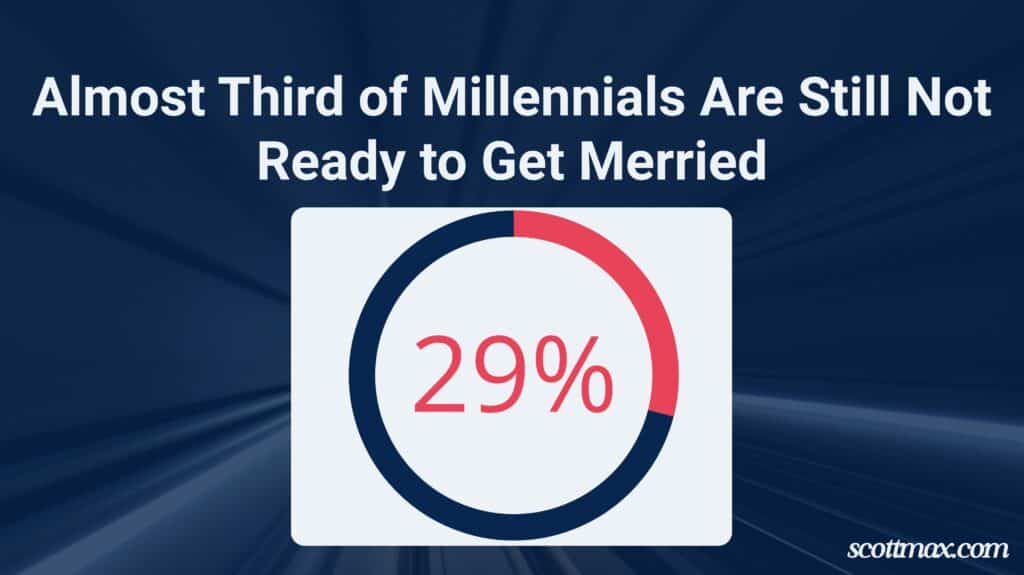
Millennials value financial security, and 29% of them feel they are not yet prepared for marriage. This generation gives more importance to the financial side of getting married. Surprisingly, data shows that millennials are three times more likely to stay unmarried compared to the Silent Generation (those born between 1925 and 1942). Among millennials, 26% are waiting for a partner with specific qualities, while another 26% believe they are too young to get married.
Millennials are not rushing into marriage. In fact, a huge 72% of them plan to stay single until they find their perfect match. However, some millennials also confess to feeling lonely as a result of this mindset.
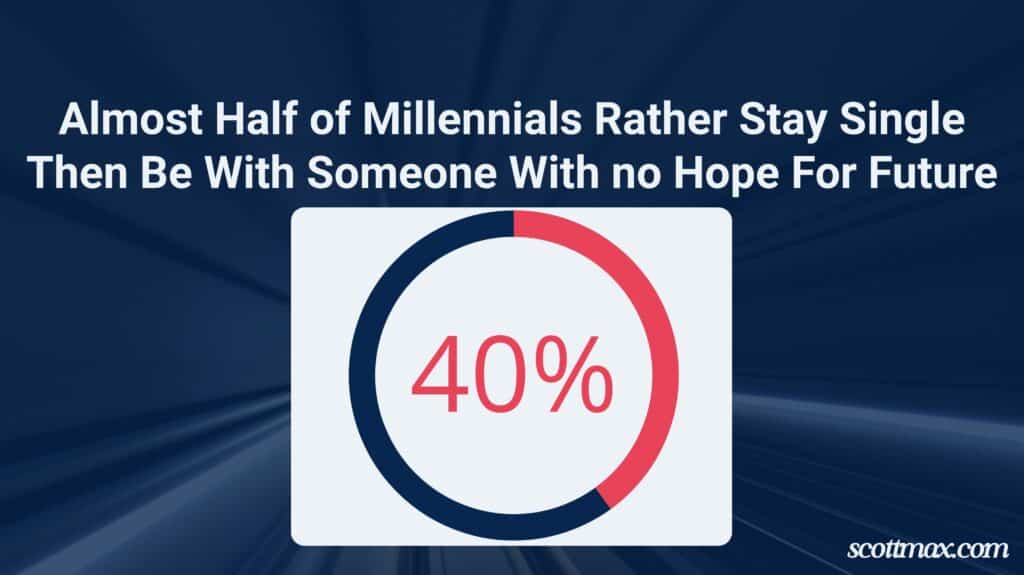
When millennials look for a partner, they are very careful. A significant 40% of them say they won’t just settle for anyone in a relationship. They prefer being single rather than being with someone they don’t see a future with.
This selectiveness is visible in their older age when they first get married, but this is also linked to a decrease in divorce rates. Half of millennials, which is 50%, have worries about long-term relationships, mainly about losing their independence.
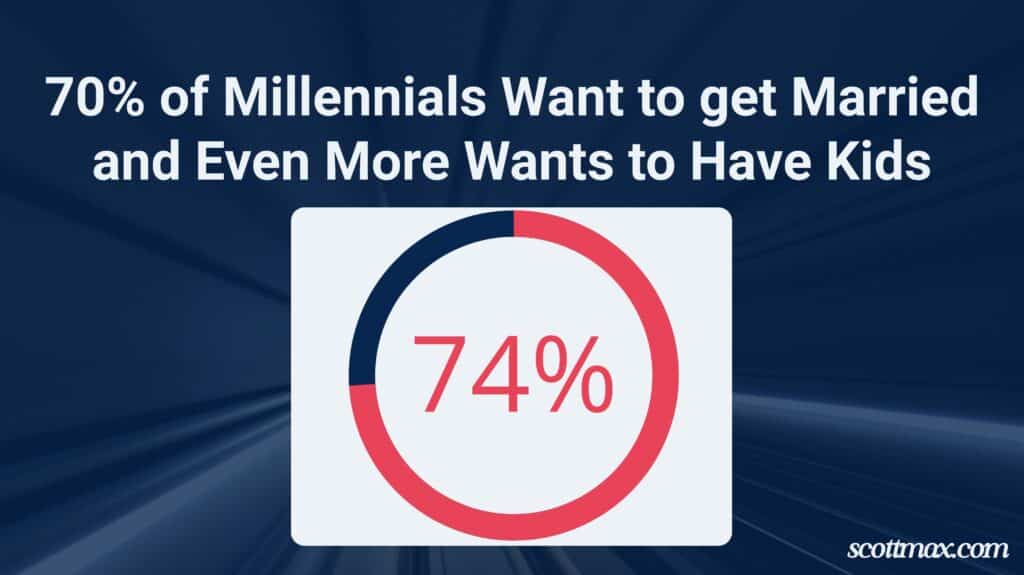
Despite their caution and pickiness, 70% of millennials aim to get married in the future, and an even larger percentage, 74%, want to have children.
This generation is known for their thoughtful approach to relationships, considering the positives and negatives related to their happiness, work, and health. They seem to focus on long-term objectives.
The world of long-distance relationships has evolved over time. While the era of handwritten letters and waiting for weeks for a response is over, the ups and downs of these relationships continue. Let’s explore some 2024 data to understand this modern concept of love better:
Successful Long-Distance Relationships
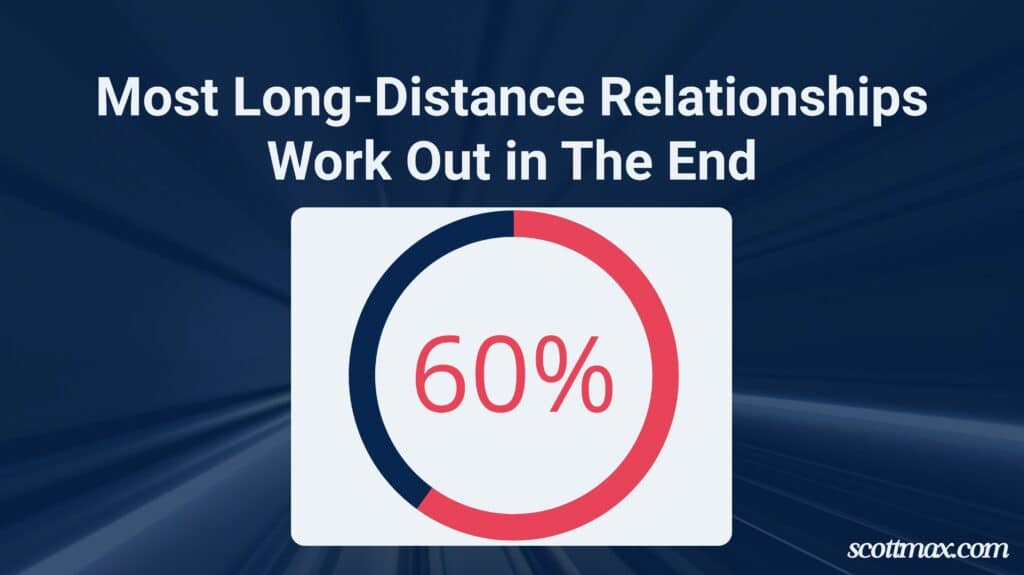
Good news! 60% of couples who engage in long-distance relationships are able to sustain it long-term. Typically, a long-distance relationship refers to partners living at least 132 miles apart.
These relationships are a significant commitment and can be tough, but this data demonstrates their success.
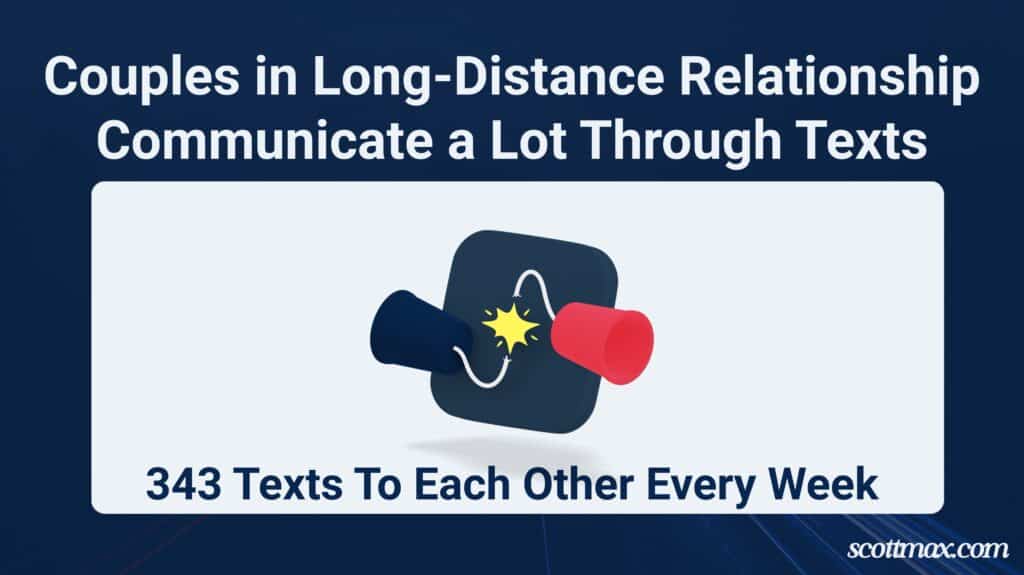
Communication plays a vital role, especially for long-distance couples. On average, these partners exchange around 343 texts per week. The more you talk, the closer you feel, increasing the chances of success.
Checked for accuracy in 2024 |👨🎓Cite this stat. This picture can be used without worrying about copyright.
Love Grows Stronger with Distance
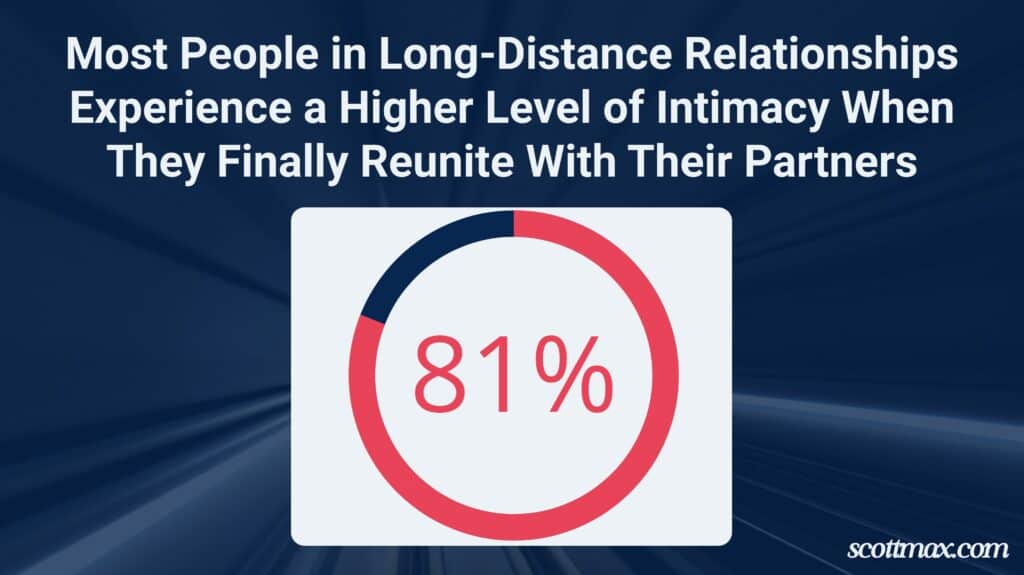
A surprising 81% of individuals engaged in long-distance relationships feel closer to their partners when they come together after being apart. For 5% of them, this time away actually strengthens their bond more than ever.
Interestingly, 70% of people communicate more frequently when they are separated.
Checked for accuracy in 2024 | 👨🎓Cite this stat. This picture can be used without worrying about copyright.
The Many Long-Distance Relationships
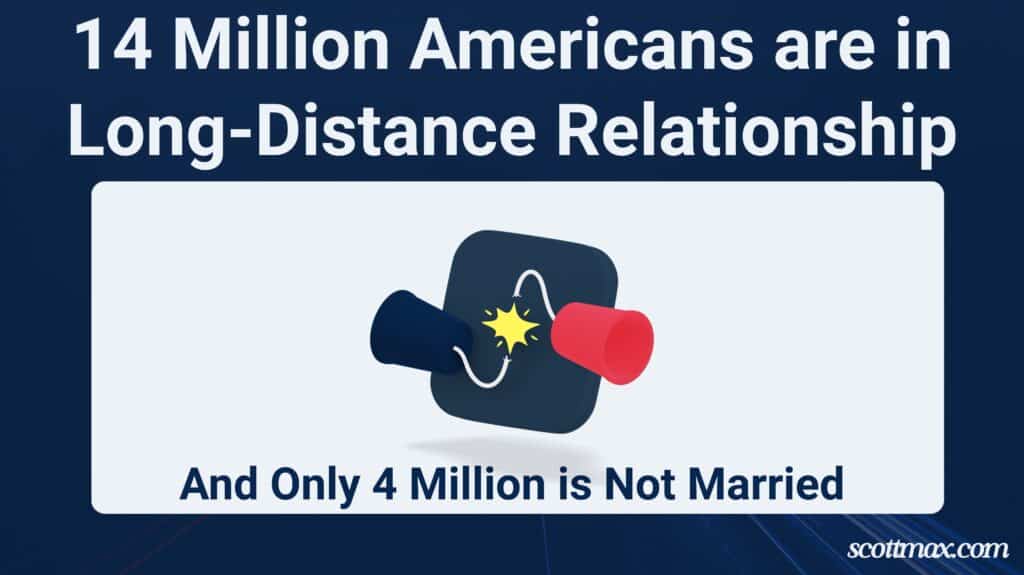
Prepare yourself as a whopping 14 million Americans are navigating the challenges of long-distance relationships. Out of this vast number, 4 million couples are in non-marital relationships.
These relationships emerge due to various reasons like attending college, career opportunities, and military obligations.
Checked for accuracy in 2024 | 👨🎓Cite this stat. This picture can be used without worrying about copyright.
Planning Ahead for Success
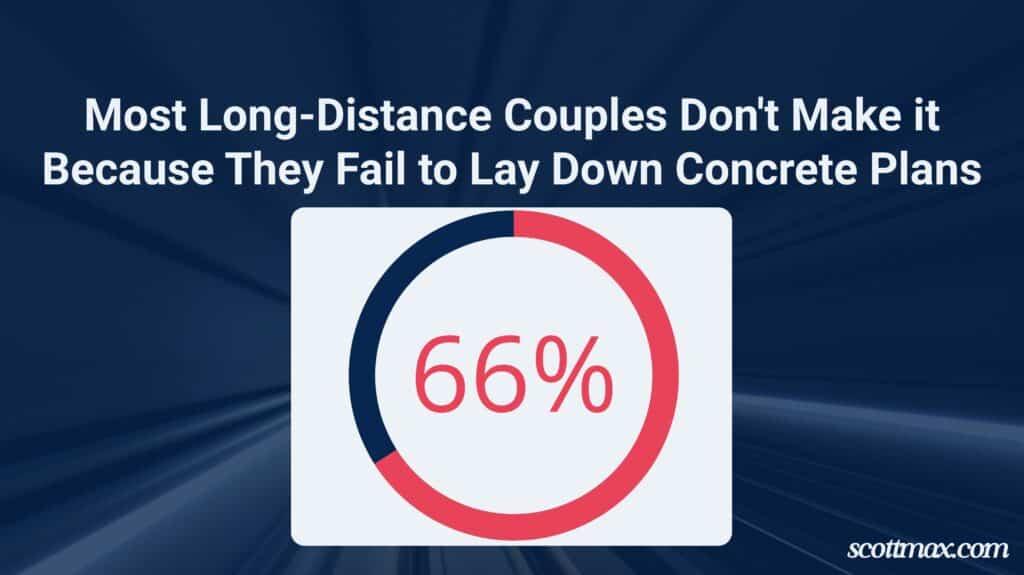
The success of long-distance relationships often depends on preparing for the future. A notable 66% of these couples fail due to their lack of concrete plans.
According to these statistics, some suggest that long-distance relationships typically last around 14 months, while some end within five months or even sooner, usually due to concerns about infidelity.
Checked for accuracy in 2024 | 👨🎓Cite this stat. This picture can be used without worrying about copyright.
Visits, Calls, and Letters
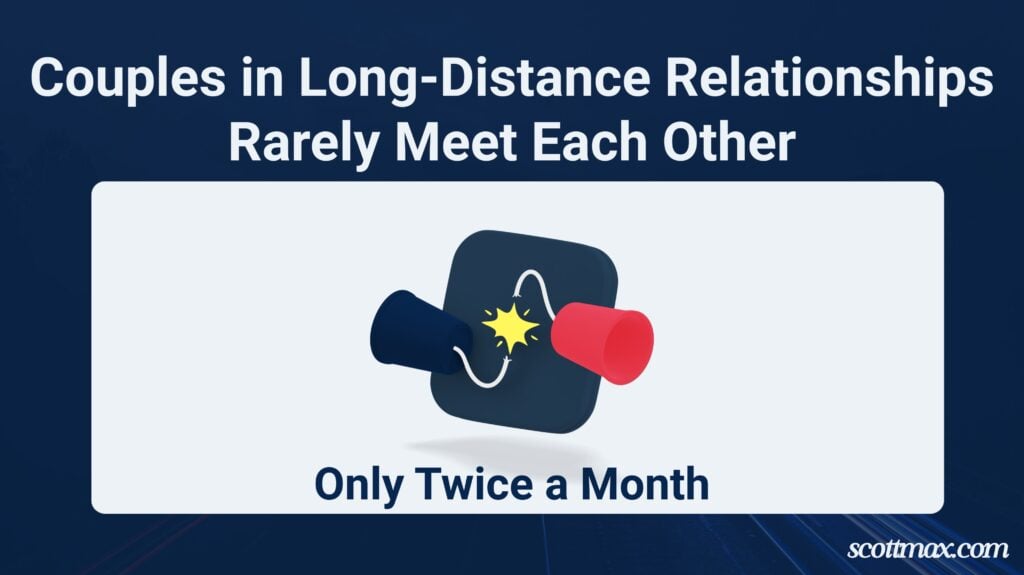
In a long-distance relationship, couples commonly meet each other twice a month or sometimes even less. They make sure to have a conversation at least once every three days. Surprisingly, many pairs still exchange letters, approximately three times per month.
Checked for accuracy in 2024 | 👨🎓Cite this stat. This picture can be used without worrying about copyright.
Interracial Relationship Statistics
As a society, we have made progress, and interracial relationships are more widely accepted today than ever. Below are some fascinating 2024 stats. Data showing how interracial relationships are becoming more common:
Mixing Things Up in America
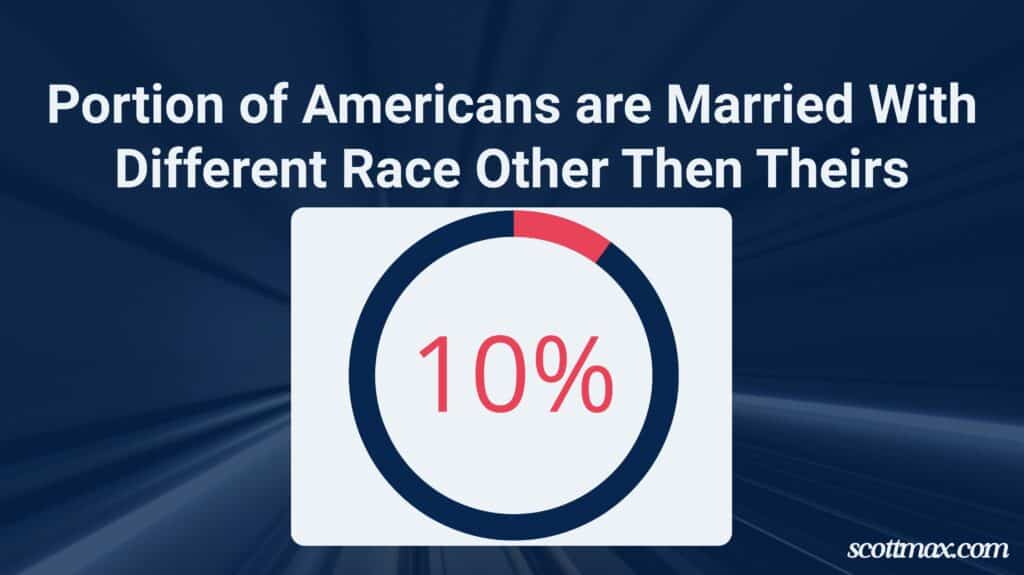
Impressively, 11 million Americans are currently married to someone of a different race or background.
So, it turns out that around 10% of Americans have chosen to embrace diversity in their love lives. It’s interesting to know that interracial marriage was made legal in the USA back in 1967.
Checked in 2024 | 👨🎓Cite this stat. No restrictions on using this image.
New Couples, New Cultures
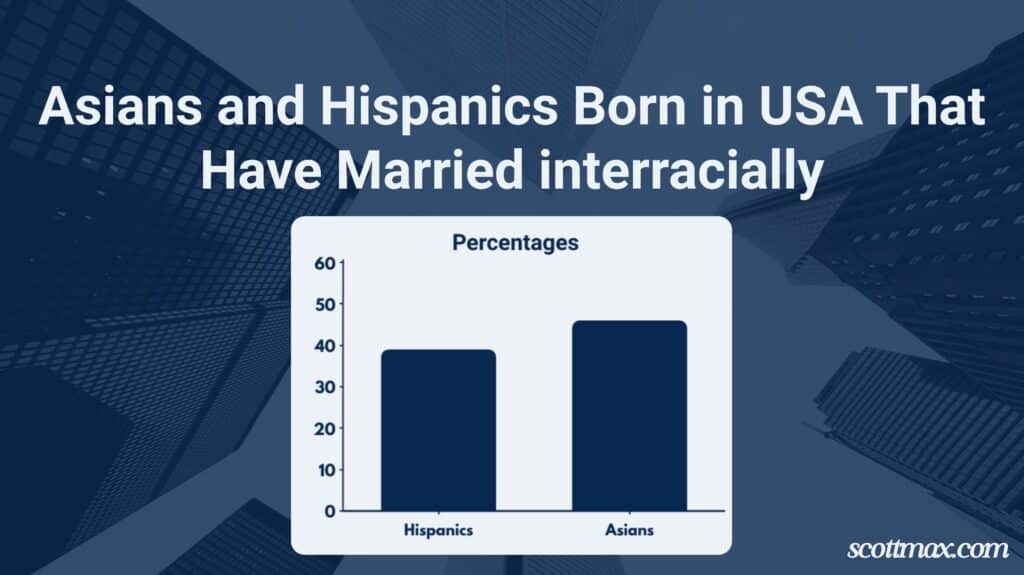
Love doesn’t care about where you’re from for Asian and Hispanic couples. A notable 46% of Asian newlyweds and 39% of Hispanics born in the USA have decided to embrace diverse relationships.
Checked in 2024 | 👨🎓Cite this stat. No restrictions on using this image.
Increasing Diversity in African American Marriages
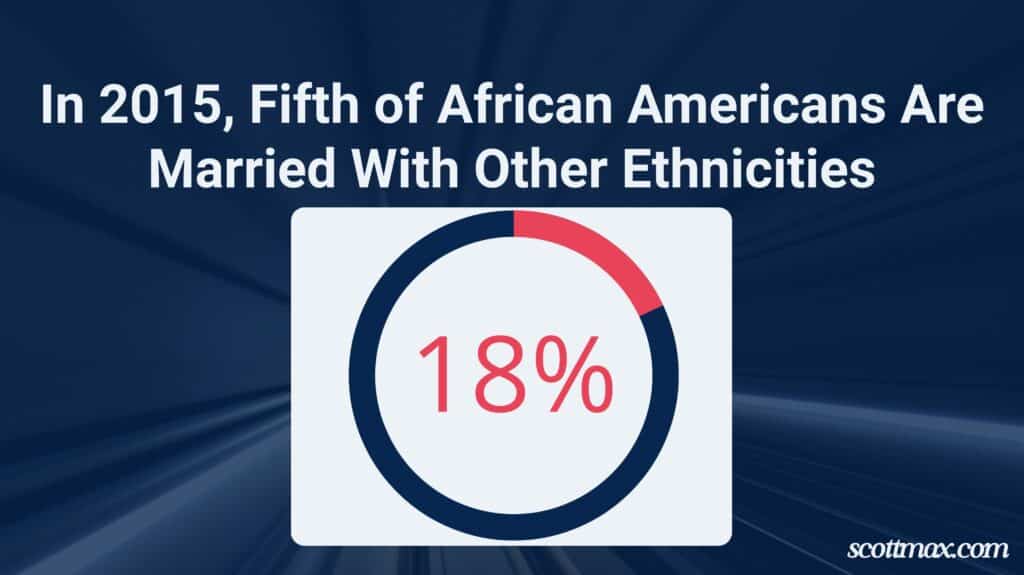
More African Americans are choosing to marry outside their race. In 2015, 18% of African Americans tied the knot with partners of a different race or background, a significant jump from the 5% recorded in 1980.
Checked in 2024 | 👨🎓Cite this stat. No restrictions on using this image.
Growth in Acceptance
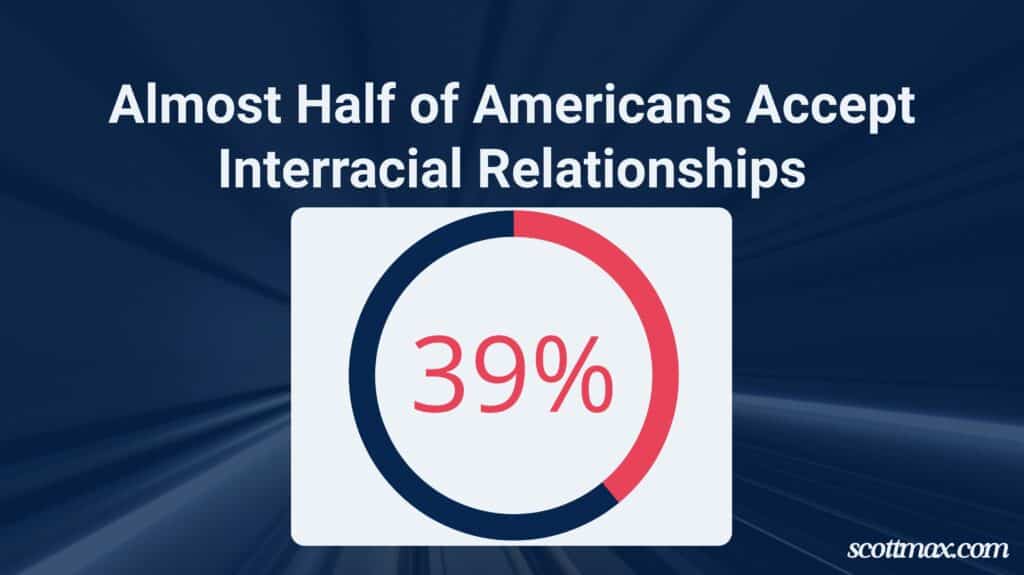
Thankfully, people are more open to the idea of interracial marriages now. Currently, 39% of Americans are in favor of such relationships. Although there’s still room to grow, this percentage has risen by 15% in just seven years.
Checked in 2024 | 👨🎓Cite this stat. No restrictions on using this image.
Need for Diversity in Media
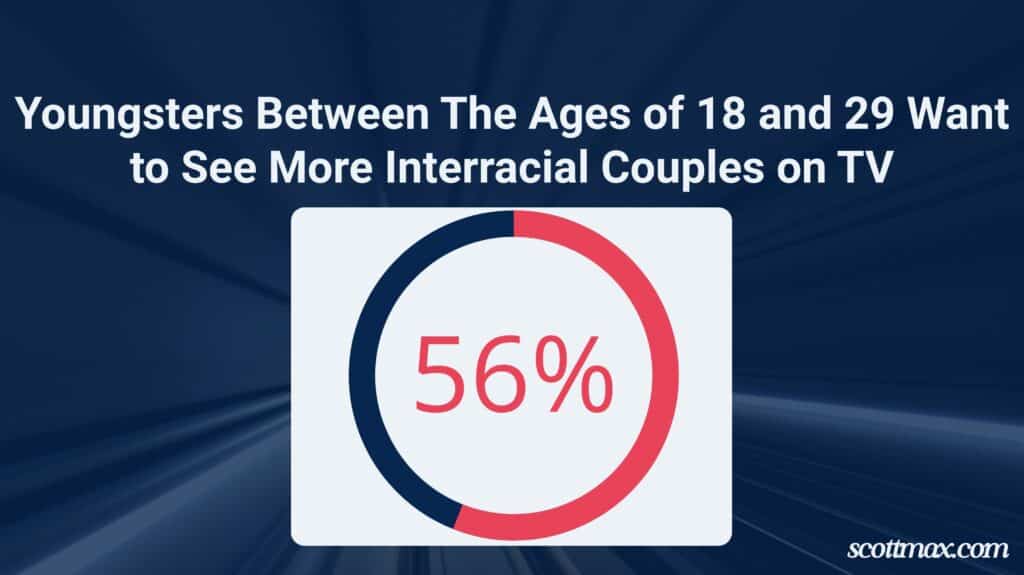
Youth today want to see more representation of interracial couples in movies and TV shows. A considerable 56% of individuals aged 18 to 29 believe that TV programs should showcase more interracial couples.
In fact, 43% of women and 39% of the general population are eager for greater visibility of interracial relationships on screen.
Checked in 2024 | 👨🎓Cite this stat. No restrictions on using this image.
Popular Locations for Interracial Marriages
CertainCities in America are setting an example in mixed-race marriages. Honolulu leads the way, with a surprising 43% of its marriages being between people of different races. Following closely is Las Vegas, Nevada, where 31% of marriages are interracial. Santa Barbara, California, is not far behind with 30% of such marriages. When it comes to the statistics on age differences in relationships, it’s fascinating to note that in countries like the US and Europe, 8% of married couples have an age gap of ten years or more. Usually, it involves an older man and a younger woman. Surprisingly, only 1% of such relationships have the woman being older than the man. In Eastern countries, the age gaps tend to be even larger and more common. In terms of same-sex relationships, a significant 25% of male-male couples have a considerable age difference. This suggests that there are more gay couples with notable age gaps compared to straight couples. Research shows that the size of the age gap can impact the stability of a relationship. A study involving 3,000 individuals revealed that couples with a five-year age difference are 18% more likely to divorce. If the gap increases to ten years, the likelihood of divorce rises to 39%. Surprisingly, if the age gap is a massive 20 years, the risk of divorce soars to a remarkable 95%. Experts believe that larger age gaps can lead to differences in values, preferences, cultural backgrounds, and attitudes towards intimacy.This information was checked in 2024 | 👨🎓Cite this stat. This picture is free to use.
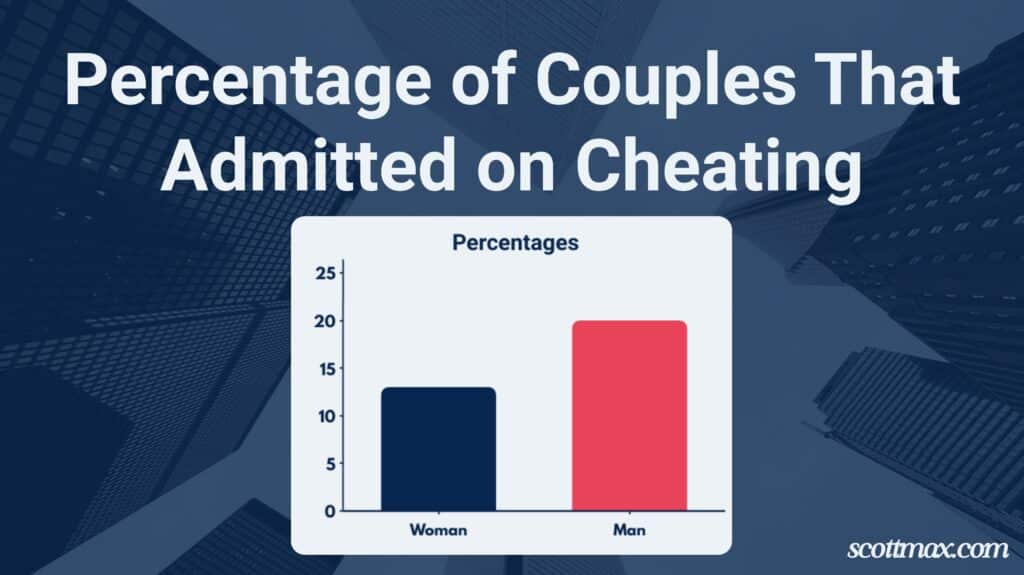
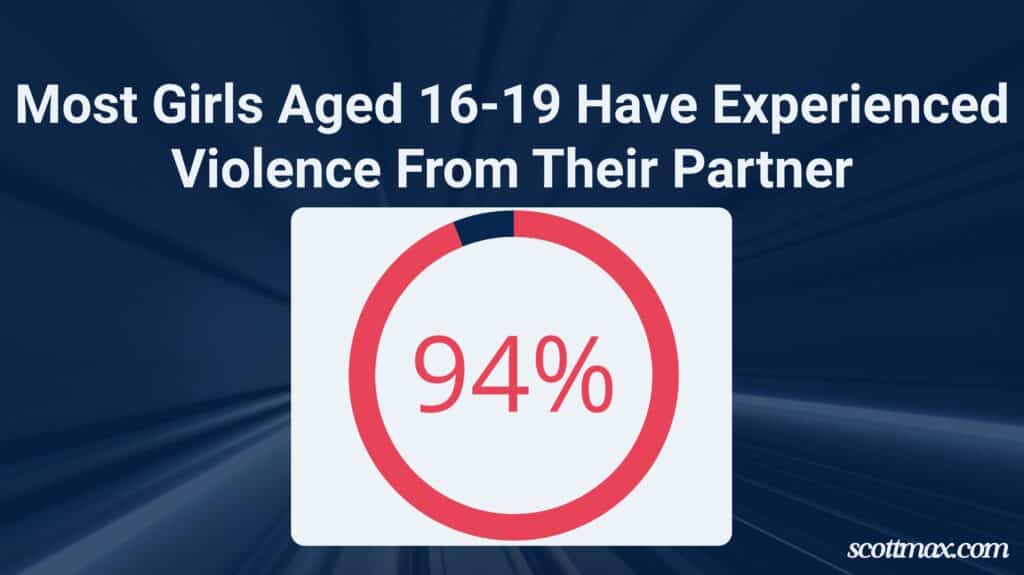
Stats on Abusive RelationshipsUnfortunately, not all relationships are about love and respect. Let’s explore some harsh facts from 2023 that show us how people can behave abusively in different types of relationships, even in those involving teens:Cheating in RelationshipsRegrettably, some relationships involve cheating. Approximately 20% of men and 13% of women have confessed to being unfaithful.These percentages may sound small, but when added up, they represent a significant number of people either cheating or being cheated on.It’s important to mention that the chances of cheating can change with age, and younger women aged 18 to 29 are more likely to cheat than men in the same age group.This data was validated 2024 | 👨🎓Cite this stat. This picture is free to use.Online Cheating BehaviorsIn the modern era, technology has introduced new ways of cheating. Nowadays, most cheating behaviors occur online, like developing feelings for someone over the internet, sharing personal details, or even contacting an ex-partner through messages.This information was verified in 2024 | 👨🎓Cite this stat. This picture is free to use.Violence by Partners among Young WomenA startling fact shows that 94% of women aged 16 to 19 have faced violence from their partners. Among them, 70% belong to the 20 to 24 age bracket.The data indicates that violent conduct often begins during the critical teenage years between 12 and 18.This data was checked in 2024 |👨🎓Refer to this data. This picture is free to use.
Problems in American High Schools
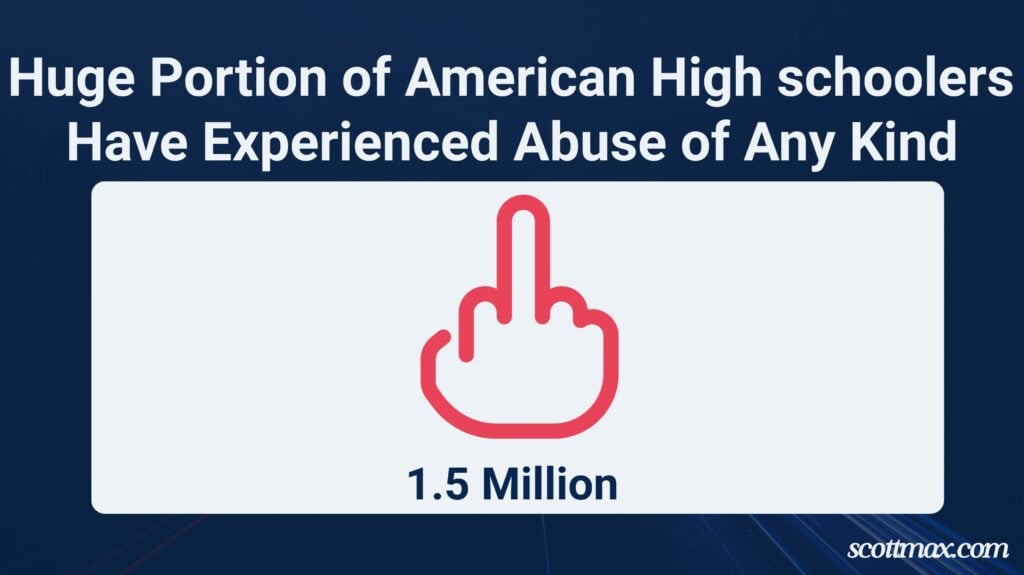
Distressing data shows that around 1.5 million high school students in America go through some type of mistreatment in their relationships. This implies that one out of every three high school students deals with emotional, verbal, sexual, or physical abuse from their partner.
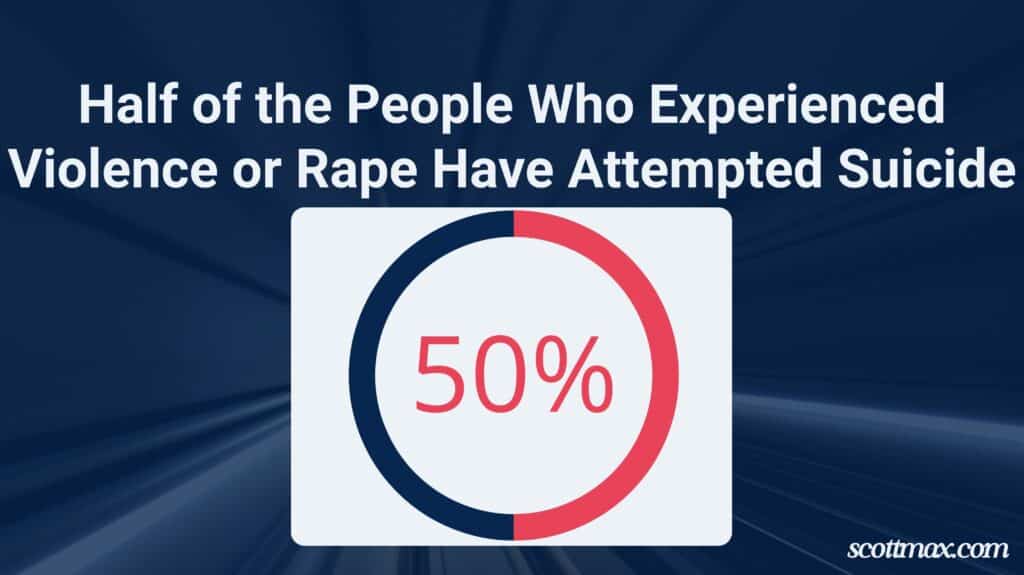
Shockingly, half of young people who have encountered violence or sexual assault have tried to commit suicide. This is a stark difference from typical suicide rates, where approximately 5.4% of boys and 12.5% of girls who haven’t faced violence or assault attempt suicide.
In today’s digital era, online dating plays a significant role in how we meet potential partners. Let’s delve into some interesting Tinder numbers for 2023:
Tinder’s Popularity in America
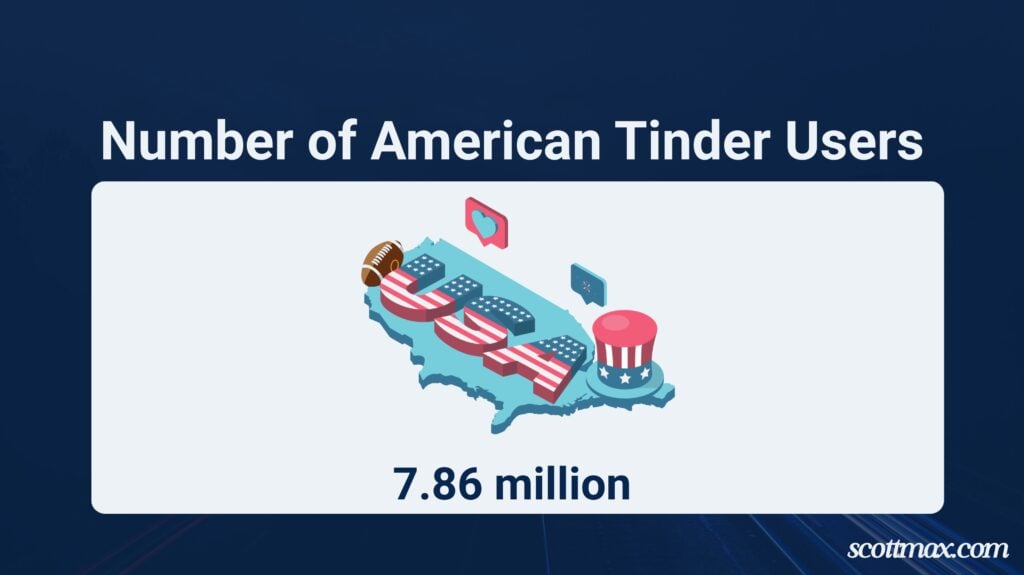
Tinder boasts an impressive 7.86 million users in the United States, making it a major player in the online dating scene.
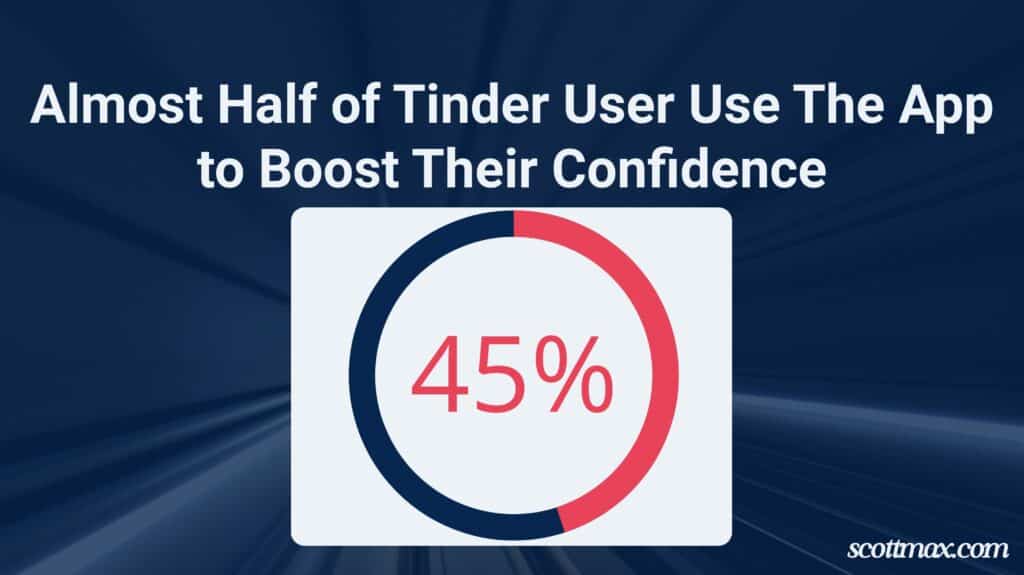
Receiving compliments online can greatly improve self-confidence, with 45% of Tinder users confessing to using the app for a self-esteem boost. It provides an easy way to receive compliments from strangers and feel positive about oneself.
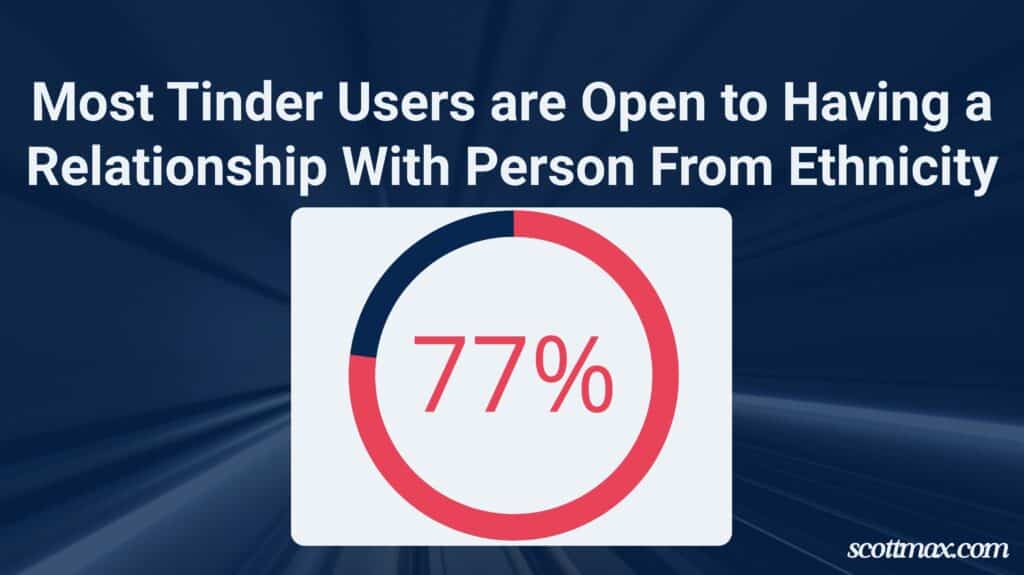
An outstanding 77% of Tinder users are open to dating someone from a different ethnic background. This figure shows the increasing acceptance of diverse relationships in the realm of online dating.
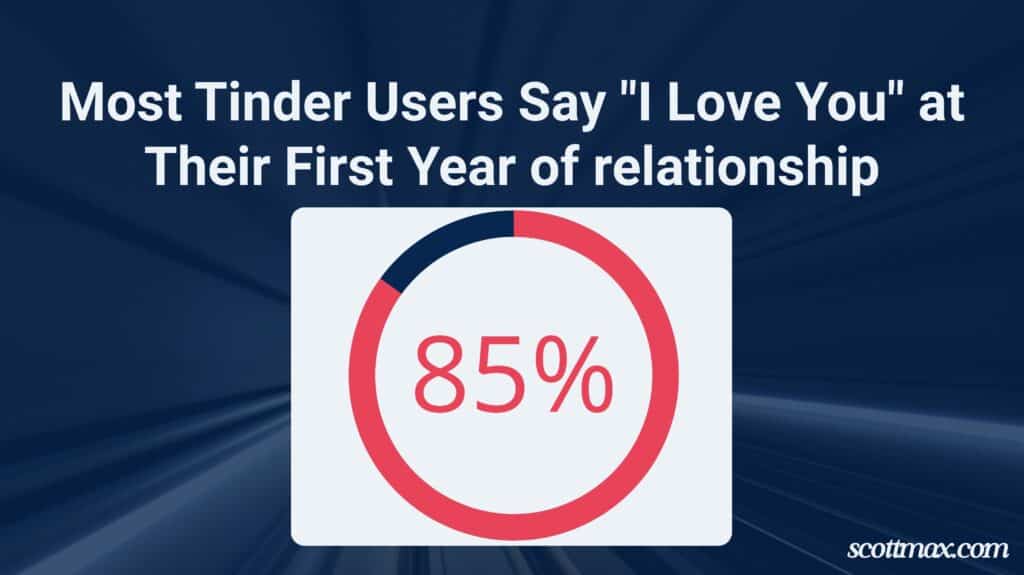
People on Tinder quickly say they love each other. An astonishing 85% of them express love within the initial year of being together. This shows how fast emotional ties form in the world of digital dating.
That wraps up everything in the world of relationships in 2023! We’ve seen the growing acceptance of differences, explored how age gaps influence relationships, and looked into the interesting realm of online dating with Tinder.
Whether you’re trying to understand love dynamics or just curious, these numbers give a nice peek into the complicated world of current relationships.
So, keep interacting, dating, and loving! In today’s digital era, the connections we create are limitless. Cheers to all forms of love, now and forever!
Frequently Asked Questions
1. What is the average age of people who use online dating apps like Tinder?
The typical age of online daters varies, but many fall in the 18 to 34 age group. This range is most active on apps like Tinder, although users come from all age groups as digital dating becomes more accepted across different generations.
2. Is online dating safe?
Approach online dating with caution for safety. Safeguard your personal info, meet in public places for first dates, and trust your instincts.
Tinder and similar platforms offer safety tools and reporting features to enhance user security.
3. What are the main reasons people use Tinder?
People use Tinder for various purposes, such as seeking romance, casual meetings, and boosting self-confidence. It’s a flexible platform that caters to different dating preferences and goals.
4. How common are interracial relationships on apps like Tinder?
Interracial relationships are increasingly seen on apps like Tinder. A notable number of users are open to dating someone of a different race, indicating a growing acceptance of diversity in online dating.
5. Can relationships started on Tinder lead to long-lasting, meaningful bonds?
Indeed, relationships formed on Tinder can result in lasting, meaningful connections.
Many individuals have discovered love, companionship, and even marriage on the platform. The key is being open, communicating effectively, and investing time in understanding your potential partner, just like in any other relationship.
News24’s Book of the Month for July, Nickolaus Bauer’s Great Johannesburg: What Happened? How to Save an African Economic Giant is a comprehensive portrait of the city.
The book covers many aspects of Jozi life, from zama zamas to water cuts, blackouts, exploding streets and political instability. Is the City of Gold in a death spiral? Bauer examines the current crisis by starting with Johannesburg’s origins as a cauldron of cultures and a hustler’s haven. He looks at how a city of migrants turned into a xenophobic hotspot, how the politics of gold, the shadow of apartheid and the evolution of the tsotsi – crime and criminality – affect life in Johannesburg today, and what can be done about these.
With chapters on redlining, the walkability of the city, corporate corruption, mayoral musical chairs and the proliferation of illegal backyard buildings, Great Johannesburg provides a comprehensive analysis of the current malaise, as it outlines possible solutions.
Bauer has covered Johannesburg as a political journalist since 2008 and lived in the inner city since 2010, eight years of which were in Hillbrow and five years in the Ponte Towers. He worked within the Johannesburg city administration as a Deputy Director for the Environment and Infrastructure Services Department in 2022.
In this extract, Bauer looks at redlining and why it’s disastrous for the inner city.
BOOK: Great Johannesburg: What Happened? How to Save an African Economic Giant by Nickolaus Bauer (Tafelberg)
“Look how fucked this place is now!” “This used to be the best of Johannesburg – the best of South Africa. And now it’s all gone to shit! Any why? Because they moved in”
I wasn’t that surprised by the outburst. These were fairly standard sentiments among large parts of the white community in the 1980s and 1990s in South Africa as the country transitioned towards democracy. But I did think it was pretty ballsy for someone who used to call Hillbrow their stomping ground shouting this in the middle of the street, surrounded by black people. On a Dlala Nje tour highlighting the regeneration and hope of contemporary Hillbrow and the Johannesburg inner-city. Ballsy maybe but ignorant mostly.
The worn out narrative of Hillbrow’s transformation from Apartheid era Bohemian haven to democratic multiracial slum being down to the rapid influx of black South Africans is pervasive. But with the blame now being apportioned to the Zimbabweans, Nigerians and Malawians that call the infamous inner city suburb home. New black people arriving in Hillbrow have often been portrayed as having different standards, ultimately wanting to live in a hovel and responsible for the overall social and physical decline of the area.
But labelling Hillbrow as a no-go area today because of the influx of people of a darker hue or different African nationality is not only racist but simply false.
Hillbrow was one of the first neighbourhoods in South Africa to become racially diverse in spite of the Group Areas Act of 1950. From its proclamation in 1895 the neighbourhood was always a hub for new arrivals to the city and its uniquely ethno-diverse flavour accelerated in the 1960s with the rapid import of skilled European labourers due to the Apartheid government shutting black people out of the booming economy. Germans, Brits, Dutch, Italians, French, Portuguese and the like settled in the 36 city block, 1KM2 suburb as it quickly became an oasis of modern Western urbanity in Africa. But from the late 1970s the whites-only urban areas Apartheid policy began crumbling as Hillbrow became a grey area. Grey area being the lame and unimaginative term coined by Apartheid authorities to define places where legally forbidden racial mixing was taking place. Initially on dance floors in nightclubs and later in high-rise flat bedrooms. The common excuse for a mixed race household being to dismiss the non-white residents of a home as the domestic help if authorities ever questioned an interracial living arrangement. This explanation being futile in the presence of mixed children though.
In 1985 more than 90% of the population in Hillbrow was white. By the early 1990s more than 80% of the suburb’s population was black and was quickly followed by the literal physical decline of the neighbourhood. The condemnation of a correlation was swift from not only the all white government but also the press, former inner-city aficionados and fleeing European migrants. But while that may have complimented racial sentiments and white fear it said nothing of the broader environment. While the area’s increased racial mixing did indeed coincide with a drop in living standards, the causal effect of this being a misconception. Critically, it completely ignores the role of disastrous redlining that struck the suburb down.
There was indeed a red menace that crept through Johannesburg and South Africa from the 1980s onwards. But it was not in the communism Apartheid apparatchiks frothed at the mouth about. Redlining is the discriminatory practice of denying services to specific communities by banks, financial institutions and/or local authorities due to its perceived economic undesirability. The term originated in the mid-20th century USA after red lines were literally drawn on maps by bank managers and local councillors to separate areas where financial institutions and local authorities would avoid making investments or providing services.
Redlining by banks meant no loans, mortgages and/or insurance being afforded to an area deemed unworthy. While basic services and infrastructure maintenance would be withdrawn by local authorities. Disproportionately affecting minority African American communities as early as the 1930s across America from Philadelphia to San Diego.
It is an absolute disaster in socioeconomic terms, effectively switching off the financial taps and leading to an area’s rapid degradation. Redlining may have been banned in the USA in 1968 but its effects remain across the world from Amsterdam to Calcutta. In effect surviving through disproportionately higher interest rates being enforced in undesirable areas, effectively making loans out of reach. Hillbrow is just one Johannesburg suburb famous for redlining with the effects – depressed investment, urban decay and higher interest rates among others – on full display to this day. The swift demographic change in Hillbrow as Apartheid began to crumble severely spooked not only the government but big business too. Leading to a chicken versus egg debate: What came first the falling standards of the area or the turning off of the economic taps? Ponte posh becomes Ponte slum
No other building encapsulates what happens when an area falls to redlining than the infamous Ponte. The very thought of the building still remains cringe-worthy to many Joburgers who continue to see it as a den of iniquity. Historically, Ponte Towers was the place to be and when it opened its doors in 1975, it was the crème de la crème of city living. One of the very first live, work and play building concepts in Johannesburg the 54 story and 173m high concrete monolith with a hollow core attracted the city’s more affluent residents.
But, by the mid-1980s, Hillbrow’s melting pot of cultures became the site of rapid urban degeneration fuelled by redlining. Accordingly, Ponte’s glory days ended almost as quickly as they came with tales of drug dealers, prostitutes and criminals running free within its circular walls. Residents of that era claim the 11th and 12th floors were completely stripped bare and, along with the downstairs parking lot, were nothing more than spots to score anything ranging from an acid trip to a blow job. And why did the building do a complete 180 degree turn in just 15 to 20 years?
The exact same formula had been applied to it as in other parts of Hillbrow: initial racial mixing led to tacit tolerance, an influx of new non-white middle class residents as well as poor people on the pavements outside. While spiking interest rates worsened the financial situation as property prices plummeted and financial institutions and authorities got spooked. The red ink began to spill and before long the building was in the same boat as many others in the area. By 2001 Ponte was Africa’s first vertical urban slum with a building initially constructed for 1000 residents, now home to up to 8000 with no running water or electricity and trash piled to the 14th floor in its hollowed out core.
Luckily, the contemporary story of Ponte is vastly different. Home to over 2 000 residents, there is now an orderly waiting list to become a resident in Ponte as one of the most sought after addresses for the middle class of Johannesburg central suburbs. However, the same cannot be said of Hillbrow and other areas that also fell victim to redlining.
If you don’t think the process exists anymore, then try and get a mortgage to buy a property in Berea, Troyeville, Bertrams, Sophiatown, Yeoville and other city suburbs that have fallen into social ruin amid the competing realities of the biggest city in the world’s most unequal society. Successfully combating redlining once it has arrived in an area is a herculean task.
Redlining has maybe lost its potency with it being loosely thrown around, but it continues to cast a dark shadow on efforts to desegregate and restructure areas in democratic South Africa. The first step in tackling this scourge would be stringent legislation explicitly prohibiting redlining practices and ensuring equal access to housing loans. Ideally at a national level but to be implemented by the Johannesburg council if necessary. Moreover, community action in maintaining an area is crucial in forcing financial institutions to actively contribute to the revitalization of historically redlined neighbourhoods in Johannesburg.
What incentive would a bank have in investing if it’s apparent the residents of an area simply do not care about its upkeep? The alternative to addressing these historical injustices is to simply perpetuate redlining practices for generations to come. Lending credence to the nauseating ignorance that latter day Apartheid racial mixing and uncontrolled contemporary African migration has led to the decay of places like Hillbrow.
Film critic Aaron Hunt on finding Filipino films through Instagram mutuals, being turned down by Mike de Leon, and the ugly side of film distribution
Filipino cinema has earned global attention over the last 10 years. There are the Museum of Modern Art (MoMA) retrospectives, boutique Blu-ray releases, and awards from the three big film festivals (Berlin, Cannes, and Venice). These, however, only spotlight the usual suspects of Philippine cinema: Lino Brocka, Mike De Leon, Lav Diaz, and the like.
But just this May, The Criterion Channel, the library of the streaming arm of the acclaimed home video publisher, Criterion Collection, pushed forward a different side of Philippine filmmaking with the program “When the Apocalypse is Over: New Independent Cinema,” curated by Brooklyn-based Filipino-American critic Aaron E. Hunt. “When the Apocalypse is Over” contains three feature films and 10 short films from both established and emerging Filipino filmmakers who are playing with form and narrative. The channel also features the Criterion Collection Filipino films restored by Martin Scorsese’s World Cinema Project, “Insiang” and “Manila in the Claws of Light.”
The Criterion Channel is not available in the Philippines, but our US-based kababayans and film enthusiasts on the lookout for new Philippine cinema can enjoy these films that make “innovative use of digital technologies, extreme color grading, and unexpected aspect ratios,” such as the hand-colored “Cleaners”by Glenn Barit, the absurd and newly minted Gawad Urian Best Short Film “Hito” by Stephen Lopez, and the dual-screen horror short “Dikit” by Gabriela Serrano.
“Conventional channels of Western distribution and programming or whatever will always be lagging decades behind the times in terms of what they’re able to show of films beyond the West.”
—Aaron Hunt
Photo by JT Fernandez
This is Hunt’s second work for The Criterion Channel. He previously helped curate the short film program “Who Will Start Another Fire?” by the distribution initiative Dedza films, where he was vice president.
The program has also been screened in theaters in the US, such as the Brooklyn Academy of Music (BAM), where other full-length films are paired with short films. It ran for six days. Hunt, who is also a freelance theatrical booker and has helped edit De Leon’s two-volume book “Last Look Back,” hinted that the program will also play in other theaters in the future.
Here, we sat down with Hunt to talk about his roots as a film critic, formative films, getting rejected by De Leon, and how he ended up programming a whole slate of Filipino films for US audiences.
The interview has been edited for clarity.
Have you always watched movies growing up?
Yeah, I guess it was a fairly big thing for my family. I watched films like average working-class American families in the Midwest.
What kind of movies?
Mostly mainstream stuff, comedies. My dad grew up in a Black American family. He’s Filipino but adopted. So a lot of it was popular Black cinema, like movies with Chris Tucker and Ice Cube. R-rated Black comedies are what I grew up on.
My dad was very random as a father. He would put a lot of different things in front of me to see if I responded to any of them. He would get the most random movie from the video rental store, stuff that I don’t even think he would necessarily watch, often foreign stuff, and ask me to write a report on the movie.
It’s like initial training as a critic.
Yeah. I resented him at the time for making me do these things. I didn’t particularly enjoy writing about the movies when he would ask. But there were films that he showed me that were pretty formative, which I probably wouldn’t have seen otherwise.
Were there movies from that age that stuck with you?
I think “Nobody Knows,” an earlier one of [Hirokazu] Kore-eda, when he was coming out of documentaries so it’s a little more naturalistic. The naturalism of his latest films feels very contrived. That was a sad movie for my dad to put in front of me so young. Literally, kids are stranded without a parent and dying in the movie.
How did your journey into Filipino cinema begin?
My dad was adopted, so I didn’t really grow up around a lot of Filipino culture. When I was maybe in my early teens, I was just sort of curious what the films were like in the Philippines. The first film I found was “Manila in the Claws of Light.”I think I just looked it up. I was so young and I think I was watching a really bad-quality copy, so I didn’t like the film at the time. Now, I’ve seen the restoration and it’s beautiful.
But I think at that time, I also had a lot of preconceptions about production quality and was so used to the gloss of commercial American films. But I think [the film] stayed with me. I always remembered it very vividly.
And then it happened slowly after that. I started getting really into Philippine cinema during the pandemic. I was trying to connect with my family more and do the whole connect with the roots, cringy diaspora thing.
“Going into this, I was thinking I needed to connect with my roots. I need to know everything and the program has to be like this perfect representation of the country and the film scene. I think, at a certain point, I learned that this was a road that doesn’t go anywhere, or serve anything.”
—Aaron Hunt
So, I was looking for my biological family, and in the mix of all that, I was also finding older Filipino [movies], and one of the first people I came into contact with during that search was Mike De Leon, I think because I saw some Facebook posts he made about the“Kisapmata”restoration, which he was about to show for a limited time on Vimeo. So I messaged him, ‘You’re showing ‘Kisapmata’ in a month so maybe we can run an interview timed to it.’ He rejected me, and he also judged my Facebook profile. He’s like “I see the kind of articles you write and I’m not interested in doing this kind of thing,” [so] I was like ‘Okay, I respect your decision.’
And then, I don’t know, I think because I was chill about his rejection he eventually came back to me and agreed to do an interview.
How did you end up working with Dedza Films?
[With Dedza], I met [the Malawian-American filmmaker] Kate Gondwe while I was working in production and we became friends. She interned at [the film distribution company] Kino Lorber, and we had been talking during the pandemic about how fucked up distribution is. So she pitched this idea to Kino Lorber, and, to our surprise, they actually agreed to back it or support it in some way.
So then we did an open call for short films and got 400 [to] 500 submissions or something. We had a little programming committee, and we watched and considered a lot of shorts. During that, I was kind of actively seeking out more Filipino shorts than what was submitted. I learned about distribution and the kind of the shittiness of distribution through Dedza.
Were you always drawn towards the side of distribution?
No, like zero, no interest. And I didn’t really understand how it worked before. I was surprised, and maybe I shouldn’t have been, that even these smaller independent distributors were really exploiting filmmakers. It’s even apparent in the language of distribution, in their contracts.
So often, distributors at their greediest, will try to acquire all rights to your film. Contracts will say ‘We will exploit all rights of your film.’ Meaning, they want rights to your film in as many territories as they can for as long as possible. If they want, they can ask for not a split but all of the money that the film makes in certain territories over a certain period of time. That’s the worst case, but I mean, Cinema One [Film Festival] used to do that with their older titles.
Photo by JT Fernandez
How did the program come to be? Was there a movie that incited it all?
I think it was definitely the shorts. From an outside point of view, I noticed trends like the heavy influence of the post-production process on how the films were moving or formed or arranged; post-production or heavy manipulation of the medium, I guess, in a particular way that I hadn’t seen.
[The first film was] “It’s Raining Frogs Outside,” Maria Estela Paiso’s film, and the fact that she was part of this post-production house, Malas Malas, kind of informed the rest of the curatorial decisions. Then I think I saw“Cleaners.” A lot of the features in the program were released a couple of years before a lot of the shorts. So you’re seeing these influential features that happened a couple of years earlier and the shorts by emerging filmmakers that followed.
After watching Estela’s short, was there a conscious decision to look for these shorts or features? Or were you just encountering these short films?
It grew organically and honestly started with following filmmakers and film workers from the Philippines on Instagram. Someone who made a film I liked might post about another film, and I’d be like, ‘Oh, what is that?’ And then I would go follow that filmmaker and ask to see their film. So, it all extrapolated from connecting with the first few films and filmmakers. I realize this is a very Manila-centric film program, in the sense that most of these filmmakers live in Manila or are attached to the industry and funding bodies in Manila, like QCinema and Cinemalaya.
Did you decide to have a more short film-centric program at first?
The initial program had even more shorts than now. I think it might have been 15 or 16 shorts and six or seven features; I was trying to get as many films on the Criterion Channel as they would let me and I pitched that in early 2022 or late 2021.
I sent that large program, and even then, it had the same title and pretty much the same idea.
I had never cold-pitched a program, so I didn’t really know what that looked like. I made a kind of random pitch deck and sent it to Criterion, to Ashley Clark who’s a curatorial director there. And he was really into it and supportive from the beginning.
How did it end up first screening at the Brooklyn Academy of Music?
So I pitched it to Criterion, and they’re like, yeah we’re really interested, but because it’s not timely with Criterion. Things that have an upcoming anniversary or are competitive for time in some way are definitely going to get priority. So this kept getting pushed down the line for two years.
So I had this additional time and I’ve been [doing] theatrical booking so I decided to start booking it in theaters over the course of those two years. I was watching more films and changing the program, honing it. So I decided to do a theatrical run in the US leading up to the Criterion release as a way of generating some word of mouth around these films.
It took different forms at different cinemas like double features and short feature combos, and sometimes the theater programmers would make their own short blocks or propose their own variations, which was interesting to see. The BAM was most down. A lot of the theaters in the US can’t afford to show independent or smaller films for so long so I was really surprised that BAM wanted to do six days of nearly every film in the program.
What were some of the pairings that surprised you?
Maybe one that shouldn’t have surprised me but did was “It’s Raining Frogs Outside” and “Nervous Translation.” They’re both about a young woman who’s dealing with social anxiety, and there are explicit connections when you watch them back-to-back. And they’re both apocalyptic in a way.
And a lot of these films are very specific; Glenn Barit says he’s always surprised that “Cleaners” translates outside of even the specific region where it’s filmed. I think there’s a similarity in the fact that these films aren’t sacrificing any of the specific local, regional details. They’re not trying to broaden themselves out or be “international.” But they also happen to be very transferable to a US audience. The audiences in New York were very loud [watching] “Cleaners.”People were just laughing like crazy. One audience member stood up and danced during the emo boy tinikling scene.
I also wanted to ask if, in the process of making the program, there were considerations about watching these films on a smaller screen. Like “Octogod,” I think, would be great to watch on the big screen.
Yeah, definitely. I guess EJ Gagui’s film, “Rocks in a Windless Wadi,” that was hard to program within a short block because it deals with the trauma of real individuals. It just felt wrong to place it anywhere in a short block, honestly, and it was quite different in tone maybe than a lot of the shorts. So I didn’t program that one theatrically because I don’t think the other shorts would complement it appropriately. But within Criterion, there’s no linear arrangement of the films laid out for you. I think it’s a lot better to come to that film on your own. I do wish it could be on a big screen because it has beautiful wide-screen imagery. Unfortunately, I haven’t figured out a way to show that one in a shorts block in the theaters.
There were other considerations like, honestly, I didn’t want to deal with Cinema One for more than one film. So I chose just one Cinema One film [“Fisting”]. I just chose Whammy Alcazaren’s, because it was more on the theme of frame aspect ratio conscious and medium conscious films, where “Nervous Translation” still is but in a more subtle way.
You also mentioned that you’re situated as an outsider in programming these films, but what distinct perspective do you think you have in terms of programming these films?
Going into this, I was thinking I needed to connect with my roots. I need to know everything and the program has to be like this perfect representation of the country and the film scene. I think, at a certain point, I learned that this was a road that doesn’t go anywhere, or serve anything.
It was that and more like some of these representation politics that I was kind of indoctrinated with at Dedza, which was all about supporting emerging filmmakers of color. Those chosen ended up being, on the whole, filmmakers of color with a lot of privilege and access to filmmaking resources and money.
So this program was letting go of those identity politics and making it more about this feeling I had for certain films. Maybe what’s unique is also my connection and collaboration with some of the filmmakers who helped me curate it.
Photo by JT Fernandez
I’m sure, people would have a lot to say about the programming, that they would want more of this… or that it should be a representation of films that would reflect, I guess, what filmmaking is in the Philippines now.
I’m aware that this is centered around like the popular film schools and like the popular independent production apparatuses in the Philippines. That’s what I was most exposed to at the time and where this particular wave of films was coming out of. I do want to find more. I know there’s more out there. I hope this opens up the possibility for more. But I’m not sure. Distribution channels, even at the so-called independent level, are pretty narrow-minded.
When it comes to Filipino cinema, they’re all still hung up on Lino Brocka. These older American people in distribution, who think they are the tastemakers because they have the power to be, are unable to see the appeal of even a filmmaker like Mike De Leon or Ishmael Bernal. It just shows how long it will take them to recognize things and I think that will always be the case. Conventional channels of Western distribution and programming or whatever will always be lagging decades behind the times in terms of what they’re able to show of films beyond the West.
This is something that you’ve observed as a theatrical booker and a curator? The limitations of distribution?
Yeah, I’ve always had a pretty cynical view of distribution. I think it’s actually one of the worst elements of the industry. I think distributors are like landlords. They’re just like collecting rent on this thing that, at a certain point, they’re not putting a lot of work into. Or they dictate how much work they put into it. It’s like they’re collecting fees at a bridge or something. It’s very exploitative.
When you’re working at a small scale like Kani [Releasing], I think you can do good work. They are doing work to track down prints and stuff like that, which a lot of distribution companies are not doing. I’m glad it’s literally just like three people. I think some good work can be done, but it’s difficult.
“I think distributors are like landlords. They’re just like collecting rent on this thing that, at a certain point, they’re not putting a lot of work into. Or they dictate how much work they put into it.”
—Aaron Hunt
As a programmer, you’re pitching these to institutions. Do you think there’s a renewed interest in terms of Philippine movies?
These last few years are when I’ve gotten more involved in programming and distribution, so I haven’t witnessed the past years to really know if it’s more elevated now. I mean, I was surprised MoMA did a big retrospective on Mike De Leon’s films, and I think people are assuming we’ll be able to program more Filipino retrospectives with MoMA. I think it’s cool with something like “Bona,” which has not been restored before, and is just a lot more presentable now. Hopefully. I don’t know. I’m a little cynical that we’re in the same pattern we’ve always been but yeah, there does seem to be a lot of interest in Philippine cinema right now from an international audience.
I know that the films in the program focus on how the post-production is done. But was there a certain issue that you wanted to put forward in selecting the films?
There is a throughline in the films, of frustration or longing, about the circumstances that either the character or the filmmakers have been dealt, whether that’s a political reality or something more insular and relational. “Bold Eagle”is pretty political, yeah. Some of them are more explicitly tackling realities under Marcos or Duterte [administrations].
It’s almost like these films are stretching the medium to either look at these circumstances that they kind of long to get away from at different angles and you can see different elements about the conditions that they’re living through, in the kind of oddball ways that they focus on them. I feel that there’s a lot of longing for this all to be over so life can begin.
What do you want the viewers to take away after watching the films?
I don’t want to impose anything but I guess for me it was just the excitement of seeing those first few shorts. It was like, ‘Wow I’ve never seen anything like that short’ and it kept happening. And maybe the breadth of filmmaking innovation that’s happening in this small sphere of the Philippine film industry that it focuses on.
It’s just cool to see something new and that’s not just exceptional or individual. It seems like there are generations of filmmakers doing this—realizing there’s such a scale to this new creativity.



 This data was validated 2024 |
  This information was verified in 2024 |
  This data was checked in 2024 |