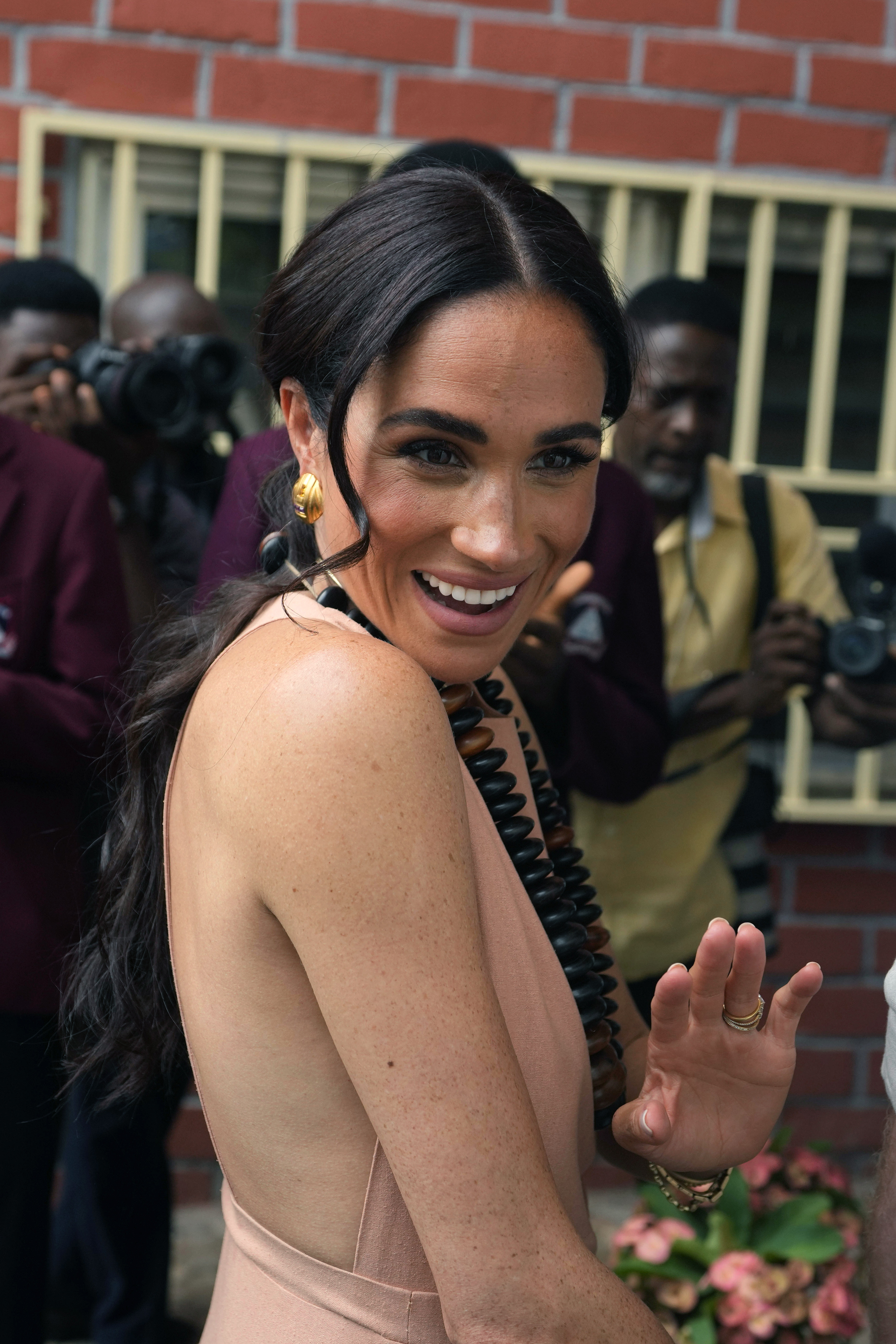
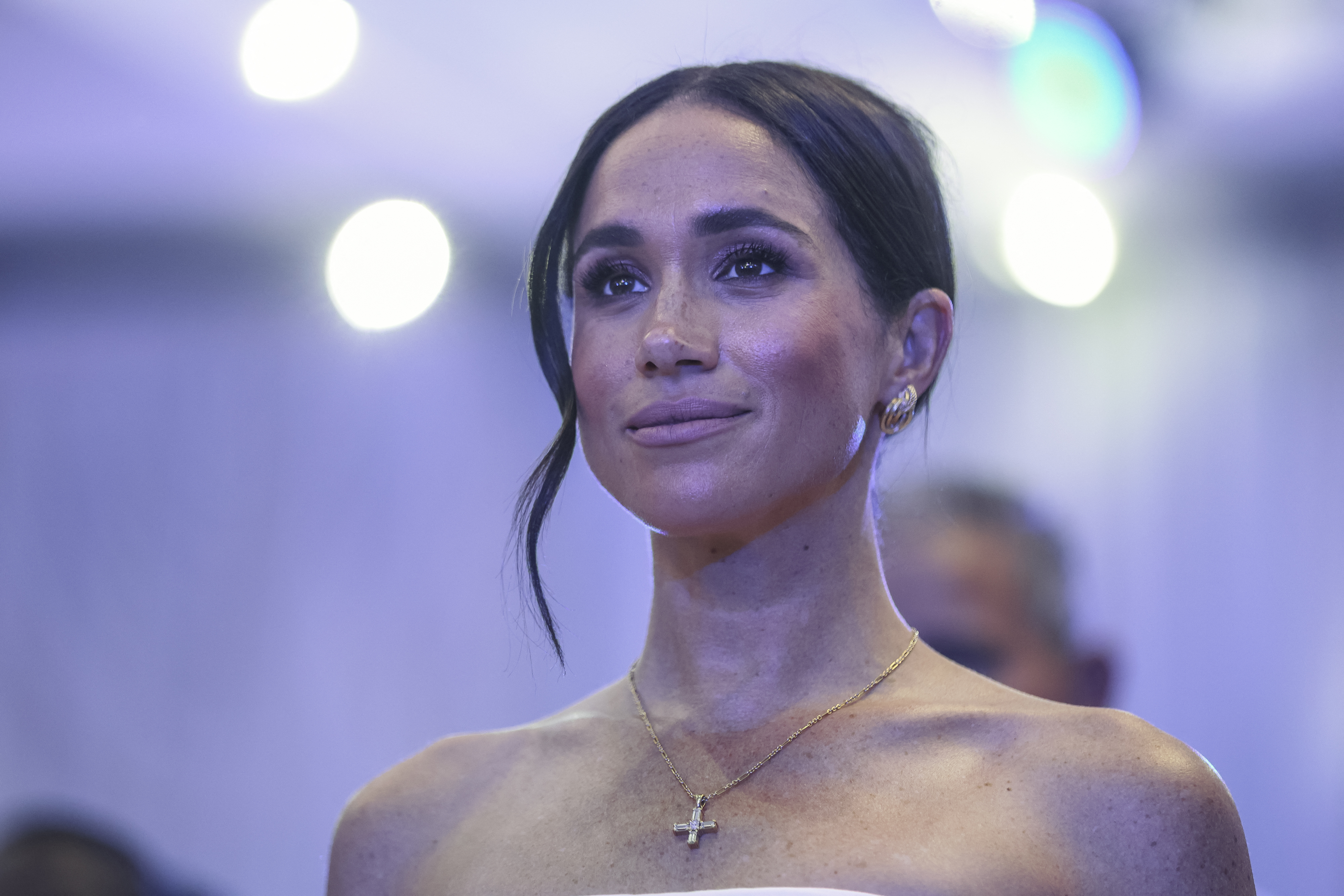
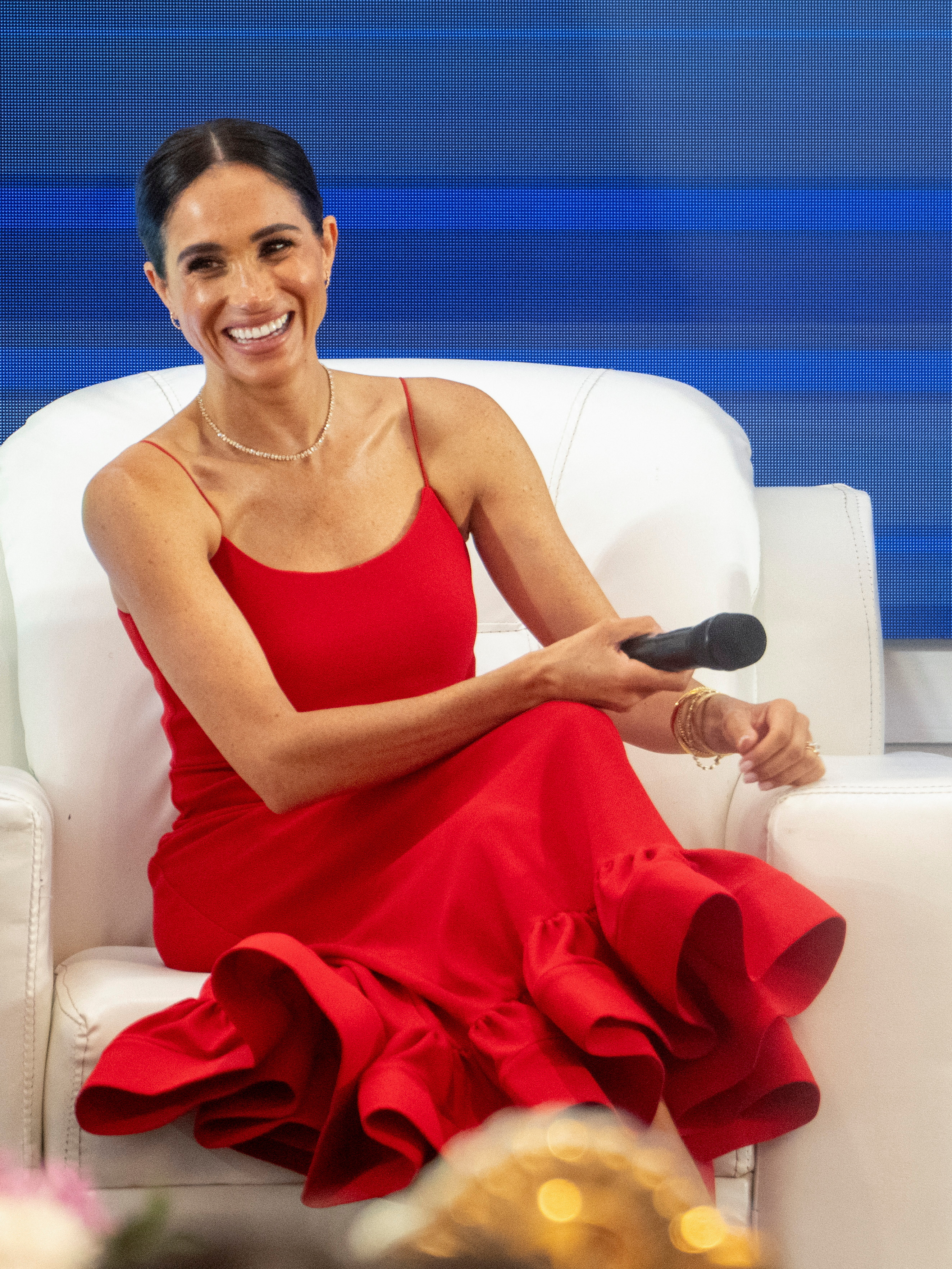
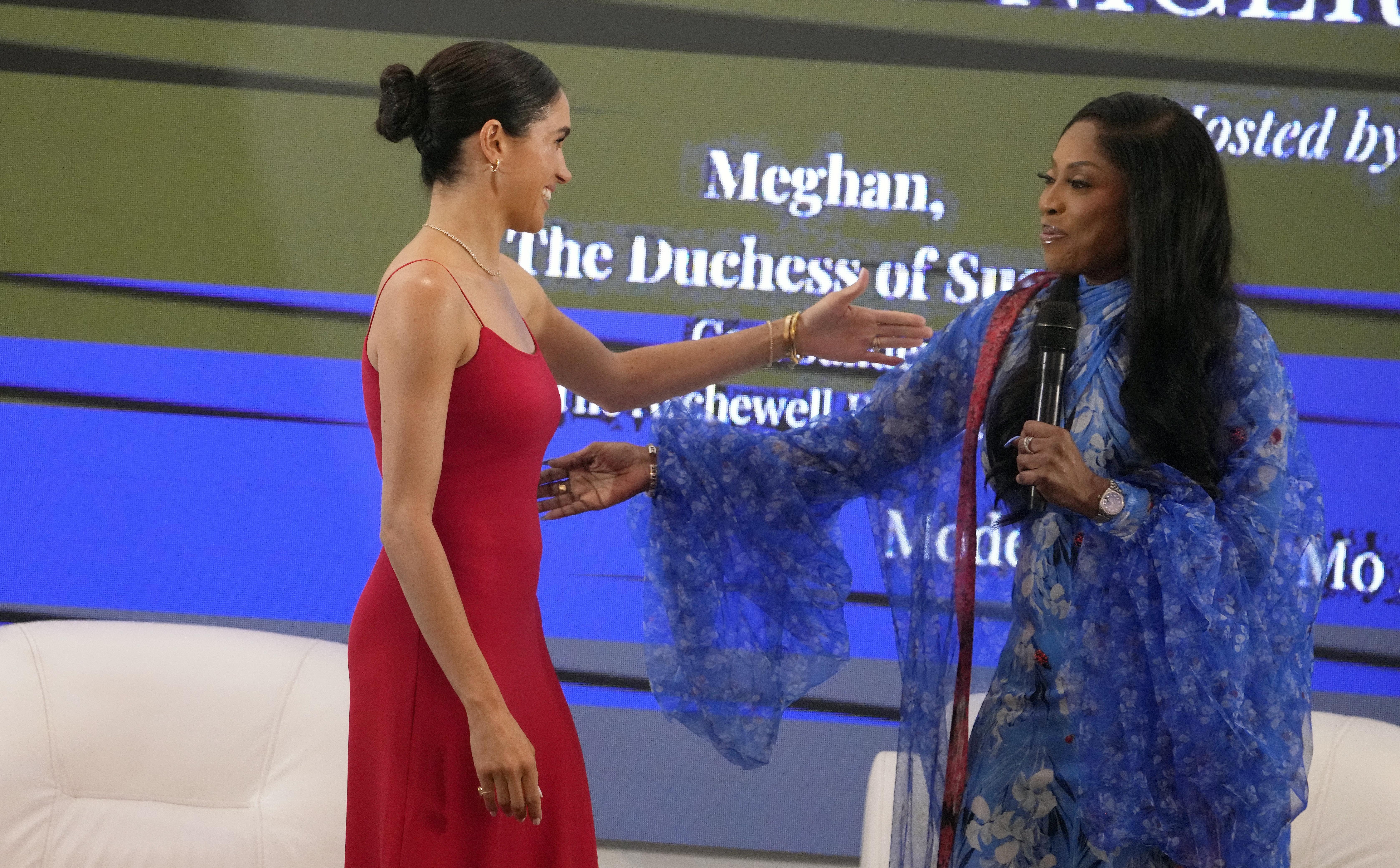
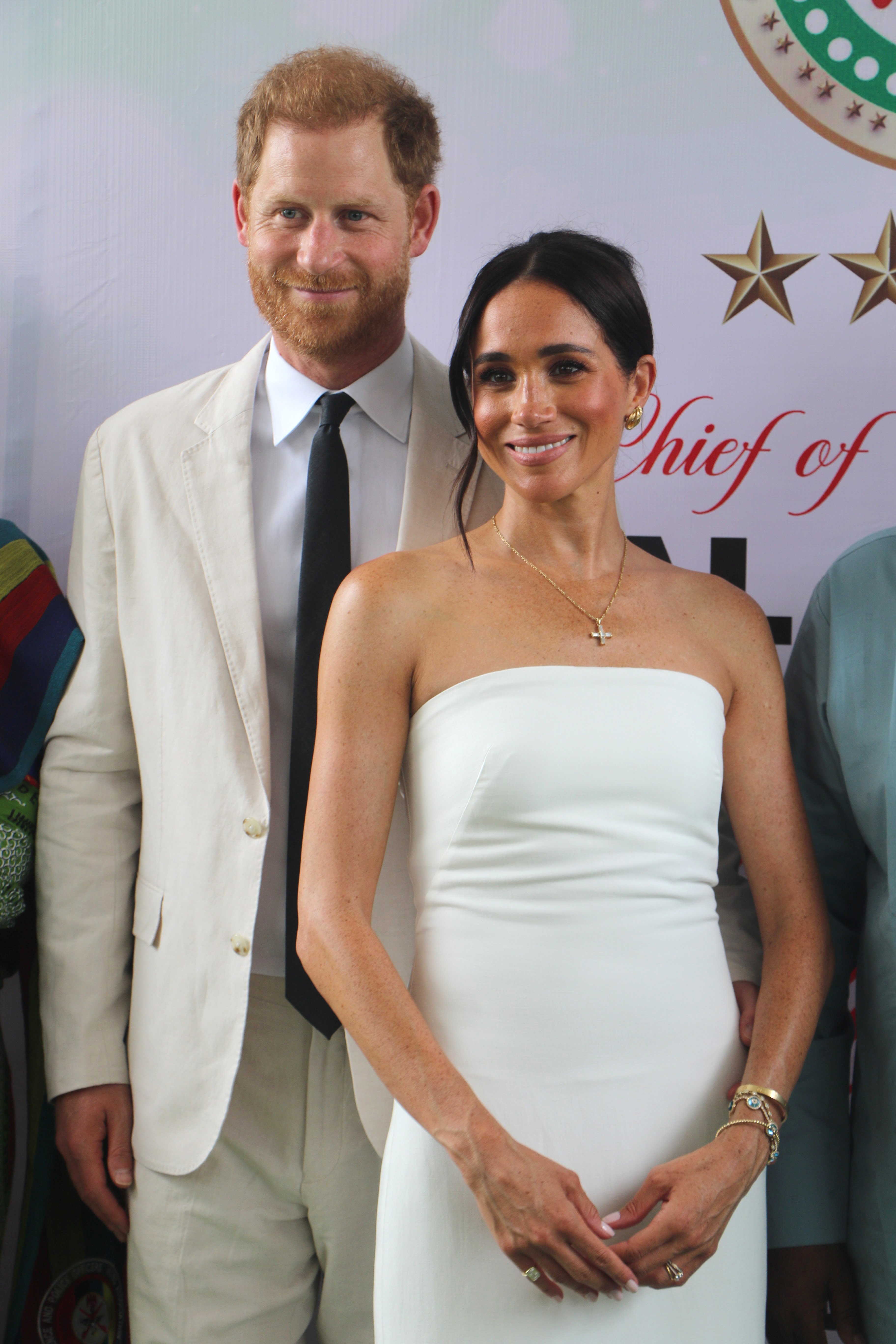
And body language expert Judi James says that the Duchess of Sussex has been combining her experience of both celebrity and royalty defining her as ‘a host’ throughout the tour.
Speaking to The Sun, Judi explains: “Meghan unfurls into a body language state here that defines her as a host and a leader at this event.
“Her arrival body language in Nigeria did put Harry in a slightly more ‘leading man’ role, but it was still Meghan excelling at the stardust-strewn waves, smiles and touch rituals like this sweet over-the-one-hunched-shoulder red carpet-style wave and self-diminishing shrug.”
“At the leadership event though she appears solo and in fully gracious, regal-looking form,” she says.
“Straight-backed and with her shoulders and arms held back she glides into the room with a much more elegant, Duchess-like social smile.
“When she poses for photos it is her arm around the other guest’s shoulders as she turns to face-check, chatting while showing high levels of confidence.
Most read in Royals
“She is more tempered here though, steering others and indicating with one hand for another guest to sit, she even performs a less tactile greeting ritual on her stage host, holding out one arm in an initiating announcement gesture before leaning in for a cheek kiss, but turning her head and keeping a slight gap between them as they kiss to take the lead in terms of making it a more formal ritual.
“The leadership event is the perfect audience for Meghan and signals of confidence ooze from her here as she clutches the mic with her shoulders angles and a wide, beaming, symmetric smile of genuine pleasure.”
Meghan calls Nigeria ‘my country’ after arriving HOUR late to talk as pals reveal Harry ‘deeply stung’ by King snub
The Sussexes are on the third of a three day “faux Royal” tour of the African nation – having visited a warzone, played volleyball and even stood up for God Save The King.
Speaking at the even in the capital Abuja on Saturday, Meghan said: “I want to start by saying thank you very much for just how gracious you’ve all been in welcoming my husband and I to this country… my country.
“I am just flattered and honored and inspired. It has been a whirlwind 24 hours since we arrived.
“And I very quickly got the memo that I need to wear more colour, so I can fit in with all of you and your incredible fashion.”
6
Judi says Meghan has been ‘oozing confidence’ during the tourCredit: Reuters
6
Judi says that Meghan has also been showcasing a more formal body languageCredit: AP
Meghan has spoken about her love of “beige” in past interviews, telling a 2022 Netflix documentary: “When I was in the UK I rarely wore colour.
“I wore a lot of muted tones… I also wore it so I could just blend in.”
The Duchess of Sussex recently discovered she was 43 percent Nigerian, according to a genealogy test.
After finding out her ancestry, she said she rang her mum “because I wanted to know if she had any awareness of it”.
She said the discovery was “exciting for both of us” because being African-American “is really not knowing so much about your lineage or background, where you come from specifically”.
The 42-year-old explained: “It’s been really eye-opening and humbling to be able to know more about my heritage and to be able to know this is just the beginning of that discovery.”
It comes as pals revealed Harry made a request to King Charles to stay at a Royal residence while in the UK this week.
But for unknown reasons, the Duke of Sussex ended up staying in a hotel, and the missed opportunity to see his dad “deeply stung”.
A friend told The Sunday Times: “It surprises me a lot. I was fully expecting them to meet.
“I know that’s what he wanted to happen and I don’t know when he’s next back.”
Staying in a royal residence would have made seeing the King logistically easier for Harry – who were less than 3 miles away from each other on Wednesday.
Meghan & Harry’s links to Africa
Harry has had a long relationship with Africa, even taking his now-wife Meghan to Botswana for a camping trip as one of their early dates.
Meghan is said to want to “explore her ancestry and lineage” while thereafter revealing she was “43% Nigerian”.
In 2019 the couple embarked on a tour of southern Africa.
During the time apart Meghan told journalists she was struggling to cope with them being apart.
The Duke has also established a charity to help African orphans, Sentebale, with Prince Seeiso from Lesotho.
The Sussexes touched down in the capital Abuja on Friday morning to promote the 2025 Invictus Games in Vancouver, Canada.
The event – which sees injured servicemen and women compete in a range of athletics events – was founded by Prince Harry and is celebrating its 10th anniversary this year.
The Sussexes began their “faux-Royal tour” with a visit to Lightway Academy, a primary and secondary school in the capital.
On Saturday, Harry showed off his competitive side at an Invictus Games sitting volleyball event – just days after Prince William also tried his hand at the sport.
At a charity event that night, Harry and Meghan were pictured standing for God Save The King.
The region has seen horrific fighting between nomadic Fulani herdsman and farmers, as well as an insurgency by Boko Haram Islamists.
While at the 44 Nigerian Army Reference Hospital, the Duke shook hands with around 50 wounded soldiers and asked one bed-ridden hero if he’d named his prosthetic leg.
While holding the hand of another man, Harry asked: “Are they helping you? Are you feeling better?”
The 39-year-old was given a “big gown” and hula cap as a going home present from Kaduna governor Uba Sani.
The Duke and Duchess were welcomed to Lagos, Nigeria early on Sunday as they began their third day of their visit.
Harry and Meghan, in a Caroline Herrera button down and a Nigerian skirt gifted to her, arrived to a typically noisy and acrobatic dance performance.
Read more on the Scottish Sun
One move even saw a young boy being thrown between two dancers. The couple gasped and clapped as the dancers were hoisted up and created human towers.
After arriving at Lagos airport from Abuja they headed to a city school to take part in an event with non-profit Giants of Africa.
6
The Duke and Duchess of Sussex are on a three-day tour of NigeriaCredit: Getty
6
Judi says that Harry took the lead over Meghan when they first arrivedCredit: AFP
When Beyoncé and Jay Z announced back in January 2017 they were expecting twins, the Beyhive was abuzz and the Twitterverse was in straight pandemonium. It wasn’t long until they welcomed Rumi and Sir into the world; and since then, everyone’s twin radar has been pinging non-stop. We were curious: How many other celebs are the parents of twins? We set to searching — and we found so many more than we expected.
Super high-profile couples like George and Amal Clooney, whose twins Ella and Alex keep them on their toes with their linguistic skills — and former couple Jennifer Lopez and Marc Anthony welcomed twins Max and Emme in February 2008. Hilary Swank and Philip Schneider are new to the twin family, welcoming their boy and girl twins in April 2023!
Also in the parents-of-twins club: Brad Pitt and Angelina Jolie, Anna Paquin and Stephen Moyer, Julia Roberts and Danny Moder, and so. many. more. And while these celebs, of course, all love their kids to pieces, they’ve gotten candid about the challenges of being pregnant with twins and raising twins over the years too.
“Carrying twins was really uncomfortable because you lay on one side and you feel there’s a baby, and you lay on the other side and you feel there’s a baby,” Jennifer Lopez told Parade in 2010.
And Modern Family star Julie Bowen vented about the sibling rivalry that can arise in twins: “They’re also siblings who want to be together, but they compete,” she told The Huffington Post in 2014. “They’re going to become their own people because I’m going to talk to them and I’m going to interact with them, not because I necessarily drove one of them to pottery and one of them to karate.”
Folks, we’ve just grazed the surface. Here are 80 celeb couples with a beautiful, precious set of twins.
A version of this article was originally published in June 2017.
Tom Payne & Jennifer Akerman
Image Credit: Penske Media via Getty Images
The Walking Dead‘s Tom Payne his wife Jennifer Åkerman welcomed twins in April 2024.
“An entirely unexpected and wonderful surprise,” the couple said in a statement. “[Our son] Harrison is over the moon to have not one but two new siblings.”
“Jennifer and I have joked that he had something to do with this because there’s nothing he likes more than a house full of people,” they continued.
Cristiano Ronaldo
Image Credit: Will Palmer/Sportsphoto/Allstar via Getty Images
Famed soccer player Cristiano Ronaldo welcomed Cristiano Jr. back in 2010. Seven years later, he welcomed twins Eva Maria and Mateo via surrogate. Later in 2017, his girlfriend Georgina Rodriguez gave birth to Ronaldo’s fourth baby. In Oct. 2021, Ronaldo announced that he and Rodriguez were expecting twins, but six months later he shared the tragic news that their daughter Bella was born but her twin brother Ángel had tragically died.
In an interview with Piers Morgan, Ronaldo got candid about how they’ve discussed the baby boy’s death with the other kids.
“Gio arrived home and the kids start to say, ‘Where’s the other baby, where’s the other baby?’…After one week I said, ‘Let’s be upfront, and let’s be honest with the kids, let’s say that, Ángel, which is his name, he go to the Heaven.’”
Hilary Swank & Philip Schneider
Image Credit: NBC via Getty Images
Hilary Swank and Philip Schneider are the parents of boy and girl twins! The Million Dollar Baby star announced the birth of her twins over Easter weekend 2023, with a super cute photo of mom and babies.
“It wasn’t easy. But boy (and girl!) was it worth it. 👼🏼🤍👼🏼” she wrote on Instagram. “Happy Easter! 🐣🐣 Posting from pure Heaven. 🙌🏽”
Gordon Ramsay
Image Credit: Variety via Getty Images
Gordon Ramsay has five children with his wife Cayetana Hutcheson. There’s Megan (b. 1998), Matilda (aka Tilly) (b. 2001), and Oscar (b. 2019). Right there in the middle are twins Holly and Jack (b. 2000).
In a Larry King interview, he admitted he’s “not a hands-on” father in a quote that is very on-brand for the notoriously harsh chef.
“The time I have with the family is little,” he said. “But it’s quality. I’ve never been one to be home, I’ve never been a hands-on dad. I’m not ashamed to admit it, but you can’t run a restaurant and be home for tea at 4:30 and bath and change nappies.”
Courtney B. Vance & Angela Bassett
Image Credit: Photo by Lexie Moreland/WWD via Getty Images.
Did you know Courtney B. Vance and Angela Bassett welcomed twins named Slater Josiah and Bronwyn Golden in 2006?!
Jensen Ackles & Danneel Harris
Image Credit: Photo by Albert L. Ortega/Getty Images.
Supernatural star Jensen Ackles and his wife Danneel Harris welcomed twins Zeppelin Bram and Arrow Rhodes back in 2016.
Lisa Marie Presley
Image Credit: Joe Scarnici/Getty Images
The late Lisa Marie Presley, daughter of music legend Elvis Presley, had four children. She shared Benjamin (1992-2020) and Riley (b. 1989) with ex-husband Danny Keough. In 2008, she welcomed twin daughters Harper and Finley with then-husband Michael Lockwood.
“I just smother [my kids] in love,” Preseley said while speaking to Healthy Living in 2014. “They are my priority. That’s what I do. That’s what I care most about. I keep them close to me and make sure they are happy and healthy.”
Ashley Graham
Image Credit: Pascal Le Segretain/amfAR/Getty Images for amfAR
A year after giving birth to twins Malachi and Roman (b. 2022), supermodel Ashley Graham posted a photo on Instagram of her squeezing her bare postpartum belly, and followers were so appreciative.
“I wish I saw a post like this when I was younger. The impact of photos like these is substantial,” one person commented.
“🔥🔥🔥🔥🔥so beautiful – I love it,” another said.
Graham also shares Isaac (b. 2020) with husband Justin Ervin.
Nick Cannon
Image Credit: Stephen Lovekin/Variety.
Father of 12 Nick Cannon has not one, but two sets of twins! He welcomed Moroccan and Monroe in April 2011 with then-wife Mariah Carey. He also has Zion and Zillion who he had with ex Abby De La Rosa in June 2021.
Madonna
Image Credit: Amy Sussman/WWD.
Legendary singer Madonna has six children, two of whom are her twin girls Estere and Stella, whom she adopted in Feb. 2017 from Malawi.
Elon Musk & Justine Musk
Image Credit: Anna Webber/Variety via Getty Images
Elon Musk and his first wife Justine Musk welcomed six children into the world during their ten-year relationship. They first had a child named Nevada Alexander Musk in 2002, who died from sudden infant syndrome. After his death, they welcomed twin boys Griffin and Xavier Musk in April 2004 after IVF treatments. Soon after that, they even welcomed triplet boys!
Matthew & Kelly Stafford
Image Credit: Elizabeth Goodenough/Everett Collection.
NFL star Matthew Stafford and his wife Kelly are parents of twin girls Chandler and Sawyer, born in March 2017. The couple also share daughters Hunter Hope, born in August 2018, and Tyler Hall, born in June 2020.
Bryan Greenberg & Jamie Chung
Image Credit: Priscilla Grant/Everett Collection.
On October 24, 2021, singer Bryan Greenberg took to Instagram to announce that he and wife Jamie Chung were a family of four! “We got double the trouble now [Jamie Chung],” Greenberg captioned a video, featuring the proud dad snuggling the two infants on his chest. Chung commented with two red heart emojis.
Michael Turchin & Lance Bass
Image Credit: Variety via Getty Images
Lance Bass and Michael Turchin officially became the parents of twins on October 13, 2021. The couple welcomed Violet Betty and Alexander James via surrogate, annoucing the thrilling news on Instagram on October 14.
“The baby dragons have arrived!!” Bass wrote via social media. “I can not express how much love I feel right now. Thank you for all the kind wishes. It meant a lot. Now, how do you change a diaper??! Ahhhhhhhh!”
Lauren Burnham & Arie Luyendyk Jr.
Image Credit: Presley Ann/Getty Images
The Bachelor alums Lauren Burnham and Arie Luyendyk Jr. joined the club on June 11, 2021. They had a boy and girl, Lux and Senna. Lauren shared with People when exactly they decided what to call their little ones.
“We’ve had them picked out for the last couple of years,” she admitted. “We came up with [daughter] Alessi’s name. Right after we decided on her name, we actually chose the next two for our boy and our girl.”
The couple welcomed Alessi in May 2019.
Kristen Wiig & Avi Rothman
Image Credit: Deadline via Getty Images
Kristen Wiig and husband Avi Rothman welcomed twins via surrogate in Feb. 2021— the actress and comedian kept her motherhood plans a secret but fans speculated after she hinted she’d soon become a parent during an SNL monologue for Mother’s Day. “I don’t know if I truly appreciated my mom the first 45 years of my life,” Wiig said. “But this year I’m feeling especially grateful for her advice, her love. I’m so thankful for all the things she’s taught me, like preparing me to be a mom myself.”
On David Letterman’s Netflix talk show, My Next Guest Needs No Introduction, George Clooney gushed about Amal‘s transition into motherhood, saying, “She is sort of this remarkable human being and now mother which is something, I suppose, you should assume she would be wonderful at as well. But, when you see it in person, it makes you feel incredibly proud and also incredibly small.”
Beyoncé & Jay-Z
Image Credit: Variety via Getty Images
Queen Beyoncé & Jay-Z welcomed twins Rumi and Sir in June 2017. Why those names, you ask? Just a few months after their birth, Jay-Z opened up to the Rap Radar podcast about how those names came about.
“Rumi is our favorite poet, so it was for our daughter,” he said. “Sir was like, man, come out the gate. He carries himself like that. He just came out, like, Sir.”
The couple also share Blue Ivy who was born in 2012.
Angelina Jolie Pitt & Brad Pitt
Image Credit: Dee Cercone/Everett Collection
Exes Angelina Jolie and Brad Pitt continue to co-parent their children, including twins Knox Leon and Vivienne Marcheline, who were born in July 2008.
“I think one of the life-changing things that he did, one of many, is that I was absolutely never going to get pregnant,” Jolie told W magazine in October 2008, just months after the birth of the twins. “I never felt that it was the right thing to do. Now I wouldn’t trade that experience for the world. It taught me a lot about life, just the process of it, and now we have three other beautiful children that wouldn’t otherwise be here.”
The former couple also share Maddoz Chivan, Zahara Marley, Shiloh Nouvel, and Pax Thien who were all born in the early aughts.
Denzel Washington & Pauletta Pearson
Image Credit: Venturelli/WireImage
Olivia and Malcolm, Denzel Washington and Pauletta Pearson’s twins, were born in 1991. Since then, they have certainly followed their parents’ footsteps: Malcolm recently graduated from the American Film Institute Conservatory in 2016, and Olivia has had several roles on film and television, including The Butler, Empire, Mr. Robot and Madoff.
They also share John David (b. 1984) and Katia (b. 1987).
Jennifer Lopez & Marc Anthony
Image Credit: Gregorio T. Binuya/Everett Collection
“It’s hard to get my head around the fact that it’s been 10 years since these two forces of nature came into my world and changed my life forever,” Lopez wrote in a video caption in Feb. 2018. “You healed my soul and rejuvenated my existence… you taught me about love and life and myself in a way I never imagined… and I am forever in love with those beautiful faces…”
Jaime Pressly & Hamzi Hijazi
Image Credit: James Atoa/Everett Collection
Mom star Jamie Pressly and Hamzi Hijazi welcomed twin sons Leo and Lenon in October 2017. She shared the news on Instagram alongside an adorable snap of the newborns.
“They’re here! Introducing our new additions, Leo and Lenon, born October 16th. #DoubleTrouble,” she wrote.
The twins have a brother Dezi who is 10 years older than them.
Angela Bassett & Courtney B. Vance
Image Credit: Michael Buckner/Variety via Getty Images
This Golden Globe-winning mom and Emmy-winning dad welcomed Slater Josiah and Bronwyn Golden in 2006.
“Even from the age of four, from preschool, they’ve had to deal with — and as crazy as it seems or sounds — color issues,” she says. “Or because they were African Americans, and whether other kids will play with them or have issue with that. It makes you gasp and it just squeezes your heart sometimes, because you never want your kids to go through these sort of pain issues.”
Tilda Swinton & John Byrne
Image Credit: M Neilson/Getty Images
Doctor Strange‘s Tilda Swinton and former partner John Byrne’s twins, Honor and Xavier, were born in 1997.
Garcelle Beauvais & Mike Nilon
Image Credit: Charley Gallay/Getty Images
This Jamie Foxx Show star and ex-husband Mike Nilon welcomed Jax Joseph and Jaid Thomas in 2007. The couple split in 2012, but have since co-parented their kids.
“I’m not gonna lie. It breaks my heart when I hear them say to their friends, ‘I’m at Mommy’s house this week.’ Even when they’re not with me, they are constantly on my mind,” she wrote in a blog for People in 2014.
“Luckily, co-parenting with Mike has been a blessing because we let each other see the boys even when it’s not his or my week. That’s because we put them first,” she continues. “It’s better for them to see us both at their sporting events and school activities.”
Beauvais also has a son Oliver (b. 1991) who she shares with ex-husband Daniel Saunders.
Anna Paquin & Stephen Moyer
Image Credit: Priscilla Grant/Everett Collection
These True Blood co-stars-turned-married couple have fraternal twins, Poppy and Charlie, born in 2012. Since then, you’ve likely not seen many, if any, photos of their kids — and that’s exactly how Anna Paquin prefers it.
“You won’t find any pictures of my children. That’s a choice we made very specifically. I want the right to say that they’re not fair game,” she told Today in February 2018. “Don’t mess with my cubs.”
Céline Dion & René Angélil
Image Credit: Gabe Ginsberg/WireImage
After struggling with infertility, Céline Dion and her late husband René Angélil welcomed twins Eddy and Nelson in 2010. They also shared son René-Charles who was born in 2001. After the death of Angélil in 2016, Dion opened up to The Sun about how her twins helped her through the grieving process, saying, “I organize myself to not feel lonely. So I got myself a huge, huge, huge bed and I sleep with my twins. They are comforting me a lot. I need them. I need them close.”
Elsa Pataky & Chris Hemsworth
Image Credit: Kristin Callahan/Everett Collection
The man behind the big screen’s Thor welcomed twins Tristan and Sasha with wife Elsa Pataky in 2014, increasing their litter from one to three. The twins joined sibling India Rose, who was born two years earlier.
One of the couple’s goals for their kids? To keep them grounded.
“As a kid, we had very little money, and my parents saved up all year to just pay for a two-week camping vacation,” Hemsworth told People in 2017. “Financially, we’re in a different position, but I want to make sure they know these things don’t come easy. You have to work for it, and you can’t take it for granted.”
Beverly D’Angelo & Al Pacino
Image Credit: Everett Collection
Anton James and Olivia Rose have power parents: Al Pacino and National Lampoon‘s Beverly D’Angelo. D’Angelo was 49 years old when she gave birth to the twins in 2001, and two years later, they split.
A bitter custody battle over their fraternal twins ensued, and 15 years later, D’Angelo has forgiven Pacino for launching the battle, telling Closer magazine in July 2017, “The key thing is creating a new history, and moving on from whatever dissolved that relationship to the new one of co-parenting. The most important thing I’ve learned is how vital acceptance is.”
Pacino had a third child in 1989, Julie Pacino, with ex-girlfriend Jan Tarrant.
Christine Lahti & Thomas Schlamme
Image Credit: Elizabeth Goodenough/Everett Collection
The Blacklist actress and hubby Thomas Schlamme’s twins, Joseph Tabor and Emma Kate, were born in ’93, five years after their brother Wilson. And after twenty-five years of parenting, it looks like the tables have turned: In an interview with The Mary Sue in 2016, Christine Lahti reveals the lesson she learned from her own daughter, Emma Kate.
“I teach a lot of master classes and tell my students, especially young women, if you want to act you need to also write and direct and produce,” she starts. “You need to create your own stuff, because you can’t be dependent on others hiring you. And I learned that from my daughter, who is 22 and such a feminist and empowered. She wants to be a singer-songwriter, so she’s going to do it all herself. She’s producing the whole thing. And I’m inspired by her and the other young women who are just doing it. And the internet is such a help. It allows them to self-promote and be creative.”
Deanna Daughtry & Chris Daughtry
Image Credit: Chelsea Lauren/Variety/Penske Media via Getty Images
In 2010, American Idol rocker Chris Daughtry and wife Deanna welcomed Adalynn Rose and Noah James.
“Being a father has made me grow up,” Chris told People in 2013. “Life is about more than just me. I’ve got a great wife, great kids, and a great life now.”
Chuck Norris & Gena O’Kelley
Image Credit: Jon Kopaloff/FilmMagic
Chuck Norris and second wife Gena O’Kelley’s twins were born in 2001 and are named Dakota Alan and Danilee Kelly are following in Norris’ footsteps: In 2016, they passed their second-degree black belt test!
Norris has three other kids from previous relationships.
Dennis Quaid & Kimberly Buffington
Image Credit: David M. Benett/Dave Benett/Getty Images
Quaid and ex-wife Kimberly Buffington’s twins Thomas Boone and Zoe Grace were born via surrogate in 2007. The twins made headlines when just two weeks after they were born, they were accidentally given an overdose of the blood thinner Heparin.
“It turned their blood to the consistency of water,” Quaid said on the Allegedly podcast in 2015. “The danger would be rupturing an artery. And they were so small they couldn’t thrash around. I think that’s what saved them.”
Quaid also shares son Jack (b. 1992) with ex Meg Ryan.
Dania Ramirez & Bev Land
Image Credit: Priscilla Grant/Everett Collection
This Devious Maids star and her director husband, Bev Land, welcomed Gaia Jissel and John Aether in 2014.
“I also went to work two and a half weeks after I had the babies,” Dania Ramirez said at the Devious Maids Season 4 premiere party in 2016. “And it’s twins. So you can imagine, I still can’t wrap my head around it. I still ask myself this question every single day.”
“I think it was a really good learning experience for me as an actress and, also, as a mother,” she continues. “I didn’t really have time to double-guess anything.”
Leigh Koechner & David Koechner
Image Credit: Michael Germana/Everett Collection
Twin Peaks star David Koechner and his wife, Leigh, are parents to twins Audrey Violet and William Sargent who were born in 2006. They also share Charlie and Margot.
The couple spoke with SheKnows back in 2012, revealing just because we think he’s funny, his kids sure don’t: “I’m not sure it impresses the kids! They don’t always think it’s funny. Like my son, I remember being in a special carpool and we were going on a field trip. The night before [the field trip] my son said to me, “Dad, tomorrow no jokes OK?”
David Burtka & Neil Patrick Harris
Image Credit: Kristin Callahan/Everett Collection
Neil Patrick Harris and husband David Burtka welcomed Gideon Scott and Harper Grace via surrogate in 2010.
Harris gushed about his then-7-year-olds to US Weekly in March 2018, saying: “Gideon’s into baseball at the moment so he’s been practicing his baseball drills and Harper is very into gymnastics still. She loves doing handstands. As do I. We’re cut from the same cloth.”
Dominic Purcell & Rebecca Williamson
Image Credit: Priscilla Grant/Everett Collection
Prison Break‘s Purcell and ex-wife Rebecca Williamson welcomed Lily-Rose and Augustus in 2003, joining siblings Joseph, born 1999, and Audrey, born in 2001. Purcell and Williamson split four years later, in 2007.
Donald Sutherland & Shirley Douglas
Image Credit: Frank Edwards/Fotos International/Getty Images
Did the last name sound familiar? It should: Donald Sutherland and his second wife Shirley Douglas had twins Rachel and Kiefer in 1966. Rachel stays out of the spotlight, but her twin bro and noted actor Kiefer takes after their famous father.
Sutherland and Douglas married in 1966, but split up in 1970. They each have kids from other relationships.
Geena Davis & Reza Jarrahy
Image Credit: JA/Everett Collection
In 2004, when Geena Davis was 48 years old, she and now-estranged husband Reza Jarrahy welcomed twin sons Kian William and Kaiis Steven. The couple married in September 2001 and already had a 2-year-old daughter, Alizeh Keshvar, at the time.
Jamie Anne & Marshall Allman
Image Credit: Emiley Schweich/Everett Collection
The Killing‘s Jamie Anne and Humans husband Marshall Allman welcomed Oliver and Asher in January 2013.
Anne opened up to US Weekly about the “horrible” pregnancy and birthing process, saying, “They wanted me in the hospital for three months because the shortened cervix was slowly disappearing. Then I got a bladder infection and delivered that day,” she told them. “They opened me up and Asher came out, then Oliver. I heard them cry and I looked over at Marshall to see what he was thinking. He looked at me and said, ‘It’s amazing.’”
Jeffrey Tambor & Kasia Ostlun
Image Credit: Priscilla Grant/Everett Collection
In October 2009, Transparent‘s Jeffrey Tambor and wife Kasia Ostlun’s family grew from two to four. Ostlun gave birth to twin sons, Hugo Bernard and Eli Nicholas, joining Eve Julia, who was 2-1/2 years old at the time, and Gabriel Kasper, who was 3-1/2 years old. Tambor also has an adult daughter, Molly, from a previous relationship.
Jane Seymour & James Keach
Image Credit: Gilbert Flores/Billboard via Getty Images
Jane Seymour’s twin sons, Johnny Stacy and Kristopher Steven, were born in 1997 —12 years after their brother Sean. She had the twins with her now ex-husband James Keach; the two divorced in 2015.
In 2009, Seymour spoke about having twins in an interview with About.com: “There is a bond that twins have that is unspoken and quite formidable,” she says. “I keep telling the boys, ‘You’ll always have this unique connection that the rest of us don’t have. For the rest of your life.
“If it means you’re doing a sport, you’ll always know what the other one’s about to do,” she continues to say. “And if it’s something you’re doing that’s musical, you clearly know how to play together. And you also pretty much know how to make one another mad, how to make one another sad, and hopefully how to make one another happy.”
Rodney Peete and Holly Robinson Peete
Image Credit: Priscilla Grant/Everett Collection
The Chicago Fire star and her retired NFL husband have four kids, including Ryan Elizabeth and Rodney Jr. (RJ) who were born in 1997. RJ was later diagnosed with autism. And more recently, Holly Robinson Peete co-authored the young adult novel Same But Different: Teen Life on the Autism Express with her twins.
Holly Hunter & Gordon MacDonald
Saving Grace star Holly Hunter and partner Gordon MacDonald welcomed twins Claude and Press in January 2006. The Oscar-winning actress Holly Hunter gave birth at the age of 47.
Not much is known about the boys, as Hunter told the press in 2009 that she does not discuss her children with media.
Kathryn Morris & Johnny Messner
Image Credit: James Atoa/Everett Collection
Johnny Messner welcomed twins Jameson West and Rocco McQueen, in August 2013 with Cold Case‘s Kathryn Morris.
“When the doctor sensed twins from some specific HCG levels in my blood work, he brought us in for the ultrasound and said, ‘Let me just check on something I already know … Okay, there’s one for you and one for you!’ We were shocked and ecstatic,” Morris told People at the time. “Now these brothers have a built-in best friend for life! Who doesn’t want that?”
Danneel Ackles & Jensen Ackles
Image Credit: John Salangsang/Variety/Penske Media via Getty Images
The Supernatural star and his wife Danneel Ackles welcomed Zeppelin Bram and Arrow Rhodes in December 2016, three years after their first child, Justice Jay, was born.
At a convention in December 2016, Jensen explained the meaning behind the twins’ names: “There’s a knot known as the zeppelin blend and his cord was tied around him,” he explained. As for their daughter, it came down to her initials: “We wanted an AA name, and we both liked Arrow,”
Julie Bowen & Scott Phillips
Image Credit: Gabriel Olsen/Getty Images
In 2009, this Modern Family mom and ex-husband Scott Phillips welcomed twin boys John and Gustav. Two years earlier, they welcomed their first son, Oliver. After 13 years of marriage, the two filed for divorce in February 2018.
Julia Roberts & Danny Moder
Image Credit: Lester Cohen/WireImage
In 2004, Julia Roberts and cinematographer hubby Danny Moder welcomed Phinnaeus Walter and Hazel Patricia. Two years later, the couple welcomed son, Henry Daniel.
In an interview with People in September 2017, Roberts spoke about how she and Moder have chosen to raise all their kids — the twins now around 12 years old:
“This is the time you have to rise as a community and as a household and as a country and try to make voices be heard. And that’s what I have to instill in my children, who are certainly old enough to be aware of politics and things going on in the world,” she says. “It’s very important for my husband and me to be honest with them and help them feel like they still have a voice for the things that they believe in.”
Kevin Zegers & Jaime Feld
Image Credit: Emiley Schweich/Everett Collection
The Notorious star and wife Jaime Feld welcomed daughters Zoë Madison and Blake Everleigh in 2015.
“We really tried for a while to have children — we didn’t just happen to get pregnant,” Kevin Zegers told People at the time. “We definitely wanted these girls and knew that we would be super attentive.”
Justin Chambers & Keisha Chambers
Image Credit: Penske Media via Getty Images
The Grey’s Anatomy star and wife Keisha have five children, including twins Maya and Kaila, who were born in ’97.
“Our house is sort of like a nightclub,” he told Good Housekeeping. “We’ve got loud music and chaos and crowds. But really, we’re pretty laid-back. Our kids are in a little band, and they like to play video games, and my wife and I do our best to live a low-key, non-Hollywood kind of life.”
Mark McGrath & Carin Kingsland
Image Credit: Angela Weiss/Getty Images
The Sugar Ray singer and wife Carin Kingsland welcomed twins Lydon Edward and Hatley Grace in April 2010.
“She’s so precious, just a princess,” Mark McGrath tells People. “And he’s my little dude. Their birth was the greatest moment of my life.”
Marcia Gay Harden & Thaddaeus Scheel
Image Credit: Adam Taylor/Disney General Entertainment Content via Getty Images
The Code Black actress and now-ex Thaddaeus Steel welcomed twins Julitta Dee and Hudson in 2004.
After nearly 15 years of marriage, Harden and Scheel filed for divorce in 2012. At the time, their twin daughters were 7 years old, and their son, Eulala, was 13 years old.
Marcia Cross & Tom Mahoney
Image Credit: Rob Latour/Variety/Penske Media via Getty Images
Quantico‘s Cross and husband Tom Mahoney brought home twin daughters Eden and Savannah in 2007.
“I wanted to be a member of [the mom] club so badly, and now I’m in and it’s so much better than I even imagined,” Cross told People in 2007. “Even before I was 30, I started thinking about (motherhood). The years started going by, and I was anxious about the clock ticking. Now it seems like it was all meant to be.”
Mary Stuart Masterson & Jeremy Davidson
Image Credit: Corbis via Getty Images
Masterson and her Army Wives husband Jeremy Davidson welcomed twins Wilder and Clio in 2011. The actress was 44 when she announced her pregnancy. At the time, the couple were already parents to a 17-month-old son.
Niki Taylor & Matt Martinez
Image Credit: Ron Galella, Ltd./WireImage
The supermodel and first husband Matt Martinez welcomed (now-grown) twins Jake and Hunter in 1994. In 2009, Taylor had a third child, daughter Ciel, with new husband Burney Lamar. “Ciel’s got three dads,” she told People in 2009. “She’s covered. She’s not going to be able to get away with anything!”
Taylor and Martinez parted ways in 1996, and Taylor re-married to American race car driver Lamar in 2006.
Michael Strahan
Image Credit: Elizabeth Goodenough/Everett Collection
Michael Strahan has four kids, and the former NFL’er and ex-wife Jean Muggli’s twin daughters Sophia and Isabella were born in 2004.
Michael Strahan opened up about having twin daughters, giving the following advice: “I know it’s hard at first, but at a certain point they will take care of themselves,” he told People in 2017. “They will be each other’s best friend, and you’ll think to yourself, ‘Where did the time go?’ I’m blown away by how fast it goes.”
Molly Ringwald & Panio Gianopoulos
Image Credit: Derek Storm/Everett Collection
Riverdale‘s Molly Ringwald and hubby Panio Gianopoulos welcomed Adele Georgiana and Roman Stylianos in 2009.
“To have the opportunity to have another girl — it is a dream come true,” Ringwald told People at the time. “And a boy! We were all overjoyed about that too.”
Mel Gibson & Robyn Moore Gibson
Image Credit: Elizabeth Goodenough/Everett Collection
Among Gibson’s nine children are now-grown twins Edward and Christian, born in 1983 to mom Robyn Moore.
Now 35 years old, Edward and Christian ran into a bit of trouble growing up: In 2005, Christian was arrested for DUI; and in 2007, Edward reportedly entered rehab.
Gibson and Moore parted ways in 2011, after having seven children together. Gibson is currently dating screenwriter Rosalind Ross.
Patrick Dempsey & Jillian Fink
Image Credit: Elizabeth Goodenough/Everett Collection
Former Grey‘s star Patrick Dempsey and wife Jillian have twin sons, Sullivan Patrick and Darby Galen (b. 2007), as well as a daughter, Tallula Fyfe (b. 2002).
Patrick told Life magazine in 2007: “Now, making money is about providing for my children. And being a father makes you look at yourself. You look at your marriage and go, ‘How do I improve this? How do I keep growing and create a stable environment for my children?’”
Tracy Pollan & Michael J Fox
Image Credit: Kristin Callahan/Everett Collection
This power couple’s twin daughters Aquinnah Kathleen and Schuyler Frances were born in 1995. The adult twins have since accomplished a lot: Schuyler attended Pomona College, and Aquinnah went to Duke. The couple also share son Sam and daughter Esme.
Melissa Etheridge & Tammy Lynn Michaels
Image Credit: Billboard via Getty Images
The rocker and ex Tammy Lynn Michaels welcomed twins Johnnie Rose and Miller Steven in 2006.
“The creation of life brings about immeasurable love, and pours hope into the future,” the couple said in a statement at the time. “The joy will help carry us through our upcoming sleepless nights.”
The How to Get Away with Murder star and her actor hubby Kamar de los Reyes brought home twin boys, John Ruben and Michael Luis, in 2014.
A year after their birth, Sherri Saum told Hello! magazine in 2015 she’s raising her sons bilingual. “Their first word was ‘mas’ because we speak to them in Spanish. We teach them Spanish first, as a first language. So the first word is ‘mas,’ which is ‘more.’ They’re like me; they like to eat. So whatever we’re feeding, they’re like, ‘Mas? Mas?’”
Kim Porter & Sean “Diddy” Combs
Image Credit: Michael Germana/Everett Collection
The rap mogul and his late partner Kim Porter welcomed D’Lila Star and Jessie James in 2006. When the girls turned 11, Sean Combs posted a sweet portrait of the two on his Instagram.
Porter suddenly passed away in late 2018 from lobar pneumonia, and Combs has paid homage to her memory many times since. In his eulogy, the rapper said this: “I just want to say to my kids, Justin, Christian, D’Lila, Jessie, Chance and the other man in the house, Quincy: Your mother instilled in me this, and I pledge in front of everybody right now that I will always be there for you. I will always take care of you.”
Stanley Tucci & Kathryn Louise Spath
Image Credit: Variety via Getty Images
Stanley Tucci and late wife Kathryn Louise Spath welcomed Isabel Concetta and Nicolo Robert in 2009.
Tucci and Spath married in 1995 and had three children together. It wasn’t until 2009 when Spath lost her battle against breast cancer. Tucci later found love again, with Felicity Blunt, his The Devil Wears Prada co-star Emily Blunt’s sister. The pair had two kids together.
Steve Howey & Sarah Shahi
Image Credit: Priscilla Grant/Everett Collection
The Person of Interest star and her Shameless husband welcomed Violet Moon and Knox Blue in 2015, five years after welcoming their son William.
In 2016, Steve Howey told People the twins brought them even closer. “It is not easy, but all three are beautiful babies. We’re a very close-knit family, just bigger,” he says.
Sarah Jessica Parker & Matthew Broderick
Image Credit: Kristin Callahan/Everett Collection
In 2009, twins (via surrogate) Marion Loretta Elwell and Tabitha Hodge joined big bro James Wilkie (b. 2002).
In a Daily Beast interview in 2009, Sarah Jessica Parker talked about the role the twins’ older brother had in naming them. “Marion is this name that James Wilkie chose for whatever reason. The rest of us call her Loretta … [James Wilkie] said, ‘You put that name on the birth certificate. Don’t you just humor me.’”
Steve Harvey
Image Credit: Priscilla Grant/Everett Collection
The talk show host has twin daughters Karli and Brandi (b. 1982).
In total, Steve Harvey has seven kids: He had the twins with his ex Marcia Harvey; he has two sons, Broderick (b. 1991) and Wynton (b. 1997), from his second marriage to Mary Shackelford; and his current wife Marjorie has three children from her previous marriage.
William Petersen & Gina Cirone
Image Credit: Michael Germana/Everett Collection/Everett Collection
The longtime CSI star and wife Gina Cirone welcomed twins, a son and daughter, via surrogate in 2011.
After William Petersen left CSI, he dedicated his time to raising his twins. “I had a relationship with CBS that was gold standard,” he told Chicago Tribune in 2017. “And when CSI ended, I just decided I was going to spend as much time with my two (kids) as I can. I just spend my time chasing them around.”
Ray Romano & Anna Romano
Image Credit: Dan MacMedan/Getty Images
Ray Romano and wife Anna’s ’93-born twin sons, Matthew and Gregory, are all grown up now. The boys and their two siblings all had small parts in the 2006 animated film Ice Age: The Meltdown.
Alex Sykes & Wanda Sykes
Image Credit: Dee Cercone/Everett Collection
Funny lady Wanda Sykes and wife Alex welcomed twins Olivia Lou and Lucas Claude in 2009.
“I was like, ‘Babies, y’all need to hurry up and get here,” Wanda told PEOPLE in 2009. “I have this big White House Correspondents Dinner gig coming up. I’ve got to get out to the clubs and work my magic.”
Tony Dovolani & Lina Dovolani
Image Credit: John Paul Melendez/Everett Collection
This DWTS pro’s fast feet probably come in handy chasing around Adrian and Ariana, born in ’08. The couple has another child, Luana (b. 2010).
“Love your family more than anything else in the world,” Tony Dovolani tells Huffington Post in 2014. “If you treat your family the way they should be treated, then your family will always, always be there for you — through your successes, your failures, through everything.”
Anna Kournikova & Enrique Iglesias
Image Credit: Larry Marano/Getty Images
The notoriously private couple share three children together — Kournikova gave birth to twins in 2017, son Nicholas and daughter Lucy, and in February 2020, a baby boy.
Rebecca Romijn & Jerry O’Connell
Image Credit: Elizabeth Goodenough/Everett Collection
In 2008, The Librarians star and her Billions hubby brought home Dolly Rebecca Rose and Charlie Tamara Tulip.
In an interview with PEOPLE, Jerry O’Connell said he and wife Rebecca Romijn’s first priority is making sure their daughters are grounded people. “The first thing we try to do is just make them polite. I’m not even joking. That really goes a long way.”
Bode Miller & Morgan Miller
Image Credit: JA/Everett Collection
Bode and Morgan Miller welcomed twin boys on Nov. 8, 2019. It was a dramatic home birth, with Morgan going into labor at home while their midwife was stuck in traffic. Their twins join the Miller family’s two sons, Edward and Easton. The Miller’s daughter Emeline tragically died in a 2018 drowning accident.
Willow Palin & Ricky Bailey
Image Credit: Matt Hage/Disney General Entertainment Content via Getty Images
Sarah Palin’s daughter Willow Palin gave birth to twin daughters Banks and Blaise on Nov. 18, 2019. The twins and her and husband Ricky Bailey’s first kids together, and the fourth and fifth grandkids of Sarah Palin.
“Banks and Blaise… we are so in love with you girls,” Willow wrote on Instagram to celebrate the twins’ birth.
Tara Tucker & Jonathan Tucker
Image Credit: Priscilla Grant/Everett Collection
Kingdom star Jonathan Tucker’s wife Tara gave birth to fraternal twins Hayes Taj and India Moss in May 2019. “.25 catholic .25 jewish .25 muslim .25 hindu this is america. women are heroes. god is good,” Tucker wrote on Instagram.
He later shared a snap of himself surrounded by piles of newborn-mandated goods (cribs, strollers, carriers, etc.) at home: “This is not an ad,” he joked. “This is real life.”
Jwan Yosef & Ricky Martin
Image Credit: Elizabeth Goodenough/Everett Collection
Ricky Martin and Jwan Yosef share four kids together, all welcomed via surrogate. Their oldest two are twin boys Valentino and Matteo, who joined the Martin-Yosef family in 2008. The younger two are daughter Lucía and youngest son Renn.
Martin and Yosef have been together since 2016, and revealed that they’d gotten married in a private ceremony in January 2018.
Marco Perego & Zoe Saldana
Image Credit: Variety via Getty Images
Zoe Saldana gave birth to twins Bowie and Cy in November 2014. She shares them with husband Marco Perego, who she married in 2013.
Saldana’s twins were born prematurely, and she told Allure about the frightening experience in 2016: “The boys came at 32 weeks. They found protein in my urine; my platelets crashed. I didn’t qualify for an epidural, so I delivered under general anesthetic. I didn’t even meet them until a day later.”
Saldana and Perego welcomed a third child together in February 2017: a son, Zen.
Morgane Stapleton & Chris Stapleton
Image Credit: MORA/Everett Collection
Chis Stapleton and wife Morgane welcomed twin babies, both boys in 2018, Macon and Samuel — the couple also share three other children: Waylon and Ada, and in May of 2019 welcomed their fifth child together.
Robert De Niro
Image Credit: Rocco Spaziani/Archivio Spaziani/Mondadori Portfolio via Getty Images
Robert De Niro has six adult children and welcomed a baby girl in April 2023 at age 79. In 1995, he welcomed twin sons Julian and Aaron, 27, with his former girlfriend Toukie Smith.
(upbeat marching band music) ♪ Go – Welcome to the 18th season of WVIA “Scholastic Scrimmage.”
I’m your host, Paul Lazar.
“Scholastic Scrimmage” is a question and answer competition featuring high school students from across the WVIA viewing area.
In each program, two schools will compete in a single elimination tournament for a chance to win 1, 3, or $5,000.
Tonight’s match features Wyoming Valley West versus Lake Lehman.
Representing Wyoming Valley West are Tessa Kopetchny, Jalen Buchinski, Elvis Castanos, Evelyn Saltz.
And their alternate is Joey Souder.
Their advisor is Robert Bonczewski.
Representing Lake Lehman are Teagan Norconk, Brianna London, Francis Pinnacoli, and Seth Berry.
Their alternates are Evan Kaiser and Cassidy Gallagher.
And their advisor is Cecelia Jennings.
“Scholastic Scrimmage” is a game of rapid recall of factual information, so let’s take a moment and review the rules.
The first team to buzz in will have an opportunity to answer a toss-up question.
Correct answers to these questions are awarded 10 points and that team will then receive a 5 point bonus question.
If that toss-up answer is incorrect, no points will be deducted, but the question will then rebound to the other team.
If the other team answers correctly, they’ll be given the toss-up points, but will not receive a bonus question.
Well, let’s go ahead and get started with this toss-up question.
What country’s 1993 election was contested between Prince Ranariddh and Prime Minister Hun Sen, who restored the monarchy under Norodom Sihanouk?
(buzzer beeps) That was Cambodia.
Let’s go to another toss-up.
What British chemist, whose law equates the total pressure of a gas mixture to the sum of partial pressures, proposed an early atomic theory?
(button beeps) Teagan, Lake Lehman?
– Boyle?
– Is incorrect.
Rebound now to Valley West.
(buzzer beeps) That was John Dalton.
Let’s go to another toss-up.
What island whose western most tip is home to Negril Lighthouse also contains the city of Port Royal, which sits at the mouth of Kingston Harbor?
(button beeps) – Jalen, Valley West.
– Jamaica?
– Is correct.
(buzzer warbles) And here comes your bonus.
What Weaver of Raveloe is framed for stealing money from a religious community and adopts a daughter named Eppie in an 1861 novel by George Eliot.
(buzzer beeps) That was “Silas Marner”.
Here’s our next toss-up question.
What human reclines naked and reaches out with his left hand to touch God’s hand on a portion of a Sistine Chapel depicting his creation?
(button beeps) Jalen, Valley West.
– Adam.
– Is correct.
(buzzer warbles) And here comes your bonus.
Many migrants heading to the US have to cross what inhospitable gap along the Panama-Columbia border?
(button beeps) – The Panama Canal?
– No, it’s the Darien Gap, the Darien Gap.
Let’s go to another toss-up.
What leader who ordered a massacre at Drogheda, disbanded the Rump Parliament after Charles I’s execution, and ruled as Lord Protector of Britain?
(button beeps) Francis, Lake Lehman.
– Oliver Cromwell?
– Is correct, and here comes your bonus now.
(buzzer warbles) What general captured Mexico City in 1847, ran as the Whig nominee for president in 1852, and devised the Anaconda plan during the Civil War?
– Try it.
I don’t, try it.
(button beeps) – Daniel Boone?
– No, that’s Winfield Scott.
Let’s go to another toss-up.
What city hosted an NFL team that moved to Tennessee and was originally called the Oilers (button beeps) and now is home- Jalen, Valley West.
– Houston.
– Is correct, and here comes your bonus question.
(buzzer warbles) Article 71 of the United Nations charter introduced what term for large activist groups such as Oxfam that are independent of direct state funding?
(buzzer beeps) That is NGO, or non-governmental organization.
Here’s our next toss-up question.
What novel, which is partly said on the fictional island of San Lorenzo, depicts how the planet’s water is frozen by ice-nine and is by Kurt Vonnegut?
(buzzer beeps) That’s “Cat’s Cradle.”
Let’s move on to another toss-up question.
What long molecules, three of which are found in a triglyceride, are unsaturated when they have a double bond as in their healthy- (button beeps) Seth, Lake Lehman.
– Lipids?
– [Paul] Is, be more specific.
– Fatty acids?
– Is correct, and here (buzzer warbles) comes your bonus question.
(timer beeps) The Agulhas and Humbolt are examples of what large scale flows of surface ocean water?
– Glaciers?
– Try it.
(button beeps) – Glaciers?
– No, we’re were looking for ocean current, ocean current.
Well that sound that you heard signals the end of the first quarter and it’s now time for the lightning round.
(logo buzzes) In this segment, each team will have an opportunity to answer as many of the 10 rapid fire questions as they can in one minute.
Wyoming Valley West has won the coin toss and will pick first.
Your categories are, how monarchs died or African cities.
– Do how monarchs die?
– How monarchs die?
– How monarchs died it is, and your time begins after I finish reading the first question.
Given a ruler, state whether they died in battle, were assassinated, died of an infectious disease, or none of the above.
Russia’s Nicholas II.
(button beeps) – He was murdered.
– [Paul] Yes.
England’s Harold Godwinson?
(button beeps) – None of the above.
– [Paul] Died in battle.
Athens’ Pericles.
(button beeps) – Died in battle.
– Infectious disease.
Egypt’s Cleopatra.
(button beeps) – Infectious disease.
– [Paul] None of the above.
England’s Richard III.
(button beeps) – Died in battle.
– Yes.
Sweden’s Gustavus Adolphus.
(button beeps) – Infectious disease.
– Died in battle.
Rome’s Caligula.
(button beeps) – None of the above.
– Assassination.
France’s Henry IV.
(button beeps) – Died in battle.
– Assassination.
Sparta’s Leonidas I.
(button beeps) – Assassination.
– Died in battle.
(group chuckles) Russia’s Catherine the Great.
(button beeps) – None of the above.
– That’s correct, Valley West (Evelyn chuckles) and that’s going to do it for your portion of the lightning round.
(group speaks faintly) Lake Lehman, we’re coming over to you, and your remaining category will be African cities.
And once again, your time begins after I finish reading the first question.
In what country could one visit these African cities?
Cairo.
(button beeps) – Egypt?
– [Paul] Yes.
Casablanca.
(button beeps) – Pass.
– [Paul] Morocco.
Mogadishu.
– Don’t got it.
(button beeps) – Rwanda.
– [Paul] Somalia.
Dara Salaam.
(button beeps) – French Guiana.
– [Paul] Tanzania.
Lagos.
– Try- – Just say it, say it, say it.
(button beeps) – Equatorial Guinea?
– [Paul] Nigeria.
Bamako.
(button beeps) – Pass.
– Mali.
Accra.
– Accra, isn’t that Niger?
(button beeps) – Uganda.
– [Paul] Ghana.
Gaborone.
(button beeps) – Kenya.
– [Paul] Botswana.
Constantine and Oran.
– Constantine (indistinct).
– (button beeps) Tunisia?
– [Paul] Algeria.
Dakar.
(button beeps) – Kenya.
(timer beeps) – That was Senegal.
Some tough categories in that lightning round.
And that’s going to finish that particular lightning round.
And after that we have Wyoming Valley West in the lead over Lake Lehman 45 to 25.
And we’re now going to move into the second quarter with this toss-up question.
What civilization’s deities included groups called the Ogdoad and Ennead, the latter of which included the Sun god Atum and the afterlife god Osiris.
(button beeps) Francis, Lake Lehman.
– Egypt.
– Is correct, (buzzer warbles) and here comes your bonus.
What French author portrayed the social climber, Eugene de Rastignac, in his 1835 novel “Le Père Goriot,” part of his many volume series, “The Human Comedy.”
– Try Voltaire?
(button beeps) Voltaire?
– Nope, that’s Honore de Balzac.
Let’s go to another toss-up.
What man issued the Berlin and Milan decrees to enforce the Continental System against British trade on behalf of his French empire in 1807?
(button beeps) Jalen, Valley West.
– Napoleon?
– Is correct, and here comes your bonus.
(buzzer warbles) In 1993, what progressive conservative briefly succeeded Brian Mulroney as prime minister of Canada, becoming the first woman to hold the role?
(group speaks faintly) (buzzer beeps) That was Kim Campbell.
Let’s go to another toss-up.
In jazz, what instrument played by musicians like Art Blakey and Buddy Rich is usually found in a namesake kit, including its bass (button beeps) and stare types.
Francis, Lake Lehman.
– Drum, drummer.
– Is correct, and here comes your bonus.
(buzzer warbles) Toronto’s Robarts Library exemplifies what post-war architectural style that uses minimalist designs, often with large stretches of exposed concrete?
(button beeps) (Seth speaks faintly) – Brutalism?
– Is correct for your bonus points, Lake Lehman.
As we move on to another toss-up.
What quantity, which for a spring equals half the spring constant times extension squared, is an energy of position contrasted with kinetic energy?
(button beeps) Teagan, Lake Lehman.
– Potential energy.
– [Paul] Is correct, and your bonus.
(buzzer warbles) Taxonomic class Chilopoda consists of what predatory arthropods that have one pair of legs per body segment?
– Very close, we were looking for centipede, centipede.
Here comes our next toss-up.
What man prosecuted Lucky Luciano in the 1930s, served as New York’s governor from 1943 to 1954, and lost the 1948 (Francis speaking faintly) presidential race to Harry Truman?
(Francis speaking faintly) (button beeps) Jalen, Valley West.
– Dewey?
– Is correct, (buzzer warbles) and here comes your bonus.
In July, 2023, Meta launched what text-based app intended to rival Elon Musk’s Twitter.
(button beeps) – Threads.
– Threads is correct for your bonus points, Valley West.
As we move on to another toss-up.
What country, which like Hungary, was fined by the EU in 2023 for eroding the rule of law, is led by the Law and Justice Party of Jaroslaw Kaczynski?
(button beeps) Jalen, Valley West.
– Poland?
– Is correct, (buzzer warbles) and here comes your bonus.
What lawyer argued Brown v. Board before the Supreme Court before becoming its first African American justice in 1967?
(button beeps) – Thurgood Marshall.
– Is correct for your bonus points, Valley West.
Moving on to another toss-up.
What chemist, whose namesake equation relates rate constants to a temperature dependent exponential is a Swede who defined bases as hydroxide donors?
(buzzer beeps) That was Svante Arrhenius.
(timer beeps) And that sound that you heard signals the end of the first half, and we’re now going to give our contestants a little bit of a break, and the opportunity for those of you at home to get to know them a little better.
(light music) And we’ll start with the students from Valley West, and Tessa, I’ll come to you first.
Tell us what you like to do for fun when you’re not in class.
– I love to crochet and I play the violin for my school’s orchestra as well as the chamber orchestra.
– [Paul] Oh, that’s wonderful, thanks for being here Tessa.
Jaylen?
– I love watching movies, my favorite movies are the James Bond films from the sixties.
And I love learning about history.
(Evelyn chuckles) – Very cool, thanks Jalen.
Elvis.
– In my free time I like to play volleyball with other members of the Wyoming Valley West volleyball team.
– [Paul] Sounds like fun.
Evelyn.
– I like to spend time with my friends and I often watch “The Office,” it’s my favorite show.
(group chuckles) – It is a good show.
(chuckles) Thanks for being here Valley West and good luck to you the rest of the way.
Lake Lehman, we’re gonna come over to you and Teagan, if you wouldn’t mind telling us what you like to do for fun when you’re not in school.
– Well I enjoy playing video games, reading books, and I try to play the piano.
– [Paul] Okay, Brianna?
– I like to paint and draw and go to art lessons, and I play volleyball for the school.
– Okay, Francis?
– I like to read and watch movies and go to the movies.
– [Paul] Okay, and Seth.
– I like to be outside, go fishing, rock climbing.
– [Paul] You’re a risk taker.
– Yeah.
– All right, thank you Seth.
Good luck to you Lake Lehman going forward.
It was very nice to meet all of you.
And now we’ll go ahead and begin the third quarter with this toss-up question.
What explorer, whom the Spanish made the first governor of Puerto Rico, reached Florida in 1513 while supposedly looking for the Fountain of Youth?
(button beeps) Jalen, Valley West.
– Ponce de Leon.
– Is correct, and here comes your bonus.
(buzzer warbles) What organ in the chest, which undergoes involution as a person ages, is the site of T-cell maturation?
(group speaks faintly) (button beeps) – Lungs?
– Nope.
That is the thymus, the thymus.
Let’s go to another toss-up.
What English author called history, “The register of the crimes, follies, and misfortunes of mankind.”
in his “Decline and Fall of the Roman Empire.”
(button beeps) Teagan, Lake Lehman.
– Oscar Wilde?
– Is incorrect, rebound to Valley West.
(buzzer beeps) That is Edward Gibbon.
Let’s go to another toss-up.
What term refers to declining to bet in poker, a situation where the king can be captured next turn in chess, or a money transfer that can bounce?
(button beeps) Evelyn, Valley West.
– Check.
– Is correct, and here comes your bonus question.
Oscar Wilde wrote the letter “De Profundis” while in what prison, which is the namesake of a Wilde ballad that claims, “Each man kills the thing he loves”?
(both speaking faintly) (buzzer beeps) – That was “Reading Gaol.”
Let’s go to another toss-up question.
In what phenomenon, whose law incorporates Lenz’s law and is named after Michael Faraday, is current created due to a changing magnetic flux.
(button beeps) Teagan, Lake Lehman.
– Lightning?
– Is incorrect, rebound to Valley West.
(buzzer beeps) That was electromagnetic induction, shocking.
(group chuckles) Let’s go to our next toss-up question.
What labor union led by executive director Duncan Crabtree-Ireland and President Fran Drescher went on strike in 2023 to protect actors’ rights?
(button beeps) Seth, Lake Lehman.
– Hollywood?
– [Paul] Judges?
– No.
– Is incorrect, rebound to Valley West.
(Elvis speaking faintly) (button beeps) – SAG, S-A-G. – SAG is correct for your rebound points, (buzzer warbles) very good Wyoming Valley West.
And let’s move on to another toss-up.
What Monarch, who subdued Greece by winning the 338 BC Battle of Chaeronea, was an Argead king of Macedon and the father of Alexander the Great?
(buzzer beeps) That Monarch was Philip II.
Let’s go to another toss-up and get your pencils and papers ready.
– Uh-oh.
– Two answers are required here, if x is a one digit integer and x squared has a units digit of nine- (button beeps) Teagan, Lake Lehman.
– 3 and -3?
– Is incorrect, rebound now to Valley West.
(group speaking faintly) (buzzer beeps) Well you had one of them.
We were looking for 3 and 7, (timer beeps) 3 and 7.
Well that sound that you heard signals the end of the third quarter and another lightning round.
(logo buzzes) This time Lake Lehman will pick first.
Your categories are up and down or Sacramento.
(Francis chuckles) – Up and down?
– I, – What- – Any big up and down fans here?
– I guess do up and down.
I don’t- – Up and down.
– What?
– Do the up or down.
– Okay, up or down?
– Up and down it is.
– Sure.
– And your time begins after I finish reading the first question.
Give these answers that contain up or down.
Developmental disorder caused by an extra chromosome 21.
(button beeps) – Down syndrome.
– Okay, okay.
– Yes, part of Michigan whose residents are called- (button beeps) – Upper Peninsula.
– [Paul] Yes.
Title estate of the Crawley family in a British TV series.
(button beeps) – Pass – [Paul] Downton Abbey.
– Oh.
– Yoga pose in which the head and feet- (button beeps) – Downward dog.
– Yes.
Greek letter between tau and phi.
(button beeps) – Upsilon.
– [Paul] Yes.
Richard Adams novel about a rabbit warren.
– Rabbit warren.
(button beeps) – Pass.
– [Paul] “Watership Down.”
– Oh – Shel Silverstein poem that ends, “I got sick to my stomach and I threw down.”
(button beeps) – Get up.
(chuckles) – Falling up.
(Seth chuckles) Christmas song noting, “Reindeer pause, out jumps good old Santa Claus.”
– Up on the rooftop, chimney- – “Up on the Rooftop?”
(button beeps) – “Up on the Rooftop?”
– [Paul] “Up on the Housetop.”
William Faulkner’s story about lawyer Gavin Stevens.
(button beeps) Pass.
– [Paul] “Go Down, Moses.”
Common English name for the location of Christ’s last supper.
(button beeps) – Pass.
– That was the Upper Room, (timer beeps) the Upper Room.
Okay, Lake Lehman, that’s gonna wrap up your portion of the lightning round.
– (indistinct) question.
– Valley West, we’re coming your way.
Your remaining category will be Sacramento.
And again your time begins after I finish reading the first question.
Answer the following about Sacramento, California.
California’s current governor who resides in Sacramento.
(button beeps) – Gavin Newsom.
– Gavin Newsom?
– [Paul] Yes, Sacramento born actress who plays Captain Marvel.
(button beeps) – Bree Larson?
– [Paul] Yes.
Horse based service that delivered mail between Sacramento and Saint Joseph.
(Elvis speaks faintly) (button beeps) – Pass.
– [Paul] Pony Express.
Its NBA team.
(button beeps) – Sacramento Kings.
– [Paul] Yes.
Commodity discovered in 1848 at Sutter’s Mill in present day Sacramento (button beeps) – Gold?
– [Paul] Yes.
Mountain range to its East.
(Elvis speaking faintly) (button beeps) – Pass.
– [Paul] Sierra Nevada.
Creator of “Tom Sawyer” who wrote for the Sacramento Union.
(button beeps) – Huckleberry Finn?
– No (indistinct).
– Mark Twain.
– Oh.
– Language from which Sacramento derives.
(button beeps) – Latin?
– [Paul] Spanish.
River that joins the Sacramento River and downtown Sacramento.
(button beeps) – Pass.
– [Paul] American River.
2017 film set there starring Saoirse Ronan.
(button beeps) – Pass.
– That was “Lady Bird”.
And that’s going to do it for the lightning round.
And after that we currently have Wyoming Valley West in the lead over Lake Lehman, 135 to 80.
And we’re now going to go ahead and begin the last segment of the game with this toss-up question.
What poet who declared “That is no country for old men.”
in “Sailing to Byzantium” repeated the line, “A terrible beauty is born.”
in his poem “Easter, 1916.”
(group speaking faintly) (buzzer beeps) Okay, the answer we’re looking for was William Butler Yeats.
Here’s our next toss-up.
What kingdom, which in the 15 hundreds ruled the Netherlands under its branch of the Habsburg Dynasty, formed from the marriage of Ferdinand and Isabella.
(button beeps) Jalen, Valley West.
– Austria?
– Is incorrect, rebound to Lake Lehman.
(group speaking faintly) (button beeps) – France?
– Spain, Spain.
– Oh.
– Let’s go to another toss-up.
What expressions which can be raised to powers and expanded to give the coefficients found in Pascal’s Triangle are polynomials with two terms.
(button beeps) – Quadratic.
– Brianna, Lake Lehman.
– Quadratic.
– Is incorrect, Rebound to Valley West.
– We know this.
– Hm?
– It’s Pascal Triangle.
We know this.
(button beeps) – Binomial?
– Binomial is correct (buzzer warbles) for your rebound points, Valley West, as we move on to another toss-up.
What author depicted a cloud of doom in a 2020 book about the 30 story Wayside School and described a curse on the Yelnats family in his novel “Holes”.
– (indistinct) no.
(buzzer beeps) – Okay, that was Louis Sachar.
Let’s go to another toss-up.
What TV program whose masters tournament featured Sam Buttrey, Amy Schneider, and James Holzhauer.
– (button beeps) – Oh.
– Francis, Lake Lehman.
– Jeopardy?
– Is correct.
And your bonus question.
(buzzer warbles) Hundreds of species of Cichlids live in what African Lake also called Lake Nyasa, which shares its name with a country governed from Lilongwe.
(button beeps) – Chad?
– No Lake Malawi, Malawi.
– Oh.
– Here’s our next toss-up.
What adaptations, which include the counter shading used by penguins and orcas and the disruptive color of zebras, help animals avoid detection?
(button beeps) – Teagan, Lake Lehman.
– Camouflage?
– Is correct, and your bonus.
(buzzer warbles) What sport, whose 2023 World Championships took place in Belgrade on the Sava, include such disciplines as single sculls.
– What?
(chuckles) – Single skulls?
(button beeps) – Fencing?
– Rowing, we’re looking for rowing.
Here comes our next toss-up.
What Bible book, whose Catholic version tells of Susanna and the Elders, also features the writing on the wall and a prophet thrown to a den of lions.
(button beeps) Jalen, Valley West.
(group speaks faintly) – I need an answer.
– Kings.
– Is incorrect, rebound to Lake Lehman.
– Any book.
(button beeps) – Exodus?
– Nope, the book of Daniel.
the book of Daniel.
– Oh.
– Let’s go to another toss-up.
What waterway bordered the ancient gates of Alexander, receives the Ural River, is north of Iran, and is the world’s largest enclosed body of water.
(button beeps) Jalen, Valley West.
– The Caspian Sea?
– Is correct, and here comes your bonus (buzzer warbles) and gets your pencils and papers ready.
What is the y-intercept of a line that has a slope of 3 and that passes through the point -3, -2.
(buzzer beeps) (timer beeps) – Okay, ran out of time there, that was 7.
Well that’s the end of the game.
And our winter tonight is Wyoming Valley West over Lake Lehman 155 to 100.
Congratulations, Wyoming Valley West.
You are going to be moving on, and we’ll see you next time (upbeat marching band music) with another round of “Scholastic Scrimmage”.
I’m your host, Paul Lazar, and thanks for watching.
ICT and Communication Ministers from six African countries have confirmed attendance for the Connected Africa Summit 2024.
The six, representing Sierra Leone, Zambia, Namibia, Somalia, Burundi, and Djibouti will join other tech leaders from across the region for the summit happening from the 21st to the 25th of April at Uhuru Gardens in Nairobi.
The event will also have representation from fifteen ambassadors representing African, American, European, Asian and the Middle East.
The ministers are Hon. Salima Monorma Bah (Sierra Leone), H.E. Léocadie Ndacayisaba (Burundi), Hon. Felix Mutati (Zambia), Hon. Mudane Jaamac Xasan Khaliif (Somalia), Hon. Emma Theofelus (Namibia) and Hon. Mr. Radwan Abdillahi Bahdon (Djibouti) with more African ministers also expected to attend the event.
Ambassadors from leading technology and investment markets, including the United States of America Ambassador to Kenya, Margaret “Meg” Whitman, and United Kingdom’s Neil Wigan OBE, are also set to attend the event.
Global and African Ambassadors from the Islamic Republic of Pakistan, Costa Rica, Sierra Leone, Zambia, Malawi, Federal Republic of Somalia, Sahrawi Arab Democratic Republic, Senegal, Burundi, South Africa, South Sudan, Turkey and Zimbabwe have also confirmed their attendance.
The ambassadors are Ms Saqlain Syedah, Pakistan High Commissioner to Kenya, H.E. Mrs. Giovanna Valverde Stark, Ambassador of Costa Rica in Kenya, H.E. Ms. Isatu Aminata Bundu, High Commissioner Permanent Representative to UNON, UNEP & UN HABITAT, H.E. Ms. Joyce Kapamba Kasosa, Zambia High, Commissioner to Kenya, H.E. Mrs. Callista Jennie Mutharika, Malawi High Commissioner to Kenya, H.E. Mr. Jabril Ibrahim Abdulle, Somalia Ambassador to Kenya, H.E. Mr. Mohamed-Liman Ali Ami, Ambassador of the Sahrawi Arab Democratic Republic, (SADR) to Kenya, Amb. H.E. Mr. Ndong Dieng, Ambassador of Senegal to Kenya, H.E. Evelyne Habonimana, Burundi ambassador to Kenya, H.E. Mr. Mninwa Johannes Mahlangu, South African High Commission to Kenya, H.E Mr. Chol Mawud Unguec Ajongo, South Sudanese Ambassador to Kenya, Amb. Subutay Yüksel, Ambassador of Turkey to Kenya, and H.E Winpeg Moyo, Ambassador of Zimbabwe to Kenya.
The summit will focus on Africa’s ICT priorities guided by the African Union’s (AU) Agenda 2063, bringing together African Heads of State, First Ladies, African ICT ministers, policymakers, Global ICT firms, Entrepreneurs, Investors, and Innovators to bridge the digital divide while identifying new investment opportunities.
The Connected Africa Summit 2024 nurtures innovative ideas and partnerships that leverage technology to advance Africa’s development agenda. The Summit is an opportunity for Africa to chart its own path towards the development of its digital economy.
The Summit will act as a platform where African leaders can position the African tech agenda in readiness for the UN Summit of the Future to be held in September 2024 and determine their role in green technology and governance of generative AI for African realities.
Tuberculosis (TB) is a pervasive bacterial infection caused by Mycobacterium tuberculosis (Mtb), contributing significantly to global mortality. Despite Mtb’s latent infection in a substantial proportion of the global population, only a fraction progresses to active TB. The disproportionate burden of TB in Sub-Saharan Africa and Southeast Asia underscores its public health significance.1,2Mycobacterium tuberculosis’s intracellular nature and host-specific interactions highlight the genetic basis of susceptibility.
Numerous studies have explored the connection between genomic loci and TB susceptibility, encompassing candidate genes, family aggregation, twin studies, house contacts, and genome-wide analyses.3 Key players in TB susceptibility include genes encoding proteins such as major histocompatibility complex/human leukocyte antigen (MHC/HLA), tumor necrosis factors (TNFs) and their receptors, immune-related GTPases (IRGs), NRAMP1 (SLC11A1), Toll-like receptors (TLRs), vitamin D nuclear receptor (VDR), and cell surface proteins like collectins.4,5
The complex interplay between host genetics and TB susceptibility underscores the need for a nuanced understanding. While existing literature offers insights, inconsistencies arise, necessitating a deeper exploration of innate immune genes. Genetic polymorphisms associated with TB susceptibility display varying frequencies across populations, suggesting the role of environmental selection pressures.5,6
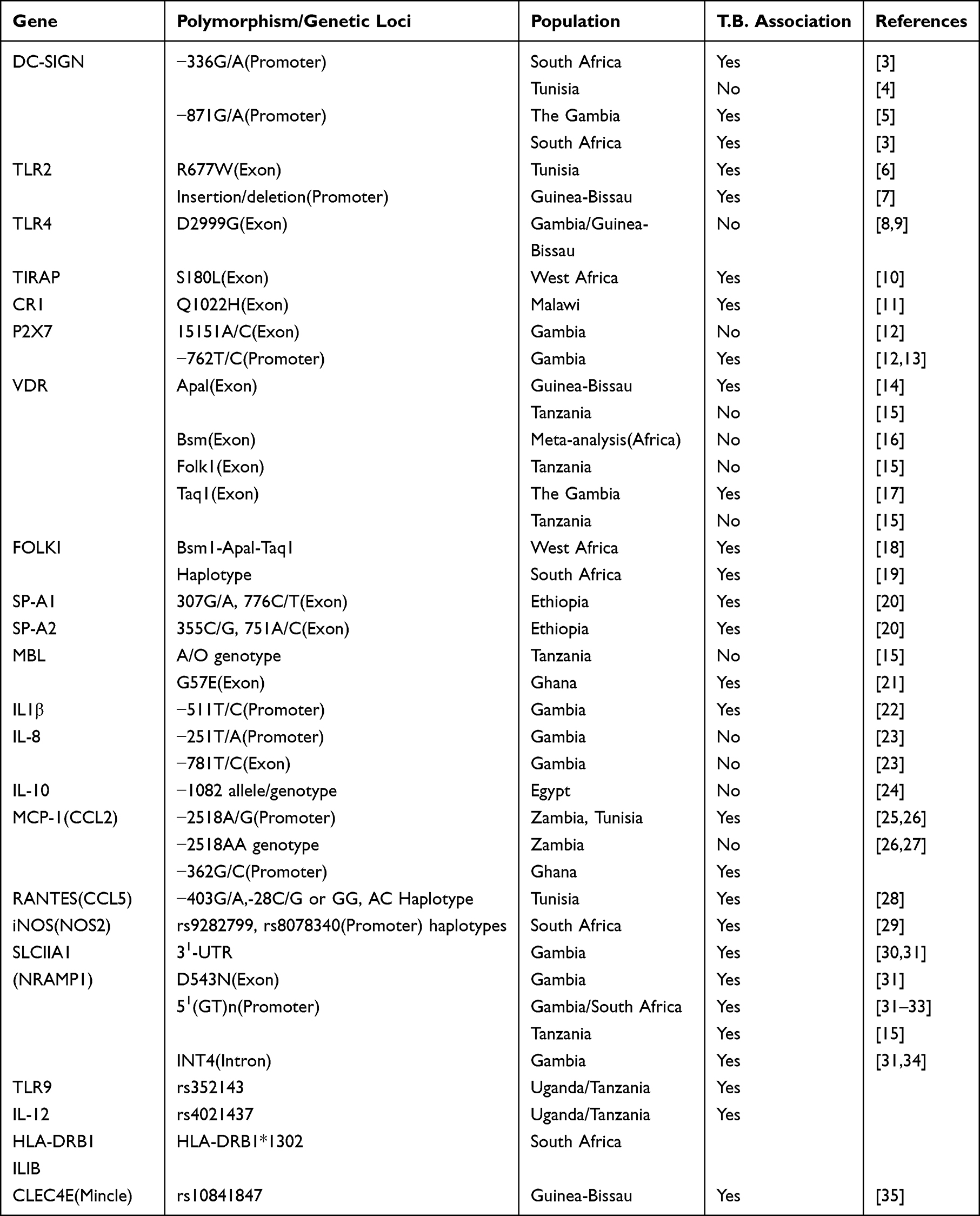
This review focuses on polymorphisms in immune genes linked to pulmonary TB susceptibility in African populations, Table 1. By elucidating the interaction between host molecules and Mtb, we aim to contribute to the design of effective strategies against tuberculosis.
Table 1 Association Studies of Polymorphisms in Immune Genes and Tuberculosis
The African Context
Understanding the genetic basis of tuberculosis (TB) susceptibility is a complex endeavor that requires careful consideration of diverse populations. Focusing on African populations in TB polymorphism studies is a strategic choice driven by various scientific, epidemiological, and ethical considerations. This justification aims to elucidate the rationale behind concentrating exclusively on African populations.
High TB Burden in Africa
Africa bears a substantial burden of TB, with high prevalence rates and a significant impact on public health.7 By concentrating on African populations, we prioritize a region where TB poses a severe threat to community well-being. Tuberculosis in Africa is characterized by a multifaceted interplay of factors, including TB-HIV co-infection, poverty, weak healthcare systems, and drug resistance. These unique challenges underscore the necessity for tailored interventions that address the specific needs of African communities.
Genetic Diversity in African Populations
Africa is characterized by unparalleled genetic diversity, owing to its rich history, diverse ethnicities, and unique population structures.8 Investigating TB polymorphisms in this context allows for a nuanced exploration of genetic variants that may be specific to African populations. This approach aligns with the growing recognition of the importance of population-specific genetic studies.
Prevalence of HIV Co-Infection
TB-HIV co-infection represents a critical aspect of TB epidemiology in Africa. HIV weakens the immune system, heightening susceptibility to TB infection and increasing the risk of TB reactivation among individuals with latent TB. Numerous studies have underscored the strong association between HIV and TB in Africa, with a significant proportion of TB cases occurring among HIV-positive individuals.1,9
Impact of Poverty and Socioeconomic Factors
Poverty and socioeconomic disparities significantly fuel the TB epidemic in Africa. Factors such as poor living conditions, overcrowding, limited healthcare access, and inadequate nutrition contribute to the transmission and persistence of TB in many African communities.10 These challenges exacerbate efforts to control TB and impede the achievement of optimal treatment outcomes.
Challenges Posed by Weak Healthcare Systems
Africa’s healthcare systems grapple with resource constraints, infrastructure deficiencies, and staffing shortages, presenting substantial barriers to effective TB control. Inadequate diagnostic capacities, limited access to quality medications, and suboptimal adherence to treatment regimens further complicate TB management in numerous African countries.11 Strengthening healthcare systems and enhancing access to TB care are paramount for reducing the burden of TB in Africa.
Emergence of Drug Resistance
The emergence of drug-resistant TB strains, including multidrug-resistant (MDR) and extensively drug-resistant (XDR) variants, poses a formidable challenge to TB control efforts across Africa. Limited access to quality diagnostic tools, inappropriate treatment regimens, and poor treatment adherence contribute to the proliferation of drug-resistant TB strains in the region.12 Addressing the menace of drug-resistant TB demands enhanced surveillance, rigorous infection control measures, and expanded access to effective treatment modalities.
Environmental and Socioeconomic Factors
The interplay between genetics and environmental factors is a crucial aspect of TB susceptibility. African populations often face unique environmental challenges and socioeconomic conditions that influence disease dynamics. Investigating TB polymorphisms in this context allows for a holistic understanding of the gene-environment interactions contributing to TB susceptibility.
Precision Medicine and Targeted Interventions
African populations deserve tailored medical interventions that consider their unique genetic makeup. Precision medicine initiatives aim to develop therapies specific to individual genetic profiles.13 By focusing on TB polymorphisms in African populations, we contribute to the development of targeted interventions that address the specific needs of this population. Therefore, the decision to study TB polymorphisms in African populations is rooted in the region’s high TB burden, genetic diversity, unique environmental challenges, and the pursuit of precision medicine. By concentrating our efforts in this context, we aim to unravel population-specific genetic factors influencing TB susceptibility, ultimately contributing to more effective and targeted strategies for TB control in Africa.
Epidemiological Data
Tuberculosis remains a pressing public health concern, particularly in African populations, where it continues to exert a significant burden on health systems and communities. The incidence rates, mortality rates, and demographic characteristics associated with TB in Africa are shown in Table 2.14
Table 2 The Incidence, Mortality Rates, and Demographic Characteristics Associated with TB in Africa
TB Incidence Rates
Countries such as Lesotho, C.A.R, Gabon, South Africa have the highest Tb incident rates on the continent. However, progress has been made in reducing TB incidence in several African countries through increased access to diagnostic and treatment services, Table 2.
TB Mortality Rates
Somalia, Mozambique, Lesotho and C.A.R are among the countries with the highest TB mortality rates in Africa. TB mortality rates in Africa are closely linked to factors such as HIV co-infection, drug resistance, and healthcare access. While mortality rates have declined in recent years due to improved TB control efforts, they remain significant, particularly in countries with high HIV prevalence.
Demographic Features
Young adults, particularly those in the economically productive age group, are disproportionately affected by TB. Additionally, men are more likely to develop TB than women in many African countries, due to social and behavioral factors as seen in Table 2. Socioeconomic disparities, including poverty, overcrowding, and limited access to healthcare, contribute to the unequal distribution of TB within communities. Urban areas tend to have higher TB burdens due to population density and environmental factors, although rural areas are not exempt from the disease.
Roles of Proteins in Host – Pathogen Interaction
In the realm of tuberculosis susceptibility, extensive research is focused on elucidating the intricate roles of various proteins to decipher the underlying mechanisms governing host-pathogen interaction. These proteins, encompassing Toll-like receptors (TLRs), Dendritic Cell-Specific Intercellular Adhesion Molecule-3 Grabbing Non-Integrin (DC-SIGN), the vitamin D nuclear receptor, soluble C-type lectins such as surfactant proteins A and D, C-type Lectin Domain Family 4 Member E (CLEC4E), and mannose-binding lectin (MBL), represent integral components of the immune system’s response to Mycobacterium tuberculosis (MTB) infection.
As we embark on an in-depth exploration of the nuanced interplay between these proteins and MTB, we intent to uncover their individual and collective contributions to TB susceptibility. Farthermore, discerning the roles of phagocyte cytokines, including Interleukin-1 (IL-1), Interleukin-6 (IL-6), Interleukin-10 (IL-10), Interleukin-12 (IL-12), and Interleukin-18 (IL-18), alongside chemokines such as Interleukin-8 (IL-8), monocyte chemoattractant protein 1 (MCP-1), and Regulated upon activation, normal T-cell expressed and secreted (RANTES). This comprehensive investigation serves to enhance our understanding of the immune response to TB infection, paving the way for novel insights into TB susceptibility mechanisms and potential avenues for therapeutic intervention.
The Human Leukocyte Antigens(HLAs)
The Human Leukocyte Antigen (HLA) molecules are proteins found on the surface of cells in the human body. They play a crucial role in the immune system by presenting antigens, which are fragments of proteins from pathogens like bacteria and viruses, to T cells. This process is essential for the immune system to recognize and respond to foreign invaders while distinguishing them from the body’s own cells. HLA molecules are highly diverse and polymorphic, meaning they exist in many different forms within human populations. This diversity is important for immune system function and contributes to individual differences in immune responses to pathogens, susceptibility to diseases, and compatibility for organ and tissue transplantation.
Recent studies have revealed that specific Human Leukocyte Antigen (HLA) alleles might contribute to either increased or decreased susceptibility to tuberculosis (TB) within African communities.5 For instance, investigations have established correlations between certain HLA class I alleles—such as HLA-B39:01 and HLA-B58:01—and elevated TB susceptibility among West African populations. Conversely, alternative HLA class I alleles, like HLA-B*57:01, have demonstrated a protective association against TB within African cohorts.15,16
Furthermore, HLA class II alleles have emerged as significant factors in TB susceptibility among African populations.16 Notably, research has identified links between particular HLA-DRB1 alleles—such as HLA-DRB115:01 and HLA-DRB104:05—and heightened susceptibility to TB among East and West African groups. Conversely, contrasting HLA-DRB1 alleles, including HLA-DRB110:01 and HLA-DRB111:01, have shown protective effects against TB within African populations.
It is crucial to recognize the intricate nature of the relationship between HLAs and TB susceptibility, influenced by diverse factors such as genetic background, environmental exposures, and host-pathogen interactions. Moreover, the prevalence of specific HLA alleles may exhibit variability across different African populations, underscoring the necessity for population-specific investigations to comprehensively grasp the genetic determinants of TB susceptibility.
Soluble C-Type Lectins (Collectins)
Collectins, including MBL, SP-A, and SP-D, are calcium-dependent lectins crucial for innate immunity. Previous data on calcium-dependent (C type) lectins reveals the close relationship between the bacillus with MBL and SP-A, SP-D17 Specifically, SP-A and SP-D, located in the alveoli and respiratory epithelium, play a pivotal role in the defense against intracellular pathogens, including Mtb. SP-A and SP-D, collagen-like glycoproteins, serve as opsonins, enhancing phagocytosis by alveolar macrophages.17–19 Additionally, SP-A interacts with alveolar macrophages, modulating TLR2 and TLR4 pathways,18 showcasing the intricate immune pathways influenced by these collectins. SP-A’s impact on inflammatory cells depends on the cell state, resulting in the inflammatory paradox. While enhancing cytokine release during infection, SP-A also suppresses macrophage secretion, revealing a complex regulatory role in the immune response.
Polymorphic changes in the genes encoding SP-A and SP-D, particularly in the amino acid sequences, contribute to susceptibility to TB.20 Genetic changes in SP-A and SP-D amino acid sequences have functional consequences. Single nucleotide polymorphisms in these proteins occur when a single nucleotide (adenine, thymine, cytosine, or guanine) in a DNA sequence is altered or substituted with a different single nucleotide at a specific position in the genome. These genetic variants may either result in a synonymous or non-synonymous substitution. Since interactions of SP-A and SP-D with the same and or different pathogens occur. A polymorphism in SP-A reduces binding to Mtb, increasing susceptibility, while a genetic change in SP-D alters the sequence, affecting bacterial surface binding and increasing uptake by alveolar macrophages.
Membrane Binding Lectins (MBL)
Membrane-binding lectin, a soluble pathogen recognition receptor, plays a pivotal role in host defense against bacterial pathogens. Its hexameric structure, akin to the C1q component of the complement system, facilitates the opsonization of microbes, enhancing phagocytosis. MBL also contributes to inflammation by clearing apoptotic cells and releasing cytokines.21,22 MBL gene polymorphisms contribute to variations in blood levels and hexamer formation. MBL gene duplication results in the identification of two genes, MBL1 and MBL2, with MBL2 being the representative in humans. The MBL2 gene encompasses four coding regions (exons) separated by three non-coding regions (introns) at codon positions 52, 54, and 57, featuring variant alleles, D, B, and C, respectively. Certain alleles are linked to impaired hexamer formation and reduced blood levels.5
Mutations at specific codons resulting in low MBL levels increase susceptibility to various infections, particularly in individuals with other immune defects. Despite numerous studies exploring MBL alleles and their polymorphisms (Table 1), inconsistent results underscore the imperative to comprehensively understand the relationship between TB establishment and the polymorphic variants in the MBL gene.
Mannose-binding lectin-2 variants exhibit relatively frequent occurrences, albeit unevenly distributed across human populations.23 Notably, allele B is prevalent in Asian and native South African populations but absent in the West African population. Conversely, allele D is confined to North Africa and Caucasian populations, while allele C is predominant in Sub-Saharan Africa. These allele frequency disparities shed light on the biological advantage of MBL low levels in specific populations.
In summary, individuals with low MBL levels face increased susceptibility to various infections, particularly when coupled with other immune defects. Despite numerous studies exploring MBL alleles and their polymorphisms (Table 1), inconsistent results underscore the imperative to comprehensively understand the relationship between TB establishment and the polymorphic variants in the MBL gene. Notably, the allele frequency disparities observed, especially the prevalence of allele B in certain populations and the restriction of allele D to specific regions, shed light on the biological advantages associated with MBL low levels in distinct populations. Further investigations are warranted to unravel the precise mechanisms linking MBL polymorphisms and TB establishment, paving the way for targeted interventions and a deeper understanding of host-pathogen interactions.
CLEC4E (C-Type Lectin Domain Family 4 Member E)
CLEC4E is a calcium-dependent lectin characterized by carbohydrate recognition domains (CRDs), facilitating its involvement in pathogen recognition and cellular interactions.24 Specifically, CLEC4E encodes the receptor Mincle, situated on the outer membrane of macrophages. Mincle is responsible for recognizing trehalose-6, 6-dimycolate (TDM), a component in the mycobacterial cell wall.25 This recognition triggers signaling cascades within the innate immune system, initiating a robust response to mycobacterial infection.
A single nucleotide polymorphism (SNP) at rs10841847 within CLEC4E has emerged as a crucial determinant in TB susceptibility. The minor allele (G˃A) at this locus is associated with an increased vulnerability to pulmonary TB. This emphasizes the significance of CLEC4E in the context of TB pathogenesis.25 However, the complex landscape of TB susceptibility is likely influenced by multiple genetic factors, necessitating further investigations. While the association between CLEC4E and pulmonary TB is evident, published studies present inconsistent findings. Notably, research in admixed South African populations did not yield statistically significant results, while a study in Northern China reported a decreased predisposition to active TB associated with CLEC4E minor alleles.24,26,27 These discrepancies underscore the need for more comprehensive research to establish the causal link between CLEC4E and TB susceptibility, considering potential confounding factors.
Studies involving mice lacking the Mincle gene offer insights into its role in the immune response against Mycobacterium tuberculosis (Mtb). Depletion of Mincle resulted in the inability to recruit and adhere neutrophils to the site of invasion, impacting the formation of lung granulomas.28 Altered DNA sequences, such as those associated with the rs10841847 SNP, disrupt the normal functioning of Mincle receptors, potentially compromising the ability to bind tubercle glycolipid and increasing susceptibility to TB. Interestingly, studies with knockout mice showed a paradoxical outcome, with a higher bacterial load compared to wild-type mice, suggesting a Mincle-mediated immune response against Mtb.29 This paradox may be attributed to additional genetic factors influencing the sustained immune response, indicating the complexity of host-pathogen interactions in secondary TB.
Pathogen Recognition Receptors (PRRs)
Pathogen recognition receptors are membrane and transmembrane receptors located on the dendritic cells, macrophages, and epithelial cells (exogenous sensors) that recognize different types of Pathogen Associated Molecular Patterns (PAMPs). Macrophage PRRs and phagocytic receptors causative to mycobacterial diseases, especially T.B., have been discussed in several recent reviews.17,24,25 These include cell membrane-bound receptors, such as the mannose receptor (M.R., CD206), dendritic cell-specific ICAM-3-grabbing non-integrin (DC-SIGN) (CD209), Dectin-1, and TLRs. However, in this review, we shall focus on the DC-SIGN and TLRs, which have been associated with Tuberculosis in the African population. This is because they have been adequately studied and have been associated with tuberculosis disease susceptibility and are expressed on many immune cells that recognize numerous molecules of different pathogens including the Mycobacterium tuberculosis.
The exploration of Pathogen Recognition Receptors (PRRs) in dendritic cells, macrophages, and epithelial cells is crucial for deciphering how these receptors recognize diverse Pathogen Associated Molecular Patterns (PAMPs). The emphasis on cell membrane-bound receptors, such as mannose receptor (M.R., CD206), dendritic cell-specific ICAM-3-grabbing non-integrin (DC-SIGN), and Toll-Like Receptors (TLRs), provides a foundation for understanding the initial steps of host-pathogen recognition.30–32
The selective focus on DC-SIGN and TLRs, particularly TLR2, TLR4, and TLR9, is well-justified, considering their extensive associations with TB susceptibility in the African population.31,33,34 These receptors, expressed on various immune cells, serve as critical mediators in the immune response against Mycobacterium tuberculosis. Their well-studied roles in recognizing M. tuberculosis components make them pivotal players in the host defense against TB.35,36
The investigation of Toll-Like Receptors (TLRs) further deepens our understanding of the genetic variants associated with TB susceptibility. The elucidation of TLR1, TLR2, TLR4, and TLR9 variations across different populations provides a nuanced perspective on the global landscape of TB genetics.31 Polymorphisms in these TLRs, including TLR1 G1805T, TLR2 T597C, T1350C, TLR6 C745T, and TLR4 Asp 299Gly, Thr399Ile, reveal potential risk factors for TB susceptibility.31,33,34,37
The signaling pathways initiated by TLR2 and TLR4, leading to the activation of NF-κB and other cascades, are critical in understanding TB susceptibility.35 The identification of specific genetic changes in TLR2, TLR4, and TLR9 associated with TB susceptibility, such as the R753Q variant in TLR2, adds a layer of complexity to our understanding.38 The review delves into the influence of these variants on signaling pathways and their impact on TB progression.
Toll-Like Receptors (TLRs)
Toll-like receptors expressed on various immune cell types, serve as critical mediators in the immune response against a spectrum of pathogens, including Mtb.31,39 Recognizing a diverse array of microbial molecules, TLRs initiate transcription and proinflammatory gene processes. TLRs are categorized based on their cellular localization—surface-bound (eg, TLR2 and TLR4) and intracellular (eg, TLR8 and TLR9).35 The mycobacterial cell wall components are recognized by multiple TLRs, emphasizing their crucial role in the immune response to MTB.34,40
Genetic variants within TLRs have been identified globally, with polymorphisms in TLR1, TLR2, TLR4, TLR8, and TLR9 associated with TB susceptibility.26,31,40 Notably, TLR2 stands out with higher prevalence in genetic variants, forming a heterodimer with TLR1 or TLR6.36 The TLR2 signaling pathway, particularly involving the TIR domain-containing adaptor protein (TIRAP), plays a pivotal role in the inflammatory response to MTB.35,36
In the context of the African population, TLR-2, TLR-4, and TLR-9 emerge as key players in TB susceptibility. The R753Q variant in TLR2 influences disease progression in children.38 Contrasting reports on TLR4 variant D299G highlight its association with TB susceptibility in HIV-infected patients in Tanzania.37,41 The intricate interplay between HIV and TLR variants underscores the multifactorial nature of susceptibility in co-infected individuals. The signaling pathways initiated by TLR2 and TLR4, culminating in the activation of NF-κB, are central to TB susceptibility. Noteworthy changes in these domains correlate with variations in TB susceptibility. The nonsynonymous SNP S180L in TIRAP confers protective signal transduction within TLR2.10 Additionally, TLR7 and TLR8 genetic polymorphisms are associated with TB susceptibility, influencing phagocytosis and immune activation.42 Evidence from TLR9-deficient mice further supports the critical role of TLRs in the innate defense against MTB.26 These results provide proof that TLRs and their signaling moieties in their pathways possess susceptible genes that are associated with Tuberculosis. However, due to variations within individual genes in the different racial populations, it is very hard to make a close linkage of the genetic factors that bring about the association.
DC-SIGN is characterized by a carbohydrate recognition domain (CRD) at its extracellular COOH-terminal end. Its expression on macrophages is influenced by tissue type and activation state.32,39 Notably, DC-SIGN is induced in alveolar macrophages from M. tuberculosis-infected patients, marking its relevance in the context of TB infection.35 The binding of M. tuberculosis to DC-SIGN initiates phagocytosis, allowing the pathogen to enter human monocyte-derived D.C.s. This interaction directly interferes with dendritic cell maturation, contributing to the intricate host-pathogen dynamics.33 The cytoplasmic tail of DC-SIGN, housing three conserved motifs, plays a crucial role in ligand binding, receptor signaling, phagocytosis, and intracellular trafficking of ligand particles.33 This calcium-dependent lectin, known for its affinity for mannose-rich molecules, is expressed predominantly on dendritic cells (D.C.s) and, to varying degrees, on macrophages.34 The dynamic interplay between TB and DC-SIGN involves ligand binding, phagocytosis, and modulation of dendritic cell maturation.32,39
Genetic variations in DC-SIGN have been implicated in TB susceptibility, with polymorphisms in the promoter region (eg, −871A/G and −336A/G) associated with distinct susceptibility patterns (Table 1). Notably, studies in the untranslated regions (UTRs) of CD209 and CD207R genes have revealed variations in gene frequency within African indigenous individuals and the Caucasian American population, underscoring the importance of ethnic, racial, and geographical diversity in TB susceptibility assessment.36 A genetic comparison between African and Eurasian populations has revealed notable disparities, particularly in the frequency of the polymorphic allele −871G. This allele is significantly more prevalent in Eurasians than in Africans, suggesting a genetic migration and close association leading to its introduction into the South African population.43 The absence of haplotypes −871G and −336A in most African populations, except for colored South Africans, further emphasizes the impact of genetic migration on TB susceptibility. In conclusion, such genetic variations tend to influence translation and gene polymorphisms.
Solute Carrier Family 11A, Member 1, SLC11A1 or Natural Resistance-Associated Macrophage Protein 1, or NRAMP1)
The SLC11A1 (NRAMP1) gene encodes a membrane transporter protein whose function is to regulate the cytoplasmic cation levels, especially iron. Iron is essential for the cell to generate reactive oxygen and nitrogen intermediates. It, therefore, acts as a divalent cation transporter across phagosomal membranes.38 The origin of the gene from a mouse is responsible for its resistance to infections by intracellular pathogens, especially the mycobacteria.37
SLC11A1’s function as a divalent cation transporter across phagosomal membranes is critical in modulating the concentration of metal ions within the phagosome. This regulation is paramount for macrophage defense against bacterial infections, specifically by reducing the metal ion concentration where bacterial pathogens reside. A defective NRAMP gene, however, results in increased metal ion accumulation, supporting bacterial growth and compromising the host’s ability to resist infection.
Studies across diverse populations and recent meta-analyses have highlighted the influence of SLC11A1 polymorphisms on TB susceptibility. Four key polymorphisms (3=-UTR, D543N, 5= (G.T.) and INT4 have been extensively studied globally. Although findings exhibit some contradictions in various populations, a meta-analysis in China and an association in Turkey underscore the significance of these polymorphisms in TB development.
A systematic review conducted in China further demonstrates the role of SLC11A1 polymorphisms, particularly at the D543N and INT4 loci, in response to infection rather than solely to Mycobacterium tuberculosis.42,44,45 Additionally, studies in the Gambia suggest potential links between SLC11A1 gene polymorphisms, abnormal iron levels, gene-nutrient interactions, and mortality prediction in HIV-infected patients. This raises intriguing questions about the potential risk of TB development in HIV patients with clinically abnormal iron levels and gene-nutrient interactions. Genetic interactions, such as those observed between TLR2 and polymorphism rs3731865 in African Americans, emphasize the significance of gene-gene interactions in host-pathogen genetic studies. These findings highlight the complexity of allelic heterogeneity within SLC11A1 and underscore the importance of considering various factors in understanding TB susceptibility.
Highlighted associations with SNPs in SLC11A1 are attributed to adjacent SNPs in linkage disequilibrium with reported variants. However, the 5- (G.T.) repeat in the promoter region of SLC11A1 has been shown to affect promoter activity, with allele 3 displaying greater basal and lipopolysaccharides (LPS)-stimulated activity. This intriguing gene activity, although insufficient for establishing clear evidence for in vivo activity, links high activity with resistance and low activity with susceptibility to tuberculosis.46
Chemokines (Chemotactic Cytokines)
Chemokines are a large family of structurally homologous cytokines, secreted proteins that signal through cell surface G protein-coupled heptahelical chemokine receptors that stimulate leukocyte movement and regulate the migration of leukocytes from the blood to tissues. Therefore, chemokines are proinflammatory cytokines of low molecular size, which coordinate the migration and activation of different leukocyte populations. The structurally homologous chemokines are categorized into four groups based on conserved cysteine arrangement: CXC, CC, C, and CX3C. These low molecular-size proinflammatory cytokines play a pivotal role in coordinating the migration and activation of various leukocyte populations.1
Upon activation of alveolar macrophages by intracellular M. tuberculosis, a cascade of chemokines is released. Notable among these are IL-8 (CXCL8), monocyte chemoattractant protein 1 (MCP-1, CCL2), RANTES (CCL5), and CXCL10 (IP-10). These chemokines act as molecular messengers, orchestrating the migration and activation of T cells and macrophages to sites of Mtb infection. This orchestrated response forms the characteristic tuberculous granuloma, a fortress against the dissemination of the organism.2 Systematic reviews and research articles have extensively documented the significance and genetic variations within various chemokines combating Mycobacterium tuberculosis.25,47,48 Polymorphic variations, particularly in the promoter regions of these genes, can modulate transcription and translation, influencing the overall production and activity of chemokines.3,4
The production of chemokines is indispensable for recruiting inflammatory cells to the infection site. Early recruitment of macrophages is pivotal for infection control.5 M. tuberculosis, a potent inducer of chemokines, triggers protective and immunopathogenic host responses. Studies on human macrophages infected in vitro have revealed the induction of CCL2, CCL3, CCL4, and CCL5 in response to virulent mycobacterial strains.49 Regulated upon activation, normal T-cell expressed, and secreted (RANTES) plays a critical role in T-cell activation and macrophage activation.50 Clinical studies have detected the presence of MCP-1, MIP-1a, RANTES, and IP-10 in the serum and bronchoalveolar lavage of TB patients.51 Alveolar macrophages, in particular, produce a distinct profile of chemokines, suggesting a role in the influx of cells to the infection site, and influencing granuloma formation.52 The expression of chemokines by macrophages not only influences TNF-α production but also affects chemokine receptor expression. Specifically, CCL2, CCL3, CCL4, CCL5, CXCL10, and CXCL13 expression is modulated by macrophages in response to Mtb infection.53 Furthermore, TNF-α itself can influence the chemokine network expression, indirectly impacting granuloma formation.54 This intricate interplay extends to mycobacterial cell wall components, regulating the induction of chemokine secretion by macrophages.55
Rantes (Ccl5)
RANTES (regulated upon activation, normal T-cell expressed, and secreted), a member of the C-C chemokine subfamily or beta chemokine. RANTES exhibits chemotactic properties for monocytes, memory T cells, and eosinophils. In addition, it triggers histamine release from human basophils.56,57 Notably, in a murine model, RANTES has been identified as a key player in promoting granuloma formation within M. tuberculosis-infected lungs.56 This process involves the recruitment of immune cells to the infected area, subsequently limiting the intracellular growth of mycobacteria and inducing direct antimicrobial activity, notably through the release of nitric oxide (NO) in alveolar macrophages.58 The protective immunity conferred by RANTES, as evidenced in knockout mice, underscores its significance in the defense against TB.20
Exploring the genetic landscape, the promoter region of the RANTES gene reveals two variants, −403G/A and −28C/G, associated with Tuberculosis (Table 1). These single nucleotide polymorphisms may confer either resistance or susceptibility to TB.59 A recent discovery highlights a functionally important polymorphism, In1.1T/C, located in the intron of RANTES. This polymorphism regulates gene transcription by differentially binding to alternative forms of nuclear proteins. The complexity of RANTES transcription regulation is further unraveled through haplotype analysis. Haplotypes II (A-C-T) and V (G-C-C) exhibit opposing effects on RANTES transcription, with II up-regulating and V down-regulating the process. The luciferase assay, correlating RANTES SNPs with transcription activity, supports this functional insight. Consequently, RANTES concentrations in bronchoalveolar lavage fluid of pulmonary TB patients demonstrate acute elevation during infection and subsequent decline during convalescence. This underscores the dynamic role of RANTES up-regulation in the immune response against M. tuberculosis infection.
Mcp-1 (Ccl2)
The monocyte chemoattractant protein-1, or MCP-1, is a β chemokine and a potent chemotactic factor for monocytes and macrophages. During lung infection by M. tuberculosis, the human monocytes within the body are stimulated to release MCP-1.60 During the host M. tuberculosis-specific immune response, MCP-1 participates in the inhibition of the in vivo dissemination of M. Tuberculosis regulating the secondary immune response. Therefore, MCP-1 is a vital promoter and regulator of a host’s defense against Tuberculosis infection. However, experimental studies in mice have shown that a deficiency in the chemokine MCP-1 alters the monocyte recruitment and formation of the granuloma, and yet it has the advantage of decreased M. Tuberculosis susceptibility.41 Studies on genotype and allele frequencies especially at the locus −2518 have shown contradictory results and have not yielded concrete and adequate proof for the effects of the polymorphisms in the MCP-1 gene. However, the carriers of the −2518 GG genotype were reported to produce high levels of MCP-1, which inhibits IL-12 production in response to M. Tuberculosis and promotes active pulmonary T.B.,61 whereas Thye et al62 initially found the association with the −2518G allele with T.B. resistance in Ghana, and further genotyping analysis using Microarray technology identified −362C allele as the only true protective variant of MCP-1, with a linkage disequilibrium in the region of −2518 and-362. This study is a deterrent note for the need to carry out a comprehensive genetic investigation to search for the actual cause of the polymorphism that exists in the variant and gene of interest.
Conclusion
In summary, the exploration of genetic factors influencing tuberculosis susceptibility in African populations represents a significant step forward in our understanding of the complex interplay between host genetics and infectious diseases. The comprehensive analysis presented in this article delves into the polymorphisms within immune genes and their association with TB susceptibility specifically within the African context. This study contributes valuable insights into the genetic landscape of TB susceptibility in African populations. By focusing on this region, the research sheds light on population-specific genetic variants that may play a pivotal role in determining an individual’s susceptibility to TB.
One key research gap pertains to the lack of comprehensive studies that consider the diverse genetic, environmental, and socio-economic factors influencing TB outcomes across different African populations. Existing research often fails to adequately account for the genetic diversity present within African populations, leading to inconsistent findings and limited generalizability of results. Moreover, there is a scarcity of longitudinal studies that can elucidate the temporal dynamics of TB susceptibility and progression in African populations, hindering our understanding of the disease’s trajectory and the efficacy of interventions over time.
Additionally, the reliance on small sample sizes and single-center studies limits the statistical power and reliability of findings, further exacerbating the inconsistency of outcomes observed in earlier research efforts. Furthermore, there is a scarcity of studies that integrate genetic, environmental, and socio-economic data to comprehensively assess the determinants of TB susceptibility in African populations, impeding our ability to develop targeted interventions tailored to the specific needs of these populations.
To address these research gaps and enhance our understanding of TB susceptibility in African populations, we propose several suggestions for further similar research. Firstly, there is a need for larger, multicenter studies that encompass diverse African populations to ensure the generalizability of findings and account for population-specific factors. Such studies should employ longitudinal designs to capture the temporal dynamics of TB susceptibility and progression, allowing for the identification of predictive biomarkers and the evaluation of interventions over time.
Moreover, future research efforts should prioritize the integration of genetic, environmental, and socio-economic data through interdisciplinary collaborations between geneticists, epidemiologists, clinicians, and social scientists. This holistic approach will provide a more nuanced understanding of the complex interactions underlying TB susceptibility in African populations and inform the development of targeted interventions that address the multifactorial nature of the disease.
Furthermore, leveraging emerging technologies such as genomic sequencing, big data analytics, and machine learning algorithms can facilitate the identification of novel genetic determinants and biomarkers associated with TB susceptibility in African populations. By harnessing these innovative approaches, researchers can overcome the limitations of earlier studies and advance our understanding of TB epidemiology in Africa, ultimately contributing to the development of effective strategies for TB prevention, diagnosis, and treatment tailored to the specific needs of African populations.
Abbreviations
MHC, Major histocompatibility complex; SLC11A1, Solute carrier family 11a member 1; HLA, Human leukocyte antigen; VDR, Vitamin D nuclear receptor; TNF, Tumour necrosis factor; IRGM, Immunity-related GTPase family M protein; SNP, Single Nucleotide Polymorphism; MTBC, Mycobacterium tuberculosis complex; MCP-1, Monocyte chemoattractant protein 1; MBL2, Mannose-binding lectin 2 gene; Mtb, Mycobacterium tuberculosis; NRAMP1, Natural resistance Associated Macrophage Protein 1 gene; SP-A, Surfactant protein A; SP-D, Surfactant protein D; CRD, Carbohydrate recognition domain; RANTES, Regulated upon activation, normal T-cell expressed, and secreted; TB, Tuberculosis; TLR, Toll-like receptor; DC-SIGN, Dendritic Cell-Specific Intercellular adhesion molecule-3 grabbing non-integrin; WHO, World Health Organization; PRR, Pathogen Recognition Receptor; PAMP, Pathogen Associated Molecular Pattern; CLEC4E, C-type Lectin Domain Family 4 Member E; IL, Interleukin; NO, Nitric Oxide.
Data Sharing Statement
All data generated by this manuscript has been integrated into the manuscript.
Acknowledgments
We are thankful to the Makerere University Library for the provision of electronic information resources that enabled us to complete the review article.
Author Contributions
All authors made a significant contribution to the work reported, whether that is in the conception, study design, execution, acquisition of data, analysis and interpretation, or in all these areas; took part in drafting, revising, or critically reviewing the article; gave final approval of the version to be published; have agreed on the journal to which the article has been submitted; and agree to be accountable for all aspects of the work.
Funding
The authors declare that this research project was funded by the Africa Centre of Excellence in Materials, Product Development & Nanotechnology; MAPRONANO ACE, Grant No. P151847IDA credit 5797-UG, College of Engineering Design Art and Technology, Makerere University.
Disclosure
The authors declare that they have no competing interests in this work.
References
1. Harding E. WHO global progress report on tuberculosis elimination. Lancet Respir Med. 2020;8(1):19. doi:10.1016/S2213-2600(19)30418-7
2. Dye C, Reeder JC, Terry RF. Research for universal health coverage. Sci Transl Med. 2013;5(199):199ed13. doi:10.1126/scitranslmed.3006971
3. Barreiro LB, Neyrolles O, Babb CL, et al. Promoter variation in the DC-SIGN-encoding gene CD209 is associated with tuberculosis. PLoS Med. 2006;3(2):e20. doi:10.1371/journal.pmed.0030020
4. Ben-Ali M, Barreiro LB, Chabbou A, et al. Promoter and neck region length variation of DC-SIGN is not associated with susceptibility to tuberculosis in Tunisian patients. Hum Immunol. 2007;68(11):908–912. doi:10.1016/j.humimm.2007.09.003
5. Yim JJ, Selvaraj P. Genetic susceptibility in tuberculosis. Respirology. 2010;15(2):241–256. doi:10.1111/j.1440-1843.2009.01690.x
6. Pepperell CS, Casto AM, Kitchen A, et al. The role of selection in shaping diversity of natural M. tuberculosis populations. PLoS Pathog. 2013;9(8):e1003543. doi:10.1371/journal.ppat.1003543
7. World Health Organization, Global Tuberculosis Report; 2020.
8. Campbell MC, Tishkoff SA. African genetic diversity: implications for human demographic history, modern human origins, and complex disease mapping. Annu Rev Genomics Hum Genet. 2008;9(1):403–433. doi:10.1146/annurev.genom.9.081307.164258
9. Gray JM, Cohn DL. Tuberculosis and HIV coinfection. Semin Respir Crit Care Med. 2013;34(1):32–43. doi:10.1055/s-0032-1333469
10. Harling G, Ehrlich R, Myer L. The social epidemiology of tuberculosis in South Africa: a multilevel analysis. Soc Sci Med. 2008;66(2):492–505. doi:10.1016/j.socscimed.2007.08.026
11. Oga-Omenka C, Tseja-Akinrin A, Sen P, et al. Factors influencing diagnosis and treatment initiation for multidrug-resistant/rifampicin-resistant tuberculosis in six sub-Saharan African countries: a mixed-methods systematic review. BMJ Glob Health. 2020;5(7):e002280. doi:10.1136/bmjgh-2019-002280
12. Andrews JR, Shah N, Gandhi N, et al. Multidrug-resistant and extensively drug-resistant tuberculosis: implications for the HIV epidemic and antiretroviral therapy rollout in South Africa. J Infect Dis. 2007;196(Suppl s3):S482–90. doi:10.1086/521121
14. Chakaya J, Khan M, Ntoumi F, et al. Global Tuberculosis Report 2020 – Reflections on the Global TB burden, treatment and prevention efforts. Int J Infect Dis. 2021;113(Suppl 1):S7–s12. doi:10.1016/j.ijid.2021.02.107
15. Selvaraj P, Uma H, Reetha AM, et al. HLA antigen profile in pulmonary tuberculosis patients & their spouses. Indian J Med Res. 1998;107:155–158.
16. Singh SP, Mehra NK, Dingley HB, et al. Human leukocyte antigen (HLA)-linked control of susceptibility to pulmonary tuberculosis and association with HLA-DR types. J Infect Dis. 1983;148(4):676–681. doi:10.1093/infdis/148.4.676
17. Torrelles JB, Torrelles J, Azad A, et al. Role of C-type lectins in mycobacterial infections. Curr Drug Targets. 2008;9(2):102–112. doi:10.2174/138945008783502467
18. Beharka AA, Gaynor CD, Kang BK, et al. Pulmonary surfactant protein A up-regulates activity of the mannose receptor, a pattern recognition receptor expressed on human macrophages. J Immunol. 2002;169(7):3565–3573. doi:10.4049/jimmunol.169.7.3565
19. Ferguson JS, Voelker DR, McCormack FX, et al. Surfactant Protein D Binds to Mycobacterium tuberculosis Bacilli and Lipoarabinomannan via Carbohydrate-Lectin Interactions Resulting in Reduced Phagocytosis of the Bacteria by Macrophages1. J Immunol. 1999;163(1):312–321. doi:10.4049/jimmunol.163.1.312
20. Salam N, Gupta S, Sharma S, et al. Protective immunity to Mycobacterium tuberculosis infection by chemokine and cytokine conditioned CFP-10 differentiated dendritic cells. PLoS One. 2008;3(8):e2869. doi:10.1371/journal.pone.0002869
21. Vieira F, Kung JW, Bhatti F. Structure, genetics and function of the pulmonary associated surfactant proteins A and D: the extra-pulmonary role of these C type lectins. Ann Anat. 2017;211:184–201. doi:10.1016/j.aanat.2017.03.002
22. Naqvi KF, Endsley JJ. Myeloid C-type lectin receptors in tuberculosis and HIV immunity: insights into co-infection? Front Cell Infect Microbiol. 2020;10:263. doi:10.3389/fcimb.2020.00263
23. Garred P, Larsen F, Seyfarth J, et al. Mannose-binding lectin and its genetic variants. Genes Immun. 2006;7(2):85–94. doi:10.1038/sj.gene.6364283
24. Jo EK. Mycobacterial interaction with innate receptors: tLRs, C-type lectins, and NLRs. Curr Opin Infect Dis. 2008;21(3):279–286. doi:10.1097/QCO.0b013e3282f88b5d
25. Sasindran SJ, Torrelles JB. Mycobacterium Tuberculosis Infection and Inflammation: what is Beneficial for the Host and for the Bacterium? Front Microbiol. 2011;2:2. doi:10.3389/fmicb.2011.00002
26. Carvalho NB, Oliveira FS, Duraes FV, et al. Toll-like receptor 9 is required for full host resistance to mycobacterium avium infection but plays no role in induction of Th1 Responses. Infect Immun. 2011;79(4):1638–1646. doi:10.1128/IAI.01030-10
27. Bowker N, Salie M, Schurz H, et al. Polymorphisms in the pattern recognition receptor mincle gene (CLEC4E) and association with tuberculosis. Lung. 2016;194(5):763–767. doi:10.1007/s00408-016-9915-y
28. Lai YF, Lin T-M, Wang C-H, et al. Functional polymorphisms of the TLR7 and TLR8 genes contribute to Mycobacterium tuberculosis infection. Tuberculosis. 2016;98:125–131. doi:10.1016/j.tube.2016.03.008
29. Mortaz E, Adcock IM, Tabarsi P, et al. Interaction of Pattern Recognition Receptors with Mycobacterium Tuberculosis. J Clin Immunol. 2015;35(1):1–10. doi:10.1007/s10875-014-0103-7
30. Olvany JM, Sausville LN, White MJ, et al. CLEC4E (Mincle) genetic variation associates with pulmonary tuberculosis in Guinea-Bissau (West Africa). Infect Genet Evol. 2020;85:104560. doi:10.1016/j.meegid.2020.104560
31. Zhang Y, Jiang T, Yang X, et al. Toll-like receptor −1, −2, and −6 polymorphisms and pulmonary tuberculosis susceptibility: a systematic review and meta-analysis. PLoS One. 2013;8(5):e63357. doi:10.1371/journal.pone.0063357
32. Puig-Kröger A, Serrano-Gómez D, Caparrós E, et al. Regulated expression of the pathogen receptor dendritic cell-specific intercellular adhesion molecule 3 (ICAM-3)-grabbing nonintegrin in THP-1 human leukemic cells, monocytes, and macrophages. J Biol Chem. 2004;279(24):25680–25688. doi:10.1074/jbc.M311516200
33. Azad AK, Torrelles JB, Schlesinger LS. Mutation in the DC-SIGN cytoplasmic triacidic cluster motif markedly attenuates receptor activity for phagocytosis and endocytosis of mannose-containing ligands by human myeloid cells. J Leukoc Biol. 2008;84(6):1594–1603. doi:10.1189/jlb.0308192
34. Barreiro LB, Ben-Ali M, Quach H, et al. Evolutionary dynamics of human Toll-like receptors and their different contributions to host defense. PLoS Genet. 2009;5(7):e1000562. doi:10.1371/journal.pgen.1000562
35. Tailleux L, Pham-Thi N, Bergeron-Lafaurie A, et al. DC-SIGN induction in alveolar macrophages defines privileged target host cells for mycobacteria in patients with tuberculosis. PLoS Med. 2005;2(12):e381. doi:10.1371/journal.pmed.0020381
36. Boily-Larouche G, Zijenah LS, Mbizvo M, et al. DC-SIGN and DC-SIGNR genetic diversity among different ethnic populations: potential implications for pathogen recognition and disease susceptibility. Hum Immunol. 2007;68(6):523–530. doi:10.1016/j.humimm.2007.02.002
37. Vidal SM, Malo D, Vogan K, et al. Natural resistance to infection with intracellular parasites: isolation of a candidate for Bcg. Cell. 1993;73(3):469–485. doi:10.1016/0092-8674(93)90135-D
38. Gruenheid S, Pinner E, Desjardins M, et al. Natural resistance to infection with intracellular pathogens: the nramp1 protein is recruited to the membrane of the phagosome. J Exp Med. 1997;185(4):717–730. doi:10.1084/jem.185.4.717
39. Serrano-Gómez D, Dominguez-Soto A, Ancochea J, et al. Dendritic cell-specific intercellular adhesion molecule 3-grabbing nonintegrin mediates binding and internalization of aspergillus fumigatus conidia by dendritic cells and macrophages. J Immunol. 2004;173(9):5635–5643. doi:10.4049/jimmunol.173.9.5635
40. Quesniaux VJ, Nicolle DM, Torres D, et al. Toll-like receptor 2 (TLR2)-dependent-positive and TLR2-independent-negative regulation of proinflammatory cytokines by mycobacterial lipomannans. J Immunol. 2004;172(7):4425–4434. doi:10.4049/jimmunol.172.7.4425
41. Lu B, Rutledge BJ, Gu L, et al. Abnormalities in monocyte recruitment and cytokine expression in monocyte chemoattractant protein 1-deficient mice. J Exp Med. 1998;187(4):601–608. doi:10.1084/jem.187.4.601
42. Li HT, Zhang TT, Zhou YQ, et al. SLC11A1 (formerly NRAMP1) gene polymorphisms and tuberculosis susceptibility: a meta-analysis. Int J Tuberc Lung Dis. 2006;10(1):3–12.
43. Blackwell JM, Jamieson SE, Burgner D. HLA and infectious diseases. Clin Microbiol Rev. 2009;22(2):370–385. doi:10.1128/CMR.00048-08
44. Ates O, Dalyan L, Müsellim B, et al. NRAMP1 (SLC11A1) gene polymorphisms that correlate with autoimmune versus infectious disease susceptibility in tuberculosis and rheumatoid arthritis. Int J Immunogenet. 2009;36(1):15–19. doi:10.1111/j.1744-313X.2008.00814.x
45. Song W, Li D, Tao L, et al. Solute carrier transporters: the metabolic gatekeepers of immune cells. Acta Pharm Sin B. 2020;10(1):61–78. doi:10.1016/j.apsb.2019.12.006
46. Searle S, Blackwell JM. Evidence for a functional repeat polymorphism in the promoter of the human NRAMP1 gene that correlates with autoimmune versus infectious disease susceptibility. J Med Genet. 1999;36(4):295–299. doi:10.1136/jmg.36.4.295
47. Berrington WR, Hawn TR. Mycobacterium tuberculosis, macrophages, and the innate immune response: does common variation matter? Immunol Rev. 2007;219(1):167–186. doi:10.1111/j.1600-065X.2007.00545.x
48. Selvaraj P, Alagarasu K, Harishankar M, et al. Cytokine gene polymorphisms and cytokine levels in pulmonary tuberculosis. Cytokine. 2008;43(1):26–33. doi:10.1016/j.cyto.2008.04.011
49. Ben-Ali M, Barbouche M-R, Bousnina S, et al. Toll-like receptor 2 Arg677Trp polymorphism is associated with susceptibility to tuberculosis in Tunisian patients. Clin Diagn Lab Immunol. 2004;11(3):625–626. doi:10.1128/CDLI.11.3.625-626.2004
50. Velez DR, Wejse C, Stryjewski ME, et al. Variants in toll-like receptors 2 and 9 influence susceptibility to pulmonary tuberculosis in Caucasians, African-Americans, and West Africans. Hum Genet. 2010;127(1):65–73. doi:10.1007/s00439-009-0741-7
51. Newport MJ, Allen A, Awomoyi AA, et al. The toll-like receptor 4 Asp299Gly variant: no influence on LPS responsiveness or susceptibility to pulmonary tuberculosis in The Gambia. Tuberculosis. 2004;84(6):347–352. doi:10.1016/j.tube.2004.02.001
52. Olesen R, Wejse C, Velez DR, et al. DC-SIGN (CD209), pentraxin 3 and vitamin D receptor gene variants associate with pulmonary tuberculosis risk in West Africans. Genes Immun. 2007;8(6):456–467. doi:10.1038/sj.gene.6364410
53. Khor CC, Chapman SJ, Vannberg FO, et al. A Mal functional variant is associated with protection against invasive pneumococcal disease, bacteremia, malaria and tuberculosis. Nat Genet. 2007;39(4):523–528. doi:10.1038/ng1976
54. Jones BW. Differential roles of Toll-like receptors in the elicitation of proinflammatory responses by macrophages. Ann Rheum Dis. 2001;60(Suppl 3):6–12. doi:10.1136/ard.60.1.6
55. Fitness J, Hill A, Fine P, et al. Large-scale candidate gene study of leprosy susceptibility in the Karonga district of northern Malawi. Am J Trop Med Hyg. 2004;71(3):330–340. doi:10.4269/ajtmh.2004.71.330
56. Chensue SW, Warmington KS, Allenspach EJ, et al. Differential expression and cross-regulatory function of RANTES during mycobacterial (type 1) and schistosomal (type 2) antigen-elicited granulomatous inflammation. J Immunol. 1999;163(1):165–173. doi:10.4049/jimmunol.163.1.165
57. van Crevel R, Ottenhoff TH, Van Der Meer JW. Innate immunity to Mycobacterium tuberculosis. Clin Microbiol Rev. 2002;15(2):294–309. doi:10.1128/CMR.15.2.294-309.2002
58. Saukkonen JJ, Bazydlo B, Thomas M, et al. β-Chemokines Are Induced by Mycobacterium tuberculosis and Inhibit Its Growth. Infect Immun. 2002;70(4):1684–1693. doi:10.1128/IAI.70.4.1684-1693.2002
59. Ben-Selma W, Harizi H, Bougmiza I, et al. Polymorphisms in the RANTES Gene Increase Susceptibility to Active Tuberculosis in Tunisia. DNA Cell Biol. 2011;30(10):789–800. doi:10.1089/dna.2010.1200
60. Lin Y, Gong J, Zhang M, et al. Production of monocyte chemoattractant protein 1 in tuberculosis patients. Infect Immun. 1998;66(5):2319–2322. doi:10.1128/IAI.66.5.2319-2322.1998
61. Flores-Villanueva PO, Ruiz-Morales JA, Song C-H, et al. A functional promoter polymorphism in monocyte chemoattractant protein–1 is associated with increased susceptibility to pulmonary tuberculosis. J Exp Med. 2005;202(12):1649–1658. doi:10.1084/jem.20050126
62. Thye T, Nejentsev S, Intemann CD, et al. MCP-1 promoter variant −362C associated with protection from pulmonary tuberculosis in Ghana, West Africa. Hum Mol Genet. 2009;18(2):381–388. doi:10.1093/hmg/ddn352
Hypertension is the most common risk factor for cardiovascular diseases (CVDs).1 Globally it affects about 40% of the population and causes approximately 7.6 million deaths every year.2 Despite the availability of effective interventions, including antihypertensive medication only 20% with hypertension have well-controlled blood pressure.3 In Nepal, high blood pressure was the leading cause of CVDs in 20174 where 20–30% of adult women and men have hypertension.5 The high proportion of untreated (89% of those aware) and uncontrolled (96% of those on treatment) hypertension in Nepal,5 jeopardizes the government’s commitment to reduce CVDs.6
Management of hypertension may require substantial efforts, including adherence to antihypertensive medications, monitoring of blood pressure, frequent follow-up with healthcare providers, weight reduction, physical activity, healthy diet, and avoidance of alcohol and tobacco use.7 Patients with chronic conditions like hypertension often need social and family support to optimally manage their ailment.8,9 Social support is a multidimensional concept often defined as activities and relationships that individuals receive and provide to each other within their social networks.10 A large and diverse social support network can boost self-esteem and provide better access to information and resources.11,12 Health-related interactions with friends and family promote healthy behaviors including adherence to treatment.13–16 Feeling connected with others and the awareness that support is available when needed are important for positive health outcomes.17–19 Positive social relationships help patients cope with illness associated stress promoting better prognosis.20 Social support may protect patients from complications by helping with health management,16 or by encouraging healthy behaviors.21 However, the evidence on the role of social support in the management of chronic conditions is inconclusive. Studies have shown a positive,22–26 null27,28 and an inverse association29 between social support and management of chronic conditions. The role of social support in the management of chronic conditions like hypertension has not been sufficiently explored in the Nepalese context. One study from Nepal reported a positive association between social support and self-care for hypertension.30 In this study, we explored how perceived social support influences medication adherence and control of high blood pressure. The results from this study could serve to inform targeted community-based interventions according to the level of social support received by hypertension patients for controlling hypertension.
Materials and Methods
Study Setting
The study was conducted in Budhanilkantha municipality, Kathmandu, Nepal. The municipality has nearly 150,000 inhabitants31 and has 11 public health facilities that provide primary health care and tertiary care is provided by the private and public hospitals nearby. Hypertension prevalence of the urban areas such as Budanilakantha (25.2%) is similar to the national average (24.5%).5
Study Design and Population
Cross-sectional data collected at baseline from 1252 hypertensive individuals enrolled in a cluster randomized trial (Registration no: NCT05292469). The detailed trial methods are published elsewhere.32 Trained enumerators identified participants seeking support from health workers and volunteers, screened for eligibility, and obtained written informed consent after explaining the trial objectives. Eighteen years and older individuals with established hypertension diagnosis (systolic BP ≥140 mmHg and/or diastolic BP ≥ 90 mmHg on at least two consecutive visits or using antihypertensive medication) and able to respond to the questions were recruited. Pregnant women were excluded.
Data Collection
Trained enumerators collected baseline data from 2 May 2022 through 7 November 2022 using an android operating system tablet installed with KOBO toolbox electronic data collection platform. The questionnaire was pretested. Participants were shown picture cards with examples of physical activity and commonly used utensils for drinking alcohol to ensure accurate measurements.5
Outcomes
Hypertension control
An “Omron” digital instrument was used to measure blood pressure three times in a resting position and the mean of the last two measurements was registered. Participants with systolic and diastolic blood pressure less than 140 and 90 mmHg were categorized as controlled hypertension others as uncontrolled hypertension.
Medication adherence
We administered an eight-item Morisky Medication Adherence Scale (MMAS-8) (Supplementary Table 1).33 The scale is widely used to measure medication adherence and is reported to have good reliability (α = 0.83) and validity with sensitivity of 93% and specificity of 53% for low adherence.34 The first seven questions have responses YES coded as 0 and NO coded as 1. The code of the fifth question was reversed and the responses to the eighth question were re-coded from 2 to 0.75, 3 to 0.5, 4 to 0.25, 5 to 0 during the analysis. Responses to all eight questions were added to get MMAS, and a score above 6 was considered good adherence and ≤6 poor adherence.35
Exposures
Modified multidimensional scale of perceived social support (MSPSS) was used to measure the adequacy of support participants received from family, friends, and significant others (Supplementary Table 2).36 Twelve questions with answers on a 5-point Likert scale (1 = strongly disagree; 5=strongly agree) were asked to the participants. Cronbach’s alpha has been estimated to be 0.92, 0.85, 0.85 and 0.86 for total and family, friends, and significant others subscales, respectively.36 The MSPSS was translated into Nepali by SB and was reviewed by the study clinician. During training, the wording of the questions was discussed with the enumerators from the study community. The enumerators pretested the questions, and any problems encountered in administering the questions were discussed and addressed before finalizing the tool. The internal consistency reliability for the MSPSS was found good with a Cronbach’s alpha of 0.91 for the overall score and 0.87, 0.91, and 0.84 for family, friend, and significant other subscales, respectively. The overall MSPSS ranged between 12 and 60, high scores indicate high perceived social support. The subscale scores were calculated by adding the responses for related questions. During analysis, scores were divided by the number of questions included in each scale resulting in scores ranging between 1 and 5. The scores were categorized as low (1.00–3.59), moderate (3.60–4.59), and high (4.60–5.00) support.
Covariates
The covariates included in the model were age (continuous), gender (female/male), ethnicity (Brahmin Chettri/Newars/Tamang, Sherpa, Rai, Gurung, Magar/Dalits), current marital status (unmarried/married), education (illiterate/primary/secondary/high school and above), and per capita annual income in US dollars (continuous). Other variables considered were occupation status (unemployed/paid employment), self-reported diabetes status (status not known/non-diabetic/diabetic), years since hypertension diagnosis, and prescribed antihypertensives (Yes/No). The diet quality questionnaire assessed 32 different food groups participants ate in the 24 hours preceding the survey.37 The global dietary recommendation score (ranging from 0 to 18, higher score means better diet quality) was calculated by subtracting foods recommended to limit from foods recommended as healthy and adding nine. It measures adherence to a healthy diet protective against non-communicable diseases.37 Fruits and vegetable scores ranged from 0 to 6, with scores of <3 indicate the likelihood of eating less than 400 grams of fruits and vegetables.37 Daily salt intake was asked and categorized as ≤10 grams, 11–15 grams, and >15 grams. A global physical activity questionnaire38 was used to calculate metabolic equivalents of task (METs) minutes per week categorizing <600 METs (inadequate) and ≥600 (adequate). Body mass index of <25 kg/m2 and ≥25 kg/m2 was categorized as normal weight and overweight, respectively.39 Standard drinks per week were calculated by asking current alcohol drinkers about drinking frequency and amount of different types of alcohol5 and categorizing into non-drinkers (≤1 standard drink per month), moderate drinkers (<3 standard drinks per week), and high drinkers (≥3 standard drinks per week). Tobacco use including both smoked and chewed was categorized as never, and ever users.
Statistical Analysis
Descriptive statistics were presented as frequencies and percentages for categorical variables and mean and standard deviation for continuous variables. Confounders included in the model were identified a priori by constructing a directed acyclic graph (DAG)40 to assess the association between MSPSS and controlled hypertension and adherence to antihypertensives. We fitted Poisson regression to assess the association between MSPSS and hypertension control. Prevalence ratios and corresponding 95% confidence intervals were estimated. Two models were fitted, unadjusted (model 1) and adjusted for age, gender, ethnicity, marital status, education, and income (model 2). Similar models were also fitted to assess the association between MSPSS and adherence to antihypertensives. Based on the DAGs, mediators such as dietary, lifestyle and clinical factors were not included in the model. All analyses were performed with Stata 18.41
Ethics
We have obtained ethical approval from Nepal Health Research Council (Protocol number: 682/2021) approved on 24 December 2021 and Regional Committee for Medical and Health Research Ethics, Norway (Reference number: 399479) approved on 22 February 2022. We have adhered to the declaration of Helsinki throughout the research process.
Results
The mean age of study participants was 57.5 years, and 60% were females. Table 1 shows the distribution of sociodemographic, lifestyle and clinical factors by categories of overall MSPSS. Participants with high social support were generally younger and more often males, married, belonged to Brahmin/Chettri ethnicity, were highly educated, had paid employment, had high per capita income, physically active, overweight, drink <3 standard drinks per week, current tobacco users, consumed daily <10 grams salt, had high global dietary requirement score, consumed less fruits and vegetables, were diabetic, were prescribed more than three antihypertensives, had shorter duration since diagnosis of hypertension and had poorly controlled blood pressure.
Table 1 Socioeconomic, Lifestyle, and Clinical Factors by Levels of Overall MSPSS
Out of the 1252 participants 914 (73%) reported receiving moderate to high overall MSPSS. Figure 1 shows that the high proportion of individuals with controlled hypertension and good adherence to antihypertensives were in moderate MSPSS category (58.7%) and high MSPSS category (74.3%), respectively. The distribution of MSPSS subscales by status of hypertension control and adherence to antihypertensives are shown in Supplementary Tables 3 and 4.
Figure 1 Proportion controlling hypertension and good adherence to antihypertensives in categories of overall MSPSS.
Overall, there was no significant association between social support and controlled hypertension (Table 2). However, individuals who received a moderate level of social support from friends exhibited 1.18 (95% CI, 1.04–1.33) times higher prevalence of controlled hypertension compared to those receiving low support.
Table 2 Association Between MSPSS and Controlled Hypertension
Further, Table 3 shows that there was no association between social support and prevalence of adherence to antihypertensives, and unadjusted and adjusted estimates were very similar.
Table 3 Association Between MSPSS and Adherence to Antihypertensives
Discussion
In this study, we explored how perceived social support received by hypertension patients affected adherence to antihypertensives and control of hypertension. Our analysis showed that 73% of participants received moderate to high social support. Despite anticipating a positive association between MSPSS and controlled hypertension, we found that participants in the high MSPSS category had the lowest proportion of hypertension control (51%) while the proportion of good adherence did not differ between MSPSS categories. There was no association between MSPSS and adherence to antihypertensives and controlled hypertension except for friend’s sub-scale where higher prevalence of controlled hypertension was observed in moderate social support compared to low.
Very few studies from Nepal have reported on the relationship between social support and hypertension control and adherence to antihypertensives. Our finding that hypertensive patients receive high social support is in line with previous studies from Ethiopia42 and Turkey,43 but not with studies from Nepal30 and Malaysia.44 Previous studies from high-income countries agree with our findings that social support is neither associated with hypertension control45,46 (Spain/Korea) nor with adherence to antihypertensives28 (USA). However, a positive association between social support with controlled hypertension has been reported by a study from Vietnam47 and with adherence to antihypertensives by studies from India,23 China48 and Turkey.43 The inconsistent findings could be due to discrepancies in how social support was measured. A few studies have used MSPSS30,43,49 to measure social support but their outcome measure was self-efficacy to hypertension rather than hypertension control while those with hypertension control as the outcome measured social support differently by measuring frequency of visits by friends and family,45 social support inventory,28 self-esteem and belongingness23 and availability of informational, emotional, practical support.27,46,48
The quality and type of social support received has a bearing on adherence to medication and hypertension control.13 Practical support received for household chores lowered the risk of uncontrolled hypertension in Vietnam,47 whereas financial support from friends was harmful to adherence to medication in China.48 Therefore, nuanced studies disentangling the mechanisms through which social support the process of hypertension management are needed.
The reason hypertensive patients received high social support in our study may be due to availability of family members rendered by large family size in our sample. Despite the high level of support received by participants, we did not observe a significant positive association between MSPSS and hypertension control and adherence to antihypertensives. This may be due to a tendency of parents not wanting to burden children with their health concerns.50 Also, nearly 33% of the participants were illiterate and their friends and family are likely similar. Even when support is available, a poorly educated social network may not be capable of imparting the informational support needed to adhere to treatment and thereby control hypertension.51
Another explanation to the discrepancy of our results with other studies might be differences in individual and cultural characteristics. A large proportion of unemployed individuals may have skewed our sample towards a higher level of social support. People value financial support and therefore financially dependent individuals may report receiving high support. Also, the threshold for expected support may vary between different societies, for example in a patriarchal society like Nepal, women as primary care takers in the family may have a lower threshold of social support, whereas elderly men who command more respect in society may have a higher threshold.
We found a numerically higher prevalence of controlled hypertension among those receiving moderate support from friends but not those receiving higher support. A possible explanation might be that those receiving higher support spend longer time with friends and are thereby more exposed to peer pressure for unhealthy behaviour which was indicated as a barrier for effective control of blood pressure in our formative study in the same population.52 Reverse causation can also not be ruled out, as those with poorly controlled blood pressure may be receiving higher support from friends.
Strengths and Limitations
Our study adds to the sparse literature examining this association using validated instruments such as MSPSS and MMAS-8. We recruited hypertension patients from the community (not hospital) ensuring a representative sample. Since the outcome of interest (controlled hypertension and good adherence to antihypertensives) was common (larger than 10%), we fitted a modified Poisson regression model which gives a better approximation of the risk than overestimated odds ratio.53 This study is not without limitations. The cross-sectional design may have masked the true association between social support and controlled hypertension, as it is possible that individuals with uncontrolled hypertension or with poor adherence were receiving more support. Given the numerous statistical tests we conducted, it is essential to interpret any significant findings with caution to mitigate the risk of drawing false-positive conclusions. The findings are based on data from one urban municipality, which might limit the generalizability of our findings to the general hypertensive population in Nepal. Social support as a construct would be better explored using a mixed-method approach as the MSPSS tool does not capture the type of social support received.49 The reliance on self-reported data on medication and social support may have resulted in recall bias skewing the data in the direction of social desirability leading to over-estimated adherence and social support.
Conclusion
This study shows that hypertensive patients in Nepal in general have good social support.
However, social support was not foremost for medication adherence and control of hypertension. Future interventions for example digital technologies that facilitate remote monitoring and communication with care providers54 should nurture the high level of social support received by the hypertension patients. However, contextual studies to delineate the mechanisms through which social support can augment adherence to treatment, healthy behaviour, routine monitoring, and follow-up for hypertension management are needed for social support to have precedence in future interventions for hypertension patients.
Abbreviations
CVDs, Cardiovascular diseases; DAG, Directed acyclic graph; METs, Metabolic equivalents of task; MMAS, Morisky medication adherence scale; MSPSS, Multidimensional scale of perceived social support.
Data Sharing Statement
Data cannot be shared publicly for ethical reasons but are available on reasonable request to Ms Sanju Bhattarai and Dr Abhijit Sen.
Acknowledgments
We would like to thank all the participants in the study. We would like to thank field researchers Ms Apsara Basnet, Ms Geeta Tripathi, Ms Pema Tamang, Ms Prasoon Pandey, Mr Kishore Adhikari, Ms Sarita Bhandari, Ms Supriya Kharel.
The MMAS-8 Scale, content, name, and trademarks are protected by US copyright and trademark laws. Permission for use of the scale and its coding is required. A license agreement is available from MMAR, LLC., www.moriskyscale.com.
Funding
This work was supported by Norwegian University of Science and Technology, Trondheim, Norway (Project number 981023100).
Disclosure
The authors declare that they have no competing interests in this work.
References
1. Roth GA, Johnson C, Abajobir A, et al. Global, regional, and national burden of cardiovascular diseases for 10 causes, 1990 to 2015. J Am Col Cardiol. 2017;70(1):1–25. doi:10.1016/j.jacc.2017.04.052
2. Lawes CM, Hoorn SV, Rodgers A. Global burden of blood-pressure-related disease, 2001. Lancet. 2008;371(9623):1513–1518. doi:10.1016/S0140-6736(08)60655-8
3. Chow CK. Prevalence, awareness, treatment, and control of hypertension in rural and urban communities in high-, middle-, and low-income countries. JAMA. 2013;310(9):959. doi:10.1001/jama.2013.184182
4. Bhattarai S, Aryal A, Pyakurel M, et al. Cardiovascular disease trends in Nepal – an analysis of global burden of disease data 2017. IJC Heart Vasculature. 2020;30(100602):100602. doi:10.1016/j.ijcha.2020.100602
5. Dhimal MBB, Bhattarai S. Report of non communicable disease risk factors: STEPS survey Nepal 2019. Kathmandu; 2020.
6. Collaborators NC, Stevens GA, Mathers CD. NCD countdown 2030: worldwide trends in non-communicable disease mortality and progress towards sustainable development goal target 3.4. Lancet. 2018;392(10152):1072–1088. doi:10.1016/S0140-6736(18)31992-5
7. Prevention, detection, evaluation, and treatment of high blood pressure the seventh report of the joint national committee on complete report. U.S. Department of Health and Human Services, National Institutes of Health, National Heart, Lung, and Blood Institute, National High Blood Pressure Education Program; Contract No.: 04-5230; 2004.
8. Barth J, Schneider S, von Känel R. Lack of social support in the etiology and the prognosis of coronary heart disease: a systematic review and meta-analysis. Psychosomatic Med. 2010;72(3):229–238. doi:10.1097/PSY.0b013e3181d01611
9. Eom C-S, Shin DW, Kim SY, et al. Impact of perceived social support on the mental health and health-related quality of life in cancer patients: results from a nationwide, multicenter survey in South Korea. Psycho-Oncology. 2013;22(6):1283–1290. doi:10.1002/pon.3133
10. Tardy CH. Social support measurement. Am J Community Psychol. 1985;13(2):187–202. doi:10.1007/BF00905728
11. Scanfeld D, Scanfeld V, Larson EL. Dissemination of health information through social networks: twitter and antibiotics. Am J Infect Control. 2010;38(3):182–188. doi:10.1016/j.ajic.2009.11.004
12. Perry BL, Pescosolido BA. Functional specificity in discussion networks: the influence of general and problem-specific networks on health outcomes. Social Networks. 2010;32(4):345–357. doi:10.1016/j.socnet.2010.06.005
13. DiMatteo MR. Social support and patient adherence to medical treatment: a meta-analysis. Health Psychol. 2004;23(2):207–218. doi:10.1037/0278-6133.23.2.207
14. Trivedi RB, Ayotte B, Edelman D, Bosworth HB. The association of emotional well-being and marital status with treatment adherence among patients with hypertension. J Behavl Med. 2008;31(6):489–497. doi:10.1007/s10865-008-9173-4
15. Cornwell EY, Waite LJ. Social network resources and management of hypertension. J Health Social Behav. 2012;53(2):215–231. doi:10.1177/0022146512446832
16. Gallant MP, Spitze GD, Prohaska TR. Help or hindrance? How family and friends influence chronic illness self-management among older adults. Research on Aging. 2007;29(5):375–409. doi:10.1177/0164027507303169
17. Callaghan P, Morrissey J. Social support and health: a review. J Adv Nurs. 1993;18(2):203–210. doi:10.1046/j.1365-2648.1993.18020203.x
18. Bolger N, Zuckerman A, Kessler RC. Invisible support and adjustment to stress. J Pers Soc Psychol. 2000;79(6):953–961. doi:10.1037/0022-3514.79.6.953
19. Norris FH, Kaniasty K. Received and perceived social support in times of stress: a test of the social support deterioration deterrence model. J Pers Soc Psychol. 1996;71(3):498–511. doi:10.1037/0022-3514.71.3.498
20. Idler EL, Boulifard DA, Contrada RJ. Mending broken hearts. J Health Social Behav. 2012;53(1):33–49. doi:10.1177/0022146511432342
21. Ford CD, Sims M, Higginbotham JC, et al. Psychosocial factors are associated with blood pressure progression among African Americans in the Jackson Heart Study. Am J Hypertens. 2016;29(8):913–924. doi:10.1093/ajh/hpw013
22. Taher M, Abredari H, Karimy M, Abedi A, Shamsizadeh M. The relation between social support and adherence to the treatment of hypertension. J Educ Community Health. 2014;1(3):63–69. doi:10.20286/jech-010348
23. Padhy M, Lalnuntluangi R, Chelli K, Padiri RA. Social support and adherence among hypertensive patients. AJHM. 2016;1(1):33–40.
24. Pan J, Hu B, Wu L, Li Y. The effect of social support on treatment adherence in hypertension in China. Patient Preference Adherence. 2021;15:1953–1961. doi:10.2147/PPA.S325793
25. Osamor PE. Social support and management of hypertension in south-west Nigeria: cardiovascular topic. Cardiovasc J Afr. 2015;26(1):29–33. doi:10.5830/CVJA-2014-066
26. Sabaté E, World Health O. Adherence to long-term therapies: evidence for action. World Health Organization. 2003;194.
27. Adisa R, Olajide OO, Fakeye TO. Social support, treatment adherence and outcome among hypertensive and Type 2 diabetes patients in ambulatory care settings in southwestern Nigeria. Ghana Med J. 2017;51(2):64–77.
28. Hm ST, Quyyumi A, Reilly C, Pemu P, Dunbar S, Dunbar S. The relationship among health beliefs, depressive symptoms, medication adherence, and social support in African Americans with hypertension. J Cardiovasc Nurs. 2019;34(1):44–51. doi:10.1097/JCN.0000000000000519
29. Uchino BN. Understanding the links between social support and physical health: a life-span perspective with emphasis on the separability of perceived and received support. Perspectives Psychol Sci. 2009;4(3):236–255. doi:10.1111/j.1745-6924.2009.01122.x
30. Acharya R, Chaudhary A, Pandey J, Pandey C. Self-Care Management And Its Associated Factors Among Patient With hypertension in Nepal. J Chitwan Med Coll. 2022;12(2):91–96. doi:10.54530/jcmc.637
31. Karki M Budhanilakantha municipality profile; 2019.
32. Bhattarai S, Shrestha A, Skovlund E, Åsvold BO, Mjølstad BP, Sen A. Cluster randomised trial to evaluate comprehensive approach to hypertension management in Nepal: a study protocol. BMJ open. 2023;13(5):e069898. doi:10.1136/bmjopen-2022-069898
33. Morisky DE AA, Krousel-Wood M, Ward HJ, Ward HJ. Predictive validity of a medication adherence measure in an outpatient setting. J Clin Hypertens. 2008;10(5):348–354. doi:10.1111/j.1751-7176.2008.07572.x
34. De M Concurrent and predictive validity of a self-reported measure of medication adherence; 1986.
35. Lee GKY, Wang HHX, Liu KQL, Cheung L, Morisky DE, Wong MCS. Determinants of medication adherence to antihypertensive medications among a Chinese population using morisky medication adherence scale. PLoS One. 2013;8(4):e62775. doi:10.1371/journal.pone.0062775
36. Stewart RC, Umar E, Tomenson B, Creed F. Validation of the multi-dimensional scale of perceived social support (MSPSS) and the relationship between social support, intimate partner violence and antenatal depression in Malawi. BMC Psychiatry. 2014;14(1). doi:10.1186/1471-244X-14-180
38. Global physical activity questionnaire Global Physical Activity Questionnaire (GPAQ). [Internet]. Available from: www.who.int/chp/steps. Accessed March 21, 2024.
39. World Health Organization. GLobal status report on non communicable diseases 2014; 2014.
40. Textor J. Adjustment criteria in causal diagrams: an algorithmic perspective. In Proceedings of the 27th Conference on Uncertainty in Artificial Intelligence (UAI 2011) [press release]; 2011.
41. StataCorp. Stata Statistical Software: Release 18. College Station, TX: StataCorp LLC; 2023.
42. Ademe SAF, Gela D, Gela D. Hypertension self-care practice and associated factors among patients in public health facilities of Dessie town, Ethiopia. BMC Health Serv Res. 2019;19(1):1–10. doi:10.1186/s12913-019-3880-0
43. Rabia Hacihasanoglu Asilar AY, Saglam R, Demirturk Selcuk E, Erduran Y, Sarihan O. The effect of loneliness and perceived social support on medication adherence self-efficacy in hypertensive patients: an example of Turkey. Eur J Cardiovasc Nurs. 2020;38(4):183–190.
44. Nur Syafaah Nazeri NM, Redzuan M, Abdul Mulud Z. Social support and self-care practice among patients with hypertension in a teaching hospital. Malaysian J Med Health Sci. 2021;18(8):281–290.
45. Redondo-Sendino PG-C Á, José RB, Rodríguez-Artalejo F, Rodríguez-Artalejo F. Relationship between social network and hypertension in older people in Spain. Rev Esp Cardiol. 2005;58(11):1294–1301.
46. Jiwon Baek NWH, Chang Kim H, Youm Y, Youm Y. Sex-specific effects of social networks on the prevalence, awareness, and control of hypertension among older Korean adults. J Geriatric Cardiol. 2016;13(7):580–586. doi:10.11909/j.issn.1671-5411.2016.07.005
47. Luu Quang Thuy NHT, Hong Trung L, Huy Tan P, et al. Blood pressure control and associations with social support among hypertensive outpatients in a developing country. Biomed Res Int. 2021;2021:1–10.
48. Bingjie Shen TG, Xinyu D, Chenyang P, Zhao J, Liu Y, Liu Y. Medication adherence and perceived social support of hypertensive patients in China: a community-based survey study. Patient Preference Adherence. 2022;16:1257–1268. doi:10.2147/PPA.S363148
49. Hatah ELK, Ali AM, Mohamed Shah N, Islahudin F, Islahudin F. The influence of cultural and religious orientations on social support and its potential impact on medication adherence. Patient Prefer Adherence. 2015;9:589–596. doi:10.2147/PPA.S79477
50. Acharya TDG, Traille K, Dhakal H. Senior citizens in Nepal: policy gaps and recommendations. Gerontol Geriatr Med. 2023;9:23337214231179902.
51. Isa MD, Shahar SHF, He FJ, Majid HA. Associations of health literacy with blood pressure and dietary salt intake among adults: a systematic review. Nutrients. 2021;13(12):4534.
52. Bhattarai S, Bajracharya S, Shrestha A, et al. Facilitators and barriers to hypertension management in urban Nepal: findings from a qualitative study. Open Heart. 2023;10(2):e002394. doi:10.1136/openhrt-2023-002394
53. Spiegelman D. Easy SAS calculations for risk or prevalence ratios and differences. Am J Epidemiol. 2005;162(3):199–200.
54. Kario K, Nomura A, Harada N, et al. Efficacy of a digital therapeutics system in the management of essential hypertension: the HERB-DH1 pivotal trial. Eur Heart J. 2021;42(40):4111–4122. doi:10.1093/eurheartj/ehab559