

By Dr. Tinevimbo S. Moyo, Harare, Zimbabwean political economist and Director of the Southern Africa Governance and Trade Initiative
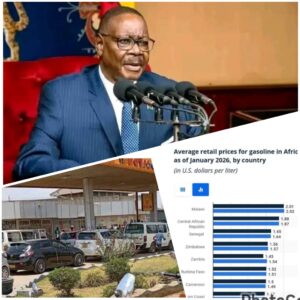
In a decisive move that underscores his administration’s commitment to economic realism, President Professor Arthur Peter Mutharika has endorsed the Malawi Energy Regulatory Authority’s (MERA) immediate adjustments to fuel and electricity prices.
This bold step, announced just hours ago, marks a critical inflection point for Malawi’s economy and represents the very kind of firm, corrective act that was conspicuously absent under the previous administration of President Lazarus Chakwera.
The decision, effective from January 20, 2026, sees the reinstatement of the Automatic Pricing Mechanism (APM) for petrol and diesel, with increases of approximately 41%, and the implementation of the long-delayed third tranche of the electricity base tariff.
This is not merely a price change; it is a fundamental policy reversal. It directly addresses the artificial pricing regime—a legacy of the Chakwera era—that brought the nation to the brink of energy collapse.
Where the previous administration hesitated and allowed critical levies to fail, President Mutharika has acted with the urgency the situation demands.
Upon his return to office following a decisive electoral mandate in September 2025, President Mutharika inherited an energy sector in silent crisis.
The fixed pricing model maintained by his predecessor had drained strategic reserves, encouraged rampant smuggling, and starved the Road Fund and Rural Electrification Programme (MAREP) of billions in Kwacha.
The action is the first, essential surgical cut to remove that tumour of unsustainable policy.
What President Mutharika has done, his predecessor demonstrably could not—or would not—do over five years, is prioritize the long-term health of the nation over short-term political comfort.
The Chakwera administration was defined by a paralysis in the face of difficult choices, allowing infrastructure to decay and supply chains to fracture while offering only promises.
President Mutharika has replaced promises with a painful but precise prescription for recovery.
The swiftness of this decision following his return to State House sends a powerful signal to citizens, investors, and international partners.
It signals that the era of avoidance is over. By allowing prices to reflect true costs, the President has:
- Restored Market Integrity: Ensuring fuel importers can operate viably and supply can be sustained.
- Restored Fiscal Linkages: Reconnecting every litre of fuel sold to the funding of roads and rural electricity projects from today forward.
- Restored Policy Credibility: Demonstrating that Malawi, under his leadership, will adhere to transparent, rules-based economic governance.
The timing is pivotal. This decision, made today, prevents the continued haemorrhaging of foreign exchange and stabilizes the foundation upon which all other economic activity depends. It is a classic act of political courage: spending hard-earned political capital immediately upon entering office to secure the nation’s future, rather than delaying the inevitable until a crisis becomes unmanageable.
For the ordinary Malawian feeling the weight of this adjustment today, the pain is real and immediate. But so too was the pain of empty pumps, impassable roads, and stalled development—a chronic pain the previous government failed to cure.
President Mutharika’s choice today is to administer a sharp, transformative pain that leads to recovery, rather than prolonging a debilitating decline.
In his victory speech, President Mutharika promised a return to decisive and responsible governance.
The announcement from MERA this afternoon is that promise in action.
It is a clear statement that under his leadership, difficult truths will be confronted head-on, not deferred.
For a nation weary of false stability and hidden decay, today’s difficult news may well be remembered as the day Malawi began its honest journey back to solid ground.






