Flagship report calls for fundamental reset of global water agenda as irreversible damage pushes many basins beyond recovery.
UNITED NATIONS, Jan 21 2026 (IPS) – The world is already in the state of “water bankruptcy”. In many basins and aquifers, long-term overuse and degradation mean that past hydrological and ecological baselines cannot realistically be restored.
While not every basin or country is water-bankrupt, enough critical systems around the world have crossed these thresholds, and are interconnected through trade, migration, climate feedbacks, and geopolitical dependencies, that the global risk landscape is now fundamentally altered.
The familiar language of “water stress” and “water crisis” is no longer adequate. Stress describes high pressure that is still reversible. Crisis describes acute, time-bound shocks. Water bankruptcy must be recognized as a distinct post-crisis state, where accumulated damage and overshoot have undermined the system’s capacity to recover.
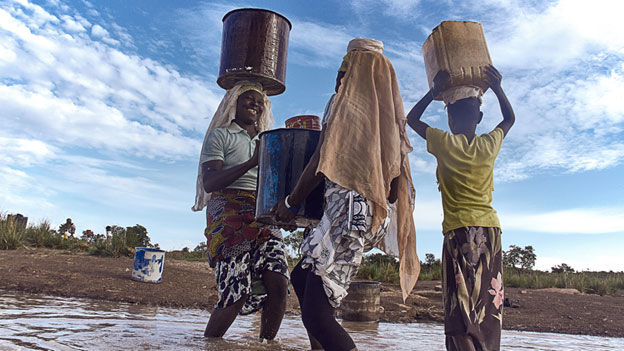
A group of women fetching water from a dam in Taha, Northern Region of Ghana. Credit: Evans Ahorsu. Source: UN University’s Institute for Water, Environment and Health
Water bankruptcy management must address insolvency and irreversibility. Unlike financial bankruptcy management, which deals only with insolvency, managing water bankruptcy is concerned with rebalancing demand and supply under conditions where returning to baseline conditions is no longer possible.
Anthropogenic drought is central to the world’s new water reality. Drought and water shortage are increasingly driven by human activities, over-allocation, groundwater depletion, land and soil degradation, deforestation, pollution, and climate change, rather than natural variability alone. Water bankruptcy is the outcome of long-term anthropogenic drought, not just bad luck with hydrological anomalies.
Water bankruptcy is about both quantity and quality. Declining stocks, polluted rivers, and degrading aquifers, and salinized soils mean that the truly usable fraction of available water is shrinking, even where total volumes may appear stable.
Managing water bankruptcy requires a shift from crisis management to bankruptcy management. The priority is no longer to “get back to normal”, but to prevent further irreversible damage, rebalance rights and claims within degraded carrying capacities, transform water-intensive sectors and development models, and support just transitions for those most affected.
Governance institutions must protect both water and its underlying natural capital. The existing institutions focus on protecting water as a good or service disregarding the natural capital that makes water available in the first place. Efforts to protect a product are ineffective when the processes that produce it are disrupted.
Recognizing water bankruptcy calls for developing legal and governance institutions that can effectively protect not only water but also the hydrological cycle and natural capital that make its production possible.
Water bankruptcy is a justice and security issue. The costs of overshoot and irreversibility fall disproportionately on smallholder farmers, rural and Indigenous communities, informal urban residents, women, youth, and downstream users, while benefits have often accrued to more powerful actors. How societies manage water bankruptcy will shape social cohesion, political stability, and peace.
Water bankruptcy management combines mitigation with adaptation. While water crisis management paradigms seek to return the system to normal conditions through mitigation efforts only, water bankruptcy management focuses on restoring what is possible and preventing further damages through mitigation combined with adaptation to new normals and constraints.
Water can serve as a bridge in a fragmented world. Water can align national priorities with international priorities and improve cooperation between and within nations. Roughly 70% of global freshwater withdrawals are used for agriculture, much of it by farmers in the Global South. Elevating water in global policy debates can help rebuild trust between South and North but also within nations, between rural and urban, left and right constituencies.
Water must be recognized as an upstream sector. Most national and international policy agendas treat water as a downstream impact sector where investments are focused on mitigating the imposed problems and externalities. The world must recognize water as an upstream opportunity sector where investments have long-term benefits for peace, stability, security, equity, economy, health, and the environment.
Water is an effective medium to fulfill the global environmental agenda. Investments in addressing water bankruptcy deliver major co-benefits for the global efforts to address its environmental problems while addressing the national security concerns of the UN member states.
Elevating water in the global policy agenda can renew international cooperation, increase the efficiency of environmental investments, and reaccelerate the halted progress of the three Rio Conventions to address climate change, biodiversity loss, and desertification.
A new global water agenda is urgently needed. Existing agendas and conventional water policies, focused mainly on WASH, incremental efficiency gains and generic IWRM guidelines, are not sufficient for the world’s current water reality. A fresh water agenda must be developed that takes Global Water Bankruptcy as a starting point and uses the 2026 and 2028 UN Water Conferences, the conclusion of the Water Action Decade in 2028, and the 2030 SDG 6 timeline as milestones for resetting how the world understands and governs water.
Global Water Bankruptcy: Living Beyond Our Hydrological Means in the Post-Crisis Era | UN University Institute for Water, Environment and Health (UNU-INWEH) (20 January) (press release)
Support Paper Madani K. (2026) Water Bankruptcy: The Formal Definition, Water Resources Management, 40 (78) doi: 10.1007/s11269-025-04484-0)
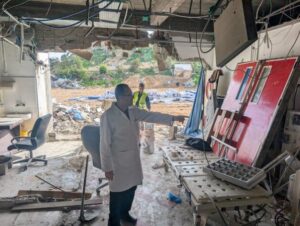
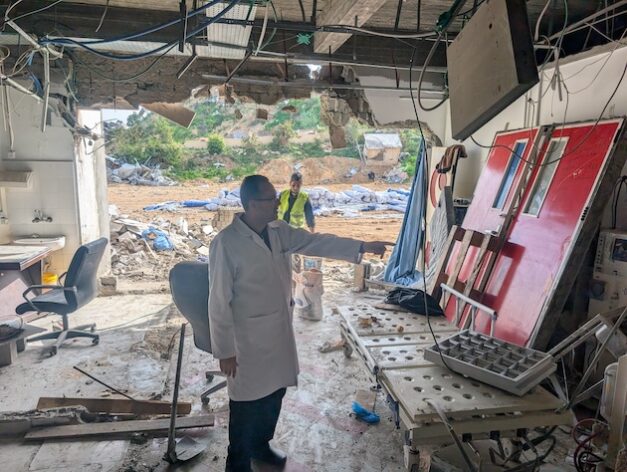
Cardiologist Dr. Marwan Sultan, then Director of the Indonesian Hospital in north Gaza, in February 2025 showing damage to hospital equipment following an Israeli attack on the facility a few months prior. In July 2025, Dr. Sultan was killed in an Israeli strike on the apartment where he was sheltering with his family. Credit: PHR/GHRC
BRATISLAVA, Jan 14 2026 (IPS) – Israel must lift all restrictions on medicine, food and aid coming into Gaza, rights groups have demanded, as two reports released today (Jan 14) document how maternal and reproductive healthcare have been all but destroyed in the country.
The reports from the two groups, which are independent organizations, provide both detailed clinical analysis of the collapse of Gaza’s health system and its medical consequences as well as firsthand testimonies from clinicians and pregnant and breastfeeding women in Gaza forced to live and care for their newborns in extreme conditions.
And the organizations say that with conditions improving only marginally for many women despite the current ceasefire, Israel must roll back restrictions placed on aid and immediately help ensure people in Gaza get access to the healthcare they need.
“Israel’s destruction of Gaza’s health infrastructure, combined with untreated malnutrition resulting from restrictions on food and medical supplies, including baby formula, has created an environment in which the fundamental biological processes of reproduction and survival have been systematically destroyed, resulting in known and foreseeable harm, pain, suffering, and death,” Sam Zarifi, Physicians for Human Rights (PHR) Executive Director, said.
“Israel must immediately allow food and essential medical material to enter Gaza with a proper medical plan for helping the besieged population,” he added.
Israeli military operations following Hamas’s attack on Israel on October 7, 2023, have left massive destruction across Gaza, including to healthcare facilities. According to UNICEF, 94 percent of hospitals have been damaged or destroyed.
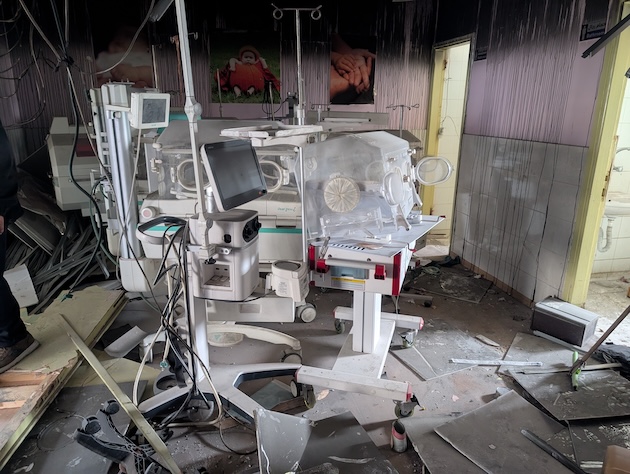
Destroyed incubators and equipment at the Kamal Adwan Hospital Neonatal Intensive Care Unit in north Gaza, following the targeting and raid of the facility by the Israeli forces in December 2024. Credit: PHR/GHRC
Maternal and reproductive healthcare has suffered. Before the war, Gaza had eight neonatal intensive care units with 178 incubators. Today, the number of incubators has dropped by 70 percent. In the north, there were 105 incubators across three NICUs, now there are barely any functional units remaining, UNICEF told IPS.
It says that the numbers of low birth weight babies have nearly tripled compared to pre-war levels and the number of first-day deaths of babies increased by 75 percent.
The PHR and PHR-I reports paint a similar picture.
The PHR report, which focuses on the period between January 2025 and October 2025 when a ceasefire was agreed, details how between May and June last year, the Palestinian Ministry of Health reported a 41 percent decrease in the birth rate in Gaza compared to the same time period in 2022; there was a significant increase in miscarriages that affected more than 2,600 women, and 220 pregnancy-related deaths that occurred before delivery.
The ministry also reported a sharp increase in premature births and low birth weight cases; over 1,460 babies were reported to be born prematurely, while more than 2,500 were admitted to neonatal intensive care. Newborn deaths also increased, with at least 21 babies reported to have died on their first day of life.
Meanwhile, the PHR-I report includes personal testimonies illustrating the severe problems pregnant women and women with newborns have faced in Gaza during the war, from lacking safe routes to care and being forced to give birth in unsanitary, dangerous conditions to battling hunger and severe food shortages as they try to breastfeed their children.
One woman, Samah Muhammad Abu Mustafa, a 30-year-old mother of two from Khuza’a, Khan Youni, described how when her contractions began in the middle of the night, because there were no vehicles and very few ambulances, which are reserved for shelling or other critical emergencies, she had to walk a long distance through rain. When she eventually reached the hospital, she said it was “horrifying.”
“I swear, one woman gave birth in the corridor, and her baby died. It was very crowded, and the doctors worked nonstop. I felt as though I could give birth at any moment. After giving birth to my eldest daughter, I was told I should not deliver naturally again because my pelvis was too narrow. Despite this, the doctors said I would have to deliver naturally because a cesarean section required anesthesia, and there was not enough available. I stood for three hours until it was finally my turn, without sitting even for a moment,” she said.
But despite the October 2025 ceasefire, massive problems remain with women’s access to and the provision of, maternal and reproductive healthcare in Gaza.
“Maternal health units in Gaza are largely non-functional and face critical shortages of essential medicines, consumables, and equipment,” Lama Bakri, project coordinator in the Occupied Territories Department at PHR-I, told IPS.
“Neonatal and diagnostic equipment remains scarce or blocked, including portable incubators for premature and low-birth-weight newborns. Although some aid has entered since the ceasefire, these gaps are not being addressed at the scale required, and meaningful improvement in the immediate future remains unlikely.”
Malnutrition also remains a serious problem.
“The ceasefire has allowed us to significantly scale up our nutrition response, but we are still treating pregnant and breastfeeding women for acute malnutrition in alarmingly high numbers,” Ricardo Pires, Communication Manager, Division of Global Communications & Advocacy at UNICEF, told IPS.
He said that between July and September 2025 about 38 percent of pregnant women screened were diagnosed with acute malnutrition.
“In October alone, we admitted 8,300 pregnant and breastfeeding women for treatment, about 270 a day, in a place where there was no discernible malnutrition among this group before October 2023,” he added.
UNICEF has documented almost 6,800 children admitted for acute malnutrition treatment in November 2025 compared to 4,700 cases in November 2024. So far, the number of admitted cases more than doubled in 2025 compared to 2024: almost 89,000 admissions of children to date in 2025, compared to 40,000 cases in 2024, and almost none before 2023.
“What we’re seeing is that no child meets minimum dietary diversity standards, and two-thirds of children are surviving on just two food groups or less. Around 90 percent of caregivers reported their children had been sick in the previous two weeks, which compounds the malnutrition crisis,” Pires said.
And there are fears for the longer-term demographic future of Gaza given the damage to maternal and reproductive healthcare.
“For Gaza’s demographic future, the implications are serious. Even with reconstruction, we will be dealing with a generation of children who were scarred before they took their first breath, children who may face lifelong health complications, developmental challenges, and the effects of stunting. The rebuilding must start now, but we should be clear-eyed: the damage to maternal and newborn health will echo for years, potentially decades,” said Pires.
But others say that with cooperation between international actors and the right political will, the situation need not remain so dire.
“To rehabilitate the population after everything that has happened is going to be a real issue, [but] now there is a Board of Peace, the needs of pregnant women and maternal and reproductive healthcare can be prioritized,” Zarifi told IPS.
“The capacity and the will exist among Gazans and Gazan healthcare workers to rebuild the healthcare system, including maternal and reproductive health services,” added Bakri. “The primary obstacle is not technical or professional but political: Israel’s control over Gaza’s borders and the restrictions on the entry of essential equipment, medical supplies, and reconstruction materials. With unrestricted access to what is needed to rehabilitate hospitals, rebuild destroyed units, and restock essential medicines, recovery is entirely feasible. Whether maternal and reproductive healthcare can return to pre-war levels depends on sustained international pressure to allow that access.”
Although some aid has entered since the ceasefire, these gaps are not being addressed at the scale required, and meaningful improvement in the immediate future remains unlikely.
However, while both NGOs like PHR and PHR-I and others, alongside international bodies like the UN, stress that any recovery and reconstruction in Gaza requires the ceasefire to hold and consolidate, repeated violations underline its fragility, and the effect that has on women.
Meanwhile, PHR and PHR-I point out that extreme weather and ongoing Israeli restrictions on medicine and food getting to Gaza to this day continue to severely affect pregnant women, new mothers, and babies. On top of this, Israel has also announced it will bar 37 international aid groups from working in Gaza, potentially compounding the problems.
Bakri said such measures were jeopardizing what small gains had been made since the ceasefire and “raise serious concerns about whether the situation can improve.”
“Even after the ceasefire, while bombardment has decreased, the reality these women face remains catastrophic – not only for their bodies and well-being but for the survival of the entire society,” said Bakri.
Zarifi added, “We are worried that the restrictions placed by Israel on some of the major actors in the humanitarian response will hamper access to assistance for those that need it. We have raised questions with the Israeli government as to why specific medicines are not allowed to be brought into Gaza and they say that they are not stopping them from being brought in but they can be brought in by commercial means. That is hard for people who can barely put any money together. These medicines should definitely be coming in through humanitarian channels.”
He also highlighted how important the issue of accountability is in ensuring any progress is made in rebuilding healthcare in Gaza and also limiting the probability of similar devastation in the future.
Both reports concluded that the harms caused by Israeli attacks are not isolated incidents but part of an ongoing pattern of systematic damage to the health of women and their children in Gaza, amounting to reproductive violence.
Israel has denied this and said that attacks on hospitals in Gaza have been because the medical facilities are being used by Hamas, and it has maintained that its forces adhere to international law.
While under international law healthcare facilities have special protection even in war, and attacks on them are prohibited, that protection is lost if they are deemed to fulfill criteria to be considered military objectives, such as housing militaries and arms.
However, any attack on them must still comply with the fundamental principles of distinction, proportionality and precautions in attack and failure to respect any of these principles constitutes a breach of international humanitarian law, according to the UN.
“These attacks are part of a deliberate policy designed to create a domino effect of suffering. From starvation and militarized aid distribution by the GHF, to lack of access to clean water, repeated displacement orders, living in shelters under continuous bombardment, and exposure to infections, disease, and harsh weather, the attacks on maternal and reproductive healthcare are another piece of this puzzle. Together, these conditions were created to systematically destroy the fabric of life in Gaza and reduce the population’s ability to survive,” said Bakri.
“The Israeli government has justified attacks on healthcare facilities by saying this was a problem caused by Hamas. We haven’t had an indication of this but it might be true. But in any case there has to be an investigation of these incidents and we hope the Israeli government will carry out such an investigation,” said Zarifi.
“But what is really alarming to us is that the norms prohibiting attacks on healthcare have been repeatedly violated, and there are also laws governing the protection of women and children that appear to have been violated. The only thing that makes these norms work is accountability. There has to be accountability for what happened, as it is the only way we can ensure that what has happened won’t happen in other conflicts. Impunity is watched by other actors around the world,” he added.
WASHINGTON, DC – NOVEMBER 14: U.S. Speaker of the House Mike Johnson (R-LA) speaks during a news conference after a weekly Republican conference meetingin the U.S. Capitol Building on November 14, 2023 in Washington, DC. During the news conference House Republican leadership spoke to reporters about a range of topics including the upcoming vote on a continuing resolution to fund the government through early 2024. (Photo by Anna Moneymaker/Getty Images)
Minnesota state law enforcement officials are working with the FBI to investigate the fatal shooting of a Minneapolis woman by an Immigrations and Customs Enforcement officer. U.S. forces boarded a tanker carrying sanctioned oil after a two-week chase across the Atlantic, as the Trump administration expands plans to take control of Venezuela’s oil sales indefinitely. And Health Secretary Robert F. Kennedy Jr.’s new dietary guidelines flip decades of advice, elevating meat and dairy and alarming many public health researchers.
Want more analysis of the most important news of the day, plus a little fun? Subscribe to the Up First newsletter.
Today’s episode of Up First was edited by Rebekah Metzler, Kelsey Snell, Kate Bartlett, Mohamad ElBardicy, and Alice Woelfle.
It was produced by Ziad Buchh, Nia Dumas and Christopher Thomas.
We get engineering support from David Greenburg. Our technical director is Stacey Abbott.
And our deputy Executive Producer is Kelley Dickens.
Tatiana — who is the granddaughter of late president John F. Kennedy and former first lady Jacqueline Kennedy Onassis — confirmed in an essay published by The New Yorker that she was battling acute myeloid leukemia and was given a year to live by doctors.
She learned that she has a “rare mutation called Inversion 3” that could not be “cured by a standard course” of treatment shortly after welcoming her daughter, Josephine, in May 2024. (Tatiana and her husband, George Moran, also share a son, Edwin Garrett Moran, who was born in 2022.)
“I did not — could not — believe that they were talking about me. I had swum a mile in the pool the day before, nine months pregnant. I wasn’t sick. I didn’t feel sick. I was actually one of the healthiest people I knew,” Tatiana wrote in The New Yorker. “I had a son whom I loved more than anything and a newborn I needed to take care of.”
News broke in December 2025 that Tatiana died. She was 35.
Keep scrolling for more information on Tatiana and her family.
George Moran
Tatiana Schlossberg met her future husband, George Moran, while they were both undergraduates at Yale University. Moran became a doctor at Columbia University’s Vagelos College of Physicians and Surgeons, while Schlossberg worked for The New York Times, Vanity Fair and The Washington Post as an environmental reporter.
The New York Times reported in September 2017 that the couple had tied the knot at the Kennedy family home in Martha’s Vineyard in a ceremony officiated by former Massachusetts governor Deval Patrick.
Tatiana’s younger brother, Jack Schlossberg, announced on NBC’s Today in 2022 that his sister and her husband had welcomed their first baby, a son named Edwin Moran.
“I can’t get away from them,” Jack said of his sister and his newborn nephew. “I love them.”
Tatiana and George welcomed their youngest child, a daughter, in 2024. They have chosen to keep her name private.
Following her terminal cancer diagnosis, Tatiana credited George for his immense support following her cancer diagnosis.
“George did everything for me that he possibly could. He talked to all the doctors and insurance people that I didn’t want to talk to; he slept on the floor of the hospital; he didn’t get mad when I was raging on steroids and yelled at him that I did not like Schweppes ginger ale, only Canada Dry. He would go home to put our kids to bed and come back to bring me dinner,” she recalled in the New Yorker.
Tatiana added, “I know that not everyone can be married to a doctor, but, if you can, it’s a very good idea. He is perfect, and I feel so cheated and so sad that I don’t get to keep living the wonderful life I had with this kind, funny, handsome genius I managed to find.”
Edwin Moran
Tatiana’s younger brother, Jack, announced that he’d become an uncle during a 2022 interview on NBC’s Today.
“[Tatiana’s son’s] name is Edwin but I like to call him Jack,” the Kennedy heir teased.
In her New Yorker essay, Tatiana recalled that Edwin’s visits to the hospital were rare bright spots as she received cancer treatment.
“My son came to visit almost every day. … The nurses brought me warm blankets and let me sit on the floor of the skyway with my son, even though I wasn’t supposed to leave my room,” she recalled.
Tatiana reflected on a bonding experience with her son as her hair began to fall out during treatment.
“My hair started to fall out and I wore scarves to cover my head, remembering, vainly, each time I tied one on, how great my hair used to be; when my son came to visit, he wore them, too,” she said.
Josephine
Tatiana and George welcomed their daughter, Josephine, in May 2024. After giving birth, Tatiana spent five weeks at Columbia-Presbyterian Hospital and was transferred to Memorial Sloan Kettering to undergo a bone-marrow transplant. She later underwent chemotherapy at home.
She wrote in her New Yorker essay that one of her biggest fears after receiving a terminal diagnosis was that her newborn daughter wouldn’t remember her.
“My son might have a few memories, but he’ll probably start confusing them with pictures he sees or stories he hears,” she wrote. “I didn’t ever really get to take care of my daughter — I couldn’t change her diaper or give her a bath or feed her, all because of the risk of infection after my transplants. I was gone for almost half of her first year of life. I don’t know who, really, she thinks I am, and whether she will feel or remember, when I am gone, that I am her mother.”
When the family announced Tatiana’s death in December 2025, it was revealed that her daughter’s name is Josephine.
John F. Kennedy and Jackie Kennedy
Tatiana is the granddaughter of late President John F. Kennedy and former first lady Jackie Kennedy. The Kennedys shared daughter Caroline Kennedy and son John F. Kennedy Jr. (They also lost two children, daughter Arabella and son Patrick.)
President Kennedy was killed at age 46 in a fatal shooting on November 22, 1963, in Dallas, Texas. Jackie later married Greek-Argentine magnate Aristotle Onassis, who died at age 69 in 1975. Jackie succumbed to Non-Hodgkin’s lymphoma at age 64 in May 1994.
Caroline Kennedy
John and Jackie Kennedy welcomed daughter Caroline Kennedy in November 1957. She was only 5 years old when her father was assassinated in 1963.
As an adult, Caroline worked at New York City’s Metropolitan Museum of Art, where she met her future husband, Edwin Schlossberg. They tied the knot at Our Lady of Victory Church in Centerville, Massachusetts in 1986 and later welcomed three children: Rose, Tatiana and Jack.
Caroline eventually followed in her family’s footsteps by entering politics as an ambassador to Australia and Japan during Joe Biden and Barack Obama’s presidential administrations.
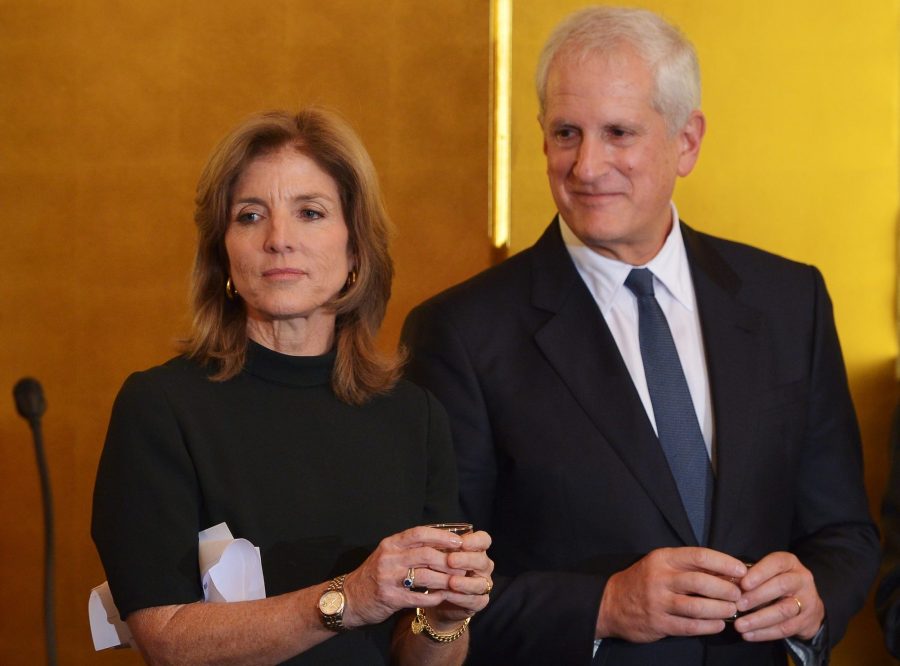
Caroline Kennedy and Edwin Schlossberg in November 2013.MANDEL NGAN/AFP via Getty Images
Tatiana credited her parents and siblings with helping to raise her two children while she underwent grueling cancer treatment.
“My parents and my brother and sister, too, have been raising my children and sitting in my various hospital rooms almost every day for the last year and a half. They have held my hand unflinchingly while I have suffered, trying not to show their pain and sadness in order to protect me from it,” she wrote in her New Yorker essay. “This has been a great gift, even though I feel their pain every day. For my whole life, I have tried to be good, to be a good student and a good sister and a good daughter, and to protect my mother and never make her upset or angry. Now I have added a new tragedy to her life, to our family’s life, and there’s nothing I can do to stop it.”
Edwin Schlossberg
Caroline’s husband Edwin Schlossberg is an artist and designer. He founded the firm ESI Design and has written several books about design philosophy.
Edwin was appointed to the Commission of Fine Arts by President Obama in 2011, after receiving the prestigious National Arts Club Medal of Honor in 2004.
Rose Kennedy Schlossberg
Caroline and Edwin’s eldest daughter, Rose Schlossberg, arrived in June 1988 and was named after her maternal great-grandmother, Rose Fitzgerald Kennedy.
She attended Harvard University, where she once gave Lindsay Lohan and her then-girlfriend Samantha Ronson a campus tour, according to the Boston Herald. She later received her master’s degree in interactive telecommunications from New York University.
Rose has worked as a production assistant on the TV show Brick City and the 2012 documentary Hard Times: Lost on Long Island. She co-wrote and produced the Peabody Award-winning documentary series The Kalief Browder Story in 2017 and helped open a permanent exhibit for her late grandfather, John F. Kennedy, at the Kennedy Center in 2022.
She married restaurateur Rory McAuliffe in California in 2022.
John ‘Jack’ Bouvier Kennedy Schlossberg
Caroline and Edwin’s youngest child, son Jack Schlossberg, was born in January 1993.
As an adult, he became popular on social media for his shirtless selfies and pop culture clapbacks — including criticizing American Horror Story creator Ryan Murphy’s planned series about Jack’s late uncle John F. Kennedy Jr. and his wife Carolyn Bessette Kennedy. (The couple were killed in a 1999 plane crash, along with Carolyn’s sister Lauren Bessette.)
In November 2025, Jack announced plans to run for Congress in New York’s 12th congressional district in the 2026 midterm elections.
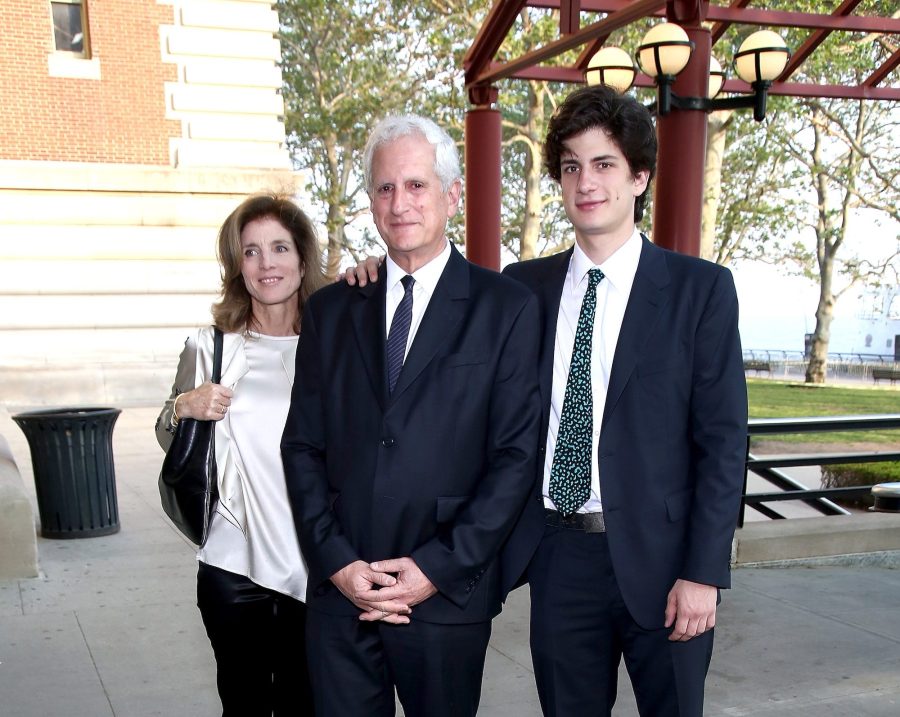
Caroline Kennedy, Edwin Schlossberg and Jack Schlossberg in May 2015.Paul Zimmerman/Getty Images
“I’m not running because I have all the answers to our problems. I’m running because the people of New York 12 do. I want to listen to your struggles, hear your stories, amplify your voice, go to Washington and execute on your behalf,” he wrote via Instagram.
Jack continued, “There is nowhere I’d rather be than in the arena fighting for my hometown. Over the next eight months, during the course of this campaign, I hope to meet as many of you as I can. If you see me on the street, please say hello. If I knock on your door, I hope we can have a conversation. Because politics should be personal.”
Robert F. Kennedy Jr.
Like most of her family, Tatiana has had a strained relationship with her cousin Robert F. Kennedy Jr. since he endorsed Donald Trump in the 2024 presidential election. RFK Jr. was later appointed by Trump to lead the Department of Health and Human Services, which drew concern over his history of vaccine skepticism.
Tatiana wrote about her rift with her cousin in her New Yorker essay, revealing that his confirmation to the HHS role added stress during her illness. She pointed out that her husband George’s job at Columbia University was potentially in danger because the school was “one of the Trump Administration’s first targets in its crusade against alleged antisemitism on campuses.”
“If George changed jobs, we didn’t know if we’d be able to get insurance, now that I had a preëxisting condition,” she wrote. “Bobby is a known skeptic of vaccines, and I was especially concerned that I wouldn’t be able to get mine again, leaving me to spend the rest of my life immunocompromised, along with millions of cancer survivors, small children, and the elderly.”
Tatiana unequivocally distanced herself from RFK’s statement that “there’s no vaccine that is safe and effective” during a 2023 appearance on the “Lex Fridman Podcast.”
“Bobby probably doesn’t remember the millions of people who were paralyzed or killed by polio before the vaccine was available,” she added. “My dad, who grew up in New York City in the nineteen-forties and fifties, does remember. Recently, I asked him what it was like when he got the vaccine. He said that it felt like freedom.”
Share this:
Like this:
LikeLoading…
Discover more from The Maravi Post
Subscribe to get the latest posts sent to your email.
After a promising start to getting the rehab he desperately needs, former ‘Ned’s Declassified’ star Tylor Chase is back on the streets, TMZ has learned. “Mighty Ducks” star Shaun Weiss tells TMZ … Tylor was evaluated by a mental health crisis…
Share this:
Like this:
LikeLoading…
Discover more from The Maravi Post
Subscribe to get the latest posts sent to your email.
Dec 29 2025 (IPS) – CIVICUS discusses environmental accountability in Zambia with Christian-Geraud Neema, Africa editor at the China Global South Project, an independent journalism initiative that covers and follows China’s activities in global south countries.
Christian-Geraud Neema
A group of 176 Zambian farmers has filed a US$80 billion lawsuit against a Chinese state-owned mining company over a major toxic spill. In February, the collapse of a dam that was supposed to control mining waste released 50 million litres of toxic wastewater into the Kafue River system, killing fish, destroying crops and contaminating water sources for thousands of people. The compensation demand highlights broader questions about mining governance, environmental oversight and corporate accountability.
What’s this lawsuit about, and why are farmers seeking US$80 billion?
The farmers are suing Sino-Metals Leach Zambia, a subsidiary of the Chinese state-owned China Nonferrous Metal Mining Group, because on 18 February, the company’s tailings dam collapsed, releasing an estimated 50 million litres of acidic, toxic wastewater and up to 1.5 million tonnes of waste material into the Kafue River. This led to water pollution affecting communities in Chambishi and Kitwe, far beyond the immediate mining area.
The lawsuit reflects real harm and frustration. From the farmers’ perspective, the company is clearly responsible. Their livelihoods have been destroyed, their land contaminated and their future made uncertain. In that context, seeking accountability through the courts is a rational response.
That said, the US$80 billion figure is likely exaggerated. It shows the absence of credible damage assessments rather than a precise calculation. When no one provides clear data on losses, communities respond by anchoring their claims in worst-case scenarios.
This case also highlights a broader accountability gap. Mining companies should be held responsible, but governments must also be questioned. These projects are approved, inspected and regulated by state authorities. If a dam was unsafe, why was it authorised? Why was oversight insufficient?
It should be noted that Zambia’s legal framework allows communities to bring such cases domestically, which is a significant step forward compared to earlier cases where affected communities had to sue foreign companies in courts abroad.
What caused the toxic spill?
There is no single, uncontested explanation. There were clear structural weaknesses in the tailings dam. Reports from civil society and media suggest the dam was not built to the required standards under Zambian regulations. But the company argues the dam complied with existing standards and that it was encroachment by surrounding communities that weakened the structure over time.
These two narratives are not mutually exclusive. Even if community interactions with the site occurred, the primary responsibility still lies with the company. Mining operations take place in complex social environments, and companies are expected to anticipate these realities and design infrastructure that is robust enough to withstand them. Ultimately, this incident reflects governance and regulatory failures. It was not an isolated accident.
What were the consequences of the spill?
The impacts have been severe and multidimensional. The spill polluted large sections of the Kafue River, reportedly extending over 100 kilometres. It killed large numbers of fish, contaminated riverbeds and disrupted ecosystems. Agriculturally, farmers using river water for irrigation saw their crops destroyed or rendered unsafe. Livestock and soil quality were also affected. Acidic and toxic substances entered water sources used daily for cooking, drinking and washing, and communities were exposed to serious health risks.
What makes the situation particularly troubling is the lack of reliable and independent data. There has been no transparent and comprehensive assessment released by the government, the company or an independent body. This absence has left communities uncertain about long-term environmental damage and health effects, and fuelled emotionally charged debates instead of evidence-based responses.
Was the disaster preventable?
Absolutely. At a technical level, stronger infrastructure, better-quality materials and stricter adherence to safety standards could have significantly reduced the risk. At an operational level, companies know mining sites are rarely isolated, and community proximity, informal access and social dynamics must be factored in when designing and securing tailings dams.
But prevention also depends heavily on governance. Mining companies are profit-driven entities, and in weak governance environments, the temptation to cut costs is high. This is not unique to Chinese firms. The main difference in how companies operate is not their origin but their context: the same companies often operate very differently in countries with weak or strong regulatory oversight. Where rules are enforced, behaviour improves; where oversight is weak, shortcuts become the norm.
The key issue here is enforcement. Zambia has good environmental laws and standards on paper. The problem is their implementation.
Could this case set a precedent?
This case has the potential to strengthen existing accountability mechanisms rather than create a new precedent. Zambia has seen similar cases before, including lawsuits involving western mining companies. What is different now is the increased legal space for communities to act locally.
If successful, the case could reinforce civil society advocacy for responsible mining, greater transparency and stronger enforcement of environmental regulations. It could also raise awareness among communities living near mining sites about their rights and the risks they face.