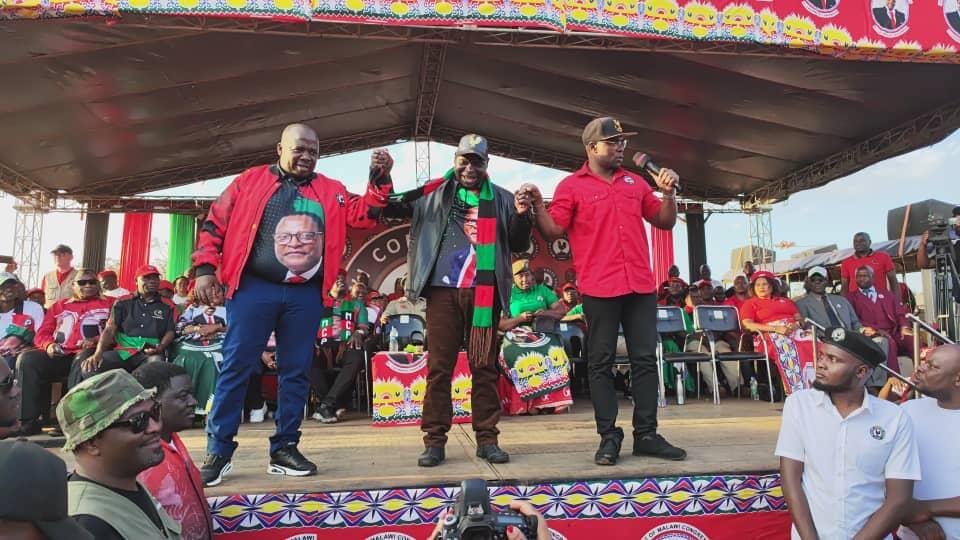
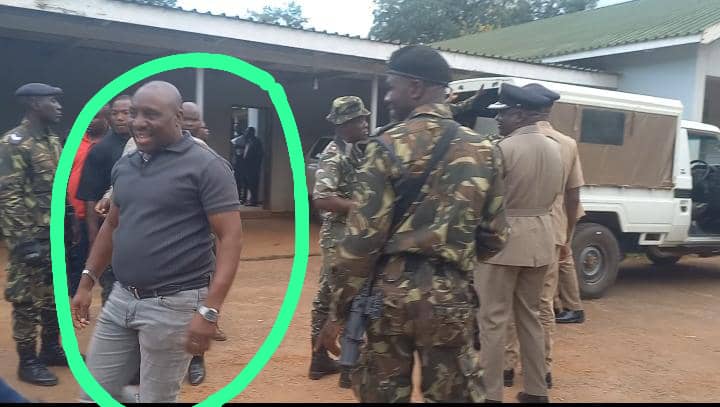
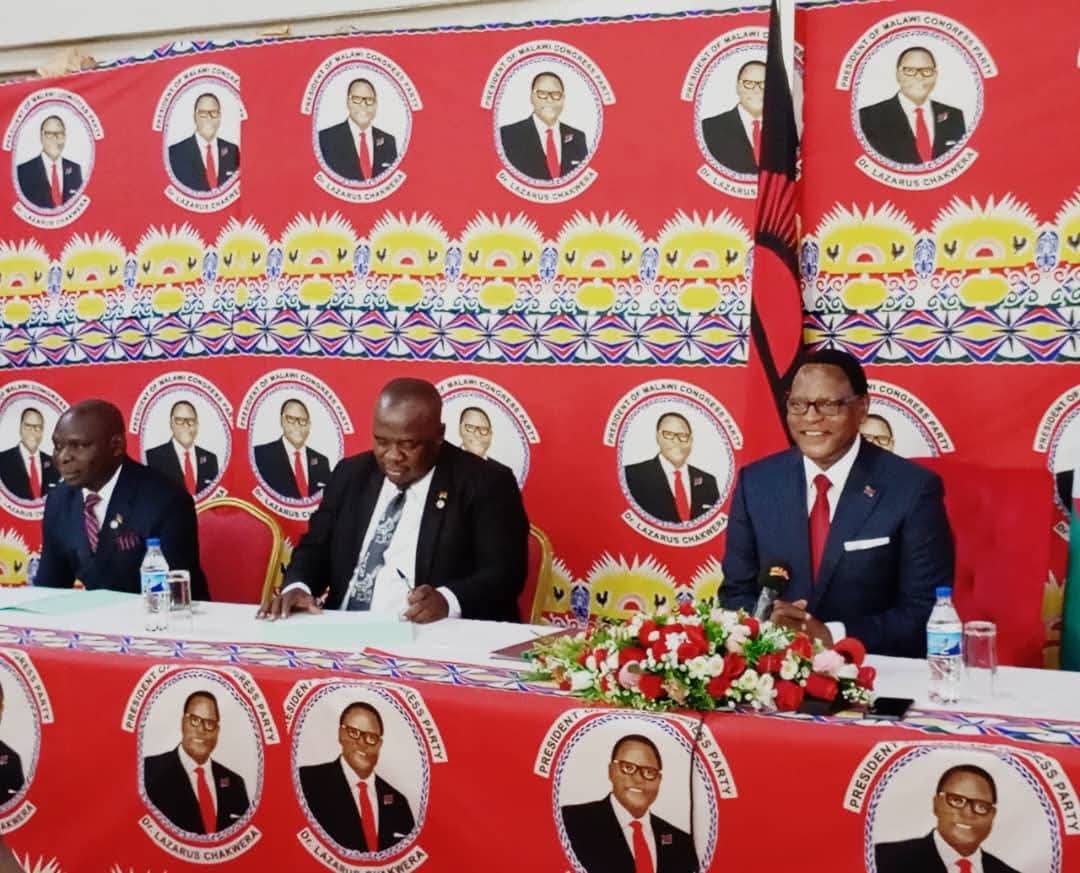
LILONGWE-(MaraviPost)-The Malawi Congress Party (MCP) Kasungu South legislator who is also leader of opposition in Parliament Simplex Chithyola Banda has been left in the cold after senior party members snubbed his caucus call.
Several top MCP officials including former MCP Secretary General Elsenhower Mkaka, incumbent Secretary General Chimwendo Banda, Ching’oma and Kazembe boycotted the caucus citing no attendance without notice.
Not only but also Gotan Hara excused herself, citing other commitments.
The boycott raises questions about the party’s internal dynamics, with speculation that the meeting may be dominated by supporters of party president Lazarus Chakwera.
Chithyola is expected to make MCP position this afternoon in Parliament on President Peter Mutharika’s 2026/26 SONA.
Homeless albino family In Malawi after being hunted
BLANTYRE-(MaraviPost)-The recent flurry of social media reports claiming a seven-year-old child with albinism was abducted in Mulanje has been exposed as a baseless fabrication, courtesy of Mulanje Police’s unequivocal denial.
The police, through their public relations officer Innocent Moses, have confirmed no such case was reported or recorded, and no arrests were made in connection to a missing child – contrary to earlier claims.
This episode is more than just a case of misinformation; it’s a glaring example of MCP sympathizers wading into the murky waters of propaganda to discredit the DPP-led government. Investigations reveal a calculated effort to sow panic and undermine the government’s credibility.
But DPP isn’t biting. Government spokesperson Shadrick Namalomba’s response is a masterclass in composure: “The DPP won’t be stopped or shaken by the propaganda… it’s busy implementing its agenda and serving Malawians.” The message is clear – DPP’s focus remains on governance, undeterred by MCP’s dirty tricks.
This isn’t just about one false report; it’s about the broader narrative. MCP’s desperation is palpable, and their tactics are getting more brazen. But the people see through it.
The DPP’s achievements – free secondary education, affordable fertilizer, and cement prices – speak louder than MCP’s propaganda.
The real story here is MCP’s war on truth. They’re peddling panic, but the DPP’s commitment to serving Malawi remains unshaken. As Namalomba said, the government won’t be deterred.
The people deserve better than MCP’s deceit; they deserve the progress DPP is delivering.
Share this:
Like this:
LikeLoading…
Discover more from The Maravi Post
Subscribe to get the latest posts sent to your email.
LILONGWE–(MaraviPost)–Barely three months after Malawians went to the polls and decisively voted to remove the Malawi Congress Party (MCP) administration, former President Lazarus Chakwera is once again under fire for the very behavior many believe cost him the presidency: a relentless appetite for international travel.
Political analysts and ordinary citizens alike have expressed dismay as news emerged that the former leader has already visited Tanzania and is currently in Dubai, United Arab Emirates. For many, these trips signify a “tone-deaf” approach to the concerns that led to his crushing defeat in the September 16, 2025, general elections.
A Campaign Defined by the “Globetrotter” Label
During his five years in office, Chakwera was frequently criticized for his frequent foreign trips, often accompanied by large entourages.
Critics nicknamed him the “Globetrotter-in-Chief,” arguing that while the country’s economy was in a tailspin—marked by 33% inflation, chronic fuel shortages, and a lack of foreign exchange—the President was busy collecting per diems in foreign capitals.
“The election was a referendum on his lifestyle and his detachment from the suffering of the common man,” said Lilongwe-based political commentator, Kondwani Phiri. “Malawians expected that after losing, he would take a period of quiet reflection at home. Instead, he is back at the airport. It seems he has learned nothing and forgotten nothing.”
Tanzania and Dubai: The Post-Presidency Itinerary
While Chakwera was recently appointed as a Commonwealth Special Envoy to Tanzania to assist with mediation efforts following their own disputed elections—a role that technically justifies his travel—it is the subsequent trip to Dubai that has raised eyebrows.
Social media platforms have been flooded with comments from Malawians who feel that the former president should have prioritized “image repair” by staying grounded in Malawi.
“We voted him out because he loved the sky more than the soil of Malawi,” wrote one user on X (formerly Twitter). “To see him in Dubai now just proves he never really cared about our concerns. He is addicted to the jet-set life.”
The “Changed Man” Opportunity Missed
Political strategists argue that the post-election period offered Chakwera a unique opportunity to prove his critics wrong. By staying at home, engaging with his party’s grassroots, and showing solidarity with Malawians still struggling with the economic mess his administration left behind, he could have built a narrative of a “reformed statesman.”
Instead, the sight of him in international lounges has reinforced the perception of a leader who is more comfortable in the company of foreign dignitaries than in the markets of Area 25 or Limbe.
The Road Ahead for MCP
As the Malawi Congress Party begins the painful process of soul-searching and preparing for life in the opposition, the actions of its leader continue to cast a long shadow.
With Peter Mutharika now back at the helm and promising a “tough and painful” return to economic stability, the MCP needs to convince the electorate that it can be a responsible alternative.
However, as long as its leader continues to prioritize international travel over domestic presence, that remains a difficult sell.
For now, it appears that for Lazarus Chakwera, the world is still his stage—even if the Malawian people have already pulled the curtain on his performance.
Disclaimer: The views expressed in the article are those of the author not necessarily of The Maravi Post or Editor
Share this:
Like this:
LikeLoading…
Discover more from The Maravi Post
Subscribe to get the latest posts sent to your email.
LILONGWE-(MaraviPost)-Human rights activist Chimwemwe Mbeya Mhango has described the repeated arrests of Malawi Congress Party (MCP) zealot Dala Kadula as a stark reminder of how politicians exploit young people for political gain.
Mhango, a former Malawi Defence Force (MDF) officer, said the situation should serve as a wake-up call for the country’s youth to steer away from politically motivated violence and instead focus on contributing to national development.
He was reacting to a new warrant of arrest linking Kadula to the alleged attempted murder of Frank Kachiwanda — a case in which MCP Secretary General Richard Chimwendo Banda is also implicated.
“This is a young man full of potential, yet he chose to allow himself to be used by politicians to harass others, believing he would be shielded,” said Mhango. “He could have channeled his political connections into something productive, but now he is battling multiple charges in court.”
Kadula is facing a range of allegations, including verbal threats against Mhango, leading a panga-wielding gang that attacked CDEDI director Sylvester Namiwa and other public figures, and inciting violence on behalf of MCP leadership.
Mhango urged Malawian youths to distance themselves from political violence, often orchestrated by party elites. “Malawi needs young people who are innovative, focused on development, and not pawns in political battles,” he said.
With the shift in political leadership, Kadula is now facing justice for his alleged role in a series of violent acts committed during the Chakwera-MCP era.
Share this:
Like this:
LikeLoading…
Discover more from The Maravi Post
Subscribe to get the latest posts sent to your email.
BLANTYRE-(MaraviPost)-In a recent turn of events, the disturbed MCP youth wing announced a vigil in Lilongwe at Lingadzi Police Station to support their detained seniors, Richard Chimwendo Banda and Vitumbiko Mumba.
However, this planned show of solidarity has now been postponed indefinitely, leaving many to question the real value of such actions.
Richard Chimwendo Banda and Vitumbiko Mumba, once seen as untouchable stalwarts during the MCP era under Chakwera, have a history of unabashedly castigating the incumbent President Peter Mutharika when his party was in opposition.
Their current detention might evoke sympathy from their followers, but is staging a vigil truly the best way for the youth to channel their energy?
The MCP youth should take a moment to reflect on their priorities. Instead of wasting time on fruitless demonstrations that achieve little beyond momentary noise, they ought to focus on tangible efforts that benefit their communities and the nation at large.
With the rains falling abundantly, this is the prime season to engage in agricultural activities — particularly weeding and tending to maize fields. This hands-on work not only ensures food security but also empowers the youth through productive labor.
Engaging in farming during this critical period can yield far more meaningful results than standing idle at a vigil.
The youth have a unique opportunity to contribute to Malawi’s development by nurturing the very crops that sustain millions.
It’s a practical way to demonstrate commitment and responsibility, values that the MCP youth should embody if they truly wish to lead and inspire.
Moreover, the incessant political theatrics risk alienating the very communities the youth claim to represent.
Rather than being seen as agents of change, they might be perceived as distracted and ineffective.
The country needs young people who are proactive and solution-oriented, not those who rely on symbolic gestures that do little to address real issues.
The MCP youth’s cancelled vigil should serve as a wake-up call.
They must redirect their energy from unproductive political posturing to meaningful action that improves lives and strengthens the nation’s backbone — agriculture.
Let the fields be their new battleground, where hard work and dedication replace empty protests. The future of Malawi depends on it.
Share this:
Like this:
LikeLoading…
Discover more from The Maravi Post
Subscribe to get the latest posts sent to your email.
When Malawi Congress Party (MCP) president Lazarus Chakwera addressed the nation in Lilongwe, what stood out most was his unwavering faith in God despite the party’s loss in the September 16, 2025 Presidential Election.
His message carried a tone of resilience and spiritual conviction, suggesting that defeat had not diminished his sense of purpose or calling.
Chakwera’s posture reflected the mindset of a leader who sees political setbacks not as endings but as moments of reflection and recalibration.
By grounding his message in faith, he reminded Malawians that leadership is not only about winning elections but also about maintaining moral clarity in difficult moments.
His remarks also hinted at a deliberate effort to steady the MCP during a period of uncertainty, projecting stability to supporters who may still be grappling with the election outcome.
Chakwera’s confidence in divine guidance suggested that he views MCP’s current challenges as temporary hurdles rather than permanent barriers.
This spiritual framing could help calm internal tensions within the party, particularly among factions that may be questioning the party’s direction post-election.
It also positioned Chakwera as a leader prepared to continue shaping Malawi’s political landscape, regardless of his position outside government.
In a country where faith strongly influences public perception, Chakwera’s message is likely to resonate widely among citizens who value humility and steadfastness in leadership.
His comments ultimately conveyed the image of a man unwilling to let political defeat define his legacy, choosing instead to reaffirm the values he believes will anchor both the party and the nation moving forward.
For many Malawians, this statement may serve as a reminder that leadership grounded in faith can be a source of national unity in times of political transition.
Share this:
Like this:
LikeLoading…
Discover more from The Maravi Post
Subscribe to get the latest posts sent to your email.