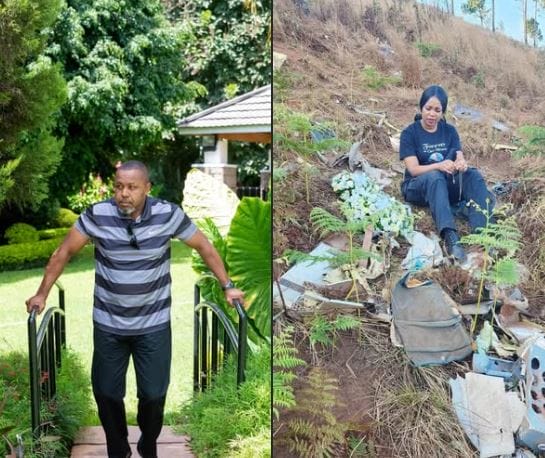
CDEDI demands fresh inquiry on Chikangawa MDF plane crash before perpetrators’ arrests

LILONGWE-(MaraviPost)-The country’s civil rights group Centre for Democracy and Economic Development Initiatives (CDEDI) has formally called on President Arthur Peter Mutharika to take decisive action on the June 10, 2024 Malawi Defence Force (MDF) plane crash at Chikangawa in Nkhata Bay, demanding a fresh inquest into the tragic incident.

Addressing the news conference on Tuesday, January 2026 CDEDI executive director Sylvester Namiwa disclosed the grouping has written Mutharika urging him to act on recommendations earlier presented by the Minister of Justice and Constitutional Affairs, Charles Mhango, shortly after assuming office.
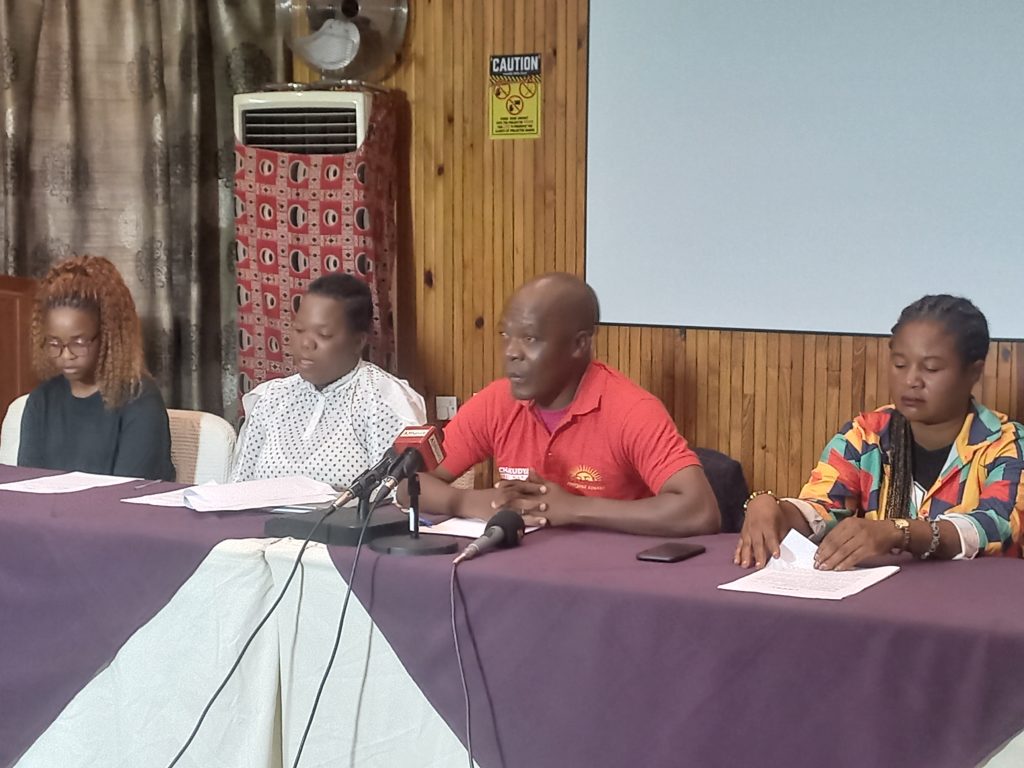
Namiwa in the red addressing the news conference

The organisation wants a renewed and independent probe into the circumstances surrounding the crash of the Dornier 228 aircraft (MAF-TO3), which claimed the lives of nine people, including the Vice President, a former First Lady, senior government officials and members of the MDF and Malawi Police Service.

CDEDI argues that Malawians voted President Mutharika into office with the hope that his administration would help the nation find closure by uncovering the truth behind what it describes as the country’s most devastating aircraft accident.

According to the organisation, the commission of inquiry appointed by former president Lazarus Chakwera failed to provide satisfactory answers and was widely rejected by the public, with some viewing it as an attempt to conceal the truth.

The pressure group says families and friends of the victims, both locally and abroad, continue to suffer unresolved pain, which can only be healed by a comprehensive, credible and transparent report that fully accounts for events before, during and after the crash.

CDEDI maintains that only such a process can provide genuine closure and restore public trust.
The organisation further notes growing calls in some quarters for criminal investigations, alleging that the then Malawi Congress Party (MCP) led administration attempted to force acceptance of what critics termed a “sham” report.

Among the concerns raised is the claim that former president Chakwera reportedly learned of the crash from a neighbouring head of state minutes after it occurred, rather than from officials within his own government and that there was a 12-hour delay before an official announcement was made to the nation.

CDEDI says experts have suggested that any fresh probe should begin with examining the final communication between the pilot, the late Flora Selemani and a senior officer at Zomba Airbase.

It also questions several public statements made during the search and rescue phase, including updates from the former army chief and appeals by the Malawi Communications Regulatory Authority, describing them as potentially criminal in nature.

The organisation has also raised concern over the suspension of search efforts in the evening, alleged obstruction of access to the crash site and unresolved technical questions from aircraft experts in Germany, including reports that the plane made a 360 degree turn before crashing.

CDEDI says a forensic audit should have followed the expert report to clarify these issues and determine who authorised the use of an aircraft that was later described as a flight risk.

While acknowledging President Mutharika’s earlier assurance that the Justice Minister was reviewing the rejected report, CDEDI says public patience is wearing thin as days have turned into weeks without concrete action.
The Maravi Post

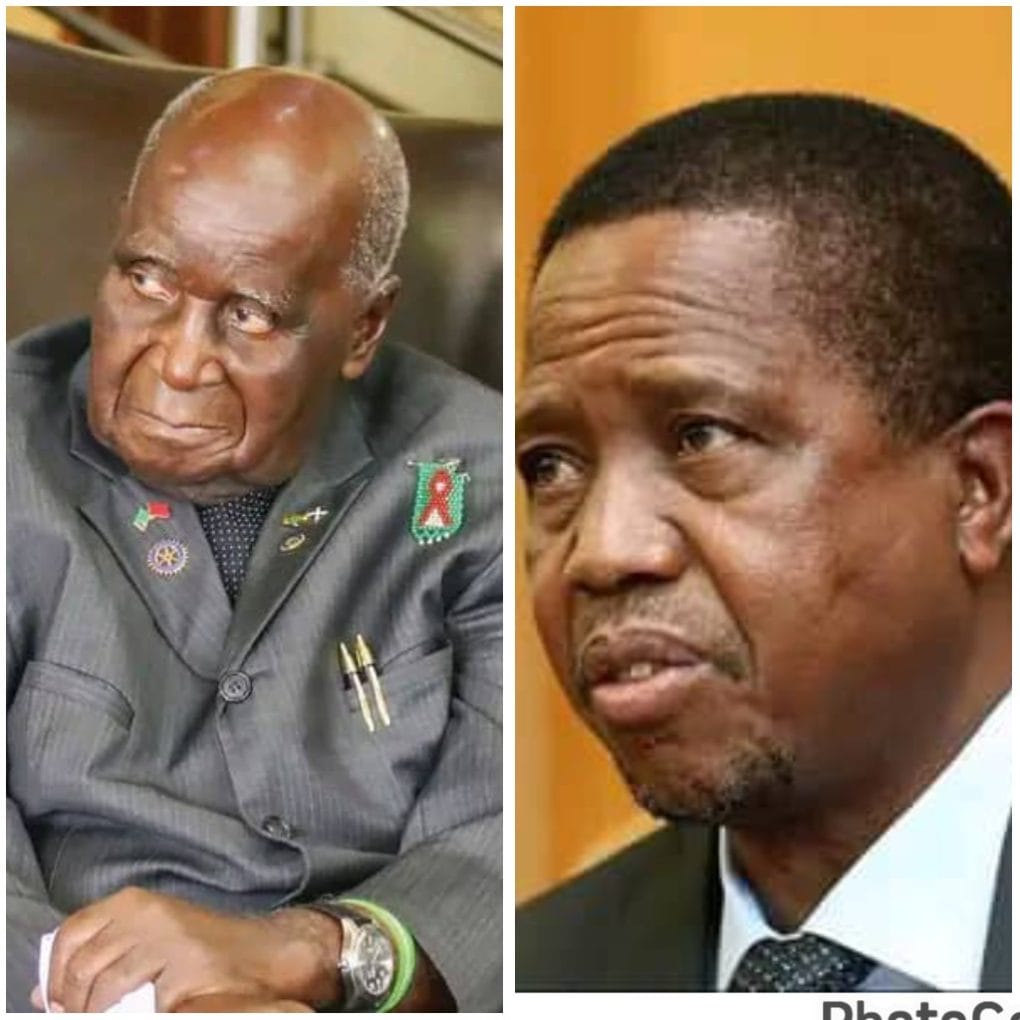
The burial irony: When Edgar Lungu’s fate mirrors legacy he enforced

In the intricate tapestry of political legacies and state protocols, the story of former Zambian president Edgar Lungu’s unresolved burial stands out as a striking example of poetic irony.

It is a tale that not only reflects the complexities of power and tradition but also serves as a mirror to the very actions that shaped his own political journey.

The juxtaposition is hard to ignore: Edgar Lungu, who in June 2021 as sitting president insisted on Kenneth Kaunda’s burial at a national heroes’ site against the wishes of Kaunda’s family, now faces a similar dispute over his own final resting place, years after his death in June 2025.

The narrative’s irony is palpable. When Kenneth Kaunda, Zambia’s founding president, passed away, his family wished to bury him privately on his farm next to his late wife.

Edgar Lungu, the then president, firmly denied this wish, citing national protocol and a desire to honor Kaunda’s legacy through burial at the official Heroes’ Acre—a prestigious site reserved for national leaders.

The family’s efforts to challenge this decision in the High Court proved unsuccessful, cementing the government’s authority in matters of state burials.

Fast forward four years, and Edgar Lungu’s own body remains in limbo, preserved in a mortuary in South Africa.

His family demands a private burial, a wish reminiscent of the Kaunda family’s own plea four years earlier. Yet the Zambian government insists on a national burial, invoking the very same protocols Lungu once championed.

The dispute remains unresolved, embodying a bitter twist of fate where the enforcer of a rule becomes ensnared by it.

This unfolding drama invites a profound reflection on the interplay between personal wishes, political symbolism, and the often rigid structures of statecraft.

In many nations, especially those with turbulent political histories, the burial site of a leader is not merely a resting place but a powerful symbol of national identity and legacy.

The Heroes’ Acre in Zambia is more than just a cemetery; it is a hallowed ground where leaders who shaped the nation’s trajectory are commemorated collectively. To be buried there is to be enshrined in the national memory, an honor that transcends personal or familial preferences.

Edgar Lungu’s insistence on Kaunda’s burial at the Heroes’ Acre was arguably motivated by a desire to consolidate national unity and pay homage to the founding father. Yet it also highlighted the tension between individual legacy and state narrative. By denying Kaunda’s family the right to a private burial, Lungu was emphasizing the primacy of the state’s vision over personal wishes.

This act, while legally upheld, may have sown seeds of discord and underscored the limits of familial agency in state matters.

Now, with Lungu himself caught in the same predicament, the story turns into a cautionary tale about the cyclical nature of power and the consequences of decisions made under the weight of authority.

The family’s insistence on a private burial reflects a deeply human desire to honor the individual’s personal history and intimate connections, rather than conforming to an abstract national ideal.

Their struggle challenges the government’s rigid stance and raises important questions: Who ultimately owns a leader’s legacy—the family who knew him best or the state that shaped his public image?

How do we balance respect for personal dignity with the collective memory that political leaders embody?

This irony also shines a light on the broader political culture in Zambia and perhaps many other countries grappling with similar issues. The tension between private grief and public commemoration is an enduring challenge.

Leaders are often elevated to iconic status, their lives and deaths appropriated to serve grand narratives of nationhood. Yet beneath the grandeur lies the reality of human relationships, loss, and the need for personal closure that families seek.

Moreover, this unresolved burial dispute may reflect deeper fissures in Zambia’s political landscape.

It suggests a government cautious about setting precedents that could dilute the sanctity of national burial sites or open the door to more personalized or politicized funerals.

It also points to possible disagreements within the ruling establishment about how to handle former leaders’ legacies, especially those with contentious histories or divided popular support.

What makes this situation compelling is the human dimension nestled within the political drama.

Edgar Lungu was once a powerful figure, shaping policy and national discourse, yet in death, his wishes remain contested, and his body lies in limbo far from home.

The family’s pain is palpable, as is the government’s desire to uphold tradition.

This deadlock is a poignant reminder that even the most powerful cannot fully control their posthumous narrative.

In the final analysis, the irony of Edgar Lungu’s burial dispute is a rich narrative about power, legacy, and the paradoxes of leadership.

It reveals how decisions made in the crucible of political authority can return in unexpected ways, challenging the very foundations on which they were built.

It urges us to consider a more compassionate and nuanced approach to honoring leaders—one that respects both the collective memory of the nation and the intimate wishes of those who loved them most.

As Zambia watches this drama unfold, it serves as an invitation to reflect on how societies commemorate their heroes and the delicate balance between public duty and private humanity.

Edgar Lungu’s story, intertwined with that of Kenneth Kaunda, reminds us that history is often written not just by the victors, but also by the ironies that time reveals.

And in this story of burial and legacy, the past and present converge in a profound, almost poetic, dance of fate.

Feedback: +265992082424
Email: jonesgadama@gmail.com


Discover more from The Maravi Post

Subscribe to get the latest posts sent to your email.

The Maravi Post

NICO Group condoles families of five artists lost in Ntcheu road tragedy

BLANTYRE-(MaraviPost)-The NICO Group, which includes NBS Bank and Eris Properties, through its creative sector strategic partner, the Copyright Fund, has joined the nation in mourning five young musicians who died in a tragic road accident at Senzani in Ntcheu District on Friday, 26 December 2025.

The victims, Vincent Mkwinda, Raphael Chitsonga, Elivacy Muyaba, Wilfred Kapengule Jnr, and MacFarlane Banda, were members of Eli Njuchi’s Hive Band and were travelling to Lilongwe ahead of a scheduled performance when the accident occurred along the M1 Road.

In a condolence message issued through the Copyright Fund, the NICO Group said it fondly recalls its recent interaction with the Hive Band during its family day event earlier this year, where the artists performed with distinction and professionalism.

As part of its support, the Group has provided financial assistance of MK1 million to each bereaved family to help with funeral arrangements.

Copyright Fund Administrator Dora Makwinja said the Group deeply shares the grief being experienced across the country following the loss.

“The NICO Group deeply shares the nation’s grief following the tragic and untimely loss of these talented young artists. Through the Copyright Fund, we are offering financial support to assist the families during this difficult time. May the souls of our departed artists rest in peace,” said Makwinja.

Beyond the corporate sector, national leadership has also expressed condolences, with State President Arthur Peter Mutharika and Second Vice President Enock Chihana conveying messages of sympathy to the bereaved families, joining Malawians in mourning the loss of young lives.

The tragedy has sent shockwaves through Malawi’s music industry, with artists and fans describing the loss as devastating to live music in the country.

The deceased musicians, drummer and sound engineer Raphael Chitsonga, guitarist MacFarlane Banda, road manager Vincent Mkwinda, pianist Wilfred Kapengule Jnr, and vocalist Elivacy Muyaba, were widely regarded as some of the most gifted instrumentalists of their generation.

Award-winning musician Lawi described the incident as a dark day for the industry, while international artist Onesimus said Malawi had lost giants whose contribution to music would be deeply missed.

Following the tragedy, Eli Njuchi cancelled a scheduled performance at the Bingu International Convention Centre (BICC) in Lilongwe, while other artists, including Lulu, also called off shows as the music fraternity paused to grieve.


Discover more from The Maravi Post

Subscribe to get the latest posts sent to your email.

The Maravi Post

Mutharika mourns five Hive Band’s members

LILONGWE-(MaraviPost)-President Peter Mutharika and First Lady Gertrude Mutharika have expressed sadness over the loss of five members of Hive Band.

The five died in a terrible road accident on Friday, December 26, 2025.

The first couple condolence message reads, “The First Lady and I are profoundly heartbroken to learn of the horrific road accident that has claimed the lives of five remarkably talented young men—members of the Hive Band who served alongside Afro-dance artist Eli Njuchi.

“We mourn the loss of Elivacy Matamando Muyaba, Wilfred Kupengule Jnr, Vincent Mkwinda, McFarlen Banda, and Raphael Chitsonga”.

Mutharika adds, “These were not just musicians; they were instrumental figures whose passion and artistry helped shape the soul of Malawi’s music industry for years.

“Their passing is a devastating blow, not only to Eli Njuchi and the Musicians Association of Malawi, but to the very heart of our nation”.

The First couple mourns further, “It is a tragedy that leaves a void in our cultural fabric.

“That they were lost while traveling to bring joy to others at an end-of-year concert in Lilongwe only adds to the bitterness of this grief”.

Mutharika assures,”In this hour of darkness, our thoughts and prayers are with the bereaved families.

“As a gesture of our shared national mourning, the Government will shoulder all funeral expenses to ensure these sons of Malawi are laid to rest with the dignity they deserve”.


Discover more from The Maravi Post

Subscribe to get the latest posts sent to your email.

The Maravi Post

Who is going to console Mary over her husband former Malawi VP Saulos Chilima’s death?

Mary Chilima still struggling to understand her husband’s death

…….Mary says she still struggles to understand the death of her husband

MZUZU-(MaraviPost)-Mary Chilima, widow of Malawi’s former Vice President Saulos Klaus Chilima, says she is still grappling with the pain and unanswered questions surrounding her husband’s death one year and six months after the tragic military aircraft crash that claimed his life.

Dr. Chilima, along with eight other Malawians, died on June 10, 2024, when a Malawi Defence Force Dornier 228 aircraft crashed in the Chikangawa Forest in Nkhata Bay District.

The delegation was en route to attend the funeral of former Attorney General Ralph Kasambara, a close friend of the late vice president.

In a heartfelt post shared on her social media page this morning, Mary Chilima expressed that the loss remains deeply painful.

“One year, six months. Tidakalirabe Saulos… A painful death. An incomprehensible death. Aaah” she wrote.

Her remarks come as the nation continues to wait for clarity on the crash investigation.

Last month, Minister of Justice Charles Mhango told Malawi Parliament that his ministry was in the process of reviewing all available reports regarding the aircraft accident involving Dr. Chilima.

Mhango said once the review is complete, the ministry will submit its findings to President Lazarus Chakwera and advise whether a further investigation is necessary.

But how will Mary going to be consoled over her husband’s death?


Discover more from The Maravi Post

Subscribe to get the latest posts sent to your email.

The Maravi Post

Blantyre vandal man dies a day after electrocution

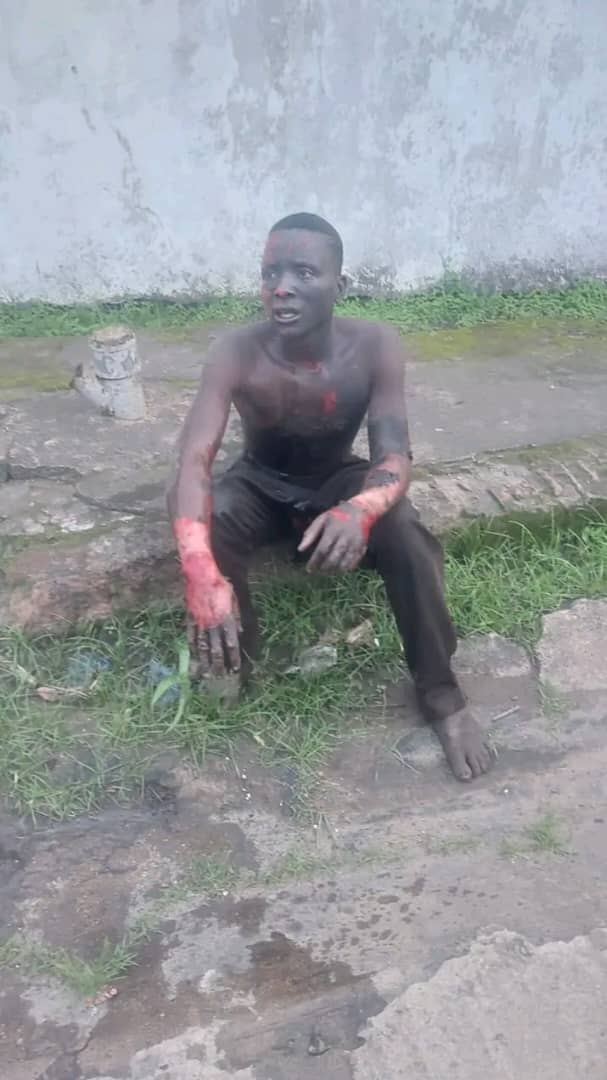
BLANTYRE-(MaraviPost)-The man who was electrocuted on Wednesday morning at Chichiri in Blantyre while attempting to vandalise high-voltage electrical equipment has died, officials from the Electricity Supply Corporation of Malawi (ESCOM) have confirmed.

According to ESCOM Chief Public Relations and Communication Officer Piliran Phiri,the incident occurred in the early hours of yesterday when the suspect was caught in the act of tampering with critical infrastructure that powers part of the city.

He was severely shocked by the live wires and sustained life-threatening burns.

The deceased has been identified as Madalitso Samson, originally from Sojali Village under Traditional Authority Ganya in Ntcheu.

Witnesses who arrived moments after the incident reported that Samson was found unconscious beside the vandalised equipment.

He was rushed to Queen Elizabeth Central Hospital, where medical personnel battled to stabilise him. Despite the efforts of health workers, Samson succumbed to his injuries earlier today due to extensive internal and external burns.

ESCOM says the tragedy is a stark reminder of the deadly consequences associated with tampering with electrical installations. The corporation has repeatedly warned the public about the extreme danger posed by high-voltage equipment.

ESCOM stressed that vandalising power infrastructure is not only a criminal act but also a direct threat to life. The company described electricity theft and vandalism as “a death sentence” for those who engage in it.

Officials further noted that the equipment involved carries enough voltage to kill instantly, and no amount of skill or experience can guarantee safety when dealing with live electrical components.

The corporation has also raised concern over the rising cases of vandalism targeting transformers, cables and other installations across the country. These acts cause prolonged blackouts, expensive repairs, and disruptions to essential services.

ESCOM is now urging communities to take an active role in safeguarding national power assets by reporting anyone seen loitering around or tampering with restricted areas. The public is advised to always observe warning signs and maintain a safe distance.

The utility company pleaded with Malawians not to risk their lives out of desperation or greed, emphasising that no financial gain is worth the loss of life. They reminded people that electricity is unforgiving and lethal when mishandled.


Discover more from The Maravi Post

Subscribe to get the latest posts sent to your email.

The Maravi Post