Gender Minister Mary Thom Navicha: The angel of compassion championing social welfare, inclusion in Malawi

BLANTYRE-(MaraviPost)-In a remarkable display of humility and dedication, Minister of Gender, Children, Disability and Social Welfare, Mary Thom Navicha, recently visited beneficiaries of the Social Cash Transfer Programme (SCTP) in Semu Village, Traditional Authority Khwethemule, Thyolo District.

Her visit was more than a routine assessment; it was a heartfelt engagement that showcased her unwavering commitment to the welfare of Malawi’s most vulnerable populations.

Minister Navicha’s approach during the visit was strikingly genuine.

She did not maintain the usual distance expected of officials; instead, she sat closely with the beneficiaries on the mat, sharing moments of joy and happiness.

This simple act of humility resonated deeply with the community, reflecting an angel of empathy whose mission goes beyond policy to human connection.

Her warmth and approachable demeanor broke barriers, allowing her to listen attentively to the needs and stories of the people she serves.

The SCTP, a lifeline for many Malawians, has been instrumental in empowering households to meet basic needs such as education and food security.

The Minister underscored the importance of this program, highlighting how it enables families to send their children to school and invest in livestock, thereby fostering long-term self-sufficiency.

Her advocacy for increasing the transfer amounts in response to the country’s economic realities demonstrates a proactive and responsive leadership style.

Minister Navicha is not content with the status quo; she is actively engaging with other Ministries and Development Partners to enhance the impact of social welfare interventions.

One of the beneficiaries, Esnart Chikaonda, a single mother of seven, eloquently testified to the transformative power of the SCTP funds. With the support she receives, Esnart can provide food for her family, an assurance that would have been difficult to achieve otherwise.

This personal story underscores the broader narrative of hope and resilience that the Minister’s work inspires throughout Malawi.

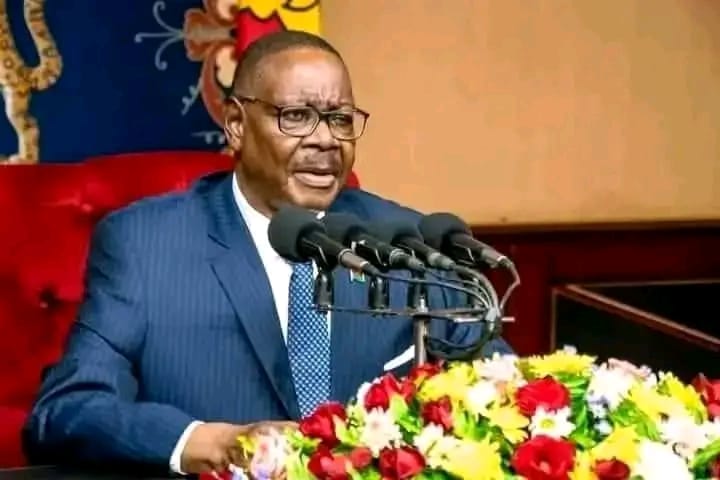
Minister Navicha’s vision aligns closely with that of President Professor Arthur Peter Mutharika, whose principle that no one should be left behind is a guiding beacon for the government.

The Minister has taken this vision to heart by emphasizing the need to prioritize the enrolment of Persons with Disabilities into the SCTP.

Her insistence on inclusivity is not mere rhetoric; it reflects a deeply held belief in equity and justice.

Under her stewardship, the Ministry is pushing the boundaries to ensure that marginalized groups receive the attention and resources they deserve.

The scale of the SCTP’s reach is impressive—benefiting 17,000 households in Thyolo District alone and extending to 340,000 households nationwide, impacting 1.5 million individuals.

The fact that 70 percent of these households are headed by women and 40 percent by the elderly adds layers of complexity and urgency to the program’s implementation.

Minister Navicha’s hands-on leadership style is pivotal in addressing these unique challenges with compassion and strategic insight.

Her work extends beyond Thyolo. Minister Navicha’s tireless efforts have taken her to Lilongwe and various other parts of the country, where she continues to serve with an unmatched work ethic.

Despite the demanding nature of her portfolio, she has not rested; her dedication echoes the relentless spirit of a true public servant.

She embodies the angel of hope and resilience for many Malawians, tirelessly working to improve the lives of those often overlooked by society.

Mary Thom Navicha’s leadership is a beacon of inspiration. She exemplifies how humility, hard work, and empathy can transform governance and social service delivery.

Her presence among the people, sharing their space and listening to their stories, speaks volumes about her character and commitment.

In a world where political figures are often distanced from the realities of their constituents, Navicha stands out as a genuine advocate for change who is not afraid to get close to the people she serves.

Her efforts are a crucial part of Malawi’s broader social development agenda, reinforcing the Government’s commitment to inclusive growth and social protection.

By championing the SCTP and advocating for increased support and better targeting, Minister Navicha ensures that the program remains responsive and impactful.

Minister Mary Thom Navicha is more than just a government official; she is a symbol of hope, a tireless advocate for the vulnerable, and an angel of social welfare whose humility and dedication shine brightly across Malawi.

Her work embodies the spirit of service envisioned by President Professor Arthur Peter Mutharika, ensuring that no one is left behind in the journey toward a better and more inclusive Malawi.

Through her unwavering commitment, she continues to inspire and uplift countless lives, proving that true leadership is measured not by titles but by the positive change one brings to the lives of others.


Discover more from The Maravi Post

Subscribe to get the latest posts sent to your email.

The Maravi Post

MCP’s desperate gambit: false reports on albinism abduction expose party’s plot to tarnish DPP

Albino Killings
Homeless albino family In Malawi after being hunted

BLANTYRE-(MaraviPost)-The recent flurry of social media reports claiming a seven-year-old child with albinism was abducted in Mulanje has been exposed as a baseless fabrication, courtesy of Mulanje Police’s unequivocal denial.

The police, through their public relations officer Innocent Moses, have confirmed no such case was reported or recorded, and no arrests were made in connection to a missing child – contrary to earlier claims.

This episode is more than just a case of misinformation; it’s a glaring example of MCP sympathizers wading into the murky waters of propaganda to discredit the DPP-led government. Investigations reveal a calculated effort to sow panic and undermine the government’s credibility.

But DPP isn’t biting. Government spokesperson Shadrick Namalomba’s response is a masterclass in composure: “The DPP won’t be stopped or shaken by the propaganda… it’s busy implementing its agenda and serving Malawians.” The message is clear – DPP’s focus remains on governance, undeterred by MCP’s dirty tricks.

This isn’t just about one false report; it’s about the broader narrative. MCP’s desperation is palpable, and their tactics are getting more brazen. But the people see through it.

The DPP’s achievements – free secondary education, affordable fertilizer, and cement prices – speak louder than MCP’s propaganda.

The real story here is MCP’s war on truth. They’re peddling panic, but the DPP’s commitment to serving Malawi remains unshaken. As Namalomba said, the government won’t be deterred.

The people deserve better than MCP’s deceit; they deserve the progress DPP is delivering.


Discover more from The Maravi Post

Subscribe to get the latest posts sent to your email.

The Maravi Post

How Malawians are losing trust in Mutharika’s DPP-led government

In Malawi, the Democratic Progressive Party (DPP) returned to power following the general election on September 16, 2025.

While the party’s term is in its early months, critics and observers have identified several ” false ” or highly unrealistic promises based on its 2025-2030 Manifesto and its previous governing record (2014–2020).

  1. Unrealistic Financial Pledges

The DPP’s 2025 manifesto includes several high-cost promises that economists have labeled as ” fantasies ” due to Malawi’s current debt crisis:

K5 Billion Constituency Grant :

The DPP promised to allocate K5 billion annually to each of Malawi’s 229 constituencies.

Financial experts noted this would total over K1 trillion a year, roughly a good chunk of the national budget, making it economically unfeasible.

Housing for Every Civil Servant:

A campaign pledge to provide a house to every civil servant has been described by analysts as ” laughable ” and ” out of touch ” given the massive size of the civil service.

  1. Contradicted Governance Reforms

Despite campaigning on a platform of “Restoration” and the rule of law, early actions by the new administration have contradicted these promises:

Institutional Independence:

After promising to respect state institutions, the DPP administration launched a sweeping overhaul of State-Owned Enterprises (SOEs) within weeks of taking power.

This included the controversial suspension of the heads of the Malawi Broadcasting Corporation (MBC) and MACRA, which critics viewed as a move toward political intimidation rather than reform.

Politicization of Security:

The administration attempted to “civilianize” senior military and police leadership by redeploying ten generals and commissioners to civilian roles.

This move was halted by a court injunction, with experts warning it threatened to politicize the security sector.

3. Historical Failures
(Broken Promises from 2014-2020)

Opposition and civil society groups frequently cite unfulfilled promises from the DPP’s previous tenure as evidence of a pattern of “false promises”:

Infrastructure Projects:

Major projects such as the Nsanje Inland Port, the Mombera University, and a marine university in Mangochi remained unfulfilled or stalled despite repeated campaign pledges.

Anti-Corruption :

While the DPP repeatedly promised to end corruption, its previous administration was marred by scandals where party leaders reportedly amassed unexplained wealth while in office.

Job Creation:

The promise of large-scale job creation for youth was largely unmet, with unemployment rising significantly during the party’s previous years in power.

  1. Immediate Economic Realities

While the DPP promised ” proven leadership ” that would immediately stabilize the economy, the first few months of 2025 have seen a continuation of high inflation and fiscal stress.

Critics argue that the party’s focus on “retaliation” and purging officials has taken priority over the economic recovery it promised during the campaign.

Disclaimer: The views expressed in the article are those of the author not necessarily of The Maravi Post or Editor


Discover more from The Maravi Post

Subscribe to get the latest posts sent to your email.

The Maravi Post

Rethinking christmas: A call to shift celebration to March or April for economic relief

The birth of Jesus Christ stands as the cornerstone of Christian faith, a symbol of hope, renewal, and divine love.

Yet, despite centuries of tradition, the exact date of His birth remains shrouded in mystery. While December 25 has been globally embraced as Christmas Day, historical and biblical scrutiny reveals that this date was likely chosen for reasons beyond historical accuracy.

The early Christian church, in an effort to harmonize with prevailing pagan festivals such as the Roman Sol Invictus, selected December 25 in the 4th century as the official date to honor Christ’s birth.

However, mounting scholarly evidence suggests that Jesus was more plausibly born in the spring months of March or April, when shepherds were tending to their flocks in the fields—an unlikely scenario in the cold of December.

This revelation invites a profound reconsideration—not only of historical tradition but of the socioeconomic impact the December celebration has on millions worldwide, especially in developing countries like Malawi.

It is time to advocate for a shift of Christmas celebrations from December 25 to a date in March or April, aligning both with probable historical accuracy and, crucially, with the economic welfare of people burdened by the current festive calendar.

December and January represent a relentless financial strain on households. Within a span of just a week, families engage in two major celebrations: Christmas on December 25 and New Year’s Day on January 1. While these events bring joy and hope, they also entail significant expenditures on gifts, food, travel, decorations, and community engagements.

For many, especially those in economically vulnerable contexts, this season results in near depletion of personal savings and credit, forcing them into debt or financial hardship that lasts well into the new year.

In Malawi, for instance, January is notoriously challenging. After the December festivities, many families enter the new year with “empty pockets,” having exhausted their resources. Yet, this is precisely the time when critical expenses arise.

School fees for the new academic term become due, pressing the finances of parents and guardians who have little to no buffer. Simultaneously, the agricultural calendar demands investment in inputs such as fertilizers to ensure a productive planting season.

Fertilizer is not a luxury but a necessity for food security and economic stability in largely agrarian societies. The timing of these costs compounds the hardship caused by the festive spending spree.

The consequences are stark: January frequently becomes a month of hunger and hardship, a period when many struggle to meet basic needs because resources have been misallocated or stretched too thin in the preceding weeks.

This cyclical pattern of financial distress undermines household stability, community resilience, and national economic progress.

Shifting the Christmas celebration to March or April, therefore, offers a compelling solution. Biblically, this period is more consistent with the narrative of Jesus’ birth. Luke 2:8 describes shepherds watching their flocks by night—a practice more aligned with springtime pastoral activity than with the chill of winter.

Additionally, aligning Christmas with these months would distribute the year’s major celebrations more evenly, relieving the intense financial pressure concentrated at the year’s end.

An international transition to a springtime Christmas would allow families to allocate their resources more sustainably.

December could then be devoted solely to New Year’s festivities, a widely secular celebration that marks renewal and fresh beginnings.

This cultural shift would provide a breathing space between major spending events, enabling households to recover financially and plan better for the year ahead.

Moreover, celebrating Christmas in March or April would coincide more naturally with the agricultural cycle in many parts of the world, including Malawi.

This period often marks the end of the rainy season and an important phase before the main planting season.

Festivities during this time could foster communal solidarity and optimism as farmers prepare for the new agricultural year, creating a spiritual and social boost that aligns with practical economic rhythms.

The historical flexibility of Christmas’s date offers a unique opportunity for global communities to reimagine their celebrations in ways that enhance both spiritual meaning and economic well-being.

The original intent of Christmas—to commemorate the arrival of Christ, the “light of the world” (John 8:12)—holds true regardless of the calendar date. What matters most is the spirit of hope, generosity, and renewal that the occasion embodies.

Internationally, the move to shift Christmas would require careful dialogue and consensus-building among religious leaders, governments, and communities.

Yet, the benefits—reducing the financial stress on millions, improving educational outcomes by easing school fee payments, and bolstering agricultural productivity through timely investment—are profound and far-reaching. The biblical principle of stewardship reminds us to wisely manage resources and care for one another (1 Peter 4:10).

Adjusting the timing of Christmas celebrations to promote economic sustainability aligns with this principle and reflects a compassionate, practical response to contemporary challenges.

While tradition holds deep emotional and cultural significance, it should not become a barrier to necessary progress.

Recognizing that December 25 was historically selected for convenience rather than accuracy opens the door to a transformative change.

By shifting Christmas to March or April, communities—especially those in economically vulnerable settings—can alleviate the heavy financial burden that currently shadows the holiday season.

This change promises a more balanced festive calendar, fostering economic resilience, social cohesion, and a renewed celebration of Christ’s birth that is both historically informed and compassionately grounded in the realities of everyday life.

Feedback:+265992082424
Email: jonesgadama@gmail.com


Discover more from The Maravi Post

Subscribe to get the latest posts sent to your email.

The Maravi Post

From touchlines to Chamber: Walter Nyamilandu brings football spirit to Malawi Parliament

LILONGWE-(MaraviPost)-When Walter Nyamilandu rose to his feet in Malawi’s Parliament and broke into song and dance moments after the election of a new Speaker, it was more than a spontaneous celebration.

It was a statement.
For Malawians familiar with his long tenure as President of the Football Association of Malawi (FAM), the scene felt strikingly familiar.

The same man who once led chants from the terraces, celebrated victories with players, and rallied fans across the country had simply changed venues from the football pitch to the august House.

Nyamilandu, Malawi’s longest-serving FAM president, has now embarked on a new chapter as Member of Parliament for Nsanje South West.

Yet his trademark enthusiasm, passion, and ability to mobilise people remain firmly intact.

A Sporting Energy in a Political Arena
During the parliamentary sitting to elect a new Speaker, Nyamilandu’s jubilant display injected an unusual but refreshing energy into the chamber.

Leading fellow government MPs in spirited chants, he momentarily transformed Parliament into something resembling a football stadium after a decisive win.

The moment drew smiles across the House and quickly caught public attention, with many Malawians remarking on how naturally Nyamilandu blended his sporting spirit with political life.

For a man whose public identity was forged in football administration, the celebration symbolised continuity rather than disruption.

Speaking to Maravi Post Online on Saturday, Nyamilandu revealed that he has received widespread praise for his maiden parliamentary speech, which many described as level-headed, articulate, and well-structured.

He said the speech offered renewed hope to the people of Nsanje, a constituency he believes had lacked a strong and credible voice in Parliament for a long time.

“I wanted the people of Nsanje to feel represented and heard,” Nyamilandu said, adding that his early adaptation to parliamentary procedures had surprised even his critics.

Nyamilandu also reflected on the broader significance of his transition from corporate and sports leadership into politics.

A former Illovo executive and a graduate of Chancellor College (Chanco), he said his election has inspired members of the working class and intellectual community to reconsider politics as a viable path of service.

He observed that many educated Malawians shy away from politics due to its negative image and the perception that it involves “dirty” or degrading engagements.

“Some are not prepared to engage with poor communities or serve them because of pride and prestige,” he noted.

“I have defied those odds by entering unfamiliar territory and quickly adapting to both Parliament and constituency work.”

Beyond Football
Nyamilandu’s football legacy continues to shape perceptions of his leadership.

Sports journalist Antony Manda of Transworld described him as a strong youth motivator, pointing to tangible achievements during his FAM tenure.

Among these is the construction of a lodge at the Football Association of Malawi premises in Chiwembe an initiative Manda says continues to inspire young people involved in the sport.

That same leadership style energetic, inclusive, and people-centred now defines Nyamilandu’s approach to national governance.

Beyond celebration and symbolism, Nyamilandu has already demonstrated a willingness to speak boldly on national issues.

His recent public criticism of the Malawi Congress Party (MCP) for what he termed a failure to take accountability for economic mismanagement has reinforced his image as an outspoken and fearless legislator.

As he settles into parliamentary life, many Malawians will be watching closely to see how the discipline, teamwork, and passion that characterised his football administration translate into legislative impact.

One thing, however, is already clear: whether on the touchlines of a football pitch or the floor of Parliament, Walter Nyamilandu remains a leader who wears his passion proudly and invites others to join the chant.


Discover more from The Maravi Post

Subscribe to get the latest posts sent to your email.

The Maravi Post

Malawi FA President Haiya’s two years in office: Measuring promises against performance

Fleetwood Haiya for FAM Presidency

The Football Association of Malawi (FAM) executive committee has now completed two years at the helm of Malawian football under the presidency of Fleetwood Haiya, who was elected into office in 2023 on a reform driven manifesto titled “Transforming the Game.” the weekend sports mirror offers a timely opportunity to reflect on what has worked, what is still in progress and where questions remain.

Haiya came into office with bold promises centred on technical development, transparency, grassroots growth and the overall professionalisation of football administration.

Two years later, some of those pledges have materialised in visible and measurable ways, while others remain a work in progress.

One of the clearest successes of the Haiya administration has been in technical capacity building, particularly in refereeing. Regular referee training courses have been rolled out across the country, helping to improve officiating standards and creating a more consistent pool of match officials for domestic competitions.

This focus on referees directly aligns with Haiya’s manifesto, which emphasised strengthening coaching and officiating as the foundation of football development.

Observers note that while controversies still occur, the overall competence and confidence of referees has improved compared to previous seasons.

Another major milestone has been the revival and strengthening of women’s football through the reintroduction of the National Women’s Football League. This league has given female players consistent competition, exposure and structure that had long been missing.

The impact of this investment has been felt at national level, where the Malawi Women’s National Team, the Scorchers, has shown significant improvement. A stronger domestic league has translated into a deeper and more competitive national team pool.

Perhaps the most notable achievement for the Scorchers under Haiya’s leadership has been qualification for the 2026 Women’s Africa Cup of Nations (WAFCON). This success did not come by accident but through deliberate planning and frequent international friendly matches.

The Haiya administration made a conscious effort to secure regular friendly games for the Scorchers, a move that boosted match fitness, tactical understanding and confidence. As a result, Malawi’s women now compete with belief against some of the continent’s strongest sides.

On the domestic front, the introduction of the NBS National Division League stands out as another key reform. The league provides a competitive bridge between regional football and the elite TNM Super League.

Through this structure, three teams earn promotion to the top flight league each season, enhancing competitiveness and giving ambitious clubs a clearer development pathway. This initiative reflects Haiya’s manifesto promise to strengthen league structures nationwide.

Grassroots and school football development was another pillar of the Haiya vision. Although progress here has been slower, partnerships with schools sports bodies and district structures have begun laying the groundwork for future talent identification and nurturing.

However, not all areas paint a rosy picture. The Malawi Men’s National Team, the Flames, remains a concern. Performances have been inconsistent, with the team oscillating between impressive wins and disappointing defeats.

When Haiya took office, the Flames were ranked 136th on the FIFA rankings. Two years on, the team has climbed to 126th, showing numerical improvement but still failing to convince consistently on the pitch.

Critics argue that while the ranking rise is positive, it does not fully reflect stability or long term progress. Tactical inconsistency, squad transitions and limited high quality international exposure continue to haunt the Flames.

Governance and transparency were central to Haiya’s campaign message.

While FAM has made efforts to improve accountability and communication, some stakeholders still call for greater public disclosure of finances and decision making processes.

Overall, the Haiya presidency presents a mixed but encouraging picture.

Women’s football, refereeing standards, and league restructuring stand out as success stories, while the Flames an remain unresolved challenge.


Discover more from The Maravi Post

Subscribe to get the latest posts sent to your email.

The Maravi Post