

Superstition and the dark side of football

Shaffie A Mtambo
Shaffie A Mtambo

Across Africa, football is more than just a sport it is passion, culture and identity but mixed within this passion is a deep belief that supernatural forces can influence matches.

Some insist that “makhwala achikuda” can change the outcome of a game, while others argue that only skill and tactics matter.

In Malawi, this belief continues to grow despite years of intense debate. Whenever a match becomes tense or a team struggles to score, supporters resort to strange behaviours. From the stands, someone suddenly breaks loose, jumps the fence and rushes to the goalpost to pour an unknown liquid believed to “open the goal.”

Those who perform these rituals believe they help their teams break deadlocks but because sometimes the rituals appear to work and sometimes they don’t, the confusion fuels the superstition even more. Meanwhile, others dismiss it as pure psychology and coincidence.

The biggest concern is how easily individuals bypass stadium security. Despite the presence of stewards, supporters still manage to invade the pitch. This exposes a worrying weakness in our stadium security systems.

Even more troubling is how bold these invaders have become. They show no fear of arrest, freely running across the pitch and pouring substances on the goal line, sometimes even attacking players. This behaviour is slowly becoming normalized.

The most recent case happened during the match between Mzuzu City Hammers and Mighty Wanderers, when a supporter splashed a liquid substance on the Hammers goalkeeper just as the second half was about to start.

The substance, believed to be similar to pepper-spray, left the goalkeeper visibly uncomfortable and raised serious concerns about safety and fairness. It once again exposed the vulnerability of match officials and players to fan misconduct.

The immediate question that followed was: How did the individual get so close to the goalkeeper? Did he come from the stands? Did he slip through weak security points? The lack of answers frustrated many fans.

The incident also highlighted a critical failure by stadium stewards. Their delayed response showed either lack of training or poor coordination. Observers were left questioning whether matchday security is taken seriously in Malawi.

This is not an isolated problem. In 2025 alone, several major clubs have been fined due to supporter misconduct.
Silver Strikers were fined MK 1.75 million for pitch invasion and failure to control fans.

FCB Nyasa Big Bullets were fined MK 5.75 million after fans disrupted a match at Kamuzu Stadium.
Dedza Dynamos were penalized MK 4.5 million for failing to control their supporters during a match against Mzuzu City Hammers.
These cases show that fan behaviour is steadily worsening.

When compared to previous seasons, the trend is clear: In 2013, Silver Strikers and Mighty Wanderers supporters caused severe violence that forced the league to postpone matches and impose point deductions.

In earlier seasons such as 2012/13, Silver Strikers were sanctioned for violent fan behaviour, including stadium bans and heavy fines.
Today, the problems remain only the fines have increased but the behaviour hasn’t changed.

This persistent indiscipline continues to damage the reputation of the TNM Super League. As long as supporters carry liquids, powders or charms into stadiums, the league will be viewed as unprofessional by outsiders, regardless of the football quality on the pitch.

This is especially unfortunate at a time when Malawi is pushing for SuperSport coverage. Broadcasters expect high security standards, disciplined fans and professional match environments.

Incidents of superstition, pitch invasion and violence significantly reduce the league’s chances of achieving this goal.

Club officials insist that strict punishment is the only solution. They argue for lifetime bans for repeat offenders, improved training for stewards and tighter checks at gates to prevent fans from sneaking in dangerous substances.

Malawi football has great potential but it can only grow when the football community abandons superstition and embraces professionalism. Until then, the game will continue to suffer not because of lack of talent but because of actions that belong to another era. Players deserve safety. Clubs deserve order. And the nation deserves a league that reflects excellence, not controversy.


Discover more from The Maravi Post

Subscribe to get the latest posts sent to your email.

The Maravi Post

My Take on It: Some home health remedies still working in modern era

Health Services

“If you will listen carefully to the voice of the LORD your God and do what is right in His eyes, if you pay attention to His commands and keep all His statutes, I will not bring on you any of the diseases I brought on the Egyptians, for I am the LORD who heals you.” 
Exodus 15:26

“But He was pierced for our transgressions, He was crushed for our iniquities; the punishment that brought us peace was on Him, and by His stripes we are healed.”  — Isaiah 53:5

And evening having come, they brought to Him many being possessed with demons, and He cast out the spirits with a word and He healed all those being sick, — Matthew 8:16

As I prepared to write this week’s article, I was led to write on home health remedies that still work even with all the advances that have been made in modern medicine. On her part, my best friend Gloria sent me a 7-part advisory on home care medical actions to better health. Talk about spirits speaking to spirits! I am aiming for 30 home health care actions that can save lives before the medics come. Our grandparents used many of them, and they lived great lives

The 7-part advisor is as follows:

1.When your heart races at night and you can’t calm down at night, take four slow breaths in and six out. You’ll see how your chest opens up.

2. When you walk into a room and forget why you are there, inhale peppermint or rosemary oil in the morning. This wakes up your sleeping brain.

3. If your knees hurt and you find it difficult to get up off of your chair, rub warm turmeric or ginger oil into your knees. Pain melts like it was never there. These herbs have healed inflammation over the years.

4.When you have a bloated stomach and food doesn’t digest as it should, start your morning with two cups of grapes. The grapes sweep years of buildup in your colon and also sharpen your foggy mind and take years off your face.

5. When your stomach is swollen that you cannot eat, and pain keeps you up at night, and you know you are constipated, eat a pawpaw (papaya), pumpkins, or boiled cabbage.

6. When your hair starts thinning and your edges start disappearing, eat three dates every day. Your hair is not dying from age, it is dying from starvation. Dates are rich in iron, and they pump iron straight into the bloodstream and wake your roots back up.

7. When you are tired, even after much sleep, sip warm lemon and ginger when you wake up. This mixture clears out all the mucus clogging your system, opens your breath and wakes you up from the inside.

8. When strength seems to disappear from your body, start keeping water melon seed. These have magnesium, zinc, and proteins. These are nutrients that your body is crying for as you gorge on processed food. (from https://vm.tiktok.com/ZMAobnFGT/, captured on 12.04.2025)

9. When you have a cough, take honey. The thick texture of honey may help reduce the urge to cough by coating and soothing the throat. Honey’s anti-inflammatory properties may also play a role.

10. When your throat is sore and the pain causes a burning sensation, boil some water, pour one teaspoon of salt and gargle three times a day.

11. When you get burned (splattering oil or open fire), rub Aloe Vera. If Aloe Vera is not available, dub the affected area with toothpaste (Colgate is the best).

12. Bloated stomach or inflammation of joints? Drink one teaspoon of turmeric with water. But also eating sliced pineapples helps reduce joint pain and inflammation.

13. When you cannot sleep, drink Chamomile tea.

14. Blood pressure – A 202 review of studies, Trusted Source, concluded that garlic supplements reduce blood pressure in people with high blood pressure. The researchers linked this to a 16% to 40% lower risk of experiencing cardiovascular events.

15. Cold treatment from eucalyptus leaves a plus, as congested sinuses are steamed into health. Add a few drops of eucalyptus oil to a pot of water, boil, and remove the pot from the stove. Drape a towel over your head and shoulder… the vapor carries droplets of oil into your sinuses and loosens congestion.

16. Peppermint oil seems to reduce spasms in the digestive tract. And when applied to the skin, it can cause surface warmth, which relieves pain beneath the skin. It may also help to “cool” the skin, and relieve itching. Some people use peppermint for irritable bowel syndrome (IBS), indigestion. and bedsores. It is also used for anxiety, insomnia, and migraine headaches.

17. Grandma was right: Chicken soup can be good for a cold. Studies show it can ease symptoms and help you get rid of the cold sooner. It also curbs swelling and clears out nasal fluids.

18. Hot Baths are good for all kinds of things that affect your muscles, bones, and tendons (the tissues that connect your muscles to your bones), like arthritis, back pain, and joint pain.

19. Ice Pack Use a bag of frozen peas or simply a plastic bag or wet towel with ice in the first 48 hours after an injury to help with pain and swelling. No ice? Cold water will work as well.

20. Vitamin C for allergies. Although Vitamin C is one of the most popular home remedies for the common cold, it is also a remedy for allergies.

21Nivea is the all-magic cure forblisters or boils on the skin and other parts of your body.

22. Thyme tea for coughs – Thyme is a natural expectorant that relaxes the respiratory tract and loosens mucus.

23. Blackberry tea for diarrhea — Blackberries are rich in tannins, substances that can tighten mucous membranes in the intestinal tract. They have long been used as a treatment for diarrhea. If blackberry tea is not available, ordinary tea (without milk or sugar) works fine.

24. Cucumber for eye strains — Lie on your back and place one cucumber slice (about one-eighth inch thick) over each closed eye. Cucumbers contain antioxidants that studies have shown help decrease swelling and relieve pain.

25. Too thin blood or low blood count, then eat avocados, spinach or other green leafy vegetables. In abundance.

26. If you are on blood thinners, avoid eating any of the foods mentioned in Number 25!

27Lavender oil for foot odour – Lavender essential oil not only smells good but also has antibacterial properties that help kill germs. Before bed, rub a few drops of oil onto your feet and massage it in. Lavender is also a good room deodorizer.

28. Yes, stop eating red meats if you have gout, but also try cherries for gout. People who ate about 20 cherries every day were less likely to experience flare-ups of gout, according to a study of 633 patients with the condition.

29. Sugar for hiccups — A spoonful of sugar doesn’t just help the medicine go down; when it comes to hiccups (contractions of the diaphragm), it is the medicine. “Eating the grainy sugar crystals forces you to swallow harder than normal, and this resets your diaphragm” to stop the spasms, says Claire Martin, a California-based nutritionist.

30. Pressure for neck pain — With your thumb or your fingertips, apply steady pressure on the painful spot on your neck for three minutes. Research shows that this simple acupressure technique helps loosen tight muscles to lessen pain. 10 percent effective!

31. Cranberry juice for urinary tract infections — A study of 373 women with a history of urinary tract infections (UTIs) showed that those who drank a glass of cranberry juice daily had a 40 percent reduction in the number of UTIs compared with those who drank a placebo.

Happy home health treatment!


Discover more from The Maravi Post

Subscribe to get the latest posts sent to your email.

The Maravi Post

DPP can learn from MCP’s brutality against demonstrations

BLANTYRE-(MaraviPost)-As the Democratic Progressive Party (DPP) led government under Peter Mutharika navigates the complexities of governance, it’s worth examining one aspect of the former ruling Malawi Congress Party (MCP) government’s approach that could offer valuable insights – the management of public demonstrations.

While the MCP’s tenure was marked by controversy, its strategy to control demonstrations is a tactic the DPP could consider adopting to maintain stability and protect public property.

During Dr. Lazarus Chakwera’s reign as MCP president, the government took a firm stance on public demonstrations, making it clear that they would not be tolerated.

The MCP ensured that the police were preoccupied with other issues, effectively limiting their availability to provide security for demonstrators.

As a result, opposition parties found themselves with little space to hold demonstrations, and their rights to protest were significantly curtailed.

While this approach may seem restrictive, it did have one notable benefit – it prevented the destruction of public property that often accompanies large-scale demonstrations.

In a country where public resources are scarce, protecting infrastructure and maintaining order is crucial for development.

The DPP government could learn from the MCP’s playbook on this issue. By implementing similar measures to control demonstrations, the DPP could minimize disruptions and safeguard public assets.

This is not to suggest that the MCP’s overall governance was exemplary, but rather that this specific tactic has merit in maintaining stability.

It’s essential to acknowledge that the MCP’s approach to demonstrations was not without controversy, and human rights advocates may argue that it infringed upon citizens’ rights to protest.

However, in the context of Malawi’s fragile infrastructure and limited resources, the DPP government might consider adopting a similar strategy to balance the right to demonstrate with the need to protect public property.

The MCP’s approach was straightforward: make it clear that demonstrations would not be tolerated, and ensure that the police were not available to provide security for such events.

This effectively squeezed the opposition’s ability to demonstrate, but it also maintained order and prevented destruction.

The DPP government should take note of this strategy and consider implementing similar measures.

By doing so, they may find that they can maintain stability and protect public assets, ultimately benefiting the country as a whole.

Not all that the MCP did was bad, and in this instance, the DPP can borrow a leaf from their book to ensure a more stable governance.

In conclusion, while the MCP’s governance had its flaws, their approach to controlling demonstrations is worth considering.

The DPP government should examine this tactic and adapt it to suit their needs, prioritizing stability and the protection of public property.

By doing so, they may find that they can navigate the complexities of governance more effectively, and Malawi can move forward with greater stability.


Discover more from The Maravi Post

Subscribe to get the latest posts sent to your email.

The Maravi Post

Why insightful, revolutionary legislator Anthony Masamba’s call for salary, allowances cuts matters amid Malawi ailing economy?

LILONGWE-(MaraviPost)-In a rare show of legislative self-restraint, Anthony Masamba has called on Malawi’s Members of Parliament to reduce their own salaries and fuel allowances in support of President Peter Mutharika’s government’s austerity measures.

Masamba posed a pointed question in Parliament — “Is it right for us to enjoy full salaries and fuel benefits while imposing punitive measures on poor Malawians?”

His appeal underscores a growing recognition among some lawmakers that public servants should share the pain in times of national economic distress.

Masamba’s stance comes as the government rolls out a sweeping package of budget-cutting measures intended to rein in recurring expenditure and stabilise public finances.

Among the austerity steps recently announced are a freeze on new staff recruitment, a suspension of promotions without Treasury approval, and a prohibition on the purchase of new government vehicles.

Fuel entitlements for ministers and senior public officers — a traditional perk enjoyed by the political elite — have been cut by 30%.

These moves follow pressure from economic experts, who warn that growing public debt, inflation and fiscal imbalance demand urgent corrective action.

Against this backdrop, Masamba’s call resonates as both morally compelling and politically significant.

He argued that lawmakers cannot in good conscience retain full benefits when ordinary Malawians face rising hardship — a point that taps directly into questions of equity, legitimacy, and public trust.

His remarks triggered murmurs of disagreement in the chamber, showing that not all legislators are ready to embrace austerity in their own ranks.

The First Deputy Speaker responded by urging Masamba to formalise the proposal through a Private Member’s Bill if he wished to advance the idea.

Beyond the symbolism, the proposal has significant structural implications for governance in Malawi.

If implemented, a cut in MPs’ remuneration and perks could meaningfully reduce the wage burden on the exchequer — a burden which, according to recent budget data, has swollen alarmingly.

Statutory payments — including wages, pensions and debt servicing — now consume about 89 percent of domestic revenue, squeezing out resources for development, education, and health.

Indeed, debt-servicing costs have grown so large that they reportedly exceed combined allocations for education and health in the 2025/26 budget.

In such a context, even modest reductions in allowances and perks for high-income public officials could free up resources for critical sectors.

Masamba’s appeal also raises broader questions about political accountability and the social contract between representatives and the citizenry.

If MPs are willing to share the sacrifice — rather than merely demand more from taxpayers — it could strengthen public confidence in political leadership.

Conversely, failure to act might reinforce perceptions of privilege, disconnect, and hypocrisy among the political class — especially at a time when many Malawians struggle to cope with rising cost of living, inflation, and reduced public services.

The call for internal austerity among lawmakers also complements external pressure from economists and civil society groups demanding disciplined public spending and prudent fiscal management.

But for such a shift to materialize, structural reforms and political will are needed.

A Private Member’s Bill, as suggested by the First Deputy Speaker, would need to be drafted, debated, and passed — a process that could test political courage and unity, especially among those accustomed to generous allowances.

Moreover, any reduction must be transparent and legally binding, to avoid symbolic gestures that are reversed as soon as public attention wanes.

In a country where government debt is soaring, borrowing is increasing, and revenue mobilisation remains fragile, Masamba’s call signals a potential turning point.

It aligns with the logic of austerity but also injects a moral dimension: that those who benefit most when times are good should also share the burden when times are hard.

For Malawi, this could mark the beginning of a deeper paradigm shift — from public service as a pathway to personal enrichment, to public service as a genuine act of stewardship.

If the idea gains momentum, it could pave the way for more far-reaching reforms: a leaner legislature, reduced perks, and a stronger alignment between public interest and political remuneration.

Ultimately, the test will be whether words translate into action.

Will MPs be willing to lead by example, sacrificing their own perks for the greater good? Or will this remain a symbolic gesture, aborted by entrenched interests?

Only time — and the courage of the Legislature — will tell.


Discover more from The Maravi Post

Subscribe to get the latest posts sent to your email.

The Maravi Post

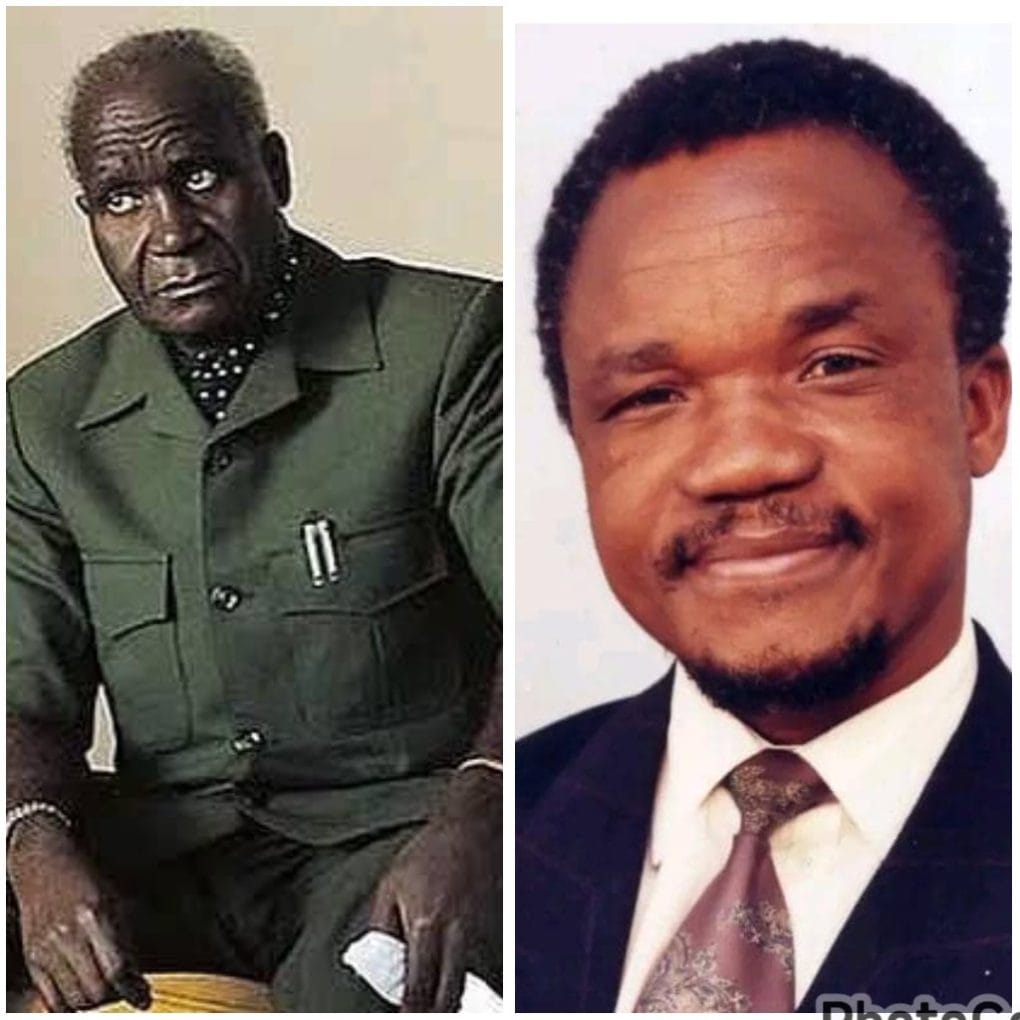
The untold story of Kaunda’s arrest: How Chiluba tried to break Zambia’s father of the nation

LUSAKA-(MaraviPost)-When Zambia transitioned from Kenneth Kaunda’s 27-year rule to Frederick Chiluba’s new multiparty era, the change appeared peaceful on the surface.

However, beneath the handshake diplomacy, one of Southern Africa’s most psychologically brutal political confrontations was unfolding.

On Christmas Day, 1997, Kaunda was arrested, a moment chosen for maximum symbolic impact.

Christmas, traditionally a day of presidential addresses and national unity, became the backdrop for Kaunda being bundled into a vehicle by armed officers.

The timing led many senior diplomats to conclude that the arrest was meant to break Kaunda psychologically, rather than simply pursue legal action.

The government accused Kaunda of involvement in a failed coup in October 1997, led by junior soldiers.

Yet Zambian intelligence insiders later admitted that there was no concrete evidence linking Kaunda to the mutiny.

Kaunda had been out of power for six years, had no military command, and was leading a peaceful political movement under UNIP.

Despite this, he became the central figure blamed for a coup he did not participate in.

At the time, Kaunda was experiencing an unexpected political resurgence, drawing large crowds to his rallies and maintaining widespread respect across rural districts.

Inside State House, Chiluba’s camp feared that Kaunda could potentially win the 1998 elections if allowed to run.

Kaunda’s moral authority still overshadowed other political figures and remained a unifying force across tribal lines, unlike the fragmented new elite.

For many observers, his arrest was interpreted as a pre-emptive political strike rather than a measure of national security.

During the same period, Kaunda was shot in the neck by government forces while leading a peaceful protest.

This injury left him physically vulnerable at the time of his detention.

For many Zambians, this act reinforced the perception that the state was willing to use lethal force against a national symbol.

Kaunda was subsequently held in Mukobeko Maximum Security Prison, a facility typically reserved for murderers, armed robbers, and political radicals.

This was not merely imprisonment but an attempt to erode his legacy by equating him with dangerous criminals.

Some prison officials later revealed they were instructed to treat Kaunda “as an ordinary dangerous suspect,” delivering a psychological blow aimed at undermining his stature.

The international community, including the Commonwealth, the United Nations, and African heads of state, intervened behind the scenes to pressure Chiluba to release Kaunda.

Even Nelson Mandela reportedly sent private messages condemning the treatment of the former president.

Diplomats feared that Zambia was descending into personal vendetta politics, with the potential to trigger ethnic tensions or civil unrest.

Chiluba’s own cabinet was divided on the matter, with some ministers warning that humiliating Kaunda could backfire politically.

Nevertheless, hardline security advisors convinced Chiluba that neutralising Kaunda was essential to consolidating power.

Ironically, the detention had the opposite effect of what Chiluba intended.

Kaunda emerged from prison more respected, seen as a statesman, and admired internationally as a martyr of democratic abuse.

The attempted political witch hunt, while meant to cripple Kaunda’s comeback, ultimately strengthened his legacy.

Historians agree that there was no direct evidence linking Kaunda to the coup, the arrest’s timing and style were deeply political, and Chiluba had strong incentives to remove a key rival.

Official statements cited national security, but the methods, symbolism, and sequence of events pointed clearly to a targeted political campaign.

The detention of Kaunda remains a powerful reminder of how political power struggles can shape the destiny of nations and the enduring respect commanded by principled leadership.


Discover more from The Maravi Post

Subscribe to get the latest posts sent to your email.

The Maravi Post

Ntata on Mutharika’s private trip to RSA-“The private trip that isn’t private”

The Head of State Professor Arthur Peter Mutharika has announced a “private visit.”But here is the question Malawi must ask without fear: How can the President’s trip be “private” to the very nation he governs?

A president is not a tourist. His movements are not personal errands. His absences are not family outings. Every time he leaves the country, the entire machinery of the state shifts around that moment.

There is no such thing as “private” when the presidency itself is public property.

So when an 80-year-old president quietly slips out under the veil of “private visit,” the nation is expected to pretend not to know what is happening.

But the truth is simple: At that age, a presidential “private visit” is almost always a medical appointment.

And that matters.
Deeply.

Because a President’s health is not his private business.
It is a matter of:National security; Succession clarity; Policy continuity; Investor confidence; Public stability; Geopolitical assurance

A president’s heartbeat is tied to the heartbeat of the nation.
If he falters, the country feels it. If he weakens, the system trembles. If he becomes incapacitated, the entire nation enters a legitimacy crisis.

This is why mature democracies disclose the health of their leaders.

Not because they enjoy gossip; but because a nation cannot be governed from behind a medical curtain.

When a president hides behind the phrase “private visit,” he is essentially saying this to his people:

“You must trust me with your lives,
but I will not trust you with the truth about mine.”

That is not leadership. That is paternalistic secrecy. And as Malawi approaches a critical election, transparency is not a favour. It is an obligation.

Malawians deserve to know: Is the man asking for five more years physically capable of carrying the burden of the presidency?

That question cannot be hidden behind euphemisms. Not anymore. The presidency is public. The consequences are public. Therefore the truth must be public.

Because when a leader’s health becomes “private,” the nation’s anxiety becomes public.


Discover more from The Maravi Post

Subscribe to get the latest posts sent to your email.

The Maravi Post