CDEDI demands fresh inquiry on Chikangawa MDF plane crash before perpetrators’ arrests

LILONGWE-(MaraviPost)-The country’s civil rights group Centre for Democracy and Economic Development Initiatives (CDEDI) has formally called on President Arthur Peter Mutharika to take decisive action on the June 10, 2024 Malawi Defence Force (MDF) plane crash at Chikangawa in Nkhata Bay, demanding a fresh inquest into the tragic incident.

Addressing the news conference on Tuesday, January 2026 CDEDI executive director Sylvester Namiwa disclosed the grouping has written Mutharika urging him to act on recommendations earlier presented by the Minister of Justice and Constitutional Affairs, Charles Mhango, shortly after assuming office.
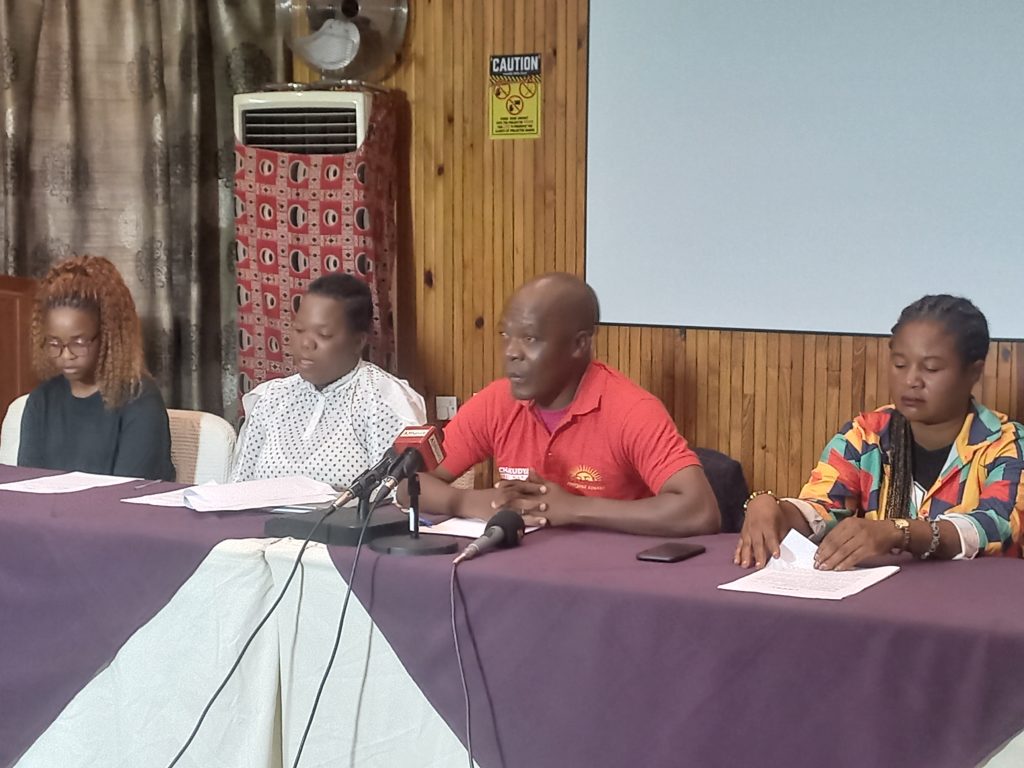
Namiwa in the red addressing the news conference

The organisation wants a renewed and independent probe into the circumstances surrounding the crash of the Dornier 228 aircraft (MAF-TO3), which claimed the lives of nine people, including the Vice President, a former First Lady, senior government officials and members of the MDF and Malawi Police Service.

CDEDI argues that Malawians voted President Mutharika into office with the hope that his administration would help the nation find closure by uncovering the truth behind what it describes as the country’s most devastating aircraft accident.

According to the organisation, the commission of inquiry appointed by former president Lazarus Chakwera failed to provide satisfactory answers and was widely rejected by the public, with some viewing it as an attempt to conceal the truth.

The pressure group says families and friends of the victims, both locally and abroad, continue to suffer unresolved pain, which can only be healed by a comprehensive, credible and transparent report that fully accounts for events before, during and after the crash.

CDEDI maintains that only such a process can provide genuine closure and restore public trust.
The organisation further notes growing calls in some quarters for criminal investigations, alleging that the then Malawi Congress Party (MCP) led administration attempted to force acceptance of what critics termed a “sham” report.

Among the concerns raised is the claim that former president Chakwera reportedly learned of the crash from a neighbouring head of state minutes after it occurred, rather than from officials within his own government and that there was a 12-hour delay before an official announcement was made to the nation.

CDEDI says experts have suggested that any fresh probe should begin with examining the final communication between the pilot, the late Flora Selemani and a senior officer at Zomba Airbase.

It also questions several public statements made during the search and rescue phase, including updates from the former army chief and appeals by the Malawi Communications Regulatory Authority, describing them as potentially criminal in nature.

The organisation has also raised concern over the suspension of search efforts in the evening, alleged obstruction of access to the crash site and unresolved technical questions from aircraft experts in Germany, including reports that the plane made a 360 degree turn before crashing.

CDEDI says a forensic audit should have followed the expert report to clarify these issues and determine who authorised the use of an aircraft that was later described as a flight risk.

While acknowledging President Mutharika’s earlier assurance that the Justice Minister was reviewing the rejected report, CDEDI says public patience is wearing thin as days have turned into weeks without concrete action.
The Maravi Post

Global Survey Finds Citizens back a World Parliament as Trust in International System Erodes

Civil Society, Democracy, Global, Global Governance, Headlines, Human Rights, International Justice, IPS UN: Inside the Glasshouse, TerraViva United Nations

Opinion

A global survey across 101 countries finds global majority support for a citizen-elected world parliament to handle global issues, reflecting widespread concern over an outdated and undemocratic international order. Credit: Democracy Without Borders

BERLIN, Germany, Jan 20 2026 (IPS) – As democracy faces pressure around the world and confidence in international law drops, a new global survey reveals that citizens in a vast majority of countries support the idea of creating a citizen-elected world parliament to deal with global issues.


The survey, commissioned by Democracy Without Borders and conducted across 101 countries representing 90% of the world’s population, finds that 40% of respondents support the proposal, while only 27% are opposed. It is the largest poll ever carried out thus far on this subject.

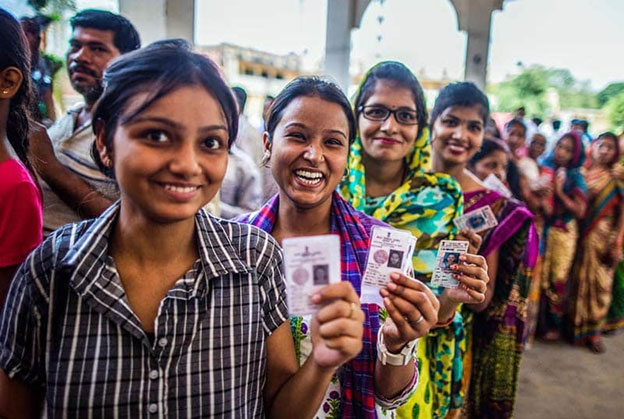
Support is strongest in countries of the Global South, especially Sub-Saharan Africa, and among groups often underrepresented in national political systems—young people, ethnic minorities, and those with lower income or education levels. In 85 out of 101 countries surveyed, more respondents support the idea than oppose it.

“The message is clear: people around the world are ready to expand democratic representation to the global scale,” said Andreas Bummel, Executive Director of Democracy Without Borders. “This survey shows there is a growing global constituency that wants a voice in decisions affecting humanity as a whole,” he added.

The findings come at a time when the international system is under increasing strain from climate change, war, geopolitical conflicts, authoritarian resurgence, and stalled global cooperation. The results suggest that many citizens—especially in less powerful countries—see a world parliament as a pathway to fairer and more effective global governance.

In countries with limited political freedoms, support for a world parliament is particularly high. According to Democracy Without Borders, this points to a public perception that global democratic institutions could help advance democracy at home as well.

A notable 33% of respondents globally selected a neutral stance, suggesting unfamiliarity with the concept. An analysis of the survey results argues that this indicates a wide-open space for public engagement. If the idea gains visibility, support could grow substantially, it says.

“The international system created in the last century to prevent war and mass violence is built on the United Nations. But many UN member states do not represent their people. They represent oppressive authoritarian elites who have seized power.

The proposed vision of a citizen-elected world parliament could be a vital step in the discussion about building a more democratic global order,” said Oleksandra Matviichuk, head of the Centre for Civil Liberties in Ukraine awarded with the Nobel Peace Prize.

According to the survey, net opposition found in individual countries is most concentrated in high-income democracies. “This is not a rejection of democracy. It is a reminder that privilege may breed complacency, and that those who benefit from existing arrangements may underestimate how urgently they need renewal,” commented George Papandreou, Greek Member of Parliament and former Prime Minister.

Democracy Without Borders, an international civil society organization, advocates for the establishment of a United Nations Parliamentary Assembly as a step toward a democratic world parliament. The organization says the survey results reinforce the urgency for democratic governments to consider this long-standing proposal.

IPS UN Bureau

  Source



