Health promotion, education, and behavior assistant professor Leila Larson conducts her nutrition-focused maternal and child health research all over the world, and South Carolinians will soon benefit from her expertise. With funding from the USC Collaborative for Health Equity Research (CHEER), an equity-driven pilot project program recently established by the USC Office of the Provost, Larson has launched a new study focused on pica (i.e., the craving and consumption of non-food items, like ice, and sometimes earth, like clay or soil).
Pica impacts pregnant women across the globe, including women in the U.S. – particularly those in African American, Hispanic and rural populations. Complications of prenatal pica include anemia, abnormal gestational weight gain, high blood pressure, negative birth outcomes, and other adverse effects, but despite these serious consequences, pica continues to be undiagnosed and underreported.”
Leila Larson, Health promotion, education, and behavior assistant professor
Though understudied and extremely complex, scientists and clinicians suspect that one of the primary causes of pica is the deficiency of certain micronutrients, such as iron. Ironically, individuals with pica experience an urge to consume non-food items (e.g., soil, clay, baking powder, soap, cornstarch, chalk, paper products), which often fail to fill the nutrient gaps while also worsening the deficiencies by reducing absorption of nutrients and exacerbating unwanted health outcomes by potentially introducing toxins, heavy metals, parasites, and other dangerous substances to both mother and fetus.
In many parts of the world, pica is common and expected as it has long been seen as a normal part of pregnancy. In other areas, however, women hesitate to report their pica cravings and behaviors due to feelings of shame and fear of being stigmatized.
Only two studies have examined pica in populations in the U.S. in the last 25 years. In California, researchers found that 51% of Hispanic women had the condition. North Carolina scientists discovered that 38% of rural women had pica during pregnancy, yet 75% of the participants had no documentation of the condition in their medical records.
Related Stories
“Pica is viewed as a cultural practice, as well as a biological response to nutritional deficiencies, infection or stress,” Larson says. “But with so little research on the topic, we just don’t know enough about its prevalence, causes or impacts on pregnant women and their babies.”
Building on her pica research in Malawi, which showed a reduction in consumption of earth when iron supplementation was provided, Larson’s new study will shed light on which South Carolinians are most impacted by pica, what primarily causes pica in these populations, and how pregnant people experience pica in their everyday lives. By understanding their behaviors, perspectives, and experiences, the research team’s long-term goal is to develop culturally relevant screening and treatment protocols that can be used by health care providers in the Palmetto state and beyond.
Larson’s study brings together a team of clinical, community, and research experts to explore this ubiquitous yet poorly understood condition. Consistent engagement with the study’s Community Advisory Board will provide a much-needed perspective on the project’s research approaches, study materials, dissemination, and much more.
“The cultural roots and high prevalence of prenatal anemia in the Southern United States makes pica a critical public health issue for this region,” Larson says. “With this initial pilot project, we hope to lay the groundwork for a longer, more extensive study aimed at understanding the risk factors, behaviors, and clinical impacts associated with this condition, and how we might improve it using community-engaged research approaches.”
Through Nkrumah’s story, Howard French charts the history of African decolonization and the American civil rights movement.
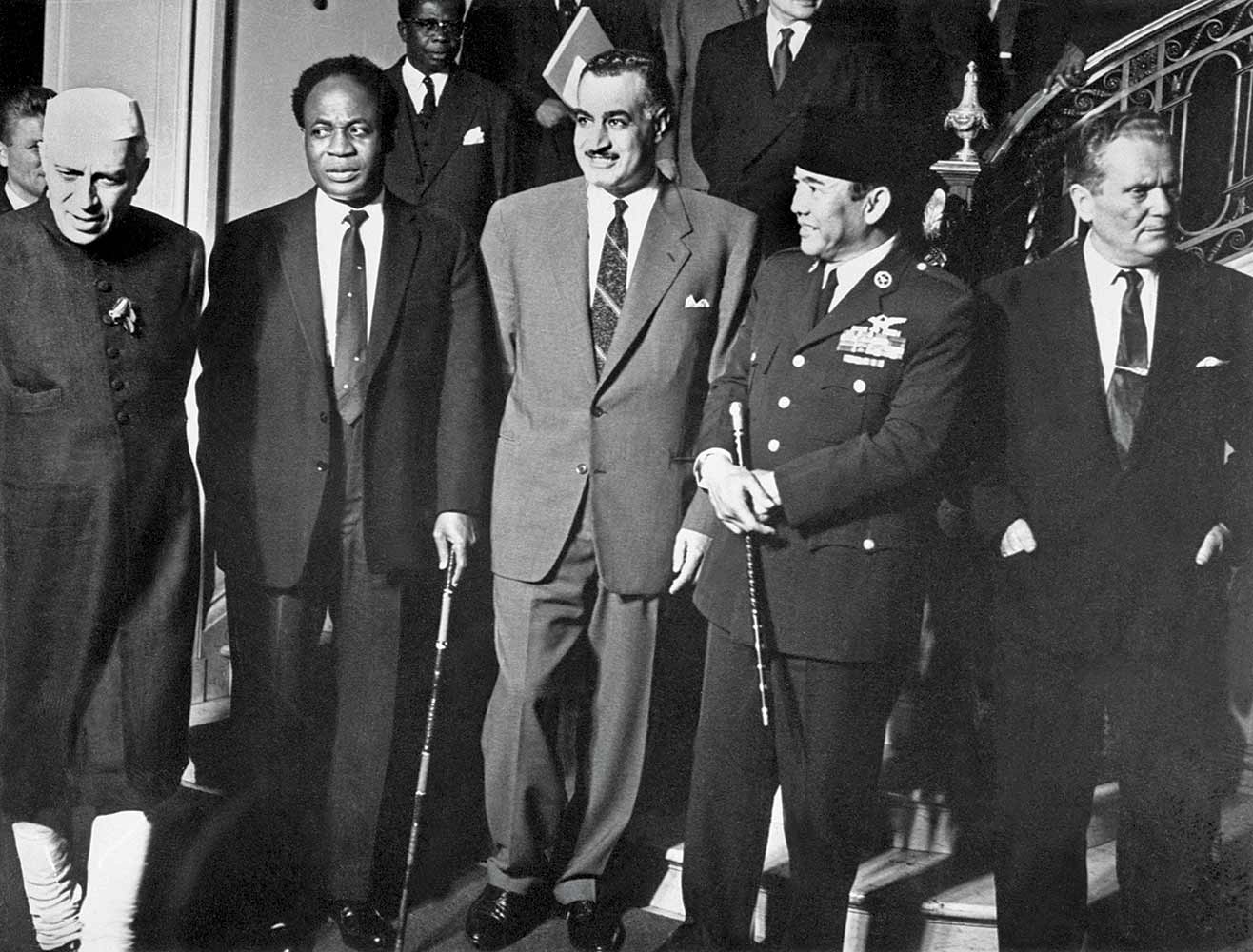
Kwame Nkrumah (second from left) and other leaders of nonaligned countries, 1960.(Getty)
Accra’s Kwame Nkrumah Memorial Park, built on the site of the former colonial polo grounds, is home to two radically different monuments to Ghana’s first prime minister. In the park’s center is an eye-catching bronze statue of a larger-than-life Nkrumah, clad in royal kente cloth, with an outstretched hand pointing ahead and one foot in front of the other as if he were advancing forward. Erected on top of a pedestal at the spot where Nkrumah stood to declare Ghana’s independence from Britain, it channels the slogan of Nkrumah’s political party: “Forward ever, backward never.” Though the monument was erected in 1992, the statue itself likely dates to the 1970s, when, after Nkrumah’s death in exile, discussions began for returning his body to Ghana and a mausoleum.
Books in review
The Second Emancipation: Nkrumah, Pan-Africanism, and Global Blackness at High Tide
The second statue rests in two pieces a short distance from this gleaming icon. Cast and designed by the Italian sculptor Nicola Cataudella, it is considerably older. Originally erected in 1958 at the Old Parliament House, it depicts Nkrumah in a fugu, a smock from the northern region of the country associated with the working class. Here, too, Nkrumah’s right hand is extended, but instead of directing forward movement, it waves in greeting. To some, this might seem like a friendly gesture, but from the moment the statue was proposed, critics lambasted it as an indication of the growing personality cult around Nkrumah. In 1961, the statue was badly damaged in a bomb attack, and Cataudella was commissioned to replace it. Then, during the 1966 coup that unseated Nkrumah’s government, it was toppled and beheaded. The severed and damaged pieces—Nkrumah’s body, minus a right hand and a left arm, and his head—stand on two pedestals next to each other.
These two Nkrumahs are illustrative of the long-standing conflict over the African leader’s legacy. In much of the world, Nkrumah is today a forgotten figure from a lost age of decolonization. Across the continent, however, he is widely celebrated as a champion of African independence and unity. In a 1999 poll conducted by the BBC World Service, African listeners voted for Nkrumah as Africa’s “Man of the Millennium.” And yet closer to home, his memory remains as contested as ever. On the radio and TV, in print, and in everyday conversations, Ghanaians fiercely debate whether Nkrumah was a liberator or a dictator. His own children, Samia Yaba and Sekou, took opposite sides on this question in an impromptu televised interview in 2023.
In his latest book, The Second Emancipation: Nkrumah, Pan-Africanism, and Global Blackness at High Tide, the veteran New York Times correspondent, Columbia journalism professor, and author Howard French deftly navigates the global amnesia and national memory wars that surround Nkrumah’s legacy, while also offering a dazzling portrait of the man himself. Following Nkrumah’s unlikely ascent from his birthplace in the western region of Ghana to his success as a national leader and global statesman, French offers us much more than a biography. In Nkrumah’s story, he charts the history of African decolonization and the American civil-rights movement “as linked and intertwined like a double helix.” His effort to narrate the global struggle for Black emancipation extends the ambitions of his previous book, Born in Blackness, to place African and African-descended people at the center of world history. In doing so, he presents Ghana’s anti-colonial struggle and independence as world-historical events with global reverberations.
In Born in Blackness, French suggested that the roots of Pan-Africanism, a constellation of movements that advocated global Black solidarity, could be found in the earliest slave revolts. Moving his readers from the 1574 revolt on the earliest modern plantations in São Tomé to the Haitian Revolution that abolished slavery and created an independent Black state, French examined how rebel slaves recast Blackness as a shared political identity and universalized the principles of liberty and equality. These early efforts generated inspiration and precedent for the later articulation of Pan-Africanism beginning in the late 19th century.
Now, with The Second Emancipation, French allows this Pan-Africanism to take center stage. Here he reprises some of the pioneering figures of Pan-African history, including the Sierra Leonean historian James Africanus Beale Horton, who wrote on the political conditions of the Gold Coast, and Edward Blyden, the advocate of African American and West Indian emigration to Liberia. Writing between the 1850s and 1890s, these figures insisted on the unity and solidarity of African and African-descended people and challenged depictions of Africa as a place without a history. French details how this broad commitment to solidarity and shared struggled expanded its reach and gained momentum in the 20th century. As he shows, the transformations of Pan-Africanism from an elite to a more popular politics took place against a backdrop of increased globalization, growing labor migration and urbanization, and two world wars, which facilitated encounters and exchanges among people of African descent, making the idea of solidarity more concrete and realizable by the mid-20th century. Nkrumah and his brand of Pan-Africanism, French argues, were products of this wider context.
Current Issue
Even if Nkrumah emerged from this high point of Pan-African politics, French is also careful to capture his singular personality and determination. A very private workaholic with a force of will that surprised his supporters and critics alike, Nkrumah took up the cause of Ghanaian and African independence with an intensity that was unmatched. No other figure of African anti-colonialism made achieving a federation of African states the crux of their political vision. Yet if these traits made him uniquely skilled as a visionary and a campaigner, they also fed his impatience and paranoia, which in turn fueled his authoritarian turn.
French carefully brings these two sides together to provide a rich and complex account of Nkrumah’s rise and fall. Along the way, he also inserts himself and his family into the story. In recounting the excitement with which he first traveled to Africa as a college student in the late 1970s, or recollecting the Friends of Ghana Association in which his parents participated, French makes concrete the great hope and enthusiasm that the project of African independence carried for African Americans and for many others, too.
Francis Nwia Kofi Nkrumah was born in the British colony then known as the Gold Coast, in the tiny village of Nkroful, sometime in either 1909 (the year normally given in accounts of his life) or 1912 (the year his mother remembered giving birth to her son). This discrepancy is a testament to the obscurity in which Nkrumah’s earliest years remain shrouded. No one could have predicted then that in less than 50 years, Nkrumah—who hailed from the small, marginal ethnic community of the Nzima—would lead the struggle to liberate the Gold Coast from colonial rule. His emergence as an anti-colonial activist and a national leader were far from foreordained. In fact, each step in his meteoric rise was marked by sheer contingency and chance. “Temporal accidents, being in the right place at the right time when the hinge of history swing loudly, are probably commonplace in the lives of major figures on the global stage,” French writes. “But their recurrence in Nkrumah’s story is nonetheless remarkable.”
In Nkrumah’s autobiography, published in 1957 to coincide with the independence of the country he now led, such moments were occasions for mythmaking. Each chance opening or encounter was rendered a matter of fate, reinforcing the idea that he was destined to emerge as the standard-bearer for his nation’s and Africa’s liberation. For instance, Nkrumah tells his readers that during his brief pit stop in the United Kingdom en route to study at Lincoln University, the historically Black school in rural Pennsylvania, he learned from a newspaper boy that Mussolini had invaded Ethiopia. The invasion unleashed in Nkrumah an emotional awakening in which he prayed “the day might come when I could play my part in bring[ing] about the downfall of [colonialism].” The image of an isolated Nkrumah staring at the “impassive” faces of British citizens and vowing his commitment to Africa’s liberation has all the narrative trappings of a heroic epic. Yet in truth, as French notes, by the time Nkrumah arrived in the colonial metropole, he had already been exposed to emergent forms of nationalism and Pan-Africanism in which Ethiopia loomed large.
Throughout his account, French deconstructs this self-mythologizing by filling in the gaps in Nkrumah’s autobiography with a sustained attention to the important influences that shaped Nkrumah before he went abroad. It was due to the insistence and determination of his mother, Nyaniba, we are told, that Nkrumah enrolled in a one-room Roman Catholic mission school. In 1926, during a routine inspection of that school, he was recruited to study in the capital of the colony and soon found himself at the newly opened Achimota College, an elite high school. While there, Nkrumah was mentored by James Aggrey, the first African teacher at Achimota whose African nationalism and eloquent oratory would become sources of inspiration.
In Accra, Nkrumah was also exposed to Ghana’s nascent anti-colonial movement. He saw how, in 1930, cocoa farmers responded to the collapse of prices by refusing to sell their beans to British trading firms and boycotting British imports. He also observed the rising career of the Nigerian journalist (and later president of Nigeria) Nnamdi Azikiwe, whose speeches and articles enthralled young intellectuals like Nkrumah. Azikiwe also served as the founding editor of the African Morning Post, where he promoted nationalist politics and found himself facing charges under new sedition laws. Another important figure of the interwar Gold Coast political scene who inspired Nkrumah was Samuel R. Wood. Wood was a member of the Gold Coast Aborigines’ Rights Protection Society, a nascent nationalist organization founded in 1897, and participated in the activities of the African Friends of Abyssinia, which opposed Italy’s imperial ambitions in Ethiopia.
In 1935, following the examples of Aggrey and Azi- kiwe, who had departed from the traditional path of studying in the colonial metropole to pursue an education in the United States, Nkrumah headed off to Lincoln University. He arrived in the United States with little interest in or knowledge of African American history and politics. French notes that in his autobiography, “Nkrumah conveys nothing but the most passing sense of the difficulties of life during the Great Depression, no hint of the politics roiling Harlem [where he had a stopover], or indeed any discussion of Black life in America overall.” But this gradually changed as he studied at Lincoln’s rural campus and took up odd jobs, including at a shipyard in Philadelphia and aboard a shipping line. During these years, Nkrumah honed his oratorical skills, following the examples of Black preachers and practicing at the regular bull sessions on campus. More than his formal education and the degrees he secured at Lincoln and the University of Pennsylvania, his years in America provided Nkrumah with a lesson about the global color line. His time in the cosmopolitan, polyglot maritime scene contributed to an increasingly broad view of race in the world order. In these years, he developed an expansive conception of Blackness and came to view the diaspora as central to the project of decolonization. This growing realization was facilitated by his connections to key African American intellectuals like the political scientist Ralph Bunche, who had studied the League of Nations mandates in Africa, and William Leo Hansberry, a historian of Africa and an uncle of the playwright Lorraine Hansberry.
But in these years, Nkrumah’s most important mentor was C.L.R. James, who tutored him in political organizing and radical politics. A polymath who had written The Black Jacobins, the classic history of the Haitian revolution, James emphasized to Nkrumah the importance of building mass organizations and tutored him on the various Marxist tendencies. James also made the consequential decision to introduce Nkrumah to George Padmore, a fellow Trinidadian who had broken with the Communist Party and was at the center of Pan-African politics in London. It was likely that Nkrumah had already encountered the prolific Padmore on the page: His anti-colonial reportage had appeared in African American and African newspapers like the Chicago Defender and the African Morning Post. But his introduction to Padmore proved to be an important connection for Nkrumah when he moved to London to participate in the burgeoning anti-colonial politics there. Padmore and Joe Appiah, a fellow Gold Coaster, immediately brought Nkrumah into the various organizations in which African and West Indian students, activists, and intellectuals were organizing to end imperial rule. It was in this context that Nkrumah dropped the anglicized first name Francis and adopted Kwame, more befitting the role of nationalist leader that he increasingly envisioned for himself.
While in Britain, Nkrumah helped to organize the historic Fifth Pan-African Congress in Manchester, which brought leading figures of Pan-Africanism like W.E.B. Du Bois and Amy Ashwood Garvey together with emerging African nationalist leaders like Jomo Kenyatta (from Kenya) and Hastings Banda (from Malawi). In a preview of the political campaigns to come, the congress’s “Manifesto to the Colonial Workers, Farmers, and Intellectuals of Africa” declared that “Colonial workers must be in the front of the battle against Imperialism” and argued that “your weapons—the Strike and the Boycott—are invincible.”
During these years, Nkrumah also served as vice president of the West African Students’ Union and helped to found a group called the West African National Secretariat, which sought to forge a “front for a United West African National Independence.” In an early prelude to the secrecy and individualized rule that would become a tragic hallmark of his leadership, Nkrumah also founded a clandestine cell called “the Circle,” which aimed to bring together the most radical nationalists of the region under his authority for the purpose of founding a “Union of African Socialist Republics.”
French warns that the wording did not reflect “anything like a firm allegiance with the similarly named Soviet Union.” Rejecting the racist view that imputed all African resistance to the instigation of communist agitators, and well aware of the Cold War dichotomies that would eventually lead the United States to encourage and support the coup that ousted Nkrumah, he instead reiterates that the connections between Nkrumah and the Soviet Union or communism more generally were overblown: His Union of African Socialist Republics was an idea born out of his own Pan-Africanism and commitment to socialism. It emerged, French notes, from an autonomous intellectual and political tradition that aspired to a universalist project of remaking the world, much like Marxism but also distinct from it.
French is not wrong to make such an argument, though it can inadvertently minimize or obscure some of the deep entanglements between Pan-Africanism and Marxism and even between Pan-Africanism and communism. From the Russian Revolution to the rapid industrialization of the Soviet Union, the East did serve as an inspiration and model for the project of political and social transformation that many anti-colonialists hoped to stage in their own contexts. When figures like Padmore broke with the Soviet Union, disappointed with its failure to more forthrightly support the anti-imperial cause, it is worth noting that they did not fully reject Marxism. The title of Padmore’s 1956 book, Pan-Africanism or Communism, suggests a dichotomous choice, but what he laid out there and advocated in the last years of his life was a synthesis of both.
It was one thing to dream of and plan for African independence and regional unity from inside Britain or the United States, but Nkrumah soon found out that it was quite another thing to pursue such a vision on the ground in Africa. His chance to try his hand at building a nationalist movement came in 1947, when he was invited to return home and help lead the fledgling United Gold Coast Convention (UGCC), a party started by long-standing figures of Gold Coast politics like the lawyer J.B. Danquah, which sought a gradualist path to national independence.
By his own account, Nkrumah used this moment as another opportunity for self-aggrandizement: He presented himself as the assured, confident hero eager to accept the UGCC’s call to action. As French notes, this might not exactly have been the case. For instance, Appiah recalled that Nkrumah was “wracked with anxiety and fear” as he considered the magnitude of the task ahead.
Despite his fears, Nkrumah hit the ground running to transform the UGCC into a mass party. With that aim, he went on a speaking tour of the country, opening party offices wherever he could, signing up members, and collecting dues. His timing was fortuitous: Despite its appearance as a placid model colony, the Gold Coast had undergone dramatic political and economic change in Nkrumah’s 12 years away. Rebellion was brewing just under the surface. Over the last decade and a half, the growing cities had increased the ranks of urbanized young people with some formal education, who formed literary clubs and debating societies in which they developed an interest in local and international politics. Meanwhile, economic woes and bad harvests only added to the pressure on the colonial government. When, in 1937, colonial officials responded to an outbreak of swollen-shoot disease by ordering that all contaminated cocoa plants be destroyed, the already politicized farmers staged another boycott, refusing to sell their crops to British companies.
The end of World War II complicated the situation for the British government in the Gold Coast further still. When servicemen returned there after supporting the British war effort around the world, they found that their bonuses would not support the upward mobility that they had been promised. On February 28, 1948, hundreds of veterans and their supporters marched on Accra’s Christianborg Castle, the seat of the colonial government, to deliver a petition requesting relief. After a confrontation between the veterans and the police, who blocked the protesters and fired into the crowd, the peaceful march quickly escalated into a riot. Nkrumah and the rest of the UGCC leadership had not been involved in organizing the protest that day, but colonial officials surmised that communist influence via the party had instigated the riot. The main leaders of the UGCC, known as the “Big Six,” were quickly arrested.
The Accra riots dramatically sped up the political timeline of decolonization, exposing the fissures within the UGCC and pushing the colonial state to initiate constitutional reforms. The following year, Nkrumah broke with the UGCC and founded the Convention People’s Party. Its demand of “Self-Government Now” was circulated at mass meetings and on the pages of its newspaper, the Accra Evening News. Inspired by Gandhian nonviolence and drawing on the discussions at the Pan-African Congress in Manchester, Nkrumah outlined a program of positive action that entailed “carefully calibrated…civil disobedience.” Soon the CPP was challenging the colonial state’s gradual path to what it called “responsible government” and calling for a constituent assembly.
Once again, however, popular forces took the initiative. The Union of Meteorological Workers began a strike in late December 1949, and when its members were dismissed from their jobs, the larger Trade Union Council called for a general strike to begin on January 8, 1950. Just two days later, the CPP followed its lead, and Nkrumah urged all nonessential workers to stay home. For this, Nkrumah and most of the party leadership ended up back in jail. In the 1951 general election, organized by the colonial state as part of its gradual process of decolonization, Nkrumah ran for and won a seat on the newly created Legislative Assembly from his jail cell. With the CPP clinching a majority, Nkrumah was released. He would now serve as the leader of the transitional government.
Nkrumah and the CPP won two more elections (in 1954 and 1956) before the country achieved independence in 1957. French details how these years set in motion a central contradiction of Nkrumah’s political leadership: Even as his star shined brighter on the international stage, he became increasingly embattled at home. Nor did his international reputation initially emerge through the official platforms of international politics. With the superpowers focused on the Asian and Central American theaters of the Cold War, the small country of the Gold Coast and the momentous arrival of African independence barely registered in the geopolitical battles of the period. This was both a blessing and a curse. It meant that Nkrumah’s fledgling government was not subject to the surveillance and covert intervention that hampered other anti-colonial movements. But it also meant that his bold calls for large-scale contributions to African development went unheeded.
In the context of this studious neglect by the major states, it was African Americans who catapulted Nkrumah onto the world stage. Thanks to the extensive efforts of Horace Mann Bond, then president of Lincoln University, Nkrumah received a statesman’s welcome to the United States in 1951. Black publications from the Pittsburgh Courier to Ebony offered extensive coverage of his political rise. In book-length treatments, the journalist Era Bell Thompson and the author Richard Wright chronicled the transformations afoot in the West African country. Drawn by the promise of an independent Black nation, figures like Maya Angelou and W.E.B. Du Bois later moved to Ghana.
“African American interest,” French argues, “drove American momentum toward engaging with Nkrumah’s government.” In February 1953, he appeared on the cover of Time magazine, and in September 1960, he gave a historic address to the United Nations General Assembly. During John F. Kennedy’s presidency, Nkrumah received an official invitation to Washington.
African American interest also strengthened Nkrumah’s view that African Americans and Africans were engaged in a shared struggle of emancipation. When Ghana declared its independence in 1957, Nkrumah extended the same warm welcome that he had received during his 1951 visit to leading figures of the civil-rights movement, including Martin Luther and Coretta Scott King. Nkrumah hoped that African American engagement would help the new nation forge ahead with economic modernization. He urged African Americans and West Indians to bring their professional and technical expertise to Ghana, and several of them did. The St. Lucian economist W. Arthur Lewis served briefly as Nkrumah’s economic adviser; the legal scholar Pauli Murray taught at Ghana’s law school and coauthored a book about the new country’s constitution. The historian David Levering Lewis taught at the University of Ghana, while the Barbadian poet and historian Edward Kamau Brathwaite worked in the Education Ministry.
Nkrumah advocated a federation of African states for the same reason that many of these Black intellectuals from the United States and the Caribbean sought to contribute to the development of Ghana. Through political integration, African states could overcome their economic dependence by building larger domestic markets and enhancing their bargaining power on the global stage. In making this argument, Nkrumah drew explicitly on the example of the United States. Nkrumah argued that in ratifying their Constitution in 1789, “the American states saw that they could not survive by living separately and managing their own affairs independently.” Glossing the title of his 1963 book Africa Must Unite, he insisted that the founders of the United States knew that “America must unite.”
Nkrumah hoped that his rising international star would summon the African unity he dreamed of and help decolonization transcend the nation-state; instead, he was mostly dragged down into the grubby and intractable politics of attempting to save his own nation-state from even more fragmentation. Almost immediately after the 1951 general election, regional and ethnic opposition parties began forming. First came the Northern People’s Party, which advocated “the North for the Northerners,” and then came the Ashanti-based National Liberation Movement, which proclaimed “No self-government without federation”; both contested the unitary and developmental state at the center of Nkrumah’s agenda. Even as he faced these domestic headwinds, Nkrumah stubbornly pursued his Pan-Africanist project, arguing that Ghana’s independence was meaningless unless it was linked to a wider African emancipation and eventual federation. He laid the groundwork for this goal by hosting the Conference of Independent African States in 1958 and forming the hastily assembled Ghana-Guinea union.
The entanglements and dissonances between Nkrumah’s internationalism and his nationalist project are central to the story of his fall. First, though his vision of a unitary Ghanaian state won out domestically, the sovereignty associated with such a state made it more difficult to achieve the Pan-African federalism that he had championed. Second, Nkrumah’s efforts to advance a Pan-African agenda on the international stage, and especially his support of Patrice Lumumba, the martyred young leader of Congo, placed Ghana on the radar of the Cold War’s warriors. If, in 1951, American officials barely noticed Nkrumah’s emergence on the West African scene, a decade later they openly wondered whether stemming the tide of communism required marginalizing or even ousting him.
Finally, Pan-African federation had been proposed by Nkrumah as an answer to the economic and political weakness of the postcolonial state. Within the domestic context, this weakness—and the potential for foreign interference and subversion—spurred him to view the entrenched opposition as possible foreign agents. This was no doubt intensified by Nkrumah’s suspiciousness, which sometimes bordered on paranoia. It is for this reason that one of the first signs of authoritarianism under his rule was the passage of the Deportation Act just five months after independence. Its earliest victim was Bankole Timothy, a Sierra Leonean writer and former Nkrumah supporter, whose crime was critiquing the growing personality cult around the prime minister.
French rightly notes that Nkrumah never enjoyed what might be called a loyal opposition—that is, parties that objected to the CPP’s policies while accepting the government’s legitimacy. Instead, his critics often adopted the colonial state’s language to describe Nkrumah as a communist infiltrator and, in one case, an “African Hitler.”
Soon, this bitter and often personalized opposition gave way to assassination attempts and bomb attacks. The government’s increasingly harsh responses, including the reintroduction of the colonial-era practice of preventive detention, exacerbated and escalated the conflicts. As Nkrumah and his administration doubled down on their view that the opposition aimed to subvert the government, the political terror intensified.
In 1964, the government officially declared what was already true in practice: Ghana would be a one-party state. But even this centralization of power could not stem the centrifugal forces. Very quickly, members of the CPP leadership were suspected of plotting an overthrow. The party was cannibalizing itself, and Nkrumah’s trusted circle grew even smaller. By the time he was overthrown in a coup in 1966, it was hardly a surprise to observers of Ghanaian politics.
Popular
“swipe left below to view more authors”Swipe →
In explaining Nkrumah’s authoritarian turn, French masterfully braids together accounts of his propensity for feelings of insecurity and paranoia, the difficulty of founding a new regime, and the colonial inheritance that primed new nations for despotism. “Contrary to the conventional wisdom that European imperial rule had been a healthy finishing school for democracy and good governance,” French notes, “it had in fact been an academy of authoritarianism.” Not only did Nkrumah and other postcolonial statesmen have a ready-made playbook at hand for repressing dissent through colonial laws like preventive detention, but they also inherited a Frankenstein state in which the repressive apparatus of the police and the army was overdeveloped, while the mechanisms for building consensus and legitimacy were weak and untested. Especially in moments of crisis, it was easier to exercise the muscles that were already strong than to strengthen other, more democratic capacities.
For this reason, French situates the excesses of Nkrumah’s government in a comparative historical context in which a number of postcolonial states across the Anglophone world, from India and Pakistan to Tanzania, instituted similar mechanisms of repression. At times, his account becomes too defensive: For instance, French favorably compares the magnanimity of Nkrumah’s government, which suspended the sentences of people who were condemned to death for a spate of bombings in Accra, to the brutality with which Britain used the Special Powers Act in Northern Ireland.
This defensiveness, a charge familiar to many authors who seek to write sympathetically about the project of African decolonization, stems from an aspiration to explain the rise of authoritarianism without pathologizing Nkrumah or Africans more broadly. Through comparison, French is implicitly responding to those who might attribute Nkrumah’s authoritarianism solely to his personality or who might find in the rise of one-party rule across the continent a specifically African propensity for dictatorship. His aim is not to sanctify Nkrumah or to cleanse him of flaws and failures. It is instead to register that the tragedy of Nkrumah’s fall was not his alone.
Unchecked ambition and political miscalculation took their toll, but this happened in the context of the conflicting aims of nationalism and internationalism, developmentalism and democratization, that were brought together under the umbrella of decolonization. In different ways, these political dilemmas continue to resonate, and not just in the postcolonial world. At the same time, the sense of political possibility and world-historical agency that animated Nkrumah’s vision of Pan-Africanism has been lost, leaving in its wake narrower solidarities and more limited political horizons. The world that Nkrumah sought remained beyond his reach, and the one he feared has come to pass.
Even before February 28, the reasons for Donald Trump’s imploding approval rating were abundantly clear: untrammeled corruption and personal enrichment to the tune of billions of dollars during an affordability crisis, a foreign policy guided only by his own derelict sense of morality, and the deployment of a murderous campaign of occupation, detention, and deportation on American streets.
Now an undeclared, unauthorized, unpopular, and unconstitutional war of aggression against Iran has spread like wildfire through the region and into Europe. A new “forever war”—with an ever-increasing likelihood of American troops on the ground—may very well be upon us.
As we’ve seen over and over, this administration uses lies, misdirection, and attempts to flood the zone to justify its abuses of power at home and abroad. Just as Trump, Marco Rubio, and Pete Hegseth offer erratic and contradictory rationales for the attacks on Iran, the administration is also spreading the lie that the upcoming midterm elections are under threat from noncitizens on voter rolls. When these lies go unchecked, they become the basis for further authoritarian encroachment and war.
In these dark times, independent journalism is uniquely able to uncover the falsehoods that threaten our republic—and civilians around the world—and shine a bright light on the truth.
The Nation’s experienced team of writers, editors, and fact-checkers understands the scale of what we’re up against and the urgency with which we have to act. That’s why we’re publishing critical reporting and analysis of the war on Iran, ICE violence at home, new forms of voter suppression emerging in the courts, and much more.
But this journalism is possible only with your support.
This March, The Nation needs to raise $50,000 to ensure that we have the resources for reporting and analysis that sets the record straight and empowers people of conscience to organize. Will you donate today?
is the Neubauer Family Assistant Professor of Political Science at the University of Chicago. She is the author of Worldmaking After Empire: The Rise and Fall of Self-Determination.
We will have 11 hours and 28 minutes of daylight today
The solar transit will be at 12:22:10 pm.
Water temperature in San Francisco Bay today is 57.2°F.
The first low tide will be at 4:24 am at 1.36 feet
The first high tide of the day will be at 10:18 am at 5.89 feet
The next low tide at 4:45 pm at -0.19 feet
The final high tide of the day at Ocean Beach will be at 11:17 pm 5.63 feet
The Moon is currently 99% visible
We just had a 100 percent Full Moon this morning at 3:38 am
The Penumbral Eclipse of the moon ended less than a half hour ago at 6:23:06 am
We may not have another “Red Moon” for another 3 years
The March Full Moon is called the Snow Moon
The Cree called this the Bald Eagle Moon or Eagle Moon.
The Bear Moon by the Ojibwe
The Black Bear Moon by the Tlingit
The Dakota called this the Raccoon Moon
Algonquin peoples named it the Groundhog Moon.
The Haida named it Goose Moon.
The Cherokee names this the “Month of the Bony Moon” and “Hungry Moon”
Today is….
33 Flavors Day
Canadian Bacon Day
I Want You to be Happy Day
National Cold Cuts Day
National Moscow Mule Day
National Mulled Wine Day
National Soup it Forward Day
National Sportsmanship Day
Peace Corps Day
Peach Blossom Day
Purim
Also known as Festival of Lots
Talk in Third Person Day
TB-303 Appreciation Day
Unique Names Day
What if Cats and Dogs Had Opposable Thumbs Day
Today is also….
Hinamatsuri or “Girl’s Day” in Japan
Liberation and Freedom Day in Charlottesville, Virginia
Liberation Day in Bulgaria
Martyrs’ Day in Malawi
Mother’s Day in Georgia
Sportsmen’s Day in Egypt
World Hearing Day
World Wildlife Day
On this day in Women’s History….
1873 – Censorship in the United States: The U.S. Congress enacts the Comstock Law, making it illegal to send any “obscene literature and articles of immoral use” through the mail. Some of that “obscene” and “immoral” literature included valuable information for women about their reproductive rights.
The National Woman Suffrage Parade, 1913.
On March 3, 1913, 5,000 women marched up Pennsylvania Avenue in Washington, DC, demanding the right to vote. Their “national procession,” staged the day before Woodrow Wilson’s presidential inauguration, was the first civil rights parade to use the nation’s capital. The event brought women from around the country to Washington in a show of strength and determination to obtain the ballot. The extravagant parade—and the near riot that almost destroyed it—kept women’s suffrage in the newspapers for weeks.
2005 – Margaret Wilson is elected as Speaker of the New Zealand House of Representatives, beginning a period lasting until August 23, 2006, where all the highest political offices (including Elizabeth II as Head of State), were occupied by women, making New Zealand the first country for this to occur.
If today is your birthday, Happy Birthday To You! You share your special day with….
1678 – Madeleine de Verchères, Canadian rebel leader (died 1747)
1778 – Frederica of Mecklenburg-Strelitz (died 1841)
1872 – Frida Felser, German opera singer and actress (died 1941)
1880 – Florence Auer, American actress and screenwriter (died 1962)
1882 – Elisabeth Abegg, German anti-Nazi resistance fighter (died 1974)
1893 – Beatrice Wood, American illustrator and potter (died 1998)ed 1962)
1900 – Edna Best, British stage and film actress (died 1974)
1902 – Ruby Dandridge, African-American film and radio actress (died 1987)
1911 – Jean Harlow, American actress (died 1937)
1913 – Margaret Bonds, American pianist and composer (The Ballad of the Brown King), pianist, arranger, and teacher, born in Chicago, Illinois (d. 1972)
1917 – Sameera Moussa, Egyptian physicist and academic (died 1952)
1921 – Diana Barrymore, American actress (died 1960)
1923 – Tamara Lisitsian, Soviet film director and screenwriter (died 2009)
1933 – Lee Radziwill, American socialite, sister of Jacqueline Kennedy Onassis (died 2019)
1945 – Hattie Winston, American actress
1947 – Jennifer Warnes, American singer-songwriter and producer (“Up Where We Belong; “Famous Blue Raincoat”),
1949 – Bonnie J. Dunbar, American engineer, academic, and astronaut
1949 – Roberta Alexander, American lyric and operatic soprano (Metropolitan Opera, 1983-91), born in Lynchburg, Virginia (d. 2025)
1950 – Re Styles [Shirley Macleod], Dutch-American actress (Space Is The Place), designer, and rock vocalist (The Tubes, 1976-79), born in the Netherlands (d. 2022)
1955 – Michele Singer Reiner, American film producer (died 2025)
1956 – Stephanie McCallum, Australian concert pianist and educator, born in Sydney, Australia
1958 – Miranda Richardson, English actress
1961 – Mary Page Keller, American actress and producer
1961 – Fatima Whitbread, English javelin thrower
1962 – Jackie Joyner-Kersee, American heptathlete and long jumper
1964 – Laura Harring, Mexican-American model and actress, Miss USA 1985
1982 – Jessica Biel, American actress, singer, and producer
1983 – Sarah Poewe, South African swimmer
1986 – Stacie Orrico, American singer-songwriter (“Stuck”), born in Seattle, Washington
1987 – Shraddha Kapoor, Indian actress, singer, and designer
1988 – Teodora Mirčić, Serbian tennis player
1991 – Park Cho-rong, South Korean singer-songwriter and actress
1991 – Anri Sakaguchi, Japanese actress
1994 – Umika Kawashima, Japanese singer and actress
1995 – Maine Mendoza, Filipina actress
1997 – Camila Cabello, Cuban-American singer-songwriter and actress (Fifth Harmony – “Work from Home”; solo – “Señorita”; “Havana”), born in Cojimar, Cuba
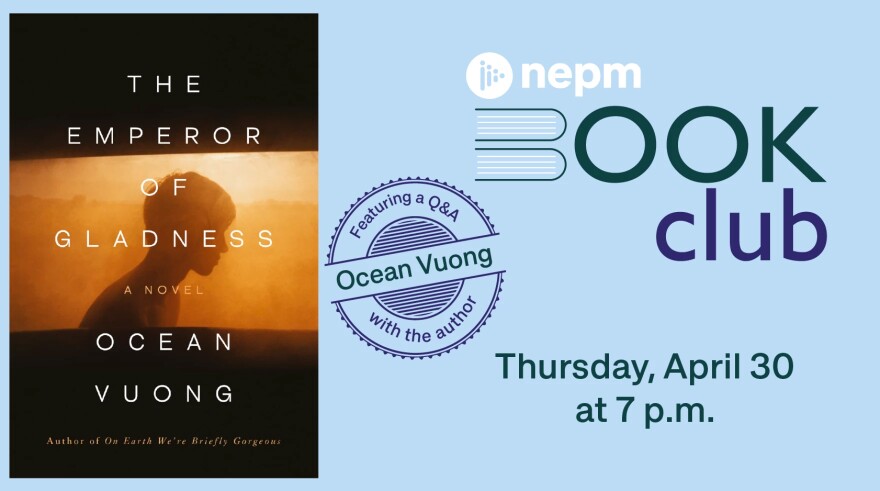
NEPM Book Club: The Emperor of Gladness Thursday, April 30 at 7 p.m. on Zoom Author Ocean Vuong will be joining us at the next NEPM Book Club virtual meet-up to talk about his second novel, The Emperor of Gladness. It tells the story of 19-year-old Hai who, on a late summer evening in a post-industrial Connecticut town, stands on the edge of a bridge in pelting rain, ready to jump, when he hears someone shout across the river. The voice belongs to Grazina, an elderly widow succumbing to dementia, who convinces him to take another path. Bereft and out of options, he quickly becomes her caretaker.
Corey Harris Bombyx, Florence Friday, Feb. 27 at 7 p.m. Corey Harris is a guitarist, vocalist, songwriter and band leader who has carved out his own niche in blues. He began his career as a New Orleans street singer. In his early twenties he lived in Cameroon, West Africa for a year. In 2007, he was awarded a MacArthur Fellowship — commonly referred to as a “genius award.” Insurrection Blues, Harris’ 20th album, is full of topical relevance, yet steeped in tradition and informed by his musical explorations over the decades. Recorded in Italy under shutdown conditions, the album returns to the solo acoustic format that’s been his base since his early days as a street singer.
Smith College Orchestra Spring Concert Sweeney Concert Hall, Smith College Friday, Feb. 27 at 7:30 p.m. The Smith College Orchestra presents a preview concert of its forthcoming performance at the College Orchestra Directors Association (CODA) national conference at the University of Rhode Island. Conducted by Jonathan Hirsh, the program features 2026 Concerto Competition winner Olivia Hwang ‘28 performing the first movement of Piano Concerto in A minor, op. 54 by Robert Schumann. Also works by Brahms, Valerie Coleman and Gabriela Ortiz.
Mount Holyoke Symphony Orchestra: Tr-ans-for-mat-ions Abbey Memorial Chapel, Mount Holyoke College Friday, Feb. 27 at 8 p.m. The Mount Holyoke Symphony Orchestra, welcomes lyric baritone Lucas Bouk, for a program of transformations, including Peteris’ Vasks haunting Symphony No.1 focusing on global change and Bedrich Smetana’s iconic tone poem depicting the Vltava or the Moldau river as it flows through the Czech Republic. Lucas Bouk made his Lincoln Center debut with New York City Opera in the World Premiere of Ian Bell and Mark Campbell’s Stonewall in 2019. Lucas is a regular collaborator with the composer-librettist team Felix Jarrar and Bea Goodwin. In 2018, the duo created the mezzo-soprano role of Tristan Tzara in Tabula Rasa to celebrate Lucas’ coming out as a transgender man.
Paul Taylor Dance Company Tillis Performance Hall, UMass Friday, Feb. 27 at 8 p.m. The Paul Taylor Dance Company has been a presence in Fine Arts Center seasons since 1978. One of the most revered and dynamic ensembles in modern dance, the company has been innovating and transforming dance since 1954. For this performance, the company will bring us a classic work by its founder, Speaking in Tongues (1988), along with How Love Sounds, a 2025 commission by Hope Boykin, whose celebrated career as a dancer includes twenty years with the Alvin Ailey American Dance Theater.
Norman Rockwell: The Human Touch Norman Rockwell Museum, Stockbridge On view Saturday, Feb. 28 – Monday, May 25 Beneath their familiar narratives, Rockwell’s illustrations are grounded in empathy. His art established a shared sense of national identity that was embraced by audiences who shared his vision and recognized their own aspirations in the stories he chose to tell. At the same time, his work acknowledges life’s many contradictions. The artworks in this exhibition highlight Rockwell’s enduring commitment to portraying people not as heroes or villains, but as individuals rich with emotion and inner life.
Policy Playhouse Playwriting & Film Festival Smith College’s Julia Child Campus Center, Smith College Saturday, Feb. 28 from 2 – 5 p.m. Founded by Mary Clare Michael, The Policy Playhouse is a nonprofit arts organization dedicated to connecting policymakers and constituents through the power of storytelling and performance. The festival will bring together 22 artists, community members, and local civic leaders to explore pressing policy issues through short plays, films, and a live public forum. The event will conclude with a community reception and artist awards.
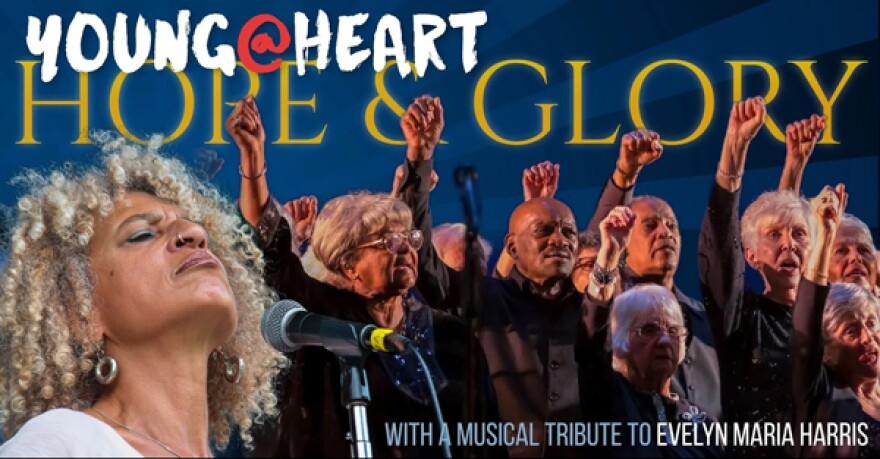
Young@Heart: Hope & Glory A Tribute to Evelyn Harris Hope Center for the Arts, Springfield Saturday, Feb. 28 at 4 p.m. The Young@Heart Chorus returns to Springfield for a special tribute to the life and legacy of Evelyn Harris, whose artistry and activism left an indelible mark on our region, the nation, and the world. The program will feature special guest appearances by Sweet Honey in the Rock and Yasmeen Betty Williams. Students and faculty of the HOPE Center will perform alongside Young@Heart, embodying the Center’s mission to foster creativity, mentorship, and shared purpose through the arts.
Mtali Banda De La Luz, Holyoke Saturday, Feb. 28 at 7 p.m. A native of Amherst, Mtali Banda is the son of a Malawian refugee father and an African American mother. His work uses performance and autoethnography to explore Black history in the global African diaspora. His use of musical composition and personal narrative help to bridge Black experiences throughout the diaspora, with an emphasis on Malawian history.
Cochemea MASS MoCA, North Adams Saturday, Feb. 28 at 8 p.m. This performance is part of MASS MoCA’s series highlighting some of the best and brightest in contemporary jazz. For over 25 years, multi-instrumentalist and composer Cochemea has built a distinct career as a soloist, section player, and composer/arranger, collaborating with artists across genres — from his long tenure with Sharon Jones & the Dap-Kings to work with Kevin Morby, Run The Jewels, Jon Batiste, Amy Winehouse, The Roots, Archie Shepp, Mark Ronson, and Quincy Jones, among others.
Ms. Lisa Fischer & Grand Baton Iron Horse, Northampton Sunday, March 1 at 7 p.m. Ms. Lisa Fischer spent much of her career as an elite backup singer for artists such as Luther Vandross, the Rolling Stones, Sting, Tina Turner or Nine Inch Nails. But when her story was featured in the 2013 documentary “20 Feet From Stardom,” Fischer experienced a course-changing epiphany. “The film gave me a chance to take stock and realize I could start defining my own path.” Seizing the moment, Fischer partnered with string wizard and arranger JC Maillard’s Grand Baton, a group capable of following her in just about any musical direction.
UMass Symphony Orchestra Concerto Winners 2026 Tillis Performance Hall Monday, March 2 at 7:30 p.m. UMass Director of Orchestral Studies Gonzalo Alexander Hidalgo Ardila will conduct a program featuring three winners from the UMass 2025-26 concerto competition. Steven Hu will play the third movement from Elgar’s Cello Concerto; Rishi Ramsingh will plat the first movement of Prokofiev’s Piano Concerto No. 2; Jonathan Maginnis will play Debussy’s Rhapsody for Clarinet.
Powerful Pairings—A Conversation with Claudia Friddell and Kip Wilson Kittredge Center, Holyoke Community College Wednesday, March 4 at 6:30 p.m. The Massachusetts Center for the Book presents an engaging, behind-the-scenes conversation with acclaimed YA and middle grade authors Claudia Friddell and Kip Wilson. They’ll explore their latest books, show how they research and build new stories, and share how their experiences as educators continue to shape their work. It promises to be a lively evening of history, creativity, and inspiration.
Madison Curbelo The Drake, Amherst Thursday, March 5 at 8 p.m. Madison Curbelo is a singer songwriter with Latin roots based in Massachusetts. Her warm vocals and storytelling earned her a spot in the Top 9 of Season 25 of The Voice, Madison currently tours across the U.S. with her band, connecting with audiences in venues ranging from intimate rooms to large outdoor stages. Influenced by Olivia Dean, Stevie Nicks, Bruno Mars, and Paul Simon, Madison writes songs that feel like scenes in motion, drawing listeners into her world through clear, intentional lyrics.
A City in Flux: Reflecting on Venice Smith College Museum of Arts On View through Sunday March 22 This installation celebrates the enduring but ever-changing allure of Venice in art. Curated by undergraduate students at the University of Massachusetts Amherst, it draws from the Five Colleges’ vast collections of historic and contemporary drawings, photographs, prints, and paintings. Other exhibits to check out: “Don’t Mind if I Do,” a collaborative experiment demonstrating how temporary changes in power structures create pathways of access; “Crafting Worlds: Japanese Decorative Arts from the 18th through 21st Centuries; and more.
COMING SOON
Easthampton Theater Company: Enchanted April Williston Theater, Easthampton Saturday, March 14 – Sunday, March 22 In this his heartwarming and witty play based on the beloved novel by Elizabeth von Arnim, four very different women rediscover laughter, hope and their own voices during an impulsive seaside getaway. Directed by Gilana Chelimsky, this production is packed with regional talent on and behind the stage.
Valley Classical: “A Far Cry” Chamber Orchestra Sweeney Hall, Smith College Saturday, March 21 at 3 p.m. A Far Cry is known for its innovative and compelling programs, stellar communication, and a democratic process that is the group’s north star. The March 21 program includess “SAY,” Shelley Washington’s searing response to being of mixed race in contemporary America; Aaron Copland’s Appalachian Spring in its original chamber scoring; and an 1811 string sextet arrangement of Beethoven’s 6th symphony, “Pastoral,” re-expanded for the full string orchestra.
Hayato Sumino Bowker Auditorium, UMass Thursday, March 26 at 7:30 p.m. Hayato Sumino is a preternaturally talented risk taker who brings both charm and humor to his work. He grew up in Tokyo, started playing piano at age three. At twenty-three, he won the Grand Prix at the PTNA Piano Competition. At twenty-four, he won third prize at the Lyon International Piano Competition. And at twenty-six, he was semi-finalist in the International Chopin Piano Competition, drawing a record 45,000 online viewers with his second-round performance.
Back Porch Festival Northampton Friday, March 27 – Sunday March 29 The Back Porch Festival is returning for its 12th year. The “Ramble Pass” gets you access to 50+ artists performing in venues all over downtown Northampton over three days. And, every night there’s a ticketed show at the Academy of Music: Bertha: Grateful Drag on Friday, the Bluegrass Spectacular on Saturday, and I’m with Her on Sunday.
Yagódy Bombyx, Florence Thursday, April 16 at 7 p.m. The Ukrainian band Yagódy was founded in 2016 in Lviv to revive and reinterpret folk songs. In 2020 they released their debut album along with a music video for the song “Kalyna-Malyna.” The ensemble consists of three vocalists, an accordionist, a bass guitarist, a drummer, and a cimbalist.
NEPM’s Smart & Funny People: An Evening with Fran Lebowitz Academy of Music, Northampton Saturday, April 18, at 8 p.m. NEPM is rolling out a new event series called “NEPM’s Smart & Funny People.” In a cultural landscape filled with endless pundits and talking heads, Fran Lebowitz stands out as one of our most insightful social commentators. Lebowitz’s essays and interviews offer her acerbic views on current events and the media — as well as pet peeves including tourists, baggage-claim areas, after-shave lotion, adults who roller skate, children who speak French, or anyone who is unduly tan. Now, she’s one of NEPM’s Smart & Funny People.
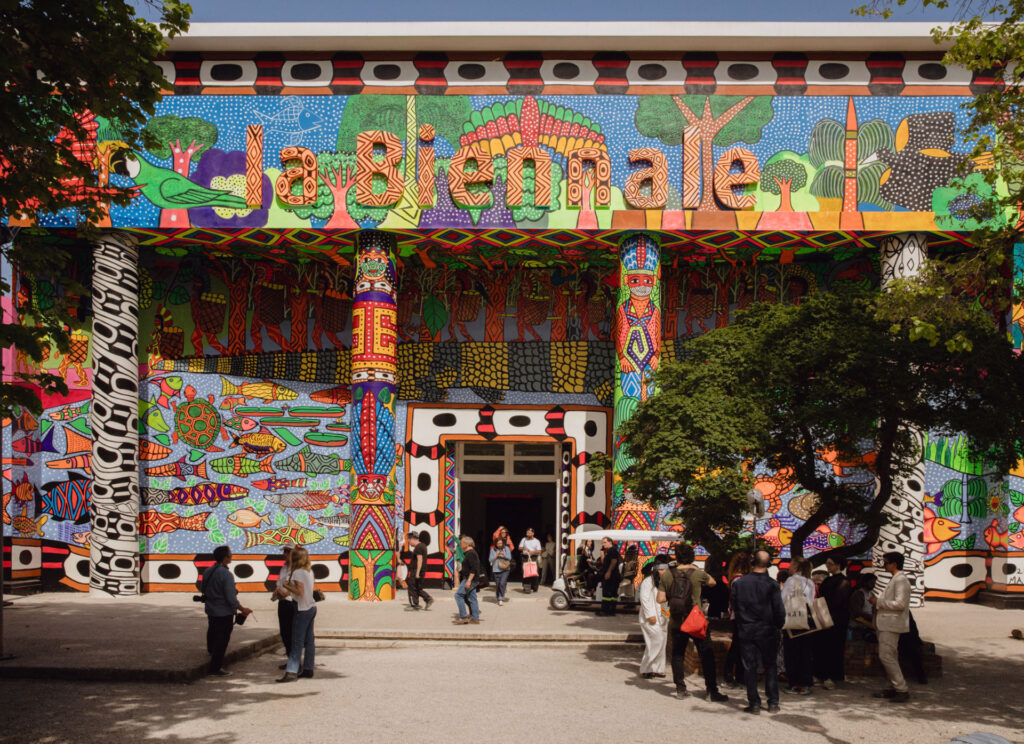
Kouoh’s framework proposed a Biennale that “refuses orchestral bombast,” inviting viewers to slow down and inhabit moments of contemplation. Photo by AVZ. Courtesy of La Biennale di Venezia.
After the sudden and tragic passing of curator Koyo Kouoh, it was unclear whether the 2026 Venice Biennale would go ahead and, if so, whether it would still reflect her vision. Ultimately, the organizing body chose to move ahead with Kouoh’s curatorial concept “as she designed it, as she imagined it,” president Pietrangelo Buttafuoco said at a May 2025 press conference. Today (Feb. 25), La Biennale announced the 111 artists who will take part in the 61st edition of the longest-running and most important international exhibition. The list is truly global and expansive, with names well known in international art circles, particularly within the institutional system, alongside more regionally rooted pioneers. Yet the former are notably more prominently represented, suggesting “In Minor Keys” will lean less toward marginal or historically overlooked voices outside the system and more firmly toward the contemporary art discourse of the present moment.
While the selection leans visibly toward institutional, socially engaged and research-based practices, many of the included artists are represented by established galleries and maintain an active presence in the commercial ecosystem. And although throughout her career Kouoh tirelessly championed African artists—becoming the first woman from the continent selected to curate the Venice Biennale—the list of 2026 Biennale artists reflects a more balanced and globally distributed constellation of voices, positioning the continent as an integral presence within a wider interconnected field of discourse addressing shared concerns. As for historical figures, the Biennale will celebrate the rebel genius of Marcel Duchamp in what is shaping up to be an especially high-profile year for the avant-garde artist, with major surveys scheduled at the Museum of Modern Art and the Philadelphia Museum of Art.
The 2026 Venice Biennale artists will each respond to Kouoh’s “In Minor Keys”—a concept carried forward by the multicultural team of advisors who worked closely with her from the outset, including curators Gabe Beckhurst Feijoo, Marie Hélène Pereira and Rasha Salti, critic and editor-in-chief Siddhartha Mitter and assistant Rory Tsapayi. Kouoh had already submitted a full and comprehensive proposal before her death, writing in her curatorial essay that the exhibition she envisioned was going to be “a polyphonous assembly of art… convening and communing in convivial collectivity, beaming across the void of alienation and the crackle of conflict.” She also clarified that the 2026 Biennale would be “neither a litany of commentary on world events, nor an escape from compounding or continuously intersecting crises.”
What to expect from “In Minor Keys”
As the musically inspired title suggests, the curatorial framework for the upcoming edition of the biennial promises intimate and introspective moments of listening, contemplation and exchange, encouraging a form of embodied transpersonal understanding capable of countering the overwhelming overstimulation and saturation of our time. According to Rasha Salti, Kouoh envisioned a Biennale that “refuses orchestral bombast,” rejecting both the grandiosity of major global art events and society’s performative behaviors in favor of a call to decelerate—to “take a deep breath. Exhale. Drop your shoulders. And close your eyes.”
“The artists are channels to the minor keys,” said curatorial team member Rory Tsapayi during the announcement press conference, describing them as a collective score composed of practices operating at the boundaries of form. “These are artists whose practices seamlessly bleed into society.” Gabe Beckhurst Feijoo emphasized that the structure is “not abstractly determined… it is not organised in sections but in respect to undercurrent priorities.” The exhibition will unfold across thematic strands spanning the Arsenale and the Giardini: Shrines, Procession/Invocation, Schools, Enchantment, Physical and Spiritual Rest, the Threshold and the Creole Garden. In the Central Pavilion, “The Shrines” will create a suspended, sanctuary-like space, paying tribute to the late Senegalese artist Issa Samb and the late African American artist Beverly Buchanan.
Artists whose work resonates with the motif of Procession/Invocation include Nick Cave, Alvaro Barrington, Daniel Lind-Ramos, Ebony G. Patterson, Johannes Phokela, Tammy Nguyen and Kenya’s Kaloki Nyamai. “Visitors are invited to become part of these assemblies,” said curator Marie Hélène Pereira, underscoring the participatory dimension of this strand. “The Schools” section will foreground collective practices and organizations dedicated to sustaining artistic networks, including the Nairobi Contemporary Art Institute, the G.A.S. Foundation in Lagos founded by Yinka Shonibare and Denniston Hill in New York State. It reflects an approach that is becoming increasingly common among artists, particularly in emerging scenes, as a way to withstand the pressures of global circuits. “Performance and innovation” is another key curatorial thread, but there will also be space for more immaterial forms of art. Drawing inspiration from Kouoh’s Poetry Caravan, a 1999 voyage of nine African poets that she curated, a procession of poets will take place in the Giardini. “Poetry was to her the guiding light of curatorial gesture,” said Salti.
Special mention during the announcement conference was given to the catalogue, which will intentionally highlight a “collaborative mode of making,” as Siddhartha Mitter explained. Each artist will be featured in a four-page spread including sketches and photographs foregrounding studio spaces and working processes.
“I am tired. People are tired. We are all tired. The world is tired. Even art itself is tired,” wrote Kouoh in a 2022 text—evidence that she had long been aware of the need for a shift in how art is produced, circulated and experienced if it is to retain impact in today’s world. This was something she sought to pursue with this Biennale. “Perhaps the time has come. We need something else,” she wrote. “We need to heal. We need to laugh. We need to be with beauty, and lots of it. We need to play, we need to be with poetry. We need to be with love again. We need to dance. We need to rest and restore. We need to breathe. We need the radicality of joy. The time has come.”
“Can an exhibition on the scale of the Biennale offer a place to rest your body?” Rory Tsapayi asked during the conference, explaining how certain sections and clusters aim to create space for collective rituals of contemplation and embodied reconnection. Works by Wangechi Mutu, Otobong Nkanga, Carsten Höller and Sandra Knecht in the Creole Garden will help generate relational and spiritual currents between humans and other species.
With its focus on socially engaged and research-driven practices oriented toward a transpersonal conversation, the 2026 Venice Biennale promises to set the tone for broader collective reflection on the state of human existence in relation to everything else at this stage of civilization, encouraging shared practices of reflection and reconnection between individuals and the larger wholes to which they belong.
The full list of 2026 Venice Biennale artists
Pio Abad Born 1983 in Manila, Philippines. Lives in London, U.K.
Philip Aguirre y Otegui Born 1961 in Schoten, Belgium. Lives in Antwerp, Belgium.
Akinbode Akinbiyi Born 1946 in Oxford, U.K. Lives in Berlin, Germany.
Laurie Anderson Born 1947 in Chicago, IL, USA. Lives in New York City, NY, U.S.A.
Fabrice Aragno Born 1970 in Neuchâtel, Switzerland. Lives in Lausanne, Switzerland.
Nancy Brooks Brody Born 1962 in New York City, NY, USA. Lives in New York City, NY, U.S.A.
Joy Episalla Born 1957 in Bronxville, NY, USA. Lives in New York City, NY, U.S.A.
Zoe Leonard Born 1961 in Liberty, NY, USA. Lives in New York City, NY, U.S.A.
Carrie Yamaoka Born 1957 in Glen Cove, NY, USA. Lives in New York City, NY, U.S.A.
Jo-ey Tang Born 1978 in Hong Kong, China. Lives in New York City, NY, U.S.A.
Kader Attia Born 1970 in Dugny, France. Lives in Berlin, Germany and Paris, France.
Sammy Baloji Born 1978 in Lubumbashi, Democratic Republic of the Congo. Lives in Brussels, Belgium and Lubumbashi, Democratic Republic of the Congo.
Ranti Bam Born 1985 in Lagos, Nigeria. Lives in Paris, France and Lagos, Nigeria.
Alvaro Barrington Born 1983 in Caracas, Venezuela. Lives in London, U.K.
Éric Baudelaire Born 1973 in Salt Lake City, UT, USA. Lives in Paris, France.
Sabian Baumann Born 1962 in Zug, Switzerland. Lives in Zurich, Switzerland.
Beverly Buchanan Born 1940 in Fuquay, NC, U.S.A. Lives in the U.S.A.
Seyni Awa Camara Born 1945 in Oussouy, Senegal. Lives in Senegal.
Nick Cave Born 1959 in Chicago, IL, U.S.A. Lives in Chicago, IL, U.S.A.
Carolina Caycedo Born 1978 in London, U.K. Lives in Los Angeles, CA, U.S.A. and Caguas, Puerto Rico.
Annalee Davis Born 1963 in St. Michael, Barbados. Lives in St. George, Barbados.
BuBu de la Madeleine Born 1961 in Osaka, Japan. Lives in Nara, Japan.
Dawn DeDeaux Born 1952 in New Orleans, LA, U.S.A. Lives in New Orleans, LA, U.S.A.
Nolan Oswald Dennis Born 1988 in Lusaka, Zambia. Lives in Johannesburg, South Africa.
Bonnie Devine Born 1952 in Toronto, Canada. Lives in Toronto, Canada.
Godfried Donkor Born 1964 in Accra, Ghana. Lives in London, U.K. and Accra, Ghana.
Marcel Duchamp Born 1887 in Blainville-Crevon, France. Lives in France.
Edouard Duval-Carrié Born 1954 in Port-au-Prince, Haiti. Lives in Miami, FL, U.S.A.
Torkwase Dyson Born 1973 in Chicago, IL, USA. Lives in Beacon, NY, U.S.A.
rana elnemr Born 1974 in Hannover, Germany. Lives in Cairo, Egypt.
Theo Eshetu Born 1958 in London, U.K. Lives in Berlin, Germany and Rome, Italy.
Rachel Fallon Born 1971 in Dublin, Ireland. Lives in Dublin, Ireland.
Sofía Gallisá Muriente Born 1986 in San Juan, Puerto Rico. Lives in Puerto Rico.
Adebunmi Gbadebo Born 1992 in Livingston, NJ, U.S.A. Lives in Philadelphia, PA, USA and Newark, NJ, U.S.A.
Leonilda González Born 1923 in Minuano, Uruguay. Lives in Uruguay.
Linda Goode Bryant Born 1949 in Columbus, OH, U.S.A. Lives in New York City, NY, U.S.A.
Joana Hadjithomas Born 1969 in Beirut, Lebanon. Lives in Beirut, Lebanon and Paris, France.
Khalil Joreige Born 1969 in Moussaitbeh, Lebanon. Lives in Beirut, Lebanon and Paris, France.
Alexa Kumiko Hatanaka Born 1988 in Toronto, Canada. Lives in Toronto, Canada, New York City, NY, U.S.A. and Japan.
Ayrson Heráclito Born 1968 in Macaúbas, Bahia, Brazil. Lives in Salvador, Bahia, Brazil.
Clarissa Herbst Born 1959 in Crailsheim, Germany. Lives in Zurich, Switzerland.
Dominique Rust Born 1960 in Basel, Switzerland. Lives in Zurich, Switzerland.
Nicholas Hlobo Born 1975 in Cape Town, South Africa. Lives in Johannesburg, South Africa.
Carsten Höller Born 1961 in Brussels, Belgium. Lives in Stockholm, Sweden, Biriwa, Ghana and Tuscany, Italy.
Sohrab Hura Born 1981 in Chinsurah, India. Lives in New Delhi, India.
Alfredo Jaar Born 1965 in Santiago, Chile. Lives in Lisbon, Portugal.
Mohammed Joha Born 1978 in Gaza, Palestine. Lives in Marseille, France.
Michael Joo Born 1966 in Ithaca, NY, U.S.A. Lives in New York City, NY, U.S.A.
Nina Katchadourian Born 1968 in Stanford, CA, U.S.A. Lives in New York City, NY, U.S.A. and Berlin, Germany.
Bodys Isek Kingelez Born 1948 in Kimbembele Ihunga, Democratic Republic of the Congo. Lives in Democratic Republic of the Congo.
Sandra Knecht Born 1968 in Buus, Switzerland. Lives in Buus, Switzerland.
Marcia Kure Born 1970 in Kano State, Nigeria. Lives in Princeton, NJ, USA, Abuja and Kaduna, Nigeria.
Natalia Lassalle-Morillo Born 1991 in San Juan, Puerto Rico. Lives in San Juan, Puerto Rico.
Florence Lazar Born 1966 in Paris, France. Lives in Paris, France.
Dan Lie Born 1988. Lives in Berlin, Germany.
Werewere Liking Born 1950 in Mgombas, Cameroon. Lives in Abidjan, Côte d’Ivoire.
Daniel Lind-Ramos Born 1953 in Loiza, Puerto Rico. Lives in Loiza, Puerto Rico.
Alice Maher Born 1956 in Tipperary, Ireland. Lives in County Mayo, Ireland.
Maria Magdalena Campos-Pons Born 1959 in Matanzas, Cuba. Lives in Nashville, TN, U.S.A.
Kamaal Malak Born 1962 in Philadelphia, PA, U.S.A. Lives in Nashville, TN, U.S.A.
Senzeni Marasela Born 1977 in Thokoza, South Africa. Lives in Johannesburg, South Africa.
Guadalupe Maravilla Born 1976 in San Salvador, El Salvador. Lives in New York City, NY, U.S.A.
Manuel Mathieu Born 1986 in Port-au-Prince, Haiti. Lives in Montreal, Canada and Paris, France.
Georgina Maxim Born 1980 in Harare, Zimbabwe. Lives in Harare and Mutare, Zimbabwe.
Tiona Nekkia McClodden Born 1981 in Blytheville, AR, U.S.A. Lives in Philadelphia, PA, U.S.A.
Big Chief Demond Melancon Born 1978 in New Orleans, LA, U.S.A. Lives in New Orleans, LA, U.S.A.
Avi Mograbi Born 1956 in Tel Aviv, Israel. Lives in Lisbon, Portugal.
Wangechi Mutu Born 1972 in Nairobi, Kenya. Lives in New York City, NY, U.S.A. and Nairobi, Kenya.
Eustaquio Neves Born 1955 in Juatuba, Brazil. Lives in Diamantina, Brazil.
Tuấn Andrew Nguyễn Born 1976 in Sài Gòn, Việt Nam. Lives in Hội An, Việt Nam.
Tammy Nguyen Born 1984 in San Francisco, CA, U.S.A. Lives in Easton, CT, U.S.A.
Otobong Nkanga Born 1974 in Kano, Nigeria. Lives in Antwerp, Belgium and Uyo, Nigeria.
Kaloki Nyamai Born 1985 in Nairobi, Kenya. Lives in Nairobi, Kenya.
Temitayo Ogunbiyi Born 1984 in Rochester, NY, U.S.A. Lives in Lagos, Nigeria.
Pauline Oliveros Born 1932 in Houston, TX, U.S.A. Lives in the USA.
Kambui Olujimi Born 1976 in Brooklyn, New York City, NY, U.S.A. Lives in New York City, NY, U.S.A.
Hagar Ophir Born 1983 in Jerusalem. Lives in Berlin, Germany.
Uriel Orlow Born 1973 in Zurich, Switzerland. Lives in Lisbon, Portugal, London, U.K. and Basel, Switzerland.
Ebony G. Patterson Born 1981 in Kingston, Jamaica. Lives in Kingston, Jamaica and Chicago, IL, U.S.A.
Rajni Perera Born 1985 in Colombo, Sri Lanka. Lives in Toronto, Canada.
Marigold Santos Born 1981 in Manila, Philippines. Lives in Calgary, Canada.
Thania Petersen Born 1980 in Cape Town, South Africa. Lives in Cape Town, South Africa.
Alan Phelan Born 1968 in Dublin, Ireland. Lives in Dublin, Ireland.
Johannes Phokela Born 1966 in Johannesburg, South Africa. Lives in Johannesburg, South Africa.
Léonard Pongo Born 1988 in Liège, Belgium. Lives in Brussels, Belgium and Kinshasa, Democratic Republic of the Congo.
Walid Raad Born 1967 in Chbanieh, Lebanon. Lives in Medusa, NY, U.S.A.
Mohammed Z. Rahman Born 1997 in London, U.K. Lives in London, U.K.
Tabita Rezaire Born 1989 in Paris, France. Lives in Cayenne, French Guiana.
Guadalupe Rosales Born 1980 in Redwood City, CA, U.S.A. Lives in Los Angeles, CA, U.S.A.
Yo-E Ryou Born 1987 in Seoul, South Korea. Lives in Seoul and Jeju Island, South Korea.
Khaled Sabsabi Born 1965 in Tripoli, Lebanon. Lives in Sydney, Australia.
Rose Salane Born 1992 in New York City, NY, U.S.A. Lives in New York City, NY, U.S.A.
Issa Samb Born 1945 in Dakar, Senegal. Lives in Senegal.
Amina Saoudi Aït Khay Born 1955 in Casablanca, Morocco. Lives in Sousse, Tunisia.
Carrie Schneider Born 1979 in Chicago, IL, U.S.A. Lives in New York City, NY, U.S.A.
Hala Schoukair Born 1957 in Beirut, Lebanon. Lives in Beirut, Lebanon.
Berni Searle Born 1964 in Cape Town, South Africa. Lives in Cape Town, South Africa.
Mmakgabo Mmapula Helen Sebidi Born 1943 in Marapyane, South Africa. Lives in Johannesburg, South Africa.
Wardha Shabbir Born 1987 in Lahore, Pakistan. Lives in Lahore, Pakistan.
Yoshiko Shimada Born 1959 in Tokyo, Japan. Lives in Chiba, Japan.
Himali Singh Soin Born 1987 in New Delhi, India. Lives in London, U.K. and New Delhi, India.
David Soin Tappeser Born 1985 in Bonn, Germany. Lives in London, U.K. and New Delhi, India.
Buhlebezwe Siwani Born 1987 in Johannesburg, South Africa. Lives in Amsterdam, Netherlands and Cape Town, South Africa.
Cauleen Smith Born 1967 in Riverside, CA, U.S.A. Lives in Los Angeles, CA, U.S.A.
Vera Tamari Born 1944 in Jerusalem, Palestine. Lives in Ramallah, Palestine.
Tsai Ming-liang Born 1957 in Kuching, Malaysia. Lives in New Taipei City and Taipei, Taiwan.
Victoria-Idongesit Udondian Born 1982 in Uyo, Nigeria. Lives in Lagos, Nigeria and New York City, NY, U.S.A.
Celia Vásquez Yui Born 1960 in Pucallpa, Peru. Lives in Pucallpa, Peru.
Kemang Wa Lehulere Born 1984 in Cape Town, South Africa. Lives in Cape Town, South Africa.
Kennedy Yanko Born 1988 in St. Louis, MO, U.S.A. Lives in Miami, FL, U.S.A.
Raed Yassin Born 1979 in Beirut, Lebanon. Lives in Beirut, Lebanon and Berlin, Germany.
Sawangwongse Yawnghwe Born 1971 in Shan State, Myanmar. Lives in Zutphen, Netherlands and Chiang Mai, Thailand.
Billie Zangewa Born 1973 in Blantyre, Malawi. Lives in Johannesburg, South Africa.
Feuding among hip-hop artists has for long been part of the music genre globally.
The battles, which are loosely referred to as beef, are propelled through lyrical content as artists aim digs at each other through media engagements or any other possible platforms.
Here in Malawi, the culture is also prevalent and of late, it has taken an upward turn. New names in the game such as IKK, Toast, Bssecube and C Scripture, have added a new layer to the beef culture.
It is not uncommon to see artists attack each other lyrically and it is something that has not gone unnoticed by music fans.
One music fan, Tiberro Walulu, said: “To my understanding, hip hop is not just about the music. It implies the culture of black Americans. It is not about the strength of the music content alone. They throw mud at their rivals while praising themselves. That is real hip-hop.”
Hyphen: I just had to remind everyone . | Hyphen
On Wednesday, one of the country’s pioneering modern hip hop acts, Hyphen, who was previously known as Young Kay, elevated the beef culture to another level through his new song Tiziti Mwayiwala in which he has taken a swipe at his hip hop rivals.
The artist has come out charging, claiming that although he has been silent for long, he is still one of the top players of the game. Hyphen has also reflected on the standards the hip-hop has taken.
He says in the opening stanza: “Makape ndawawona litsilo, ngini yake itiyo mukusimbwirayo? Nyimbo zonse nthabwala ngati Winiko. Kamandinyasa ine ndikachisimo kofuna kufufuta mbiri ko. Munthu ndinali pompa when they popped up, I am the one who cut your umbilical…”
The no-holds barred approach the artist has taken in the song is in stark contrast with the serene image and status he has retained until now. But regardless of that shift, Tiziti Mwayiwala has reaffirmed his status as one of the country’s lyrists.
Speaking in an interview yesterday, Hyphen said with the ever-changing times where people often gravitate towards trending issues, he needed to make a statement that he is still a force in the industry.
“Why were people acting as if the people who were there before do not matter together with their contributions? I just had to remind everyone that I am still here,” he said.
The Anakabango creator said he has no problem with the beef culture as it is just a trait of the genre that keeps one competitive.
Hyphen’s last project came in 2024 through a single titled Experience which features Pon G. Apart from featuring in several songs, his silence on the radar has been noticeable. He has attributed it to other commitments such as personal businesses.
He said: “Music is evolving and with that there will always be some good and bad aspects. The social media era has made it easy for artist to get content to their fans. Many times people are consuming content that is not serious and other artists have chosen that path too.”
Hyphen, real name Francis Kaphuka, released his album Exhale in 2007 which was followed by First Impression in 2012. He later released a mixtape Pachidolo. To date, he is among the five artists that had the chance to perform at the MultiChoice Africa’s television reality show Big Brother show in South Africa
their talent.
He also highlighted the need for increased corporate support toward the poetry industry. He noted that while musicians often receive sponsorship, poets continue to struggle for similar support.
“Poetry is a powerful medium for information expression. If supported properly, it can drive meaningful social change,” he said, adding that he remains optimistic that partnerships with corporate institutions will grow.
The event’s spokesperson William Shumba described Seunda as a purpose-driven artist committed to contributing to Malawi’s socio-economic development through art.
“Being in the poetry industry is not only for him to showcase his talent, but also to show that Yankho Seunda is a purpose driven individual who has always looked forward to contribute toward the country’s socio-economic development,” he said.
The event, scheduled to start at 5pm, will also feature performances from other artists, including Chifundo Chikonga, with additional surprise acts expected.
The launch on is expected to attract poetry lovers, corporate representatives and members of the public eager to engage in conversations that shape Malawi’s future.