Trusted News Since 1995
A service for global professionals · Sunday, December 18, 2022 · 606,915,194 Articles · 3+ Million Readers
Trusted News Since 1995
A service for global professionals · Sunday, December 18, 2022 · 606,915,194 Articles · 3+ Million Readers

Harare based Flamboyant preacher Edd Branson has congratulated American Baptist pastor and politician Sen. Raphael Warnock who defeated Republican challenger Herschel Walker in a Georgia runoff election Tuesday, ensuring Democrats an outright majority in the Senate for the rest of President Joe Biden’s current term and capping an underwhelming midterm cycle for the GOP in the last major vote of the year.
Edd Branson took to Twitter to congratulate fellow preacher saying, “Congratulations @ReverendWarnock A win for one preacher is a win for all preachers.”
This comes at a time when preachers and men of God are getting more involved in politics and business leadership across the globe.
Assemblies of God preacher Reverend Lazarus Chakwera won elections in Malawi to become the nation’s President.
Raphael Warnock is a preacher at Ebenezer Baptist Church. Currently congress has 7 ordained preachers who won elections to serve in congress.
In last month’s election, Warnock led Walker by 37,000 votes out of almost 4 million cast, but fell short of the 50% threshold needed to avoid a runoff. The senator appeared to be headed for a wider final margin in Tuesday’s runoff, with Walker, a football legend at the University of Georgia and in the NFL, unable to overcome a bevy of damaging allegations, including claims that he paid for two former girlfriends’ abortions despite supporting a national ban on the procedure.
Congratulations @ReverendWarnock
A win for one preacher is a win for all preachers #GodDid #JesusGeneration #GeorgiaRunoff #Democracywins #DemocratsDeliver #EddBranson pic.twitter.com/DuFMvSwaO6
— Edd Branson (@EddBranson01) December 7, 2022
The first speaker of the U.S. House of Representatives, Frederick Muhlenberg of Pennsylvania, was a Lutheran minister. Muhlenberg, who served in Congress from 1789-1797, was one of at least nine ministers or pastors to serve in the Continental Congress. The others were Benjamin Contee of Maryland, Abiel Foster of New Hampshire, James Manning of Rhode Island, Joseph Montgomery of Pennsylvania, Jesse Root of Connecticut, Paine Wingate of New Hampshire, John Witherspoon of New Jersey and John Joachim Zubly of Georgia. Contee, Foster, Muhlenberg and Wingate went on to serve in the U.S. Congress.
The first African American to serve in Congress was a minister in the African Methodist Episcopal Church (AME). In 1870, less than five years after the end of the Civil War, the Rev. Hiram Rhodes Revels was elected by the Mississippi Legislature to fill a vacant seat in the U.S. Senate as a Republican. Democrats in Congress tried to block Revels from taking office, arguing, among other things, that Revels had not been a U.S. citizen until the 14th Amendment was adopted in 1868. Revels’ own party rallied around him, however, and he was finally sworn in on Feb. 25, 1870. He served until his term expired in 1871

As soon as the covid-19 pandemic began, John Bridgeland and Gary Edson knew that it would leave a hidden toll.
The two former US government officials, who had played an instrumental role in coordinating President George W Bush’s emergency plan for AIDS relief in sub-Saharan Africa, were well aware of the consequences that a deadly infectious disease can wreak on the lives of children. It was the estimated 14.9 million children orphaned by AIDS that they had in mind when co-founding Covid Collaborative, an organisation bringing together experts in health, education, and economics to shape the US response to the pandemic.1
“John and Gary knew early on that there were going to be orphans with this pandemic, both globally and within the US,” says Catherine Jaynes, who leads the collaborative’s initiative to support covid bereaved children. “Since then, we have been working not only with the White House, but members of Congress and key partners on the ground to try to help these families and connect them to resources.”
The collaborative commissioned a 2021 report, Hidden Pain,2 which provided some of the first concrete details on children orphaned by covid-19. To date, there are at least 10.5 million of these children worldwide,3 with studies showing that the burden has fallen heaviest on low income nations. One report in May 2022 revealed that an estimated 40.9% of covid-19 orphans are in South East Asia and 23.7% in Africa.4 Egypt, India, Indonesia, Nigeria, and Pakistan are the five countries bearing the brunt of the crisis.4
In high income nations, it is ethnic minorities that have been hit hardest. The Hidden Pain report revealed that in the US, American Indian, Alaska Native, Native Hawaiian, and Pacific Islander children were four times more likely to have been orphaned than their white counterparts, with Black and Hispanic children two and a half times more likely. The fate of these children will represent some of the most profound long term consequences of the pandemic.
Three decades of research on AIDS orphans has shown that losing a caregiver places the bereaved children at increased risk of abuse,5 as well as mental health problems such as depression, anxiety, and suicide.6 Other long term consequences include higher rates of alcohol and other substance use disorders, worse peer relationships, and reduced employment opportunities, often as a result of dropping out of school.2
But it has also provided years of learning which could be used to establish policies to help.
“We literally have the research to show what works,” says Susan Hillis, co-chair of the Global Reference Group on Children Affected by Covid-19 in Crisis, a non-governmental organisation (NGO) linked to the World Health Organization which was established in July 2021 to develop up-to-date evidence of children affected by covid-19 associated orphanhood. “We have models that we could quickly implement if there were political will at a national, regional, and global level.”
One of the first challenges is identifying these vulnerable children—and very few countries have an adequate solution.
Five years ago, Brazil, with an estimated 158 600 covid-19 orphans,7 introduced a box on all death certificates which indicates if a child under 18 has been left behind, making it easier for services to check on their welfare. Hillis says that this identification system has already proven invaluable for answering basic questions such as whether the child in question is safe, still in school, and has sufficient food, and could be easily adopted elsewhere.
“There are several countries interested in copying this system,” she says. “For example, I’m going to Malawi and Zambia to meet with government leaders and Unicef to begin to have those discussions.”
Even the US has no systematic way of tracking children who have lost a parent or caregiver. The Covid Collaborative is planning a pilot study in Utah within the next two months, which will aim to use various administrative datasets, such as birth records, to automatically detect whether there are children left behind after someone has died.
“Utah has a significant number of indigenous populations, and we know that American Indians in particular, have been hit hard by this pandemic,” says Jaynes. “We’re choosing a place which allows us to learn how something like this could work, but we hope to expand geographies in the next year or two.”
After finding orphans, there is the question of securing their future. Charles Nelson, a Harvard University neuroscientist best known for his research on institutionalised children in Romania,8 says that it is vital to avoid sending them to orphanages.
“We need to move with alacrity to get these children into stable, supportive environments,” he says. “At all costs we should avoid institutional care and aim for some kind of family care. If a relative isn’t possible, then a permanent family rather than multiple foster care placements. The bottom line is that institutional care derails development, and the longer children remain in such care, the worse the outcomes.”
In India, where there are more than two million covid-19 orphans,9 NGOs are now putting pressure on local governments to release data on the number of children in orphanages, as well as the number who could be legally adopted, which could make it easier for other families to take those children into their care.
Hillis is looking at models around the world in which faith communities collaborate with social services to identify children in need and help find them new homes. She cites the example of Brownsville, Texas, where African American pastors have formed a partnership with the local school and social workers to help covid-19 orphans. “They have years of history of being able to help identify relatives who might be good bets,” she says. “We’re now seeing that collaboration between local government and faith leaders replicated in 27 states.”
But simply relocating these children is not enough. Researchers say there is also an imperative to provide them with sufficient financial assistance to meet their needs. Hillis says that in three quarters of cases, orphaned children have lost their father to the virus, resulting in a substantial income deficit for the family.
“Evidence shows that kin care is the absolute best option for these children,” says Lucie Cluver, professor of child and family social work at the University of Oxford. “But those families are now under extreme stress, and effective policies are cash transfers to help families look after children.”
So far, Mexico, Peru, and South Africa have all committed to providing nationwide monetary support to children orphaned by covid-19 in the form of grants or monthly stipends, while at least 11 states and some major cities across Brazil have either passed laws or are considering bills which promise to do the same.10 Colombia is on the way to incorporating covid-19 orphans specifically into their national child action plan priorities, creating a single national registry for these children and a comprehensive care plan which will include a periodic monetary transfer.
In some particularly impoverished nations like Zambia, however, such is the crisis wreaked first by AIDS and now covid-19 that Hillis is calling on external organisations to step in and provide financial assistance. “Zambia has the highest prevalence of AIDS orphanhood in the world, and it now has 45 800 covid-19 orphans,” she says. “In Zambian culture, neighbouring families tend to try to take care of the children, but there are some communities where the pandemic has decimated the employment options to such an extent that nobody really has the resources to feed anyone other than their own.”
At the same time, researchers are growing frustrated that higher income countries with the resources to do more have yet to commit to specific programmes to help their own orphans. While the UK’s 15 600 covid-19 orphans11 will come under existing NHS social care, there is disappointment that no specific initiatives have been announced to provide these children with targeted psychological support or counselling. “Sadly, we aren’t aware of any specific initiatives planned in the UK,” says Juliette Unwin, a researcher at Imperial College London school of public health. “We would encourage existing schemes to seek out and support these children.”
In California, the state government has allocated $100m to create trust funds, known as baby bonds, which will provide a financial safety net for covid-19 orphans from low income backgrounds, when they reach adulthood.12 However, while the White House has recognised the plight of these children through a US presidential memorandum, no official support plan has been put in place at the federal level.
“We’re pushing the administration to do more,” says Jaynes. “We think that this is a topic that should resonate with President Biden—he lost his first wife and his children were left without a mother. We’re hoping that through President Biden’s State of the Union or his next budget, we can have some language that would provide for some of these opportunities.”
Hillis says it is vital that more countries start investing in more expansive schemes to help bereaved children. “We need to figure out better ways of combining the economic support with psychosocial support.”
“We’re already seeing an Ebola outbreak in Uganda, where mortality is around 50%—half of these victims will be leaving behind orphaned children,” she adds. “And this will happen again.”
Competing interests: I have read and understood BMJ policy on declaration of interests and have no relevant interests to declare.
Commissioned, not externally peer reviewed
This article is made freely available for personal use in accordance with BMJ’s website terms and conditions for the duration of the covid-19 pandemic or until otherwise determined by BMJ. You may download and print the article for any lawful, non-commercial purpose (including text and data mining) provided that all copyright notices and trade marks are retained.

Trusted News Since 1995
A service for global professionals · Monday, December 5, 2022 · 604,893,851 Articles · 3+ Million Readers

Looking for a movie the whole family can enjoy as you recover from the turkey coma this Thanksgiving? While there aren’t as many Thanksgiving movies specifically about Thanksgiving as there are for Christmas, plenty of heartwarming films and TV specials embody the holiday’s spirit of love and gratitude. From old classics like A Charlie Brown Thanksgiving to modern favorites including Free Birds and Jim Henson’s Turkey Hollow, we’re taking a look at some of the best Thanksgiving family movies, and how to stream them on Amazon, Disney+, Netflix and . Here are the best Thanksgiving movies for kids.
Here at Parade.com, we’re all about sharing products we love with our audience. When you make a purchase on an item seen on this page, we may earn a commission, however, all picks are independently chosen unless otherwise mentioned.

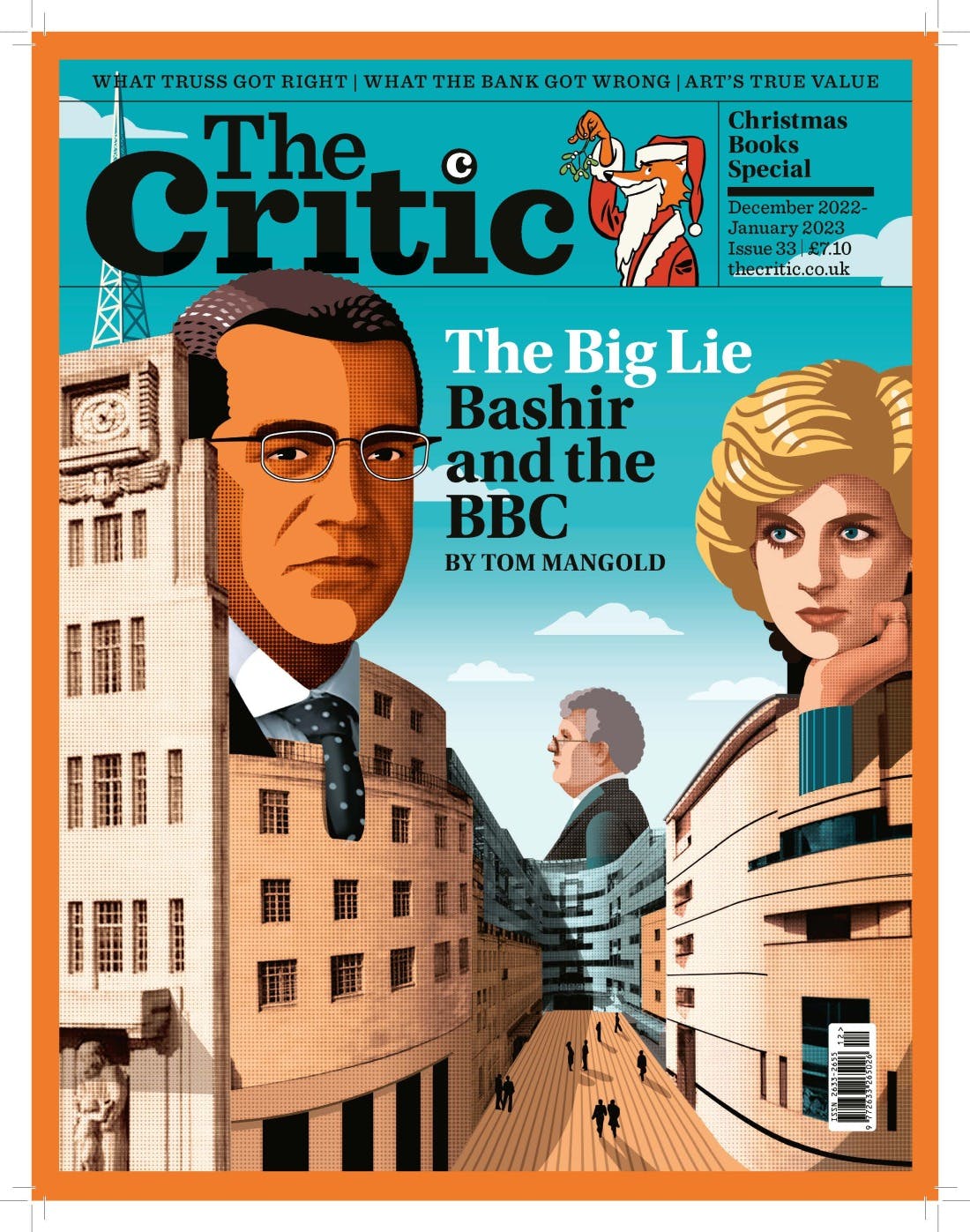
This article is taken from the December/January 2023 issue of The Critic. To get the full magazine why not subscribe? Right now we’re offering five issues for just £10.
I very much like antelope, the new installation on Trafalgar Square’s Fourth Plinth which sets the Malawian anti-colonial rebel John Chilembwe face-to-face with those full-blooded heroes of empire Nelson, Napier and Havelock. It echoes the tradition of conciliatory statue pairings found elsewhere in London, from Cromwell and Charles I to Churchill and Gandhi.
It is the work of Samson Kambalu, a professor of contemporary art at Oxford, and was chosen in the wake of Black Lives Matter and the toppling of Edward Colston as an obvious salvo in the culture wars. However, in a surprising gesture, Kambalu has actually set two statues on the plinth. The second is of a British missionary, John Chorley, who was Chilembwe’s friend, but here stands for more than that. Men like him eradicated slavery from Malawi, brought stability to the region, and then devoted their lives to its improvement. Antelope invites honest discussion of this complex period: there are two sides to every story, Chilembwe and Chorley together remind us.
Unfortunately, media commentary — perhaps taking a lead from the official guide to the statues — peddle the same clichés and misinformation that this is a story of black and white, good and evil, and another reason to disparage Britain’s past.
Reading any of them, you would conclude that Chilembwe’s 1915 rebellion tapped into widespread discontent in colonial Malawi. The evidence does not support that assumption. Chilembwe was an exceptional figure, in many ways ahead of his time. Despite ten years of fomenting unrest, he succeeded only in inciting a few hundred followers to rebel. More indigenous people welcomed — or even participated in — efforts to suppress the rising than ever joined Chilembwe.
Chilembwe was remembered for his courage and defiance, but his methods were not emulated
The British were not only tolerated in Malawi; for a long time they enjoyed considerable loyalty from the local population. Before they established a protectorate in 1891, the region was at the heart of the vast Indian Ocean slave trade. Its peoples had been predated upon for centuries by Arabs, their Islamised African accomplices and, latterly, marauding tribes of the Zulu diaspora, and the Portuguese. With very little force, the British established peace and extirpated slavery, mainly through the efforts of missionaries. The memory of all this was still fresh when Chilembwe launched his rebellion. Indeed his own mother had been a slave, his father her captor.
With peace and stability, there emerged an immense appetite for education, which the missionaries fed at institutions of astonishing ambition. For a period, Malawi had one of the best-educated populations on the continent, and an explicit goal throughout was to equip the country with leaders of its own. These soon emerged, conscientious men and women who worked peacefully towards independence, achieved in 1964. These pioneers have often been overshadowed by Chilembwe’s flash in the pan.
Chilembwe was remembered for his courage and defiance, but his methods were not emulated. Veneration came in the post-colonial period, when sanguinary heroes were in demand. Even then, the praise of Malawi’s notorious and eccentric president Hastings Kamuzu Band was faint: during his 30-year rule, Chilembwe was commemorated with a postage stamp. Only after Banda’s downfall in 1994 did “Chilembwe Day” become a national holiday, as Malawi’s new government looked for ways to supplant the cult of the old regime.
Is Chilembwe then undeserving of our attention? On the contrary, his story is highly instructive, but it is dark and ambiguous, quite unlike the simplistic fable that has recently been propagated.
Chilembwe’s career began as the servant and protégé of Joseph Booth, an itinerant English born-again Christian, who evangelised as a pacifist, anti-colonialist missionary. Booth claimed to have coined the phrase “Africa for the Africans”; he also introduced Chilembwe to a millenarian American church that claimed the Day of Judgement would occur in 1915.
Livingstone was decapitated in front of his wife and children
Booth took Chilembwe to the United States, where they were both feted by Black American churches, and Chilembwe was sponsored to study in a Baptist seminary. When he returned to Malawi two years later as a minister, he clearly felt a sense of alienation. His radical ideas put him at odds with colonial society and also with his own “benighted” people, of whom he often wrote with disdain. As he contemplated marriage, he observed that “the ordinary African woman in her heathen state is ignorant, uninteresting, and unlovable”. (His wife Ida seems to have been of mixed Portuguese and African heritage.)
Chilembwe founded his own mission and, for a time, prospered. Some European missionaries were suspicious and contemptuous of his efforts, but others were supportive. Even his sermonising against white society was tolerated for over a decade until the Germans invaded from Tanzania in 1914. When Chilembwe denounced the British war effort, the government decided to deport him, and it was then that he incited his congregation to rebellion.
His followers attacked the homes of two plantation managers and an arms depot in the nearby town. In total, they killed two local Malawians and three Europeans.
One of the victims was William Jervis Livingstone, a neighbour with whom Chilembwe had long feuded, and whom he identified in his sermons as the Antichrist. Livingstone was decapitated in front of his wife and children, and his head set on a pole, beneath which Chilembwe conducted a church service the next day.
The rebels later attacked a nearby mission, but found it evacuated except for one priest who had stayed behind to tend a sick child. They tried to stab him to death, but he recovered from his wounds. Within a few days, government forces regained control and the rebellion petered out. Chilembwe fled into the forest, where he was shot dead by askaris. A total of 46 of his followers were later executed, and 300 received prison sentences. Life then went on much as before.
In an otherwise detailed discussion, the official guide to the statues mentions none of this. Nor does it note that Chilembwe appealed to the Germans for alliance shortly before his death, but this is important. Ten years previously, the Germans had suppressed an uprising in their vast colony to the north by killing perhaps as many as 300,000 people. “Maji Maji” was a massive rebellion that united disparate tribes against a regime that was universally detested. Chilembwe’s was nothing of the sort.
The rebels in Malawi experienced oppression mainly through a system of labour extortion called thangata. White settlers — many of whom had acquired land dishonestly — offered tenancy to Africans in exchange for labour. Once installed, the terms were twisted, corporal punishment was commonly administered, and workers faced eviction if they did not comply with landowners’ demands. It was so cruel and exploitative that one missionary denounced it as “the yoke of a new slaver”.
Yet it was importantly different from the slavery that preceded it. Europeans took some of the best land for themselves, but only a small proportion of the whole. The country did not become a settler colony like Kenya or Rhodesia.
We cannot be really sorry for what was done unless we know the truth of it
The predominant shortage was of labour, not of land, and while workers endured appalling hardships, they could exercise some choice. Most labourers on white-owned estates were economic migrants from neighbouring Mozambique, who continued to “vote with their feet” long after Chilembwe’s rebellion. “This place is wonderful” ran the refrain of a popular song from the period, which was still being sung into the 1980s, in memory of conditions under British rule. Nevertheless many were treated badly, and it was from this unsettled and misused population that Chilembwe drew mos 2212 19 Feat Moynihan t of his support.
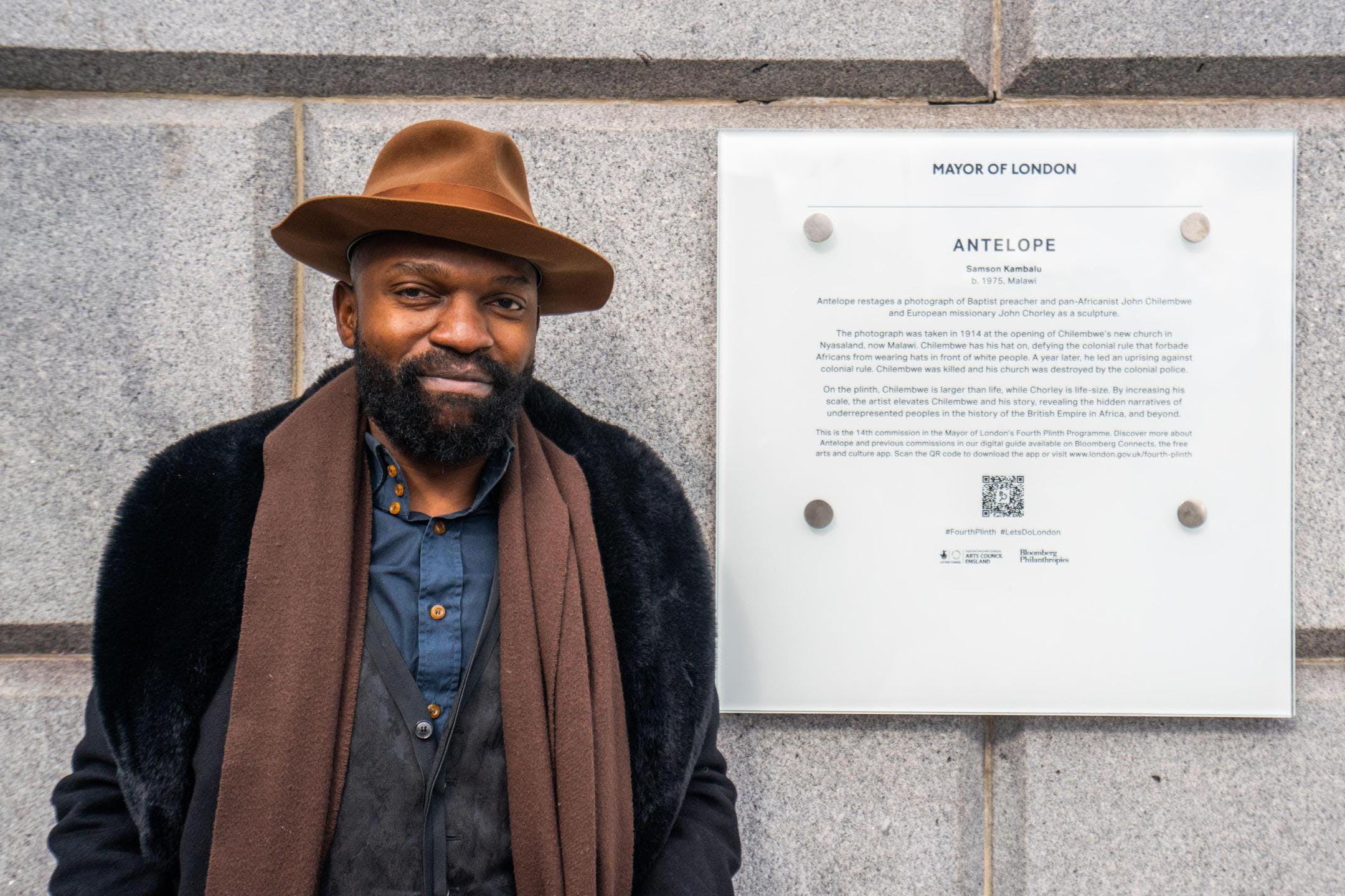
Kambalu’s statues are intended to “reveal the hidden narratives of under-represented peoples”, insists the plaque appended to the plinth by the Mayor of London’s team. And it is an excellent thing to be reminded of John Chilembwe, and the racism and rapacity which he opposed. But there are other under-represented people in this story, most notably the missionaries. So many sacrificed their lives for the betterment of the region, but few in Britain remember them today.
Charles mackenzie was buried in a hastily dug grave following a disastrous early attempt at armed confrontation with the slavers. His successors operated mainly through a heroic appeal to better nature.
William Johnson was an Oxford graduate who spent his whole life wandering the shores of Lake Malawi, preaching peace on earth and goodwill to all men, patiently winning the trust of hostile tribes. David Clement Scott championed the indigenous culture, fostered African church leaders, and fought white settlers for the rights of local people. He lost his wife, brother and young son to fever, before dying himself.
Robert Laws, the son of an Aberdeen cabinet maker, insisted on the highest possible education being offered to Africans. His Overtoun Institute produced independent-minded graduates who shaped politics not just in Malawi, but throughout southern Africa.
Not under-represented but misrepresented is John Chorley, a friend to Chilembwe, and by all accounts a decent man. Little else is known about him, but the official guide to the statues claims that he only supported Chilembwe for money. There is no evidence for this, and the story on which it is based actually relates Chorley’s surprise when Chilembwe offered him his congregation’s collection to help with repairs on his church. It is a trivial detail, but the distortion is dishonest and malevolent, and diminishes the authority of Kambalu’s work.
Chilembwe and Chorley are shown wearing hats, which Kambalu (in his otherwise excellent autobiography The Jive Talker) has claimed was illegal for Africans in colonial Malawi. When I challenged him on this via Twitter, he conceded that it was not illegal but “forbidden”: many whites insisted that Africans remove hats in their presence. Within a few hours of our exchange, the BBC’s article on the statues was quietly changed to reflect this.
Hats were certainly a contentious issue, and commissioners at the official enquiry into the rebellion were bewildered that so many witnesses raised the subject. Some of their stories are harrowing: prosperous, educated Malawians who sought to emulate the style of their white counterparts by dressing formally often found themselves laughed at and abused. Some had been threatened with violence and insulted with the worst racist slurs for not removing their hats.
It was pointed out that Africans had recourse to law if they were mistreated in this way. But clearly it did not work in practice. The veteran Scots missionary Alexander Hetherwick pointedly averred that black and white should both raise their hats “because it shows two gentlemen have met and not just one”. But his view was not shared by everyone; nastiness and belittling were widespread.
The situation was worse than illegality, Kambalu commented in his exchange with me, and he may well be right. But that is all the more reason to report the facts accurately. It seems worth asking which is worse, a society that enshrines racism in petty legislation, such as apartheid South Africa, or one where it lurks insidiously under the radar, as in colonial Malawi?
The real damage of colonialism, Frantz Fanon famously argued, was psychological, and the hats issue is an interesting example of this. The British were respected, but when Malawians tried to emulate them, their efforts were spat back in their faces. That is a story of racism far more compelling than the unnecessary fabrications that have been circulated.
We cannot be really sorry for what was done unless we know the truth of it. But ideologues dislike the truth because it often throws up something inconvenient, like a shared history that might arouse pride as well as shame. So instead we get caricatures, which feed our undeserved sense of superiority over the past. Kambalu’s thoughtful, generous work deserves better than this.
Try five issues of Britain’s newest magazine for £10