We asked Michigan teachers what books they’re assigning in class

What books are Michigan teachers assigning?

The Detroit Free Press asked Michigan educators across the state about the books they’re assigning in class, and the significance of those books. Here’s how they answered: 

Mong Quynh Nguyen, 13, of Brownstown Township works on math Feb. 10 in Maryna Hedeen's English learning classroom. Hedeen is from Ukraine and was inspired to start a book club called Beyond Esperanza, looking to teach books that talk about the immigrant experience in America.

More:Demand is high from Michigan teachers for more window, mirror books: What they are

“The Hate U Give” by Angie Thomas

Name: Angela Maio

School: Covenant House Academy East, Detroit 

Why: “(It) gives perspective from African Americans in real-time situations on what some of our kids are seeing on social media. Must read.”

“Bloodchild” by Octavia Butler

Name: Chris Jones

School: Success Virtual Learning Centers of Michigan

Why: “This is actually a short story: ‘Bloodchild’ by Octavia Butler. Although Ms. Butler wrote many great novels, this story seems to capture the attention and imagination of high school students.”

"The House on Mango Street," by Sandra Cisneros

“The House on Mango Street” by Sandra Cisneros

Name: Kim Sawyer

School: Edwardsburg Public Schools, Edwardsburg

Why: “‘The House on Mango Street’ by Sandra Cisneros is a poetic vignette with coming of age theme offering glimpses of insight, growing pains, triumph, understanding, and especially a love for family/community/self.” 

“We Are Water Protectors” by Carole Lindstrom and illustrated by Michaela Goade

Name: Nichole Biber

School: Robert L. Green Elementary School, East Lansing

Why: “I take care of the library at Robert L. Green Elementary School in East Lansing. For the children, I love to read ‘We Are Water Protectors,’ which was also last year’s Caldecott Winner. I so very much appreciate how this book places our indigenous traditions (I am a tribal citizen of the LTBB Odawa) as a contemporary reality, underscoring how our activism in defense of water and life is inseparable from our commitment to cultural and spiritual teachings and practices.” 

“I am enough” by Grace Byers

Name: Theresa Coleman

School: Not specified 

Why: “My favorite book to read is ‘I am enough’ by Grace Byers. This book is full of positive affirmations. It also sends the message of acceptance of others even if they are different than you are.” 

“Shades of Black” by Sandra and Myles Pinkney

Name: Janet Bohn,

School: Coleman Elementary School, Coleman

Why: “One of the reasons I love this picture book is that it helps children and myself discover that black is not black, it can be ivory all the way to ebony.  So that we can start the discussion that everyone has a different shade of color – be it hair, eyes, or skin.  I think it is a great beginner book. I also use it in my Kinder and first grade classroom.” 

“Bud, Not Buddy” by Christopher Paul Curtis

Name: Julie Brehmer

School: Literacy consultant with Michigan Department of Education

Why: “I love ‘Bud, Not Buddy’…The students thought it was so great that he’s a Michigan author!” 

“Amazing Grace” by Mary Hoffman

Name: Traci Elizabeth Teasley

School: Michigan Department of Education

Why: “I always read ‘Amazing Grace’ by Mary Hoffman to my first and third grade students to teach self-confidence and dispel stereotypes of what African American and young girls can do.” 

“When Stars are Scattered” by Victoria Jamieson

Name: Taylor Sandweg

School: Dearborn Public Schools, Dearborn

Why: “I am a fifth grade teacher in Dearborn. I have the bilingual fifth grade section, meaning all of the newcomers to the country, voluntary or refugee, come to my classroom. This year we were so fortunate to have been able to purchase several copies of and read ‘When Stars are Scattered’. This true story was near to everyone’s hearts for a few reasons.

One, the characters are Muslim and talk about Islam and say some Arabic words, which although the options are increasing, is still an underrepresented population in popular children’s literature. Two, the characters are refugees, fleeing a war in Somalia, which many of my students were able to relate to the war in Yemen, or their own refugee experience. And finally, it’s a graphic novel! I feel so fortunate that amazing, true stories such as this one are being written for kids.” 

“Fahrenheit 451” by Ray Bradbury and “Twelve Angry Men” a play by Reginald Rose

Name: Mark Palise

School: Dearborn High School, Dearborn

Why: “My seniors will be reading ‘Fahrenheit 451’ and ‘Twelve Angry Men. Why those books? Because they were written by a pair of prophets in the 50s and couldn’t be more relevant today.” 

“The Boy Who Harnessed the Wind” by William Kamkwamba was chosen for the 2022 Sarasota One Book, One Community program.

“The Boy Who Harnessed the Wind” by William Kamkwamba and Bryan Mealer

Name: Allison Wolski

School: Bryant Middle School, Dearborn

Why: “All my classes love to read! One of the books we read together this year was: ‘The Boy Who Harnessed the Wind’ by William Kamkwamba and Bryan Mealer. William’s memoir tells of a story of courage and perseverance in Malawi! It was an instant classic book and the students loved discussing it!”

“Seedfolks” by Paul Fleiscman and “Aaron’s Gift” by Myron Levoy 

Name: Josh Melvin

School: Stout Middle School, Dearborn

Why: “My 6th graders at Stout Middle School read ‘Seedfolks by Paul Fleiscman’ as a class to begin the year.  I focused on this because it has themes of people from different cultures coming together in one neighborhood for a common purpose.  What better way to start the year with kids from four elementaries all becoming Stout Falcons?

From our textbook, we also read ‘Aaron’s Gift,’ by Myron Levoy.  It’s the story of a boy seeking to fit in, who endangers himself and his pet.  It mirrors his grandmother’s experience with Cossack Pogroms at the turn of the 20th century.  The 10-year-old protagonist learns lessons about peer pressure, standing up for what’s right, and how to sacrifice to protect the vulnerable.

In addition, students have required reading during class and for homework in a book of their choice. Many students this year are loving the ‘InvestiGators’ series, ‘The Babysitters Club,’ and classics like ‘A Child Called It’ and prolific authors like J.K. Rowling, Alan Gratz, and Lauren Tarshis.” 

“Legend” by Marie Lu

Name: Derrick Borg

School: Bryant Middle School, Dearborn

Why: “Our seventh graders will be reading a novel called ‘Legend’ by Marie Lu in the spring. We’ve read it as a class novel over the last several years and our kids love it… The plot is great, the characters are fun, and it has some plot twists.” 

“Shiloh” by Phyllis Reynolds Naylor, “Because of Winn Dixie” by Kate DiCamillo and “The Lion, the Witch and the Wardrobe” by C.S. Lewis

Name: Alia Jaber

School: Henry Ford Elementary School, Dearborn

Why: “I really felt like the students missed out on a lot of great books over the last two years. There are some books (classics) that should be read in elementary school.

I decided to get the students excited about these texts… Some books we have read together are: ‘Shiloh,’ ‘Because of Winn Dixie’ and we will start ‘Narnia: The Lion Witch and the Wardrobe.’ Students are reading on their own books like: ‘Call of the Wild,’ ‘Black Beauty,’ ‘Dear Mr Henshaw,’ ‘Frindle,’ and ‘Magic Tree House.’”

“To Kill a Mockingbird” by Harper Lee

Name: Jenny Nate

School: Niles High School, Niles

Why: “My favorite book to assign is Harper Lee’s ‘To Kill a Mockingbird’ and free-choice novels. I love ‘To Kill a Mockingbird’ because the themes and characters are timeless. The book encompasses adventure, struggles, coming of age, prejudices (various types including race, religion, gender, socioeconomic, family history, demographics, etc.), friendship, trust, socioeconomic challenges, relationships, loyalty, trust, good vs. evil, love, religion, and offers a plethora of positive lessons.

The characters are believable, vulnerable, authentic, and relatable. Novel discussions generated by the themes and plot in this book give us a safe platform in our classroom to discuss challenges from that time period that we all still face today. This also offers my students an opportunity to listen to various voices and perspectives on the topics and issues raised so that we can all continue to learn and grow in the same ways as the novel’s dynamic characters. Then, we reflect and share our own thoughts, experiences, and ideas on the topics.

Over the past 19 years, my students’ reactions to the text have been positive, emotional, and passionate. They make personal connections to many of the characters and themes, and I am impressed at their ability to respect each other’s comments and take-aways as we work our way through the novel together.” 

“The Outsiders” by S.E. Hinton and “Romeo & Juliet” by William Shakespeare 

Name: Teresa Harrington

School: Harbor Lights Middle School, Holland 

Why: “I love teaching ‘The Outsiders’ to my English 8 students because they are immediately drawn into the conflicts.  I seldom have discipline problems in my room during this unit because the students are eager to find out what happens next and interact with the text.  Especially poignant is Ponyboy’s recitation of ‘Nothing Gold Can Stay’ with its layers of symbolism that speak volumes regarding the theme of the novel.  

I also enjoy teaching ‘Romeo & Juliet’ to my ninth grade English class because it teaches my advanced readers to think about their reading strategies again. Besides, it gives me a chance to share ‘Mrs. Harrington’s Dating Tips 101’ which usually brings groans and eye rolls and nervous giggles. We end the unit with a eulogy activity during which the students practice point of view and get wildly creative paying respects to the dearly departed in the text.

In both texts, students enjoy arguing various points of view. They learn to see a situation from multiple angles and how our actions impact others.

It doesn’t really surprise me, but I never fail to be awed by their ability to personally connect with the text.  Students at the 8th grade level have a strong sense of justice. They can get very critical about character motivations and like to consider other ways to resolve the conflicts.”

"The Giver" by Loid Lowry

“The Giver” by Lois Lowry

Name: Lee Schopp

School: Harbor Lights Middle School, Holland 

Why: This is a great book about rules a government creates trying to create a perfect society. In the unit, we discuss that rules and rituals can’t create a perfect society because people aren’t perfect and can’t be controlled. There are many parallels to this text and our current world climate (government, pandemic, responses in situations, etc). 

Students have great reactions and strong opinions. We have great discussions regarding what rules and laws are good. We also discuss a lot about what equality means compared to fair.” 

“Their Eyes Were Watching God” by Zora Neale Hurston, “The Hate U Give” by Angie Thomas, “The 57 Bus” by Dashka Slater, “I’m Not Your Perfect Mexican Daughter” by Erika Sánchez, “The Great Gatsby” by  F. Scott Fitzgerald and “American Street” by Ibi Zoboi

Name: Margaret Grossnickle

School: Kettering High School, Waterford Township

Why: “My favorite book to work through with students is ‘Their Eyes Were Watching God.’  The language is rich and deep and beautiful; every year students discover a new layer to the text as they analyze the language.  It is a book that engages students as it immerses them in a time period and culture different from their own, but also is so relatable in the way that Janie fights for the things every human wants: love, independence, and a sense of belonging.  When I taught language arts for juniors, my favorite unit was one focused on the American Dream and the ways that people strive to achieve that dream for themselves and others. It was a literature circle unit and students were able to choose between books like ‘The Hate U Give,’ ‘The 57 Bus,’ ‘I’m Not Your Perfect Mexican Daughter,’ ‘The Great Gatsby,’ and ‘American Street.’ This unit sparked more meaningful conversations than any other texts I taught.  Students were engaged in the stories of the characters and invested in learning about different communities and the challenges that are faced in the quest for the lifestyle that so many Americans desire.” 

“Ghost Boys” by Jewell Parker Rhodes

Name: Stephanie Hampton

School: Maple Street Magnet School for the Arts, Kalamazoo

Why: “Currently, my sixth-grade class is reading ‘Ghost Boys’ by Jewell Parker Rhodes…  I also frequently recommend this book to other teachers, students, and families. ‘Ghost Boys’ follows the mantra ‘Only the living can make the world better. Live and make it better’… You finish the book having a sense of direction. You know where to go from here. Young readers are pulled to this book again and again as they begin to contextualize and understand big society issues like racism, police brutality, and coming to terms with the past to reconcile with the present.” 

“Fences” by August Wilson

Name: Jeff Kass

School: Pioneer High School, Ann Arbor 

Why: “I give students lots of reading time to read books of their choosing, but also do teach whole class works. At the moment, we’re reading August Wilson’s play ‘Fences,’ which is one of my favorite things to teach because it focuses on family dynamics, father-son relationships, and forgiveness. I also enjoy teaching Bernard Malamud’s ‘The Natural’ and William Golding’s ‘Lord of the Flies.'” 

Contact Lily Altavena: laltavena@freepress.com or follow her on Twitter @LilyAlta.

Source

18 Inspiring Documentaries on Food and Agriculture

Food Tank is highlighting 18 feature-length documentaries and shows to excite and inspire eaters. Dig into the story behind some of your favorite chefs, learn about the importance of regenerative farming practices, or watch a series that takes a new look at culinary traditions. These films provide new perspectives on food that is both educational and entertaining. And with coverage of award-winning chefs, authors, filmmakers, and activists, there’s something for everyone.

1. André & His Olive Tree

André & His Olive Tree follows the famed Taiwan-born chef, André Chiang. In 2018 Chiang made the decision to close his esteemed restaurant, Restaurant André, shocking his staff, family, friends, and the greater culinary world. The film follows Chiang as he walks away from the Michelin-star restaurant he dedicated his life to and captures the chef’s perspective on what it means to be successful. Watch it on Netflix.

2. Breakfast, Lunch and Dinner

David Chang, the American chef, author, and food critic hosts a four-part documentary series exploring the food culture of cities from Los Angeles to Marrakesh. In each episode, a celebrity chef joins to experience the essence of these food metropoles. This series uncovers surprising aspects of global food while revealing the lives of the hosts themselves. Watch it on Netflix.

3. Flavorful Origins

This documentary series takes viewers on a culinary journey across China. Each season highlights a different region of the country along with that region’s traditional cooking techniques and ingredients. With 12-minute episodes, each dedicated to a single food, the show strives to shed light on the nuances of Chinese cuisine. Watch it on Netflix.

4. Gather

Directed by the James Beard Award winning filmmaker Sanjay Rawal, “Gather” follows Native American individuals working to reclaim their spiritual, political, and cultural identities through food sovereignty. Stories include a chef working to reclaim his tribe’s ingredients and a high school student demonstrating the nutritional significance of buffalo. While the documentary outlines the destruction and historical trauma caused by centuries of genocide, it also tells a story of resilience and innovation. Watch it on Netflix.

5. Generation Growth

Generation Growth tells the story of Bronx educator, Stephen Ritz, and his mission to transform the lives of low-income students across the United States through gardening. Originally launched in the Bronx, Ritz’s indoor gardening curriculum, Green Bronx Machine, expands around the country, teaching students how to grow vegetables in the classroom. Embraced by children of all ages, the program has helped create opportunities for youth, while teaching them about the power of food. Learn how to watch it here

6. High on the Hog: How African American Cuisine Transformed America

In this docuseries, chef and writer Stephen Satterfield tells the history of African Americans’ influence on American cuisine. This four-part series highlights the Black cooks and culinary traditions that have shaped American culture over the last few hundred years. This series is one of the first of its kind to celebrate and share the deep roots of Black culinary histories. Watch it on Netflix.

7. Jeremiah Tower: The Last Magnificent

“Jeremiah Tower: The Last Magnificent” tells the story of chef Jeremiah Tower and his influence on California cuisine in the 1970s. One of the United States’ first celebrity chefs, Tower rose made a name for himself at the legendary restaurant Chez Panisse. Featuring chefs from Martha Stewart to Anthony Bourdain, experts consider Tower’s life, career, and legacy in the culinary world. Watch it on Prime Video.

8. Julia

“Julia” follows the life of famed chef, cooking teacher, author, and TV personality Julia Child. Known for popularizing French cuisine in the United States with her cookbook and television programs, this documentary highlights Child’s influence on American culture, food, and women in the 20th century. Featuring never-before-seen footage and detailing Child’s rise to fame at the age of 50, the film tells the inspiring story of one of the country’s most beloved culinary stars. Watch it on Prime Video.

9. Kiss The Ground

Follow the work of activists, scientists, politicians, and farmers as they strive to tackle the climate crisis through regenerative agriculture practices. This documentary, narrated by Woody Harrelson, looks at the growing interest in agricultural techniques that restore soil health and support the environment. The recipient of 42 awards, “Kiss The Ground” shares powerful insights into the promising potential of soil regeneration. Watch it on Netflix

10. Last Man Fishing

Told through the lens of small-scale fishermen and experts around the United States, Last Man Fishing dives into today’s fishing practices and their effect on the planet. Highlighting the struggle between corporate giants and small family fishers, this documentary questions the ethics of the industrial fishing model. And ultimately, it underscores the importance of conservation and quality in the rapidly changing seafood system. Learn how to watch it here

11. Man in the Field: The Life and Art of Jim Denevan

This documentary profiles the life and artwork of Jim Denevan, founder of Outstanding In The Field. Founded in 1999, Outstanding in the Field is a recurring outdoor dining event series where groups of people come together for a family-style meal on farms, vineyards, beaches, and more. “Man in the Field” offers an exciting account on Denevan’s creative and culinary pursuits through this multifaceted project. Learn how to watch it here

12. Roadrunner: A Film About Anthony Bourdain

In 2018, chef, writer, and television host Anthony Bourdain died by suicide at the age of 61, shocking the culinary world. The documentary film examines Bourdain’s life and career, and features chefs David Chang and Eric Ripert along with members of the production crew on Bourdain’s show “Parts Unknown.” Through interviews and archive footage, “Roadrunner” explores Bourdain’s rise to fame. Learn how to watch it here

13. Street Food

This American documentary series highlights some of the world’s most revered street food along with the history behind each dish and the chefs who prepare it. Volume One focuses on cities across Asia, highlighting popular dishes including banh mi, potato chaat, and okonomiyaki. In Volume Two, the show moves to Latin America, taking viewers to Buenos Aires, Oaxaca, Lima, and more. Combining archival footage with a variety of inspiring face-to-face interviews, “Street Food” sheds light on the influence of street food culture across the globe. Watch it on Netflix

14. Taco Chronicles

Taco Chronicles highlights the rich history and culture behind tacos. Each episode spotlights a different taco, the ingredients that comprise it, and the cultural significance of the dish. Featuring interviews with renowned food writers, food experts, and the chefs themselves, “Taco Chronicles” proves that not all tacos are created equal. Watch on Netflix.

15. The Ants and the Grasshopper

Told through the eyes of Malawian local leader and activist, Anita Chitaya, “The Ants and the Grasshopper” is a documentary about one woman’s fight to save the planet. Making her way from Malawi to California to the White House, Chitaya works to persuade Americans that climate change is real, meeting with climate skeptics and struggling farmers along the way. An award-winning documentary by activist and bestselling writer Raj Patel, “The Ants and the Grasshopper” is a story about one woman’s fight to inspire change on both a local and global level. Learn how to watch it here.

16. The Last Harvest

The Last Harvest details the critical labor shortage that today’s farmers are facing in the United States. The film shares the stories of three family growers and their uncertain futures. Touching on immigration reform, food waste, and the current economic standing of the rapidly growing fresh produce industry in the U.S., this documentary offers a new perspective on the food system. Learn how to watch it here

17. The Wild

Award-winning environmental documentary, “The Wild,” tells the story of Bristol Bay, Alaska’s fight to protect its wild sockeye salmon population. The film examines a mining corporation’s plan to build North America’s largest open-pit copper mine directly in the world’s largest wild sockeye salmon. A follow up to 2014’s “The Breach” documentary, filmmaker Mark Titus’ latest film is an urgent call to action to save a species and an ecosystem. Watch it here

18. Wolfgang

Released in 2021, “Wolfgang” tells the inspiring life story of celebrated chef Wolfgang Puck and his journey to success. Recounting the challenges Puck faced in his early life along with his successes along the way, this documentary film provides a detailed look into the life of one of the world’s most coveted chefs. Watch it on Disney Plus

Articles like the one you just read are made possible through the generosity of Food Tank members. Can we please count on you to be part of our growing movement? Become a member today by clicking here.

Photo courtesy of Jane Smith, Unsplash

Source

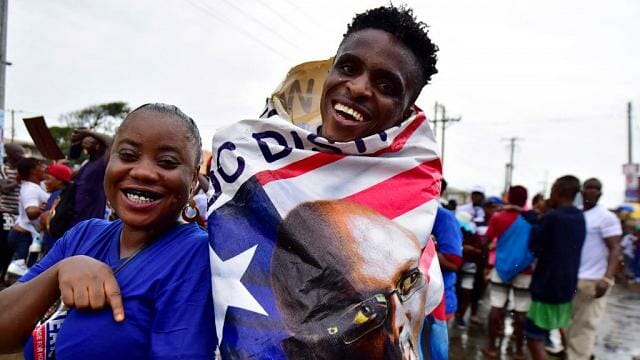
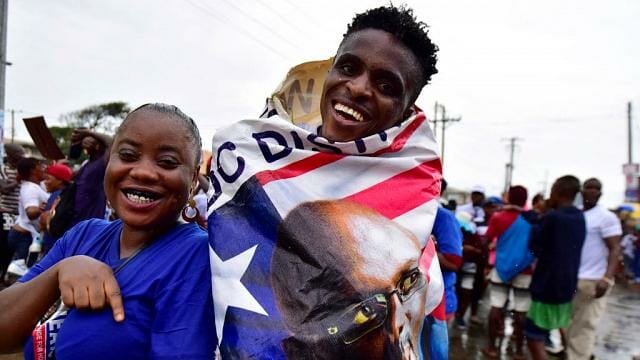
Liberia marks 200 years with a mass rally in the capital, Monrovia

Thousands of Liberians marked the bicentenary of their country with a mass rally in the capital, Monrovia.

Liberia was founded by former US slaves in 1822 becoming the Continent’s first republic in 1847.

US President Joe Biden sent a presidential delegation to take part in the celebrations.

“We have made and endured 200 years of freedom and liberty and self rule and self government. After 200 years… We’re at a crossroads. We have to look at how we are going to lead our African American continent into the next 200 years” said John Henderson, an activist and descendant of freed slaves.

Between 1980 and 2003 the country was involved in a series of civil conflicts that resulted in more than 250 thousand deaths.

“We have a lot of work to do. We have fallen behind from a top producing, national gross domestic product country to the lowest producing, lowest income earning country on the continent with the richest resources. We are confident that we will turn this around” added the activist.

The civil conflicts and and an Ebola outbreak between 2013 and 2016 led the country’s economy to shrink by 90%.

Source: Africanews

The Maravi Post has over one billion views since its inception in December of 2009. Viewed in over 100 countries Follow US: Twitter @maravipost
Facebook Page : maravipost Instagram: maravipost    

NBS Bank Your Caring BankNBS Bank Your Caring Bank

Source

US President Joe Biden will make history by nominating first black woman to Supreme Court

<img data-attachment-id="131321" data-permalink="https://www.maravipost.com/us-president-joe-biden-makes-history-bus-president-joe-biden-will-make-history-by-nominating-first-black-woman-to-supreme-court/joe-biden-sworn-in-as-46th-president-1-2/" data-orig-file="http://www.malawidiaspora.com/wp-content/uploads/2022/01/us-president-joe-biden-will-make-history-by-nominating-first-black-woman-to-supreme-court.jpg" data-orig-size="681,383" data-comments-opened="1" data-image-meta="{"aperture":"0","credit":"","camera":"","caption":"","created_timestamp":"0","copyright":"Copyright 2021 The Associated Press. All rights reserved.","focal_length":"0","iso":"0","shutter_speed":"0","title":"","orientation":"0"}" data-image-title="Joe-Biden-sworn-in-as-46th-president-1" data-image-description data-image-caption="

Joe Biden

” data-medium-file=”https://www-maravipost-com.exactdn.com/wp-content/uploads/2022/01/Joe-Biden-sworn-in-as-46th-president-1.jpg?strip=all&lossy=1&fit=300%2C169&ssl=1″ data-large-file=”http://www.malawidiaspora.com/wp-content/uploads/2022/01/us-president-joe-biden-will-make-history-by-nominating-first-black-woman-to-supreme-court.jpg” src=”http://www.malawidiaspora.com/wp-content/uploads/2022/01/us-president-joe-biden-will-make-history-by-nominating-first-black-woman-to-supreme-court.jpg” alt class=”wp-image-131321″ width=”953″ height=”536″ srcset=”http://www.malawidiaspora.com/wp-content/uploads/2022/01/us-president-joe-biden-will-make-history-by-nominating-first-black-woman-to-supreme-court.jpg 953w, http://www.malawidiaspora.com/wp-content/uploads/2022/01/us-president-joe-biden-will-make-history-by-nominating-first-black-woman-to-supreme-court.jpg 681w, http://www.malawidiaspora.com/wp-content/uploads/2022/01/us-president-joe-biden-will-make-history-by-nominating-first-black-woman-to-supreme-court-2.jpg 300w, http://www.malawidiaspora.com/wp-content/uploads/2022/01/us-president-joe-biden-will-make-history-by-nominating-first-black-woman-to-supreme-court.jpg 190w, http://www.malawidiaspora.com/wp-content/uploads/2022/01/us-president-joe-biden-will-make-history-by-nominating-first-black-woman-to-supreme-court.jpg 381w, http://www.malawidiaspora.com/wp-content/uploads/2022/01/us-president-joe-biden-will-make-history-by-nominating-first-black-woman-to-supreme-court.jpg 571w” sizes=”(max-width: 953px) 100vw, 953px”>

WASHINGTON-(MaraviPost)-US President Joe Biden will honour his electoral promise to make an African-American woman his first nomination to the Supreme Court, the White House has said.

This comes as Biden has been handed the unforeseen opportunity to nominate his own Judge to the US Supreme court after it was revealed on Wednesday, January 26 that liberal justice, Stephen Breyer will retire at the end of the current Supreme Court term in June.

Though Breyer’s retirement plans are yet to be officially confirmed, Biden has already shortlisted possible candidates although Justice Breyer’s replacement would not shift the court’s current 6-3 conservative majority.
 
The Supreme Court plays a key role in American life and is often the final word on highly contentious laws, disputes between states and the federal government, and final appeals to stay executions.
 
Each of the nine judges – known as justices serves a lifetime appointment after being nominated by the president and approved by the Senate. https://a.impactradius-go.com/gen-ad-code/3206106/1187125/5618/

Only two African Americans – both men – have ever served on the court: Justice Thurgood Marshall from 1967 to 1991 and his successor Justice Clarence Thomas, who is set to become the oldest member on the bench at age 73.
 
Ketanji Brown Jackson, 51, a former law clerk to Mr Breyer, is reportedly a top contender for the job.

The last Supreme Court vacancy came in 2020, when liberal Justice Ruth Bader Ginsburg died at age 87. Former President Donald Trump was able to appoint her successor, Justice Amy Coney Barrett, less than two months before the US presidential election. 

“The president has stated and reiterated his commitment to nominating a black woman to the Supreme Court and certainly stands by that,” White House Press Secretary Jen Psaki told a news conference. https://a.impactradius-go.com/gen-ad-code/3206106/1187125/5618/

President Biden and Justice Breyer are to appear together at a news conference on Thursday, January 27 where the retirement will be confirmed.

Source: www.expressiveinfo.com

The Maravi Post has over one billion views since its inception in December of 2009. Viewed in over 100 countries Follow US: Twitter @maravipost
Facebook Page : maravipost Instagram: maravipost    

NBS Bank Your Caring BankNBS Bank Your Caring Bank

Source

5 Ghanaian Actors Making Ghana Proud Through Cinema

We have picked five of the best Ghanian actors who are making Ghana proud in the excerpt below. Some of them are already passing the Hollywood threshold and are seen on the silver screen.

Ghana!

A country in West Africa is making cinemas which every Ghanaian should be proud of. Their cinema portrays the art of acceptance beautifully. With more than 150 feature films, they are showing self-reliance among the African people.

It is no more about being patronized for their art because of their social condition. In fact, after seeing the quality of these films, one could say that they will be able to compete with some of the big guys of the cinema industry worldwide in a few years.

This couldn’t have been possible without the exponential qualities that the actors possess. Some of them are already passing the Hollywood threshold and are seen on the silver screen.

We have picked five of the best Ghanian actors who are making Ghana proud in the excerpt below.

Best Ghanian Actors Making Their Country
Although there are many, we were able to pick the best of the bunch. It was difficult! The PirateBay can help you if you want to watch some of the best Ghanaian films for free after reading this.

1. Abraham AttahThis 14-year-old, who is of a Ghnanina origin, has already penetrated the silver screen of Hollywood and is being presented with all the accolades for his phenomenal acting. His leading role as Agu in ‘Best No Nation’ already won him the Marcello Mastroianni Award for Best Young Actor.

All in all, a god gifted actor who has enough potential to give us some of the greatest hits in Hollywood. Recently he starred in Spiderman- Homecoming and is among the cast of The Modern Ocean.

2. Akosua Busia
The prodigal daughter of the former prime minister of Ghana is making her country with her commendable acting skills!

This actress from Ghanaian descent is now residing in the United Kingdom and is best known for her role in The Colour Purple as Nettie Harris alongside Woopie Goldberg.

She is another gifted actor who had shown her impressive talents from a very young age when she attended London Central School Of Speech & Drama on a scholarship.

Her acting debut was as Juliet in the Romeo & Juliet drama at Oxford University. Now, she is an actress, film director, and even a songwriter.

3. Majid Michel

He is one of the richest Ghanaian actors who is making his country proud with his phenomenal acting skills. Born in Accra with nine other siblings, Michel belongs to a Ghananian and Lebanon descendant.

He found an interest in acting from a very young age and joined his school’s drama club. Some of his awards include Best Actor in Emancipation Day in Cape Coast, Divine Love which gave him much recognition and accolades.

Some of his other movies are Bursting Out, 4 Play, A Sting In Tale, etc.
4. Hugh Quarshie

This Ghanian-born British actor is already making his mark in the British cinema industry. He has been featured in one of BBCs long-running series called Holby City in the role of Ric Griffin.

He has received much attention and made a good impression because of this role. He has appeared in other movies like The Church, Star Wars, Highlander, etc.

Now, he is working on television series and also theatre work since he is part of The Royal Shakespeare Company.

5. Peter Mensah
Not many know this, but Peter Welsh has a Ghanaian origin. He was born in Ghana before he moved to the United Kingdom at a very young age.

He doesn’t need a new introduction as we have already seen him on Tears Of The Sun, Spartacus, and 300. It would be an injustice to talk about his acting skills with just some words, as they are not enough.

So, we would recommend you watch them right away!
Crossing The Country Borders.

Most of these Ghanian actors are crossing the threshold of Ghana and African cinema to also act on the silver screen.

We are sure that they are helping the African American community become more proud of their heritage and origin. This is an uplifting story for any community that has faced racial discrimination in the entertainment industry.

(Visited 43 times, 31 visits today)

Source

As the Pandemic Devastates the Poor, the World’s 10 Richest Have Multiplied their Wealth into Trillions

Featured, Global, Global Governance, Headlines, IPS UN: Inside the Glasshouse, Poverty & SDGs, Sustainability, TerraViva United Nations

In Malawi, some students have been going to school amid the COVID-19 pandemic. Credit: UNICEF/Malumbo Simwaka

UNITED NATIONS, Jan 17 2022 (IPS) – The numbers are unbelievably staggering: the world’s 10 richest men more than doubled their fortunes from $700 billion to $1.5 trillion —at a rate of $15,000 per second or $1.3 billion a day, according to a new study from Oxfam International.


These phenomenal changes in fortunes took place during the first two years of a Covid-19 pandemic that has seen the incomes of 99 percent of humanity fall, and over 160 million more people forced into poverty—60 million more than the figures released by the World Bank in 2020.

“If these ten men were to lose 99.999 percent of their wealth tomorrow, they would still be richer than 99 percent of all the people on this planet,” said Oxfam International’s Executive Director Gabriela Bucher.
“They now have six times more wealth than the poorest 3.1 billion people.”

“It has never been so important to start righting the violent wrongs of this obscene inequality by clawing back elites’ power and extreme wealth including through taxation —getting that money back into the real economy and to save lives,” she said.

According to Forbes magazine, the 10 richest people, as of 30 November 2021, who have seen their fortunes grow, include Elon Musk, Jeff Bezos, Bernard Arnault & family, Bill Gates, Larry Ellison, Larry Page, Sergey Brin, Mark Zuckerberg, Steve Ballmer and Warren Buffet.

The pandemic has hit the poorest people, women and racialized and marginalized groups the hardest. For example, in the US, 3.4 million Black Americans would be alive today if their life expectancy was the same as White people —this is directly linked to historical racism and colonialism, according to the study titled “Inequality Kills” released January 17, ahead of the World Economic Forum’s (WEF) online Davos Agenda.

The report finds that a new billionaire is created every 26 hours while inequality is contributing to the death of at least 21,000 people each day, or one person every four seconds.

Other findings include:

    — The pandemic has set gender parity back from 99 years to now 135 years. 252 men have more wealth than all 1 billion women and girls in Africa and Latin America and the Caribbean combined.

    — During the second wave of the pandemic in England, people of Bangladeshi origin were five times more likely to die of COVID-19 than the White British population. Black people in Brazil are 1.5 times more likely to die from COVID-19 than White people.

    — Inequality between countries is expected to rise for the first time in a generation. The proportion of people with COVID-19 who die from the virus in developing countries is roughly double that in rich countries.

Asked for his comments, Ben Phillips, author of How to Fight Inequality, told IPS the new report “confirms four vital truths about inequality are now proven beyond doubt.

Firstly, inequality kills. Inequality is not just inefficient and unfair. As the data shows, it is deadly.

Secondly, inequality is spiralling. The driving cause is neoliberalism, but it has now been supercharged by the pandemic.

Thirdly, inequality is a political choice. The rise in inequality is not inevitable. Governments can reduce inequality if they decide to do so.

Fourthly, policy-makers will only shift if we make them do so. A reversal in inequality depends on us, ordinary citizens, organizing to push our leaders to make them do their job and put in place the policies that will deliver a fairer, safer, world.”

Striking a hopeful note, Phillips said: “Though the crisis has made inequality even worse and even harder to bear,” he said, “the crisis also, paradoxically, has generated an opportunity for transformational shift to tackle inequality, if we seize this moment”.

“We know the policy mix needed – get the vaccine to everyone by sharing the rights and recipes, drop the debt, expand public services like free health and education, raise up ordinary people’s wages and worker’s rights, tackle discrimination, put money in the hands of ordinary people, and properly tax, and restrain the economic and political power, of big corporations and the super-rich.”

Change depends on ordinary people, Phillips said. “The myths of equal opportunity and rising tides have been busted, but the truth alone will not set us free. Left to itself, the rigged economy will continue to worsen inequality. Left to themselves, politicians will allow it, even enable it, to do so.

Only pressure from below can secure a reversal of rising inequality. The good news is that around the world, frustration is increasingly being channelled into a resurgence of organizing that has potential to shift the balance of power.

Unions, community organizations, women’s groups, progressive faith organizations and social movements are standing up and standing together. This is the source of hope. This is our chance – if enough people join in. Inequality defines this moment but need not be our fate,” declared Phillips.

According to the Oxfam report, billionaires’ wealth has risen more since COVID-19 began than it has in the last 14 years. At $5 trillion dollars, this is the biggest surge in billionaire wealth since records began. A one-off 99 percent tax on the ten richest men’s pandemic windfalls, for example, could pay:

    — to make enough vaccines for the world;
    — to provide universal healthcare and social protection, fund climate adaptation and reduce gender-based violence in over 80 countries;
    — All this, while still leaving these men $8 billion better off than they were before the pandemic.

“Billionaires have had a terrific pandemic. Central banks pumped trillions of dollars into financial markets to save the economy, yet much of that has ended up lining the pockets of billionaires riding a stock market boom. Vaccines were meant to end this pandemic, yet rich governments allowed pharma billionaires and monopolies to cut off the supply to billions of people. The result is that every kind of inequality imaginable risks rising. The predictability of it is sickening. The consequences of it kill,” said Bucher.

Extreme inequality is a form of economic violence, where policies and political decisions that perpetuate the wealth and power of a privileged few results in direct harm to the vast majority of ordinary people across the world and the planet itself.

Oxfam recommends that governments urgently:

    — Claw back the gains made by billionaires by taxing this huge new wealth made since the start of the pandemic through permanent wealth and capital taxes.

    — Invest the trillions that could be raised by these taxes toward progressive spending on universal healthcare and social protection, climate change adaptation, and gender-based violence prevention and programming.

    — Tackle sexist and racist laws that discriminate against women and racialized people and create new gender-equal laws to uproot violence and discrimination. All sectors of society must urgently define policies that will ensure women, racialized and other oppressed groups are represented in all decision-making spaces.

    — End laws that undermine the rights of workers to unionize and strike, and set up stronger legal standards to protect them.

    — And rich governments must immediately waive intellectual property rules over COVID-19 vaccine technologies to allow more countries to produce safe and effective vaccines to usher in the end of the pandemic.

Download the “Inequality Kills” report and summary and the methodology document outlining how Oxfam calculated the statistics in the report.

Oxfam’s calculations are based on the most up-to-date and comprehensive data sources available. Figures on the very richest in society come from Forbes’ 2021 Billionaires List. Figures on the share of wealth come from the Credit Suisse Research Institute’s Global Wealth Databook 2021. Figures on the incomes of the 99 percent are from the World Bank.

  Source