An African-American socialite by the name of Tatiana has reportedly died just 10 days after her wedding ceremony while she was on a honeymoon with her husband.
According to reports, Tatiana was said to have traveled to Cameroon to fast track her wedding with her boyfriend but unfortunately died just ten days after the wedding ceremony.
Friends of Tatiana revealed that she had complained of a stomach ache before giving up the ghost a few hours later. Her death has shaken social media as all eyes were on her and her spouse for holding what many describe as one of the plush weddings for 2021.
An African-American socialite by the name of Tatiana has reportedly died just 10 days after her wedding ceremony while she was on a honeymoon with her husband.
According to reports, Tatiana was said to have traveled to Cameroon to fast track her wedding with her boyfriend but unfortunately died just ten days after the wedding ceremony.
Friends of Tatiana revealed that she had complained of a stomach ache before giving up the ghost a few hours later. Her death has shaken social media as all eyes were on her and her spouse for holding what many describe as one of the plush weddings for 2021.
See her wedding photos below:
In other news, Ghanaian media personality and business mogul, Deloris Frimpong Manso, affectionately known as Delay has come out with a clearer yet hilarious explanation as to why she always has trust issues.
Trusting is a decision you must make knowing there are never any guarantees that you won’t feel this way again in the future. Trust happens to be one of the most-priced values in life, hence it is very difficult for one to give it out completely.
Trusting people too much makes you vulnerable, but on the flip side, not trusting people enough makes cooperation difficult or impossible and also severely harms your odds of building meaningful relationships with people.
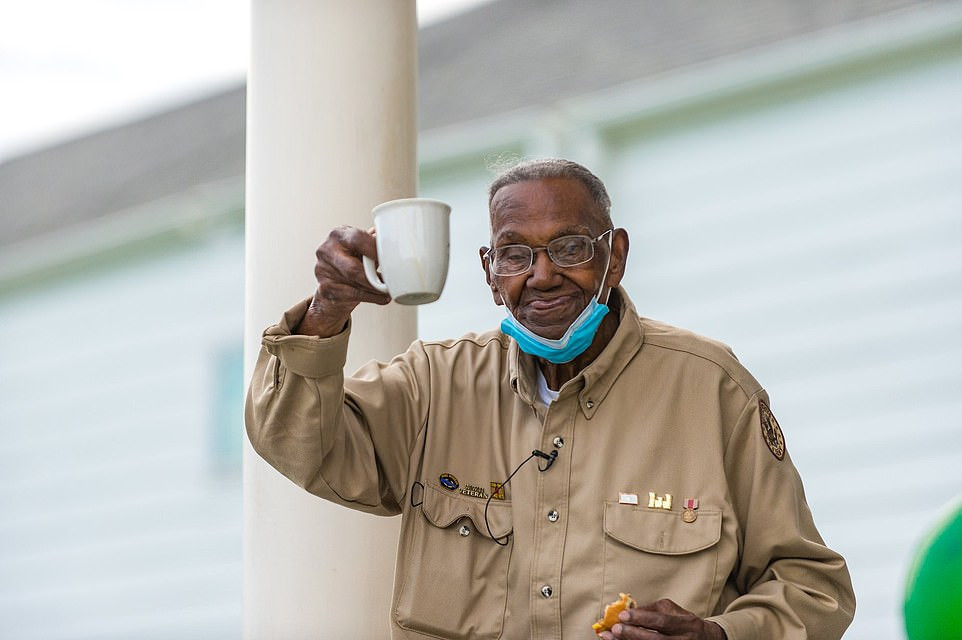
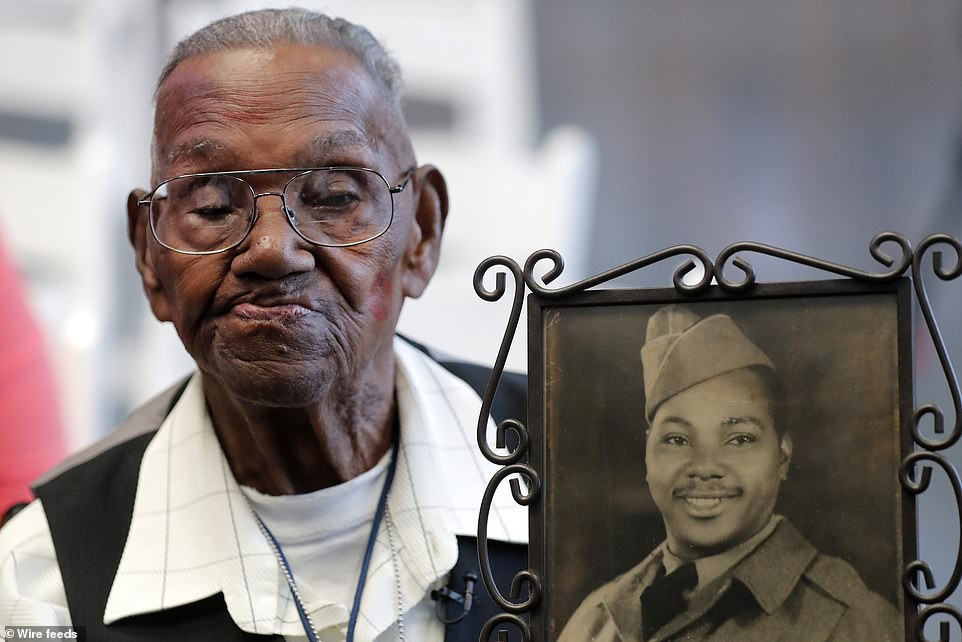
Lawrence Brooks, the oldest surviving World War II veteran, who served in a segregated Army unit in the South Pacific in the 1940s has died.
He died in his New Orleans home Wednesday morning, January 5, 2022 at the age of 112.
While in service, Lawrence N. Brooks was part of the mostly black 91st Engineer General Service Regiment, which built roads, hospitals and housing in places like Horn Island, Papua-New Guinea and the Philippines, according to Military Times.
He was drafted in 1940 at the age of 31. Even though he never saw combat, he worked as a driver and cook for his white officers. Most African Americans serving in the segregated US armed forces at the beginning of World War II were assigned to noncombat units and relegated to service duties, such as supply, maintenance and transportation, said Col. Pete Crean, vice president of education and access at the museum in New Orleans.
‘The reason for that was outright racism – there’s no other way to characterize it,’ Crean added.
The National WWII Museum announced his death and it was confirmed by his daughter and caregiver, Vanessa Brooks. He is survived by five children, 13 grandchildren and 32 great-grandchildren.
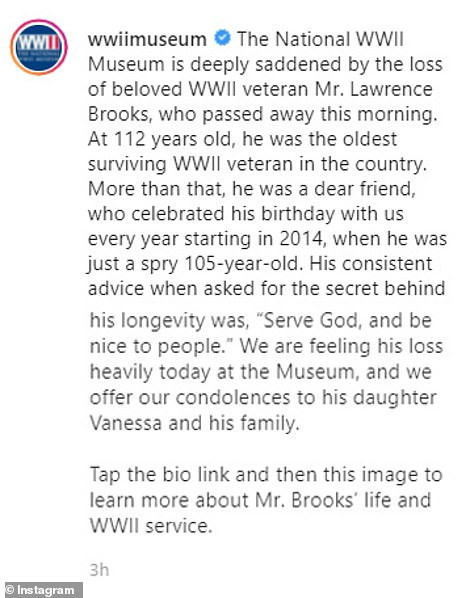
‘At 112 years old, he was the oldest surviving WWII veteran in the country,’ the museum wrote on Instagram.
‘More than that, he was a dear friend, who celebrated his birthday with us every year starting in 2014, when he was just a spry 105-year-old.
‘His consistent advice when asked for the secret behind his longevity was, “Serve God, and be nice to people.”‘
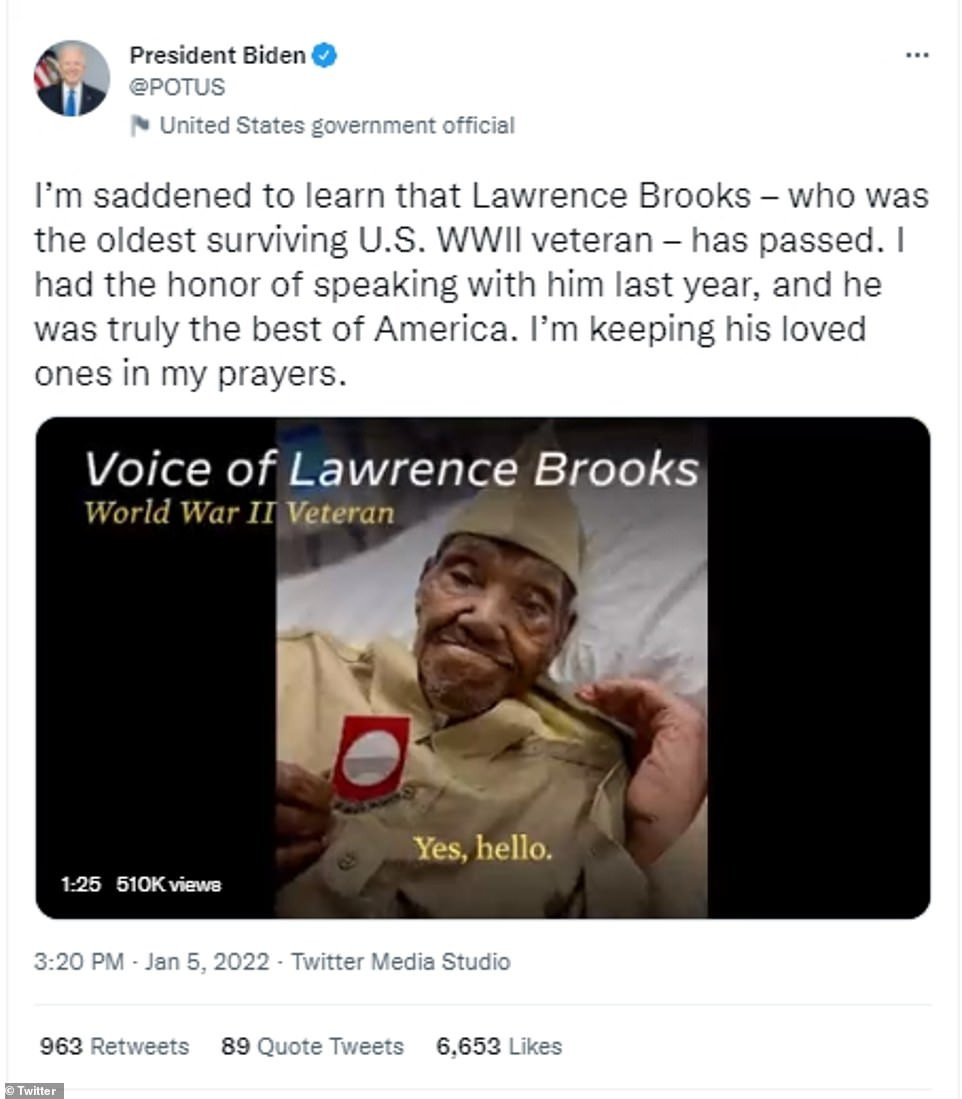
US president, Joe Biden also tweeted a tribute to Brooks, writing;
‘I had the honor of speaking with him last year, and he was truly the best of America. I’m keeping his loved ones in my prayers.’
The Maravi Posthas over one billion views since its inception in December of 2009. Viewed in over 100 countriesFollow US: Twitter @maravipost
Facebook Page : maravipost Instagram: maravipost
FILE – In this June 25, 2021, file image taken from pool video, former Minneapolis police Officer Derek Chauvin addresses the court as Hennepin County Judge Peter Cahill presides over Chauvin’s sentencing at the Hennepin County Courthouse in Minneapolis. Chauvin pleaded guilty Wednesday, Dec. 15, to a federal charge of violating George Floyd’s civil rights, admitting for the first time that he kept his knee on Floyd’s neck, resulting in the Black man’s death. Chauvin was convicted earlier of state murder and manslaughter charges in Floyd’s May 25, 2020, death.
Court TV via AP, Pool, File
After 2020 became a year of racial reckoning with the public killing of George Floyd and the protests of injustices against Black people, 2021 offered what can best be described as a follow-up year — a continuation of some familiar story threads with other new ones emerging.
Derek Chauvin, the former police officer who killed Floyd, was convicted of murder. Three men in Georgia were convicted in the killing of Ahmaud Arbery. A white gunman in Atlanta killed eight people, six of Asian descent. The movement to identify and reckon with structural racism rolled forward. And as local and state governments grappled with the removal of statues of racist historical figures, local school boards fought over how to teach the uneasy history of racism in the United States.
FILE – Ahmaud Arbery’s mother, Wanda Cooper-Jones his hugged by a supporter after the jury convicted Travis McMichael in the trial of McMichael, his father, Greg McMichael, and neighbor, William “Roddie” Bryan, Wednesday, Nov. 24, 2021, in the Glynn County Courthouse in Brunswick, Ga. The three defendants were found guilty Wednesday in the death of Ahmaud Arbery.
AP Photo/Stephen B. Morton, Pool, File
Against this backdrop, AP’s Race and Ethnicity team tried to capture the story both in sweep and in painstaking detail. Here, some AP journalists from that team involved in the coverage reflect on some of the year’s stories and how journalism handles the coverage of race.
People are also reading…
KAT STAFFORD, AP national investigative race writer:
I feel as if 2021 was really a continuation of everything that we dealt with in 2020. Race is still the story. It is still that constant through line to a lot of the issues that we have been covering. … This country right now is at a place where people are demanding that we talk more frankly about the role of structural and systemic racism and how that has led to all of these inequities that really cross over into every single beat that we cover here at AP. So that’s been what I’ve been reflecting on — how racism is at the forefront of all of these issues. And it’s not going away anytime soon.
FILE – In this May 25, 2020, file photo, from police body camera video George Floyd responds to police after they approached his car outside Cup Foods in Minneapolis.
Court TV via AP, Pool, File
Journalists of color for decades in this country have been trying to bring race and coverage of inequity to the forefront, but it’s been a struggle. I don’t think that’s a secret. And I think that there are still struggles in terms of how to make sure that coverage is equitable, how to make sure that we are centering these voices from communities that have been ignored for so long.
I wrote a story this year about the amount of grief that Black Americans in particular are feeling because of the constant stream of Black Americans dying at the hands of police but also the toll of the dead that we’ve seen from the pandemic. So paying attention to grief and how people are grappling with all these issues that are impacting them right now. I would also say climate change. I think that looking forward, we’re all in some way or another going to be climate reporters because this is a topic that intersects race and inequity — and intersects every single beat that we cover. So I think when we saw the hurricane earlier this year, there was a lot of talk about is this yet another example of how climate and environmental issues are going to have a disparate toll on communities of color.
I firmly believe that race coverage is not a standalone topic. It’s not a special interest topic, right? This is the through line in all of the coverage areas that we have in AP as well as other news organizations. So I think we as journalists right now in this moment really need to think about how we can dig deeper. How can we go beyond the breaking news headlines, and really tell robust stories and create robust coverage that moves the conversation forward, but again, you know, stick with the facts and report the truth? I think that is really one of the most important issues facing journalism right now.
TERRY TANG, AP Race & Ethnicity reporter:
What kind of sticks out in my mind is the Gabby Petito case, how it brought back around that whole conversation about missing white woman syndrome. And are we as one of multiple news organizations doing enough to cover the nonwhite victims in those kinds of cases? That’s something that I was sort of re examining. I’m glad that I got to help out on the story about that issue, where a few of us went out and tried to find family members of missing persons of color and give them a chance to speak. So I was grateful to be able to do that, and give a couple of families a platform. So that’s something that I’m going to try to remember in the future is how can we address those gaps so it’s not just the white high-income person who’s getting attention.
People think that it’s kind of out of the ordinary when somebody who comes from the middle class or higher goes missing mysteriously like that, and especially on something like being able to afford to take a cross-country road trip. That’s more a luxury. Whereas people of color who go missing are probably not always from the middle class and they’re not doing something glamorous-sounding like taking a road trip. And they don’t have a smartphone or have a presence and leave a trail on social media.
FILE – Law enforcement officials confer outside a massage parlor following a shooting on Tuesday, March 16, 2021, in Atlanta. Shootings at two massage parlors in Atlanta and one in the suburbs left multiple people dead, many of them women of Asian descent. After after the shootings, there was an overwhelming wave of support for the Asian American community.
AP Photo/Brynn Anderson, File
I think initially, after the shootings, there was an overwhelming wave of support for the Asian American experience right now in the age of COVID. And you know, it did matter that there were a lot of people who were not Asian speaking out. And yes, it was nice, for a while to see all these people — not Asian as well — who were you know, using the #StopAAPIHate or #StopAsianHate hashtags. And to degree you know, it was nice to see certain companies, corporations, and even small businesses echo those sentiments. But, of course, like anything, I feel like it’s kind of petered out somewhat. I mean, even as recently as this month there’s an elderly man in Chicago who was shot and killed very viciously in the Chinatown neighborhood there. And I only see outrage among Asian American social media channels or independent Asian American social media platforms like Instagram accounts, Twitter accounts where their mission is to just go and pull out like all Asian American news. But I don’t see much outrage beyond that.
As dark and harrowing as some of the news has been, you know, there’s been some positive things too. I mean, at the same time that all this is happening, there were a lot of Asian Americans who were really happy by the increase in on-screen representation and also as a chance to escape the darkness of real life. Like, I have to say, “Shang-Chi,” the Marvel movie, to some people it’s just a comic-book movie but for a lot of people it was a big step in representation in media. … For a lot of people to see someone who looks like them up on the big screen, being the action hero, was important, although I think we’re also ready to see more roles outside of martial arts roles, even if they are very fleshed out and three dimensional.
FILE – Ernie, a muppet from the popular children’s series “Sesame Street,” appears with new character Ji-Young, the first Asian American muppet, on the set of the long-running children’s program in New York on Nov. 1, 2021. Ji-Young is Korean American and has two passions: rocking out on her electric guitar and skateboarding.
AP Photo/Noreen Nasir, File
I will say that one of maybe my favorite stories of 2021 was the new Asian American muppet on “Sesame Street.” Growing up watching “Sesame Street,” I never thought I’d write a story about an Asian American muppet.
ANDALE GROSS, AP Race & Ethnicity editor and team leader:
One thing we will obviously keep an eye on going into this next year is those issues that we know are going to be at the forefront, whether it’s voting rights, particularly with the Black and Latino vote, but obviously other groups as well; whether it’s looking at law enforcement in have things changed? Are there some signs of reform? Is there any kind of indication or signaling there’ll be some progress?
And then of course we will be looking closely at hate crimes, continue to look at health and also looking at education, because another issue that came up this year was the teaching of history, particularly history around slavery, and how the groups of people who make up America came to be here in America. There’s push and pull about whether to tell the story particularly to young people, or to protect them from some aspects of it. That push and pull with education is going to continue to be something we see in the next year, particularly as you have local school board races and things like that.
FILE – Crews remove one of the country’s largest remaining monuments to the Confederacy, a towering statue of Confederate General Robert E. Lee on Monument Avenue in Richmond, Va., Wednesday, Sept. 8, 2021. The movement to identify and reckon with structural racism moved forward in 2021. As local and state governments grappled with the removal of statues of racist historical figures, local school boards fought over how to teach the uneasy history of racism in the United States.
AP Photo/Steve Helber, File
We’re definitely talking about race more, and it’s definitely more front and center than it has been in decades past. Where we really need to improve is everybody kind of settling down and putting aside their perspective on the race situation and then hearing it from other people’s perspectives and assessing all sides. There’s so much emotion on both sides. Obviously, there’s more than two sides, but on all these different ends of it there’s so much emotion involved. That’s when things just become more agitated, and politicized and even more divisive. It’s messy. It’s complicated. But I think people are now more willing to at least address it.
A world ablaze: Top images captured by AP photographers in 2021
A couple kiss in front of a barricade set on fire by demonstrators during clashes with police following a protest condemning the imprisonment of rap singer Pablo Hasél in Barcelona, Spain, on Feb. 18, 2021. Hasél was convicted of insulting the Spanish monarchy and praising terrorist violence.
AP Photo/Emilio Morenatti
President-elect Joe Biden, left, and Vice President Mike Pence, right, watch as Lady Gaga steps off the stage after performing the national anthem during the 59th Presidential Inauguration at the U.S. Capitol in Washington on Jan. 20, 2021.
AP Photo/Andrew Harnik
Firefighters battle the Sugar Fire, part of the Beckwourth Complex Fire, in Doyle, Calif., on July 9, 2021.
AP Photo/Noah Berger
Yemeni fighters backed by the Saudi-led coalition ride on the back of an armored vehicle as they leave the front lines of Marib, Yemen, on June 19, 2021.
AP Photo/Nariman El-Mofty
People cry out as the body of their relative is recovered from the rubble of a building damaged by an earthquake in Mamuju, West Sulawesi, Indonesia, on Jan. 15, 2021.
AP Photo/Yusuf Wahil
Demonstrators attack a barricade protecting Mexico City’s National Palace during a march to commemorate International Women’s Day and protest against gender violence on March 8, 2021.
AP Photo/Rebecca Blackwell
Yohaness, from Eritrea, prays with other migrants as they arrive at the coast of Italy aboard the Spanish vessel Open Arms on Jan. 4, 2021, after being rescued in the Mediterranean sea.
AP Photo/Joan Mateu
A penguin swims in an enclosure housing gentoo and chinstrap penguins at Mexico City’s Inbursa Aquarium on Jan. 13, 2021.
AP Photo/Rebecca Blackwell
A voodoo pilgrim bathes in a waterfall believed to have purifying powers during an annual celebration in Saut d’ Eau, Haiti, on July 16, 2021.
AP Photo/Matias Delacroix
A farmer smokes a bidi, or hand-rolled cigarette, during a tractor rally to protest new farm laws in Ghaziabad, on the outskirts of New Delhi, India, on Jan. 7, 2021.
AP Photo/Altaf Qadri
A migrant is comforted by a member of the Spanish Red Cross at the Spanish enclave of Ceuta near the border of Morocco and Spain on May 18, 2021.
AP Photo/Bernat Armangue
Honduran migrants clash with Guatemalan soldiers in Vado Hondo, Guatemala, on Jan. 17, 2021.
AP Photo/Sandra Sebastian
Shredded trees and the shells of homes lie half buried in mud near the Taal volcano almost a year after it erupted in Batangas province, a popular tourist destination just south of Manila, Philippines, on Jan. 10, 2021.
AP Photo/Aaron Favila
Tin Tin Win, center, weeps over the body of her son, Tin Htut Hein, at his funeral in Yangon, Myanmar, on Feb. 24, 2021. Tin Htut Hein was shot four days earlier while acting as a volunteer guard for a neighborhood watch group that was set up over fears that authorities were using criminals released from prison to spread fear and commit violence.
AP Photo
A woman holds a cutout of President Donald Trump’s face at a rally in Washington in support of Trump called the “Save America Rally” on Jan. 6, 2021.
AP Photo/Jacquelyn Martin
A health worker prepares Pfizer’s COVID-19 vaccine at the National Kidney and Transplant Institute in Quezon City, Philippines, on Nov. 17, 2021. (AP Photo/Aaron Favila)
Aaron Favila
Mahavir Singh, 90, stands for a photograph as he participates in a protest against new farm laws at the border of Delhi and Uttar Pradesh states in India, on Jan. 8, 2021. (AP Photo/Altaf Qadri)
Altaf Qadri
Nepalese supporters of the splinter group in the governing Nepal Communist Party celebrate in Kathmandu on Feb. 23, 2021, after the Supreme Court ordered the reinstatement of Parliament, which had been dissolved by the prime minister. (AP Photo/Niranjan Shrestha)
Niranjan Shrestha
Police with guns drawn face off against rioters trying to break into the House Chamber at the U.S. Capitol in Washington, on Jan. 6, 2021. (AP Photo/J. Scott Applewhite)
J. Scott Applewhite
U.S. Customs and Border Protection mounted officers attempt to contain migrants, mostly from Haiti, as they cross the Rio Grande from Ciudad Acuña, Mexico, into Del Rio, Texas, on Sept. 19, 2021. (AP Photo/Felix Marquez)
Felix Marquez
A man carries a mannequin dressed as Superman ahead of a no confidence vote against Romanian Prime Minister Florin Citu’s government in Romania’s parliament in Bucharest, on Oct. 5, 2021. (AP Photo/Andreea Alexandru)
Andreea Alexandru
Holocaust survivor Rivka Papo, 87, gets makeup applied during a special beauty pageant honoring Holocaust survivors in Jerusalem, on Nov. 16, 2021. (AP Photo/Oded Balilty)
Oded Balilty
Israeli Arabs stand under a waterfall during the Muslim Eid al-Adha holiday at the Gan HaShlosha national park near the northern Israeli town of Beit Shean, on July 21, 2021. Eid al-Adha meaning “Feast of Sacrifice,” marks the willingness of the Prophet Ibrahim (Abraham to Christians and Jews) to sacrifice his son. (AP Photo/Oded Balilty)
Oded Balilty
Simone Biles of the United States trains on vault for artistic gymnastics at Ariake Gymnastics Centre in Tokyo, Japan, on July 22, 2021, ahead of the 2020 Summer Olympics. (AP Photo/Ashley Landis)
Ashley Landis
Vendors wear hats for shade as they sell cooking coal at a market in Cap-Haitien, Haiti, on July 22, 2021. (AP Photo/Matias Delacroix)
Matias Delacroix
A home is engulfed in flames as the Dixie fire rages south of Janesville in Northern California, on Aug. 16, 2021. (AP Photo/Ethan Swope)
Ethan Swope
Men place a coffin containing the remains of Francois Elmay into a tomb after recovering his body from the rubble of a home destroyed four days earlier by a 7.2 magnitude earthquake in Tobek, Haiti, on Aug. 18, 2021. (AP Photo/Joseph Odelyn)
Joseph Odelyn
A child weeps as he is unloaded from an inflatable raft after being smuggled into the United States across the Rio Grande in Roma, Texas, on March 28, 2021. (AP Photo/Dario Lopez-Mills)
Dario Lopez-Mills
Young cadets attend a ceremony on the first day of school at a cadet lyceum in Kyiv, Ukraine, on Sept. 1, 2021. Ukraine marks Sept. 1 as Knowledge Day, the traditional launch of the academic year. (AP Photo/Efrem Lukatsky)
Efrem Lukatsky
Guan Chenchen, of China, performs on the balance beam on her way to winning the gold medal during the artistic gymnastics women’s apparatus final at the 2020 Summer Olympics, in Tokyo, Japan, on Aug. 3, 2021. (AP Photo/Ashley Landis)
Ashley Landis
Luciana Benetti, 16, embraces her pet pig Chanchi at home in Buenos Aires, Argentina, on Sept. 4, 2021. Benetti found her plans for a big traditional 15th birthday party scrapped due to the COVID-19 pandemic last year. In its place, her parents gave her a pig, which turned out to be a loyal and loving companion. (AP Photo/Natacha Pisarenko)
Natacha Pisarenko
A model waits to have her headdress removed after a presentation of the William Zhang collection by designer Hongwei Zhang during the China Fashion Week in Beijing, on Sept. 8, 2021. (AP Photo/Ng Han Guan)
Ng Han Guan
A firefighter places his hand on engraved names on the south memorial pool during a ceremony to commemorate the 20th anniversary of the Sept. 11 terrorist attacks on Sept. 11, 2021, at the National September 11 Memorial & Museum in New York. (AP Photo/John Minchillo)
John Minchillo
Children watch a movie of the “Cinema no Morro” or “Cinema on the hill” project in a cultural center at Vila Cruzeiro favela in Rio de Janeiro, Brazil, on Sept. 13, 2021. (AP Photo/Silvia Izquierdo)
Silvia Izquierdo
An Ultra-Orthodox Jewish man from the Kiryat Sanz Hassidic sect prays on a hill overlooking the Mediterranean Sea during a Tashlich ceremony in Netanya, Israel, on Sept. 14, 2021. Tashlich, which means “to cast away” in Hebrew, is the practice in which Jews symbolically “throw away” their sins by throwing a piece of bread, or similar food, into a large body of water before the Jewish holiday of Yom Kippur. (AP Photo/Ariel Schalit)
Ariel Schalit
Children jump over a puddle of water as they play during a rainstorm on a street in Barcelona, Spain, on Sept. 18, 2021. (AP Photo/Emilio Morenatti)
Emilio Morenatti
Russian communist supporters hold flags and portraits of Vladimir Lenin as they walk to the mausoleum housing the Soviet founder’s remains to mark the 151st anniversary of his birth on April 22, 2021, in Moscow. (AP Photo/Pavel Golovkin)
Pavel Golovkin
A man runs to escape the heat from multiple funeral pyres of COVID-19 victims at a crematorium on the outskirts of New Delhi, India, on April 29, 2021. (AP Photo/Amit Sharma)
Amit Sharma
A woman carries a wooden cross during a pilgrimage to pray that the Pacaya volcano decreases its activity, in San Vicente Pacaya, Guatemala, on May 5, 2021. The volcano, just 50 kilometers (31 miles) south of Guatemala’s capital, became more active in early February. (AP Photo/Moises Castillo)
Moises Castillo
Father Felix Mendoza, a Venezuelan Catholic priest, prays over a woman who is crying out in physical pain, at a public hospital in Caracas, Venezuela, on May 11, 2021. (AP Photo/Ariana Cubillos)
Ariana Cubillos
A blast from an Israeli airstrike on a building in Gaza City throws dust and debris on May 13, 2021, as Hamas and Israel traded more rockets and airstrikes and Jewish-Arab violence raged across Israel at the end of the Muslim holy month of Ramadan. (AP Photo/Hatem Moussa)
Hatem Moussa
A group of migrants arrive outside a holding center for migrants in the Spanish North African enclave of Melilla, on May 18, 2021, after crossing into Melilla in the early hours by jumping over the enclave’s double fence. (AP Photo/Javier Bernardo)
Javier Bernardo
Impoverished Sri Lankans salvage debris that washed ashore on May 26, 2021, from the burning Singaporean ship X-Press Pearl, which caught fire several days earlier off the coast of Colombo, Sri Lanka. (AP Photo/Eranga Jayawardena)
Eranga Jayawardena
Anti-government protesters angry over proposed tax increases on public services, fuel, wages and pensions clash with police in Madrid, Colombia, on the outskirts of Bogota, on May 28, 2021. (AP Photo/Ivan Valencia)
Ivan Valencia
New York Mets first baseman Pete Alonso walks to his position between innings of the team’s baseball game against the Chicago Cubs on June 17, 2021, in New York. (AP Photo/Kathy Willens)
Kathy Willens
Health care worker Nazir Ahmed carries a cooler with vaccines and looks out from a hillock for Kashmiri shepherds to vaccinate in Tosamaidan, southwest of Srinagar, Indian controlled Kashmir, on June 21, 2021. (AP Photo/Dar Yasin)
Dar Yasin
Surgeon-turned-refugee Dr. Tewodros Tefera performs surgery on a man’s severely infected toe, at the Sudanese Red Crescent clinic in Hamdayet, eastern Sudan, near the border with Ethiopia, on March 22, 2021. (AP Photo/Nariman El-Mofty)
Nariman El-Mofty
Performers dressed as rescue workers gather around the Communist Party flag during a gala show ahead of the 100th anniversary of the founding of the Chinese Communist Party in Beijing, on June 28, 2021. (AP Photo/Ng Han Guan)
Ng Han Guan
Kian Navales poses at home in Quezon city, Philippines, on July 6, 2021, holding a pillow with a photo on it of his late father, Arthur, who died from COVID-19. Navales, who also had the virus, says he misses going out for noodles with his dad. (AP Photo/Aaron Favila)
Aaron Favila
President Joe Biden speaks to reporters on the South Lawn of the White House in Washington after returning from a trip to Cincinnati, on July 21, 2021. (AP Photo/Susan Walsh)
Susan Walsh
A boy bicycle-kicks a ball in a flooded area of the Belen community in Iquitos, Peru, on March 20, 2021. (AP Photo/Rodrigo Abd)
Rodrigo Abd
A fighter loyal to the Tigray People’s Liberation Front (TPLF) mans a guard post on the outskirts of the town of Hawzen, then-controlled by the group but later re-taken by government forces, in the Tigray region of northern Ethiopia on May 7, 2021. (AP Photo/Ben Curtis)
Ben Curtis
A Palestinian man carries an olive tree as he crosses illegally into Israel from the West Bank, through a gap in the separation barrier, south of the West Bank town of Hebron, on March 8, 2021. (AP Photo/Oded Balilty)
Oded Balilty
Victor Tripiana, 86, reaches out to touch the hand of his daughter-in-law, Silvia Fernandez Sotto, separated by a plastic sheet to prevent the spread of COVID-19, at the Reminiscencias residence for the elderly in Tandil, Argentina, on April 4, 2021. (AP Photo/Natacha Pisarenko)
Natacha Pisarenko
Villas on the fronds of the Jumeirah Palm Island in Dubai, United Arab Emirates, are seen from the observation deck of The View at The Palm Jumeirah on April 6, 2021. (AP Photo/Kamran Jebreili)
Kamran Jebreili
In this photo created with an in-camera multiple exposure, registered nurse Lisa Lampkin, part of the first group of nurses who had been treating coronavirus patients in an intensive care unit, stands for a photo in the empty COVID-19 ICU at Providence Mission Hospital in Mission Viejo, Calif., on April 6, 2021. “I would go home, try to sleep,” she says. Then she would “wake up to the reality of this pandemic again.” (AP Photo/Jae C. Hong)
Jae C. Hong
A funeral worker removes empty coffins that held remains that were later cremated at La Recoleta cemetery in Santiago, Chile, during the coronavirus pandemic, on April 21, 2021. (AP Photo/Esteban Felix)
Esteban Felix
Military police officer Everaldo Pinto, dressed as superhero Captain America, greets children and encourages them to protect themselves during the COVID-19 pandemic in Petropolis, Rio de Janeiro state, Brazil, on April 15, 2021. (AP Photo/Silvia Izquierdo)
Silvia Izquierdo
A train passes a railroad crossing surrounded by floodwaters from rain and melting snow in Nidderau near Frankfurt, Germany, on Feb. 3, 2021. (AP Photo/Michael Probst)
Michael Probst
Trump supporters try to break through a police barrier at the Capitol in Washington, on Jan. 6, 2021, as Congress prepared to affirm President-elect Joe Biden’s victory. (AP Photo/John Minchillo)
John Minchillo
Migrants and refugees of various African nationalities wait for assistance aboard an overcrowded wooden boat in the Mediterranean Sea 122 miles off the coast of Libya as aid workers on the Spanish search and rescue vessel Open Arms approach on Feb. 12, 2021. (AP Photo/Bruno Thevenin)
Bruno Thevenin
A ray of sunshine illuminates the face of a baby Jesus figure, held by a man waiting to have the figurine blessed, at the Purification of Our Lady of Candlemas Chapel in Mexico City, on Feb. 2, 2021. (AP Photo/Rebecca Blackwell)
Rebecca Blackwell
Khushi Mir, left, a transgender Kashmiri, relaxes with friends after a meeting of community members in the outskirts of Srinagar, Indian controlled Kashmir, on June 4, 2021. Khushi and four young boys have begun a volunteer group to distribute food kits to the transgender community. (AP Photo/Dar Yasin)
Dar Yasin
An Ethiopian woman argues with others over the allocation of yellow split peas distributed by the Relief Society of Tigray in the town of Agula, in the Tigray region of northern Ethiopia, on May 8, 2021. In war-torn Tigray, it is not just that people are starving; it is that many are being starved, The Associated Press found. (AP Photo/Ben Curtis)
Ben Curtis
Relatives and neighbors wail during the funeral of Waseem Ahmed, a policeman who was killed in a shootout, on the outskirts of Srinagar, Indian controlled Kashmir, on June 13, 2021. (AP Photo/Dar Yasin)
Dar Yasin
A wood frog looks out from the clover in East Waterford, Pa., on June 6, 2021. (AP Photo/Carolyn Kaster)
Carolyn Kaster
Switzerland’s Marc Hirschi lies on the side of the road after crashing during the first stage of the Tour de France cycling race on June 26, 2021. (AP Photo/Daniel Cole)
Daniel Cole
Ultra-Orthodox Jewish men and children read by candle light from the book of Eicha (Book of Lamentations) during the annual Tisha B’Av (Ninth of Av) fasting and memorial day, commemorating the destruction of ancient Jerusalem temples, in the Ultra-Orthodox neighborhood of Mea Shearim in Jerusalem, on July 17, 2021. (AP Photo/Oded Balilty)
Oded Balilty
Supporters of President Donald Trump climb the west wall of the the U.S. Capitol in Washington as they try to storm the building on Jan. 6, 2021, while inside Congress prepared to affirm President-elect Joe Biden’s election victory. (AP Photo/Jose Luis Magana)
Jose Luis Magana
A man watches as a wildfire approaches Kochyli beach near the village of Limni, Greece, about 160 kilometers (100 miles) north of Athens, on Aug. 6, 2021. (AP Photo/Thodoris Nikolaou)
Thodoris Nikolaou
Stephen Mudoga, 12, tries to chase away a swarm of locusts on his farm as he returns home from school, at Elburgon, in Nakuru county, Kenya, on March 17, 2021. (AP Photo/Brian Inganga)
Brian Inganga
Larrecsa Cox peers around a stairwell in an abandoned home frequented by people struggling with drug addiction in Huntington, W.Va., on March 18, 2021. Cox leads the Quick Response Team, whose mission is to save every person who survives an overdose from the next one. (AP Photo/David Goldman)
David Goldman
Migrants walk on a dirt road along the Rio Grande in Mission, Texas, on March 23, 2021, after crossing the U.S.-Mexico border. (AP Photo/Julio Cortez)
Julio Cortez
Jen Ho Lee, a 76-year-old South Korean immigrant, poses in her apartment in Los Angeles on March 31, 2021, with a sign from a recent rally she attended in Koreatown against anti-Asian hate crimes. (AP Photo/Jae C. Hong)
Jae C. Hong
A patient in a car receives oxygen provided by a gurdwara, a Sikh place of worship, in New Delhi, India, on April 24, 2021. India’s health system has been overwhelmed by the coronavirus pandemic, leaving patients desperate for oxygen and other supplies. (AP Photo/Altaf Qadri)
Altaf Qadri
Displaced Tigrayan women, one wearing an Ethiopian Orthodox Christian cross, sit in a metal shack to eat food donated by local residents at a reception center for the internally displaced in Mekele, in the Tigray region of northern Ethiopia, on May 9, 2021. (AP Photo/Ben Curtis)
Ben Curtis
A ballerina in the National Opera performs during the avant premiere staging of the 1870 comic ballet Coppelia in Bucharest, Romania, on May 12, 2021. (AP Photo/Andreea Alexandru)
Andreea Alexandru
River herring, also known as alewives, swim in a stream on May 16, 2021, in Franklin, Maine. The fish were once headed for the endangered species list but have been making a comeback in some U.S. states. (AP Photo/Robert F. Bukaty)
Robert F. Bukaty
A group of migrants mainly from Honduras and Nicaragua wait along a road after turning themselves in upon crossing the U.S.-Mexico border, in La Joya, Texas, on May 17, 2021. (AP Photo/Gregory Bull)
Gregory Bull
Lucy Mbewe, a traditional birth attendant, assists a pregnant woman at her home in Simika Village, Chiradzulu, southern Malawi, on May 23, 2021. (AP Photo/Thoko Chikondi)
Thoko Chikondi
Daniel Turjman, 60, rests in a bomb shelter that is also used as a synagogue near his apartment building in Ashdod, Israel, on May 19, 2021, as fighting escalates between the Israeli military Hamas militants. (AP Photo/Heidi Levine)
Heidi Levine
Taliban fighters ride in a boat in the Qargha dam outside Kabul, Afghanistan, on Sept. 24, 2021. (AP Photo/Bernat Armangue)
Bernat Armangue
Laila poses for a photo on Sept. 27, 2021, as she plays in a poor neighborhood in Kabul, Afghanistan, where hundreds of internally displaced people from the eastern part of the country have been living for years. (AP Photo/Felipe Dana)
Felipe Dana
Police beat a woman participating in a protest over the death in prison of Mushtaq Ahmed, a writer who was arrested on charges of violating a sweeping digital security law, in Dhaka, Bangladesh, on Feb. 26, 2021. Ahmed, 53, was arrested in May 2020 for making comments on social media that criticized how the government of Prime Minister Sheikh Hasina was handling the coronavirus pandemic. (AP Photo/Mahmud Hossain Opu)
Mahmud Hossain Opu
Medical students grieve and some flash the three-fingered salute during the funeral of their fellow student Khant Ngar Hein in Yangon, Myanmar, on March 16, 2021. Khant Ngar Hein, 18, was shot in the chest two days earlier by security forces during a protest against the military takeover of the country. (AP Photo)
2021 was greeted with many uncertainties, with many wondering how long coronavirus would continue to stay with us. In the midst of the uncertainties, news about the disappearance of 20-year-old Senegalese student Diary Sow broke.
Described as a punctual and serious student, the absence of Diary Sow after the Christmas holidays came as a worry to many around her.
Ten months later, Diary Sow published a novel about a young woman fleeing, in order to respond to criticism and reclaim her story.
In the same month, the world was hit by the sad news of the demise of black actor Cicely Tyson, icon for two generations of African-American actors and Broadway figure, who died on January 28.
After a year of absence, the International Animation Film Festival returned to Annecy, France. African animation was in the spotlight with retrospectives, on-site screenings and online conferences.
If you are a food lover who found yourself in Lyon in September then I guess you loved the Lyon food festival. Chefs from several African countries were invited to introduce the diversity and richness of African cuisines to Europeans.
Still in September Pianist Ray Lema paid tribute to one of the pillars of Congolese Rumba, Franco Luambo. Ray Lema accompanied by his eight musicians performed on the stage of the Musée des confluences.
In December, the Congolese rumba, got the oppourtunity to be listed on UNESCOs intangible heritage list.
2021 also marked the return of several African art works stolen by European countries during the colonial era. While Ethiopia presented in November its arts objects looted by British soldiers over 150 year ago, Benin welcomed nearly 30 royal treasures looted by France more than 130 years ago.
Abdulrazak Gurnah, a former refugee from Zanzibar received his nobel prize for literature. The writer is the first author of African origin to receive the distinctions in 2003.
A review of 2021 would not be complete without recognizing the fact that event organisers got the oppourtunity to organize face to face events after a year of going virtual due to Covid 19.
This time, the public was able to admire creative designs from Ghana, Benin, south Africa, Nigeria and other parts of the region.
Just when we thought the industry had had a good year with all the glitz, glam and exceptional exhibition of the African culture, the fashion industry was hit with a sad news in November.
A Ghanaian American fashion stylist, Virgil Abloh who was the artistic director for the men’s collection for the house of Louis Vuitton died at the age of 41 after battling cancer.
The Maravi Posthas over one billion views since its inception in December of 2009. Viewed in over 100 countriesFollow US: Twitter @maravipost
Facebook Page : maravipost Instagram: maravipost
The continued rise of new COVID cases throughout the state, especially those from the Omicron and Delta variants, is pushing California health officials to keep the public informed and protected during the Christmas holiday season.
According to data collected in November and early December, California Department of Public Health officials have confirmed 4,909,188 COVID-19 cases — the current average daily rate of cases stood at 5,307 — and 74,996 deaths since the pandemic began.
The number of new cases remains high among those who are not vaccinated. According to Public Health, unvaccinated people were 7.1 times more likely get COVID-19 (from data collected between Nov. 28 and Dec. 4); 12.8 times more likely to be hospitalized for COVID-19 (from data collected Nov. 21 to Nov. 27); and 15.8 times more likely to die from COVID-19 (from data collected Nov. 14 to Nov. 20) than people who were vaccinated.
Latinos (52.3%) have had the largest number of COVID cases (52.3%) and deaths (45.5%), in the state, followed by whites, Asians and African Americans.
These totals are expected to increase as more people travel into and out of California through Christmas and New Year’s Day.
Health officials reinstated the wearing of face masks in all indoor settings — whether vaccinated or not — on Dec. 15, and the mandate will stay in place at least through Jan.15.
The following individuals are exempt from wearing masks at all times:
Persons younger than two years old. Very young children must not wear a mask because of the risk of suffocation.
Persons with a medical condition, mental health condition, or disability that prevents wearing a mask. This includes persons with a medical condition for whom wearing a mask could obstruct breathing or who are unconscious, incapacitated, or otherwise unable to remove a mask without assistance.
Persons who are hearing impaired, or communicating with a person who is hearing impaired, where the ability to see the mouth is essential for communication.
Persons for whom wearing a mask would create a risk to the person related to their work, as determined by local, state, or federal regulators or workplace safety guidelines.
For those who plan to attend a “mega-event” this holiday season (crowds greater than 1,000 indoors and greater than 10,000 outdoors), if you cannot show proof of vaccination you must then show proof of a negative test result from an antigen test within one day of the event, or proof of a negative result from a PCR test within two days of the event before being allowed to enter the venue.
Current antigen and PCR testing methods can detect the Omicron variant and other variants of COVID-19.
Besides vaccinating, wearing masks, social distancing among people who don’t live with you, good ventilation and the constant washing/sanitizing of your hands, the health department also wants to remind the public to:
— Get Tested. You should immediately get tested for COVID-19 if you are feeling any symptoms — regardless of your vaccination status. COVID-19 symptoms can feel like a common cold (including just “the sniffles”), seasonal allergies, or flu. COVID-19 testing in California is free to anyone who needs it.
— If You Are Returning From a Country of Concern, the CDC recommends that travelers from Southern Africa, Botswana, Zimbabwe, Namibia, Lesotho, Eswatini, Mozambique and Malawi to test within 3-5 days after arrival, quarantine for 7 days, and isolate and test if COVID-19 symptoms develop.
Most important: if you are ill, stay home.
If you are seeking a free test appointment, walk-in test clinic, or want to buy a self-test kit from your local drugstore, you can find a testing site online by call ing (833) 422-4255 or 211.