Former Minneapolis police officer, Derek Chauvin, convicted of the murder of African-American man George Floyd in 2020 has decided to appeal against his conviction.
Chauvin was sentenced to over 22 years in jail after kneeling on Floyd’s neck for more than nine minutes in March 2020.
His death sparked mass protests against racism and police brutality in the US and all over the world.
He was found guilty of second-degree murder and other charges, was barred from owning firearms for life and also told to register as a predatory offender.
Derek Chauvin, a white man, says there were issues with the jury at the trial and that it should not have taken place in the US state of Minneapolis, citing bias against him.
According to court documents filed on Thursday, September 23, Chauvin alleges that the trial judge abused his discretion at several key points of the case, including denying a request to postpone or move the hearing from Minneapolis due to pre-trial publicity.
Chauvin also said he had no legal representative for the appeal process as the Minnesota police department’s “obligation to pay for my representation terminated upon my conviction and sentencing”,
Chauvin then asked the US Supreme Court to review an earlier decision to deny him a publicly-financed lawyer.
Chauvin, 45, was given 90 days from the date of his sentencing on 25 June to appeal against his conviction.
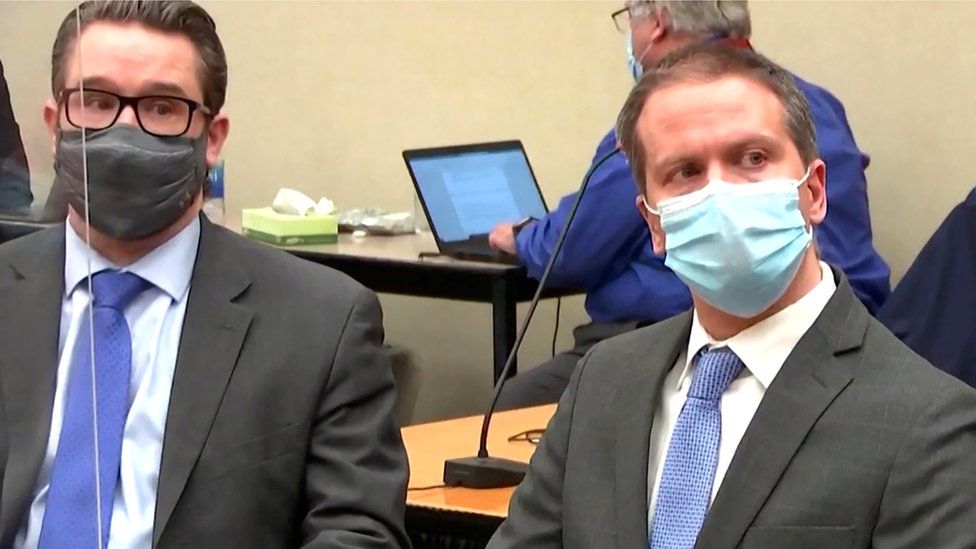
Derek Chauvin (R) listens to his sentencing in June alongside his defence lawyer Eric Nelson
MINNEAPOLIS-(MaraviPost)-The former Minneapolis police officer convicted of the murder of African-American man George Floyd in 2020 says he will appeal against his conviction.
Derek Chauvin, who is white, says there were issues with the jury at the trial and that it should not have taken place in Minneapolis, Minnesota.
Chauvin was sentenced to over 22 years in jail after kneeling on Mr Floyd’s neck for more than nine minutes.
The late Floyd death sparked mass protests against racism and police brutality in the US.
According to court documents filed on Thursday, September 23, 2021 Chauvin alleges that the trial judge abused his discretion at several key points of the case, including denying a request to postpone or move the hearing from Minneapolis due to pre-trial publicity.
BBC understands that the former officer said he had no legal representative for the appeal process as the Minnesota police department’s “obligation to pay for my representation terminated upon my conviction and sentencing”, the Associated Press news agency reports.
He has asked the Supreme Court to review an earlier decision to deny him a publicly-financed lawyer.
Chauvin aged 45 was given 90 days from the date of his sentencing on 25 June to appeal against his conviction.
He was found guilty of second-degree murder and other charges, was barred from owning firearms for life and also told to register as a predatory offender.
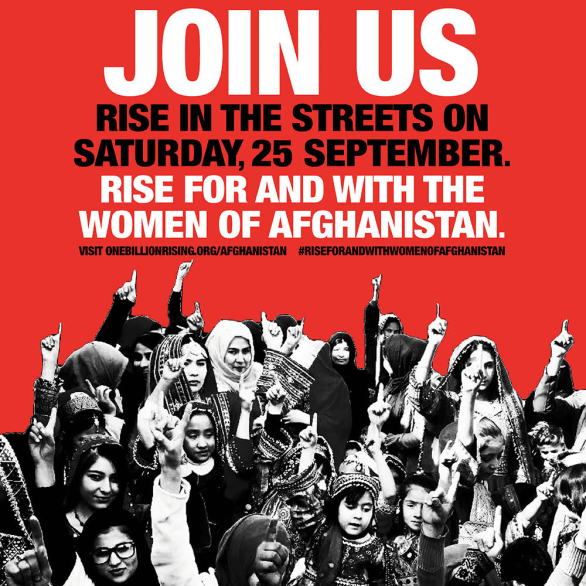
One Billion Rising is organizing events around the world on September 25th, 2021 to show support of Afghani women.
Rise For and With the Women of Afghanistan is taking place September 25th, 2021 across the globe. (Image Credit: One Billion Rising)
On Saturday, September 25, RISE FOR AND WITH THE WOMEN OF AFGHANISTAN will take to the streets in a day of action following an online day of solidarity on September 1, garnering participation from over 85 countries. During the global day of action, activists, women’s organizations, human rights groups, and high profile individuals will mount in person events in cities, towns and areas across the globe. Some events will take place online due to local Covid restrictions.
Worldwide events are being led by local Afghan activists and informed by activists on the ground in Afghanistan. Already activists are planning events in Mexico, Croatia, Eswatini, Congo, Nepal, India, Bangladesh, South Africa, Italy, UK, Philippines, Hong Kong, Indonesia, Jamaica, Guatemala, Thailand, Nigeria, Portugal, Taiwan, United Kingdom, Zambia, Austria, and the United States.
In New York City, a RISE FOR AND WITH THE WOMEN OF AFGHANISTAN rally and action will take place at Dag Hammarskjold Plaza, in sight and sound of the United Nations as the General Assembly meets. Testimonies from Afghan women on the ground and RAWA (Revolutionary Association of the Women of Afghanistan) will be read. It will be led by Afghan activists and artists Fatima Rahmati, Leeza Ahmady, Farah Arjang Vezvaee, Matin Maulawizada (co-founder Afghan Hands), Halema Wali (Afghans for a Better Tomorrow), poet Wazina Zondon – with women’s rights activists V (formerly Eve Ensler) (founder of V-Day/One Billion Rising), Zainab Salbi, Jodie Evans (co-founder of CODEPINK), Alyse Nelson (President/CEO of Vital Voices) and NYC Public Advocate Jumaane Williams, musicians Morley Shanti Kamen, Chris Bruce, Neel Murgai, Trina Basu, Arun Ramamurthi, Broadway stars Kathryn Gallagher (Jagged Little Pill), Anastacia McCleskey (Waitress), and Gerianne Perez (Waitress) (list in formation*). Visit onebillionrising.org/risenewyork
In Los Angeles, Afghan youth and activists will meet on the Sunset Strip and march to West Hollywood Park for a program featuring Hameeda Uloomi (Founder of Afg-aid), Madina Wardak (MSW/ACSW Outreach & Partnership Coordinator Afghan Women’s Mission), Ariana Delawari (Multimedia artist & activist), Arash Azizzada (Co-Founder Afghans For A Better Tomorrow), Sultana Parvanta, and Rina Amiri (Senior Fellow and Director of Afghanistan and Regional Policy Initiative at New York University’s Center for International Cooperation), Samia Karimi (Afghan dance artist & activist, ARTogether), with a special performance by Legendary Ustad Farida Mahwash & Voices of Afghanistan, with Aja Monet,Dylan McDermott,Sufe Bradshaw, Gideon Adlon, and additional speakers to be announced*. Testimonies from Afghan women on the ground and RAWA (Revolutionary Association of the Women of Afghanistan) will be read. Visit onebillionrising.org/riseLA
“We take our lead from our Afghan sisters – activists who have amplified the on-the-ground realities and needs for over twenty years, working tirelessly and creatively to support women and girls and their families amidst an endless, imperialist war. Women of the world and our allies stand with the women – and all vulnerable groups – of Afghanistan against imperialism, militarism, fundamentalism, and fascism. None of us are free until the women of Afghanistan are free. We stand with the women of Afghanistan who believe women have the right to education, to travel, to freedom of movement, to jobs, to security, just having freedom to be able to breathe and be. We cannot underestimate the power of our solidarity at this moment.” – joint statement from RISE FOR AND WITH THE WOMEN OF AFGHANISTAN, Global Solidarity Campaign
Individuals and organizations signing on and spreading the word across their social media channels included RAWA (Revolutionary Association of the Women of Afghanistan), Jane Fonda, V (formerly Eve Ensler) Rosario Dawson, Angela Davis, Thandiwe Newton, Lisa Joy,Pat Mitchell, Kimberlé Crenshaw, Jennifer Buffett, Katherine McFate, Annie Lennox, Zainab Salbi, Emma Thompson, Nina Turner, Naomi Klein, Glenn Close, Connie Britton, Heather McGee, Shabnam Hashmi, Rev. Dr. Jacqui Lewis, Rosa Clemente, Bonnie Abaunza, 1 Billion Rising/V-Day, CODEPINK, Vital Voices, 350.org, Equality Now, FEMEN, SANGAT, African American Policy Forum, Gabriela, Jagori Rural, One Fair Wage, Women’s March Global, Revolutionary Love Project, Justice For Migrant Women, Planned Parenthood – LA, Miry’s List, Peace Over Violence, Alianza Nacional de Campesinas and many more.
In consultation with many of them, we created a list of demands and a call to action. People and groups from all over the world have signed on in support with more signing on and planning actions on September 25.
What: Global Day of Action: Rise For And With The Women Of Afghanistan
When: Saturday, September 25, 2021
JOIN the Global Day of Action on Saturday, September 25th. Organize in your community, or gather online. Women of the world and all our allies rise, roar and rage for and with the women in Afghanistan: a global solidarity action in your city, town, school. everywhere. RISE in the streets, stage creative political protests and artistic risings. Invite everyone; reach out to activists, students, artists, social justice groups, and more.
Required: Face masks, social distancing. All events will be held outdoors.
Hashtags: #RiseForAndWithWomenofAfghanistan and #StandWithWomenofAfghanistan
Here is a snapshot of what is happening around the world (list in formation):
Austria: As the Austrian government refuses to take refugees, Austrian activists have taken to the streets to demand for refugees to be let in. On September 25, OBR Austria plans to hold an artistic intervention in public space with the performance of RED Silence by OBR Austria coordinator and artist Aiko Kazuko Kurosaki, an art installation by Petra Paul, more performance art, and speakers.
Bangladesh: In Dhaka, there will be a protest rally in the square as well as 15 to 20 other simultaneous rallies happening across the country. On September 26, OBR Bangladesh is coordinating an online action with the South Asian Peace Network to discuss the 20th anniversary of 9/11, the war in Afghanistan, and talk about how imperialistic wars can happen in any country.
Cambodia: The Cambodian Women Network, together with the OBR Cambodia youth, have drafted a statement addressed to their government for their action to respond to the treatment of the Taliban towards women and girls. OBR Youth will do a photo solidarity campaign on 9/25.
Cameroon: OBR Cameroon plans to organize a conference where Sharia law will be discussed, and Muslim dignitaries and scholars are invited, to inform the population on how the Taliban have used this law.
Croatia: OBR Croatia, and twenty other women’s groups including Women’s Network Croatia, are marching and RISING outside of the Croatian Ministry of Foreign Affairs.. The protest will have speeches, speakers, and banners created by women which read “You Cannot Kill Us” to center Afghan women and their struggles.
Democratic Republic of Congo: City of Joy and other Congo activists are working on linking what they are seeing regarding the effects of the wars for resources, plundering minerals, and natural resources to what has happened in Afghanistan in addition to writing a statement to circulate to the UN in the DRC. For this campaign, their slogan will be “They Wanted to Bury Us But They Forgot They Were Seeds”
Eswatini: In Eswatini, OBR activists are holding a memorial in solidarity connecting the current crisis in Eswatini to the current crisis in Afghanistan.
Ghana: Activists will mount a photo campaign featuring activist and their messages of solidarity with the women of Afghanistan
Guatemala: In Guatemala, activists are rising with Fundación Sobrevivientes and for Latin America with Red Latinoamericana de Mujeres Afro Descendientes.
Hong Kong: OBR Hong Kong will be broadcasting pre-recorded videos of OBR solidarity dancing and solidarity messages and demands by domestic and migrant workers in Hong Kong, as well as local Hong Kong residents on the 25th of September.
India: Activists in India propose to stand outside on the streets in villages, towns, cities, in slums and in front of public places. They also plan a signature campaign in India to demand justice for the women of Afghanistan and the women of the world and hope to reach out to nearly 500 locations in the country. A poster competition is also being planned – reaching out to artists, as well as the possible creation of a song. The campaign will also include children to stand with placards to demand a peaceful world for the children of Afghanistan.
Indonesia: Seruni activists are planning solidarity poster actions where Seruni is established, such as Riau and Sulawesi – which will lead into a national virtual action on September 25th. The day before is the National Peasant Day commemoration and rural women activists will be connecting solidarity with women of Afghanistan.
Italy: OBR Italy will be part of a big event at the Piazza del Popolo in Rome on the 25th, with more than 50 associations who are joining the event.
Jamaica: Activists in Jamaica are planning to do a collective meditation centering Afghan women’s empowerment and protection.
Malawi: In Malawi, activists will do an action on September 25, and rise with the Rural Women’s Assembly to express their solidarity.
Mexico: Activists in Mexico will be in the streets on 25 September and the plan is for a demonstration outside the UN in Mexico City, with activists holding signs with slogans from the campaign.
Namibia: OBR Namibia plans an informational sharing and artistic creative session adolescent girls and young women as well as a silent protest featuring posters and images to demand that the Namibian government accepts refugees from Afghanistan.
Nigeria: Nigerian activists will host an online campaign in solidarity.
OBR Africa: In many parts of Africa, countries are facing strict lockdowns and cannot host public events. However, OBR Africa activists will host a RISING For and With the Women of Afghanistan in a regional online event involving 19 countries. Discussion to include women’s rights as the first to be suppressed in crisis situations, unpacking what activists mean when they say “Afghanistan is everywhere” and the importance of women’s global solidarity in crisis situations. Activists from across the region will issue photo and video messages of solidarity.
Philippines: A Solidarity Week will feature nation-wide solidarity and protest actions on each day from September 18 to 25 online and in person raising the shared concerns against the actions of the US military and its impact on the Afghan people.
Portugal: Activists in Portugal plan to connect the water crisis to the war in Afghanistan and the plundering of natural resources and minerals.
Rwanda: Activists will have a graphics,,photo and video campaign illustrating what Rwandan women feel for the women of Afghanistan and what their solidarity means to bring back hope for women and girls in Afghanistan.
Serbia: Activists are planning actions in six different towns featuring artistic banners in solidarity for and with the women of Afghanistan.
Taiwan: Activists will organize an online program to express solidarity with the women of Afghanistan.
Togo: Activists are organizing a photo and video campaign with Togolese youth to support the women of Afghanistan.
Thailand: OBR Thailand will be hosting an online event in solidarity with the women of Afghanistan.
United Kingdom: Voice of Domestic Workers will Rise With and for Women of Afghanistan at the Labour Conference in Brighton and will dance “Break The Chain”. Activists in the United Kingdom, in collaboration with the Women’s Center of Cornwall, are doing outside actions in Cornwall and Norwich.
United States: In New York, mass rising at Dag Hammarskjold Plaza followed by a march to the UN. In Los Angeles, march and rally at Sunset Spectacular. In San Francisco, Code Pink action on September 21, Global Peace Day, to demand for a reduction of the Pentagon budget and an action on September 25. Additional actions being planned.
Zambia: OBR Zambia will hold meetings in communities in different areas to increase understanding and awareness of the situation in Afghanistan and the importance of global actions. Recordings of solidarity messages will also be made from the communities and shared.
Zimbabwe: OBR Zimbabwe is planning an Online Solidarity marathon. Solidarity messages will be posted in the form of written work and the creation of a short video.
Our progress roundup highlights American endeavors to address past injustices, by harnessing the power of both local voices and highly visible institutions.
1. United States
Efforts to preserve African American burial sites are gaining momentum across the country. Missing deeds, weak preservation laws, and general lack of awareness have made lost African American cemeteries uniquely vulnerable. More and more, communities are leading efforts to memorialize developed burial grounds, as well as identify and preserve these sites before they are slated for development.
Why We Wrote This
Increasingly, societies are trying to address wrongs by stopping bad practices and giving back what was taken. In the U.S., more communities are memorializing Black burial sites. And two museum collections have returned artifacts to Iraq.
Virginia’s Prince William County recently voted to fund archaeological surveys to improve cemetery mapping. Officials are also considering additional oversight for development projects in the community of Thoroughfare, where a new activist group has formed in response to the erasure of historic Black and Native American gravesites.
In Florida, where legislators estimate there may be as many as 3,000 developed or abandoned burial grounds, the governor signed off on a six-month task force dedicated to studying this issue. Nationally, historical preservation advocates have been pushing congressional bills that would establish a database of African American cemeteries throughout the United States, and to support educational programs. “People are absolutely starting to realize that these kinds of historical injustices need to be addressed now,” said Kelley Fanto Deetz, co-CEO of the History, Arts, and Science Action Network. “So there is a change coming.” Thomson Reuters Foundation, Black Cemetery Network
2. Colombia
“Green corridors” offer residents of Medellín, Colombia, refuge from rising temperatures. Since 2017, the city has installed tens of thousands of native trees, palms, and other plants to create 30 interconnected corridors through many of Medellín’s “heat islands.” These urban areas have high concentrations of heat-absorbing paved roads and concrete, making the neighborhoods hotter in the day and slower to cool down at night. With more than 12 shaded miles, the green corridors offer residents routes to travel, work, and rest, and have decreased the heat island effect by 3.6 degrees Fahrenheit, according to city officials. The added vegetation also helps combat air pollution and absorb carbon emissions.
Despite initial concerns over the cost of creating and maintaining the corridors, city gardeners say community members have come to appreciate the green spaces. Their work has also received international praise. The initiative won a 2019 Cooling by Nature Award from Ashden, a United Kingdom-based charity supporting climate change solutions around the world, and the head of the United Nations Environment Program in Colombia, Juan Bello, said, “The Green Corridor project is an excellent example of how city planners and governments can use nature for smart urban design.” Thomson Reuters Foundation, U.N. Environment Program
Khalid Mohammed/AP
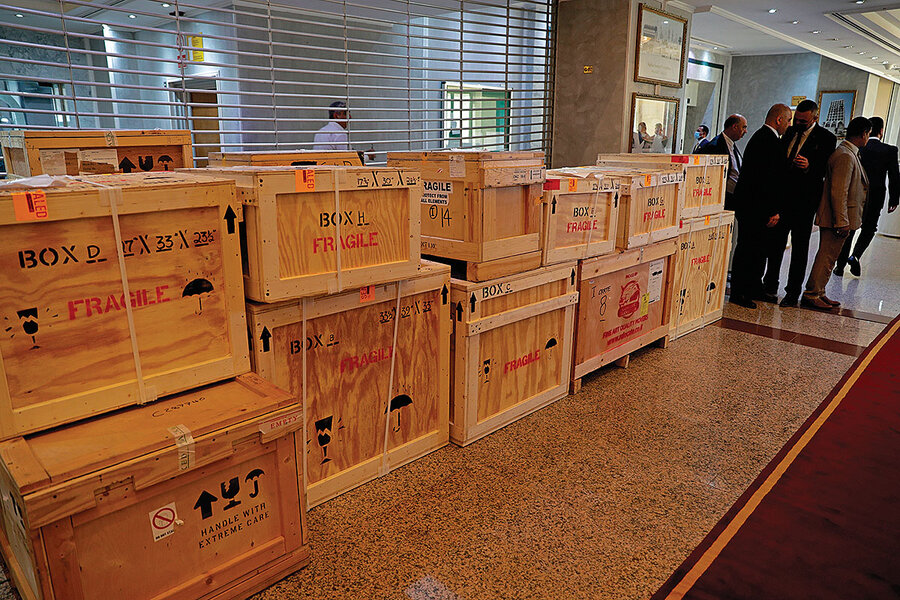
Crates of recovered artifacts sit temporarily at the Foreign Ministry before heading to the Iraq Museum on Aug. 3, 2021.
3. Iraq
The Iraqi Ministry of Culture reclaimed 17,000 looted artifacts in the country’s largest repatriation. Decades of unrest, especially during the 2003 U.S.-led invasion, have allowed for extensive looting of Iraqi antiquities, which often appear on the black market with vague or falsified letters of provenance. The recent return results from years of effort and includes thousands of cuneiform tablets, ancient seals, and other items. Around 12,000 artifacts come from the Museum of the Bible, founded and chaired by Hobby Lobby President Steve Green. The company launched an internal review of museum collections after the U.S. Department of Justice levied $3 million in fines in 2017 for dubious acquisitions. Another 5,000 were donations to Cornell University’s collection.
“This is not just about thousands of tablets coming back to Iraq again – it is about the Iraqi people,” said Hassan Nadhem, the minister of culture, tourism, and antiquities, about the historic shipment. “It restores not just the tablets, but the confidence of the Iraqi people by enhancing and supporting the Iraqi identity in these difficult times.” The New York Times, Al Jazeera
4. Malawi
Malawian teens are tackling sensitive subjects on air. A survey showed that 54% of young people in Africa rely on radio as their primary news source, and according to the Ichikowitz Family Foundation, 81% find local programming more trustworthy than international programs. The U.S.-based nonprofit Developing Radio Partners is helping local radio stations build on that trust by mentoring young people to be role models for their community, and address critical social issues. So far, DRP has worked with nine stations to train about 400 youth reporters in Malawi. The teens go on to host and research radio shows covering cultural taboos, such as gender violence and HIV.
One program, called “Let’s Shine,” is estimated to have reached 3 million youths since hitting airwaves in 2017. One listener, Doreen Sakala, is a young mother who says the show’s candid conversations about teen pregnancy inspired her to return to school. Organizers say child marriage – which is illegal but remains common in Malawi – has declined in areas where radio stations have partnered with DRP. Near the Zambian border, Nzenje village chief Lawrence Lungu says the youth-led radio shows have helped dissolve at least six child marriages by “[bringing] light to us when we were in the dark.” Thomson Reuters Foundation
In this article, we will be looking at 25 of the poorest countries in the world. You can skip our detailed breakdown of these countries by heading straight to the 5 poorest countries of the world.
The pre-pandemic world had made significant progress to reduce global poverty to almost half by the year 2000. Today however, according to United Nations projections of multidimensional poverty index, the ongoing pandemic has pushed poor nations to a new brink of income inequality and enshrouded almost 8% of the total human population in complete despair.
Poverty by definition is a depravation in income and access to resources to maintain a healthy life. According to the World Bank, poor or low-income countries are nations that have a per capita gross national income (GNI) of less than $1026.
Many of the poorer countries in the world are a cauldron of political instability with years of internal conflict leaving them vulnerable to financial insecurity. Additionally, natural disasters brought on by the global climate emergency have led to entire nations being entrapped in cycles of poverty and disease. Such fragile infrastructures cannot withstand the onslaught of adversities such as Ebola and AIDS outbreaks and nations lose, whatever productive ground they have gained, very quickly.
It is perhaps not surprising that top ten of the poorest countries exist in Africa, and that it is in both Africa and in the continent of Asia that we expect to witness the largest increase in extreme poverty as a result of the pandemic. All of these countries are deeply susceptible to environmental and economic risks and the ripples of the COVID 19 pandemic have contributed immensely to long-term persistent challenges to their economies.
All is not lost and there are many strides that have been made due to narrowing of the digital divide in these nations. Internet accessibility has helped to introduce the services of companies like Alphabet Inc. Class A (NASDAQ: GOOGL), Amazon.com, Inc. (NASDAQ: AMZN), Twitter, Inc. (NYSE: TWTR) and Uber Technologies, Inc. (NYSE: UBER) and open new windows of opportunity and information to these hitherto isolated peoples.
Over the past 25 years, the World Bank has used gross national income (GNI) per capita – valued annually in US dollars – to classify countries into an economic prosperity scale. The GNI of a country is calculated by taking into account its national output within borders and also its investments from abroad.
The formula for Gross National Income (GNI) is: GNI=C +I+G+X +NFFI. Where the ‘C’ represents consumption, the ‘I’ investments, ‘G‘ is consumptions and investments made by the government, ‘X’ represents net exports and ‘NFFI’ is the net foreign factor income. This defined and preferred benchmark, over the previously used gross domestic product (GDP), has proved useful to analyze progress and development trends since the beginning of the 3rd millennium.
With this context in mind, we will now deep dive into our list of the 25 poorest countries in the world. We will start with the 25th poorest country, according to the World Bank GNI per capita rankings as well as the 2021 World Population Data Sheet.
25 Poorest Countries in the World
25. Lesotho
GNI: $2740
Population: 2.2 million
A constitutional monarchy, Lesotho is a landlocked country with a mountainous terrain almost entirely surrounded by South Africa. The mountains have been largely responsible for their protection from outside encroachment. The country is home to 2.2 million people and its GNI per capita rests at $2740. Lesotho has been prone to periodic droughts. It has also survived a military takeover which was reverted after seven years of martial rule.
24. Solomon Islands
GNI: $2680
Population: 0.7 million
An archipelagic state of 992 islands and atolls scattered around Melanesia in the Pacific Ocean, its 0.7 million residents are vulnerable to natural disasters such as tsunamis, earthquakes, and volcanic eruptions. Its GNI per capita is the $2680 and 12.7 percent of its population lives below the poverty line.
Despite these odds, 11.9% of Solomon Islanders have access to the internet and are bridging the digital divide with companies like Alphabet (NASDAQ: GOOGL), Amazon.com, Inc. (NASDAQ: AMZN), Twitter, Inc. (NYSE: TWTR) and Uber Technologies, Inc. (NYSE: UBER).
23. Guinea
GNI: $2580
Population: 13.5 million
Guinea is a majority Muslim country with ties to France. It has established trade with UAE and China. Its GNI per capita is at $2580. The 13.5 million people of Guinea have survived the Ebola virus, but the underlying fear of a new outbreak continues to permeate. Guinea continues to look to IMF to establish new programs for better infrastructure.
22. Ethiopia
GNI: $2410
Population: 117.8 million
This unique country in Africa evaded Colonial rule for all of its history, except a brief period of four years. Its war with neighboring Eritrea ended in 2018. Its population of 117.8 million makes it the second most populous country in Africa. Ethiopia has battled a 30-year drought and a population boom leaving its GNI per capita at $2410.
The country ranks 22nd in our list of the 25 poorest countries in the world.
21. Uganda
GNI: $2260
Population: 27.1 million
Uganda has one of the highest fertility rates in the world. Its population as of mid-2021 was 27.1 million people. It is perhaps tragically balanced by the AIDS epidemic, which keeps mortality rates high. Uganda’s government spending has grown as has its national debt resulting in its GNI per capita at $2260.
20. Mali
GNI: $2250
Population: 20.9 million
Mali, landlocked in western Africa, depends on its gold mining and agriculture exports as a source of wealth. Its people have seen much economic and social unrest and suffered through over 31 years of dictatorship rule. The current population of Mali is 20.9 million.
19. Gambia
GNI: $2230
Population: 2.5 million
The Gambia is one of the smallest countries on the African mainland and is home to 2.5 million people, 95 per cent of whom are Muslim. The Gambia, largely an agricultural economy, relies heavily on overseas remittances and tourism. GNI per capita is $2230. Any future economic progress will depend on substantial bilateral aid. The Gambia has not been successful in eliminating its human trafficking problem; women, girls and young boys continue to be in danger of becoming victims.
18. Togo
GNI: $2230
Population: 8.3 million
The Togolese people have lived under a 50 year rule, with one family at the helm. The political and civil unrest and frustration in the form of riots experienced by the country is mainly due to this. Togo enjoyed a period of economic stability till the political situation erupted into its current state. At the moment its GNI per capita is at $2230. Although this figure is similar to The Gambia, other factors of the Human Development Index have been taken into account to place it below that country.
However, as youth in poor countries like Togo gets access to the internet and begin to use services of companies like Alphabet Inc. Class A (NASDAQ: GOOGL), Amazon.com, Inc. (NASDAQ: AMZN), Twitter, Inc. (NYSE: TWTR) and Uber Technologies, Inc. (NYSE: UBER), many believe this would increase awareness and create new economic opportunities in the region.
17. Burkina Faso
GNI: $2190
Population: 21.5 million
Burkina Faso is a country with very limited natural resources. Its 21.5 million inhabitants have had a history littered with human and natural disasters from drought to terrorist attacks and then to internally displaced peoples from these attacks. The current GNI per capita for Burkina Faso is $2190. Like The Gambia it struggles with issues resulting from human trafficking of women and children.
16. Rwanda
GNI: $2160
Population: 13.3 million
Rwanda has had a past littered with unrest culminating in the genocide of 800,000 people in 1994 including a large proportion of its Tutsi population. Its current population stands at 13.3 million people. Tourism, tea and coffee are some of the major sources of foreign exchange. Present day government has made pathways to leading the way to progress in the communications and technology sector. Rwanda’s GNI per capita is $2160.
However, as youth in poor countries like Rwanda gets access to the internet and begin to use services of companies like Alphabet Inc. Class A (NASDAQ: GOOGL), Amazon.com, Inc. (NASDAQ: AMZN), Twitter, Inc. (NYSE: TWTR) and Uber Technologies, Inc. (NYSE: UBER), many believe this would increase awareness and create new economic opportunities in the region.
15. Afghanistan
GNI: $2110
Population: 39.8 million
Afghanistan, one of the two countries on our list that is not located in Africa, houses a population of 39.8 million people. The geopolitical situation of the country has made it helpless against interference from its neighbors. Over 72,000 Afghans have received refuge in neighboring Pakistan. It is unfortunate that Afghanistan continues to be the world’s largest producer of opium. Since the US invasion in 2001, economic activity has increased slightly and currently the GNI per capita is at $2110.
14. Guinea-Bissau
GNI: $1980
Population: 2 million
A small country of 2 million people located on the western coast of Africa, bordering the Atlantic Ocean, Guinea-Bissau is home to a diverse plethora of ethnicities. The country has experienced its fair share of political upheavals in the form of coups and civil war. All this has contributed to its fragile economy where the GNI per capita is $1980 and two out of three Bissau-Guineans remain below the poverty line.
13. Sierra Leone
GNI: $1670
Population: 8.1 million
Home to 8.1 million people, Sierra Leone is located on the Western edge of the continent of Africa. Subsistence agriculture is the main source of wealth for its people.
12. Eritrea
GNI: $1610
Population: 3.6 million
Eritrea was involved in a 30-year struggle for independence from Ethiopia till 1991. Like many African countries the Eritrean population of 3.6 million people engages in subsistence agriculture for most of its economic output with a small percentage involved in mining of gold and other minerals. Its GNI per capita is currently at $1,610.
However, as youth in poor countries like Eritrea gets access to the internet and begin to use services of companies like Alphabet Inc. Class A (NASDAQ: GOOGL), Amazon.com, Inc. (NASDAQ: AMZN), Twitter, Inc. (NYSE: TWTR) and Uber Technologies, Inc. (NYSE: UBER), many believe this would increase awareness and create new economic opportunities in the region.
11. Chad
GNI: $1580
Population: 17.4 million
After Chad’s independence in 1960, the Chadian people saw over three decades of oppression and invasion from its neighbors. The country is home to 17.4 million, over 400,000 of whom are from Nigeria and Sudan. Chad mediates to resolve the Darfur conflict. Its GNI per capita is $1580 as low oil prices stress Chad’s fiscal position. Its 1 million internet users have been introduced to the services of companies like Alphabet Inc. Class A (NASDAQ: GOOGL), Amazon.com, Inc. (NASDAQ: AMZN), Twitter, Inc. (NYSE: TWTR) and Uber Technologies, Inc. (NYSE: UBER) opening avenues of free flow of information and technology.
10. Malawi
GNI: $1540
Population: 20.3 million
A country of 20.3 million people, Malawi is located in southern Africa. It is ranked among the world’s least developed countries with a GNI per capita of US $1540. The country is heavily dependent on IMF, World Bank and other donor nations for assistance. A large share of its economic down trend can be attributed to the El Nino triggered drought of 2015.
9. Madagascar
GNI: $1540
Population: 28.4 million
Once a pirate stronghold in the early 18th century, Madagascar with its mostly youthful population of 28.4 million people is a small island in the Indian Ocean. It has suffered its fair share of cyclones and locusts infestations over its history. The dependent population contributes to its low GNI per capita of $1540. It is perhaps not surprising that 9.8% of the internet users in Madagascar’s dependent population use the services of (NASDAQ: GOOGL), Amazon.com, Inc. (NASDAQ: AMZN), Twitter, Inc. (NYSE: TWTR) and Uber Technologies, Inc. (NYSE: UBER).
8. Liberia
GNI: $1250
Population: 5.18 million
Liberia is a country on the western coast of Africa. Its name is derived from the Latin ‘liber’ meaning free and is home to 28 diverse ethnicities of 5.18 million people. The basis of its foundation was a home for liberated African American slaves. An Ebola outbreak in 2015 and over a decade of fighting have reduced its GNI per capita to $1250. Ivorian refugees in Liberia make up 95% of the refugee population.
7. Mozambique
GNI: $1250
Population: 32 million
Mozambique, on the eastern coast of South Africa, remained under the Portuguese till 1975. Its 32 million inhabitants have struggled with a severe drought and large scale emigration due to civil war for the better part of a century. The GNI per capita of Mozambique stands at $1250 as of 2020. Mozambique like most poor African countries is highly vulnerable to lower life expectancy due to AIDS.
6. Niger
GNI: $1210
Population: 25.1 million
Named after the Niger River, this landlocked African country is home to 25.1 million people. Niger’s geopolitical position and the rate of unrest and spillover effect from surrounding countries have contributed to its low GNI per capita at $1210. Niger lacks the funds to develop its mineral and oil resources and is ranked last in the UN Development Programme’s Human Development Index.
However, as youth in poor countries like Nigeria gets access to the internet and begin to use services of companies like Alphabet Inc. Class A (NASDAQ: GOOGL), Amazon.com, Inc. (NASDAQ: AMZN), Twitter, Inc. (NYSE: TWTR) and Uber Technologies, Inc. (NYSE: UBER), many believe this would increase awareness and create new economic opportunities in the region.