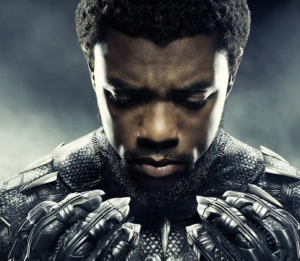
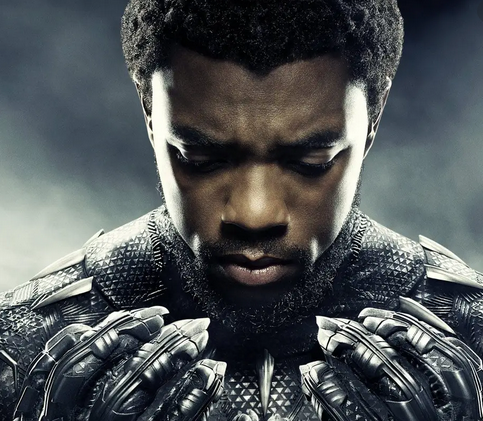
Seven facts about Chadwick Boseman you probably didn’t know

Tributes are still pouring in for actor Chadwick Boseman who died on Friday of colon cancer at 43. Boseman’s medical condition was not publicly known.

A statement says he was first diagnosed with colon cancer in 2016 and filmed many movies “during and between countless surgeries and chemotherapy.”

“What a gentle gifted soul. Showing us all that greatness between surgeries and chemotherapy. This is what dignity looks like,” wrote TV star and author Oprah Winfrey.

As scores of celebrities and fans chime in online to honor the Black Panther star, here are seven things to know about the Marvel superhero.

He didn’t have to audition for Black Panther, and made history

When Marvel Studios President Kevin Feige met Boseman in Get On Up, he had no doubts that Chadwick was the right man for the King T’Challa role. “I think it was 24 hours between saying his name in a creative story meeting and talking to his agent and getting on a phone with him and offering him the role of Black Panther, which he accepted,” Kevin said.

For his role in Black Panther, Boseman went on to officially become the first-ever African-American superhero to star in his own standalone feature film in the Marvel Cinematic Universe. Grossing over $1.3 billion globally, the award-winning Black Panther was also the first film based on a comic book to be nominated for the Oscar Best Picture award.

He was into theater before his acting career began on TV

Chadwick was into theater right from high school. He wrote his first play, Crossroads, which he also performed in. After graduating from Howard University with a bachelor’s degree in directing in 2000, he went on to act in Zooman and the Sign, a play by Pulitzer-winning Charles Fuller, at age 23.

A student of British American Drama Academy in London, Boseman also graduated from New York’s Digital Film Academy before starting his serious acting career in 2008. Ahead of his roles in Black Panther and Avengers, he acted in several TV shows — Law & Order, CSI:NYER, Castle, Fridge, and others.

He brought inspirational historical figures to life

After starting his acting career on TV, he gained fame when he landed a leading role in the 2013 critically-acclaimed biographical film 42. Boseman played Major League baseball legend Jackie Robinson, winning several awards for his amazing performance. In 2014, he also played James Brown in Get On Up and then starred in Marshall as Thurgood Marshall, the first African-American Supreme Court justice.

He was into sports

While in school, Boseman played Little League baseball, but “I also played basketball,” he disclosed in an interview with Vanity Fair. “Basketball was my primary sport. When you play basketball seriously, a lot of times, through the summer season, you continue playing. So that replaced me playing baseball. But I’ve always been an athlete and continued do additional athletic activities.”

He was a Southern man who was also amazing behind the camera

Boseman was born in Anderson, South Carolina. Before acting, he directed “Heaven” and “Blood Over a Broken Pawn,” which he also wrote. “Clair Huxtable is my acting mom,” Boseman told The Hollywood Reporter. “The way she taught acting opened up things for me. I would have to take acting classes, but it was purely as director to know what the actors were doing. But when she taught it, it became something where I was like, ‘I want to experience that. I want to know, really, what that feels like.’”

He trained five to eight hours a day for “Get on Up”

While preparing for his role as James Brown in Get On Up, Boseman told ABC News he trained with a choreographer five to eight hours a day. Any time he was on set, he was James Brown, said the film director, Tate Taylor.

“The people around Chad would call him Mr. Brown. When he was picked up in the morning it was, ‘Mr. Brown in the car. Mr. Brown is on-set,’” Taylor said. “He was working so hard, he would make a rare appearance out to dinner, and it would just be odd that Chad was there.”

He kept his personal life as private as possible

Boseman valued his privacy to the extent that his medical condition was not publicly known. He was once asked about his love life, and this was his reply: “It’s no one’s business, really,” he said.

“When you talk about that, you become a whole different type of celebrity. Your personal life bleeds into your professional life. I’m an actor, and you know me from who I play. You get a sense of who I am, but you don’t know everything.”


(Visited 193 times, 193 visits today)
Subscribe to our Youtube Channel :

Follow our Instagram

Source

Three huge problems with Trump’s pitch to Black people

President Donald Trump knows better than anyone the importance of eating into the Black voter constituency of the Democrats if he is to win another surprise term in the White House this November.

Since January 2017, Trump has seemed bent on bettering his support among African Americans. He won only about 8% of the Black vote in 2016 as against Hillary Clinton’s 88%.

But 2016 was also the election in which 1.6 million Black voters who had backed Barack Obama in 2012 did not vote. This is a point that Michelle Obama has wielded as a sort tool for reprimanding those non-committal Black people who gave Wisconsin and Pennsylvania to Trump.

Interestingly, the Democratic establishment is quick to bare its teeth at presumed saboteurs and traitors. Such sternness, however, is withdrawn from Clinton who did not even campaign in Wisconsin in the months to the polls.

While the Democrats hope its Black voter base will fall in line in 2020, Trump sees an opportunity. His pitch has been curt and unchanging: “I am the best thing that has happened to America’s Black people since President Abraham Lincoln.”

We can forgive the tired Trumpian exaggeration. But all the details connected to this mammoth declaration have holes that will leak and expose hot air for what it is.

As follows are some of the huge (imagine Trump himself saying the word) problems with his pitch to Black people. Please note that this is not a suggestive piece for Trump’s campaign; it is probably even too late to help him.

Credit: /face2faceafrica

(Visited 36 times, 36 visits today)
Subscribe to our Youtube Channel :

Follow our Instagram

Source

DAILY MAVERICK WEBINAR: Mark Gevisser’s new book traverses the ‘Pink Line’ of queer politics


South African author and journalist Mark Gevisser and Daily Maverick journalist and author Rebecca Davis. (Photos supplied)

In his latest offering, one of South Africa’s leading narrative non-fiction writers, Mark Gevisser, traces ‘pink lines’ of gender identity and sexuality, delving into the often divergent lived experiences of queer people around the world.


CLOSE

Journalist, filmmaker and author Mark Gevisser’s latest book, The Pink Line: Journeys Across the World’s Queer Frontiers, explores global issues of sexuality and gender identity through the stories of nine protagonists with different lived experiences of being queer.

During a webinar hosted by Daily Maverick journalist and author Rebecca Davis on Wednesday 12 August, she described the book as “nothing short of a global survey of the current status-quo for LGBT (plus) people” but also felt this was a limited summary of Gevisser’s work, which tackles an extremely complex and nuanced subject.

Display Adverts

Gevisser is the author of five books, most notably the award-winning Thabo Mbeki: A Dream Deferred, and Lost and Found in Johannesburg: A Memoir. Based in Cape Town, he’s a frequent contributor to The Guardian, Granta and The New York Times. In 1990, he helped organise South Africa’s first Pride March and ever since has worked on queer themes as a journalist, filmmaker and curator. 

He writes in his book: “I witnessed a troubling new global equation come into play: while same-sex marriage and gender transition were now celebrated in some parts of the world as signs of humanity in progress, laws were being strengthened to criminalise such actions in others.”

This paradox, where queerness acts as both a unifier and divider is evident in Tiwonge Chimbalanga’s tale. The Malawian transgender woman was arrested for her engagement to a man, Steven Monjeza in 2009 and later fled to South Africa, which markets itself as “the gay capital of Africa” and is the first country on the continent to legalise same-sex marriage. 

But even within South Africa, the paradox exists. Davis and Gevisser discussed the “gulf” between South Africa’s queer-friendly Constitution and the lived reality of the community. 

“Research shows that the vast majority of South Africans believe that LGBT (plus) people have rights and that these rights should be respected. But there’s only a very tiny majority who believe that homosexuality is acceptable, There’s a gap between what we feel in our hearts and what we accept as rights,” he said.

The study, Progressive Prudes: A survey of attitudes towards homosexuality & gender non-conformity in South Africa done by the Other Foundation, found that although 51% of South Africans believe that gay people should have the same human rights as all other citizens, 72% feel that same-sex sexual activity is morally wrong.   

Violent reactions to queerness like punitive rape and other forms of abuse are common-place in some areas. Gevisser framed this as a backlash to the “space” which queer youths have claimed for themselves in society. 

Display Adverts

“By claiming this space, they are challenging age-old norms and [heteronormative] power systems… systems of patriarchy.” 

On terminology, Gevisser explained why he used the once contemptuous term “queer” in his book, to package the discourse around the LGBT+ community. 

“I like the word queer because of its double-valence,” said Gevisser, reading an excerpt from the book. “As well as having been reappropriated by people across the world to describe themselves, queer means different or skewed: to see things from a ‘queer perspective’ is to look at the world askance, to see it afresh.”

In some instances, the evolution of the term “queer” has been likened to that of the N-word and its use by African Americans, most notably in rap culture. 

His book delves into deeper complexities, like ideas of queerness being a Western phenomenon, the struggle for transgender rights, the role of religion and the church in anti-queer discourse, the notion of gender as a spectrum rather than a fixed binary and how digital technology and social media has opened up a global queer community.

“This book is primarily a collection of stories… with very singular protagonists making very personal decisions, in very specific places. These people drive their own stories ; the rest of us – activists and policymakers, scholars and scribes and readers – try to catch up,” wrote Gevisser. DM

Display Adverts

Gallery


Comments – share your knowledge and experience

Please note you must be a Maverick Insider to comment. Sign up here or if you are already an Insider.

Source

To Stay Ahead of the Next Insect Outbreak, Harness Available Data Intelligence

Africa, Featured, Food & Agriculture, Headlines

Opinion

Given that desert locust outbreaks and other insect related invasions are to be expected in the future, there is need for countries affected to use the funds to work with organizations such as FAO and other stakeholders that are in the frontlines in addressing insect-related challenges They must craft both short-term and long-term approaches to manage insect pests that affect food crops, causing significant crop losses to farmers while threatening food security and agriculture

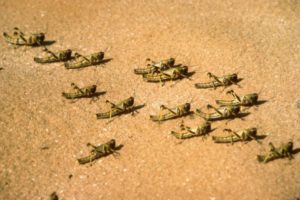
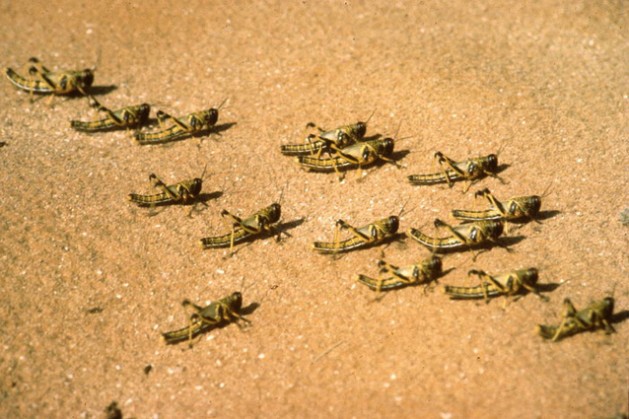
Juvenile desert locust hoppers. Photo: FAO/G.Tortoli

ILLINOIS, United States, Aug 12 2020 (IPS) – Recently, the UK contributed £17 million to support the Food and Agriculture Organization of the United Nations (FAO) to continue their efforts to combat the desert locust surge in East Africa and improve early warning and forecasting systems.


Because of contributions like this and other contributions that have been made by countries including Germany, Saudi Arabia, the United States of America and other funders such as the African Development Bank, The Bill and Melinda Gates Foundation, substantial gains have been made in containing the desert locust.

Given that desert locust outbreaks and other insect related invasions are to be expected in the future, in part because of climate change, there is need for countries affected to use the funds to work with organizations such as FAO and other stakeholders that are in the frontlines in addressing insect-related challenges such as the International Center of Insect Physiology and Ecology and the Entomological Society of America.

In dealing with insect-related challenges, it is clear that many African countries continue to take a reactive rather than a proactive approach and that needs to change

They must craft both short-term and long-term approaches to manage insect pests that affect food crops, causing significant crop losses to farmers while threatening food security and agriculture.

Over and over, in dealing with insect-related challenges, it is clear that many African countries continue to take a reactive rather than a proactive approach and that needs to change.

For example, in dealing with the fall armyworm, an invasive pest that appeared in Africa in 2016 and spread rapidly, causing losses worth millions of dollars, several countries including Malawi, Kenya, Ghana and Nigeria rolled out measures to contain the pest only after it had spread.

Instead, strategically, it would benefit countries if they would use available resources and tools such as satellite data, big data, intelligence generated by predictive modelling and other tools such as the Horizon Scanning Tool, to anticipate and prepare for insect and pest related challenges.

FAO continues to rely on data to produce forecasts and early warning alerts for the desert locust and other invasive pests such as the fall armyworm.  Time is ripe to use intelligence derived from data and predictive modelling to anticipate future insect outbreaks. Doing so will allow African countries to stay ahead.

 in dealing with insect-related challenges, it is clear that many African countries continue to take a reactive rather than a proactive approach and that needs to change

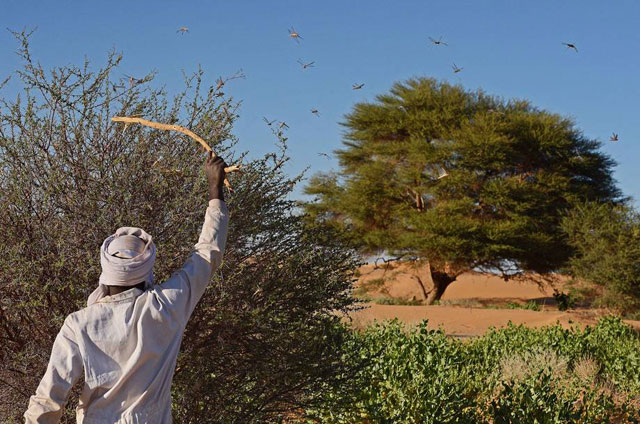
A man beating a bush with a stick to show desert locusts swarming near Fada, Chad. FAO toolbox shows how prevention, early warning and preparedness can help control desert locust and other trans-boundary threats. Photo: FAO

Accompanying data-based intelligence is the need for African countries to strengthen in country pest surveillance programs. Agriculture is a source of livelihood for over 70 percent of Africa’s population. As such, countries must safeguard agriculture by having national pest surveillance programs that are tasked with carrying out routine pest surveys and identifying and detecting new insect pests including those deemed to be invasive.

It is key for national governments to have functional agricultural pest detection systems. The good news is that there are many guiding documents that countries can tap into as they formulate their pest surveillance programs, such as the guidelines provided by the International Plant Protection Convention.

Importantly, countries must also invest in ways to share information about detected insects and the appropriate sustainable solutions to manage them. The use of mobile phones and radio are one approach that can be utilized to widely disseminate information about impending insect pest outbreaks. Moreover, keeping citizens and other stakeholders that are keen on tackling insect pest challenges can also benefit from organized meetings, workshops and conferences.

Finally, there is need to invest in long term actions, including investing in research and the training and capacity building, to ensure that African countries have the expertise and capacity to combat insect pests, now and into the future.

Insect-pest related challenges will continue to challenge African agriculture. African countries must use the available tools to anticipate, prepare and stay ahead of the next pest-related challenge. Ensuring food security for all, especially in Africa, will depend on how we harness data and available intelligence to stay ahead of insect pests including staying ahead of the next desert locust outbreak.

Dr. Esther Ngumbi is an Assistant Professor at the Entomology Department and African American Studies, University of Illinois at Urbana Champaign. She is a Senior Food security fellow with the Aspen Institute.

  Source

அமெரிக்க தமிழ் அமைப்புகள் கஜனின் தமிழ்த் தேசிய மக்கள் முன்னணி கட்சியை ஆகஸ்ட் 5, 20 தேர்தலில் ஆதரிக்குமாறு வேண்டுகின்றது.

அமெரிக்க தமிழ் அமைப்புகள் கஜனின் தமிழ்த் தேசிய மக்கள் முன்னணி கட்சியை ஆகஸ்ட் 5, 20 தேர்தலில் ஆதரிக்குமாறு வேண்டுகின்றது. – African American News Today – EIN News

Trusted News Since 1995

A service for global professionals · Sunday, August 2, 2020 · 523,088,109 Articles · 3+ Million Readers

News Monitoring and Press Release Distribution Tools

News Topics

Newsletters

Press Releases

Events & Conferences

RSS Feeds

Other Services

Questions?

Source

Trump says “more white people” killed by police

The president rejected the fact that Black people suffer disproportionately from police brutality and made startling remarks about the Confederate flag and a recent confrontation in St. Louis.

President Trump, whose re-election prospects have dimmed as Americans question his handling of the coronavirus outbreak and race relations, on Tuesday stoked racial grievances yet again with a series of startling remarks about the Confederate flag, victims of police violence and a St. Louis couple who pointed guns at protesters peacefully marching by their house.

Mr. Trump added to his long record of racially inflammatory comments during an interview with CBS News, in which he brushed off a question about Black people killed by police officers, saying that white people are killed in greater numbers.

Mr. Trump reacted angrily when asked about the issue, which has led to nationwide protests calling for major law enforcement changes.

“Why are African-Americans still dying at the hands of law enforcement in this country?” the interviewer, Catherine Herridge of CBS News, asked the president.

“What a terrible question to ask,” Mr. Trump responded. “So are white people. More white people, by the way.”

Statistics show that while more white Americans are killed by the police over all, people of color are killed at higher rates.

A federal study that examined lethal force used by the police from 2009 to 2012 found that a majority of victims were white, but the victims were disproportionately Black.

Black people had a fatality rate at the hands of police officers that was 2.8 times as high as that of white people.

(Visited 25 times, 25 visits today)
Subscribe to our Youtube Channel :

Follow our Instagram

Source