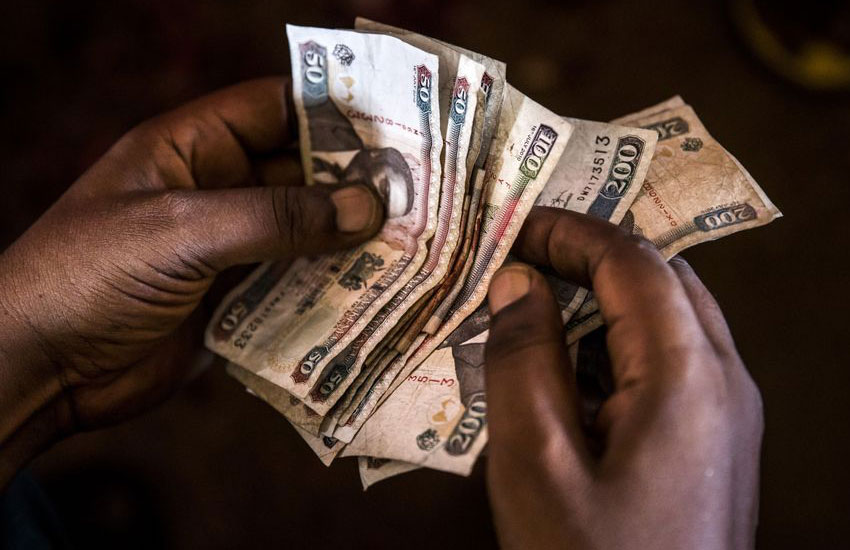
“We don’t find a tapering off of happiness at the top of the income scale — more money steadily brings more happiness,” said the study’s lead author, Jean Twenge, according to Business Insider. “It’s also possible that the tapering effect is an outdated finding, as the link between money and happiness has grown.”
The study also analyzed the happiness to wealth ratio through the lens of race: “We can’t say for sure, but the increase in happiness for Black Americans since 1972 could be due to gains in education and opportunities over this time,” Twenge said. “It will be interesting to see if this trend holds true during the Trump presidency and the pandemic; it’s possible Black Americans’ happiness will decrease after 2016.”
The study concluded before Donald Trump’s election and therefore data after that point, including the recent coronavirus pandemic, is not included.
“It will be interesting to see what happens with these trends in 2020, given the huge changes wrought by the pandemic and the protests,” Twenge said. “I think it’s likely that the growing class divide in happiness has continued during the Trump presidency, as income inequality has stayed high. In addition, the pandemic is having a bigger economic impact on lower-income workers than higher-income, which may contribute to an even larger class divide in happiness in 2020.”
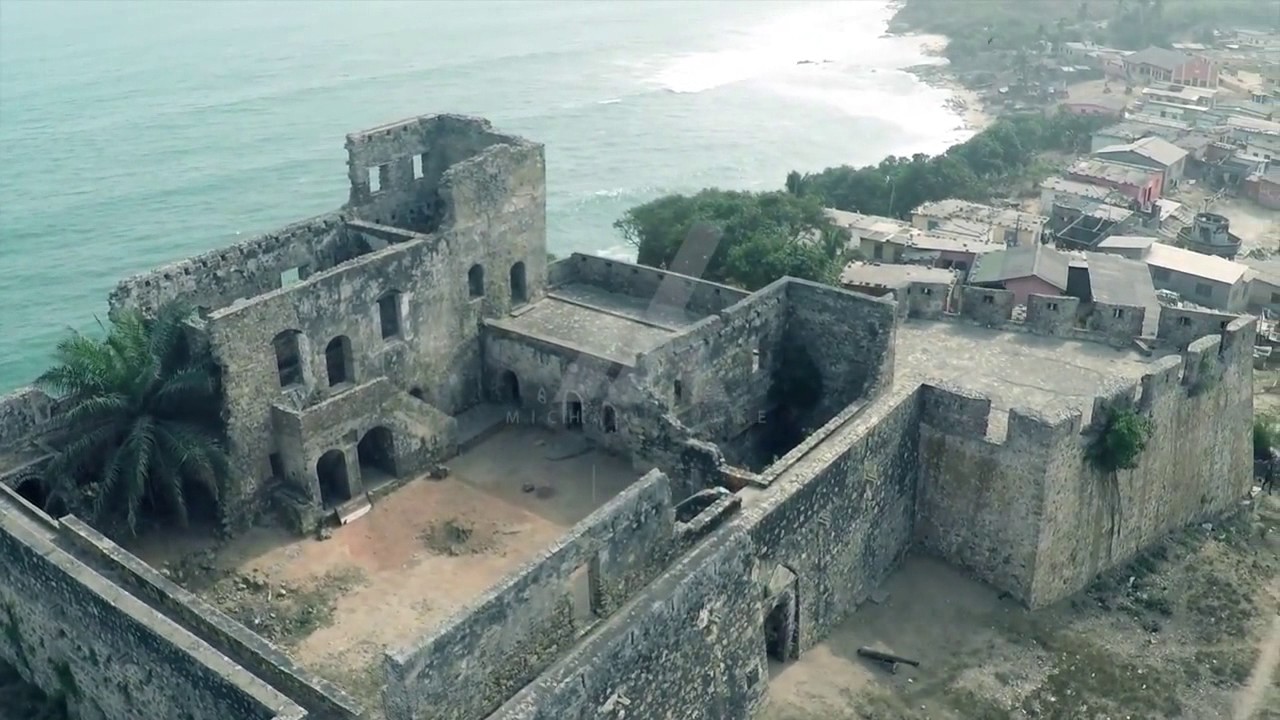
Along Ghana’s 500-kilometre coastline, you’ll find 30-odd surviving castles, forts and former trading posts that stand as a stark reminder of the country’s dark past. Formerly known as the Gold Coast because of its rich gold deposits, the coastline was the hub of West Africa’s mineral and slave trade era.
Built between 1482 and 1786, the stark heritage buildings remind visitors of what was the largest forced migration in history and the atrocities of the transatlantic slave trade. The castles and forts served as holding stations for slaves, where they were kept in inhumane conditions in dark, cramped dungeons before being shipped to the New World (the Americas and Caribbean).
Standing as silent witness to the tyranny of the slave traders, Ghana’s castles and fortified trading posts have been turned into museums. A guided tour takes you on a walk through the courtyards and dungeons and brings to life the heartbreaking experiences of the slaves. The tours are popular among African American tourists who visit Ghana to learn more about their heritage.
The castles and fortified trading posts were placed on Ghana’s coastline as a strategic link in the trade routes that were established by the Portuguese in the 15th century. For almost four centuries, the struggle between European trading powers for domination of the Gold Coast played out where the European buildings were seized, attacked, exchanged, sold and often abandoned over the years.
In the early 1500s, the castles were gradually converted to holding cells for slaves as the demand for human labour in the New World started to grow. The dark dungeons tell a tale of utter misery and despair up until the slave trade was abolished by colonial powers in the first half of the 1800s.
The 5 most significant castles and forts on Ghana’s beautiful Cape Coast are a good starting point if you’re visiting Ghana to explore this historic stretch of coastline.
Cape Coast Castle
Cape Coast Castle was built in 1653 for the Swedish Africa Company. It was originally used as a trading post for the gold and timber industries and later expanded by the Dutch and British to serve as an essential holding station for slaves bound for the New World.
Thousands of enslaved Africans passed through the notorious “Door of no return” at Cape Coast Castle. The door led slaves out of the dungeons and onto the ships setting off on the Middle Passage. The boat journeys could last several months and an estimated 15 percent of slaves died on board the ship before reaching the New World.
St George’s Castle
St George’s Castle (also known as Elmina Castle) is located in the quaint fishing town of Elmina, a 20-minute drive from Cape Coast Castle. The stark white-washed building was first used as a fortified trading post and then as a holding station for slaves.
The castle was built in 1482 by the Portuguese and taken over 150 years later by the Dutch, serving as the headquarters of the Dutch West India Company for two centuries until it was ceded to the British in 1872. It’s the oldest European structure in Ghana.
The Dutch made substantial changes to St George’s Castle, including adding a marketplace where slaves could be auctioned. Under the rule of the DWIC, an estimated 30 000 slaves passed through the castle’s ‘Door of no return”.
Fort St Jago lies across the lagoon from St George’s Castle. Built on a hill with excellent views of the castle and the town of Elmina, the fort was originally built as a church dedicated to St Jago. It was also used as a gun-position by the Dutch to attack and overtake St George’s Castle from the Portuguese.
A permanent fort was built on the site years later that consisted of two landward bastions, two seaward bastions and buildings that housed soldiers. Over the centuries, Fort St Jago has been used as a slave holding station, prison, hospital and a resting house for sailors.
Ussher Fort
Ussher Fort is located on the coast of the capital city of Accra, a day’s march from Elmina. Formerly known as Fort Crèvecœur, it was built by the Dutch in 1649 as a simple factory and later enlarged by the Dutch West India Company. The fort was later transferred to the British in 1868 under the Anglo-Dutch Gold Coast Treaty (1867).
Ussher Fort is currently being restored with funds from the European Commission and UNESCO. The purpose is to convert it to a museum and International Documentation Centre.
Osu Castle
Formerly known as Christianborg Castle, Osu Castle has been the seat of government since the early 1920s. It’s now the official residence of the President of Ghana and is not open to the general public. Located in Osu in the capital city of Accra, the castle was originally built as a substantial fort by Denmark-Norway in the 1660s.
Osu Castle was strategically positioned between two forts; Fort Crèvecoeur which was controlled by the Dutch and Fort James by the British. Denmark-Norway used the castle as its headquarters for almost 200 years, with some interruptions. For much of that time, it served as the capital of the Gold Coast of Denmark-Norway.
This year’s annual BET Awards were virtually held last night and hosted by TV presenter and actress Amanda Seales.
2020 marked the most prominent television network targeting African American audiences in the United States and across the world’s 20th anniversary of the event and BET’s 40th anniversary.
Notable winners of the event included Zimbabwe’s Sha Sha, the first winner of such an award in that county.
Some biggest starts from Africa were Wizkid and Burna Boy who brought home each an award. Some biggest winners of the night included Megan Thee Stallion, DaBaby, Issa Rae, Lizzo, and Chris Brown.
See the list of this year’s BET award winners below.
Album of the Year
Roddy Ricch – Please Excuse Me for Being Antisocial
Best Female R&B/Pop Artist
Best Male R&B/Pop Artist
Chris Brown
Best Group
Best Collaboration
Chris Brown (featuring Drake) – No Guidance
Best Female Hip Hop Artist
Megan Thee Stallion
Best Male Hip Hop Artist
Video of the Year
DJ Khaled (featuring Nipsey Hussle, John Legend) – Higher
Video Director of the Year
Teyana “Spike Tee” Taylor
Best New Artist
Roddy Ricch
Dr Bobby Jones Best Gospel/Inspirational Award
Kirk Franklin – Just for Me
Best International Act
Burna Boy
Best New International Act
Sha Sha
Best Actress
Issa Rae
Best Actor
Michael B Jordan
Young Stars Award
Marsai Martin
Best Movie
Queen & Slim
Sportswoman of the Year
Simone Biles
Sportsman of the Year
LeBron James
2020 Coca-Cola Viewers’ Choice Award
Megan Thee Stallion (featuring Nicki Minaj and Ty Dolla $ign) – Hot Girl Summer
BET Her Award
Beyonce (featuring Blue Ivy Carter, Wizkid and Saint Jhn) – Brown Skin Girl
Systemic racism in agriculture is painfully obvious. Why has it taken a new Civil Rights movement to clearly expose the sordid roots and present-day inequalities in food and farming?
Credit: Heifer International
Jun 22 2020 (IPS) – There has been far less social progress in the United States in the last 155 years than many people would like to believe. In 2020, racism still seeps its way into every aspect of life; from unconscious bias and micro-aggressions in everyday interactions to domestic and international policy and enforcement.
As an organization with 76 years of history supporting smallholder producers, we have a responsibility to use our experience to name and break the barriers that have plagued Black, Indigenous and People of Color farmers. Fighting injustice in all its forms – hunger, malnutrition, poverty, income inequality, climate change and gender inequity – has long been a tenet of our work.
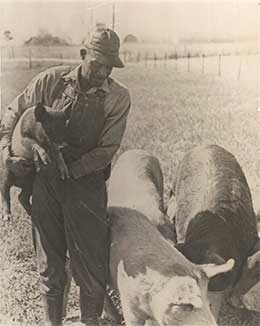
A farmer who participated in the Heifer International and Prentiss Institute 30-year partnership in Mississippi. Credit: Heifer International
We have worked to break down barriers that prevent the inclusion and success of marginalized groups in agriculture. Heifer International has assisted with land rights, helped farmers organize, provided technical assistance to increase their production and productivity, and improved access to capital and to markets. But good intentions do not equal positive impact. It is not enough to mean well. We have to do well.
Our mission cannot be fulfilled without recognizing how deeply agriculture is rooted in racism. It’s imperative to address how synonymous the origins of our food system are with the battle currently being fought – how the success of global agriculture has been sown with the blood and sweat of people of color.
In the United States, modern agriculture was built on the backs of enslaved people who were used as property and valued only as production units. They produced cotton, tobacco, sugar, indigo, rice, sweet potato, peanuts, watermelon and okra. This unrelenting free labor, coupled with simultaneous extraction of farming knowledge, directly led to America’s economic domination of the 18th century and pervasive industrialized agricultural ascendancy that remains today — facilitating an empire of production, processing and trade. When slavery finally became illegal, the tradition of Black exploitation for food-flow gain continued in the form of tenant farming, sharecropping and land grabbing.
In the 1930s, as minimum wage and other legislation was enacted to protect labor rights, the agricultural industry remained exempt and farmworkers (at the time, predominately African American) were excluded; this loophole was not modified until the 1980s. Simply put, our country’s designation as the ‘crop basket of the world’ would not have been possible without the unwilling sacrifice of Africans and African Americans.
But today, the Black community is disproportionately impacted by food insecurity, malnutrition, diet-related disease, lack of land ownership and largely exclusion from agriculture as a whole.
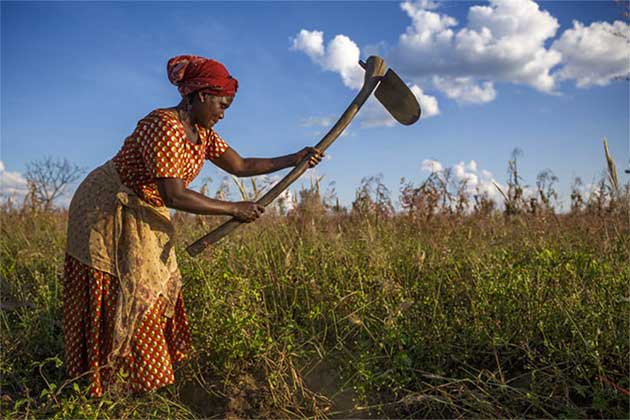
Farmer works in her peanut field in Zambia. Credit: Heifer International
The U.S.’s agricultural foundation follows a tradition of forced labor spanning huge expanses of time and place. Most of our favorite grocery items are a product of colonialism, widely available thanks to the almost standardized practice of one powerful predominantly white nation dropping anchor onto a foreign land, conquering and brutally subjugating its indigenous people, ravaging the soil with the compulsory workforce of human ‘property,’ and sending resulting agricultural goods back to its own and other wealthy countries at an enormous profit.
Farmer works in her familys sweet potato field in Malawi. Credit: Heifer International
The Dutch East Indies brought Arabica and sugar, British India produced tea and spices, German East Africa ushered in sesame and Robusta, French West Africa brought chocolate and peanuts and the Belgian Congo palm oil and sugar. When slavery was no longer condoned, oppressive conditions on stolen land remained. While each wave of colonialism has its own nuanced narrative, they all propagated from the same seed – racism.
This subjugation continues to play out, under new names but similar practices, all over the world. In many countries, racial, indigenous, ethnic or caste groups are deemed ‘less than’ – less worthy of basic safety and human rights, of fair pay and equal opportunity and of dignity. Considering 70% of the world’s hungry are or used as food producers, it’s a statistical certainty that what is on our plates stems from one of these groups.
Poverty is not an accident. When entire groups of people experience similar forms of socio-economic marginalization, that is by design. It is intergenerational. It is systemic, born of racially and ethnically driven oppression. It is intolerable.
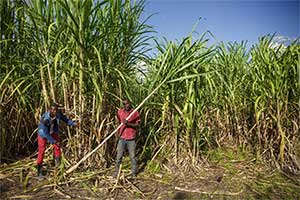
Farmer and farm worker Sevia Matinanga (right) harvest sugar cane in Zambia. Credit: Heifer International
We cannot change the past, but we can actively acknowledge it. We must begin the more critical work of changing the course of the future, which means actively supporting communities of color in our local and global food system. There’s much to be done. Governments must enact policies to ensure full, inclusive and healthy participation in agricultural livelihoods and access. Organizations like Heifer International need even deeper commitment to social, economic and environmental justice on every level of our work, saying “no” to complicit systems and “absolutely” to accelerating the visions marginalized smallholder farmers have for their futures. Consumers can seek out black-owned agri-businesses and take a stand against corporations that source ingredients for unethical prices and in many cases, via actual forced and/or child labor. The world is ripe for real change, and we are ready for it. Source
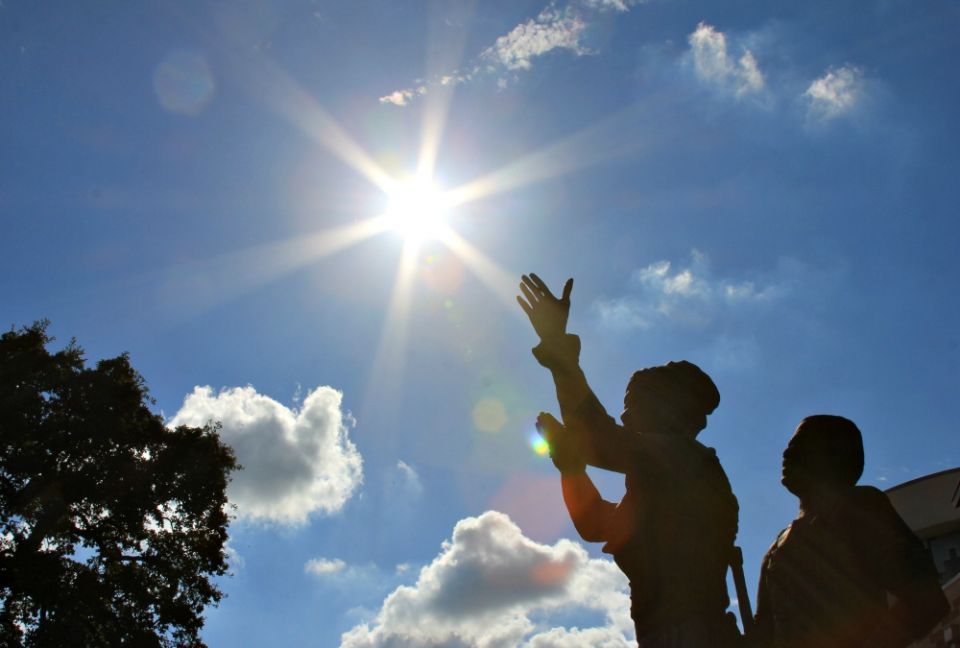
Statues are part of the Juneteenth Memorial Monument, which commemorates African Americans’ emancipation from slavery, at the George Washington Carver Museum, Cultural and Genealogy Center in Austin, Texas. (Wikimedia Commons/Jennifer Rangubphai)
The ever-expanding protests over the epidemic of police violence and systemic racism in the United States, manifested most recently in the murders of George Floyd, Breonna Taylor and Ahmaud Arbery, have brought our society to another monumental crossroad.
At the intersection of these enduring crimes against humanity and protesters of varying hues and creeds screaming, “Enough is enough,” is a global system of anti-Blackness and violence that has strangled Black communities in the United States and across the African Diaspora since the rise of the trans-Atlantic slave trade. That these murders and protests have erupted amid a global pandemic that is disproportionately killing Black and Brown people only underscores the unchecked ferocity of institutionalized systems of white supremacy in our society.
In recent days, Catholic statements condemning the sin of racism alongside some clergy and sisters at #BlackLivesMatter protests across the country and world offers hope to those who have long struggled against the plague of white supremacy within and outside church boundaries. This is especially true for many Black Catholics who initiated the fight against racism in the Catholic Church in the modern era and Black Catholic women and youth who have been shouting Black Lives Matter since the hashtag emerged from three Black women activists in 2013 following George Zimmerman’s acquittal in the murder of Trayvon Martin.
That it has taken so long for the institutional church and many non-Black Catholics to embrace the rally cry of #BlackLivesMatter, however, cannot be ignored. It must be said, too, that the recent Catholic statements on racism and rising protests fall way short when it comes to acknowledging the church’s role in the contemporary crisis and direct complicity in the sins of anti-Black racism, slavery and segregation in the modern era.
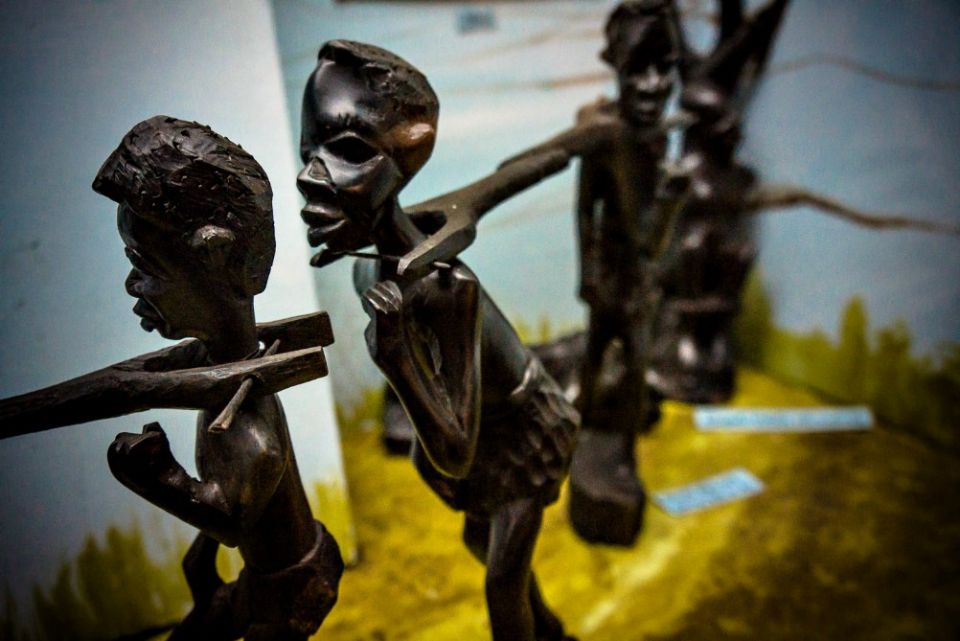
Carvings depict a caravan of people being taken into slavery at Lake Malawi Museum in Mangochi, Malawi. (Wikimedia Commons/Tim Cowley)
While Catholic social teaching affirms “the right to life and dignity” of every person, the fact remains that the church egregiously violated these teachings through its participation in the trans-Atlantic slave trade and imperial practices of African slavery and segregation in the Americas, Europe and Africa.
In the 15th century, the Catholic Church became the first global institution to declare that Black lives did not matter. In a series of papal bulls beginning with Pope Nicholas V’s Dum Diversas (1452) and including Pope Alexander VI’s Inter Caetera (1493), the church not only authorized the perpetual enslavement of Africans and the seizure of “non-Christian” lands, but morally sanctioned the development of the trans-Atlantic slave trade. This trade forcibly transported at least 12.5 million enslaved African men, women and children to the Americas and Europe to enrich European and often Catholic coffers. It also caused the deaths of tens of millions of Africans and Native Americans over nearly four centuries.
In the land area that became the United States, the Catholic Church introduced African slavery in the 16th century long before 1619. In fact, at various moments in American history from the colonial era to the U.S. Civil War, the church was the largest corporate slaveholder in Florida, Louisiana, Maryland, Kentucky and Missouri. We must also never forget Roger B. Taney, the nation’s first Catholic Supreme Court Justice and a descendant of prominent Catholic slavers from Maryland, infamously declared that Black people “had no rights which the white man was bound to respect,” while denying the freedom petitions of Dred and Harriet Scott and their two daughters in 1857.
Advertisement
Advertisement
In Latin America and the Caribbean, Catholics, including religious orders of men and women, were also the largest owners of enslaved people during the colonial era. In Brazil, which received the largest number of enslaved Africans imported to the Americas, the Jesuits were at the center of the brutal sugar economy. Like their counterparts in the United States, Black Brazilians today, who are mostly Catholic, are fighting systemic racism and one of the highest rates of police murder against Black and Brown people in the Americas.
Following the abolition of slavery, the Catholic Church stood as the largest Christian practitioner of segregation. In the United States, where the history of many Black Catholics predates that of white and ethnic white Catholics by over three centuries, the vast majority of Catholic institutions and religious orders of men and women systematically excluded African-descended people, especially U.S.-born Blacks, from admission solely on the basis of race well into the 20th century.
The historical record is inundated with gut-wrenching examples of Black Catholic faithfulness in the face of unholy discrimination and segregation in white Catholic parishes, schools, hospitals, convents, seminaries and neighborhoods. Yet, this history is rarely incorporated into dominant narratives of the American Catholic experience.
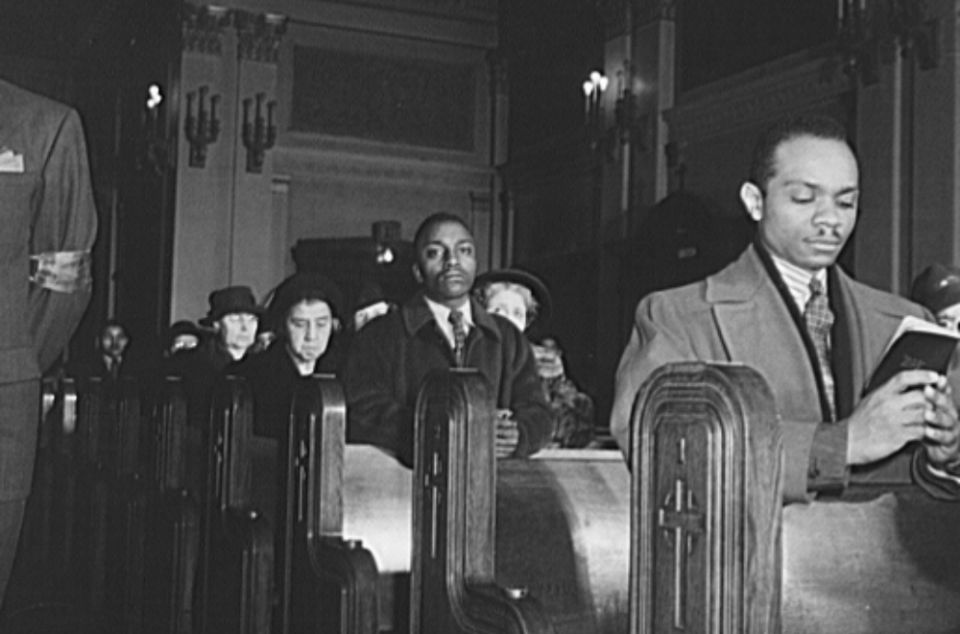
Sunday Mass at Corpus Christi Church, a predominantly black parish, in Chicago in 1942 (Library of Congress)
The systematic denial and erasure of Black Catholic history denies the fundamental truth that Black history is Catholic history. It also a part of the system of white supremacy that continues to inflict harm on the descendants of the enslaved people who literally built this country and the American church and those who continue to benefit from the brutal history of colonialism, slavery and segregation.
Making formal apologies for the church’s own histories of slavery and segregation;
Stopping the closings of active African American parishes;
Reinvesting in and expanding the Black Catholic educational system;
Requiring the teaching of Black and Brown Catholic history in every Catholic school and seminary;
Endowing scholarships, fellowships and professorships for Black and Brown scholars at Catholic colleges and universities;
Broadening formal church leadership to include anti-racist women and members of the laity.
I also called upon Catholics to take leading roles in campaigns working to protect Black lives, eliminate racism in the health care system, end mass incarceration and bail, and secure police reform and accountability.
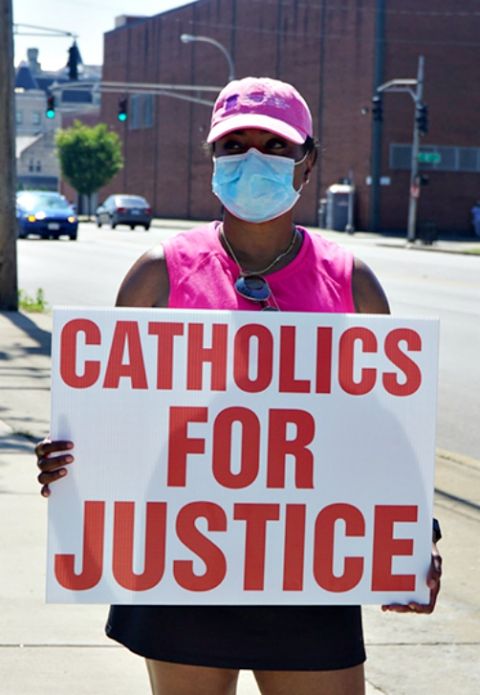
Kenya Turner, a member of St. Martin de Porres Church in Louisville, Kentucky, joins the “Black Catholics Unite: Stand For Justice March” on June 6. (CNS/Courtesy of The Record)
In the wake of uprisings sweeping the world, the obscenely high unemployment rates in the Black community as a result of the pandemic, and the growing use of militarized police forces against protesters, additional actions are warranted. I now wonder if Catholic reparation must also include creating institutions to help establish more formal connections and foster long-term engagement between African American Catholics and African Catholics in Africa. Over the past few years, significant numbers of African Americans and other members of the African Diaspora living in the West have begun to repatriate to Africa in response to the rise of white supremacist and state violence threatening Black communities.
The earliest documented roots of the Catholic Church are in Africa. Considering the fact that the church is also currently experiencing its greatest rates of growth on the continent, it would be a substantial development for major U.S. Catholic universities to follow the lead of Webster University in Missouri and begin establishing African American and African-led campuses in Catholic Africa with exchange, enrichment and study abroad programs at every level from K-12 to the university and the adult laity.
While I do not yet foresee a mass Black exodus from the United States, assisting in efforts to reconnect Black people to the land of their ancestors and growth in Africa is essential. Moreover, if there ever came a time when Black Americans did need to flee for their safety, the church could play a leading role.
The denial of the dignity and sanctity of Black life is a part of the DNA of this country. It is also a foundational sin of the American Catholic Church. Black Catholic history reveals that the church has never been an innocent bystander in the history of white supremacy. If there will ever be a chance for true peace and reconciliation, the Catholic Church must finally declare with all of its might and resources that Black lives do matter. The goal for Black people has never been charity; it is full justice, human rights, freedom and the complete dismantling of white supremacy, beginning with the church.
[Shannen Dee Williams is the Albert Lepage Assistant Professor of History at Villanova University. She is completing her first book, Subversive Habits: Black Catholic Nuns in the Long African American Freedom Struggle with Duke University Press. In 2018, she received the inaugural Sr. Christine Schenk Award for Young Catholic Leadership from FutureChurch for using history to foster racial justice and reconciliation in religious congregations of women.]
The nation’s oldest law school has appointed its first black dean. On July 1, civil procedure and federal courts scholar A. Benjamin Spencer will take over as dean of William & Mary Law School. The College of William & Mary in Williamsburg, Virginia, has never hired an African American dean to lead any school in its 327-year history.
Ian Bradshaw/Courtesy of UVA Law School
A. Benjamin Spencer
For Mr. Spencer, breaking barriers has been a family tradition. In 1986, his father became the first African American federal judge in Virginia, and his grandfather was Notre Dame’s first African American professor in Indiana. President Katherine Rowe, who became the college’s first female president in 2018, said Mr. Spencer “brings that broad view of legal practice, together with a deep appreciation of the ethos of the citizen lawyer.” (Richmond Times-Dispatch)
2. Chile
Chile has published a new climate action plan, committing to cut fossil fuels around a “social pillar” framework that protects vulnerable groups. As climate advocates around the world demand a “green recovery” from COVID-19, many welcome Chile’s pledge to focus on easing inequality and tying economic recovery with environmental reform. Chile is the second South American country to update its nationally determined contributions under the Paris Agreement. The country aims to become carbon neutral by 2050 – no small challenge for an economy based on emission-heavy industries such as mining and agriculture – and to cut emissions from deforestation 25% by 2030. Once Chile overcomes the coronavirus crisis, Environment Minister Carolina Schmidt said the country “will enter a rehabilitation phase which must be sustainable.” (Thomson Reuters Foundation, The Guardian)
3. Germany
In a unanimous vote, the German parliament has approved legislation to allow rabbis to act as military chaplains for the first time since 1933. Before Adolf Hitler came to power, military rabbis were relatively common, but for nearly a century only Protestant or Roman Catholic chaplains have been allowed in the service. The change is welcomed by lawmakers from all parties and Jewish groups. “Military rabbis will make their advice available to the Bundeswehr [Germany’s armed forces] as a whole,” said Josef Schuster, president of the German Jewish Central Council. The measure was introduced in December by Defense Minister Annegret Kramp-Karrenbauer, who said she plans to introduce similar laws allowing imams and Christian Orthodox priests to also serve as religious leaders in the armed forces. (Deutsche Welle)
4. Malawi
The United Nations is working with communities in Malawi to help about 53,000 children with albinism safely attend school. Since the program has been running, several participating districts report dropout rates have fallen to around 5%. Albino children often are kept at home by their parents out of fear they will be kidnapped, attacked, or killed because of misconceptions that albinos hold magical powers.
Thoko Chikondi/AP
Catherine Amidu (right) laughs with her friend Aishain in Machinga, Malawi, Feb. 9, 2020. Catherine faces risks because of her albinism.
The Joint Program on Girls Education is working with schools, local leaders, and police to create more supportive learning environments and teach students how to protect themselves. “For any child, anywhere, education is not a luxury. It’s a necessity and fundamental right regardless of their status,” said Maria Jose Torres, the United Nations resident coordinator. (UN News)
5. Australia
A koala has been born at the Australian Reptile Park in New South Wales for the first time since the 2019-20 bushfires killed more than 1 billion animals nationwide. Over 240 days, more than 13 million acres burned across New South Wales destroying thousands of homes and wildlife habitat. The koala population was especially devastated, and wildlife parks are continuing to rehabilitate injured animals and work to fortify the next generation. The new joey poked her head out of her mother’s pouch in a May 26 Facebook video posted by the Australian Reptile Park. The post called the joey “a sign of hope for the future of Australia’s native wildlife” and announced her name: Ash. (ABC, CNN)
Get the Monitor Stories you care about delivered to your inbox.
Worldwide
The International Olympic Committee reports record high representation for women across its 30 commissions, continuing its trend toward parity. Women now fill 47.7% of its positions, up from 20% in 2013 when the IOC began its commitment to advance gender equality.
Denis Balibouse/Reuters
The International Olympic Committee, headquartered in Switzerland, is close to reaching gender parity.
The IOC also appointed two new female commission chairs: Eleven are now led by women. Thailand’s Khunying Patama Leeswadtrakul will chair the Culture and Olympic Heritage Commission, while former Chinese speedskating champion Zhang Hong will coordinate the 2024 Winter Youth Olympic Games in South Korea. “There is always more that can be done,” said IOC President Thomas Bach, “and we can make progress only if we work on this together.” (Reuters, International Olympic Committee)