Laurence Fox has revealed his half-Kuwaiti girlfriend of five months, Sara McKinnon dumped him over his controversial race rant on Question Time in January.
The actor, 41, split from the dual-heritage photographer and fashion designer, 39, shortly after his TV appearance, but they are now thought to have reconciled and were pictured linking arms on April 22.
Laurence told the Sunday Times magazine that McKinnon ended the relationship after the incident and said his comments ’caused a lot of stress for his family’.
The star had said during the interview, conducted at his flat pre-lockdown, that he was dating Telegraph journalist Madeline Grant, who also appeared on the panel during that fateful night on Question Time.
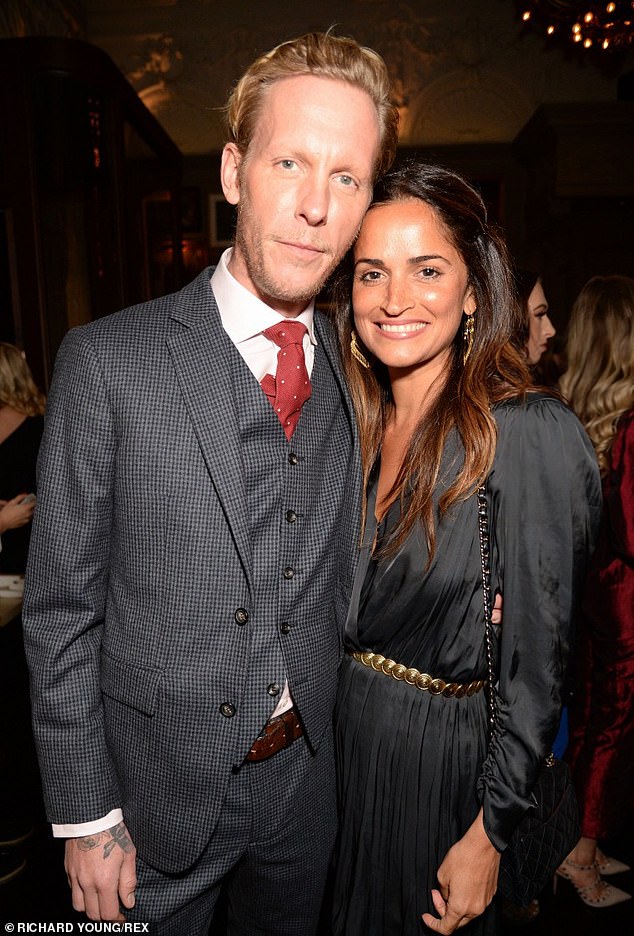
Upset: Laurence Fox has revealed he was DUMPED by his half-Kuwaiti girlfriend Sara McKinnon over his controversial Question Time race rant in January – although they are since thought to have reconciled (pictured together on April 22)
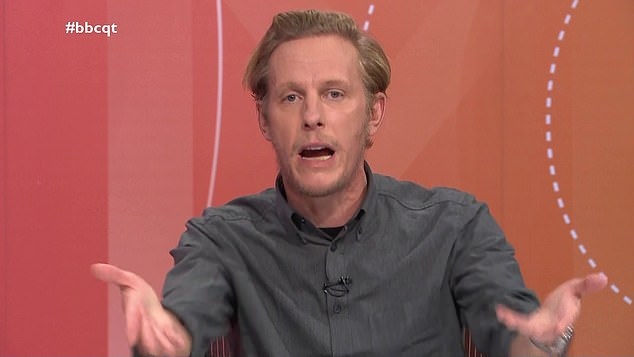
Controversial: Laurence was a guest panellist on Question Time when an audience member called him a ‘white, privileged male’ and he called her description of him ‘racist’
It is not clear how long the brief romance lasted, but they have now split, and he is believed to have reconciled his relationship with McKinnon.
The Mail On Sunday revealed over the weekend that the recently reconciled couple are now staying at Laurence’s home in London, where his children, Winston, 11, and Eugene, eight, from his marriage to Billie Piper, 37, also spend time.
The pair had been spotted at several upmarket showbiz events together, including the GQ magazine fashion dinner in January.
Friends said he is ‘very happy’ with Miss McKinnon, the daughter of the Emmy award-winning nature documentary producer Michael McKinnon.
Fall-out: Laurence admitted his brother-in-law, half-Nigerian comedian Richard Ayoade was ‘furious’ with his following his comments – he is married to his sister Lydia (pictured in 2012)
One said: ‘He has had a good feeling about her, it is delightful to see him happy after everything he has been through.’
Laurence also said in the Sunday Times interview that he had fallen out with his brother-in-law, half-Nigerian comedian Richard Ayoade, 42, who is married to his sister Lydia.
He revealed he didn’t attend Sunday lunch at their house for a few weekends, as a result of their feud but they have since become friends again.
Back and forth: Laurence’s interview with The Sunday Times had been conducted pre-lockdown and he had said he was dating journalist Madeline Grant, but they have since split
Fancy meeting you here: Madeline was on the far left of the Question Time panel when Laurence appeared on the show
Love: Laurence pictured with Sara at the GQ Men’s Dinner on January 6
Laurence’s tangled love life…
January – present Sara McKinnon
Laurence has been dating fashion model and photographer Sara McKinnon, but they split at the start of their romance due to his QT race rant before reconciling
Date unknown – Madeline Grant
Laurence met the Telegraph journalist on QT and they were together at the time of the Sunday Times pre-lockdown interview, during Laurence’s temporary split from Sara
2018 DJ Lilah Parsons
The couple called it quits following a 10-month romance, due to ‘clashing work schedules’
2016 Rebound fling with Vogue Williams
The pair had a brief fling following the end of both of their marriages – Vogue had been married to Brian McFadden
2007 – 2016 Married to Billie Piper
The couple had two children together, Winston, 11, and Eugene, eight and Laurence said he felt suicidal when the marriage was over
He said: ‘[He] was furious. He told me I have never encountered racism. I responded. “Yeah, of course I have”. I’ve encountered racism from black people towards me, when I was working in Kenya [as a safari driver] for seven months.
‘It’s the way you’re spoken to. Racism can be deferential.’
Laurence has had a very chequered love life over the years.
He was married to actress Billie, the mother of his two children, from December 2007 – May 2016 and has said he surprised he didn’t twig ‘how inappropriate they were for one another sooner.’
She is now living with rock star Johnny Lloyd and they have a daughter Tallulah, together.
In December 2016, before his divorce was finalised, he split from Vogue Williams, 34, after a brief romance, saying they would ‘remain friends.’ She is now married to Spencer Matthews, 31.
In August 2018, Laurence and DJ Lilah Parsons, 32, called it quits following a 10-month romance, due to ‘clashing work schedules’.
Back in February, he said he would never date a woman under the age of 35 because they are ‘too woke’.
He also revealed he once dumped a partner because she liked a pro-#MeToo advert made by shaving firm Gillette, although he didn’t reveal who that was.
Chequered love life: Laurence was famously married to Billie Piper from 2007-2016 and they have two sons together (pictured in October 2012)
Laurence was famously a guest panellist on Question Time when an audience member called him a ‘white, privileged male’ and he called her description of him ‘racist’.
He had entered into a debate about how Meghan Markle is portrayed in the media, sparking a race row about white male privilege while on Question Time.
The actor had called possible bias coverage towards the Duchess of Sussex ‘boring’ and accused an audience of racism for calling him a white privileged male.
Laurence also hit out at the inclusion of a turban-wearing soldier in Sam Mendes film 1917 – he later apologised for this.
He told The Sunday Times that this was why actor don’t get involved in chats like this because he’s ‘not smart enough to do it.’
All over: In August 2018, Laurence and DJ Lilah Parsons, 32, called it quits following a 10-month romance, due to ‘clashing work schedules’ – pictured in July 2018
Meanwhile, a couple of weeks after Laurence’s fateful appearance on the show, he appeared on Good Morning Britain to apologise to the Sikh community.
He had claimed the inclusion of a turban-wearing soldier in Sam Mendes film 1917 was ‘incongruous’ – but in a follow up tweet said ‘I stand by everything else I said’.
The outspoken actor made the comment about the critically-acclaimed film in a podcast on Saturday while being interviewed by James Delingpole.
When asked about his remarks by GMB hosts Piers Morgan and Susanna Reid the next day about whether the inclusion of the character was historically out-of-place, he replied: ‘I’m not a historian I don’t know.’
All over: In December 2016, before his divorce was finalised, he split from Vogue Williams, 34, after a brief romance, saying they would ‘remain friends’
Sikh historian Peter Singh Bance told MailOnline that Fox should ‘check his facts’, saying: ‘Laurence Fox is incorrect with his facts as Sikhs did fight with British forces, not just with their own regiments.’
The Lewis star had posted on his Twitter account and apologised for the ‘clumsy way’ he expressed himself.
He said: ‘Fellow humans who are #Sikhs. I am as moved by the sacrifices your relatives made as I am by the loss of all those who die in war, whatever creed or colour.
‘Please accept my apology for being clumsy in the way I have expressed myself over this matter in recent days.’
But in a follow up tweet soon after, he said: ‘I stand by everything else I said and will continue to do so. Sleep well.’
Sikh soldiers were present at some of the conflict’s bloodiest battles, including Ypres and the Somme.
Inequality and poverty make the coronavirus more difficult to manage, which should make us rethink the world’s social and economic order, writes Tomo McKinnon.
MANY HEALTH EXPERTS and politicians including New York Governor Andrew Cuomo have warned us that COVID-19 is a “great equaliser“. This is because anyone can spread the disease and it has dire consequences for everyone around the world.
In response to President Trump’s announcement of halting funding to the World Health Organisation (WHO), Director-General Tedros Adhanom Ghebreyesus reiterated this message, stating that the disease “does not discriminate between rich nations and poor, large nations and small, nationalities, ethnicities, or ideologies”.
Dr Tedros is right to emphasise this. The United States and many countries in Western Europe are wealthy and have also been hit hard by the coronavirus outbreak. Indeed, some notable world leaders and celebrities have contracted the virus, including Prime Minister Boris Johnson who emphasised that his stint in intensive care “could have gone either way”.
Many have criticised this argument, that the Coronavirus “does not discriminate”. One article from the Guardian’s Kenya Evelyn has pointed out that the virus has clearly impacted the United States along racial lines. Many African Americans face a greater risk of exposure to the virus and are more likely to have other health complications than their non-black neighbours.
In states like Louisiana, African Americans make up thirty per cent of the population, while accounting for over 70 per cent of coronavirus deaths. Dr Tedros is, of course, correct to clarify that no one is exempt from the virus, but Evelyn makes an important point, that the coronavirus does impact some groups disproportionately.
Indeed, we may never know the extent of coronavirus cases in countries suffering from extreme poverty, because of the grave shortage of coronavirus test kits.
In such circumstances, a lockdown is not only undesirable: it’s impossible.
For example, the Government of Malawi recently declared a 21-day lockdown. But according to Al Jazeera, thousands of traders have protested the ban, as they have competing concerns, including how they will feed themselves and their families without work. In fact, the High Court of Malawi invalidated the lockdown, declaring that the Government failed to make adequate provision for the welfare of the poor.
Mumbai, India’s largest city, has also seen recent protests from migrant workers who are concerned about their economic security. Thousands of people have turned out to protest the restrictions on their work. Despite the advice surrounding “social distancing” advice, they have grouped together, attesting to their desperation to work and their economic precarity.
Despite directing his concern to the United States, Dr Tedros’ description of the coronavirus as a borderless disease also strongly relates to India, a country with extreme wealth disparity. It is a nation that houses over one hundred billionaires among tens of millions of slum-dwellers.
This situation creates a paradox. Whilst some support a national lockdown, others have little choice but to go to work if it will mean food on the table. But for the wealthy, the poor can still be transmitters of the disease. In this sense, COVID-19 breaches many time-tested class barriers.
Now, those who can afford to socially isolate are still at the mercy of those who cannot.
This situation is an example of how it could be in our own personal interests to alleviate extreme poverty. For many years it was unethical, but nonetheless possible, for wealthy nations or individuals to ignore the health crises faced by the world’s poor.
But the COVID-19 outbreak is an example of how universal healthcare and the abolishment of extreme poverty aligns with our own selfish interests. If people cannot afford to stay indoors and avoid work in impoverished countries, they will likely spread the disease to others.
Even in the U.S., the wealthiest nation on the planet, we have seen that many cannot afford to properly self-isolate. The poor living standards of the disadvantaged have contributed to the demise of the global economy, and even the richest men and women have felt the impacts.
India and the United States stand as particularly useful examples of what could unfold worldwide. Indeed, events in these countries have major consequences for Australia too, as a country which is heavily reliant on the global economy.
Without a global lockdown, it is unlikely that the virus will simply fizzle out. Further, we are yet to produce and deploy a vaccine to eradicate the virus. There are many reasons to donate to effective charities that promote human health and reduce extreme poverty. But perhaps the coronavirus pandemic will teach us that this can be done in our own self-interests, too.
Tomo McKinnon is a history and Italian student at the University of Melbourne. He is interested in teaching, law, and global politics.
The coronavirus pandemic has been confirmed in over 180 countries globally since it was first discovered in the Chinese city of Wuhan in late December 2019.
The World Health Organisation, WHO, has since declared it a pandemic due to its spread. All except three African countries have recorded cases as governments roll out measures to combat the spread.
In this article, we will share the latest developments as authorities implement measures to contain the spread of the virus, especially on the African continent. Major stats as at April 13:
April 24: Trump speaks with Ramaphosa and Kenyatta
President of the United States Donald Trump has spoken to two African leaders pledging his country’s support for their respective response to the COVID-19 pandemic.
Trump spoke with South Africa’s Cyril Ramaphosa and Kenya’s Uhuru Kenyatta expressing America’s support to the two countries and pledging additional support.
The South African president is also current chairperson of the African Union, AU; he is leading Africa’s most impacted country and the continent’s effort to get international support to fight the pandemic.
South Africa’s coronavirus statistics as at April 24 at 7:00 GMT were as follows: 3,953 confirmed cases, 1,473 recoveries and 75 deaths. Kenya on the other hand had 320 cases, 89 recoveries and 14 deaths.
Africa dangerously behind in global race for virus gear
As Africa braces for a surge in coronavirus cases, its countries are dangerously behind in the global race for scarce medical equipment. Ten nations have no ventilators at all.
Outbid by richer countries, and not receiving medical gear from top aid donor the United States, African officials scramble for solutions as virus cases climb past 25,000. Even in the best scenario, the United Nations says 74 million test kits and 30,000 ventilators will be needed by the continent’s 1.3 billion people this year. Very few are in hand.
“We are competing with the developed world,” said John Nkengasong, director of the Africa Centers for Disease Control and Prevention. “The very future of the continent will depend on how this matter is handled.”
Politicians instinctively try to protect their own people and “we know that sometimes the worst in human behavior comes out,” said Simon Missiri, Africa director with the International Federation of Red Cross and Red Crescent Societies, urging an equitable approach to help developing nations.
The crisis has jolted African nations into creating a pooled purchasing platform under the African Union to improve negotiating power. Within days of its formation, the AU landed more than 100,000 test kits from a German source. The World Health Organization is pitching in, approaching manufacturers for supplies.
AP
April 23: Africa’s 43% jump in virus cases in 1 week worries experts
Africa registered a 43% jump in reported COVID-19 cases in the last week, highlighting a warning from the World Health Organization that the continent of 1.3 billion could become the next epicenter of the global outbreak.
Africa also has a “very, very limited” and “very, very strained” testing capacity, John Nkengasong, director of the Africa Centers for Disease Control and Prevention, said in his weekly briefing on Thursday.
The surge in infections on the continent is almost certainly under-reported and even higher in reality, say medical experts.
WHO’s recent report painted a grim picture for Africa, one of the last continents to be hit by the pandemic. WHO warned the virus could kill more than 300,000 people and push 30 million into desperate poverty.
Africa still has time to avert such a disaster, Nkengasong said, but testing people and tracing virus cases is critical.
“It all depends on what we are discussing here, which is, are you testing? Are you finding the cases? Are you isolating and tracking the contacts?” Nkengasong said, adding that the WHO report “is not a prediction that means it must happen.” By Nkengasong’s own criteria, Africa is struggling on the testing front.
In the two months since the continent began mobilizing to fight the outbreak, less than 500,000 tests have been conducted on the population of more than 1 billion. That’s just 325 people tested per 1 million people, Nkengasong said. By comparison, that’s far lower than Italy, one of the world’s worst-hit countries, he said.
“If you don’t test, you don’t find. And if you don’t test, you are blinded. If you don’t test, you are not ahead of the curve,” Nkengasong said.
African governments reported a total of nearly 26,000 cases as of Thursday, according to the Africa Centers for Disease Control and Prevention, up from just over 16,000 a week ago. Around 1,200 people have died. Although those figures are still relatively small in the global picture, the sharp increase in cases is a cause for concern, said Nkengasong. The previous week saw an increase of 29%.
The Africa Centers for Disease Control has a target of conducting 1 million more tests in Africa over the next four weeks and 10 million tests in the next four months. The overall effort is badly hampered, Nkengasong said, by a major obstacle: The existing fragility of the health services in many African countries.
“I’d like to make sure I make this very clear,” he said. “It is an uphill battle to build health systems while you need them. … That is what we are actually doing now. We are playing catch-up and that is a very, very tough thing to do.”
It’s not exclusively bad news for Africa. South Africa has the highest number of reported cases with around 3,300 but Africa’s most developed economy is being praised for an aggressive testing program. South Africa, aided by an existing infrastructure, has carried out more than 130,000 tests, according to its health minister.
And “they are starting to see a bending of their curve.” said Matshidiso Moeti, WHO’s regional director for Africa. But South Africa’s early and tentative signs of success — helped, maybe, by a strict lockdown — are being set off by “concerning increases” in virus cases in some countries in West Africa and East Africa, Moeti said.
Nigeria, Africa’s most populous country with 200 million people and a high population density, is a stark example of the testing and health system shortcomings prevalent across the continent.
The country has reported 873 cases of COVID-19 and 28 deaths but had conducted just 7,153 tests as of Wednesday, according to the Nigeria Center for Disease Control. Around 5,000 of those tests only came in the last week.
“The truth is, we have to work with what we have. We definitely didn’t start at the baseline where South Africa started,” said Chikwe Ihekweazu, director general of the Nigerian center.
“Many lessons will be learned here and around the world. But the middle of a crisis is not the time you can suddenly build up an infrastructural base that you need 20 or 30 years to build.”
AP
April 21: Mauritania beats virus, Tanzania MP infected
Authorities in Mauritania say the country does not have any active case of coronavirus as at today after all six patients tested negative out of the seven confirmed cases. The other patient succumbed to the disease.
Mauritania is one of the few African countries that have so far recorded single digit infection along with the likes of Burundi, Sao Tome and Principe, South Sudan with five, four and four cases respectively as of April 21.
Mauritania said it continued to carry out tests since March 13 when the index case was recorded. The country is currently enforcing a nigh-time curfew as part of containment efforts.
In Tanzania, a lawmaker has tested positive for the virus leading to calls for a suspension of parliamentary sitting. The unnamed MP is believed to have contracted the virus during a trip to the commercial capital Dar es Salaam.
“There shall be no two set of laws – for MPs and for the people. All MPs should be isolated, tested and contact-traced. Right from the beginning we advised that the parliament sessions should not be held. It’s dangerous.” said Zitto Kabwe, an opposition MP
The speaker of parliament has backed the president’s position that life must go on despite the need to exercise precautions amid the pandemic. Even though schools have been closed, there is no lockdown or curfew as is the case in most countries in the region.
President Magufuli has also rejected border closures stressing that most neighbouring countries depended on the Tanzania corridor for mush needed supplies. Tanzania’s case count stands at 254 with 11 recoveries and 10 deaths as of April 21.
April 20: Zimbabwe quarantines UK returnees, Madagascar announces COVID-19 treatment
The Zimbabwean government on Monday confirmed that 65 citizens had returned from the United Kingdom and were currently being quarantined.
But there was a protest by the returnees over where government had moved to quarantine them. Nick Mangwana, Secretary for Information bemoaned why the returnees had agreed to return but were refusing a state quarantine facility.
“They are refusing this accommodation demanding hotels. Govt can’t afford. Why come from a covid19 hotspot during a lockdown & demand posh facilities at stretched public cost?” His views have elicited mixed reaction on Twitter.
We received 65 Zimbabweans from the UK. Available place of quarantine is Belvedere Teachers College. They are refusing this accommodation demanding hotels. Govt can’t afford. Why come from a covid19 hotspot during a lockdown & demand posh facilities at stretched public cost?
Madagascar has announced the launch of a traditional remedy for the COVID-19 disease. President Andry Rajoelina said the medication called CVO or Covid-Organics > was an improved traditional remedy composed of Artemisia & Malagasy medicinal plants.
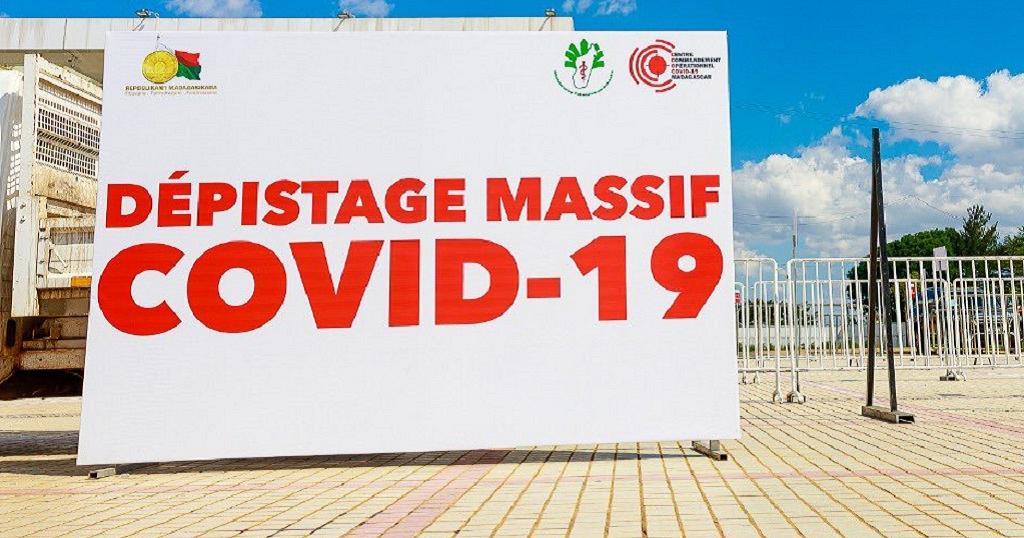
He said it was produced following scientific studies by IMRA (Malagasy Institute for Applied Research). The currently has 121 cases of COVID-19 with 39 recoveries and no death.
#Madagascar lancera demain le CVO ou Covid-Organics> remède traditionnel amélioré composé d’Artemisia & de plantes médicinales Malagasy suite aux études scientifiques de l’IMRA (Institut Malagasy de Recherche Appliquée). 1ers tests cliniques encourageants, 1ère étape franchie ! pic.twitter.com/MRJTZKvujr
Africa to be hit by Trump WHO fund cut, Tanzania prays
More than 1 million coronavirus tests will be rolled out starting next week in Africa to address the “big gap” in assessing the true number of cases on the continent.
This is according to the head of the African Centers for Disease Control and Prevention said Thursday, while one projection estimates more than 10 million severe cases of the virus in the next six months.
“Maybe 15 million tests” will be required in Africa over the next three months, John Nkengasong said.
The new initiative to dramatically accelerate testing comes as the continent of 1.3 billion people braces for its turn in the pandemic that has rolled from China to Europe and the U.S. and now beyond. Experts have said Africa is weeks behind Europe and the U.S. but the rise in cases has looked alarmingly similar.
The Africa CDC chief expressed concern for the U.S. decision to cut funding for the WHO, saying it “absolutely will affect (African Union) member states’ ability to receive support” from the U.N. agency. The U.S. is the top donor to the WHO, but President Donald Trump has complained about alleged mismanagement, to widespread objections.
The WHO’s regional chief for Africa, Matshidiso Moeti, said that for the current biennium, or two years, the region has received almost $50 million from the U.S.
Of the U.S. decision, she said the impact will be significant in fighting diseases beyond the coronavirus including malaria and HIV and “we are very much hoping it will be rethought.” Overall, the WHO’s 47-country sub-Saharan Africa region will need about $300 million over the next six months to support what the countries are doing to combat the virus, she said.
Any reduction in support for African nations will be painful as the continent has some of the world’s weakest health systems.
Tanzania prays
President John Magufuli has asked citizens to dedicate the weekend for prayer against the coronavirus outbreak.
Tanzania is one of few Africans countries that has refused to close its borders despite the virus. Also, there is currently no lockdown in the East African country and religious gatherings have not been banned.
“My fellow Tanzanians, due to coronavirus, I am asking that we use three days, from 17th – 19th April, 2020 (Friday, Saturday and Sunday), to pray to Almighty God that he deliver us from this pandemic. Let us pray each of us in their own faith, He will hear us,” he posted on Twitter.
Neighbouring Rwanda is in full lockdown as is Uganda whiles Kenya is using a dawn to dusk curfew to control spread.
All academic activities have been suspended. The country also announced the suspension of the Unity Day celebrations earlier this week. It was the second national event to be cancelled after the Uhuru torch race early this month was suspended.
As of April 17, Tanzania’s COVID-19 tallies stood at 94 confirmed cases with four deaths and 11 recoveries.
April 15: Uganda speaker unveils virus killing spray, Malawi lockdown
Ugandan Speaker of Parliament Rebecca Kadaga has unveiled what she calls her ‘coronavirus treatment’ which local media outlets report that she now calls a spray. The Observer newspaper reported that Kadaga blamed Ugandans for overreacting.
She is quoted as saying: “I didn’t call it a vaccine but a spray, which kills the virus.” The speaker came under fire a month ago for suggesting that some U.S. scientists who had visited her were close to a COVID-19 vaccine in collaboration with some Ugandans.
“There is a ray of hope, a professor who manufactured a treatment for coronavirus in the US was here last week and has donated the patent to Uganda. Within a fortnight, the treatment will be right here…there is hope and the treatment will start here in Uganda,” she said in mid-March.
The East African country currently has 55 confirmed case of the disease with eight recoveries and no death as of April 15. The tally is relatively lower in a region where Kenya has 216 cases and Rwanda with 134 cases. Djibouti tops in the East / Horn Africa region with 363 cases toppling Mauritius now second with 324.
Key stats #COVID19Africa as of April 15 at 08:30 GMT – Confirmed cases = 16,288 – Number of deaths = 873 – Recoveries = 3,238 – Infected countries = 52 – Virus-free countries = 2 (Lesotho, Comoros)#coronavirushttps://t.co/pjckWHFXkX
— Abdur Rahman Alfa Shaban #StayHome (@AlfaAfrican) April 15, 2020
Malawi announces 21-day lockdown
Malawians are the latest on the continent to have a feel of a national lockdown after Health Minister Jappie Mhango eclared a 21-day lockdown as part of efforts to curb the spread of coronavirus.
The lockdown comes into effect at midnight on 18 April and runs till midnight on 9 May. The southern African country as of April 15 had recorded 19 coronavirus cases including two deaths with no recovery.
As is usually the case, law enforcement officers and essential service providers are the only people allowed to move during the period. All other persons seeking to move must seek permission to do so.
District commissioners and local chief executive officers will identify providers of essential goods and services and issue them with special permits. While all central markets will be closed, local markets will be allowed to open between 05:00 and 18:00 local time, a BBC reporter said.
In an address to the nation on Tuesday evening, President Peter Arthur Mutharika stressed that the lockdown could be extended if need be. He said the borders will have beefed up security during the period and security will be high across the country.
“Fighting coronavirus is a challenging war for everyone, everywhere. It is also a very expensive war. As a nation, we require about MK150 billion for the implementation of the National COVID-19 Preparedness and Response Plan. We need to unite.
“Let me once again appeal to all political leaders that we need to join our hands in fighting this coronavirus pandemic. None must take advantage of the suffering of people and politicize coronavirus. This is not a time for politics. This is a time for saving lives.
“Coronavirus is a real threat. As your President, I will do everything possible for us to save lives. Let us unite to save lives. This lockdown may be extended beyond 9th May as circumstances warrant. The Minister has done so using powers vested in him under the Public Health Act. I would like to urge you to fully comply with the measures because they are for the good of our country,” he added.
Meanwhile, the Supreme Court today started hearing a challenge by Mutharika into annulled presidential elections of May 2019. His reelection bid was successfully challenged by the opposition with a new date set for a rerun in July this year.
April 14: US in Africa’s corner against Chinese racism
The United States has condemned reports of racist attacks on African nationals in the Chinese city of Guangzhou calling the videos and stories “appalling.”
America had over the weekend condemned the actions which it said targeted African Americans as well. In a tweet on Monday; a top Department of State official for Africa, Tibor Nagy, said Beijing needed to do more to stop the attacks.
“Videos and stories from #Guangzhou are appalling. Abuse and xenophobia has no place in our fight against this global pandemic. Chinese authorities must do more to stop these attacks against Africans living and working in China,” he posted on Twitter.
Earlier on Monday, the Chinese foreign ministry issued a statement admitting diplomatic protests from African governments but stressing that “All foreigners are treated equally. We reject differential treatment, and we have zero tolerance for discrimination.” They reiterated relations between Beijing and Africa and said a probe will be opened to ascertain the real facts and to remedy same.
The statement by the ministry’s spokesperson read in part: “During our fight against the coronavirus, the Chinese government has been attaching great importance to the life and health of foreign nationals in China. All foreigners are treated equally. We reject differential treatment, and we have zero tolerance for discrimination.
“Since the outbreak, the authorities in Guangdong attach high importance to the treatment of foreign patients, including African nationals.
“Specific plans and proper arrangements are made to protect their life and health to the best of our ability, thanks to which we were able to save the lives of some African patients in severe or critical conditions.
The concluding parts read: “The foreign ministry will stay in close communication with the Guangdong authorities and continue responding to the African side’s reasonable concerns and legitimate appeals.
“The virus knows no borders. The pandemic, a challenge to all mankind, can only be defeated through concerted international efforts. With mutual understanding, mutual support and cooperation, we are ready to continue working with African friends to achieve the final victory.”
April 13: Africa round-up from the weekend
Coronavirus developments continue to unravel across the continent as governments continue efforts at arresting spread of the pandemic through national and continental efforts.
The weekend coughed up some major developments across Africa aside the rising number of cases, deaths and recoveries. South Africa remains the most impacted country even though the spike in cases have dropped and a bumper recovery was also recorded.
Across the ocean, mistreatment of Africans in China also gave rise to a raft of protests from different governments with the African Union ultimately inviting the Chinese envoy to Addis Ababa to demand concrete action on the part of Beijing.
In Nigeria, the Foreign Minister and Speaker of the lower house of parliament had cause to summon the Chinese ambassador to register their displeasure. Ghana’s Foreign Minister also did same whiles Congo Republic, Kenya and Sierra Leone issued strongly worded statements.
Still with the African Union, Chairperson and South African president, Cyril Ramaphosa, appointed on Sunday a four-member team to help coordinate Africa’s international efforts at combating the pandemic.
The newly appointed envoys are tasked with mobilising international support for Africa’s efforts to address the economic challenges African countries will face as a result of the COVID-19 pandemic.
The Special Envoys will be tasked with soliciting rapid and concrete support as pledged by the G20, the European Union and other international financial institutions, a statement read.
Dr Okonjo-Iweala is an internationally respected economist and development expert and served two terms as Minister of Finance of the Federal Republic of Nigeria. She has also served as Managing Director of the World Bank.
Dr Kaberuka is an economist and former President and Chairman of the Board of Directors of the African Development Bank (AfDB). He is the former Finance Minister of Rwanda and in 2016 was appointed as a Special Envoy of the African Union on sustainable financing for the AU and funding for Peace in Africa.
Manuel was the longest-serving Minister of Finance in the Republic of South Africa and formerly headed the country’s National Planning Commission. In 2018 he was appointed as an Investment Envoy by President Ramaphosa to engage domestic and international investors as part of the country’s national investment drive.
Thiam is a banker and businessman. He is the former Chief Executive Officer of Credit Suisse and also served as Chief Financial Officer and CEO of Prudential. He also has a background in management consulting and worked for McKinsey and Company.
Two prominent deaths were also recorded across the continent in relation to COVID-19. Ghana confirmed on Saturday the death of a renowned physician, Professor Jacob Plange-Rhule.
The incident occurred in the early hours of Friday (April 10) in the capital Accra specifically at the University of Ghana Medical Centre, where he had been on a brief admission. An official close to the report said he had underlying health complications before contracting the virus.
In Somalia, the death was confirmed on Sunday of a regional official. The death of Khalif Mumin was the second in the Horn of Africa nation. He died at a hospital in the capital Mogadishu, the Maritini Hospital is Somalia’s only coronavirus treatment center.
April 11: Africa protests Chinese mistreatment with Nigeria in the lead
Reports of mistreatment meted out to Africans in the Chinese city of Guangzhou has drawn the ire of a number of people on social media. Nigerian government summoned the Chinese ambassador to express their protest.
After the meeting between the Foreign Minister and the ambassador, the Speaker of the lower house of parliament also piled more pressure when he chided the ambassador in a separate meeting on Thursday.
The Chinese Foreign Ministry Spokesperson insisted that relations between the country and Africa remained robust despite the latest round of friction.
“FM Spokesperson Zhao Lijian said: ‘China and African countries are united more than ever, demonstrating brotherhood in times of adversity. We treat all foreign nationals equally in China. We reject differential treatment, and we have zero tolerance for discrimination’,” the embassy tweeted.
On Saturday, the African Union Commission Chairperson also tweeted that his office had summoned the Chinese envoy to the AU over the recent reports.
“My Office invited the Chinese Ambassador to the AU, Mr Liu Yuxi, to express our extreme concern at allegations of maltreatment of Africans in Guangzhou plus called for immediate remedial measures in line with our excellent relations. The African group in Beijing is also engaging with the govt,” AUC chair Moussa Faki Mahamat posted on Twitter.
Confirmed COVID-19 cases in South Africa have passed the 2000 mark. Figures released on April 10 put the figure at 2003 from 73,028 cases. The death toll has also hit 24 from 18 with 95 recoveries as of April 9.
The country is Africa’s most impacted and the big figures are credited to the rate of testing. Comparatively, most other African countries can only boast of below 10,000 tests as compared to South Africa’s 73,000 plus tests.
President Cyril Ramaphosa announced an extension to the 21-day lockdown announced last month. The two-week extension he says will be critical in containment efforts. The president and his cabinet agreed a salary slash to support the government’s solidarity fund.
As at today number of confirmed #COVID19 cases are 2003, the number of tests conducted are 73 028 and the number of deaths is now 24
The government has gazetted hefty penalties for Kenyans, including a fine of Sh20,000 or a six months’ imprisonment or both if found breaking directives issued in line with the Public Health Act, a top portal Standard Digital has reported.
A Kenya Gazette Supplement No. 41 signed by Health Cabinet Secretary Mutahi Kagwe indicated that failure to wear a mask while using public or private transport and failure to maintain social distance are among the offences that will attract the penalties.
“Users of public or private transport and public transport operators shall wear a proper mask that must cover the person’s mouth and nose and also maintain a physical distance of not less than one metre.”
According to the new rules, organisations, business entities, traders whether in a market or enclosed premises are required to provide at their business location or entrance to their premises, a handwashing station with soap and water or an alcohol-based sanitiser which is approved for use by the Kenya Bureau of Standards.
Kenya report courtesy Standard Digital portal
April 10: South Africa cases hit 2000, Africa needs more testing
African officials objected Thursday to the global jostling to obtain medical equipment to combat the coronavirus, warning that if COVID-19 is left to spread on the continent the world will remain at risk.
“We cannot be neglected in this effort,” the head of the Africa Centers for Disease Control and Prevention, John Nkengasong, told reporters. “The world will be terribly unsafe, and it will be completely naive, if countries think they can control COVID-19 in their countries but not in Africa.”
South Africa acknowledged the challenges as it extended its lockdown by two weeks, with President Cyril Ramaphosa saying, “This is a matter of survival, and we dare not fail.”
Equipment in Africa is scarce. The World Health Organization says fewer than 5,000 intensive care unit beds are available across 43 of the continent’s 54 countries: “This is about 5 beds per 1 million people in the reported countries compared to 4,000 beds per 1 million people in Europe.” Functional ventilators in public health services across 41 countries number less than 2,000, a severe shortage for patients in respiratory distress.
While Africa’s 1.3 billion people had a head start in preparing for the pandemic as the virus spread in China, Europe and the United States, Nkengasong warned that “the very future of the continent will depend on how this matter is handled” as cases, now over 11,000, quickly rise.
“The worst is still to come,” he said, and pointed to the global Spanish flu pandemic of a century ago when cases came in waves.
Africa is also competing with the developing world for testing kits that will help give a clear number of cases, as well as protective equipment that front-line health workers desperately require. Already, anxious workers have gone on strike or gone to court in places like Zimbabwe over the lack of gear.
“We may not actually know how big is the size of the problem” without scaling up testing, Nkengasong said.
While 48 of Africa’s 54 countries now have testing capability, that often is limited to countries’ capitals or other major cities, WHO officials told reporters in a separate briefing.
There is an “urgent need” to expand testing, the WHO Africa chief, Matshidiso Moeti, said, noting that clusters of community transmission have emerged in at least 16 countries. That means the virus has begun spreading beyond the initial cases imported from abroad.
“Some countries might face a huge peak very soon” in cases, said the WHO’s emergency program manager, Michel Yao.
Even if testing kits and other equipment are found, another challenge is delivering them amid the thicket of travel restrictions. Cargo space is rare because many airlines have stopped flights to African destinations, Yao said.
Close to 20 African countries have closed their borders, and several are now under lockdown to try to prevent the virus’ spread. Now millions of people are bracing for lockdown extensions after regional leader South Africa’s announcement Thursday night.
If the country’s lockdown ends too soon or too abruptly, “we risk a massive and uncontrollable resurgence of the disease,” Ramaphosa said.
In the two weeks before the lockdown began two weeks ago, the average daily increase in South Africa’s new cases was around 42%, but since the start of the lockdown the average daily increase has been around 4%, he said.
South Africa has the most confirmed cases in Africa with more than 1,900. “We are only at the beginning of a monumental struggle,” Ramaphosa says. “We cannot relax and we cannot be complacent.”
The economic toll, however, has been harsh. The World Bank in a new report said sub-Saharan Africa is expected to fall into recession for the first time in a quarter-century. Growth should fall this year from 2.4% to minus 2.1%, with countries that depend heavily on oil exports and mining hit especially hard.
Africa has had some of the world’s fastest-growing economies. The World Bank said African nations will require a “debt service standstill” and other financial assistance as millions of people, many who survive day-to-day, can’t go out to work.
“I am aware that some of you have been saying, ’We would rather die from COVID-19 than from hunger,” Zambia’s President Edgar Lungu told the nation Thursday. “But I advise you to choose life. Please choose life.”
And, joining a growing number of African nations, he encouraged all Zambians to wear face masks at all times.
In Uganda, 75-year-old President Yoweri Museveni tried to boost morale after outdoor exercise was banned, releasing a homemade video of him running laps barefoot in his office and doing 30 push-ups — proof, he said, that one can stay fit indoors.
April 9: Cases expected to spike in Africa, China bans Africans
Some African countries could experience a spike in coronavirus cases in the coming weeks, a top official of the World Health Organization, WHO, Africa region has noted.
According to Michel Yao, the WHO Africa programme manager for emergency response, countries should thus boost their testing and medical response capacities.
“During the last four days we can see that the numbers have already doubled,” he told a media teleconference on Thursday.
“If the trend continues, and also learning from what happened in China and in Europe, some countries may face a huge peak very soon,” he said, he however did not specify which countries could be on the radar.
Compared to continental tallies, Africa’s coronavirus figures as of April 9 are relatively lower even though the WHO has stressed that it could be as a result of undetected or underreported cases. Africa is inching towards the 12,000 confirmed cases mark with 578 deaths and 1,428 recoveries according to the John Hopkins university tracking system (valid as at 16:00 GMT).
The WHO’s Africa head, Matshidiso Moeti, reiterated that there is an “urgent need” to expand testing capacity beyond capital cities in Africa, as the virus spreads through countries.
“Without help and action now, poor countries and vulnerable communities could suffer massive devastation,” WHO Director General Tedros Adhanom Ghebreyesus told diplomats in Geneva. “The infection numbers in Africa are relatively small now, but they are growing fast,” he said.
Meanwhile over in the Chinese business city of Guangzhou, have been left stranded for a second night after they were ejected by owners of hotels and apartment blocks.
The BBC reporter in Hong Kong, Danny Vincent reported the mass evictions on Tuesday confirming that two days on, the situation had yet to be resolved.
Online rumours that the coronavirus was spreading among the thousands of Africans in the city led to door-to-door testing, evictions and accusations of forced quarantine. “We have no house, no food, no hotel,” one student from Nigeria told the BBC.
“There are up to 100 people still on the streets. People want to go back to our countries. I don’t know what the problem is with China. Everywhere that Africans live they are pushing us away.”
Guangzhou is home to one of China’s largest African communities and has become a hub for African traders buying and selling goods to the continent.
In an open letter penned by the All African Association of Guangzhou, community leaders called on the authorities to end the “the inhuman treatment, hatred, and outright discrimination of Africans that is currently going on in Guangzhou”.
“About 10 African community leaders in Guangzhou are technically under house arrest using the term quarantine. These actions are difficult to comprehend when you consider the fact that these are people whose official test results came back negative just one or two days ago.”
With additional files from BBC Africa LIVE page
April 9: France announced aid to Africa, Seychelles lockdown kicks in
The French government has announced a financial package to support Africa in the fight against the COVID-19 pandemic, state-run Radio France International, RFI reported late Wednesday.
The announcement was made by the French Minister of Foreign Affairs Jean-Yves Le Drian who disclosed that Paris will grant aid of “nearly 1.2 billion” euros to combat the spread of COVID-19 in Africa.
Meanwhiles, the island nation of Seychelles started a 21-day lockdown from midnight on Wednesday. The move which forms part of COVID-19 containment has shut down non-essential services and restrict the movement.
Government instituted the measure a 26-year-old citizen who works at the airport as a grounds staff tested positive for coronavirus on Monday. The country has 11 confirmed cases with no death with two recoveries so far.
President Danny Faure who made the announcement said the airport will remain closed until the end of April while new maritime surveillance will be applied in the island nation.
The first Seychellois patient who tested positive for Covid-19 on 14 March, and a Dutch woman who tested positive the following day, have both recovered from the disease, the president said.
April 8: SA Minister suspended over lockdown lunch, Somalia testing boost
South African Minister suspended over lockdown lunch
A South African minister has been suspended by the president for breaking lockdown rules after she attended lunch at a former minister’s residence.
A statement from the president read: “President Cyril Ramaphosa has placed Minister of Communications and Digital Technologies Ms Stella Ndabeni-Abrahams on special leave for two months – one month of which will be unpaid.
“As to allegations that the Minister violated the lockdown regulations, the law should take its course. This follows the revelation on social media that the Minister had recently visited the home of a friend who hosted a lunch, contrary to the lockdown regulations.
“The President summoned the Minister yesterday, Tuesday 07 April 2020. The President expressed his disapproval of the Minister’s actions, which undermine the requirement that all citizens stay at home and save South Africa from the spread of the coronavirus.”
In Somalia, the health ministry yesterday (April 7) that the country is now able to test for coronavirus in the capital, Mogadishu. Previously samples were taken to the Kenyan capital, Nairobi, for testing.
The ministry’s National Public Health Research Laboratory (NPHRL) has now been equipped to carry out the tests. Somalia has eight cases, one of the lowest in the Horn of Africa region. Government also announced that the academic calender has been suspended for the year due to the virus.
In next door Ethiopia, PM Abiy declared a state of emergency after a cabinet meeting today. The declaration is to be tabled before lawmakers for ratification.
Already, the northern Tigray Region had declared a state of emergency at a time they had recorded no cases. The region is also the first to get testing capacity outside of the national facilities in Addis Ababa.
April 7: Malawi records death, Infected mothers deliver in Cameroon, Uganda
Malawi’s coronavirus tally has reached eight with the Ministry of Health confirming the first casualty in the southern African nation.
The patient was a 51-year-old Malawian woman of Indian origin who had recently returned to the country from the UK. The ministry said she had an underlying heath condition.
Of the three new cases announced today, two of the patients are in the city of Blantyre and the other in Chikwawa town. Malawi was one of the African countries that recorded a case very late. So far only Comoros and Lesotho have yet to be infected.
Infected women deliver in Cameroon, Uganda
The BBC reports that a patient undergoing treatment for coronavirus in the Cameroon’s capital, Yaoundé, gave birth to a baby girl over the weekend, quoting a doctor at the hospital’s isolation ward.
The mother, 19-year-old Marie, gave birth normally but has since been separated from her newborn baby. The patient was connected to an oxygen supply when her contractions started, the report added.
“We just arranged the room and she delivered on her bed while on oxygen,” Dr Yaneu Ngaha Bondja Junie, a gynaecologist at the hospital, told the BBC.
The baby was born prematurely weighing 2.1kg (4.6lb) and is in the neonatal unit. It is not clear if the baby is infected as her tests are still being processed, but she is being fed with breast milk from her mother.
It is the second known birth of a child by a COVID-19 patient. Over the weekend, portals in Uganda confirmed the birth through Caesarean section of a healthy baby.
The Daily Monitor report gave the following details. The 22-year-old Ugandan mother gave birth to a healthy baby girl at Entebbe Grade B Hospital. She was reportedly infected by her husband who returned from Dubai recently.
“The patient gave birth very well this afternoon through a Caesarean Section and the mother and baby are in good health,” Dr Moses Muwonge, the director of the hospital is quoted to have said.
April 6 – 7: Ghana case spike, Sao Tome index case, cases pass 10,000
Cases in Ghana reached 287 as at Tuesday April 7, the health surveillance outfit reported in an update posted on its website. “Following measures for enhanced contact tracing and testing, Ghana has detected an increased number of confirmed COVID-19 cases.
“As at 6th April 2020, 23:30 hr, a total of 287 cases of COVID-19 with five (5) deaths have been recorded. The regional distribution of the cases are as follows: Greater Accra Region has most cases (258) followed by the Ashanti Region (18), Northern Region (10), Upper West Region (1), Eastern Region (1) and Upper East Region (1),” the update stated.
Ghana is West Africa’s third most impacted country by the development. The country is ranked behind Burkina Faso and Ivory Coast with 364 and 323 cases respectively.
Meanwhile, the continental tally has passed the 10,000 mark with close to 500 deaths and 1,000 deaths. South Africa is the continent’s most impacted with over 1,600 cases. Only two African countries are without cases – Lesotho and Comoros.
Meanwhile Sao Tome on Monday became the 52nd African country to record first cases of COVID-19. The Prime Minister confirmed that four persons had tested positive.
April 6: Sao Tome index case, Rwanda cabinet donates salary
Sao Tome and Principe became the 52nd African country to record cases of the COVID-19. The island nation confirmed its first four cases on Monday, April 6.
Prime Minister Jorge Bom Jesus disclosed that the confirmation came after test results returned from Gabon. The development leaves Lesotho and Comoros as Africa’s virus free countries as of April 6.
The continent’s confirmed COVID-19 cases is heading towards 10,000, with over 400 deaths. Another 900+ patients have recovered.
Rwandan ministers and top officials have joined the growing trend of public officials donating their salaries to the fight against COVID-19. Cabinet ministers and others have agreed ti donate their April salaries to aid the countries fight against the pandemic
A statement from the prime minister’s office confirmed that other officials who agreed to forgo their salaries are leaders of national institutions and top government officials. The country has 105 confirmed cases with four recoveries. It is East Africa’s third most impacted behind Mauritius and Kenya.
A strictly enforced lockdown remains in place having been extended last week by the cabinet. The government has since last week been distributing food to citizens who had been relying on receiving pay every day.
Lawmakers in Nigeria weeks back agreed to forgo their salaries as contributions towards the COVID-19 fight. Kenya’s president and top government officials also took salary cuts for the same reason.
Over in Malawi, President Peter Mutharika also announced taking a 10% salary cut along with his ministers. “The coronavirus attack has a huge negative impact on the economy and businesses everywhere.
“There are many business people and industry players who are uncertain about the situation as it is unfolding. I know that everyone is worried,” he said.
“Therefore, government will take measures to protect jobs and incomes, protect businesses and ensure continuity of the supply chain and the survival of the economy.”
Amongst other measures, the president directed the Reserve Bank of Malawi to allow banks to offer a three-month moratorium on interest payments on loans to small- and medium-sized businesses.
He also ordered the country’s Competition and Fair Trading Commission to put in place strict monitoring of price controls and punish anyone found increasing prices at the expense of Malawians.
April 5: South Sudan index case
South Sudan has announced its first case of COVID-19, making it the 51st of Africa’s 54 countries to report the disease.
A U.N. worker who arrived in the country from Netherlands on Feb. 28 is ill with the disease, confirmed First Vice President Riek Machar and the U.N. mission in South Sudan. The patient, a 29-year-old woman, first showed signs of the disease on April 2 and is recovering, said officials.
South Sudan, with 11 million people, currently has four ventilators and wants to increase that number, said Machar, who emphasized that people should stay three to six feet apart from others. “The only vaccine is social distancing,” said Machar.
The patient is under quarantine at U.N. premises and health workers are tracing the people who had been in contact with her, said David Shearer, head of the U.N. operations in South Sudan. He said he hoped the measures would contain the case.
To prevent the spread of the virus in South Sudan, President Salva Kiir last week imposed a curfew from 8:00 p.m. to 6:00 a.m. for six weeks and closed borders, airports, schools, churches and mosques.
AP report
Meanwhile, Chinese e-commerce mogul Jack Ma has announced a new round of donation to Africa. Ma and his foundation is partnering with Ethiopian PM Abiy Ahmed on this round too.
“Our second donation to 54 countries in Africa is on the way. That includes 500 ventilators, 200K suits & face shields, 2K thermometers, 1M swabs & extraction kits and 500K gloves,” Ma posted on Twitter on Monday.
Other partners include include Ethiopian Airlines which has been doing the continent-wide deliveries and the African Union’s Africa Center for Disease Control (Africa CDC) which is also headquartered in Addis Ababa.
Our second donation to 54 countries in Africa is on the way. That includes 500 ventilators, 200K suits & face shields, 2K thermometers, 1M swabs & extraction kits and 500K gloves. Thank you AbiyAhmedAliflyethiopianAfricaCDCWFP for your partnership. Stay safe Africa!
Meanwhile as of Monday April 6, Africa’s reported cases was nearing the 10,000 mark according to data from Africa CDC and the John Hopkins University.
Major stats as at April 6
Confirmed cases = 9,393 Number of deaths = 445 Recoveries = 906 Infected countries = 51 Virus-free countries = 3 (Sao Tome and Principe, Lesotho, Comoros)
Reports surfaced on Friday that Zimbabwe police had issued a ban on sale of beer under lockdown rules to help contain the coronavirus pandemic. The move attracted lots of social media criticism.
But late Fiday, state-run Heral newspaper reported that police had reversed the earlier statement banning alcohol sales saying supermarkets and registered bottle stores can now continue selling beer on condition it is consumed off the premises.
In a statement, national police national spokesperson Assistant Commissioner Paul Nyathi warned drinkers against gathering outside their homes.
Cameroon’s tally ‘boomed’ on Friday when Health Minister Manaouda Malachie confirmed that 203 new cases had been recorded taking the national tally to 503 as of March 3.
Meanwhile, African leaders have been holding virtual meetings to put together a continental response to the pandemic which has seen its statistics – cases, deaths, recoveries – growing in the last two weeks.
Rwandan president Paul Kagame called it a “productive conference call chaired by AU Chair President Cyril Ramaphosa,” according to him, the discussions centered on the need to speak with a common voice and seek Africa’s best interest.
“We discussed the need for Africa to stand together,speak with one voice and work through our institutions to mobilize resources and harmonize the support from international partners. Thank you to initiatives by African institutions such as African Development Bank and Africa Exim Bank for their support
“The meeting stressed the urgency & need to materialize all commitments swiftly and flexibly. Through coordinated action, we can succeed in mitigating the health and economic impact of COVID-19 on our population.
“The loss of and damage to life and economy globally and particularly in Africa is colossal….and so must be the amounts of energy and financial package(s) to bring things back to normal and beyond,” Kagame wrote on Twitter.
Some African leaders who participated included Senegal’s Macky Sall, Kenya’s Uhuru Kenyatta, Zimbabwe’s Emmerson Mnangagwa, DRC’s Felix Tshisekedi, Mali’s Ibrahim Boubakar Keita, Egypt’s Abdel Fatteh Al-Sisi and Ethiopian Prime Minister Abiy Ahmed.
The African Union Commission chief Moussa Faki Mahamat and WHO boss, Tedros Ghebereyesus were also part of the meeting. “We were joined later by President Emmanuel Macron, a good partner for Africa,” Kagame added.
The Namibian president on Friday disclosed that he had held talks with his Chinese counterpart as part of efforts to strengthen Africa’s response to COVID-19. “I also expressed gratitude to President XI for China’s support and care of over 500 Namibian students in Wuhan and China during this pandemic,” Hage Geingob added.
Meanwhile South Africa’s Health Minister says the country is formally going to seek assistance from Cuba and China on managing the pandemic. Nigeria also confirms that it is awaiting a medical team from China to support its response to the virus.
Africa emerges as one of the continents that civilization is rooted in its origin, without influence from other nations. John Henrik an African-American historian once said: “the first light of human consciousness and the world’s first civilization was in Africa”. However, several theories and historians dispute Henrik’s school of thought.
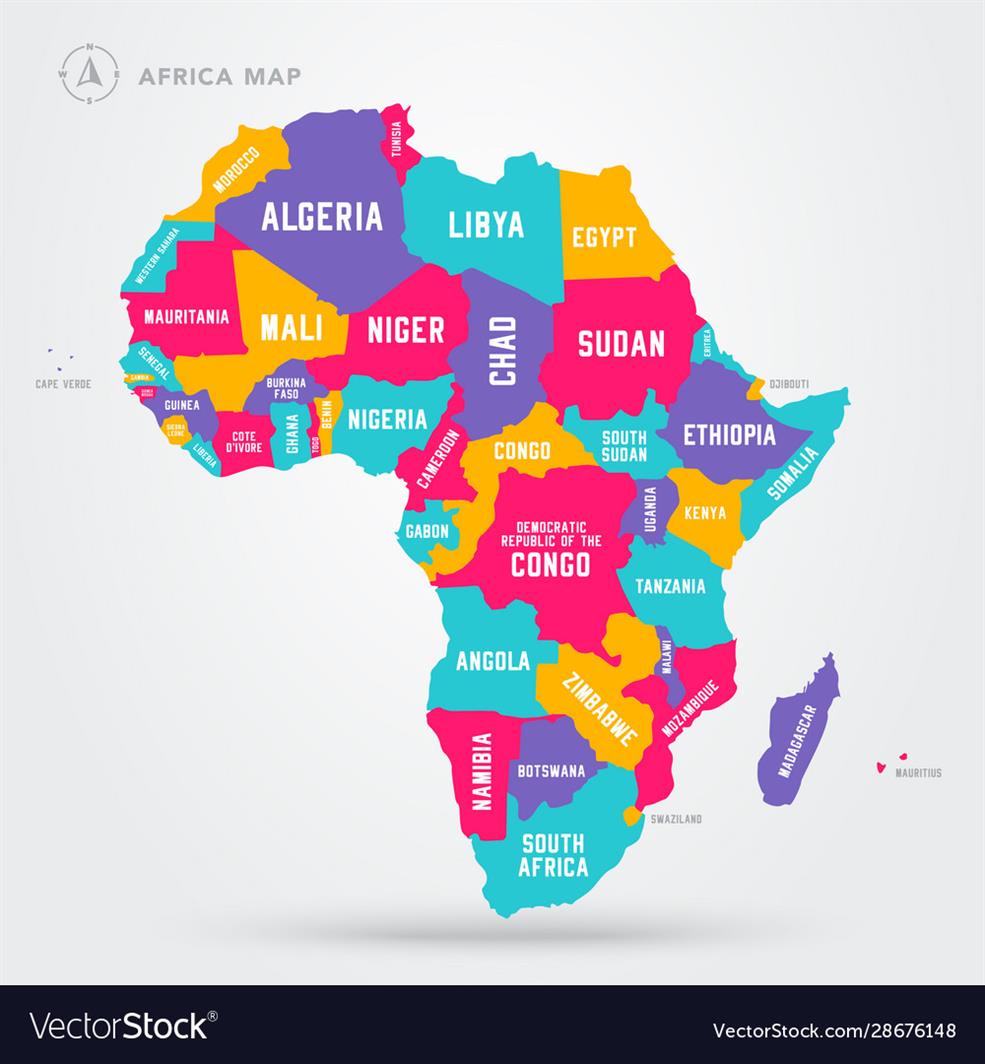
Many theories have penned down various conceptions about Africa which have conformed the mind of many into seeing Africa in an image which in reality is just a mirage. Here are some of the conceptions about Africa debunked:
1-Africa is riddled with diseases Over time, Africa has been reported as a continent riddled with diseases. These reports have led people outside of Africa to have the notion that Africa is a disease-plagued continent. In 2001, George W. Bush said of Africa, “Africa is a nation that suffers from terrible disease”. Africa as every other nation has a disease that plagues its inhabitants but this itself is no proof that the continent harbours all kinds of diseases. Citing malaria as an instance, malaria takes millions of lives each year in Africa not because of the disease breeds in the air but because of a lack of access to childhood immunization and basic health care.
Nevertheless, battling Malaria has been a relentless effort in various countries in Africa and as such, more immunization programs and health care have been put in place to eradicate malaria. Moreso, Africa holds one of the world’s top continents that possesses natural medicine that cures illness.
2-Africa is always hot Most travellers assume that it is always hot in Africa. True, there are certain countries in Africa that experience hot weather compared to other nations specifically countries situated in tropical West Africa. However, this doesn’t occur all year round. Africa is made up of rainforest, temperate woodland, cool coastal peninsulas, and high altitude mountains. Also, in the depths of the Sahara desert, the temperature becomes freezing at night. There are many countries in Africa during the winter that experience snow. Countries such as; South Africa, Morocco, Lesotho, Tunisia, and Algeria.
3-All Africans are dark-skinned One of the most rampant stereotypes that people have of Africans, is that all Africans are dark-skinned. This ideology is untrue. Africans have different skin pigments and possess distinct shades of skin that cut across various tribes in various regions around the continent. Over time, people from other continents have migrated into Africa and as such mixed with Africans, making it their home and marrying into the African tribe. This has been in existence for generations and as such the descendants from these people have settled in the continent. A major example is South Africa. Some of the locals (Afrikaans) in South Africa are whites. Black is a race, it is not just associated with the colour of the skin.
4-Africa had no civilization in its history Certain historic theories in the past have noted that Africa, before the Europeans’ influence, were barbarians. One of such popular historian is T. Carlos Jacques. In his book, “From Savages and Barbarians to primitives: Africa, Social typologies, and history in Eighteenth-Century French Philosophy,” he likened Africans as people of the stone age and painted a picture of them as barbarians and uncivilised humans. With these theories, people have developed the notion blacks were slaves and uneducated since the beginning of time, but with much pride this is false. African historians and other historian scholars have dug deep to discover that Africans were indeed educated and exposed. The ancient Moors and the Carthaginians who were Africans once ruled the markets of commerce in the world and built great empires with their knowledge of Art and Architecture.
5-All African countries are poor Poverty is one of the problems many African countries struggle with. However, not all African countries are wallowing in poverty. Africa is one of the world’s most rich continents with natural resources which includes Gold, crude oil, coal, and cocoa amongst others. Countries like Botswana, South Africa, Algeria, Tunisia and Morocco rank in the top 100 out of 126 richest countries in the world as of 2019.
Music superstar Beyoncé Knowles used her slot during the “One World: Together at Home” concert to highlight the disproportionately high death rates from coronavirus among black communities in the US.
In a video message for the special broadcast of music, comedy and personal stories celebrating key workers around the world, the singer said ‘this virus is killing black people at an alarming rate in America’ and urged viewers to protect themselves
Curated by Lady Gaga, One World: Together at home was a Global Citizen organized campaign concert aimed at rallying funds for the COVID-19 Solidarity Response Fund by the World Health Organization (WHO).
The Rolling Stones, Billie Eilish, Paul McCartney, Tom Jones and other stars in self-isolation performed as songs were interspersed with messages of solidarity from actors such as Matthew McConaughey and Lupita Nyong’o.
Global Citizen has since announced that that show raised $127m for coronavirus relief efforts. In her surprise guest appearance during the concert, Beyoncé pointed out that African Americans, most of who are in essential services, were disproportionately affected by the virus.
“Black Americans disproportionately belong to these essential parts of the workforce that do not have the luxury of working from home,” the singer said.
“And African-American communities at large have been severely affected in this crisis. Those with pre-existing conditions are at an even higher risk. This virus is killing black people at an alarmingly high rate here in America.”
America’s Centers for Disease Control and Prevention released new, preliminary nationwide data on Friday that revealed 30 percent of Covid-19 patients are African American, even though African Americans make up around 13 percent of the population of the United States.
In her speech, Beyonce shared even more damning statistics. “A recent report from my home city of Houston, Texas, shows that of COVID-19 deaths within Houston city limits, 57 percent of fatal cases are African-Americans,” she said.
“Please protect yourselves. We are one family, and we need you. We need your voices, your abilities and your strength all over this world. I know it’s very hard. Please be patient, stay encouraged, keep the faith, stay positive and continue to pray for our heroes.”
Meanwhile, in a video shared by her grandmother Tina Knowles on Instagram, Beyoncé’s’ daughter Blue Ivy encouraged people to wash their hands. She went on to demonstrate how soap and water could help eliminate the virus.
“Peace out. I hope you guys are staying safe. Wash your hands extra and please stay at home. Love ya’ll. Bye,” she said before signing out.