Shining a Spotlight on the Strengths & Challenges of Civil Society in the Balkans

Armed Conflicts, Civil Society, Development & Aid, Europe, Headlines, Human Rights, Population, Press Freedom, TerraViva United Nations

Opinion

This article is part of a series on the current state of civil society organisations (CSOs), which is the focus of International Civil Society Week (ICSW), sponsored by CIVICUS, and scheduled to conclude in Belgrade, April 12.

 
Lysa John, Secretary-General of CIVICUS, in her opening address to the International Civil Society Week (ICSW)
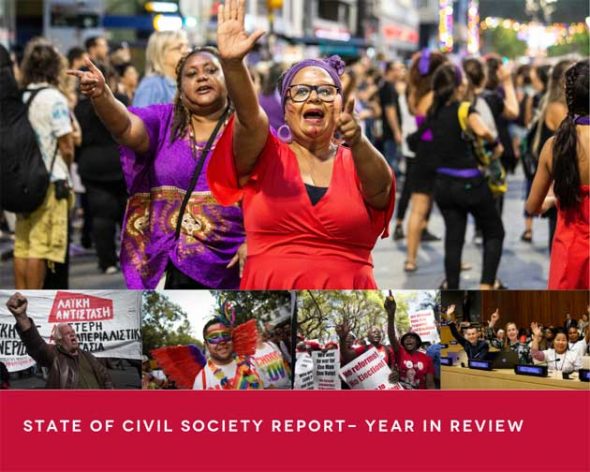
Credit: CIVICUS

BELGRADE, Apr 11 2019 (IPS) – It is an incredible privilege to welcome you all to the ‘International Civil Society Week’. I am going to remind us of the reasons that make it so important for us to be here in Belgrade this week.


This is our 16th global convening of civil leaders and 4th edition of the International Civil Society Week in particular – following on from events held in South Africa, Colombia and Fiji.

Our first World Assembly, as it was known then, was held in Hungary in 1997, and this time we have gathered in the Balkans – and we are very grateful to our peers in Serbia for hosting us.

Serbia currently features on the CIVICUS Monitor’s “Watch List” which draws attention to countries where there are serious and ongoing threats to civic space.

By hosting ICSW 2019 in Serbia, we hope to shine a spotlight on the strengths and challenges of civil society in this region, and find ways to amplify and support their efforts.

Civic freedoms are currently under attack in 111 countries. In other words, over six billion people face serious challenges in the exercise of freedoms of expression, association and peaceful assembly which are essential to an empowered and enabled civil society.

There is a continuing crisis facing civil society organisations and activists across the world – a global civic space emergency. Our job is to find ways to ensure this does not become the ‘new normal’.

We cannot be the generation that lost the fight to protect civic freedoms and democratic values. We owe the citizens, civic leaders and communities of the future a significantly stronger basis to organise for and achieve their rights.

There aren’t many people in the world who can genuinely claim to wake up every morning thinking about how to make the world a more just, more honest and more compassionate place. And yet, we have close to 1,000 people in this very room who do just that.

With over 900 delegates from 100+ countries gathered here, you can safely expect to meet every major form of civil society that works to defend and promote human rights worldwide – ranging from community groups, social entrepreneurs, academic organizations, campaigning networks, think tanks and foundations — in one place over the next few days.

We have the opportunity to connect lessons and inspirations while we are together here. Yet it is the changes that we will test and activate when we return to our personal and professional spaces that make being here worthwhile.

This could be refreshed strategies to challenge discrimination and exclusion or new ways to demonstrate innovation and accountability as a sector.

Our deliberations must reflect the urgency and intent required to make the changes we need to see in the real world – and in this gathering right here we have exactly the kind of determination and optimism needed to see this through. Thank you for being here – we wish you a truly inspired week!

I cannot end without thanking again our hosts in Serbia, Civic Initiatives and the Balkans Civil Society Network, for their warm and generous hospitality without which we wouldn’t be here.

A special mention is also due to the hosts of the previous ICSW held in Fiji – the Pacific Island NGO Forum – who are also here. Thank you for the lessons and achievements of our last gathering, which has enabled us to be more prepared and more ambitious this year.
 

Attacks on Media in the Balkans Sound Alarm Bells for Democracy

Armed Conflicts, Civil Society, Development & Aid, Europe, Featured, Headlines, Human Rights, Population, Press Freedom, TerraViva United Nations

Opinion

This article is part of a series on the current state of civil society organisations (CSOs), which is the focus of International Civil Society Week (ICSW), sponsored by CIVICUS, and scheduled to conclude in Belgrade, April 12.

 
Susan Wilding is the head of the Geneva office at CIVICUS, a global alliance of civil society organisations.

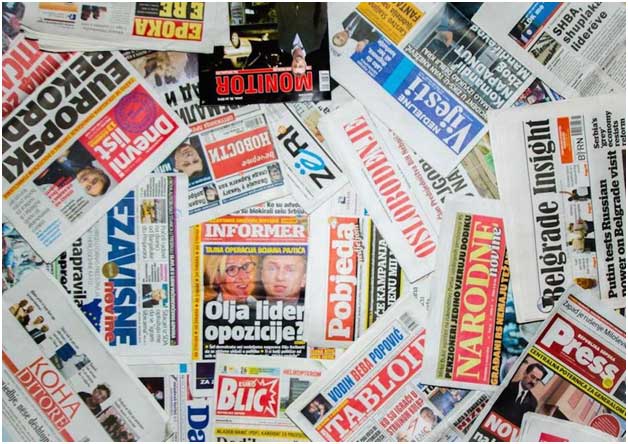
GENEVA, Apr 11 2019 (IPS) – Anti-government protesters invading Serbia’s state-owned television station, demanding that their voices be heard. Journalism bodies writing to the Albanian prime minister over plans to censor online media outlets. A Belgrade corruption-busting reporter forced to flee his house that had been torched; a Montenegrin investigative journalist shot in the leg outside her home.


These are just some of the violations emerging from the western Balkans as a clampdown on media freedom – and civil liberties – undermines Serbia’s and Montenegro’s bids to join the European Union.

It’s little wonder that Serbia tumbled 10 spots to rank 76th on the 2018 Reporters without Borders Press Freedom Index, which states bluntly: “Serbia has become a country where it is unsafe to be a journalist.” Its neighbours fare little better: Albania is in 75th place, Kosovo is ranked 78th and Montenegro is a dismal 103rd.

Smear campaigns against courageous journalists; impunity for those assaulting media players; collusion between politicians and brown-envelope reporters; high levels of concentration of media ownership in a few hands; threats of cripplingly expensive litigation; the chilling effect of self-censorship on reportage. The list of media abuses in the Balkans goes on and on.

Belgrade, Serbia is playing host to International Civil Society Week, running thro Friday April 12, bringing together over 900 delegates to debate solutions to some of the world’s most pressing challenges. Some of the questions on the agenda will be: What more can we, as civil society, do to ease this stranglehold on free expression? How can we raise our voices to protect individual and media liberties?

Such restrictions on the media are incompatible with participatory democracy, which depends on three fundamental human rights – freedom of peaceful assembly, freedom of association and freedom of expression – which are also protected under international law. Any government that claims to have free and fair elections, and claims to be a democracy, cannot deny its citizens access to information and the right to be heard.

According to findings by the CIVICUS Monitor, an online platform that tracks threats to civil society in 196 countries, states are generally using two types of tactics to restrict civic freedoms, and the crack down on media freedoms is no exception.

The first is legal: imposing or enforcing laws that restrict democratic freedoms and criminalise free speech. For example, this includes bringing trumped-up judicial charges against journalists or media houses, thereby diverting energy and resources from watchdog journalism.

The second type comes in the form of extrajudicial means and are even more contemptible: including intimidating the media into submission through carefully coordinated smear campaigns and public vilification, and sometimes through physical intimidation and outright repression.

While such states may make an elaborate show of using (or abusing) the laws of the land to rein in the media, such censorship is clearly a perverse parody of democracy – an expression of a growing trend in which the ‘rule by law’ replaces the rule of law.

Sometimes these attacks on media are coming from “strongmen” leaders with the ambition of concentrating power and eliminating any checks and balances. In other instances, we see these kinds of restrictions imposed by governments that feel threatened and see media clampdowns as another way to hold onto power.

A weakened state or leaders who came to power through dubious means or with a small majority are likely to mute the civic space to cling to power. It may therefore, not be surprising that it’s happening in the Balkans, given the area’s fraught political history.

When popular dissent swells against unpopular policies and actions, a vulnerable state’s first target is the media, because of their potential role in unseating power. It is also something we see as a classic copy-and-paste tactic: questionable leaders see their regional neighbours getting away with it, with few if any repercussions, and follow suit.

Even the online space – the ultimate democratic arena of the 21st century, where the gladiatorial thrust and parry of views is essential to robust debate – is not being spared in this battle to seize ideological control of the marketplace of ideas.

Some countries have already shown that it’s entirely possible to shut down or control social media platforms, denying citizens their fundamental right to participate in debate and in policymaking.

The reasons that States give for silencing media vary but often include similar statements such as journalists are writing “defamatory” articles or disseminating “fake news”. Often, they maintain, the reportage is “unpatriotic”, “goes against our culture or values” or “does not advance our nationalist agenda”.

With the restrictions on media freedoms increasing in the Balkans, we should be highlighting the situation and sharing tried and tested strategies for pushing back and opening the space for a free and independent media.

We should be concerned that the world so easily shifted its attention away from the region after the terrible conflict that claimed so many lives 20 years ago. Why did we not linger a while to monitor the aftermath? Do we turn a blind eye to human rights abuses, as is the case in China and elsewhere, as long as there is peace, development and economic prosperity?



