Before this brown-haired boy turned into a shining star, he was just growing up in Vancouver, Canada, and dreaming of Hollywood’s big flashing lights! He’s a self-taught musician who’s a big punk and horror fan! … Mike Wheeler in “Stranger…
Share this:
Like this:
LikeLoading…
Discover more from The Maravi Post
Subscribe to get the latest posts sent to your email.
“What a gift,” Vanessa, 43, wrote via her Instagram Stories on Tuesday, December 30, sharing a screenshot from End of an Era. “We love you @taylorswift 💙!!!!!!”
As Swift, 36, practiced an acoustic section mashup ahead of one of her last Eras Tour concerts in Canada, she was dressed in a blue Mamba & Mambacita Sports Foundation sweatshirt. (Kobe’s widow founded the organization after her husband and daughter Gianna tragically died in a 2020 helicopter crash, along with six other people.)
In a follow-up slide, Vanessa posted another pic of Swift wearing her Mamba merch and added a “We [heart] you” sticker, alongside one of an illustrated pair of hands making a heart like Swift’s Fearless symbol.
Swift has a long history with the Bryant family, starting in 2015 when she enlisted Kobe to join her onstage during the Los Angeles stop on her 1989 Tour. Kobe even presented the pop star with a banner honoring her record 16 sold-out shows at the same venue where his Lakers played home games.
Kobe died at age 41 five years later in a helicopter crash alongside 13-year-old daughter Gianna. (Kobe and Vanessa also shared daughters Natalia, Bianka and Capri.)
“My heart is in pieces hearing the news of this unimaginable tragedy. I can’t fathom what the families are going through,” Swift tweeted in 2020 after the NBA icon’s death. “Kobe meant so much to me and to us all. Sending my prayers, love, and endless condolences to Vanessa and the family and anyone who lost someone on that flight.”
Swift remained close to Vanessa and her family in the years since Kobe and Gianna’s deaths. When the Bryants attended Swift’s Eras show in L.A. in August 2023, Bianka received the “22” hat.
Taylor SwiftCourtesy of Vanessa Bryant/Instagram
“Every person in that audience, hopefully, is being shaped positively in some way by something that they see or something that they hear,” Swift explained of the tradition in her Disney+ docuseries. “The ‘22’ moment stems from a hat that I wore on the Red Tour, so I wanted to really bring back that moment of just kinda, like, [having] a moment with a fan where I actually get close with them.”
While performing “22,” Swift sashayed down her catwalk to give her Red-inspired fedora to a waiting concertgoer.
“What’s so interesting about that moment every night is I never know what kid I’m gonna meet,” the Grammy winner said. “I’ve got people in the audience, scouring the crowd for the first couple of eras, trying to find a kid who knows every single word to the songs and having the time of their lives at this show.”
According to Swift, the lucky child chosen is “basically a representative of every kid in that crowd.”
“It could be, like, a little kid that gets really shy when all of a sudden they’re seeing 60,000 people for the first time or, it could be, there are kids that bloom under the bright lights and they’re just, like, ‘I’m a pop star now.’ It’s always wild to be in this moment with this person that I’ve never met before, this little kid, and everything’s going on around us and somehow we’re able to just have this moment be completely between us.”
Taylor Swift: The End of an Era is now streaming on Disney+.
Share this:
Like this:
LikeLoading…
Discover more from The Maravi Post
Subscribe to get the latest posts sent to your email.
Tatiana — who is the granddaughter of late president John F. Kennedy and former first lady Jacqueline Kennedy Onassis — confirmed in an essay published by The New Yorker that she was battling acute myeloid leukemia and was given a year to live by doctors.
She learned that she has a “rare mutation called Inversion 3” that could not be “cured by a standard course” of treatment shortly after welcoming her daughter, Josephine, in May 2024. (Tatiana and her husband, George Moran, also share a son, Edwin Garrett Moran, who was born in 2022.)
“I did not — could not — believe that they were talking about me. I had swum a mile in the pool the day before, nine months pregnant. I wasn’t sick. I didn’t feel sick. I was actually one of the healthiest people I knew,” Tatiana wrote in The New Yorker. “I had a son whom I loved more than anything and a newborn I needed to take care of.”
News broke in December 2025 that Tatiana died. She was 35.
Keep scrolling for more information on Tatiana and her family.
George Moran
Tatiana Schlossberg met her future husband, George Moran, while they were both undergraduates at Yale University. Moran became a doctor at Columbia University’s Vagelos College of Physicians and Surgeons, while Schlossberg worked for The New York Times, Vanity Fair and The Washington Post as an environmental reporter.
The New York Times reported in September 2017 that the couple had tied the knot at the Kennedy family home in Martha’s Vineyard in a ceremony officiated by former Massachusetts governor Deval Patrick.
Tatiana’s younger brother, Jack Schlossberg, announced on NBC’s Today in 2022 that his sister and her husband had welcomed their first baby, a son named Edwin Moran.
“I can’t get away from them,” Jack said of his sister and his newborn nephew. “I love them.”
Tatiana and George welcomed their youngest child, a daughter, in 2024. They have chosen to keep her name private.
Following her terminal cancer diagnosis, Tatiana credited George for his immense support following her cancer diagnosis.
“George did everything for me that he possibly could. He talked to all the doctors and insurance people that I didn’t want to talk to; he slept on the floor of the hospital; he didn’t get mad when I was raging on steroids and yelled at him that I did not like Schweppes ginger ale, only Canada Dry. He would go home to put our kids to bed and come back to bring me dinner,” she recalled in the New Yorker.
Tatiana added, “I know that not everyone can be married to a doctor, but, if you can, it’s a very good idea. He is perfect, and I feel so cheated and so sad that I don’t get to keep living the wonderful life I had with this kind, funny, handsome genius I managed to find.”
Edwin Moran
Tatiana’s younger brother, Jack, announced that he’d become an uncle during a 2022 interview on NBC’s Today.
“[Tatiana’s son’s] name is Edwin but I like to call him Jack,” the Kennedy heir teased.
In her New Yorker essay, Tatiana recalled that Edwin’s visits to the hospital were rare bright spots as she received cancer treatment.
“My son came to visit almost every day. … The nurses brought me warm blankets and let me sit on the floor of the skyway with my son, even though I wasn’t supposed to leave my room,” she recalled.
Tatiana reflected on a bonding experience with her son as her hair began to fall out during treatment.
“My hair started to fall out and I wore scarves to cover my head, remembering, vainly, each time I tied one on, how great my hair used to be; when my son came to visit, he wore them, too,” she said.
Josephine
Tatiana and George welcomed their daughter, Josephine, in May 2024. After giving birth, Tatiana spent five weeks at Columbia-Presbyterian Hospital and was transferred to Memorial Sloan Kettering to undergo a bone-marrow transplant. She later underwent chemotherapy at home.
She wrote in her New Yorker essay that one of her biggest fears after receiving a terminal diagnosis was that her newborn daughter wouldn’t remember her.
“My son might have a few memories, but he’ll probably start confusing them with pictures he sees or stories he hears,” she wrote. “I didn’t ever really get to take care of my daughter — I couldn’t change her diaper or give her a bath or feed her, all because of the risk of infection after my transplants. I was gone for almost half of her first year of life. I don’t know who, really, she thinks I am, and whether she will feel or remember, when I am gone, that I am her mother.”
When the family announced Tatiana’s death in December 2025, it was revealed that her daughter’s name is Josephine.
John F. Kennedy and Jackie Kennedy
Tatiana is the granddaughter of late President John F. Kennedy and former first lady Jackie Kennedy. The Kennedys shared daughter Caroline Kennedy and son John F. Kennedy Jr. (They also lost two children, daughter Arabella and son Patrick.)
President Kennedy was killed at age 46 in a fatal shooting on November 22, 1963, in Dallas, Texas. Jackie later married Greek-Argentine magnate Aristotle Onassis, who died at age 69 in 1975. Jackie succumbed to Non-Hodgkin’s lymphoma at age 64 in May 1994.
Caroline Kennedy
John and Jackie Kennedy welcomed daughter Caroline Kennedy in November 1957. She was only 5 years old when her father was assassinated in 1963.
As an adult, Caroline worked at New York City’s Metropolitan Museum of Art, where she met her future husband, Edwin Schlossberg. They tied the knot at Our Lady of Victory Church in Centerville, Massachusetts in 1986 and later welcomed three children: Rose, Tatiana and Jack.
Caroline eventually followed in her family’s footsteps by entering politics as an ambassador to Australia and Japan during Joe Biden and Barack Obama’s presidential administrations.
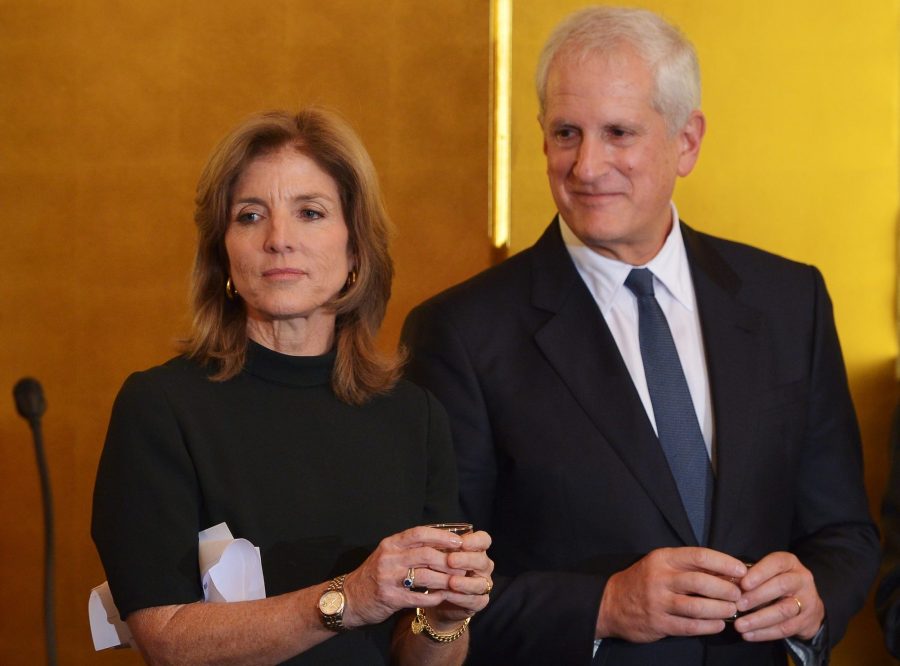
Caroline Kennedy and Edwin Schlossberg in November 2013.MANDEL NGAN/AFP via Getty Images
Tatiana credited her parents and siblings with helping to raise her two children while she underwent grueling cancer treatment.
“My parents and my brother and sister, too, have been raising my children and sitting in my various hospital rooms almost every day for the last year and a half. They have held my hand unflinchingly while I have suffered, trying not to show their pain and sadness in order to protect me from it,” she wrote in her New Yorker essay. “This has been a great gift, even though I feel their pain every day. For my whole life, I have tried to be good, to be a good student and a good sister and a good daughter, and to protect my mother and never make her upset or angry. Now I have added a new tragedy to her life, to our family’s life, and there’s nothing I can do to stop it.”
Edwin Schlossberg
Caroline’s husband Edwin Schlossberg is an artist and designer. He founded the firm ESI Design and has written several books about design philosophy.
Edwin was appointed to the Commission of Fine Arts by President Obama in 2011, after receiving the prestigious National Arts Club Medal of Honor in 2004.
Rose Kennedy Schlossberg
Caroline and Edwin’s eldest daughter, Rose Schlossberg, arrived in June 1988 and was named after her maternal great-grandmother, Rose Fitzgerald Kennedy.
She attended Harvard University, where she once gave Lindsay Lohan and her then-girlfriend Samantha Ronson a campus tour, according to the Boston Herald. She later received her master’s degree in interactive telecommunications from New York University.
Rose has worked as a production assistant on the TV show Brick City and the 2012 documentary Hard Times: Lost on Long Island. She co-wrote and produced the Peabody Award-winning documentary series The Kalief Browder Story in 2017 and helped open a permanent exhibit for her late grandfather, John F. Kennedy, at the Kennedy Center in 2022.
She married restaurateur Rory McAuliffe in California in 2022.
John ‘Jack’ Bouvier Kennedy Schlossberg
Caroline and Edwin’s youngest child, son Jack Schlossberg, was born in January 1993.
As an adult, he became popular on social media for his shirtless selfies and pop culture clapbacks — including criticizing American Horror Story creator Ryan Murphy’s planned series about Jack’s late uncle John F. Kennedy Jr. and his wife Carolyn Bessette Kennedy. (The couple were killed in a 1999 plane crash, along with Carolyn’s sister Lauren Bessette.)
In November 2025, Jack announced plans to run for Congress in New York’s 12th congressional district in the 2026 midterm elections.
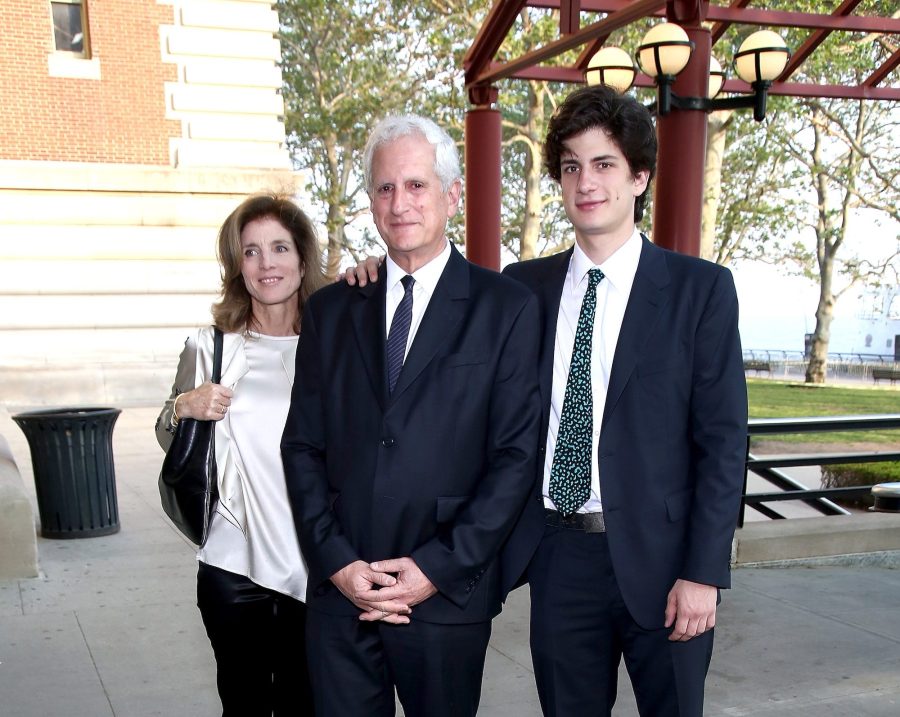
Caroline Kennedy, Edwin Schlossberg and Jack Schlossberg in May 2015.Paul Zimmerman/Getty Images
“I’m not running because I have all the answers to our problems. I’m running because the people of New York 12 do. I want to listen to your struggles, hear your stories, amplify your voice, go to Washington and execute on your behalf,” he wrote via Instagram.
Jack continued, “There is nowhere I’d rather be than in the arena fighting for my hometown. Over the next eight months, during the course of this campaign, I hope to meet as many of you as I can. If you see me on the street, please say hello. If I knock on your door, I hope we can have a conversation. Because politics should be personal.”
Robert F. Kennedy Jr.
Like most of her family, Tatiana has had a strained relationship with her cousin Robert F. Kennedy Jr. since he endorsed Donald Trump in the 2024 presidential election. RFK Jr. was later appointed by Trump to lead the Department of Health and Human Services, which drew concern over his history of vaccine skepticism.
Tatiana wrote about her rift with her cousin in her New Yorker essay, revealing that his confirmation to the HHS role added stress during her illness. She pointed out that her husband George’s job at Columbia University was potentially in danger because the school was “one of the Trump Administration’s first targets in its crusade against alleged antisemitism on campuses.”
“If George changed jobs, we didn’t know if we’d be able to get insurance, now that I had a preëxisting condition,” she wrote. “Bobby is a known skeptic of vaccines, and I was especially concerned that I wouldn’t be able to get mine again, leaving me to spend the rest of my life immunocompromised, along with millions of cancer survivors, small children, and the elderly.”
Tatiana unequivocally distanced herself from RFK’s statement that “there’s no vaccine that is safe and effective” during a 2023 appearance on the “Lex Fridman Podcast.”
“Bobby probably doesn’t remember the millions of people who were paralyzed or killed by polio before the vaccine was available,” she added. “My dad, who grew up in New York City in the nineteen-forties and fifties, does remember. Recently, I asked him what it was like when he got the vaccine. He said that it felt like freedom.”
Share this:
Like this:
LikeLoading…
Discover more from The Maravi Post
Subscribe to get the latest posts sent to your email.
“Last time I posted Amari in his dance class, I heard some ridiculous commentary about how, ‘How is this dance? Does he even know what’s going on?’” Kardashian, 41, said in a video posted to her Instagram Stories on Saturday, December 13. “All of this gross commentary that I don’t need [and] no one needs.”
The reality TV star continued, “So, if you don’t know or you have never had someone with special needs in your life and you don’t know what their interests are or what makes them happy, don’t comment. If you don’t like this type of content, you don’t have to watch it. We’re all good over here.”
Amari is the younger brother of Thompson, 34, whom Kardashian dated on and off from 2016 to 2021. Amari is nonverbal and has Lennox-Gastaut syndrome and epilepsy. Thompson was granted legal guardianship of his sibling after their mom’s 2023 death. In that time, Kardashian has helped her now-ex take care of Amari.
On Saturday, Kardashian specifically wanted to highlight one of Amari’s extracurricular activities.
“I’m going to post a few videos from Amari’s dance class, and I just want to say that I was given permission to post,” the Good American founder said. “I know there’s other students in the class, but I got permission. I want to highlight such an amazing dance academy that does so much for special children. It’s so beautiful and it’s so special, and these kids are so happy.”
She added, “I don’t know how someone wouldn’t cry, but being in these classes, it’s so beautiful. So, I just had to leave this little note that I’m not doing anything without permission — and just [sharing] how happy everyone is. If you want some feel-good content, stay tuned.”
Courtesy of Khloe Kardashian/ Instagram
Kardashian uploaded several videos of Amari moving with the instructors and other students to songs from High School Musical, the Spice Girls and more at Carousel Dance Studio in West Hills, California.
“The sweetest students and teachers,” the Kardashians star captioned a follow-up slide of rehearsal footage. “I’m so thankful for places like this and for human beings like this!”
According to Kardashian, she found it to be “such an honor” to attend Amari’s class.
“The dance academy does amazing things for these magical children,” she wrote on Saturday. “Such an honor to be a witness to such great souls. The academy gave permission for me to post the [videos] I posted, and I know it goes a long way for their business to be highlighted. God bless all of these angels.”
Kardashian has previously advocated for Amari’s well-being on numerous occasions — before and after her split from Thompson. (Kardashian and Thompson share two children: True, 7, and Tatum, 3.)
“Andrea was the sole caretaker for Amari and they lived in Canada,” Kardashian said on a July episode of her eponymous podcast, referring to the brothers’ mother. “Tristan’s mom passed away a few years ago, we — me, Tristan, my whole family — took Amari back with us to the [United] States. Tristan is in the NBA and he is in a different state, literally, every other day or every few days, and it’s just not conducive for Amari to be on that many planes.”
To accommodate Thompson’s athletic schedule, Kardashian chose “to take care of” and “be there for” Amari.
“California weather is so good for Amari, and I just love having Amari be a part of my family,” Kardashian explained, noting that she also employs two caretakers to help her. “We just want to provide Amari with the best, most beautiful life that we know how. And he deserves that.”
Share this:
Like this:
LikeLoading…
Discover more from The Maravi Post
Subscribe to get the latest posts sent to your email.
Katy Perry is turning to music after upheaval in her personal life.
The pop star, 41, dropped her powerful new song, “Bandaids,” and its self-deprecating music video on Thursday, November 6, marking her first release since her split from ex-fiancé Orlando Bloom.
In the video, a down-on-her-luck Perry finds herself in a series of near-death situations. It begins with the singer washing dishes (a nod to her viral “Call Her Daddy” comment last year about Bloom getting his “d*** sucked” whenever he did chores) when her ring suddenly falls down the drain. As Perry sticks her hand in the sink to retrieve the gold band, she accidentally turns on the garbage disposal, leaving her bloodied and screaming.
As the visual progresses, Perry’s misfortune only gets worse: Her shoelace gets caught in the escalator at a shopping mall, causing her to face-plant; the lid comes off her coffee cup while she’s driving, spilling all over her lap and burning her; and she sinks into quicksand after narrowly avoiding an oncoming train.
The video is filled with Easter eggs, from a daisy growing in the middle of the train tracks (Perry and Bloom’s 5-year-old daughter is named Daisy) to the Grammy nominee’s 2024 single “Woman’s World” playing before a gas station explosion in the final scene, signaling the end of her 143 era and the beginning of another.
“Bandaids” features candid lyrics about Perry’s “broken heart” that offer a glimpse into her mindset after her breakup. She sings in the first verse, “Hand to God, I promise I tried / There’s no stone left unturned / It’s not what you did / It’s what you didn’t / You were there, but you weren’t.”
Later, Perry references Daisy as one of the positive things that came out of the relationship, singing, “If I had to do it all over again / I would still do it all over again / The love that we made was worth it in the end.”
The release comes after several major changes in Perry’s personal life. Us Weekly confirmed her separation from Bloom, 48, in June after nearly 10 years together. A source revealed at the time that it was “a long time coming,” as things between the now-exes had “been tense for months.”
Nonetheless, Perry and Bloom remain cordial as they moved forward with their focus on their daughter.
“They are still very much in touch and coparenting Daisy together,” an insider told Us in June. “It’s not messy between them.”
Katy PerryCynthia Parkhurst
The source noted that Perry and Bloom were “prioritizing stability and consistency for Daisy” as the family adapted to their new normal.
In the aftermath of the split, the Pirates of the Caribbean star emphasized his healthy coparenting dynamic with his ex.
“I’m so grateful. We have the most beautiful daughter,” he said on the Today show in September. “You know, when you leave everything on the field, like I did in [the movie The Cut], I feel grateful for all of it.”
He added, “We’re great. We’re going to be great. It’s nothing but love.”
After her breakup from Bloom, Perry moved on with former Canadian Prime Minster Justin Trudeau, to whom she has been linked since July. At the time, the pair — who “have a few mutuals in the music industry” — were spotted on a “casual” dinner date in Canada after being “in touch for the last month,” according to a source.
Although Perry does not “have a lot of extra time” at the moment due to her ongoing Lifetimes Tour, the insider told Us, “This is all new to her, as she hasn’t dated in so many years, and it’s been exciting to put herself out there again. … Katy is excited to move on but isn’t looking for anything serious.”
In October, a source revealed that Perry and Trudeau, 53, are staying under the radar while pursuing their connection.
“Katy is really into it. She’s very happy,” the insider told Us. “She’s trying to keep it low-key, and they’ve spent a lot of private time together. She’s not looking to publicize this relationship.”
Share this:
Like this:
LikeLoading…
Discover more from The Maravi Post
Subscribe to get the latest posts sent to your email.
The executive secretary of the Convention on Biological Diversity, Elizabeth Maruma Mrema, highlighted on Friday Dec. 16 the results of the Nagoya Protocol on access to genetic resources and fair benefit sharing at an event during COP15 in the Canadian city of Montreal. But the talks have not reached an agreement on the digital sequencing of genetic resources. CREDIT: Emilio Godoy/IPS
By Emilio Godoy MONTREAL, Dec 16 2022 (IPS)
In addition to its nutritional properties, quinoa, an ancestral grain from the Andes, also has cosmetic uses, as stated by the resource use and benefit-sharing permit ABSCH-IRCC-PE-261033-1 awarded in February to a private individual under a 15-month commercial use contract.
But it also sets restrictions on the registration of products obtained from quinoa or the removal of its elements from the Andean nation, to prevent the risk of irregular exploitation without a fair distribution of benefits, in other words, biopiracy.”The scientific community is willing to share benefits through simple mechanisms that do not unfairly burden researchers in low- and middle-income countries.” — Amber Scholz
The licensed material may have a digital representation of its genetic structure which in turn may generate new structures from which formulas or products may emerge. This is called digital sequence information (DSI), in the universe of research or commercial applications within the CBD.
The summit has brought together some 15,000 people representing the 196 States Parties to the CBD, non-governmental organizations, academia, international bodies and companies.
The focus of the debate is the Post-2020 Global Framework on Biodiversity, which consists of 22 targets in areas including financing for conservation, guidelines on digital sequencing of genetic material, degraded ecosystems, protected areas, endangered species, the role of business and gender equality.
Like most of the issues, negotiations on DSI and the sharing of resulting benefits, contained in one of the Global Framework’s four objectives and in target 13, are at a deadlock, on everything from definitions to possible sharing mechanisms.
Except for the digital twist, the issue is at the heart of the Nagoya Protocol on Access to Genetic Resources and the Fair and Equitable Sharing of Benefits Arising from their Utilization, part of the CBD, signed in that Japanese city in 2010 and in force since 2014.
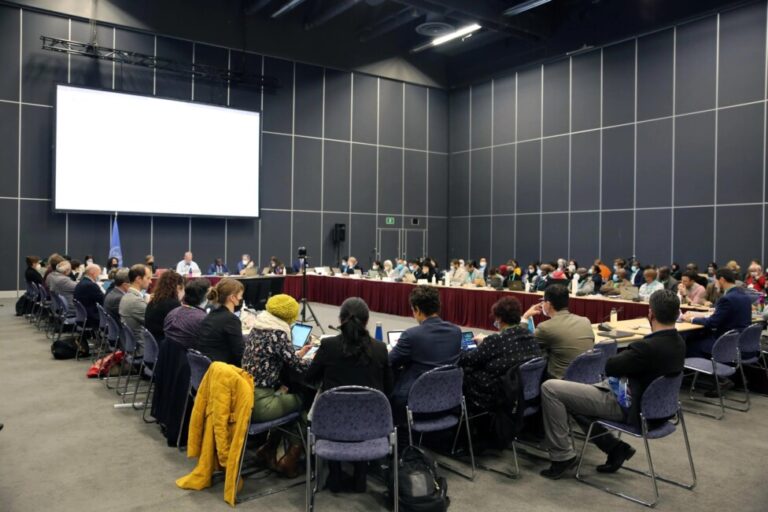
The delegations of the 196 States Parties to the Convention on Biological Diversity have failed to make progress at COP15 in the negotiations on new targets for the protection of the world’s natural heritage, in the Canadian city of Montreal. In the picture, a working group reviews a proposal on the complex issue. CREDIT: IISD/ENB
Amber Scholz, a German member of the DSI Scientific Network, a group of 70 experts from 25 countries, said there is an urgent need to close the gap between the existing innovation potential and a fair benefit-sharing system so that digital sequencing benefits everyone.
“It’s been a decade now and things haven’t turned out so well. The promise of a system of innovation, open access and benefit sharing is broken,” Scholz, a researcher at the Department of Microbial Ecology and Diversity in the Leibniz Institute’s DSMZ German Collection of Microorganisms and Cell Cultures, told IPS.
DSI stems from the revolution in the massive use of technological tools, which has reached biology as well, fundamental in the discovery and manufacture of molecules and drugs such as those used in vaccines against the coronavirus that caused the COVID-19 pandemic.
The Aichi Biodiversity Targets, adopted in 2010 in that Japanese city during the CBD COP10, were missed by the target year, 2020, and will now be renewed and updated by the Global Framework that will emerge from Montreal.
The targets included respect for the traditional knowledge, innovations and practices of indigenous and local communities related to the conservation and sustainable use of biological diversity, their customary use of biological resources, and the full and effective participation of indigenous and local communities in the implementation of the CBD.
Lack of clarity in the definition of DSI, challenges in the traceability of the country of origin of the sequence via digital databases, fear of loss of open access to data and different outlooks on benefit-sharing mechanisms are other aspects complicating the debate among government delegates.
Through the Action Agenda: Make a Pledge platform, organizations, companies and individuals have already made 586 voluntary commitments at COP15, whose theme is “Ecological civilization: Building a shared future for all life on earth”.
Of these, 44 deal with access and benefit sharing, while 294 address conservation and restoration of terrestrial ecosystems, 185 involve partnerships and alliances, and 155 focus on adaptation to climate change and emission reductions.
Genetic havens
Access to genetic resources for commercial or non-commercial purposes has become an issue of great concern in the countries of the global South, due to the fear of biopiracy, especially with the advent of digital sequencing, given that physical access to genetic materials is not absolutely necessary.
Although the Nagoya Protocol includes access and benefit-sharing mechanisms, digital sequencing mechanisms have generated confusion. In fact, this instrument has created a market in which lax jurisdictions have taken advantage by becoming genetic havens.
Around 2,000 gene banks operate worldwide, attracting some 15 million users. Almost two billion sequences have been registered, according to statistics from GenBank, one of the main databases in the sector and part of the U.S. National Center for Biotechnology Information.
Argentina leads the list of permits for access to genetic resources in Latin America under the Protocol, with a total of 56, two of which are commercial, followed by Peru (54, four commercial) and Panama (39, one commercial). Mexico curbed access to such permits in 2019, following a scandal triggered by the registration of maize in 2016.
The largest providers of genetic resources leading to publicly available DSI are the United States, China and Japan. Brazil ranks 10th among sources and users of samples, according to a study published in 2021 by Scholz and five other researchers.
The mechanisms for managing genetic information sequences have become a condition for negotiating the new post-2020 Global Framework for biodiversity, which poses a conflict between the most biodiverse countries (generally middle- and low-income) and the nations of the industrialized North.
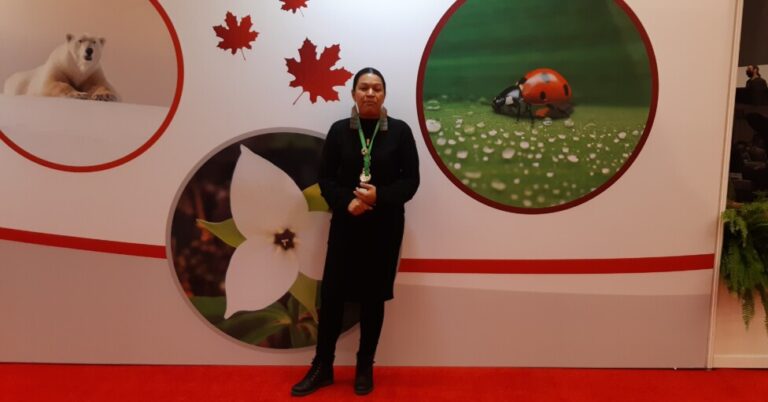
Brazilian indigenous activist Cristiane Juliao, a leader of the Pankararu people, calls for a fair system of benefit-sharing for access to and use of genetic resources and their digital sequences at COP15, being held at the Palais des Congrès in the Canadian city of Montreal. CREDIT: Emilio Godoy/IPS
“We don’t look at one small element of a plant. We look at the whole context and the role of that plant. All traditional knowledge is associated with genetic heritage, because we use it in food, medicine or spiritual activities,” she told IPS at COP15.
Therefore, she said, “traceability is important, to know where the knowledge was acquired or accessed.”
In Montreal, Brazilian native organizations are seeking recognition that the digital sequencing contains information that indigenous peoples and local communities protect and that digital information must be subject to benefit-sharing. They are also demanding guarantees of free consultation and the effective participation of indigenous groups in the digital information records.
Thanks to the system based on the country’s Biodiversity Law, in effect since 2016, the Brazilian government has recorded revenues of five million dollars for permits issued.
The Working Group responsible for drafting the new Global Framework put forward a set of options for benefit-sharing measures.
They range from leaving in place the current status quo, to the integration of digital sequence information on genetic resources into national access and benefit-sharing measures, or the creation of a one percent tax on retail sales of genetic resources.
Scholz suggested the COP reach a decision that demonstrates the political will to establish a fair and equitable system. “The scientific community is willing to share benefits through simple mechanisms that do not unfairly burden researchers in low- and middle-income countries,” she said.
For her part, Juliao demanded a more inclusive and fairer system. “There is no clear record of indigenous peoples who have agreed to benefit sharing. It is said that some knowledge comes from native peoples, but there is no mechanism for the sharing of benefits with us.”