The Good, the Bad, the Ugly: What Went Wrong During India’s COVID-19 Response

Asia-Pacific, Civil Society, Headlines, Health
Opinion

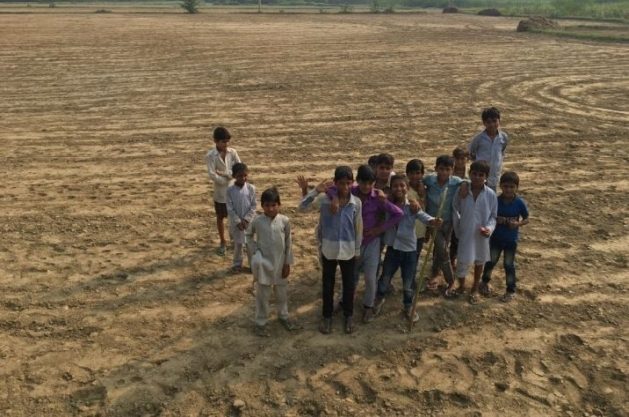
During the pandemic, there was little support from the government when it came to making funding and resources available to the nonprofits that were working closely with communities. | Picture courtesy: Digital Empowerment Foundation

Nov 23 2021 (IPS) – From its devastating economic impact and the migrant crisis to the startling death toll, the COVID-19 pandemic in India unfurled one crisis after the other. The glaring gaps in our system, which had always been there, became even more prominent during the pandemic. There is one question at the back of everyone’s mind that still remains unanswered: What went wrong?


No entity can operate in isolation, be it the government, the private sector, or civil society. During times of crisis, the government must ensure that all cogs in the wheel continue to work effectively. Civil society—local communities and nonprofits—must enable delivery of public services up until the last mile. And, finally, the private sector needs to step up in terms of financial resources and leveraging of networks and influence.

Nonprofits in 13 states and union territories were able to provide meals to more people during the lockdown than the concerned state governments – Would a collaborative relationship between the government and the social sector have aided a better response to the COVID-19 crisis?

However, when the pandemic was at its peak in India, these three entities failed to come together and work collaboratively to cushion the devastating effects of COVID-19 on the people.

The missing link between the government and the social sector

According to our village-level digital entrepreneurs in the SoochnaPreneur programme at Digital Empowerment Foundation (DEF), the four essential systems that were massively hit by the pandemic were education, healthcare, finance, and citizen entitlements. When the pandemic was raging, our SoochnaPreneurs reported that all people wanted was food and rations, a device to access online education for their children, the ability to talk to a doctor or health worker to learn how to keep themselves safe, and to make some money to meet their daily needs from the confines of their homes. Ironically, given the stringent nature of the lockdowns, all this needed access to the internet.

However, across the country, lack of access to resources, high levels of digital illiteracy, and the deepening digital divide exacerbated by the pandemic acted as major roadblocks in India’s COVID-19 response. Even as the government announced relief packages—food grains and cash payments—the mechanisms of delivery to beneficiaries at the last mile were unclear.

For instance, common service centres (CSCs), which are supposed to work as access points that enable digital delivery of services such as banking and finance across rural India, were mostly non-functional. During the pandemic, the government claimed that people could use their local CSCs to access various digital services including telehealth and registration for vaccinations. However, like any other office, shop, or business centre, almost all CSCs had closed their operations due to the strict lockdown rules in various states.

With government services not always being available, the social sector stepped up. Whether it was making access to digital tools and digital literacy a priority or the distribution of essentials, nonprofits across the country filled in the gaps. According to one report, nonprofits in 13 states and union territories were able to provide meals to more people during the lockdown than the concerned state governments.

The question that arises is: Would a collaborative relationship between the government and the social sector have aided a better response to the COVID-19 crisis?

For instance, the distribution of food grains could have been made efficient from the get-go if, rather than having long queues of people waiting at shops, organisations with the digital know-how had been allowed to deliver ration at the doorsteps of people with a biometric machine in hand. This synchronisation and management of resources is something that should have been under the government’s purview, while a partnership with civil society organisations could have helped with execution and delivery. Considering that hundreds of thousands of nonprofits working at the grassroots were tasked as frontline workers, the government could have tapped into this already existing infrastructure and network.

The lack of trust between the social sector and the government didn’t help. During the pandemic, there was little support from the government when it came to making funding and resources available to the nonprofits that were working closely with communities. For instance, while local nonprofits worked as service providers during the pandemic, funds lying with local government bodies could have been diverted to their operations to successfully navigate the panic-like situation brought on by the first lockdown when everything came to a halt.

The Foreign Contribution (Regulation) Amendment Bill, 2020, also imposed difficult conditions on what could be considered eligible expenses for nonprofit organisations, thus creating more obstacles in raising and distributing crucial aid. Even as the prime minister called for nonprofits to step in, many organisations found their hands tied due to certain rules imposed in the middle of the pandemic.

Moreover, during the first lockdown, there was a diversion of CSR funds to PM Cares. At present, not only is there a lack of transparency on how these funds have been deployed, but this diversion of funds has also been a huge blow to nonprofits who have been struggling to look after their own employees and their organisations while providing relief to communities on the ground.

The private sector did not step up either

There was lack of communication and collaboration across business, and a piecemeal approach was adopted. Industry associations could have encouraged CEOs and company heads to interact with each other and solve issues on a larger scale. For instance, industry bodies such as the Confederation of Indian Industry (CII), Federation of Indian Chambers of Commerce & Industry (FICCI), and Associated Chambers of Commerce and Industry of India (ASSOCHAM) could have deployed their resources to help manage the mass migration of workers from industrial towns and urban centres more systematically and humanely.

In pre-pandemic times, CSR within corporates would ask nonprofits to work in areas where they have manufacturing facilities and offer localised support. Corporates could have extended this reasoning during the lockdown as well and enlisted the support of their nonprofit partners to help those workers and informal sector migrants who were homebound, while providing the nonprofits with the required monetary and infrastructure support.

There was also a reluctance from corporates to innovate in times of need. Since DEF works on digital integration to fight poverty, we reached out to many CSR funders to provide funds for buying smartphones, tablets, projectors, and other electronic devices to provide digital infrastructure in the villages. However, it took us more than a year to convince some of them to help us offer support to people with no digital access and empowerment through our Digital Daan initiative.

It is important to contextualise the social and economic support at the time of disaster and that can happen only if there is a relationship of trust between the stakeholders.

What the social sector could have done better

The onset of the pandemic brought with it uncertainty for most nonprofits. In addition to lack of funding and overstretched resources, many nonprofits had to take up the role of relief workers and divert efforts from their primary objectives, which would have been domestic violence, child protection, water and sanitation, and so on.

One important factor missing in this entire conversation was the inability of many nonprofits to adopt digital tools to improve operations, efficiency, and delivery of services. While webinars became a recurring feature in their calendars, thus creating a space for knowledge sharing, grassroots nonprofits were often not a part of these dialogues. Smaller nonprofits were also overwhelmed with work on the ground due to the needs of their communities coupled with inadequate support from either their funders or governments; hence, many of them had little time or resources to think or build their capacity to go digital.

The pandemic did however push several nonprofits to adopt digital tools for operations and delivery of services. Larger nonprofits with their own networks, adequate funding, and a strong digital presence were able to leverage digital platforms. However, many of the smaller nonprofits and those at the frontlines had to innovate to reach beneficiaries digitally.

Moreover, with the government aggressively pushing Digital India—from telehealth to online education and even the vaccine roll-out—it became imperative for organisations to incorporate digital and technological solutions in their everyday operations. Many nonprofits therefore had to work on building in-house digital capacity and infrastructure during the pandemic, while also serving their communities and raising funds.

In the case of mobilising money, digital platforms could have been a powerful tool for the sector, and they did help many nonprofits raise funds. However, this was not the case for the entire social sector.

According to the India Giving Report 2021 by the Charities Aid Foundation, individual donations were at an all-time high during the pandemic. Crowdfunding platforms such as GiveIndia provided people easy access to donate to various causes. However, this giving may not have been as diversified—the absence of reliable information online acted as a barrier for many givers while donating. Therefore, givers may have chosen to stick to organisations they trusted. And many local nonprofits with limited digital know-how had to rely on local giving or local resource mobilisation.

For example, our colleague Mohamed Arif, whom we lost in the second wave, was in charge of DEF’s digital centre at Nuh, Haryana. He was digitally savvy and active on social media and was thus able to raise approximately INR 25 lakh (in cash and food grains, and other essentials) through his personal Facebook profile and networks.

However, while the pandemic did push many nonprofits to incorporate technology-led solutions, I find that urgency dwindling again. Digital empowerment of the sector requires sustained efforts wherein organisations put aside certain funds every year for digitally upskilling their employees, maintaining digital collaterals, and modifying their approach to include technology in their everyday operations.

I see the pandemic as an inflection point in the future of nonprofits and civil society as a whole. Which organisations survive this period of transition will largely depend on how well they can adapt to these changing times. According to me, one of the key changes the sector will have to make to stay relevant is to become more digitally aligned.

Osama Manzar, the author of this article, is the founder and director of Digital Empowerment Foundation. He is a Senior Ashoka Fellow, a Chevening Scholar, and has served on several boards such as the Association for Affordable Internet, Association of Progressive Communications, World Summit Awards, and Down To Earth. He specialises in creating digital models for poverty alleviation and has travelled to more than 10,000 villages. Get in touch with him on Twitter: @osamamanzar

This story was originally published by India Development Review (IDR)

  Source

Climate Injustice at Glasgow Cop-Out

Civil Society, Climate Action, Climate Change, Development & Aid, Environment, Featured, Global, Headlines, Poverty & SDGs, TerraViva United Nations

Opinion

SYDNEY and KUALA LUMPUR, Nov 23 2021 (IPS) – The planet is already 1.1°C warmer than in pre-industrial times. July 2021 was the hottest month ever recorded in 142 years. Despite the pandemic slowdown, 2020 was the hottest year so far, ending the warmest decade (2011-2020) ever.

Betrayal in Glasgow
Summing up widespread views of the recently concluded Glasgow climate summit, former Irish President Mary Robinson observed, “People will see this as a historically shameful dereliction of duty,… nowhere near enough to avoid climate disaster”.


Anis Chowdhury

A hundred civil society groups lambasted the Glasgow outcome: “Instead of a multilateral agreement that puts forward a clear path to address the climate crisis, we are left with a document that takes us further down the path of climate injustice.”

Even if countries fulfil their Paris Agreement pledges, global warming is now expected to rise by 2.7°C from pre-industrial levels by century’s end. Authoritative projections suggest that if all COP26 long-term pledges and targets are met, the planet will still warm by 2.1℃ by 2100.

The United Nations Environment Programme suggests a strong chance of global warming disastrously rising over 1.5°C in the next two decades. Earlier policy targets – to halve global carbon emissions by 2030, and reach ‘net-zero’ emissions by 2050 – are now recognized as inadequate.

The Glasgow UN Framework Convention on Climate Change 26th Conference of Parties (COP26) was touted as the world’s ‘last best hope’ to save the planet. Many speeches cited disturbing trends, but national leaders most responsible for greenhouse gas (GHG) emissions offered little.

Thus, developing countries were betrayed yet again. Despite contributing less to accelerating global warming, they are suffering its worst consequences. They have been left to pay most bills for ‘losses and damages’, adaptation and mitigation.

Glasgow setbacks
Glasgow’s two biggest hopes were not realized: renewing targets for 2030 aligned with limiting warming to 1.5℃, and a clear strategy to mobilize the grossly inadequate US$100bn yearly – promised by rich country leaders before the Copenhagen COP in 2009 – to help finance developing countries’ efforts.

Jomo Kwame Sundaram

An exasperated African legislator dismissed the Glasgow Leaders’ Declaration on Forests and Land Use as an “empty pledge”, as “yet another example of Western disingenuousness … taking on the role of ‘white saviour’” while exploiting the African rain forest.

Meanwhile, far too many loopholes open to abuse remain, undermining efforts to reduce emissions. Further, no commitment to end fossil fuel subsidies globally – at US$11 million every minute, i.e., around US$6 trillion annually – was forthcoming.

No new oil and gas fields should be developed for the world to have a chance of getting to net-zero by 2050. Nevertheless, governments are still approving such projects, typically involving transnational corporate giants.

Various measures – e.g., ‘carbon capture and storage’ and ‘offsetting’ – have been touted as solutions. But carbon capture and storage technologies remain controversial, unproven at scale, expensive and rarely cost-competitive.

The Glasgow outcome did not include any commitment to fully phase out oil and gas. Meanwhile, the language on coal has been diluted to become virtually toothless: coal-powered plants will now be ‘phased down’, instead of ‘phased out’.

Offsets off track
Offset market advocates claim to reduce emissions or remove GHGs from the atmosphere by some to ‘off-set’ emissions by others. Thus, offsetting often means paying someone poor to cut GHG emissions or forcing them to pay someone else to do so. With more means, big business can more easily afford to ‘greenwash’.

Carbon offset markets have long overpromised, but underdelivered. As they typically exaggerate GHG emission reduction claims, offsetting is a poor substitute for actually cutting fossil fuel use. Meanwhile, disagreements over offset rules have long stalled international climate change negotiations.

Buying offsets allows GHG emitters “to keep polluting”, albeit for a fee. Highly GHG emitting activities by wealthier individuals, companies and nations can thus continue, after “transferring the burden of action and sacrifice to others” – typically to those in poorer nations – via the market.

For Tariq Fancy – who managed ‘sustainable investing’ at BlackRock, the world’s largest fund manager – the market for offsets is a “deadly distraction”, “leading the world into a dangerous mirage, … burning valuable time”.

Meanwhile, most established offset programmes – e.g., the United Nations’ REDD+ programme or the Kyoto Protocol’s Clean Development Mechanism – have clearly failed to meaningfully reduce GHG emissions.

More than 130 countries have committed to achieve net-zero by 2050. But net-zero targeting has actually allowed the world to continue kicking the can down the road, instead of acting decisively and urgently to verifiably cut GHG emissions.

Hence, it is seen as a cynical “scam”, “nothing more than an expensive cover-up for continued toxic emissions”. Trading non-verifiable offsets – supposedly to achieve net-zero – allows continuing GHG emissions with business almost as usual.

Loss and damage?
Vulnerable and poor nations have argued for decades that rich countries owe them compensation for irreversible damage from global warming. In fact, no UN climate conference has delivered any funding for losses and damages to countries affected.

Rich countries agreed to begin a ‘dialogue’ to discuss “arrangements for the funding of activities to avert, minimize and address loss and damage”. Representing developing nations, Guinea expressed “extreme disappointment” at this ruse to delay progress on financing recovery from and rebuilding after climate disasters.

Developed nations account for two-thirds of cumulative emissions compared to only 3% from Africa. Carbon emissions by the wealthiest 1% of the world’s population were more than twice those of the bottom half between 1990 and 2015!

Low-lying small island nations – from the Marshall Islands to Fiji and Antigua – fear losing much of their land to rising sea levels. But their longstanding call to create a ‘loss and damage’ fund was rejected yet again.

South Pacific island representatives have expressed disappointment at lack of funding for losses and damages, and the watered down language on coal. For them, COP26 was a ‘monumental failure’, leaving them in existential peril.

Although historical responsibility for GHG emissions lies primarily with the wealthy countries, especially the US and the European Union, once again, they have successfully evaded serious commitments to address such longstanding problems due to global warming.

Climate injustice
For the UN Secretary-General, “[o]ver the past 25 years, the richest 10% of the global population has been responsible for more than half of all carbon emissions, and the poorest 50% were responsible for just 7% of emissions”.

The World Bank estimates that, if left unchecked, climate change will condemn 132 million more people into poverty over the next decade, while displacing more than 216 million from their homes and land by 2050.

Meanwhile, poorer countries – who have contributed least to cumulative GHG emissions – continue to suffer most. To address climate injustice, rich countries – most responsible for GHG emissions and global warming – must do much more.

Their finance for developing countries ought to be much more ambitious than US$100bn yearly. Financing terms should be far more generous than currently. Also, funding should prioritize adaptation, especially for the poorest countries most at risk.

  Source

Citizen Leads Drive to Repatriate Temple Gods Looted from India – Podcast

Asia-Pacific, Civil Society, Headlines, Multimedia, Podcast, TerraViva United Nations

Arts

KATHMANDU, Nov 18 2021 (IPS) – The illicit trade in idols and other historical treasures looted from temples, archaeological digs and various sites globally has been estimated at $100 billion a year.


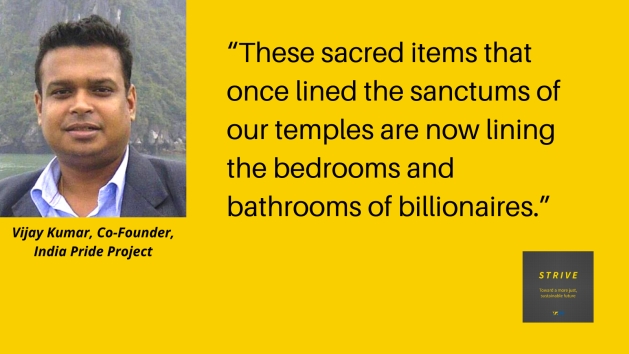
A more telling figure might be the nearly 18,000 villagers in India’s Tamil Nadu state who turned out to welcome home a god figure stolen from one of their temples. More revealing still is the image of a single villager who, seeing a stolen god displayed in a Singapore Museum, falls to the ground and starts to pray.

Vijay Kumar accompanied that villager to the museum, and has witnessed idols lovingly replaced to their ages-old spots in Tamil Nadu temples.

For 16 years he has been working to repatriate gods and goddesses looted from India over the years, and the challenges remain huge, he tells us in today’s episode. For example, in 2020, police seized 19,000 stolen artefacts in an international art trafficking crackdown. 101 suspects were arrested with treasures from around the world, including Colombian and Roman antiquities. One activist estimates that in France alone there are 116,000 African objects that should be returned.

But Vijay is encouraged by the successes of citizen-led movements like his own, which began with a blog, Poetry in Stone, then the launch of the group India Pride Project.

Success can be measured in the growing number of artefacts returned to India: 19, from 1970-2000; 0, from 2000-2013; but 300+ after 2013. That includes roughly 250 items valued at about $15 million, which were repatriated in October, among the treasures looted by disgraced art dealer Subhash Kapoor, the subject of Vijay’s book, The Idol Thief.

Today’s conversation is packed with information, including Vijay’s opinion that countries like India and Nepal, where idols are part of the living heritage and still prayed to daily, should be treated differently than countries whose artefacts are looted from buried remains. He also has advice for would-be activists — in the murky world of art repatriation, be very, very wary about accepting money from anyone.

  Source

Glasgow Summit Ends Amidst Climate of Disappointment

Civil Society, Climate Action, Climate Change, Conferences, Development & Aid, Editors’ Choice, Energy, Environment, Featured, Global, Global Governance, Headlines, IPS UN: Inside the Glasshouse, Poverty & SDGs, Regional Categories

Climate Change

One of the family photos taken after the laborious end of the 26th climate summit in Glasgow, which closed a day later than scheduled with a Climate Pact described as falling short by even the most optimistic, lacking important decisions to combat the crisis and without directly confronting fossil fuels, the cause of the emergency. CREDIT: UNFCCC

One of the family photos taken after the laborious end of the 26th climate summit in Glasgow, which closed a day later than scheduled with a Climate Pact described as falling short by even the most optimistic, lacking important decisions to combat the crisis and without directly confronting fossil fuels, the cause of the emergency. CREDIT: UNFCCC

GLASGOW, Nov 14 2021 (IPS) – Developing countries will surely remember the Glasgow climate summit, the most important since 2015, as a fiasco that left them as an afterthought.


That was the prevailing sentiment among delegates from the developing South during the closing ceremony on the night of Saturday Nov. 13, one day after the scheduled end of the conference.

Bolivia’s chief negotiator, Diego Pacheco, questioned the outcome of the summit. “It is not fair to pass the responsibility to developing countries. Developed countries do not want to acknowledge their responsibility for the crisis. They have systematically broken their funding pledges and emission reduction commitments,” he told IPS minutes after the end of the 26th Conference of the Parties (COP26) on climate change in Glasgow.

The 196 Parties to the United Nations Framework Convention on Climate Change (UNFCCC) ignored the public clamor, which took shape in the demands of indigenous peoples, young people, women, scientists and social movements around the world for substantive measures to combat the climate crisis, even though the goal of containing global warming to 1.5 degrees Celsius is barely surviving on life support.

The Glasgow Climate Pact that came out of the summit finally mentions the need to move away from the use of coal. But it had to water down the stronger recommendation to “phase out” in order to overcome the last stumbling block.

In addition, COP26 broke a taboo, albeit very tepidly, after arduous marches and counter-marches in the negotiating room and in the three drafts of the Glasgow Pact: there was a mention of fossil fuels as part of the climate emergency. And it also stated the need to reduce “inefficient” subsidies for fossil fuels.

But the summit, where decisions are made by consensus, avoided a strong stance in this regard. It also avoided moving from recommendations to obligations for the next edition, to be held in Egypt, and those that follow, while the climate crisis continues causing severe droughts, devastating storms, melting of the polar ice caps and warming of the oceans.

In a plenary session that was delayed by several minutes, the final declaration underwent a last-minute change when India, one of the villains of the meeting – along with Saudi Arabia, Australia and Russia – asked for the phrase “phasing out” of coal to be replaced by “phasing down”, a change questioned by countries such as Mexico, Liechtenstein and Switzerland.

A paradoxical fact at the close of COP26, where civil society organizations complained that they were left out, was the decision of several countries to endorse the final text even though they differed on several points, including the fossil energy face-lifts.

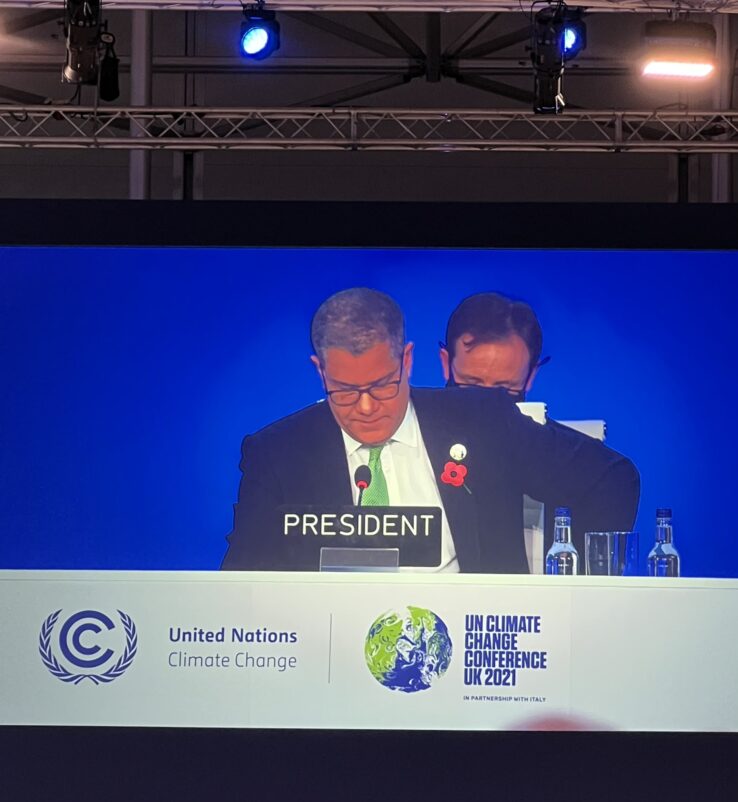
“Today, we can say with credibility that we have kept 1.5 degrees within reach. But its pulse is weak. And it will only survive if we keep our promises. If we translate commitments into rapid action,” said conference chairman Alok Sharma, choking back tears after a pact – albeit a minimal one – was reached by negotiating three drafts and holding arduous discussions on the fossil fuel question, right up to the final plenary.

COP26 chair Alok Sharma blinked back tears during his closing speech at the climate summit, expressing the tension of negotiating the Glasgow Climate Pact, due to the hurdles thrown in the way of a consensus by the big coal and oil producers. CREDIT: UNFCCC-Twitter

COP26 chair Alok Sharma blinked back tears during his closing speech at the climate summit, expressing the tension of negotiating the Glasgow Climate Pact, due to the hurdles thrown in the way of a consensus by the big coal and oil producers. CREDIT: UNFCCC-Twitter

The South is still waiting

Lost amidst the impacts of the climate emergency and forgotten by the industrialized countries, the global South failed to obtain something vital for many of its nations: a clear plan and funding for loss and damage, an issue that was deferred to COP27 in Egypt.

Mohamed Adow, director of the non-governmental Power Shift Africa, said the pact is “not good enough…There is no mention of solidarity and justice. We need a clear process to face loss and damage. There should be a link between emission reduction, financing and adaptation.”

The final decision by China, the United States, India and the European Union to turn their backs on a global fossil fuel exit and deny climate support to the most vulnerable nations left the developing world high and dry.

“There are things that cannot wait to COP27 or 2025. To face loss and damage, the most vulnerable countries need financing to battle the impacts on their territories,” Manuel Pulgar-Vidal, global climate and energy leader for the non-governmental World Wildlife Fund, told IPS.

Climate policies were, at least on the agenda, the focus of COP26.

The summit focused on carbon market rules, climate finance of at least 100 billion dollars per year, gaps between emission reduction targets and needed reductions, strategies for carbon neutrality by 2050, adaptation plans, and the working platform for local communities and indigenous peoples.

But the goal of hundreds of billions of dollars per year has been postponed, a reflection of the fact that financing for climate mitigation and adaptation is a touchy issue, especially for developed countries.

The corridors of the Blue Zone of the Scottish Events Campus, where the official part of the 26th Climate Conference was held in the city of Glasgow, were emptying on Saturday Nov. 13, at the end of the summit, which lasted a day longer than scheduled and ended with a negative balance according to civil society organizations. CREDIT: Emilio Godoy/IPS

The corridors of the Blue Zone of the Scottish Events Campus, where the official part of the 26th Climate Conference was held in the city of Glasgow, were emptying on Saturday Nov. 13, at the end of the summit, which lasted a day longer than scheduled and ended with a negative balance according to civil society organizations. CREDIT: Emilio Godoy/IPS

Offers and promises – on paper

One breakthrough at COP26 was the approval of the rules of the Paris Agreement, signed in the French capital in December 2015, at COP21, to form the basis on which subsequent summits have revolved. By 2024, all countries will have to report detailed data on emissions, which will form a baseline to assess future greenhouse gas reductions.

The agreement on the functioning of carbon markets creates a trading system between countries, but does not remove the possibility of countries and companies skirting the rules.

Industrialized countries committed to doubling adaptation finance by 2025 based on 2019 amounts. In addition, COP26 approved a new work program to increase greenhouse gas cuts, with reports due in 2022.

It also asked the UNFCCC to evaluate climate plans that year and its final declaration calls on countries to switch from coal and hydrocarbons to renewable energy.

Apart from the Climate Pact, the summit produced voluntary commitments against deforestation, emissions of methane, a gas more polluting than carbon dioxide, and the phasing out of gasoline and diesel vehicles.

In addition, at least 10 countries agreed to put an end to the issuing of new hydrocarbon exploration and exploitation licenses in their territories.

Furthermore, some thirty nations agreed to suspend public funding for coal, gas and oil by 2022.

 Demonstrations demanding ambitious, substantive and equitable measures to address the climate crisis continued throughout the 14-day climate summit in Glasgow, which ended on the night of Saturday Nov. 13 with disappointing results for the global South. CREDIT: Emilio Godoy/IPS

Demonstrations demanding ambitious, substantive and equitable measures to address the climate crisis continued throughout the 14-day climate summit in Glasgow, which ended on the night of Saturday Nov. 13 with disappointing results for the global South. CREDIT: Emilio Godoy/IPS

Finally, more than 100 stakeholders, including countries and companies, signed up to the elimination of cars with internal combustion engines by 2030, without the major automobile manufacturers such as Germany, Spain and France joining in, and a hundred nations signed a pact to promote sustainable agriculture.

All of the 2030 pledges, which still need concrete plans for implementation, imply a temperature rise of 2.8 degrees C by the end of this century, according to the independent Climate Action Tracker.

The climate plans of the 48 least developed countries (LDCs) would cost more than 93 billion dollars annually, the non-governmental International Institute for Environment and Development said in Glasgow.

In addition, annual adaptation costs in developing countries would be about 70 billion dollars, reaching a total of 140 to 300 billion dollars by 2030, according to the United Nations Environment Program (UNEP).

But the largest disbursements are related to loss and damage, which would range between 290 billion and 580 billion dollars by 2030, and hence the enormous concern of these nations to obtain essential financing, according to a 2019 study. And their disappointment with the results of the Oct. 31-Nov.13 conference.

During his presentation at the closing plenary, Seve Paeniu, a climate envoy from Tuvalu, an island nation whose very existence is threatened by the rising sea level, showed a photo of his three grandchildren and said he had been thinking about what to say to them when he got home.

“Glasgow has made a promise to guarantee their future. It will be the best Christmas gift that I can bring home,” he said. But judging by the Climate Pact, Paeniu may have to look for another present.

IPS produced this article with the support of Iniciativa Climática of Mexico and the European Climate Foundation.


Social Movement Voices Fall on Deaf Ears of Governments at COP26

Active Citizens, Civil Society, Climate Action, Climate Change, Conferences, Editors’ Choice, Environment, Featured, Global, Global Governance, Headlines, Human Rights, Indigenous Rights, IPS UN: Inside the Glasshouse, Regional Categories

Climate Change

The climate summit COP26 was accompanied by protests by social movements, with demonstrators arriving in Glasgow from all over the world and expressing themselves in their own language or dressing up as dinosaurs to symbolize their criticism. But government delegates did not listen to their demands for ambitious and fair action to contain the global warming crisis. CREDIT: Laura Quiñones/UN

GLASGOW, Nov 11 2021 (IPS) – One element that runs through all social movement climate summits is their rejection of the official meeting of the United Nations Framework Convention on Climate Change (UNFCCC) and the low ambition of its outcomes – and the treaty’s 26th Conference of the Parties (COP26) was no exception.


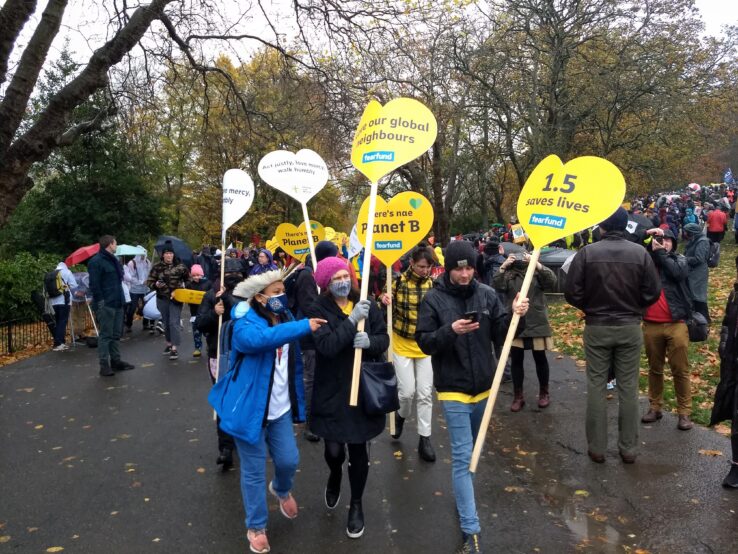
The leaders of the UNFCCC “gladly welcome those who caused the crisis. COP26 has done nothing but pretend and greenwash,” Mitzi Jonelle Tan, a member of the non-governmental organization Youth Advocates for Climate Action from the Philippines, told IPS during a rally at the Glasgow Screening Room, a few blocks from the venue where the official meeting is being held until Friday, Nov. 12.

The COP26 Coalition, the alternative summit to the climate conference, has been a motley crew of organizations and movements whose common demand was a real effort to fight the climate crisis through concrete and fair measures and whose 200 events in this Scottish city included workshops, forums, artistic presentations and protests, which ended on Wednesday, Nov. 10.

Among the demands with which the alternative meeting in Glasgow lobbied the 196 Parties to the UNFCCC were the abandonment of fossil fuels, the rejection of cosmetic solutions to the climate emergency, the demand for a just transition to a lower carbon economy and the call for reparations and redistribution of funds to indigenous communities and the global South.

The movement also called for a gender perspective in policies, climate justice – that those primarily responsible (developed nations) take responsibility and pay for their role -, respect for the rights of indigenous peoples, and a halt to air pollution.

Due to logistical issues and the limitations imposed by the covid-19 pandemic, which postponed the official summit for a year, the parallel sessions of the social movements were held in this Scottish city in a hybrid format, combining face-to-face and virtual participation. Exhibitors and online participants struggled with the quality of their internet connections.

One of the most unanimous and loudest criticisms from non-governmental social and environmental organizations focused on the exclusion of civil society groups from Latin America, Africa and Asia, due to the UK host government’s decision to modify the admission criteria according to the level of contagion in each country and the extent of vaccination.

In addition, they complained about the strict hurdles imposed by the COP26 presidency, held by the United Kingdom, supported by Italy, to the presence of NGO observers at the official negotiating tables, which undermined the transparency of the Glasgow process, whose agreements are to be embodied in a final declaration, which is weakening every day and whose final text will be released on Nov. 12 or 13, if the negotiations stretch out.

The alternative movement also had a formal but unofficial space in the so-called COP26 Green Zone, located in the same area as the official negotiations, in the center of Glasgow.

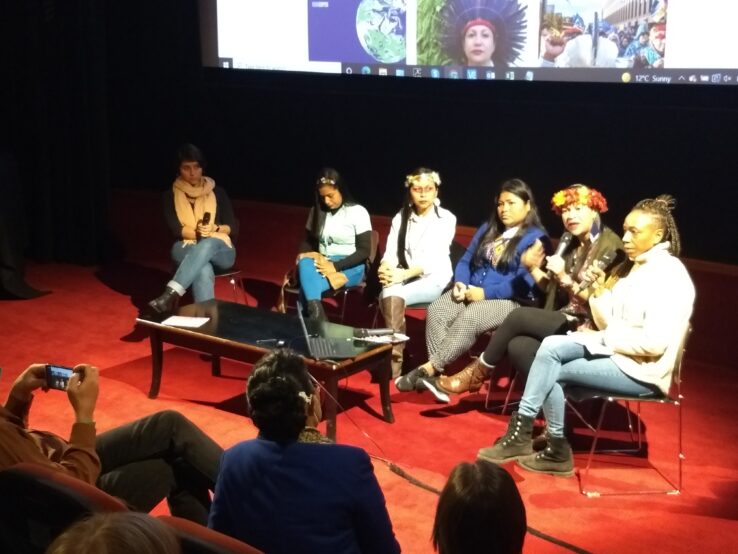
In the forums parallel to COP26 in Glasgow, indigenous women were major protagonists with their demands for respect for their rights and effective participation in the negotiations. In the picture, indigenous women delegates take part in a forum on women of the forest at the peoples' summit. CREDIT: Emilio Godoy/IPS

In the forums parallel to COP26 in Glasgow, indigenous women were major protagonists with their demands for respect for their rights and effective participation in the negotiations. In the picture, indigenous women delegates take part in a forum on women of the forest at the peoples’ summit. CREDIT: Emilio Godoy/IPS

In-depth solutions

One of their key proposals was for a Fossil Fuel Non-Proliferation Treaty aimed at moving towards the end of the era of coal, gas and oil, the consumption of which is primarily responsible for the growing planetary climate emergency.

The initiative, which imitates the name of the treaty against nuclear weapons, demands an immediate end to the expansion of fossil fuel production, a fair phase-out and a just energy transition.

Countries and corporations “continue to invest capital in the extraction of fossil fuels. We need to see efforts to phase them out, to stop the financing, subsidies and exploitation of fossil fuels,” Tzeporah Berman, the Canadian chair of the anti-fossil fuel initiative, told IPS.

The idea for the treaty emerged in 2015 from a call by leaders and NGOs from Pacific island states – whose very existence is threatened by the climate crisis – and it was formally launched in 2020.

So far it has received the support of some 750 organizations, 12 cities, more than 2,500 scientists, academics, parliamentarians from around the world, and religious leaders, indigenous movements and more than 100 Nobel Prize winners.

Climate policies are the focus of COP26 which has addressed carbon market rules, at least 100 billion dollars a year in climate finance, gaps between emission reduction targets and necessary reductions, strategies for carbon neutrality by 2050, adaptation plans, and the working platform on local communities and indigenous peoples.

The International Rights of Nature Tribunal tried the United Nations Framework Convention on Climate Change (UNFCCC), parallel to COP26. In the case, Philippine activist Mitzi Jonelle Tan testified to the lack of effective action against the climate emergency. CREDIT: Emilio Godoy/IPS

The International Rights of Nature Tribunal tried the United Nations Framework Convention on Climate Change (UNFCCC), parallel to COP26. In the case, Philippine activist Mitzi Jonelle Tan testified to the lack of effective action against the climate emergency. CREDIT: Emilio Godoy/IPS

Indigenous people and rights of nature tribunal in the spotlight

Indigenous people, especially from the Amazon jungle, have been key participants at the latest edition of the alternative summit, with at least 40 activists present in Glasgow to complain about harassment by the government of far-right Brazilian President Jair Bolsonaro and demand more protection for the rainforest, whose destruction can have dramatic effects on the environmental health of the planet.

“Our main demand is demarcation of our territories,” because this guarantees a number of rights, Cristiane Pankararu, a member of the Pankararu people and leader of Brazil’s non-governmental National Association of Indigenous Women Warriors (ANMIGA), told IPS.

Her organization belongs to the Association of Indigenous Peoples of Brazil, whose demands are demarcation, climate solutions based on indigenous peoples’ knowledge and practices, and investment in forest protection.

One of the most symbolic activities of the counter-summit was the Fifth International Rights of Nature Tribunal, which tried the cases of “False solutions to the climate change crisis” and “The Amazon, a threatened living entity”.

In the first verdict, the tribunal, which sat for the first time in 2014 and was composed this time of seven judges from six countries, found the UNFCCC at fault for failing to attack the roots of the climate emergency.

In the second ruling, the jury, composed of nine experts from seven countries, accused developed countries and China, as well as agricultural, mining and food corporations, of destroying the Amazon, the planet’s main rainforest ecosystem, which is threatened by these extractive activities.

Nick Dearden, director of Global Justice Now, listed three serious problems: the role of large corporations, the protection of corporate intellectual property, and the power of corporations to sue states that want to protect the environment, in international arbitration tribunals.

“It is a profound symptom of how the global economy protects the interests of large corporations, especially extractive ones, and that has not been addressed at the COP,” he told IPS.

A dialogue of the deaf has prevailed between the UNFCCC and civil society, as the official summit has ignored the demands of social movements.

“They have not listened to us. We are here to demand action. We don’t need another COP to solve the climate crisis, we need change,” Tan complained.

Despite the obstacles, “we will not stop participating actively. The women’s movement is unifying. It is a slow process, because people are not used to being led by women,” Pankararu said.

IPS produced this article with the support of Iniciativa Climática of Mexico and the European Climate Foundation.

  Source

Campaigners Petition UN to Investigate Racial and Gender Discriminations in Global COVID-19 Vaccine Roll-Out

Civil Society, Health, Human Rights

US, UK, Germany, Norway, and Switzerland in violation of international human rights law in “prolonging the pandemic” ahead of vital World Trade Organisation meeting

GENEVA, Nov 10 2021 – An international coalition of human rights law groups, public health experts, and civil society organisations is taking legal action against the US, UK, Germany, Norway, and Switzerland, on the grounds that these countries are in violation of international human rights law by failing to intervene on what has been an inequitable and racially discriminatory roll-out of the vaccine and other COVID healthcare technologies.


In an appeal to the UN Committee on the Elimination of Racial Discrimination (CERD), the coalition charges that by failing to lift intellectual property barriers on all COVID-19 medical technologies through a TRIPS waiver (or to effectively implement it through technology transfers), the US, UK, Germany, Norway, and Switzerland are in violation of the International Convention for the Elimination of All Forms of Racial Discrimination, a human rights convention ratified by nearly all countries in the world.

Because the rich countries currently making and hoarding vaccines are majority white, and the formerly colonized countries suffering due to vaccines being withheld are majority Black, indigenous, or other people of colour, the current inequitable vaccine rollout is a textbook example of structural racial discrimination.

The International Convention for the Elimination of All Forms of Racial Discrimination requires that countries take effective measures “to review governmental, national and local policies, and to amend, rescind or nullify any laws or regulations which have the effect of creating or perpetuating racial discrimination wherever it exists.” Countries have an obligation under the convention to “prevent, prohibit and eradicate” all practices of racial discrimination particularly “racial segregation and apartheid.”

Yet the US, UK, Germany, Norway, and Switzerland have opposed or willfully failed to take all available measures to increase global supply of and equitable access to vaccines and other COVID-19 medical technologies, a violation of their obligations under the human rights convention.

Globally, 73% of all COVID-19 vaccine doses have gone to just 10 countries. Rich countries have administered 61 times more doses per capita than poorer countries and delivered only 14% of the 1.8 billion doses promised to poor countries. Just 5.8% of Africans have been vaccinated. The top 10 high-income countries will have hoarded 870 million excess doses of vaccines by the end of 2021. Countries in the Global South stand to lose $2.3 trillion from now until 2025 if they can’t vaccinate 60% of their population by mid-2022.

The appeal asks the CERD Committee to compel the US, UK, Germany, Norway, and Switzerland to “respect, protect and fulfil their human rights obligations,” as well as to take several immediate actions, including:

    • Demand that the Respondent States immediately support, implement, and enforce a temporary waiver of the intellectual property barriers on COVID-19 vaccines, tests, and treatments currently imposed by the World Trade Organisation’s Trade-Related Intellectual Property Rights Agreement (TRIPS), as requested by India and South Africa in October 2020, and
    • Mandate technology and knowledge transfers from the relevant pharmaceutical corporations to the many manufacturers around the world standing by to ramp up production of these lifesaving medical technologies.
    The CERD meets from November 15 in a weeks-long session coinciding with the World Trade Organisation (WTO) ministerial meeting on November 30. The WTO ministerial is a key opportunity to resolve the year-long impasse on the proposal to break the corporate monopoly control of COVID-19 healthcare technologies by granting the TRIPS waiver.

Tian Johnson, Founder & Lead Strategist, African Alliance and member of the People’s Vaccine Alliance, said: “As a consequence of neocolonial economic and social policies in Africa, fragile health systems impact communities’ access to health services in much of the continent. Africa will become known as the continent of COVID-19 – not because of vaccine hesitancy but because of the inequity, greed, and inaction of pharmaceutical companies and political leaders of the North. Having to rely only on the continent’s own capacity and resources will not be enough to save African lives. Nor should it be. African lives matter, just as much as lives in Berlin, Washington, Tel Aviv, Geneva, London, Toronto or Brussels. COVID-19 is a global crisis that requires global action, whose response all countries should be able to share equally.”

Paula Litvachky, from the Center for Legal and Social Studies in Argentina, said: “Latin America has been extremely affected by the pandemic. It concentrates almost 25 percent of all COVID-19 deaths in a continent that is less than 10 percent of the world’s population. Although there is regional industrial capacity, many States have had problems accessing vaccines. Groups such as indigenous peoples, Afro descendants and racialized sectors are harder hit than others, both by the virus and by the dramatic social and economic crises it is provoking.”

Anele Yawa, General Secretary of the Treatment Action Campaign and a member of the People’s Vaccine Alliance, said: “Big Pharma has prioritized excessive profits over protecting people’s health for too long. Often they are aided and abetted by governments in the Global North through their inaction or opposition to a more just system. We have repeatedly seen this occur in many fights for access to affordable medicines, from the fight for HIV medicines in the early 2000s and more recently in our fight to Fix the Patent Laws to ensure more affordable medicines for cancer, TB, mental health and beyond. Yet again now with COVID-19, we are seeing Big Pharma greed being prioritized over people’s lives all over the world. Governments must fulfil their international obligations and help prioritize people over profits by ensuring vaccine equity for all, irrespective of where you were born, poverty, gender or immigration status.”

Joshua Castellino, Executive Director of Minority Rights Group International, said: “COVID-19 has hit people of colour, women, indigenous people, and other minority and discriminated groups harder in terms of infections, deaths, lack of access to healthcare, resultant poverty, and even violence and emotional trauma. The discrimination of the virus is being revisited by vaccine discrimination, as rich nations deliberately withhold and deny these same groups of people equitable access to it.”

Meena Jagannath, coordinator of the Global Network of Movement Lawyers at Movement Law Lab, said: “We have tabled an evidenced-based challenge to the UN, an institution meant to embody the spirit of multilateral cooperation. Our evidence points to specific actions by the named states in perpetuating structural divisions between the global north and the global south that are rooted in historical colonialism, all in the service of profit and the corporate capture of power. This contravenes their legal obligations under international covenants and agreements they’ve ratified. This is a test-of-our-times for the UN system to engage and correct. We are deadly serious in our resolve to seek justice and redress.”

Mandivavarira Mudarikwa, Attorney, Women’s Legal Centre, South Africa, a member of ESCR-Net – International Network for Economic, Social and Cultural Rights, said: “It is undeniable that women in their diversity, especially those of colour, have disproportionately been impacted by the COVID-19 pandemic, including in shouldering the greatest burden of healthcare and unpaid care work. The inequitable availability of access to health care, personal protective equipment and the distribution of vaccines, and other lifesaving treatments has laid bare the ongoing discrimination that women face in their daily lives. Critical, transformative action is needed immediately if we are to substantively effect change and bring about just and equal access to the right to health. We therefore support the submission of the CERD urgent action appeal aimed at addressing the gender and racial injustice that persists and hope that others will join in this collective action.”

The petition urges CERD to find that these countries must prioritise actions that will protect people’s lives instead of the corporate-controlled intellectual property of the vaccine. They should be supporting — rather than blocking — a proposal at the WTO to waive these intellectual property monopolies, so that more countries are able to make more and cheaper vaccines and other COVID healthcare technologies.

Germany, the UK, Norway and Switzerland have actively opposed moves to waive intellectual property barriers on all COVID-19 vaccine technologies at the WTO. The US has declared support but only for a narrow waiver on the vaccine alone, while failing to use other mechanisms at its disposal e.g. mandating technology transfers through use of the Defense Production Act.

The petition is also strengthened by a separate legal brief signed by jurists around the world which finds that these “blocking” states are also, by their actions, breaching a number of covenant and treaty obligations under international human rights law. The brief says these countries are violating both the International Covenant on Economic, Social and Cultural Rights and the International Covenant on Civil and Political Rights, along with a number of treaties they have signed as members of the WTO, including their legal obligations of international cooperation. A broad legal coalition is also advancing additional complaints in other forums, including a submission to the Committee on the Elimination of Discrimination Against Women (CEDAW) to surface the gender discrimination.

The petitioning groups include African Alliance, Center for Economic and Social Rights, Centro de Estudios Legales y Sociales, Minority Rights Group, Oxfam International and Treatment Action Campaign. The petition was coordinated by Global Network of Movement Lawyers (of Movement Law Lab) and ESCR-Net, and is supported by SECTION27 and other organizations within the People’s Vaccine Alliance.

  Source