Amid COVID-19, What is the Health of Civic Freedoms?

Active Citizens, Civil Society, Democracy, Editors’ Choice, Featured, Global, Global Governance, Headlines, Human Rights, Inequity, IPS UN: Inside the Glasshouse, Population, Poverty & SDGs, TerraViva United Nations

Opinion

Marianna Belalba Barreto is the Civic Space Research Lead at CIVICUS: World Alliance for Citizen Participation & Aarti Narsee is a Civic Space Research Officer at CIVICUS: World Alliance for Citizen Participation
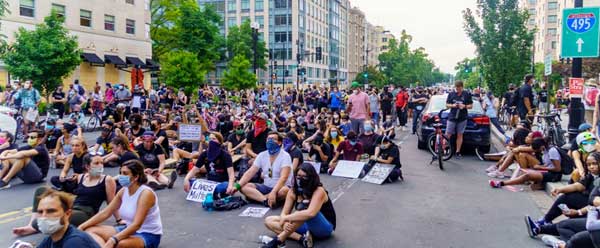
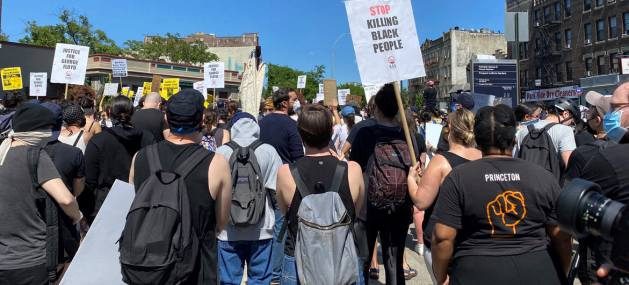
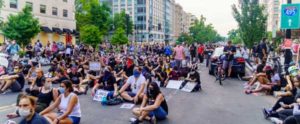
Black Lives Matter Protests, Washington DC, June 2020. Credit: Ted Eytan

JOHANNESBURG, South Africa, Oct 16 2020 (IPS) – More than half a year after the World Health Organization declared the COVID-19 outbreak a pandemic, governments are continuing to waste precious time and energy restricting human rights rather than focusing on fighting the virus.


Civic freedoms, including the freedom to associate, express views and peacefully assemble, are under threat, with states using broad and restrictive legislation to snuff out dissent.

But people are organising and mobilising to demand rights. In the face of restrictions, civil society continues to fight back, often taking to the streets to do so.

Even before the pandemic freedom of expression was under threat. In 2019, the CIVICUS Monitor reported that censorship was the most common violation during that year, occurring across 178 countries.

Now, under the guise of stopping the spread of what they characterise as ‘fake news’, many governments continue to target the media.

Free-flowing information and unrestricted speech are vital during a pandemic. People need to receive accurate and up-to-date information on the emergency, not least so they can protect themselves and their families.

As frontline workers, journalists have a crucial role to play in disseminating important information, often putting their own lives at risk. But during the pandemic they have faced harassment, arbitrary detention and censorship from governments determined to silence critical reporting about their response to COVID-19.

Often such attempts have been carried out under the guise of tackling so-called ‘fake news’ on the virus.

Even before the pandemic, Turkey was the number one jailer of journalists in the world, with about 165 journalists currently behind bars. The government’s crackdown on the media has continued, with journalists being jailed on charges of ‘causing people to panic and publishing reports on coronavirus outside the knowledge of authorities’.

Thousands of social media accounts have also been placed under surveillance for comments about COVID-19, with citizens being detained for ‘unfounded and provocative’ posts that cause worry among the public, incite them to fear, panic and target persons and institutions’.

People expect to be able to question their government’s handling of the crisis and hold it to account over the decisions made. But governments are resisting this. In Zimbabwe, investigative journalist Hopewell Chin’ono was detained and charged for his critical reporting on the government’s COVID-19 procurement.

The need for this was clear when Zimbabwe’s health minister was dismissed and arrested for alleged corruption in medical procurement. But while Chin’ono has been released on bail, the persecution against him continues, despite calls from local and international media watchdog bodies for all charges to be dropped.

Despite these restrictions, people have continued to mobilise and fight for their rights. The pandemic pushed activists to come up with new and innovative forms of protests. Health workers across the world staged socially distanced protests to highlight the challenges within the medical system which have been further exposed by the pandemic; around the world, people found innovative ways to get their voices across.

In Palestine, feminist organisations organised balcony protests against the surge of gender-based violence during the pandemic. Videos show people standing on their balconies, banging pots and pans and hanging banners to show solidarity.

In Singapore in April, young climate activists from the Fridays for Future global school strike movement held solo protests in order to sidestep the country’s restrictive laws on peaceful assembly.

In June in Brazil, human rights groups organised peaceful interventions to denounce the scale of the COVID-19 crisis; protesters in the capital Brasilia put up 1,000 crosses to pay tribute to COVID-19 victims on the lawn in front of key government buildings, calling out President Jair Bolsonaro for his denials of the pandemic’s gravity.

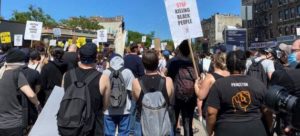
Protests against racial injustice have been staged in all corners of the globe, following the killing of George Floyd by the Minneapolis police on 25 May 2020. Floyd’s death sparked massive protests against police brutality in the USA, under the banner of Black Lives Matter.

As the movement expanded, people from different continents, in countries as diverse as Senegal, Sri Lanka and Sweden, chanted “No Justice, No Peace”, and held placards reading “racism is a virus” to show they had no choice but to protest amid a global pandemic.

But in some countries these protests were dispersed by police using excessive force, with the reasoning that protests would lead to a further spread of COVID-19.

CIVICUS continues to document civic space restrictions, and while many governments are taking advantage of the crisis to suppress criticism, civil society continues to resist, to fight back, and to make their voices heard.

As part of this, journalists are playing a vital role in fighting censorship and sharing information about the pandemic.

What is very clear is that civil society has and will continue to play a vital role in addressing the urgent needs of the people during this crisis. Without a healthy civic space and an enabling environment for activists, civil society and journalists, we will not be able to effectively tackle the spread of the virus and the prospect for rebuilding a more equal and just society will be limited.

This is why people will continue to organise, mobilise and protest.
  Source

Americans By Force

Civil Society, Democracy, Headlines, Human Rights, North America, TerraViva United Nations

Opinion

The explanation for black Americans endemic discrimination is the contrast between their implantation in the United States and the way the rest of the public settled in the “American dream.” Almost everyone came to this idea that is the United States of free will.

Protests have been taking place in cities across the United States. Credit: UN News/Shirin Yaseen

MIAMI, Sep 4 2020 (IPS) – Why, in the United States, where change is the most pronounced hallmark, do some aspects never change? Why do many bad habits resist giving way to novelties that prove to be the basis of the success of the most developed country on earth and still the leading power?  Why is the explanation for that leadership due to a few factors? Why does Trump profess a visceral opposition to immigration, knowing that it is the key to the country’s success? Because millions of his compatriots interpret the sinew of American DNA as a threat to their comparative social advantage.


Meanwhile, in this drama, blacks continue to bear the brunt of it all. The explanation for their endemic discrimination is the contrast between their implantation in the United States and the way the rest of the public settled in the “American dream.” Almost everyone came to this idea that is the United States of free will.

No one can say that their grandparents were forced to change residence. Although it can be argued that hunger, religious persecution, and the desire for economic improvement were important factors in driving emigration from Europe, Africa, or Asia, it is also true that voluntary americanization is the key to the success of the United States.

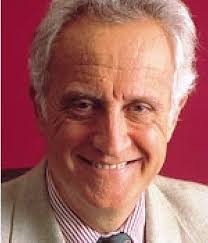
Joaquín Roy

This country is the most genuine example of national construction opposed to that based on ethnicity, religion, race. America is the most definite specimen of the nation of choice, based on personal conviction.

It is not by chance that theorists of nationalism call this alternative “liberal.” The “American dream” explains its survival. As long as millions of citizens of other continents answer Ernest Renan’s question with a negative vote every night in his imaginary “daily plebiscite”, and decide to opt for the residency trick, the United States will exist.

The day a majority of Americans vote negative for residency, the country would be deserted. There is nothing that unites Americans, except their desire to be. Their religion is summarized in the offer provided by the Declaration of Independence: life, liberty and the pursuit of happiness. He does not give them a guarantee, but a promise. And it is enough for them.

However, the absence of a residency obligation has two crucial exceptions: black and indigenous minorities. These two sectors contrast in their implementation in what for them is, more than a dream, an “American nightmare.”

Although it can be argued that hunger, religious persecution, and the desire for economic improvement were important factors in driving emigration from Europe, Africa, or Asia, it is also true that voluntary americanization is the key to the success of the United States.

The original owners of the immense territory, although their immemorial ancestors crossed the Straits of Alaska at the dawn of North America, have been reduced to their reservations, marginalized, eaten away by poverty and alcoholism. Even in the sporadic mythos in Hollywood movies, Sitting Bull and his imitators do not overcome the mystique of Buffalo Bill.

The blacks were unfortunately marked by the original sin of not having booked a ticket for the forced trip to the United States. Their implantation has been resisted from the beginning by themselves and by the descendants of the merchants who deposited them in America.

With their emancipation and its disastrous execution, the peculiarity of their residence became more apparent. When they were stripped of the benefits that they had given away to their owners for free, their value was lost in Wall Street.

The successive corrective measures of discrimination and segregation only made the division of society even more evident. Despite the actions of Martin Luther King, who paid for his daring with his life, legal advances supercharged racist resentment from a part of society that resisted reform. “Affirmative Action” and food stamps multiplied the opposition.

Simultaneously, the black community, which had ceased to call itself “colored,” to take a curious journey back to being classified as “African,” watched with amazement as other newcomers from other continents were climbing ranks.

Latin Americans began to outnumber blacks not only in economic resources, but in numbers. As a result of the new census parameters, while whites held 63%, Hispanics (15%) and Asians (10%) cornered blacks (13%).

Internally, the new “African-Americans” decided to opt for a peculiar nationalism: they defended themselves with their signs of “black is beautiful”, they enthroned their peculiar English inherited from their owners, and they monopolized some entertainment professions.

Some were more fortunate and co-opted the rosters of basketball teams. For their part, some managed to settle on the ladders of power as senators and congress people, thanks in part to the restructuring of electoral districts.

Then they even aimed, with the decisive support of white sectors, to opt for the incredible: the presidency of the United States. It was already too much and the opposition to this impudence did not forgive Obama or the rest of the community, and even less the Democrats and liberals.

The mirage of the election of the first black president bypassed the resistance of deep America and the withdrawal of the “silent majority” that Nixon tried to awaken. Now Trump has reinvented it.

It was forgotten that only about a third of the electorate voted for Obama, while another third chose the Republican candidates. Another third stayed home. Among those 60-70% of Americans who abstained from voting on the traditional electoral correction, crouched was the mostly white sector, both high-income and lower-middle-class that followed the sounds of the piper Trump.

Those who rejected the candidate Hillary Clinton believed, and still believe, that their faltering economies have been pierced by the rise of the historically vanquished. They now believe that their pristine suburbs, real or imagined, are threatened by the “socialist” hordes of predominantly Latino origin, and the “terrorists” who insist on protesting against what they consider dangerous interference by the security forces in daily life.

The only thing missing is that the statistical evidence of the black overpopulation of the prisons and the number of crime victims of the same origin is “enriched” with sad deaths of blacks at the hands of white policemen.

Joaquín Roy is Jean Monnet Professor and Director of the European Union Center at the University of Miami

  Source

It is Time for a Democratic Global Revolution

Civil Society, Climate Change, Democracy, Editors’ Choice, Featured, Global, Global Governance, Headlines, Human Rights, IPS UN: Inside the Glasshouse, TerraViva United Nations

Opinion

Daniel Jositsch is a Member of the Swiss Senate and President, Democracy Without Borders-Switzerland, and Andreas Bummel is Executive Director, Democracy Without Borders. Twitter: @democracywb

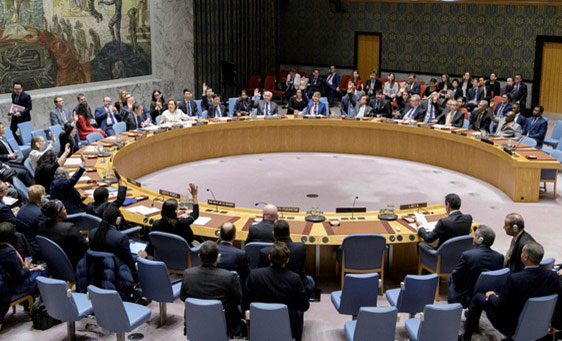
The UN’s Security Council, in particular, is suffering from a dysfunctional decision-making method that grants the five victors of the Second World War and official nuclear powers not only a permanent seat but also a veto right. Credit: United Nations

BERLIN / BERNE, Aug 28 2020 (IPS) – The people of the world need to seize the moment and bring about a democratic global revolution. It is time for a global parliament and real representation.

More than 21 million people got infected with the novel coronavirus and over 770,000 have died. Never before did the world witness similar collective lockdowns of social and economic activity that had to be enforced to contain the pandemic.


For many, the corona-related global crisis exacerbates a situation that was already critical before the outbreak of the virus.

The climate crisis is unfolding with record temperatures in Siberia, Greenland, the Antarctic and other places like the Middle East. The new climate apartheid is characterized by whether you can afford to shield yourself from such heat or not. Most cannot.

135 million people are facing crisis levels of hunger. There are currently more than 70 million displaced people who have fled war, persecution and conflict. It’s the worst humanitarian and refugee crisis in seventy years.

There is a global inequality crisis. Productivity gains and globalization disproportionately benefit the affluent. Financial assets in the trillions are hidden in offshore accounts from tax authorities. The world’s 26 richest billionaires own as much as the poorest 3.8 billion people on the planet.

While global surveys confirm that people across all world regions strongly believe in democracy, there is in fact a democratic retreat. Confidence in the actual performance of democratic governments is waning. Populist nationalism and authoritarianism has been advancing, aided and abetted by social media platforms and the internet. Major arms control treaties are crumbling, geopolitical tensions are rising and multilateralism is under attack.

Civil society and citizens across the world are fighting back, though. Pro-democracy movements are at an all-time high as widespread protests in dozens of countries now and in recent times demonstrate. Freedom and justice have lost no appeal. At the same time, millions of citizens joined climate protests around the world and called for quick and effective action in this critical field.

The present issues are symptoms of a crisis of global governance. There is a scale mismatch between a political world order that is based on 200 states and territories and issues that demand decisive global action.

As the UN celebrates its 75th anniversary this year, the organization continues to lose significance and impact. The UN is only as strong and effective as its member states allow it to be. The same applies to all intergovernmental organizations and forums, including the World Health Organization that had to launch an investigation into its handling of the Covid-19 pandemic.

The UN’s Security Council, in particular, is suffering from a dysfunctional decision-making method that grants the five victors of the Second World War and official nuclear powers not only a permanent seat but also a veto right.

If long-lasting solutions are to be achieved, this scale mismatch must be tackled. It is not enough to call on individual governments to change their policies. The way how the world is governed must be changed. What is needed is a new vision of a democratic world order that is based on shared sovereignty on global issues, a clear commitment to human rights, the principle of subsidiarity and complete disarmament.

When the UN was founded it was recognized that this should only be a beginning and that changes would be required. Article 109 of the Charter provides that a conference to review the Charter should be held by 1955. The UN’s member states did not deliver on that promise. Now is the time to hold them to account.

The world’s people need an actual say in global affairs that is not intermediated by national governments and their diplomats. The key ingredient of a new UN should be a democratically elected world parliament that complements intergovernmental bodies such as the UN General Assembly.

The creation of a new democratic world organization that has actual powers seems to be a gigantic project that raises numerous questions. How is a global democracy to be created while major states themselves are not democratically organised? Can decisions of a world parliament be enforced against the will of individual states? How is it possible that states will agree to the creation of a superior political unit?

These questions show the way forward: The people of the world themselves need to embrace and call for global democracy. Eventually, they are the sovereigns not only in their individual states but on the planet as a whole, too.

A global democratic revolution needs to push for a legitimate, inclusive and representative global body that will deal with these questions in a serious way. The creation of a UN Parliamentary Assembly could be an important stepping stone to launch a global constitutional process and a transformation of global governance.

This global democratic revolution will be peaceful because it is not about destroying structures or conquering territories, but about opening up a political level that is lying idle. Supranational integration cannot be imposed by force. It will happen because the people want it.

If existing movements in the fields of climate, environment, peace, disarmament, democracy, social justice and others join forces, the global democratic revolution will become very real.

This may sound visionary. But the big issues troubling this planet and its people will remain, and worsen, unless the root cause is addressed. A democratic global government is not a mind game in some ivory tower. It is the most important question on the agenda of humanity today.

  Source

Are We Going from San Francisco?

Armed Conflicts, Conferences, Democracy, Economy & Trade, Featured, Global, Headlines, Human Rights, Peace, TerraViva United Nations

Opinion

SYDNEY and KUALA LUMPUR, Jun 30 2020 (IPS) – Seventy-five years ago, on 26 June 1945, before the Japanese surrender ending the Second World War, fifty nations gathered at San Francisco’s Opera House to sign the United Nations (UN) Charter.


UN Charter
Nations pledged “to practice tolerance and live together in peace …, and to ensure … that armed force shall not be used, save in the common interest, and to employ international machinery for the promotion of the economic and social advancement of all peoples”.

Anis Chowdhury

They sought “to save succeeding generations from the scourge of war, … and to reaffirm faith in fundamental human rights, in the dignity and worth of the human person, in the equal rights of men and women and of nations large and small, and to … promote social progress and better standards of life in larger freedom”.

The Charter’s contents reflected some contradictions inherent in framing an international organization recognizing national sovereignty as its organizing principle, and various other compromises, often influenced by the convening host nation.

Although the conduct of Member States often falls short of the UN’s lofty goals, its Charter was nonetheless a monumental achievement, providing the foundation for a rules-based international order.

San Francisco Conference
Forty-six Allied countries, including the four sponsors – the United States, the United Kingdom, the Soviet Union and China – were originally invited to the San Francisco Conference.

The conference itself invited four other States – the Byelorussian and Ukrainian Soviet Socialist Republics, newly-liberated Denmark and Argentina. Poland did not send a representative as its new government was still uncertain.

Of the fifty participating states, only four were African and nine Asian. Latin American countries, independent since the mid-19th century, were present and active in deliberations.

The Conference was not only one of the most significant international gatherings in history, but perhaps the longest ever. The two month long Conference was attended by 3,500 people, including 850 delegates, their advisers, staff and the secretariat, plus more than 2,500 from the media and other observers.

Jomo Kwame Sundaram

The Conference opened on April 25, 1945 with great fanfare, despite the sudden death of its principal architect and presumed host, US President Franklin Delano Roosevelt, on 12 April. The task of carrying on fell to his Vice-President Harry Truman who had become President.

Truman often quoted English poet Alfred Lord Tennyson’s Locksley Hall, carried in his wallet, bewildering colleagues, senators and staffers who doubted his commitment to international peace. Tennyson foresaw that nations, realizing they could destroy one another, might agree to form “the Parliament of Man”, to resolve disputes peacefully.

Clashes and compromises
Many serious differences of opinion triggered crises, even at the preparatory stage. For example, the Soviet Union proposed that all 16 Soviet republics should have UN membership to balance the influence of US allies: the US countered by proposing membership for all its 50 states!

A compromise was struck, allowing membership for the Soviet republics of Belarus and Ukraine; the Soviet Union then withdrew its opposition to Argentina, which had supported the Axis powers.

The most important deliberations concerned the UN Security Council (UNSC), initially composed of five permanent members (US, UK, USSR, China, France) and six elected members. The P5’s right to veto provoked a long and heated debate.

Others feared that when one of the P5 threatens the peace, the UNSC would be ineffectual. But the P5 collectively insisted that as the main responsibility for maintaining world peace would fall most heavily on them, the veto provision was vital.

Australia proposed that no permanent member should be allowed to veto when involved in a Chapter VII dispute over threats to peace. The US delegation blocked this and a Soviet proposal allowing P5 vetoes on procedural matters, e.g., discussion of disputes in which it may be involved.

While US officials saw the UN General Assembly (UNGA) primarily as a ‘talk shop’, the USSR tried to limit it from discussing sensitive political matters. However, recognizing its importance for legitimacy, the compromise reached permits the UNGA to discuss any issues “within the scope of the Charter”.

Colonialism was not supposed to be discussed at the Conference to avoid alienating the European imperial powers, whom the US needed to isolate the Soviet Union. But the handful of Asian and African countries attending wanted countries still under the colonial yoke to attain freedom and independence as soon as possible.

Although not on the original Conference agenda, after much debate, Chapters XI, XII and XIII provided some norms for colonial administration and pathways for decolonization. Nonetheless, these ambiguous, at best, pronouncements greatly disappointed anti-colonialists around the world.

US hegemonic from outset
Despite some compromises inherent in framing such an agreement, the UN Charter favoured the US. It promised to protect freedom of action and national sovereignty, as desired by the US, but contained no open-ended commitment to preserve other countries’ territorial integrity, like the League of Nations Covenant’s Article 10.

Article 2(7) placated American sovereigntists and nationalists, declaring: “Nothing contained in the present Charter shall authorize the United Nations to intervene in matters essentially within the domestic jurisdiction of any state.”

The US and the UK also got what they wanted for existing and new regional and plurilateral arrangements, including defence and mutual assistance organizations.

Some US officials were concerned the UN might threaten the Monroe Doctrine privileging the US in the Western hemisphere, while limiting its ability to intervene elsewhere. Some clever drafting of Chapter VIII provided blanket endorsement to regional organizations, also seen as reflecting the principle of subsidiarity.

Article 51 enshrined the principle of “self-defense against armed attack, either individual or collective”. Although not fully appreciated in 1945, such provisions later helped legitimize various US and other post-colonial security pacts in Europe, Asia and the Americas against the Soviet Union during the Cold War.

Conference participants also considered a proposal for compulsory jurisdiction for a World Court, but the US Secretary of State recognized this would jeopardize Senate ratification. Delegates compromised, agreeing to let countries decide whether to accept the International Court of Justice (ICJ)’s jurisdiction.

Unsurprisingly, the US has had an uneasy relationship with the ICJ from the outset, never submitting to its authority, and reacting negatively to Court decisions seen as adverse to the US.

From Truman to Trump
Presiding at the closing ceremony, Truman cautioned that the success of the new world body would depend on collective self-restraint. “We all have to recognize – no matter how great our strength – that we must deny ourselves the license to do as we please. This is the price each nation will have to pay for world peace.”

Truman is probably turning in his grave watching Trump’s jingoist ‘America First’ policy undermine the UN and multilateralism. Are multilateralism and the UN now doomed as Trump belies Tennyson’s hope and leads the US to up-end the Roosevelt-Truman legacy?


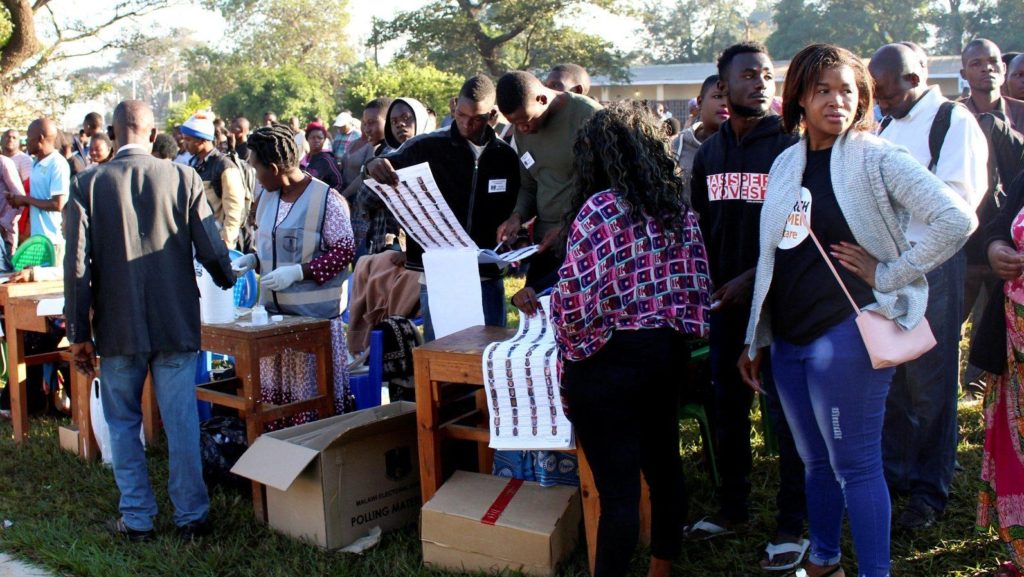
Malawi designated home of democracy in Africa

Malawi’s election results are being delayed after vote forgery claims

Written By Angella Semu

Various people on social media from various parts of Africa have applauded Malawians for the courageous fight for their freedom amid the ongoing election process.

This comes after Malawians took it to the streets following the 21st May 2019 election results that was declared not credible following several irregularities by the courts.

Among several things, Malawians have been praised for uprooting all rotting institutions and claim their much awaited freedom through the unending match of freedom for the past year.

“Malawians were cheated of Victory by Munthalika, they went into the streets fought with his police force.

“They went to court and the judiciary was not corrupt like Luke Malaba’s atrocious courts. Today they vanquished the dictatorship!,” Said one of the social media users.

In the past election, the outgoing president was declared the winner. This did not resonate well with many people who dragged the then election body led by Justice Jane Ansah to court together with the then incumbent president professor Arthur Peter Munthalika who was wrongly declared the winner of the election.

“Despite being one of the poorest country in the world, Malawi can be the next home of democracy in Africa,” said another social media user.

In the just ended elections, the unofficial results have pointed towards the opposition leader Lazarus Chakwera becoming the next president of Malawi.

Several people including Zimbabweans, Kenyans and Zambians have called upon their countries to emulate what Malawians have done and study Malawi’s institutions before engaging in the next elections.

First Posted on www.maravipost.com

UN Chief Should Lead by Example on Human Rights

Civil Society, Democracy, Featured, Global, Global Governance, Headlines, Human Rights, Press Freedom, TerraViva United Nations

Opinion

Louis Charbonneau is United Nations Director, Human Rights Watch

Credit: United Nations

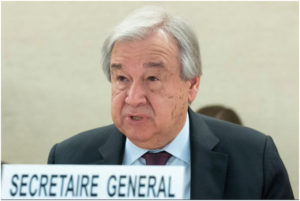
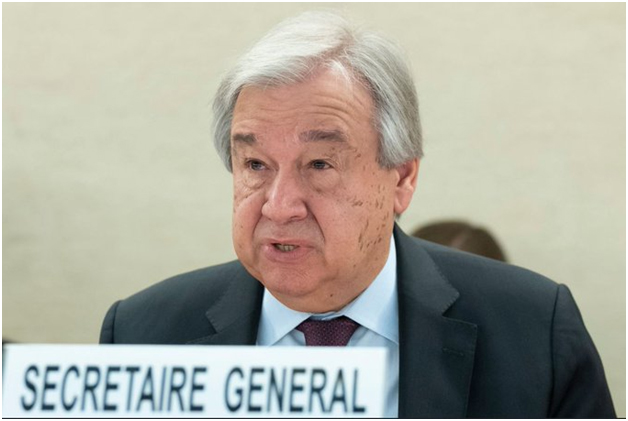
UNITED NATIONS, Feb 25 2020 (IPS) – United Nations Secretary-General Antonio Guterres has long needed to overhaul his approach to human rights. Hopefully his call to action announced in Geneva yesterday is the start of something new.


Guterres’ low-key approach to human rights may have been calculated to avoid conflicts with big powers like the United States, Russia, China, and Saudi Arabia. But human rights groups and former senior UN officials have criticized it for being ineffectual.

The secretary-general’s new initiative contains some excellent ideas. The link he makes between human rights and the impacts of climate change is crucial, and those who fight to protect the environment are increasingly at risk.

Forest defenders in Brazil and elsewhere are threatened, attacked, and killed by those who seek to benefit from the forests’ destruction. And Guterres is right to highlight the risks posed by new technologies, whether it involves government surveillance, artificial intelligence, or fully autonomous weapons, so-called “killer robots.”

The test for any initiative is the implementation. No one is suggesting the secretary-general do everything alone. But he needs to lead by example.

Louis Charbonneau

That means publicly calling out rights abusers and advocating for victims. Human rights violations aren’t like natural disasters.

They are frequently planned and executed by government officials or their agents – whether it’s the mass arbitrary detention of Uyghurs in China, Myanmar’s ethnic cleansing campaign against Rohingya Muslims, indiscriminate Russian-Syrian bombing of civilians in Idlib, or the forced separation of children from their parents at the US border.

It also means using the authority of the secretary-general’s office to launch investigations and fact-finding missions when appropriate. That includes launching an inquiry into China’s massive rights violations in Xinjiang, and pressing for an international accountability mechanism on Sri Lanka.

The secretary-general should order a follow-up inquiry into the murder of Washington Post columnist Jamal Khashoggi to help determine whether Saudi Arabia’s top leadership ordered his slaying. He should also publicly release the findings of his inquiry into attacks on hospitals and other protected facilities in Syria, likely carried out by the Russian-Syrian alliance.

None of this is to say Guterres should abandon “private diplomacy” with governments. But he should re-emphasize public diplomacy on human rights at the UN. Human rights advocacy shouldn’t be the sole responsibility of High Commissioner for Human Rights Michelle Bachelet and her office.

The secretary-general should be the UN’s leading voice on human rights, not only working in the background.

Secretary-General Guterres has issued a call to action on human rights. Now it’s up to him to act.

  Source