Billions will Vote this Year – LGBTIQ+ People Must not be Excluded

Civil Society, Democracy, Gender, Global, Global Governance, Headlines, Human Rights, IPS UN: Inside the Glasshouse, LGBTQ, TerraViva United Nations

Opinion

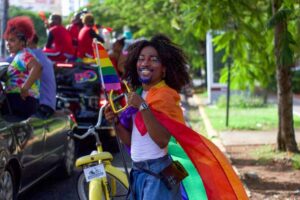
UNDP is working in all regions of the world to integrate LGBTIQ+ people and issues in development efforts. Credit: UNDP Dominican Republic

UNITED NATIONS, May 20 2024 (IPS) – This year has been called the ‘super election’ year, with 3.7 billion people potentially going to the polls. This historic political moment is also an opportunity to reflect on what these billions of voter experiences will look like. Who will vote, who can run for office and who might be excluded from the political process?


It goes without saying and is enshrined in the Universal Declaration of Human Rights, that everyone should have the right to participate in the political processes in their country, and huge strides have been made in recent years to recognize and advocate for LGBTIQ+ rights. But the reality for LGBTIQ+ people is often very different.

Because despite progress, one third of countries maintain laws that make same-sex relationships illegal. For the LGBTIQ+ people living in these countries, what is their experience with elections, as voters or as candidates?

Consider the transgender person who faces harassment whenever they leave their home and is ultimately excluded from their community. Or the LGBTIQ+ groups that are receiving constant online hate because of a wave of social media disinformation. To what extent are they free to express their political views, without fear of discrimination, hate speech or even physical violence?

These experiences do not exist in a vacuum. They are the result of a vast swathe of anti-LGBTIQ+ laws and policies, which in some countries are continuing to gather momentum, compounded by the pervasive stigma and discrimination many LGBTIQ+ people face in their everyday lives.

And they directly impact our political processes by silencing people, limiting the extent to which they can have a voice in their societies and in the decisions which affect them, and entrenching structural discrimination.

UNDP has been working for decades to help break these barriers and to strengthen laws, policies and programmes that respect the human rights of all individuals. This demands we work with a broad range of global partners and advocates, recognizing that LGBTIQ+ people are a diverse group and face multiple and intersecting forms of discrimination.

But with estimates suggesting about half of the global population may vote this year, it does throw into sharp focus the need to ensure that the people determining the leadership and political direction of their countries, truly reflects the full diversity of the world we live in.

We have reason to be hopeful that they will. Because with the steadfast support of partners like Luxembourg, UNDP has been supporting global efforts, including LGBTIQ+ organizations and activists, to help transform LGBTIQ+ rights.

For instance, last October, UNDP launched its global publication ‘Inclusive Democracies: A guide to strengthening the participation of LGBTI+ persons in political and electoral processes,’ in a jointly cohosted event with the LGBTI intergroup of the European Parliament.

Its aim is to provide policymakers, electoral management bodies, legislators, civil society and other stakeholders a clear set of tools to work towards a more equal exercise of civic and political rights, freedom of expression and association, and access to public services. The publication, informed by UNDP’s work globally, includes best practices from over 80 countries, mainly from the Global South.

At the same time, UNDP is working in 72 countries and all regions of the world to integrate LGBTIQ+ people and issues in development efforts.

This includes working with young key populations in Southern Africa – which includes young gay men and other men who have sex with men, lesbian, gay, bisexual, transgender and intersex people – to help challenge some of the negative stereotypes appearing in mainstream media, and to change the negative narratives.

Support has focused on organizing media skills training for young people to build their journalistic skills and enhance the use of digital platforms for advocacy on issues affecting them.

But digital platforms also have the power to do great harm, and LGBTIQ+ individuals often face disproportionate online harassment, posing a threat to their equal political participation. With support from Luxembourg, UNDP has been able to prioritize combating dangerous online speech that targets individuals based on gender, sexual orientation or ethnicity.

For example, the Cabo Verde Free and Equal Campaign, part of UNDP’s efforts, focuses on fighting gender stereotypes and eliminating prejudices through legal and communication channels.

The global efforts to address LGBTIQ+ rights are having an impact. The recent HIV Policy Lab report – produced jointly by Georgetown University’s O’Neill Institute, UNDP and the Global Network of People Living with HIV (GNP+) shows a clear and ongoing trend toward decriminalization of consensual same-sex sex around the world, with more countries removing punitive laws in 2022 than in any single year in the past 25 years.

These advances are part of a collective effort, because building inclusive and equitable societies means building a coalition of partners. At UNDP, the importance of partners like Luxembourg in helping to fund this vital work, and shining a light on the injustices LGBTIQ+ people face, is never underestimated.

This is important because investments in human rights are investments in our societies. And thanks to Luxembourg and our core donors, UNDP has been able to help people, whoever and wherever they are, to have a voice in shaping their societies.

This year, the stakes have never been higher. The decisions made in the elections taking place will set the course for how societies develop, and to what extent human rights are respected. Which is why we must also use this moment to recognize our partners and to renew our commitments to the LGBTIQ+ community.

The world’s attention will be focused on the election winners and losers. But the outcome is only one piece of the puzzle. Ensuring the political processes taking place are inclusive, credible and peaceful is how we ultimately build a world where everyone can vote, anyone can run for office, and most importantly, where no one will be silenced.

Ulrika Modeer is UN Assistant Secretary-General and Director of the Bureau of External Relations and Advocacy, UNDP; Christophe Schiltz is Director General, Directorate for Development Cooperation and Humanitarian Affairs, Ministry of Foreign and European Affairs, Defence, Development Cooperation and Foreign Trade, Luxembourg

Source: UNDP

IPS UN Bureau

  Source

The Summit of the Future Is a Rare Chance to Fix a Broken System: Civil Society Must Be Included

Armed Conflicts, Civil Society, Economy & Trade, Featured, Global, Global Governance, Headlines, Nuclear Energy – Nuclear Weapons, Sustainable Development Goals, TerraViva United Nations

Opinion

Credit: UN Photo/Rick Bajornas

NEW YORK, Apr 22 2024 (IPS) – Today, the spectre of a major regional conflict, and even a possible nuclear conflagration, looms large in the Middle East. Despite stark warnings issued by the UN Secretary-General, António Guterres, the multilateral system is struggling to resolve the very challenges it was supposed to address: conflict, impoverishment and oppression. In a deeply divided world, this September’s Summit of the Future offers a rare chance to fix international cooperation and make good on gaps in global governance.


The problem is, too few people and civil society organisations, outside UN circles, even know the Summit is happening. This is characteristic of a lack of broad consultation. Things started poorly with limited time and opportunities for civil society to provide inputs last December into the zero draft of the Pact for the Future, which is supposed to be a blueprint for international cooperation in the 21st century.

The zero draft, released in January 2024, lacks the ambition many hoped would be on show to tackle the enormity of the challenges before us. It included just one mention of the role of civil society and nothing about civic space, even though growing restrictions on fundamental freedoms are severely impeding the transparency, accountability and participation needed to realise the Sustainable Development Goals (SDGs) – the set of ambitious but largely unrealised universal commitments the Summit intends to reaffirm.

To be clear, the Summit’s co-facilitators, Germany and Namibia, are in an unenviable position, having to balance the demands of states that want the process to be purely intergovernmental and others that see value in civil society’s engagement. Some don’t see any role for civil society: in February, a handful of states led by Belarus sent a letter to the Special Committee on the UN Charter questioning the legitimacy of civil society organisations. If their demands were acceded to, the UN would miss the innovation and reach that civil society participation brings to the table.

Next month, the UN is hosting a major civil society conference in Nairobi with the aim of providing a platform for civil society to contribute ideas to the Summit of the Future. But, with barely a month between the selection of applicants and the hosting of the conference, it remains to be seen how many civil society representatives, particularly from smaller organisations in the global south, will be able to make it.

There remains a need for the UN to take on board the Unmute Civil Society recommendations, which include a call for the appointment of a civil society envoy. Such an envoy could drive the UN’s outreach to civil society beyond its hubs. With many finding the institution remote, an envoy could champion better and more consistent participation of people and civil society across the UN’s sprawling agencies and offices. So far, civil society engagement with the UN remains deeply uneven and dependent on the culture and leadership of various UN departments and forums.

The Summit can only benefit from civil society engagement if it’s to achieve it aims, particularly as many conflicts are raging around the world, including in Gaza, Myanmar, Sudan, Ukraine and elsewhere. Many of civil society’s reform ideas are included in the UN Secretary-General’s New Agenda for Peace, which will be deliberated at the Summit, including nuclear disarmament, strengthening preventative diplomacy and prioritising women’s participation in peace efforts.

There’s also an urgent need to address the soaring levels of debt many global south countries face, which is diverting public spending away from essential services and social protections into debt servicing. Civil society backs efforts such as the Bridgetown Initiative to secure commitments from wealthy countries on debt restructuring and debt cancellation for those countries facing a repayment crisis. But civil society needs to be included to help shape plans, because if financing for development negotiations don’t include guarantees for civic space and civil society participation there’s no way of ensuring that public funds benefit people in need. Instead, autocratic regimes could use them to shore up repressive state apparatuses and networks of corruption and patronage.

Civil society further calls for reforms in the international financial architecture. These include demands to bring decisions by the G20 group of powerful economies into the ambit of the UN’s accountability framework, and to equitably distribute shares and decision-making at the International Monetary Fund and World Bank, presently controlled by a few highly industrialised countries.

But it’s unclear how many of civil society’s transformative proposals for global governance reforms will end up in the final outcomes of the Summit of the Future. So far, there’s been limited transparency in relation to UN member state negotiations, records and compilation texts, despite civil society having shown its commitment by making over 400 written submissions to the Pact for the Future process.

Troublingly, few governments have consulted nationally with civil society groups on their positions for the Summit of the Future negotiations. If these trends continue, the international community will miss a key chance to make life better for future generations. It isn’t too late to robustly include people and civil society in the process. The aims of the Summit are too important.

Mandeep S. Tiwana is CIVICUS Chief Officer for Evidence and Engagement and representative to the UN in New York.

  Source

China, India & Sri Lanka Embroiled in the Geo-Politics of the Indian Ocean

Armed Conflicts, Asia-Pacific, Civil Society, Global Governance, Headlines, Human Rights, IPS UN: Inside the Glasshouse, TerraViva United Nations

Opinion

The writer is former Ambassador and Permanent Representative of Sri Lanka to the UN and, until recently, Ambassador to China

Credit: United Nations

COLOMBO, Sri Lanka, Apr 10 2024 (IPS) – Unfortunately, a rivalry that should not exist and did not exist historically between China and India is being stoked by the media and some policy makers, especially in the West. It is not too difficult to discern the Machiavellian geo-strategic objectives of this complex game plan.


Most policymakers in the West find it difficult to accept that a non-European and non-white Asian nation which the West has been used to exploit and treat with disdain has risen so rapidly that it is now in a position to offer an alternative social, economic and political model to development and progress.

China has not only risen from the depths but is challenging the West in many respects, including economically, technologically, socially and even militarily. The China led the Belt and Road Initiative, the Shanghai Cooperation Organisation, the Global Development Initiative, the Asian Infrastructure Investment Bank, the BRICS Bank, etc, have posed a real challenge to the established world economic order dominated by the West.

The BRI has resulted in the investment of over USD one trillion in the countries of the region and beyond making a tangible contribution to the development of many countries and has pricked the hitherto somnolent West also to participate positively in the development of those countries.

The calculated statements of EA Minister of India, Jaishankar, while emphasising India’s obvious strategic interests, have not overly endorsed the Western approach to China. China has attracted many admirers.

China has risen in a very short period to the position of an economic super power and to become the second largest economy in the world. It is expected to overtake the US economically by the end of this decade. It is also the main source foreign investments in the world, not to mention tourists.

It is also the biggest source in the global supply chain and the most lucrative multi billion dollar consumer market. All this is causing serious discomfort to those countries in the West, giving rise to damaging efforts at delinking, which were so used to dominating the world unchallenged. China’s technological advancement is nothing short of spectacular.

There could even be racist undertones to the criticisms being directed at China, a poor Asian country formerly dominated and exploited willy nilly by the West and to the reluctance to accept its new status and its own model of development. (One recalls that in the 1980s, a resurgent Japan experienced a similar process of vicious containment resulting in twenty years of stagflation).

China, for its part, has not articulated any desire to dominate or influence its economic partners and others or impose its political and economic model on anyone else. On the contrary, it has consistently expressed a desire to achieve a common future and a goal of shared prosperity, without domination. To judge Chinese intentions through the prism of the West’s own historical experience is patently wrong.

Both India and China are over dependent on Indian Ocean sea routes for the transport of their energy needs. While both would want to ensure the safety and security of Indian Ocean sea routes, both should also take adequate measures to prevent competition from blowing into confrontations of unmanageable proportions.

China has never expressed interest in establishing bases in the Indian Ocean region or acquiring territory. Its only military base in the region is in Djibouti established as part of a multinational effort to counter pirates.

The West which has been dominating the region since 1500 AD tends ascribe similar motives to China against the background of its own past record. (The situation with regard to Hambantota which has crept in the West’s narrative requres a longer explanation).

Sri Lanka’s initiative in the 1970s to establish an Indian Ocean Zone of Peace, although designed to contain the then prevalent super power rivalry in the Indian Ocean, may become relevant again in the contemporary context.

The situation in the Maldives should NOT be viewed purely from the Western lens and characterised as a simple case of China – India rivalry for regional influence. The domestic Islamic political imperatives and the resulting political pressures on the Maldivian leadership are important factors.

It is a fact that Chinese companies have been proactive in developing infrastructure in Maldives for sometime and their work is of good quality. India’s official reaction to the Maldivian measures has been measured. China has signed a number of bilateral agreements with the Maldives and Maldives readily agreed to accept a ship visit from a Chinese research vessel which was denied access to Sri Lankan ports due to Indian pressure.

Some critics argue that Chinese investments in Sri Lanka are part of a larger geopolitical strategy by China to expand its influence in the region.

This assertion needs to be stripped of its polemical outer layer to appreciate its essential shallowness. To begin with, it is mainly raised by commentators from countries which had rapaciously exploited vast swathes of the non white world through conquest and colonialism for centuries and continuing economic domination, conveniently ignoring their ongoing depradations.

Sri Lanka, which desperately needs development funding, has welcomed the China’s Belt and Road Initiative (BRI) at the highest levels. It has not sought to exclude anyone else from participating in our development process. We have steadfastly asserted our non-aligned status and our neutrality.

In fact, our President has characterized the AUKUS alliance, which is designed to contain China, as a mistake. The Sri Lankan Prime Minister visited China this week and was received at the highest levels.

China has already invested around USD one trillion in the countries that joined the BRI, and more is forthcoming. Sri Lanka needs to develop fast and has no option but to welcome investment funding from all sources.

As a sovereign and independent state, Sri Lanka must be free to select its own development partners and its own development model. In the process, it has not sought to exclude anyone nor posed a threat to anyone, directly or indirectly. Sri Lanka has welcomed all friendly countries to participate in its development process.

I would not characterise Sri Lanka’s approach to development as a balancing act. It is not. Sri Lanka must work with all countries to achieve its own development objectives which should not be held hostage to the unfounded sensitivities of any other party.

Dr Palitha Kohona is also a former Sri Lanka Foreign Secretary, Head of the UN Treaty Section, chairman, UN Indian Ocean Committee and Chairman of the UN’s Sixth Committee.

IPS UN Bureau

  Source

Civil Registration is Shaping World’s Largest Election Year With 76 Nations Going to the Polls

Asia-Pacific, Civil Society, Democracy, Global Governance, Headlines, Human Rights, IPS UN: Inside the Glasshouse, TerraViva United Nations

Opinion

A smiling Timorese casts his vote at the Second National Village Council (sucos) elections while an election worker looks on. Credit: UN Photo/Martine Perret

BANGKOK, Thailand, Apr 5 2024 (IPS) – Over four billion people will take to the polls in 2024 as 76 countries are set to hold elections. In Asia, this includes populous countries such as Bangladesh, India, Indonesia, Pakistan, and Russia.


These elections range from the world’s largest multi-day legislative election in India, to Indonesia, where the biggest single-day vote took place for the presidential poll in February. These elections will have lasting impacts for many years to come.

In order to vote, eligible citizens need to be included in voter lists. Accurate and credible voter registration is important to ensure trust in the electoral process. Voter lists represent consolidated, official lists of all persons eligible to vote.

But they are often costly and complicated endeavors. This is where civil registration and identity management is an integral structural support for voter registration. A strong Civil Registration and Vital Statistics (CRVS) system not only secures an individual’s legal identity and the resulting human rights, but also supports the collection of voter information, reinforcing the national voter list integrity by linking it with the civil register.

All voter registration systems are broadly categorized as “active” or “passive”. In countries employing ‘active’ systems, the responsibility lies on the shoulders of the individual to update their information which ensures their eligibility to vote. This in turn means that many eligible voters may never be included in the voter list.

The ‘passive’ system, on the other hand, is when voter lists are generated from existing databases such as civil or population registers. Globally, a total of 69 countries (40 per cent) extract data from a civil or population register for their national voter list.

While there is no definitive standard for how voter lists should be produced, countries with a robust and universal CRVS system stand to gain numerous benefits. For the voter, it reduces the burden of having a separate and potentially cumbersome process. For example, consider a woman who marries and subsequently changes her name and residence.

This affects which electoral district or subdivision she belongs to. A well-functioning population register which collects up-to-date information on the occurrence of vital events would facilitate the automatic update of the voter list, ensuring her inclusion in future elections.

Governments also benefit from voter lists established based on civil registers. It has the potential to incur significant savings in financial and human resources needed to compile an independent voter list, and also helps prevent inflated voter numbers as people are automatically removed upon their death.

Traditionally, in countries lacking a robust CRVS system, the electoral management body produces its own voter list, which also has some potential benefits. People who do not own legal identity documents may be included through community identification i.e. on the testimony of village chiefs or teachers.

The choice of voter registration system requires a careful balance between inclusion and accuracy, as well as consideration for the country context. However, robust CRVS/ID systems can contribute to the efficiency, inclusiveness, and accuracy of voter lists.

In the Asia-Pacific region, 15 countries rely solely on data extracted from population or civil registries, while a further eight countries create voter registration lists through a combination of register data and efforts by electoral management bodies.

However, many people are unable to vote because they lack the required ID. Marginalized population groups and people in vulnerable situations often remain ‘invisible’ to their government because their existence has never been recognized through birth registration, potentially creating a barrier for participation in electoral processes. Inclusive electoral processes go hand in hand with complete and universal legal identity.

In Vanuatu, electoral and civil registration authorities joined hands to digitally transform the civil registration system with an aim to produce accurate and credible voter lists, with support from UNDP/Vanuatu Electoral Environment Project (VEEP), funded by the Government of New Zealand.

Although the initial basis for developing a comprehensive civil register based on unique identity arose from the need for accurate voter lists, the initiative has had a far-reaching impact for the overall development of the country through digital transformation.

The new Integrated Identity Management System in Vanuatu is supported by legal reforms to digitally transform civil registration in Vanuatu and is becoming the digital backbone of the Government, as well as the private sector.

Multiple government departments and other partners such as Vanuatu Society for People with Disabilities, are working together on a campaign ‘Disability bai no limitim’ to increase the registration of persons with disabilities, ensuring that they have a national identity card and thus facilitating their right to vote.

The collaborative efforts to improve CRVS goes beyond Vanuatu, as exemplified by the Brisbane Accord Group and the Asia Pacific CRVS Partnership. ESCAP and UNDP are working with partners to support governments in achieving the shared regional vision of universal and responsive CRVS systems that facilitate the realization of their rights, support good governance, health and development.

Chloe Harvey is Associate Population Affairs Officer, Statistics Division, ESCAP; Tanja Sejersen is Statistician, ESCAP; Risa Arai is Programme Specialist (Legal Identity), Governance, BPPS, UNDP and Anne-Sofie Gehard is Chief Technical Adviser & Project Manager, Vanuatu Electoral Environment Project (VEEP), UNDP.

IPS UN Bureau

  Source

Bearing Witness: No Safety for Children in Gaza

Armed Conflicts, Civil Society, Featured, Global Governance, Headlines, Human Rights, Middle East & North Africa, TerraViva United Nations

Opinion

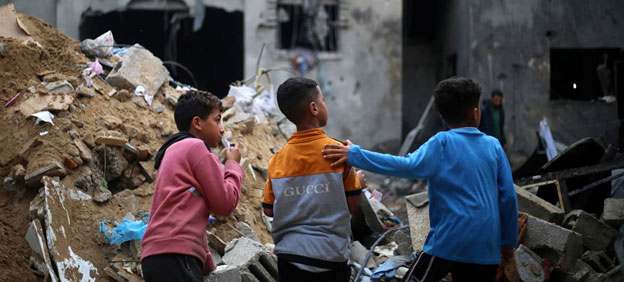
Children look at their destroyed homes in Rafah city, in the southern Gaza Strip. Credit: UNICEF/Eyad El Baba

GAZA STRIP, Feb 29 2024 (IPS) – Nothing could prepare me for my recently concluded mission into the Gaza Strip, where children face catastrophic conditions.

In my twenty years with UNICEF, traveling from one humanitarian crisis to the next – from famines to floods and war zones to refugee camps – I’ve simply never seen such devastation and despair as is happening in Gaza.


The intensity of the attacks, the massive number of child casualties, the desperation and panic of the people on the move – people who already have nothing – is palpable. It is humanitarian disaster on top of humanitarian disaster.

Near the start of the recent brief pause in fighting, we set out early in the morning at Rafah on the border with Egypt. Our convoy of trucks carrying vital humanitarian aid made its way slowly in a punishing journey north to Gaza City, which hadn’t seen aid in weeks.

The two cities are just 35 kilometres apart, but travelling through a war zone always makes distances seem more daunting. Along the way, I saw apartment building after apartment building, home after home, flattened by the bombings, a dystopian scene that stretched for miles.

In Gaza City I got out to look more closely at a building that had been reduced to rubble. Inside, I noticed bloodstains, but it’s impossible to know whether the people who were pulled out of this mass of concrete survived.

I will never forget how a man in his 60s walked out from the ruins of a recently bombed apartment building. At first, I thought he was indicating the number 10, as in 10 people had been killed. But he corrected this, using a stick to write in the dirt: 30. It wasn’t the number of people killed. It was the number of his extended family members killed in the blast.

This man had lost everyone, his whole extended family, everyone he loved. At the start of this war, UNICEF said Gaza was a “graveyard for children and a living hell for everyone else.” It has only gotten worse as the bombing and fighting have continued.

There was a hope that the devastation seen before the pause would not be repeated should the fighting resume. But after hearing hundreds and hundreds of rounds of artillery and more explosions, I could tell that it’s happening.

Within hours, the humanitarian pause felt too long ago.

I walked across the wreckage of what I was told was once a tight-knit community that is now broken glass, rubble and steel crunching under my feet. Homes sliced open, their contents exposed like doll houses, the inside of lives laid bare.

Against the grey rubble, eerie remnants of normalcy cropped up, like a sofa on a third-floor apartment with no walls, or a painting on the only wall left standing after a blast.

I looked at what was once a child’s bedroom, with pink blankets, a cupboard, shelves full of books, fluffy stuffed toys. It looked like the room of any 12-year-old girl, from any middle-class family, anywhere in the world. It was largely untouched. The little girl would have been safe if she wasn’t in another room with her family when the home was struck.

Driving through Gaza there’s never much time for reflection. The aid convoy needs to keep moving.

Along the route we saw the same theme repeated in neighborhood after neighborhood: basic needs are not being met. People need water and nourishment. Hospitals need medicine. This convoy has all those things. But despite our efforts and those of our UN colleagues, I know it’s not enough. It’s not nearly enough.

As one of my UNICEF colleagues noted just a couple of weeks into the war, the killing and maiming of children, abduction of children, attacks on hospitals and schools, and the denial of humanitarian access are a stain on our collective conscience. It was true then, it remains true now.

From Gaza City we pushed further north, to Jabaliya. The first thing I noticed were the piles of rotting garbage outside hospitals, offices and schools. Sanitation and rubbish collection services have broken down completely, of course, as trucks have no fuel to collect it and the conflict has displaced most of the workers who do these jobs anyway.

One hospital we visited, Al-Ahli Arab Hospital, was utterly chaotic. It was overcrowded, loud, intense. Our trucks were delivering medical supplies while wounded people were being rushed in bleeding.

We eventually made it back to the south of Gaza, to what we call the Joint Operation Centre. That’s where dozens of UN workers meet to discuss the next mission. The mood was sombre. We all know what Palestinian families need: they need more of everything, especially medicines, water, fuel, food.

But genuine safety for Gaza’s children depends on parties to the conflict ensuring that humanitarians have unimpeded access to civilians wherever they are… on our ability to bring water, essential food, nutrition supplements, fuel and other humanitarian supplies into the territory… and on parties implementing an immediate humanitarian ceasefire.

Unless those conditions are met, children in Gaza are now in danger from the sky, disease on the ground, and death from hunger and thirst. Nowhere is safe.

The children of Gaza have suffered enough. We need a humanitarian ceasefire, and peace, now.

James Elder is UNICEF’s spokesperson. Follow him @1james_elder

Source: UNICEF BLOG

IPS UN Bureau

  Source

Children’s Futures at a Crossroads

Armed Conflicts, Civil Society, COVID-19, Featured, Global, Global Governance, Headlines, Human Rights, TerraViva United Nations

Opinion

Credit: UNICEF/Abdulazeem Mohamed

 
War in Sudan is putting the future of its 24 million youngest citizens at risk, the Representative of the UN Children’s Fund (UNICEF) warned. January 2024

 
Meanwhile geopolitical and geoeconomic fragmentation threaten the development and survival of children across the globe. But a more hopeful path exists.

UNITED NATIONS, Feb 23 2024 (IPS) – At the start of 2024, we stand at a critical juncture: Geopolitical tensions are escalating, economic integration is unravelling, and multilateral cooperation is faltering. This global fragmentation threatens to undermine decades of progress made for children worldwide.


The choices we make today – whether to continue on this path or whether we should bolster global cooperation – will have a profound impact on generations to come.

Children are always the most vulnerable in times of crisis – a reality highlighted by the COVID-19 pandemic, when school closures, economic hardship and disrupted health services jeopardized children’s rights and wellbeing.

Almost four years since that pandemic was declared, our new report, Prospects for Children in 2024: Cooperation in a Fragmented World, paints a concerning picture for children’s future development and welfare.

Tensions among major powers are rising and the threat of new conflicts emerging is high. Beyond the immediate physical dangers, children can experience lasting psychological trauma and violations of their basic rights.

If military spending continues increasing at the expense of investments in healthcare, education and social protections, children’s development will be further compromised.

Meanwhile, economic fragmentation is widening disparities between countries. Restrictive trade policies and supply chain disruptions are leading to rising energy and food prices, reducing access to essential goods and negatively impacting child nutrition and household incomes.

Competition for critical minerals essential for the green economy is increasing the risks of trade fragmentation while threatening the pace of the green energy transition. At the same time, the drive to expand mining for minerals puts mining communities and children at risk of exploitative practices.

Despite continued global economic growth, the lukewarm and uneven recovery is diminishing prospects for reducing child poverty. From now until 2030, 15 million more children a year will be living in poverty than would have otherwise, due to the unequal post-COVID recovery.

This gloomy picture is compounded by the weakening of multilateral institutions, which is further undermining the potential for progress for children. Why?

Because a fragmented multilateral system that is hamstrung by competing interests will struggle to deliver on conflict prevention, climate change, effective digital governance, debt relief and enforcing child rights standards, fuelling dissatisfaction in the Global South with rising inequalities.

Children in the poorest nations also face continued barriers to financing for basic services. Crippling debt, high remittance fees and lack of voice in global economic governance restrict investments in healthcare, education and social protections – investments vital to children’s survival and development.

But amid all these concerning trends, we see still signs of hope. Alternative alliances are emerging in the developing world to advance cooperation, bringing novel policy solutions, more nimble policymaking and effective results.

Despite expressing discontent with current democratic political structures, young people remain optimistic that opportunities exist to reform and resolve deficiencies in the political system, whether at the national or international level. They are engaging as change-makers, breathing new life into civic participation and democratic renewal.

In addition, technological innovations are unlocking new opportunities to empower children and enhance their rights. Green transition, if carried out in a just and sustainable way – one that prioritizes young people’s needs, skills and access to jobs in emerging sectors (such as the digital and green economy) – can benefit younger generations.

Reforms and modernization of global governance and financing arrangements could still deliver greater justice for developing countries. This more hopeful path will not unfold on its own. It requires global leaders to make an active choice – to double down on solidarity, inclusion and cooperation despite tensions and instability.

Prioritizing children and their rights must be at the centre of this choice.

Jasmina Byrne is Chief, Foresight & Policy, UNICEF Innocenti – Global Office of Research and Foresight.

IPS UN Bureau

  Source