In Glasgow, Indigenous People Pound the Table for Their Rights

Civil Society, Climate Action, Climate Change, Conferences, Editors’ Choice, Environment, Featured, Global, Global Governance, Headlines, Human Rights, Indigenous Rights, IPS UN: Inside the Glasshouse, Regional Categories
Climate Action

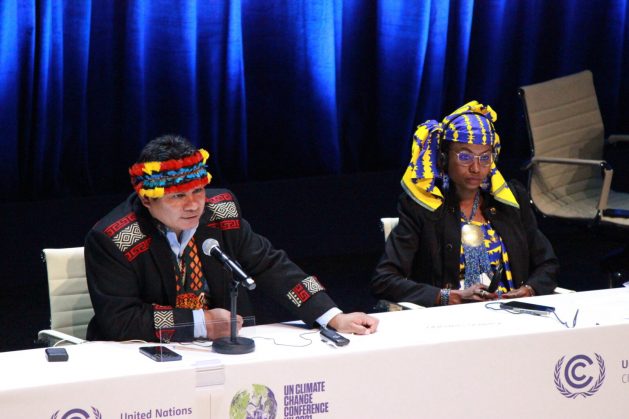
In the face of substantial international offers of funding for indigenous lands and forests at COP26, indigenous peoples are calling for specific schemes for their participation. Shuar leader Katan Kontiak (left) of Ecuador and Hindou Oumarou Ibrahim of Chad took part in a Nov. 2 forum on the indigenous peoples and local communities platform. CREDIT: Emilio Godoy/IPS

GLASGOW, Nov 4 2021 (IPS) – “For my people, the effects of climate change are a daily reality. The rainy season is shorter and when it rains, there are floods. And we have suffered from drought,” said Hindou Oumarou Ibrahim, a member of the Wodaabe or Mbororo pastoral people of Chad.


For the founder of the non-governmental Association of Indigenous Women and Peoples of Chad, one pernicious effect is the violence generated, because “when resources are lost, people fight for them – for water, for example,” she told IPS after a forum on the progress made by native groups at the climate summit in Glasgow, Scotland.

Around the world, indigenous peoples face the ambiguity of protecting ecosystems, such as forests or coastal zones, while at the same time suffering the onslaught of climate fury unleashed by humanity’s addiction to fossil fuels, like droughts, destructive storms and rising sea levels.

For decades, native peoples have insisted that their traditional knowledge can contribute to the fight against climate change. The emergence of the covid-19 pandemic in 2020 reaffirmed the results of treating nature as just another commodity.

Although in the last decade, indigenous representatives have gained a place at environmental summits, such as the 26th Conference of the Parties (COP26) of the United Nations Framework Convention on Climate Change (UNFCCC), which began on Sunday Oct. 31 in this city in the UK, now they want to be more than just token participants.

“We hope that the summit takes indigenous communities into account. We need funds that go directly to indigenous peoples,” Graciela Coy, an indigenous woman from Ak’Tenamit (our people, in the Q’eqchi’ language), a non-governmental organisation that works in northern Guatemala, told IPS.

Representatives of indigenous organisations have gained a place in every part of the COP. They participate as observers in the official sessions where the agreements are debated, in the parallel summit of social movements and in all the other forums held during the two weeks of the climate conference.

One of the expectations this year among indigenous people is the approval of the three-year working plan of the Local Communities and Indigenous Peoples Platform that emerged at COP21, which approved the Paris Agreement in 2015.

The proposal must be approved by the Facilitative Working Group, composed of seven indigenous and seven government representatives and endorsed at COP24, held in the Polish city of Katowice in 2018. It must then be ratified by the plenary of the 196 Parties to the COP and is to include capacity building activities for indigenous groups, the mapping of measures for their participation in the UNFCCC and financing.

Between 2019 and 2021, the group conducted 11 activities, with no physical sessions due to the pandemic.

Climate policies are the focus of COP26, which ends Nov. 12, after being postponed for a year as a result of the covid-19 pandemic.

Government delegates at COP26 are addressing carbon market rules, climate finance of at least 100 billion dollars per year, gaps between emission reduction targets and necessary reductions, strategies for carbon neutrality by 2050, adaptation plans and the working programme for the local communities and indigenous peoples platform.

Victoria Tauli-Corpuz, an indigenous activist from the Kankana-ey Igorot people of the Philippines, said the inclusion of human rights in the financing of emission reductions and adaptation to the effects of the climate crisis, as well as in the creation of carbon markets, is fundamental.

“Indigenous peoples also suffer from climate solutions, such as renewable energy projects. There must be effective safeguards that allow for the protection of indigenous peoples’ rights” in climate policies, the former U.N. Special Rapporteur on the Rights of Indigenous Peoples between 2014 and 2020 told IPS.

This respect has become urgent in areas such as the Amazon, the main jungle in Latin America shared by eight countries and a French territory, whose indigenous inhabitants have suffered the deterioration caused by the inroads made by agribusiness, livestock, soybean, hydrocarbon and mining companies, as well as the construction of dams, railroads, highways and river ports.

For this reason, Tuntiak Katan, a member of the indigenous Shuar people of Ecuador and general coordinator of the Global Alliance of Territorial Communities (GATC), told IPS that the removal of extractive activities from this ecosystem is a fundamental condition for making progress in protection of the climate.

“Indigenous peoples already protect 950 million hectares of land worldwide. What we are asking for is the protection of 80 percent of the Amazon by 2025. We are the voice of the women, children and elders” who suffer the impacts on the territories, said Katan, vice-coordinator of the non-governmental Coordinating Body of Indigenous Organisations of the Amazon River Basin (Coica).

The most recent scientific evidence shows that native peoples are the most effective protectors of tropical forests, which is why greater efforts are required for their conservation in the face of growing threats.
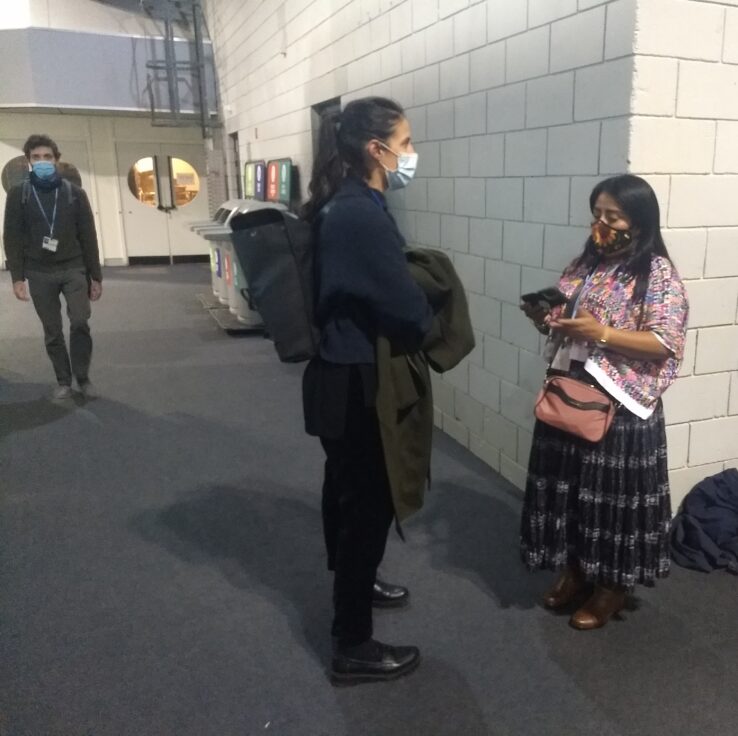
Q'eqchí' indigenous activist Graciela Coy (R) from Guatemala called during the Glasgow climate summit for the promised international funds to go directly to indigenous peoples. CREDIT: Emilio Godoy/IPS

Q’eqchí’ indigenous activist Graciela Coy (R) from Guatemala called during the Glasgow climate summit for the promised international funds to go directly to indigenous peoples. CREDIT: Emilio Godoy/IPS

More than empty promises

In the face of the abundant offers made during the first week of COP26 activities to promote indigenous land tenure and reforestation, indigenous peoples were skeptical and demanded direct participation in these schemes.

Oumarou Ibrahim and Coy agreed on the need to define mechanisms to ensure that the resources provided reach the territories directly.

World leaders “must be our partners. Funding must be tailored to the needs of the people. The question is how the resources are going to reach indigenous peoples directly,” said Oumarou Ibrahim.

In Coy’s opinion, the fight against climate change requires the allocation of funds, which should be transferred “to indigenous peoples, as there is a lot of international aid” that does not always materialise in local communities.

In an acceptance of what native peoples have been demanding for years, the governments of Germany, the Netherlands, Norway, the United Kingdom, the United States and 17 private funders announced on Nov. 1 the provision of 1.7 billion dollars to help indigenous and local communities preserve tropical forests between 2021 and 2025.

It is estimated that each year only 270 million dollars are allocated to forest care and just 46 million dollars go to the direct guardians of the forest: their ancestral inhabitants.

Direct multilateral funding to aboriginal populations has been a recurring barrier to efforts to protect natural resources.

For example, the Green Climate Fund (GCF), created at COP16 in Cancun in 2010, has financed 121 community livelihood projects and delivered a total of 1.4 billion dollars.

For a total of 190 projects, it has disbursed two billion dollars and another six billion are in the pipeline. In addition, it has committed another 10 billion for projects. It has also registered 113 institutions to receive funds, but none of them are indigenous.

Furthermore, on Nov. 2, more than 105 nations signed up to the “Glasgow Leaders’ Declaration on Forests and Land Use” which sets the target of zero deforestation by 2030.

Indigenous peoples are also demanding to be included in the Nationally Determined Contributions (NDCs), the voluntary commitments adopted by each country for 2030 and 2050 in order to comply with the Paris Agreement and on which the goal of containing global warming to 1.5 degrees Celsius is based.

“We just need a push,” said Katan. “We are sure of what we do and that is why it is good that they are offering financing. But what needs to be done is to abandon extractivism and get the oil, mining and agribusiness companies out of our territories, and apply a holistic vision, combined with the vision of the indigenous peoples.”

Even if COP26 does not produce the results desired by indigenous peoples, they will continue to care for natural resources and to demand climate justice.

IPS produced this article with the support of Iniciativa Climática in Mexico and the European Climate Foundation.

  Source

COP26: The Roadmap Plotting the Way to a Historic Meeting – Or Not

Civil Society, Climate Action, Climate Change, Conferences, Editors’ Choice, Environment, Featured, Global, Global Governance, IPS UN: Inside the Glasshouse, Regional Categories

Climate Change

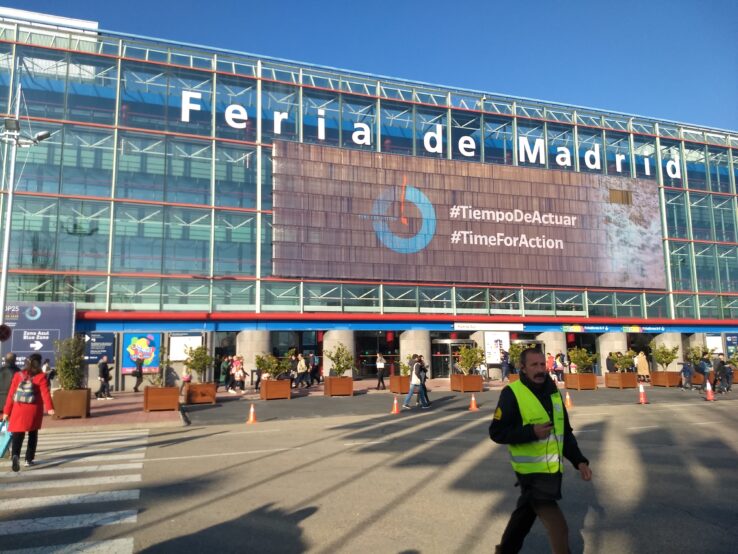
The Madrid climate summit in 2019, COP25, left important pending issues that the conference in Glasgow, which begins on Sunday Oct. 31, will have to resolve. CREDIT: Emilio Godoy/IPS

The Madrid climate summit in 2019, COP25, left important pending issues that the conference in Glasgow, which begins on Sunday Oct. 31, will have to resolve. CREDIT: Emilio Godoy/IPS

MEXICO CITY, Oct 29 2021 (IPS) – The climate summit in Glasgow, Scotland, the most important since 2015, may go down in history as a milestone or as another exercise in frustration, depending on whether or not it resolves the thorny pending issues standing in the way of curbing global warming.


If successful, it could be placed on a par with the 2010 Cancun meeting, which rescued the negotiations after the previous year’s failure in Copenhagen, and Paris, where an agreement was reached in 2015 which defined voluntary emission reductions and a limit to global warming.

But if the summit fails, it will be compared to Copenhagen (COP15), the 2009 conference, and Madrid (COP25), the 2019 summit, whose progress was considered more than insufficient by environmental organisations and academics.

Former Mexican climate negotiator Roberto Dondisch said it is difficult to predict success or failure at the 26th Conference of the Parties (COP26) of the United Nations Framework Convention on Climate Change (UNFCCC), which will take place in Glasgow in the northern UK Oct. 31 to Nov. 12.

“This time we are not seeking an agreement, but trying to work out unresolved issues. The same thing happened in Paris, but a space was created to solve it. The reports are not very promising in terms of where we are at and what we must do. The conditions are very complicated; the will is there, but not the results,” Dondisch, a distinguished fellow at the Washington, DC-based non-governmental Stimson Center, told IPS.

Climate governance has come a long way since the first COP.

Background

In 1992, the United Nations Conference on Environment and Development, held in Rio de Janeiro on the 20th anniversary of the first U.N. Conference on the Human Environment in Stockholm in 1972, brought together political leaders, scientists, representatives of international organisations and civil society to address the impact of human activities on the environment.

One of the results of the so-called Earth Summit was the creation of the UNFCCC, at a time when there was already evidence of global warming caused by human activity.

In fact, as early as 1990, the Intergovernmental Panel on Climate Change (IPCC), created by the U.N. General Assembly in 1988 and composed of scientists from all over the world entrusted with the responsibility of assessing the existing scientific knowledge related to climate phenomena, released its first report.

Report after report, the IPCC has become a key part of the global climate framework for understanding and addressing the crisis of rising temperatures and their impacts.

Seven years later, in 1997, the member states of the UNFCCC negotiated the Kyoto Protocol (KP), signed in that Japanese city during COP3, which established mandatory emission reduction targets for 36 industrialised countries and the European Union as a bloc, listed in Annex II of the agreement.

In Kyoto, the nations of the developing South were exempted from this obligation in Annex I of the pact.

After the first compliance period (2008-2012), the parties agreed on another period for 2013-2020, which in practice never entered into force, until the protocol was replaced by the Paris Agreement.

The KP, which came into effect in 2005 – without the participation of key countries such as the United States and Russia – also has its own Conference of the Parties serving as the meeting of the Parties to the Kyoto Protocol (CMP), which oversees its implementation and takes decisions to promote its effective implementation.

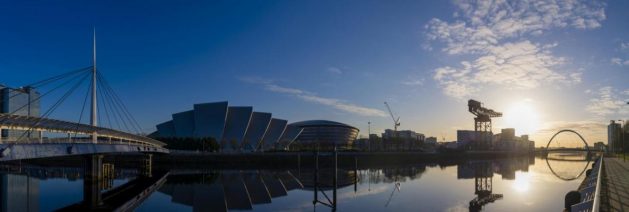
A view of the main venue for COP26 in Glasgow. Expectations are high for the outcome of the conference, but the two-week discussions and meetings must negotiate an obstacle course to reach concrete results in keeping with the severity of the climate emergency. CREDIT: UNFCCC

A view of the main venue for COP26 in Glasgow. Expectations are high for the outcome of the conference, but the two-week discussions and meetings must negotiate an obstacle course to reach concrete results in keeping with the severity of the climate emergency. CREDIT: UNFCCC

The relatively uneventful COP19 in Warsaw in 2013 served to testify to the birth of the Warsaw International Mechanism for Loss and Damage associated with Climate Change Impacts (WIM), whose rules of operation and financing will be central to the Glasgow discussions.

Climate policies will be the focus of COP26, co-chaired by the United Kingdom and Italy, which had to be postponed for a year due to covid-19 pandemic restrictions.

COP26 will address rules for carbon markets, climate finance for at least 100 billion dollars annually, gaps between emission reduction targets and necessary reductions, strategies for carbon neutrality by 2050, adaptation plans, and the local communities and indigenous peoples platform.

But missing from the agenda of the two weeks of discussions will be the goal of hundreds of billions of greenbacks per year, which has been postponed to 2023 – a sign that funding for mitigation and adaptation to climate change is the hot potato for the parties.

Complex architecture

The UNFCCC entered into force in 1994 and has been ratified by 196 parties, with the participation of the EU as a bloc, the Cook Islands and Niue – South Pacific island nations – in addition to the 193 U.N. member states.

The parties to the binding treaty subscribe to a universal convention that recognises the existence of climate change caused by human activities and assigns developed countries the main responsibility for combating the phenomenon.

The COPs, in which all states parties participate, govern the Convention and meet annually in global conferences where they make decisions to achieve the objectives of the climate fight, adopted unanimously or by consensus, especially after the KP failed to reach the negotiated goals.

In Paris, at COP21, member countries agreed on voluntary pollution reduction targets to keep the temperature increase below 1.5 degrees Celsius, considered the indispensable limit to contain disasters such as droughts and destructive storms, with high human and material costs.

These targets are embodied in the Nationally Determined Contributions (NDCs), in which countries set out their 2030 and 2050 goals. Only 13 nations have submitted a second version of their measures since they began submitting their actions to the UNFCCC Secretariat in Bonn, Germany, in 2016.

The Paris Agreement, in force since 2020 and so far ratified by 192 states parties, has its own Meeting of the Parties (MOP), which monitors compliance and takes decisions to promote compliance.

Each COP also draws thousands of business delegates, non-governmental organisations, international organisations, scientists and journalists.

In addition, a parallel alternative summit will bring together social movements from around the world, advocating an early phase-out of fossil fuels, rejecting so-called “false solutions” such as carbon markets, and calling for a just energy transition and reparations for damage and redistribution of funds to indigenous communities and countries of the global South.

Sandra Guzmán, director of the Climate Finance Programme at the non-governmental Climate Policy Initiative – with offices in five countries – foresees a complex summit, especially in terms of financing.

“No one knows for sure how loss and damage will be covered. Developed countries don’t want to talk about more funds. The scenario for political agreement is always difficult. The expectation is that the COP will move forward and establish a package of progress and build a good bridge to the next meeting,” she told IPS from London.

For 30 years, the parties to the UNFCCC have been doing the same thing, without achieving the desired reduction in emissions or control of global warming. If COP26 follows the same mechanics, the results are unlikely to change at the end of the two weeks of discussions and activities in which more than 25,000 people will participate.


Latin America Heads to Glasgow Climate Summit with Half-Empty Hands

Civil Society, Climate Action, Climate Change, Conferences, Development & Aid, Editors’ Choice, Energy, Environment, Featured, Global Governance, Headlines, Latin America & the Caribbean, Regional Categories

Climate Change

This article is part of IPS coverage ahead of the COP26 climate change conference, to be held Oct. 31-Nov. 12 in Glasgow.

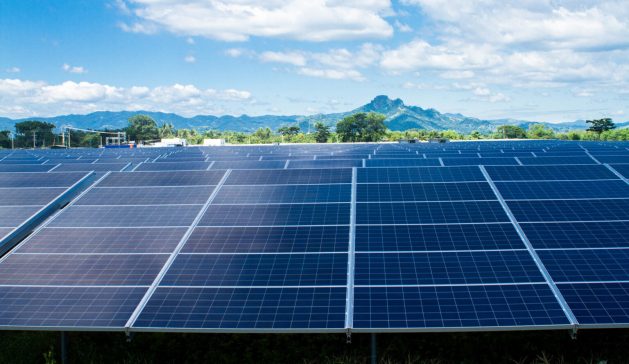
A solar power plant in El Salvador, with 320,000 panels, is one of the largest such installations in Central America, whose countries are striving to convert the energy mix to renewable sources, but whose plans were slowed by the covid pandemic. CREDIT: Edgardo Ayala/IPS

A solar power plant in El Salvador, with 320,000 panels, is one of the largest such installations in Central America, whose countries are striving to convert the energy mix to renewable sources, but whose plans were slowed by the covid pandemic. CREDIT: Edgardo Ayala/IPS

MEXICO CITY, Oct 25 2021 (IPS) – Latin America and the Caribbean are heading to a new climate summit with a menu of insufficient measures to address the effects of the crisis, in the midst of the impact of the covid-19 pandemic.


The world’s most unequal region, which is the hardest hit by the effects of climate change and highly vulnerable to the impacts of the climate crisis, has yet to engage in the fight against this emergency head-on, according to analysts and studies.

Tania Miranda, director of Policy and Stakeholder Engagement in the Environment and Climate Change Programme of the U.S.-based non-governmental Institute of the Americas, said Latin America’s high climate ambitions have not been supported by the measures necessary to reduce emissions.

“Goals are aspirational. If they are not backed up with policies and financing, they remain empty promises. There is a need for financing and the implementation of strategies and public policies that will lead them to fulfill their commitments. Billions of dollars are needed,” the researcher told IPS from San Diego, California, where the Institute is based.

Miranda is the author of the report “Nationally Determined Contributions Across the Americas. A Comparative Hemispheric Analysis,” which evaluates the climate targets of 16 countries, including the United States and Canada.

In her study, she analyses pollutant emission reduction targets, plans for adaptation to the climate crisis, dependence on external financing, long-term carbon neutrality commitments and the state of pollution abatement.

Climate policies will be the focus of the 26th Conference of the Parties (COP26) to the United Nations Framework Convention on Climate Change (UNFCCC), which will take place Oct. 31 to Nov. 12 in Glasgow, Scotland in the north of the United Kingdom, after being postponed in that same month in 2020 due to the pandemic.

COP26 will address rules for carbon markets, at least 100 billion dollars annually in climate finance, the gaps between nationally determined contributions (NDCs) and the necessary reductions, strategies for carbon neutrality by 2050, adaptation plans, and the local communities and indigenous peoples platform.

A parallel alternative summit will also be held, bringing together social movements from around the world, advocating an early phase-out of fossil fuels, rejecting so-called “false solutions” such as carbon markets, and calling for a just energy transition and reparations for damage and redistribution of funds to indigenous communities and countries of the global South.

The Glasgow conference is considered the most important climate summit, due to the need to accelerate action in the face of alarming data on global warming since the adoption of the Paris Agreement at COP21, held in December 2015 in the French capital.

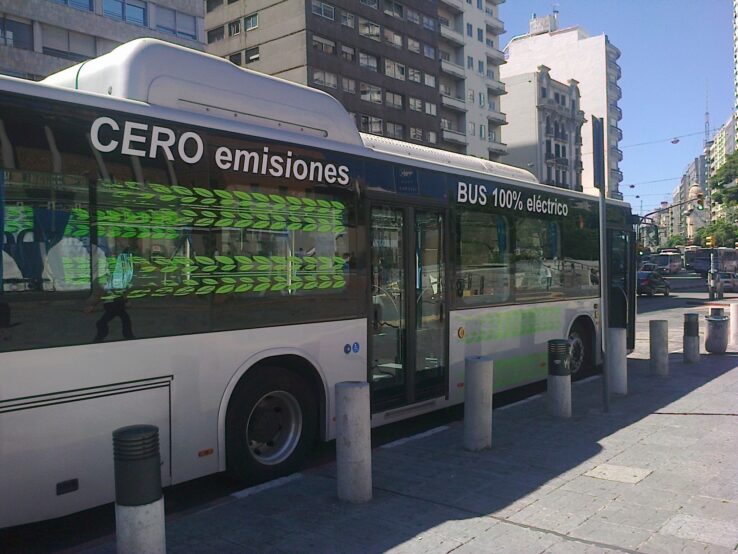
A zero-emission electric bus is parked on a downtown street in Montevideo. Public transport is beginning to electrify in Latin America's cities as a way to contain CO2 emissions, but plans have been delayed and cut back due to the covid pandemic. CREDIT: Inés Acosta/IPS

A zero-emission electric bus is parked on a downtown street in Montevideo. Public transport is beginning to electrify in Latin America’s cities as a way to contain CO2 emissions, but plans have been delayed and cut back due to the covid pandemic. CREDIT: Inés Acosta/IPS

Since then, 192 signatories to the binding treaty have submitted their first NDCs.

But just 13 countries worldwide sent their new climate contributions in 2020 to the UNFCCC Secretariat based in Bonn, despite calls from its secretary, Patricia Espinosa of Mexico, for all parties to the treaty to do so that year.

Of these, only four from this region – Argentina, Grenada, Mexico and Suriname – submitted the second updated version of their contributions.

Although they are voluntary commitments, the NDCs are a core part of the Paris Agreement, based on the goal of curbing the temperature rise to 1.5 degrees Celsius, considered the minimum and indispensable target to avoid irreversible climate disasters and, consequently, human catastrophes.

In the NDCs, nations must set their goals for 2030 and 2050 to reduce greenhouse gas (GHG) emissions responsible for global warming, taking a specific year as a baseline, outline the way they will achieve these goals, establish the peak year of their emissions and when they would achieve net zero emissions, i.e. absorb as many gases as they release into the atmosphere.

In addition, to contain the spread of the coronavirus and its impacts, the region has taken emergency economic decisions, such as providing support for companies of all sizes, as well as for vulnerable workers.

But these post-pandemic recovery packages lack green components, such as commitments to sustainable and cleaner production.

 A street in Mexico City shows reduced traffic due to covid restrictions. Automotive transport is one of the largest generators of polluting emissions in Latin America and the Caribbean. But the transition to a cleaner vehicle fleet, with the increase in the number of electric vehicles and other alternatives, is moving very slowly. CREDIT: Emilio Godoy/IPS

A street in Mexico City shows reduced traffic due to covid restrictions. Automotive transport is one of the largest generators of polluting emissions in Latin America and the Caribbean. But the transition to a cleaner vehicle fleet, with the increase in the number of electric vehicles and other alternatives, is moving very slowly. CREDIT: Emilio Godoy/IPS

Shared irresponsibilities

While some countries, such as Argentina and Chile, improved their pledges, others like Brazil and Mexico scaled down or kept their pledges unchanged.

The measures of Argentina, Brazil, Mexico and Colombia are in code red, as they are highly insufficient to contain global warming, according to the Climate Action Tracker.

In the case of the first three, the largest Latin American economies, the governments are prioritising the financing of increased fossil fuel exploitation, which would result in a rise in emissions in 2030, the Tracker highlights.

Chile’s and Peru’s measures are classified as insufficient and Costa Rica’s as almost sufficient.

That Central American nation, Colombia and Peru are on track to meet their commitments by 2030 and 2050, the Tracker notes.

In the case of Argentina, Chile and Ecuador, they would need additional measures to achieve their goals. At the other extreme are Brazil and Mexico, the biggest regional polluters, which have strayed from the medium- and long-term path.

Enrique Maurtúa, senior climate policy advisor for the non-governmental Environment and Natural Resources Foundation (FARN), said that Argentina is an example of the countries in the region that are caught between these contradictions.

“Argentina follows the line of what is happening in several countries in the region. In terms of commitments, it does its homework, what it is supposed to do, it is preparing a long-term strategy. But those commitments are not in line with what Argentina is doing behind closed doors,” the expert told IPS from Buenos Aires, where the Foundation is based.

As part of this approach, the Argentine Congress is debating a draft Hydrocarbon Investment Promotion Regime to provide fiscal stability to the sector for the next 20 years.

In addition, the government weakened the carbon tax, which averages a 10 dollar charge, through exemptions and the exclusion of gas, and is preparing a sustainable mobility strategy that dispenses with hydrogen.

Mexico is following a similar path, as the government favours support for the state-owned oil company Pemex and the government’s electric utility Comisión Federal de Electricidad, is building a refinery in the state of Tabasco, on the southeastern coast of the country, and has stalled actions aimed at an energy transition.

On Dec. 29, 2020, Mexico released its updated NDC, without increasing the emissions reduction target, to the disappointment of environmental organisations, and in contravention of the Paris Agreement and its own climate change law.

But on Oct. 1 it was reported that a federal court annulled the update, considering that there was an illegal reduction in the mitigation goals, so the 2016 measures remain in force until the government improves on them.

Isabel Bustamante, a member of the Fridays for Future Mexico movement who will attend COP26, questioned Mexico’s climate stance.

“It does not take a solid stance. We need declarations of climate emergency throughout the country and to make resources more readily available. We are concerned about the focus on more fossil fuel production,” she told IPS from the southeastern city of Mérida.

President Andrés Manuel López Obrador is facing pressure from the environmental sector, but does not seem adept at changing course. He is even sending mixed signals, such as his announcement on Oct. 18 that the country will raise climate targets in 2022.

 At most service stations in Brazil, consumers can choose between gasoline and ethanol, the price of which is attractive when it does not exceed 70 percent of that of gasoline. But users only opt for biofuel when it is economically attractive, so it does not contribute to alleviating the emission of polluting gases. CREDIT: Mario Osava/IPS

At most service stations in Brazil, consumers can choose between gasoline and ethanol, the price of which is attractive when it does not exceed 70 percent of that of gasoline. But users only opt for biofuel when it is economically attractive, so it does not contribute to alleviating the emission of polluting gases. CREDIT: Mario Osava/IPS

The COP and the question marks it raises for the region

The UNFCCC stated in September that the NDCs presented are insufficient to curb warming to 1.5 degrees C.

Miranda believes COP26 could be beneficial for the region.

“Expectations are very high. We need the big polluters to be present. There will be pressure for tangible results. The region knows where its needs are, it has many opportunities to use ecosystems to reduce emissions,” she said.

Maurtúa, for his part, stresses that the main results will depend on the concrete financing and means of implementation of the Paris Agreement.

“Developed countries have to make financial contributions to the transition in developing countries. Industrialised nations are asking for more ambition, but they have to provide financing,” he argued.

In the expert’s opinion, “it is what the region needs. There are signs of willingness in Costa Rica, Colombia and Chile. But that is not happening in the case of Argentina or Mexico.”

For young people like Bustamante, the summit needs to offer more real action and fewer empty offers. “We expect an urgent climate action agenda to emerge. We need to stop investments in fossil fuel infrastructure, which compromises our near future. We will not stop until we do,” she said.

Under pressure due to the urgency of pending matters and within the constraints imposed by the pandemic, Glasgow could be a defining benchmark of a real global commitment to address the climate emergency, which is causing more and more destruction.


As War Keeps Poisoning Humanity, Organizing Continues to Be the Antidote

Armed Conflicts, Civil Society, Featured, Global, Global Governance, Headlines, IPS UN: Inside the Glasshouse, Peace, TerraViva United Nations

Opinion

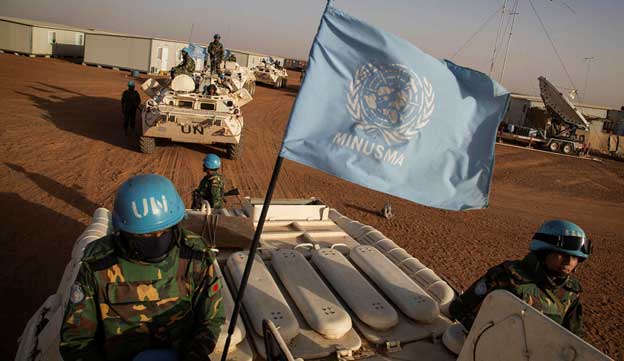
United Nations military personnel are the Blue Helmets on the ground. Today, they consist of over 70,000 troops contributed by national armies from across the globe and help keep the peace in military conflicts worldwide. Credit: United Nations

SAN FRANCISCO, USA, Sep 14 2021 (IPS) – Last weekend, U.S. corporate media continued a 20-year repetition compulsion to evade the central role of the USA in causing vast carnage and misery due to the so-called War on Terror. But millions of Americans fervently oppose the military-industrial complex and its extremely immoral nonstop warfare.


CodePink and Massachusetts Peace Action hosted a national webinar to mark the 20th anniversary of 9/11 — the day before Sunday’s launch of the Cut the Pentagon campaign — and the resulting video includes more than 20 speakers who directly challenged the lethal orthodoxy of the warfare state. As part of the mix, here’s the gist of what I had to say:

When we hear all the media coverage and retrospectives, we rarely hear — and certainly almost never in the mass media hear — that when people are killed, whether it’s intentional or predictable, those are atrocities that are being financed by U.S. taxpayers.

And so we hear about the evils of Al Qaeda and 9/11, and certainly those were evils, but we’re not hearing about the predictable as well as the intentional deaths: the tens of thousands of civilians killed by U.S. air strikes alone in the last two decades, and the injuries, and the terrorizing of people with drones and other U.S. weapons. We’re hearing very little about that.

Part of the role of activists is to make those realities heard, make them heard loud and clear, as forcefully and as emphatically and as powerfully as possible. Activist roles can sometimes get blurred in terms of becoming conflated with the roles of some of the best members of Congress.

When progressive legislators push for peace and social justice, they deserve our praise and our support. When they succumb to the foreign-policy “Blob” — when they start to be more a representative of the establishment to the movements rather than a representative of the movements to the establishment — we’ve got a problem.

It’s vital for progressive activists to be clear about what our goals are, and to be willing to challenge even our friends on Capitol Hill.

I’ll give you a very recent example. Two leaders of anti-war forces in the House of Representatives, a couple of weeks ago, circulated a “Dear Colleague” message encouraging members of the House to sign a letter urging the chair of the House Armed Services Committee, Adam Smith, to stand firm behind President Biden’s 1.6 percent increase in the Pentagon budget, over the budget that Trump had gotten the year before.

The point of the letter was: Chairman Smith, we want you to defend the Biden budget’s increase of 1.6 percent, against the budget that has just been approved by the Senate Armed Services Committee with a 3.3 percent increase.

That kind of a letter moves the goal posts further and further to the liking of the military-industrial complex, to the liking of war profiteers, to the liking of the warfare state. And so, when people we admire and support, in this case Rep. Mark Pocan and Rep. Barbara Lee, circulate such a Dear Colleague letter, there’s a tendency for organizations to say: “Yeah, we’re going to get behind you,” we will respond affirmatively to the call to urge our members to urge their representatives in Congress to sign this letter.

And what that creates is a jumping-off point that moves the frame of reference farther and farther into the militarism that we’re trying to push back against. For that reason, my colleagues and I at RootsAction decided to decline an invitation to sign in support.

I bring up that episode because it’s indicative of the pathways and the crossroads that we face to create momentum for a stronger and more effective peace and social justice movement. And it’s replicated in many respects.

When we’re told it’s not practical on Capitol Hill to urge a cutoff of military funding and assistance to all countries that violate human rights — and when we’re told that Israel is off the table — it’s not our job to internalize those limits that have been internalized by almost everyone in Congress, except for the Squad and a precious few others.

It’s our job to speak not only truth to power but also about power. And to be clear and candid even when that means challenging some of our usual allies. And to organize.

At RootsAction, we’ve launched a site called Progressive Hub, as an activism tool to combine the need to know with the imperative to act.

It’s not easy, to put it mildly, to go against the powerful flood of megamedia, of big money in politics, of the ways that issues are constantly framed by powerful elites. But in the long run, peace activism is essential for overcoming militarism. And organizing is what makes that possible.

Norman Solomon is the national director of RootsAction.org and the author of many books including War Made Easy: How Presidents and Pundits Keep Spinning Us to Death. He was a Bernie Sanders delegate from California to the 2016 and 2020 Democratic National Conventions. Solomon is the founder and executive director of the Institute for Public Accuracy.

  Source

A Milestone Anniversary Reiterates The Culture of Peace is a Movement, not a Revolution

Armed Conflicts, Civil Society, Featured, Global, Global Governance, Headlines, IPS UN: Inside the Glasshouse, North America, Peace, TerraViva United Nations

Opinion

Credit: United Nations

NEW YORK, Sep 13 2021 (IPS) – Today, on 13 September 2021, the UN Declaration and Programme of Action adopted by the General Assembly in 1999 will be turning 22.

You would recall that the 20th anniversary of The Culture of Peace of its adoption by the world’s highest multilateral body in 2019 was observed by the United Nations in an appropriate and befitting manner, as called for by the Assembly. It was an occasion for reiteration and recommitment by us all to create the culture of peace in our world, beginning with each one of us.


After the UN Charter, this is the only major document of the UN which focuses on peace in a most comprehensive manner. We need to pay increasingly more attention to this landmark document for its full and effective implementation.

Last week another integrally-connected milestone gathering – the 2021 UN High Level Forum on The Culture of Peace – took place at the UN General Assembly convened by its President of the 75th session.

This day-long event organized on 7 September 2021 attained a special profile and attention as it was the 10th anniversary of the annual UN high level forums which was first initiated in 2012 during the 66th session of the Assembly by its then President, Ambassador Nassir Al-Nasser of Qatar.

His objective was to create a new platform for the culture of peace at the UN to be held on an annual basis for an opportunity to exchange ideas between the Member States and civil society organizations.

I happened to be his senior special advisor involved in conceptualizing and organizing that very first forum on 14 September, the day after the 11th anniversary of The Culture of Peace.

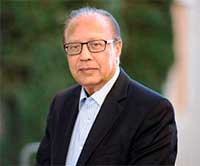
Ambassador Anwarul K Chowdhury

This year’s Forum was held in a hybrid format, both in-person and virtual platforms. With its focus on the theme “The Transformative Role of The Culture of Peace: Promoting Resilience and Inclusion in Post-Covid Recovery”, the Forum provided the opportunity to the participants and all stakeholders to exchange ideas and make suggestions on how to utilize the values of culture of peace in post-Covid recovery efforts, especially to ensure that the recovery, which unfortunately is yet to happen, is durable, resilient and inclusive.

The President of the General Assembly Volkan Bozkir of Turkey, under whose leadership the 2021 Forum took place, earned the grateful tribute of all stakeholders for his guidance, initiative and encouragement in convening and holding this 10th anniversary forum under extremely challenging circumstances very successfully. The Panel Discussion was a fitting conclusion to this remarkable gathering.

As I was preparing for the Panel Discussion, I ran into the historical perspective that this year will reach the quarter century mark of my close association with and advocacy for the culture of peace at the United Nations. In 1997, I took the lead in proposing along with some other Ambassadors in a letter to the newly-elected UN Secretary-General Kofi Annan to include a specific, self-standing agenda item of the UN General Assembly (UNGA) on The Culture of Peace.

A new agenda item was thus agreed upon after considerable negotiating hurdles and the new item was allocated to the plenary of the General Assembly for discussion on an annual basis. That is the basis for the annual resolutions on The Culture of Peace by the General Assembly from that year.

Under this item, UNGA adopted in 1997 a resolution to declare the year 2000 the “International Year for The Culture of Peace”, and in 1998, a resolution to declare the period from 2001 to 2010 as the “International Decade for The Culture of Peace and Nonviolence for the Children of the World”.

In the year after that the United Nations adopted its Declaration and Programme of Action on The Culture of Peace, a monumental document that transcends boundaries, cultures, societies and nations. It was an honor for me to Chair the nine-month long negotiations that led to the adoption of this historic norm-setting document by consensus.

As I mentioned Secretary-General Kofi Annan earlier, let me quote his thoughts on the culture of peace – I cite this quote often: “Over the years we have come to realize that it is not enough to send peacekeeping forces to separate warring parties. It is not enough to engage in peace-building efforts after societies have been ravaged by conflict. It is not enough to conduct preventive diplomacy. All of this is essential work, but we want enduring results. We need, in short, the culture of peace.”

Absolutely right – we need “enduring results” and for that we need “The Culture of Peace”. The Culture of Peace is not a hollow phrase – or an empty sentiment. It has a transformational opportunity for humanity – it has the energy and enthusiasm of many of us individually and collectively around the world.

These annual forums are very special in their involvement of civil society. These are the only High-Level Forums in the UN which are fully 50-50 gender balanced in their panel compositions. I am proud to say that this was possible as the Global Movement for The Culture of Peace (GMCoP) which is the civil society partner in supporting the Forum has been very diligent in upholding these values.

The concept note of this year’s Forum forcefully reiterated that “…it is an imperative to inculcate the values of The Culture of Peace among nations, societies and communities, with particular attention to the younger generation, through promotion of compassion, tolerance, inclusion, global citizenship and empowerment of all people.”

The theme focusing on the transformative role of the culture of peace in relation to Covid recovery provided a platform to explore and discuss multiple ways and means for empowering all segments of the society, towards a resilient recovery, including by ensuring vaccine equity, asserting universal vaccination as a public good, bridging digital divide, ensuring centrality of women’s equality and empowerment, harnessing the power of youth and highlighting education, health and overall wellbeing of children.

Bangladesh Foreign Minister Dr. AK Abdul Momen in his pre-recorded video presentation at the Forum articulated succinctly that “We must recognize that rebuilding from the COVID pandemic necessitates a renewed commitment and partnership of all stakeholders. Our efforts should be undergirded by the values of “The Culture of Peace’ as instilling these values contribute to building a resilient, inclusive and peaceful society.”

This year’s Forum heard the inspirational keynote speech by Dr. Beatrice Fihn, the Executive Director of 2017 Nobel Peace Prize winning organization ICAN, International Coalition for the Abolition of Nuclear Weapons, by calling on all that “On this 10th anniversary of the culture of peace, I am urging you all to continue and strengthen your work to promote education, sustainable and economic developments, human rights, gender equality, democratic participation and international peace and security.

She is the sixth Nobel Peace Prize laureate as the keynote speaker at The Culture of Peace Forums, which also make us proud that all of them are distinguished women Nobel Peace laureates. Complimenting Dr. Fihn for her keynote, I underlined that the essence of her keynote message has now become more pertinent in the midst of the ever-increasing militarism and militarization that is destroying both our planet and our people.

Video message by the activist and globally respected Mayor Kazumi Matsui of Hiroshima, the city which along with Nagasaki bear the scars of nuclear destruction and yearn for global peace, highlighted a major engagement of his world-wide peace organization announcing that “On the 7th of July this year, Mayors for Peace, which I preside over, adopted our new Vision, a set of concrete action guidelines, titled: “Vision for Peaceful Transformation to a Sustainable World.”

One of the objectives set forth by the new Vision is to ‘promote a culture of peace’.” Informing that the foundation of this policy change rests in the ability to build a consensus in favor of the abolition of nuclear weapons, he asserted that “To do this, first cultivating a culture of peace-a culture in which the everyday actions of each person are grounded in thinking about peace-is essential.

It is our belief, that this “bottom-up” approach is the most viable approach to peace, and is in line with the values which prompted the efforts of Ambassador Chowdhury and those in attendance.”

The Mayor’s passionate message included in the Peace Declaration, which he delivered in Hiroshima on 6th of August this year, advocated forcefully that “When like-minded people who seek peace unite for the same purpose, we can bring about a significant change in the world.”

Mayor Matsui encouraged the Forum by informing that “Mayors for Peace consists of over 8,000 member cities in 165 countries and regions around the world. With support from member mayors for our aforementioned cause, we will work to promote a culture of peace by expanding our membership and reaching out to a wider public.”

Often, I am asked how I assess the progress made so far since the Assembly adopted the Programme of Action in 1999. At this year’s High-Level Forum, as the Chair-Moderator of its Panel Discussion, I repeated my concern that lamentably, The Culture of Peace has yet to attain its worth and its due recognition at global and national levels as a universal mandate for the humanity to attain sustainable peace in the true sense.

When people wonder what are my plans to advance the concept in the UN system, my response verges on my advocacy message in general. The Declaration and Programme of Action on Culture of Peace adopted without any reservation is a landmark document of United Nations.

The Organization should, therefore, own it and internalize its implementation throughout the UN system. There seems to be lethargy in that direction because, I believe, the Secretary-General needs to make the culture of peace a part of his leadership agenda.

We should get that attention and engagement from him. Also, the UN entities, at least most of them, are preoccupied with what is known as “active agenda” which is a kind of daily problem-solving or problem-shelving.

That means no opportunities to focus on longer term, farsighted objective of sustainable peace with a workable tool that UN possess in the culture of peace programme adopted by its own apex body, the General Assembly. It is like a person who needs a car to go to work and has a car… but with a minimal interest in knowing how to drive it.

Many treat peace and culture of peace synonymously. There is a subtle difference between peace as generally understood and the culture of peace. Actually, when we speak of peace we expect others namely politicians, diplomats or other practitioners to take the initiative while when we speak of The Culture of Peace, we know that initial action begins with each one of us.

For more than two decades, my focus has been on advancing The Culture of Peace which aims at making peace and non-violence a part of our own self, our own personality – a part of our existence as a human being.

I believe The Culture of Peace is not a quick-fix. It is a movement, not a revolution!

Ambassador Anwarul K. Chowdhury is Founder of The Global Movement of The Culture of Peace (GMCoP); former Under-Secretary-General of the UN and the Chair of the negotiations which resulted in the consensus adoption of the UN Declaration and Programme of Action on The Culture of Peace in 1999. He was the Chair and Moderator of the virtual Panel Discussion at 2021 UN High Level Forum on The Culture of Peace on 7 September 2021.

  Source

South-South & Triangular Cooperation to Help Achieve UN’s Development Goals

Civil Society, Development & Aid, Editors’ Choice, Featured, Global, Global Governance, Headlines, IPS UN: Inside the Glasshouse, Poverty & SDGs, Regional Categories, TerraViva United Nations

Opinion

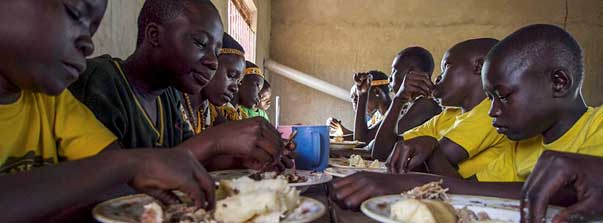
Students of the Lira Integrated Fish Farm in Uganda, a South-South Cooperation Facility for Agriculture and Food Security, eat their lunch. Credit: FAO/Isaac Kasamani

UNITED NATIONS, Sep 10 2021 (IPS) – The 2021 high-level commemoration of the United Nations Day for South-South Cooperation, organized ahead of the opening of the seventy-sixth session of the United Nations General Assembly, provided an opportunity to discuss Southern solidarity in support of a more inclusive, resilient and sustainable future while effectively responding to the global COVID-19 crisis across the global South.


The 2021 United Nations Day for South-South cooperation presented the opportunity for stakeholders to highlight concrete follow-up to the twentieth session of the High-level Committee on South-South Cooperation (HLC), which took place from 1 to 4 June 2021 in New York.

“South-South and triangular cooperation must have a central place in our preparations for a strong recovery”, says Secretary-General António Guterres, reminding us that “we will need the full contributions and cooperation of the global South to build more resilient economies and societies and implement the Sustainable Development Goals”.

The General Assembly High-level Committee (HLC) on South-South Cooperation met in June to review progress made in implementing the Buenos Aires Action Plan (BAPA+40) and other other key decisions on South-South cooperation.

This HLC session considered follow-up actions arising from previous sessions and hosted a thematic discussion on “Accelerating the achievement of the SDGs through effective implementation of the BAPA+40 outcome document while responding to the COVID-19 pandemic and similar global crises”.

The HLC hosted 75 member states – including a Head of State and Ministers from around the world – as well as 23 intergovernmental organizations, 25 UN entities, civil society and the private sector. More than 400 people participated during side events which HLC Bureau Members took the lead in organizing on issues of importance to the South.

Deliberations focused on actions arising from the Report of the Secretary-General to the nineteenth session, which proposed concrete ways to enhance the role and impact of the United Nations Office for South-South Cooperation, as well as the key measures taken to improve the coordination and coherence of UN support to South-South cooperation.

In terms of important messages and statements, Member States highlighted that COVID-19 has taught the world that South-South development cooperation is critical to an effective response to emergencies.

South-South cooperation was strongly reaffirmed as the means to support countries’ national development priorities, alignment with the SDGs, and the acceleration of achievement toward the 2030 Agenda.

South-South cooperation was also recognized as an effective approach to accelerate and deepen the efforts to build back better, healthier, safer, more resilient and sustainable.

It was emphasized that over the past decade, the world has witnessed the increase in the scale, scope, and diversity of approaches of South-South and triangular cooperation.

Countries of the Global South have strengthened institutional capacities for cooperation by formulating and implementing national development policies, strategies, and agencies, and by developing information and performance management systems for data gathering, expertise and technology mapping, and impact assessment.

With the strengthening of national capacities on South-South and triangular cooperation there is opportunity to collect and exchange evidence of how much South-South and triangular cooperation is being done, how it benefits people, and how to create institutional mechanisms to help countries align South-South collaboration with their national and regional agendas.

As the world fights the COVID-19 pandemic and strives to build back better, international development organizations must offer innovative, timely responses to remain relevant. This includes new forms of coordination based on more “coherent” and “integrated support” capable of unleashing change on the ground.

Traditionally, South-South and triangular cooperation has taken place among governments on bilateral terms. As development becomes more dynamic in nature and unprecedented in scale, South-South and triangular cooperation is now used to source innovation from wherever it is.

Also highlighted was that South-South and triangular cooperation is increasingly recognized as an important complement to North-South cooperation in financing for sustainable development.

UNOSSC will continue to promote, coordinate and support South-South and triangular cooperation globally and within the UN system. It will also continue to support governments and the UN system to analyse and articulate evolving and emerging trends, dynamics and opportunities in South-South cooperation.

Adel Abdellatif. Credit: FAO/Isaac Kasamani

In response to Member States requests, UNOSSC consistently demonstrates strong convening power across the UN system and serves as secretariat of UN Conferences including BAPA+40. UNOSSC has developed research networks at the global level, compiling evidence of good practices in South-South cooperation toward achievement of the SDGs, and created a global network of think tanks on South-South and triangular cooperation. UNOSSC also offers the South-South Galaxy platform for sharing knowledge and brokering partnership. The Office also manages a number of South-South cooperation trust funds and programmes.

Given UNOSSC’s mandate to support South-South and triangular cooperation globally and within the UN system, the Secretary-General requested UNOSSC to coordinate the preparation and launch of the UN System-wide Strategy on South-South and Triangulation Cooperation for Sustainable Development with the engagement of the UN Inter-Agency Mechanism for South-South and Triangular Cooperation, and other stakeholders.

The Strategy’s objective is to provide a system-wide policy orientation to UN entities in order to galvanize a coordinated and coherent approach to policy, programmatic and partnership support on South-South and triangular cooperation and increase impact across UN activities at all levels: national, regional and global. Implementation is governed by each entity individually, based on its own mandate and programme of work.

UNOSSC is also currently developing its 2022-2025 Strategic Framework. It is an opportunity for the Office to catalyze the use of South-South and triangular cooperation to accelerate the speed and scale of action towards achieving the SDGs.

For example, the Office aims to offer a platform whereby: (i) countries of the Global South can exchange knowledge, develop capacities, and transfer technologies to address their own development priorities as well as coordinate and co-design solutions to shared development challenges; (ii) UN agencies, programs, and funds can strengthen their support to SSTC at the global, regional and country levels.

No country is too poor to contribute to South-South cooperation for development, and no country is too rich to lean from the South. All partners have important elements to contribute. So, it follows that triangular cooperation is an important element of our work.

The COVID-19 pandemic has laid bare severe and systemic inequalities.

The pandemic has also highlighted the importance of the digital revolution. Building institutional capacity in sub-Saharan Africa and LDCs through South-South and triangular cooperation is essential for countries to fully harness digital transformation and recovery.

Triangular cooperation is a flexible platform where partners can mobilize different funding capacities in support of developing countries’ priorities.

Triangular cooperation demands horizontality and shared governance approved by all parties. It is based on a clear respect for national sovereignty and the seeking of mutual benefit in equal partnerships.

Recovery from pandemic requires additional support, innovative development solutions and arrangements between public and private sectors. We must facilitate opportunities to expand development cooperation and its processes and to improve the effectiveness of multilateral cooperation. Fostering multi-dimensionality and multi-stakeholders approaches is the way forward to enhance development impact.

During the June HLC Member States highlighted that in the COVID and post-COVID era, the below priority areas for triangular cooperation could be considered: 1) health, 2) data infrastructure, 3) manufacturing capacity and supply chain for relevant medical material and equipment, as well as treatment; 4) solar energy and reducing carbon footprint; 5) a coalition for disaster resilient initiatives; and 6) currency swap arrangements from international financial institutions.

Adel Abdellatif is the Director, a.i., of the United Nations Office for South-South Cooperation. Before joining UNOSSC, he served as Deputy Director, a.i., and Senior Strategic Adviser in the Regional Bureau for Arab States of the United Nations Development Programme (UNDP). He came to UNDP following a two-decade career at the Ministry of Foreign Affairs of Egypt.

  Source