After 75 Years, UN Claims 50:50 Gender Parity, But Falls Short of its Ultimate Goals

Civil Society, Development & Aid, Editors’ Choice, Featured, Gender, Global, Global Governance, Headlines, IPS UN: Inside the Glasshouse, TerraViva United Nations
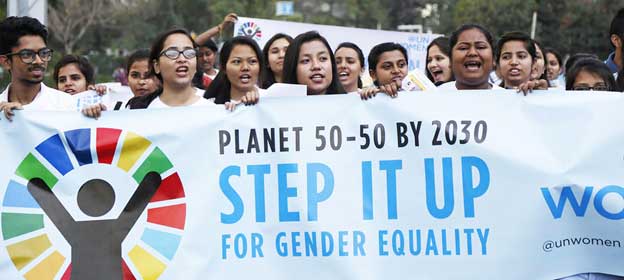
While women have come a long way since the adoption of the Beijing Platform for Action nearly 25 years ago, they still lag behind on virtually every Sustainable Development Goal (SDG). Credit: UN Women, India

UNITED NATIONS, Sep 18 2020 (IPS) – When the United Nations was dominated by men, holding some of the highest positions in the staff hierarchy, women staffers were overwhelmingly administrative secretaries seen pounding on their Remington typewriters seated outside their bosses’ enclosed offices.


A legendary story circulating in the 1960s recounts the plight of a woman candidate being interviewed for a job. She had superlative credentials, including work experience as a political analyst, and was armed with a post-graduate degree from a prestigious university in the US.

The male UN director from human resources, however, had one final question at the end of the interview: “But can you type?”

Mercifully, that was a bygone era. But since then, the UN has made significant progress trying to conform to an age-old General Assembly resolution calling for gender parity system-wide.

As Secretary-General Antonio Guterres tweeted last week: “The #COVID19 pandemic is demonstrating what we all know: millennia of patriarchy have resulted in a male-dominated world with a male-dominated culture which damages everyone – women, men, girls & boys.”

As the UN commemorates its 75th anniversary, the world body claims it has achieved 50:50 gender parity in the higher ranks of its administrative hierarchy.

But it still falls short of reaching “full parity at all levels” of the Organization —even as two recent staff surveys in New York and Geneva raised several lingering questions, including the largely system-wide absence of women of color, widespread racism in the Organization and the lack of equitable geographical representation of staffers from the developing world.

In a letter to staffers on September 2, Guterres singles out the efforts made shortly after he took office: ”Nearly four years into this effort, I can report that we have come a long way”.

In 2019, for the first time in United Nations history, he said; “we reached parity in the Senior Management Group and among Resident Coordinators. On 1 January 2020, and well ahead of schedule, we attained this milestone by reaching parity among all full-time senior leaders, comprising 90 women and 90 men at the level of Assistant and Under-Secretaries-General.”

“In addition to the commitment to reach parity and diversify in our senior leadership by 2021, I have committed to achieving parity at all levels of the Organization by 2028”.

“We are on track to meet this target, but progress is uneven and inconsistent. Our greatest challenge is in field missions, where the gap is the largest and the rate of change is slowest”, he added.

Prisca Chaoui, Executive Secretary of the 3,500-strong Staff Coordinating Council of the UN Office in Geneva (UNOG), told IPS that in the past, despite the existence of competent women in the UN, it has largely been the reality that when women do achieve career progression, it tends to be mostly women belonging to certain geographical groups or regions.

“There are concerns that implementation of the UN’s Gender Parity Strategy may follow a similar pattern. It is crucial that this important initiative ensures a diverse gender parity that includes women from the global South, women of colour, and women from developing and underrepresented countries,” she noted.

The Organization can do better at bringing the valuable and creative talents of diverse women together to help bridge the gender gap. This can only help the UN better deliver on its mandate – especially in these challenging times.

“Gender and geographic diversity should not be mutually exclusive. We can implement the Gender Parity Strategy while ensuring improved geographical representation and diversity,” Chaoui declared.

Meanwhile, the lack of geographical diversity is reflected in the absence of staffers from some 21 member states, according to the latest December 2017 figures released in a report to the UN’s Administrative and Budgetary Committee.

The 21 “unrepresented” countries among staffers, mostly in the developing world, include Afghanistan, Lao People’s Democratic Republic Saint Lucia, Andorra, Liechtenstein, Saint Vincent and the Grenadines., Angola, Marshall Islands, Sao Tome and Principe, Belize, Monaco, Timor-Leste, Equatorial Guinea, Nauru, Tuvalu, Kiribati, Palau United Arab Emirates, Kuwait, Qatar and Vanuatu.

Ian Richards, former President of the Coordinating Committee of International Staff Unions and Associations, and an economist at the Geneva-based UN Conference on Trade and Development (UNCTAD), told IPS that last year Guterres asked the UN’s member states at the General Assembly to let him change the staff regulations to allow the quotas and promotion and recruitment bans based on gender that he had been seeking for a while. But they refused his request.

“It seems they felt it went against Article 8 of the UN Charter on non-discrimination and Article 101 on merit”.

However, this year, while the pandemic and Covid-19 recovery efforts drew attention elsewhere, it seems he made the changes anyway, albeit through a type of executive order called an “administrative instruction”, complained Richards.

Firstly, is the executive order legal if it contradicts the staff regulations? he asked. Lawyers have apparently been looking at this. And, secondly, is it wise to provoke our member states by disregarding their instructions at a time when some are trying to cut our funding? There seems to be some disquiet.

“We all want to advance gender balance and we are all impatient. But I hope our efforts to do so doesn’t backfire because of this”.

A further question is why aren’t the General Service staff included?. They are staff like everyone else and form the backbone of our organization,” asked Richards.

Currently, the UN has a global staff of about 34,170, according to the latest figures from the Chief Executives Board for Coordination.

While the Secretariat staff in New York is estimated at over 3,000, the five largest UN agencies worldwide include the UN children’s agency UNICEF (12,806 staffers), the Office of the UN High Commissioner for Refugees (9,740), the World Health Organization (8,049), the UN Development Programme (7,177) and the World Food Programme (6,091).

Purnima Mane, a former UN Assistant Secretary-General and Deputy Executive Director of the UN Population Fund (UNFPA), told IPS it is indeed heartening to hear that the UN has reached gender parity among its senior leadership.

The Secretary-General further promises that steps will be taken to ensure parity at all levels of the organization by 2028 which is most welcome, she said.

“It is also heartening to note that there is attention to the reality that it is not just about numbers but also about a shift in organizational culture. There obviously needs to be transparency on what this shift implies in terms of its goals, how they will be achieved, and how success will be measured.”

While equitable recruitment is one way to measure gender parity, number of male and female staff obviously cannot be the sole measure of success in achieving gender equality, she argued.

“Parity in numbers is one, critical part of ensuring gender equality in the UN but it needs to be matched with efforts that address the quality of work life. Recognizing the demands on the lives of women and men today and building flexibility in work life policies is a key part of ensuring this quality and equality,” she added.

Attention will have to be paid to other critical areas of work life, such as parity in retention, rate of promotion, salary, benefit package including adequate and flexible work arrangements especially those related to maternity (and paternity) leave, and support and mentoring of women, Mane said.

Targets will not only need to be set for each of these areas but also reported on to ensure transparency and accountability that gender parity is successful in a comprehensive and meaningful way, in the long run, she declared.

Ben Phillips, author of ‘How to Fight Inequality’ and former Campaigns Director for Oxfam and for ActionAid, told IPS there is a growing unity amongst grassroots groups across the world fighting intersecting inequalities.

That is what ‘we the peoples‘ really means. It is that united push that is driving a long-overdue reckoning across institutions of every kind, said Phillips who co-founded the Fight Inequality Alliance.
  Source

UN Women Calls for Accelerating its Unfinished Business

Civil Society, Featured, Gender, Global, Headlines, IPS UN: Inside the Glasshouse, Poverty & SDGs, TerraViva United Nations, Women’s Health

Opinion

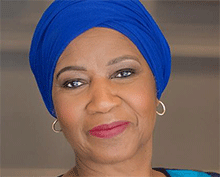
Phumzile Mlambo-Ngcuka is UN Under-Secretary-General and Executive Director, UN Women

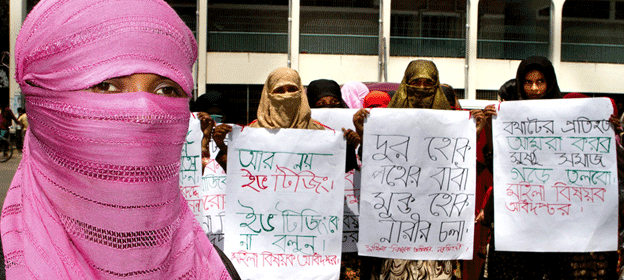
Women in Bangladesh stand up for gender equality. Credit: UNICEF/Jannatul Mawa

NEW YORK, Sep 7 2020 (IPS) – Twenty-five years ago, the Fourth World Conference on Women in Beijing set a path-breaking agenda for women’s rights. As a result of the two-week gathering with more than 30,000 activists, representatives from 189 nations unanimously adopted the Beijing Declaration and Platform for Action.


This historic blueprint articulated a vision of equal rights, freedom and opportunities for women – everywhere, no matter what their circumstances are – that continues to shape gender equality and women’s movements worldwide.

A quarter century on, the UN Secretary-General, Antonio Guterres, calls for urgent action: “With nations around the world searching for solutions to the complex challenges of our age, the leading way for all of us to rebuild more equal, inclusive, and resilient societies, is to accelerate the implementation of women’s rights – the Beijing Platform for Action. That vision has been only partly realized. We still live in a male-dominated world with a male-dominated culture, and this simply has to change”.

The Beijing Platform for Action imagined a world where every woman and girl can exercise her freedoms and choices, and realize her rights, such as to live free from violence, to go to school, to participate in decisions and to earn equal pay for work of equal value. As a defining framework for change, the Platform for Action made comprehensive commitments under 12 critical areas of concern.

Twenty-five years later, no country has fully delivered on the commitments of the Beijing Platform for Action, nor is close to it. A major stock-taking UN Women report published earlier this year showed that progress towards gender equality is faltering and hard-won advances are being reversed.

Women currently hold just one quarter of the seats at the tables of power across the board. Men are still 75 per cent of parliamentarians, hold 73 per cent of managerial positions, are 70 per cent of climate negotiators and almost all of the peacemakers.

Phumzile Mlambo-Ngcuka

The anniversary is a wake-up call and comes at a time when the impact of the gender equality gaps is undeniable. Research shows the COVID-19 pandemic is exacerbating pre-existing inequalities and threatening to halt or reverse the gains of decades of collective effort – with just released new data revealing that the pandemic will push 47 million more women and girls below the poverty line.

We are also witnessing increased reports on violence against women throughout the world due to the lockdowns, and women losing their livelihoods faster because they are more exposed to hard-hit economic sectors.

While much works remains on fulfilling the promises of the Beijing Platform for Action, it continues to be a global framework and a powerful source of mobilization, civil society activism, guidance and inspiration 25 years later.

It was at the Fourth World Conference on Women, specifically at the Women & Health Security Colloquium, where Hillary Clinton coined the phrase, “Women’s rights are human rights, and human rights are women’s rights”.

In a recent article in The Atlantic, she recalled her participation at the Conference as the Honorary Chairperson of the US delegation, and the significance of the Beijing Declaration: “A 270-page document might not lend itself to bumper stickers or coffee mugs, but it laid the groundwork for sweeping, necessary changes.”

Underlining the urgency for implementation, she added: “As the changes laid out in the Platform for Action have been implemented, what’s become clear is that simply embracing the concept of women’s rights, let alone enshrining those rights in laws and constitutions, is not the same as achieving full equality. Rights are important, but they are nothing without the power to claim them.”

Years after, global activists continue the hard work and those who participated at the 1995 Beijing Conference remain touched by this historic meeting. Zeliha Ünaldi, a long-standing gender advocate from Turkey, said it was a life-changing experience: “When I recall those days, mingling around the tents with thousands of women committing to a better world, two words immediately come to my mind: sisterhood and peace. The Beijing Declaration and Platform for Action and the subsequent five years helped me understand the power in us and of us as the global women’s movement.”

The upcoming UN General Assembly later this month will be a key opportunity to bring to the forefront the relevance of the Beijing Declaration and move the needle on implementation, with a High-Level Meeting attended by global leaders on “Accelerating the Realization of Gender Equality and the Empowerment of all Women and Girls” on 1 October.

The event will showcase how building equal and inclusive societies is more urgent than ever, as the COVID-19 pandemic ravages lives and livelihoods.

Calling on world leaders to use their political power to accelerate robust action and resources for gender equality and the empowerment of all women and girls: “This is a re-set moment. On this important anniversary, let us reaffirm the promises the world made to women in 1995. Let us draw on the activist spirit of the Beijing Conference and commit to forging new alliances across generations and sectors to ensure we seize this opportunity for deep, systemic change for women and for the world.”

The anniversary will be further commemorated in the context of the Generation Equality Forum, a civil society–centred, global gathering for gender equality, convened by UN Women and co-hosted by the governments of France and Mexico, foreseen to take place in the first half of 2021.

Exactly 25 years after the opening of the Fourth World Conference on Women in Beijing, China, its significance is undimmed. In that quarter century we have seen the strength and impact of collective activism grow and have been reminded of the importance of multilateralism and partnership to find common solutions to shared problems.

Back in 1995, the deliberations of the Conference resulted in the framing of the Beijing Declaration and Platform for Action: a bold agenda for the change needed to realize the human rights of women and girls, articulated across 12 critical areas of concern.

The Platform for Action provided a blueprint for the advancement of gender equality and the empowerment of women and girls, adopted by 189 UN Member States and universally referenced.

The continued relevance of the Beijing Declaration and Platform for Action cannot be overstated today. The far-reaching social and economic impacts of the COVID-19 pandemic, including the significant increases in violence against women, threaten to reverse many of the hard-won advances made in the last 25 years to empower women and girls.

At the same time, the outstanding value of women’s leadership through the COVID-19 pandemic is in plain sight, along with the recognition of just how much women’s work and women’s movements have sustained the world, from domestic life, the fight for human rights, to national economies.

We also know that by next year, 435 million women and girls are likely to have been reduced to extreme poverty. Governments, local administrations, businesses and enterprises of all sorts must not let this happen.

To tackle persistent systemic barriers to equality, we need transformative approaches and new alliances that engage the private sector alongside governments and civil society. This is a re-set moment. The economic and policy lifeboats for our struggling world must put women and children first.

The political will of leaders can make the difference. World leaders convening at this year’s United Nations General Assembly have the opportunity to use their power in action to accelerate the realization of gender equality and the empowerment of all women and girls, and to support the role of civil society organizations and youth.

Our humanitarian responses to COVID-19, our economic stimulus packages, our reinventions of working life and our efforts to create solidarity across social and physical distance – these are all chances to build back better for women and girls.

For success, we need to work together on these transformative actions. In 2019, we launched a global campaign called Generation Equality: Realizing Women’s Rights for an Equal Future, with a call for renewed commitment by governments in partnership with civil society, academia and the private sector.

It included clear timelines, responsibilities and resources towards realizing the 2030 Agenda for Sustainable Development, an ambitious long-term framework that included goals to achieve universal gender equality.

On October 1, 2020, when a High-Level Meeting on the 25th anniversary of the Beijing Platform for Action is convened by the President of the General Assembly, Member States can put into action their commitment toward a more gender-equal world.

On this important anniversary, let us reaffirm the promises the world made to women and girls in 1995. Let us draw on the activist spirit of the Beijing Conference and commit to forging new alliances across generations and sectors to ensure we seize this opportunity for deep, systemic change for women and for the world.

  Source

Music Collective ‘Megative’ Dubs Out the Negative

Arts, Civil Society, Global, Headlines, Health

Arts

Even as their income dries up and their touring opportunities disappear because of the Covid-19 pandemic, some artists are using their work to call out injustice, criticize inept leaders and spark social change. The members of Megative - a Brooklyn-based, reggae-dub-punk collective - are among those aiming to fight negative global currents, and they’re doing so through edgy, scorching music.

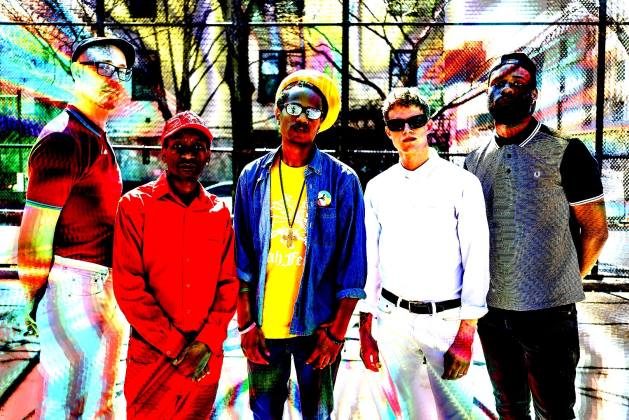
The members of Megative, with Gus van Go (far left).
Credit: Daviston Jeffers

PARIS, Sep 2 2020 (IPS) – Even as their income dries up and their touring opportunities disappear because of the Covid-19 pandemic, some artists are using their work to call out injustice, criticize inept leaders and spark social change.


The members of Megative – a Brooklyn-based, reggae-dub-punk collective – are among those aiming to fight negative global currents, and they’re doing so through edgy, scorching music.

“I think activism is the most important thing we have right now in 2020. It’s do or die right now for humanity. The injustice absolutely must end, and it will not end with silence,” says music producer Gus van Go, leader and co-founder of the group.

In a year of uncertainty and division, Megative stands out for its multicultural composition as well as its fusion of styles and thought-provoking lyrics. This past July, watching the incompetence of certain heads of state in the face of the pandemic, the group released the song The Lunatics Have Taken Over the Asylum, a cover of the Fun Boy Three hit from the early Eighties, combining dub and punk music.

The original was a critique of the Ronald Reagan-Margaret Thatcher era, and Megative thinks the track is just as pertinent in 2020, with the current presence of problematic leaders on both sides of the Atlantic.

“We still believe the message is important, and it’s almost more relevant now,” van Go told SWAN in a telephone interview from Montréal, Canada, where he grew up, and where he has a studio along with one in Brooklyn.

The group was due to take their songs on the road – scheduled to perform at “five or six festivals” in France, for instance – but the pandemic has caused all these events to be cancelled. The musicians now find themselves, like so many other artists, struggling to maintain an income and to keep their overall work going.

“I think Covid-19 is exposing something that I’ve always thought about in the music industry,” said van Go. “So much inequality. We’ve always had this one percent of artists who have been insanely rich … and the rest of us are working our asses off, in order to eke out a living.”

“The universe took away the one single piece of the pie that the artist still had. All of a sudden, nearly every single musician cannot make a cent. One day, the universe just said ‘no you cant have that’. There is no income for all these artists. You see how dangerous it is to have just one source of income? Do we not need music in this world?

He explained that with the massive decline in album sales over the past decade, musicians had turned to touring in order to “just barely make a living – travelling together in a shitty old van”. But now even that has dried up with the global health crisis.

“Covid has shone this giant light on it,” he added. “The universe took away the one single piece of the pie that the artist still had. All of a sudden, nearly every single musician cannot make a cent. One day, the universe just said ‘no you cant have that’. There is no income for all these artists. You see how dangerous it is to have just one source of income? Do we not need music in this world? What if Covid continues for two or three years, what if this goes on for multiple years?”

He said it’s time for artists to band together and demand change – in their industries, communities and countries. “Megative supports activism,” he declared.

Discussing the origins of the group, van Go said the idea for the collective grew out of an overnight drive from New Mexico to California that he took with fellow musician Tim Fletcher 10 years ago. There were only two CDS available in the car – Combat Rock by The Clash, and More Specials by the 2 Tone and ska revival band The Specials, both English. The sounds got van Go thinking about the “conscious lyrics” and the history of the musical styles and their influences.

“We have a love for Jamaican reggae and dub culture of the early Eighties with bands like Steel Pulse and The Clash. But reggae in North America, where we are from, is associated with vacation spots, coconut trees and irie vibes. We were lamenting the darker reggae of the early Eighties. Our Clash discussion morphed into how a reggae band would look in 2018,” he said.

Back in New York, they invited a producing-engineering duo called Likeminds and Jamaican MC Screechy Dan to join the conversation. The enthusiasm for the project was so strong that they recorded three songs which almost immediately led to a signing with Last Gang Records and the subsequent release of their debut album in summer 2018.

The collective now brings together disparate artists including the Grammy-nominated Likeminds (Chris Soper and Jesse Singer); Jamaican-born singer, MC and dancehall veteran Screechy Dan; singer-guitarist and punk rocker Alex Crow; percussionist-DJ-singer JonnyGo Figure; and the rising Brooklyn drummer Demetrius “Mech” Pass.

All the members have their own individual projects but contribute their respective skills to create the Megative sound – a fusion of UK-style punk, Jamaican dub and reggae, and American hip-hop. The music is a response to today’s world, to everything that’s happening including the “hyper-noise of incessant information”, according to the collective.

The overarching theme is existentialist angst amidst precarious conditions. Tracks such as Have Mercy, Bad Advice and More Time call upon listeners to take control and rely on their own sense of what’s right, with lyrics set against dub beats and a punk vibe, and skilful singing mixed with mindful rapping.

For van Go, born Gustavo Coriandoli in Argentina and raised in Canada, the historical alliance between punk and reggae was central to Megative’s formation. He recalls growing up in Montréal in the late 1980s and early 90s, when the “punk rock movement was taking hold” among the youth.

“The shows had trouble finding venues, so they always tried to rent space … and sometimes that would be at Jamaican community centres. All these punks would be at these shows, but also the Rastafarian community. So, dub music was playing. I was 16, had never heard dub, had never been been to a punk show, so it fused in my brain,” he told SWAN.

Similar congregations or collaborations in the UK had led singer Bob Marley to release Punky Reggae Party in 1977, a reflection of the bridging of cultural divides; and punk-dub pioneer Don Letts wrote about the movement in his 2006 autobiography Culture Clash: Dread Meets Punk Rockers.

“It’s all about social message – in punk and reggae, so they’re natural allies or they should be,” said van Go. “There’s a positivity but also a dark side. I love the energy that this creates, in punk and reggae and in early hiphop.”

When asked about Megative’s views on the current discussion around cultural appropriation in the arts, van Go answered: “This is an ongoing discussion with us, and we really encourage dialogue on the subject.” He added that the group takes a multicultural approach to creating music, as can be seen from their output so far.

Regarding the future of the collective, van Go said Megative planned to continue producing music with a cause, and to get back to touring when possible. They are currently “writing new material” but aren’t certain in which format(s) it will be released.

“Like nothing else can, I think music can definitely help heal,” van Go told SWAN. “We have to topple these terrible people who are in power right now. We have to find concrete ways to end systemic racism. Music has to play a part as it did in the Sixties. It needs to.”

  Source

It is Time for a Democratic Global Revolution

Civil Society, Climate Change, Democracy, Editors’ Choice, Featured, Global, Global Governance, Headlines, Human Rights, IPS UN: Inside the Glasshouse, TerraViva United Nations

Opinion

Daniel Jositsch is a Member of the Swiss Senate and President, Democracy Without Borders-Switzerland, and Andreas Bummel is Executive Director, Democracy Without Borders. Twitter: @democracywb

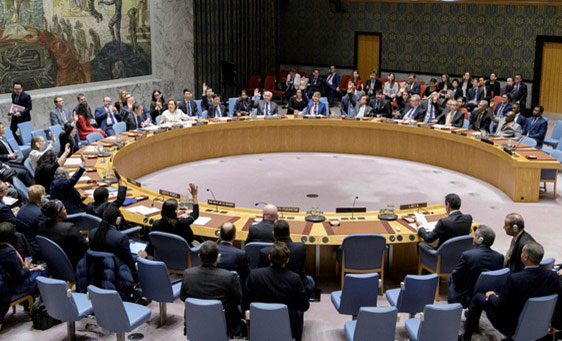
The UN’s Security Council, in particular, is suffering from a dysfunctional decision-making method that grants the five victors of the Second World War and official nuclear powers not only a permanent seat but also a veto right. Credit: United Nations

BERLIN / BERNE, Aug 28 2020 (IPS) – The people of the world need to seize the moment and bring about a democratic global revolution. It is time for a global parliament and real representation.

More than 21 million people got infected with the novel coronavirus and over 770,000 have died. Never before did the world witness similar collective lockdowns of social and economic activity that had to be enforced to contain the pandemic.


For many, the corona-related global crisis exacerbates a situation that was already critical before the outbreak of the virus.

The climate crisis is unfolding with record temperatures in Siberia, Greenland, the Antarctic and other places like the Middle East. The new climate apartheid is characterized by whether you can afford to shield yourself from such heat or not. Most cannot.

135 million people are facing crisis levels of hunger. There are currently more than 70 million displaced people who have fled war, persecution and conflict. It’s the worst humanitarian and refugee crisis in seventy years.

There is a global inequality crisis. Productivity gains and globalization disproportionately benefit the affluent. Financial assets in the trillions are hidden in offshore accounts from tax authorities. The world’s 26 richest billionaires own as much as the poorest 3.8 billion people on the planet.

While global surveys confirm that people across all world regions strongly believe in democracy, there is in fact a democratic retreat. Confidence in the actual performance of democratic governments is waning. Populist nationalism and authoritarianism has been advancing, aided and abetted by social media platforms and the internet. Major arms control treaties are crumbling, geopolitical tensions are rising and multilateralism is under attack.

Civil society and citizens across the world are fighting back, though. Pro-democracy movements are at an all-time high as widespread protests in dozens of countries now and in recent times demonstrate. Freedom and justice have lost no appeal. At the same time, millions of citizens joined climate protests around the world and called for quick and effective action in this critical field.

The present issues are symptoms of a crisis of global governance. There is a scale mismatch between a political world order that is based on 200 states and territories and issues that demand decisive global action.

As the UN celebrates its 75th anniversary this year, the organization continues to lose significance and impact. The UN is only as strong and effective as its member states allow it to be. The same applies to all intergovernmental organizations and forums, including the World Health Organization that had to launch an investigation into its handling of the Covid-19 pandemic.

The UN’s Security Council, in particular, is suffering from a dysfunctional decision-making method that grants the five victors of the Second World War and official nuclear powers not only a permanent seat but also a veto right.

If long-lasting solutions are to be achieved, this scale mismatch must be tackled. It is not enough to call on individual governments to change their policies. The way how the world is governed must be changed. What is needed is a new vision of a democratic world order that is based on shared sovereignty on global issues, a clear commitment to human rights, the principle of subsidiarity and complete disarmament.

When the UN was founded it was recognized that this should only be a beginning and that changes would be required. Article 109 of the Charter provides that a conference to review the Charter should be held by 1955. The UN’s member states did not deliver on that promise. Now is the time to hold them to account.

The world’s people need an actual say in global affairs that is not intermediated by national governments and their diplomats. The key ingredient of a new UN should be a democratically elected world parliament that complements intergovernmental bodies such as the UN General Assembly.

The creation of a new democratic world organization that has actual powers seems to be a gigantic project that raises numerous questions. How is a global democracy to be created while major states themselves are not democratically organised? Can decisions of a world parliament be enforced against the will of individual states? How is it possible that states will agree to the creation of a superior political unit?

These questions show the way forward: The people of the world themselves need to embrace and call for global democracy. Eventually, they are the sovereigns not only in their individual states but on the planet as a whole, too.

A global democratic revolution needs to push for a legitimate, inclusive and representative global body that will deal with these questions in a serious way. The creation of a UN Parliamentary Assembly could be an important stepping stone to launch a global constitutional process and a transformation of global governance.

This global democratic revolution will be peaceful because it is not about destroying structures or conquering territories, but about opening up a political level that is lying idle. Supranational integration cannot be imposed by force. It will happen because the people want it.

If existing movements in the fields of climate, environment, peace, disarmament, democracy, social justice and others join forces, the global democratic revolution will become very real.

This may sound visionary. But the big issues troubling this planet and its people will remain, and worsen, unless the root cause is addressed. A democratic global government is not a mind game in some ivory tower. It is the most important question on the agenda of humanity today.

  Source

Religion & the Pandemic: A Call Beyond the Here & Now

Civil Society, Featured, Global, Headlines, Health, Human Rights, Humanitarian Emergencies, Inequity, Religion, TerraViva United Nations

Opinion

Prof. Azza Karam is Secretary General, Religions for Peace International

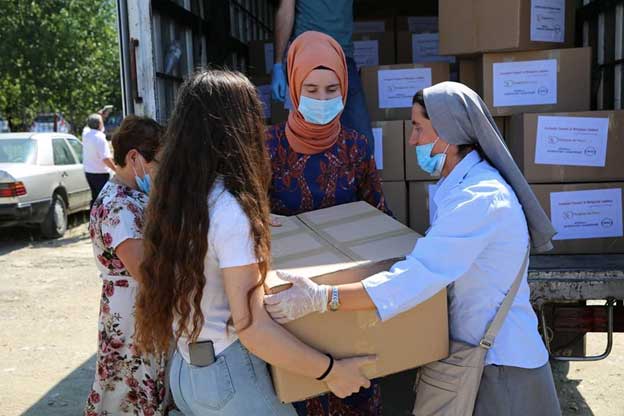
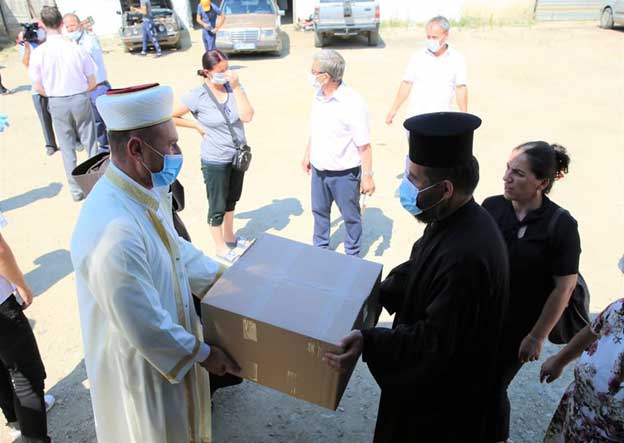
Religions for Peace Interreligious Council of Albania distributing Covid relief supplies from the Multi-religious Humanitarian Fund. Credit: Erzen Carja

NEW YORK, Aug 4 2020 (IPS) – — I have never been interested in religion or spirituality before, but I found myself tuning in to all sorts of on-line religion and spirituality related forums “in search of something.”


These are the words of a 30-something single young, middle class man (born into a Protestant-Catholic family background) in a European country.

The latter is known more for turning several churches into museums or shopping centers, prior to the Covid-19 pandemic. When people are afraid, lonely and alone – they tend to seek “something” beyond science.

A quarter of Americans say their faith has become stronger because of the pandemic, according to a Pew survey conducted during April 20-26, 2020, of 10,139 U.S. adults.

But this is to be contrasted with the experiences of those from an older generation (60+) in the southern hemisphere, like my own 85-year old Muslim father, who lives to pray. For him, the mosque has, over the last decade since my mother’s death, become both his spiritual hub and social club.

His cohort is differing ages of retirees, who, in spite of very different political perspectives in a Middle Eastern country reflecting the now normal of intense polarization, treasure their prayerful community spaces. This middle class (an endangered species to be sure) of retirees, share a sense of deep faith informing their social and political convictions.

For many of them, the lockdown was experienced primarily s an inability to go to the mosque, and thus as almost physically painful. None of them countenanced the idea of on-line prayers, that doesn’t make any sense, they maintained. Their sense of depression was almost palpable throughout the lockdown period, as was their joy at the reopening of some mosques.

The coronavirus presents barriers to caring for the sick and to performing certain death and burial rites which are core religious practices, and especially needed in a pandemic that has already claimed nearly hundreds of thousands of lives.

In Sri Lanka for example, public health measures for safe burial practices have already challenged traditional rites, wherein authorities mandated cremations for Covid-19-linked deaths, despite the fact that cremation is supposed to be forbidden in Islam.

Covid-19 also complicates Jewish and Muslim burial practices of washing and cloaking bodies before burial, given concerns about transmission. Innovative religious responses seeking to reconcile public health policies with traditional burial practices have been taking place.

In Israel, for example, bodies are wrapped in plastic before burial, and before that, ritual washing is completed while wearing full protective gear. Some Islamic scholars are providing exegesis and guidance on how the ritual of washing the body prior to burials, could be conducted safely whilst following Islamic principles.

Religions for Peace Interreligious Council of Albania distributing Covid relief supplies from the Multi-religious Humanitarian Fund. Credit: Erzen Carja

This echoes what occurred during the Ebola crisis in West Africa. In fact, while COVID-19 differs from HIV/AIDS, Malaria, Tuberculosis, and Ebola, there are nevertheless some important similarities.

In cases of dealing with diseases where transmission affects large numbers of people, and vaccines and medication remain relatively hard to find and/or provide to all affected, beyond the health inequities which are underscored during such times, there are critical lapses by national and international authorities in acknowledging and supporting the role of religious leaders.

In fact, during previous outbreaks of HIV/AIDS (around the world), and of Ebola in Central and West Africa, the strengths of religious communities were rarely incorporated into public policy – until national and international secular authorities lose the plot.

In Religions for Peace (the only multi religious organization representing all religious institutions and communities around the world with 90 national and 6 regional Inter-Religious Councils/IRCs), a founding mantra is that caring for the most vulnerable is deeply embedded in all faith traditions.

As a result, religious institutions, communities, and faith-inspired/based NGOs (or FBOs as they are often referred to), have historically served as the original providers of essential social services. In fact, FBOs are the first responders in most humanitarian emergencies. Their work includes providing spiritual sustenance for sure, but also hunger relief, heath care, and shelter.

This is not only a feature of the developing world. Samaritan’s Purse set up a health center at the height of the pandemic in Central Park – an icon of New York city. Caritas, at one point, was feeding 5,000 people a day, in Geneva, Switzerland.

For 50 years, Religions for Peace worked to equip its IRCs (through the respective religious institutions and services) to seek peace through advocating for human rights (including the rights of Indigenous Peoples, as well as women, religious minorities, the disabled, elderly, and youth), mediating conflicts, providing emergency humanitarian relief, and contributing to sustainable development efforts (including health, nutrition, sanitation, education and environmental sustainability).

The defining feature of Religions for Peace IRCs is multi-religious collaboration. The main principles of this collaboration are representativity and subsidiarity. In the case of the former, each IRC earns Religions for Peace affiliation by ensuring its governance represents each and all of the nations religious institutions, and communities. In return, each IRC is guaranteed its independence to determine its national/regional priorities, and its modus operandi.

Half a century of collaboration with several United Nations entities at different moments in time, provides a comparative context to enable an assessment of how the UN works with some religious actors.

At the very least, this historical time-line of partnership efforts on peace and security, sustainable development and human rights, provides a learning context. It is with that in mind that we can say that UN efforts in seeking partnerships with faith-based NGOs in facing the Covid-19 implications, are noticeably on the increase relative to pre-Covid dynamics.

Entities like UNHCR, UNICEF, UNAIDS, WHO, and even non-operational entities like the Secretary-General’s own office, as well as UN Office of Genocide Prevention and Responsibility to Protect, have, respectively, issued statements specifically calling on religious leaders and actors to uphold their unique influences (noted above), sought religious input on and in Covid Guidance documents, and (are) hosting multiple consultations to strengthen myriad joint responses.

Working with multiple stakeholders, Religions for Peace research is revealing that while some religious charities are struggling to find resources to continue their services for communities, other FBOs are able to raise more resources for pandemic relief, than anticipated.

This is particularly the case for Hindu, Muslim and Buddhist organisations in countries in Asia, but also Muslim and Christian charities in Africa and the Middle East.

Almost 90% of Religions for Peace IRCs reported a 100% increase in engagement (asks) of their advocacy and messaging efforts from/by national governments, particularly as of May and June 2020 – as compared to this time last year.

This is evidenced through national campaigns during religious occasions and holidays, as well as local awareness raising efforts by religious leaders in particular, as opposed to faith-based NGOs.

Out of the Covid response efforts tracked by 25 Religions for Peace IRCs in 4 regions, thanks to the Multi-Religious Humanitarian Fund administered by RfP, multi-religious efforts are, on average, much harder to encourage than efforts administered by Ecumenical or single religion organisations.

A rough estimate shows that out of the nearly 100 humanitarian assistance projects being tracked by RfP in 40 countries in parts of Africa and Asia, only 1 percent involve multi-religious efforts. Several IRCs have also reported finding it harder to even advocate for multi religious collaboration to provide pandemic assistance (food and medicine packages) in conflict impacted countries (i.e. more than it normally is to seek to mediate some of the conflicts and/or work with governments in mediation efforts).

While it is now almost a cliche to call for more partnerships with religious, or faith-based actors, this is simply not good enough. FBOs, like many NGOs fully immersed in relief efforts, are finding several (good) excuses not to work together.

Faced with a global pandemic, even the FBOs – ostensibly inspired by religious calls for serving all, including the most vulnerable – are less keen on collaborating across their multiple differences (institutional, theological, structural, financial and political), as they continue to serve millions.

Is it enough to serve all who need regardless of religious affiliation (the current bar against which religious NGOs are often measured by the UN and other international entities), or should a pandemic inspire more, and better collaboration among multi-religious partners?

One can but wonder what the relative lack of religious NGO collaboration may foretell for social coexistence after the pandemic, not to mention what this lack of collaboration spells for the legitimacy of the so-called prophetic voice many of them speak of.

  Source

Modern Tools, Age-old Wisdom: on India-Sri Lanka Relations

Asia-Pacific, Civil Society, Featured, Global, Global Governance, Headlines, IPS UN: Inside the Glasshouse, Peace, TerraViva United Nations

Opinion

Prasad Kariyawasam was Sri Lanka’s one-time Foreign Secretary and High Commissioner to India

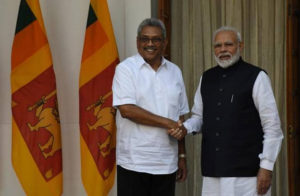
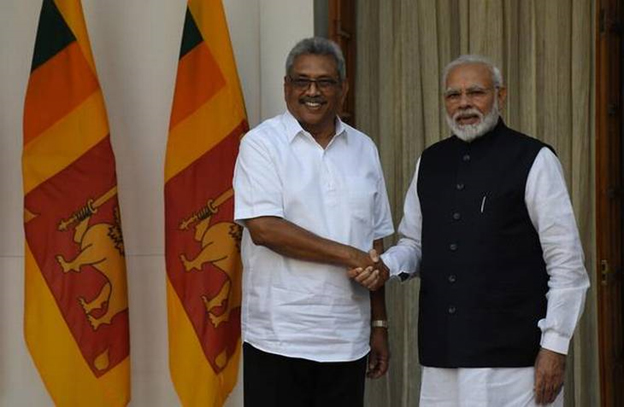
Indian Prime Minister Narendra Modi and Sri Lankan President Gotabaya Rajapaksa. Credit: V.V. Krishnan, the Hindu

COLOMBO, Sri Lanka, Jul 31 2020 (IPS) – The unique India-Sri Lanka relationship, de jure, is between equals as sovereign nations. But it’s asymmetric in terms of geographic size, population, military and economic power, on the one hand, and social indicators and geographical location, on the other. It is steeped in myth and legend, and influenced by religious, cultural and social affinities.


This is an opportune time for Sri Lanka and India to nourish the roots of the relationship using modern toolkits, but leveraging age-old wisdom and experience.

Historical ties

History reveals that the advent of Buddhism to Sri Lanka during the time of Emperor Ashoka was the result of cross-border discourse. For many centuries in the first millennia, the ancient capital city of Anuradhapura housed an international community which included traders from India, China, Rome, Arabia and Persia.

Later, Buddhist monks from Sri Lanka travelled to India, China, Cambodia and Java leaving behind inscriptions. Buddhist temples in Sri Lanka, to this day, contain shrines for Hindu deities. The colonial expansion of European maritime nations reshaped the Sri Lankan economy. Labour from south India was brought to Sri Lanka to work in plantations.

The Indian freedom struggle had its influence on Sri Lanka as well. There was cross-border support for the revival of culture, tradition, local languages, spiritual practices and philosophies, and education. Both countries transformed into modern nations with constitutional and institutionalised governance under colonial rule.

Most aspects of today’s globalisation existed in a different form in the pre-colonial era with free exchange of ideas, trade and intellectual discourse. However, process engineering by colonial powers for identification and categorisation of people was a factor in the emergence of separatist ideologies based on ethnicity, language and religion.

This mindset is now ingrained and accentuated in politics. Episodic instances of communal hostility are referenced often to suit tactical political gain. Around the world today, and not just in South Asia, policies and thinking are becoming communally exclusive, localised and inward-looking.

The COVID-19 pandemic hit the world against this backdrop, allowing some leaders an opportunity to double down on insular thinking, ostensibly for providing local communities with better economic and social prospects, and security.

Meanwhile, governance models favoured by nations keep vacillating between fundamental freedoms-based democratic systems and quasi democratic, socialist authoritarian systems.

In this regard, the people of Sri Lanka and India have been served well by long years of uninterrupted democratic governance. This has provided long-term stability for both countries and must not be vitiated.

Sri Lanka’s strategic location makes it apparent that not only economic fortunes but the security of both countries are inextricably linked. Therefore, it is heartening that India and Sri Lanka constantly strive for excellence in neighbourly relations, recognising that a calamity in one country can adversely impact the other.

Though robust partnerships with other countries must be sought in line with the non-alliance foreign policies of both countries, such efforts must be bounded by an atmosphere needed for peace, prosperity and stability.

Among others, freedom of navigation in the Indo-Pacific together with a rules-based international order and peaceful settlement of disputes are of common interest. While avoiding advocacy of zero-sum solutions on crucial issues, both countries must seek to harmonise strategic and other interests in line with common values and socioeconomic compulsions.

Addressing issues and imbalances

The socioeconomic development of Sri Lanka has remained linked to India. But there are many options available to address issues of imbalance and asymmetries. For instance, Sri Lanka can encourage Indian entrepreneurs to make Colombo another business hub for them, as logistical capacities and facilities for rest and recreation keep improving in Sri Lanka.

Integrating the two economies but with special and differential treatment for Sri Lanka due to economic asymmetries can be fast-tracked for this purpose. There is immense potential to accentuate or create complementariness, using locational and human resource potential, for harnessing benefits in the modern value chains.

Robust partnerships across the economic and social spectrum can promote people-to-people bonhomie. And engagement of legislatures is essential for promoting multiparty support.

With many countries receding into cocoons due to the pandemic, this is an opportunity for both countries to focus on the renewal and revitalisation of partnerships.

This article was originally published in the Hindu, the English-language daily owned by The Hindu Group and headquartered in Chennai, Tamil Nadu
https://www.thehindu.com/opinion/op-ed/modern-tools-age-old-wisdom/article32206425.ece

  Source