Americans By Force

Civil Society, Democracy, Headlines, Human Rights, North America, TerraViva United Nations
Opinion

The explanation for black Americans endemic discrimination is the contrast between their implantation in the United States and the way the rest of the public settled in the “American dream.” Almost everyone came to this idea that is the United States of free will.

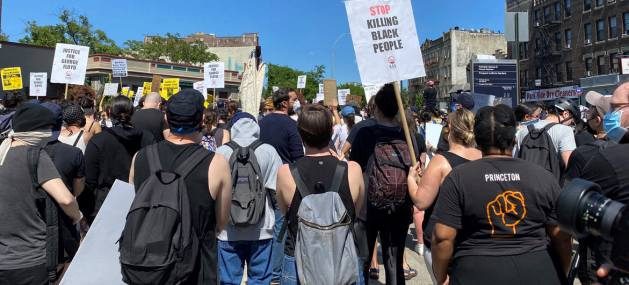
Protests have been taking place in cities across the United States. Credit: UN News/Shirin Yaseen

MIAMI, Sep 4 2020 (IPS) – Why, in the United States, where change is the most pronounced hallmark, do some aspects never change? Why do many bad habits resist giving way to novelties that prove to be the basis of the success of the most developed country on earth and still the leading power?  Why is the explanation for that leadership due to a few factors? Why does Trump profess a visceral opposition to immigration, knowing that it is the key to the country’s success? Because millions of his compatriots interpret the sinew of American DNA as a threat to their comparative social advantage.


Meanwhile, in this drama, blacks continue to bear the brunt of it all. The explanation for their endemic discrimination is the contrast between their implantation in the United States and the way the rest of the public settled in the “American dream.” Almost everyone came to this idea that is the United States of free will.

No one can say that their grandparents were forced to change residence. Although it can be argued that hunger, religious persecution, and the desire for economic improvement were important factors in driving emigration from Europe, Africa, or Asia, it is also true that voluntary americanization is the key to the success of the United States.
Joaquín Roy

This country is the most genuine example of national construction opposed to that based on ethnicity, religion, race. America is the most definite specimen of the nation of choice, based on personal conviction.

It is not by chance that theorists of nationalism call this alternative “liberal.” The “American dream” explains its survival. As long as millions of citizens of other continents answer Ernest Renan’s question with a negative vote every night in his imaginary “daily plebiscite”, and decide to opt for the residency trick, the United States will exist.

The day a majority of Americans vote negative for residency, the country would be deserted. There is nothing that unites Americans, except their desire to be. Their religion is summarized in the offer provided by the Declaration of Independence: life, liberty and the pursuit of happiness. He does not give them a guarantee, but a promise. And it is enough for them.

However, the absence of a residency obligation has two crucial exceptions: black and indigenous minorities. These two sectors contrast in their implementation in what for them is, more than a dream, an “American nightmare.”

Although it can be argued that hunger, religious persecution, and the desire for economic improvement were important factors in driving emigration from Europe, Africa, or Asia, it is also true that voluntary americanization is the key to the success of the United States.

The original owners of the immense territory, although their immemorial ancestors crossed the Straits of Alaska at the dawn of North America, have been reduced to their reservations, marginalized, eaten away by poverty and alcoholism. Even in the sporadic mythos in Hollywood movies, Sitting Bull and his imitators do not overcome the mystique of Buffalo Bill.

The blacks were unfortunately marked by the original sin of not having booked a ticket for the forced trip to the United States. Their implantation has been resisted from the beginning by themselves and by the descendants of the merchants who deposited them in America.

With their emancipation and its disastrous execution, the peculiarity of their residence became more apparent. When they were stripped of the benefits that they had given away to their owners for free, their value was lost in Wall Street.

The successive corrective measures of discrimination and segregation only made the division of society even more evident. Despite the actions of Martin Luther King, who paid for his daring with his life, legal advances supercharged racist resentment from a part of society that resisted reform. “Affirmative Action” and food stamps multiplied the opposition.

Simultaneously, the black community, which had ceased to call itself “colored,” to take a curious journey back to being classified as “African,” watched with amazement as other newcomers from other continents were climbing ranks.

Latin Americans began to outnumber blacks not only in economic resources, but in numbers. As a result of the new census parameters, while whites held 63%, Hispanics (15%) and Asians (10%) cornered blacks (13%).

Internally, the new “African-Americans” decided to opt for a peculiar nationalism: they defended themselves with their signs of “black is beautiful”, they enthroned their peculiar English inherited from their owners, and they monopolized some entertainment professions.

Some were more fortunate and co-opted the rosters of basketball teams. For their part, some managed to settle on the ladders of power as senators and congress people, thanks in part to the restructuring of electoral districts.

Then they even aimed, with the decisive support of white sectors, to opt for the incredible: the presidency of the United States. It was already too much and the opposition to this impudence did not forgive Obama or the rest of the community, and even less the Democrats and liberals.

The mirage of the election of the first black president bypassed the resistance of deep America and the withdrawal of the “silent majority” that Nixon tried to awaken. Now Trump has reinvented it.

It was forgotten that only about a third of the electorate voted for Obama, while another third chose the Republican candidates. Another third stayed home. Among those 60-70% of Americans who abstained from voting on the traditional electoral correction, crouched was the mostly white sector, both high-income and lower-middle-class that followed the sounds of the piper Trump.

Those who rejected the candidate Hillary Clinton believed, and still believe, that their faltering economies have been pierced by the rise of the historically vanquished. They now believe that their pristine suburbs, real or imagined, are threatened by the “socialist” hordes of predominantly Latino origin, and the “terrorists” who insist on protesting against what they consider dangerous interference by the security forces in daily life.

The only thing missing is that the statistical evidence of the black overpopulation of the prisons and the number of crime victims of the same origin is “enriched” with sad deaths of blacks at the hands of white policemen.

Joaquín Roy is Jean Monnet Professor and Director of the European Union Center at the University of Miami

  Source

Music Collective ‘Megative’ Dubs Out the Negative

Arts, Civil Society, Global, Headlines, Health

Arts

Even as their income dries up and their touring opportunities disappear because of the Covid-19 pandemic, some artists are using their work to call out injustice, criticize inept leaders and spark social change. The members of Megative - a Brooklyn-based, reggae-dub-punk collective - are among those aiming to fight negative global currents, and they’re doing so through edgy, scorching music.

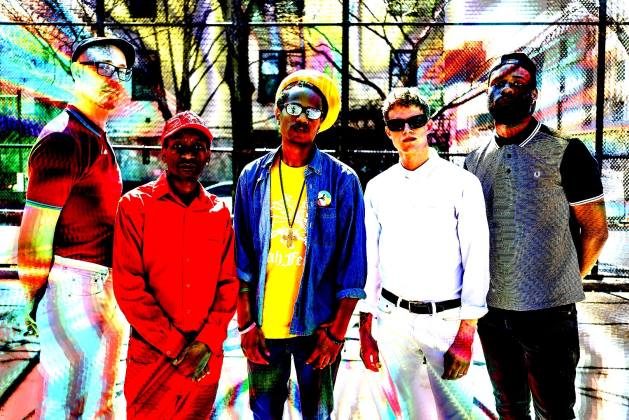
The members of Megative, with Gus van Go (far left).
Credit: Daviston Jeffers

PARIS, Sep 2 2020 (IPS) – Even as their income dries up and their touring opportunities disappear because of the Covid-19 pandemic, some artists are using their work to call out injustice, criticize inept leaders and spark social change.


The members of Megative – a Brooklyn-based, reggae-dub-punk collective – are among those aiming to fight negative global currents, and they’re doing so through edgy, scorching music.

“I think activism is the most important thing we have right now in 2020. It’s do or die right now for humanity. The injustice absolutely must end, and it will not end with silence,” says music producer Gus van Go, leader and co-founder of the group.

In a year of uncertainty and division, Megative stands out for its multicultural composition as well as its fusion of styles and thought-provoking lyrics. This past July, watching the incompetence of certain heads of state in the face of the pandemic, the group released the song The Lunatics Have Taken Over the Asylum, a cover of the Fun Boy Three hit from the early Eighties, combining dub and punk music.

The original was a critique of the Ronald Reagan-Margaret Thatcher era, and Megative thinks the track is just as pertinent in 2020, with the current presence of problematic leaders on both sides of the Atlantic.

“We still believe the message is important, and it’s almost more relevant now,” van Go told SWAN in a telephone interview from Montréal, Canada, where he grew up, and where he has a studio along with one in Brooklyn.

The group was due to take their songs on the road – scheduled to perform at “five or six festivals” in France, for instance – but the pandemic has caused all these events to be cancelled. The musicians now find themselves, like so many other artists, struggling to maintain an income and to keep their overall work going.

“I think Covid-19 is exposing something that I’ve always thought about in the music industry,” said van Go. “So much inequality. We’ve always had this one percent of artists who have been insanely rich … and the rest of us are working our asses off, in order to eke out a living.”

“The universe took away the one single piece of the pie that the artist still had. All of a sudden, nearly every single musician cannot make a cent. One day, the universe just said ‘no you cant have that’. There is no income for all these artists. You see how dangerous it is to have just one source of income? Do we not need music in this world?

He explained that with the massive decline in album sales over the past decade, musicians had turned to touring in order to “just barely make a living – travelling together in a shitty old van”. But now even that has dried up with the global health crisis.

“Covid has shone this giant light on it,” he added. “The universe took away the one single piece of the pie that the artist still had. All of a sudden, nearly every single musician cannot make a cent. One day, the universe just said ‘no you cant have that’. There is no income for all these artists. You see how dangerous it is to have just one source of income? Do we not need music in this world? What if Covid continues for two or three years, what if this goes on for multiple years?”

He said it’s time for artists to band together and demand change – in their industries, communities and countries. “Megative supports activism,” he declared.

Discussing the origins of the group, van Go said the idea for the collective grew out of an overnight drive from New Mexico to California that he took with fellow musician Tim Fletcher 10 years ago. There were only two CDS available in the car – Combat Rock by The Clash, and More Specials by the 2 Tone and ska revival band The Specials, both English. The sounds got van Go thinking about the “conscious lyrics” and the history of the musical styles and their influences.

“We have a love for Jamaican reggae and dub culture of the early Eighties with bands like Steel Pulse and The Clash. But reggae in North America, where we are from, is associated with vacation spots, coconut trees and irie vibes. We were lamenting the darker reggae of the early Eighties. Our Clash discussion morphed into how a reggae band would look in 2018,” he said.

Back in New York, they invited a producing-engineering duo called Likeminds and Jamaican MC Screechy Dan to join the conversation. The enthusiasm for the project was so strong that they recorded three songs which almost immediately led to a signing with Last Gang Records and the subsequent release of their debut album in summer 2018.

The collective now brings together disparate artists including the Grammy-nominated Likeminds (Chris Soper and Jesse Singer); Jamaican-born singer, MC and dancehall veteran Screechy Dan; singer-guitarist and punk rocker Alex Crow; percussionist-DJ-singer JonnyGo Figure; and the rising Brooklyn drummer Demetrius “Mech” Pass.

All the members have their own individual projects but contribute their respective skills to create the Megative sound – a fusion of UK-style punk, Jamaican dub and reggae, and American hip-hop. The music is a response to today’s world, to everything that’s happening including the “hyper-noise of incessant information”, according to the collective.

The overarching theme is existentialist angst amidst precarious conditions. Tracks such as Have Mercy, Bad Advice and More Time call upon listeners to take control and rely on their own sense of what’s right, with lyrics set against dub beats and a punk vibe, and skilful singing mixed with mindful rapping.

For van Go, born Gustavo Coriandoli in Argentina and raised in Canada, the historical alliance between punk and reggae was central to Megative’s formation. He recalls growing up in Montréal in the late 1980s and early 90s, when the “punk rock movement was taking hold” among the youth.

“The shows had trouble finding venues, so they always tried to rent space … and sometimes that would be at Jamaican community centres. All these punks would be at these shows, but also the Rastafarian community. So, dub music was playing. I was 16, had never heard dub, had never been been to a punk show, so it fused in my brain,” he told SWAN.

Similar congregations or collaborations in the UK had led singer Bob Marley to release Punky Reggae Party in 1977, a reflection of the bridging of cultural divides; and punk-dub pioneer Don Letts wrote about the movement in his 2006 autobiography Culture Clash: Dread Meets Punk Rockers.

“It’s all about social message – in punk and reggae, so they’re natural allies or they should be,” said van Go. “There’s a positivity but also a dark side. I love the energy that this creates, in punk and reggae and in early hiphop.”

When asked about Megative’s views on the current discussion around cultural appropriation in the arts, van Go answered: “This is an ongoing discussion with us, and we really encourage dialogue on the subject.” He added that the group takes a multicultural approach to creating music, as can be seen from their output so far.

Regarding the future of the collective, van Go said Megative planned to continue producing music with a cause, and to get back to touring when possible. They are currently “writing new material” but aren’t certain in which format(s) it will be released.

“Like nothing else can, I think music can definitely help heal,” van Go told SWAN. “We have to topple these terrible people who are in power right now. We have to find concrete ways to end systemic racism. Music has to play a part as it did in the Sixties. It needs to.”

  Source

Energy Cooperatives Swim Against the Tide in Mexico

Civil Society, Development & Aid, Economy & Trade, Editors’ Choice, Energy, Environment, Featured, Green Economy, Headlines, Integration and Development Brazilian-style, Latin America & the Caribbean, Projects, Regional Categories, TerraViva United Nations

Energy

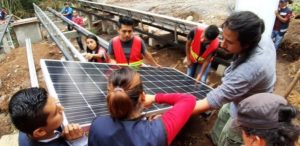
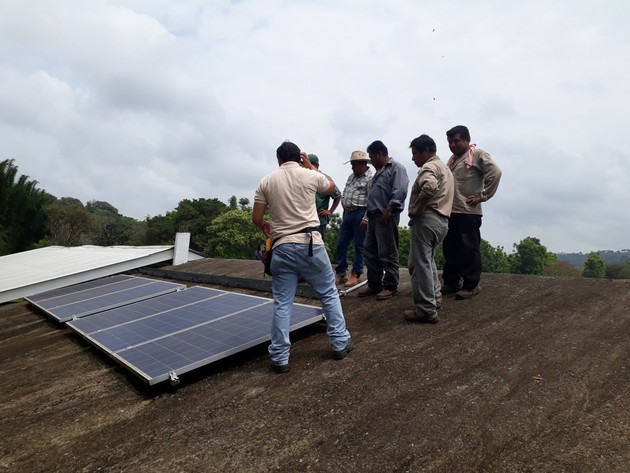
Onergia, one of the two energy cooperatives operating in Mexico today, installs photovoltaic systems, such as this one at the Tosepan Titataniske Union of Cooperatives in the municipality of Cuetzalan, in the southern state of Puebla. CREDIT: Courtesy of Onergia

Onergia, one of the two energy cooperatives operating in Mexico today, installs photovoltaic systems, such as this one at the Tosepan Titataniske Union of Cooperatives in the municipality of Cuetzalan, in the southern state of Puebla. CREDIT: Courtesy of Onergia

MEXICO CITY, Aug 31 2020 (IPS) – A Mexican solar energy cooperative, Onergia, seeks to promote decent employment, apply technological knowledge and promote alternatives that are less polluting than fossil fuels, in one of the alternative initiatives with which Mexico is seeking to move towards an energy transition.


“We organised ourselves in a cooperative for an energy transition that will rethink the forms of production, distribution and consumption to build a healthier and fairer world,” Onergia founding partner and project director Antonio Castillo told IPS. “In this sector, it has been more difficult; we have to invest in training and go against the logic of the market.”

The eight-member cooperative, created in 2017, has so far installed some 50 photovoltaic systems, mainly in the south-central state of Puebla.

“A public policy is needed that would allow us to move towards the transition. Getting people to adopt alternatives depends on public policy. It is fundamental for people to have the freedom to choose how to consume. It is our job to organise as consumers.” —
Antonio Castillo

Castillo explained by phone that the cooperative works with middle- and upper-class households that can finance the cost of the installation as well as with local communities keen on reducing their energy bill, offering more services and expanding access to energy.

In the case of local communities, the provision of solar energy is part of broader social projects in which the beneficiary organisations’ savings and loan cooperatives design the financial structure to carry out the work. A basic household system can cost more than 2,200 dollars and a larger one, over 22,000.

“The communities are motivated to adopt renewable energy as a strategy to defend the land against threats from mining or hydroelectric companies,” said Castillo. “They don’t need to be large-scale energy generators, because they already have the local supply covered. The objective is to provide the communities with alternatives.”

Onergia, a non-profit organisation, promotes distributed or decentralised generation.

In Mexico, energy cooperatives are a rarity. In fact, there are only two, due to legal, technical and financial barriers, even though the laws governing cooperatives recognise their potential role in energy among other diverse sectors. The other, Cooperativa LF del Centro, provides services in several states but is not a generator of electricity.

The Electricity Industry Law, in effect since 2014, allows the deployment of local projects smaller than one megawatt, but practically excludes them from the electricity auctions that the government had been organising since 2016 and that the administration of leftwing President Andrés Manuel López Obrador put a stop to after he took office in December 2018.

Since then, López Obrador has opted to fortify the state monopolies of the Federal Electricity Commission (CFE) and the Petróleos Mexicanos (Pemex) oil giant, which translates into favouring fossil fuels over renewable sources.

The National Electric System Development Programme 2018-2032 projects that fossil fuels will represent 67 percent of the energy mix in 2022; wind energy, 10 percent; hydroelectric, nine percent; solar, four percent; nuclear, three percent, and geothermal and bioenergy, four percent.

In 2032, the energy outlook will not vary much, as fossil fuels will account for 60 percent; wind, nuclear and geothermal energy will rise to 13, eight and three percent, respectively; hydroelectric power will drop to eight percent; while solar and bioenergy will remain the same.

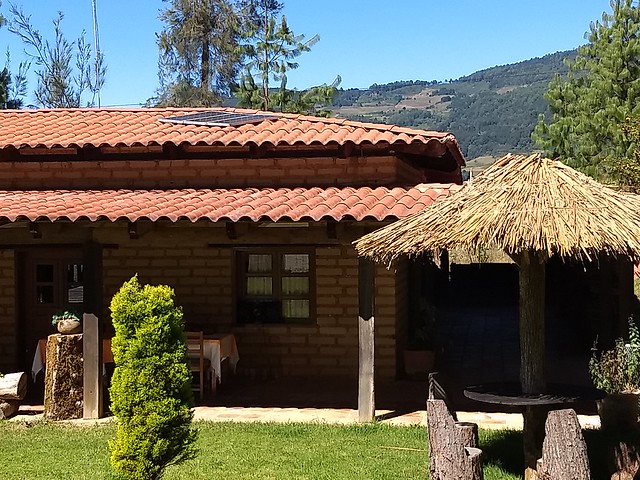
In Mexico, rural communities are guaranteeing their electricity supply by using clean sources, thus furthering the energy transition to micro and mini-scale generation. The photo shows the "Laatzi-Duu" ecotourism site (the name means "standing plain" in the Zapotec indigenous language) which is self-sufficient thanks to a solar panel installed on its roof, in the municipality of San Juan Evangelista Analco in the southern state of Oaxaca. CREDIT: Emilio Godoy/IPS

In Mexico, rural communities are guaranteeing their electricity supply by using clean sources, thus furthering the energy transition to micro and mini-scale generation. The photo shows the “Laatzi-Duu” ecotourism site (the name means “standing plain” in the Zapotec indigenous language) which is self-sufficient thanks to a solar panel installed on its roof, in the municipality of San Juan Evangelista Analco in the southern state of Oaxaca. CREDIT: Emilio Godoy/IPS

The government cancelled the call for long-term electric auctions that allowed private companies to build wind and solar plants and sell the energy to CFE. But these tenders privileged private Mexican and foreign capital and large-scale generation.

In a dialogue with IPS, independent researcher Carlos Tornel questioned the predominant energy design promoted by the 2013 reform that opened up the hydrocarbon and electricity markets to private capital, and the form of energy production based on passive consumers.

“We don’t have an effective legal framework to promote that kind of energy transition,” said the expert via WhatsApp from the northeast English city of Durham. “A free market model was pursued, which allowed the entry of megaprojects through auctions and allowed access to those who could offer a very low cost of generation, which could only be obtained on a large scale.”

With that strategy, he added, “small projects were left out. And the government did not put in place economic incentives to foment cooperative schemes.”

“We need a more active model focused on the collective good,” added Tornel, who is earning a PhD in Human Geography at Durham University in the UK.

Mexico, the second largest economy in Latin America with a population of 129 million, depends heavily on hydrocarbons and will continue to do so in the medium term if it does not accelerate the energy transition.

In the first quarter of 2019, gross generation totaled 80,225 gigawatt hours (Gwh), up from 78,167 in the same period last year. Gas-fired combined cycle plants (with two consecutive cycles, conventional turbine and steam) contributed 40,094, conventional thermoelectric 9,306, and coal-fired 6,265.

Hydroelectric power plants contributed 5,137 Gwh; wind fields 4,285; nuclear power plants 2,382; and solar stations 1,037.

The Energy Transition Law of 2015 stipulates that clean energy must meet 30 percent of demand by 2021 and 35 percent by 2024. By including hydropower and nuclear energy, the country will have no problem reaching these goals.

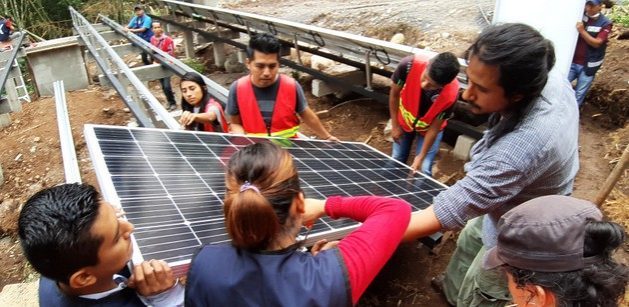
Residents of the small rural community of Amatlán, in the municipality of Zoquiapan in the state of Puebla, oversee the operation of photovoltaic panels installed by the Mexican cooperative Onergia. This type of cooperative can help rural communities in Mexico access clean energy, particularly solar power. CREDIT: Courtesy of Onergia

Residents of the small rural community of Amatlán, in the municipality of Zoquiapan in the state of Puebla, oversee the operation of photovoltaic panels installed by the Mexican cooperative Onergia. This type of cooperative can help rural communities in Mexico access clean energy, particularly solar power. CREDIT: Courtesy of Onergia

By early August, the government’s Energy Regulatory Commission (CRE) had granted 310 permits for solar generation, small-scale production and self-supply, totaling almost 22,000 Mw.

The 2017 report Renewable Energy Auctions and Participatory Citizen Projects, produced by the international non-governmental Renewable Energy Policy Network for the 21st Century (REN21), cites, with respect to Mexico, the obligation for investors to form self-sufficient companies, which complicates attempts to develop local ventures.

Onergia’s Castillo stressed the need for a clear and stable regulatory framework.

“A public policy is needed that would allow us to move towards the transition,” he said. “Getting people to adopt alternatives depends on public policy. It is fundamental for people to have the freedom to choose how to consume. It is our job to organise as consumers.”

Affected by the coronavirus pandemic, Onergia is reviewing the way it works and its financial needs to generate its own power supply. It also works with the Renewable Energies Institute of the National Autonomous University of Mexico in the design and installation of solar power systems.

In March, the government’s National Council for Science and Technology launched a strategic national programme on energy transition that will promote sustainable rural energy projects and community solar energy, to be implemented starting in 2021.

In addition, the energy ministry is set to announce the Special Energy Transition Programme 2019-2024.

But to protect the CFE, the CRE is blocking approval of the development of collective distributed generation schemes, which would allow citizens to sell surplus energy to other consumers, and the installation of storage systems in solar parks.

Tornel criticised the lack of real promotion of renewable sources.

“The Mexican government has been inconsistent in its handling of this issue,” he maintained. “They talk about guaranteeing energy security through hydrocarbons. There is no plan for an energy transition based on renewables or on supporting community projects. We have no indication that they support renewable, and that’s very worrying.”

The REN21 report recommends reserving a quota for participatory citizen projects and facilitating access to energy purchase agreements, which ensures the efficiency of tenders and the effectiveness of guaranteed tariffs for these undertakings.

In addition, it proposes the establishment of an authority for citizen projects, capacity building, promotion of community energy and specific national energy targets for these initiatives.

  Source

It is Time for a Democratic Global Revolution

Civil Society, Climate Change, Democracy, Editors’ Choice, Featured, Global, Global Governance, Headlines, Human Rights, IPS UN: Inside the Glasshouse, TerraViva United Nations

Opinion

Daniel Jositsch is a Member of the Swiss Senate and President, Democracy Without Borders-Switzerland, and Andreas Bummel is Executive Director, Democracy Without Borders. Twitter: @democracywb

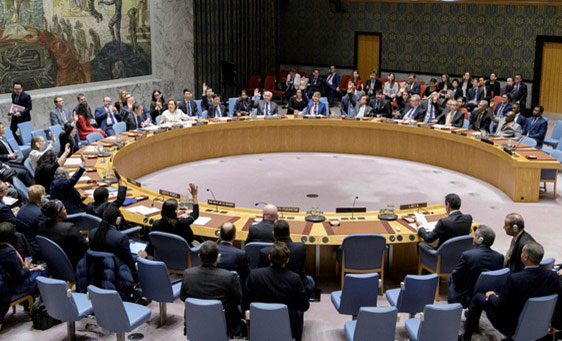
The UN’s Security Council, in particular, is suffering from a dysfunctional decision-making method that grants the five victors of the Second World War and official nuclear powers not only a permanent seat but also a veto right. Credit: United Nations

BERLIN / BERNE, Aug 28 2020 (IPS) – The people of the world need to seize the moment and bring about a democratic global revolution. It is time for a global parliament and real representation.

More than 21 million people got infected with the novel coronavirus and over 770,000 have died. Never before did the world witness similar collective lockdowns of social and economic activity that had to be enforced to contain the pandemic.


For many, the corona-related global crisis exacerbates a situation that was already critical before the outbreak of the virus.

The climate crisis is unfolding with record temperatures in Siberia, Greenland, the Antarctic and other places like the Middle East. The new climate apartheid is characterized by whether you can afford to shield yourself from such heat or not. Most cannot.

135 million people are facing crisis levels of hunger. There are currently more than 70 million displaced people who have fled war, persecution and conflict. It’s the worst humanitarian and refugee crisis in seventy years.

There is a global inequality crisis. Productivity gains and globalization disproportionately benefit the affluent. Financial assets in the trillions are hidden in offshore accounts from tax authorities. The world’s 26 richest billionaires own as much as the poorest 3.8 billion people on the planet.

While global surveys confirm that people across all world regions strongly believe in democracy, there is in fact a democratic retreat. Confidence in the actual performance of democratic governments is waning. Populist nationalism and authoritarianism has been advancing, aided and abetted by social media platforms and the internet. Major arms control treaties are crumbling, geopolitical tensions are rising and multilateralism is under attack.

Civil society and citizens across the world are fighting back, though. Pro-democracy movements are at an all-time high as widespread protests in dozens of countries now and in recent times demonstrate. Freedom and justice have lost no appeal. At the same time, millions of citizens joined climate protests around the world and called for quick and effective action in this critical field.

The present issues are symptoms of a crisis of global governance. There is a scale mismatch between a political world order that is based on 200 states and territories and issues that demand decisive global action.

As the UN celebrates its 75th anniversary this year, the organization continues to lose significance and impact. The UN is only as strong and effective as its member states allow it to be. The same applies to all intergovernmental organizations and forums, including the World Health Organization that had to launch an investigation into its handling of the Covid-19 pandemic.

The UN’s Security Council, in particular, is suffering from a dysfunctional decision-making method that grants the five victors of the Second World War and official nuclear powers not only a permanent seat but also a veto right.

If long-lasting solutions are to be achieved, this scale mismatch must be tackled. It is not enough to call on individual governments to change their policies. The way how the world is governed must be changed. What is needed is a new vision of a democratic world order that is based on shared sovereignty on global issues, a clear commitment to human rights, the principle of subsidiarity and complete disarmament.

When the UN was founded it was recognized that this should only be a beginning and that changes would be required. Article 109 of the Charter provides that a conference to review the Charter should be held by 1955. The UN’s member states did not deliver on that promise. Now is the time to hold them to account.

The world’s people need an actual say in global affairs that is not intermediated by national governments and their diplomats. The key ingredient of a new UN should be a democratically elected world parliament that complements intergovernmental bodies such as the UN General Assembly.

The creation of a new democratic world organization that has actual powers seems to be a gigantic project that raises numerous questions. How is a global democracy to be created while major states themselves are not democratically organised? Can decisions of a world parliament be enforced against the will of individual states? How is it possible that states will agree to the creation of a superior political unit?

These questions show the way forward: The people of the world themselves need to embrace and call for global democracy. Eventually, they are the sovereigns not only in their individual states but on the planet as a whole, too.

A global democratic revolution needs to push for a legitimate, inclusive and representative global body that will deal with these questions in a serious way. The creation of a UN Parliamentary Assembly could be an important stepping stone to launch a global constitutional process and a transformation of global governance.

This global democratic revolution will be peaceful because it is not about destroying structures or conquering territories, but about opening up a political level that is lying idle. Supranational integration cannot be imposed by force. It will happen because the people want it.

If existing movements in the fields of climate, environment, peace, disarmament, democracy, social justice and others join forces, the global democratic revolution will become very real.

This may sound visionary. But the big issues troubling this planet and its people will remain, and worsen, unless the root cause is addressed. A democratic global government is not a mind game in some ivory tower. It is the most important question on the agenda of humanity today.

  Source

Semiarid Regions of Latin America Cooperate to Adapt to Climate

Civil Society, Combating Desertification and Drought, Development & Aid, Economy & Trade, Editors’ Choice, Environment, Featured, Food & Agriculture, Green Economy, Headlines, Integration and Development Brazilian-style, Latin America & the Caribbean, Projects, Regional Categories, South-South, TerraViva United Nations, Water & Sanitation

Combating Desertification and Drought

A rural settlement in the state of Pernambuco, in Brazil's semiarid ecoregion. Tanks that collect rainwater from rooftops for drinking water and household usage have changed life in this parched land, where 1.1 million 16,000-litre tanks have been installed so far. CREDIT: Mario Osava/IPS

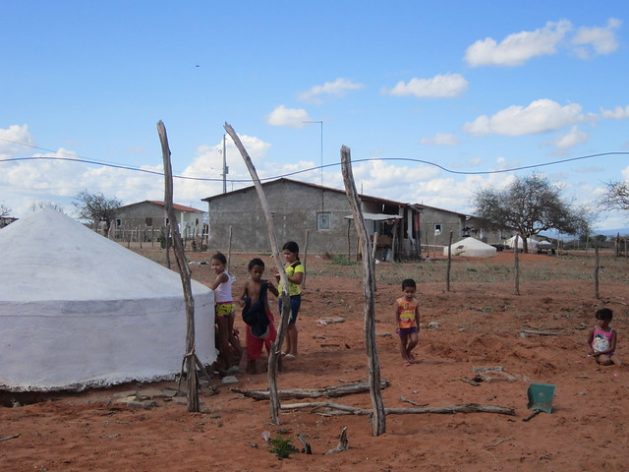
A rural settlement in the state of Pernambuco, in Brazil’s semiarid ecoregion. Tanks that collect rainwater from rooftops for drinking water and household usage have changed life in this parched land, where 1.1 million 16,000-litre tanks have been installed so far. CREDIT: Mario Osava/IPS

RIO DE JANEIRO, Aug 27 2020 (IPS) – After centuries of poverty, marginalisation from national development policies and a lack of support for positive local practices and projects, the semiarid regions of Latin America are preparing to forge their own agricultural paths by sharing knowledge, in a new and unprecedented initiative.


In Brazil’s semiarid Northeast, the Gran Chaco Americano, which is shared by Argentina, Bolivia and Paraguay, and the Central American Dry Corridor (CADC), successful local practices will be identified, evaluated and documented to support the design of policies that promote climate change-resilient agriculture in the three ecoregions.

This is the objective of DAKI-Semiárido Vivo, an initiative financed by the United Nations International Fund for Agricultural Development (IFAD) and implemented by the Brazilian Semiarid Articulation (ASA), the Argentinean Foundation for Development in Justice and Peace (Fundapaz) and the National Development Foundation (Funde) of El Salvador.

DAKI stands for Dryland Adaptation Knowledge Initiative.

The project, launched on Aug. 18 in a special webinar where some of its creators were speakers, will last four years and involve 2,000 people, including public officials, rural extension agents, researchers and small farmers. Indirectly, 6,000 people will benefit from the training.

“The aim is to incorporate public officials from this field with the intention to influence the government’s actions,” said Antonio Barbosa, coordinator of DAKI-Semiárido Vivo and one of the leaders of the Brazilian organisation ASA.

The idea is to promote programmes that could benefit the three semiarid regions, which are home to at least 37 million people – more than the total populations of Chile, Ecuador and Peru combined.

The residents of semiarid regions, especially those who live in rural areas, face water scarcity aggravated by climate change, which affects their food security and quality of life.

Zulema Burneo, International Land Coalition coordinator for Latin America and the Caribbean and moderator of the webinar that launched the project, stressed that the initiative was aimed at “amplifying and strengthening” isolated efforts and a few longstanding collectives working on practices to improve life in semiarid areas.

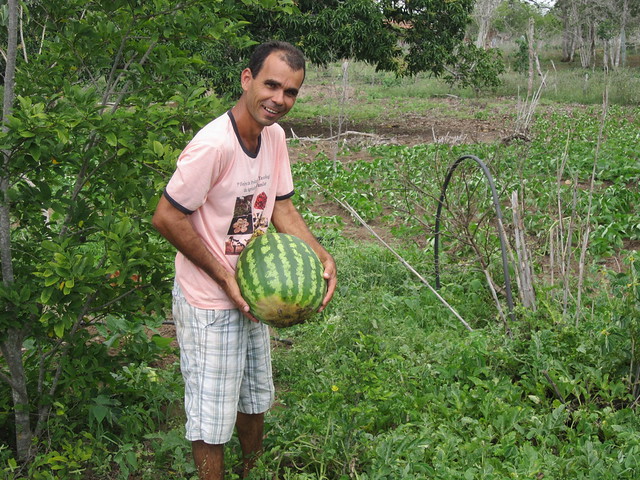
Abel Manto, an inventor of technologies that he uses on his small farm in the state of Bahia, in Brazil's semiarid ecoregion, holds up a watermelon while standing among the bean crop he is growing on top of an underground dam. The soil is on a waterproof plastic tarp that keeps near the surface the water that is retained by an underground dam. CREDIT: Mario Osava/IPS

Abel Manto, an inventor of technologies that he uses on his small farm in the state of Bahia, in Brazil’s semiarid ecoregion, holds up a watermelon while standing among the bean crop he is growing on top of an underground dam. The soil is on a waterproof plastic tarp that keeps near the surface the water that is retained by an underground dam. CREDIT: Mario Osava/IPS

The practices that represent the best knowledge of living in the drylands will be selected not so much for their technical aspects, but for the results achieved in terms of economic, ecological and social development, Barbosa explained to IPS in a telephone interview from the northeastern Brazilian city of Recife, where the headquarters of ASA are located.

After the process of systematisation of the best practices in each region is completed, harnessing traditional knowledge through exchanges between technicians and farmers, the next step will be “to build a methodology and the pedagogical content to be used in the training,” he said.

One result will be a platform for distance learning. The Federal Rural University of Pernambuco, also in Recife, will help with this.

Decentralised family or community water supply infrastructure, developed and disseminated by ASA, a network of 3,000 social organisations scattered throughout the Brazilian Northeast, is a key experience in this process.

In the 1.03 million square kilometres of drylands where 22 million Brazilians live, 38 percent in rural areas according to the 2010 census, 1.1 million rainwater harvesting tanks have been built so far for human consumption.

An estimated 350,000 more are needed to bring water to the entire rural population in the semiarid Northeast, said Barbosa.

But the most important aspect for agricultural development involves eight “technologies” for obtaining and storing water for crops and livestock. ASA, created in 1999, has helped install this infrastructure on 205,000 farms for this purpose and estimates that another 800 peasant families still need it.

There are farms that are too small to install the infrastructure, or that have other limitations, said Barbosa, who coordinates ASA’s One Land and Two Waters and native seed programmes.

The “calçadão” technique, where water runs down a sloping concrete terrace or even a road into a tank that has a capacity to hold 52,000 litres, is the most widely used system for irrigating vegetables.

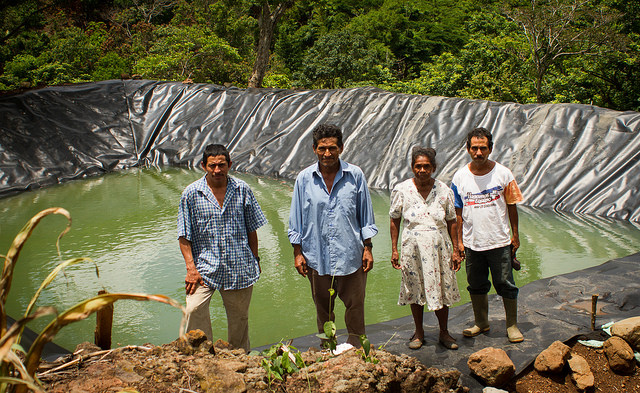
A group of peasant farmers from El Salvador stand in front of one of the two rainwater tanks built in their village, La Colmena, in the municipality of Candelaria de la Frontera. The pond is part of a climate change adaptation project in the Central American Dry Corridor. Central American farmers like these and others from Brazil's semiarid Northeast have exchanged experiences on solutions for living with lengthy droughts. CREDIT: Edgardo Ayala/IPS

A group of peasant farmers from El Salvador stand in front of one of the two rainwater tanks built in their village, La Colmena, in the municipality of Candelaria de la Frontera. The pond is part of a climate change adaptation project in the Central American Dry Corridor. Central American farmers like these and others from Brazil’s semiarid Northeast have exchanged experiences on solutions for living with lengthy droughts. CREDIT: Edgardo Ayala/IPS

And in Argentina’s Chaco region, 16,000-litre drinking water tanks are mushrooming.

But tanks for intensive and small farming irrigation are not suitable for the dry Chaco, where livestock is raised on large estates of hundreds of hectares, said Gabriel Seghezzo, executive director of Fundapaz, in an interview by phone with IPS from the city of Salta, capital of the province of the same name, one of those that make up Argentina’s Gran Chaco region.

“Here we need dams in the natural shallows and very deep wells; we have a serious water problem,” he said. “The groundwater is generally of poor quality, very salty or very deep.”

First, peasants and indigenous people face the problem of formalising ownership of their land, due to the lack of land titles. Then comes the challenge of access to water, both for household consumption and agricultural production.

“In some cases there is the possibility of diverting rivers. The Bermejo River overflows up to 60 km from its bed,” he said.

Currently there is an intense local drought, which seems to indicate a deterioration of the climate, urgently requiring adaptation and mitigation responses.

Reforestation and silvopastoral systems are good alternatives, in an area where deforestation is “the main conflict, due to the pressure of the advance of soy and corn monoculture and corporate cattle farming,” he said.

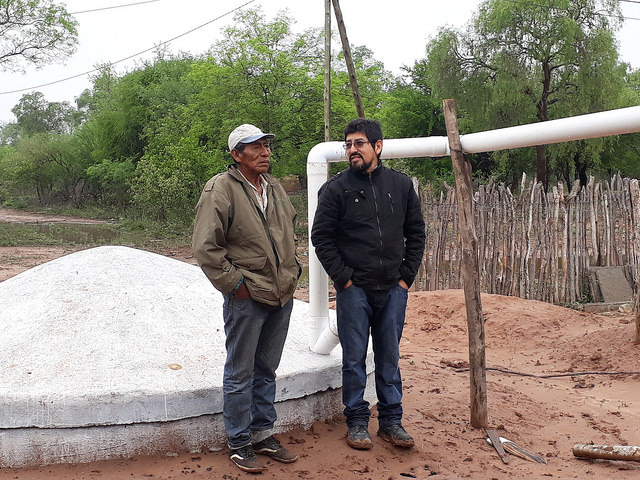
Mariano Barraza of the Wichí indigenous community (L) and Enzo Romero, a technician from the Fundapaz organisation, stand next to the tank built to store rainwater in an indigenous community in the province of Salta, in the Chaco ecoregion of northern Argentina, where there are six months of drought every year. CREDIT: Daniel Gutman/IPS

Mariano Barraza of the Wichí indigenous community (L) and Enzo Romero, a technician from the Fundapaz organisation, stand next to the tank built to store rainwater in an indigenous community in the province of Salta, in the Chaco ecoregion of northern Argentina, where there are six months of drought every year. CREDIT: Daniel Gutman/IPS

More forests would be beneficial for the water, reducing evaporation that is intense due to the heat and hot wind, he added.

Of the “technologies” developed in Brazil, one of the most useful for other semiarid regions is the “underground dam,” Claus Reiner, manager of IFAD programmes in Brazil, told IPS by phone from Brasilia.

The underground dam keeps the surrounding soil moist. It requires a certain amount of work to dig a long, deep trench along the drainage route of rainwater, where a plastic tarp is placed vertically, causing the water to pool during rainy periods. A location is chosen where the natural layer makes the dam impermeable from below.

This principle is important for the Central American Dry Corridor, where “the great challenge is how to infiltrate rainwater into the soil, in addition to collecting it for irrigation and human consumption,” said Ismael Merlos of El Salvador, founder of Funde and director of its Territorial Development Area.

The CADC, which cuts north to south through Guatemala, Honduras and El Salvador, is defined not as semiarid, but as a sub-humid region, because it rains slightly more there, although in an increasingly irregular manner.

Some solutions are not viable because “75 percent of the farming areas in the Corridor are sloping land, unprotected by organic material, which makes the water run off more quickly into the rivers,” Merlos told IPS by phone from San Salvador.

“In addition, the large irrigation systems that we’re familiar with are not accessible for the poor because of their high cost and the expensive energy for the extraction and pumping of water, from declining sources,” he said.

The most viable alternative, he added, is making better use of rainwater, by building tanks, or through techniques to retain moisture in the soil, such as reforestation and leaving straw and other harvest waste on the ground rather than burning it as peasant farmers continue to do.

“Harmful weather events, which four decades ago occurred one to three times a year, now happen 10 or more times a year, and their effects are more severe in the Dry Zone,” Merlos pointed out.

Funde is a Salvadoran centre for development research and policy formulation that together with Fundapaz, four Brazilian organisations forming part of the ASA network and seven other Latin American groups had been cooperating since 2013, when they created the Latin American Semiarid Platform.

The Platform paved the way for the DAKI-Semiárido Vivo which, using 78 percent of its two million dollar budget, opened up new horizons for synergy among Latin America’s semiarid ecoregions. To this end, said Burneo, it should create a virtuous alliance of “good practices and public policies.”

  Source

The Growing Global Movement to End Outdoor Advertising

Civil Society, Economy & Trade, Headlines

Civil Society

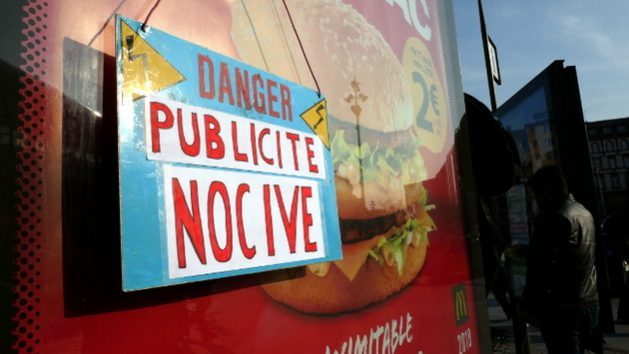
The movement to end outdoor advertising is loud in France, but it has roots further afield. In 2006, São Paulo became the first place in the world to ban outdoor advertising. Then mayor Gilberto Kassab described it as ‘visual pollution’. Within a year, 15,000 billboards were down, along with 300,000 large store signs, in south America’s largest megacity. Cities in India including New Delhi, Mumbai and Chennai have all restricted outdoor advertising

Credit: RAP

LONDON, Aug 11 2020 (IPS) – “With advertisements removed in Grenoble you can see the city’s beauty and the mountains beyond. Adverts create obstacles. Without them you can breathe,” explains Khaled Gaiji, national mobilisation coordinator of the French anti-advertising organisation Résistance à l’Agression Publicitaire (Resistance to Advertising Aggression, or RAP). “Advertising is like an iceberg: the largest impact is below the surface. Adverts colonise our imagination.”


In 2014 Grenoble’s then newly-appointed Green mayor Éric Piolle cancelled a contract for 326 outdoor advertisements, including 64 large billboards. Trees and community noticeboards replaced them – or nothing at all. The lost revenue was recouped by reducing allowances, including official vehicles. Despite Piolle’s attempts to make Grenoble Europe’s first ad-free city, bus and tram stops still have adverts, as the contract is controlled by the regional authority.

But that hasn’t stopped the ad-free fervour from spreading across France. There are 29 RAP groups across the country, up from five in 2016. They work autonomously with tactics including pressuring politicians like the mayor of Paris, Anne Hidalgo, who paused plans for new digital advertising boards on the city’s streets. To halt this RAP encouraged people to participate in a public consultation.

Ninety-five per cent of over 2000 participants were against the new digital ads. Their reasons speak to why people are resisting outdoor advertising the world over: their negative ecological impact, including the way they drive consumption, as well as the fact that they are invasive, obtrusive and omnipresent.

Outdoor adverts are not consensual: “I can avoid ads in magazines or online. But if I’m walking my baby to the park or if I just want some quiet time outside, I don’t want to be told to buy fast food, fast fashion or cars. However, I can’t avoid these ads on billboards.”

Nationally, RAP co-organised a petition, with other organisations, which collected 60,000 signatures that pressured then finance minister Emmanuel Macron, in 2016, to stop plans to spread advertisements across France’s small towns and villages. In Lyon, 150 activists from RAP protested in March 2018 and 2019 in support of global anti-advertising action, while in October 2019 200 activists marched there in solidarity with ‘Alex’, a RAP participant who went to court for his part in covering advertising spaces in posters. His case is adjourned until June 2020.

Gaiji, who is also president of Friends of the Earth France, says: “Grenoble stopping the advance of advertisements shows that we have a choice. It is like when people ask what has 50 years of environmental activism achieved? But imagine how bad thing would be if [we hadn’t done anything]. We say: ‘Action is life, silence is death’”.

The anti-advertising movement is loud in France, but it has roots further afield. In 2006, São Paulo became the first place in the world to ban outdoor advertising. Then mayor Gilberto Kassab described it as ‘visual pollution’. Within a year, 15,000 billboards were down, along with 300,000 large store signs, in south America’s largest megacity. Cities in India including New Delhi, Mumbai and Chennai have all restricted outdoor advertising. For ten days in 2015, Tehran replaced all advertising with art.

Britain’s anti-advertising clamour rises

The south-west English city of Bristol hosted the UK’s first national anti-advertising conference on 26 October 2019. Organised by Adblock Bristol, it attracted people from across the British Isles, including members of Adblock Cardiff, which was set up in Wales last year. Attendees from the UK’s second largest city of Birmingham set up their own group after the conference.

“Our big focus is challenging new planning applications for digital billboards, where the industry is expanding. Working with local communities we have stopped 18 new digital screens in Bristol and have successfully lobbied to have some old static billboards removed,” explains Nicola Round from Adblock Bristol.

Round explains that outdoor adverts are not consensual: “I can avoid ads in magazines or online. But if I’m walking my baby to the park or if I just want some quiet time outside, I don’t want to be told to buy fast food, fast fashion or cars. However, I can’t avoid these ads on billboards.”

The conference showcased other successes: lobbying against Bristol council’s plans to extend advertising into green spaces; working with local communities and art projects to showcase alternatives and covering adverts with paper for a day to let people express themselves.

One workshop explored how advertising drives sexism. “Advertising featuring sexualised images of perfect bodies not only encourages us to objectify and dehumanise the women pictured, it trains us to objectify all women,” Sophie Pritchard who co-ran the workshop explains. She is from TIGER (Teaching Individuals Gender Equality and Respect), a local grassroots co-operative working with young people.

“Advertising often presents women as submissive, as possessions to fulfil the needs of men, and men are shown as strong and dominant. These are the core beliefs underpinning domestic abuse,” Pritchard explains, citing numerous studies that have shown that way in which sexualised advertising drives body shaming, mental health problems and misogyny.

Selling unhappiness

The public relations industry stands accused of driving other prejudice. One advert in Thailand linking success with lighter skin was withdrawn after public backlash against racism. Similar public condemnation forced German cosmetic giant Nivea to stop a campaign selling skin lightening products in west Africa.

Overall, swathes of studies link advertising with selling unhappiness, making us want things we do not need. Fighting against this, different campaigns worldwide focus on limiting specific adverts. Singapore has banned unhealthy food and drinks promotion, including on billboards, going further than similar moves in Mexico, the United Kingdom and Canada. Paris in March 2017 followed Geneva and London to ban sexist and homophobic adverts. In 2005, World Health Organization rules banned all tobacco advertising for its 168 signatories; but investigative research by the Guardian shows that big tobacco still targets children in at least 23 countries of the Global South.

The climate emergency also amplifies another argument against advertising.

“Bristol was the first UK council to declare a climate emergency, so it makes no sense to then install new digital advert screens,” Round explains. “We know from planning applications that a double-sided digital bus advertisement uses the same annual energy as four households. So imagine the big ones, let alone the environmental impact of the over-consumption encouraged by these advertising boards.”

Adblock Bristol has mapped how advertisers target the city’s major roads, noting that areas with the most billboards suffer the highest air pollution. Anti-advert campaigners also want to raise broader questions about environmental justice: why should impoverished areas suffering the worst air pollution – largely due to traffic – host adverts for cars out of the price range of many local people? In the end, selling more cars to motorists stuck in traffic jams only worsens air quality and the climate disaster.

Reclaiming the public visual realm

The Bristol conference featured a ‘subvertising’ workshop – a term that refers to replacing or altering billboard images with art. Early subvertising campaigns started as early as 1973 in Australia, focusing on tobacco. More recently, carbon intense industries have been targeted, including adding cigarette-style warnings to car adverts.

“We set out to subvert the dominant narrative forced onto us by corporate advertising. It is important to reclaim the public visual realm – especially when we are being straight up lied to, as is the case with widely used greenwashing,” explains Michelle Tylicki, an artist who has collaborated with subvertisers.

Her work has included making a spoof film poster about the UK fracking firm Cuadrilla – in the style of the horror movie Godzilla. Fracking in the UK has now been suspended following years of pressure from campaigners.

Tylicki also made a poster series that was displayed during 2018’s climate negotiations in Poland. “[It was] to challenge the greenwashing and ‘business as usual’. At this summit it was decided that they will ignore the key 1.5 degrees IPCC report. This shouldn’t come as a surprise considering the ‘climate summit’ was sponsored by Polish coal companies.”

During the summit, the right to protest was severely restricted. One of her billboards (in Polish) read: “Belchatow power station emits more CO2 than is absorbed by all Polish forests. Poland, business as usual. High time for climate justice.”

She tells Equal Times: “Coal still provides 1/3 of electric power in the world. Current CO2 emissions cause 45,000 premature deaths in Poland each year. It is a beastly industry that will continue to walk over dead bodies for profit – unless we challenge it.”

The subvertising movement aims to end the monopoly corporations increasingly have over public space. It organises skill-shares so that more people can democratise their cities and towns.

One reported impact of removing billboards in São Paulo was that it revealed vistas of the impoverished areas that existed behind them. Anti-advertising projects around the world tend to focus on valuing these areas rather than dismissing them as mere ‘slums’. These projects also help us imagine how all cities could be without adverts.

In Mumbai, the NGO Chal Rang De (Let’s Go Paint) has painted houses made from corrugated iron in bright colours. Similarly, the council in Medellín, Columbia’s second city, has transformed severely impoverished neighbourhoods, suffering violence from the drugs trade, by daubing the walls with murals and providing amenities, services and hope. Likewise, in Ghanaian capital city of Accra, artist Mohammed Awudu is guiding young people to turn the informal settlement of Nima into an art city.

Round chaired the conference’s closing session on what should replace corporate advertisements. This, she says, should be up to the local communities. “In Bristol some say more art, like the Burg Arts Project, a rolling series of art by local artists and the local community. Primarily we would like to see advertising gone, perhaps to reveal beautiful buildings. Other communities might want to plant and rewild, or paint murals. There are many ways communities could take this.”

This story was originally published by Equal Times

  Source