Coronavirus Threatens to Wreck Nuclear Review Conference

Armed Conflicts, Civil Society, Featured, Global, Global Geopolitics, Global Governance, Headlines, IPS UN: Inside the Glasshouse, Nuclear Energy – Nuclear Weapons, Peace, TerraViva United Nations

An increasing number of New Yorkers appear to have started wearing face masks as a precaution against the coronavirus. The city recorded its first case 1 March. Credit: UN Photo/Loey Felipe

UNITED NATIONS, Mar 4 2020 (IPS) – First, it was the ill-fated annual sessions of the UN Commission on the Status of Women (CSW), scheduled for March 9-20, which was undermined by the spreading coronavirus COVID-19.


Now comes a second potential casualty—the upcoming month-long (27 April-22 May) Review Conference of the Treaty on Non-Proliferation of Nuclear Weapons (NPT) which may be upstaged by the deadly virus.

The landmark treaty— which represents the only binding multilateral commitment to the goal of disarmament by the world’s nuclear-weapon States—would also mark its 50th anniversary this year.

But a lingering question remains: will the Review Conference be either postponed, cancelled or held under restrictive conditions–even as the Trump administration plans to deny entry visas to visitors, and by extension delegates, from heavily-infected countries, including China, Japan, South Korea, Iran, Italy and the Philippines, among others.

The 10-day CSW meeting, one of the key annual gatherings of women, was shrunk to a one-day event, scheduled for March 9 — because of the fast-spreading coronavirus—which would have shut off most of the approximately 8,000-9,000 participants from overseas.

“The 50-year old NPT is threatening the world with an even worse illness than the new terrifying coronavirus,” one anti-nuclear activist warned.

According to the United Nations, the Treaty, particularly article VIII, paragraph 3, envisages a review of the operation of the Treaty every five years, a provision which was reaffirmed by the States parties at the 1995 NPT Review and Extension Conference and the 2000 NPT Review Conference.

John Burroughs, Executive Director, Lawyers Committee on Nuclear Policy, New York City, told IPS that aside from whether protection of health warrants a postponement of the Review Conference, delay could be good for the non-proliferation/disarmament regime.

Right now, the United States, Russia, and China have nothing to offer in the way of nuclear arms reductions, actual or prospective, he argued.
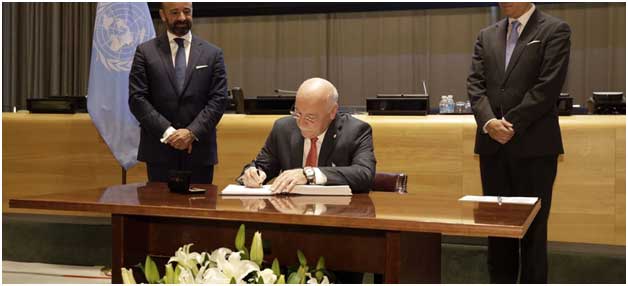
Signing ceremony at UN Headquarters in New York for the Treaty on the Prohibition of Nuclear Weapons, 20 September 2017. Credit: UN Photo/Paulo Filgueiras

“This is despite the commitments they made, along with the United Kingdom and France, at the 2010 Review Conference, “to undertake further efforts to reduce and ultimately eliminate all types of nuclear weapons”.

The failure to fulfill this and other commitments made at the 1995, 2000, and 2010 conferences is the single most important factor casting a pall over the upcoming conference and making a consensus substantive outcome unlikely, warned Burroughs.

Dr Rebecca Johnson, Director, Acronym Institute for Disarmament and Diplomacy, who has reported on every NPT meeting since 1994, told IPS “the COVID-19 coronavirus spreads quickly, so on grounds of public health, we all need to limit physical meetings and travel.”

“On those grounds, I think it would probably be prudent to postpone the NPT Review Conference to a time when we have a clearer idea of the COVID-19 impacts and there is greater capacity to deal with it’.

If this is to be their decision, she noted, the UN and NPT states need to make it sooner rather than later, as a lot of people — myself included — have already booked travel and accommodation in New York.

“I would not support any proposals to “limit” the NPT Review Conference as this would likely be used to restrict the full participation of civil society and many delegations who do not have their nuclear experts based in New York”.

Dr Johnson said the postponement of the Review Conference to 2021 should not be a political problem for the NPT and non-proliferation regime, and may even turn out to be advantageous for the health of the NPT.

“This year, there are deep concerns that toxic political relations between several nuclear-armed or significant NPT States Parties will cause the NPT Review Conference to fail, the third time since 2015. There may be better prospects for a positive NPT outcome in 2021, though of course nothing is certain in life or politics!”

She added: “If held in 2021, it would be sensible to choose the most practical NPT-related city, whether Vienna, Geneva or New York.”

Burroughs said it is conceivable that the picture will be better by the end of 2020. He said Reuters reports that on February 28, a senior US administration official said that President Trump is willing to hold a summit of the five NPT nuclear weapon states to discuss arms control.

“While China maintains that it will not join trilateral arms control negotiations due to the vast disparity between its nuclear forces and those of the United States and Russia, it has said that it would discuss “strategic security” issues in a five-power format”.

China’s position that it will not engage in arms controls talks should be challenged. Negotiators can be creative, he said.

One can imagine, for example, addressing intermediate- and short-range missiles, most conventionally armed, fielded in its region by China, as well as US and Russian actual and planned deployments of such missiles, Burroughs said.

“Or China’s long-range nuclear forces could be capped while US and Russian reductions proceed. More ambitiously, the five NPT nuclear weapon states could launch negotiations on global elimination of nuclear arsenals and invite non-NPT nuclear-armed states and perhaps other states to join”.

The five NPT nuclear weapons states are the US, UK, China, Russia and France – all veto-wielding permanent members of the UN Security Council– while the four non-NPT nuclear armed states are India, Pakistan, Israel and North Korea.

https://www.reuters.com/article/us-usa-trump-russia-summit-idUSKCN20M3CJ
https://www.fmprc.gov.cn/mfa_eng/wjbxw/t1746174.shtml

Dr M. V. Ramana, Professor and Simons Chair in Disarmament, Global and Human Security, and Director, Liu Institute for Global Issues, at the School of Public Policy and Global Affairs, University of British Columbia, told IPS “I think there is a good case to postpone the Review Conference”.

“At this point, we don’t know how the coronavirus infections will spread — and bringing together a large number of people from different countries to one building definitely contributes a level of risk”.

Further, he said, there will be the additional uncertainty imposed by the Trump administration’s plans to block people from various countries with high levels of infections. Some of those countries, China and Iran, are central to the future of the NPT.

The writer can be contacted at thalifdeen@aol.com
  Source

It is Time for Action! Uniting for Africa’s Transformation

Civil Society, Development & Aid, Editors’ Choice, Featured, Gender, Global, Global Governance, Headlines, IPS UN: Inside the Glasshouse, Regional Categories, TerraViva United Nations

Opinion

This article is part of special IPS coverage of International Women’s Day on March 8 2020


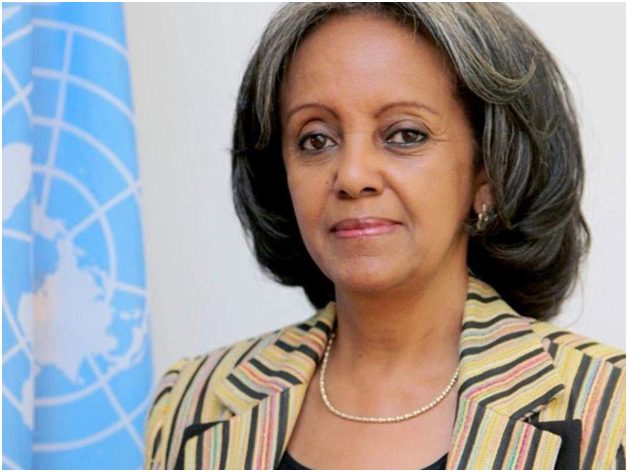
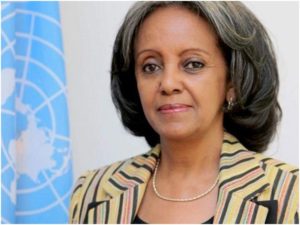
Sahle-Work Zewde, is President of the Federal Democratic Republic of Ethiopia, and Phumzile Mlambo-Ngcuka, is Executive Director of UN Women

Sahle-Work Zewde, President of the Federal Democratic Republic of Ethiopia

UNITED NATIONS, Mar 3 2020 (IPS) – Twenty-five years ago, thousands of representatives adopted the Beijing Declaration, one of the most progressive universal agreement to advance women’s rights.


The Beijing Declaration built on the human rights inscribed in the Convention for the Elimination of Discrimination Against Women (CEDAW), adopted by the UN General Assembly in 1979, whose articles 7 and 8 clearly states the need for removing all discriminations preventing women from leadership.

On September 1995, the Beijing Platform of Action took full ownership of the human rights agenda initially contained in CEDAW, advanced women’s rights and strongly reaffirmed the universal commitment to women’s power and leadership. Women took ownership of the human rights agenda and redefined it to ensure that gender equality and women’s empowerment would be at its core.

At the time, world leaders committed to the extraordinary Platform for Action with tangible and ambitious commitments in strategic areas, from peace to development, and designed roadmaps to get us there.

Since 1995, the world continued the march to make the world more gender equal and to enhance women’s leadership and participation in peace, security and development processes.

In 2000, following decades of advocacy led by women civil society organizations and women human rights activists, the United Nations Security Council adopted resolution 1325, the global commitment to ensure that women are systematically and sustainably integrated into peace and security processes.

The international community furthered the women, peace and security agenda in 2009 by recognizing the harmful impact of sexual violence in conflict on women and communities, making this scourge punishable under International Human Rights Law and International Criminal Law.

In the last twenty-five years, African women have made substantive progress in political, economic and social arenas but also have faced numerous constraints.

Phumzile Mlambo-Ngcuka

The positive picture reflects enhanced political and legislative leadership to ensure that women do have a seat at the table of key decision-making processes.

Today, Rwanda has the highest percentage of women members of parliament in the world: 61%. Namibia, Senegal and South Africa follow closely with at least over 40% of women holding seats in Parliament.

Ethiopia not only made great strides by electing its first female President in October 2018, but Prime Minister Abiy Ahmed also raised the bar high for national governments by ensuring a gender equal cabinet with 50% of its members being women.

Across Africa, women have taken the seat at the top table, including President Ellen Johnson Sirleaf of Liberia, President Joyce Banda of Malawi, President Catherine Samba-Panza of the Central African Republic and President Ameenah Gurib-Fakim of Mauritius.

More women are being elected in public office or appointed to ministerial positions. These changes have not happened by coincidence but as the result of deliberate policy decisions and grassroots action.

In many cases, this transformation was realized through hard-fought constitutional amendments and parity legislation aimed at reserving the necessary space for women and youth.

At continental level, the African Union has developed an extensive and progressive body of legal instruments as well as innovative solutions and platforms in its various thematic areas of work. The years 2010-2020 marked the African Women’s Decade.

The AU Strategy for Gender Equality & Women’s Empowerment (2018 – 2028) is informed by global standards that include instruments like the Convention on the Elimination of all Forms of Discrimination Against Women (CEDAW) and the Sustainable Development Goals (SDGs – whose Goal 5 is on “Gender Equality”).

Other human rights instruments of the African Union such as the African Charter on Human and People’s Rights consider women’s rights as an integral component of the key rights. The AU has appointed Heads of State as champions and leaders to push for implementation of commitments under various thematic areas of the work of the Union.

Despite these great achievements, we must admit that the world – and we as leaders – did not keep our promise to ensure that every woman and girl, wherever she may live, could be assured to enjoy her full human rights reach her full potential.

The reality is that we have failed women and girls. Some of the best minds remain excluded because we failed to provide access to education to all women and girls. Many of the potential pillars of our societies remain marginalized because we failed to properly address and eradicate gender inequality and violence against women.

Our continent is lagging behind in creating the peaceful and developed societies we seek to realize, in part, because we failed to offer women and girls the necessary opportunities and tools, which would allow them to thrive and be full contributors.

And despite the elections of some women to high and highest offices, and existing legislative and legal frameworks, by and large, across Africa women are still struggling to gain a seat at the decision-making table or in peace and security processes.

Despite the existing evidence revealing that gender perspective drives the sustainability of peace and security processes, there is still a blunt implementation gap in terms of ensuring women’s participation in peace processes.

The evidence is staggering, with women constituting about 4% of signatories of peace agreements, 2.4% of chief mediators, 3.7% of witnesses or observers to peace negotiations, and 9% of negotiation team members. . Today, Africa currently counts one female Head of State (Ethiopia), four Vice-Presidents (The Gambia, Liberia, Tanzania, Zambia) one Prime Minister (Namibia).

This stark reality is a daily reminder that we cannot slow down our efforts. We must accelerate our efforts against the pushbacks. Women’s meaningful participation and leadership are crucial in the effective functioning and sustainability of our communities and our world.

To achieve this, a top-down approach is not sustainable to build the necessary transformative change. If the promise made is to be delivered, women and youth must be front and center and the drivers of the positive change we all aspire.

In this spirit, on 2 June 2017 African women leaders – I among them – came together as a movement to launch the African Women Leaders Network (AWLN) and its Call to Action, backed by the African Union and the United Nations through UN Women.

Our Network aims to advance, train and support female leaders across sectors and generations in Africa. The AWLN is pushing for policies and programmes that empower and enable women on the continent across the political, economic and humanitarian fields to reach their full potential.

Since June 2017, the African Women Leaders Network has achieved key milestones, from bolstering the voices of African women leaders across generations on the ground to enhancing their participation and leadership in key decision-making processes.

The Network committed to push and deliver on the commitments made in UN Security Council resolution 1325 by October 2020, its 20th anniversary and to be in solidarity with the women and communities in conflict and post-conflict situations throughout Africa.

Since 2017, the AWLN conducted joint UN-AU solidarity missions to revitalize women’s participation and leadership in peace, security and development in Cameroon, Chad, the Democratic Republic of the Congo, Djibouti, Ethiopia, Eritrea, Niger Nigeria, Somalia and South Sudan. The missions brought much needed political attention to the situation on the ground, while promoting women’s meaningful participation as mediators in all efforts of conflict-resolution, sustainable development, peacebuilding and humanitarian interventions.

The AWLN redefines the faces and structures around power and leadership – considering each and every woman or girl a leader, standing up for her human rights, may she be a Head of State or a grassroots activist working for peace and development, an entrepreneur or a schoolgirl with a dream.

We support the advancement of African women through six (6) flagship projects in peace and security, governance, finance, agriculture, young women’s leadership and social mobilization. The Network further provides peer learning, experience sharing and cross-generational dialogues in order to bolster women’s contributions to building and sustaining peace, sustainable economies and social transformation.

Women are making a crucial difference in the lives of the people they serve at local level. In this spirit, the AWLN national chapters are the cornerstones of movement building for the Network and support its localization at grassroots level and represent a major milestone benefiting all African women and ensuring that their voices are better heard, and their issues better addressed, in order to increase women’s ownership in the transformation of the continent and the 2063 Agenda “The Africa We Want.”

Since 2017, the AWLN has established 11 national chapters in (chronologically) the Democratic Republic of the Congo, Cote d’Ivoire, the Central African Republic, Sierra Leone, the Republic of Congo, Nigeria, Seychelles, Ethiopia, Liberia, Morocco and Cameroon.

The Network, with the support of UN Women and the AU, plans to have a total of 25 national chapters established by March 2020, in line with UN Women’s Generation Gender Equality Campaign, and to ensure that a critical mass of women is leading the movement throughout the continent.

We are working closely with women’s groups, the UN System, the African Union and development partners to ensure that, beyond women’s participation, all efforts are undertaken to create a conducive environment for women empowerment and the protection of their rights and freedoms.

We encourage all African Member States to speed up the process and to offer the necessary support to women and young people coming together for Africa’s transformation. The time for action is now to build irreversible positive changes for gender equality in Africa.

In 2020, 25 years after the Beijing Declaration and 20 years after Security Council resolution 1325, it is clear that we must accelerate our efforts, move faster on the roadmap towards the targets we want to reach, and deliver tangible actions for the people we serve.

As I write these words, we are still very far away from achieving gender parity and full women’s empowerment in Africa. We must build on the positive strides that we have made so far to achieve this urgent ambition.

As African women, we call on all African men – leaders in politics and business, elders and young, neighbors in our cities and villages, fathers, brothers and sons – to join women in a great partnership for human rights, peace and development.

We call on them to lead and invest in change at a national level with the African Women Leaders Network National Chapters and women’s movements for peace to address the gender equality gaps that we know persist.

Africa has already adopted strong protocols, including the Maputo Protocol, and instruments that bind us, and through which Heads of State and Government have already agreed on Gender Equality and Women’s Empowerment. Women must be meaningfully included in peace, security and developments negotiations and in the politics of their country.

We are asking all our allies to use their power and influence to support African women in taking their rightful place in the next chapter of the continent and building a future where women and girls can live out their lives freely, in purpose and happiness.

The movement of African women across the continent is a rally for action. A movement to ensure that leaders keep on their commitments and promises.

It is time for action.

Together, we can unite for Africa’s transformation.

  Source

What’s Needed for Real Changes for Women in Lebanese Politics?

Civil Society, Gender, Headlines, Health, Human Rights, Inequity, Middle East & North Africa, TerraViva United Nations, Women in Politics

International Women’s Day, March 8 2020
 
The year 2020 began with a shock report, Mind the 100 Year Gap, from the World Economic Forum which projected that gender equity would take at least 100 years to realise. Women and girls play a crucial role in society. However, they bear the brunt of patriarchy, their needs often unmet by traditional humanitarian responses and their health and education needs not prioritised. In the run-up to International Women’s Day with its theme, “I am Generation Equality: Realising Women’s Rights” IPS is publishing a series of features, opinion and editorials from experts and affiliated journalists around the world on women.

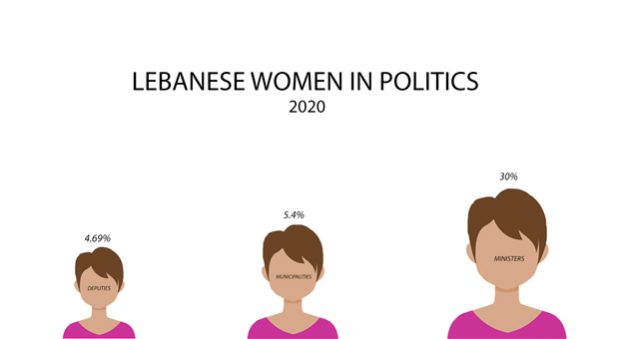
Lebanese women in politics. Credit: Eliane Eid

KESERWAN, Lebanon, Mar 2 2020 (IPS) – Women were at the forefront of Lebanon’s 2019 ‘October Revolution’. Beyond the iconic images of their participation, it seems that by women linking equity in politics to the broader issues of mismanagement of corruption paid off – although activists say there is a long road ahead.


In May 2018 saw the election of six Lebanese women to parliament from 86 female candidates. Following the October 2019 uprising, that started to change the equation within the political system and under the continued pressure of the civil society, a new cabinet was formed. It included six female ministers out of 20.

From a general perspective, this seems like a win for achieving gender equality, considering that 30% of the actual cabinet is female. Lebanon, a democratic republic in the Middle East, is deemed to have acknowledged the role of women and started to include them in the political field.

However, from a Lebanese perspective, questions arise whether this achievement is a veneer to please the streets and Western donors in a crumbling country?

Rouba El Helou-Sensenig, coordinator of the gender, communications and global mobility studies at the Faculty of Law and Political Science at Notre Dame University in Lebanon, is not convinced this change is enough.

“Even though the Lebanese government signed international agreements related to advancing women’s rights and their participation in political life, I believe that the Lebanese government is not serious about reaching gender equality,” she says.

“What has been achieved so far is the result of a combination of pressure from civil society and international bodies,” she added, citing a list of reasons why women’s rights within the country are flawed.
“Today, the Lebanese people, whether they are with or against gender equality, are aware that Lebanese women do not have the right to give their citizenship to their children; that the religious courts do not rule in favour of a mother most of the time.”

She says the Kafala system promotes more injustices in Lebanese society and “family friendly-policies should be drafted and implemented” as a matter of urgency.

El Helou-Sensenig explained to IPS that Lebanon still has a labour code with a long list of articles which prohibit women from working in certain fields. Gender-based violence and sexual harassment are still not appropriately criminalised.

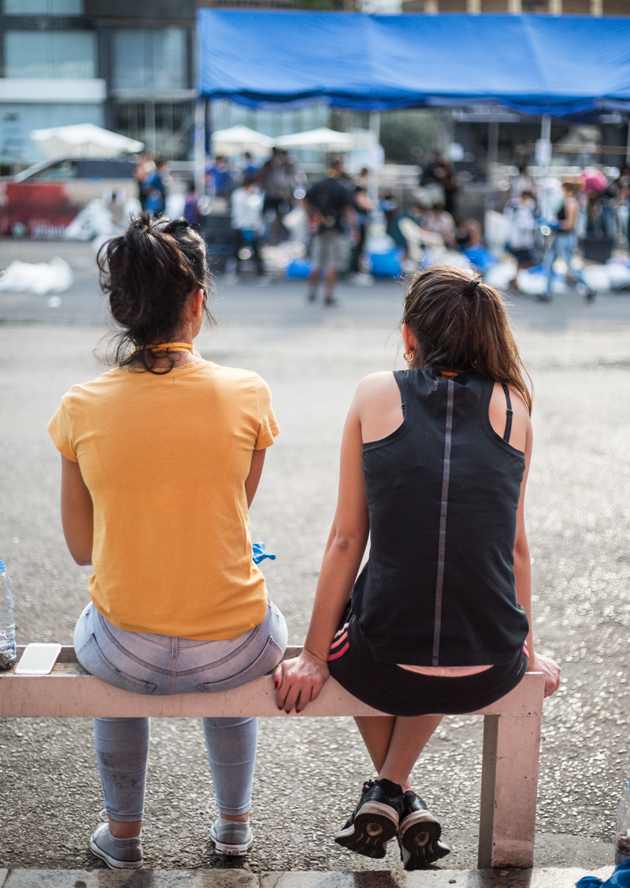
Two young women rest in the morning of a new day during the October 2019 Revolution, Lebanon. Credit: Blanche Eid

Historically, Lebanese women waited until 1953 to vote and run for elections – and their fundamental rights undermined until Lebanon signed the Convention on the Elimination of All Forms of Discrimination against Women (CEDAW) in 1997.

Most of the women in parliament have been elected based on their political affiliations or even traditional ones. Lebanese society has rarely seen any organic approach to promote female candidates in any election.

This year the World Economic Forum (WEF), in its 2020 report Mind the 100 Year Gap, noted that gender parity would not be attained for 99.5 years – meaning that none of the current generations will witness it. WEF’s even more sobering analysis puts the gap in the Middle East, and North Africa is 140 years. This is a challenge to NGOs and institutions fighting gender discrimination.

Once such a global advocate for gender equality and health and rights of girls and women, Women Deliver is working with five civil society organisations (CSOs) to breach the gender inequity gap in Lebanon. Its Humanitarian Advocates Program, along with the CSOs, is working toward meeting the needs of the women and children who make up 80% of the country’s more than 1 million registered refugees.

In the broader society equality will take time, but many countries still lack fundamental human rights, including Lebanon.

In February Notre Dame University held a seminar on women pursuing peace and justice and being politically active. During the seminar, Cedar Mansour, dean of the faculty of law and political science, explained that for Lebanon to make changes, women need to be more involved in policymaking and participation.

“In order to make a real difference, the change should start in the institutions. Equality should be paramount, inherited discrimination that is infesting our laws should be revolted against,” Mansour said.

By making laws and creating opportunities for women to become more involved, only then, Lebanon will have a chance to stay in the race.

Many factors stand in the way of achieving these goals, the seminar heard.

Lea Baroudi, the founding member and director of March, Lebanon, told IPS has personal experience of many of these challenges and what it takes to be successful.

“What made me continue is what I saw I was capable of doing. I had this belief that I can change. There are two struggles that affect us as women: the patriarchal attitude and the older generation mentality. The attitude of ‘you cannot do it’,” she said.

“But, to succeed, you have to fail many times, and that’s what kept me going”.

Baroudi explained that no matter what a woman will do, she will always be questioned and evaluated every step of the way. She always has to be number one in every field; otherwise, she is considered weak and powerless.

“As long as we cannot change the laws, we have a problem” she adds. Lebanon needs a shift in the understanding of gender equality and its implementation. Many factors play an essential role in shaping this culture, especially patriarchal power rooted in the Lebanese mindset.

In 2016, Lebanon created the first ministry of women’s affairs; this initiative was supposed to be a step forward to achieve political empowerment and gender equality. In the case of Lebanon, the minister of women’s affairs was a man. The idea of creating this ministry was to promote political empowerment, but a female figure in Lebanese politics is known to be more of a mediator than an action taker.

Four months have passed since the revolution started – women have taken a critical role in keeping this uprising safe and its agenda in the spotlight.

One of the current demands is to have an early election with more women involved.

Lebanon might witness a new era of female leaders, but the key issue is whether create a safe environment for Lebanese women by changing policies or they would fall in the trap of being the winning ticket for political parties.

  Source

UN Chief Should Lead by Example on Human Rights

Civil Society, Democracy, Featured, Global, Global Governance, Headlines, Human Rights, Press Freedom, TerraViva United Nations

Opinion

Louis Charbonneau is United Nations Director, Human Rights Watch

Credit: United Nations

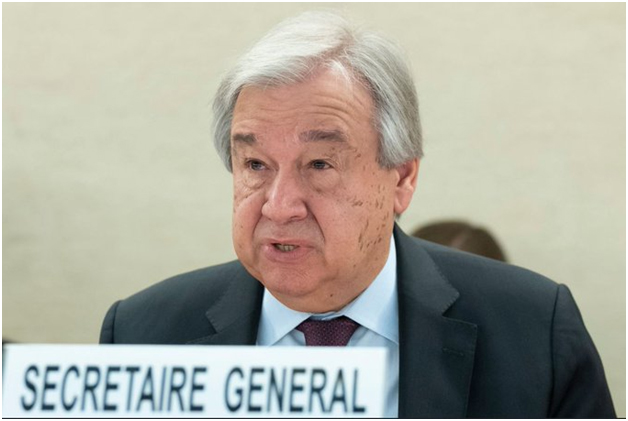
UNITED NATIONS, Feb 25 2020 (IPS) – United Nations Secretary-General Antonio Guterres has long needed to overhaul his approach to human rights. Hopefully his call to action announced in Geneva yesterday is the start of something new.


Guterres’ low-key approach to human rights may have been calculated to avoid conflicts with big powers like the United States, Russia, China, and Saudi Arabia. But human rights groups and former senior UN officials have criticized it for being ineffectual.

The secretary-general’s new initiative contains some excellent ideas. The link he makes between human rights and the impacts of climate change is crucial, and those who fight to protect the environment are increasingly at risk.

Forest defenders in Brazil and elsewhere are threatened, attacked, and killed by those who seek to benefit from the forests’ destruction. And Guterres is right to highlight the risks posed by new technologies, whether it involves government surveillance, artificial intelligence, or fully autonomous weapons, so-called “killer robots.”

The test for any initiative is the implementation. No one is suggesting the secretary-general do everything alone. But he needs to lead by example.

Louis Charbonneau

That means publicly calling out rights abusers and advocating for victims. Human rights violations aren’t like natural disasters.

They are frequently planned and executed by government officials or their agents – whether it’s the mass arbitrary detention of Uyghurs in China, Myanmar’s ethnic cleansing campaign against Rohingya Muslims, indiscriminate Russian-Syrian bombing of civilians in Idlib, or the forced separation of children from their parents at the US border.

It also means using the authority of the secretary-general’s office to launch investigations and fact-finding missions when appropriate. That includes launching an inquiry into China’s massive rights violations in Xinjiang, and pressing for an international accountability mechanism on Sri Lanka.

The secretary-general should order a follow-up inquiry into the murder of Washington Post columnist Jamal Khashoggi to help determine whether Saudi Arabia’s top leadership ordered his slaying. He should also publicly release the findings of his inquiry into attacks on hospitals and other protected facilities in Syria, likely carried out by the Russian-Syrian alliance.

None of this is to say Guterres should abandon “private diplomacy” with governments. But he should re-emphasize public diplomacy on human rights at the UN. Human rights advocacy shouldn’t be the sole responsibility of High Commissioner for Human Rights Michelle Bachelet and her office.

The secretary-general should be the UN’s leading voice on human rights, not only working in the background.

Secretary-General Guterres has issued a call to action on human rights. Now it’s up to him to act.

  Source

Preserving World’s Biodiversity: Negotiations Convene at FAO Headquarters

Biodiversity, Civil Society, Climate Change, Conferences, Economy & Trade, Environment, Featured, Food & Agriculture, Gender, Global, Headlines, Indigenous Rights, Natural Resources, TerraViva United Nations

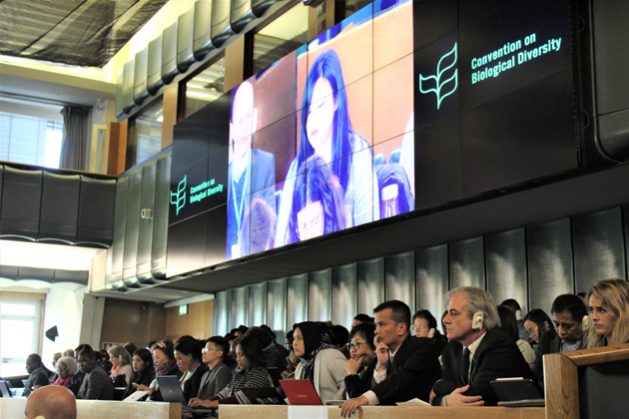
Delegates gather at FAO headquarters to advance negotiations of the post-2020 global biodiversity framework. Credit: Maged Srour/IPS

ROME, Feb 24 2020 (IPS) – “The world out there is watching and waiting for results,” Elizabeth Maruma Mrema warns while talking to IPS regarding the preservation of biodiversity of our planet.


The acting Executive Secretary of the Secretariat of the Convention on Biological Diversity, is referring to a worrying report[1] released by the Food and Agriculture Organization (FAO) which paints a grim picture of the planet.

“Many key components of biodiversity for food and agriculture at genetic, species and ecosystem levels are in decline and evidence suggests that the proportion of livestock breeds at risk of extinction is increasing,” the report says.

The FAO also warns that “nearly a third of fish stocks are overfished, and a third of freshwater fish species assessed are considered threatened”.

These are just some of the critical issues being debated during the open-ended working group on the post-2020 biodiversity framework. This round of negotiations is taking place at FAO headquarters from 24 to 29 February. In the run-up to October’s historic UN Biodiversity Conference, government officials, experts and activists from around the world gathered today at FAO headquarters, Rome, to forge ahead with negotiations. This round of talks was supposed to take place in Kunming, China, on the same dates. Due to the ongoing situation following the outbreak of the novel coronavirus 2019 (COVID-19), it was moved to Rome, Italy.

Background

The fourteenth meeting of the Conference of Parties (COP) to the Convention on Biological Diversity (CBD) had its meeting in Sharm el-Sheikh, Egypt, in 2018. It was here that the working group on the post-2020 global biodiversity framework was appointed. The working group’s mandate was to prepare the text of a framework that would guide the work of the Convention after the year 2020. At the working group’s first meeting held in Nairobi in August 2019, the Open-ended Working Group (WG2020) requested the Co-Chairs and the Executive Secretary to prepare a zero-draft text of the post-2020 global biodiversity framework. This framework is under consideration at its second meeting, which is currently taking place in Rome. The aim of the second meeting of the Working Group is to significantly advance the negotiation of the post-2020 global biodiversity framework, discussing the different aspects of the whole ambitious project.

‘Healthy Diets’ was among the proposed initiatives during the first day of the six-day event at FAO headquarters. The initiative emphasised the importance of ‘geographical indications’ for biodiversity, with examples and experiences from Africa and Eastern Europe. Credit: Maged Srour/IPS

Negotiations in Rome: Promoting a bi-directional approach

In the coming days, the working groups will be divided on a regional basis. They will discuss a wide variety of concerns including biodiversity, food, agriculture and fishing systems, to the importance of promoting an approach that leaves no one outside of this circuit. Civil society, the private sector, indigenous people, local communities, women and youth are all represented to create a functional framework for the whole society and at all levels. Many organisations, like Bioversity International, supported by a host of international agencies, have submitted research reports on biodiversity and food systems. It has also made representations on alternative models for access and benefit-sharing rules, practices and impacts in the Post-2020 Global Biodiversity Framework.

The voice of indigenous people

Key to the discussions is the role of indigenous people in biodiversity and Aslak Holmberg, the representative of the indigenous people, is convinced that policymakers can learn from these groups.

“There is a key message we want to share with other groups here during these negotiations,” he told IPS. “Indigenous peoples and local communities’ management of natural resources is (in fact) conserving biodiversity. (This is) because these management practices are built on a balanced relationship with the respective environment.

“Biological and cultural diversity are linked, and by this, I mean that (for indigenous communities) culture plays a fundamental role in the process of preserving biodiversity: it is in our culture to use our areas in a sustainable way. That is the message we want to share with others”.

The voice of the business sector

Representatives of the private sector too, in particular of the business world, wish to be part of the framework that will result from the negotiations and officially approved in October, in China.
Eva Zabey, Executive Director of the Business for Nature Coalition, told IPS she was grateful to the CBD secretariat for giving business and opportunity to engage and contribute to the zero draft of the post-2020 framework.

This coalition is a unique global group of influential business and conservation organisations participating in the negotiations.

“Forward-thinking businesses are starting to change the way they operate, based on their understanding of the value of nature – but this is still the exception, not the norm,” she told IPS.
“Therefore,” said Zabey, “Political leadership is needed now to transform our economic and financial systems in a way that places nature at the heart of global decision-making. It needs to create a level playing field and a stable operating environment for business.”

Zabey is looking forward to an ambitious post-2020 framework which will facilitate businesses’ involvement and create and positive “policy-business feedback loop,” she said.

Perspectives

Audrey Azoulay, United Nations Educational, Scientific and Cultural Organization (UNESCO) Director-General, perfectly summarised urgency at the negotiation.

Commenting on the global assessment report, she said: “The present generations have the responsibility to bequeath to future generations a planet that is not irreversibly damaged by human activity.”

“Our local, indigenous and scientific knowledge are proving that we have solutions and so no more excuses: we must live on earth differently”.

Zabey echoes Azouley. She said entrepreneurs are increasingly aware that the profit-sustainability ‘conflict’ is no longer feasible or conceivable.

“Companies planning on being successful in the future are starting to realise that financial performance is irrelevant on a dead planet.’

[1] http://www.fao.org/3/CA3129EN/ca3129en.pdf


Fiscal Policies For Women’s Economic Empowerment

Civil Society, Development & Aid, Editors’ Choice, Featured, Gender, Global, Global Governance, Headlines, IPS UN: Inside the Glasshouse, TerraViva United Nations

Opinion

International Monetary Fund (IMF)

Credit: IPS

WASHINGTON DC, Feb 20 2020 (IPS) – Making sure that opportunities to enter the workforce are fair and rewarding for women benefits everyone. Yet, the average female workforce participation rate across countries is still 20 percentage points lower than the male rate, largely because gender gaps in wages and access to opportunities, such as education, stubbornly persist.


Our new study finds that fiscal policy choices that address gender equality—such as investing in education or infrastructure, developing better sanitation facilities, implementing individual-based tax regimes, and offering parental leave—create more economic opportunities for women, increase growth, and reduce poverty and inequality.

When governments actively promote policies to increase female labor force participation, more women do indeed join the labor force. Most measures pay for themselves in the long run without additional costs for governments and the added bonus—a larger workforce leads to higher economic activity and growth, which generate additional tax revenue for the country.

Inclusive fiscal policies

Since the mid-1980s, at least 80 countries across all levels of development and regions have adopted fiscal policies to promote gender equality. Previous IMF research suggests that in advanced economies, when governments actively promote policies to increase female labor force participation, more women do indeed join the labor force.

Canada, Czech Republic, and Sweden, for example, have witnessed a substantial increase in women’s paid work when the countries switched to using individual rather than family income taxation.

For low-income and developing countries, programs aimed at reducing gender gaps in education, particularly for secondary and university education, have supported more economic opportunities for women.

Other effective fiscal policies, such as better infrastructure, decrease the time spent on unpaid care work, while providing more women the choice to enter into paid employment.

The bottom line is that greater gender parity at all levels, from unskilled workers to top management positions, can also foster the creation of new ideas—leading to higher productivity.

Credit: Food Tank

Competing demands

Policymakers face difficult choices every day, given limited room in the budget and competing demands. These choices often come down to investing in schools or roads, introducing new revenue measures, or offering free, high-quality childcare.

Here, policymakers must consider not only what happens to economic growth, but also how these policies can reduce income and gender inequality.

To help with these decisions, our recent analysis examines how policies designed to increase women’s labor force participation can accomplish multiple economic and social goals.

We find that some gender-responsive fiscal policies increase labor productivity and in turn, sustainable growth. Take for instance, an effort to reduce the gender gap in literacy rates.

In low-income countries the average literacy rate of men is about 70 percent while it is only 54 percent for women. But if fiscal policies can be used to close this gap, then women’s productivity increases and ultimately, more women are equipped for jobs in more skill-intensive sectors.

Labor-saving infrastructure, such as greater access to safe water, frees time, particularly for women. For instance, in Malawi, women on average spend 54 minutes a day collecting water. Better access to infrastructure means that women may then choose to pursue paid work.

Removing tax distortions for the earner in the family with the lower wage, usually the woman, by changing the personal income tax structure from a family to an individual system creates incentives for more women to work, and with greater diversity in the workforce, fresh and innovative ideas can boost productivity.

Securing the future

Not all gender-responsive fiscal policies benefit women equally. Subsidizing childcare and providing paid maternity leave would have a greater impact on poorer women because they typically face higher childcare costs relative to their income.

For example, in the US, poorer women spend 17.4 percent of their income on childcare compared to 7.8 for richer women.

Time horizons matter too. A mix of measures could help support economic goals in a sustainable manner while tackling immediate social needs.

For example, investing in education to equip girls with the same skills as boys would boost women’s human capital while shaping future labor productivity. In the meantime, cash transfers that target poorer working women may help reduce poverty and inequality.

Our research shows that tackling gender-biased social norms is crucial. In fact, removing discriminatory practices and addressing social norms amplifies the positive effects of gender-responsive measures. Not only would this improve human rights, but it also would help promote women’s economic empowerment.

According to the Organization for Economic Co-operation and Development (OECD), discriminatory laws and social practices reduce women’s years of schooling by 16 percent and decrease labor force participation by 12 percent, resulting in a global income loss of 7.5 percent of the global GDP.

Progress in some countries is encouraging. For example, under the Promundo initiative, 34 countries have introduced programs to engage men and boys on gender norms with participants responding very positively to the initiative.

Real changes are happening. Still, we have a long way to go to make the world a place with the same opportunities for men and women. Policymakers and citizens working together can foster equality, equity, and brighter prospects for all, and ensure that gender equality becomes a reality in all of our lifetimes.

IMFBlog, where this article was originally published, is a forum for the views of the International Monetary Fund (IMF) staff and officials on pressing economic and policy issues of the day.

The views expressed are those of the author(s) and do not necessarily represent the views of the IMF and its Executive Board.

  Source