A Call for Concrete Changes to Achieve a More Gender Equal World

Civil Society, Development & Aid, Editors’ Choice, Featured, Gender, Global, Global Governance, Headlines, Human Rights, IPS UN: Inside the Glasshouse, TerraViva United Nations

Princess Sarah Zeid is a member of UNHCR’s Advisory Group on Gender, Forced Displacement, and Protection, a Special Advisor to the World Food Programme on Maternal and Child Health and Nutrition, and Chair of the Newborn Health in Humanitarian Settings Initiative.
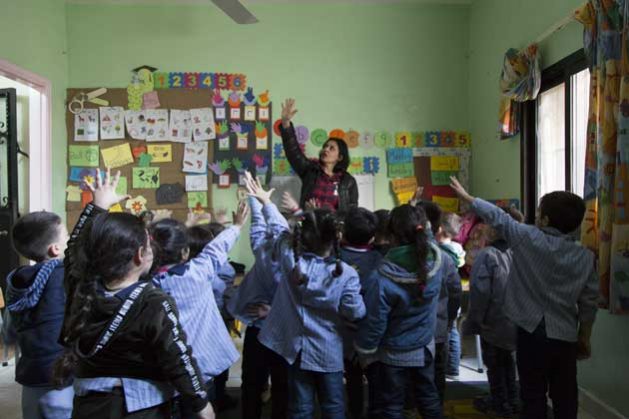
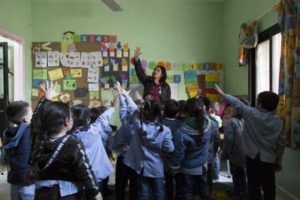
AMMAN, May 29 2019 (IPS) – On the eve of the Women Deliver conference in Vancouver June 3-6, Princess Sarah Zeid of Jordan interviewed Dr. Olfat Mahmoud, a Palestinian refugee and women’s rights advocate.


Princess Sarah spoke with Dr. Olfat about what the humanitarian system would look like if organizations like hers could help shape it, and the messages she hopes to bring to Women Deliver.

Excerpts from the interview:

Princess Sarah: Tell me a little about yourself. What drew you to your work and why does it matter?

Dr. Olfat: I was born a Palestinian refugee, so witnessed injustice all my life. Yet what defines me is not that I grew up in a refugee camp in Lebanon, or that I spent most of my life in a war zone, but that I am a nurse and advocate in my community.

Even amid crisis, my parents were open-minded and encouraged me to be independent, so that is exactly what I set out to do. I studied and practiced nursing during the Lebanese civil war, and through that work witnessed the overlooked hardships faced by refugee women and children.

As a medical practitioner, I saw how essential services for girls and women of all ages – such as psychosocial support and sexual and reproductive health care– were chronically overlooked. And as an advocate in my community, I found that supporting women empowered me as well.

I established the Palestinian Women’s Humanitarian Organization (PWHO) to fill these gaps and fulfill the needs of refugee girls and women so they can lead better futures. Not a single international organization stepped up to do this important work – so I knew that change had to come from those of us within the community.

Princess Sarah: What are the main challenges girls and women face in your community? What makes women-focused civil society organizations (CSOs) like yours most well-equipped to respond to these challenges?

Dr. Olfat: For girls and women, life in refugee settings require superhuman strength. We are particularly vulnerable when it comes to access to essential health services, information, and education, and disproportionately suffer from gender-based violence.

Women-focused civil society organizations are most well-equipped to respond to these challenges because women are the best experts on our lives. Our lived experiences make us better advocates for ourselves and for others in similar situations.
For example, the PWHO women’s centers – staffed by refugee women themselves– have gained unparalleled trust from the community, and become a second home for many.

With that trust, we can more easily identify what women want and need – like access to non-discriminatory health services, psychosocial support, rights-based education, and leadership skills – and design programs that are tailored for them. We can also negotiate with local leaders to push for a more supportive environment for women’s rights – a key ingredient to driving lasting change in conservative contexts.
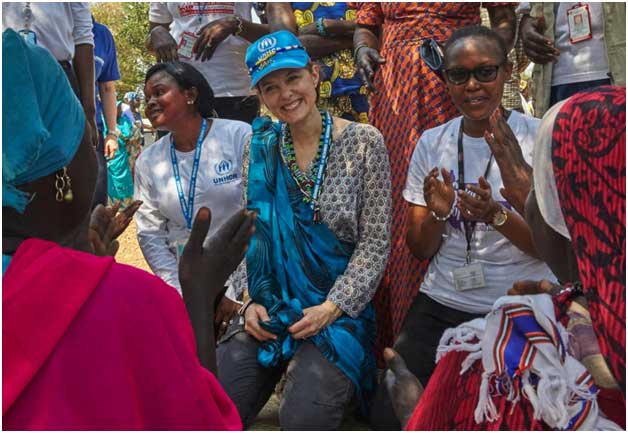
UNHCR Patron, HRH Sarah Zeid of Jordan, meets with a women’s group at Doro refugee camp in South Sudan. Credit: UNHCR/Jan Møller Hansen

Princess Sarah: What could the international community – including donors, decision-makers, and practitioners – do more or less of to maximize sustainable positive impact for the populations you serve?

Dr. Olfat: The international community wields a lot of power – especially the power of money and the power of influence. To drive real change in my community, international actors must use those powers more efficiently.

First, there is a critical need to fill funding gaps for programs that are specifically designed for refugee girls and women. With more girls and women displaced today than ever before in global history, their needs are rising – yet funding for them is decreasing.

We need smarter investments in programs that enable refugee girls and women to lead better futures, including through education and quality vocational and life skills training, as well as access to sexual and reproductive health care.

Yet money alone is not enough. The international community must also use their influence to challenge national and regional political barriers that hold us back.

This includes respecting and upholding international agreements, including UN resolutions, which support and protect refugees. It also means addressing legal restrictions that keep refugee women from working, obtaining formal education, and exercising other basic human rights in their host countries.

Princess Sarah: Currently only 3% of humanitarian aid goes to local and national organizations – and even less to those focused on girls and women. What types of concrete investments does your organization need to extend your impact and plan for the future?

Dr. Olfat: Right now, the needs we see are greater than the resources we have. To meet those needs, we don’t just need more funding – but more of the right kinds of funding.

Too often, grants and funding opportunities for women-focused CSOs are designed without consulting us on the types of investments we know girls and women in our communities need the most.

Other times, we aren’t able to access grants because of unrealistic reporting requirements that are either unsuitable or unmanageable for a small grassroots organization like ours.

For example, many grants for vocational programs in Lebanon require organizations to report success by the number of jobs their beneficiaries gain as a result – which isn’t possible in a context where refugees aren’t legally allowed to work. To support women-focused CSOs and the communities they serve, we must be more meaningfully engaged in setting investment agendas at the start.

We also need access to more flexible and sustainable funding opportunities, including core funding. It’s impossible to plan for the future when we rely on six- to twelve- month grants. We’re committed to supporting refugee girls and women in our community for as long as we’re needed – but require the right resources to fulfill that goal.

Princess Sarah: You have also been advocating for the international community to more meaningfully engage women-focused CSOs in humanitarian decision-making. In your view, what concrete steps can the international community take to put more power and influence in the hands of women-focused CSOs like yours, and why should this be an urgent priority?

Dr. Olfat: Women-focused CSOs must be heard in humanitarian policy meetings to ensure decisions reflect realities on the ground. This requires inviting us to important discussions held in New York and Geneva, but it also means making sure we can get there through travel and logistics support. And when we are there, it means carving out spaces for us to safely and honestly share the solutions we need with the assurance that we will be heard.

The alternative – excluding refugee women from decisions that affect their work and lives – isn’t acceptable and isn’t working. When we are engaged, we make humanitarian policy and practice stronger and more effective.

Princess Sarah: What do you hope to achieve at the Women Deliver Conference in Vancouver, Canada? What advocacy asks do you hope to bring forward at this meeting?

I hope to raise awareness to the needs of Palestinian refugee girls and women in Lebanon, to ensure that they are not forgotten. And I want to highlight solutions women-focused CSOs like PWHO need – money, influence, and power – to push for the change I’ve wanted to see all my life.

At the same time, I hope to learn from other advocates around the world, and build networks so we can collectively push for a humanitarian system that puts girls and women at the center. Solidarity is our strength and our power – and we need to be stronger together to achieve a better world for all of us.
 

Class Analyst: Global Income Inequality

Aid, Civil Society, Democracy, Development & Aid, Editors’ Choice, Featured, Global, Global Governance, Headlines, Inequity, Population, Poverty & SDGs, TerraViva United Nations

Opinion

CHRIS WELLISZ is on the staff of Finance & Development published by the International Monetary Fund*

Credit: IMF

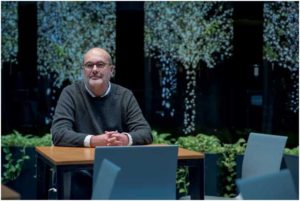
WASHINGTON DC, May 24 2019 (IPS) – As a child growing up in Communist Yugoslavia, Branko Milanovic witnessed the protests of 1968, when students occupied the campus of the University of Belgrade and hoisted banners reading “Down with the Red bourgeoisie!”


Milanovic, who now teaches economics at the City University of New York, recalls wondering whether his own family belonged to that maligned group. His father was a government official, and unlike many Yugoslav kids at the time, Milanovic had his very own bedroom—a sign of privilege in a nominally classless society. Mostly he remembers a sense of excitement as he and his friends loitered around the edge of the campus that summer, watching the students sporting red Karl Marx badges.

“I think that the social and political aspects of the protests became clearer to me later,” Milanovic says in an interview. Even so, “1968 was, in many ways, a watershed year” in an intellectual journey that has seen him emerge as a leading scholar of inequality. Decades before it became a fashion in economics, inequality would be the subject of his doctoral dissertation at the University of Belgrade.

Today, Milanovic is best known for a breakthrough study of global income inequality from 1988 to 2008, roughly spanning the period from the fall of the Berlin Wall—which spelled the beginning of the end of Communism in Europe—to the global financial crisis.

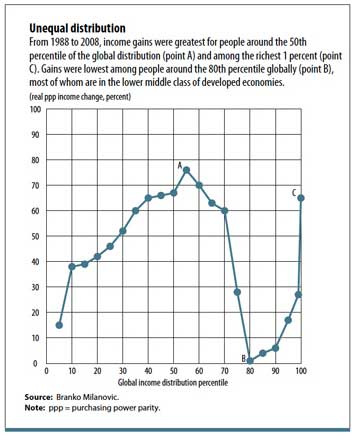
The 2013 article, co-written with Christoph Lakner, delineated what became known as the “elephant curve” because of its shape (see chart). It shows that over the 20 years that Milanovic calls the period of “high globalization,” huge increases in wealth were unevenly distributed across the world.

The middle classes in developing economies—mainly in Asia—enjoyed a dramatic increase in incomes. So did the top 1 percent of earners worldwide, or the “global plutocrats.”

Meanwhile, the lower middle classes in advanced economies saw their earnings stagnate.
The elephant curve’s power lies in its simplicity. It elegantly summarizes the source of so much middle-class discontent in advanced economies, discontent that has turbocharged the careers of populists from both extremes of the political spectrum and spurred calls for trade barriers and limits on immigration.

“Branko had a deep influence on global inequality research, particularly with his findings on the elephant curve, which has set the tone for future research,” says Thomas Piketty, author of the bestselling Capital in the Twenty-First Century.

Piketty and his collaborators confirmed the findings in a 2018 study, which found that the top 1 percent globally captured twice as much of total growth as the bottom 50 percent from 1980 to 2016.

Milanovic’s findings “appear to be even more spectacular than what was initially suggested,” Piketty says. “The elephant looks more like a mammoth.”

Economists long disdained the study of inequality. Many lived in a theoretical world populated by a mythical figure known as homo economicus, or rational man, whose only attribute was a drive to maximize his well-being. Differences among people, or groups, were irrelevant. Variety was irrelevant. Only averages mattered.

In this world of identical rational actors, the forces of supply and demand worked their magic to determine prices and quantities of goods, capital, and labor in a way that maximized welfare for society as a whole. The distribution of wealth or income didn’t fit into the picture. It was simply a by-product of market forces.

“The market solves everything,” Milanovic says. “So the topic really was not—still is not—totally mainstream.”

Then came the global financial crisis of 2008, and with it “the rise of the realization that the top 1 percent or the top 5 percent have really vastly outstripped, in income growth, the middle class,” he says.

The study of inequality also got a boost from the explosion of data that can be mined with evermore powerful computers, making it easier to divide the anonymous masses of consumers and workers into groups with common characteristics. Big data, he says, “enables the study of heterogeneity, and inequality is by definition heterogenous.”

Data has always been one of Milanovic’s passions, alongside his interest in social classes, which flourished during his high school years in Brussels, where his economist father was posted as Yugoslav envoy to the then–European Economic Community.

“High school in Belgium—and I think it was the same in France—was very Marxist,” he says.

His classmates were divided between leftist kids, influenced by the student movements of the late 1960s and early 1970s, and “bourgeois” kids. As the privileged son of a diplomat representing an ostensibly workers’ government, young Branko didn’t quite fit either category. “It was a very peculiar situation,” he says.

At university in Belgrade, Milanovic initially leaned toward philosophy but decided economics would be more practical. It also offered a way to combine his interests in statistics and social classes.

Graduate studies led to a fellowship at Florida State University in Tallahassee, where he was impressed by American abundance—huge portions of inexpensive food, free refills of coffee, big cars—alongside stark income inequality and racial discrimination.

Two years later, he was back in Belgrade to work on his doctoral dissertation on inequality in Yugoslavia, mining rare household survey data supplied by a friend who worked in the federal statistical office.

While his dissertation raised eyebrows in Marxist Yugoslavia—along with his decision to avoid joining the Communist Party—it launched a two-decade career at the World Bank’s Research Department.

“Branko was really one of the leading experts, even at that time, on income distribution,” says Alan Gelb, who hired Milanovic to join a small team studying the transition to market economies in post-Communist eastern Europe. Milanovic focused on issues of poverty and income distribution.

The wealth of data the World Bank collects was a priceless resource, and it inspired Milanovic to carry out cross-country comparisons of inequality, which were a novelty. One day in 1995, Milanovic was talking with Gelb’s successor as the head of his unit.

“I suddenly had this idea: ‘Look, we have all this data from around the world. We study individual countries, but we never put them together.’ ” Four years later, he published the first study of global income distribution based on household surveys.

In the years that followed, Milanovic published widely and profusely. Alongside his work on post-Communist economies, he continued to explore inequality and its link with globalization. His articles and books display the broad range of his interests, which include history, literature, and sports.

In one article, he estimates the average income and inequality level in Byzantium in the year 1000. Another looks at the links between labor mobility and inequality in soccer, which he calls the most globalized sport.

He found that club soccer has become very unequal because a dozen top European teams can afford to recruit the world’s best players. On the other hand, the free movement of soccer players has reduced inequality among national teams. The reason: players from small countries can hone their skills at top club teams, then return home to compete for their national teams.

Literary conversations with his wife, Michele de Nevers, a specialist in climate finance at the Center for Global Development, inspired him to write an offbeat analysis of Jane Austen’s Pride and Prejudice.

Arguing that the book is as much about money as love, he estimates the incomes of various characters and looks at how wealth influences the choice of mates for Austen’s protagonist, Elizabeth Bennet.

He did the same for Leo Tolstoy’s Anna Karenina. Both essays were published in Milanovic’s 2011 book, The Haves and the Have-Nots: A Brief and Idiosyncratic History of Global Inequality .

Another book, Global Inequality: A New Approach for the Age of Globalization, was a milestone that synthesized years of his scholarship on inequality within and among countries since the Industrial Revolution.

In contrast to Piketty, who argues that inequality inexorably widens under capitalism, Milanovic sees it moving in waves or cycles under the influence of what he calls benign and malign forces.

In advanced economies, income disparity widened in the 19th and early 20th centuries until the malign forces of war and hyperinflation reduced it by destroying wealth. After World War II, benign forces such as progressive taxation, more powerful labor unions, and more widely accessible education pushed inequality down.

The fall of the Berlin Wall was a watershed. It brought the former Soviet bloc states into the global economy at a time when China also began opening up. Rapid growth in the developing world narrowed inequality between countries while widening it in the developed world, where middle-class incomes stagnated as the wealthy prospered.

What does the future hold? It looks good for much of the developing world and especially Asia, which will continue to catch up with the rich countries. In advanced economies, on the other hand, the outlook seems grimmer.

There, the twin forces of globalization and technological innovation will continue to squeeze the middle class. Social mobility will decline as an entrenched elite benefits from greater access to expensive higher education and wields its political clout to enact “pro-rich” policies, such as favorable tax regimes.

As income disparities grow, so will social tensions and political strife—a prognosis confirmed by events such as Brexit and protests in France that have occurred since the book’s publication in 2016.

Milanovic worries that this friction might lead to a “decoupling” of democracy and capitalism, resulting in plutocracy in the United States and populism or nativism in Europe.

While there has been considerable debate about inequality over the past decade, “nothing has really moved” in policy terms, he says. “We are on this automatic pilot which basically leads to higher inequality. But I am not totally losing faith.”

The traditional answer—redistribution of income—won’t work as well as it did in the past because of the mobility of capital, which allows the wealthy to shelter their incomes in tax havens. Instead, policy should aim for a redistribution of “endowments” such as wealth and education.

Measures would include higher inheritance taxes, policies that encourage companies to distribute shares to workers, and increased state funding for education.

“We cannot achieve that tomorrow,” he says. “But I think we should have an idea that we want to move to a capitalist world where endowments would be much more equally distributed than today.”

Milanovic also takes on the nettlesome issue of inequality between countries. He calculates that an American, simply by virtue of being born in the United States, will earn 93 times more than a person born in the world’s poorest country.

This is what Milanovic calls the “citizenship premium,” and it gives rise to pressure for migration as people born in poor countries seek their fortunes in richer ones.

Milanovic argues that halting migration is no more feasible than halting the movement of goods or capital. Yet it’s also unrealistic to expect citizens of advanced economies to open their borders. His solution: allow more immigrants but deny them the full rights of citizenship, and perhaps tax them to compensate citizens displaced in the labor force.

His current work, in a way, brings him back to his roots in Yugoslavia. It involves the study of class structure in the People’s Republic of China and, in particular, a close look at the top 5 percent of the income distribution. It forms a part of his next book, Capitalism, Alone, which argues that China has developed a distinct form of capitalism that will coexist with its liberal forebear.

Where is the study of inequality headed? Milanovic sees two frontiers, both driven by the availability of new data. One is wealth inequality, à la Piketty; the other is intergenerational inequality, a subject plumbed by economists such as Harvard’s Raj Chetty.

The two areas “appeal to young people who are now very socially aware,’’ he says. “On the other hand, they are very smart and want to work on tough topics.” He adds, “I am very optimistic in that sense.”

*Opinions expressed in articles and other materials are those of the authors; they do not necessarily reflect IMF policy.


UN’s Mandate to Protect Human Rights Takes Another Hit

Civil Society, Democracy, Featured, Global, Global Governance, Headlines, Human Rights, TerraViva United Nations

UNITED NATIONS, May 20 2019 (IPS) – The UN’s longstanding mandate to promote and protect human rights worldwide –- undermined recently by right-wing nationalist governments and authoritarian regimes – has taken another hit.


The Geneva-based Office of the UN High Commissioner for Human Rights (OHCHR) says six of the UN’s 10 treaty bodies are being forced to cancel their sessions this year due to financial reasons.

The situation has been described as “an unprecedented consequence of some UN member States delaying payments due to the Organisation.”

Anna-Karin Holmlund, Senior UN Advocate at Amnesty International (AI), told IPS: “Amnesty is deeply concerned by member states’ delay in paying their assessed contributions, which will have a direct effect on the ability of the UN to carry out its vital human rights work.”

Without these funds, the UN’s human rights mechanisms and International tribunals could be severely affected, she warned.

By 10 May, only 44 UN member states – out of 193 — had paid all their assessments due, with the United States owing the largest amount.

“Unfortunately, this is only the latest in a worrying trend of reduction in the UN budget allocated to its human rights mechanisms. To put this in perspective, the budget of the OHCHR is only 3.7 % of the total UN regular budget,” she pointed out.

In addition to the possible cancellation of sessions of the treaty bodies, mechanisms created by the Human Rights Council such as Fact-Finding Missions and Commissions of Inquiry may be hampered in carrying out their mandate of investigating serious human rights violations.

The OHCHR said last week the cancellations meant that reviews already scheduled with member states, as well as consideration of complaints by individual victims of serious human rights violations — including torture, extra-judicial killings, enforced disappearances -– will not take place as scheduled.

“The cancellation of sessions will also have numerous other negative consequences, and will seriously undermine the system of protections which States themselves have put in place over decades,” said a statement released by the OHCHR.

The chairpersons of the 10 Committees are deeply concerned about the practical consequences of cancelling these sessions and have sent a letter to the UN Secretary General and the High Commissioner for Human Rights, requesting they, together with Member States, explore ways of addressing this situation, “as a matter of urgency.”

Alexandra Patsalides, a Legal Equality programme officer at Equality Now, told IPS that it is deeply concerned that UN Treaty body review sessions have been postponed for financial reasons, including the Committee to Eliminate Discrimination Against Women (CEDAW), with its focus on ending all forms of discrimination again women and girls.

She said the crisis comes particularly at a time when women’s rights are continuously being undermined and eroded around the world– and civil society organisations are operating in a space that is increasingly under attack and shrinking.

The UN should strongly call on state parties to prioritise their international human rights obligations, she added.

“The UN treaty bodies are vital to holding states accountable to their commitments on women and girl’s rights — and now is the time to increase the international response, not cut back,” said Patsalides.

These review sessions offer civil society organisations a vital opportunity to hold their governments to account for their international human rights commitments and raise awareness of human rights violations in their countries.

But with the backsliding on women’s rights across the globe, it is now more urgent than ever that the various mechanisms stand up to defend hard won gains, she noted.

“The UN treaty bodies are often the only mechanism for women and girls to hold their countries to account for violations of their rights. We cannot allow these voices to be silenced and call on the UN to prioritize the protection of women and girls’ rights and ensure these treaty bodies have appropriate and sustainable funding.”

The 10 UN human rights treaty bodies are: the Human Rights Committee, the Committee on the Elimination of Racial Discrimination, the Committee against Torture, the Committee on Migrant Workers, the Committee on Enforced Disappearances, the Committee on Economic, Social and Cultural Rights, the Committee on the Elimination of Discrimination Against Women, the Committee on the Rights of the Child, the Committee on the Rights of Persons with Disabilities And the Subcommittee on Prevention of Torture.

Meanwhile the budget cuts come at a time when the UN is battling a series of setbacks in the field of human rights.

The UN Human Rights Office in Burundi was closed down last February at the insistence of the government, with the UN High Commissioner for Human Rights Michelle Bachelet expressing “deep regrets” over the closure, after a 23-year presence in the country.

A UN Commission of Inquiry has called on Eritrea to investigate allegations of extrajudicial killings by its security forces, including torture and enslaving hundreds of thousands, going back to 2016.

And under the Trump administration, the US has ceased to cooperate with some of the UN Rapporteurs, and specifically an investigation on the plight of migrants on the Mexican border where some of them have been sexually assaulted—abuses which have remained unreported and unprosecuted.

The government of Myanmar has barred a UN expert from visiting the country to probe the status of Rohingya refugees.

On the setbacks in Colombia, Robert Colville, Spokesperson for the UN High Commissioner for Human Rights, said May 10: “We are alarmed by the strikingly high number of human rights defenders being killed, harassed and threatened in Colombia, and by the fact that this terrible trend seems to be worsening”

“We call on the authorities to make a significant effort to confront the pattern of harassment and attacks aimed at civil society representatives and to take all necessary measures to tackle the endemic impunity around such cases.”

In just the first four months of this year, he pointed out, a total of 51 alleged killings of human rights defenders and activists have been reported by civil society actors and State institutions, as well as the national human rights institution.

The UN Human Rights Office in Colombia is closely following up on these allegations. This staggering number continues a negative trend that intensified during 2018, when our staff documented the killings of 115 human rights defenders.

According to a press release from the OHCHR, the 10 United Nations human rights treaties are legally binding treaties, adopted by the UN General Assembly and ratified by States.

Each Treaty establishes a treaty body (or Committee) comprising elected independent experts who seek to ensure that States parties fulfil their legal obligations under the Conventions.

This system of independent scrutiny of the conduct of States by independent experts is a key element of the United Nations human rights system, supported by secretariats in the Office of the High Commissioner for Human Rights

The writer can be contacted at thalifdeen@ips.org


Growing Authoritarianism, Social Inequalities Often a Prelude to Conflict

Civil Society, Democracy, Featured, Global, Global Governance, Headlines, Human Rights, TerraViva United Nations

Opinion

Margot Wallström is Foreign Minister of Sweden*

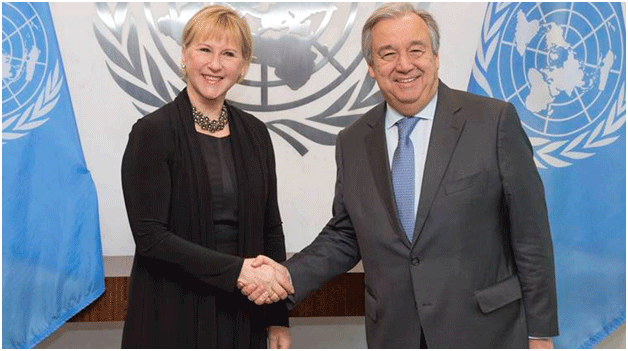
Swedish Foreign Minister Margot Wallström with UN Secretary-General Antonio Guterres

STOCKHOLM, May 17 2019 (IPS) – I want to talk about peacebuilding and inclusive peace. My main point is that peace begins in the minds of people, and people, communities, societies must be allowed to participate in peace for it to be sustainable. Peace means a lot more than just the absence of war.


I want to highlight the need for this perspective in three aspects of peacebuilding – conflict prevention, crisis response and peace processes. But before going into those aspects, let me begin with the example of Colombia.

As you know, the war between FARC and the government had been going on since the 1960’s, with hundreds of thousands of victims.

The peace process that was initiated around 2012 was in a way unique. It included in different ways victims and local communities, the private sector, civil society, LGBT organisations. And of course, there was a strong presence of women.

The peace deal that was signed in 2016 (one of few good news that year) included agreements on much more than just the laying down of arms – it mentions land reform, political participation, guarantees for social movements, a strategy to tackle drug trafficking and much more.

We keep on being reminded that the implementation is often the most complicated part of a deal. But even that is part of the point I want to make. That – just as with democracy – peace is something you have to work on and conquer every day.

And even if there have been and are challenges related to the peace in Colombia, I maintain that this process was remarkable, because it put the Colombian people at center, and today both parties, the former guerilla FARC and the Colombian government are jointly working on sustainable peace in their country.

1) Going back to the three aspects of peacebuilding, let me start with conflict prevention. We seldom get the credit we deserve for the conflicts that didn’t happen.

And unfortunately, it is often easier to get support for interventions once there actually is a fire. But how many tears would not have been saved, if we had been able to prevent Rwanda? Bosnia? South Sudan?

My conviction is that societies that are democratic and inclusive, with gender and social equality, with a strong civil society have are strongly vaccinated against conflict.

This is one of the reasons why the global backslide of democracy that we experience right now is worrying me. Growing authoritarianism together with growing social inequalities has often been a prelude to conflict.

And this year, for the first time in decades, more people live in countries with growing authoritarian tendencies, than in countries that are making democratic progress.

There is still hope. I recently visited the Tunis Forum on Gender Equality, where I met with a lot of young civil society activists. And coming back to inclusive peacebuilding, I heard one interesting example of how women’s grassroots organisations took part in conflict early warning mechanisms.

They did so by reporting local peace and security risks and threats to the community, the government and international bodies.

2) Let me continue with a second aspect of peacebuilding, which is crisis response, including peacekeeping and stabilization.

Here, a security approach is often needed to save lives. But also, in interventions to stabilise we can help steer the course to a more inclusive process. Women in peacekeeping operations is an example.

When we plan for these interventions, we must think of inclusion and gender from the start. There is no conflict between the need for a quick end of violence, and the long-term aim of creating peaceful, just and inclusive societies. All interventions can be designed to contribute to this.

3) Thirdly, peace processes. Here, an inclusive approach means focusing more on women; less on men with weapons.

It is understandable that, at crunch time, a hasty deal between leaders of conflicting parties might seem attractive. But sometimes; easy come, easy go.

A peace where the voices of communities, of victims, of women have been heard – in preparations, in negotiations and implementation – will be more deeply rooted and has a greater chance of lasting longer.

Coming back to the example of Colombia – it was women that brought issues of land restitution and victims to the agenda; that ensured that confidence-building measures were implemented, that child soldiers were released.

There are other processes where women are less visible, but still make critical contributions. In Libya and Afghanistan, women, young people and local peacebuilders have done important work, with their local knowledge and commitment.

Conflicts are not linear. You can never draw a straight line from a beginning to an end. Their dynamics often look more like a child’s drawing, with strokes forward, backward, to the sides, in all possible directions.

As I said in the beginning, sustaining peace is an ongoing process, of constantly strengthening factors that underpin peace – such as confidence, reconciliation, institutions, equality, democracy.

And in a way, conflict, in a broader sense, is an inevitable part of life in a society. For a democracy, I would say, conflict is vital.

The challenge is to find ways to handle conflicts in a peaceful and constructive way. Strong, well-functioning institutions – be they national, or in the shape of multilateral cooperation, are the way of managing this.

And this is another reason why today’s backsliding of democracy and questioning of international cooperation is such a worrying threat, To conclude, let me get back to the main point about peace beginning in the minds of people.

You might recognize the source of this: the first words of the constitution of UNESCO, which I want to return to, since they so well summarize what peacebuilding is about:

“Since wars begin in in the minds of men, it is in the minds of men that the defences of peace must be constructed”.

In other words – putting people at the center of our thinking.

I’m glad that we are doing that today and tomorrow, and I hope that we can keep on doing it in our daily work for peace and development.

*Excerpted from an address to the SIPRI Forum on Peace and Development


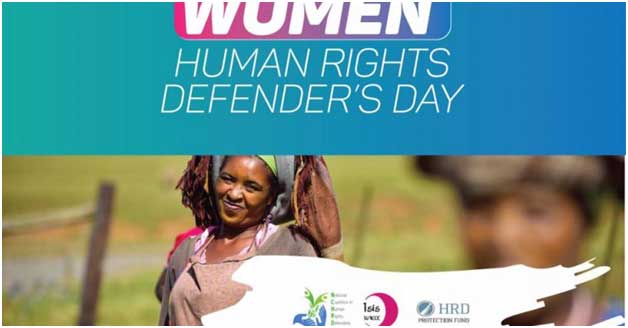
Women Human Rights Defenders Face Greater Risks Because of their Gender

Civil Society, Editors’ Choice, Featured, Gender, Global, Global Geopolitics, Global Governance, Headlines, Human Rights, Population, TerraViva United Nations

Opinion

Masana Ndinga-Kanga is Crisis Response Fund Lead with global civil society alliance, CIVICUS.

JOHANNESBURG, May 16 2019 (IPS) – Does the name Ihsan Al Fagiri ring a bell? How about Heba Omer or Adeela Al Zaebaq?

It’s likely that these names, among countless others, are not known to the average news consumer. But their tireless and dangerous work, however, has made news headlines as protests led to historic political change in Sudan.


To the communities of protesting women in Sudan, these names represent the valiant efforts to defy the authoritarianism of the Omar Al Bashir regime.

The sustained efforts of these women include mass mobilization, calling people to the streets of Sudan through ‘Zagrouda’ (the women’s chant) in response to rising costs of living amidst the country’s worst economic crisis.

These rallying calls of #SudanUprising, have been led by Sudanese women who are teachers, stay-at-home-mothers, doctors, students and lawyers. And yet, when President Al Bashir stepped down on April 11, the names of the women who spearheaded this political shift, were largely missing from the headlines.

This erasure is not uncommon. Women Human Rights Defenders (WHRDs) are often erased or slandered in efforts to intimidate them into quitting continuing their human rights work. In Egypt, Guatemala, Saudi Arabia, Uganda or the Philippines they are often called agents of international interests.

In Kenya, the United States and South Africa, their sexuality is called into question and they are harassed online. In China and the United Arab Emirates, they are detained for reporting or highlighting endemic levels of harassment. And yet, they refuse to be silenced.

These women are not alone at the interface of sustaining justice in sexual and reproductive health, environmental rights, economic accountability and conflict areas.

In spite of restrictions against them, WHRDs have campaigned boldly in the face of mounting opposition: #MeToo #MenAreTrash, #FreeSaudiWomen, #NiUnaMenos, #NotYourAsianSideKick, #SudanUprising and #AbortoLegalYa are just a few social campaigns that represent countless women at the coal face of systemic change for equality and justice. More and more WHRDs worldwide are working collectively to challenge structural injustices and promote the realisation of human rights and fundamental freedoms.

But there is a stark absence of knowledge on their work. Media reporting on the courageous work of women defenders tends to focus more on the challenges they face. Awareness of their restrictions is critical to the push for justice but equally important is knowledge about the work they do to sustain women’s rights globally.

Combined with the risks of ostracization and assault from relatives, community members and the state, WHRDs defy these risks to sustain social justice. Recognizing them only for their restrictions further contributes to the erasure they experience daily from state and others.

One way the narrative on WHRDs can shift is by focusing on the critical role they play in pushing forward a progressive agenda of change for all.

In Ireland last year, activists working in sexual and reproductive health and rights achieved a landslide referendum victory in which two thirds of voters chose to legalise abortion, after many years of pro-choice campaigning.

In the southern African kingdom of eSwatini, formerly known as Swaziland, the first ever Pride march was held last year in support of LGBTQI rights. LGBTQI groups in Fiji also scored the same first that year – the country’s inaugural Pride event, a victory of freedom of assembly for LGBTQI activists around the world.

The power of collective action was also on display in January when five million women formed a human chain across the southern Indian state of Kerala. The massive protest was organised in response to experiences of violence against women attempting to enter Kerala’s Sabarimala temple, a prominent Hindu pilgrimage site.

In Iran, a small women’s movement challenging the compulsory rule that requires women to fully cover their hair, has been developing. While in Colombia, activist Francia Marquez organised a 10-day march of some 80 women to protest against illegal mining on their ancestral land in the east of the country.

This activism is often thankless and dangerous work. Indeed, 2017 was the deadliest year on record for environmental women human rights defenders, with 200 environmental campaigners murdered.

WHRDs are at increasing risk of harassment not just from state actors, but also from multinational corporations, their communities and in some cases, their own families. International policy frameworks have tried to keep up with the heavy-handed crackdown from states on environmental WHRDs.

Last September, United Nations High Commissioner for Human Rights, Michelle Bachelet launched the For All Coalition to integrate human rights and gender equality throughout all major multilateral environmental agreements, including the Paris Agreement under the UN Framework Convention on Climate Change.

The Coalition is an important step in highlighting the ways in which climate change disproportionately affect WHRDs, and also recognises the role of local and indigenous communities of women in the realisation of environmental protection.

These policy gains are the first step in creating an enabling environment for WHRDs working in remote areas on land, indigenous rights and climate justice. They are often labelled as ‘anti-development’ for calling for accountable and transparent change.

In South Africa and Honduras, the gains of environmental women campaigners have been some international recognition of their work, but at high costs: for some, these costs sometimes include their lives. Since 2001, 47 human rights workers in the Philippines have been killed for their work of attempting to document environmental violations.

In order to take seriously the work of women human rights defenders, the mechanisms for protecting them have to begin to adapt to respond to their nuanced needs as women. They need to be sensitive to other dimensions that affect WHRDs such as sexual orientation, gender, race, class and indigenous status. Adequate institutional and policy support must be built on intersectional feminism which is consultative and responsive.

What will create a more favourable policy environment for women activists? That answer should include decriminalizing sexual and reproductive rights, for example, and removing restrictions on the registration of associations supporting WHRDs.

Governments should also conduct training and sensitisation programmes for law enforcement agencies, members of the judiciary and staff of national human rights institutions on the challenges faced by WHRD, and develop a national action plan for the protection of WHRDs.

To this day, resources do not reach WHRDs in remote areas and on the frontlines, and not because they are not applying! Gender-sensitive resourcing is critical to address the gap.

These suggestions are a smaller part of a larger need for systemic change but point to the need for consistent global activism to support women human rights defenders at all times – oftentimes before crises emerge.

The victory of Sudanese women, and the ensuing capture of the end of dictatorship this year, should give us pause to remember particularly the women who push on through layers of repression, risking all, to demand basic rights.


Rise of Right-wing Nationalism Undermines Human Rights Worldwide

Civil Society, Democracy, Featured, Global, Global Governance, Headlines, Human Rights, TerraViva United Nations

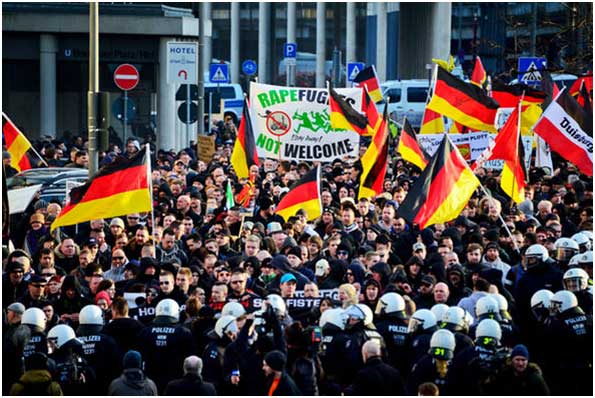
UNITED NATIONS, May 10 2019 (IPS) – The rise of right-wing nationalism and the proliferation of authoritarian governments have undermined human rights in several countries in Europe, Asia, Africa, the Middle East and Latin America.


As a result, some of the international human rights experts – designated as UN Rapporteurs – have either been politically ostracized, denied permission to visit countries on “fact-finding missions” or threatened with expulsion, along with the suspension of work permits.

The Philippines government, a vociferously authoritarian regime, has renewed allegations against Victoria Tauli-Corpuz, the UN Special Rapporteurs on the Rights of Indigenous Peoples.

The Deputy Chief of Staff for Civil-Military Operations, Brigadier General Antonio Parlade, told reporters that the United Nations had been infiltrated by the Communist Party of the Philippines through Tauli-Corpuz.

But a group of UN human rights experts denounced the politically-inspired charges against a longstanding UN envoy on human rights.

“The new accusations levelled against Ms. Tauli-Corpuz are clearly in retaliation for her invaluable work defending the human rights of indigenous peoples worldwide, and in the Philippines,” the experts said

Anna-Karin Holmlund, Senior UN Advocate at Amnesty International, told IPS “We have witnessed several deeply worrying personal attacks by UN Member States against the independent experts, including personal attacks, threats of prosecution, public agitation and physical violence in the past year”.

“It is clear they are targeted for simply doing their job,” she added.

On occasion, she noted, these have been carried out by members of the UN Human Rights Council that are expressly required to uphold the highest standards in the promotion and protection of human rights.

“Such attacks are part of a disturbing trend of a shrinking space for human rights work more broadly in many places around the world,” declared Holmlund.

Meanwhile, the Government of Burundi has closed down the UN Human Rights Office triggering a protest from Michelle Bachelet, the UN Human Rights Commissioner in Geneva.

And under the Trump administration, the US has ceased to cooperate with some of the UN Rapporteurs, and specifically an investigation on the plight of migrants on the Mexican border where some of them have been sexually assaulted—abuses which have remained unreported and unprosecuted.

The government of Myanmar has barred a UN expert from visiting the country to probe the status of Rohingya refugees.

In March, the UN Special Rapporteur on the Independence of Judges and Lawyers, Diego García-Sayán, postponed an official visit to Morocco because the government “has not been able to ensure a programme of work in accordance with the needs of the mandate and the terms of reference for country visits by special procedures.”

He was scheduled to visit the country from 20 to 26 March “to examine the impact of measures aimed at ensuring the independence and impartiality of the judiciary and prosecutors, and the independent exercise of the legal profession.”

“It is most regrettable that the suggestions of places to visit and schedule of work were not fully taken into consideration by the Government. It is an essential precondition for the exercise of the mandate of Special Rapporteur that I am able to freely determine my priorities, including places to visit,” he said.

Referring to the situation in Colombia, Robert Colville, Spokesperson for the UN High Commissioner for Human Rights, said May 10: “We are alarmed by the strikingly high number of human rights defenders being killed, harassed and threatened in Colombia, and by the fact that this terrible trend seems to be worsening”

“We call on the authorities to make a significant effort to confront the pattern of harassment and attacks aimed at civil society representatives and to take all necessary measures to tackle the endemic impunity around such cases.”

In just the first four months of this year, he pointed out, a total of 51 alleged killings of human rights defenders and activists have been reported by civil society actors and State institutions, as well as the national human rights institution.

The UN Human Rights Office in Colombia is closely following up on these allegations. This staggering number continues a negative trend that intensified during 2018, when our staff documented the killings of 115 human rights defenders.

And last month, Israel revoked the work permit for Omar Shakir, the Israel and Palestine Director of Human Rights Watch, prompting a protest from the United Nations.

“This ruling threatens advocacy, research, and free expression for all and reflects a troubling resistance to open debate,” a group of UN experts said. “It is a setback for the rights of human rights defenders in Israel and the Occupied Palestinian Territory.

Dr Palitha Kohona, a former chairman of the Israeli Practices Committee, mandated to monitor human rights violations in Israeli-occupied Palestinian territories, told IPS that official visits to the West Bank were barred by Israel (“and not for want of trying”) but not to Gaza, which they could not.

He said several approaches were made through the Israeli Missions in New York and Geneva to seek approval to interview persons on the ground in the West Bank, but to no avail.

“In 2011, we waited an extra day in Amman hoping to get approval which was never forthcoming. A ministerial visit by delegates from the Non-Aligned Movement (NAM) to the West Bank was stopped at the Allenby Bridge by Israel”.

The Rafah crossing was controlled by Egypt and the Gaza authorities. Entry to Gaza for the Committee was through Sinai following a long bus ride from Cairo across the Sinai desert, said Dr Kohona, a former Permanent Representative of Sri Lanka to the United Nations.

“I visited Gaza twice in 2010 and 2011 with the Committee. I believe that these were the only two occasions that the Committee was able to visit Gaza.”

Egypt itself seemed to make the entry uncomfortable for the Committee, perhaps to keep Israel happy, he said.

In 2011, the Committee was held up for over four hours at the Rafah Crossing to Sinai. “Eventually I had to contact the Sri Lanka embassy in Cairo by phone to get us across”.

According to a report in the New York Times March 10, Leilana Farha, the UN Special Envoy for Housing was “shocked” to discover that some of the Egyptians she interviewed in Cairo’s poor areas “had suffered reprisals for talking to her.”

“Some were flung from their homes by officials, their belongings strewn in the streets. Others were harassed by the security services or barred from leaving Egypt,” said the report from New York Times correspondent Declan Walsh in Cairo.

“The foreign ministry accused Farha of fabricating stories and implied that she was a terrorist sympathizer, bent on smearing Egypt”.

The Times said “such defensive, conspiratorial talk is standard fare on Egypt’s television stations, which are heavily influenced by (Egyptian President) el-Sisi’s government. And it has seeped down into the street.

The United Nations currently has 38 Rapporteurs or independent experts appointed by the Human Rights Council in Geneva to investigate violations of the legitimate political, economic and legal rights of individuals and minorities worldwide going as far back as 1982.

These fact-finding missions, undertaken by UN Rapporteurs, cover a wide range of issues, including investigations into torture, extra-judicial killings, arbitrary executions, involuntary disappearances, racism, xenophobia, modern day slavery and the abuse of the rights of migrants and indigenous peoples.

Urmila Bhoola of South Africa, Special Rapporteur on Contemporary Forms of Slavery, told IPS she has visited Niger, Belgium, Nigeria, El Salvador, Mauritania, Paraguay and, lastly Italy, in October 2018.

She pointed out that “country visits are only conducted upon invitation from governments”.

“I have issued requests for country-visits to many countries but due to the mandate’s name and focus, member states are often reluctant to invite the mandate on contemporary forms of slavery, to conduct a visit”.

In this sense, she pointed out, member states may not openly refuse a visit but may not reply to country visit requests.

According to the Office of the UN High Commissioner for Human Rights, member states generally cooperate with the independent human rights experts in the Special Procedures of the Human Rights Council.

The number of States that have never received a visit by a mandate holder has diminished to 22. And the number of States that have issued a ‘standing invitation’ to Special Procedures has now reached 120 Member States and 1 non-Member Observer State.

Some States receive more than one visit per year. Each year, on average, Special Procedures conduct around 80 visits to different States.

At this time, said a spokesperson, “ we have not been notified of any changes concerning cooperation with Special Procedures by the United States’ Permanent Mission here in Geneva. Indeed, they have been in contact with several mandate holders recently”.

In December, 2017 the Government of Myanmar informed the Special Rapporteur on the situation of human rights in Myanmar that all access to the country has been denied and cooperation withdrawn for the duration of her tenure.

The writer can be contacted at thalifdeen@ips.org