Not in Our Name, Never in Our Name: A Conversation with Muslim Faith Leaders Echoing the Wisdom of a Pontiff

Civil Society, Featured, Global, Headlines, Human Rights, Humanitarian Emergencies, Inequity, Religion, TerraViva United Nations

Opinion

Azza Karam serves as the Secretary-General of Religions for Peace (#Religions4Peace – www.rfp.org) and is a Professor of Religion and Development at the Vrije Universiteit in Amsterdam, The Netherlands.
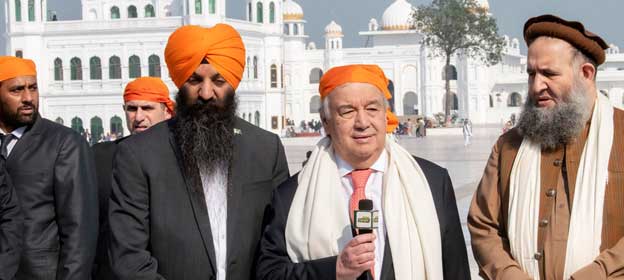
UN Secretary-General António Guterres meets religious leaders April 2020 at Gurdwara Kartapur Sahib in Punjab province in Pakistan. Religious leaders of all faiths are being urged by the Secretary-General to join forces and work for peace around the world and focus on the common battle to defeat COVID-19. Credit: UN Photo/Mark Garten

NEW YORK, Oct 26 2020 (IPS) As the Grand Imam of Al-Azhar, Ahmed Al-Tayeb said on October 20: “As a Muslim and being the Grand Imam of Al-Azhar, I declare before Almighty God that I disassociate myself, the rulings of the religion of Islam, and the teachings of the Prophet of Mercy, the Prophet Muhammad (pbuh), from such heinous terrorist act and from whoever would embrace such deviant, false thought.


At the same time, I reiterate that insulting religions and abusing sacred religious symbols under the slogan of the freedom of expression, are forms of intellectual terrorism and a blatant call for hatred. Such a terrorist and his likes do not represent the true religion of Prophet Muhammad (pbuh). Likewise, the terrorist of New Zealand, who killed the Muslims while praying in the mosque, does not represent the religion of Jesus, peace be upon him. Indeed, all religions prohibit the killing of innocent lives”

The above words of the Grand Imam of Al-Azhar Al-Sharif — Sunni Islam’s intellectual headquarters, long standing knowledge base and one of its political epicenters — were shared at an ongoing conference hosted by the St Egidio Community, entitled “No One is Saved Alone Peace and Fraternity”.

In turn, these words were read out at this meeting, by Judge Mohammed Abdel Salam, the first Muslim to ever present a Papal Encyclical (in October 2020), and the first Muslim ever to be decorated as Commander with a star medal (Commenda con Placca dell’ordine Piano), by the Pope, for his great role and efforts in promoting interreligious dialogue and the relationships between Al-Azhar and the Catholic Church (in March 2019).

Judge Mohammed Abdel Salam is the Secretary General of the Higher Committee of Human Fraternity, and represents the Grand Imam on the World Council (governing board) of Religions for Peace, a 50 year-old multi-religious organization representing all the world’s religious institutions and faith communities – in effect, a “UN of religions”.

And yet these words seem to have to be repeated again and again. Many Muslims live in fear that each and every day’s news potentially bears yet another heinous act of violence whose mad perpetrator(s) claim(s) is done for or inspired by “Islam”.

Many Muslims still hear two comments again and again from within the western hemisphere: “where is the condemnation?”, and even more insidiously, an assertion that “there must be something in the religion that makes these repeated acts of violence …possible”.

Some western government-sanctioned narratives go so far as to describe “Islamic extremism”, further compounding a sense of victimisation by many Muslims, and adding to the ‘spin’ that the religion itself is capable of extremism.

No religion is itself intrinsically capable of anything. People live religion. In his latest Encyclical “Fratelli Tutti”( in Chapter 8 “religion and fraternity”), the Pontiff focuses on “Religions at the service of fraternity in our world” and emphasizes that terrorism is not due to religion but to erroneous interpretations of religious texts, as well as “policies linked to hunger, poverty, injustice, oppression” (paragraphs 282-283).

The Encyclical maintains that a journey of peace among religions is possible and that it is therefore necessary to guarantee religious freedom, a fundamental human right for all believers (paragraph 279).

Muslims – leaders, laypeople, communities, and multiple institutions – have condemned, continue to condemn and will always condemn violence in the name of their faith.

Imam Sayyed Razawi, the Secretary General of the Scottish Ahl al-Bayt Society, and a Trustee of Religions for Peace, notes that “since Islam does not teach harming others, a question that arises is what was the motivation of an individual who had a claim to being Muslim, to violate the parameters of the laws of his faith and country in committing such an act?

There is no doubt Muslims, be they in France or across the world, hurt, when their Prophet is seemingly insulted. However, it does not justify breaking the very principles laid down in Islam to prevent such acts”.

Both Judge Abdel Salam and Imam Razawi, are of similar age. The former, living in the Arab world, the latter, living in the West. Both are Muslim leaders, and both are well versed in Islamic Jurisprudence, and learned about Islamic traditions. Both continue to iterate, in multiple speeches, conferences and contexts, that what inspires them, is to serve humanity.

Imam Sayed Razawi continues to note that serving humanity leads us down a pathway which has various labels, though amounting to roughly the same thing: interfaith, inter religious dialogue, and/or multi faith collaboration. The ultimate aim and purpose have always been, and remains, how best to live harmoniously with others.

For both these Muslim leaders, and millions of other Muslims, the inspiration to maintain that such atrocities are not in our name, comes from the Prophet Muhammad (pbuh). A man who even before prophecy was working with peoples of various faiths and backgrounds. A merchant, whose employer was a woman – later to become his wife when she proposed to him- and who believed passionately in being truthful and trustworthy.

“So much so” Razawi maintains, “that Jews, Christians, and pagans alike would entrust him with that which they held valuable to themselves, with the belief it would be safe. As a Prophet, Muhammad developed a city where Muslims lived side by side with Jews, Christians, Sabians and pagans. These lessons lead to the formation of a civilisation on the very same principles: coexistence and peace.”

Both the Imam and the Judge speak of their hurt when evil acts such as what has been witnessed in Paris take place. Both maintain, again, alongside countless others, that “it is important to repeat and continue to repeat that these are not the teachings of Islam, nor its Prophet or the interpretations of core Islamic principles”.

These atrocities are against what they believe, what they live, and what they preach, which is: peaceful coexistence, reconciliation and obeying the laws of the land one lives in, not to mention the need to uphold virtues such as compassion, love and forgiveness.

Both maintain that acts of violence are not reflective of a religion whose leaders have categorically emphasised the need for “loving thy neighbour”, because, as Imam Razawi states “either a person is your brother in faith, or your equal in your humanity.”

So why would an act be committed which is contrary to the very faith the actor confesses to be?

This is the question secular policy-makers may not ask. Or perhaps they do ask behind closed doors in rooms bursting with indifference to religion and religious sentiments.

Or yet again, maybe this is a question asked by religious ‘technocrats’ (those working on religion in secular spaces) and/or secular bureaucrats keen on instrumentalizing religious sentiments for ‘national security’ concerns.

But this is the question that every faith leader asks – and asks repeatedly. The answers lie, again, in what the “Document on Human Fraternity for World Peace and Living Together”, calls for, which the Catholic Pontiff also concludes his Encyclical with: “we were made for love” (Paragraph 88), and love builds bridges.

But how can we build bridges with love? Religions for Peace has been doing this work through 96 national and regional Inter-Religious Councils, with representatives of all faith traditions, for five decades.

In 2019, 250 religious leaders committed to building these bridges with and through service to the Sustainable Development Goals Agenda.

When Covid-19 hit, Religions for Peace set up a Multi-Religious Humanitarian Fund dedicated to supporting faith communities work to serve all, together. The religious leaders understood that there is no point to working to realise the SDGs, without a mechanism to collate and coordinate their efforts, geared towards serving social cohesion (in a world gone awry), within our new normal: humanitarian crisis.

Confronting Covid is an opportunity to work together across religious and institutional differences to build bridges of love. The humanitarian call is being heeded today like never before, by the first responders in crisis situations – i.e. religious institutions and NGOs. But few of these religious NGOs are actually collaborating, meaning jointly investing their resources, to serve together.

We can keep on having meetings to speak to building back better, and the uniqueness of faith (or business or civil society actors), and still face countless acts of violence (attributed to religion) from those whose sense of marginalization is intensifying.

We can choose to continue to serve our own organizational and territorial visibility and interests, while hundreds of thousands continue to die, and millions suffer, from a shared ecosystem of planetary degradation.

Or we can serve the multi-religious call – the multi-religious imperative – and actually pool our financial, human and spiritual resources together – to build bridges with love. The choice is ours.
  Source

Religion & the Pandemic: A Call Beyond the Here & Now

Civil Society, Featured, Global, Headlines, Health, Human Rights, Humanitarian Emergencies, Inequity, Religion, TerraViva United Nations

Opinion

Prof. Azza Karam is Secretary General, Religions for Peace International

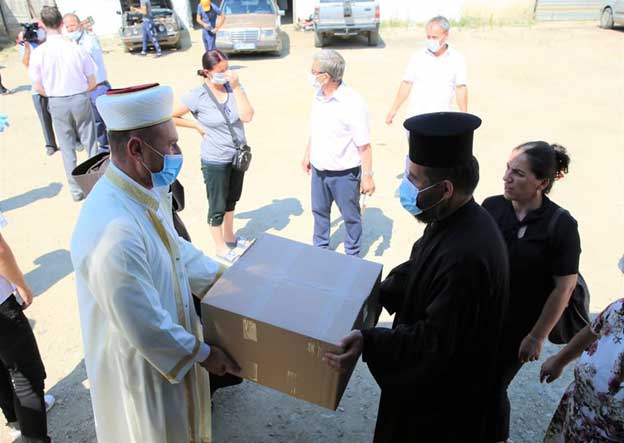
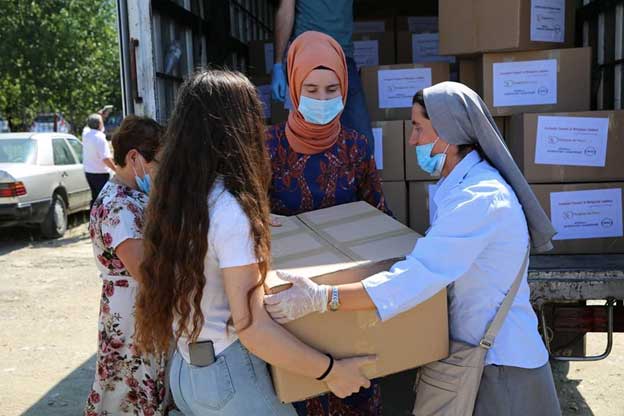
Religions for Peace Interreligious Council of Albania distributing Covid relief supplies from the Multi-religious Humanitarian Fund. Credit: Erzen Carja

NEW YORK, Aug 4 2020 (IPS) – — I have never been interested in religion or spirituality before, but I found myself tuning in to all sorts of on-line religion and spirituality related forums “in search of something.”


These are the words of a 30-something single young, middle class man (born into a Protestant-Catholic family background) in a European country.

The latter is known more for turning several churches into museums or shopping centers, prior to the Covid-19 pandemic. When people are afraid, lonely and alone – they tend to seek “something” beyond science.

A quarter of Americans say their faith has become stronger because of the pandemic, according to a Pew survey conducted during April 20-26, 2020, of 10,139 U.S. adults.

But this is to be contrasted with the experiences of those from an older generation (60+) in the southern hemisphere, like my own 85-year old Muslim father, who lives to pray. For him, the mosque has, over the last decade since my mother’s death, become both his spiritual hub and social club.

His cohort is differing ages of retirees, who, in spite of very different political perspectives in a Middle Eastern country reflecting the now normal of intense polarization, treasure their prayerful community spaces. This middle class (an endangered species to be sure) of retirees, share a sense of deep faith informing their social and political convictions.

For many of them, the lockdown was experienced primarily s an inability to go to the mosque, and thus as almost physically painful. None of them countenanced the idea of on-line prayers, that doesn’t make any sense, they maintained. Their sense of depression was almost palpable throughout the lockdown period, as was their joy at the reopening of some mosques.

The coronavirus presents barriers to caring for the sick and to performing certain death and burial rites which are core religious practices, and especially needed in a pandemic that has already claimed nearly hundreds of thousands of lives.

In Sri Lanka for example, public health measures for safe burial practices have already challenged traditional rites, wherein authorities mandated cremations for Covid-19-linked deaths, despite the fact that cremation is supposed to be forbidden in Islam.

Covid-19 also complicates Jewish and Muslim burial practices of washing and cloaking bodies before burial, given concerns about transmission. Innovative religious responses seeking to reconcile public health policies with traditional burial practices have been taking place.

In Israel, for example, bodies are wrapped in plastic before burial, and before that, ritual washing is completed while wearing full protective gear. Some Islamic scholars are providing exegesis and guidance on how the ritual of washing the body prior to burials, could be conducted safely whilst following Islamic principles.

Religions for Peace Interreligious Council of Albania distributing Covid relief supplies from the Multi-religious Humanitarian Fund. Credit: Erzen Carja

This echoes what occurred during the Ebola crisis in West Africa. In fact, while COVID-19 differs from HIV/AIDS, Malaria, Tuberculosis, and Ebola, there are nevertheless some important similarities.

In cases of dealing with diseases where transmission affects large numbers of people, and vaccines and medication remain relatively hard to find and/or provide to all affected, beyond the health inequities which are underscored during such times, there are critical lapses by national and international authorities in acknowledging and supporting the role of religious leaders.

In fact, during previous outbreaks of HIV/AIDS (around the world), and of Ebola in Central and West Africa, the strengths of religious communities were rarely incorporated into public policy – until national and international secular authorities lose the plot.

In Religions for Peace (the only multi religious organization representing all religious institutions and communities around the world with 90 national and 6 regional Inter-Religious Councils/IRCs), a founding mantra is that caring for the most vulnerable is deeply embedded in all faith traditions.

As a result, religious institutions, communities, and faith-inspired/based NGOs (or FBOs as they are often referred to), have historically served as the original providers of essential social services. In fact, FBOs are the first responders in most humanitarian emergencies. Their work includes providing spiritual sustenance for sure, but also hunger relief, heath care, and shelter.

This is not only a feature of the developing world. Samaritan’s Purse set up a health center at the height of the pandemic in Central Park – an icon of New York city. Caritas, at one point, was feeding 5,000 people a day, in Geneva, Switzerland.

For 50 years, Religions for Peace worked to equip its IRCs (through the respective religious institutions and services) to seek peace through advocating for human rights (including the rights of Indigenous Peoples, as well as women, religious minorities, the disabled, elderly, and youth), mediating conflicts, providing emergency humanitarian relief, and contributing to sustainable development efforts (including health, nutrition, sanitation, education and environmental sustainability).

The defining feature of Religions for Peace IRCs is multi-religious collaboration. The main principles of this collaboration are representativity and subsidiarity. In the case of the former, each IRC earns Religions for Peace affiliation by ensuring its governance represents each and all of the nations religious institutions, and communities. In return, each IRC is guaranteed its independence to determine its national/regional priorities, and its modus operandi.

Half a century of collaboration with several United Nations entities at different moments in time, provides a comparative context to enable an assessment of how the UN works with some religious actors.

At the very least, this historical time-line of partnership efforts on peace and security, sustainable development and human rights, provides a learning context. It is with that in mind that we can say that UN efforts in seeking partnerships with faith-based NGOs in facing the Covid-19 implications, are noticeably on the increase relative to pre-Covid dynamics.

Entities like UNHCR, UNICEF, UNAIDS, WHO, and even non-operational entities like the Secretary-General’s own office, as well as UN Office of Genocide Prevention and Responsibility to Protect, have, respectively, issued statements specifically calling on religious leaders and actors to uphold their unique influences (noted above), sought religious input on and in Covid Guidance documents, and (are) hosting multiple consultations to strengthen myriad joint responses.

Working with multiple stakeholders, Religions for Peace research is revealing that while some religious charities are struggling to find resources to continue their services for communities, other FBOs are able to raise more resources for pandemic relief, than anticipated.

This is particularly the case for Hindu, Muslim and Buddhist organisations in countries in Asia, but also Muslim and Christian charities in Africa and the Middle East.

Almost 90% of Religions for Peace IRCs reported a 100% increase in engagement (asks) of their advocacy and messaging efforts from/by national governments, particularly as of May and June 2020 – as compared to this time last year.

This is evidenced through national campaigns during religious occasions and holidays, as well as local awareness raising efforts by religious leaders in particular, as opposed to faith-based NGOs.

Out of the Covid response efforts tracked by 25 Religions for Peace IRCs in 4 regions, thanks to the Multi-Religious Humanitarian Fund administered by RfP, multi-religious efforts are, on average, much harder to encourage than efforts administered by Ecumenical or single religion organisations.

A rough estimate shows that out of the nearly 100 humanitarian assistance projects being tracked by RfP in 40 countries in parts of Africa and Asia, only 1 percent involve multi-religious efforts. Several IRCs have also reported finding it harder to even advocate for multi religious collaboration to provide pandemic assistance (food and medicine packages) in conflict impacted countries (i.e. more than it normally is to seek to mediate some of the conflicts and/or work with governments in mediation efforts).

While it is now almost a cliche to call for more partnerships with religious, or faith-based actors, this is simply not good enough. FBOs, like many NGOs fully immersed in relief efforts, are finding several (good) excuses not to work together.

Faced with a global pandemic, even the FBOs – ostensibly inspired by religious calls for serving all, including the most vulnerable – are less keen on collaborating across their multiple differences (institutional, theological, structural, financial and political), as they continue to serve millions.

Is it enough to serve all who need regardless of religious affiliation (the current bar against which religious NGOs are often measured by the UN and other international entities), or should a pandemic inspire more, and better collaboration among multi-religious partners?

One can but wonder what the relative lack of religious NGO collaboration may foretell for social coexistence after the pandemic, not to mention what this lack of collaboration spells for the legitimacy of the so-called prophetic voice many of them speak of.

  Source

Reflections on the Charter of the United Nations on its 75th Anniversary

Civil Society, Climate Change, Development & Aid, Gender, Global, Headlines, Human Rights, Humanitarian Emergencies, IPS UN: Inside the Glasshouse, TerraViva United Nations

Opinion

Mona Juul is the seventy-fifth President of the Economic and Social Council and Permanent Representative of Norway to the United Nations.

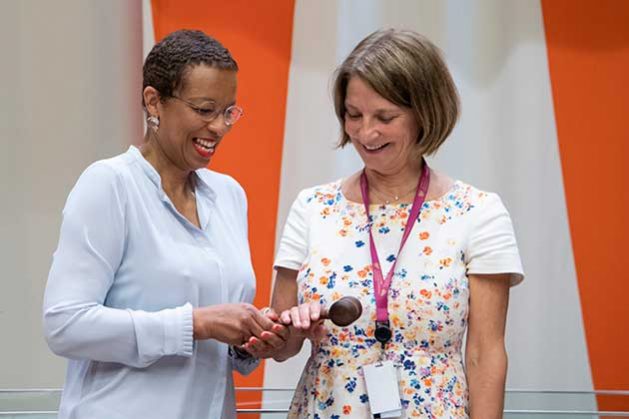
Inga Rhonda King (left), Permanent Representative of Saint Vincent and the Grenadines to the United Nations and seventy-fourth President of the Economic and Social Council (ECOSOC), hands over the gavel to Mona Juul, Permanent Representative of Norway to the United Nations and newly-elected seventy-fifth President of ECOSOC, at the opening meeting of the 2020 session of ECOSOC. New York, 25 July 2019. Credit: UN Photo/Eskinder Debebe

NEW YORK, Jul 29 2020 (IPS) – This year we celebrate the 75th anniversary of the Charter of the United Nations, written and signed during a period of great global change. Today, the world is again shifting beneath our feet. Yet, the Charter remains a firm foundation for our joint efforts.


These uncertain times of global disruption shine a light on the interdependences of our world. The COVID-19 pandemic, and the inequality it has exposed, are a global challenge that we must solve through global solutions. These solutions call for more, not less, cooperation across national borders.

Global cooperation is the enduring promise of the Charter of the United Nations. I am honoured to preside over the Economic and Social Council (ECOSOC), one of the principal organs of the United Nations, at its 75th anniversary.

In January 1946, 18 members gathered for the inaugural meeting of ECOSOC under the leadership of its first President, Sir Ramaswami Mudaliar of India. ECOSOC was vested with a powerful mandate, to promote better living for all ¬¬by fostering international cooperation on economic, social and cultural issues.

The Charter recognizes the value of social and economic development as prerequisites for stability and well-being. In a 1956 speech, Secretary-General Dag Hammarskjöld said that “while the Security Council exists primarily for settling conflicts […] the Economic and Social Council exists primarily to eliminate the causes of conflicts.”

For me, this is a reminder that sustainable peace and prosperity rely on global solidarity and cooperation.

Today, this unity of purpose to reach those furthest behind first is also the spirit of the Sustainable Development Goals (SDGs). The 2030 Agenda is our shared road map to transform the world as we recover better, protect our planet and leave no one behind. With ECOSOC serving as the unifying platform for integration, action, follow-up and review of the SDGs, our promise to eradicate poverty, achieve equality and stop climate change must drive our actions.

ECOSOC has the unique convening power to make this happen. It brings together valuable constituencies such as youth and the private sector to enhance our work and discussions. ECOSOC also remains the gateway for civil society engagement with the United Nations. Civil society has been central to progress on international economic, social and environmental cooperation, from the small but critical number of organizations present in San Francisco when the Charter was signed in 1945, to the 5,000-plus non-governmental organizations with ECOSOC consultative status today.

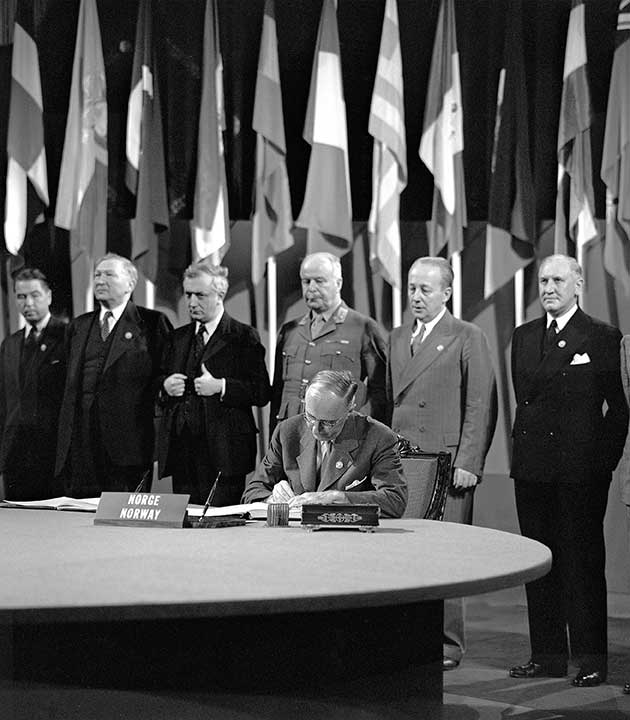
Wilhelm Munthe Morgenstierne, Ambassador to the United States, member of the delegation from Norway, signing the Charter of the United Nations at the Veterans’ War Memorial Building in San Francisco, United States, on 26 June 1945. Credit: UN Photo/McLain

The Charter also outlines that ECOSOC should promote universal respect and observance of human rights and fundamental freedoms for all, without distinction as to race, sex, language or religion. While much has shifted in our world, this mandate remains just as important today as in 1945. After all, human rights are a part of the foundation of the United Nations, quite literally. When Trygve Lie, the first Secretary-General and fellow Norwegian, laid the cornerstone of United Nations Headquarters at Turtle Bay in October 1949, it contained, together with the Charter, a copy of the Universal Declaration of Human Rights.

Human rights have always been a part of the work of ECOSOC. The former United Nations Commission on Human Rights was one of the first functional commissions created within ECOSOC and was charged with drafting the Universal Declaration. Today, ECOSOC remains committed to playing its part to promote all rights: civil and political, as well as economic, social and cultural rights.

In stark contrast to the 18 men who formed the first meeting of ECOSOC in 1946, I am proud to be the third consecutive female president of ECOSOC and one of five female presidents in its 75-year history. Although slow, this is progress, especially compared to 1945, when out of the 850 international delegates that convened in San Francisco to establish the Charter of the United Nations, only eight were women, and only four of them were signatories to the Charter. Today, the Secretary-General has achieved gender parity in all senior United Nations positions, and the Commission on the Status of Women is perhaps the highest profile part of the work of ECOSOC. The Commission’s annual session is instrumental in promoting women’s rights, documenting the reality of women’s lives throughout the world and shaping global standards on gender equality and the empowerment of women.

ECOSOC must work to place gender equality at the heart of all our work. Women’s rights and gender equality are imperative to a just world. In all my endeavours, I strive to promote and advance these rights with a vision of a more prosperous, peaceful and fair world, for the benefit of women and girls—and men and boys alike.

Before the current crisis, more people around the world were living better lives compared to just a decade ago. More people have access to better health care, decent work and education than ever before. Nevertheless, inequality, climate change and the lasting negative impacts of the COVID-19 pandemic are threatening to undo these gains. While we have technological and financial resources at our disposal, unprecedented changes will be needed to align resources with our sustainable development objectives. The United Nations must remain at the forefront of our collective efforts guided by our commitment to the Charter.

The true test of our success will be whether persons, communities and countries experience improvement in their lives and societies. The United Nations must be of value to people. To our family. To our neighbours. To our friends. Unless we achieve this, our credibility is at stake.

As we celebrate the 75th anniversary of the Charter of the United Nations, let us remind ourselves of the promise it embodies, to help the world become a more prosperous, just, equitable and peaceful place.

To me, the opening words of the Charter, “WE THE PEOPLES OF THE UNITED NATIONS”, are a humble and empowering reminder of our capability to overcome current and future challenges. Even in troubling times, there remains great hope in the power of working together. That is the founding spirit of the United Nations—and in this 75th anniversary year, as we face grave and global challenges, it is the spirit we must summon today.

This article was first published by the UN Chronicle on 26 June 2020.

  Source

‘One CGIAR’ with Two Tiers of Influence? The Case for a Real Restructuring of Global Ag-Research Centres

Civil Society, Climate Change, Development & Aid, Food & Agriculture, Global, Headlines, Humanitarian Emergencies, TerraViva United Nations

Opinion

This is an abridged version of an open letter by IPES-Food to the CGIAR on 21 July 2020.

Agroecological systems, which build resilience through crop/species diversity and natural synergies across the whole agro-ecosystem, are showing major potential. Credit: (C. Perodeaud, 2018)

BRUSSELS , Jul 22 2020 (IPS) – While the ‘CGIAR System’ may sound like a technocratic body, few organizations have exerted as much influence on today’s food systems as this network of global agricultural research centres. Since its inception at the height of the ‘Green Revolution’ in 1971, the CGIAR has driven advances in crop breeding and agricultural mechanization and modernization across multiple continents. Its mission – to develop knowledge and innovation for agriculture in the global South – is as relevant today as ever, in light of climate change, COVID-19 and a host of additional challenges.


The process now underway to reform the CGIAR is therefore of major public interest. The ‘One CGIAR’ process seeks to merge the CGIAR’s 15 legally-independent centres, headquartered in 15 countries, into one legal entity. The impetus has come from some of its biggest funders, notably the Bill and Melinda Gates Foundation, the World Bank, and the US and UK governments.

Reform of the CGIAR is long overdue. However, we are concerned that the current reform process, like previous versions, will fall short of the fundamental change that is required, and risks exacerbating major power imbalances in global agricultural development.

Firstly, the restructuring appears to have been advanced in a coercive manner, and without genuine buy-in from the global South. A ‘carrot and stick’ approach has been adopted: an increase in the overall CGIAR budget has been promised if the merger goes through, while centres resisting the move have allegedly been threatened with budget cuts. Insiders say that representatives from governments and agricultural institutes in the global South – the much-touted beneficiaries of the CGIAR and the Green Revolution – are generally against the merger, while the big funders and closely-affiliated scientific institutions are in favour. The two centres voting against the merger last week were the forest and agroforestry centres headquartered in Indonesia and Kenya respectively.

Secondly, there is insufficient diversity among the inner circle driving forward CGIAR reform. In the mid-1990s, when the CGIAR underwent an earlier restructuring, men from just four countries – the US, the UK, Canada and Australia – accounted for 85% of board chairs and directors. The CGIAR has subsequently made efforts to improve gender balance, and to bring on staff and board members from the global South. However, a true diversity of perspectives is still missing: many of those recruited have close associations with Northern universities and donor-led partnerships, while the voices of farmers, civil society and independent researchers in the global South are still largely absent. Only 7 of the 22 members of the CGIAR System Reference Group (SRG) – responsible for managing the transition process – are from the global South, of which two are already affiliated to CGIAR centres.

Thirdly, the proposed restructuring fails to equip CGIAR for the urgently-needed paradigm shift in food systems. Business-as-usual approaches to agricultural development are failing to address hunger and improve the livelihoods of smallholders, as shown by the shortcomings of the Alliance for a Green Revolution in Africa. Meanwhile, agroecological systems, which build resilience through crop/species diversity and natural synergies across the whole agro-ecosystem, are showing major potential – as recognized by the World Bank-led global agriculture assessment (‘IAASTD’), IPBES, the UN Food and Agriculture Organization (FAO), and a July 2020 statement by 366 scientists. The CGIAR has taken some steps towards systemic approaches, particularly through the work of some of its centres on participatory plant breeding, farmer-managed seed systems, varietal and species diversification for nutrition and resilience, biological control and agroforestry. But it has failed to mainstream these approaches: a 2017 study concluded that the “CGIAR environment was not conducive to implementing systems research”. Recent analysis by Biovision and IPES-Food found that, on average, CGIAR research programmes meet less than 20% of the indicators of systemic agroecological research.

While the basic shortcomings have been acknowledged in the current reform process, the CGIAR’s underlying philosophy does not appear to have shifted. The focus remains on scientific innovations being “deployed faster, at a larger scale, and at a reduced cost”, and provided to rather than developed with beneficiaries. By ushering in a single board with new agenda-setting powers, the restructuring may further reduce the autonomy of regional research agendas and reinforce the grip of the most powerful donors – many of whom have proven reluctant to diverge from the Green Revolution pathway.

Underlying all three of these problems is the disproportionate power of a handful of actors to control the purse strings and set the global agricultural development agenda. This reality risks undermining and short-circuiting the significant efforts to consult stakeholders over the past year.

It is therefore crucial to consider how these risks can be averted as the restructuring process moves forward, and to open a discussion on fundamental reform of the CGIAR. In order to rebuild its legitimacy and relevance, the CGIAR must: diversify its governance; put at centre stage the views of farmers, researchers, civil society groups, and governments in the global South; support transformative, transdisciplinary, agroecological research co-led by farmers and farmer organisations; collaborate with a broad network of regional, sub-regional and national research centres and universities to strengthen autonomous research capacity in the global South; and participate alongside the Rome-based agencies (FAO, IFAD, WFP) in the Committee on World Food Security (CFS).

Ultimately, the CGIAR system should mirror the food system we need: decentralized, context-specific, agroecological, and with more distributed and equal power relations.

*The IPES-Food expert panel: Olivier De Schutter (Co-chair), Olivia Yambi (Co-chair), Bina Agarwal, Molly Anderson, Million Belay, Nicolas Bricas, Joji Carino, Jennifer Franco, Mamadou Goïta, Emile Frison, Steve Gliessman, Hans Herren, Phil Howard, Melissa Leach, Lim Li Ching, Desmond McNeill, Pat Mooney, Raj Patel, P.V. Satheesh, Maryam Rahmanian, Cécilia Rocha, Johan Rockstrom, Ricardo Salvador, Laura Trujillo-Ortega, Paul Uys, Nettie Wiebe, Yan Hairong.

  Source

NGOs – with Local Groups in the Lead – are on COVID-19 Frontlines

Civil Society, Featured, Global, Headlines, Health, Human Rights, Humanitarian Emergencies, Inequity, TerraViva United Nations

Opinion

Abby Maxman is President & CEO of Oxfam America

Credit: Oxfam America

BOSTON, USA, May 11 2020 (IPS) – NGOs, at the international, national – and most of all local – level are on the frontlines every day.

I just heard from Oxfam staff in Bangladesh, that when asked whether they were scared to continue our response with the Rohingya communities in Cox’s Bazar, they replied: “They are now my relatives. I care about them — and this is the time they need us most.’”


These people – and those that they and others are supporting around the globe – are at the heart of this crisis and response.

As we talk about global figures and strategies, we must remember we are talking about parents who must decide whether they should stay home and practice social distancing or go to work to earn and buy food so their children won’t go hungry; women who constitute 70% of the workers in the health and social sector globally; people with disabilities and their carers; those who are already far from home or caught in conflict; people who don’t know what information to believe and follow, as rumours swirl.

Looking more broadly, we see that the COVID-19 crisis is exposing our broken and unprepared system, and it is also testing our values as a global community. COVID-19 is adding new and exacerbating existing threats of conflict, displacement, gender-based violence, climate change, hunger and inequality, and too many are being forced to respond without the proper resources – simple things like clean water, soap, health care and shelter. We must be creative and nimble to adapt our response in this new reality.

Most vulnerable communities

We know too well that when crisis hits, women, gender diverse persons, people with disabilities and their carers, the elderly, the poor, and the displaced suffer the worst impacts as existing gender, racial, economic and political inequalities are exposed.

Abby Maxman

These communities need to be at the center of our response, and we, as the international community, must listen to their needs, concerns and solutions.

Access

As we continue to ramp up our response, we must have access to the communities most in need. Likewise, COVID-19 cannot be used as an excuse to stop those greatest in need from accessing humanitarian aid.

Border closures are squeezing relief supply and procurement chains; Lockdowns and quarantines are blocking relief operations; And travel restrictions for aid workers have been put in place, disrupting their ability to work in emergency response programs.

Authorities should absolutely take precautions to keep communities safe, but we need to work at all levels to also ensure life-saving aid can still get through and people’s rights are upheld.

Local and national NGOs are on the frontline of the COVID-19 response, and communities’ access to the essential services and lifesaving assistance they provide must be protected. We also know that with effective community engagement, we can gain better and more effective access to communities.

Humanitarian NGOs and partners are adapting our approaches to continue vital humanitarian support while fulfilling our obligation to “do no harm.”

This adaptive approach, and our experience of ‘safe programming,’ shifting to remote management where possible; and scaling back some operations where necessary—will all be crucial as COVID-19 restrictions continue to amplify protection concerns and risk of sexual exploitation and abuse.

Funding

To mount an effective response, we must draw on our collective experience, but this crisis also offers an opportunity to change the way we work, including setting up new funding mechanisms to allow our system to leverage the complementary roles we all play in a humanitarian response.

Overall, NGOs urgently need funding that is flexible, adaptive, and aligned with Grand Bargain commitments. Our work is well underway, but more is needed to get resources to the frontlines.

We need to better resource country based pooled funds, which are crucial for national and local NGOs. Now more than ever, donors must support flexible mechanisms to increase funding flows to NGO partners.

Next Steps

In closing, the international community needs to come together to battle this pandemic in an inclusive and a responsive way that puts communities at the heart of solutions. Even while we respond in our own communities, we must see and act beyond borders if we are ever to fully control this pandemic.

The planning and response to COVID-19 need to be directly inclusive of local and national NGOs, women’s rights organizations, and refugee-led organizations leaders. We must address this new threat, while still responding to other pressing needs for a holistic response.
This means continuing our response to the looming hunger crisis, maintaining access to humanitarian aid, and supporting existing services including sexual and reproductive health and gender-based violence services.

We need to ensure humanitarian access is protected to reach the most vulnerable.

And funding needs to be quickly mobilized through multiple channels to reach NGOs and must be flexible both between needs and countries.

This much is clear: We cannot address this crisis for some and not others. We cannot do it alone. The virus can affect anyone but disproportionately affects the most marginalized. It is our collective responsibility to ensure that our global response includes everyone.

We owe it to those dedicated staff and their honorary “relatives” in Cox’s Bazar, and all those like them around the globe, to get this right.

This article was adapted from Abby Maxman’s comments as the NGO representative at the UN’s Launch of the Updated COVID-19 Global Humanitarian Response Plan on May 7, 2020.

  Source

Religion & its Discontents: Considerations Around COVID-19 & Africa

Civil Society, Economy & Trade, Featured, Global, Headlines, Health, Human Rights, Humanitarian Emergencies, Inequity, Religion, TerraViva United Nations

Opinion

Dr. Azza Karam is the Secretary General of Religions for Peace International and Professor of Religion and Development at the Vrije Universiteit (VU), Amsterdam; Dr. Mustafa Y. Ali is the Secretary General of the Global Network of Religions for Children (GNRC) based in Nairobi, Kenya.

Credit: United Nations

NEW YORK, May 8 2020 (IPS) – COVID-19 has spread to many nations around the world, and has been declared a pandemic by the World Health Organization. In the global south, the COVID-19 pandemic has stretched the available medical and health resources, triggered economic shocks, and caused social upheavals and insecurity in many countries and localities.


While the pandemic has caused huge numbers of infections and deaths in the global north, the consequences in the poorer nations in the global south is acute.

Serious challenges arising from responses from authorities to contain the pandemic ranging from hard to soft lockdowns, curfews, limitations in movements, and social distancing, are causing strains in communities.

From fragile economies to ill- equipped health facilities and underfunded health programs, to the almost non-existent social security measures that would ordinarily cushion large segments of pupations from falling further into poverty, the impact on many communities in the global south will be grave.

While COVID-19 has not had a devastating impact on Africa as it has elsewhere, according to official statistics, we fear that this may change.

On the health side, health experts are already warning that the pandemic could yet exact a much heavier death toll in the region if it overwhelms local health services – as has happened in the United States and United Kingdom.

There are also concerns that the relatively weak health systems and patchy testing may be enabling COVID-19 to spread through Sub-Saharan Africa, without a means of registering any of this data.

The official figures to date locate much of the pandemic’s regional burden in places like South Africa, which has reported nearly 5,000 confirmed cases of COVID-19 and recently deployed hundreds of Cuban doctors to help fight its impact, and more than 1,800 confirmed cases in Cameroon, which has launched nationwide testing in April.

Two countries in the region, Lesotho and Comoros, have yet to officially report any cases, let alone Covid related deaths. According to a director of the African Center for Disease Control, the collapse of global cooperation has marginalised Africa in the diagnostics market, and its lack of hospitals combined with a high prevalence of HIV, tuberculosis, malaria and malnutrition could lead to relatively high COVID-19 mortality rates.

Food security is another major issue. Speaking of concerns in Nigeria, Sister Agatha Chikelue, Executive Director of the Cardinal Onaiyekan Foundation and Coordinator of Religious for Peace’s interfaith Women’s Network, noted that people are afraid of dying of “Hovid” – the hunger caused as a result of loss of livelihoods from the lockdown.

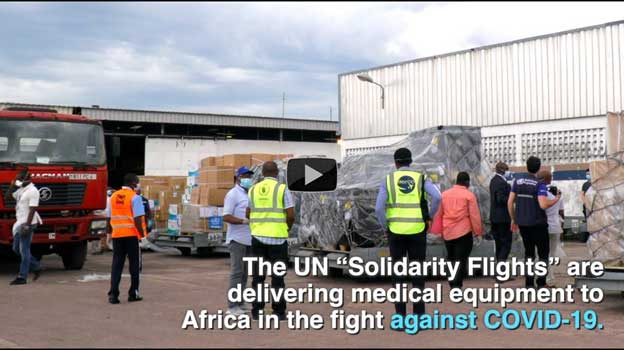
Religious leaders join COVID-19 fight in Africa. Credit: United Nations

Small wonder, therefore, that Nigeria is one of the countries already struggling to consider reopening some of their businesses, in spite of dire warnings.

According to a UN report, Africa is home to more than half of the 135 million who suffer acutely from food insecurity, which means there are serious concerns about famines and the potential for a significant death toll.

In other words, we are speaking of very real fears that the Covid crises may cause famine in combination with the drought, which will have dire consequences on the conflict-affected countries in the continent.

John Letzing, Digital Editor of Strategic Intelligence at the World Economic Forum, lists some of the dynamics facing the continent as reported on by a number of different sources. Notably,

Some Africans may be suffering indirectly from the impact of COVID-19 while
abroad – in early April, images and video emerged of Africans in Guangzhou,
China, being subjected to passport seizures and arbitrary quarantine,
according to this report. (The Diplomat). Africa has undergone an incredible
journey to make routine immunization possible, though immunization
coverage in sub-Saharan Africa has stalled at 72%. Now, COVID-19 presents
a further threat to progress, according to this analysis. (New African)

Despite the heralding of the coronavirus, there are those who argue that Africa’s governments did little to prepare themselves, their systems, or their people. Other commentators note that many countries have made plans to ease coronavirus-related measures.

There is some speculation that lessons learned from incidents like the 2014 Ebola outbreak will contribute to some countries’ capacities to weather the storm.

The fact is, that one of the key containment measures—social distancing—will be impossible in the crowded markets, high-density informal settlements and dwellings shared by more than one family. Another oft repeated advise is that of frequent handwashing in clean water. But what happens when clean water to drink, is in very short supply for many households across the sub-Saharan African continent?

Moreover, it is inconceivable that governments will, on their own, be able to meet the needs of all their citizens in this COVID pandemic. Many were already struggling to do so even before the pandemic struck.

Besides offering spiritual guidance and support, which is increasingly needed in times of fear and uncertainty, faith communities and organizations in Africa as elsewhere, have, over the years, supplemented governments’ efforts to provide education, health, nutritional and other developmental needs to their communities.

They also have been in the forefront of peacebuilding initiatives, and in advocating for rights-based approaches to development, protection of, and ending violence against children and minorities.

With the COVID-19 pandemic ravaging communities and creating fear and despondency, faith-based and faith-inspired organizations are already providing and augmenting critical services in health care provision – including but not limited to palliative care – and as part of the supply chains (for food, medicines, spiritual relief) reaching the heart of communities.

Religious organisations are also key to disseminating accurate news about the impacts and effects of the pandemic, rendering more critical their services as communicators and advisers on behavioral changes needed to keep communities safe.

Those of us engaged in working with religious actors speak of 84% of the world’s people claiming an affiliation to a faith tradition. This applies to all the world, and the sub-Saharan African subcontinent is no stranger to religiosity and belief as normal in everyday lives.

In times of fear, most believers will turn to faith, and this means that religious institutions, religious leaders and religious NGOs are playing a key role including psycho-social healing of COVID-19 traumas.

The fact is, however, that not all faith actors play the same role. And even when most play a positive role in helping communities and governments to cope, this does not mean all do. We know that some faith leaders are adamant that congregating for religious worship is a means of healing, because “God will spare us”.

These messages are hardly helpful when science and life and death experience indicate that social distancing is not only advisable, but downright necessary.

While the UN Secretary General’s call for a global ceasefire to all conflicts has been echoed by many religious leaders around the world, the question remains whether actors involved in extremist groups using religion as their raison d’etre will contemplate heeding such calls.

In fact, COVID-19 lockdowns may even be opportunities to ramp up violence, as government security services are otherwise engaged. This begs two important questions we have yet to find answers for:

To what extent will those religious institutions involved in providing for the daily spiritual, psycho-social, humanitarian care for their communities, and already overwhelmed in reconfiguring the very nature of religious worship, find the wherewithal to engage with the ‘radical fringes’ in African contexts already deeply divided by conflicts?

And what impact will COVID-19 have on the very same armed groups still insistent on playing out their conflicts? Already, some of those who still carry weapons, are working to serve some of their community needs – providing food, water and even money to households having to do without.

And as they serve their communities’ needs, the extremist groups have also ramped up attacks. In March and April, armed attacks in sub-Saharan Africa increased by 37 %, adding significant strain on the already overstrained resources, currently re-directed to COVID-related emergencies.

Sheikh Ibrahim Lethome, Secretary General of the Center for Sustainable Conflict Resolution, and Convener for the GNRC (Global Network of Religions for Children) Horn of Africa Working Group on religious-based extremism, is not surprised that the extremist groups have fully seized the confusion and despondency that COVID-19 has thrust into already fragile communities.

These stretch from the Sahel in West Africa, the Horn of Africa to Southern Africa’s Cabo Delgado in Mozambique

Will COVID-19 offer an opportunity for a different trajectory for some of those groups? As these groups continue to plant bombs, kill and maim, what will become of armed insurgency in the name of religion, when COVID-19 hits hard in Africa?

  Source