Trade Minister Partridge hails MAGLA on responsible gambling initiatives

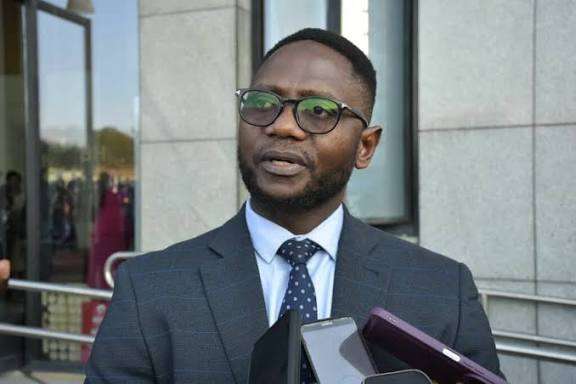
BLANTYRE-(MaraviPost)-Minister of Industrialisation, Business, Trade and Tourism, George Partridge, has commended the Malawi Gaming and Lotteries Authority (MAGLA) for its proactive leadership in promoting the responsible growth of the gambling industry while safeguarding young people and strengthening investor confidence.

The Minister made the remarks on Thursday during a strategic engagement with MAGLA management, which included a familiarisation tour aimed at deepening his understanding of the Authority’s operations, regulatory mandate, and strategic priorities.

Speaking during the engagement meeting, Partridge, said MAGLA’s approach demonstrates a strong commitment to balancing revenue generation, tourism development, and social responsibility, noting that gambling, when well regulated, can contribute meaningfully to the country’s economic growth.

“Gambling is an experience for both local and foreign consumers. It complements our tourism products and attracts more consumers, and when they spend more, government also benefits through increased revenue,” said Partridge.

He then applauded MAGLA for taking deliberate steps to address the social risks associated with gambling, particularly the protection of children and vulnerable groups.

“As a regulator of gambling, one of the major challenges is the negative effects of gambling on society and on children. We wanted to understand what MAGLA is doing to minimise these negative effects, and this is an area they are taking seriously,” he said.

The Minister also acknowledged operational challenges facing the Authority, including limitations in office infrastructure, and assured that government is aware of the impact such constraints can have on effective service delivery.

“They are operating from converted residential houses and are scattered across different locations, which makes administration a bit difficult. These are genuine concerns that government has taken note of,” said Partridge.

Commenting on the Minister’s visit, MAGLA Director General, Rachel Mijiga, described it as a strong show of government support for the gaming industry.

“We are grateful to the Minister for visiting MAGLA and for the guidance he has provided on how we can take the industry forward, particularly on responsible gambling and sustainable growth,” said Mijiga.

She said MAGLA is engaging betting operators on concerns surrounding the newly introduced betting tax and is working closely with key stakeholders to ensure a balanced approach.

“We are gathering insights from operators and will engage the Ministry of Finance and other stakeholders to arrive at a win-win situation for government, investors and the people of Malawi,” she said.

Looking ahead, Mijiga said MAGLA is projecting 60 percent growth in the gaming sector in the new financial year and will intensify responsible gambling initiatives.

“We will partner with responsible gambling agents and engage parents, guardians and school principals to ensure that under-18s do not participate in gambling,” she said.

She also highlighted the media’s role as a key partner in public awareness.

“The media shape public opinion and help us reach the youth and the wider public. They are a critical stakeholder in promoting responsible gambling,” said Mijiga.

The Maravi Post

Celebrating Malawi’s heroes in education: Chikwawa Secondary School shines

BLANTYRE-(MaraviPost)-Photos of teachers at Chikwawa Secondary School celebrating education have flooded social media, showcasing the dedication and passion of these educators.

The images are a testament to the hard work and commitment of teachers in Malawi, who go above and beyond to shape the minds of future generations.

The celebration is a moment to recognize the tireless efforts of teachers who often work under challenging conditions to provide quality education to their students.

Their dedication is the foundation upon which the future of Malawi is being built, and it’s time to acknowledge their contributions.

Teachers elsewhere in the country are being called upon to share their own images, marking the celebration and showcasing the spirit of education across Malawi.

This collective celebration aims to highlight the importance of education and the pivotal role teachers play in shaping the country’s future.

The outpouring of support is a clear indication of the respect and admiration Malawians have for their educators.

As the country celebrates this momentous occasion, it’s an opportunity to reflect on the progress made in the education sector and the challenges that still need to be addressed.

The government and stakeholders must work together to ensure that teachers are supported and equipped to provide quality education to all Malawians.

The celebration also serves as a reminder of the power of education to transform lives and communities.

By investing in education, Malawi is investing in its future, and the impact will be felt for generations to come.

The Maravi Post

Desperate Bobi Wine’s Wife Barbie cries out for help as security forces besiege home

KAMPALA-(MaraviPost)-Barbie Kyagulanyi, the wife of Ugandan singer and former presidential candidate Robert Kyagulanyi Sentamu alias Bobi Wine, has made a desperate plea for safety, privacy, and access to food as security men surround their home in Magere.

The urgent appeal highlights the escalating tensions and concerns for the family’s well-being.

Security forces have been deployed around the couple’s home, restricting access and sparking fears for their safety and security.

Barbie Kyagulanyi’s cry for help underscores the gravity of the situation, with the family facing significant challenges in their daily lives.

The situation has also taken a toll on the family’s access to basic necessities, including food.

Barbie Kyagulanyi’s appeal for access to food highlights the humanitarian concerns and the need for urgent intervention to ensure the family’s basic needs are met.

The standoff between security forces and the Bobi Wine family has sparked widespread concern and outrage, with many calling for calm and respect for human rights.

The international community is watching the situation closely, with many urging the Ugandan government to ensure the safety and security of the family.

As the situation continues to unfold, the plight of Barbie Kyagulanyi and her family remains a major concern.

The world waits with bated breath as the drama unfolds, hoping that sanity and respect for human rights will prevail in Uganda.

The Bobi Wine family has been at the center of controversy and political tensions in Uganda, with many viewing them as symbols of resistance against the ruling government.

The current standoff is the latest chapter in a saga that has captivated the nation and sparked heated debate.

The situation remains fluid, and updates are expected as more information becomes available.

The world waits anxiously for a resolution to the standoff, hoping for a peaceful and safe outcome for the Bobi Wine family.

The Maravi Post

“Political interference worsening fuel prices hikes”-Kapito

BLANTYRE-(MaraviPost)-The Consumers Association of Malawi (CAMA) has attributed the recent sharp fuel price hike to prolonged government and parliamentary interference in the operations of the Malawi Energy Regulatory Authority (MERA), arguing that the economic shock could have been avoided if the regulator had been allowed to operate independently.

Speaking to MaraviPost, CAMA Executive Director John Kapito said fuel prices would have increased gradually and with far less pain if MERA had been permitted to execute its mandate without political pressure.

Instead, he said sustained interference delayed necessary adjustments, culminating in a sudden and severe hike that has heavily burdened consumers.

Kapito argued that MERA’s hands were effectively tied by government actions, making it impossible for the regulator to conduct incremental price reviews that would have cushioned the public from a major shock.

He stressed that the blame should not fall on MERA staff, whom he described as professionals constrained by political decisions beyond their control.

“This situation is man made and it was avoidable,” Kapito said,
calling on government to “get its hands off MERA” and allow the institution to operate strictly within its legal framework. Where weaknesses exist in the law, he added,

Parliament should amend the Act rather than interfere with day to day regulatory decisions.

He warned that continued political interference would only prolong the suffering of ordinary Malawians, noting that undermining independent institutions erodes public confidence and weakens service delivery.

While acknowledging that higher fuel prices inevitably hurt consumers, Kapito emphasized that pricing should not be confused with availability.

He argued that selling fuel below cost creates scarcity, which ultimately drives prices even higher through black market trading.

He cited recent market experiences in which fuel shortages led to extreme price distortions, with consumers paying several times the official price simply because fuel was unavailable.

Kapito maintained that ensuring consistent fuel availability would restore mobility, support business activity and help the economy stabilize over time, even if the adjustment period remains painful.

Turning to unscrupulous traders, he issued a stern warning against exploiting the situation by unjustifiably hiking prices of goods and services beyond what is warranted by fuel adjustments.

He said consumer protection bodies, working closely with the media, would closely monitor markets in the coming weeks.

He also called on the media to play a constructive role by exposing abuses while giving consumers hope and confidence that their interests are being safeguarded.

However, he concluded that while traders must be held accountable, the primary responsibility lies with government.

The Maravi Post

“Fuel price hike will not fix Malawi’s structural economic tumoil”-UTM leader Kabambe

BLANTYRE-(MaraviPost)-United Transformation Movement (UTM ) President and former Reserve Bank of Malawi (RBM ) Governor Dalitso Kabambe says the government’s recent fuel price increase reflects deeper structural weaknesses in Malawi’s economy, arguing that price adjustments alone cannot resolve the country’s persistent fuel shortages and foreign exchange challenges.

In an interview with Maravi Post,Kabambe said the government’s decision to raise fuel pump prices by 41 percent under the Automatic Pricing Mechanism (APM) may be technically compliant with the established pricing framework, but falls short of addressing the underlying causes of Malawi’s fuel crisis.

“From a narrow regulatory standpoint, the decision is defensible because the formula has been applied as designed.

“However, treating this adjustment as a sufficient response to Malawi’s fuel challenges would be a strategic mistake,” said Kabambe.

He noted that while cost-reflective pricing can help prevent losses in the fuel supply chain and reduce hidden subsidies, Malawi’s recent experience shows that strict adherence to the APM has not guaranteed fuel availability, foreign exchange stability, or economic resilience.

The ex-RBM Governor highlighted that when the Malawi Congress Party (MCP) assumed office in 2020, fuel prices stood at K699 per litre.

He said over the past five years, successive APM-driven adjustments pushed prices as high as K2,530 per litre, before an administrative price freeze was imposed.

Kabambe said the last price adjustment under the MCP administration, in October 2025, saw fuel prices rise to K3,459 per litre.

He said despite these historically high prices, fuel shortages persisted, parallel markets emerged, and pressure on foreign exchange intensified.

“If higher prices alone were sufficient to stabilise fuel supply, these outcomes should not have materialised,” said Kabambe, adding that the continued challenges indicate that Malawi’s fuel problem is structural rather than a pricing anomaly.

Kabambe warned that fuel price increases have far-reaching inflationary effects due to the central role of fuel in the economy.

He noted that transport costs account for approximately 56 percent of landed transport costs and about 30 percent of export costs, significantly undermining Malawi’s international competitiveness.

The UTM leader explained that fuel is a highly inelastic commodity and a foundational input in transport, agriculture, manufacturing, electricity generation, and public service delivery.

He said as a result, higher fuel prices transmit inflation throughout the economy, driving up food prices, production costs, and household expenditures.

“A sharp fuel price increase imposes immediate and broad-based economic pain on both households and firms,” he said.

Kabambe further observed that Malawi’s production and trade structure amplifies this vulnerability, as a large share of goods transported within the economy includes petroleum products themselves and bulky agricultural commodities such as fertiliser, maize, and tobacco.

While acknowledging that higher fuel prices may temporarily improve cash flow in the fuel importation and distribution chain, Kabambe cautioned that such gains are fragile without parallel reforms.

“The system remains exposed to foreign exchange shortages, inefficient procurement arrangements, logistical bottlenecks, and global oil price volatility.

“Under such conditions, today’s adjustment simply postpones tomorrow’s crisis,” he said.

Kabambe criticised what he described as poor policy sequencing, arguing that the government has opted to shock an already fragile economy before addressing its structural weaknesses.

“Foreign exchange supply remains weak, export capacity is constrained, transport and logistics costs remain high, and public sector inefficiencies persist.

“Pain imposed without prior strengthening does not build resilience it breaks it,” he said.

The economic genius further warned that the cumulative impact of higher PAYE, VAT, capital gains tax, and fuel prices is systematically draining capital from the economy, leaving households without savings and businesses without reinvestment capacity.

He also described the policy direction as contradictory, noting that while government speaks of private sector growth and job creation, it simultaneously raises operating costs and suppresses consumer demand.

“A durable solution must go beyond the pump price,” he said.

Kabambe called for structural reforms aimed at strengthening export capacity, reducing transport and logistics costs, and improving fuel supply efficiency.

He proposed strategic investment in rail transport, including modern electric trains, inland logistics infrastructure, and the development of a fuel pipeline to reduce reliance on road haulage.

He also emphasised the need to strengthen governance, efficiency, and transparency in fuel procurement, storage, and distribution to eliminate avoidable costs and leakages.

Kabambe stressed that the APM remains an important tool for transparency, predictability, and protection against ad hoc political interference, but said it must be embedded within a broader fuel security and economic competitiveness strategy.

“On its own, it cannot resolve Malawi’s fuel vulnerabilities,” he said.

He concluded that the key policy question is not whether the APM has been followed, but whether fuel pricing decisions are advancing Malawi toward sustained fuel availability, lower structural costs, and long-term economic stability.

The Maravi Post

Attorney General Mbeta to challenge High Court order on MCP’s Chimwendo Banda attempted murder case

LILONGWE-(MaraviPost)-Attorney General (AG) Frank Mbeta is contesting a High Court decision allowing Malawi Congress Party (MCP) Secretary General Richard Chimwendo Banda to pursue a judicial review of his detention.

Mbeta argues that Chimwendo Banda had alternative remedies, such as invoking habeas corpus, which he failed to exhaust.

The High Court had ordered Chimwendo Banda’s immediate release from prison, citing unlawful detention beyond the legally prescribed remand period.

However, Mbeta’s preliminary application seeks to discharge the leave granted for the judicial review proceedings and set aside the interim reliefs obtained by Chimwendo Banda.

Chimwendo Banda’s lawyer, Khwima Mchizi, says he hasn’t seen the application filed by the respondents, the Inspector General of Police and the Director of Public Prosecutions. An inter partes hearing is scheduled for January 23, 2026.

Chimwendo Banda was arrested in December 2025 on attempted murder charges dating back to 2021.

His release was ordered after his lawyer argued that the State had exceeded the 30-day detention period allowed under the Criminal Procedure and Evidence Code.

The case has sparked controversy, with the MCP accusing the government of political persecution,a claim dismissed by many.

The outcome of the judicial review proceedings will determine whether Chimwendo Banda’s detention is lawful.

The Maravi Post