From floodwaters to fragility

The 2025–2026 rainy season has exposed Malawi’s deep vulnerability to climate-induced disasters, with widespread floods causing destruction and a deepening food insecurity crisis.

The floods have affected all regions, with southern and lakeshore districts bearing the heaviest burden, destroying crops, livestock, homes, and critical infrastructure.

Malawi’s food system, heavily dependent on rain-fed agriculture, has been severely impacted.

Thousands of hectares of farmland were submerged, damaging maize, rice, beans, and other crops, leading to a sharp decline in household food availability.

Effects of climate change

The destruction of irrigation schemes and river diversion structures has further undermined prospects for recovery.

The floods have also claimed large numbers of livestock, stripping families of a crucial coping mechanism and reducing their ability to purchase food or recover.

Thousands of homes have been destroyed, leaving families without secure shelter and exacerbating food insecurity.

The damage to roads and bridges has isolated communities, disrupting access to markets, healthcare, and humanitarian assistance.

The cost of transporting goods has risen sharply, contributing to shortages and price spikes.

The floods have worsened public health conditions, increasing the risk of cholera, malaria, and other water- and vector-borne diseases.

Children, pregnant women, the elderly, and people with disabilities have been disproportionately affected.

The destruction of healthcare facilities and sanitation infrastructure has further compromised the ability of affected communities to access essential services.

The economic impacts of the floods are also significant.

The destruction of crops, livestock, and infrastructure has led to substantial losses, estimated to be in the millions of dollars.

The floods have also disrupted trade and commerce, with many businesses forced to close due to the damage.

The government’s response to the floods has been swift, with the declaration of a state of disaster in affected areas.

The Malawi Defence Force has been deployed to assist with evacuation efforts, and emergency supplies have been distributed to affected communities.

However, the response has been hampered by limited resources and infrastructure.

The 2025–2026 floods offer critical lessons for Malawi.

Climate shocks are no longer exceptional events, and planning must assume recurrence.

Infrastructure vulnerability amplifies disaster impacts, requiring investment in resilient infrastructure.

Early warning systems and preparedness remain insufficient.

To build a more resilient Malawi, the government must prioritize climate-resilient infrastructure, promote flood-tolerant crop varieties, and strengthen social protection systems.

Disaster risk reduction and climate adaptation must be mainstreamed into national development strategies.

This includes investing in climate-smart agriculture, improving drainage systems, and constructing flood-resistant homes and infrastructure.

The government must also strengthen its emergency response capacity, including improving early warning systems, enhancing coordination among agencies, and increasing funding for disaster response and recovery efforts.

The international community also has a critical role to play in supporting Malawi’s recovery and resilience-building efforts.

Recommendations include prioritizing climate-resilient infrastructure, promoting flood-tolerant crop varieties, strengthening social protection systems, mainstreaming disaster risk reduction and climate adaptation into national development strategies, improving early warning systems, and increasing funding for disaster response and recovery efforts.

Specifically, the government should:

First, invest in climate-smart agriculture practices, such as conservation agriculture and agroforestry, to improve soil health and reduce erosion.

Second, implement flood-resistant infrastructure, such as raised foundations and flood-proof buildings, in high-risk areas.

Third, strengthen social protection systems, including emergency cash transfers and livelihood support, to help households recover from disasters.

Fourth, establish a national disaster risk reduction and management policy, with clear roles and responsibilities for government agencies and stakeholders.

Fifth, develop and implement early warning systems that can provide timely and accurate information to communities at risk.

Finally, increase funding for disaster response and recovery efforts, including the establishment of a national disaster fund.

Malawi stands at a crossroads. With deliberate investment and strong political will, the country can transform this crisis into an opportunity to build a more resilient, food-secure future.

Without such action, floods will continue to wash away not only harvests and homes, but also the hopes of millions of Malawians striving for stability and dignity.

The path forward is clear. Malawi must prioritize climate resilience, invest in disaster risk reduction, and strengthen social protection systems.

The government, international partners, and civil society must work together to build a more resilient Malawi, one that is better equipped to withstand the impacts of climate change.

In conclusion, the 2025–2026 floods have exposed Malawi’s deep vulnerabilities to climate-induced disasters.

The government must take urgent action to build resilience, prioritize climate adaptation, and strengthen social protection systems.

With deliberate investment and strong political will, Malawi can transform this crisis into an opportunity for sustainable development and food security.

The future of Malawi depends on the actions taken today.

The government, international partners, and civil society must work together to build a more resilient Malawi, one that is better equipped to withstand the impacts of climate change and ensure a food-secure future for all Malawians.

Feedback: +265884433313
Email: bonnetmunthali2101@gmail.com


Discover more from The Maravi Post

Subscribe to get the latest posts sent to your email.

The Maravi Post

When has MRA become a social media’s buzz listening tax agency to cancel legal binding tender out of someone’s anger, jealousy, malice?

By Deus Chikalaza

LILONGWE-(MaraviPost)-The Malawi Revenue Authority’s (MRA) decision to cancel a tender without providing reasons has sparked a heated debate about fairness, transparency, and the influence of politics in government procurement processes.

The move has raised concerns about whether the cancellation was motivated by a desire to exclude a particular bidder, specifically one linked to a government minister.

Why punishing a company for winning a contract simply because the owner is a minister is a clear case of unfair treatment.

If the company met the tender requirements, it should have been awarded the contract regardless of the minister’s position.

Out of three companies that were intended to be awarded security services contracts only one firm’s cancellation letter has been leaked to the public.

Why this unfairness of targeting an individual over someone bitterness, anger, malice, jealousy?

This approach undermines the principles of meritocracy and creates an uneven playing field for bidders.

MRA action also raises questions about the competence and integrity of the evaluation process.

The decision to cancel the tender due to social media buzz is also troubling.

It clearly suggests that taxing agency is more concerned with managing public perception than ensuring a fair and transparent process.

Surprisingly, the leaked tender cancellation letter was issued barely days after public notice of intending to offer the contracts following social media buzz and trial.

Surprisingly also MRA has acted swiftly without engaging the wining bidders.

The decision is made within days of public hearing without waiting final decision from tender evaluation Committee.

Whose interest is MRA serving?

This unrealistic approach can create uncertainty and undermine trust in the procurement process.

Re-advertising the tender may not necessarily address the underlying issues.

Without clear guidelines and transparency, the process may be vulnerable to similar criticisms.

To ensure fairness, the MRA should establish clear criteria for the tender process and communicate these to all stakeholders.

The re-advertisement should also include measures to prevent conflicts of interest and ensure that all bidders are evaluated solely on their merits.

One potential solution is to establish an independent evaluation committee to assess bids and make recommendations, reducing the influence of individual decision-makers.

Additionally, introducing stricter conflict-of-interest guidelines and disclosure requirements for bidders with government connections can help prevent undue influence.

The MRA’s decision to cancel the tender without explanation has highlighted concerns about transparency and fairness in government procurement processes.

Addressing these concerns is crucial to maintaining public trust and ensuring that government contracts are awarded based on merit rather than political influence.

Moving forward, the MRA should prioritize transparency and fairness in the re-advertised tender process.

This includes providing clear guidelines, ensuring independent evaluation, and communicating openly with stakeholders.

By doing so, the MRA can rebuild trust and demonstrate its commitment to merit-based procurement practices.

In conclusion, MRA must follow all due process not paying attention to social media buzz otherwise the tax agency will lose public trust and credibility.

MRA should not operate under political, personal vendetta influences with calculated move to frustrate capable firms to offer quality public services.

MRA must stand by legal process without being intimidated by some noisy Civil Society Organisations (CSOs), social media commentators who have political and personal interests.


Discover more from The Maravi Post

Subscribe to get the latest posts sent to your email.

The Maravi Post

Mutharika delivers: Fully rolls out Malawi’s free secondary education

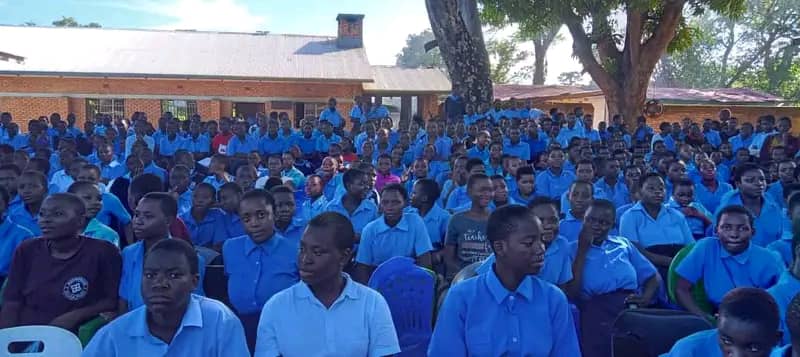
LILONGWE-(MaraviPost)-Parents and guardians whose children are in public secondary schools have all the reasons to be delighted following the government’s decision to finally roll out Free Secondary School Education (FSE) from Monday 5 January 2025.

According to a press release signed by the Secretary for Education, Ken Ndala, the abolishment of the fees and other related costs follows President Arthur Peter Mutharika’s commitment to ensuring that every child, regardless of status, has access to free and quality secondary education.

The statement has among others, indicated that the rolling out of the FSE means that the examinations and Identity Card fees that the Malawi National Examinations Board charges to public school students for national examinations in primary and secondary schools are abolished with immediate effect.

The School Development Fund and other user fees are also abolished with effect from 1 January 2026 in all public schools.

However, the statement said all government boarding secondary schools will continue to collect boarding fees until further notice.

The Ministry of Education has since urged concerned stakeholders to support the initiative, noting that its sustainability depends on shared ownership.

The development is in line with the United Nations’ Sustainable Development Goal 4, which aims to ensure that all boys and girls complete free equitable and quality primary and secondary education by 2030.

This move is expected to increase access to secondary education for many Malawian children, particularly those from low-income families.

The government’s decision is a significant step towards achieving education equality and promoting economic growth and development in Malawi.

By making secondary education free, the government hopes to reduce the country’s poverty levels and improve the overall well-being of its citizens.

The success of this initiative will depend on the government’s ability to provide adequate resources and infrastructure to support the increased demand for secondary education.

The rollout of Free Secondary Education (FSE) in Malawi is poised to transform the country’s education system.

With the removal of financial barriers, more students are likely to access secondary education, leading to a more educated and skilled population.

FSE may also help bridge the gap in education inequality, enabling girls and marginalized groups to pursue their studies without financial constraints.

As a result, Malawi can expect a more informed citizenry, improved economic prospects, and a competitive workforce, ultimately driving sustainable development and growth.


Discover more from The Maravi Post

Subscribe to get the latest posts sent to your email.

The Maravi Post

Balaka’s woman Rhoda Amos arrested for illegal ammunition, pistol possession

BLANTYRE-(MaraviPost)-The Malawi Police Service in Balaka are keeping in custody a 55 year old woman, Rhoda Amos for allegedly possessing a pistol and seven rounds of ammunition without a permit.

Balaka Police Station Publicist Gladson M’bumpha said the suspect Amos was arrested on January 1, 2026 at Lupanga Village, Traditional Authority (T.A) Nsamala following a tip-off.

“The house of the suspect was raided and upon searching in her house, it was discovered that the unidentified Pistol and seven ammunitions were hidden in the sack bag whilst wrapped with a plastic jumbo,” explained M’bumpha

M’bumpha added that the suspect revealed that the gun was sent to her by her son, currently in Johannesburg, South Africa, concealed inside a subwoofer.

The suspect is expected to appear before court soon to answer charges of illegal possession of a firearm.


Discover more from The Maravi Post

Subscribe to get the latest posts sent to your email.

The Maravi Post

“No comment”-Gangata on MRA security services tender cancellation

LILONGWE-(MaraviPost)-State Minister and Masters Group Executive Director Alfred Gangata says “No comment” on the decision Malawi Revenue Authority (MRA) cancelling the security services the authority wanted to ward to three companies.

MRA wanted award security services to three companies including Masters Security, Iringa Security, and Kamu Guard services.

But in a public notice dated December 31, 2025, MRA has cancelled a tender awarded to all three companies without giving any reasons.

The authority is expected to re-advertise the tender to the public.

MRA publicist Wilma Chalulu has confirmed writing letter to the three companies.

When contacted Masters Group Chief Gangata on matter, he just said, “NO comment”!

The procurement reference number for the cancelled tender is MRA/Security Services/12/11/2025.


Discover more from The Maravi Post

Subscribe to get the latest posts sent to your email.

The Maravi Post

Prof. Arthur Peter Mutharika is The Maravi Post’s 2025 Person of the Year

LILONGWE-(MaraviPost)-In a remarkable turn of events, Professor Arthur Peter Mutharika has emerged as the Personality of the Year 2025, a testament to his unwavering dedication to public service and his unrelenting pursuit of democratic principles.

Mutharika’s 2025-win marks a significant milestone in his illustrious career, as he secured his second term as President of Malawi with a landslide victory.

The celebrations that erupted across the country were akin to a New Year’s Eve bash, with crackers lighting up the night sky and jubilant crowds taking into the streets to hail their leader’s triumph.

“Mutharika’s victory is a testament to his enduring popularity and connection with the Malawian people,” says veteran journalist Janet Karim, with 40 years of longstanding experience in journalism. “The manner in which millions of Malawians celebrated his victory throughout the country is a strong and valid testimony that indeed Mutharika is a man of the people and deserves being recognized as Personality of the Year.”

People from all occupations in various locations across the country went out on the streets celebrating their victory as a great achievement.

The celebrations were not limited to a specific region or demographic; they were a nationwide expression of joy and appreciation for Mutharika’s leadership. This outpouring of support is a testament to Mutharika’s enduring popularity and his ability to connect with the Malawian people.

Janet Karim, a veteran journalist with over 40 years of experience believes that Mutharika’s 2025-win marks a hat-trick of electoral victories, with wins in 2014, 2019, and 2025. This impressive streak is a testament to Mutharika’s enduring popularity and his ability to connect with the Malawian people.

Looking back at 2019, Mutharika won the presidential elections, only to have the results nullified by the Constitutional Court, a decision that sent shockwaves across the nation.

This unexpected turn of events could have spelled disaster for Mutharika’s political career, but instead, he chose to accept the court’s decision, demonstrating his commitment to the rule of law and democratic principles.

The nullification of the 2019 election results was a significant setback for Mutharika, but it also presented an opportunity for him to highlight his leadership skills and leadership. His decision to accept the court’s ruling and pave the way for a fresh election in 2020 earned him widespread respect and admiration, both locally and internationally.

ConCourt Judges
corrupt: justices Healey Potani, Mike Tembo, Dingiswayo Madise, Ivy Kamanga and Redson Kapindu

In 2020, Mutharika faced defeat at the polls, but his gracious acceptance of the outcome cemented his reputation as a statesperson who puts the interests of the nation above personal ambition. This display of sportsmanship and respect for the democratic process earned him widespread admiration and respect, both locally and internationally.

The 2020 elections were not without controversy, however. The Constitutional Court’s interpretation of the majority required to win a presidential election sparked a heated debate, with many arguing that the court’s decision was a departure from the established practice of simple majority. The court ruled that a winning president must amass 50+1 votes, a decision that had far-reaching implications for the country’s political landscape.

The interpretation of the Constitutional Court saw the formation of the Tonse Alliance between Chakwera of MCP and Chilima of UTM, a calculated move that would change the course of Malawian politics. This alliance was seen as a strategic response to the court’s decision, and it paved the way for the opposition’s victory in 2020.

Saulos Chilima and Chakwera
Saulos Chilima and Lazarus CHakwera, When MCP needed UTM

During the 2019 presidential election court case, Professor Mutharika described the court’s outcome as a judicial coup, claiming that he was robbed of his government. This bold statement underscored Mutharika’s conviction that the court’s decision was an injustice, and it highlighted his unwavering commitment to his vision for Malawi.

Mutharika’s first term as President began in 2014, when he won the presidential election and assumed office. His leadership during this period laid the foundation for his subsequent electoral victories and cemented his position as a prominent figure in Malawian politics.

Mutharika’s personality and leadership style have been instrumental in shaping Malawi’s political landscape. His calm and composed demeanor, even in the face of adversity, has earned him a reputation as a steady hand guiding the nation through turbulent times. His commitment to democracy, the rule of law, and the welfare of the Malawian people has resonated with voters, who have rewarded him with their trust and confidence.

The significance of Mutharika’s hat-trick cannot be overstated. It demonstrates his ability to adapt to changing circumstances, his resilience in the face of setbacks, and his unwavering dedication to public service. As a leader, Mutharika has shown that he is not afraid to take tough decisions but also knows when to yield and accept the will of the people.

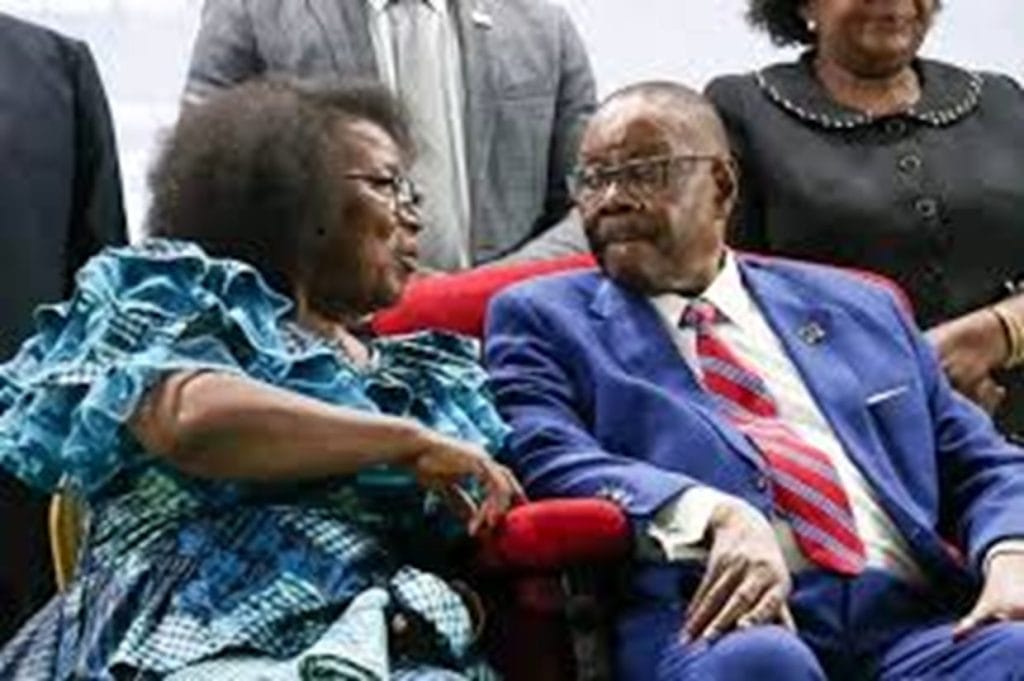
Jane Ansah and Peter Mutharika
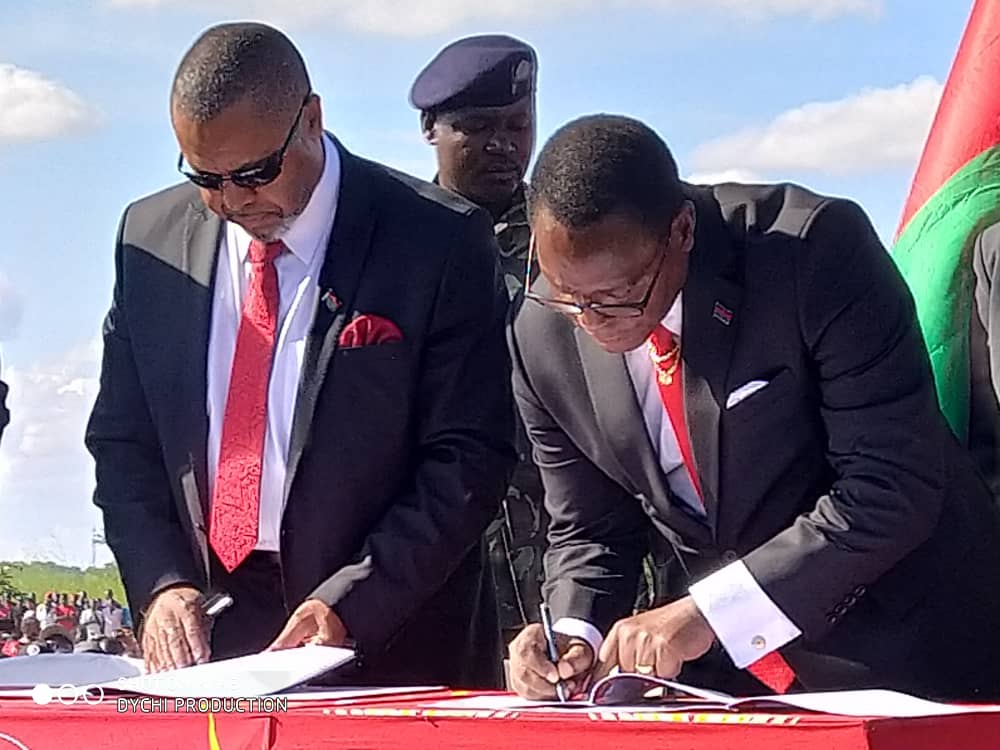
Mutharika declared President as Malawi celebrates in jubilation

As we reflect on Mutharika’s journey, he has earned his place as Personality of the Year 2025. His leadership has been marked by a rare blend of strength, humility, and a deep understanding of the Malawian psyche. As the nation looks to the future, Mutharika’s vision and determination will undoubtedly play a pivotal role in shaping Malawi’s destiny.

Mutharika’s story is one of perseverance and determination, a testament to the power of leadership and vision. His hat-trick of electoral victories is a remarkable achievement that underscores his enduring impact on Malawian politics. As Personality of the Year 2025, he embodies the spirit of resilience, determination, and service that defines the best of Malawi.

In conclusion, Mutharika’s journey is a reminder that leadership is not just about winning elections, but about serving the people and upholding the principles of democracy. His commitment to these values has earned him a place in the annals of Malawian history, and his legacy will continue to inspire future generations of leaders.

As Malawi looks to the future, Mutharika’s leadership will undoubtedly play a crucial role in shaping the nation’s destiny. His vision, determination, and commitment to public service will continue to inspire and motivate Malawians, and his legacy will remain a beacon of hope for a brighter future.

The people of Malawi have spoken, and they have chosen Mutharika as their leader. His hat-trick of electoral victories is a testament to his enduring popularity and his ability to connect with the Malawian people. As Personality of the Year 2025, Mutharika has earned his place in the hearts of Malawians, and his legacy will continue to inspire and motivate the nation for years to come.

President Peter Mutharika’s leadership in the past 90 days has been marked by cautious optimism, with many Malawians praising his efforts to stabilize the economy and improve governance. Since taking office on October 4, 2025, Mutharika has appointed a lean cabinet, signaling his commitment to efficient service delivery. His administration has also vowed to root out government corruption and rebuild the ailing economy.

Many citizens view Mutharika as a steady hand, with experience in managing the economy, foreign relations, and governance. His calm and composed demeanor, even in the face of adversity, has earned him a reputation as a leader who prioritizes the nation’s interest’s above personal ambition.

It is the resilience and never-ending willingness to serve Malawians that the Management team of the Maravi post concur with the decision to crown Prof. Peter Mutharika as our person of the year.

Feedback: +265884433313

Email: bonnetmunthali2101@gmail.com


Discover more from The Maravi Post

Subscribe to get the latest posts sent to your email.

The Maravi Post