Indigenous Peoples Must Continue To Challenge Human Rights Violations: PODCAST

Civil Society, Global, Headlines, Human Rights, Indigenous Rights, Multimedia, Podcast, TerraViva United Nations

Indigenous Rights

KATHMANDU, Jul 7 2022 (IPS) – Today we are starting a new series focused on human rights. For people working to create a more sustainable and just world – as we are – a human rights based approach makes sense as it starts from the premise that only by recognizing and protecting the dignity inherent in all people can we attain those goals.


Today’s guest, Victoria Tauli-Corpuz, has immense experience in human rights. She is the founder and executive director of Tebtebba Foundation, which works to improve the lives of Indigenous peoples in the Philippines, her home country, and beyond. She was the Chairperson of the United Nations Permanent Forum on Indigenous Peoples from 2005 To 2010, and UN Special Rapporteur on the Rights of Indigenous Peoples from 2014 to 2020.

We cover a lot of ground in this episode — from Vicky’s analysis of her time as special rapporteur to recent rhetoric around ‘building back better’, the circular economy and other touted economic reforms, versus the reality on the ground. Indigenous communities are facing growing pressure from both states and the private sector to extract the natural resources that they are trying to protect. This dichotomy between the words and deeds of these powerful actors must be continually exposed and challenged by Indigenous peoples, says Vicky.

Asked whether governments of poorer countries are doing enough to protect human rights, without hesitating Vicky answers no. But she also points out that these countries are themselves pressured by international agreements, brokered largely by rich countries, that leave them with few options but to exploit natural resources.

She also tells me about an exciting project — the Committee on the Elimination of Discrimination against Women, a body of 23 global experts, is creating a General Recommendation on Indigenous women and girls. Among other things, it recognize the individual and collective rights of Indigenous women, the latter including respect for their rights to land, languages and other culture. Vicki says it is the first time that a UN treaty body is developing a recommendation focussed on Indigenous women.

Resources

Tebtebba Foundation

UN Permanent Forum on Indigenous Peoples

UN Special Rapporteur on the Rights of Indigneous Peoples

IPS Coverage About Indigenous Peoples Rights
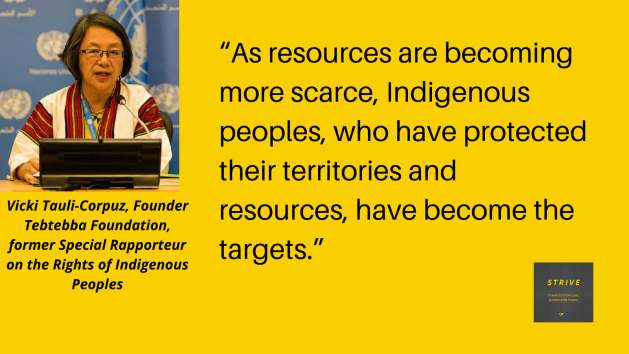
The dichotomy between the words and deeds of powerful actors must be continually exposed and challenged by Indigenous peoples, says today’s guest, Victoria Tauli-Corpuz

  Source

Citizen Leads Drive to Repatriate Temple Gods Looted from India – Podcast

Asia-Pacific, Civil Society, Headlines, Multimedia, Podcast, TerraViva United Nations

Arts

KATHMANDU, Nov 18 2021 (IPS) – The illicit trade in idols and other historical treasures looted from temples, archaeological digs and various sites globally has been estimated at $100 billion a year.


A more telling figure might be the nearly 18,000 villagers in India’s Tamil Nadu state who turned out to welcome home a god figure stolen from one of their temples. More revealing still is the image of a single villager who, seeing a stolen god displayed in a Singapore Museum, falls to the ground and starts to pray.

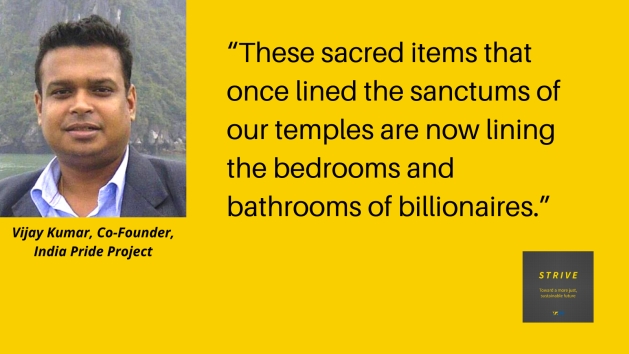
Vijay Kumar accompanied that villager to the museum, and has witnessed idols lovingly replaced to their ages-old spots in Tamil Nadu temples.

For 16 years he has been working to repatriate gods and goddesses looted from India over the years, and the challenges remain huge, he tells us in today’s episode. For example, in 2020, police seized 19,000 stolen artefacts in an international art trafficking crackdown. 101 suspects were arrested with treasures from around the world, including Colombian and Roman antiquities. One activist estimates that in France alone there are 116,000 African objects that should be returned.

But Vijay is encouraged by the successes of citizen-led movements like his own, which began with a blog, Poetry in Stone, then the launch of the group India Pride Project.

Success can be measured in the growing number of artefacts returned to India: 19, from 1970-2000; 0, from 2000-2013; but 300+ after 2013. That includes roughly 250 items valued at about $15 million, which were repatriated in October, among the treasures looted by disgraced art dealer Subhash Kapoor, the subject of Vijay’s book, The Idol Thief.

Today’s conversation is packed with information, including Vijay’s opinion that countries like India and Nepal, where idols are part of the living heritage and still prayed to daily, should be treated differently than countries whose artefacts are looted from buried remains. He also has advice for would-be activists — in the murky world of art repatriation, be very, very wary about accepting money from anyone.

  Source

Rural Communities in El Salvador United to Supply Water for Themselves – VIDEO

Civil Society, Development & Aid, Headlines, Integration and Development Brazilian-style, Multimedia, Poverty & SDGs, TerraViva United Nations, Video, Water & Sanitation

Water & Sanitation

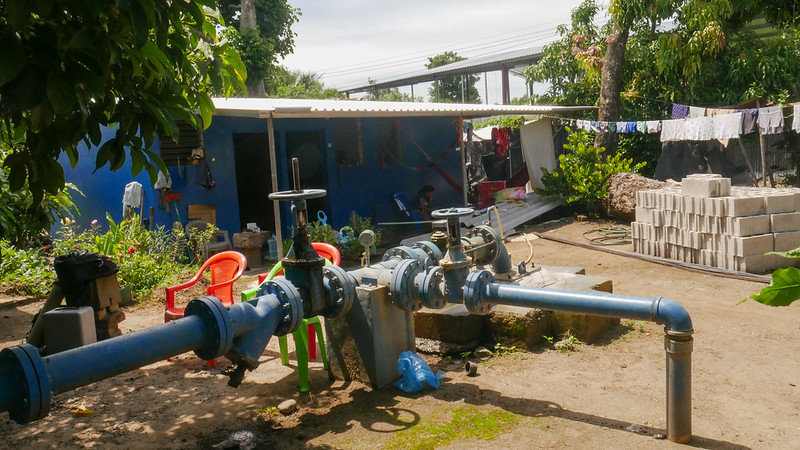
LA LIBERTAD, El Salvador, Oct 8 2021 (IPS) – As the saying goes, united we stand, divided we fall, hundreds of families in rural communities in El Salvador are standing together to gain access to drinking water.


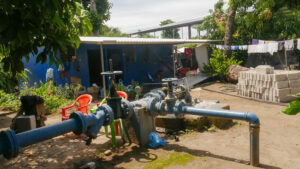
The Salvadoran state fails to fulfill its responsibility to provide the resource to the entire population, and the families, faced with the lack of service in the countryside, have organized in “Juntas de Agua”: rural water boards that are community associations that on their own manage to drill a well and build a tank and the rest of the system.

It is estimated that in El Salvador there are about 2,500 rural water boards, which provide service to 25 percent of the population, or some 1.6 million people, according to data from the non-governmental Foro del Agua (Water Forum), which promotes equitable and participatory water management.

One of those community systems has been set up in the small village of Desvío de Amayo, in the canton of Cangrejera, part of the municipality and department of La Libertad, on the central coastal strip of El Salvador.

[embedded content]

The system provides water to 468 families in Desvío de Amayo and eight other nearby villages.

“Governments have the constitutional obligation to provide drinking water in each country, but when they are not able to do it, as it happens here, the families decided to meet to take decisions and seek support either from NGOs or municipal governments to set up drinking water projects”, José Dolores Romero, treasurer of the Cangrejera Drinking Water Association, told IPS.

Created in the 1980s, this board finally obtained in 2010 a contribution of US$ 117,000 from the National Administration of Aqueducts and Sewers (Anda), the sector’s authority, for the expansion and improvement of its network infrastructure, he explained.

For more information, you can read an article on the subject of this video here.

As agreed by those involved in this effort, each family pays seven dollars for 20 cubic meters a month. If they consume more than that, they pay 50 cents per cubic meter.

“We benefit from the water, it is a great thing to have it at home, because we no longer have to go to the river, remember that we cannot go there because it overflows during the rainy season, so this community system benefits us a lot”, María Ofelia Pineda, from the village of Las Victorias, told IPS, while washing a frying pan and other dishes.

“Before, we had two or three hours of water during the day, and now we have it all day long, I am very happy for that, because I have it all day and all night,” said Ana María Landaverde.

  Source

Civil Society Must Build on Protest Movements – Podcast

Civil Society, Featured, Gender, Global, Headlines, Human Rights, Multimedia, Podcast, TerraViva United Nations

Civil Society

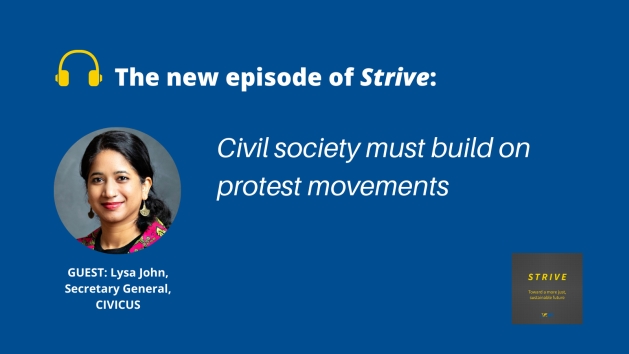
In these tumultuous times, what civil society must do better is channel the energy of the movements on the streets into medium and long-term projects to build alternatives to existing structures, says Lysa John, Secretary General of CIVICUS

KATHMANDU, Sep 6 2021 (IPS) – 2020 was a year of tremendous upheaval. The murder of George Floyd, followed by global Black Lives Matter protests, Covid-19 and the stark light that the pandemic shone on inequality within countries and between the global north and south, protests and brutal repression after elections in Belarus, ongoing demonstrations for climate action led by youth around the world, to name just a few.


Civil society, that is all sectors of our lives that are not family, government or for-profit, played a central role in all of these movements. But are those actions leading to positive results that will change people’s lives for the better?

Today’s guest, Lysa John, Secretary General of CIVICUS, a global alliance of civil society groups, responds unequivocally yes. She points to past examples like the campaigns to recognize women’s right to vote and for legal recognition of gay rights.

In these tumultuous times, she argues, what civil society must do better is channel the energy of the movements on the streets into medium and long-term projects to build alternatives to existing structures.

In these tumultuous times, what civil society must do better is channel the energy of the movements on the streets into medium and long-term projects to build alternatives to existing structures, says Lysa John, Secretary General of CIVICUS

  Source

Civil Society Leading Covid-19 Mask Campaign in South Asia – Podcast

Civil Society, Headlines, Health, Multimedia, Podcast

Health

Civil society leading Covid-19 mask campaign in South Asia

Civil society leading Covid-19 mask campaign in South Asia

KATHMANDU, Jul 30 2021 (IPS) – Footage of flames engulfing bodies at makeshift funeral pyres and stories of people dying in cars as drivers desperately raced from hospital to hospital seeking a bed. These scenes marked the second wave of the Covid-19 pandemic in India just months ago.


Nepal was similarly walloped: staff turned away people at intensive care units and patients attached to oxygen cylinders were being treated in parking lots. Other South Asian countries were less affected but overall Covid-19 has officially killed 450,000 people in the region since 2020.

With vaccines expected to arrive painfully slowly in coming months—India for example has fully vaccinated just 6% of its population, Nepal 4% and Pakistan 2%—mask wearing needs to be the priority, says the guest on today’s episode of Strive.

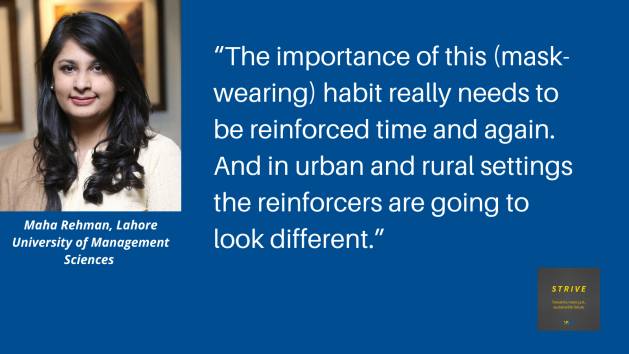
Maha Rehman is Policy Director at the Mahbub ul Haq Research Centre at Lahore University of Management Sciences, in Pakistan. She is also a leader of the NORM mask-wearing intervention taking place in four countries in the region, and beyond. She describes NORM’s early success in Bangladesh and how finding a way to embed the programme in local communities in each of these very different countries will be key.

If you enjoyed this first episode of Strive, please help spread the word by rating or reviewing the show on Apple podcasts. You can also subscribe, follow or favourite Strive on any podcast app.

Stay up-to-date with us between episodes on Twitter and Facebook. If you have something to say to me directly email me at mlogan@ipsnews.net.

Resources

Civil Society Leading Covid-19 Mask Campaign in South Asia - Podcast

  Source

Bangladesh Can Be Leprosy-Free by 2030 Says Leprosy Activist

Aid, Asia-Pacific, Conferences, Headlines, Health, Multimedia, Podcast, TerraViva United Nations

Health

DHAKA, Bangladesh, Dec 11 2019 (IPS) – Despite its efforts to eliminate leprosy as a public health threat, Bangladesh’s leprosy burden ranks fourth-highest in the world. Four thousand new cases are detected annually – an average of 11 to 12 cases per day over the last 10 years.


Leprosy issues have taken centre stage at the National Conference 2019 on Zero Leprosy Initiatives by 2030 in Dhaka Bangladesh. The country’s National Leprosy Programme, in collaboration with the Nippon Foundation and Sasakawa Health Foundation in Japan believes its key that every person with leprosy has access to the right medicines, diagnosed and treated in a timely fashion.

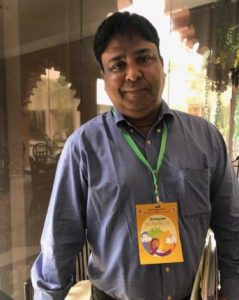
Akthar Ali is the Project Co-ordinator of the Missionary Sisters of Mary Immaculate (with the Pontifical Institute for Foreign Missions (PIME) Sisters) in Khulna in the south of Bangladesh and believes the country can be leprosy-free by 2030.

Crystal Orderson spoke Ali on the sidelines of the National Conference in Dhaka, Bangladesh.

[embedded content]