Water temperature in San Francisco Bay today is 52.7°F.
The first low tide will be at 1:58 am at 3.43 feet
The first high tide will be at 7:39 am at 6.11 feet
The next low tide at 3:12 pm at -0.29 feet
and the final high tide at Ocean Beach will be at 10:24 pm at 4.63 feet
The Moon is currently 10.1% visible
It’s a Waning Crescent moon
We’ll have a New Moon in 3 days on Sunday the 18th of January of 2026 at 11:52 am
Today is….
Get to Know Your Customers Day
Humanitarian Day
National Bagel Day
National Booch Day
National Fresh Squeezed Juice Day
National Hat Day
National Pothole Day in the UK
National Strawberry Ice Cream Day
Wikipedia Day
Today is also….
Arbor Day in Egypt
Armed Forces Remembrance Day in Nigeria
Army Day in India
John Chilembwe Day in Malawi
Korean Alphabet Day in North Korea
Ocean Duty Day in Indonesia
Teacher’s Day in Venezuela
If today is your birthday, Happy Birthday To You! You share your special day with….
1622 – Molière, French actor and playwright (died 1673
1902 – Saud of Saudi Arabia (died 1969)
1908 – Edward Teller, Hungarian-American physicist and academic (died 2003)
1909 – Jean Bugatti, German-French engineer (died 1939)
1909 – Gene Krupa, American drummer, composer, and actor (died 1973)
1913 – Lloyd Bridges, American actor (died 1998)
1918 – Gamal Abdel Nasser, Egyptian colonel and politician, second President of Egypt (died 1970)
1929 – Martin Luther King Jr., American minister and activist, Nobel Prize laureate (d. 1968)
1941 – Captain Beefheart, American singer-songwriter, musician, and artist (died 2010)
1945 – Vince Foster, American lawyer and political figure (died 1993)
1945 – Princess Michael of Kent
1947 – Andrea Martin, American-Canadian actress, singer, and screenwriter
1957 – Mario Van Peebles, Mexican-American actor and director
1971 – Regina King, American actress
1981 – Pitbull, American rapper and producer
1984 – Ben Shapiro, American author and commentator
….and on this day in history….
1759 – The British Museum opens to the public.
1782 – Superintendent of Finance Robert Morris addresses the U.S. Congress to recommend establishment of a national mint and decimal coinage.
1870 – Thomas Nast publishes a political cartoon symbolizing the Democratic Party with a donkey (“A Live Jackass Kicking a Dead Lion”) for Harper’s Weekly.
1889 – The Coca-Cola Company, then known as the Pemberton Medicine Company, is incorporated in Atlanta.
1892 – James Naismith publishes the rules of basketball.
1908 – The Alpha Kappa Alpha sorority becomes the first Greek-letter organization founded and established by African American college women.
1962 – The Derveni papyrus, Europe’s oldest surviving manuscript dating to 340 BC, is found in northern Greece.
1967 – The first Super Bowl is played in Los Angeles. The Green Bay Packers defeat the Kansas City Chiefs 35–10.
1981 – Pope John Paul II receives a delegation from the Polish trade union Solidarity at the Vatican led by Lech Wałęsa.
2001 – Wikipedia, a free wiki content encyclopedia, is launched
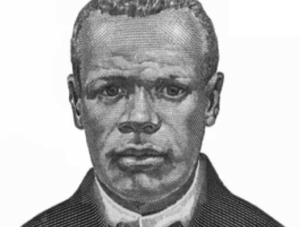
The debate surrounding the authenticity of the image of John Chilembwe on Malawian currency has been attracting mixed reactions from different quarters. Some Malawians question whether the image aligns with several other available images of Chilembwe. Maybe the one on the currency went ‘ku HD’. However, here is what a political analyst, Wonderful Mkhutche, has to say on those sentiments.
“The one on the currency is John Chilembwe. Arguing against this is trivial for people who do not have substance to talk about the life of John Chilembwe. There are so many things to talk about Chilembwe,” says Mkhutche.
Mkhutche: Let’s keep honoring his legacy.
He further argues that Malawians should continue remembering Chilembwe as an autonomist who gave his life for the country’s scuffle.
“We should remember Chilembwe as a nationalist who gave his life for this country’s struggle. We too should have the same spirit,” he posits.
Meanwhile, John Chilembwe was born in Chiradzulu district in June 1871, though some quarters argue that it is not the exact year Chilembwe was born, as in those days it was hard to keep records of one’s age. According to the Dictionary of African History Biography, around 1880, Chilembwe became a pupil at the Church of Scotland mission in Blantyre, but he was converted by Joseph Booth, a British Baptist missionary, and became his assistant from 1892 until 1895.
Booth worked for a number of churches and had no denominational loyalty; he taught a radical equality that resonated with Chilembwe’s own sense of black pride. In 1897, Booth took Chilembwe to the United States, where a Baptist church sponsored him through Virginia Theological College. Here, he seems to have come into contact with contemporary African-American thinking, especially that of Booker T. Washington.
He returned to Nyasaland in 1900 as an ordained Baptist and founded the Providence Industrial Mission, which developed into seven schools.
Events after 1912 disillusioned Chilembwe. A famine in 1913 brought great hardship and starvation to many peasant farmers. Mozambican refugees flooded into Nyasaland, and Chilembwe deeply resented the way they were exploited by white plantation owners. When World War I broke out the following year, Africans were conscripted into the British army, and Chilembwe protested both from the pulpit and in the local press.
The white landowners were infuriated by his nationalist appeal, and several of his schools were burned down. Added to personal problems of declining health, financial difficulties, and the death of a beloved daughter, Chilembwe’s sense of betrayal deepened into fury.
In careful detail, Chilembwe planned an attack on the worst of the area plantations, which was known for cruelty to its African workers. With 200 followers, he struck swiftly, and three plantation managers were killed. One of these, a cousin of David LIVINGSTONE, was notorious for burning down tenants’ chapels, whipping workers, and denying them their wages.
His head was cut off and displayed on a pole in Chilembwe’s church. The rebels, however, scrupulously observed Chilembwe’s orders not to harm any women or children. The colonial response was immediate and ruthless, resulting in the death of many Africans.
Chilembwe and his followers–mostly educated, Christian, small businessmen–demanded for themselves the same place in the modern world that they saw Europeans enjoying. Meanwhile, John Chilembwe died on February 3, 1915, at the age of 43 after being killed by the white people.
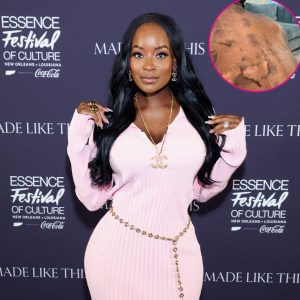
The Real Housewives of Atlanta star Shamea Morton is accusing an Atlanta doctor of “negligently burning” her during a chemical peel and causing extensive permanent scarring, Us Weekly can exclusively report.
On October 31, Morton and her husband, Gerald Mwangi, filed a medical malpractice lawsuit against Jing Jing Wong Harris, M.D., her company, Pretty Faces Atlanta, and various other defendants.
Morton underwent a chemical peel at Pretty Faces Atlanta on March 13, 2024.
The suit said Morton should have never “undergone a chemical peel due to her diagnosis of Tinea Versicolor, which is a fungal condition.” Morton said she should have been referred to a trained and qualified dermatologist for treatment.
Morton said that even if she did not have the fungal condition, the peel performed (especially two passes) was and would be “completely inappropriate” due to her “African American skin, even if she had simple hyperpigmentation especially due to the lack of any skin prep and attempt at pigment correction with medical-grade skincare and much less aggressive treatments than what was performed.”
Robin L Marshall/Getty Images for ESSENCE; Fulton County Superior Court
The suit accused one of the third party defendants of using too strong of a chemical peel on Morton’s back and arms. Morton said the third party defendant performed the chemical peel without Harris’ supervision, which resulted in “second degree burns, blistering and permanent scarring.”
Morton claimed she “cried in pain due to sensations she was experiencing.”
“[Morton’s] screams were so loud that [Harris], for the first time that day, entered the room where the procedure was being performed and inquired as to what was going on,” the suit alleged. “When [Morton] reported intense pain to [Harris], [Harris] told her that she was being dramatic.”
Morton’s suit claimed that “only after seeing the tears from [Morton] crying, [Harris] applied an unknown solution from a spray bottle to [Morton’s] back.”
“Harris never consulted, examined, or approved the treatment plan for [Morton] prior to the application of the chemical peel,” Morton’s lawsuit alleged.
Morton’s lawsuit demanded unspecified damages. Darren M. Tobin, Morton’s lawyer told Us, “What happened to Shamea when she was burned is unacceptable and inexcusable. We intend on pursuing full justice allowed under the law.”
Morton first appeared on RHOA in season 5 as a guest of the cast. She was promoted to friend in season 8 and then up to a main cast member in season 16.
Fulton County Superior Court
During season 16, a notable story line for Morton was a strain in her friendship with longtime friend Porsha Williams. During the reunion, Andy Cohen told Morton she might benefit from communicating her frustrations more clearly to her friends.
In July, Morton posted a 41-minute YouTube video apologizing to her RHOA costars following her first season as a full-time cast member.
“If I ever offended you, if I’ve made you feel less than, inferior, insulted you, hurt you in any way — I’m sorry. I hope that we can start fresh, and I wish you nothing but the best,” Morton said. “And that prayer, I hope it leaves this room and enters into your heart and into your household, and that’s a wrap on Season 16.”
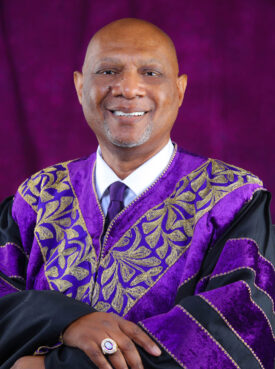
(RNS) — Bishop Reginald T. Jackson, a leader of the African Methodist Episcopal Church who was known for his commitment to voting rights and other social justice issues, died on Tuesday (Nov. 25).
Jackson, 71, died in Washington.
“With profound sorrow, the Jackson family announces the passing of Bishop Reginald T. Jackson, who transitioned unexpectedly,” his family said in a Wednesday statement. “We are heartbroken by this immeasurable loss and ask for your prayers, love, and respect for our privacy as we navigate this difficult time.”
Since 2024, Jackson had been serving a second four-year term as the chair of the predominantly Black denomination’s Social Action Commission. Known for his powerful preaching and political connections, Jackson also was the leader of the AME Church’s Second Episcopal District, which includes Maryland, North Carolina, Virginia and the District of Columbia.
“The African Methodist Episcopal Church honors Bishop Jackson’s extraordinary legacy of preaching, teaching, advocacy, and servant leadership,” said Bishop Silvester S. Beaman, president of its Council of Bishops, in a statement. “We extend our prayers and deepest condolences to his family, the Second Episcopal District, and all who mourn his passing.”
Political leaders from states where Jackson served over his five decades of ministry responded to his death along with religious officials.
“Mourning the loss of @BishopRTJackson, a leader of the beloved community and a stalwart for justice – wherever it could be made manifest,” former Georgia House Minority Leader Stacey Abrams said in a statement on X. “His tenure in Georgia transformed the lives of millions. He was a good and faithful servant.”
Jackson led the AME district that includes hundreds of churches in Georgia from 2016 to 2024. During that period, he was chair of Atlanta’s Morris Brown College, which regained its accreditation in 2022.
“He was at the forefront of that fight,” Matthew Frankel, an adviser who worked with Jackson on political policy, told Religion News Service. “That was his real passion point, was making sure that everyone who could vote was able to vote.”
African Methodist Episcopal Church Bishop Reginald T. Jackson, center right, announces a boycott of Coca-Cola Co. products outside the Georgia Capitol on March 25, 2021, in Atlanta. Jackson said Coca-Cola and other large Georgia companies had not done enough to oppose restrictive voting bills that Georgia lawmakers were debating as Jackson spoke. (AP Photo/Jeff Amy)
Frankel said Jackson had experienced recent health issues but was continuing to serve the church and the bishop’s death was “a shock to the system.”
When he was elected bishop in 2012, Jackson was assigned to the district that included the African countries of Malawi, Tanzania, Uganda and Zimbabwe.
Prior to becoming a bishop, Jackson led congregations in New Jersey, including St. Matthew AME Church in Orange, where he served for 31 years. He also was an educational leader, including president of a public school board and a county college board, and was influential in passage of legislation that ended the state’s death penalty and made racial profiling a crime, according to his biography on the website of the Second Episcopal District.
“Deeply saddened to hear of the passing of Bishop Reginald T. Jackson,” said New Jersey Attorney General Matt Platkin in a statement on X. “He was a legend — a moral compass, a partner in the work of justice, and a voice our entire state relied on.”
Jackson’s connections in New Jersey led to tens of thousands in financial donations from then-Gov. Jon Corzine when he was running as an incumbent for reelection in 2009. Then head of the Black Ministers Council of New Jersey, Jackson confirmed receiving $87,000 in donations, which The Star-Ledger reported after a review of Corzine’s tax return.
Jackson said his endorsement of Corzine was unrelated to the financial gifts.
“I always support who I believe is the best candidate,” said Jackson, who stressed at the time that he had a long relationship with Republican Chris Christie, Corzine’s main rival. The minister said that $37,000 went to the development corporation of St. Matthew AME. The additional $50,000 was a contribution to Jackson’s unsuccessful second run for AME bishop.
Bishop Reginald Jackson. Photo courtesy of AME Church
“Just like there are some leaders that people don’t make decisions without consulting with them, that’s who he was in New Jersey,” said Jacquelyn Dupont-Walker, director of the AME Social Action Commission, in an interview.
Jackson eventually became bishop and was “our strongest voice,” as he continued to lead a district with Washington as its base, she said.
“He was an uncompromised conscience,” she told RNS. “Sometimes we say things in ways which are palatable and people will not be offended. He said it from the depth of his soul, and if you were offended, you were just offended.”
Jackson had spearheaded, and the bishops’ council approved, plans for a forthcoming convention including Black churches and other organizations, similar to one held in 1830 by AME Church founder Richard Allen to address social concerns. Dupont-Walker said, with Jackson’s death, the timing of such a gathering is uncertain.
Earlier this year, Jackson had joined in efforts to boycott Target over its scaling back of diversity, equity and inclusion initiatives. He was also vocal in his opposition to Trump administration policies and recent legislation, which Jackson said were having a detrimental effect on African Americans.
“Our churches must rise now,” he wrote in July in The Contrarian, a Substack account described as “Unflinching journalism in defense of democracy.”
“Our people must organize now. We need voter registration drives, policy teach-ins, and loud, public pressure on every member of Congress — Democrats and Republicans alike. We need our young people, our elders, our workers, and our warriors. We need a mass moral movement that makes clear: If you target our survival, we will target your seat.”
Jackson became a widower just short of a year ago when his wife, Episcopal Supervisor Christy Davis Jackson, who led missions activities in the Second Episcopal District, died.
Jackson returned to his native Dover, Delaware, over the weekend, and preached what would be his final sermon at the church where he had once given a sermon as a child, according to Dupont-Walker. Jackson urged the Dover congregants to be faithful beyond the walls of the church building.
“I just want to encourage you to continue to be a church at its best, a church that’s involved in what’s going on in the world,” he said. “The church at its best is not Sunday morning at 10:30. The church at its best is after the benediction, when you leave the Lord’s house, go into the Lord’s world. Make a difference in the Lord’s name, knowing you got God on your side, and he will never leave us alone.”
Concerns are mounting that the Trump administration may be storing $9.7 million in contraceptives in Belgium until they expire.
Concerns are rising over the Trump administration’s decision to store $9.7 million worth of U.S.-purchased contraceptives in Belgian warehouses until they expire.
The undelivered contraceptives, initially intended for donation to various African countries and procured by the U.S. Agency for International Development (USAID) under the Biden administration, are now being stored indefinitely in Belgian warehouses, CNN reported, as many U.S. foreign aid programs have been discontinued under Trump.
With most products set to expire in 2028 or 2029, and the earliest batch expiring in April 2027, aid workers fear the U.S. government may be allowing the supplies to sit until they become unusable or ineligible for export.
Elsewhere, the International Planned Parenthood Federation (IPPF) says that most of the supplies are intended for Tanzania, which enforces minimum shelf-life requirements for medical imports. Marcel Van Valen, head of Supply Chain at IPPF, said that around one million injectable vials and over 400,000 implants, together valued at $3.97 million, will no longer meet Tanzanian import standards by the end of this year or mid-next year. Under Tanzanian regulations, “any device with a shelf life of more than 24 months whose remaining shelf life is less than 60%” cannot be imported.
“It’s urgent that we receive these resources before they become ineligible for import,” said Dr. Bakari Omary, the project coordinator at the NGO Umati, which is IPPF’s member organization in Tanzania. “The contraceptives being held represent 28% of the country’s total annual need, and not having them is already impacting clients’ reproductive health and family planning freedoms.”
The U.S. State Department previously stated that it had made a “preliminary decision” to destroy the contraceptives stored in Belgium by incineration for $167,000. However, the plan was blocked by regulations in Flanders, Belgium, which prohibit the incineration of reusable medical devices.
Since the incineration plans became public knowledge, aid workers have urged the Trump administration to deliver the contraceptives to women in Tanzania, Mali, Kenya, and other countries, or to sell them to NGOs that could distribute them. They warn that the undelivered supplies, combined with cuts to family planning programs, could lead to higher maternal deaths, unsafe abortions, and economic hardship from unplanned pregnancies.
However, representatives from the United Nations Population Fund (UNFPA), the International Planned Parenthood Federation (IPPF), and MSI Reproductive Choices all claim that the U.S. government has ignored or rejected their offers to purchase the contraceptives.
“Destination countries, including Tanzania (the main recipient), as well as others such as Malawi, Bangladesh, DR Congo, Kenya, apply importation rules that limit entry to medicines with a specific percentage of remaining shelf life,” IPPF’s head of supply chain Marcel Van Valen said.”
The contraceptives consist mainly of long-acting birth control methods, including intrauterine devices (IUDs), rod implants, injections, and tablets containing levonorgestrel and ethinyl estradiol. However, a U.S. State Department spokesperson previously described the supplies in Belgium as “certain abortifacient birth control commodities from terminated Biden-era USAID contracts,” a controversial remark reflecting ongoing U.S. debates over when life begins.
“Contraceptives save lives. Around the world, there are over 250 million women who want to avoid pregnancy but are not able to access family planning,” UNFPA said in a statement. “UNFPA and its partners estimate that filling this unmet need for family planning could reduce maternal deaths by approximately 25%.”
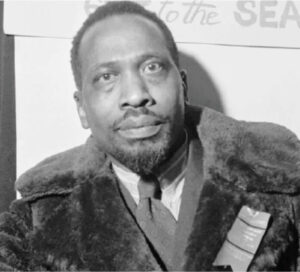
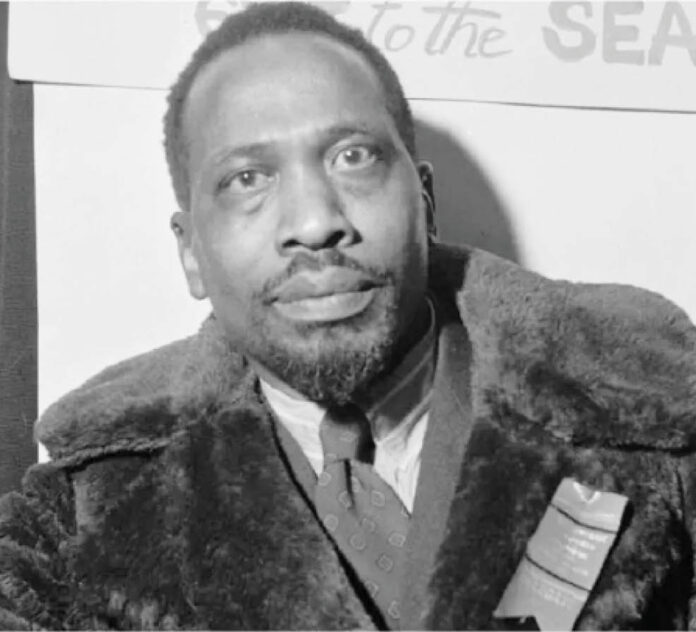
Jomo Kenyatta, who would become the first president of the Republic of Kenya in 1964, was one of many major names who attended the event
In October 1945, delegates from across the world descended on a town hall on the outskirts of Manchester city centre to attend a seismic event in African politics, the ripple effects of which still resonate 80 years later. The Fifth Pan-African Congress, held between 15 and 21 October 1945, was a key moment for the movement that liberated many Africans from colonial rule. Among those who attended were Obafemi Awolowo, one of the driving forces of Nigerian independence, feminist and human rights campaigner Amy Ashwood Garvey, Trinidadian radical George Padmore and the future presidents of Malawi, Ghana and Kenya – Hastings Banda, Kwame Nkrumah and Jomo Kenyatta. But it was not, as its name makes clear, the first such gathering, so how did it come to have such significance and why was it held in Chorlton-on-Medlock Town Hall? What is Pan-Africanism? Pan-Africanism is a philosophy which held that all people of African descent should unite to stand against racial injustice, inequality and colonialism in Africa. It began in the mid-19th Century but came to the fore in the early 20th Century, when Trinidadian barrister Henry Sylvester Williams organised the First Pan-African Conference in London in 1909. That event was followed by Pan-African Congresses in 1919, 1921 and 1923, which were held either solely or jointly in Paris, London, Brussels and Lisbon, four cities which had been the seats of European colonial power, before a fourth event in New York in 1927. Each congress ended with a list of resolutions, which were mainly made around the need for more rights for Africans, for the end of British rule and for home rule and a say in the governance of their own countries. Why was Manchester chosen? The Pan-African movement was disrupted by world events in the 1930s and 1940s and did not hold a congress again until after the end of World War Two. Its leading figures were keen to get things going again after that conflict was finally ended with Victory over Japan Day on 15 August 1945. Within two months, delegates were filing into the main chamber at Chorlton-upon-Medlock Town Hall to see the start of the Fifth Pan-African Congress. Its aim was to tackle the post-war struggle against racial discrimination and help its delegates find a path to liberation for those living under what they saw as unjust colonial rule. Harry Eyre, an expert on the congresses who helps with the documenting of black histories as the librarian for the Ahmed Iqbal Ullah RACE Centre and Education Trust, said there were a “plethora” of reasons why the city was chosen to host. The main one, he said, was the strength of black communities and their established network of businesses in Manchester. Ras T. Makonnen, for example, owned a number of restaurants, hotels and nightclubs, so people travelling from all over the world had places to stay and eat. He acted as treasurer for the congress and is named on a plaque commemorating the congress on the building where it was held, which is now part of Manchester Metropolitan University. Harry said Makonnen was friends with Padmore, who has been described as “one of the most influential black political thinkers of the 20th Century”, and the pair were both instrumental in bringing the event to Manchester. Harry’s colleague Maya Sharma, the head of the trust, added that in their archives, there was evidence that there had been an “African and Caribbean presence in Manchester for decades”, long before the arrival of the Windrush generation. She said the Oxford Road area around the town hall had a flourishing black community with businesses such as cafes, restaurants and a bookshop. Who was involved? Many of the delegates at the congress were political heavyweights, activists and vocal supporters of the Pan-African movement. They came from Manchester and the surrounding area, from other parts of Great Britain and more than 25 other countries, the majority of which were still part of the what had become known as the British Commonwealth of Nations. They represented more than 50 organisations and political associations, from the Women’s International League for Peace and Freedom to the Communist Party of Great Britain. Alongside Awolowo, Ashwood Garvey, Padmore, Banda, Nkrumah and Kenyatta were the likes of African National Congress activist and writer Peter Abrahams, Sierra Leone People’s Party founder Lamina Sankoh, All African Convention founder Davidson Don Tengo Jabavu and Tikiri Banda Subasinghe, who would go on to serve as the Speaker of the Sri Lankan Parliament. There was also at least one delegate who had been there from the start, as the congress chairman was William Edward Burghardt Du Bois, the African American thinker and journalist who had helped to organise the first event in 1919. Why was it so significant? Harry said the congress was unique as the previous ones had involved primarily people of upper classes and of professional backgrounds. In Manchester though, the event catered for a much larger demographic of activists from all over the world as well as also from black communities in the UK and specifically the city itself. He said while its impact was not “instantaneous”, it “led to the success of independence movements” in decades that followed across the British Empire and other colonial strongholds. He said Jomo Kenyatta and Kwame Nkrumah, who would go on to lead homelands of Kenya and Ghana independence, came together to plan the means with which they would eventually achieve that. “It was a sort of zenith of the movement, the beginning of the struggle after the Second World War,” he added. Maya said the Manchester event “raised some very clear demands” which included an end to colonial rule in Africa and the Caribbean and racial equity for people of African heritage everywhere. “They also demanded economic justice and fair wages,” she said. Source: BBC