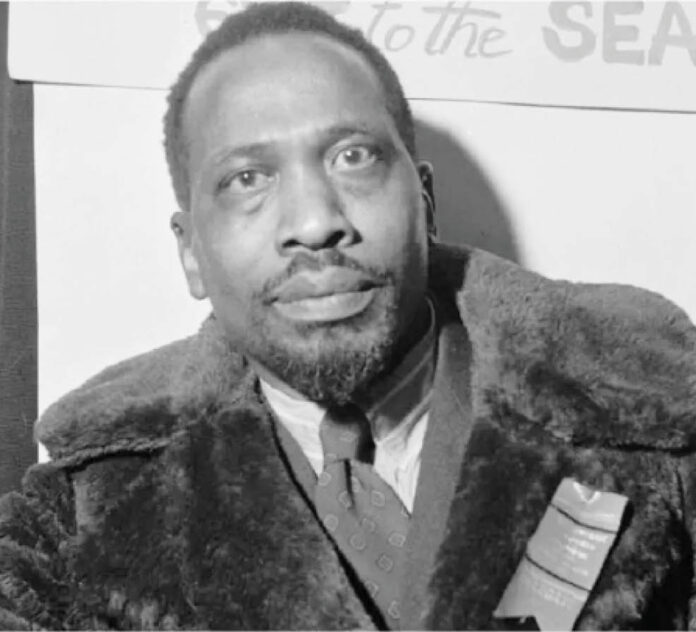
Jomo Kenyatta, who would become the first president of the Republic of Kenya in 1964, was one of many major names who attended the event
In October 1945, delegates from across the world descended on a town hall on the outskirts of Manchester city centre to attend a seismic event in African politics, the ripple effects of which still resonate 80 years later. The Fifth Pan-African Congress, held between 15 and 21 October 1945, was a key moment for the movement that liberated many Africans from colonial rule. Among those who attended were Obafemi Awolowo, one of the driving forces of Nigerian independence, feminist and human rights campaigner Amy Ashwood Garvey, Trinidadian radical George Padmore and the future presidents of Malawi, Ghana and Kenya – Hastings Banda, Kwame Nkrumah and Jomo Kenyatta. But it was not, as its name makes clear, the first such gathering, so how did it come to have such significance and why was it held in Chorlton-on-Medlock Town Hall? What is Pan-Africanism? Pan-Africanism is a philosophy which held that all people of African descent should unite to stand against racial injustice, inequality and colonialism in Africa. It began in the mid-19th Century but came to the fore in the early 20th Century, when Trinidadian barrister Henry Sylvester Williams organised the First Pan-African Conference in London in 1909. That event was followed by Pan-African Congresses in 1919, 1921 and 1923, which were held either solely or jointly in Paris, London, Brussels and Lisbon, four cities which had been the seats of European colonial power, before a fourth event in New York in 1927. Each congress ended with a list of resolutions, which were mainly made around the need for more rights for Africans, for the end of British rule and for home rule and a say in the governance of their own countries. Why was Manchester chosen? The Pan-African movement was disrupted by world events in the 1930s and 1940s and did not hold a congress again until after the end of World War Two. Its leading figures were keen to get things going again after that conflict was finally ended with Victory over Japan Day on 15 August 1945. Within two months, delegates were filing into the main chamber at Chorlton-upon-Medlock Town Hall to see the start of the Fifth Pan-African Congress. Its aim was to tackle the post-war struggle against racial discrimination and help its delegates find a path to liberation for those living under what they saw as unjust colonial rule. Harry Eyre, an expert on the congresses who helps with the documenting of black histories as the librarian for the Ahmed Iqbal Ullah RACE Centre and Education Trust, said there were a “plethora” of reasons why the city was chosen to host. The main one, he said, was the strength of black communities and their established network of businesses in Manchester. Ras T. Makonnen, for example, owned a number of restaurants, hotels and nightclubs, so people travelling from all over the world had places to stay and eat. He acted as treasurer for the congress and is named on a plaque commemorating the congress on the building where it was held, which is now part of Manchester Metropolitan University. Harry said Makonnen was friends with Padmore, who has been described as “one of the most influential black political thinkers of the 20th Century”, and the pair were both instrumental in bringing the event to Manchester. Harry’s colleague Maya Sharma, the head of the trust, added that in their archives, there was evidence that there had been an “African and Caribbean presence in Manchester for decades”, long before the arrival of the Windrush generation. She said the Oxford Road area around the town hall had a flourishing black community with businesses such as cafes, restaurants and a bookshop. Who was involved? Many of the delegates at the congress were political heavyweights, activists and vocal supporters of the Pan-African movement. They came from Manchester and the surrounding area, from other parts of Great Britain and more than 25 other countries, the majority of which were still part of the what had become known as the British Commonwealth of Nations. They represented more than 50 organisations and political associations, from the Women’s International League for Peace and Freedom to the Communist Party of Great Britain. Alongside Awolowo, Ashwood Garvey, Padmore, Banda, Nkrumah and Kenyatta were the likes of African National Congress activist and writer Peter Abrahams, Sierra Leone People’s Party founder Lamina Sankoh, All African Convention founder Davidson Don Tengo Jabavu and Tikiri Banda Subasinghe, who would go on to serve as the Speaker of the Sri Lankan Parliament. There was also at least one delegate who had been there from the start, as the congress chairman was William Edward Burghardt Du Bois, the African American thinker and journalist who had helped to organise the first event in 1919. Why was it so significant? Harry said the congress was unique as the previous ones had involved primarily people of upper classes and of professional backgrounds. In Manchester though, the event catered for a much larger demographic of activists from all over the world as well as also from black communities in the UK and specifically the city itself. He said while its impact was not “instantaneous”, it “led to the success of independence movements” in decades that followed across the British Empire and other colonial strongholds. He said Jomo Kenyatta and Kwame Nkrumah, who would go on to lead homelands of Kenya and Ghana independence, came together to plan the means with which they would eventually achieve that. “It was a sort of zenith of the movement, the beginning of the struggle after the Second World War,” he added. Maya said the Manchester event “raised some very clear demands” which included an end to colonial rule in Africa and the Caribbean and racial equity for people of African heritage everywhere. “They also demanded economic justice and fair wages,” she said. Source: BBC
When the National Pan-Hellenic Council (NPHC) was founded on May 10, 1930, at Howard University in Washington, D.C., few could have imagined that its mission of unity, scholarship, and service would one day return to the land of its ancestors.
The first chapters to reach African soil appeared in Liberia in the late 1940s, but it is in Ghana that this movement has found new energy—a revitalization uniting the continent and its diaspora. Ninety-five years later, that circle closed in Accra, where the West African Regional National Pan-Hellenic Council (WARNPHC) was formally chartered on May 10, 2025.
The NPHC—commonly known as the Divine Nine—has long been a cornerstone of leadership in historically Black institutions. Its members include educators, activists, and community builders whose influence has shaped African-American progress for nearly a century.
What began in the halls of Howard now thrives on African soil, where fraternity and sorority members apply the same principles of service and solidarity to strengthen communities and deepen diaspora ties.
A Historical Return
The first seeds were planted in 1948, when Zeta Phi Beta Sorority, Inc. established a chapter in Monrovia, Liberia—the first Black Greek-lettered organization on African soil. A decade later, in 1958, Alpha Kappa Alpha Sorority, Inc. chartered in Monrovia, advancing scholarship, service, and sisterhood.
In 1960, Sigma Gamma Rho Sorority, Inc. chartered the Gamma Alpha Chapter at the University of Liberia, extending that legacy through education and leadership. Two years later, Delta Sigma Theta Sorority, Inc. followed suit.
As independence movements surged, leaders like Dr. Kwame Nkrumah of Ghana and President Nnamdi Azikiwe of Nigeria—both Phi Beta Sigma members—embodied a new African consciousness. The intellectual presence of Dr. W. E. B. Du Bois (Alpha Phi Alpha) and Shirley Graham Du Bois (Delta Sigma Theta), who made Ghana their home, gave profound weight to this trans-Atlantic bond.
Also influential were President William Tubman and First Lady Antoinette Tubman of Liberia, whose era fostered exchange between Africa and African Americans. In that same spirit, Adelaide Casely-Hayford, a Sierra Leonean-Ghanaian educator and proud Zeta Phi Beta, championed girls’ education and African pride, paralleling Dr. Anna Julia Cooper (Alpha Kappa Alpha), whose Pan-African scholarship laid early foundations for global Black solidarity. Together, they linked education and culture as vehicles for liberation.
The Modern Resurgence
Long before Ghana’s Year of Return (2019), Black Greek members were rebuilding roots on the continent. Educators, entrepreneurs, and civic leaders revived community and purpose that transcended borders. Among them were Nana Serwa Wiafe, Kwabena “Kwab” Asamoah, Emmanuel Gamor, Iris Ampofo-Barnes, Richard Adzei, Michael Darko, Nana K. Asare, Obed Lartey, Jonathon Akuamoah, Ken Takyi Agyapong Jr., Abdul Kareem Abdullah, Ceola Oware, Afi Keni, Anthony Kwaku Prah Biney, Kofi Apraku, Adjoa Asamoah, Ozbert K. Boakye, Dr. Nana Kwame Wiafe-Ababio, and Dzigbordi Kwaku-Dosoo.
Later, Ellen Johnson Sirleaf of Alpha Kappa Alpha, Africa’s first elected female head of state and President of Liberia (2006–2018), carried that legacy forward. She reflected the enduring power of education and integrity—principles also upheld by Joseph Boakai of Liberia (Alpha Phi Alpha) and Peter Mutharika of Malawi (Phi Beta Sigma), both modern heads of state within the Divine Nine network.
Supporting this return were Victoria Cooper, Jerome Thompson, Jimmie Thorne, Sherrie Thompson, Norma Brooks-Puplampu, David Kweku Fleming, Craig Norman, and Glenda “Peaches” Simpkins, all members of the African American Association of Ghana (AAAG). Their decades of work linking repatriates with Ghanaian institutions created fertile ground for service and connection.
Greeks of the Motherland
The modern expansion began with Greeks of the Motherland, founded by Nana Serwa Wiafe (DST) and Kwabena “Kwab” Asamoah (OPP) to connect fraternity and sorority members across Africa. The initiative became a digital and social hub linking Divine Nine members in Ghana, Liberia, Kenya, Tanzania, Nigeria, Sierra Leone, and South Africa, coordinating mentorships, service projects, and community events.
Leaders such as Wayne Francis, Shannan Akosua Magee, Beverly Booker-Ammah, Maurice Cheetham, Erica Daniels, Bryan Cox, Nzali Johnetta Abrahams, Cassandra Blaine, Jamille Brown Shuler, LeAnn Arnold, Delia Gillis, Lynn Tawiah, Richard A. Moore, Adaamah Craig, Shermaine Moore Boakye, Annabelle McKenzie, Christa Sanders, Wanida Lewis, Adrienne Corder, Terrell Sanders, and Diallo Sumbry—the first African-American Tourism Ambassador—organized the popular Divine Nine Mixers, fostering cross-organizational fellowship.
This period of growth paved the way for the first Divine Nine chapter in Ghana, when Omega Psi Phi Fraternity, Inc., which had first chartered in Liberia in 1955, made history again in 2011. Known for its service and camaraderie, the fraternity hosted iconic barbeques at Kwabena Asamoah’s home, becoming a cornerstone of Accra’s Divine Nine calendar. These gatherings built networks that helped lay the foundation for the West African Regional NPHC (WARNPHC).
Ghana Gives Birth
On May 10, 2025, Ghana became the birthplace of a new Pan-Hellenic era with the chartering of the West African Regional NPHC (WARNPHC) under Christopher Ray, President of Phi Beta Sigma Fraternity, Inc. The Council unites Divine Nine organizations across West Africa, advancing service, leadership, and diaspora connection.
Ambassadors and Icons Prominent figures have amplified this movement’s reach: Samia Nkrumah (Zeta Phi Beta) – Ghanaian politician and daughter of Kwame Nkrumah. A. J. Akua Okyerebea Johnson (Delta Sigma Theta) – Actress, producer, and health ambassador. Malika Mene (Zeta Phi Beta) – First Lady of the AfCFTA, advocate for women’s entrepreneurship. Gina Paige (Alpha Kappa Alpha) – Co-founder of African Ancestry. Farida Nana Efua Bedwei (Sigma Gamma Rho) – Software engineer and author. Hamamat Montia (Sigma Gamma Rho) – Model and entrepreneur. Engracia Mofuman (Sigma Gamma Rho) – Linguist and educator. Dr. Nana Kweku Nduom (Alpha Phi Alpha) – Business leader and advocate for sustainable enterprise.
Together, they reflect how heritage, culture, and service intersect in Ghana’s Pan-Hellenic landscape.
Service in Action and Beyond
Even before the charter, Divine Nine members in Ghana demonstrated unity through projects such as the D4 Project in Greater Ada for menstrual health, Maternal Health Initiatives covering hospital costs, Borehole Water Projects led by Team CSR Ghana under Jonathon Akuamoah, and Youth and STEM Mentorships promoting Pan-African leadership. The Uplift Torgorme Foundation continues similar work across the Volta Region.
Today, Divine Nine chapters operate in Ghana, Liberia, Nigeria, The Gambia, and South Africa, with expanding links in Benin, Kenya, and Tanzania. What began as a cultural return has evolved into a continental movement—a fusion of diaspora vision and African leadership that redefines service and scholarship across borders.
Nearly a century after the NPHC’s founding at Howard University, the spirit of the Divine Nine now thrives on African soil—not merely as a homecoming, but as a continuation.
The writer is a Ph.D Student, University of Ghana- Kwame Nkrumah Institute of African Studies
Subscribe to future audio versions of AmRen articles here.
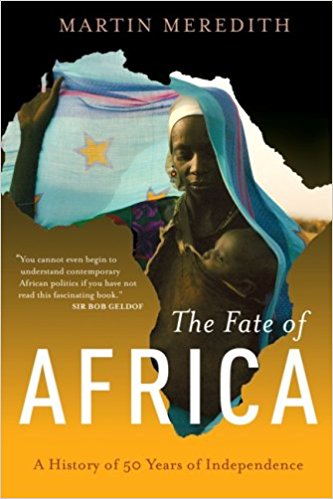
The Fate of Africa: From the Hopes of Freedom to the Heart of Despair, by Martin Meredith, Public Affairs Press, 2005, 752 pp.
At close to 800 pages, The Fate of Africa is a huge book about a huge subject: the history of Africa since independence. Martin Meredith, who worked for years as a journalist on the continent and who has written eight other books about Africa, carries off this nearly impossible task with just the right combination of style and scholarship. At the same time, he sugarcoats nothing and spares no one. As any honest contemporary history of the continent must be, this is largely a story of greed, corruption, oppression and massacre. There may be no better and more up-to-date single-volume account. The Fate of Africa covers North Africa as well, but this review will concentrate on the continent south of the Sahara. Although Mr. Meredith draws few broad conclusions, he offers a wealth of evidence for anyone who wishes to.
Untouched by Europe
As Mr. Meredith explains, even though in some cases colonization had lasted 200 years, most blacks were essentially untouched by Europe. The French ran their West African empire with only 385 white administrators, and the British were famous for equally thin-stretched, indirect rule. At the end of the Second World War, only the British even thought in terms of eventual independence for these untutored lands, and did not foresee it until the end of the 20th century. It was pressure from the United States, post-war exhaustion, and militant independence movements that forced a pace no one anticipated in 1945.
Whatever the timetable, because it was West Africa that had been in closest contact with Europe, it was thought best prepared for self-government. By 1920, for example, the Gold Coast (future Ghana) had 60 practicing black lawyers, whereas Kenya did not get its first lawyer until 1956. The first black deputy to the French National Assembly came from Senegal in West Africa in 1914. Léopold Senghor, another deputy from Senegal, helped draft France’s Fourth Republic constitution in 1945. His French was so good he was in charge of policing the constitution’s grammar.
Independence consequently did come first in West Africa, with Kwame Nkrumah as leader of Ghana. Nkrumah’s career set so many patterns for the new Africa that it is worth following in some detail. What began with great promise ended in tears, in a cycle so often repeated that Mr. Meredith has adopted it as the subtitle of his book.
Nkrumah had one of the most sudden rises to power of any politician in history — from prisoner to prime minister in a single day. Held in a Gold Coast prison for stirring up anti-British riots, his party managed to win 34 of 38 contested seats in a 1951 election. The British governor, Charles Arden-Clarke, stiffened his upper lip, summoned his prisoner, and asked him to form a government.
Ghana went on to six years of democratic self-government under the close supervision of Arden-Clarke. It seemed to be perfect training for sovereignty for the perfect candidate for independence. Ghana had a sound educational and economic infrastructure built by the British, excellent natural resources, and healthy foreign currency reserves due to cocoa exports. The Cold War was raging, and both the United States and the Soviet Union were eager for new clients. Mr. Meredith writes that when independence came in 1957, there was world-wide hope and optimism on a scale now difficult to imagine. The six-day gala was a love-feast of goodwill and high expectations.
Once the British were gone, Nkrumah stamped out the opposition, built up a personality cult, squandered money on gold-plated projects, and ran the economy into the ground. He built the largest dry dock in Africa, which was almost never used. He set up a national airline and insisted it fly to politically fashionable places like Cairo and Moscow for which there was no commercial demand. He set up state-run corporations and state farms that only spread failure and corruption. He made it a crime for anyone to “show disrespect to the person and dignity of the Head of State.” Foreign businessmen learned that anyone with a glib tongue and a bright idea — the more grandiose the better — could get a fat government contract. The head of state himself signed deals.
Nkrumah had ambitions for the entire continent. In 1958 he hosted an All-African People’s Conference to promote anti-colonial agitation. Among his guests were many who later became heads of state: Julius Nyerere (Tanzania), Kenneth Kaunda (Zambia), Hastings Banda (Malawi), Patrice Lumumba (Congo), Amílcar Cabral (Guinea Bissau — assassinated shortly before independence), Holden Roberto (Angola), and Joshua Nkomo (never quite made it to the top in Zimbabwe). Nkrumah is still something of a saint for many Africans and American blacks because of his militant anti-imperialism. He dreamed of an Africa as mighty as the United States, and squandered millions on a huge complex of buildings he hoped would become the capital of a continent united under his leadership.
Nkrumah’s follies had predictable results. By 1965, just eight years after independence, what had been one of Africa’s most prosperous countries was bankrupt. Increasingly deluded and anti-white, Nkrumah blamed every failure on imperialists and neocolonialists. He might have gone on wrecking Ghana had he not tried to clip the wings of the army. In 1966, while he was junketing in Peking, the generals took over and told him not to come home. School children who had been taught to chant “Nkrumah is our messiah,” now chanted “Nkrumah is not our messiah.”
The cashiered messiah found refuge in a clapped-out house in Guinea Conakry, where he received ever-dwindling bands of admirers, and spent his days drawing up impossible plans for Ghana. He was convinced that a popular movement would rise up to bring him back to power. By the time of his death in a Bucharest hospital in 1972, he was a pathetic figure.
In many respects, therefore, Nkrumah set the pattern for the continent: dictatorship, corruption, mismanagement, quirks bordering on madness, and involuntary departure from office. In particular, his example of one-man rule caught on almost everywhere. A few dictators explained that nation-building required unity of purpose, but most simply seized power without explanation or apology. When someone once asked Habib Bourguiba of Tunisia what kind of political system his country had, he replied, “System? What system? I am the system.” Hastings Banda of Malawi once observed, “Everything is my business. Everything.” He also said, “Anything I say is law. Literally law.” In 1965 he went further: “If, to maintain the political stability and efficient administration, I have to detain ten thousand or one hundred thousand, I will do it.” Julius Nyerere of Tanzania, whose attempt at African socialism will be examined later, explained that political parties arose in the West because there were economic classes. In Africa, there were no classes, so only one party was necessary: his.
Nkrumah was also typical of a surprising number of independence rulers who had been jailed or banished by the white authorities before taking power: Kenneth Kaunda of Zambia, Jomo Kenyatta of Kenya, Robert Mugabe of Zimbabwe, Bourguiba of Tunisia, Banda of Malawi, Mohammed V of Morocco, and Patrice Lumumba of Congo (convicted of embezzlement, not independence activity).
Also, like virtually the entire first-generation of independence leaders, Nkrumah had lived and studied in Europe or the United States. Men who went abroad were undoubtedly a better sort to begin with, and some experience of the West probably tempered their excesses, at least at first. In the next generation, semi-savages like Idi Amin (Uganda), Samuel Doe (Liberia), and Jean-Bédel Bokassa (Central African Republic) would shoot their way into presidential palaces, and go on to ever-more gruesome antics.
Unlike most African rulers, however, Nkrumah did not surround himself with toadies and mistresses, and seems to have been lonely and isolated. He decided, apparently on a whim, to marry, and asked Gamal Nasser of Egypt to find him a wife. Nasser did: an Egyptian girl who spoke only Arabic and a bit of French; Nkrumah understood neither language. He married her the same day he met her, and she gave him three children but little companionship. The only real friend Nkrumah seems to have had in power was a British woman, Erica Powell, whom he met when she was Governor Arden-Clarke’s private secretary. He hired her away, with the governor’s blessing, and always said she was the only person who gave him unbiased advice.
Nkrumah’s interest in a European woman did not lead to marriage, but for many rulers it did. Kenyatta, Bourguiba, and Banda had white wives, as did Léopold Senghor of Senegal and Seretse Khama of Botswana. Jean-Bédel Bokassa, who crowned himself “emperor,” had 17 wives, including a blonde Rumanian cabaret dancer, a German, and a Swede. (He kept wives in separate houses and left his office several times a day to call on them.)
Finally, Nkrumah differed from other African rulers in another important way: He does not appear to have looted the treasury. He enjoyed the privileges of office — his secretary Powell wrote that he was “a-gog with excitement” at the prospect of meeting the Queen of England — but his own greatness was to come not from bank accounts but from a spectacular new Ghana.
All things considered, by African standards, Ghana’s transition to independence was a great success. Elsewhere, there were failures, some so spectacular the West could not ignore the mess. Mr. Meredith’s account of the Congo’s almost immediate implosion is worth summarizing.
The Belgians have long been derided for failing to prepare the Congo for self-rule, and there is some truth to the accusation. In 1960, the country had only 30 university graduates and no black doctors, secondary school teachers, or army officers. However, the Belgians had built good basic infrastructure, and a broad base of elementary schools. They simply had not foreseen independence, but did not try to thwart it when times changed. After riots in 1959, they proposed a four-year transition to self-government. It was the Congolese who insisted on a quick handover.
Mr. Meredith points out that the independence ceremony of June 30, 1960 set the initial jarring note. King Baudouin of Belgium praised the early colonizing work of his great uncle, Leopold II — whose exactions were so ruthless that the Belgian government took over in 1908 what had been his private preserve — and talked down to the Congolese: “It is up to you now, gentlemen, to show that you are worthy of our confidence.” Patrice Lumumba, prime minister to be, replied with a rant against “exploitation,” “terrible suffering,” and “humiliating slavery that was imposed on us by force.” “We are no longer your monkeys,” he added.
Just a few days later, black soldiers revolted against their white officers, and went on a rampage, beating and raping whites, singling out priests and nuns for particular abuse. Thousands of whites fled the country — setting a model for what was to happen with dreary regularity elsewhere. The Belgians asked Lumumba for permission to use force to save whites. When Lumumba refused, Belgium acted unilaterally. The southwest province of Katanga seceded. The Congo was just two weeks old and already in chaos.
Lumumba called on the UN for help, which arrived in July, but what he most wanted UN soldiers to do was kick out the Belgians. He gave the UN two days; otherwise he would turn to the Soviets. Ralph Bunche, the black American head of the UN mission described Lumumba as “crazy” and acting “like a child.”
Later that month, Lumumba visited the United States. Under-Secretary of state Douglas Dillon thought him “an irrational, almost psychotic personality.” Lumumba telephoned the Congo desk at the State Department and asked for a blonde companion. The CIA found someone to send over, but the White House quashed the tryst.
Belgian troops eventually left the Congo after they had evacuated whites, but Lumumba then insisted that the UN put down the Katanga rebellion. When another province, South Kasai, went into revolt, Lumumba really did call in the Soviets, who sent technical assistance. His attempt to put down the Kasai rebellion resulted in massacre and produced 250,000 refugees. By now, both Belgium and the US were convinced Lumumba was a menace, and both governments wanted him assassinated.
President of the Congo, Joseph Kasa-Vubu, dismissed Lumumba, who in turn dismissed Kasa-Vubu. In September, Joseph Mobutu, chief of staff of the army, ousted all politicians in a military coup. Lumumba stayed on in the prime minister’s residence in Leopoldville, guarded by an inner ring of UN troops to keep Mobutu’s men from arresting him. An outer ring of Mobutu’s soldiers made sure he did not escape. In pouring rain on the night of Nov. 27, Lumumba slipped out and headed for Stanleyville, where he had support, expecting to form a rival government. He might have reached Stanleyville, except that he kept stopping to harangue villagers. Mobutu’s men caught him and brought him back to Leopoldville, and his supporters in Stanleyville set up a government without him. That made a total of four competing governments, along with Mobutu’s, and secessionist regimes in Katanga and South Kasai.
Mobutu had Lumumba hauled before him and spat in his face. With the approval of the Belgians, he flew him off to the leader of the Katanga revolt, Moïse Tshombe, who was certain to kill him. Tshombe helped torture him for hours, returning home, according to his butler, “covered in blood.” The next day, Belgian officers commanded a firing squad that executed Lumumba. The Belgians began to worry about bad press, and concocted the story that Lumumba escaped from detention and was killed by “patriotic” villagers. To cover their tracks, they cut up Lumumba’s body and dissolved it in sulfuric acid. Still, word of his murder prompted anti-Belgian demonstrations all over the world. To this day, Lumumba is a hero to nutty leftists because he called in the Soviets, and to nutty blacks because he was rude to white people.
The UN eventually put down the Katanga rebellion in 1963, and by the time Joseph Mobutu consolidated power in 1965, he could almost be seen as the savior of his country.
Far less well known is the independence disaster of the tiny country of Equatorial Guinea, which was a Spanish colony until 1968. The Spanish had groomed Francisco Macías Nguema to be leader, but like so many whites, had no idea how much he hated them. One of his first acts was to stir up anti-white violence, and most of the country’s 7,000 Spaniards left their businesses and farms and were gone in the first six months.
Nguema was a real monster. When a director of statistics published figures that displeased him, Nguema had him cut into little pieces to “help him learn to count.” On at least two occasions, he ordered the killing of all known former lovers of a mistress. Whenever he wanted a new woman, he had her husband killed. Of his 12 original ministers, only two escaped murder.
Nguema ran out of money and started paying only soldiers and the police. Every other part of the government shut down. Nguema closed all libraries, newspapers, and printing presses, and in 1974 emptied the country’s last school. He outlawed Christianity and turned churches into warehouses. To raise money, he started holding foreigners for ransom: $57,600 for a German woman, $40,000 for a Spaniard, $6,000 for a dead Soviet. He held hostage the last Claretine missionary, age 85, until he got a ransom. Nguema carried on for 11 years until a nephew deposed him in a 1979 coup. When it came time to execute Nguema, blacks were so afraid of his rumored supernatural powers they refused to pull the trigger. Moroccan soldiers had to be found for the firing squad.
The new man, Teodoro Obiang, is still in power, and the country still has no newspapers. A recent statement from an aide hints at the flavor of his regime: “He can decide to kill without anyone calling him to account and without going to hell because it is God himself, with whom he is in permanent contact, who gives him this strength.”
A few African leaders have sincerely tried to help their people. A curious and genuinely tragic figure, Julius Nyerere of Tanzania stole nothing, fought corruption, and worked tirelessly. The trouble was, his schemes were all wrongheaded. With his “Arusha Declaration” of February 1967, he set out to nationalize everything in sight, even private houses that were rented out. He wanted the whole country run on the principle of ujamaa or “familyhood,” which was supposed to capture the ancient spirit of “African socialism.”
His state corporations posted huge losses, but his greatest folly was collective farms, or ujamaa villages. Joining up was supposed to be voluntary, but eventually 11 million people were herded onto collectives in the largest mass movement of people in African history. When farmers fled back to their old fields, government workers burned their houses. Nyerere tolerated no dissent from socialism, and under his rule Tanzania went from being the largest African exporter of food to the largest importer. Always the darling of Western leftists, he got enough foreign aid to keep the country from starving. In 1985, after 23 years of familyhood, he gave up and left office. With a frankness unusual in politicians anywhere, he announced, “I failed. Let’s admit it.”
Mr. Meredith records the facts as he finds them, and the result is largely a litany of horrors. He gives us full accounts of the complex and sordid events surrounding the Hutu/Tutsi genocide of Rwanda, the wars of extermination in Sudan, the chaos and barbarity of “liberation” in Angola and Mozambique, and the downfall of white regimes in Rhodesia and South Africa.
Still, a few of Mr. Meredith’s observations stand out: In Kenya, a popular saying is “Why hire a lawyer when you can buy a judge?” Omar Bongo of Gabon, who ran the country for 22 years and had a penchant for trying to seduce American Peace Corps volunteers, spent no less than $500 million on his presidential palace. Nigeria spent $8 billion on a steel industry that never produced steel. During the civil war in Chad in 1982, mobs sacked and burned both the national museum and the national archives. President Siaka Stevens of Sierra Leone once spent two thirds of the country’s annual budget to host a meeting of the OAU. When AIDS was discovered, Africans widely derided preventive measures as a racist plot to keep them from reproducing. In 1973, Juvénal Habyarimana of Rwanda forced everyone, even babies, to join his political party. And how is this, asks Mr. Meredith, for an absurdity: In the late 1980s, Cuban troops were protecting American-owned oil fields in Marxist Angola from attacks by US-supported guerillas.
Here are more vignettes from The Fate of Africa:
Abeid Karume became ruler of Zanzibar in 1964 before the merger with Tanganyika that produced Tanzania. One of his first acts was to supervise the slaughter and expulsion of Arabs and Asians. Somewhat more unusually, he stopped all anti-malaria measures, claiming Africans were “malaria-proof.” There was a huge upsurge in malaria. An army officer shot Karume to death in 1972, not for political reasons but over a personal grudge.
In 1984, Mengistu Haile Mariam of Ethiopia spent $150 million on the 10th anniversary of his Marxist-Leninist “revolution” rather than do anything about a terrible famine ravaging his country. As he explained to an aide, “There was famine in Ethiopia for years before we took power — it is the way nature kept the balance.”
Liberia has had a particularly colorful history, but a few episodes stand out. Thomas Quiwonkpa led a revolt against tyrant Samuel Doe in 1985. When Doe’s men caught and killed him they publicly castrated him, cut him in pieces and ate him. Five years later, it was Doe’s turn. Prince Johnson ate at least one of his ears while he was still alive. After suitably torturing him, Johnson’s men paraded Doe’s mutilated body through the streets of Monrovia in a wheelbarrow. Doe had been a guest of Ronald Reagan at the White House in 1982.
In 1996, one of the groups fighting in the streets of Monrovia earned the nickname the Butt Naked Brigade, from its belief that fighting naked gave protection from bullets. In 1997, when Liberia held elections of a sort, warlord Charles Taylor announced there would be killing if he lost. He campaigned on the slogan “He killed my ma, he killed my pa, but I will vote for him” — and won.
Nigeria, with its oil revenue, should be one of the richest countries on the continent, but hundreds of billions of dollars have disappeared. In 2000 and 2001 in the eastern part of the country, crime was so bad and the police so corrupt that vigilantes took charge. A group known as the Bakassi Boys liked to herd criminals into a public square, where huge crowds watched while they hacked away with blunt machetes. If some of the condemned men were still alive, writhing on the ground, the boys would finish them off by tossing gasoline-doused tires on them and setting them on fire. Street crime disappeared, and the Bakassi Boys were hugely popular.
Mr. Meredith tells us that even the fabled revolutionary Ernesto “Che” Guevara had an African mishap. In 1965, he went to north Katanga in the Congo to test his “detonator theory” that revolution could be kicked up with a little violence. It was a complete failure. He was supposed to be helping Laurent Kabila (who was still knocking about 30 years later and had a brief stint as Mobutu’s successor) but Guevara found him “addicted to drink and women.” “The basic feature of the People’s Liberation Army,” he wrote later, “was that it was a parasite army; it did not work, did not train, did not fight, and demanded provisions and labor from the population, sometimes with extreme harshness.” It was worthless as a fighting force: “Often it was the officers who took the lead in running away,” he wrote. Guevara gave up in disgust after seven months.
The French, who had been in Africa for a long time, seem to have understood that European forms of government are not natural to the continent. They kept bases and soldiers in Africa, and used them frequently to keep order. As one spokesman explained, it just wouldn’t do “for a few men carrying machine guns to be left free to seize a presidential palace at any time.”
Even with Europeans around to spoil the fun, African politics have been a gaudy business. By the end of the 1980s, of the 150 heads of state the continent had boasted, only six had left office voluntarily, three of these after more than 20 years in power. Not one had been voted out of office. That did not come until after the Cold War, when the US and the Soviets stopped propping up thugs for ideological reasons. Western donors began to pressure the Big Men to hold multi-party elections, and in 1991 Benin became the first country to see a ruler voted out. Democratic change hardly caught on. By 2000 only three others had been voted out.
When pressured to produce “democracy,” Africans showed considerable resourcefulness. In 1989, General Babangida of Nigeria set up two parties. His government wrote their constitutions, gave them their emblems, and most of their cash. One was to be, in the general’s words, “a little to the left” and the other was to be “a little to the right.” Three years later he got tired of them, and abolished both. Sani Abacha, also Nigerian, did even better. In the mid-1990s, under yet more pressure to democratize, he set up five political parties. Each duly chose him as its candidate for president.
The idea of elections makes no sense to the average African ruler. The whole purpose of government is to make him rich and powerful. An election, of all things, is the stupidest reason to step down. For the huge majority of Africans, political activity is therefore palace politics; the closer you are to the Big Man, the better your chances for patronage, kickbacks, payoffs, and outright theft. Mr. Meredith writes that almost without exception, government jobs mean legalized theft. Public service is an empty concept on a continent of what he calls “vampire governments,” where nepotism and corruption are as natural as breathing.
Like all experts on Africa, Mr. Meredith notes that Botswana is the great exception. Independent in 1966 under Seretse Khama, it has little corruption and regularly-contested elections. Diamonds supply half of all government income, but the Big Men have kept hands off. By the end of the 1980s, careful use of diamond income had given the country a per capita GDP that hardly sounds like black Africa: $1,700. Like other experts, Mr. Meredith ventures no explanation as to how Botswana does it.
Elsewhere, the picture is bleak. Since independence, the continent has swallowed more than $300 billion in Western aid with, as Mr. Meredith puts it, “little discernable result.” Corruption eats up an estimated one quarter of the continent’s gross domestic product. Although sub-Saharan Africa has ten percent of the world population, it has 70 percent of the AIDS cases, and accounts for only 1.3 percent of world GDP. By the end of the 1980s, per capita GDP was lower than in 1960, when many countries became independent.
Mr. Meredith generally refrains from drawing larger conclusions, but does note near the end of the book that “in reality, fifty years after the beginning of the independence era, Africa’s prospects are bleaker than ever before.” At the beginning he writes of “the extent to which African states have suffered so many of the same misfortunes.”
Why the mess? Mr. Meredith does not say. Perhaps the closest he comes is to note that tribalism has been a continuing curse. Ancient enemies sometimes buried the hatchet during the independence struggle but dug it up again once the common enemy was gone. The simplest conclusion is that Africans are simply not like Europeans and cannot build European-style societies.
Another conclusion Mr. Meredith could have drawn but did not is that white relations with post-independence Africa have been naïve and stupid. Interventions have been consistent failures. Whether it is Americans in Somalia or Liberia, the British in Sierra Leone, the French in Rwanda, the Soviets in Ethiopia or Somalia, no one gets what he expected. Even semi-Third-World people like the Cubans, North Koreans (in Zimbabwe) or Chinese (in Tanzania) got nothing for their efforts. When Europeans ruled Africans outright, without illusions that they were dealing with people like themselves, they had modest goals and achieved them. As soon as they started reading cultural anthropology, they lost their bearings.
Mr. Meredith writes that not until 1989 did the World Bank acknowledge that Africa’s problems were not all economic, that there were also leadership problems. Men from 100 years earlier like Lord Lugard or Sir Garnet Wolseley would have been amazed by such stupidity.
Another remarkable aspect of recent African history is how easily one thug after another duped the white man. Both the United States and the Soviet Union funneled enormous sums to people who claimed to be either capitalist or communist but were really just thieves. Samuel Doe was not the only White House or Kremlin guest to end up in a wheelbarrow.
Mariam of Ethiopia, who let his people starve while he celebrated ten years of “revolution,” also played whites for fools. Once word got out about the famine, whites shipped in tons of food.Mariam learned that it made no difference what he did with it — sell it on the black market, dole it out to friendly tribes, deny it to starving enemies — it kept coming. Gaafar Nimeiry of the Sudan learned the same thing. The famine of 1984 did him a lot of good. White people showed up with boatloads of food he could use as a weapon. Whites fed his people while he bought guns and kept killing his enemies.
Perhaps saddest of all is that time and again — in Congo, Kenya, Zimbabwe, South Africa, the Guineas, Angola — whites who spent their lives in Africa and should have known better, underestimated the hatred of blacks. Whites everywhere think blacks will love them if they treat them kindly. They do not realize that kindness or fairness are not enough; many blacks hate whites because they cannot be like whites. No matter how they are treated, blacks will blame their failures on “racism.”
Some of the whites who fail to understand this end up in piles of bloody corpses. Others get out while they can. Two hundred thousand fled Mozambique, 300,000 left Angola, many thousands fled the Congo, Zimbabwe lost half its population immediately after black rule, and a steady flow of whites is now escaping South Africa. It was 40 years after independence, but thousands of French left the Ivory Coast when blacks started running through the streets shouting “Kill the whites.” There are pockets of friendliness and lulls in the process of dispossession, but once blacks take power, they do not like to live with a minority whose success highlights their own failure.
Despite the rotting bodies and mountains of evidence, despite the chronicle of barbarism Mr. Meredith tells so well, whites have an inexhaustible capacity to deceive themselves about the motives and behavior of Africans. Columnist Mary McGrory was fully exercising this capacity when she wrote in the Washington Post on May 12, 1994 about how wonderful black rule in South Africa was going to be: “[N]ewspaper readers will think they are reading scripture when they read dispatches from South Africa that cannot be read except through tears.” People wrote rubbish almost as bad about Kwame Nkrumah.
Whites will never understand Africa — or the blacks in their own countries — until they cease being capable of writing and publishing such nonsense. The Fate of Africa is an excellent corrective.
Wrapping up a policy-light SNP conference, John Swinney’s only big announcement was the creation of a network of 15 walk-in GP centres.
His next trip was to a health centre, but not one run by the Scottish NHS.
The first minister was straight on a plane to Zambia, where his next public appearance was at a Scottish government-funded child’s operating centre, some 5,300 miles from home.
A stickler for the rules, a hair net adorned Swinney’s smooth head. It took the first minister, after what his allies believe was a largely successful three-days in Aberdeen, out of the domestic limelight.
He is to spend six days in sub-Saharan Africa, an unusually long first ministerial overseas trip, to mark the 20-year anniversary of Holyrood’s overseas aid programme.
Advertisement
Having moved on to Malawi on Friday, Swinney will not return to Scotland until Monday.
“We are boring our way to victory, but we just have to grit our teeth and get there,” said one leading party figure, dismayed at the lack of bold initiatives at the conference. The annual showpiece for the party, they said, had been an “ideas free zone”.
There are some internal jitters there may be credibility to opposition claims that the nationalist policy cupboard, after nearly two decades in power, is now bare.
Figures close to Swinney insist the attacks are unfair. They claim the dearth of policy announcements at conference, where the party had nothing new to say on devolved issues such as policing or education, was a tactical decision.
For now, the SNP is content to leave political stage to Labour. Exactly 200 days out from the Scottish elections, the only party with any hope of beating the SNP is braced for a budget next month in which Rachel Reeves is expected to have to announce a fresh combination of painful tax rises and spending cuts.
Advertisement
“Is the budget going to be a good or bad news story for Labour?” one leading SNP figure close to Swinney asks. “Why interrupt the Labour Party when they are making mistake after mistake? They have been jaw-droppingly terrible, and voters feel misled.”
A party united?
Swinney believes, after a conference where his independence strategy was overwhelmingly endorsed, that he has a genuinely united party, for the first time since sexual misconduct claims against Alex Salmond erupted more than seven years ago.
While a succession of members took pot shots at his plan, which is to insist that an outright majority in Holyrood will finally deliver the fresh referendum his activists crave, none of them were elected figures with public profiles.
One rebel addressed the conference in a Star Wars T-shirt, making a bizarre analogy linking the quest for a new referendum to the African American athlete Jesse Owens winning gold at the Nazi-run 1936 Berlin Olympic Games. Other Swinney critics spoke of “provisional governments” and the Battle of Bannockburn.
The days when a substantial figure such as Joanna Cherry, the KC and former MP, could have been expected to line up behind the rebels are gone.
Advertisement
The matter of independence strategy, another open sore since Theresa May first uttered the words “now is not the time” in 2017, has also been settled, at least for now.
The first minister, aides claim, is now ready to move to the final part of a three-step plan.
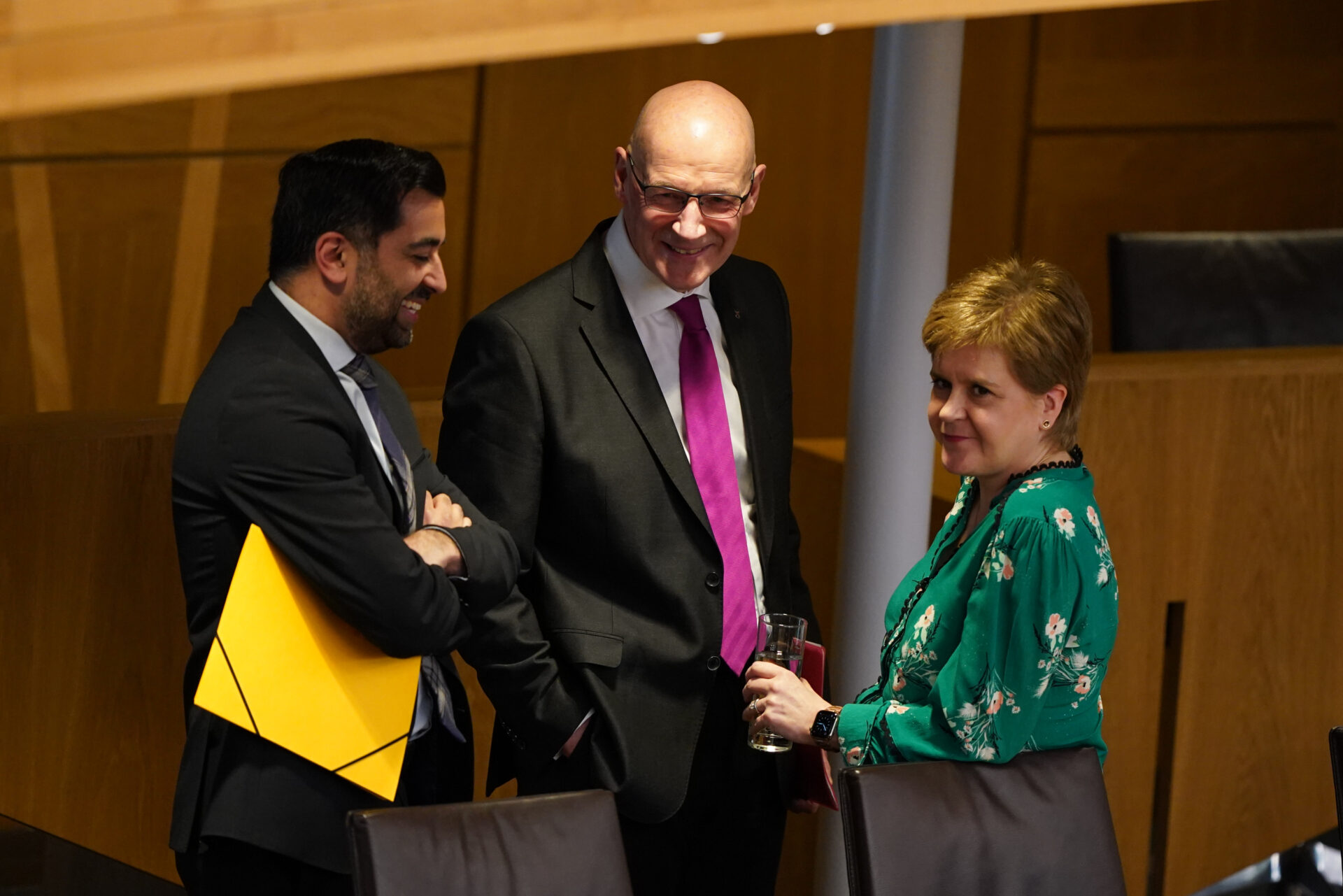
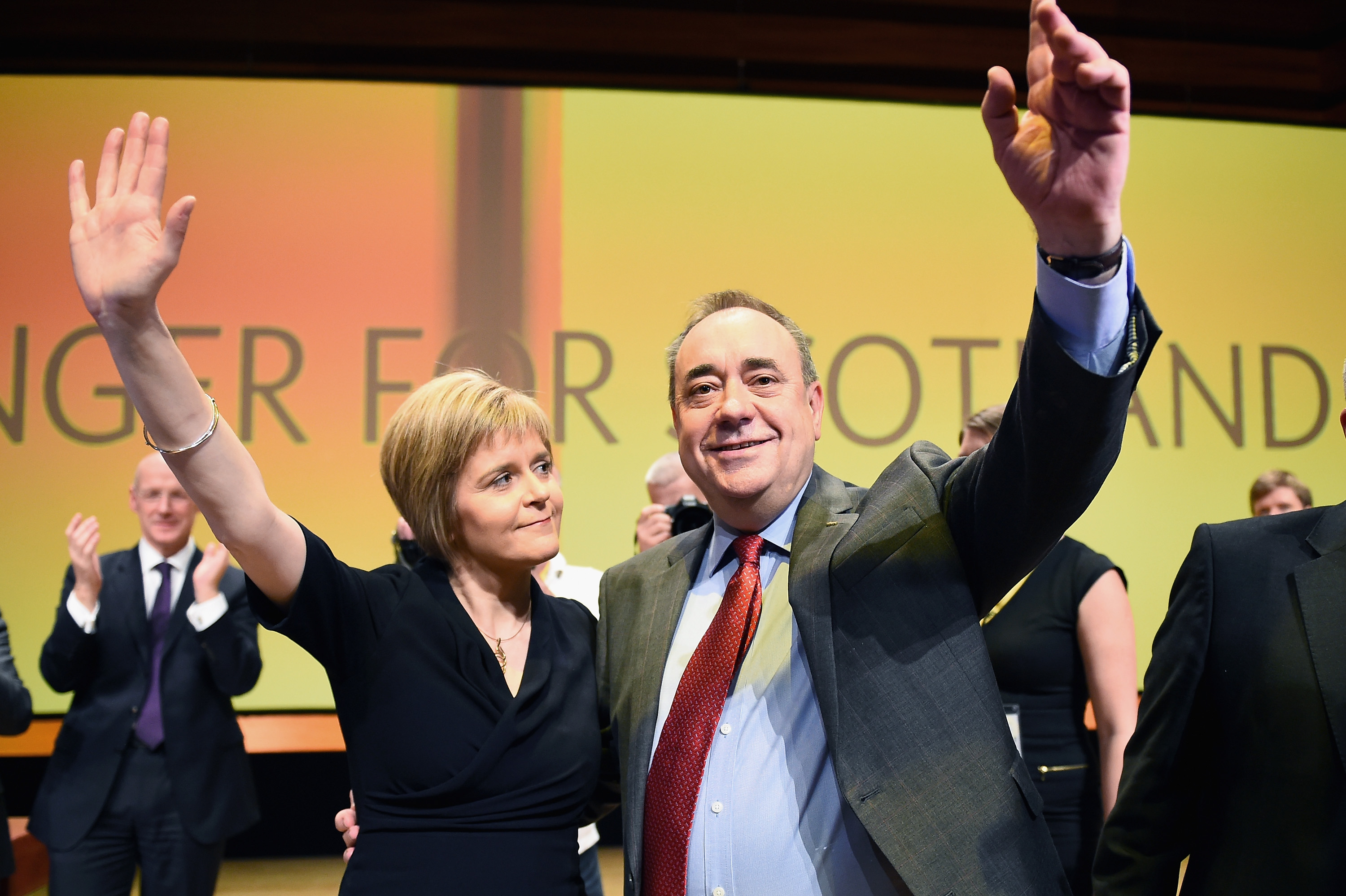
Swinney with his two predecessors Humza Yousaf and Nicola Sturgeon
ANDREW MILLIGAN/PA
The revival plan
When he took over from Humza Yousaf 17 months ago, the first phase of the strategy was to “stop digging”, to “stop doing things that are doing us harm”.
Insiders now concede the party came “perilously close” to a point of no return, after a series of scandals and policy missteps, during which voters became so disillusioned they simply stopped listening.
The SNP’s opponents will point to turmoil in the NHS, a mass early release of prisoners from next month and a violence epidemic in classrooms as evidence this has not happened.
Swinney’s team acknowledges voters are still irked by the state of public services, but believes they are open to giving the first minister time to turn things around.
The SNP views the scrapping of peak rail fares in September as a big success, which makes a marked improvements to voters’ lives. The party will seek to replicate it in the months ahead.
The plan for walk-in GP centres, while it landed badly with doctors and came with scant details of how it will be delivered, is being portrayed as a sign of policies to come.
Advertisement
Although Swinney backed away from overhauls when he was education secretary, his allies say he is now willing to be “radical” on public service reform and move away from the “big tent consensus” approach the SNP previously embraced.
He will offer a few pre-election policy teasers before the year ends, but he is saving the substance of his platform for the spring SNP conference and manifesto launch.
Meanwhile, despite public concern about public services, the party sees some green shoots.
The SNP has faced criticism over its failure to reform the NHS
ALAN RICHARDSON/PA
A poll last month, which found net satisfaction with the NHS at -17, generated a slew of negative headlines for the SNP.
Members of Swinney’s inner circle, however, took heart from the fact that compared with the same poll last year, the proportion of voters who said they thought the devolved government was performing well on the NHS had risen by seven points.
There were similar improvements on the economy, education and ferries, while satisfaction with trains, after the peak rail fares policy, was up 14 points. There was decline in only two of 12 policy areas — housing and rural issues.
The third stage of Swinney’s plan is to “grab the opportunity” and deliver another thumping win in May’s Holyrood elections. The SNP will try to convince voters that the first minister deserves another five years to elevate the standard of public services.
“We have a united party now, the benefit of incumbency and a clear lead,” a senior figure close to Swinney said. “It feels like the momentum is with us.
“Sarwar is nowhere, Reform are becalmed in the teens [in recent polls] and the Tories are dead. John has put us into a position where we have a fantastic opportunity — we now need to grab it.”
Anas Sarwar and Scottish Labour are some distance behind the SNP in the polls
KEN JACK/GETTY IMAGES
The case for the opposition
Scottish Labour, however, insists there remains a credible path to Anas Sarwar winning the keys to Bute House.
Much will depend, senior figures admit, on whether the party in London can heed a variation of Barack Obama’s famous advice. “Stop doing stupid shit”.
Economic realities dictate that the budget delivered by Reeves on November 26 will be hard, but Scottish figures believe it will be survivable. They expect voters to switch on to the Holyrood elections by February at the earliest.
Sir Keir Starmer and the chancellor have been left in little doubt about the stakes. Douglas Alexander, the new Scottish Secretary, spent two days with the prime minister during a recent trade mission to India. Sarwar, meanwhile, as well as being close to Starmer, has a direct line to Reeves after they became friends when they first entered parliament together in 2010.
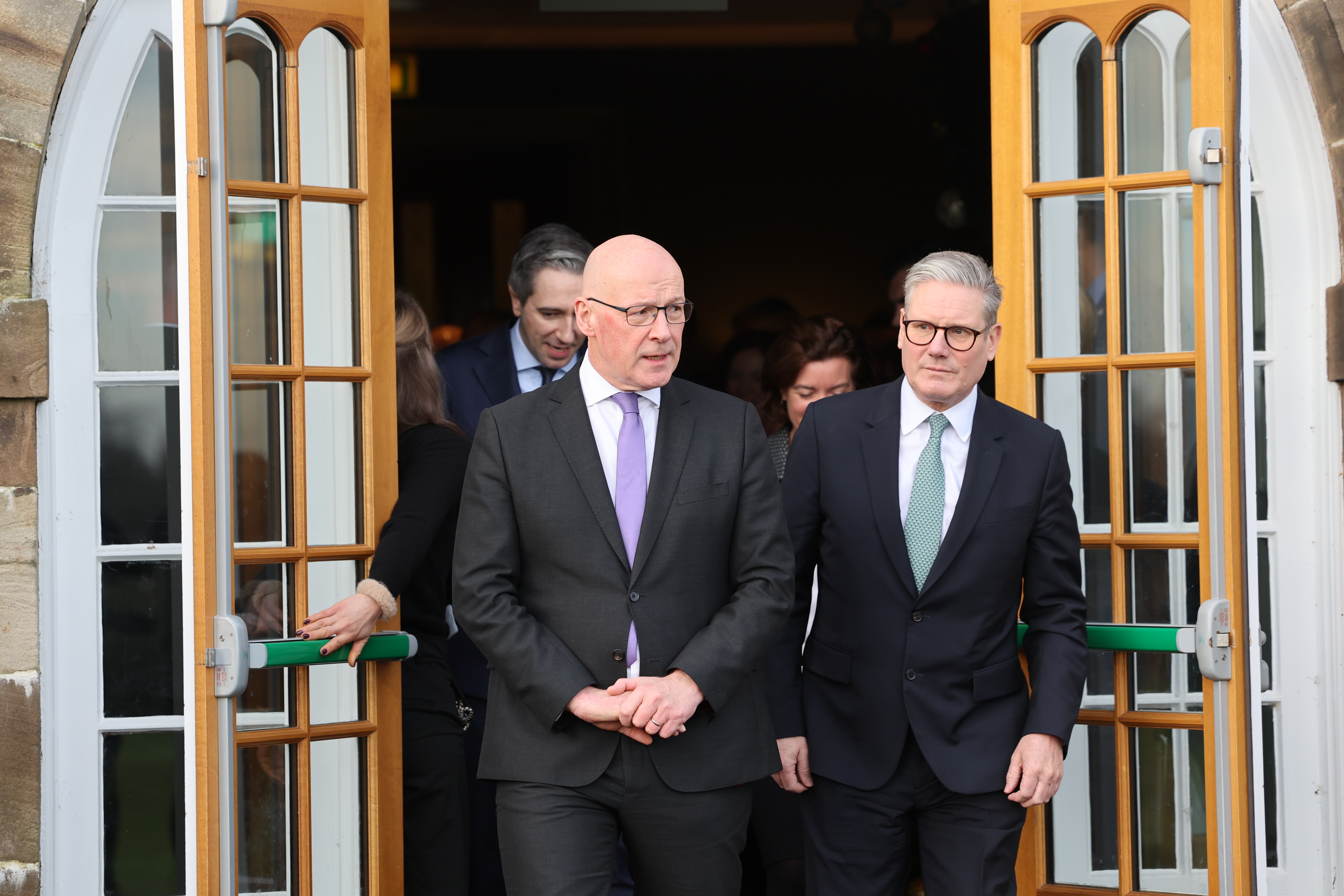
Swinney with Sir Keir Starmer
ROBERT PERRY/EPA
The hope is that the spending plans will be seen as a “Labour budget in difficult times”, accompanied by a convincing narrative about whose side the party is on, and without unforced errors that will outrage voters, such as the ill-fated cut to pensioners’ winter fuel payments.
And while the SNP sees the stability and seriousness of Swinney as a strength, Labour believe he can be turned into the nationalists’ Achilles’ heel.
Salmond and Nicola Sturgeon, Labour figures admit, were superb campaigners and media performers who were far better than their Scottish leaders. The first minister, they believe, is not in the same league as his predecessors, the hapless Yousaf aside.
Nicola Sturgeon and Alex Salmond in 2014
JEFF J MITCHELL/GETTY IMAGES
The party plans to paint Swinney, a prominent figure in Scottish politics for three decades, as yesterday’s man, tired and out of ideas.
He can be tied to various SNP blunders over decades in power, strategists believe, and will compare unfavourably in a campaign with the more exuberant Sarwar, more than two decades younger.
The first minister’s interview performances around the conference, in which he struggled with detailed questions on the practicalities of independence and appeared content to say as little of interest as possible, bolstered a view inside Labour that Swinney is no election winner.
The first minister, after all, has led his party into four national and European elections over his two stints as leader. The SNP has comprehensively lost every single one.
Labour believe about 30 per cent of the electorate is solidly SNP. Among the remaining 70 per cent, there is a hope that anger at the nationalists’ running of public services means there is an opportunity to persuade enough voters — even reluctantly — to endorse Sarwar to usher in change. The level of anger at the nationalists for stewardship of services such as the NHS, Scottish Labour believes, is acute among the majority of voters outside of the pro-independence base.
This is essentially how the party pulled off a shock victory in the Hamilton by-election in June, when initially disastrous canvassing results gradually improved as target voters were slowly but surely talked around during the campaign, after being doorstepped by Labour activists.
By-elections bring hope
In actual votes, rather than opinion polls, there are also some optimistic signs for Labour
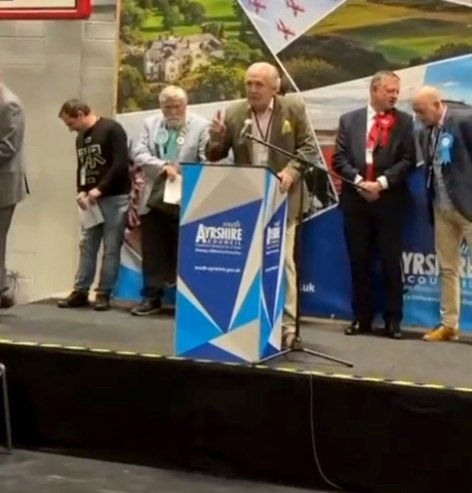
A council by-election in Ayr on Thursday was won by Wullie Hogg, a local businessman who stood as an independent, known for humorous social media videos about building fences and organising litter picks.
Wullie Hogg claimed victory in the Ayr by-election
@WSHFENCING1/INSTAGRAM
The proportion of first votes for the SNP was down more than 20 points, while Labour’s fell by less than four.
Sir John Curtice, the polling expert, said that although the SNP was polling around 12 points below the result Sturgeon achieved in 2021, it was “well-placed” to retain power.
Achieving Swinney’s stated aim of an outright majority, however, represented a “formidable” mountain to climb. “There is little doubt that most voters in Scotland, including many who voted for the SNP last year, are unhappy about the state of the economy and the health service,” Curtice said.
“However, those who voted Labour in the Westminster ballot appear to be blaming the UK government for the state of the country, while those who backed the SNP certainly do not seem to think it is Holyrood’s fault.
“Unfortunately for Anas Sarwar, his party is struggling to escape how voters feel about a UK Labour government that has become deeply unpopular.”
Published on October 13, 2025 at 8:30 AM by Evance Kapito
African American singer Akon’s wife, Tomeka Thiam, is reportedly seeking €100 million (about US$108 million) as part of their divorce settlement after 29 years of marriage.
Tomeka claims she deserves the money as compensation for the support she provided throughout Akon’s career, saying she played a significant role in helping him build his wealth and success.
However, the court handling the case has so far only found about US$10,000 in Akon’s accounts. Reports suggest that most of the artist’s wealth may be registered under his mother’s name.
The revelation has sparked debate on social media, with some people accusing Akon of deliberately transferring ownership of his assets to avoid paying the settlement, while others argue that the singer may indeed be facing financial difficulties.
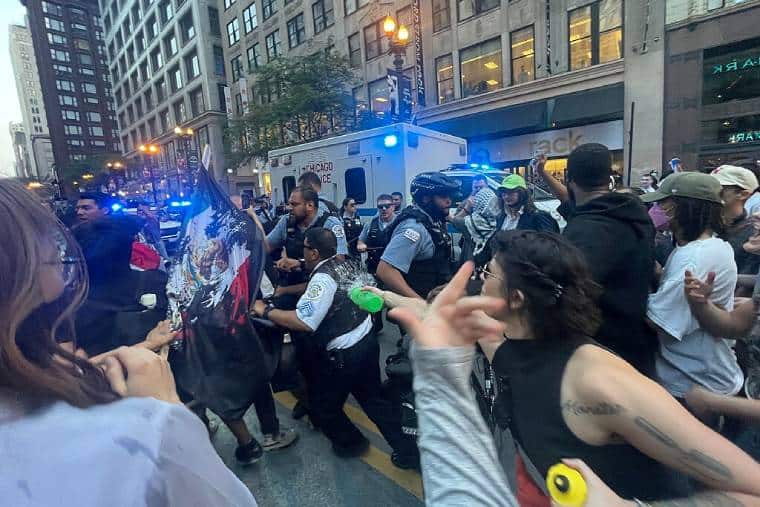
Resisting Ice in Downtown Chicago (Pic: Wikimedia commons)
Sara Paretsky is the award-winning author of the hugely popular VI Warshawski novels. Sara spoke to Judy Cox about militarisation and the threat to democracy in Donald Trump’s America.
SW: What have you been seeing in Chicago?
I live in the South Side of Chicago, which means something specific in terms of race and class. It’s a more upmarket area, and it is very racially mixed. There is an Afro-American community and now there is a significant Hispanic population, mainly Mexicans.
The North Side is mainly populated by white Europeans.
I go to events to look out for Ice activities. I live near the Museum of Mexican Art, which was set up by women in the community. I go there to check for Ice, but they have not targeted it yet.
They are targeting ordinary people. A few days ago, they targeted an apartment near where I live with tear gas and pepper balls. They ripped the building apart and wrenched babies from their mothers’ arms and handcuffed them. They were left naked in the streets for hours.
They are reprising what happened in the 1930s in Germany and in Spain.
We hear Black Hawk helicopters circling overhead. It is not Syria—they are not dropping bombs—it is all about intimidation.
The administration has banned the use of civilian drones because they were being used to track Ice activity.
SW: Why do you think this militarisation is happening now?
We are thinking that the goal is the militarisation of the city so free elections can’t be held next year. They know the Maga Republicans would be voted out.
Donald Trump has dementia. It is Russell Vought who is the policy setter. Vought wrote Project 2025 and he runs the Heritage Foundation. In the summer before the election, Vought recruited 4-5,000 volunteers.
As soon as Trump was inaugurated, Vought had all the executive orders ready to sign. And these thousands of volunteers were ready to comb through the websites of organisations and end federal funding for any that used the language of diversity, equity and inclusion.
That’s things like food programmes and programmes for low income children. I have a friend who runs a programme aimed at cutting infant mortality. She erased 400 words from the organisation’s website to protect its funding.
Another friend runs a programme researching uterine thyroids. She has to write an application without mentioning the word “women”.
Another friend who is a biomedical researcher had her funding threatened because she had too many women on her team.
America was never perfect. But we had people trying to expand the concept of social justice and welfare. It is a great grief to see what is happening now, how things like medical research are being gutted.
The vaccination programme in Sudan has been cut. A friend who runs a programme for children with cancer in Malawi is facing draconian cuts.
SW: The proceeds from your latest book are going to reproductive rights campaigns
Reproductive rights vary from state to state. My state, Illinois, has one of the best provisions for abortion and women’s health care because the two go together.
Our governor, JB Pritzker, is pro-choice and supports fundraising for abortion groups.
About 40 percent of the women having abortions here come from out of state because Illinois is near the southern states which have the most restrictions on abortions.
Women are arriving here not just for abortions but with serious health problems, things like ectopic pregnancies that they can’t get treated where they live.
Hospitals are charging women $17,000 to save their lives, so we are fundraising to help women with that.
SW: Are there other ways we can resist the attacks?
I joined a rapid resistance unit. More and more people are joining in Chicago and across the country. Because more and more people are seeing the danger we are in and the damage being done.
What we are seeing is shocking. I am named after two of my grandmothers who died in the Shoah. I think about what they went through, being dragged from their beds, being marched away—and it is happening right here and right now to my neighbours.
I don’t expect the regime to care, any more than Joseph Goebbels cared. I am the third generation since my grandmothers’ time. Trauma lingers through the generations.
It is not enough to write about what is happening—we have to be in the streets and we have to protect people.
The writer Rebecca Solnit said no football coach goes into the dressing room before a game and says, “look, we’re going to lose but we have to play anyway.”
I have to believe we will prevail. I hope it will be in my lifetime, but anyway, I hope that what I do helps make that possible.