How Collective Action Can Move the Needle on Gender Equality

Active Citizens, Conferences, Development & Aid, Education, Gender, Global, Headlines, Health, Human Rights, TerraViva United Nations, Women & Climate Change, Women’s Health

Opinion

Delegates take a group photo at the Young Leaders & Alumni Workshop at the Women Deliver 2019 Conference in Vancouver, Canada. Credit: Isabella Sarmiento

NEW YORK, Mar 18 2022 (IPS) – During this year’s sixty-sixth session of the Commission on the Status of Women (CSW66), we are eager to see the global community pivot towards more inclusive approaches to advocacy. It’s imperative to put the spotlight on women’s rights and youth-led organizations in communities that are often left out of key discussions. By handing the mic over to advocates across all backgrounds and ages, we can shift to a model that enables all advocates to take a lead role in policy-making and ultimately translate promises and rhetoric into real impact and accountability.


Since the emergence of the COVID-19 pandemic, the ways that the global community works together to push for inclusive progress toward gender equality — progress that fully and effectively engages and equally benefits everyone — are fundamentally changing. Private conversations between the organizations and people with the resources and privilege to access the halls of power have given way to hybrid events and videoconferences that are open to a more diverse, intergenerational set of stakeholders than ever before. This significant shift began to open the doors to more inclusive partnerships.

Also, during these past two years, a global reckoning called on us all to meaningfully transform our advocacy, practices, and programs. International development organizations, including our own, took a long, overdue look in the mirror, and in some cases, began the deep learning and unlearning needed to acknowledge the persistent power imbalances that plague our sector at large. It’s a first step in living up to the values of equity and inclusion — not just on paper, but in practice.

As the world as we know it changed, we were hard at work changing, too. We began actively leveraging our power and influence more intentionally than ever before to center the work and expertise of women’s rights and youth-led organizations in low- and middle-income countries (LMICs). Now, we are digging deeper to find and use new tools that enable advocates to co-create and co-lead by themselves so that our work and the Women Deliver 2023 Conference (WD2023) is more inclusive, diverse, consultative, and accessible than ever before.

Young gender equality advocates kick off the Youth Zone at the Women Deliver 2019 Conference in Vancouver, Canada. Credit: This Is It Studios

In “calling us in” and championing our ability to foster more inclusive partnerships across all of our programs, we are taking action to effectively and authentically advocate for, with, and alongside girls and women everywhere, in all their intersecting identities, to catalyze lasting progress on gender equality.

Transforming ourselves is of course a continuous process. Each day, we are learning to do better and to be better. We hope that our key learnings, below, can support our development colleagues, wherever they find themselves on their journey.

1. Accessibility and inclusion must lead the way — in-person and virtually.

    According to expert studies, organizations and individuals from LMICs are often under-represented at global health convenings. From day one, it’s urgent to intentionally engage those who have historically been excluded. In planning WD2023, we have leveraged the lessons of the past two years and from prior Women Deliver Conferences. We used an open application to select one-third of our Conference Advisory Group — a diverse panel with a balance of technical expertise. Our advisors represent 30 organizations — 10 individuals are from youth or youth-led organizations and 35 are from LMICs. We have done this to ensure that the Conference is co-created from the start by organizations and individuals representing the intersectional identities of the girls and women we work with and for.

    We meet regularly via videoconference with our Advisory Group to co-create the Conference’s Global Dialogue, theme, programming, and more, with support from social impact design experts at IDEO.org. IDEO also supports us as we carry out targeted discussions with specific stakeholder groups, including Women Deliver Young Leaders and Alumni, Deliver for Good Country Coalitions, and Conference Sponsors and Funders.

    In planning how to shape the dialogue, foster collaboration, and drive collective action before, during, and after the Conference, we’re working with our partners to ensure that all Conference advocacy spaces, be they digital or physical, are accessible to all. This includes low-bandwidth options, closed captioning, interpretation in multiple languages, and International Sign Language. On-site, we will also provide trauma-informed specialists, breastfeeding/nursing stations, child safeguarding support, and mental health specialists.
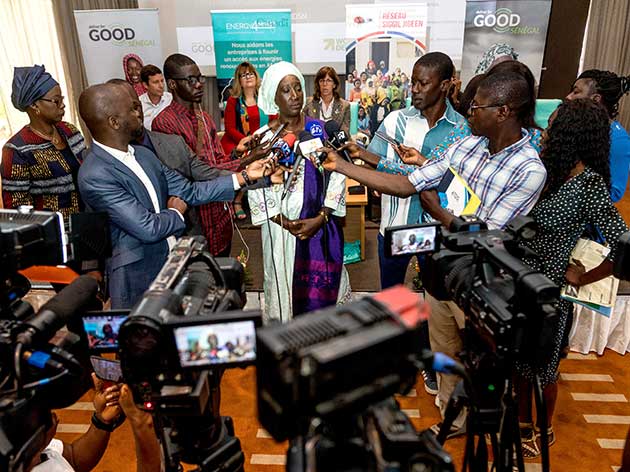
Mme Safiétou Diop, President of Réseau Siggil Jigeen speaking at a press conference during the launch of the Deliver for Good Senegal Campaign in Dakar, Senegal in 2019.

2. Move from meaningful youth engagement to co-leadership and intergenerational action.

    It’s time to follow the lead of young people, shift away from top-down approaches, and actively provide resources for robust youth co-leadership. According to global consensus, young people have a fundamental right to actively and meaningfully engage in all matters that affect their lives. For international development organizations, this means offering space, support, and compensation that youth need and deserve to co-create a more-gender equal future — a future from which they have the most to gain and to lose.

    We created the 14-person Young Leaders Program Alumni Committee, with an honorarium for their valuable expertise, to advise us on strategy and implementation of the Young Leaders Program and ideate youth co-creation opportunities. This committee provides invaluable guidance to ensure the Young Leaders Program models meaningful youth engagement and co-leadership, and effectively meets the needs of Young Leaders on the ground.

    Women Deliver also hosts Multi-Country Workshops to foster capacity strengthening, knowledge sharing, and coordinated advocacy on sexual and reproductive health and rights (SRHR) and gender equality. Starting in 2021, these workshops are now designed and led by a Young Leader Planning Committee representing the regions where the workshops take place. They are in the driver’s seat as they craft workshop content and programming, while Women Deliver provides logistical support and the virtual space to gather. This co-created process has led to more targeted — and impactful — workshops that cater to Young Leaders’ specific needs and build capacity in the issue areas where it’s most needed.
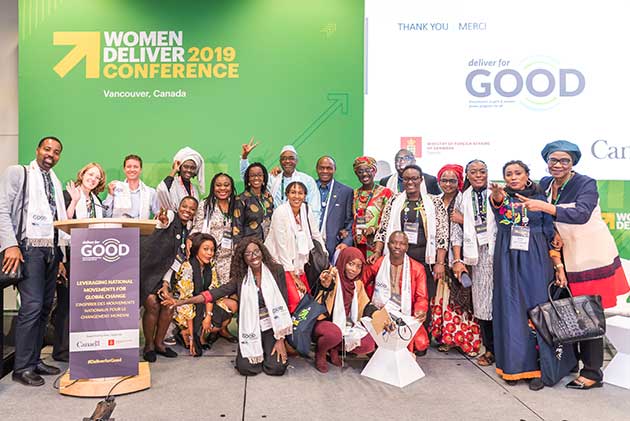
Delegates taking a group photo on stage at the Deliver for Good Campaign side event “Leveraging National Movements for Global Change” at the Women Deliver 2019 Conference in Vancouver, Canada.

3. Elevate diverse voices and support organizations working on the ground.

    Incusion and participation have to be integrated into the mission of development work, not a one-off tactic or strategy. Diverse, resilient feminist and women’s rights organizations and movements are – and must always be positioned as – the key drivers of change for gender equality and women’s rights across the globe.

    Over the past two years, we have stepped back to shift power across every aspect of our organization’s activities, policies, programs, and behaviors, into the hands of the youth and women’s rights groups most impacted by our work. For example, in 2020, in partnership with Girl Effect, as well as with young people themselves, we worked to understand how youth in India, Malawi, and Rwanda use digital platforms to learn about their sexual and reproductive health (SRHR). This project was designed and executed by more than 160 adolescent girls and young women, who worked hand in hand with researchers on the ground in India, Malawi, and Rwanda to conduct interviews within their own communities, as well as to design questions, discuss results, and generate recommendations. Moving forward, we must involve girls and women in all aspects of data collection and evidence generation that impacts them. This will ensure that the local knowledge and skills needed to drive sustainable change in their own communities, regions, and countries are an integral part of effective advocacy and decision-making.

    We’re now handing the pen directly to Young Leaders and spotlighting the work of youth-led organizations during key advocacy moments. Last year, the Deliver for Good Campaign organized its first ever Continental Conversation — an idea conceived by partners in Kenya and Senegal — as a way to work together towards gender equality in the region. What was first envisioned as a one-off peer-to-peer sharing opportunity via videoconference became understood as a vital, first-of-its-kind Continental Conversation to bridge divides — some of which had never been crossed. Together, the Campaign’s country partners shared their own experiences, lessons, challenges, and successes in advancing gender equality, laying the groundwork for a cross-regional peer-to-peer learning model with the power to accelerate progress on girls’ and women’s health and rights in Kenya, in Senegal, and around the world.

    Over the past year, we have also co-convened multi-sectoral coalitions with diverse partners representing the intersectional identities of girls and women. For example, as part of the SRHR & Climate Justice Coalition, we’re working on collective action and coordinated advocacy in partnership with more than 60 representatives from a wide range of civil society organizations. The Coalition is working to advance SRHR and gender equality in the context of climate change from an intersectional and climate justice approach.

    The Coalition emerged from the need to break down silos between the SRHR and Climate Justice organizations and movements, facilitate knowledge sharing, jointly mobilize, and amplify the voices and priorities of grassroots organizations. These organizations are led by girls and women, the LGBTQIA+ community, and Indigenous people from LMICs, particularly those most affected by climate change and without continuous access to high-quality SRH services. The Coalition is currently raising awareness of the interlinkages of SRHR and climate change in order to ensure SRHR is a key part of climate change conversations and action strategies ahead of key policy moments, such as CSW66 and COP27.

4. Collect and present data that accurately represents the diverse needs of all girls and women.

    Sustainable progress — and lasting change — will take all of us. Over the past two years, we’ve focused on connecting advocates working across different issue areas and collecting gender-disaggregated data. The data is broken down into the many factors that shape people’s lives, including race and ethnicity, sexual orientation, disability status, and socioeconomic class in order to drive collective action, the mainstay of transformative change. We also need to engage with data scientists from regions most impacted by this research.

    Last year, we partnered with Focus 2030 to carry out a survey of 17 countries on six continents — representing half of the world’s population. An overwhelming majority said they support gender equality, believe that women should be fully engaged in charting our path forward, and expect leaders – political and in business – to take meaningful action to bridge the gender divide. In centering the voices of citizens, we were able to effectively advocate for bigger, bolder commitments by governments and the private sector, ahead of the Generation Equality Forum.

As Women Deliver evolves and grows, we will continue to call upon our partners and funders, including in the private sector, to ensure that the international development world champions and secures robust, feminist funding and resources for women’s rights organizations, youth, and other marginalized communities. We hope you will join us in leveraging the changes set into motion during the pandemic and the global reckoning in our sector. Let’s work together to bridge existing divides and form inclusive partnerships — between countries, sectors, and generations.

The authors are Kathleen Sherwin (CEO/President), Divya Mathew (Director, Policy & Advocacy), Julia Fan (Senior Manager, Youth Engagement), Gretchen Gasteier (Manager, Conference), Rachel Elliott (Senior Associate, Communications) of Women Deliver

IPS UN Bureau

 

Mother of Summits: Sweet and Sour Diplomacy, but Nothing Cooked!

Conferences, Economy & Trade, Featured, Global, Global Geopolitics, Global Governance, Headlines, TerraViva United Nations

SINGAPORE, Nov 22 2021 (IPS) – It has been said that when Greek meets Greek, then comes the tug of war. The summit of the leaders of world’s two strongest powers, the United States and China, came face to face at long last. Albeit virtually. Still, this was undoubtedly the “mother of summits” this year. There were two telephone conversations earlier, but according to US officials this nearly four hours of summitry was far more “candid intense, and deeper interaction”. If there was one single take-away from this meeting, it was the establishment beyond all reasonable doubt of the incontrovertible fact that the US and China were indeed the two most influential global state actors. The decisions between the two, represented by their leaders, would profoundly impact the rest of humanity far into the future.


Dr. Iftekhar Ahmed Chowdhury

Given that in terms of deliverables, the consensus among all analysts was that nothing significant was expected, the event was important in that it put to rest the bickering between the subordinates that was pushing the world towards a precipice. It was about time the supreme political masters, Joe Biden of the US and Xi Jinping assumed the reins of control of the most important relationship of our times. Both sides were intellectually convinced that the stiffest possible competition between the two was on the cards. The challenge was to manage this in a way to prevent a conflict that would be catastrophic. This was one point on which, luckily, there was understanding on both sides.

There was not much on anything else. Prior to the meeting that Biden was focussed on writing the rules of the engagement of China “in a way that is favourable to our interests and our values and those of our allies and partners”. Unsurprisingly, Xi and the Chinese did not play ball. Both sides basically emphatically stated their positions on issues and showed nary an inclination to concede an inch to the other. In the end, as was expected, there were no breakthroughs. The irreconcilable positions remained in- tact, with a vague call by both sides for more cooperation.

A virtual meeting is bereft of the positive influences of informal chats, banquets, and the opportunity of developing personal camaraderie. Still, both leaders exuded friendly demeanours, and Xi called Biden “an old friend”. On Taiwan, the dialogue was tough. Xi reminded Biden of the US position on the Peoples ‘Republic being the sole legitimate government of China , reinforced by here communiques issued in 1972, 1979 and 1982. Following the talks the White House clarified that the “One China’ was also guided by the Taiwan Relations Act and the Six Assurances committing the US to opposing” unilateral efforts to change the status quo”. Xi made it clear that Taiwan for China was a “core issue”; it was a province of China, and any support to its independence was akin to playing with fire. “Whoever plays with fire will get hurt” was a message he strongly underscored.

There seemed a glimmer of hope on one front, though. In the past China has refused to be drawn into any nuclear arms control agreements given that its arsenal was far smaller than those of the US and Russia. But recent significant qualitative improvements of its capabilities have been worrying the US. At the meeting China showed willingness to talk on the subject. However, there is no possibility of agreements beyond the rim of the saucer because the Chinese will naturally demand steep cuts in US numbers which will be unacceptable to Washington. However, there could be forward movement through diplomatic engagements on matters such as Confidence Building Measures (CBMs), will the positivity that would entail.

There is a fundamental difference in the approach of China and the US to negotiations. The US believes in a kind of “a la carte” method of choosing areas where it believes there is scope for collaboration while competition, and even confrontation, continues others. The Chinese on the other hand reject this as “cherry picking” and see the agenda as a comprehensive package. What is the use of understanding on one subject, while differences on another cam lead to war? Unless this basic divergence is resolved, negotiations are unlikely to be able to yield any worthwhile results. Discussions will continue to be both sweet and sour, as the summit deliberations were, but nothing seriously palatable will get cooked!

Xi has in the meanwhile has consolidated his own power in China to a point that he may be set obtain a third term of office. More importantly, he is viewed as the navigator in the journey towards national rejuvenation leading to China becoming a modern fully developed nation by 2049 which will bring him yet closer to the status of the Great helmsman, Chairman Mao Zedong, himself. All these were the outcome of the Sixth plenum of the Chinese Communist Party which met last week and adopted a “historical resolution” that buttressed Xi’s power and position.

Incidentally, in the history of the party this was the third historical resolution. The first was adopted in 1945 under Mao four years prior to the revolutionary victory, and the second by the ‘reformist” Deng Xiaoping. While Mao was the one who restored a sense of pride among the Chinese people enabling them “to stand up” and Deng made them rich through his reforms, Xi, by the dint of this “thought” (which supersedes “theory” in Chinese political lexicon) gave them strength and shared prosperity. In an abstruse political milieu where the count of numbers means a great deal, a Xinhua communique on the meeting mentioned Xi’s name at least fourteen times, compared to seven of Mao and Five of Deng. That tells a lot.

Consequently, it is now all but certain that Xi will be elected to an unprecedented third term in office as party General Secretary at the 20th Party Congress next year. There is also some talk that he may assume the title of “Chairman” as well which will bring him at par with Mao. The plenum also elevated Xi Jinping Thought to 21st Century Marxism, completing the process of “Sinicization” of Marxist philosophy. Xi has been pragmatic in welding the conservatism of Mao, but shunning his repressive methods, with the reforms of Deng, correcting the “capitalist excesses”, and bringing China on a socialist path that would lead to a “modern society” with “shared prosperity “. Small wonder that many Chinese observers are beginning to see him as a “Philosopher King” in the mould of Plato in the West and Confucius in the East, a perfect mix for the cauldron of power and authority. An interesting footnote is that the Chinese Communist Party formally announced its third “historical resolution”, cementing Xi’s powers hours after the Summit, though it was leaked earlier, which pointed to a thought-through calibrated set of actions.

Nowhere the same degree, Joe Biden also seems to have achieved a modicum of success of his own despite powerful head winds. He has managed to create a sense of cohesion among America’s allies, though his path has had numerous pitfalls and bumps. Importantly he has managed to secure the passage into law of the massive legislation in terms of the US $1.2 trillion bill on a revamp of infrastructures, to “build back better”, a campaign pledge. This for him is no mean achievement, proving that persistence pays. But for him and his Democratic Party the future is not as rosy as that what appears to be for his Chinese counterpart. A Republican win in the Presidential race is a distinct possibility. That could lead to turmoil and backlash in US domestic politics, requiring the identification of a common foe to rally the nation. China is the obvious candidate. If, consequently, the “ultimate red line” for China, such as on the issue of Taiwan is crossed, a catastrophe could follow.

Surely the Chinese have made those calculations. From now to then, China and Xi will, while seeking to avoid an immediate conflict, be preparing to, in the words of the Global Times seen as a State media outlet, “to deal with the biggest storms in the world, the most powerful and comprehensive siege from the US and its allies”. Halfway down this decade it will be high- risk for one to wager too much in favour of peace!

Dr Iftekhar Ahmed Chowdhury is the Honorary Fellow at the Institute of South Asia Studies, NUS. He is a former Foreign Advisor (Foreign Minister) of Bangladesh and President & Distinguished Fellow of Cosmos Foundation. The views addressed in the article are his own. He can be reached at: isasiac @nus.edu.sg

This story was originally published by Dhaka Courier.


Glasgow Summit Ends Amidst Climate of Disappointment

Civil Society, Climate Action, Climate Change, Conferences, Development & Aid, Editors’ Choice, Energy, Environment, Featured, Global, Global Governance, Headlines, IPS UN: Inside the Glasshouse, Poverty & SDGs, Regional Categories

Climate Change

One of the family photos taken after the laborious end of the 26th climate summit in Glasgow, which closed a day later than scheduled with a Climate Pact described as falling short by even the most optimistic, lacking important decisions to combat the crisis and without directly confronting fossil fuels, the cause of the emergency. CREDIT: UNFCCC

One of the family photos taken after the laborious end of the 26th climate summit in Glasgow, which closed a day later than scheduled with a Climate Pact described as falling short by even the most optimistic, lacking important decisions to combat the crisis and without directly confronting fossil fuels, the cause of the emergency. CREDIT: UNFCCC

GLASGOW, Nov 14 2021 (IPS) – Developing countries will surely remember the Glasgow climate summit, the most important since 2015, as a fiasco that left them as an afterthought.


That was the prevailing sentiment among delegates from the developing South during the closing ceremony on the night of Saturday Nov. 13, one day after the scheduled end of the conference.

Bolivia’s chief negotiator, Diego Pacheco, questioned the outcome of the summit. “It is not fair to pass the responsibility to developing countries. Developed countries do not want to acknowledge their responsibility for the crisis. They have systematically broken their funding pledges and emission reduction commitments,” he told IPS minutes after the end of the 26th Conference of the Parties (COP26) on climate change in Glasgow.

The 196 Parties to the United Nations Framework Convention on Climate Change (UNFCCC) ignored the public clamor, which took shape in the demands of indigenous peoples, young people, women, scientists and social movements around the world for substantive measures to combat the climate crisis, even though the goal of containing global warming to 1.5 degrees Celsius is barely surviving on life support.

The Glasgow Climate Pact that came out of the summit finally mentions the need to move away from the use of coal. But it had to water down the stronger recommendation to “phase out” in order to overcome the last stumbling block.

In addition, COP26 broke a taboo, albeit very tepidly, after arduous marches and counter-marches in the negotiating room and in the three drafts of the Glasgow Pact: there was a mention of fossil fuels as part of the climate emergency. And it also stated the need to reduce “inefficient” subsidies for fossil fuels.

But the summit, where decisions are made by consensus, avoided a strong stance in this regard. It also avoided moving from recommendations to obligations for the next edition, to be held in Egypt, and those that follow, while the climate crisis continues causing severe droughts, devastating storms, melting of the polar ice caps and warming of the oceans.

In a plenary session that was delayed by several minutes, the final declaration underwent a last-minute change when India, one of the villains of the meeting – along with Saudi Arabia, Australia and Russia – asked for the phrase “phasing out” of coal to be replaced by “phasing down”, a change questioned by countries such as Mexico, Liechtenstein and Switzerland.

A paradoxical fact at the close of COP26, where civil society organizations complained that they were left out, was the decision of several countries to endorse the final text even though they differed on several points, including the fossil energy face-lifts.

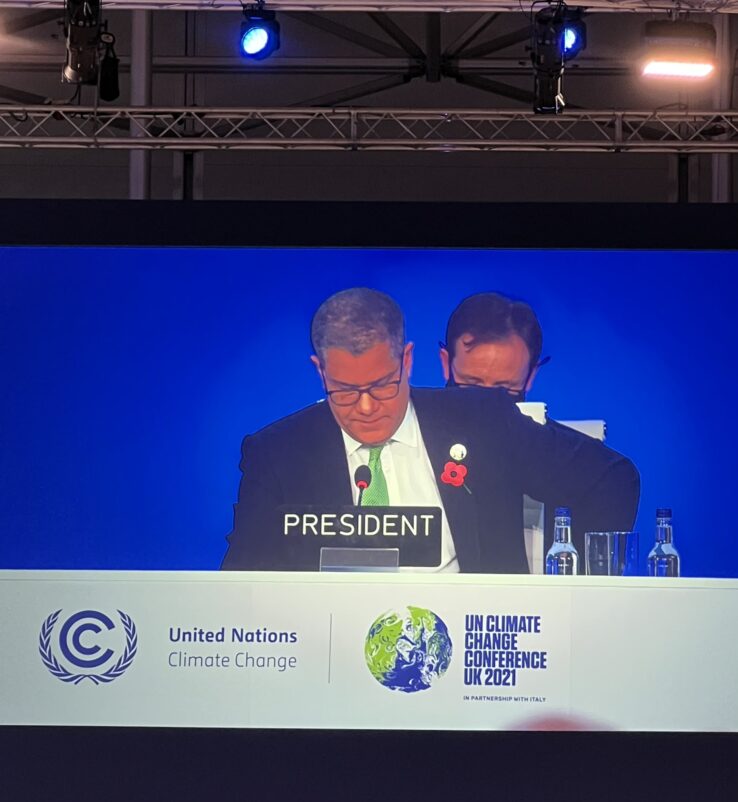
“Today, we can say with credibility that we have kept 1.5 degrees within reach. But its pulse is weak. And it will only survive if we keep our promises. If we translate commitments into rapid action,” said conference chairman Alok Sharma, choking back tears after a pact – albeit a minimal one – was reached by negotiating three drafts and holding arduous discussions on the fossil fuel question, right up to the final plenary.

COP26 chair Alok Sharma blinked back tears during his closing speech at the climate summit, expressing the tension of negotiating the Glasgow Climate Pact, due to the hurdles thrown in the way of a consensus by the big coal and oil producers. CREDIT: UNFCCC-Twitter

COP26 chair Alok Sharma blinked back tears during his closing speech at the climate summit, expressing the tension of negotiating the Glasgow Climate Pact, due to the hurdles thrown in the way of a consensus by the big coal and oil producers. CREDIT: UNFCCC-Twitter

The South is still waiting

Lost amidst the impacts of the climate emergency and forgotten by the industrialized countries, the global South failed to obtain something vital for many of its nations: a clear plan and funding for loss and damage, an issue that was deferred to COP27 in Egypt.

Mohamed Adow, director of the non-governmental Power Shift Africa, said the pact is “not good enough…There is no mention of solidarity and justice. We need a clear process to face loss and damage. There should be a link between emission reduction, financing and adaptation.”

The final decision by China, the United States, India and the European Union to turn their backs on a global fossil fuel exit and deny climate support to the most vulnerable nations left the developing world high and dry.

“There are things that cannot wait to COP27 or 2025. To face loss and damage, the most vulnerable countries need financing to battle the impacts on their territories,” Manuel Pulgar-Vidal, global climate and energy leader for the non-governmental World Wildlife Fund, told IPS.

Climate policies were, at least on the agenda, the focus of COP26.

The summit focused on carbon market rules, climate finance of at least 100 billion dollars per year, gaps between emission reduction targets and needed reductions, strategies for carbon neutrality by 2050, adaptation plans, and the working platform for local communities and indigenous peoples.

But the goal of hundreds of billions of dollars per year has been postponed, a reflection of the fact that financing for climate mitigation and adaptation is a touchy issue, especially for developed countries.

The corridors of the Blue Zone of the Scottish Events Campus, where the official part of the 26th Climate Conference was held in the city of Glasgow, were emptying on Saturday Nov. 13, at the end of the summit, which lasted a day longer than scheduled and ended with a negative balance according to civil society organizations. CREDIT: Emilio Godoy/IPS

The corridors of the Blue Zone of the Scottish Events Campus, where the official part of the 26th Climate Conference was held in the city of Glasgow, were emptying on Saturday Nov. 13, at the end of the summit, which lasted a day longer than scheduled and ended with a negative balance according to civil society organizations. CREDIT: Emilio Godoy/IPS

Offers and promises – on paper

One breakthrough at COP26 was the approval of the rules of the Paris Agreement, signed in the French capital in December 2015, at COP21, to form the basis on which subsequent summits have revolved. By 2024, all countries will have to report detailed data on emissions, which will form a baseline to assess future greenhouse gas reductions.

The agreement on the functioning of carbon markets creates a trading system between countries, but does not remove the possibility of countries and companies skirting the rules.

Industrialized countries committed to doubling adaptation finance by 2025 based on 2019 amounts. In addition, COP26 approved a new work program to increase greenhouse gas cuts, with reports due in 2022.

It also asked the UNFCCC to evaluate climate plans that year and its final declaration calls on countries to switch from coal and hydrocarbons to renewable energy.

Apart from the Climate Pact, the summit produced voluntary commitments against deforestation, emissions of methane, a gas more polluting than carbon dioxide, and the phasing out of gasoline and diesel vehicles.

In addition, at least 10 countries agreed to put an end to the issuing of new hydrocarbon exploration and exploitation licenses in their territories.

Furthermore, some thirty nations agreed to suspend public funding for coal, gas and oil by 2022.

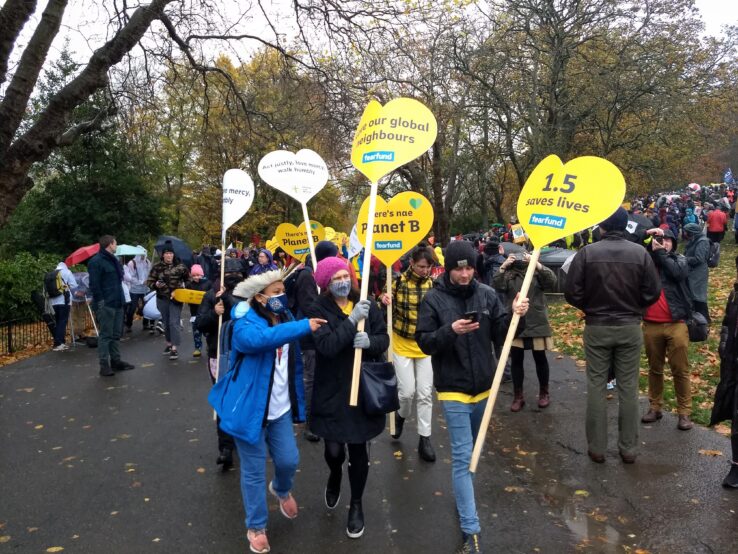
 Demonstrations demanding ambitious, substantive and equitable measures to address the climate crisis continued throughout the 14-day climate summit in Glasgow, which ended on the night of Saturday Nov. 13 with disappointing results for the global South. CREDIT: Emilio Godoy/IPS

Demonstrations demanding ambitious, substantive and equitable measures to address the climate crisis continued throughout the 14-day climate summit in Glasgow, which ended on the night of Saturday Nov. 13 with disappointing results for the global South. CREDIT: Emilio Godoy/IPS

Finally, more than 100 stakeholders, including countries and companies, signed up to the elimination of cars with internal combustion engines by 2030, without the major automobile manufacturers such as Germany, Spain and France joining in, and a hundred nations signed a pact to promote sustainable agriculture.

All of the 2030 pledges, which still need concrete plans for implementation, imply a temperature rise of 2.8 degrees C by the end of this century, according to the independent Climate Action Tracker.

The climate plans of the 48 least developed countries (LDCs) would cost more than 93 billion dollars annually, the non-governmental International Institute for Environment and Development said in Glasgow.

In addition, annual adaptation costs in developing countries would be about 70 billion dollars, reaching a total of 140 to 300 billion dollars by 2030, according to the United Nations Environment Program (UNEP).

But the largest disbursements are related to loss and damage, which would range between 290 billion and 580 billion dollars by 2030, and hence the enormous concern of these nations to obtain essential financing, according to a 2019 study. And their disappointment with the results of the Oct. 31-Nov.13 conference.

During his presentation at the closing plenary, Seve Paeniu, a climate envoy from Tuvalu, an island nation whose very existence is threatened by the rising sea level, showed a photo of his three grandchildren and said he had been thinking about what to say to them when he got home.

“Glasgow has made a promise to guarantee their future. It will be the best Christmas gift that I can bring home,” he said. But judging by the Climate Pact, Paeniu may have to look for another present.

IPS produced this article with the support of Iniciativa Climática of Mexico and the European Climate Foundation.


Indigenous Peoples Want to Move Towards Clean Energy Sovereignty

Civil Society, Climate Action, Climate Change, Conferences, Development & Aid, Editors’ Choice, Energy, Environment, Featured, Global, Global Governance, Headlines, Human Rights, Indigenous Rights, IPS UN: Inside the Glasshouse, Regional Categories

Climate Change

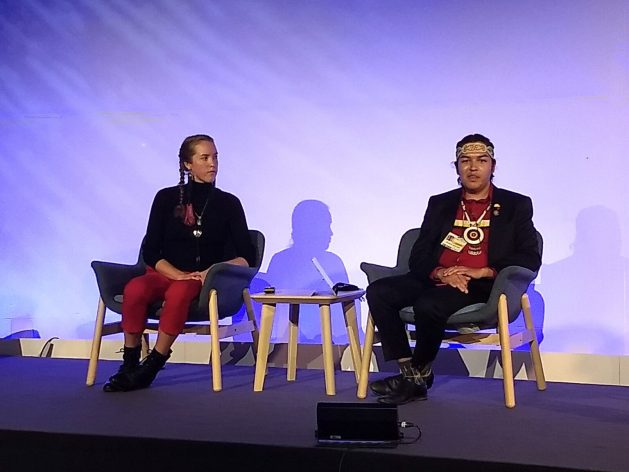
At an event in the so-called Green Zone, Canadian native leaders and the non-governmental Indigenous Clean Energy launched a global hub of social enterprises to pass on knowledge and advice during the Glasgow climate summit. In the picture, Mihskakwan James Harper (R) of the Cree indigenous community explains a mixed battery energy storage project built by a private firm and an indigenous company in the province of Ontario, Canada. CREDIT: Emilio Godoy/IPS

At an event in the so-called Green Zone, Canadian native leaders and the non-governmental Indigenous Clean Energy launched a global hub of social enterprises to pass on knowledge and advice during the Glasgow climate summit. In the picture, Mihskakwan James Harper (R) of the Cree indigenous community explains a mixed battery energy storage project built by a private firm and an indigenous company in the province of Ontario, Canada. CREDIT: Emilio Godoy/IPS

GLASGOW, Nov 9 2021 (IPS) – In the community of Bella Bella on Turtle Island in the western Canadian province of British Columbia, the indigenous Heiltsuk people capture heat from the air through devices in 40 percent of their homes, in a plan aimed at sustainable energy sovereignty.


“We use less energy, pay less, and that’s good for our health,” Leona Humchitt, a member of the Heiltsuk community, told IPS during a forum on indigenous micro-grids in the so-called Green Zone of the climate summit being hosted by Glasgow, Scotland since Oct. 31. “The project coincides with our view. We need to have a good relationship with nature.”

For native groups, these initiatives mean moving towards energy sovereignty to avoid dependence on projects that have no connection to local populations, combating energy poverty, paving the transition to cleaner sources and combating the exclusion they suffer in the renewable energies sector due to government policies and corporate decisions.

The modernisation process that began in the first quarter of 2021 lowered electricity rates from 2,880 dollars a year to about 1,200 dollars for each participating household.

In addition, the switch to heat pumps eliminates five tons of pollutant emissions per year and has reduced the community’s annual diesel consumption of 2,000 litres per household, which is usually supplied by a private hydroelectric plant.

Funded by the Canadian government and non-governmental organisations, the “Strategic Fuel Switching” project is part of the Heiltsuk Climate Action plan, which also includes measures such as biofuel and biomass from marine algae and carbon credits from marine ecosystems.

In 2017, more than 250 remote indigenous communities, out of 292 in Canada, relied on their own electricity microgeneration grids, dependent especially on diesel generators.

The venture in the Heiltsuk community, which is part of the three major Canadian native peoples, is included in a portfolio of indigenous transitional energy initiatives that have been incorporated into the non-governmental Indigenous Clean Energy (ICE) social enterprise in Canada.

A global hub for social entrepreneurship was one of the initiatives launched in the Green Zone, an open event held parallel to the 26th Conference of the Parties (COP26) to the United Nations Framework Convention on Climate Change (UNFCCC), whose annual session ends Nov. 12.

ICE has a list of 197 projects – 72 in bioenergy, 127 in energy efficiency, and 19 in other alternative sources – with more than one megawatt of installed capacity. These initiatives together represent 1.49 billion dollars in revenue over 10 years.

Mihskakwan James Harper, an indigenous man from the Cree people of Sturgeon Lake in the western Canadian province of Alberta, said it is not only about energy sovereignty, but also about community power to dispose of their own resources.

“We change our self-consumption and the communities benefit themselves from the energy, and the earth get benefits as well. Without us, we are not going to reach the climate goals. We show that indigenous peoples can bring innovations and solutions to the climate crisis,” Harper, who is development manager at the NR Stor energy company, told IPS.

NR Stor Inc. and the Six Nations of the Grand River Development Corporation in the Canadian province of Ontario are building the Oneida battery storage project – with a capacity of 250 MW and an investment of 400 million dollars – in the south of the province.

The facility, which will prevent some 4.1 million tons of pollutant emissions, the largest of its kind in Canada and one of the largest in the world, will provide clean and stable energy capacity by storing renewable energy off-peak for release when demand rises.

ICE estimates 4.3 billion dollars in investments are needed to underpin this energy efficiency that would create some 73,000 direct and indirect jobs and would cut carbon dioxide emissions by more than five million tons over 10 years.

Electric vehicles are still a pipe dream in many indigenous communities, due to their price and the lack of charging infrastructure. In the picture, an electric car is charged at a station in downtown Glasgow, near COP26. CREDIT: Emilio Godoy/IPS

Electric vehicles are still a pipe dream in many indigenous communities, due to their price and the lack of charging infrastructure. In the picture, an electric car is charged at a station in downtown Glasgow, near COP26. CREDIT: Emilio Godoy/IPS

Slow progress

The increase in clean sources plays a decisive role in achieving one of the 17 Sustainable Development Goals (SDGs) set out in 2015 by the international community in the 2030 Agenda, within the framework of the United Nations.

SDG 7 is aimed at affordable, modern energy for all.

But processes similar to Canada’s ICE are proceeding at a slow pace.

Two projects of the Right Energy Partnership with Indigenous Peoples (REP), launched in 2018 by the non-governmental Indigenous Peoples Major Group for Sustainable Development, are being implemented in El Salvador and Honduras.

In El Salvador, the project is “Access to photovoltaic energy for indigenous peoples”, carried out since 2020 in conjunction with the non-governmental National Salvadoran Indigenous Coordination Council (CCNIS).

It is financed with 150,000 dollars from the Global Environment Facility (GEF) Small Grants Programme to provide 24 solar power systems to three communities in the town of Guatajiagua, in the eastern department of Morazán.

In Honduras, the Lenca Indigenous Community Council and the Pro Construction Committee are installing a mini-hydroelectric plant to benefit two Lenca indigenous communities in the municipality of San Francisco de Opalaca, in the southwestern department of Intibucá.

The project “Hydroelectric power generation for environmental protection and socioeconomic development in the Lenca communities of Plan de Barrios and El Zapotillo”, launched in 2019, received 150,000 dollars in GEF funding.

Clean alternative sources face community distrust due to human rights violations committed by wind, solar and hydroelectric plant owners in countries such as Colombia, Honduras and Mexico, including land dispossession, contracts harmful to local communities and lack of free consultation and adequate information prior to project design.

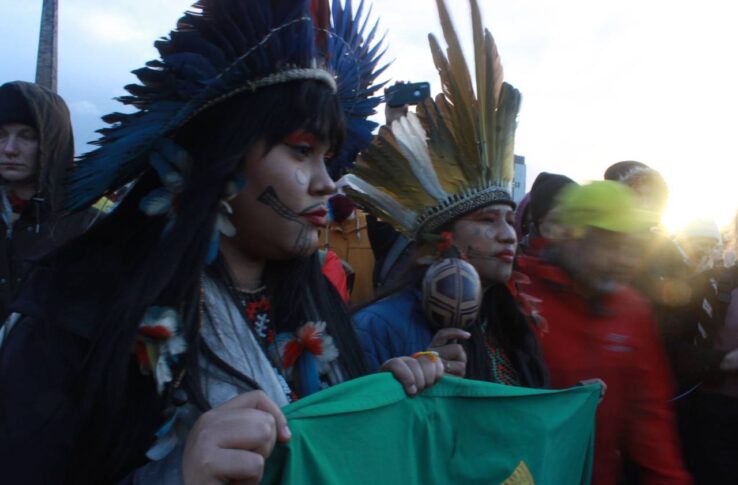
Amazonian indigenous people participate in protests by social movements in Glasgow, in which they claimed that their voices were not adequately heard at COP26. CREDIT: Arturo Contreras/Pie de Página

Amazonian indigenous people participate in protests by social movements in Glasgow, in which they claimed that their voices were not adequately heard at COP26. CREDIT: Arturo Contreras/Pie de Página

The evolution of energy initiatives has been slow, due to funding barriers and the limitations imposed by the covid-19 pandemic.

“Our main interest is to enable access to affordable renewable energy and for indigenous peoples to participate in the projects,” Eileen Mairena-Cunningham, REP project coordinator, told IPS.

“These processes should be led by indigenous organisations. Of course we are interested in participating in the global networks,” added the Miskita indigenous woman from Nicaragua.

After the always difficult first step, indigenous communities want to accelerate progress towards these goals.

In Bella Bella, Canada, the hope is to progressively replace diesel with biofuel in vehicles and in the boats that are vital to the fishing community.

“We are not going to electrify transportation overnight,” Humchitt said. “But we see an opportunity in biodiesel. We have to go forward on this issue.”

Harper concurred with that vision. “Of course we want EVs, as they become accessible and satisfy our own needs. We want to get rid of diesel. The communities have to lead the process of the local transition,” he said.

Mairena-Cunningham stressed that indigenous peoples attach primary importance to participating in global networks.

“Existing projects leave us with lessons of what can be done in our territory,” said the activist. “There is a need for policies that facilitate indigenous participation and special safeguards for access to the land. Capacity building is also needed.”

Renewable energies can be added to ecological measures that indigenous peoples already use, such as forest protection and biodiversity and water conservation. But their local implementation requires more than just willingness.

IPS produced this article with the support of Iniciativa Climática of Mexico and the European Climate Foundation.


COP26: The Roadmap Plotting the Way to a Historic Meeting – Or Not

Civil Society, Climate Action, Climate Change, Conferences, Editors’ Choice, Environment, Featured, Global, Global Governance, IPS UN: Inside the Glasshouse, Regional Categories

Climate Change

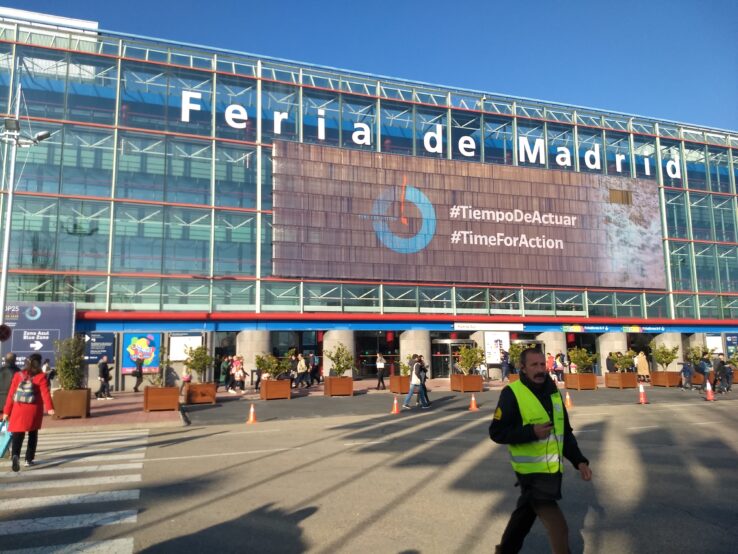
The Madrid climate summit in 2019, COP25, left important pending issues that the conference in Glasgow, which begins on Sunday Oct. 31, will have to resolve. CREDIT: Emilio Godoy/IPS

The Madrid climate summit in 2019, COP25, left important pending issues that the conference in Glasgow, which begins on Sunday Oct. 31, will have to resolve. CREDIT: Emilio Godoy/IPS

MEXICO CITY, Oct 29 2021 (IPS) – The climate summit in Glasgow, Scotland, the most important since 2015, may go down in history as a milestone or as another exercise in frustration, depending on whether or not it resolves the thorny pending issues standing in the way of curbing global warming.


If successful, it could be placed on a par with the 2010 Cancun meeting, which rescued the negotiations after the previous year’s failure in Copenhagen, and Paris, where an agreement was reached in 2015 which defined voluntary emission reductions and a limit to global warming.

But if the summit fails, it will be compared to Copenhagen (COP15), the 2009 conference, and Madrid (COP25), the 2019 summit, whose progress was considered more than insufficient by environmental organisations and academics.

Former Mexican climate negotiator Roberto Dondisch said it is difficult to predict success or failure at the 26th Conference of the Parties (COP26) of the United Nations Framework Convention on Climate Change (UNFCCC), which will take place in Glasgow in the northern UK Oct. 31 to Nov. 12.

“This time we are not seeking an agreement, but trying to work out unresolved issues. The same thing happened in Paris, but a space was created to solve it. The reports are not very promising in terms of where we are at and what we must do. The conditions are very complicated; the will is there, but not the results,” Dondisch, a distinguished fellow at the Washington, DC-based non-governmental Stimson Center, told IPS.

Climate governance has come a long way since the first COP.

Background

In 1992, the United Nations Conference on Environment and Development, held in Rio de Janeiro on the 20th anniversary of the first U.N. Conference on the Human Environment in Stockholm in 1972, brought together political leaders, scientists, representatives of international organisations and civil society to address the impact of human activities on the environment.

One of the results of the so-called Earth Summit was the creation of the UNFCCC, at a time when there was already evidence of global warming caused by human activity.

In fact, as early as 1990, the Intergovernmental Panel on Climate Change (IPCC), created by the U.N. General Assembly in 1988 and composed of scientists from all over the world entrusted with the responsibility of assessing the existing scientific knowledge related to climate phenomena, released its first report.

Report after report, the IPCC has become a key part of the global climate framework for understanding and addressing the crisis of rising temperatures and their impacts.

Seven years later, in 1997, the member states of the UNFCCC negotiated the Kyoto Protocol (KP), signed in that Japanese city during COP3, which established mandatory emission reduction targets for 36 industrialised countries and the European Union as a bloc, listed in Annex II of the agreement.

In Kyoto, the nations of the developing South were exempted from this obligation in Annex I of the pact.

After the first compliance period (2008-2012), the parties agreed on another period for 2013-2020, which in practice never entered into force, until the protocol was replaced by the Paris Agreement.

The KP, which came into effect in 2005 – without the participation of key countries such as the United States and Russia – also has its own Conference of the Parties serving as the meeting of the Parties to the Kyoto Protocol (CMP), which oversees its implementation and takes decisions to promote its effective implementation.

A view of the main venue for COP26 in Glasgow. Expectations are high for the outcome of the conference, but the two-week discussions and meetings must negotiate an obstacle course to reach concrete results in keeping with the severity of the climate emergency. CREDIT: UNFCCC

A view of the main venue for COP26 in Glasgow. Expectations are high for the outcome of the conference, but the two-week discussions and meetings must negotiate an obstacle course to reach concrete results in keeping with the severity of the climate emergency. CREDIT: UNFCCC

The relatively uneventful COP19 in Warsaw in 2013 served to testify to the birth of the Warsaw International Mechanism for Loss and Damage associated with Climate Change Impacts (WIM), whose rules of operation and financing will be central to the Glasgow discussions.

Climate policies will be the focus of COP26, co-chaired by the United Kingdom and Italy, which had to be postponed for a year due to covid-19 pandemic restrictions.

COP26 will address rules for carbon markets, climate finance for at least 100 billion dollars annually, gaps between emission reduction targets and necessary reductions, strategies for carbon neutrality by 2050, adaptation plans, and the local communities and indigenous peoples platform.

But missing from the agenda of the two weeks of discussions will be the goal of hundreds of billions of greenbacks per year, which has been postponed to 2023 – a sign that funding for mitigation and adaptation to climate change is the hot potato for the parties.

Complex architecture

The UNFCCC entered into force in 1994 and has been ratified by 196 parties, with the participation of the EU as a bloc, the Cook Islands and Niue – South Pacific island nations – in addition to the 193 U.N. member states.

The parties to the binding treaty subscribe to a universal convention that recognises the existence of climate change caused by human activities and assigns developed countries the main responsibility for combating the phenomenon.

The COPs, in which all states parties participate, govern the Convention and meet annually in global conferences where they make decisions to achieve the objectives of the climate fight, adopted unanimously or by consensus, especially after the KP failed to reach the negotiated goals.

In Paris, at COP21, member countries agreed on voluntary pollution reduction targets to keep the temperature increase below 1.5 degrees Celsius, considered the indispensable limit to contain disasters such as droughts and destructive storms, with high human and material costs.

These targets are embodied in the Nationally Determined Contributions (NDCs), in which countries set out their 2030 and 2050 goals. Only 13 nations have submitted a second version of their measures since they began submitting their actions to the UNFCCC Secretariat in Bonn, Germany, in 2016.

The Paris Agreement, in force since 2020 and so far ratified by 192 states parties, has its own Meeting of the Parties (MOP), which monitors compliance and takes decisions to promote compliance.

Each COP also draws thousands of business delegates, non-governmental organisations, international organisations, scientists and journalists.

In addition, a parallel alternative summit will bring together social movements from around the world, advocating an early phase-out of fossil fuels, rejecting so-called “false solutions” such as carbon markets, and calling for a just energy transition and reparations for damage and redistribution of funds to indigenous communities and countries of the global South.

Sandra Guzmán, director of the Climate Finance Programme at the non-governmental Climate Policy Initiative – with offices in five countries – foresees a complex summit, especially in terms of financing.

“No one knows for sure how loss and damage will be covered. Developed countries don’t want to talk about more funds. The scenario for political agreement is always difficult. The expectation is that the COP will move forward and establish a package of progress and build a good bridge to the next meeting,” she told IPS from London.

For 30 years, the parties to the UNFCCC have been doing the same thing, without achieving the desired reduction in emissions or control of global warming. If COP26 follows the same mechanics, the results are unlikely to change at the end of the two weeks of discussions and activities in which more than 25,000 people will participate.


COP26 Could Get Hot, but Southern African Region Needs it to be Cool and Committed

Africa, Biodiversity, Climate Action, Climate Change, Conferences, Environment, Featured, Food and Agriculture, Headlines, Humanitarian Emergencies, TerraViva United Nations

Climate Action

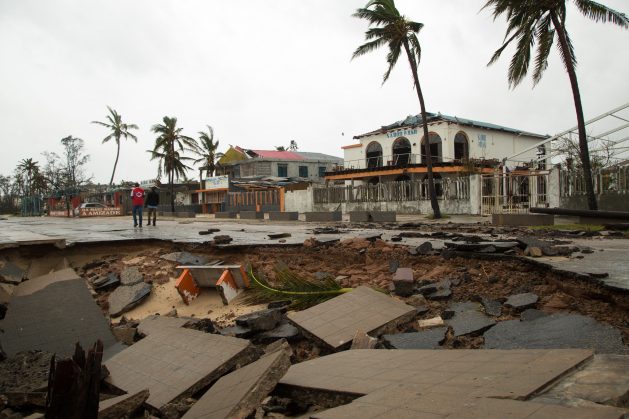
The Southern African region is particularly vulnerable to climate change while only being responsible for a fraction of emissions. It is hoped that COP26 will deliver tangible benefits to the area which has already suffered severe impacts of climate change like the effects of Cyclone Idai, Mozambique, in March 2019. Credit: Denis Onyodi: IFRC/DRK/Climate Centre

Johannesburg, Oct 26 2021 (IPS) – COP26 is almost upon us, and dire warnings abound that it’s boom or bust for a greener future. Meanwhile, everybody boasts about what they will do to cool down our planet, but there is a disjuncture between talk and action. Even Queen Elizabeth II of the host country, the United Kingdom, has grumbled publicly that not enough action is taking place on climate change.


In the Southern Africa region, the SADC’s member countries are clear that the developed countries must stump up the money to help them deliver their promises to reduce carbon emissions and carry out a raft of measures to combat global warming. All the SADC countries are signatories to the Paris Agreement.

The region has joined the cry of other African countries that the continent suffers most from climate change but hardly contributes to the causes of the phenomenon – emitting less than 4% of the world’s greenhouse gasses.
According to research undertaken on behalf of the UN, climate change adaptation needs for Africa were estimated to be $715 billion ($0.715 trillion) between 2020 and 2030.

In southern Africa, each country has its own Nationally Developed Contribution plan for dealing with climate change, including costs. Of course, funding will be needed to achieve these goals. Developing countries have pledged a $100bn annual target to help the developing world tackle climate change. All the Southern African countries will need a slice of this funding. The Green Climate Fund was established under the Cancun Agreements in 2010 as a dedicated financing vehicle for developing countries.

In the lead up to COP26, the fund is under scrutiny. Tanguy Gahouma, chair of the African Group of Negotiators at COP26, has said: “African countries want a new system to track funding from wealthy nations that are failing to meet the $100bn annual target.”

The Organisation for Economic Co-operation and Development (OECD) estimates this funding stood at $79.6bn in 2019. OECD data reveals that from 2016-19 Africa only got 26 percent of the funding.

Gahouma said a more detailed shared system was needed that would keep tabs on each country’s contribution and where it went on the ground.

“They say they achieved maybe 70 percent of the target, but we cannot see that,” Gahouma said.
“We need to have a clear road map how they will put on the table the $100bn per year, how we can track (it),” he said. “We don’t have time to lose, and Africa is one of the most vulnerable regions of the world.”

Amar Bhattacharya, from the Brookings Institution, says about the fund, “Some progress has been made – but a lot more needs to be done.”

Denmark’s development coordination minister Flemming Møller Mortensen has warned that only a quarter of international climate finance for developing countries goes to adaptation.

COP26 may turn into a squabble over money and perhaps an attack on developed countries as they are blamed for creating the problems of climate change in the first place by using fossil fuels for the last two centuries. G20 countries account for almost 80% of global greenhouse gas emissions.

Again, it is all about the money. Many developed countries do not want to change; their economies (and their rich elites) are wedded to fossil fuels. There are also problems with paying for adaptation. Will the rich countries fund the developing countries to green themselves up?

Southern Africa will need to deal pragmatically with the outcomes of COP26 as it becomes crucial to deal with climate change impacts – like the vulnerability to intense storms like Cyclone Idai, which hit Mozambique in March 2019. Credit: Denis Onyodi: IFRC/DRK/Climate Centre

Professor Bruce Hewitson, the SARCHI Research Chair in Climate Change Climate System Analysis Group, Dept Environmental & Geographical Sciences at the University of Cape Town, told IPS: “The well-cited meme that Africa is the continent most vulnerable to climate change impacts is true, as is the common response that Africa needs external aid to implement adaptation and development pathways compatible to climate mitigation. However, such messages hide a myriad of political realities about the difference between what is ideal and what is likely.”

Hewitson argues that what emerges from COP26 is an exercise in hope and belief.

“It’s a tightrope walk trying to balance competing demands and self-interests. At the end of the day, Africa will need to pragmatically deal with a compromised outcome and face the climate challenges as best possible under limited resources,” he says.

If Africa goes to COP26 with a begging bowl attitude, it could face the risk of dancing to the strings of the powerful and rich nations.

“Climate change impacts Africa in a multiplicity of ways, but at the root is when the local climate change exceeds the viability threshold of our infrastructural and ecological systems. Hence, arguably the largest challenge to responding to climate change is to expand and enable the regional capacity of the science and decision-makers to responsibly steer our actions in an informed and cohesive way; Africa needs to lead the design of Africa’s solutions,” says Hewitson.

While he argues that some of the best innovation is happening in Africa, it requires resources, and the COVID-19 pandemic has decreased international funding.

“Each community has unique needs and unique challenges, needing unique local solutions that are context-sensitive and context-relevant, and this will inevitably include the pain of some socio-economic and political compromise.”
The southern African region’s climate woes chime with the problems faced by a legion of developing countries. We have Mauritius’s threatened Indian Ocean islands, Seychelles, Madagascar, Comoros and those offshore of Tanzania and Mozambique, plus many thousands of miles of coastline. We have inland waterways. We have jungles, forests, vast plains and deserts. All prey to the viciousness of global warming.

The SADC’s climate change report quotes an academic paper by Rahab and Proudhomme that from 2002 “there has been a rise in temperatures at twice the global average.”

According to the SADC, “A Climate Change Strategy is in place to guide the implementation of the Climate Change Programme over a Fifteen-year period (2015 – 2030). The plan is innovative in terms of food security, preserving and expanding carbon sinks (which play a major role in stabilising the global climate) and tackling problems in urban areas that cause global warming like high energy consumption, poor waste management systems and inefficient transport networks.

Out of the region’s fifteen member countries, South Africa is the biggest culprit when it comes to greenhouse gas emissions.

South African President Cyril Ramaphosa recently said, “We need to act with urgency and ambition to reduce our greenhouse gas emissions and undertake a transition to a low-carbon economy.”

This is a big ask for the region’s economic powerhouse with entrenched mining interests, an abundance of coal and a huge fleet of coal-fired power stations.

Recently, Mining and Energy Minister Gwede Mantashe said South Africa must systematically manage its transition away from coal-fired power generation and not rush a switch to renewable energy sources.

“I am not saying coal forever… I am saying let’s manage our transition step by step rather than being emotional. We are not a developed economy, we don’t have all alternative sources.”

Angola has some of the most ambitious targets for transition to low-carbon development in Africa. The country committed to reducing up to 14% of its greenhouse gas emissions – commentators have met this with scepticism.
Mozambique, not – as yet – a significant carbon emitter, has potential, through its vast natural gas resources, to provide the wherewithal to heat the planet in a big way.

The Democratic Republic of the Congo – a least-developed country, has committed to a 17% reduction by 2030 in emissions. The DRC has the world’s second-largest tropical rainforest – a major carbon sink.

Other SADC countries that suffer from climate change but do very little to cause it are Lesotho, Swaziland, Botswana, Madagascar, which is currently suffering from a climate-induced famine; Malawi, Tanzania, Namibia and Zambia.

While talking up the need to cut emissions, Zambia’s neighbour Zimbabwe said it would increase electricity and coal supply to the iron and steel sectors, thus adding to emissions.

Mauritius, Seychelles and Comoros are all vulnerable Island economies and have a lot in common with the many other island states throughout the world and are very low carbon emitters but extremely vulnerable to climate change especially rising sea levels.

Despite all the problems emerging in the lead up to COP 26, we need to take to heart the fact that scientists and commentators worldwide are warning that COP26 must deliver a way forward that works for our planet and our people. Southern Africa and the African continent as a whole can contribute with innovation and enthusiasm by tapping into the vast potential of our youthful population.