Transgender Health Rights Boosted by Hospitals’ ‘Separate Room’ Policy

Asia-Pacific, Civil Society, Development & Aid, Featured, Gender, Gender Identity, Headlines, Health, Human Rights, Humanitarian Emergencies, LGBTQ, Sustainable Development Goals, TerraViva United Nations

Health

The community frequently targets transgender people. Now they are able to welcome new measures that mean they will be able to safely access health care. Credit: Yusufzai Ashfaq/IPS

The community frequently targets transgender people. Now they are able to welcome new measures that mean they will be able to safely access health care. Credit: Yusufzai Ashfaq/IPS

PESHAWAR, Pakistan, Apr 30 2024 (IPS) – Transgender people and civil society organizations have welcomed the decision of the chief minister in Khyber Pakhtunkhwa, Pakistan, to allocate separate rooms in hospitals for the transgender community so they can avail themselves of uninterrupted healthcare.


“We demand that all provinces follow suit and announce facilities for more than 500,000 transgender people in the country,” Farzana Shah, president of the Khyber Pakhtunkhwa (KP) Transgender Association, told IPS.

On April 6, KP Chief Minister Ali Amin Khan Gandapur announced separate rooms for transgender persons in public hospitals after complaints that they aren’t getting admissions because they face violence in the facilities.

“In the last year, about 47 transgender people have died because of violence, and 90 have been injured. Many injured transgender people die due to delayed treatment. In most cases, we can’t get healthcare at hospitals,” Shah, 40, said.

The Chief Minister’s directives to reserve rooms have received a positive response.

Members of a delegation of transgender people who recently met him quoted Gandapur as saying, “Provision of better health facilities to transgender persons in the province is our priority. We will help the underprivileged community.”

Arzoo Khan, a social activist, is overwhelmed.

“In all 38 district-level hospitals, we now have a separate room. Previously, the hospitals denied admission to our colleagues,” Khan said.

“The problem we face is that most transgender people have been deserted by their families because of social repercussions. People look down on transgender people.”

“We don’t have anyone to help us; therefore, the government’s support is a highly welcome step,” Khan said.

In addition to the allocation of space, the government also provided land for a separate graveyard for transgender people.

Civil society activist Jamal Khan said that there are several instances when the local communities have denied the burial of eunuchs because they don’t consider them Muslims.

“They earn their livelihoods through dancing at marriage parties and on other festive occasions where they have social acceptability,” he said. “The allocation of separate hospitals’ rooms and land for graveyards are really commendable measures that will lead to the protection and respect of transpeople.”

Transgender people are often deprived of last rituals, like giving them baths and performing their funerals after deaths.

Sobia Khan, another leader, said they are deeply vulnerable and subject to abuse and violent attacks, despite being a cheap source of entertainment.

“Some transgender people also have HIV/AIDS and other potentially fatal diseases for which they need continuous medication,” Sobia said.

The attitude of the police towards the group was also bad, she added

“More often than not, police beat up our members; they pull them by their collars and drag them into the streets.”

Khan claimed that her parents have been excluding her for the past ten years.

“Peshawar, the capital of KP, is home to 9,000 transgender persons; most of them have lost connections with their families and they were regarded as sinners and hence ditched by near and dear ones,” Sobia said.

Where the group was targeted by violence, the perpetrators were seldom brought to justice, which emboldens others to mistreat transgender people.

“Sexual harassment of trans people is a common sight. Everyone thinks that we are sex workers, which is untrue because we only dance. Many are raped,” she said.

Police officer Rahim Shah told IPS that many transgender people were invited to marriage parties where they danced for money.

Shah claimed that upon their return from the performance at night, robbers targeted them and killed or injured those who attempted to resist.

“In cases of murder or transgender injuries, their family members don’t come to receive dead bodies for burial or look after the wounded in hospitals,” he said. Their problems are complex, as they neither enjoyed respect in the community nor in their families.

Sumaira Shah, 29, narrates her ordeal after running away from home.

“My family was staunchly opposed to dancing and my father and brothers used to beat me every day, forcing me to quit dancing as it was a source of dishonoring the family but it was my fashion,” she said.

“Sick of daily taunts and beatings, I ran away from my native Swat district to Peshawar when I was just 14,” she said. Since then, I haven’t seen any of my relatives. Shah said she welcomed the hospital room policy.

“A month ago, a hospital in Peshawar sent me back home with some medicines despite having a high fever,” she said.

She said, “People frequently threaten me when I decline their offer for sex relations, and I’m afraid because many of our seniors have died at the hands of gangsters when they didn’t comply with their demand for illicit relations.”

Social rights activist Pervez Ahmed appreciates the government’s new initiatives.

He claimed that this was the first time the government had made an effort to safeguard the health of those who had lost their parents’ support and faced harsh rejection from the community.

Ahmed said that the government has already included transgender people in a free health insurance program, under which they can avail themselves of USD 12,000 per year.

IPS UN Bureau Report

  Source

Afghan Women’s Voices Stifled as Taliban Tightens Media Controls

Asia-Pacific, Civil Society, Gender, Headlines, Human Rights, Press Freedom, TerraViva United Nations

Human Rights

The author is an Afghanistan-based female journalist, trained with Finnish support before the Taliban take-over. Her identity is withheld for security reasons

Taliban's decree imposes radio ban on Afghan women, further restricting media freedoms. Credit: Learning Together.

Taliban’s decree imposes radio ban on Afghan women, further restricting media freedoms. Credit: Learning Together.

Apr 22 2024 (IPS) – Since the Taliban regained control of Afghanistan in 2021, the space for women in the public sphere has significantly narrowed, with successive orders further restricting their presence in various sectors, including the media.


The Taliban have recently decreed that women’s voices should no longer be broadcast on radio in four provinces – Khost, Logar, Helmand, and Paktia.

Women and men must stay separate from each other in media houses, and women are even banned from calling radio stations during social discussion programmes to seek solutions to their problems.

The radio stations are constantly monitored by the Ministry for the Promotion of Virtue, even where there are no male workers, says Halima, a presenter in one of the radio stations. “Every time they come, they warn us not to laugh and not to joke in the programmes because it is a great sin”, she says.

“We used to have four and a half thousand female journalists and media workers in Afghanistan”, says Ahmad (name withheld), a media activist, “but unfortunately, due to the recent political developments, the imposition of restrictions, and the lack of economic opportunities, many female journalists lost their jobs”. Last year a substantial 87 per cent of female journalists left the industry.

In the eastern provinces, Ahmad says, the Taliban do not allow women’s voices to be broadcast on the radio, while in the Southern provinces, journalists are not allowed to take photos because, to the Taliban it is a great sin.

At the end of February the Afghan Centre for Journalists sent out information to media outlets, according to which, Mohammad Khaled Hanafi, Acting Minister for the Promotion of Virtue warned that women would be banned entirely from working in the media if they show their faces on television or in interviews. A representative for the Ministry was reported brandishing sample pictures of appropriately dressed women with only two eyes peering from behind a hijab.

Female workers now manage only seven media houses. Two of these are in Badakshan one in Balkh, one in Farah one in Herat and two in Kabul – all of these face a huge number of challenges. Although most of these media houses are symbolically run in the name of women, but the important work and decision-making of media are in the hands of men.

In Helmand Province, women are banned entirely from appearing on television, neither should their voices be heard on radio. According to the local newspaper Hasht Sobh, Abdul Rashid Omari, the Taliban security commander in Khost province, has warned local media officials in an official letter that they would be prosecuted if they allow girls or women make phone call to radio stations.

“Some private radio stations in Khost promote moral corruption, a good example of which is broadcasting school lessons or social programs in which many girls participate” the letter states. Adding further, “By abusing these educational and social programs, girls make illegitimate phone calls with the organizers of the programs during the official and unofficial time, which, on the one hand, leads the society to moral corruption and, on the other hand, against Islamic standards”

There is not much space left for the media in Afghanistan, complains Frishta (name withheld). It is even hard for them to breath, but despite all of those restrictions, she continues to work.

“It is true that I am in charge of the radio station, but I can never make important decisions on its operations. The owner of the radio, who is a man, always makes the decisions. I produce the programs according to his guidelines and orders,” says Frishta.

But, the reason why Frishta perseveres is that a few international organizations provide financial support for women’s work in radio and television, and the money is much needed. Among them are United Nations agencies, UNICEF and UNESCO, which support 28 regional or local radio stations across the country in the publication of humanitarian information and training programmes. Also, an EU-funded project,”Support to Afghan Media Resilience to Foster Peace and Security”, has assisted several women’s radio stations produce education, cultural and news programmes.

Besides the increasingly diminishing space for women in the media, the Taliban are clamping down the media in every other way. For instance, Youssef Bawar (name changed), one of the reporters in the Eastern Zone, says journalists of Persian language external broadcasts, such as Afghanistan International TV and AMU TV, cannot work openly inside Afghanistan. If found, they will be arrested and tortured. The Taliban Department of Information and Culture in Nangarhar Province last year, warned journalists that those who criticize the Taliban have no right to complain if they are arrested and treated in whatever way.

According to Yousef Bawar, foreign journalists coming to report on Afghanistan must obtain permission from the Taliban Department of Information and Culture. Once they are inside the country, a member of the Taliban will accompany them around in order to prevent them saying anything negative about the Taliban rule. The Taliban do not disclose charges brought against foreign reporters.

Yalda (not real name) is a journalist who worked as a journalist for seven years but could no longer stand the conditions anymore and left the profession. According to Yalda, the Taliban would come to their office several times a month, inspect their work and ask managers why they are working with women.

“Many times, they warned our manager that if male and female colleagues were seen together, then we wouldn’t have the right to complain about whatever happened to them”, she says.

“The media are not allowed to produce critical reports about the lack of facilities or services in the educational or health sectors in general. They are not allowed to criticize the government, and most of the media’s programs focus on the achievements publicised by the Taliban,” Yalda says.

The fall of the Republic created an adverse impact on the media in Afghanistan and many media outlets closed down and many journalists became unemployed. Previously there were 438 radio stations, but that has now been reduced to only 211; the number of newspapers has fallen from 91 to 13. Afghanistan’s 248 television channels have now been whittled down to just 68 since the Taliban took power three years ago.

Yet the few media outlets that are left still face great difficulties along with the disappearance of female journalists. They are bedevilled with lack of timely access to information, lack of programming support and above all, direct media censorship.

The return of the Taliban has brought about immense challenges across all sectors, but perhaps none as profound as the stifling of media freedom and the suppression of journalists’ voices.

  Source

China, India & Sri Lanka Embroiled in the Geo-Politics of the Indian Ocean

Armed Conflicts, Asia-Pacific, Civil Society, Global Governance, Headlines, Human Rights, IPS UN: Inside the Glasshouse, TerraViva United Nations

Opinion

The writer is former Ambassador and Permanent Representative of Sri Lanka to the UN and, until recently, Ambassador to China

Credit: United Nations

COLOMBO, Sri Lanka, Apr 10 2024 (IPS) – Unfortunately, a rivalry that should not exist and did not exist historically between China and India is being stoked by the media and some policy makers, especially in the West. It is not too difficult to discern the Machiavellian geo-strategic objectives of this complex game plan.


Most policymakers in the West find it difficult to accept that a non-European and non-white Asian nation which the West has been used to exploit and treat with disdain has risen so rapidly that it is now in a position to offer an alternative social, economic and political model to development and progress.

China has not only risen from the depths but is challenging the West in many respects, including economically, technologically, socially and even militarily. The China led the Belt and Road Initiative, the Shanghai Cooperation Organisation, the Global Development Initiative, the Asian Infrastructure Investment Bank, the BRICS Bank, etc, have posed a real challenge to the established world economic order dominated by the West.

The BRI has resulted in the investment of over USD one trillion in the countries of the region and beyond making a tangible contribution to the development of many countries and has pricked the hitherto somnolent West also to participate positively in the development of those countries.

The calculated statements of EA Minister of India, Jaishankar, while emphasising India’s obvious strategic interests, have not overly endorsed the Western approach to China. China has attracted many admirers.

China has risen in a very short period to the position of an economic super power and to become the second largest economy in the world. It is expected to overtake the US economically by the end of this decade. It is also the main source foreign investments in the world, not to mention tourists.

It is also the biggest source in the global supply chain and the most lucrative multi billion dollar consumer market. All this is causing serious discomfort to those countries in the West, giving rise to damaging efforts at delinking, which were so used to dominating the world unchallenged. China’s technological advancement is nothing short of spectacular.

There could even be racist undertones to the criticisms being directed at China, a poor Asian country formerly dominated and exploited willy nilly by the West and to the reluctance to accept its new status and its own model of development. (One recalls that in the 1980s, a resurgent Japan experienced a similar process of vicious containment resulting in twenty years of stagflation).

China, for its part, has not articulated any desire to dominate or influence its economic partners and others or impose its political and economic model on anyone else. On the contrary, it has consistently expressed a desire to achieve a common future and a goal of shared prosperity, without domination. To judge Chinese intentions through the prism of the West’s own historical experience is patently wrong.

Both India and China are over dependent on Indian Ocean sea routes for the transport of their energy needs. While both would want to ensure the safety and security of Indian Ocean sea routes, both should also take adequate measures to prevent competition from blowing into confrontations of unmanageable proportions.

China has never expressed interest in establishing bases in the Indian Ocean region or acquiring territory. Its only military base in the region is in Djibouti established as part of a multinational effort to counter pirates.

The West which has been dominating the region since 1500 AD tends ascribe similar motives to China against the background of its own past record. (The situation with regard to Hambantota which has crept in the West’s narrative requres a longer explanation).

Sri Lanka’s initiative in the 1970s to establish an Indian Ocean Zone of Peace, although designed to contain the then prevalent super power rivalry in the Indian Ocean, may become relevant again in the contemporary context.

The situation in the Maldives should NOT be viewed purely from the Western lens and characterised as a simple case of China – India rivalry for regional influence. The domestic Islamic political imperatives and the resulting political pressures on the Maldivian leadership are important factors.

It is a fact that Chinese companies have been proactive in developing infrastructure in Maldives for sometime and their work is of good quality. India’s official reaction to the Maldivian measures has been measured. China has signed a number of bilateral agreements with the Maldives and Maldives readily agreed to accept a ship visit from a Chinese research vessel which was denied access to Sri Lankan ports due to Indian pressure.

Some critics argue that Chinese investments in Sri Lanka are part of a larger geopolitical strategy by China to expand its influence in the region.

This assertion needs to be stripped of its polemical outer layer to appreciate its essential shallowness. To begin with, it is mainly raised by commentators from countries which had rapaciously exploited vast swathes of the non white world through conquest and colonialism for centuries and continuing economic domination, conveniently ignoring their ongoing depradations.

Sri Lanka, which desperately needs development funding, has welcomed the China’s Belt and Road Initiative (BRI) at the highest levels. It has not sought to exclude anyone else from participating in our development process. We have steadfastly asserted our non-aligned status and our neutrality.

In fact, our President has characterized the AUKUS alliance, which is designed to contain China, as a mistake. The Sri Lankan Prime Minister visited China this week and was received at the highest levels.

China has already invested around USD one trillion in the countries that joined the BRI, and more is forthcoming. Sri Lanka needs to develop fast and has no option but to welcome investment funding from all sources.

As a sovereign and independent state, Sri Lanka must be free to select its own development partners and its own development model. In the process, it has not sought to exclude anyone nor posed a threat to anyone, directly or indirectly. Sri Lanka has welcomed all friendly countries to participate in its development process.

I would not characterise Sri Lanka’s approach to development as a balancing act. It is not. Sri Lanka must work with all countries to achieve its own development objectives which should not be held hostage to the unfounded sensitivities of any other party.

Dr Palitha Kohona is also a former Sri Lanka Foreign Secretary, Head of the UN Treaty Section, chairman, UN Indian Ocean Committee and Chairman of the UN’s Sixth Committee.

IPS UN Bureau

  Source

Civil Registration is Shaping World’s Largest Election Year With 76 Nations Going to the Polls

Asia-Pacific, Civil Society, Democracy, Global Governance, Headlines, Human Rights, IPS UN: Inside the Glasshouse, TerraViva United Nations

Opinion

A smiling Timorese casts his vote at the Second National Village Council (sucos) elections while an election worker looks on. Credit: UN Photo/Martine Perret

BANGKOK, Thailand, Apr 5 2024 (IPS) – Over four billion people will take to the polls in 2024 as 76 countries are set to hold elections. In Asia, this includes populous countries such as Bangladesh, India, Indonesia, Pakistan, and Russia.


These elections range from the world’s largest multi-day legislative election in India, to Indonesia, where the biggest single-day vote took place for the presidential poll in February. These elections will have lasting impacts for many years to come.

In order to vote, eligible citizens need to be included in voter lists. Accurate and credible voter registration is important to ensure trust in the electoral process. Voter lists represent consolidated, official lists of all persons eligible to vote.

But they are often costly and complicated endeavors. This is where civil registration and identity management is an integral structural support for voter registration. A strong Civil Registration and Vital Statistics (CRVS) system not only secures an individual’s legal identity and the resulting human rights, but also supports the collection of voter information, reinforcing the national voter list integrity by linking it with the civil register.

All voter registration systems are broadly categorized as “active” or “passive”. In countries employing ‘active’ systems, the responsibility lies on the shoulders of the individual to update their information which ensures their eligibility to vote. This in turn means that many eligible voters may never be included in the voter list.

The ‘passive’ system, on the other hand, is when voter lists are generated from existing databases such as civil or population registers. Globally, a total of 69 countries (40 per cent) extract data from a civil or population register for their national voter list.

While there is no definitive standard for how voter lists should be produced, countries with a robust and universal CRVS system stand to gain numerous benefits. For the voter, it reduces the burden of having a separate and potentially cumbersome process. For example, consider a woman who marries and subsequently changes her name and residence.

This affects which electoral district or subdivision she belongs to. A well-functioning population register which collects up-to-date information on the occurrence of vital events would facilitate the automatic update of the voter list, ensuring her inclusion in future elections.

Governments also benefit from voter lists established based on civil registers. It has the potential to incur significant savings in financial and human resources needed to compile an independent voter list, and also helps prevent inflated voter numbers as people are automatically removed upon their death.

Traditionally, in countries lacking a robust CRVS system, the electoral management body produces its own voter list, which also has some potential benefits. People who do not own legal identity documents may be included through community identification i.e. on the testimony of village chiefs or teachers.

The choice of voter registration system requires a careful balance between inclusion and accuracy, as well as consideration for the country context. However, robust CRVS/ID systems can contribute to the efficiency, inclusiveness, and accuracy of voter lists.

In the Asia-Pacific region, 15 countries rely solely on data extracted from population or civil registries, while a further eight countries create voter registration lists through a combination of register data and efforts by electoral management bodies.

However, many people are unable to vote because they lack the required ID. Marginalized population groups and people in vulnerable situations often remain ‘invisible’ to their government because their existence has never been recognized through birth registration, potentially creating a barrier for participation in electoral processes. Inclusive electoral processes go hand in hand with complete and universal legal identity.

In Vanuatu, electoral and civil registration authorities joined hands to digitally transform the civil registration system with an aim to produce accurate and credible voter lists, with support from UNDP/Vanuatu Electoral Environment Project (VEEP), funded by the Government of New Zealand.

Although the initial basis for developing a comprehensive civil register based on unique identity arose from the need for accurate voter lists, the initiative has had a far-reaching impact for the overall development of the country through digital transformation.

The new Integrated Identity Management System in Vanuatu is supported by legal reforms to digitally transform civil registration in Vanuatu and is becoming the digital backbone of the Government, as well as the private sector.

Multiple government departments and other partners such as Vanuatu Society for People with Disabilities, are working together on a campaign ‘Disability bai no limitim’ to increase the registration of persons with disabilities, ensuring that they have a national identity card and thus facilitating their right to vote.

The collaborative efforts to improve CRVS goes beyond Vanuatu, as exemplified by the Brisbane Accord Group and the Asia Pacific CRVS Partnership. ESCAP and UNDP are working with partners to support governments in achieving the shared regional vision of universal and responsive CRVS systems that facilitate the realization of their rights, support good governance, health and development.

Chloe Harvey is Associate Population Affairs Officer, Statistics Division, ESCAP; Tanja Sejersen is Statistician, ESCAP; Risa Arai is Programme Specialist (Legal Identity), Governance, BPPS, UNDP and Anne-Sofie Gehard is Chief Technical Adviser & Project Manager, Vanuatu Electoral Environment Project (VEEP), UNDP.

IPS UN Bureau

  Source

India’s Farmers Could Use Better Monsoon Forecasts

Asia-Pacific, Civil Society, Development & Aid, Editors’ Choice, Environment, Featured, Food and Agriculture, Headlines, Sustainable Development Goals, TerraViva United Nations

Food and Agriculture

Monsoon rains in Tamil Nadu, Chennai, India. Credit: Ganesh Partheeban/Unsplash

Monsoon rains in Tamil Nadu, Chennai, India. Credit: Ganesh Partheeban/Unsplash

NEW DELHI , Apr 3 2024 (IPS) – Agriculture in India need not ‘gamble’ with the monsoons if accurate weather and climate forecasts are proactively made available to farmers, according to the results of a new experimental study conducted by the University of Chicago.


Approximately 70–90 percent of total annual rainfall across most of India, a major agricultural producer, occurs during the June to September monsoon, which varies widely in onset timing and quantity, making predictions difficult for farmers, says the study published February 26, 2024, as a non-peer-reviewed working paper.

While the Indian Meteorological Department (IMD) has advanced monsoon forecasting systems, researchers from the Energy Policy Institute at the University of Chicago found that farmers in southern Telengana state, where the study was conducted, tended not to rely on IMD or other forecasts.

“For whatever reason, few of the farmers we talked with in Telengana were using a forecast about the timing of the local start of the monsoon to help guide their planting decisions,” says Amir Jina, senior fellow at the Energy Policy Institute, University of Chicago and author of the study.

While Indian farmers have traditionally depended on official forecasts issued by the IMD, first established in 1875, the Chicago team relied on forecast data generated by the Potsdam Institute for Climate Impact Research (PIK).

“The PIK model produces a probability distribution of potential onset dates, which can be summarized as a likely onset date range, making it easy for farmers to understand,” the study said.

“This particular study looks at a new approach to forecasting the onset of the Indian Summer Monsoon over southern India’s Telangana region that can predict the arrival of the monsoon across India four to six weeks in advance,” says Fiona Burlig, coauthor of the study and assistant professor at the Energy Policy Institute, University of Chicago.

PIK, under a climate capacity programme that covers East Africa, Peru, and India, focuses on staple crops in India, makes use of semi-empirical modeling frameworks, and combines them with satellite remote sensing earth observation data.

In the experimental study, PIK forecasts enabled farmers to make early decisions about key inputs such as the type of crops, labour supply, and fertilizer purchases, significantly improving profitability. “PIK forecasts were especially accurate over Telangana State, the site of our experiment,” says Burlig.

Burlig and her team studied how farmers across 250 villages in Telangana changed their planting strategies once they were convinced of the high accuracy of the monsoon forecasts. An early monsoon typically means a longer growing season, suited to cash crops like cotton, while later monsoons would help farmers decide to grow lower-value subsistence crops like paddy, the researchers said.

“This is measured proof for IMD how important the work of forecasting is for farmers in India and can help thinking about how to measure even more benefits of other types of forecasts from the IMD that the farmers use. All the progress IMD makes should be validated and encouraged by this basic fact,” Jina tells SciDev.Net.

“Farmers find that climate change is increasingly making predictions of the monsoon’s arrival and other weather patterns difficult,” says Burlig. “Our study, which was conducted in an area of low agricultural productivity, demonstrated how the new forecasts were able to deliver accurate monsoon predictions even in a changing climate.”

Because climate change increases weather variability, farmers are reluctant to take risks and typically tend to underinvest for the season ahead, Burlig said. A pre-season survey by the team in Telangana found wide variations in farmers’ estimations of when the monsoon would arrive.

The study experimentally evaluated monsoon onset forecasts in 250 villages, which were divided into a control group, a forecast group that received information well in advance of monsoon onset and a benchmark index insurance group.

Agricultural insurance lowers farmers’ risk exposure but does not improve their information, the study says. Overall, farmers who received insurance increased the land they cultivated and their investments in seeds, fertilizer, and other inputs by 12 percent compared to those who did not receive forecast information.

“The findings of the experimental study are well within what is expected,” said Arun Shanker, principal scientist at the Central Research Institute for Dryland Agriculture, Hyderabad. Studies like these, he said, are important because resilience to climate change will depend greatly on increasing agricultural productivity with available water resources.

However, Roxy Mathew Koll, a climate scientist at the Indian Institute of Tropical Meteorology, says the University of Chicago’s study is “severely outdated” as it is based on a pre-2016 prediction model. “Since then, IMD has moved to the dynamic, advanced, ‘Climate Forecast System’ that provides both regional and pan-India forecasts at a high resolution.”

“The Potsdam model and forecasts are not based on a full-fledged, dynamic system like the IMD climate forecast system and have limited application,” Koll, a lead author of the IPCC reports and former chair of the Indian Ocean Region Panel, tells SciDev.Net.

Soma Sen Roy, scientist at the IMD and India representative at the World Meteorological Organization, said the IMD issues forecasts at all time scales—nowcasting, medium range, extended range, seasonal, and long-range forecasting throughout the year.  “These forecasts are not specifically linked to the monsoons, for which special forecasts are issued.”

Said Jina, “Our research underscores that all the investments and improvements the IMD has made in recent years, and continues to make, are useful and important for farmers.”

IPS UN Bureau Report

  Source

Thailand’s ‘Humanitarian Corridor’ for Myanmar Faces Pushback

Armed Conflicts, Asia-Pacific, Civil Society, Development & Aid, Editors’ Choice, Featured, Headlines, Human Rights, Humanitarian Emergencies, Migration & Refugees, Sustainable Development Goals, TerraViva United Nations

Migration & Refugees

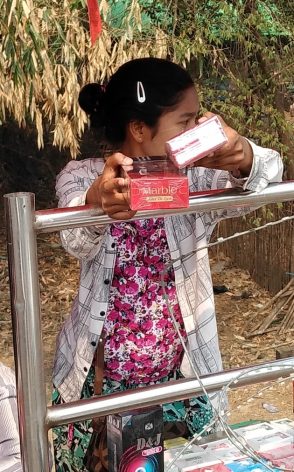
A Myanmar girl, displaced by war, sells cigarettes through the razor-wired border with Thailand near the frontier town of Mae Sot. Thailand is bracing for another influx of refugees. Credit: William Webb/lPS

A Myanmar girl, displaced by war, sells cigarettes through the razor-wired border with Thailand near the frontier town of Mae Sot. Thailand is bracing for another influx of refugees. Credit: William Webb/lPS

MAE SOT, Thailand, Mar 13 2024 (IPS) – The Maung family is rebuilding their lives in a foreign land. A freshly painted signboard with a play on the word Revolution declares their small restaurant is open for business, and breakfast features traditional Myanmar mohinga—rice noodles and fish soup.


Three years ago, the family of four was prospering in the central Myanmar city of Mandalay but suddenly everything changed. The military seized back power from the newly elected government, and thousands of people took to the streets in protest, including the Maungs. A brutal crackdown ensued across Myanmar, the father was arrested and their two restaurants seized.

Since the 2021 coup, the UN estimates some 2.4 million more people have been displaced by conflict across Myanmar, while 78,000 civilian properties, including homes, hospitals, schools, and places of worship, have been burnt or destroyed by the military.

The Maung family was wise to leave Myanmar when they could, and fortunate to survive the hazardous journey eastwards towards the border with Thailand. After spending a year in a border camp for IDPs run by the military wing of the Karen National Union (KNU) in eastern Kayin State, the family managed to cross into the Thai frontier town of Mae Sot to start afresh, even if they exist in a grey zone of legality alongside tens of thousands of others.

More waves of refugees are following in their footsteps.

“We have 750,000 IDPs in our territory,” said a senior official of the KNU, which has been waging the world’s longest civil war against successive Myanmar regimes since 1949. “A year ago, there were 500,000 to 600,000. Numbers are rising because the military is deliberately targeting civilians,” he told IPS in Mae Sot, asking not to be named.

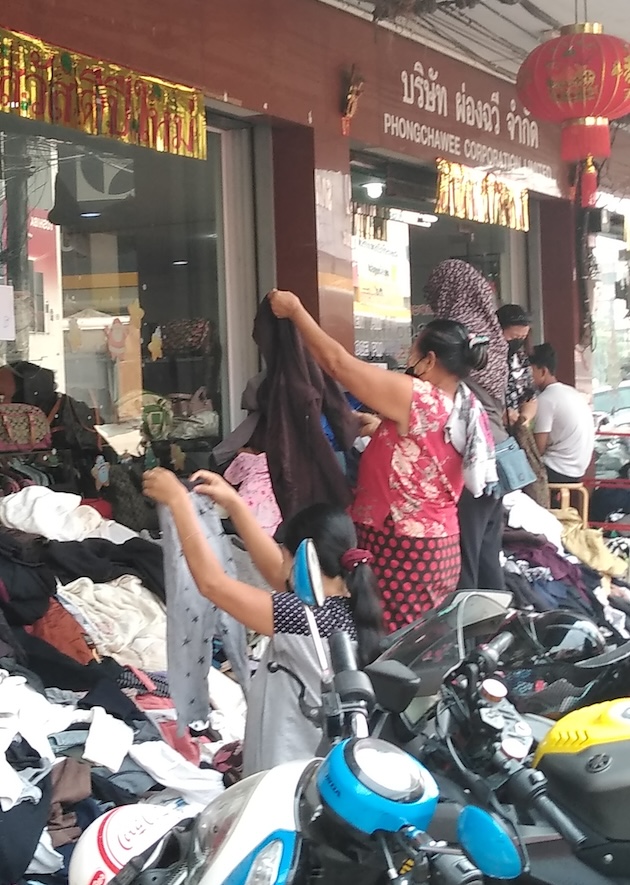
Myanmar refugees in Thailand pick out clothes piled in the street that have been donated in the border town of Mae Sot. Credit: William Webb/IPS

Myanmar refugees in Thailand pick out clothes piled in the street that have been donated in the border town of Mae Sot. Credit: William Webb/IPS

Against this background and wanting to preempt an influx, Thailand’s new coalition government announced its intention last month to open up a ‘humanitarian corridor’ into Myanmar to funnel aid to IDPs and keep them well away from the border.

Thailand’s military—the real arbiter of power in these border regions and holding sway over two parties in the coalition—is haunted by the spectre of past and present examples of chaos through conflict. In the 1980s, Thailand reluctantly hosted several hundred thousand Cambodian refugees, including remnants of the genocidal Khmer Rouge regime, on its eastern borders. Today it looks west and sees Bangladesh struggling to contain in camps some one million Rohingya refugees forced out of Myanmar in what the UN special rapporteur on human rights called a genocidal campaign by the Myanmar military.

But beyond the ‘humanitarian’ aspect, what has caused anger within the various groups fighting the Myanmar military as well as rights activists, is Thailand’s own admission that its humanitarian corridor proposal is aimed at drawing the regime’s State Administration Council (SAC) into a dialogue that would lead to a negotiated settlement with Myanmar’s diverse resistance forces.

Neither the KNU nor the parallel National Unity Government set up by ousted Myanmar lawmakers after the coup were consulted by Thailand, which received a green light from the Association of Southeast Asian Nations (ASEAN).

Under Thailand’s initiative, aid would be delivered initially to 20,000 IDPs by the Thai Red Cross and the Myanmar Red Cross (whose senior administrators are former military officers) and monitored by ASEAN’s Coordinating Centre for Humanitarian Assistance on Disaster Management, where the Myanmar junta also has a presence.

“Aid is used everywhere in the world as a political entry point,” the KNU official commented. “This is not a pure humanitarian issue. They want to bring the SAC out of isolation. This is very problematic for us.”

A senior NUG official, also based in Thailand, was similarly concerned by the political intentions behind the proposal.  “It’s a desperate measure by ASEAN seeking a semblance of negotiated peace and dialogue,” he told IPS.

The official doubted it would get off the ground in its present form without the support of the Karen forces that control large areas of Kayin State, nor without the full backing of the US.

The US values its long-held strategic ties with Thailand and its military, and Thai Foreign Minister Parnpree Bahiddha-Nukara returned from Washington last month, declaring that he had secured complete US support for the initiative, although the US public statement appeared more cautious.

Human rights activists and humanitarian workers on the Thai-Myanmar border remain highly sceptical of the initiative, denouncing it as a “weaponization of aid”.

Thailand, they note, has never officially recognized the refugee status of nearly 100,000 people living in nine UNHCR camps along the Thai-Myanmar border since the 1990s.

“This is not about providing humanitarian aid to the people of Myanmar. It is about giving a new lifeline to the junta to re-engage with ASEAN and everybody else,” commented Paul Greening, a former UN senior staff officer and now independent consultant in Mae Sot.

“Neighbours and other international actors, including the US and China, do not want the junta to fall. They do not want the junta to win but they do not want it to fall either. This is why they all want a ‘negotiated settlement’,” he said.

Igor Blazevic, a senior adviser at the Prague Civil Society Centre who previously worked in Myanmar, said a “carrot” was being held out to the Myanmar regime at a time when it was “seriously weakened and shaken” after losing large areas of territory to resistance forces both in Rakhine State in the west and in Shan State close to China.

“A political aim behind the ‘humanitarian initiative’ is the intention to treat genocidal power-usurpers in uniform as the inevitable and unavoidable key factor in Myanmar’s ‘stability’ and with combination of soft pressure and humanitarian incentives, try to force everybody else to surrender, in a soft way, to ongoing military dominance in politics and the economy,” Blazevic wrote in a commentary.

With the UN warning that nearly two million people in Myanmar are expected to fall into the “highest category of needs severity (catastrophic)” this year, the resistance is aware that they will come under intense international pressure not to reject the Thai initiative.

Recent developments indicate Thailand may rethink its proposal, however. It has opened channels with the KNU and the NUG to discuss their involvement in facilitating aid deliveries through Myanmar civil society organisations independent of the regime. Word has it that the Myanmar Red Cross is not that keen to be directly involved, knowing it is too close to the regime to be able to safely deliver aid to those who have suffered atrocities at its hands.

For the Maung family and their small eatery in Mae Sot, a dream would be to return to Mandalay and Myanmar in peace. But they have little hope of such an outcome, nor do they really want to remain in Thailand, along with over two million other Myanmar workers, classified as migrants, not refugees.

For the moment, life revolves around navigating Thailand’s complex and often corrupt system to secure papers that would give them a degree of legitimacy and enable them to move beyond Mae Sot and surrounding Tak Province. A possible lifeline is an ethnic Chinese branch of their family with members in Taiwan.

“Taiwan could be our future,” says the elder of two daughters, who still dreams of going to university. “I can learn Chinese,” she says, in excellent English.

IPS UN Bureau Report

  Source