Nations pledge $3.9bn to Global Environment Facility as Race to Meet 2030 Goals Tightens

Biodiversity, Climate Action, Combating Desertification and Drought, Conferences, Development & Aid, Editors’ Choice, Environment, Featured, Global, Headlines, IPS UN: Inside the Glasshouse, Least Developed Countries, Natural Resources, Ocean Health, Sustainable Development Goals, TerraViva United Nations

Environment

This replenishment sends a clear message: the world is not giving up on nature even in a time of competing priorities. Our donor countries have risen to the challenge and made bold commitments towards a more positive future for the planet. – Claude Gascon, Interim CEO and Chairperson of the GEF
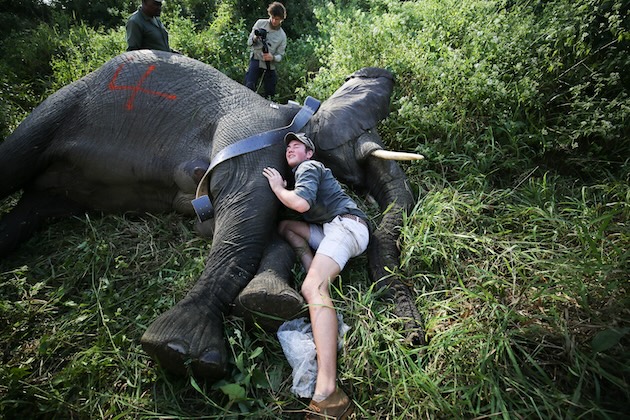
The Global Environment Facility (GEF) announced that donor countries ​p​ledged an initial ​U​SD 3.9 billion to ​the facility for the ninth replenishment cycle​, indicating that nature remains a priority, as in this image, where a veterinary team applies a collar to a sedated elephant​ in KwaZulu-Natal​, South Africa, as part of an ambitious project aimed at conserving the animals. Credit: Dan Ingham/IPS

The Global Environment Facility (GEF) announced that donor countries ​p​ledged an initial ​U​SD 3.9 billion to ​the facility for the ninth replenishment cycle​, indicating that nature remains a priority, as in this image, where a veterinary team applies a collar to a sedated elephant​ in KwaZulu-Natal​, South Africa, as part of an ambitious project aimed at conserving the animals. Credit: Dan Ingham/IPS

SAINT LUCIA, Apr 9 2026 (IPS) – With just four years left to meet a series of global environmental targets, governments are committing to shore up one of the world’s main environmental funds, the Global Environment Facility (GEF), with a $3.9 billion pledge.


The funding will form the backbone of the GEF’s ninth replenishment cycle, known as GEF-9, a four-year financing round running from July 2026 to June 2030. Those years are widely seen as decisive for slowing biodiversity loss, tackling pollution and keeping climate goals within reach.

While the $3.9 billion pledge signals renewed momentum, it comes at a moment of deepening environmental strain. Ecosystems are continuing to decline, coral reefs are bleaching at scale and small island states are already grappling with the economic and social fallout of environmental change.

“This replenishment sends a clear message: the world is not giving up on nature,” said Claude Gascon, the GEF’s interim chief executive. He noted that donor countries had “risen to the challenge and made bold commitments towards a more positive future for the planet” despite competing global priorities.

“The coming four years of the GEF-9 cycle will reflect this high-ambition push to achieve the 2030 environmental goals,” he said.

The GEF, the world’s largest multilateral environmental fund, supports developing countries in meeting commitments under major global agreements on climate change, biodiversity, land degradation, chemicals, and ocean governance. Since its establishment, it has provided more than $27 billion in grants and mobilised a further $155 billion in co-financing.

The GEF announced it had raised USD 3.9 billion for its ninth replenishment cycle to meet international environmental goals. Credit: Kea Mowat/Unsplash

GEF’s next funding round, its ninth replenishment cycle, aims to scale investment and mobilise private capital to close widening environmental financing gaps. Credit: Kea Mowat/Unsplash

Rewiring Economies Around Nature

At the centre of the new funding cycle is a push toward what the GEF calls “nature-positive development”. It is an effort to embed environmental value into economic decision-making rather than treating it as a secondary concern.

That includes reworking systems that drive environmental degradation, such as food production, energy, urban development and public health, so they operate within ecological limits.

The strategy also leans heavily on attracting private investment. Around 25% of GEF-9 resources are expected to be used to mobilise private capital, reflecting a growing recognition that public funding alone cannot close the global environmental financing gap.

Focus on the Most Vulnerable

The allocation of funds carries a clear political signal.

At least 35 percent of resources are expected to go to Least Developed Countries and Small Island Developing States (SIDS), countries that contribute least to environmental degradation but face some of its most severe impacts. A further 20% is earmarked for Indigenous Peoples and local communities.

For Caribbean nations, where coastal erosion, stronger storms and coral reef loss are already reshaping economies, the funding could prove significant if it translates quickly into action on the ground.

“We need multilateral cooperation more than ever to protect our planet for future generations,” said Niels Annen, describing the replenishment as a “joint effort” between countries in the Global North and South. “Environmental action and sustainable development have to go hand in hand. In GEF-9, we see Germany’s priorities very well reflected: innovative finance for nature and people, better cooperation with the private sector and stable resources for the most vulnerable countries.”

Support for the funding round has also come from Spain and Mexico, with Inés Carpio San Román emphasising the importance of “effective multilateralism” and Mexico backing “country-driven solutions” to global environmental challenges.

Calls to Deliver Results

Civil society groups have welcomed the increased emphasis on inclusion, particularly the allocation for Indigenous Peoples and local communities.

“This will strengthen a whole-of-society approach,” said Faizal Parish, Chair of the GEF’s Civil Society Organization Network, while Aliou Mustafa, of the GEF’s Indigenous Peoples Advisory Group, said the shift reflects efforts to place Indigenous groups “at the centre of decision-making.”

Still, expectations are high and time is short.

“The environmental crises we face are accelerating,” said Richard Bontjer. He described the  replenishment as “a vote of confidence” while stressing that “every dollar must count.”

“This replenishment will sharpen the GEF’s focus on impact, drive greater efficiency and mobilize private finance alongside public investment. It will also strengthen support to SIDS and LDCs and give recognition to the importance of supporting Indigenous Peoples and local communities.”

With the 2030 deadline fast approaching, the success of this funding round will ultimately be judged not by the size of the pledges but by how quickly they translate into measurable gains—restored ecosystems, protected coastlines and more resilient economies.

For countries on the frontlines, including those in the Caribbean, the $3.9 billion is not just another funding cycle.

It is a narrowing window of opportunity.

Additional pledges are expected before the end-of-May GEF Council meeting, when countries will lock in the final size and ambition of the four-year funding round.

The 71st GEF Council meeting will be held in Samarkand, Uzbekistan, from May 31 to June 3, 2026. The meeting will take place in advance of the Eighth GEF Assembly, when individual country pledges will be publicly announced.

Note: This feature is published with the support of the GEF. IPS is solely responsible for the editorial content, and it does not necessarily reflect the views of the GEF.

IPS UN Bureau Report
 

Once Evicted From This Kashmir Lake, People Now Seen as Its Saviours

Asia-Pacific, Biodiversity, Civil Society, Environment, Featured, Headlines, Sustainable Development Goals, TerraViva United Nations

Environment

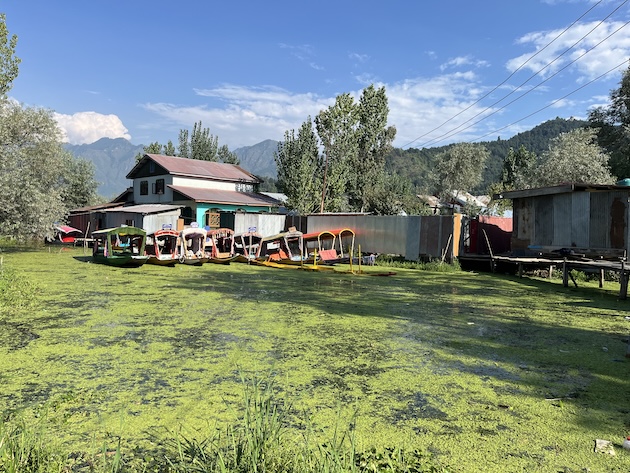
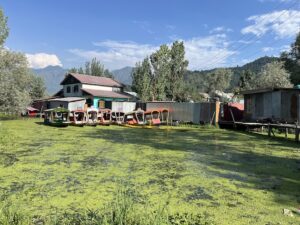
Boats docked outside a house in Dal Lake with a green film on the water in the foreground. Credit: Athar Parvaiz/IPS

Boats docked outside a house in Dal Lake with a green film on the water in the foreground. Credit: Athar Parvaiz/IPS

SRINAGAR, India, Mar 31 2026 (IPS) – For the past few weeks, residents living in and around Dal Lake in Indian Kashmir have witnessed “a different phenomenon” as a green sludge has accumulated on the once pristine water. Photos circulating widely on social media triggered a public outcry.


Some citizens and environmentalists warned that the transformation reflects heavy sewage pollution in this Himalayan Lake in the heart of Srinagar, Kashmir’s summer capital.  The Dal Lake is a complex wetland ecosystem covering roughly 18 square kilometres that supports fisheries, aquatic vegetation, and thousands of livelihoods tied to tourism and lake agriculture.

Officials managing the lake, however, urged calm and said that the sudden discolouration was most likely caused by a lack of rainfall and unusual temperatures for the season in Kashmir, though they didn’t deny the pollution problem and nutrient richness in the lake.

Muzamil Ahmad Rafiqui, Superintending Engineer for Kashmir’s Lake Conservation and Management Authority (LCMA), said that the lake is receiving nutrients, pesticides and other pollutants from the peripheries at many sources because of agricultural and other activities.

But Rafiqui added that the discolouration was more so due to over 50 percent reduction in precipitation and constant above-normal temperatures for weeks in this part of the season in Kashmir.

“Also, when the inflow from all the channels supplying water to the lake is extremely low and the outflow gates of the lake are also closed for retaining water in the lake, it is quite natural there will be changes in the water colour in a stagnant water body,” Rafiqui said.

Experts, scientific studies and official watchdogs have highlighted decades of pollution, sewage inflow and unregulated urban growth that have steadily degraded this iconic lake in the Kashmir Himalayas. A report submitted by Kashmir’s Pollution Control Committee (PCC) to the National Green Tribunal in response to the latter’s directions and other reports in recent years confirmed the “unabated flow of untreated sewage” into the Dal Lake in “violation of environmental norms”.

From Exclusion to Participation     

Earlier this year, the Jammu and Kashmir government, in a dramatic policy shift, shelved a 416-crore rupees (USD 4.5 million) Dal Lake restoration project that had started implementation nearly two decades ago but had made little progress. The project aimed to move nearly 9,000 families living near Dal Lake to the city outskirts but was able to relocate only 1,808 families in 17 years.

The project, approved in 2009, centred on relocating thousands of families living inside the lake to newly built colonies on the outskirts of Srinagar, as the authorities believed human settlements within the lake were a major source of pollution and encroachment.

Now the government has abandoned the relocation-driven strategy altogether. In its place, officials are now promoting an in-situ conservation model that recognises lake dwellers as part of the ecosystem rather than obstacles to restoration.

The new approach proposes developing “eco-hamlets” within the lake’s settlements, installing sewage systems, treating inflowing drains and improving water circulation through dredging and channel restoration.

“It is a striking shift in philosophy. The very communities who were once blamed for the lake’s decline are now being seen as potential guardians,” said Raja Muzaffar Bhat, a prominent environmental and social activist based in Srinagar who often files petitions in India’s National Green Tribunal against the local administration for “failing to implement environmental safety rules and regulations” available under a broader regulatory framework in India for environmental protection.

Whether the new conservation strategy succeeds, said Bhat, may depend on “whether it combines community participation with stronger environmental governance.”

Iftikhar Drabu, a senior engineer who specialises in water engineering, warned that without stronger sewage infrastructure, strict regulation of tourism and effective monitoring of inflowing drains, community participation alone will not restore the lake. “Nothing will work in isolation. A multi-pronged approach is needed for conserving the lake,” he said.

‘We Know How to Protect the Lake’

For many families who have so far been relocated, the policy reversal has reopened painful questions. At Rakh-e-Arath, a rehabilitation colony on Srinagar’s outskirts built for displaced lake residents. “They told us our presence was destroying the lake. We believed the government and moved here,” said a resident, Mohammd Ashraf, whose family was relocated 10 years back, adding that life away from the water, all these years, has been difficult.

“Our time was wasted and our livelihoods were ruined,” he said. “We only know the lake as we were born there and have spent our childhood and youth by the lake. Fishing, growing vegetables on floating gardens, and rowing tourists in small boats are what we are adapted to,” Ashraf told Inter Press Service (IPS).

If the government now says people are needed to protect the lake, he said, “I welcome it, and I hope we will be taken back to the lake.” Other relocated families, who IPS spoke with, expressed similar feelings.

Communities living on the lake have historically maintained its channels, harvested weeds and monitored changes in water conditions. Integrating them into restoration efforts, they say, could help control the pollution and conserve the lake. “We have always been urging the government to give us the responsibility of conserving the lake. We are the ones who know the lake, not the people who sit in government offices,” said Akram Guru, a Shikara Walla at Dal Lake.

“We have been dubbed as the lake’s destroyers for decades. Now they say the lake needs its people,” he said smilingly. “I hope the change in the government’s approach finally facilitates our contribution to protecting the lake.”

  Source

Caribbean Leaders and Civil Society Prepare for Global Push on Fossil Fuel Phase-Out

Aid, Caribbean Climate Wire, Civil Society, Climate Action, Climate Change, Conferences, Development & Aid, Environment, Headlines, Humanitarian Emergencies, Latin America & the Caribbean, Small Island Developing States, Sustainable Development Goals, TerraViva United Nations

Climate Change

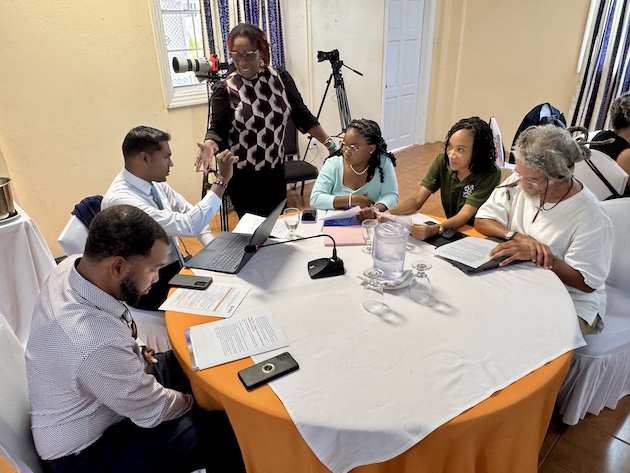
Civil society representatives in discussion during the first day of the Caribbean convening organised by the Fossil Fuel Treaty Initiative. Credit: Alison Kentish/IPS

Civil society representatives in discussion during the first day of the Caribbean convening organised by the Fossil Fuel Treaty Initiative. Credit: Alison Kentish/IPS

SAINT LUCIA, Mar 27 2026 (IPS) – As the world edges closer to breaching key climate thresholds, Caribbean policymakers, scientists and civil society leaders gathered in Saint Lucia this month to coordinate the region’s position ahead of a landmark global meeting on transitioning away from fossil fuels.


The two-day convening, held on 2–3 March, brought together civil society representatives and government officials under the umbrella of the Fossil Fuel Treaty Initiative to discuss the Caribbean’s priorities for the upcoming First International Conference on the Phase-Out of Fossil Fuels in Colombia.

The conference, scheduled for late April in Santa Marta and co-hosted by Colombia, The Netherlands, and Tuvalu, is expected to examine strategies for a unified global transition away from fossil fuels, including financing, governance, and legal structures.

For Caribbean nations reeling from climate impacts, the discussions are far from theoretical.

“Our exposure to climate impacts is acute,” said Dr James Fletcher, climate envoy for CARICOM, in opening remarks to the gathering. “The transition is both an existential necessity and a structural transformation challenge.”

Preparing the Region’s voice

The Saint Lucia meeting was structured across two days: the first dedicated to civil society organisations and the second to government technical officials.

Organisers said the goal was to ensure both groups enter the Santa Marta conference with clear priorities and a coordinated regional position.

The Caribbean has historically played an outsized role in global climate diplomacy. Small island states were instrumental in securing the 1.5°C temperature target within the landmark Paris Agreement, despite contributing only a fraction of global greenhouse gas emissions.

Yet that goal now appears increasingly fragile.

“We will overshoot 1.5 degrees Celsius — at least temporarily,” Fletcher told participants. “The question we now have to grapple with is for how long and by how much.”

Scientists warn that without deep cuts to greenhouse gas emissions, global warming could approach or exceed 2°C by the end of the century. For low-lying island states, that difference could mean the loss of ecosystems, infrastructure and territory.

A Push for Global Coordination

A key focus of the discussions was the proposal for a global fossil fuel treaty. It is an idea that is gaining traction among a coalition of countries and civil society organisations.

The treaty proposal seeks to create an international framework that would manage the decline of fossil fuel production in a coordinated and equitable way.

“The proposal came into the world because many civil society organisations realised that simply saying ‘end fossil fuels’ was not enough,” said Alex Rafalowicz, executive director of the Fossil Fuel Treaty Initiative.

“If we are truly going to address the question of fossil fuels, we have to move beyond rhetoric and get into the details,” he said. “Those details require coordination and cooperation between countries.”

Eighteen countries are currently participating in discussions on the idea, including several small island states such as Antigua and Barbuda, The Bahamas and Saint Kitts and Nevis.

The Science Behind the Urgency

Scientific evidence presented at the Saint Lucia meeting reinforced the sense of urgency.

Professor Tannecia Stephenson, a climate scientist at the University of the West Indies, warned that the world is already experiencing “widespread, unprecedented, rapid and intensified climate change”.

Unless there are “immediate, rapid and sustained large-scale reductions in greenhouse gas emissions”, she told the convening, the goal of limiting warming to 1.5°C will slip out of reach.

The Caribbean, she noted, faces a convergence of climate hazards, stronger hurricanes, rising sea levels and more severe droughts that threaten key sectors such as tourism, agriculture, and water security.

“How does a small island really prepare for a Category 5 storm of the strength and magnitude that we are now seeing?” she asked.

The answer, many participants argued, lies partly in addressing the root cause of climate change, that is, the continued expansion and use of fossil fuels.

Balancing Transition and Reality

Despite the urgency, the transition away from fossil fuels presents complex challenges for the Caribbean.

Many countries remain heavily dependent on imported oil and gas for electricity generation, transport and industry. Others rely on fossil-fuel-related revenues.

At the same time, the region faces chronic fiscal constraints and rising debt levels, often exacerbated by repeated climate disasters.

“Many of our countries are carrying high debt burdens,” Fletcher said. “Why? Because they continuously have to borrow money to recover from the last extreme weather event.”

This financial pressure complicates the transition to renewable energy and climate-resilient infrastructure.

To address this, discussions during the government officials’ session explored potential financing mechanisms linked to a fossil fuel treaty, including proposals for a climate-related debt resolution facility and international transition funds.

Advocates argue that such mechanisms could help ensure that poorer and more vulnerable countries are not left behind as the world shifts toward cleaner energy systems.

Civil Society Demands

The first day of the Saint Lucia convening focused on civil society perspectives, including community organisations and environmental groups from across the Caribbean.

Participants worked in groups to identify priorities and “red lines” for the region ahead of the Santa Marta meeting.

Among the themes raised were the need for stronger international commitments to phase out fossil fuel production, greater financial support for climate-vulnerable countries and protections for workers and communities affected by the energy transition.

Organisers also discussed plans for civil society mobilisation around the Santa Marta conference, including a people’s summit intended to amplify grassroots voices.

A Diplomatic Opening

While the Santa Marta conference is not formally part of the United Nations climate negotiations, many observers see it as an important diplomatic opportunity.

Fletcher described it as a “space outside the formal structure” of the United Nations Framework Convention on Climate Change to explore new governance options and political alignments.

Its significance was underscored when it was referenced during the closing plenary of the COP30 climate summit in Belém, Brazil.

For the Caribbean, preparing a coordinated position is essential, Fletcher said.

“Caribbean leadership is most effective when it is coordinated — when we move as a bloc,” he told participants.

Punching Above Their Weight

Small island states have long leveraged their moral authority in climate negotiations, drawing attention to the disproportionate impacts they face despite contributing little to global emissions.

Fletcher reminded the audience that Caribbean countries helped secure the 1.5°C target in the Paris Agreement and have been at the forefront of campaigns on climate justice, loss and damage financing and reform of the global financial system.

“We do not lead because we are powerful,” he said. “We lead because we are principled. We lead because we are credible.”

But leadership, he added, must be matched with strategy and unity.

As delegates left the Saint Lucia meeting, the message was clear: the Santa Marta conference could represent an important step toward building global momentum for a managed phase-out of fossil fuels.

For the Caribbean, however, the stakes could hardly be higher.

“The Caribbean has often been the moral compass of global climate diplomacy,” Fletcher said. “We must continue to lead strategically, coherently and decisively.”


EXCLUSIVE: Water Laureate Kaveh Madani on Arrest, Exile and Fight for Science

Aid, Civil Society, Climate Change, Combating Desertification and Drought, Conservation, Development & Aid, Economy & Trade, Editors’ Choice, Environment, Featured, Food and Agriculture, Global, Headlines, Human Rights, IPS UN: Inside the Glasshouse, Sustainable Development Goals, TerraViva United Nations, Water & Sanitation

Environment

It was hope that kept me going. – Professor Kaveh Madani 

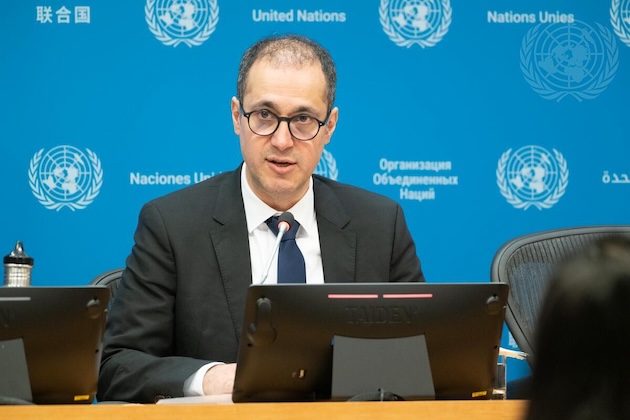
Kaveh Madani, Director of the UN University’s Institute for Water, Environment and Health and lead author of the report entitled “Global Water Bankruptcy: Living Beyond Our Hydrological Means in the Post-Crisis Era” briefs reporters at UN Headquarters. Credit: UN Photo/Evan Schneider

Kaveh Madani, Director of the UN University’s Institute for Water,
Environment and Health and lead author of the report entitled “Global Water
Bankruptcy: Living Beyond Our Hydrological Means in the Post-Crisis Era” briefs reporters at UN
Headquarters.
Credit: UN Photo/Evan Schneider

UNITED NATIONS, Mar 25 2026 (IPS) – Professor Kaveh Madani of Iran has been named the 2026 Stockholm Water Prize laureate. The award will be formally presented by King Carl XVI Gustaf of Sweden in August during World Water Week in Stockholm.


The Stockholm Water Prize is widely regarded as the highest global honour in water science and policy. Often called the Nobel Prize for water, it recognises individuals and institutions for exceptional contributions to the sustainable use and protection of water resources. This year’s selection stands out for both scientific impact and the extraordinary personal journey of the laureate.

At 44, Madani is the first Muslim and the youngest recipient in the prize’s 35 year history. He is also the first United Nations official and the first former politician to receive the award.

Madani currently serves as Director of the United Nations University Institute for Water, Environment and Health. Once a senior official in Iran’s government, he later faced arrest, interrogation, and a sustained smear campaign that forced him to leave his country.

Born in Tehran in 1981, Madani grew up in a family deeply connected to Iran’s water sector. His early exposure to the country’s mounting water challenges shaped his academic direction. He studied civil engineering at the University of Tabriz before moving to Sweden to pursue a master’s degree in water resources at Lund University. He later earned a PhD from the University of California, Davis, followed by postdoctoral research at the University of California, Riverside.

By his early 30s, Madani had established himself as a leading systems analyst. He joined Imperial College, London, where his work focused on the mathematical modelling of complex human water systems. His research combined hydrology, economics, and decision sciences to improve policymaking in water management.

In 2017, he made a decisive move. Leaving a prestigious academic career in London, he returned to Iran to serve as Deputy Vice President and Deputy Head of the Department of Environment. Many viewed his appointment as a signal of reform and a bridge between Iran and its scientific diaspora.

During his tenure, Madani pushed for transparency and structural reforms in water governance. He used innovative public campaigns to raise awareness about environmental degradation. However, his efforts challenged entrenched interests.

State-aligned media accused him of espionage and labelled him a “water terrorist” and “bioterrorist”. Conspiracy theories circulated, linking him to foreign intelligence agencies and even to alleged weather manipulation schemes. His advocacy for international environmental agreements further intensified opposition.

In early 2018, a broader crackdown on environmental experts began. Madani was detained and interrogated multiple times. Several of his colleagues were arrested. One of them, Kavous Seyed Emami, died in custody under contested circumstances.

Facing mounting pressure, Madani left Iran and entered a period of exile. He joined Yale University, where he continued his research and advocacy. He began to focus more on bridging science and policy at the global level.

Madani’s academic contributions have been widely recognised. He is known for integrating game theory into water resource management. His work challenged traditional models that assumed cooperation among stakeholders. He demonstrated that individual incentives often lead to uncooperative behaviour, which makes many engineering solutions ineffective in practice.

This approach provided new tools to understand conflicts over shared water resources. It has been applied to transboundary water disputes and to policy design in regions with limited trust among stakeholders.

One of his most influential contributions is “water bankruptcy.” He introduced the term to describe a condition where water systems can no longer recover to their historical levels. Unlike a crisis, which implies a temporary disruption, water bankruptcy signals a long-term structural failure.

In a recent United Nations report, Madani argued that the world entered an era of global water bankruptcy in January 2026. The report highlighted that many river basins and aquifers have lost their capacity to regenerate. This framing has sparked debate among policymakers and researchers.

Madani uses simple financial language to explain complex ecological realities. He argues that humanity is no longer living off renewable water flows but is depleting long-term reserves. This framing has made the concept widely accessible and influential.

Beyond academia, Madani has built a strong public presence. With a large following on social media, he has used digital platforms to communicate scientific findings in accessible ways. His work includes documentaries and public campaigns aimed at increasing awareness and accountability.

He has also played key roles in international diplomacy. As Iran’s lead environmental diplomat, he participated in global negotiations and served as Vice President of the UN Environment Assembly Bureau in 2017. At the COP23 climate conference in Bonn, he called for greater attention to water in global climate agreements.

Today, as head of the United Nations water think tank, he continues to advocate for integrating water into climate and development policies. He has particularly focused on the Global South, where water stress closely links with food insecurity, migration, and conflict.

The Stockholm Water Prize Committee cited his “unique combination of groundbreaking research, policy engagement, diplomacy, and global outreach, often under personal risk” in awarding him the 2026 prize.

In an exclusive interview with Inter Press Service, Madani recalled the intense pressure and fear that defined his final days in Iran. He described repeated interrogations, surveillance, and a growing sense that his work had placed him in direct confrontation with powerful institutions.

Here are edited excerpts from the interview: 

IPS: You introduced the idea of “water bankruptcy.” How does this change how governments must act today?

Madani: Water bankruptcy is defined as a post-crisis state of failure in which the system is suffering from insolvency, meaning that water use has been more than the available water for an extended period, and also irreversibility, meaning that there are some damages to the ecosystem and the machinery of water production that are irreversible and cannot be fixed.

What that means is that some of the things that used to be just anomalies and abnormal conditions are now the new normal, and we’re no longer experiencing only a temporary deviation from what we are used to, but we have a situation that we have to get used to. Crisis management is about mitigation.

Bankruptcy management is about mitigating what can still be mitigated and adapting to new realities with more restrictions. Bankruptcy management calls for an honest confession, the admission of a confession that a mistake has been made, and the current business model is not working, so it calls for honestly admitting to the mistakes made and transforming the business model, that calls for a fresh new start and a change of course.

It is bitter. Bankruptcy is not a pleasant condition but admitting to it helps us prevent further irreversible damages and enables a future that is less catastrophic.

IPS: You faced arrest, exile, and serious accusations in Iran. What kept you going during that period?

Professor Madani: Hope. Hope is what kept me going because I had gone back there to help and at least at the start, I was trying to take what was happening to me as part of the job and as part of the adventure because I was there to make a positive impact, and if I had given up too quickly, then that would not have matched my essential motivation to help.

I knew that it would not be a very smooth path, but it turned out to be much more bumpy than what I had anticipated, and I think many also, you know, those who made that situation bumpy for me, also regret that today, but by the time they realised mistakes were made, it was too late to do anything about it.

Can you recall your arrest and interrogation? What do you remember most from that experience, and how did it affect you personally?

I think arrests and interrogations are very frustrating, especially when you haven’t done anything wrong.

What kills you is constantly worrying about what others think of you and coming up with different scenarios and conspiracy theories. Dealing with conspiracy theories and proving them wrong is not easy. Those were very hard times for me, but as you know, my background is in behaviour analysis. I was trying to put myself in the shoes of those who were suspicious of me, understand their concerns, and address them so I could help my homeland.

IPS: Many countries still treat water stress as a temporary crisis. What are the biggest policy mistakes they continue to make?

Madani: Yes, crisis management is all about mitigation. Those who deny the crisis and enter the bankruptcy state continue to borrow more from nature, build more infrastructure, dig deeper wells, add additional reservoirs and storage capacity, implement more water transfer projects and build more, and construct more desalination plants. Continuing to add to their supply, on the other hand, they think things would be temporary, and through some sort of rationing, things would be solved, but the continuation of that behaviour and the denial of that reality makes the problem worse.

They get drained into a deepening problem, and again, like the financial world, if your business model is not working and you’re in denial, you continue taking more loans and your expenses and your debt become higher and higher. By the time that people realise that there is no way out of that chaos and that failure, the cost is much, much higher. Remaining in denial would result in major significant irreversible damages that generations would have to pay for.

IPS: You combined science with diplomacy and public outreach. Which of these has had the most real impact on decision-making?

Professor Madani: It’s very hard to really say which one has the most impact, because they’re very complementary. The science is very good, but it’s not enough for decision-making. You still have to understand what the real world looks like and how incentives shape behaviour and actions and how interests promote conflicts and cooperation to be able to act.

Science, of course, opens doors and puts more solutions on the table, but still, without understanding the politics or navigating through politics, it would not work. Diplomacy is another one when it comes to the international scale; even when it comes to negotiating with stakeholders, that’s a skill that would be extremely helpful. So, in a way, these are the things that you need.

And on top of these, public outreach educates you about perceptions, how people and societies understand problems, how they judge different situations, and how their emotions and their perceptions shape their beliefs, and that tells you what you need to do when it comes to communicating your science better, changing their opinion, impacting their opinion, and even negotiating with them or convincing them that things might be different or a different pathway is required. I think they all help you create a recipe for something that might work.

IPS: Your work focuses on human behaviour in water management. Why do technical solutions alone often fail?

Madani: A lot of times, technical solutions developed by our computer models or in our labs don’t take into account the full elements of reality. When humans are involved, we deal with different motives, incentives, emotions, and psychologies, and that makes – that creates – some essentially unexpected realities that might tweak things. Simply put, a lot of times when it comes to developing a solution for a water problem or an environmental solution or a sustainability solution, we think that everyone agrees to making short-term sacrifices for the sake of long-term resilience, but that is not the case in reality because different stakeholders, different groups, farmers, urban users, and industrial users also have short-term goals.

They maximise profit, make sure that the quality of life is not impacted, and so on, which makes them non-cooperative to an extent. And if you miss this reality, then you think that the solution, the optimal solution, is very practical and everyone would cooperate, but then you get very disappointed.

Yet, you can take that into account to the extent possible, try to understand the behavioural element and incorporate those into your assessment and projections to be able to align those incentives and motives with the long-term interest to offer a solution that is more attractive and win-win.

IPS: You now advise governments globally. What is the one urgent action every water-stressed country must take in the next five years?

Madani: I think that by now, countries must understand the importance of water as an essential resource for establishing peace, national security, justice, prosperity, and development. I mean, it supports human development, health, and long-term resilience in society. So, countries must not take it for granted and understand that technological solutions would not be sufficient to address shortages.

They must revisit their practices. They must do a proper accounting to understand what, what’s, and how water is currently being spent and if it’s strategic – strategically speaking, that is the right way of doing things when it comes to matters of national security and long-term resilience. Bankruptcy management starts with accounting and transparency.

That’s something that is missing in many water-stressed and non-water-stressed countries, and I think that’s something that we can focus on, put the lens of science on, and not be afraid of accounting and measuring and monitoring what is happening in the system because that knowledge is required if you want to make improvements.

IPS: Thank you very much for taking the time and speaking to IPS  and congratulations again for the well-deserved award.

IPS UN Bureau Report

  Source

A Remotely-Piloted Weapon That Targets Civilians in War Zones

Armed Conflicts, Civil Society, Crime & Justice, Democracy, Featured, Global, Headlines, Human Rights, IPS UN: Inside the Glasshouse, TerraViva United Nations

A Remotely-Piloted Weapon That Targets Civilians in War Zones

A sign outside the UN Secretariat building last year.

UNITED NATIONS, Mar 18 2026 (IPS) – As the world continues to be weighed down in political and military turmoil, drones are being increasingly used as weapons of war in a rash of ongoing conflicts—including Ukraine vs Russia, Israel vs Palestine, US vs Iran and Israel vs Lebanon, plus in civil wars in the Democratic Republic of the Congo (DRC), Sudan and Haiti.


Described as Unmanned Aerial Vehicles (UAV), drones have fundamentally transformed modern warfare, “offering a low-cost, high-impact form of air power, challenging traditional military doctrines and giving rise to new tactics and ethical debates”.

Once limited to major military powers like the U.S. and Israel, drones are now being used by numerous state and non-state actors, including militant groups and even organized crime cartels.

The use of drones, particularly in targeted killings and with increasing autonomy, has raised significant international debate regarding accountability, civilian casualties, and compliance with international humanitarian law

UN High Commissioner for Human Rights Volker Türk said last week he was “appalled by the devastating impact on civilians of increasing drone attacks”, amid reports that more than 200 civilians have been killed by drones since 4 March alone in the Kordofan region, and in White Nile state.

“It is deeply troubling that despite multiple reminders, warnings and appeals, parties to the conflict in Sudan continue to use increasingly powerful drones to deploy explosive weapons with wide-area impacts in populated areas,” said Türk.

“I renew my call on them to abide fully with international humanitarian law in their use of these weapons, particularly the clear prohibition on directing attacks against civilians and civilian objects and infrastructure, and against any form of indiscriminate attacks.”

Many homes, schools, markets and health facilities were damaged or destroyed in the attacks, compounding the impacts on civilians and local communities, he said.

Meanwhile drones are also being used in the politically-troubled Haiti and also in the conflict between the Democratic Republic of Congo (DRC) and Rwanda despite a peace agreement brokered by the US last year.

According to a report in Cable News Network (CNN) March 17, the war in Iran is continuing to disrupt travel across the Gulf after Iranian drone strikes triggered two major air incidents in recent days. Flights at Dubai International Airport were briefly suspended on Monday after a drone struck a nearby fuel tank, igniting a large fire.

The shutdown forced cancellations and diversions as aviation authorities closed the airport. Part of the UAE’s airspace was also closed for a few hours overnight after the country said it was responding to incoming missiles and drone strikes from Iran.

Meanwhile, the prices of many global airfares that bypass the Middle East are rising, as the conflict drives up oil prices and airlines warn of higher fuel costs ahead, said CNN.

Focusing on a military perspective, Siemon Wezeman, Senior Researcher, Arms Transfers Programme, Stockholm International Peace Research Institute (SIPRI), told IPS more and more states, (and also non-state armed- rebel – groups) acquire drones of all sizes.

“Some of the numbers are quite amazing – Ukraine getting not a few 1,000, but far over 10,000 drones from various suppliers, and Russia, Ukraine and Iran each use drones by the 100s almost every day in the current conflicts.”

And different from some 10 years ago, when most of the drones where for reconnaissance roles, he pointed out, today many drones are armed and many more are ‘one-way attack drones’ (also called suicide or kamikaze drones). The latter are becoming a cheap alternative for long-range missiles against ground targets.

In the SIPRI arms transfers database (https://armstransfers.sipri.org), he said, “we record transfers of all armed drones, and reconnaissance drones with a weight of at least 150kg (we had to put a weight limit to be able to keep monitoring drone transfers with the resources and sources we have)”.

“And we clearly see in recent years that a) the total numbers of drones transferred between states has grown, b) several non-state actors (e.g. Houthis and Hezbollah) have also been supplied with drones, c) the number of states and non-state actors that have acquired drone has grown – most states in the world have now acquired drones, many of them from foreign suppliers, d) the number of producers and suppliers has grown – the simpler drones are offered by dozens if not 100s of large and very small companies and that number is growing, and e) drones, and especially armed drones.”

That is the picture for flying drones, Wezeman said.

But also, sea drones (surface or submarine) are starting to become popular – even if not yet transferred in any significant number. And land drones are also starting to become popular, he declared.

At a press conference March 10, UN Under-Secretary-General for Humanitarian Affairs Tom Fletcher said: “I’m really worried about drones in particular. I think the world has decided that it’s far more interested in spending enormous amounts of money developing these increasingly deadly weapons than it is on saving lives, and it seems to have decided that it hasn’t got time to work on ensuring that the rules that govern these weapons, these lethal autonomous weapons, keep up with the pace of technology.”

So you’ve got this dangerous alliance between very innovative technology and huge amounts of money and people’s desire to kill more people – and that’s a toxic combination, he said.

“And last year, 90 per cent of all deaths caused by drones were civilians, many of them humanitarians. And we’re seeing that across the crises on which we work – whether it’s Gaza, Sudan or in Ukraine, we’re seeing these bad practices move between crises”.

In the DRC last week, a senior official of the UN children’s agency UNICEF and two civilians were killed in drone strikes.

Amplifying further Wezeman said all these drones and one-way attack drones have become more capable, especially in range (the simple Shahed, one-way attack drones used by Iran and sold to Russia have a range of up to 1500 to 2000km), changing them from tactical battlefield weapons to more strategic weapons.

Development is very rapidly continuing for all type of drones, including making them more autonomous and intelligent to be capable of independent targeting and other decision-making. AI plays a growing role in this process. This process leads to questions about control, but right now it seems the process is moving faster than the discussion on controlling the autonomous aspects (see also our programme on emerging technologies.

https://www.sipri.org/research/armament-and-disarmament/emerging-military-and-security-technologies.

Will they replace systems with a human on board or in the loop? The development goes certainly that way and for missiles and one-way attack drones that has already started. For the larger, more capable and more complex systems such as combat aircraft, warships and larger combat vehicles that is still a future – but not a distant dream as development of for example drone combat aircraft is already moving into prototypes in the USA, China, Australia and Europe.

There still is an element of doubt however – drones need navigation that now is largely based on GPS-type systems, something that is not free from the risks of being jammed or stopped.

The simpler drones, with their simple technology, cheap and easy to produce are also not as effective as hoped. Most of them are rather easy prey for air-defence systems (or jamming) – while Russia, Iran and Ukraine send every day dozens or 100s to attack their opponents, most do no reach their target but are shot down or lost due to jamming or other causes, declared Wezeman.

Meanwhile Human Rights Watch said last week its latest research on “how Haitian security forces and private contractors working with them have conducted extensive and apparently unlawful lethal drone strikes in densely populated areas killing and injuring residents who were not members of criminal groups, including children”.

“We call on Haitian authorities to urgently rein in the security forces and private contractors working for them before more children die”, said HRW.

According to data from multiple sources reviewed by Human Rights Watch, at least 1,243 people were killed by drone strikes in 141 operations between March 1, 2025, and January 21, 2026, including at least 43 adults who were reportedly not members of criminal groups, and 17 children. The data also shows that the drone strikes injured 738 people, at least 49 of whom were reportedly not members of criminal groups.

“Dozens of ordinary people, including many children, have been killed and injured in these lethal drone operations,” said Juanita Goebertus, Americas director at Human Rights Watch. “Haitian authorities should urgently rein in the security forces and private contractors working for them before more children die.”

The United Nations Integrated Office in Haiti has attributed the drone attacks in Haiti to a specialized “Task Force” established by Prime Minister Alix Didier Fils-Aimé that is operated with support from the private military company Vectus Global.

The US ambassador to Haiti has confirmed that the US State Department issued a license to Vectus Global to export defense services to Haiti.

Thalif Deen, Senior Editor, Inter Press Service (IPS) news agency, was a former Director, Foreign Military Markets at Defense Marketing Services; Senior Defense Analyst at Forecast International; military editor Middle East/Africa at Jane’s Information Group and UN correspondent for Jane’s Defence Weekly, London.

IPS UN Bureau Report

  Source

Tanzania, Mozambique and Malawi Launch $7.12 Million GEF Project to Protect the Ruvuma Basin

Africa, Biodiversity, Conferences, Conservation, Development & Aid, Economy & Trade, Editors’ Choice, Environment, Featured, Green Economy, Headlines, Natural Resources, Sustainable Development Goals, TerraViva United Nations

Environment

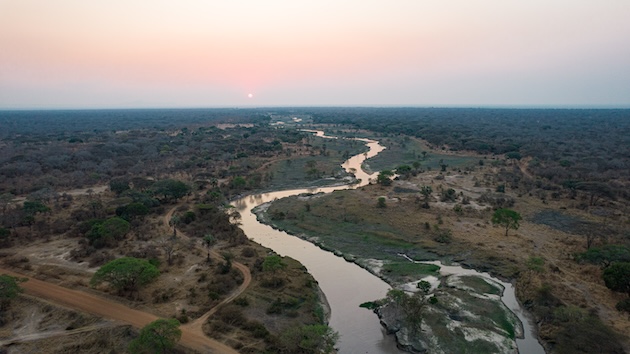
The Ruvuma River winds through wetlands and forests in southern Tanzania, forming part of the natural border with Mozambique. The river sustains farming, fishing and wildlife across the vast Ruvuma River Basin, supporting millions of people who depend on its waters for their livelihoods. Credit: Kizito Makoye/IPS

The Ruvuma River winds through wetlands and forests in southern Tanzania, forming part of the natural border with Mozambique. The river sustains farming, fishing and wildlife across the vast Ruvuma River Basin, supporting millions of people who depend on its waters for their livelihoods. Credit: Kizito Makoye/IPS

DAR ES SALAAM, Tanzania, Mar 16 2026 (IPS) – At dawn, the Ruvuma River moves quietly through a vast wetland along the border between Tanzania and Mozambique. Its muddy waters appear calm, disturbed only by drifting logs and the occasional ripple.


But the fishermen paddling wooden canoes across the river know the danger that lurks under the surface.

“Always keep away from the edge,” says Hamisi Mkude, a fisherman from Michenjele village. “Never trust this river.”

For generations, communities living along the Ruvuma Basin have learned to coexist with crocodiles, whose presence defines life on one of East Africa’s most dangerous rivers. Fishermen follow unwritten rules passed down through families: stay away from the water’s edge, avoid muddy banks marked by crocodile tracks, and never wade into the river.

“That distance saves lives,” Mkude tells IPS by phone. “Crocodiles attack from the bank.”

Inside the small fishing boats, discipline is strict. Arms and legs must never dangle over the side, and no one stands on the canoe’s edge while pulling in nets.

Yet despite the dangers, the Ruvuma River remains the lifeline of millions of people who live within its vast basin.

Stretching across about 155,000 square kilometres, the Ruvuma Basin connects southern Tanzania’s highlands with eastern Malawi and northern Mozambique before snaking into the Indian Ocean. Along its long journey, the river nourishes forests, wetlands and fertile floodplains that support farming, fishing and transport.

But the ecosystem that sustains these communities is increasingly under pressure from deforestation, unsustainable land use and climate change.

Now, Tanzania, Mozambique and Malawi have launched a new regional initiative aimed at protecting the fragile ecosystems of the basin.

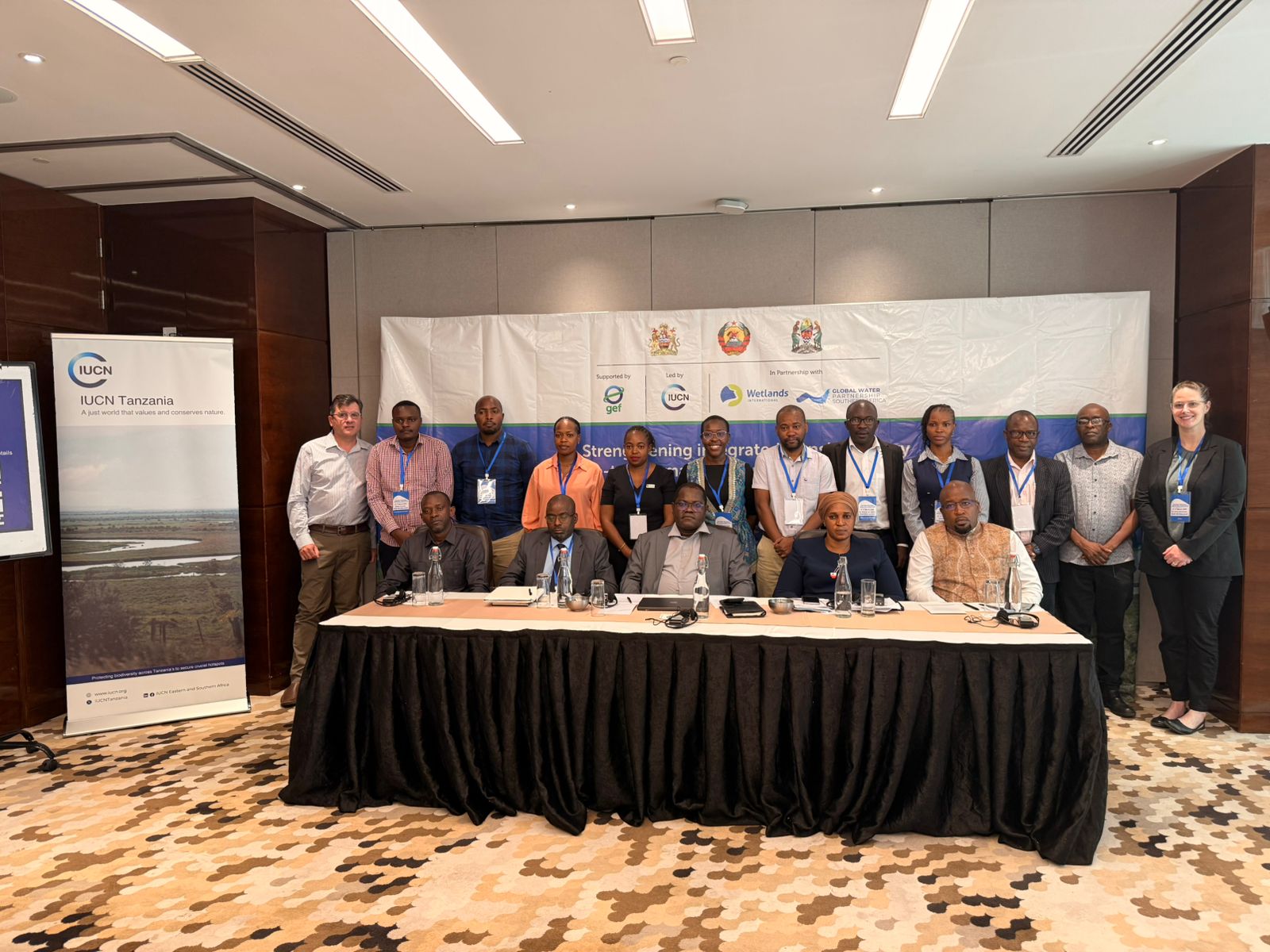
Delegates from Tanzania, Mozambique and Malawi pose for a group photo during the inception workshop launching the “Strengthening Integrated Transboundary Source-to-Sea Management of the Ruvuma River Basin and Its Coastal Zones” project at Johari Rotana on March 4, 2026. The five-year, USD 7.12 million initiative funded by the Global Environment Facility aims to improve cross-border management of the Ruvuma River Basin, protecting ecosystems while strengthening livelihoods for communities across Tanzania, Mozambique and Malawi. Credit: Kizito Makoye/IPS

Delegates from Tanzania, Mozambique and Malawi pose for a group photo during the inception workshop launching the “Strengthening Integrated Transboundary Source-to-Sea Management of the Ruvuma River Basin and Its Coastal Zones” project at Johari Rotana on March 4, 2026. The five-year, $7.12 million initiative funded by the Global Environment Facility aims to improve cross-border management of the Ruvuma River Basin, protecting ecosystems while strengthening livelihoods for communities across Tanzania, Mozambique and Malawi. Credit: Kizito Makoye/IPS

A Transboundary Effort

The three countries have unveiled a project to strengthen environmental management across the Ruvuma Basin.

Officials announced the initiative during a workshop in Dar es Salaam, bringing together policymakers, scientists and conservationists concerned about the basin’s future.

The programme will be implemented with USD 7.12 million in funding from the Global Environment Facility (GEF) and led by the International Union for Conservation of Nature (IUCN) with Global Water Partnership Southern Africa and Wetlands International.

About 65 percent of the basin lies in Mozambique, 34 percent in Tanzania, and a small portion in Malawi, making cooperation between the three countries essential.

“This inception workshop marks an important milestone,” said Julie Mulonga, director of Wetlands International Eastern Africa. “It represents the transition from planning to implementation, when our shared vision begins to translate into coordinated action.”

The initiative aims to improve management of forests, wetlands and water resources from the upper catchments of the basin to its coastal ecosystems.

A River That Sustains Millions

The Ruvuma River begins in the highlands of southern Tanzania and flows more than 800 kilometres to the Indian Ocean.

Along the way, it supports a wide range of ecosystems, including wetlands, forests, floodplains and estuaries that are among the most biologically diverse landscapes in southeastern Africa.

For communities scattered along its banks, the river is central to daily life.

Farmers depend on its waters to irrigate crops such as maize, rice and cassava. Fishermen rely on the river for their daily catch. Women collect water for cooking and washing, while pastoralists bring livestock to drink.

Seasonal rhythms shape life across the basin.

During the rainy season, the river swells and floods surrounding wetlands that serve as breeding grounds for fish and wildlife. In the dry months, shrinking channels concentrate fish stocks that sustain local economies.

But these natural cycles are becoming increasingly unpredictable.

“The Ruvuma landscape is both ecologically important and socially vital,” Mulonga told participants at the meeting. “Its wetlands, forests and agricultural lands support millions of people across Tanzania, Malawi and Mozambique.”

“These ecosystems regulate water resources, sustain biodiversity and underpin livelihoods and food security,” she added.

Growing Environmental Pressures

Environmental experts warn that the basin’s ecosystems are under mounting strain.

Across the region, forests are being cleared for farmland and charcoal production. Hillsides once covered with woodland are now exposed to erosion, sending sediment into rivers and damaging aquatic habitats.

Population growth is increasing demand for land, while climate change is altering rainfall patterns.

“Land degradation, unsustainable farming and deforestation are placing increasing pressure on these ecosystems,” Mulonga said.

Scientists warn that without coordinated action, the basin could lose ecological functions that are vital for both biodiversity and human livelihoods.

A “Source-to-Sea” Approach

The new initiative adopts what experts call a “source-to-sea” approach, recognising that environmental activities upstream can affect ecosystems downstream.

For example, deforestation in the upper catchments can increase soil erosion and sediment in rivers, affecting fisheries and coastal habitats further along the basin.

Project planners say the programme will focus on improving land management in agricultural areas, restoring degraded landscapes and protecting wetlands.

“The Ruvuma River Basin serves as a vital lifeline for millions across Malawi, Mozambique, and Tanzania,” said Andrew Hume, International Waters Focal Area Coordinator at the Global Environment Facility.

“This project demonstrates how safeguarding the basin depends on a shared vision and collaborative transboundary efforts. By supporting this initiative, the GEF is helping to connect land, freshwater, and marine management in a model that transcends national borders. This comprehensive, source-to-sea approach reflects our commitment to protecting international waters and will guide our future investments in shared ecosystems as we move toward GEF-9.”

The project aims to restore about 88,620 hectares of degraded ecosystems while improving landscape management across nearly 280,000 hectares. More than 50,000 people are expected to benefit directly from the initiative.

Representatives from conservation organisations say the project could demonstrate how integrated environmental management can work across national borders.

“The project embodies an integrated vision of land, freshwater and marine resources,” said a representative from the IUCN. “It positions the Ruvuma Basin as a model for transboundary resource management and sustainable development.”

Cooperation Across Borders

Because the river crosses national boundaries, cooperation among the three countries is critical.

Decisions made upstream can have consequences downstream.

For instance, changes in land use in Tanzania may affect water flows in Mozambique, while environmental degradation in Malawi could influence sediment levels in the lower basin.

For years, limited coordination between countries made it difficult to manage the basin effectively.

But officials say that is beginning to change.

The three countries have signed agreements to strengthen collaboration through the Joint Development and Management of the Ruvuma Basin.

James Chitete, head of the Malawian delegation, said the project represents an opportunity for shared responsibility.

“The project is not only about water management,” he said. “It is about safeguarding ecosystems, improving livelihoods and ensuring our natural resources benefit present and future generations.”

Improving Knowledge and Governance

Beyond environmental restoration, the initiative will also focus on strengthening governance and scientific research.

Experts say that data on water flows and environmental changes in the basin remain limited.

The project aims to improve hydrological monitoring and data sharing between the three countries to help policymakers make informed decisions.

“The source-to-sea approach recognises that land management affects river health and coastal ecosystems,” said the chairperson of the Joint Development and Management of the Ruvuma Basin.

“Decisions made in one part of the basin can have consequences across borders.”

Communities at the Centre

Experts stress that local communities must play a central role in protecting the basin.

Farmers, fishermen and pastoralists interact with the landscape every day, making them key partners in conservation efforts.

The project therefore emphasises community participation and aims to involve women and youth in environmental decision-making.

“The Ruvuma River Basin is a shared resource and opportunity,” said Shamiso Kumbirai of Global Water Partnership Southern Africa.

“Through cooperation and inclusive governance, this project can strengthen ecosystem health and regional collaboration.”

Protecting Wetlands

Wetlands – often overlooked in development planning – are receiving particular attention under the initiative.

These ecosystems act as natural filters, trapping sediment and pollutants before they reach rivers.

They also store water during rainy seasons and release it gradually during dry periods, helping regulate river flows and reduce flood risks.

“Wetlands are often undervalued,” Mulonga said.

“Yet they regulate water flows, reduce flood risks and support biodiversity. They are natural infrastructure that enhances climate resilience.”

Climate Change Challenges

Climate variability is already affecting communities along the Ruvuma River.

Farmers report shifting rainfall patterns that disrupt planting seasons, while fishermen say fish populations are changing as water temperatures fluctuate.

Floods have also become more intense in recent years, damaging homes and crops.

To address these challenges, the project will promote nature-based solutions such as forest restoration, sustainable agriculture and wetland conservation.

Experts say strengthening ecosystems can help communities adapt to climate change while protecting biodiversity.

Life Along the River

Back on the Ruvuma River, fishermen like Abdallah Hassan say they understand the delicate balance between humans and nature.

Declining fish stocks or polluted water would threaten their livelihoods.

“You must respect the river,” Hassan says. “If you respect it, it will feed you.”

As the meeting in Dar es Salaam concludes, officials express cautious optimism that the new initiative could improve cooperation and restore degraded ecosystems across the basin.

Conservation groups say the project could also become a model for transboundary environmental management in Africa.

For communities living along the river, the stakes are high.

At sunset, fishermen pull in their nets as lanterns flicker on the darkening waters of the Ruvuma.

Beneath the surface, crocodiles slither silently.

For generations, survival here has depended on knowledge, discipline and cooperation — principles that the three nations now hope will guide the protection of the river they share.

For fishermen like Mkude, the hope is simple: That the Ruvuma River will endure for generations to come.

Note: This feature is published with the support of the GEF. IPS is solely responsible for the editorial content, and it does not necessarily reflect the views of the GEF

IPS UN Bureau Report