World Enters ‘Era of Global Water Bankruptcy’

Civil Society, Development & Aid, Featured, Global, Headlines, Health, Humanitarian Emergencies, Sustainable Development Goals, TerraViva United Nations, Water & Sanitation
Opinion

Lead author Prof. Kaveh Madani

 
Flagship report calls for fundamental reset of global water agenda as irreversible damage pushes many basins beyond recovery.

UNITED NATIONS, Jan 21 2026 (IPS) – The world is already in the state of “water bankruptcy”. In many basins and aquifers, long-term overuse and degradation mean that past hydrological and ecological baselines cannot realistically be restored.


While not every basin or country is water-bankrupt, enough critical systems around the world have crossed these thresholds, and are interconnected through trade, migration, climate feedbacks, and geopolitical dependencies, that the global risk landscape is now fundamentally altered.

The familiar language of “water stress” and “water crisis” is no longer adequate. Stress describes high pressure that is still reversible. Crisis describes acute, time-bound shocks. Water bankruptcy must be recognized as a distinct post-crisis state, where accumulated damage and overshoot have undermined the system’s capacity to recover.
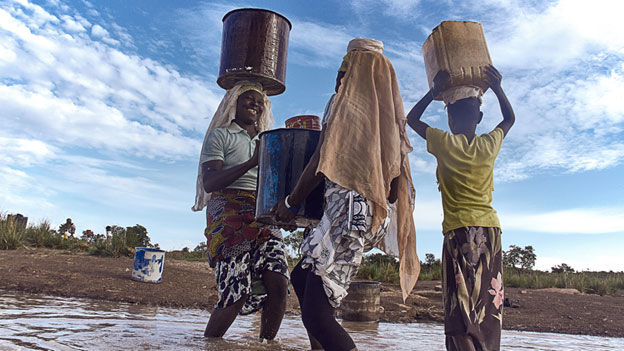
A group of women fetching water from a dam in Taha, Northern Region of Ghana. Credit: Evans Ahorsu. Source: UN University’s Institute for Water, Environment and Health

Water bankruptcy management must address insolvency and irreversibility. Unlike financial bankruptcy management, which deals only with insolvency, managing water bankruptcy is concerned with rebalancing demand and supply under conditions where returning to baseline conditions is no longer possible.

Anthropogenic drought is central to the world’s new water reality. Drought and water shortage are increasingly driven by human activities, over-allocation, groundwater depletion, land and soil degradation, deforestation, pollution, and climate change, rather than natural variability alone. Water bankruptcy is the outcome of long-term anthropogenic drought, not just bad luck with hydrological anomalies.

Water bankruptcy is about both quantity and quality. Declining stocks, polluted rivers, and degrading aquifers, and salinized soils mean that the truly usable fraction of available water is shrinking, even where total volumes may appear stable.

Managing water bankruptcy requires a shift from crisis management to bankruptcy management. The priority is no longer to “get back to normal”, but to prevent further irreversible damage, rebalance rights and claims within degraded carrying capacities, transform water-intensive sectors and development models, and support just transitions for those most affected.

Governance institutions must protect both water and its underlying natural capital. The existing institutions focus on protecting water as a good or service disregarding the natural capital that makes water available in the first place. Efforts to protect a product are ineffective when the processes that produce it are disrupted.

Recognizing water bankruptcy calls for developing legal and governance institutions that can effectively protect not only water but also the hydrological cycle and natural capital that make its production possible.

Water bankruptcy is a justice and security issue. The costs of overshoot and irreversibility fall disproportionately on smallholder farmers, rural and Indigenous communities, informal urban residents, women, youth, and downstream users, while benefits have often accrued to more powerful actors. How societies manage water bankruptcy will shape social cohesion, political stability, and peace.

Water bankruptcy management combines mitigation with adaptation. While water crisis management paradigms seek to return the system to normal conditions through mitigation efforts only, water bankruptcy management focuses on restoring what is possible and preventing further damages through mitigation combined with adaptation to new normals and constraints.

Water can serve as a bridge in a fragmented world. Water can align national priorities with international priorities and improve cooperation between and within nations. Roughly 70% of global freshwater withdrawals are used for agriculture, much of it by farmers in the Global South. Elevating water in global policy debates can help rebuild trust between South and North but also within nations, between rural and urban, left and right constituencies.

Water must be recognized as an upstream sector. Most national and international policy agendas treat water as a downstream impact sector where investments are focused on mitigating the imposed problems and externalities. The world must recognize water as an upstream opportunity sector where investments have long-term benefits for peace, stability, security, equity, economy, health, and the environment.

Water is an effective medium to fulfill the global environmental agenda. Investments in addressing water bankruptcy deliver major co-benefits for the global efforts to address its environmental problems while addressing the national security concerns of the UN member states.

Elevating water in the global policy agenda can renew international cooperation, increase the efficiency of environmental investments, and reaccelerate the halted progress of the three Rio Conventions to address climate change, biodiversity loss, and desertification.

A new global water agenda is urgently needed. Existing agendas and conventional water policies, focused mainly on WASH, incremental efficiency gains and generic IWRM guidelines, are not sufficient for the world’s current water reality. A fresh water agenda must be developed that takes Global Water Bankruptcy as a starting point and uses the 2026 and 2028 UN Water Conferences, the conclusion of the Water Action Decade in 2028, and the 2030 SDG 6 timeline as milestones for resetting how the world understands and governs water.

Global Water Bankruptcy: Living Beyond Our Hydrological Means in the Post-Crisis Era | UN University Institute for Water, Environment and Health (UNU-INWEH) (20 January) (press release)

Support Paper
Madani K. (2026) Water Bankruptcy: The Formal Definition, Water Resources Management, 40 (78) doi: 10.1007/s11269-025-04484-0)

IPS UN Bureau
  Source

Guinea’s Path to Electoral Autocracy

Active Citizens, Africa, Civil Society, Crime & Justice, Democracy, Featured, Headlines, Human Rights, Press Freedom, TerraViva United Nations

Opinion

Credit: Luc Gnago/Reuters via Gallo Images

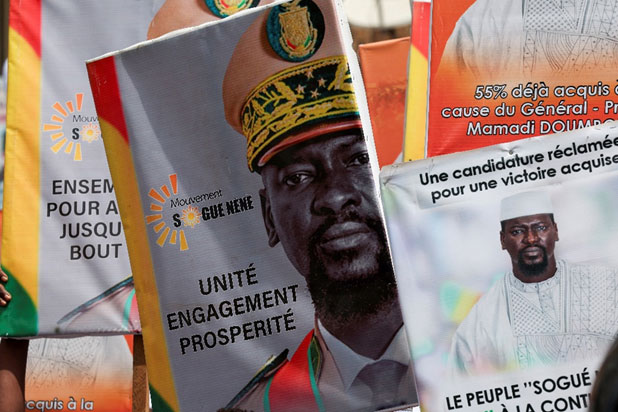
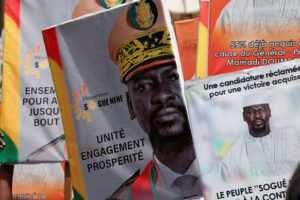
MONTEVIDEO, Uruguay, Jan 20 2026 (IPS) – In December, the dust settled on Guinea’s first presidential election since the military took control in a 2021 coup. General Mamady Doumbouya stayed in power after receiving 87 per cent of the vote. But the outcome was never in doubt: this was no a democratic milestone; it was the culmination of Guinea’s denied transition to civilian rule.


Doumbouya has successfully performed an act of political alchemy, turning a military autocracy into an electoral one. By systematically dismantling the opposition, silencing the press and rewriting laws to suit his ambitions, he has made sure to shield his grip on power with a thin veil of electoral legitimacy.

The architecture of autocracy

The path to this moment was paved with precision. In April 2025, Doumbouya announced a constitutional referendum, a move that may have looked like it would herald the beginning of the end of military rule. But it was something else entirely. By June, Doumbouya had further centralised control by creating a new General Directorate of Elections. This body, placed firmly under the thumb of the Ministry of Territorial Administration, reversed previous efforts to establish an independent electoral institution.

The constitution was drafted in the shadows by the National Council of the Transition, the junta-appointed legislative body. While early drafts reportedly contained safeguards against lifetime presidencies, these were stripped away before the final text reached the public. The result was a document that removed a ban on junta members running for office, extended presidential terms from five to seven years and granted the president the power to appoint a third of the newly created Senate.

When the referendum was held on 21 September, it rubber-stamped de facto rule. Official figures claimed 89 per cent support with an 86 per cent turnout, numbers that defied the reality of a widespread opposition boycott and a palpable lack of public enthusiasm.

A climate of fear

With a blanket ban on protests in effect since May 2022, those who’ve dared challenge the junta’s controlled transition have been met with security force violence. On 6 January 2025, security forces killed at least three people, including two children, during demonstrations called by the opposition coalition Forces Vives de Guinée.

The political landscape was further cleared through administrative and judicial means. In October 2024, the government dissolved over 50 political parties. By August 2025, major opposition groups such as the Rally of the People of Guinea had been suspended. Key challengers, including former Prime Minister Cellou Dalein Diallo, remain in exile, while others, among them Aliou Bah, have been sentenced to prison – in Bah’s case, for allegedly insulting Doumbouya.

The atmosphere of fear has been reinforced by a brutal crackdown on the media. Guinea plummeted 25 places in the 2025 World Press Freedom Index, the year’s largest fall. Independent outlets have had their licences revoked and journalists have been detained. Those still working have learned to practise strict self-censorship to avoid becoming the next target. This meant that as voters went to the polls, there was nobody to provide diverse perspectives, scrutinise the process, investigate irregularities or hold authorities accountable.

Coup contagion

Guinea is no outlier. Since 2020, a coup contagion has swept through Africa, with military takeovers in Burkina Faso, Chad, Gabon, Guinea-Bissau, Madagascar, Mali, Niger and Sudan. In each instance, the script has been similar: military leaders seize power promising to ‘correct’ the failures of the previous regime, only to break their promises of a return to civilian rule.

Guinea is now the third country among this recent wave to move from a military dictatorship to an electoral autocracy. It follows in the footsteps of Chad, where Mahamat Idriss Déby secured victory in May 2024 after the suspicious killing of his main opponent, and Gabon, where General Brice Oligui Nguema won a 2025 election with a reported 90 per cent of the vote.

The international community does little. Doumbouya routinely ignored deadlines and sanctions from the Economic Community of West African States, which once prided itself on a ‘zero-tolerance’ policy for coups, and no consequences ensued. The African Union and the United Nations offered rhetorical concern, but their warnings were not accompanied by tangible diplomatic or economic repercussions.

The world’s willingness to maintain business as usual while Doumbouya steered through a fake transition sends a dangerous message to other aspiring autocrats, in the region and beyond.

Democracy denied

When Doumbouya seized power in 2021, he was greeted with a degree of cautious optimism. His predecessor, Alpha Condé, had controversially amended the constitution to secure a third term amid violent protests and corruption and fraud allegations. Doumbouya promised to fix things, but instead became a mirror image of the man he ousted, using the same tactics of constitutional revision and repression to secure his power.

The statistics of the December election – an 87 per cent victory on a claimed 80 per cent turnout – do not reflect a genuine mandate but rather a vacuum: with no independent media to scrutinise the process and no viable opposition allowed to run, the election was a technicality.

The prospects for real democracy in Guinea appear remote. Doumbouya has secured a seven-year mandate through an election that eliminated the essential infrastructure needed for democracy. In the absence of stronger international pressure and tangible support for Guinean civil society, Guinea faces prolonged authoritarian rule behind a democratic facade, with dismal human rights prospects.

Inés M. Pousadela is CIVICUS Head of Research and Analysis, co-director and writer for CIVICUS Lens and co-author of the State of Civil Society Report. She is also a Professor of Comparative Politics at Universidad ORT Uruguay.

For interviews or more information, please contact research@civicus.org

  Source

Global Survey Finds Citizens back a World Parliament as Trust in International System Erodes

Civil Society, Democracy, Global, Global Governance, Headlines, Human Rights, International Justice, IPS UN: Inside the Glasshouse, TerraViva United Nations

Opinion

A global survey across 101 countries finds global majority support for a citizen-elected world parliament to handle global issues, reflecting widespread concern over an outdated and undemocratic international order. Credit: Democracy Without Borders

BERLIN, Germany, Jan 20 2026 (IPS) – As democracy faces pressure around the world and confidence in international law drops, a new global survey reveals that citizens in a vast majority of countries support the idea of creating a citizen-elected world parliament to deal with global issues.


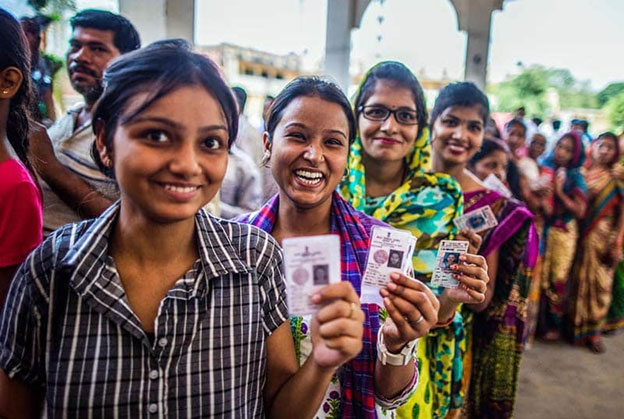
The survey, commissioned by Democracy Without Borders and conducted across 101 countries representing 90% of the world’s population, finds that 40% of respondents support the proposal, while only 27% are opposed. It is the largest poll ever carried out thus far on this subject.

Support is strongest in countries of the Global South, especially Sub-Saharan Africa, and among groups often underrepresented in national political systems—young people, ethnic minorities, and those with lower income or education levels. In 85 out of 101 countries surveyed, more respondents support the idea than oppose it.

“The message is clear: people around the world are ready to expand democratic representation to the global scale,” said Andreas Bummel, Executive Director of Democracy Without Borders. “This survey shows there is a growing global constituency that wants a voice in decisions affecting humanity as a whole,” he added.

The findings come at a time when the international system is under increasing strain from climate change, war, geopolitical conflicts, authoritarian resurgence, and stalled global cooperation. The results suggest that many citizens—especially in less powerful countries—see a world parliament as a pathway to fairer and more effective global governance.

In countries with limited political freedoms, support for a world parliament is particularly high. According to Democracy Without Borders, this points to a public perception that global democratic institutions could help advance democracy at home as well.

A notable 33% of respondents globally selected a neutral stance, suggesting unfamiliarity with the concept. An analysis of the survey results argues that this indicates a wide-open space for public engagement. If the idea gains visibility, support could grow substantially, it says.

“The international system created in the last century to prevent war and mass violence is built on the United Nations. But many UN member states do not represent their people. They represent oppressive authoritarian elites who have seized power.

The proposed vision of a citizen-elected world parliament could be a vital step in the discussion about building a more democratic global order,” said Oleksandra Matviichuk, head of the Centre for Civil Liberties in Ukraine awarded with the Nobel Peace Prize.

According to the survey, net opposition found in individual countries is most concentrated in high-income democracies. “This is not a rejection of democracy. It is a reminder that privilege may breed complacency, and that those who benefit from existing arrangements may underestimate how urgently they need renewal,” commented George Papandreou, Greek Member of Parliament and former Prime Minister.

Democracy Without Borders, an international civil society organization, advocates for the establishment of a United Nations Parliamentary Assembly as a step toward a democratic world parliament. The organization says the survey results reinforce the urgency for democratic governments to consider this long-standing proposal.

IPS UN Bureau

  Source

Children and Armed Conflict Must be at the Forefront of the Global Agenda

Armed Conflicts, Civil Society, Global, Global Governance, Headlines, Human Rights, International Justice, IPS UN: Inside the Glasshouse, TerraViva United Nations

Opinion

TOKYO, Japan, Jan 19 2026 (IPS) – Thirty years ago, the groundbreaking report by Graça Machel, renowned and widely respected global advocate for women’s and children’s rights, to the United Nations General Assembly laid bare the devastating impact of armed conflict on children and shook the conscience of the world. It led to the historic decision of the General Assembly to create the mandate of the Special Representative of the Secretary-General for Children and Armed Conflict (SRSG-CAAC).


Special Representatives of the Secretary-General are high-level envoys entrusted with carrying out specific responsibilities on behalf of the Secretary-General. Appointed at the rank of Under-Secretary-General, the SRSG-CAAC has since served as the global advocate for raising the awareness about the condition of children affected by armed conflict as well as their comprehensive protection and reintegration in the society.

Children and armed conflict as a peace and security agenda

The children and armed conflict (CAAC) agenda has evolved significantly over the past three decades. As appropriately affirmed in Security Council resolution 1261 (1999), the impact of armed conflict on children constitutes a matter affecting international peace and security. Subsequent resolutions firmly anchored the CAAC agenda within the work of the Security Council and established critical protection mechanisms.

Among the most significant of these is the Monitoring and Reporting Mechanism (MRM), created by Security Council resolution 1612 (2005). The MRM provides verified, credible, and timely information on grave violations committed against children in situations of armed conflict. It has become the backbone of the United Nations’ engagement with parties to conflict to halt such violations.

Credit: UN News

Through this mechanism, parties to conflict are encouraged to commit to ending and preventing grave violations through the development and implementation of time-bound action plans. To date, forty action plans have been concluded with parties to conflict, including non-State armed groups, in eighteen countries, resulting in full compliance by twelve parties.

UNICEF has played a pivotal role on the ground as the United Nations’ lead agency for children, supporting the operation of the MRM and monitoring the implementation of action plans.

Children and armed conflict as a fundamental child rights issue

Beyond peace and security, children and armed conflict is fundamentally a child rights issue. It was the first thematic area addressed as early as 1992 by the United Nations Committee on the Rights of the Child, the treaty body monitoring implementation of the Convention on the Rights of the Child adopted by the United Nations General Assembly in 1989.

That initiative paved the way for the Graça Machel report and the subsequent establishment of the SRSG-CAAC mandate in 1996. It also led to the adoption, in 2000, of the Optional Protocol to the Convention on the Rights of the Child on the involvement of children in armed conflict.

In March of this year, the Human Rights Council will dedicate its annual day on the rights of the child to children and armed conflict and is expected to adopt a related resolution, underscoring the continued relevance of this agenda.

Thirty years after the inception of the CAAC mandate

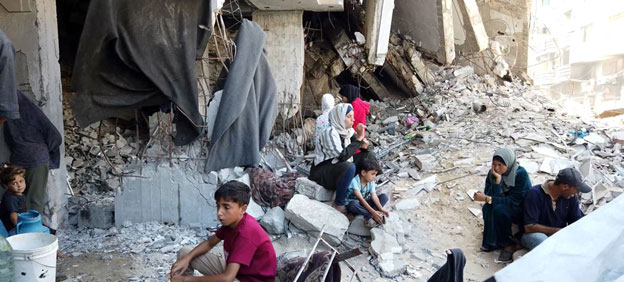
Despite these advances, grave violations against children in armed conflict reached an unprecedented 41,370 cases in 2024 alone. Calls for accountability have understandably grown louder.

The impact of armed conflict on children extends far beyond the six grave violations identified by the Security Council. Today, one in five children worldwide lives in a conflict-affected area, where the full spectrum of their rights is compromised, directly or indirectly.

This stark reality demands renewed urgency, enhanced political will, and more focused action.

Toward child rights-based and child-centred accountability

Children who are victims of armed conflict have too often been excluded from accountability processes.

Some positive developments deserve recognition. In 2023, the Office of the Prosecutor of the International Criminal Court adopted a revised Policy on Children that explicitly embraces a child rights approach. In the same year, the Secretary-General’s Guidance Note on Child Rights Mainstreaming called for the systematic integration of child rights into the mandates of United Nations investigative and accountability mechanisms, including commissions of inquiry and fact-finding missions.

Accountability must be both child rights-based and child-centred. Meaningful child participation is essential. Listening to children and taking their views seriously is fundamental to justice, remedies, and healing. Accountability processes must address children’s immediate and long-term needs, including education, psychosocial support, and family reunification.

Children as peacebuilders

Children want peace. Sustainable peace is the indispensable foundation for the full realization of child rights.

The Convention on the Rights of the Child guarantees the right of children to be heard and to have their views respected in all matters affecting them. Children also have the right to reintegration and to participate in efforts aimed at restoring social cohesion within fractured and traumatized communities.

In many conflict-affected societies, children constitute more than half of the population. Their role as peacebuilders is therefore not optional—it is essential. Recognizing and empowering children as agents of peace will also reinforce both the women, peace and security agenda and the youth, peace and security agenda.

Time for renewed mobilization, in partnership with civil society and children

Graça Machel reminded us that “universal concern for children presents new opportunities to confront the problems that cause their suffering.”

Children and armed conflict goes to the very core of our shared humanity. It demands broader public awareness, stronger political commitment, and sustained global mobilization.

Civil society organizations, working alongside children themselves, have a crucial role to play in advocacy, awareness-raising, and mobilizing support for the CAAC agenda.

The Special Representative of the Secretary-General for Children and Armed Conflict, created by the General Assembly, carries a unique responsibility as the Secretary-General’s envoy to strengthen cooperation and partnerships among United Nations entities, Member States, civil society, and children themselves.

Children and armed conflict must remain at the forefront of the global agenda and be treated as a central priority by the Secretary-General of the United Nations.

Dr. Mikiko Otani, widely recognized as an international human rights lawyer, is currently the President of the Child Rights Connect, a Geneva-based global NGO network promoting child rights. She was the Chair of the United Nations Committee on the Rights of the Child (2021-2023) during her eight-year membership for two terms.

IPS UN Bureau

  Source

Davos: Meaningful Dialogue Requires a Collective Stand Against Military, Economic and Diplomatic Bullying

Civil Society, Development & Aid, Featured, Global, Headlines, Sustainable Development Goals, TerraViva United Nations

Opinion

Agnès Callamard is Amnesty International’s Secretary General

Davos: Meaningful Dialogue Requires a Collective Stand Against Military, Economic and Diplomatic Bullying

Credit: World Economic Forum/Gabriel Lado. Source: Amnesty International

LONDON, Jan 16 2026 (IPS) – “The ‘spirit of dialogue’, the theme for this year’s meeting in Davos, which begins January 19, has been painfully and increasingly absent from international affairs of late. President Trump’s first year back in office has seen the United States withdraw from multilateral bodies, bully other states and relentlessly attack the principles and institutions that underpin the international justice system.


At the same time, the likes of Russia and Israel have continued to make a mockery of the Geneva and Genocide Conventions without facing meaningful accountability.

“A few powerful states are unashamedly working to demolish the rules-based order and reshape the world along self-serving lines. Unilateral interventions and corporate interests are taking precedence over long-term strategic partnerships grounded in universal values and collective solutions.

This was evident in the Trump administration’s military action in Venezuela and its stated intent to ‘run’ the country, which the president himself admitted was at least partially driven by the interests of US oil corporations. Make no mistake: the only certain consequence of vandalizing international law and multilateral institutions will be extensive suffering and destruction the world over.

“When faced with diplomatic, economic and military bullying and attacks, many states and corporations have opted for appeasement instead of taking a principled and united stand. Humanity needs world leaders, business executives and civil society to collectively resist or even disrupt these destructive trends. It requires denouncing the bullying and the attacks, and strong legal, economic, and diplomatic responses.

What should not happen is silence, complicity and inaction. It also demands engaging in a transformative quest for common solutions to the many shared and existential problems we face.

“We need UN Security Council reform to address abuse of veto powers, robust regulation to protect us against harmful new technologies; more inclusive and transparent decision-making on climate solutions; and international treaties on tax and debt to deliver a more equitable, rights-based global economy. But this will only be achievable through cooperation and steadfast will to resist those who seek to strongarm and divide us.”

-Israel’s ongoing genocide against the Palestinians in Gaza

-The USA’s military action in Venezuela, Russia’s war of aggression against Ukraine, and the conflicts in Sudan, DRC and Myanmar

-The importance of revindicating and revitalizing multilateralism

-The need for global tax and debt reform and universal social protection

-The urgent need for a full, fast, fair and funded fossil fuel phase-out

-The need to massively scale up climate finance, including to address loss and damage

-Big Tech, corporate accountability and the risks of deregulation

-How to limit the harmful impact of artificial intelligence on human rights, including the right to a healthy environment

IPS UN Bureau

  Source

The Iranian Military Is the Only Institution Capable of Catalyzing the Downfall of the Regime

Armed Conflicts, Civil Society, Featured, Global Governance, Headlines, Human Rights, International Justice, IPS UN: Inside the Glasshouse, Middle East & North Africa, TerraViva United Nations

The Iranian Military Is the Only Institution Capable of Catalyzing the Downfall of the Regime

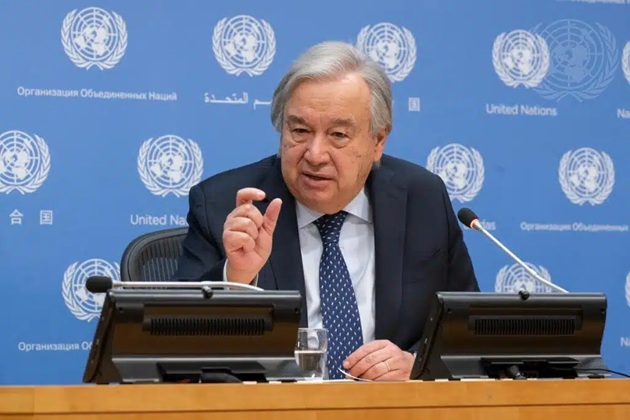
UN Secretary-General Antonio Guterres, “shocked by reports of violence and excessive use of force by Iranian authorities against protesters”, is urging restraint and immediate restoration of communications, as unrest enters its third week. 11 January 2026. Credit: United Nations

NEW YORK, Jan 15 2026 (IPS) – Unlike ever before, Iran’s Islamic regime is facing a revolt led by a generation that has lost its fear. Young and old, men and women, students and workers, are flooding the streets across the country.


Iran’s future may well hinge on whether its military chooses to act and save the country, driven by economic collapse, corruption, and decades of repression. Women and girls are at the forefront, protesting without headscarves, defying the clergy that once controlled every aspect of their lives. They don’t want reform; they are demanding freedom, economic relief, and the end of authoritarianism.

Shutting down the internet, arresting nearly 17,000 protesters, killing at least 3,000, including children, and Trump’s threat to use force to stop the Iranian regime have not prevented the mullahs from continuing their onslaught. The regime’s ruthless crackdown has been a calamitous wave of repression, taking thousands of lives in a brutal attempt to crush dissent. Yet even in the face of such peril, the public remains undeterred, determined to continue their fight.

Now, however, they need the support of the most powerful domestic—not foreign—power to come to their aid. The Iranian military is the most pivotal institution in the country, capable of catalyzing the downfall of the regime. The military is the key player, with significant internal influence and the capability to drive the necessary change from within, ultimately leading to regime change.

Every officer in the military should stop and think, how do I want to serve my country.

Do I want to continue to prop up a bunch of reactionaries, self-obsessed old men who have long since lost their relevance, wearing the false robe of piety to appear sanctimonious while subjugating the people to hardship and hopelessness?

Should I not support the younger generation who are yearning for a better life, for opportunity, for a future that gives meaning to their existence?

Should I not participate in sparking the revival of this magnificent nation from the doldrums of the past 47 years that have consumed it from within?

Should I continue to prepare for war against Israel, or extend a peaceful hand and invest in building my country with such immense natural and human riches and be in the forefront of all other modern democratic and progressive nations, and restore the glory of ancient Persia?

Do I truly want to continue to wear blinders and let my country be destroyed from within, or should I become part of a newly reborn nation and take personal pride in helping to revive it?

The answer to these questions should be clear to every officer. The military should establish a transitional government and pave the way for a legitimate, freely elected government, and restore the Iranian people’s dignity and their right to be free.

The idea that the Shah’s son, Reza Pahlavi, could return and restore a monarchy is just the opposite of what the Iranian people need. Instead of another form of corruption or an old kingdom, they deserve a democracy and genuine freedom.

In the final analysis, Iran’s destiny may rest on a single profound choice—whether its military steps forward to reshape the nation’s destiny.

Dr. Alon Ben-Meir is a retired professor of international relations, most recently at the Center for Global Affairs at NYU. He taught courses on international negotiation and Middle Eastern studies.

  Source