It is Time for a Democratic Global Revolution

Civil Society, Climate Change, Democracy, Editors’ Choice, Featured, Global, Global Governance, Headlines, Human Rights, IPS UN: Inside the Glasshouse, TerraViva United Nations

Opinion

Daniel Jositsch is a Member of the Swiss Senate and President, Democracy Without Borders-Switzerland, and Andreas Bummel is Executive Director, Democracy Without Borders. Twitter: @democracywb
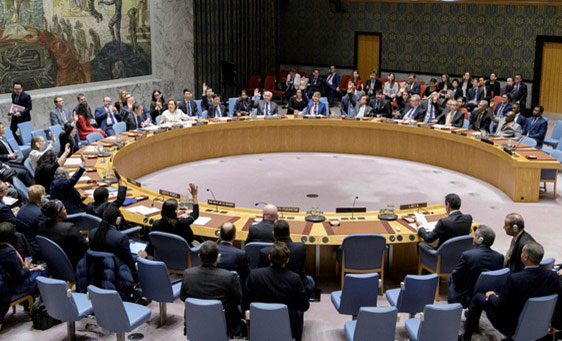
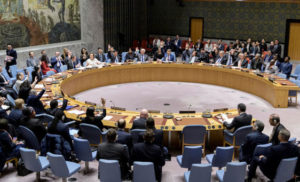
The UN’s Security Council, in particular, is suffering from a dysfunctional decision-making method that grants the five victors of the Second World War and official nuclear powers not only a permanent seat but also a veto right. Credit: United Nations

BERLIN / BERNE, Aug 28 2020 (IPS) – The people of the world need to seize the moment and bring about a democratic global revolution. It is time for a global parliament and real representation.

More than 21 million people got infected with the novel coronavirus and over 770,000 have died. Never before did the world witness similar collective lockdowns of social and economic activity that had to be enforced to contain the pandemic.


For many, the corona-related global crisis exacerbates a situation that was already critical before the outbreak of the virus.

The climate crisis is unfolding with record temperatures in Siberia, Greenland, the Antarctic and other places like the Middle East. The new climate apartheid is characterized by whether you can afford to shield yourself from such heat or not. Most cannot.

135 million people are facing crisis levels of hunger. There are currently more than 70 million displaced people who have fled war, persecution and conflict. It’s the worst humanitarian and refugee crisis in seventy years.

There is a global inequality crisis. Productivity gains and globalization disproportionately benefit the affluent. Financial assets in the trillions are hidden in offshore accounts from tax authorities. The world’s 26 richest billionaires own as much as the poorest 3.8 billion people on the planet.

While global surveys confirm that people across all world regions strongly believe in democracy, there is in fact a democratic retreat. Confidence in the actual performance of democratic governments is waning. Populist nationalism and authoritarianism has been advancing, aided and abetted by social media platforms and the internet. Major arms control treaties are crumbling, geopolitical tensions are rising and multilateralism is under attack.

Civil society and citizens across the world are fighting back, though. Pro-democracy movements are at an all-time high as widespread protests in dozens of countries now and in recent times demonstrate. Freedom and justice have lost no appeal. At the same time, millions of citizens joined climate protests around the world and called for quick and effective action in this critical field.

The present issues are symptoms of a crisis of global governance. There is a scale mismatch between a political world order that is based on 200 states and territories and issues that demand decisive global action.

As the UN celebrates its 75th anniversary this year, the organization continues to lose significance and impact. The UN is only as strong and effective as its member states allow it to be. The same applies to all intergovernmental organizations and forums, including the World Health Organization that had to launch an investigation into its handling of the Covid-19 pandemic.

The UN’s Security Council, in particular, is suffering from a dysfunctional decision-making method that grants the five victors of the Second World War and official nuclear powers not only a permanent seat but also a veto right.

If long-lasting solutions are to be achieved, this scale mismatch must be tackled. It is not enough to call on individual governments to change their policies. The way how the world is governed must be changed. What is needed is a new vision of a democratic world order that is based on shared sovereignty on global issues, a clear commitment to human rights, the principle of subsidiarity and complete disarmament.

When the UN was founded it was recognized that this should only be a beginning and that changes would be required. Article 109 of the Charter provides that a conference to review the Charter should be held by 1955. The UN’s member states did not deliver on that promise. Now is the time to hold them to account.

The world’s people need an actual say in global affairs that is not intermediated by national governments and their diplomats. The key ingredient of a new UN should be a democratically elected world parliament that complements intergovernmental bodies such as the UN General Assembly.

The creation of a new democratic world organization that has actual powers seems to be a gigantic project that raises numerous questions. How is a global democracy to be created while major states themselves are not democratically organised? Can decisions of a world parliament be enforced against the will of individual states? How is it possible that states will agree to the creation of a superior political unit?

These questions show the way forward: The people of the world themselves need to embrace and call for global democracy. Eventually, they are the sovereigns not only in their individual states but on the planet as a whole, too.

A global democratic revolution needs to push for a legitimate, inclusive and representative global body that will deal with these questions in a serious way. The creation of a UN Parliamentary Assembly could be an important stepping stone to launch a global constitutional process and a transformation of global governance.

This global democratic revolution will be peaceful because it is not about destroying structures or conquering territories, but about opening up a political level that is lying idle. Supranational integration cannot be imposed by force. It will happen because the people want it.

If existing movements in the fields of climate, environment, peace, disarmament, democracy, social justice and others join forces, the global democratic revolution will become very real.

This may sound visionary. But the big issues troubling this planet and its people will remain, and worsen, unless the root cause is addressed. A democratic global government is not a mind game in some ivory tower. It is the most important question on the agenda of humanity today.

  Source

Reflections on the Charter of the United Nations on its 75th Anniversary

Civil Society, Climate Change, Development & Aid, Gender, Global, Headlines, Human Rights, Humanitarian Emergencies, IPS UN: Inside the Glasshouse, TerraViva United Nations

Opinion

Mona Juul is the seventy-fifth President of the Economic and Social Council and Permanent Representative of Norway to the United Nations.

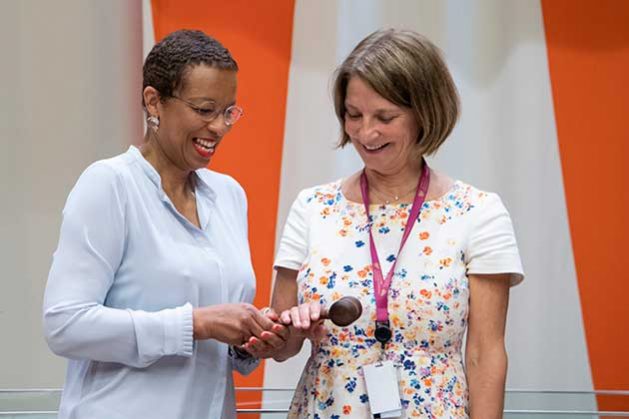
Inga Rhonda King (left), Permanent Representative of Saint Vincent and the Grenadines to the United Nations and seventy-fourth President of the Economic and Social Council (ECOSOC), hands over the gavel to Mona Juul, Permanent Representative of Norway to the United Nations and newly-elected seventy-fifth President of ECOSOC, at the opening meeting of the 2020 session of ECOSOC. New York, 25 July 2019. Credit: UN Photo/Eskinder Debebe

NEW YORK, Jul 29 2020 (IPS) – This year we celebrate the 75th anniversary of the Charter of the United Nations, written and signed during a period of great global change. Today, the world is again shifting beneath our feet. Yet, the Charter remains a firm foundation for our joint efforts.


These uncertain times of global disruption shine a light on the interdependences of our world. The COVID-19 pandemic, and the inequality it has exposed, are a global challenge that we must solve through global solutions. These solutions call for more, not less, cooperation across national borders.

Global cooperation is the enduring promise of the Charter of the United Nations. I am honoured to preside over the Economic and Social Council (ECOSOC), one of the principal organs of the United Nations, at its 75th anniversary.

In January 1946, 18 members gathered for the inaugural meeting of ECOSOC under the leadership of its first President, Sir Ramaswami Mudaliar of India. ECOSOC was vested with a powerful mandate, to promote better living for all ¬¬by fostering international cooperation on economic, social and cultural issues.

The Charter recognizes the value of social and economic development as prerequisites for stability and well-being. In a 1956 speech, Secretary-General Dag Hammarskjöld said that “while the Security Council exists primarily for settling conflicts […] the Economic and Social Council exists primarily to eliminate the causes of conflicts.”

For me, this is a reminder that sustainable peace and prosperity rely on global solidarity and cooperation.

Today, this unity of purpose to reach those furthest behind first is also the spirit of the Sustainable Development Goals (SDGs). The 2030 Agenda is our shared road map to transform the world as we recover better, protect our planet and leave no one behind. With ECOSOC serving as the unifying platform for integration, action, follow-up and review of the SDGs, our promise to eradicate poverty, achieve equality and stop climate change must drive our actions.

ECOSOC has the unique convening power to make this happen. It brings together valuable constituencies such as youth and the private sector to enhance our work and discussions. ECOSOC also remains the gateway for civil society engagement with the United Nations. Civil society has been central to progress on international economic, social and environmental cooperation, from the small but critical number of organizations present in San Francisco when the Charter was signed in 1945, to the 5,000-plus non-governmental organizations with ECOSOC consultative status today.

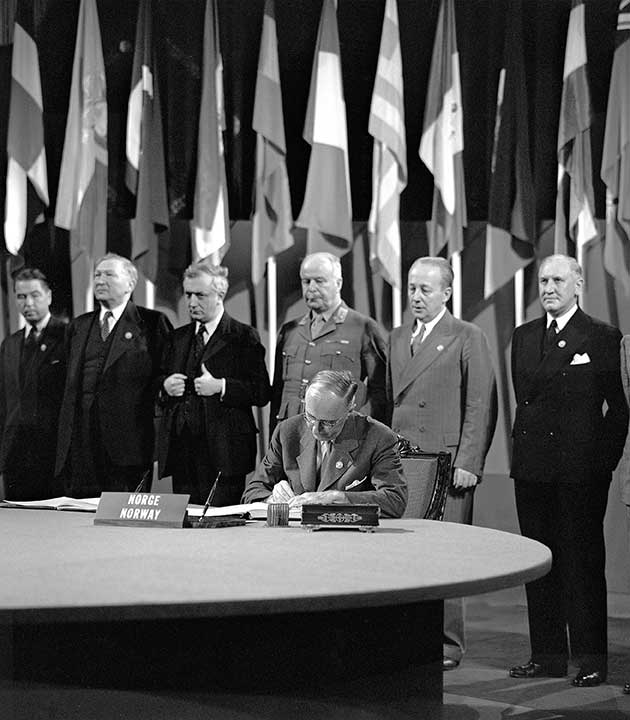
Wilhelm Munthe Morgenstierne, Ambassador to the United States, member of the delegation from Norway, signing the Charter of the United Nations at the Veterans’ War Memorial Building in San Francisco, United States, on 26 June 1945. Credit: UN Photo/McLain

The Charter also outlines that ECOSOC should promote universal respect and observance of human rights and fundamental freedoms for all, without distinction as to race, sex, language or religion. While much has shifted in our world, this mandate remains just as important today as in 1945. After all, human rights are a part of the foundation of the United Nations, quite literally. When Trygve Lie, the first Secretary-General and fellow Norwegian, laid the cornerstone of United Nations Headquarters at Turtle Bay in October 1949, it contained, together with the Charter, a copy of the Universal Declaration of Human Rights.

Human rights have always been a part of the work of ECOSOC. The former United Nations Commission on Human Rights was one of the first functional commissions created within ECOSOC and was charged with drafting the Universal Declaration. Today, ECOSOC remains committed to playing its part to promote all rights: civil and political, as well as economic, social and cultural rights.

In stark contrast to the 18 men who formed the first meeting of ECOSOC in 1946, I am proud to be the third consecutive female president of ECOSOC and one of five female presidents in its 75-year history. Although slow, this is progress, especially compared to 1945, when out of the 850 international delegates that convened in San Francisco to establish the Charter of the United Nations, only eight were women, and only four of them were signatories to the Charter. Today, the Secretary-General has achieved gender parity in all senior United Nations positions, and the Commission on the Status of Women is perhaps the highest profile part of the work of ECOSOC. The Commission’s annual session is instrumental in promoting women’s rights, documenting the reality of women’s lives throughout the world and shaping global standards on gender equality and the empowerment of women.

ECOSOC must work to place gender equality at the heart of all our work. Women’s rights and gender equality are imperative to a just world. In all my endeavours, I strive to promote and advance these rights with a vision of a more prosperous, peaceful and fair world, for the benefit of women and girls—and men and boys alike.

Before the current crisis, more people around the world were living better lives compared to just a decade ago. More people have access to better health care, decent work and education than ever before. Nevertheless, inequality, climate change and the lasting negative impacts of the COVID-19 pandemic are threatening to undo these gains. While we have technological and financial resources at our disposal, unprecedented changes will be needed to align resources with our sustainable development objectives. The United Nations must remain at the forefront of our collective efforts guided by our commitment to the Charter.

The true test of our success will be whether persons, communities and countries experience improvement in their lives and societies. The United Nations must be of value to people. To our family. To our neighbours. To our friends. Unless we achieve this, our credibility is at stake.

As we celebrate the 75th anniversary of the Charter of the United Nations, let us remind ourselves of the promise it embodies, to help the world become a more prosperous, just, equitable and peaceful place.

To me, the opening words of the Charter, “WE THE PEOPLES OF THE UNITED NATIONS”, are a humble and empowering reminder of our capability to overcome current and future challenges. Even in troubling times, there remains great hope in the power of working together. That is the founding spirit of the United Nations—and in this 75th anniversary year, as we face grave and global challenges, it is the spirit we must summon today.

This article was first published by the UN Chronicle on 26 June 2020.

  Source

‘One CGIAR’ with Two Tiers of Influence? The Case for a Real Restructuring of Global Ag-Research Centres

Civil Society, Climate Change, Development & Aid, Food & Agriculture, Global, Headlines, Humanitarian Emergencies, TerraViva United Nations

Opinion

This is an abridged version of an open letter by IPES-Food to the CGIAR on 21 July 2020.

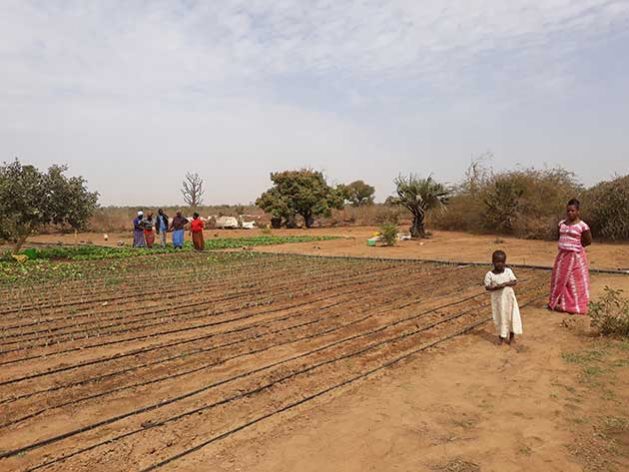
Agroecological systems, which build resilience through crop/species diversity and natural synergies across the whole agro-ecosystem, are showing major potential. Credit: (C. Perodeaud, 2018)

BRUSSELS , Jul 22 2020 (IPS) – While the ‘CGIAR System’ may sound like a technocratic body, few organizations have exerted as much influence on today’s food systems as this network of global agricultural research centres. Since its inception at the height of the ‘Green Revolution’ in 1971, the CGIAR has driven advances in crop breeding and agricultural mechanization and modernization across multiple continents. Its mission – to develop knowledge and innovation for agriculture in the global South – is as relevant today as ever, in light of climate change, COVID-19 and a host of additional challenges.


The process now underway to reform the CGIAR is therefore of major public interest. The ‘One CGIAR’ process seeks to merge the CGIAR’s 15 legally-independent centres, headquartered in 15 countries, into one legal entity. The impetus has come from some of its biggest funders, notably the Bill and Melinda Gates Foundation, the World Bank, and the US and UK governments.

Reform of the CGIAR is long overdue. However, we are concerned that the current reform process, like previous versions, will fall short of the fundamental change that is required, and risks exacerbating major power imbalances in global agricultural development.

Firstly, the restructuring appears to have been advanced in a coercive manner, and without genuine buy-in from the global South. A ‘carrot and stick’ approach has been adopted: an increase in the overall CGIAR budget has been promised if the merger goes through, while centres resisting the move have allegedly been threatened with budget cuts. Insiders say that representatives from governments and agricultural institutes in the global South – the much-touted beneficiaries of the CGIAR and the Green Revolution – are generally against the merger, while the big funders and closely-affiliated scientific institutions are in favour. The two centres voting against the merger last week were the forest and agroforestry centres headquartered in Indonesia and Kenya respectively.

Secondly, there is insufficient diversity among the inner circle driving forward CGIAR reform. In the mid-1990s, when the CGIAR underwent an earlier restructuring, men from just four countries – the US, the UK, Canada and Australia – accounted for 85% of board chairs and directors. The CGIAR has subsequently made efforts to improve gender balance, and to bring on staff and board members from the global South. However, a true diversity of perspectives is still missing: many of those recruited have close associations with Northern universities and donor-led partnerships, while the voices of farmers, civil society and independent researchers in the global South are still largely absent. Only 7 of the 22 members of the CGIAR System Reference Group (SRG) – responsible for managing the transition process – are from the global South, of which two are already affiliated to CGIAR centres.

Thirdly, the proposed restructuring fails to equip CGIAR for the urgently-needed paradigm shift in food systems. Business-as-usual approaches to agricultural development are failing to address hunger and improve the livelihoods of smallholders, as shown by the shortcomings of the Alliance for a Green Revolution in Africa. Meanwhile, agroecological systems, which build resilience through crop/species diversity and natural synergies across the whole agro-ecosystem, are showing major potential – as recognized by the World Bank-led global agriculture assessment (‘IAASTD’), IPBES, the UN Food and Agriculture Organization (FAO), and a July 2020 statement by 366 scientists. The CGIAR has taken some steps towards systemic approaches, particularly through the work of some of its centres on participatory plant breeding, farmer-managed seed systems, varietal and species diversification for nutrition and resilience, biological control and agroforestry. But it has failed to mainstream these approaches: a 2017 study concluded that the “CGIAR environment was not conducive to implementing systems research”. Recent analysis by Biovision and IPES-Food found that, on average, CGIAR research programmes meet less than 20% of the indicators of systemic agroecological research.

While the basic shortcomings have been acknowledged in the current reform process, the CGIAR’s underlying philosophy does not appear to have shifted. The focus remains on scientific innovations being “deployed faster, at a larger scale, and at a reduced cost”, and provided to rather than developed with beneficiaries. By ushering in a single board with new agenda-setting powers, the restructuring may further reduce the autonomy of regional research agendas and reinforce the grip of the most powerful donors – many of whom have proven reluctant to diverge from the Green Revolution pathway.

Underlying all three of these problems is the disproportionate power of a handful of actors to control the purse strings and set the global agricultural development agenda. This reality risks undermining and short-circuiting the significant efforts to consult stakeholders over the past year.

It is therefore crucial to consider how these risks can be averted as the restructuring process moves forward, and to open a discussion on fundamental reform of the CGIAR. In order to rebuild its legitimacy and relevance, the CGIAR must: diversify its governance; put at centre stage the views of farmers, researchers, civil society groups, and governments in the global South; support transformative, transdisciplinary, agroecological research co-led by farmers and farmer organisations; collaborate with a broad network of regional, sub-regional and national research centres and universities to strengthen autonomous research capacity in the global South; and participate alongside the Rome-based agencies (FAO, IFAD, WFP) in the Committee on World Food Security (CFS).

Ultimately, the CGIAR system should mirror the food system we need: decentralized, context-specific, agroecological, and with more distributed and equal power relations.

*The IPES-Food expert panel: Olivier De Schutter (Co-chair), Olivia Yambi (Co-chair), Bina Agarwal, Molly Anderson, Million Belay, Nicolas Bricas, Joji Carino, Jennifer Franco, Mamadou Goïta, Emile Frison, Steve Gliessman, Hans Herren, Phil Howard, Melissa Leach, Lim Li Ching, Desmond McNeill, Pat Mooney, Raj Patel, P.V. Satheesh, Maryam Rahmanian, Cécilia Rocha, Johan Rockstrom, Ricardo Salvador, Laura Trujillo-Ortega, Paul Uys, Nettie Wiebe, Yan Hairong.

  Source

Crisis Hits Oil Industry and Energy Transition Alike

Civil Society, Climate Change, Conferences, Development & Aid, Economy & Trade, Editors’ Choice, Energy, Environment, Featured, Global Governance, Headlines, Integration and Development Brazilian-style, Latin America & the Caribbean, Projects, Regional Categories

Energy

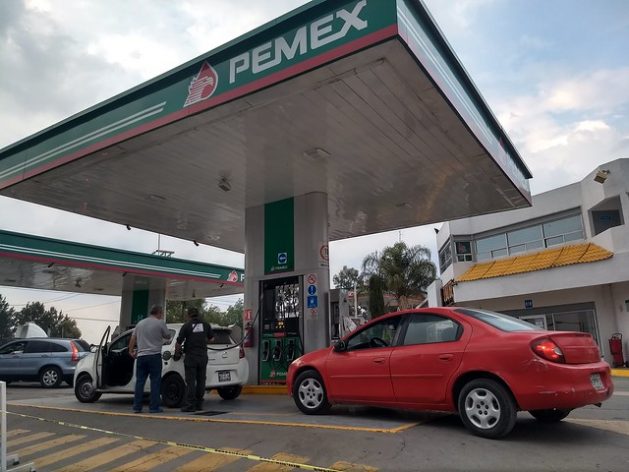
Mexico's state-run oil giant Pemex faces a difficult outlook due to the fall in international oil prices and the crisis resulting from the coronavirus pandemic, which threatens its production and finances, in a situation analysed during the 29th La Jolla Energy Conference, organised online by the Institute of the Americas. CREDIT: Emilio Godoy/IPS

Mexico’s state-run oil giant Pemex faces a difficult outlook due to the fall in international oil prices and the crisis resulting from the coronavirus pandemic, which threatens its production and finances, in a situation analysed during the 29th La Jolla Energy Conference, organised online by the Institute of the Americas. CREDIT: Emilio Godoy/IPS

MEXICO CITY, May 22 2020 (IPS) – While it attempts to cushion the effects of the coronavirus pandemic, the Latin American and Caribbean region also faces concerns about the future of the energy transition and state-owned oil companies.


These questions were discussed at the 29th La Jolla Energy Conference, organised by the Institute of the Americas. It was held online May 18-22, rather than bringing together more than 50 speakers at the institute’s headquarters in the coastal district of San Diego, in the U.S. state of California, in the midst of the COVID-19 pandemic.

Alfonso Blanco of Uruguay, executive secretary of the Latin American Energy Organisation (OLADE), said during a session on global trends and the regional energy industry that the changes seen during the pandemic will spread after the crisis and will be long-lasting.

“There will be structural transformations and we are convinced that most consumer behaviors will change after the pandemic. Demand will vary due to changes in the main areas of transportation and other energy areas. The effects on fossil fuel consumption will be strong and there will be a greater impact on renewable energies,” he said.

OLADE, a 27-member regional intergovernmental organisation for energy coordination, estimates that electricity demand has fallen by 29 percent in Bolivia compared to 2019, as a result of the severe acute respiratory syndrome coronavirus 2 (SARS-CoV-2), which causes COVID-19, and by 26 percent in Argentina, 22 percent in Brazil and 11 percent in Chile.

“There will be structural transformations and we are convinced that most consumer behaviors will change after the pandemic. Demand will vary due to changes in the main areas of transportation and other energy areas. The effects on fossil fuel consumption will be strong and there will be a greater impact on renewable energies.” — Alfonso Blanco

Likewise, final energy demand plummeted 14 percent in Brazil compared to 2019, 11 percent in both the Andean and Southern Cone regions, nine percent in Mexico, seven percent in Central America and five percent in the Caribbean.

As countries went into lockdown to curb the spread of COVID-19, electricity consumption by businesses and factories declined, due to the suspension of activities.

Leonardo Sempertegui, legal advisor to the Organisation of Petroleum Exporting Countries (OPEC), said the pandemic may be a wake-up call for countries lagging behind in the energy transition.

“This may be the new normal. The structure and governance of the energy architecture to cope with the next phase are changing dramatically. Energy poverty and the energy transition cannot be solved regardless of who controls a resource; these challenges cannot wait,” he said in the same session.

In Latin America, nations like Argentina, Bolivia, the Dominican Republic, Ecuador, Honduras and Uruguay have made progress in the energy transition since 2015, while Brazil has slid backwards and countries like Mexico are stuck in the same place, according to the World Economic Forum’s Energy Transition Index, released May 13.

As the region heads into the fourth month of the pandemic, countries are assessing their electricity markets, which have been shaken by the crisis.

Nations like Argentina, Chile, Colombia and Peru have resorted to long-term electricity auctions, which have generated low prices for renewables, while Mexico suspended such schemes in 2019.

In Argentina, as Andrés Chambouleyron, a non-resident fellow at the Institute of the Americas, explained, industrial consumption fell by 50 percent and electricity distributors have not been able to obtain sufficient revenues to cover fixed costs or electricity purchases.

The government has thus provided financing to Cammesa – the electricity wholesale market administration company – to pay the generators, since it is bound by contracts to buy the energy.

“There will be a permanent change in electricity consumption in Argentina. We have cheaper gas than before; the models say that you have to use more gas because it is cheaper than other sources. We won’t see much change in Argentina’s energy mix, and that could extend to all of Latin America,” said Chambouleyron, who warned of breach of and renegotiation of contracts for energy purchases.

Low oil prices threaten to slow down the energy transition in Latin America, although renewable energies already compete with the costs of fossil fuels, agreed experts at the 29th La Jolla Energy Conference, organised online by the Institute of the Americas. The photo shows solar panels on a house in Ajijic, in the western Mexican state of Jalisco. CREDIT: Emilio Godoy/IPS

Low oil prices threaten to slow down the energy transition in Latin America, although renewable energies already compete with the costs of fossil fuels, agreed experts at the 29th La Jolla Energy Conference, organised online by the Institute of the Americas. The photo shows solar panels on a house in Ajijic, in the western Mexican state of Jalisco. CREDIT: Emilio Godoy/IPS

While renewables are already competing in price with conventional sources, low oil and gas prices undermine their expansion, a predicament that alternative energy sources have been facing in recent years.

In addition, the rise in the cost of international credit and the fluctuations of the dollar against local currencies may make generation more expensive.

In another session on the outlook for state-owned oil companies, Marta Jara, former president of Uruguay’s public oil company ANCAP, said the current crisis could accelerate the transition, but called it a “major challenge”.

“The temptation is to be opportunistic and forget the roadmap of the energy transition. We must invest in sustainable energy systems, decarbonise transport. It is important to secure funding and create jobs. I hope the crisis opens the door to be more innovative,” she said.

Viable or not?

The plunge in fossil fuel prices is damaging the finances of the region’s oil producing countries, such as Argentina, Bolivia, Brazil, Colombia, Ecuador, Mexico, Peru and Venezuela, and state companies in the sector are facing problems with regard to planning and operations.

But it benefits net importers, like the countries of Central America or Chile, whose oil bills have shrunk, while for consumers in both oil producing and importing countries the cost of electricity could go down.

“The most competitive will be the countries with lower oil extraction costs. Some projects will not be economically viable. We will see greater economic problems than in 2019,” predicted Lisa Viscidi, director of the Energy, Climate Change and Extractive Industries Programme at the non-governmental Inter-American Dialogue, during a panel on the situation in several Caribbean nations.

The pandemic and a rise in Saudi production announced on Mar. 10 led to a collapse in oil prices and the consequent risk of bankruptcies in the industry. State-owned oil companies have fared better than others so far in the crisis.

In another session on the outlook for state-owned oil companies, John Padilla, managing director of the private consulting firm IPD Latin America, stated that “it will take time to get out of this situation, with effects for the region, and the need for great efficiency.

“Most nations have been exporters, efficiency will be the key. What has not been done is to cultivate domestic and regional markets, state enterprises are not going to play the same role as they always have,” he said.

Public companies such as Brazil’s Petrobras and Colombia’s Ecopetrol entered the crisis in a better position than Mexico’s Pemex, Venezuela’s PDVSA and Argentina’s YPF, according to experts.

“These are difficult times, even for the best prepared. We can hope that if the country and its company are in trouble, if governments need money, they can get more out of the companies,” said Francisco Monaldi, interim director of the Baker Institute for Public Policy’s Latin America Initiative at the private Rice University in the U.S. state of Texas.

In his view, “Mexico is in better fiscal conditions, it should not be a problem. But Pemex can drag Mexico down. If the government doesn’t change direction, it could become a serious problem,” he said as an example.

Although Pemex will increase its investment in 2020, the oil company reported losses of 20 billion dollars in the first quarter of this year. Due to the crisis, Petrobras limited its investment to 3.5 billion dollars and its daily production to 200,000 barrels, and postponed the sale of eight refineries.

For Lucas Aristizábal, a senior director in Fitch Ratings’ Latin American corporates group, some state-owned oil companies are viable and others are not.

“In 2021, the financial contribution of oil will be lower for governments. If they want the companies to play a key role, they will put more pressure on their financial structure. The current situation illustrates the economics of these corporations,” he said during the forum.

Pemex and YPF were already losing money per barrel in 2019, while Petrobras has more balanced production costs.

On the oil horizon, and in the midst of the COVID-19 crisis, Guyana has become the rising star, although there is still political uncertainty, as the result of the Mar. 2 presidential elections is still unclear.

“It’s hard to predict what will happen. There is a risk of U.S. sanctions that would not affect investment in the sector, but would pose a political risk to the country,” said Thomas Singh, in the Department of Economics at the public University of Guyana.

The country expects to extract 600,000 barrels per day by 2024 and take in revenues of five billion dollars, with reserves exceeding five billion barrels.

  Source

Martin Khor, Third Worldist

Civil Society, Climate Change, Economy & Trade, Global, Headlines, Poverty & SDGs

Opinion

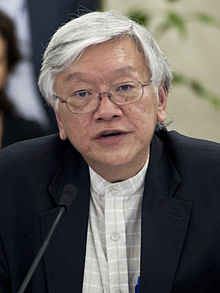
PENANG, Apr 3 2020 (IPS) – Martin Khor Kok Peng passed away just after the end of the first quarter of 2020. He leaves behind an unusually rich legacy. Atypically for people mainly working in the worldideas, he was also a very practical and pragmatic activist who successfully built and sustained several important initiatives which will live on after him.


Martin Khor

Martin was widely well known,both in Malaysia and internationally,and will be remembered for his commitment to a variety of causes perhaps best summed up by the concept of sustainable development, adopted by world leadersat Rio in 1992, and reaffirmed in Johannesburg in 2002, Rio again in 2012 and, most recently, through the Sustainable Development Goals declared in 2015.

Born in 1951, Martin’s passing,less than a year after the demise of his mentor and close collaborator, the nonagenarian Mahathir contemporary, S M Mohammed Idris, suggests the end of an era, not only in Malaysia, but also beyond.

Already there are many pronouncements about the end of the Third World, of the solidarity of the global South, and most recently, about the related demise of multilateralism, especially as it was transformed in the 1970s when the United Nations committed to a New International Economic Order, thanks to the G77 caucus of developing countries at the UN.

Paths not taken
Reflecting on Martin’s career path, one cannot but be struck by the choices he made, and by paths not taken. Leaving his hometown of Penang, Martin wasa pre-university classmate of current Prime Minister Lee Hsien Loong in Singapore, before going to Cambridge together.

Later, after a few months in Singapore’s civil service during 1974-1975, which almost surely would have led him to a cabinet position in Lee’s cabinet, Martin ‘broke his bond’ to return to Malaysia to start teaching for a pittance at the Science University of Malaysia (USM).

From there, he began his lifelong engagement with the Consumers Association of Penang (CAP) and Friends of the Earth, Malaysia (SAM), collaborating closely with Haji Idris, to wage efforts to protect Penang, and later the countryagainst ecological and other disasters in the name of development.

From local to global
Followingan international civil society solidarity conference in 1984,Third World Network (TWN) was born and rapidly developed by Martin to promote collective solidarity to protectdeveloping countries’ national interests as the global South came under siege with the neoliberal ascendance of the 1980s.

The South Summit in Kuala Lumpur in 1986 established the South Commission worked under former Indian Prime Minister Manmohan Singh which recommended establishing the South Centre as an intergovernmental policy research and analysis institution for developing countries headquartered in Geneva and chaired by Tanzanian President Julius Nyerere. Years later, Martin took over the South Centre in 2009, strengthening its finances, capacities and impact, by creatively mobilizing resources.

The personal is political
Martin’s widow, Meenakshi Raman was a victim of Malaysian political repression in 1987. But without personal rancour, Martin worked closely with the Mahathir and subsequent Malaysian administrations, especially on internationalcauses, includingtrade, intellectual property, biopiracy and climate change.

Martin touched many, inspiring all by his tireless commitment. He was often more than happy for others to getcredit for his discreet efforts behind the scenes with relevant research and skilled drafting. His persistence was legendary, but everyone knew his efforts were not for personal gain.

Martin waswell known for his indefatigable energy and meticulousness in preparing policy and advocacy briefs on many key matters of concern to developing countries, often working late into the night as necessary. This reputation gained him access to many government and other leaders.

  Source

In memoriam ‒ Martin Khor

Civil Society, Climate Change, Featured, Global, Headlines, Poverty & SDGs

Opinion

GENEVA, Apr 3 2020 (IPS) We are greatly saddened by the passing of Martin Khor, a long-time friend and colleague, an undaunted fighter for the poor and underprivileged, a passionate believer in a more balanced and inclusive multilateralism, a rare intellectual and eloquent orator, an icon of the Global South worthy of veneration, greatly respected for his struggle for justice and fairness against the dominance and double-standards of big economic powers.   


Martin was born in 1951 in colonial Malaysia, still under British rule, to a family of journalists. After his primary and secondary education in Malaysia, he left for the UK in 1971 to study at the University of Cambridge, where he obtained his B.A Hons and M.A. in economics, before completing his second Masters in Social Sciences at the University of Science, Malaysia in 1978. 

There are increasing warnings of an imminent new financial crisis, not only from the billionaire investor George Soros, but also from eminent economists associated with the Bank of International Settlements, the bank of central banks.

Martin Khor

In his Master’s thesis, he grappled with the changing nature of external dependence and surplus extraction in Malaysia as it moved from colonial to post-colonial status, with a view to its implications for the scope and limits of industrialization and development; a study which left an indelible mark on his subsequent engagement and activities in a world characterised by increasingly asymmetric power relations.  

He started his professional career as an Administrative Officer at the Ministry of Finance, Singapore before joining the University of Science, Malaysia as lecturer in Economics in 1975.   

He became the Research Director of The Consumers’ Association of Penang in 1978, an independent non-profit international research and advocacy organization on issues related to development.

The Third World Network (TWN) was created in 1984 at an international Conference on “The Third World: Development and Crisis” organized by the Consumers’ Association of Penang.   In 1990, Martin became the Director of the TWN, perhaps the most important NGO from the developing world with operations globally, both in the North and the South, through offices, secretariats and researchers, including in Penang, Kuala Lumpur, Geneva, Beijing, Delhi, Jakarta, Manila, New York, Montevideo and Accra.  

Martin’s approach to advancing progressive solutions on all these fronts was always one of quiet determination driven by a passionate commitment to strengthening the voice of developing countries.

He had an envious ability to synthesise and explain complex negotiating issues to a broad audience and in a way that could bring on board activists and policy makers alike

Martin held both positions at the Consumers’ Association of Penang and the TWN until 2009 when he became the Executive Director of the South Centre in Geneva, an intergovernmental organization of developing countries established in 1995 to undertake research in various national and international development policy areas and provide advice and support to developing countries in a variety of international negotiating fora. 

Under his leadership, the South Centre became an important voice in discussions on international trade and investment, intellectual property, health, global macroeconomics, finance, sustainable development, and climate change.

During his tenure, the Centre extended significantly the scope and quality of its policy research and advice, building an enhanced reputation and level of trust among developing countries in the struggles to protect and promote their interests.   After leaving the South Centre in 2018, Martin returned to Penang, already suffering from cancer, and acted as Chairman of the Board of TWN until his death on April 1, 2020.

Martin was a staunch multilateralist but not an advocate of globalization, at least in the neo-liberal guise it acquired from the early 1980s.   On the one hand, he was well aware that individually developing countries could not obtain fair deals with major (and minor) developed countries in the international economic system. 

On the other hand, he knew that multilateral rules and practices were unbalanced, designed to subject developing countries to the discipline of unfettered international markets shaped by transnational corporations and self-seeking policies of dominant powers in the North, denying them the kind of policy space they themselves had enjoyed in the course of their industrialization.  His efforts focussed on reshaping multilateral rules and practices as a way to bring about systemic changes in the service of development.     

Martin did this on three frontsFrom the mid-1980s he focussed mainly on international trade issues, particularly those raised by negotiations during the Uruguay Round, and subsequently in the WTO and the proliferating free trade agreements and bilateral investment treaties that accompanied the shift to a neo-liberal international economic order.

Martin was instrumental in bringing the attention of policy makers and activists to the implications of new trade rules for the industrialization and development of the Global South arising from more demanding obligations on tariff and non-tariff measures, industrial subsidies, investment and intellectual property rights. 

He made several proposals for reform in these areas to remove imbalances and constraints over industrialization, and economic diversification more generally, in the Global South. He opposed free trade agreements with developed countries on the grounds that, by simultaneously curtailing the policy space available to governments while expanding the space for abusive practices by the large international firms that dominate international trade, they posed an even greater threat to development than the earlier generation of trade rules under the GATT.

In the aftermath of the Marrakech agreement, Martin was a prominent figure blocking efforts by OECD countries to push for a multilateral investment agreement, to extend the neo-liberal agenda at the first WTO ministerial in Singapore and subsequently at the third meeting in Seattle and to water down the Doha Development Agenda at the Cancun Ministerial in 2003.

The second front concerned the issues around the operations of the Bretton Woods Institutions, notably debt and development finance.  Martin had been a long-time critic of the Washington Consensus, and in particular, the use of policy conditionalities attached to lending by the IFIs which sought to push a series of damaging measures on developing countries in the name of efficiency, competitiveness and attracting foreign investors.

But he started to pay greater attention to these after the 1997 Asian financial crisis, arguing against austerity, advocating capital controls, orderly debt work-out mechanisms, multilateral discipline over exchange rates and financial policies of major advanced economies and global regulation and supervision of systemically important international financial firms.

He was a particularly strong advocate of these positions in his role as a member of the Helsinki Group on Globalisation and Democracy.  Martin took the helm of the South Centre just before the 2009 Global Financial Crisis hit and was quick to provide substantive assistance to developing countries during the 2009 UN Conference on the World Financial and Economic Crisis and its Impact on Development, identifying the key issues for them and working to ensure their insertion in the Outcome Document.

He continued to push hard on these issues through the research output from the Centre while adding the related areas of illicit financial flows and international tax issues to its workload as developing countries sought support on these matters.

The third, and increasingly prominent, front was climate change and sustainable development which gained added importance in international discussions in the new millennium. Environmental issues had always been part of Martin’s work as head of TWN and as a member of the Commission on Developing Countries and Global Change. 

But this widened significantly after the UN Conference on the Environment and Development in 1992 in Rio de Janeiro. Subsequently, Martin became a member of the Consultative Group on Sustainable Development and a regular attendee at the UN Climate Change Conferences that began in 1995 playing a particularly important role in the Copenhagen COP in 2009 where the neglect of the development dimension by advanced economies, their reluctance to acknowledge common but differentiated responsibilities and their naïve belief in market-friendly solutions to the climate challenge led to acrimonious discussions and the eventual collapse of the conference.

While he clearly recognized the need to reduce the pace of emissions and protect the environment, Martin was wary that the measures promoted by industrial countries could become instruments to stem development in the Global South.  Under his leadership an important part of the work in the South Centre focussed on this issue.

During this time Martin was a strong critic of tighter intellectual property rights, particularly through trade agreements, that restricted the transfer of the technologies developing countries needed to help in the fight against rising global temperatures and to mitigate the climate damage they were already experiencing.

This work had a parallel in Martin’s fight to ease the burden of TRIPs on developing countries in dealing with public health emergencies which, thanks to a successful civil society coalition where Martin was a pivotal figure, eventually succeeded in a permanent amendment to the TRIPs agreement in 2017.

Martin’s support to developing countries in the climate change negotiations, carried out through the South Centre and TWN, fostered greater coordination among developing countries in protecting and promoting their development policy space in the climate negotiations, highlighting equity, and stressing the international obligation of advanced economies to provide support to developing countries.

Martin’s approach to advancing progressive solutions on all these fronts was always one of quiet determination driven by a passionate commitment to strengthening the voice of developing countries.

He had an envious ability to synthesise and explain complex negotiating issues to a broad audience and in a way that could bring on board activists and policy makers alike. He became a trusted advisor to policy makers and diplomats across the developing world.

But Martin was equally comfortable engaging in a productive debate with policy makers from advanced countries and in mainstream institutions.   His was a uniquely calming but authoritative voice for increasingly anxious times, one that has been silenced too soon and at a moment when his commitment to building a fairer and more resilient world was needed more than ever.

Yilmaz Akyüz, Former Director, Globalization and Development Strategies Division, UNCTAD; and Former Chief Economist, South Centre, Geneva.

Richard Kozul-Wright, Director, Globalization and Development Strategies Division, UNCTAD, Geneva. 

  Source