The following opinion piece is part of series to mark the upcoming International Women’s Day March 8.
NEW YORK, Mar 4 2021 (IPS) – In 2020, progress on gender equality stalled or regressed in many countries in large part because of the far-reaching impacts of the COVID-19 pandemic. According to a recent analysis, by 2021, around 435 million girls and women will be living on less than $1.90 a day, including 47 million pushed into poverty as a result of the pandemic. Global lockdowns contributed to a surge of gender-based violence worldwide, and estimates show that sexual and reproductive health and rights (SRHR), the bedrock of gender equality, have been severely disrupted, resulting in an additional 49 million women at risk of experiencing an unmet need for modern contraception. Our most pressing global issues have seldom been so daunting, and fault lines in existing social, political, and economic systems have never been so deep.
Kathleen Sherwin
Fortunately, the evidence-based solutions we need to lay the groundwork for a future that delivers for all, including for girls, women, and underrepresented populations1 , are in plain sight. As a global community, by using gender equality as our shared North Star, we can set in motion actions that help us not only recover, but come out on the other side of our most pressing global challenges stronger. Achieving gender equality, with a focus on girls’ and women’s health and rights, must be central to the actions we take in response to COVID-19, and other deeply entrenched barriers to progress, such as climate change.
On this International Women’s Day, we’re calling on governments, the private sector, and civil society leaders to firmly position gender equality as our collective roadmap for coordinated action on COVID-19 and sustainable development. As essential first steps, together, we must prioritize collecting and using disaggregated data, securing the full and effective participation of girls and women in all aspects of decision-making, and investing more in gender equality. Sustainable progress toward a world that works for everyone depends on it.
Decision-makers must collect and use disaggregated data to set equitable action in motion.
Girls and women are too often invisible to decision-makers because data and knowledge about them is either incomplete or missing. To create policies that advance gender equality by addressing the disproportionate impacts of global challenges on girls, women, and underrepresented populations, we first need to invest in disaggregated data to get a full, intersectional picture of the uneven impacts of global issues.
In August 2020, in partnership with Focus 2030, we set out to do just that, conducting a first-of-its-kind multi-national survey — in 17 countries, representing half of the world’s population — to better understand the impacts of COVID-19 on girls and women, and global public opinion and expectations for policymaking on gender equality. We learned that girls and women are shouldering the worst of the pandemic’s impact: across 13 of 17 countries surveyed, women report experiencing greater emotional stress and mental health challenges than men, and taking on an even greater share of household tasks.
Girls and women must be fully and effectively engaged in charting our shared path forward.
Building a sustainable future for all requires the full participation — and potential — of girls and women in all aspects of our international and domestic response to global issues, and the realization of that potential depends on their health and rights. In fact, we now know that 82% of citizens globally believe women must be involved in all aspects of COVID-19 global health response and recovery efforts.
Crucially, we must engage today’s youth, who will ultimately bear the consequences of our action — or inaction — and who have the highest expectations for more government funding for gender equality. 75% of female respondents aged 18-24 expect their government to spend more on gender equality, and over 94% of young men and women are ready to take personal action to make sure that they do.
Gender equality is what citizens want, and it’s what the world needs to build a healthier future for all.
The resounding call for action on gender equality, matched by robust funding and accountability mechanisms, holds across countries surveyed for men and women, young and old alike. Over 80% of citizens globally want their government to invest more to promote gender equality, and are ready to act — from the way they vote, to the products they buy — to make sure that this happens. The resounding majority of citizens also believe that increasing access to SRHR is a top priority for immediate government action.
As governments, the private sector, and civil society leaders come together on International Women’s Day, and during upcoming global fora including the 65th session of the Commission on the Status of Women and the Generation Equality Forum to discuss how to transform words into action that improves the health of all people and the planet, ensuring that gender equality is our shared roadmap for responding to global challenges is crucial to sustainable progress now and in years to come. It’s what citizens want, and it’s what the world needs to build a healthier, more gender-equal future.
1 People of underrepresented sexual orientation, gender identity, and/or expressions, and sex characteristics (SOGIESC), and those who experience multiple and intersecting forms of discrimination and oppression.
The author is Interim President & CEO, Women Deliver
Simone Galimberti is Co-Founder of ENGAGE, a not-for-profit NGO in Nepal. He writes on volunteerism, social inclusion, youth development and regional integration as an engine to improve people’s lives.
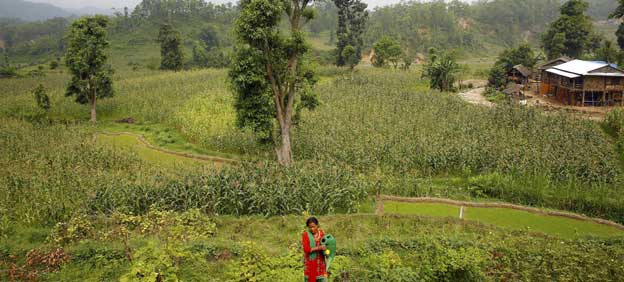
Rural woman farmer Chandra Kala Thapa works in the fields near Chatiune Village, Nepal. Over $39 million has been earmarked by a UN-backed fund to combat effects of climate change in Nepal. Credit: UN Women/Narendra Shrestha
KATHMANDU, Nepal, Feb 16 2021 (IPS) – Raju Pandit Chhetri is one of the most acclaimed climate change policy experts in Nepal and South Asia. As Director of the Prakiriti Resource Centre, an action focused think tank based in Kathmandu, Pandit Cheetri shares his opinion on the latest climate focused policies being undertaken by the Government of Nepal, especially the 2nd Nationally Determined Contribution NDC that was recently submitted by the Government.
Q: Before discussing the second Nationally Determined Contribution (NDC) released by the Government in December, what is your assessment of the first one published in October 2016?
Raju: The first NDC was much more inclusive as it tried to balance between the adaptation, mitigations and means of implementation. It was done it a short period of time and no proper format existed then. It was prepared to demonstrate Nepal’s commitment to the Paris Agreement.
Q: Coming now to the second NDC, it states that “Nepal is formulating a long-term low greenhouse gas emission development strategy by 2021 with the aim to achieve net-zero greenhouse gas emission by 2050”. Given the fact that Nepal’s emissions are minimal, were you expected such goal?
Raju: Given the emission scenario and context of Nepal, achieving net-zero GHG by 2050 is doable, if there is political commitment and actions, we can achieve this even earlier. It’s great that Nepal has this vision and wants to implement it via a strategy. Given Nepal’s forest coverage, potential for renewable energy and low per capita emission this is a realistic target. Nationally we need to do more.
Q: Shouldn’t the NDC be already providing a roadmap to achieve this goal? Do we need another strategy just because the NDC document is fairly a generic one?
Raju: I guess for now, the NDC is more of a visioning paper for next five to 10 years. It would have been good if the details were presented but, in any case, for a least developed country (LDC) country with insignificant amount of carbon emission, it isn’t a bad thing. The current version does give the vision if not every detail of the targets. However, it is true that Nepal just loves preparing policies, plans and strategies rather than focusing on implementation. We have great policies not actions, unfortunately.
Q: There has been skepticism about net-zero greenhouse gas emission by 2050, especially in relation to the financial contributions that Nepal is committing itself (we are talking only of mitigation measures here) through what are called the unconditional commitment that will amount to $ 3.4 billion, resources that Nepal is pledging to mobilize on its own. Is it feasible?
Raju: The total cost gives at US$ 25 billion for mitigation and Nepal’s own share is arbitrary (don’t know where this is coming from). There is no basis for accounting and detail analysis. Principally, it would have been better if the numbers with commitments from Nepal were not there, after all Nepal’s emission is very low and with no historical responsibility.
However, there is no harm in submitting the second NDCs, it’s great to demonstrate that even a country like Nepal is serious on climate actions and would pressurize the rich responsible countries to come forward. But I do agree that this rush did not help in making the NDC preparation process inclusive and participatory. This is a fundamental drawback. This process would have avoided many of the shortcomings such as finance targets and making it mitigation centric.
Q: Do you think that Nepal’s proposed graduation from the group of LDCs (to the status of a middle income country) in 2024 can have a negative impact for the country’s efforts to find the needed external resources to implement the 2nd NDC?
Raju: When Nepal graduates, it will lose some of the privileges which it enjoyed as a LDC country. However, this may not matter in the short term because there is also transitional period, which it can enjoy for a few more years. Having said that if development process advances to making it a developing country from LDC then it also comes with responsibility and enhanced ability, which it must embrace. It must find other avenues and create opportunities for itself. The good thing is Nepal is often one of the favorites to donors hence, the politics must work on this favorable condition in the short and long run.
Q: Between adaptation and mitigation, how to strike the right balance? In a recent interview, you highlighted that this second NDC should have been more focused on adaptation. Why not being ambitious developing a greener economy as well?
Raju: I am always for developing a greener economy, I would even go further to say that we need much more concrete actions to reduce air pollution, import less fossil fuel and adopt a green development pathway. However, given the global scenario, Nepal is one of the lowest carbon emitting countries but highly vulnerable to the impacts of climate change. This is being clearly seen in the areas of climate induced disasters like landslide and floods. Nepal suffers from food insecurity, poverty, water issues and many other development issues hence in this context- adaptation should not be less prioritize. Nepal’s NDC fails to realize this current reality. NDC is an international document that we submit to international organization (UNFCCC) hence in that context adaptation is always Nepal’s priority. My comment was not that we should not do mitigation but rather give due weightage to adaptation actions reflecting the reality of the county.
Q: What should we expect from the upcoming National Adaptation Plan, NAP?
Raju: There is also a huge adaptation gap in Nepal and we are way behind in fulfilling this gap. NAP should clearly state the current situation of country’s adaptation need and areas of vulnerability. In this context, provide adequate information and focus areas where adaptation is a dire need. It should help prioritize the areas of intervention, partners, identify issues, and ways to address them. Currently, NAP is in the process of making in Nepal, hope this is soon completed and this can be a basis for adaptation actions in the country.
Q: In terms of mitigation in the NDC, there are ambitious forestry targets like maintaining 45% of total area of the country under forest cover in addition to bold announcements on reducing pollution in the transportation sector. Do you remain hopeful the targets will be met?
Raju: It is good that Nepal is having some bold targets but this is not easy for Nepal to meet with the current priorities and enabling environment. There are lots of conflicting aspects when it comes to what is in the policy and what is done in practice. For sure, there is need to maintain our forest cover, address pollution in the cities, manage growing waste and significantly replace the imported fossil fuel by renewable energy. However, this is not possible merely putting it in NDC without actions. Political commitment should ensure partnership between the government, private sectors, financers and other partners to achieve these targets.
Q: Prakriti Resources Centre was one of the leading forces behind the Climate and Development Dialogue in 2019. How useful are such stakeholders ‘meetings?
Raju: We do regular meetings and gathering to share ideas and experiences from the policy to the implementation level. There are about 12 members in the dialogue who regularly exchange information on climate and development issues. We also make policy suggestions and inputs to the government. Many of our inputs have been incorporated into the policy documents. We continue to advocate for the affective implementation of these plans and policies.
Q: With the 2nd NDC being published, what should the government do now? What is the civil society planning to do? Are you going to play a role in shaping the formation of the numerous new “climate” institutions, including the Inter-Ministerial Climate Change Coordination Committee (IMCCCC) and the Climate Change Resource Center? In addition, the NDC says that by 2030, all 753 local governments will prepare and implement climate-resilient and gender-responsive adaptation plans. Is this realistic?
Raju: We will continue to be vigilant on what government does on climate actions – both in terms of policy implementation and raising new issues. We will support where needed but also push on what needs to be done.
There are a lot of things that the government needs to do both in terms of climate adaptation and mitigation. We have not even entered into the debate of loss and damage. A few months back ICIMOD and UNDP produced a report that 25 glacial lake in the Himalayas are at the risk of out-bursting. This is a huge issue for a country like, imagine one lake out bursting and it causing harm in the downstream. This is a case of loss and damage.
Government cannot just make policies and promise, it needs to acts through appropriate institutions, allocating finance and ensuring that the actions are taking place at the local level. Government has promised to make adaptation plans in all the 753 local governments and this cannot merely be an empty promise. It needs to fulfil the promise to meet the expectation of the climate vulnerable communities. But for this high degree of political commitment is a must. It needs to start from awareness building of the local governments and supporting them with technical inputs.
Q: What do you hope Glasgow 2021 will achieve? The Prakriti Resources Centre together with its peers within the Climate Finance Advisory Service, extensively analyzed the disbursement pledge of USD 100 billion goal in annual commitments from the developed countries. Where are we?
Raju: COP26 should help raise the climate ambitions so that the world is in track to achieve 1.5 degrees Celsius by the end of this century. Currently, we are heading to 3 degree world or beyond. By COP26 every country should submit an ambitious NDCs. In order to achieve this, climate finance will play a major role. Developed countries are falling short in fulfilling their promise of meeting the climate finance targets of US$100 billion per year by 2020. This gap should be filled in only then the developing countries will be able to take climate actions. The money should be balance both for mitigation and adaptation, while also prioritizing loss and damage. Developed countries have been double counting their ODA as climate finance, this should not be the case but sincere effort must be made to support climate vulnerable countries like Nepal.
Q: Last but not the least, what are your suggestions to a young graduate in Nepal that would embrace the work you are doing?
Raju: Working in the area of climate change looks appealing but without perseverance it does not last long. This is a wide open and multisectoral area hence focus is imperative. It is not easy as it sounds otherwise, we would have long back solved the problem, in fact we are nowhere near it. No doubt, more young people should join the movement and work on climate change because this is the issue about their future. However, the work must be backed by keen interest to build one’s knowledge, motivation and dedication.
Sarah Rogerson is a researcher at Global Canopy. Prior to Global Canopy, she has worked on corporate environmental transparency with both CDP and the Climate Disclosure Standards Board, and on domestic recycling and engagement with Keep Britain Tidy. She has a degree in Natural Sciences (Zoology) from the University of Cambridge
Despite global commitments from a growing number of governments, companies and financial institutions, the money and effort being directed towards damaging development far exceeds the efforts being made to support sustainable livelihoods. We have not, as a global community managed to put the brakes on the juggernaut of unsustainable economic development. Credit: United Nations
OXFORD, UK, Nov 23 2020 (IPS) – At the beginning of 2020, there were hopes that this would be a ’super year for nature’. It has not turned out that way. Tropical forests, so crucial for biodiversity, the climate and the indigenous communities who live in them, have continued to be destroyed at alarming rates. In fact, despite the shutdown of large parts of the global economy, rates of deforestation globally have increased since last year.
The market forces driving deforestation are baked deep into the system of global trade. Agricultural expansion for commodities such as soy and palm oil accounts for two thirds of the problem worldwide. And forests are also being cleared to make way for mining, and for infrastructure to link once remote areas to the global markets they supply.
Coal mining is estimated to affect 1.74 million hectares of forest in Indonesia alone, with as much as nine percent of the country’s remaining forests at risk from permits for new mines. And the threat to forests from road building is significant, with 25 million kilometres of roads likely to be built by 2050, mainly in developing countries.
Underpinning these industries is over a trillion dollars a year in financing from financial institutions around the world. This investment and lending is the fuel that keeps the deforestation fires alight.
Six years ago, governments, companies and civil society signed the New York Declaration on Forests, setting a goal to end global deforestation by 2030. Each year, an independent civil society network led by Climate Focus and including Global Canopy provides a progress assessment. This year, it focuses on the NYDF goals of reducing deforestation from mining and infrastructure by 2020 (goal 3), and supporting alternatives to deforestation for subsistence needs (goal 4).
The findings are an urgent wake-up call. The threat to forests worldwide from these activities is growing, and indigenous people and local communities continue to bear a devastating cost.
But the report also highlights opportunities for progress. A growing number of governments are facing up to this issue and some companies are waking up to the risks of inaction. The same is true of the finance sector, which could become a driver of transformational change.
The opportunity for finance
Financial institutions do not, it must be recognised, have a great track record on these issues. Global Canopy’s annual Forest 500 assessment of the most influential financial institutions in agricultural and timber forest-risk supply chains has consistently found that the majority do not publicly recognise a need to engage on the issue of deforestation.
Fewer still publish clear information about how they will deal with deforestation risks identified in their portfolios, and none of the 150 financial institutions assessed in 2019 had policies across all relevant human rights issues. As a result, investment and lending has largely continued to flow to companies linked to land grabs and deforestation.
Nearly 87% of indigenous territories in the Amazon are recognised in Brazilian law, yet government concessions for mining and oil extraction overlap nearly 24% of recognised territories. This infringement of the communities’ rights is being overlooked by the companies involved, and by the financial institutions that finance them.
Yet there are signs of change. In June this year a group of 29 investors requested meetings with the Brazilian government because of concerns about the fires raging in the Amazon. Some, including BlackRock, have said they will engage with the companies they finance on deforestation risks. And some have gone further, with Citigroup, Standard Chartered, and Rabobank disinvesting from Indonesian food giant Indofood following concerns about deforestation linked to palm oil, and Nordea Asset Management dropped investments in Brazilian meat giant, JBS.
There is also support for the Equator Principles, which provide a framework for banks and investors to assess and manage social and environmental risks in project finance. Companies in the mining and extractive sectors are among the 110 financial institutions to have signed up, although reporting on implementation is voluntary and patchy.
There is also growing recognition that biodiversity loss represents a risk to investments. More than 30 financial institutions have joined an informal working group to develop a Task Force for Nature-related Disclosure (TNFD), intended to help financial institutions shift finance away from destructive activities such as deforestation. Some within the sector are developing new impact investment products designed to support poverty alleviation and sustainable development.
And there are also signs of a shift in development banks – whose finance plays such a critical role in so many development projects in the Global South. Just this month, public development banks from around the world made a joint declaration to “support the transformation of the global economy and societies toward sustainable and resilient development”.
No silver bullets
It is of course one thing to recognise the problem, another to solve it. Transforming the finance sector so that money is moved away from mining or agricultural projects linked to deforestation, and invested in sustainable alternatives that benefit local communities is an enormous challenge – made all the more difficult by the lack of transparency that currently engulfs these sectors.
For while the banks and investors funding deforestation activities are all too often invisible to the local communities and indigenous groups on the ground, those communities, and the impacts of financial investments on their land and livelihoods are similarly invisible or ignored.
But these links are increasingly being brought into the light, and new tools and technologies are bringing a new level of transparency and accountability. The new Trase Finance tool is a great example, it maps the deforestation risks for investors linked to Brazilian soy and beef, and Indonesian palm oil, and aims to extend coverage to include half of major forest-risk commodities by next year. Bringing about a new era of radical transparency could be the key for moving beyond recognition and into real solutions.
Increased transparency brings with it greater accountability, creating an opportunity for local communities to identify the financial institutions involved, and a reputational risk for financial institutions linked to infringements of land rights.
Grassroots movements can play an important role in demanding accountability from the companies and financial institutions involved where land rights are affected. Campaigns can raise awareness with the wider public, creating a reputational risk for the companies involved, and for the financial institutions that finance them. Campaigners have targeted BlackRock for its investments in JBS, for example, pushing for greater action from the investor.
Governments in consumer countries are also increasingly looking at how they can reduce their exposure to deforestation in imported products, with both the European Union and UK proposing mandatory due diligence for companies, requiring far greater transparency from all involved. These measures should be strengthened to include due diligence on human rights.
A global problem
We are all implicated in tropical deforestation – as consumers, as pension-fund holders, as citizens. In the Global North, economies rely on commodities produced in developing and emerging economies, enabled by production practices linked with deforestation.
Despite global commitments from a growing number of governments, companies and financial institutions, the money and effort being directed towards damaging development far exceeds the efforts being made to support sustainable livelihoods. We have not, as a global community managed to put the brakes on the juggernaut of unsustainable economic development.
To meet the NYDF goal of ending deforestation by 2030, as well as climate goals under the Paris Agreement, this must change urgently, and the finance sector is crucial to making this happen.
Daniel Jositsch is a Member of the Swiss Senate and President, Democracy Without Borders-Switzerland, and Andreas Bummel is Executive Director, Democracy Without Borders. Twitter: @democracywb
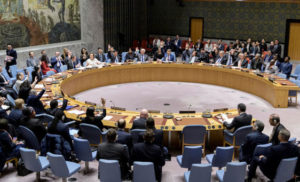
The UN’s Security Council, in particular, is suffering from a dysfunctional decision-making method that grants the five victors of the Second World War and official nuclear powers not only a permanent seat but also a veto right. Credit: United Nations
BERLIN / BERNE, Aug 28 2020 (IPS) – The people of the world need to seize the moment and bring about a democratic global revolution. It is time for a global parliament and real representation.
More than 21 million people got infected with the novel coronavirus and over 770,000 have died. Never before did the world witness similar collective lockdowns of social and economic activity that had to be enforced to contain the pandemic.
For many, the corona-related global crisis exacerbates a situation that was already critical before the outbreak of the virus.
The climate crisis is unfolding with record temperatures in Siberia, Greenland, the Antarctic and other places like the Middle East. The new climate apartheid is characterized by whether you can afford to shield yourself from such heat or not. Most cannot.
135 million people are facing crisis levels of hunger. There are currently more than 70 million displaced people who have fled war, persecution and conflict. It’s the worst humanitarian and refugee crisis in seventy years.
There is a global inequality crisis. Productivity gains and globalization disproportionately benefit the affluent. Financial assets in the trillions are hidden in offshore accounts from tax authorities. The world’s 26 richest billionaires own as much as the poorest 3.8 billion people on the planet.
While global surveys confirm that people across all world regions strongly believe in democracy, there is in fact a democratic retreat. Confidence in the actual performance of democratic governments is waning. Populist nationalism and authoritarianism has been advancing, aided and abetted by social media platforms and the internet. Major arms control treaties are crumbling, geopolitical tensions are rising and multilateralism is under attack.
Civil society and citizens across the world are fighting back, though. Pro-democracy movements are at an all-time high as widespread protests in dozens of countries now and in recent times demonstrate. Freedom and justice have lost no appeal. At the same time, millions of citizens joined climate protests around the world and called for quick and effective action in this critical field.
The present issues are symptoms of a crisis of global governance. There is a scale mismatch between a political world order that is based on 200 states and territories and issues that demand decisive global action.
As the UN celebrates its 75th anniversary this year, the organization continues to lose significance and impact. The UN is only as strong and effective as its member states allow it to be. The same applies to all intergovernmental organizations and forums, including the World Health Organization that had to launch an investigation into its handling of the Covid-19 pandemic.
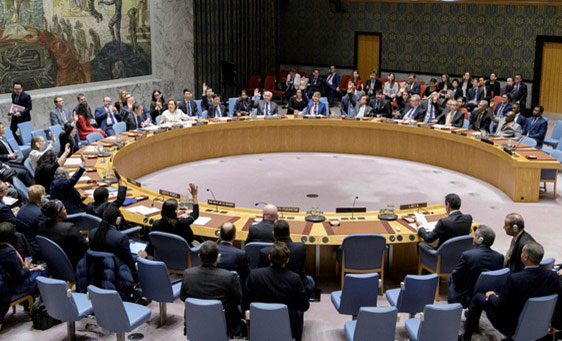
The UN’s Security Council, in particular, is suffering from a dysfunctional decision-making method that grants the five victors of the Second World War and official nuclear powers not only a permanent seat but also a veto right.
If long-lasting solutions are to be achieved, this scale mismatch must be tackled. It is not enough to call on individual governments to change their policies. The way how the world is governed must be changed. What is needed is a new vision of a democratic world order that is based on shared sovereignty on global issues, a clear commitment to human rights, the principle of subsidiarity and complete disarmament.
When the UN was founded it was recognized that this should only be a beginning and that changes would be required. Article 109 of the Charter provides that a conference to review the Charter should be held by 1955. The UN’s member states did not deliver on that promise. Now is the time to hold them to account.
The world’s people need an actual say in global affairs that is not intermediated by national governments and their diplomats. The key ingredient of a new UN should be a democratically elected world parliament that complements intergovernmental bodies such as the UN General Assembly.
The creation of a new democratic world organization that has actual powers seems to be a gigantic project that raises numerous questions. How is a global democracy to be created while major states themselves are not democratically organised? Can decisions of a world parliament be enforced against the will of individual states? How is it possible that states will agree to the creation of a superior political unit?
These questions show the way forward: The people of the world themselves need to embrace and call for global democracy. Eventually, they are the sovereigns not only in their individual states but on the planet as a whole, too.
A global democratic revolution needs to push for a legitimate, inclusive and representative global body that will deal with these questions in a serious way. The creation of a UN Parliamentary Assembly could be an important stepping stone to launch a global constitutional process and a transformation of global governance.
This global democratic revolution will be peaceful because it is not about destroying structures or conquering territories, but about opening up a political level that is lying idle. Supranational integration cannot be imposed by force. It will happen because the people want it.
If existing movements in the fields of climate, environment, peace, disarmament, democracy, social justice and others join forces, the global democratic revolution will become very real.
This may sound visionary. But the big issues troubling this planet and its people will remain, and worsen, unless the root cause is addressed. A democratic global government is not a mind game in some ivory tower. It is the most important question on the agenda of humanity today.
Mona Juul is the seventy-fifth President of the Economic and Social Council and Permanent Representative of Norway to the United Nations.
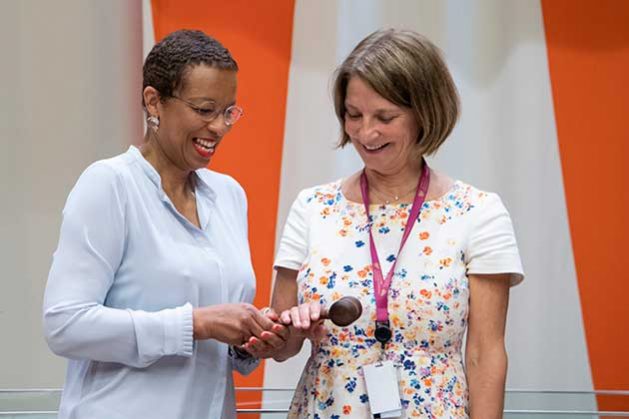
Inga Rhonda King (left), Permanent Representative of Saint Vincent and the Grenadines to the United Nations and seventy-fourth President of the Economic and Social Council (ECOSOC), hands over the gavel to Mona Juul, Permanent Representative of Norway to the United Nations and newly-elected seventy-fifth President of ECOSOC, at the opening meeting of the 2020 session of ECOSOC. New York, 25 July 2019. Credit: UN Photo/Eskinder Debebe
NEW YORK, Jul 29 2020 (IPS) – This year we celebrate the 75th anniversary of the Charter of the United Nations, written and signed during a period of great global change. Today, the world is again shifting beneath our feet. Yet, the Charter remains a firm foundation for our joint efforts.
These uncertain times of global disruption shine a light on the interdependences of our world. The COVID-19 pandemic, and the inequality it has exposed, are a global challenge that we must solve through global solutions. These solutions call for more, not less, cooperation across national borders.
Global cooperation is the enduring promise of the Charter of the United Nations. I am honoured to preside over the Economic and Social Council (ECOSOC), one of the principal organs of the United Nations, at its 75th anniversary.
In January 1946, 18 members gathered for the inaugural meeting of ECOSOC under the leadership of its first President, Sir Ramaswami Mudaliar of India. ECOSOC was vested with a powerful mandate, to promote better living for all ¬¬by fostering international cooperation on economic, social and cultural issues.
For me, this is a reminder that sustainable peace and prosperity rely on global solidarity and cooperation.
Today, this unity of purpose to reach those furthest behind first is also the spirit of the Sustainable Development Goals (SDGs). The 2030 Agenda is our shared road map to transform the world as we recover better, protect our planet and leave no one behind. With ECOSOC serving as the unifying platform for integration, action, follow-up and review of the SDGs, our promise to eradicate poverty, achieve equality and stop climate change must drive our actions.
ECOSOC has the unique convening power to make this happen. It brings together valuable constituencies such as youth and the private sector to enhance our work and discussions. ECOSOC also remains the gateway for civil society engagement with the United Nations. Civil society has been central to progress on international economic, social and environmental cooperation, from the small but critical number of organizations present in San Francisco when the Charter was signed in 1945, to the 5,000-plus non-governmental organizations with ECOSOC consultative status today.
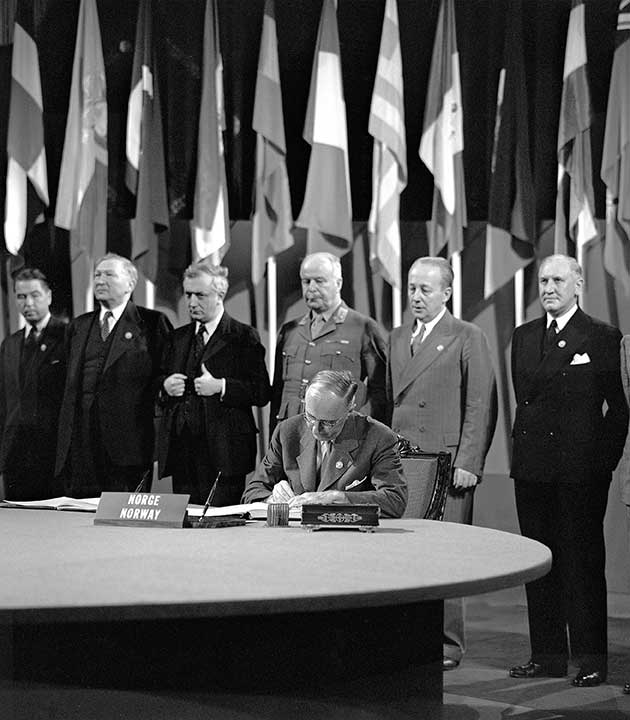
Wilhelm Munthe Morgenstierne, Ambassador to the United States, member of the delegation from Norway, signing the Charter of the United Nations at the Veterans’ War Memorial Building in San Francisco, United States, on 26 June 1945. Credit: UN Photo/McLain
The Charter also outlines that ECOSOC should promote universal respect and observance of human rights and fundamental freedoms for all, without distinction as to race, sex, language or religion. While much has shifted in our world, this mandate remains just as important today as in 1945. After all, human rights are a part of the foundation of the United Nations, quite literally. When Trygve Lie, the first Secretary-General and fellow Norwegian, laid the cornerstone of United Nations Headquarters at Turtle Bay in October 1949, it contained, together with the Charter, a copy of the Universal Declaration of Human Rights.
Human rights have always been a part of the work of ECOSOC. The former United Nations Commission on Human Rights was one of the first functional commissions created within ECOSOC and was charged with drafting the Universal Declaration. Today, ECOSOC remains committed to playing its part to promote all rights: civil and political, as well as economic, social and cultural rights.
In stark contrast to the 18 men who formed the first meeting of ECOSOC in 1946, I am proud to be the third consecutive female president of ECOSOC and one of five female presidents in its 75-year history. Although slow, this is progress, especially compared to 1945, when out of the 850 international delegates that convened in San Francisco to establish the Charter of the United Nations, only eight were women, and only four of them were signatories to the Charter. Today, the Secretary-General has achieved gender parity in all senior United Nations positions, and the Commission on the Status of Women is perhaps the highest profile part of the work of ECOSOC. The Commission’s annual session is instrumental in promoting women’s rights, documenting the reality of women’s lives throughout the world and shaping global standards on gender equality and the empowerment of women.
ECOSOC must work to place gender equality at the heart of all our work. Women’s rights and gender equality are imperative to a just world. In all my endeavours, I strive to promote and advance these rights with a vision of a more prosperous, peaceful and fair world, for the benefit of women and girls—and men and boys alike.
Before the current crisis, more people around the world were living better lives compared to just a decade ago. More people have access to better health care, decent work and education than ever before. Nevertheless, inequality, climate change and the lasting negative impacts of the COVID-19 pandemic are threatening to undo these gains. While we have technological and financial resources at our disposal, unprecedented changes will be needed to align resources with our sustainable development objectives. The United Nations must remain at the forefront of our collective efforts guided by our commitment to the Charter.
The true test of our success will be whether persons, communities and countries experience improvement in their lives and societies. The United Nations must be of value to people. To our family. To our neighbours. To our friends. Unless we achieve this, our credibility is at stake.
As we celebrate the 75th anniversary of the Charter of the United Nations, let us remind ourselves of the promise it embodies, to help the world become a more prosperous, just, equitable and peaceful place.
To me, the opening words of the Charter, “WE THE PEOPLES OF THE UNITED NATIONS”, are a humble and empowering reminder of our capability to overcome current and future challenges. Even in troubling times, there remains great hope in the power of working together. That is the founding spirit of the United Nations—and in this 75th anniversary year, as we face grave and global challenges, it is the spirit we must summon today.
This article was first published by the UN Chronicle on 26 June 2020.
This is an abridged version of an open letter by IPES-Food to the CGIAR on 21 July 2020.
Agroecological systems, which build resilience through crop/species diversity and natural synergies across the whole agro-ecosystem, are showing major potential. Credit: (C. Perodeaud, 2018)
BRUSSELS , Jul 22 2020 (IPS) – While the ‘CGIAR System’ may sound like a technocratic body, few organizations have exerted as much influence on today’s food systems as this network of global agricultural research centres. Since its inception at the height of the ‘Green Revolution’ in 1971, the CGIAR has driven advances in crop breeding and agricultural mechanization and modernization across multiple continents. Its mission – to develop knowledge and innovation for agriculture in the global South – is as relevant today as ever, in light of climate change, COVID-19 and a host of additional challenges.
The process now underway to reform the CGIAR is therefore of major public interest. The ‘One CGIAR’ process seeks to merge the CGIAR’s 15 legally-independent centres, headquartered in 15 countries, into one legal entity. The impetus has come from some of its biggest funders, notably the Bill and Melinda Gates Foundation, the World Bank, and the US and UK governments.
Reform of the CGIAR is long overdue. However, we are concerned that the current reform process, like previous versions, will fall short of the fundamental change that is required, and risks exacerbating major power imbalances in global agricultural development.
Firstly, the restructuring appears to have been advanced in a coercive manner, and without genuine buy-in from the global South. A ‘carrot and stick’ approach has been adopted: an increase in the overall CGIAR budget has been promised if the merger goes through, while centres resisting the move have allegedly been threatened with budget cuts. Insiders say that representatives from governments and agricultural institutes in the global South – the much-touted beneficiaries of the CGIAR and the Green Revolution – are generally against the merger, while the big funders and closely-affiliated scientific institutions are in favour. The two centres voting against the merger last week were the forest and agroforestry centres headquartered in Indonesia and Kenya respectively.
Secondly, there is insufficient diversity among the inner circle driving forward CGIAR reform. In the mid-1990s, when the CGIAR underwent an earlier restructuring, men from just four countries – the US, the UK, Canada and Australia – accounted for 85% of board chairs and directors. The CGIAR has subsequently made efforts to improve gender balance, and to bring on staff and board members from the global South. However, a true diversity of perspectives is still missing: many of those recruited have close associations with Northern universities and donor-led partnerships, while the voices of farmers, civil society and independent researchers in the global South are still largely absent. Only 7 of the 22 members of the CGIAR System Reference Group (SRG) – responsible for managing the transition process – are from the global South, of which two are already affiliated to CGIAR centres.
Thirdly, the proposed restructuring fails to equip CGIAR for the urgently-needed paradigm shift in food systems. Business-as-usual approaches to agricultural development are failing to address hunger and improve the livelihoods of smallholders, as shown by the shortcomings of the Alliance for a Green Revolution in Africa. Meanwhile, agroecological systems, which build resilience through crop/species diversity and natural synergies across the whole agro-ecosystem, are showing major potential – as recognized by the World Bank-led global agriculture assessment (‘IAASTD’), IPBES, the UN Food and Agriculture Organization (FAO), and a July 2020 statement by 366 scientists. The CGIAR has taken some steps towards systemic approaches, particularly through the work of some of its centres on participatory plant breeding, farmer-managed seed systems, varietal and species diversification for nutrition and resilience, biological control and agroforestry. But it has failed to mainstream these approaches: a 2017 study concluded that the “CGIAR environment was not conducive to implementing systems research”. Recent analysis by Biovision and IPES-Food found that, on average, CGIAR research programmes meet less than 20% of the indicators of systemic agroecological research.
While the basic shortcomings have been acknowledged in the current reform process, the CGIAR’s underlying philosophy does not appear to have shifted. The focus remains on scientific innovations being “deployed faster, at a larger scale, and at a reduced cost”, and provided to rather than developed with beneficiaries. By ushering in a single board with new agenda-setting powers, the restructuring may further reduce the autonomy of regional research agendas and reinforce the grip of the most powerful donors – many of whom have proven reluctant to diverge from the Green Revolution pathway.
Underlying all three of these problems is the disproportionate power of a handful of actors to control the purse strings and set the global agricultural development agenda. This reality risks undermining and short-circuiting the significant efforts to consult stakeholders over the past year.
It is therefore crucial to consider how these risks can be averted as the restructuring process moves forward, and to open a discussion on fundamental reform of the CGIAR. In order to rebuild its legitimacy and relevance, the CGIAR must: diversify its governance; put at centre stage the views of farmers, researchers, civil society groups, and governments in the global South; support transformative, transdisciplinary, agroecological research co-led by farmers and farmer organisations; collaborate with a broad network of regional, sub-regional and national research centres and universities to strengthen autonomous research capacity in the global South; and participate alongside the Rome-based agencies (FAO, IFAD, WFP) in the Committee on World Food Security (CFS).
Ultimately, the CGIAR system should mirror the food system we need: decentralized, context-specific, agroecological, and with more distributed and equal power relations.
*The IPES-Food expert panel: Olivier De Schutter (Co-chair), Olivia Yambi (Co-chair), Bina Agarwal, Molly Anderson, Million Belay, Nicolas Bricas, Joji Carino, Jennifer Franco, Mamadou Goïta, Emile Frison, Steve Gliessman, Hans Herren, Phil Howard, Melissa Leach, Lim Li Ching, Desmond McNeill, Pat Mooney, Raj Patel, P.V. Satheesh, Maryam Rahmanian, Cécilia Rocha, Johan Rockstrom, Ricardo Salvador, Laura Trujillo-Ortega, Paul Uys, Nettie Wiebe, Yan Hairong.