We’re embracing the festive spirit this summer, and from 4 to 19 December 2025, you can win some of the best experiences in Cape Town.
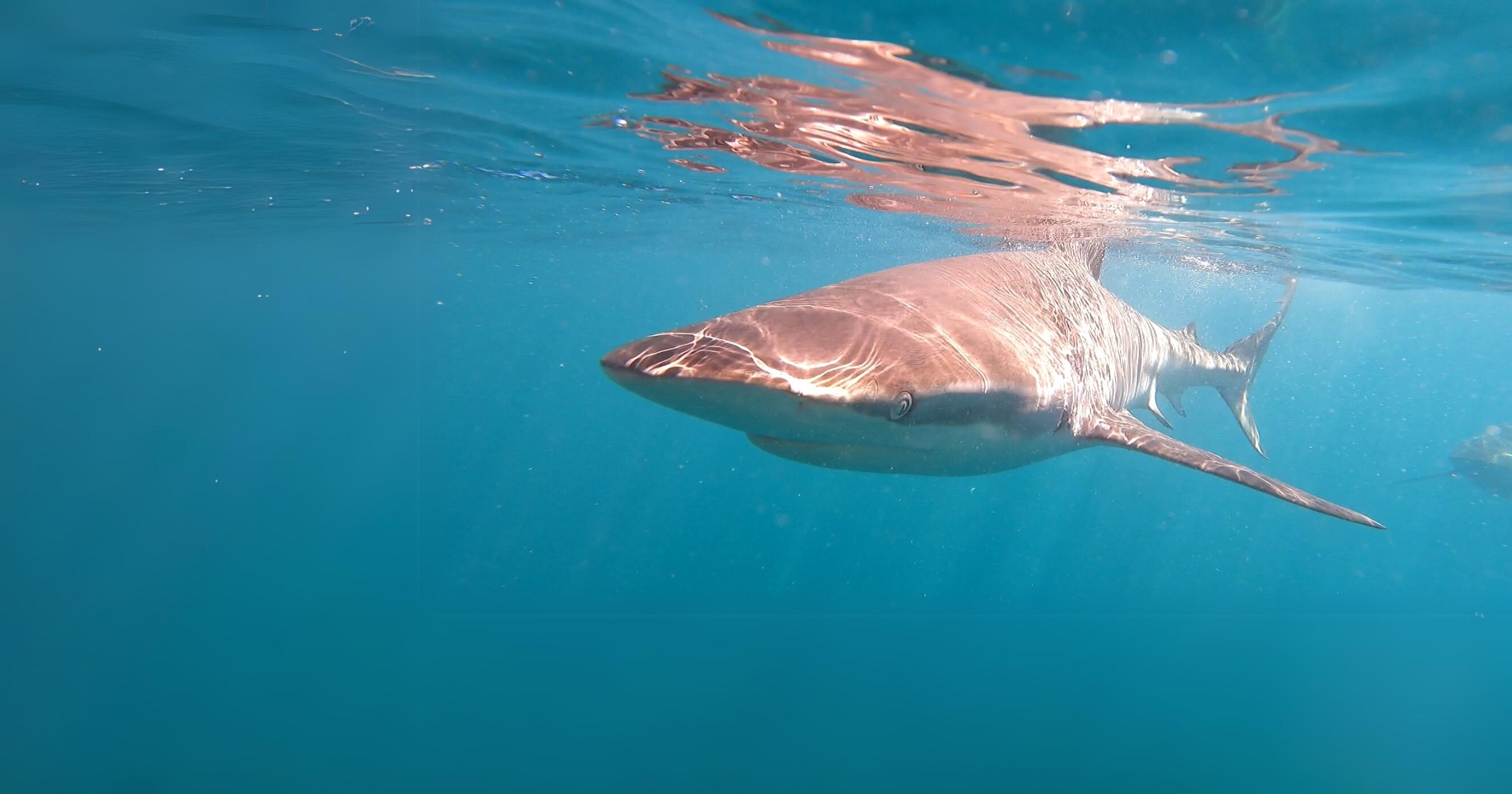
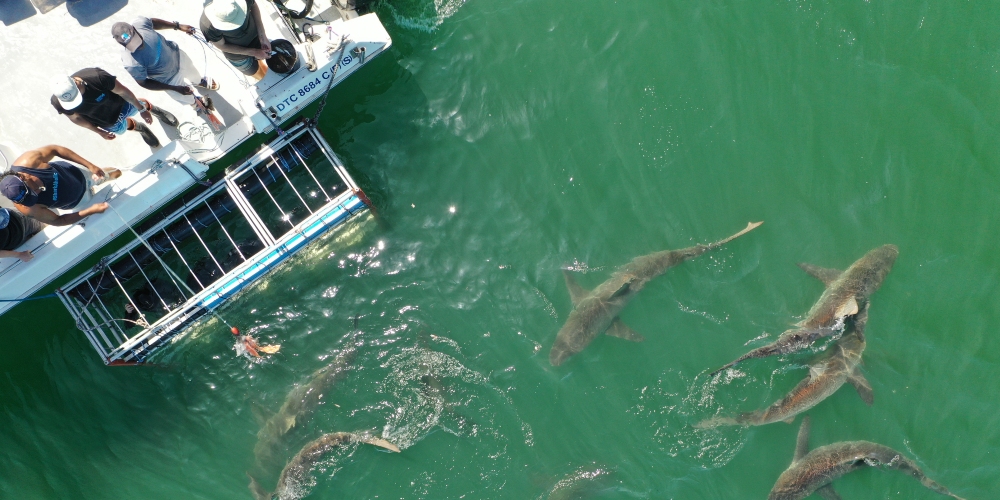
Day 4: Win a shark cage diving and viewing encounter for 2 people to the value of R6710, courtesy of Marine Dynamics.
Marine Dynamics, an award-winning ecotourism and marine company, offers captivating shark cage diving experiences and marine Big 5 tours, all while remaining committed to preserving the marine environment and providing unforgettable marine experiences.
You and a loved one can come face-to-face with the ocean’s apex predators on a thrilling shark cage diving experience in Gansbaai, located around 2 and a half hours from Cape Town.
The competition ends on 9 December 2025, at 23:59 pm SAST. The winner will be announced the next day, at 9am.
To enter, complete and submit the online entry form below.
Terms and Conditions:
This prize is not transferable and may not be sold, exchanged for cash, or used as part of any commercial promotion.
The prize is valid for two people for a Shark Cage Diving experience with Marine Dynamics in Gansbaai.
Transport to and from Gansbaai is not included in this prize.
A conservation fee applies per person and must be paid on the day of the tour.
Bookings are essential and subject to availability. The exact meeting/pick-up time can only be confirmed the day before the trip.
The prize is weather-dependent. In the event that the trip is cancelled due to weather, it will be rescheduled within the voucher’s validity period.
The voucher is valid until 30 November 2026.
The prize cannot be redeemed by unaccompanied minors. Children under 12 must be accompanied by an adult.
Should the guest choose not to enter the cage, no alternative or compensation will be provided.
Find Marine Dynamics standard terms and conditions and safety protocols here.
In addition to the above, please view our T’s and C’s here.
We’re embracing the festive spirit this summer, and from 4 to 19 December 2025, you can win some of the best experiences in Cape Town.
Day 4: Win a shark cage diving experience for 2 valued at R7500, courtesy of Shark Explorers.
Get up close and personal with South Africa’s most iconic ocean predators with Shark Explorers. Located in Simon’s Town, enjoy an unforgettable, safe, and educational shark cage diving experience for the whole family (ages 5 and up).
As an internationally recognised, award-winning operator, Shark Explorers is dedicated to ocean adventure, conservation, and showcasing South Africa’s incredible marine biodiversity.
The competition ends on 9 December 2025, at 23:59 pm SAST. The winner will be announced the next day, at 9am.
To enter, complete and submit the online entry form below.
Terms and Conditions:
The prize is valid for 12 months from the date of issue, and is subject to availability and weather conditions.
The voucher is non-transferable and cannot be redeemed for cash.
Standard Shark Explorers trip policies apply.
The winner will be required to sign the Shark Explorers indemnity form on the day of the trip.
Transport to and from Simon’s Town is not included in this prize.
In addition to the above, please view our T’s and C’s here.
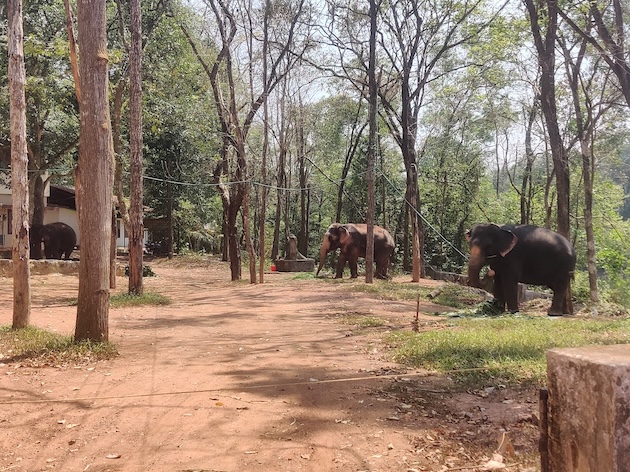
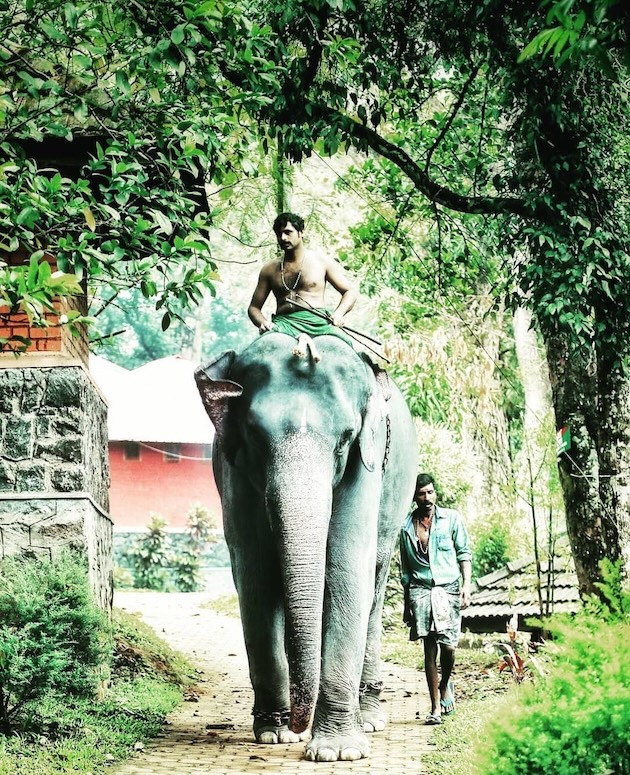
Elephants at the Kappukadu elephant rehabilitation center in Kottoor.
NEW DELHI, Sep 5 2025 (IPS) – In the early part of this year, two deaths in Kerala garnered major media attention. A farmer in Wayanad and a female plantation worker in Idukki were killed in two separate events, within a matter of a few days, by wild elephants.
Arikomban, another wild elephant, has become a media favorite recently due to his brushes with human settlements near his habitat. Named so because of his love for ari (rice), the elephant had been relocated from Kerala to Tamil Nadu in 2023 following constant protests from people who also claimed him to be ‘life-threatening.’ Kerala’s news outlets widely covered Arikomban’s relocation.
These aren’t one-off cases in Kerala, which has seen a spike in human–wildlife conflict, especially involving elephants.
According to a news report, 451 people have been killed in wildlife conflicts in the past five years alone in the state, with 102 of them caused by elephants.
However, wildlife biologists and environmentalists have been at odds with the narratives promoted by the media and society regarding what constitutes conflict.
“I think we shouldn’t be using the terminology ‘wildlife conflict’ itself. I would prefer addressing it as ‘negative wildlife interaction,’” says Dr. P.S. Easa, who holds a PhD on Elephant Ecology and Behavior and is a member of the National Board for Wildlife and the IUCN, Asian Elephant Specialist Group.
The conflict between wild animals and humans has been going on for centuries, and what we witness in the current era has been influenced by the transformation in the behavior of both these groups, as well as humans’ perception towards wildlife in general, he adds.
In Kerala’s social framework, the rising phenomenon of human–elephant conflict takes on a much deeper and more complex meaning than the broader topic of conflict with wildlife. Elephants have been an integral part of Kerala’s culture and tradition for centuries—domesticated not just for heavy labor but also as part of temple festivals. In the last few decades, machines have replaced elephants in much of the labor environment in the state, yet the land giants continue to be a part of the festival parades. Animal behavioral experts and activists have been consistently raising their voices against this practice in this century, citing the need to treat elephants as solely wild animals.
Easa refuses to even use the term “domesticated” for them.
“Captive elephants are the only right way to address them in this age and time,” he says.
In 2024 alone, there had been nine reported deaths in Kerala by such captive elephants. The Hindu reported six such deaths, including an elephant mahout, within the first two months of this year. Although there have been stricter rules and regulations in recent years on using captive elephants for temple festivals, they have mostly been restricted to paper. The religious nature of the festivals that these elephants are made to be a part of makes the topic even more sensitive, and political parties tend to stay away from addressing the issue.
Kerala’s elephant reserves have been categorized mainly into four regions, namely Wayanad, Nilambur, Anamudi, and Periyar. Periyar Reserve had the highest count of elephants, followed by the Anamudi Reserve. According to the Kerala Government’s Forest Statistics and the report of the ‘Wild Elephants Census of Kerala,’ the four reserves have a combined total extent of 11,199.049 sq. km., out of which only 1,576.339 sq. km. is assessed to be devoid of elephant population. According to a 2024 official assessment, Kerala had an elephant population of just under 1800, a decline of more than 100 from the previous year.
As Kerala’s elephant reserves border the neighboring states of Tamil Nadu and Karnataka, natural factors that affect the elephant population, like extreme drought and heavy, abrupt rainfall, influence the elephants’ migration across the states during the year.
In Kerala, particularly, shrinking forest habitats caused by deforestation and the increasing presence of human settlements in regions historically occupied by elephant populations, coupled with climate change and the invasive plant species erasing the elephants’ natural food sources, are some of the factors causing unnatural elephant migration, according to experts, and as a consequence, resulting in frequent interactions with humans.
The phrase “descent of wildlife into human settlements” itself is a misnomer, Eesa says.
“In almost all such cases, human settlements had crossed over to those places where the wildlife had existed peacefully before. Wayanad and Idukki are classic examples of this.”
“There was a report that I had come across a while ago—of an ‘elephant attack’ that happened in Sholayar Forest Reserve. Look at the irony of that news. It’s a forest reserve—the habitat belongs to the elephant, not the people who were driving through it. What I’m saying is, every time an elephant conflict is reported, you need to dissect all the circumstances surrounding it. Where—was it within the jungle or outside it? When was it, during the daytime or at night? And how? What were the circumstances leading up to the interaction?” he explains.
The drastic increase in food waste owing to tourism in Kerala has been another factor for wild animals encroaching into human spaces lately. Elephants, wild boars, and monkeys have been observed to have come to human settlements to feed on the food waste.
There is no one, foolproof method to resolve the human–elephant conflict, scientists opine. Easa points out that several techniques that had been fruitful in African countries proved ineffective when used in countries like Sri Lanka and Indonesia.
A mahout is seen riding a captive elephant. Kerala continues to make use of elephants for temple festivals and parades.
Wildlife biologist Sreedhar Vijayakrishnan, in an interview given to Mongabay in 2023, suggests five main long-term measures that will help mitigate human-elephant conflict. This includes initiating long-term studies to understand elephant movements and spatiotemporal patterns of conflict, which will help ascertain where and how interventions are required; tracking areas of elephant movement and identifying regions of intense use while installing alert lights at vantage points that can be triggered in case of elephant sightings; raising awareness among local populations to discourage feeding elephants or unwanted interactions; training local rapid response teams to prevent negative interactions and indiscriminate drives; and fitting satellite collars on elephants that frequently cause issues.
Kerala also has an elephant rehabilitation center established in Kottoor, Thiruvananthapuram, for rescuing, rehabilitating, and protecting both captive and wild elephants. The state, like other forest reserves in India, has historically chosen to turn many of the captured conflict-making elephants into ‘Kumkis’ (a Kumki elephant is a specially trained and domesticated elephant used in rescue operations and to train other wild elephants and manage wildlife conflict).
Apart from the above, one of the most effective measures that has been implemented in Kerala is through the Wayanad Elephant Conflict Mitigation Project by the Wildlife Trust of India (WTI). The project, first initiated in 2002–2003 by WTI, has evolved into a successful model for tackling human–elephant conflict in Kerala. The model has focused on relocating human settlements from places identified as ‘elephant corridors’ in the Wayanad district of Kerala. Wayanad, spanning a total of 2,131 sq. km., has an elephant reserve spread over 1,200 sq. km., with an elephant density of 0.25 elephants/sq. km.
Shajan M.A., a Senior Field Officer with WTI who handles the project currently, tells me, “Our method is to buy such sensitive land from the people, including both tribal and other communities, and relocate them to safer regions, away from wildlife conflict.” Ultimately, WTI hands over the purchased land to the Kerala Forest Department.
In regions like the Tirunelli–Kudrakote elephant corridor, the human–elephant conflict had escalated so much that it had resulted in several human deaths. For the communities, leaving a land they had occupied for decades and considered home is never easy, Shajan acknowledges. But of all the tried and tested methods to deal with the human–wildlife conflict, this approach has been the most effective in the long run, he points out.
Shajan also muses on the question of what exactly comprises a ‘conflict.’
“Conflict can hold different meanings. From a monkey stealing food from the house to a tiger or an elephant attack on a human, even leading to deaths, it’s all considered a human–wildlife conflict. Sadly, we, as a society, tend to be reactive once it transforms into a conflict and place the blame wholly on the wildlife.”
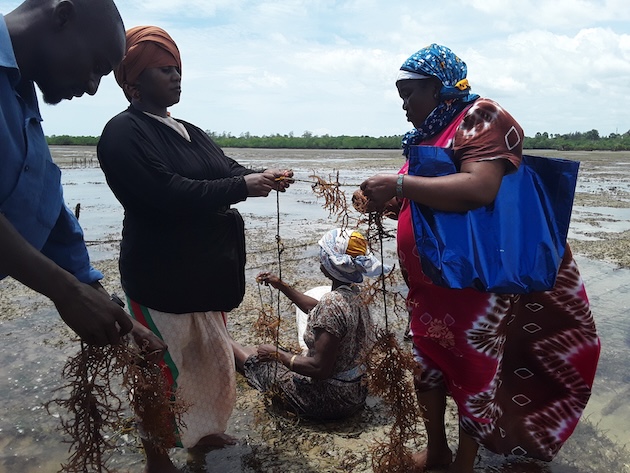
Scientists say replacing just 10 percent of global vegetable intake with seaweed-derived products could free up large portions of land. Credit: Joyce Chimbi/IPS
Current rates of land degradation pose a major environmental and socioeconomic threat, driving climate change, biodiversity loss, and social crises. Food production to feed more than 8 billion people is the dominant land use on Earth. Yet, this industrial-scale enterprise comes with a heavy environmental toll.
Preventing and reversing land degradation are key objectives of the United Nations Convention to Combat Desertification (UNCCD) and are also fundamental for the United Nations Framework Convention on Climate Change (UNFCCC) and the Convention on Biological Diversity (CBD).
These three conventions emerged from the 1992 Rio Earth Summit to address the interconnected crises of biodiversity loss, climate change and land degradation. A paper published today in Nature by 21 leading scientists argues that the targets of “these conventions can only be met by ‘bending the curve’ of land degradation and that transforming food systems is fundamental for doing so.”
Lead author Fernando T. Maestre of the King Abdullah University of Science and Technology (KAUST), Saudi Arabia, says the paper presents “a bold, integrated set of actions to tackle land degradation, biodiversity loss, and climate change together, as well as a clear pathway for implementing them by 2050.”
“By transforming food systems, restoring degraded land, harnessing the potential of sustainable seafood, and fostering cooperation across nations and sectors, we can ‘bend the curve’ and reverse land degradation while advancing towards goals of the UN Convention to Combat Desertification and other global agreements.”
Co-author Barron J. Orr, UNCCD’s Chief Scientist, says, “Once soils lose fertility, water tables deplete, and biodiversity is lost, restoring the land becomes exponentially more expensive. Ongoing rates of land degradation contribute to a cascade of mounting global challenges, including food and water insecurity, forced relocation and population migration, social unrest, and economic inequality.”
“Land degradation isn’t just a rural issue; it affects the food on all our plates, the air we breathe, and the stability of the world we live in. This isn’t about saving the environment; it’s about securing our shared future.”
The authors suggest an ambitious but achievable target of 50 percent land restoration for 2050—currently, 30 percent by 2030—with enormous co-benefits for climate, biodiversity and global health. Titled ‘Bending the curve of land degradation to achieve global environmental goals,’ the paper argues that it is imperative to ‘bend the curve’ of land degradation by halting land conversion while restoring half of degraded lands by 2050.
“Food systems have not yet been fully incorporated into intergovernmental agreements, nor do they receive sufficient focus in current strategies to address land degradation. Rapid, integrated reforms focused on global food systems, however, can move land health from crisis to recovery and secure a healthier, more stable planet for all,” reads parts of the paper.
Against this backdrop, the authors break new ground by quantifying the impact of reducing food waste by 75 percent by 2050 and maximizing sustainable ocean-based food production—measures that alone could spare an area larger than Africa. They say restoring 50 percent of degraded land through sustainable land management practices would correspond to the restoration of 3 Mkm² of cropland and 10 Mkm² of non-cropland, a total of 13 Mkm².
Stressing that land restoration must involve the people who live on and manage the land—especially Indigenous Peoples, smallholder farmers, women, and other vulnerable people and communities. Co-author Dolors Armenteras, Professor of Landscape Ecology at Universidad Nacional de Colombia, Bogotá, says land degradation is “a key factor in forced migration and conflict over resources.”
“Regions that rely heavily on agriculture for livelihoods, especially smallholder farmers, who feed much of the world, are particularly vulnerable. These pressures could destabilize entire regions and amplify global risks.”
To support these vulnerable segments of the population, the paper calls for interventions such as shifting agricultural subsidies from large-scale industrial farms toward sustainable smallholders, incentivizing good land stewardship among the world’s 608 million farms, and fostering their access to technology, secure land rights, and fair markets.
“Land is more than soil and space. It harbors biodiversity, cycles water, stores carbon, and regulates climate. It gives us food, sustains life, and holds deep roots of ancestry and knowledge. Today, over one-third of Earth’s land is used to grow food – feeding a global population of more than 8 billion people,” says Co-author Elisabeth Huber-Sannwald, Professor, the Instituto Potosino de Investigación Científica y Tecnológica, San Luis Potosí, Mexico.
“Yet today,” she continues, “Modern farming practices, deforestation, and overuse are degrading soil, polluting water, and destroying vital ecosystems. Food production alone drives nearly 20 percent of global emissions of greenhouse gases. We need to act. To secure a thriving future – and protect land – we must reimagine how we farm, how we live, and how we relate to nature – and to each other.”
With an estimated 56.5 Mkm² of agricultural land, cropland, and rangelands being used to produce food, and roughly 33 percent of all food produced being wasted, of which 14 percent is lost post-harvest at farms and 19 percent at the retail, food service and household stages, reducing food waste by 75 percent, therefore, could spare roughly 13.4 Mkm² of land.
The authors’ proposed remedies include policies to prevent overproduction and spoilage, banning food industry rules that reject “ugly” produce, encouraging food donations and discounted sales of near-expiry products, education campaigns to reduce household waste and supporting small farmers in developing countries to improve storage and transport.
Other proposed solutions include integrating land and marine food systems, as red meat produced in unsustainable ways consumes large amounts of land, water, and feed and emits significant greenhouse gases. Seafood and seaweed are sustainable, nutritious alternatives. Seaweed, for example, needs no freshwater and absorbs atmospheric carbon.
The authors recommend measures such as replacing 70 percent of unsustainably produced red meat with seafood, such as wild or farmed fish and mollusks. Replacing just 10 percent of global vegetable intake with seaweed-derived products could free up over 0.4 Mkm² of cropland.
They nonetheless note that these changes are especially relevant for wealthier countries with high meat consumption. In some poorer regions, animal products remain crucial for nutrition. The combination of food waste reduction, land restoration, and dietary shifts, therefore, would spare or restore roughly 43.8 Mkm² in 30 years (2020-2050).
The proposed measures combined would alsocontribute to emission reduction efforts by mitigating roughly 13.24 Gt of CO₂-equivalent per year through 2050 and help the world community achieve its commitments in several international agreements, including the three Rio Conventions and UN SDGs.
Overall, the authors call for the UN’s three Rio conventions—CBD, UNCCD and UNFCCC—to unite around shared land and food system goals and encourage the exchange of state-of-the-art knowledge, track progress and streamline science into more effective policies, all to accelerate action on the ground.
A step in the right direction, UNCCD’s 197 Parties, at their most recent Conference of Parties (COP16) in Riyadh, Saudi Arabia, have already adopted a decision on avoiding, reducing and reversing land and soil degradation of agricultural lands.
The Findings By Numbers
56%: Projected increase in food production needed by 2050 if we stay on our current path
34%: Portion of Earth’s ice-free land already used for food production, headed to 42% by 2050
21%: Share of global greenhouse gas emissions produced by food systems
80%: Proportion of deforestation driven by food production
70%: Amount of freshwater consumption that goes to agriculture
33%: Fraction of global food that currently goes to waste
USD 1 trillion: Estimated annual value of food lost or wasted globally
75%: Ambitious target for global food waste reduction by 2050
50%: Proposed portion of degraded land to be restored by 2050 using sustainable land management
USD 278 billion: Annual funding gap to achieve UNCCD land restoration goals
608 million: Number of farms on the planet
90%: Percentage of all farms under 2 hectares
35%: Share of the world’s food produced by small farms
6.5 billion tons: Potential biomass yield using 650 million hectares of ocean for seaweed farming
17.5 million km²: Estimated cropland area saved if humanity adopts the proposed Rio+ diet (less unsustainably produced red meat and more sustainably sourced seafood and seaweed-derived food products)
166 million: Number of people who could avoid micronutrient deficiencies with more aquatic foods in their diet
Gereltuya Bayanmukh speaks about her motivations to become involved in climate activism. Credit: Leo Galduh/IPS
ULAANBAATAR, Jul 9 2025 (IPS) – Youth activist Gereltuya Bayanmukh still reflects on the events in her formative years that inspired her to become a climate activist. When she was a child, she would visit her grandparents in a village 20 km to the south of the border between Russia and Mongolia.
She was happy to see each of the nomadic people in their traditional gers power up their settlements using solar power.
“I remember seeing my neighbors own a solar panel and a battery to accumulate power. They were turning on lights and watching TV using solar power. Nowadays, they even have fridges,” she says.
She thought the herders made a conscious choice about their lifestyles and understood the need of the hour in the face of the looming climate crisis. That is to say, switch to renewable energy and power a safer future.
“This was the reason I became a climate activist,” she says.
No matter how unwitting her notion about her community achieving self-sufficiency with renewable energy was, the findings about what entailed this system revealed something else.
“I later learned that the solar panels were partially subsidized by the government as a part of the nationwide government to equip 100,000 nomadic households with solar energy,” she says.
What she perceived turned out to be a nationwide renewable energy scheme by the Mongolian government for the nomadic herders.
The scheme, called the National 100,000 Solar Ger [Yurt] Electricity Program, introduced in 2000, provided herders with portable photovoltaic solar home systems that complement their traditional nomadic lifestyle.
At least 30 percent of Mongolia’s population comprises nomadic herders. Before 2000, when the scheme came into effect, herders had limited or no access to modern electricity. By 2005, the government managed to equip over 30,000 herder families through funds from several donor nations.
However, the full-scale electrification effort for herders was beginning to stagnate. The 2006 midterm custom audit performance report by the Standing Committee on Environment, Food and Agriculture of the Parliament carried sobering revelations.
The scheme in its initial phase was poorly managed: there was no control over the distribution process, with some units delivered to local areas landing in the hands of non-residents violating the contract, failure to deliver the targeted number of generators, misappropriation of the program funds, and inability to repay the loans within the contractual period.
However, in the third phase–2006-2012–the program was able to expand its implementation with the support of several international donors, including the World Bank.
“At first, I thought how great that we started out with the renewable energy transition, giving access to renewable energy at a lower price. And it was even in 1999. That was when I was just four years old. I believe we were on our way to building a future like this. Like we visualized here. The future of green nomadism. However, my optimism faded when I read the midterm audit report and discovered that the program had been (just as) poorly managed as the first part. It was only with the assistance of the international partners that the program finished well,” says Gereltuya.
Gereltuya is the co-founder and board director of her NGO, Green Dot Climate, which focuses on empowering youth as climate activists and raising awareness and practical skills for climate action.
One of the mottoes of her NGO is to change the youth’s and Mongolian people’s attitudes and practices around climate change issues as well as solutions.
In the past year, the NGO has been successful in reaching over half a million Mongolians, including nomads, helping them become more environmentally conscious and empowering the youth to be climate activists—makers and doers themselves.
“In the past year, we have reached over half a million Mongolians. Our Green Dot youth community has logged more than 100,000 individual climate actions, saving over 700,000 kg of CO₂, 25 liters of water, and 80,000 kilowatt-hours of energy. Next, we will aim for a million collective actions, a stronger community and a minimum of 50 collaborative climate projects in Mongolia,” Gereltuya said during her delegate speech at the One Young World Summit, a global event that brings in young leaders from around the world to discuss global issues, in 2023.
The state of Mongolia’s nomads in the current energy system
Mongolia as a country heavily relies on coal for energy production, which contributes to 90 percent of its energy production. Coming to just transition, the government aims for a 30 percent renewable energy share by 2030 of its installed capacity, as enshrined in the State Policy on Energy 2015-2030. Mongolia is also committed to reducing its greenhouse gas emissions by 22.7 percent by 2030 while the energy sector accounts for 44.78 percent of the total emissions as of 2020 according to Mongolia’s Second Biennial Update Report.
Gereltuya’s NGO, Green Dot Climate, has been mapping Mongolia’s energy systems for the past few years now. As of 2024, Mongolia’s electricity sector relies on CHP [combined heat and power] plants and imports from Russia and China to meet its electricity demands.
Only 7 percent of its total installed energy comes from renewable sources, with the Central Energy System accounting for over 80 percent of the total electricity demand. “We found that about 200,000 households remain unaccounted for in the centralized energy grid calculations. These are likely the same nomadic families or their later generations who likely adopted their first solar systems at least two decades ago,” she explains.
Although Mongolia has promised to increase its renewable energy share to 30 percent by 2030, it is still far behind in the race to achieve its target.
In the 2020 Nationally Determined Contribution [NDC] submission to the United Nations Framework Convention on Climate Change [UNFCCC], Mongolia set its mitigation target to “a 22.7% reduction in total national greenhouse gas (GHG) emissions by 2030,” which can increase to a 27.2 percent reduction if conditional mitigation measures such as the carbon capture and storage and waste-to-energy technology are implemented. Further, if “actions and measures to remove GHG emissions by forest are determined”, the total mitigation target would rise to 44.9 percent by 2030.
“Instead of focusing on decarbonizing its coal-based economy, Mongolia shifted to focus on carbon-sink and sequestration processes to reduce its emissions. This suggests that despite our many promises, policies and past efforts to mainstream renewables, we may still end up with business as usual. A case of bad governance, stagnation and vicious cycles,” she says.
Recommendations for Mongolia’s energy sector
Gereltuya’s NGO has been actively engaged in the survey ‘Earth Month 2025’ that is aimed at collecting specific recommendations from the youth voices in the country for the NDC 3.0 that the government is expected to submit in COP30. She shares a few recommendations that she believes can help improve the country’s energy systems.
On the demand side, households not connected to the grid should update and improve their solar home systems, especially now that the solutions are much cheaper and more efficient.
According to the 2024 World Bank ‘Mongolia Country Climate and Development Report,’ the average residential tariff for electricity in Mongolia was estimated to be 40 percent below cost recovery, and subsidies were worth 3.5 percent of GDP in 2022. The lack of cost recovery created hurdles in efforts to enhance energy efficiency and investment in renewable energy. In the context, those connected to the grid should pay more for their energy use to reflect the real cost of energy production and support renewable energy feed-in tariffs. There should be responsible voting of citizens demanding better policies and implementations and not trading in policies for short-term gains.
On the supply side, there is a need to stop new fossil fuel projects immediately: there are at least six such projects, including one international project under Mongolia’s current Energy Revival Policy, underway.
Secondly, Mongolia’s electricity infrastructure needs significant improvement. As the UNDP recently highlighted, Mongolia’s infrastructure is aging, inefficient and heavily subsidized.
Thirdly, fully utilize installed energy capacity, which is at only 30 percent, largely owing to the infrastructure inefficiency.
Fourth is to increase the overall renewable energy capacity five times to meet demand, which means 15 times the energy made in full demand. And phase out coal-based power, replacing it with fully renewable energy.
Li Junhua, Conference Secretary-General, UN Under-Secretary-General for Economic and Social Affairs, Arnoldo Andre Tinoco, Minister of Foreign Affairs, Costa Rica and Olivier Poivre D’Arvor, Special Envoy of the French Republic for UN Ocean Conference address the final press briefing of UNOC3. Credit: Kizito Makoye/IPS
NICE, France, Jun 13 2025 (IPS) – With the future of the world’s oceans hanging in the balance, global leaders, scientists, and activists gathered in the French Riviera city of Nice this week for the historic UN Ocean Conference, where France declared a new era of high seas governance and marine protection.
At a press briefing on Thursday, Olivier Poivre d’Arvor, France’s Special Envoy for the UN Ocean Conference, said the global gathering marks a turning point for ocean conservation, with 174 delegations and 64 heads of state rallying behind a common goal—to transform the world’s oceans from a lawless expanse into a protected global commons governed by science, cooperation, and binding treaties.
“The high seas are no longer a playground. They are now a protected space,” d’Arvor told reporters, announcing that the UN’s landmark treaty on Biodiversity Beyond National Jurisdiction (BBNJ) will officially enter into force by early January 2026.
Dubbed the “Treaty of Nice,” the pact seeks to place nearly two-thirds of the world’s ocean under international governance, a move hailed by conservationists as the biggest step forward for marine protection in decades. With 56 countries having ratified the treaty and 14 more expected to follow before the ceremonial launch in New York on September 23, the agreement meets the 60-country threshold required for it to become law.
“This is a foundational moment,” said d’Arvor. “Nice could become for ocean governance what Rio was for climate and biodiversity.”
The treaty, negotiated over 15 years, aims to regulate the high seas—areas beyond national jurisdiction that have long been vulnerable to overfishing, pollution, and unregulated extraction. It also lays the groundwork for the first-ever Ocean COP, expected by the end of 2026, where signatory countries will finalize implementation protocols, establish a permanent secretariat, and begin real enforcement through satellites, naval fleets, and drones.
Despite tensions in multilateral diplomacy, France—with co-host Costa Rica and the UN—has managed to galvanize widespread support. In a strong show of unity, even geopolitical rivals such as China, India, and the European Union endorsed the treaty, while Argentina’s President Javier Milei and Indonesia ratified it during the summit.
D’Arvor also used the occasion to caution against a renewed push for deep-sea mining, particularly in light of a recent U.S. executive order authorizing a preliminary exploration mission. “The deep sea is not for sale—no more than Antarctica or Greenland,” he warned, pledging that a coalition of 40 countries would continue to block any attempt to adopt a mining code without consensus under the International Seabed Authority (ISA).
“Those who hoped the code would be adopted at Kingston this July have lost the battle. I hope they’ve lost the war,” he added.
In parallel with the treaty’s legal strides, the conference saw the launch of the European Ocean Pact, a collaborative ocean exploration initiative unveiled by European Commission President Ursula von der Leyen. The pact, backed by countries including India and China, aims to correct the stark imbalance in research funding—currently, ocean exploration receives 250 times less funding than space programs.
By bringing together oceanographic institutes, space agencies, and private sector players, the initiative promises to generate a shared global database to help map and understand the ocean in unprecedented detail. “In 15 years, we aim to fully understand the ocean—or at least enough to truly protect it,” said d’Arvor.
He stressed that science—not political posturing—will be the new compass for ocean policy. “This is the victory of science. The ocean has long been a victim of exploitation and ignorance. But now, it can become a platform for cooperation and peace.”
Yet challenges remain. While Exclusive Economic Zones (EEZs) are relatively well managed, questions linger about compliance and enforcement. The true test, observers say, will be translating high-level pledges into measurable progress.
Still, the momentum in Nice has brought renewed hope for ocean defenders around the globe. “We are not there yet,” said d’Arvor. “But for the first time, we are truly moving forward—and there is no turning back.”