BRAZIL: ‘The Law Should Protect Women and Girls, Not Criminalise Them’

Civil Society, Crime & Justice, Featured, Gender, Gender Violence, Headlines, Health, Human Rights, Inequality, Latin America & the Caribbean, TerraViva United Nations

Jul 18 2024 (IPS) –  
CIVICUS discusses abortion rights in Brazil with Guacira Oliveira, director of the Feminist Centre for Studies and Advice (CFEMEA). CFEMEA is an anti-racist feminist organisation that defends women’s rights, collective care and self-care and monitors developments in Brazil’s National Congress.


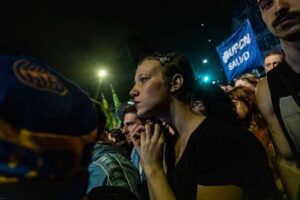
In June, thousands of women took to the streets of São Paulo and other cities to protest against a bill that would classify abortion after 22 weeks as homicide, punishable by six to 20 years in prison. Protests began when the lower house of Congress fast-tracked the bill, limiting debate. Abortion is currently legal in Brazil only in cases of rape, foetal malformation or danger to the life of a pregnant person. The proposed bill, promoted by evangelical representatives, would criminalise people who have abortions more severely than rapists. Public reaction has slowed down the bill’s progress and its future is now uncertain.

How would this new anti-abortion law, if passed, affect women?

Currently, abortion is legal in Brazil only in cases of rape, danger to a pregnant person’s life and severe foetal malformation. However, current legislation doesn’t set a maximum gestational age for access to legal abortion. The proposed bill would equate abortion after 22 weeks of pregnancy with homicide, punishing the person seeking the abortion and the health professionals who perform it.

This would particularly affect girls, as over 60 per cent of rape victims are children under the age of 13. In more than 64 per cent of these cases, the rapist is someone close to the girl’s family, making it difficult to identify the rape and the resulting pregnancy.

Another perverse aspect of the problem is racial inequality. Forty per cent of rape victims are Black children and adolescents, and of those under 13, more than 56 per cent are Black girls. Of 20,000 girls under the age of 14 who give birth each year, 74 per cent are Black. In addition, Black women are 46 per cent more likely to have an abortion than white women. The passage of this bill would make Black women and girls even more vulnerable than they already are. The law should protect these women and girls, not criminalise them.

How has civil society mobilised against the bill?

CFEMEA has been monitoring threats to legal abortion for decades and is part of the National Front Against the Criminalisation of Women and for the Legalisation of Abortion. Threats increased with the rise of the far right to the presidency in 2018, and feminist movements mobilised over cases of girls who were victims of sexual violence and faced institutional barriers to accessing legal abortion.

In 2023, in response to regressive legislation, they launched the ‘A child is not a mother‘ platform, recently reactivated as the new anti-abortion bill was submitted as a matter of urgency. More than 345,000 people signed up to the campaign and sent messages to parliamentarians. They also applied pressure on social media through posts and hashtags such as #criançanémãe (#ChildNotMother), #PLdagravidezinfantil (#CongressForChildPregnancy) and #PLdoestupro (#CongressForRape).

We also campaigned through face-to-face actions and other collectively defined strategies, led mainly by state-level alliances against the criminalisation of women and for the legalisation of abortion. In May, we laid a symbolic wreath in front of the Federal Council of Medicine, which in April had published a resolution banning foetal asystole, a procedure recommended by the World Health Organization for legal abortions after 22 weeks. By doing so we symbolised our grief for all the women and girls whose lives are cut short due to lack of access to a legal abortion. We reenacted this outside the official residence of the President of the Chamber of Deputies, just before the fast-track request for the anti-abortion bill was approved, on the evening of 12 June.

The following day, the first public protests took place in several Brazilian state capitals. These continued over subsequent days, culminating in a nationwide action on 27 June. The issue is still on the agenda in July and demonstrations are still going strong.

Why is Brazil moving against the regional trend towards legalisation?

Brazil has seen advances by the religious fundamentalist far right since 2016, when President Dilma Rousseff was removed from office through a legal-parliamentary manoeuvre that amounted to a political coup. The violent ethnocentric, LGBTQI+-phobic, neopatriarchal and racist reaction intensified in 2018 with the victory of Jair Bolsonaro in an election marred by disinformation.

Conservatives view the rights to diverse and plural ways of life as a threat to their existence. In this sense, their regressive proposals are a direct response to women’s struggles against patriarchy and all forms of women’s oppression.

Even after its defeat in the 2022 presidential election, the far right has become stronger in the National Congress, where extremists have obtained majorities in both the Chamber of Deputies and the Senate. This has led to the revival of a bill known as the ‘Statute of the Unborn Child’, aimed at granting ‘personhood’ to the foetus in order to criminalise abortion.

Many factors explain the conservative reaction in Brazil and around the world. For fascists in power and in society, violence is justified against groups considered to be ‘enemies of the people’, which can include any dissenting voices – those of women, Black people, Indigenous peoples and LGBTQI+ people. In the case of women, they are trying to re-domesticate us, to send us back home, subservient to the command and judgement of patriarchs. Control over reproduction and our bodies is a crucial part of this strategy.

What are the forces for and against sexual and reproductive rights in Brazil?

The main force against sexual and reproductive rights is religious fundamentalism, which positions itself as a harbinger of control over women’s bodies and gender dissidents and is strongly represented in the National Congress. The defence of these rights lies in the progressive camp, represented by the political left and the feminist, women’s and LGBTQI+ movements.

But it’s worth noting that even with a Congress besieged by anti-rights groups, most people have a less punitive and more empathetic understanding of feminist struggles and women’s rights. A survey we carried out in 2023, in collaboration with the Observatory of Sex and Politics and the Centre for Studies and Public Opinion of the State University of Campinas, showed that 59 per cent were against the criminalisation and possible imprisonment of women who have abortions.

What are the main demands of the Brazilian feminist movement?

The feminist movement is plural and diverse, but what it has in common is the fight to end all forms of violence against women. CFEMEA seeks to transform the world through anti-racist feminism and by taking a stand against all gender inequalities and oppression. This is our position when we enter dialogue with society and make demands of governments. We demand public policies that reduce inequalities between men, women and people with other gender identities, considered in their intersectional dimensions of age, creed, ethnicity, nationality, physical abilities and race, among others.

A fundamental issue is the sexual and racial division of labour, a powerful structure that maintains and exacerbates the inequalities experienced by women. After all, the care work they do, despite being rendered invisible and devalued by patriarchal capitalism, is an indispensable condition for human life and the construction of collective good living. The manifesto of the Anti-Racist Feminist Forum for a National Care Policy, signed by dozens of movements and organisations, affirms the need for social reproduction activities to be recognised and shared by the state. This means that care work, which is currently unpaid and done at the family and community levels almost exclusively by women, must be effectively taken over by the state, because care is a human need.

We demand that governments allocate public investment to combat gender inequalities in areas as diverse as care, culture, education, the environment, health, justice, labour, leisure and wellbeing. It is the state, not the market, that can and must combat such inequalities.

Civic space in Brazil is rated ‘obstructed’ by the CIVICUS Monitor.

Get in touch with CFEMEA via its website or its Facebook or Instagram page, and follow @cfemea on Twitter.

  Source

UAE Complicit in Sudan Slaughter

Armed Conflicts, Civil Society, Crime & Justice, Featured, Food and Agriculture, Headlines, Human Rights, Middle East & North Africa, Migration & Refugees, TerraViva United Nations

Opinion

Credit: Mark Kerrison/In Pictures via Getty Images

LONDON, Jul 11 2024 (IPS) – Sudan is the scene of unimaginable suffering. As war between army and militia continues, civilians are paying the highest price. Both sides are killing non-combatants and committing gross human rights crimes.


The country stands on the brink of famine. It’s experiencing its worst recorded levels of food insecurity and over 750,000 are at risk of starvation.

Around 11 million people have been forced to flee their homes, armed forces have stolen and destroyed food supplies, crops and livestock, and many people are no longer able to earn a living or farm. UN human rights experts accuse both sides of using denial of food as a weapon, including by blocking humanitarian deliveries and looting depots.

Many of the worst-affected areas are in Darfur, where the Rapid Support Forces (RSF) militia has gained territory and is currently besieging El Fasher. The RSF grew out of the militias that committed genocide in Darfur two decades ago, and they’re again accused of genocide, carrying out ethnically motivated mass killings. Meanwhile, the army it’s fighting, the Sudanese Armed Forces (SAF), has blocked the main humanitarian access point on the border with Chad.

Proxy war

The conflict broke out in April 2023, sparked by a power struggle between two men: Abdel Fattah al-Burhan, SAF commander-in-chief and leader of the ruling junta, and Mohamed Hamdan Dagalo, known as Hemeti, RSF head. The two worked together in the 2021 coup that ousted a civilian government. A plan to incorporate the RSF into the SAF was the flashpoint of their battle for leadership and, crucially, control of resources.

But beyond the two warring egos, bigger forces are at play. Several other states are taking sides in the conflict, enabling it to continue. Much of the foreign involvement is opaque and subject to official denials. Egypt and Iran are among states providing military support to the SAF. Meanwhile, forces from the eastern part of divided Libya have allegedly helped supply the RSF, and the Chadian government is accused of cooperating with it.

Another distant war is echoing in Sudan. Russia, which has extensive goldmining interests in the country, initially seemed to be siding with the RSF, particularly through its mercenary fighters. In response, Ukrainian troops reportedly carried out attacks on Russian mercenaries and RSF forces. More recently, however, Russia may be tilting towards the SAF, possibly eyeing the development of a Red Sea naval base. Russia recently abstained on a UN Security Council resolution calling on the RSF to end its siege of El Fasher, which it could have vetoed.

But the biggest player is the United Arab Emirates (UAE), the Gulf petrostate that’s increasingly asserting itself in many African countries. In countries undergoing conflict, it takes sides. In Ethiopia, when federal troops fought separatist groups from Tigray, the UAE supported the government. In Libya, it’s backed the eastern forces fighting those in the west.

In Sudan, it’s firmly on the RSF’s side. It’s supplying weapons to the RSF, including reportedly through shipments disguised as humanitarian aid and supplies routed through other African counties where it has a presence. Key RSF backroom operations are being run from UAE locations. Wounded RSF fighters are reportedly being treated in Abu Dhabi. Without the UAE’s support, it’s highly unlikely the RSF would be able to sustain its war effort on its current scale. The UAE denies it all, but a UN expert panel found the allegations credible.

The UAE has extensive economic interests at stake. It receives more Sudanese gold than any other country, some of which makes its way to Russia. It has large agricultural investments and a major Red Sea port plan.

There are political interests too. The UAE doesn’t want countries it has a stake in to democratise. It supports several anti-democratic African governments, including in Algeria, Egypt and Tunisia. It likely sees backing the RSF as the best way to ensure the democratic transition once promised by the 2019 revolution remains thwarted.

A Middle East power struggle is playing out in Sudan. The UAE has long taken a similar stance to Saudi Arabia’s, but increasingly shows an appetite to contest Saudi supremacy. The two ended up diverging over their involvement in the conflict in Yemen. Its Sudan policy is another way the UAE can demonstrate its independence.

The UAE’s role also accounts for Iran’s pro-SAF position, while Saudi Arabia is trying to distinguish itself from both by brokering peace talks, known as the Jeddah process, which so far have come to little.

The UAE also has powerful friends in the west, not least the UK and the USA, and it’s using them to limit international scrutiny. The British government, which currently leads on Sudan at the UN Security Council, was reported to have pressured African states not to criticise the UAE over its support for the RSF.

Time for action

The people of Sudan deserve better than to be pawns in a proxy war waged by distant states.

But people in the UAE have no way to pressure their government if they’re upset about the blood on its hands. Civic space in the UAE is closed and those who speak out are routinely criminalised.

This means it falls on others to mobilise. States helping perpetuate the conflict should come under greater pressure from other states, the international community and international civil society.

The first and most urgent demand must be for unfettered humanitarian access. Even then, an immediate ceasefire is needed. There must the follow a process of genuine dialogue to build peace and plan for transition, which must involve Sudanese civil society in its diverse forms.

The international community must step up its efforts. The UN’s fact-finding mission, established last October following civil society advocacy, has been severely hampered by funding shortfalls, as has the humanitarian response plan. States must adequately resource the UN response.

States, the international community and civil society must also throw the spotlight on the UAE. There must be consequences. When the RSF eventually faces justice, those who enabled it must also be held to account – and the UAE’s rulers should be first in line.

Andrew Firmin is CIVICUS Editor-in-Chief, co-director and writer for CIVICUS Lens and co-author of the State of Civil Society Report.

  Source

As Heat Soars in India, so Does Domestic Violence

Asia-Pacific, Civil Society, Crime & Justice, Featured, Gender, Gender Violence, Global, Headlines, IPS UN: Inside the Glasshouse, TerraViva United Nations

Opinion

Members of a “Jugnu” club get trained by UN Women to support women who experience gender-based violence. Credit: UN Women

NEW DELHI, India, Jul 4 2024 (IPS) – As the temperature soars to new heights in India, so does domestic violence. It’s a well-established correlation that is largely left out of the climate change discussion, but the gap is glaring and needs to be bridged.


For the third summer in a row, temperatures in India are breaking historical records. The recent record high of 52.9° C (127.22° F), has resulted in loss of livelihood, water rationing, health impacts, and even death. The heat affects some more than others. As people are advised to shelter at home, those in lower economic strata contend with cramped living situations, lack of air conditioning, and power cuts.

Women bear the worst impacts. New Delhi’s Heat Action Plan (HAP) registers their greater vulnerability – noting, for example, that they’re more susceptible to falling sick from the heat compared to men, the heightened risks for pregnant people, and greater expectations of women to be caretakers. But it fails to note the increased threat of violence.¬¬¬¬¬

It is well-documented that temperature extremes lead to an increase in domestic violence cases, with low-income women bearing the brunt. In South Asia, for every degree that the temperature rises, domestic violence increases about 6%.

As India grapples with its large carbon footprint, rising temperatures, and growing population, intimate partner violence can be expected to increase drastically. P¬¬ar¬¬¬ticularly if greenhouse gas emissions aren’t regulated effectively, India could see a spike in domestic violence of more than 20% by the end of the century.

Extreme temperatures are associated with frustration, aggression, and disruptions in people’s daily routines. Researchers theorize this is the reason why heat has a such a strong influence on rates of intimate partner violence.

For low-income daily wage laborers in India, heat may result in loss of livelihood and income. Economic stress and resultant anxiety can significantly increase domestic violence risk.

In addition, women are expected to be caretakers for the family, which gives them little chance of escape from abusers and increases their vulnerability under extreme conditions. This phenomenon was prevalent during Covid-19 pandemic, when the “shadow pandemic” of domestic violence affected women across India.

The pandemic also revealed strong patterns of economic abuse of women due to unequal power dynamics within the family.

Despite research demonstrating this, the spike in domestic violence during heat waves remains hush-hush. New Delhi’s Heat Action Plan (HAP) does not mention gender-based violence even once across its 66 pages.

While it acknowledges women as a vulnerable group and deals with increased risk during pregnancy, other risks to women remain shrouded in the vagueness of “social norms” and “gender discrimination.” Failing to address the threat of intimate partner violence explicitly leaves out a key piece of the puzzle.

The omission has manifold impacts. It lets policymakers shy away from confronting the issue, creating a gap in policy at the highest level. It sets up government workers tasked with implementing the plans such as New Delhi’s HAP on the ground for failure.

With no guidance on how to deal with the predictable increase in domestic violence during extreme heat, government can offer little support for women who need it. Mahila Panchayats (“women’s councils”) and grassroots non-profits often help rural and low-income women find support and community, but extreme weather can cut them off from these resources.

Forced to stay indoors and unable to access help, women have little recourse or respite. In theory, India’s laws protect them. But in practice, implementation is spotty, and they remain vulnerable.

India’s climate policy must not leave women out in the cold. New Delhi’s Heat Action Plan and other policy initiatives must protect women and offer them accessible support. First responders and government workers must be given the tools they need to help support those at risk for domestic violence, not only during heat waves but year-round.

Finally, India’s problem with domestic violence might be exacerbated during the summers but is not unique to them. India needs a suite of policies and concrete actions to contend with rising intimate partner violence, starting at the grassroots level and prioritizing education, employment, economic stability, and family planning for all.

Heat waves and the stressors they bring might be unforeseeable in a sense, but rising temperatures and rising domestic violence are completely predictable effects of climate change. There’s no excuse for failing to redress them.

By leaving women vulnerable year after year, we are doing a disservice, both to women who need help and to the institutions that they place their trust in.

Umang Dhingra is a Duke University undergraduate and a Stanback Fellow at the Population Institute, a Washington D.C.-based nonprofit that supports reproductive health and rights.

IPS UN Bureau

  Source

Myanmar: International Action Urgently Needed

Armed Conflicts, Asia-Pacific, Civil Society, Crime & Justice, Featured, Headlines, Human Rights, Migration & Refugees, TerraViva United Nations

Opinion

Crerdit: STR/AFP via Getty Images

LONDON, Jul 3 2024 (IPS) – Myanmar’s army, at war with pro-democracy forces and ethnic militias, must know it’s nowhere near victory. It recently came close to losing control of Myawaddy, one of the country’s biggest cities, at a key location on the border with Thailand. Many areas are outside its control.


The army surely expected an easier ride when it ousted the elected government in a coup on 1 February 2021. It had ruled Myanmar for decades before democracy returned in 2015. But many democracy supporters took up arms, and in several parts of the country they’ve allied with militia groups from Myanmar’s ethnic minorities, with a long history of resisting military oppression.

Setbacks and violence

Army morale has collapsed. Thousands of soldiers are reported to have surrendered, including complete battalions – some out of moral objections to the junta’s violence and others because they saw defeat as inevitable. There have also been many defections, with defectors reporting they’d been ordered to kill unarmed civilians. Forces fighting the junta’s troops are encouraging defectors to join their ranks.

In response to reversals, in February the junta announced it would introduce compulsory conscription for young people, demanding up to five years of military service. An estimated 60,000 men are expected to be called up in the first round. The announcement prompted many young people to flee the country if they could, and if not, seek refuge in parts of Myanmar free from military control.

There have also been reports of army squads kidnapping people and forcing them to serve. Given minimal training, they’re cannon fodder and human shields. Rohingya people – an officially stateless Muslim minority – are among those reportedly being forcibly enlisted. They’re being pressed into service by the same military that committed genocide against them.

People who manage to cross into Thailand face hostility from Thai authorities and risk being returned against their will. Even after leaving Myanmar, refugees face the danger of transnational repression, as government intelligence agents reportedly operate in neighbouring countries and the authorities are freezing bank accounts, seizing assets and cancelling passports.

Conscription isn’t just about giving the junta more personnel to compensate for its losses – it’s also part of a sustained campaign of terror intended to subdue civilians and suppress activism. Neighbourhoods are being burned to the ground and hundreds have died in the flames. The air force is targeting unarmed towns and villages. The junta enjoys total impunity for these and many other vile acts.

The authorities hold thousands of political prisoners on fabricated charges and subject them to systematic torture. The UN independent fact-finding mission reports that at least 1,703 people have died in custody since the coup, likely an underestimate. Many have been convicted in secret military trials and some sentenced to death.

There’s also a growing humanitarian crisis, with many hospitals destroyed, acute food shortages in Rakhine state, where many Rohingya people live, and an estimated three million displaced. Voluntary groups are doing their best to help communities, but the situation is made much worse by the military obstructing access for aid workers.

International neglect

In March, UN human rights chief Volker Türk described the situation in Myanmar as ‘a never-ending nightmare’. It’s up to the international community to exert the pressure needed to end it.

It’s by no means certain the military will be defeated. Adversity could lead to infighting and the rise of even more vicious leaders. One thing that could make a decisive difference is disruption of the supply chain, particularly the jet fuel that enables lethal airstrikes on civilians. In April, the UN Human Rights Council passed a resolution calling on states to stop supplying the military with jet fuel. States should implement it.

Repressive states such as China, India and Russia have been happy enough to keep supplying the junta with weapons. But democratic states must take the lead and apply more concerted pressure. Some, including Australia, the UK and USA, have imposed new sanctions on junta members this year, but these have been slow in coming and fall short of the approach the Human Rights Council resolution demands.

But the worst response has come from the Association of Southeast Asian Nations (ASEAN). Ignoring reality and civil society’s proposals, ASEAN has stuck to a plan it developed in April 2021 that simply hasn’t worked. The junta takes advantage of ASEAN’s weakness. It announced compulsory conscription shortly after a visit by ASEAN’s Special Envoy for Myanmar.

ASEAN’s neglect has allowed human rights violations and, increasingly, transnational organised crime to flourish. The junta is involved in crimes such as drug trafficking, illegal gambling and online fraud. It uses the proceeds of these, often carried out with the help of Chinese gangs, to finance its war on its people. As a result, Myanmar now ranks number one on the Global Organized Crime Index. This is a regional problem, affecting people in Myanmar’s neighbouring countries as well.

ASEAN members also have an obligation to accept refugees from Myanmar, including those fleeing conscription. They should commit to protecting them and not forcing them back, particularly when they’re democracy and human rights activists whose lives would be at risk.

Forced conscription must be the tipping point for international action. This must include international justice, since there’s none in Myanmar. The junta has ignored an order from the International Court of Justice to protect Rohingya people and prevent actions that could violate the Genocide Convention, following a case brought by the government of The Gambia alleging genocide against the Rohingya. The UN Security Council should now use its power to refer Myanmar to the International Criminal Court so prosecutions of military leaders can begin.

China and Russia, which have so far refused to back calls for action, should end their block on Security Council action, in the interests of human rights and to prevent growing regional instability.

Andrew Firmin is CIVICUS Editor-in-Chief, co-director and writer for CIVICUS Lens and co-author of the State of Civil Society Report.

  Source

Argentina: Civil Society’s Urgent Call to Protect Rights

Civil Society, Crime & Justice, Democracy, Economy & Trade, Environment, Headlines, Human Rights, Latin America & the Caribbean, TerraViva United Nations

Opinion

First Round of the elections in Argentina in 2023. Credit: Midia Ninja

BUENOS AIRES, Argentina, Jul 2 2024 (IPS) – Between the Mafia and the State, I prefer the Mafia. The mafia has codes, it keeps its promises, it doesn’t lie, it’s competitive. If a company pollutes a river, where is the damage? The sale of organs is a market like any other. Abortion should be considered “aggravated murder”.


These are just a couple of quotes from former TV pundit Javier Milei, now president of Argentina, as he makes anti-progressism his trademark, borrowying from the ready-made discourse of the globalalt-right. He claims that global warming is “another lie of socialism”.

In recent months, Argentina has witnessed a significant shift under his new administration that threatens to undermine the very fabric of its civil society and democratic governance.

On June 12th, there was a violent crackdown on protesters outside the National Congress, involving the use of batons, tear gas, and rubber bullets. Several individuals were arrested arbitrarily and subsequently labeled as “terrorists” by the government, a move clearly intended to intimidate civil society and criminalize protest. These detainees have been transferred to federal prisons, where reports indicate continued abuse, including the use of pepper spray, physical violence, and denial of basic rights.

Last Friday, the government sent another controversial bill to Congress looking to lower the age of criminal responsibility from 16 to 13, even though minors commit less than 1% of serious crimes in Argentina. A proposal that was labelled by opposers as “pure smoke and mirrors.”

Since taking office, President Javier Milei’s administration has received significant international criticism, including from UN High Commissioner for Human Rights Volker Türk and the Inter-American Commission on Human Rights which has scheduled a hearing on July 11th to address the situation.

“A President proud to repress”, this is what various media across Argentina wrote as Milei went as far as accusing protesters of being “terrorists” and said police violence prevented a “coup d’état”.

These alarming development mark a stark contrast to the country’s long-standing commitment to democracy and human rights, a commitment that has been painstakingly nurtured since the end of its brutal military dictatorship in 1983.

Moreover, this change of administration has been accompanied by an abrupt “retreat” of the state from its historic role as guarantor of the rights of its citizens. This abdication by the State of its essential responsibilities adds even more concerns to the already alarming measures explicitly restricting civic space.

Javier Milei’s aggressive and theatrical style – from superhero costumes to wielding a chainsaw to illustrate his plans to cut down the size of the state – has led some to compare him to Donald Trump in the US or Jair Bolsonaro of Brazil. This shift, alongside the blurring of ideological lines between the Peronist and Together for Change coalitions, has implications for Argentina’s political landscape and on civic space.

Argentina’s civil society organizations, long the backbone of its democratic resilience and human rights advocacy, face unprecedented challenges.

Legislative proposals aimed at restricting their activities, coupled with limitations on freedom of expression and the right to protest, have sent shockwaves through the community. The administration’s policies include drastic public spending cuts, the closure of state institutions dedicated to women’s rights and access to justice, and a suspension of participation in international events related to the 2030 Agenda.

A recent protocol, announced by Security Minister Patricia Bullrich, involves identifying protesters through various means and then billing them for the costs incurred by deploying security forces to police the demonstrations. Human rights activists, opposition legislators, and organizations like the Centre of Legal Studies (CELS) argue that these measures effectively criminalize legitimate protests and violate constitutional rights. The government’s allies, such as legislator José Luis Espert, have responded with aggressive rhetoric: “Prison or bullet”.

Recently, a violent attack against a member of the organization H.I.J.O.S., known for its fight against impunity for the crimes of the last civil-military dictatorship and for the defense of human rights, has been denounced. This attack, characterized by its brutality and strong political message, reflects an alarming increase in violence against activists and civil society organizations. The attackers, by leaving the acronym VLLC (“Viva la libertad, carajo!”), associated with President Javier Milei, insinuate a disturbing link between government rhetoric and violent actions directed against “dissidents”.

These proposals, exacerbated by the country’s ongoing economic and social crises, pose new hurdles for civil society’s ability to operate and advocate for public interests.

Argentina’s history, marked by the dark years of dictatorship between 1976 and 1983, serves as a reminder of the cost of silence and inaction. The country’s journey to reclaim democracy and human rights was arduous, characterized by relentless efforts to acknowledge and compensate the victims of past repression. The current administration’s move to revise policies related to memory, truth, and human rights threatens to undo decades of progress, challenging the very essence of Argentina’s democratic sphere.

The international community, particularly organizations dedicated to the promotion of human rights and the preservation of historical memory, such as UNESCO, must heed this call to action.

The situation in Argentina requires a collective effort to support its civil society, advocate for the protection of civic space, and ensure that the lessons of the past are not forgotten.

This article was written by the Entidades no Gubernamentales para el Desarrollo (EENGD) – Red Encuentro, the national NGO platform of Argentina, in collaboration with the global civil society network Forus.

IPS UN Bureau

  Source

IRAQ: ‘Tolerance for Abuses Against LGBTQI+ People Has Now Been Made Explicit Through Legislation’

Civil Society, Crime & Justice, Featured, Gender, Gender Identity, Gender Violence, Headlines, Human Rights, LGBTQ, Middle East & North Africa, Religion, TerraViva United Nations

Jul 1 2024 (IPS) –  
CIVICUS discusses the criminalisation of same-sex relations in Iraq with Sarah Sanbar, researcher at Human Rights Watch’s Middle East and North Africa division.


Sarah Sanbar

The Iraqi parliament recently passed a law criminalising LGBTQI+ people, punishing same-sex relations with between 10 and 15 years in prison and transgender identities with sentences of one to three years. The original proposal included even harsher penalties, but lawmakers introduced amendments in response to strong criticism. Supporters claim the law upholds deeply held religious values, while critics condemn it for institutionalising discrimination and enabling serious human rights abuses.

What led to recent legislative changes criminalising LGBTQI+ people?

On 27 April 2024, the Iraqi parliament passed an amendment to the country’s 1988 anti-prostitution law, effectively criminalising same-sex relations and transgender identities. The amendment states that same-sex relations are punishable with between 10 and 15 years in prison, and provides for one to three years’ imprisonment for those who undergo or perform gender-affirming medical procedures.

The law also punishes those who ‘imitate women’ with a seven-year prison sentence and a fine of between 10 and 15 million Iraqi dinars (approx. US$7,700 to US$11,500) and criminalises the ‘promotion of homosexuality’, a vague and undefined expression.

The passing of this law follows years of steadily increasing hostile rhetoric against LGBTQI+ people. Prominent politicians and media personalities have consistently spread harmful stereotypes, tropes and disinformation. They often claim homosexuality is a western import that goes against traditional Iraqi values.

This rhetoric has increasingly translated into government action. For example, on 8 August 2023, the Communications and Media Commission issued a directive ordering all media outlets to replace the term ‘homosexuality’ with ‘sexual deviance’ in all published and broadcast language. The directive also banned the use of the word ‘gender’, which shows how the crackdown on LGBTQI+ rights is intertwined with broader issues, and is also used to target and silence women’s rights organisations working on gender-based violence.

Sadly, as in many other countries, LGBTQI+ people in Iraq are being used as political pawns and scapegoats to distract from the government’s failure to provide for its people. Tensions are growing between the more conservative and religious groups in society and government and those that take a more secular approach to governance. The fact that conservatives have gained increasing support in successive elections allows laws like this to be passed. Such a law probably wouldn’t have been passed even a few years ago.

What’s the situation of LGBTQI+ people in Iraq, and how do you expect it to change?

The situation of LGBTQI+ people is extremely unsafe. Threats to their physical safety, including harassment, assault, arbitrary detention, kidnappings and killings, come from society at large – including family and community members as well as strangers – and from armed groups and state personnel. Human Rights Watch has documented cases of abductions, rape, torture and killings by armed groups. Impunity is widespread, and the government’s failure to hold perpetrators accountable sends the message that this violence is acceptable.

With the passage of the new law, the already dire situation is expected to worsen. Tolerance for abuses has now been made explicit through legislation. As a result, an increase in violence is to be expected, along with an increase in the number of LGBTQI+ Iraqis fleeing the country to seek safety elsewhere. Unfortunately, it is becoming even harder for LGBTQI+ Iraqis to ensure their physical safety in the country, let alone lead fulfilling lives, find love, make friends and build links with others in their community.

What are the challenges facing Iraqi LGBTQI+ rights organisations?

The space for LGBTQI+ organisations in Iraq has long been extremely limited. For example, in May 2023, a court in the Kurdistan Region ordered the closure of Rasan, one of the few groups willing to publicly advocate for LGBTQI+ rights in the region. The reason the court gave for its closure was its activities ‘in the field of homosexuality’, and one piece of evidence cited was its use of rainbow colours in its logo.

Organisations such as Rasan have previously been targeted under vaguely worded morality and public indecency laws that restrict freedom of expression. By criminalising the ‘promotion of homosexuality’, the new law makes the work of LGBTQI+ organisations even more dangerous. Any action in support of LGBTQI+ rights could be perceived as ‘promoting homosexuality’, which could lead to activities being banned or organisations being shut down. It will be almost impossible for LGBTQI+ rights organisations to operate openly.

In addition, all civil society organisations in Iraq must register with the Directorate of NGOs, a process that includes submitting bylaws, lists of activities and sources of funding. But now, it is essentially impossible for LGBTQI+ organisations to operate transparently, because they can’t openly state their intention to support LGBTQI+ people without risking closure or prosecution. This leaves two options: stop working, or operate clandestinely with the risk of arrest hanging over them.

Given the restrictive legal and social environment, many organisations operate from abroad. IraQueer, one of the most prominent LGBTQI+ advocacy groups, is based in Sweden.

But despite the challenges, LGBTQI+ organisations continue to advocate for LGBTQI+ rights, help people fleeing persecution and work with foreign governments to put pressure on Iraq to roll back discriminatory policies. And they have made significant achievements, facilitating the safe passage of people fleeing persecution and broadening coalitions to advocate for LGBTQI+ rights internationally. Their perseverance in the face of adversity is inspiring.

What international support do local LGBTQI+ groups need?

Global organisations should use their capacity to sound the alarm and advocate for the repeal of the new law and the reversal of other discriminatory measures, and for impunity for violence against LGBTQI+ people in Iraq to be addressed.

An effective strategy could be to focus on human rights violations. Equal protection from violence and equal access to justice are required under international law, including the International Covenant on Civil and Political Rights and the Arab Charter on Human Rights, both of which Iraq has signed. Advocacy for LGBTQI+ rights as human rights can put greater pressure on the Iraqi government to fulfil its obligations.

It’s also essential to provide resources and support to local organisations in Iraq and in host countries where LGBTQI+ Iraqis seek refuge, to ensure people have access to basic needs and community support, and can live full lives without fear.

Civic space in Iraq is rated ‘closed’ by the CIVICUS Monitor.

Get in touch with Human Rights Watch through its website, and follow @hrw and @SarahSanbar on Twitter.

  Source