Solomon Islands: A Change More in Style than Substance

Asia-Pacific, Civil Society, Crime & Justice, Democracy, Economy & Trade, Featured, Global, Headlines, Human Rights, Press Freedom, TerraViva United Nations

Opinion

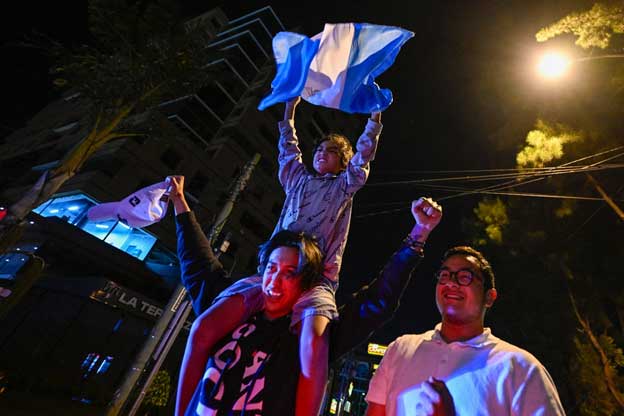
Credit: Saeed Khan/AFP via Getty Images

LONDON, May 16 2024 (IPS) – There’s change at the top in Solomon Islands – but civil society will be watching closely to see whether that means a government that’s grown hostile will start doing things differently.


Jeremiah Manele is the new prime minister, emerging from negotiations that followed April’s general election. He’s part of OUR Party, led by outgoing four-time prime minister Manasseh Sogavare. The party came first, winning 15 of 50 constituencies, but several incumbents who stood for it lost their parliamentary seats, and Sogavare only narrowly held his. Weakened, Sogavare stood aside to allow Manele to prevail as the consensus candidate of the post-election coalition his party stitched together.

China in the spotlight

Voters had to wait to have their say. The election was supposed to be held in 2023 but the government postponed it. It claimed it couldn’t afford to hold the election and host the Pacific Games in the same year, and temporarily suspended constitutional provisions through a parliamentary vote. The opposition accused Sogavare of a power grab and questioned his commitment to democracy.

Political debate in recent years has been dominated by the government’s relations with China, a major funder of the 2023 Pacific Games. Sogavare pivoted towards China shortly after becoming prime minister for the fourth time in 2019. Until then, Solomon Islands was among the small number of states that still recognised Taiwan instead of China. The move was controversial, made with no consultation after an election in which it hadn’t been an issue.

Sogavare then signed a series of agreements with China, including a highly secretive security cooperation deal. For civil society, this raised the concern that Solomon Islands police could be trained in the same repressive techniques used in China, and Chinese security forces could be deployed if unrest broke out. The country has experienced several bouts of conflict, including ethnic unrest and violent protests started by young unemployed men, with some violence targeting people of Chinese origin. Such conflict followed controversial post-2019 election manoeuvres that returned Sogavare to power, and surged again in 2021 over the government’s relations with China. Sogavare blamed ‘foreign powers’ for the 2021 unrest.

China is making extensive economic diplomacy efforts to encourage states to switch allegiance and has developed a keen interest in Pacific Island nations, long neglected by western powers. Its efforts are paying off, with Kiribati and Nauru also abandoning Taiwan in recent years. The Pacific Islands cover a vast oceanic territory, and a major Chinese foreign policy objective is to break up the island chains it sees as encircling it and constraining its reach. It’s long been suspected of coveting a naval base in Solomon Islands.

Further, while the populations may be small, each state has an equal vote in the United Nations, and the more allies China has, the more it can shield itself from criticism of its many human rights violations.

China didn’t just help pay for the Games. It provides direct funding to pro-government members of parliament, and has been accused of outrightly trying to bribe politicians. Daniel Suidani, a strong opponent of deals with China, claims to have been offered bribes to change his position. Suidani was premier of Malaita Province, until 2023, when he was ousted in a no-confidence vote following the central government’s apparent intervention. Police then used teargas against protesters who supported him.

China’s attempts to exert influence extend to the media. Last year, it was reported that the Solomon Star newspaper had received funding from the Chinese state in return for agreeing to publish pro-China content.

Disinformation favourable to China also circulated during the campaign. A Russian state-owned news agency falsely reported that the US government was planning what it called an ‘electoral coup’, a lie repeated by the Chinese Communist Party’s Global Times newspaper. During the campaign, Sogavare also doubled down on his support for China, heaping praise on its political system and suggesting that democracy might open the door to same-sex marriage, which he portrayed as incompatible with his country’s values.

At the same time as China’s media influence has grown, the Solomon Islands government has gained a reputation for attacking media freedoms. It took full control of the public broadcaster, the Solomon Islands Broadcasting Corporation, giving itself the power to directly appoint the broadcaster’s board, and made an attempt to vet all of its news and current affairs programmes, which it dropped after backlash. Following an investigation of relations with China by Australia’s public broadcaster, the government threatened to bar foreign journalists from entering the country if they run stories it deems ‘disrespectful’, accusing media of spreading ‘anti-China sentiments’.

Following criticism, the government also threatened to investigate civil society and accused civil society organisations of fraudulently receiving funds. It’s clear that the other side of the coin of closer relations with China has been growing hostility towards dissent.

Looking forward

China was far from the only issue in the campaign, and many voters emphasised everyday concerns such as the cost of living, the state of education, healthcare and roads, and the economy. Some criticised politicians for spending too much time talking about foreign policy – and will be judging the new government by how much progress it makes on these domestic issues.

The good news is that the vote appears to have been competitive, and so far there’s been no repeat of the post-election violence seen after the 2019 vote. That’s surely a positive to build on.

But Sogavare isn’t gone from politics, taking a new position as finance minister. Meanwhile, Manele, foreign minister in the old government and viewed as another pro-China figure, is unlikely to take a new foreign policy direction. But there’s some hope, at least for civil society, that he’ll be a less polarising and more conciliatory politician than Sogavare. The first test will be how the new government handles its relations with civil society and the media. The government should prove it isn’t in China’s pocket by respecting civic freedoms.

Andrew Firmin is CIVICUS Editor-in-Chief, co-director and writer for CIVICUS Lens and co-author of the State of Civil Society Report.

  Source

Civil Society Scores LGBTQI+ Rights Victory in Dominica

Civil Society, Crime & Justice, Featured, Gender Violence, Headlines, Health, Human Rights, Latin America & the Caribbean, LGBTQ, TerraViva United Nations

Opinion

MONTEVIDEO, Uruguay, May 6 2024 (IPS) – On 22 April, Dominica’s High Court struck down two sections of the country’s Sexual Offences Act that criminalised consensual same-sex relations, finding them unconstitutional. This made Dominica the sixth country in the Commonwealth Caribbean – and the fourth in the Eastern Caribbean – to decriminalise same-sex relations through the courts, and the first in 2024.


Similar decisions were made in Antigua and Barbuda, St Kitts and Nevis and Barbados in 2022 – but progress then threatened to stall. Change in Dominica revives the hopes of LGBTQI+ activists in the five remaining English-speaking Caribbean states – Grenada, Guyana, Jamaica, St Lucia and St Vincent and the Grenadines – that still criminalise same-sex relations. Sooner than later, one of will be next. A small island has made a big difference.

Winds of change

The criminalisation of consensual gay sex in the Anglophone Caribbean dates back to the British colonial era. All former British colonies in the region inherited identical criminal laws against homosexuality targeting either LGBTQI+ people in general or gay men in particular. They typically retained them after independence and through subsequent criminal law reforms.

That’s what happened in Dominica, which became independent in 1978. Its 1998 Sexual Offences Act retained criminal provisions dating back to the 1860s. Section 16 of that law made sex between adult men, described as ‘buggery’, punishable with up to 10 years’ imprisonment and possible compulsory psychiatric confinement.

The offence listed in section 14, ‘gross indecency’, was initially punishable by up to five years in jail if committed by two same-sex adults. A 2016 amendment increased the penalty to 12 years.

As in other Caribbean countries with similar provisions, prosecutions for these crimes have been rare in recent decades, and have never resulted in a conviction. But they’ve been effective in stigmatising LGBTQI+ people, legitimising social prejudice and hate speech, enabling violence, including by police, obstructing access to essential social services, particularly healthcare, and denying people the full protection of the law.

Change has begun only in the past decade, but it’s been rapid. Bans on same-sex relations were overturned by the courts in Belize in 2016 and Trinidad and Tobago in 2018. More soon followed.

The legal case

In July 2019, an unnamed gay man identified as ‘BG’ filed a legal case challenging sections 14 and 16 of the Sexual Offences Act. The defendants named in the complaint were the Attorney General, the Bishop of Dominica’s capital Roseau, the Anglican Church and the Methodist Church. The Dominica Association of Evangelical Churches was also listed as an interested party.

The lawsuit was supported by Minority Rights Dominica (MiRiDom), the country’s main LGBTQI+ advocacy group, and three international allies: the Canadian HIV/AIDS Legal Network, the University of Toronto’s International Human Rights Program and Lawyers Without Borders. The law was challenged as discriminatory and an enabler of violence against LGBTQI+ people.

The High Court heard the case in September 2022, and on 22 April 2024, Justice Kimberly Cenac-Phulgence issued a ruling setting out the reasons why sections 14 and 16 violated the applicant’s constitutional rights to liberty, freedom of expression and privacy, and were therefore null and void.

The backlash

LGBTQI+ advocates around the world welcomed the court ruling, as did UNAIDS – the United Nations agency leading the global effort to end HIV/AIDS. But resistance wasn’t long in coming.

Religious institutions, which hold a lot of influence in Dominica, were quick to decry gains in LGBTQI+ rights as losses in moral values. The day after the ruling was announced, Dominica’s Catholic Church published a statement reaffirming its position that sex should only take place within a heterosexual marriage and, while expressing compassion towards LGBTQI+ people, reiterated its belief in the centrality of traditional marriage and family. The Seventh-day Adventists expressed alarm about the potential of the court ruling to lead to same-sex unions and marriages. Some faith leaders voiced outright bigoty, with one prominent figure calling sexual acts between persons of the same sex an ‘abomination’.

The road ahead

Having decriminalised same-sex relations, Dominica is now ranked 116th out of 198 countries on Equaldex’s Equality Index, which rates countries according to their LGBTQI+ friendliness. There’s clearly much work to be done. Outstanding issues include protection against discrimination in employment and housing, marriage equality and adoption rights. LGBTQI+ activists will also continue to push for the recognition of non-binary genders, the legalisation of gender change and the prohibition of conversion therapy.

The Equality Index makes clear that, as in all the Caribbean countries that have recently decriminalised same-sex relations, changes to laws remain far ahead of social attitudes, with considerable public homophobia. As the instant conservative reactions to the court ruling suggest, changing laws and policies isn’t nearly enough. Shifting social attitudes must now be a top priority.

Dominican LGBTQI+ activists know this, which is why they’ve been working to challenge prejudice and foster understanding since long before launching their legal challenge – and why they see the court victory as not the end of a journey but a stepping stone to further change.

The challenge for Dominica’s LGBTQI+ civil society is to replace the vicious circle of legal prohibition, which has reinforced social stigma, with a virtuous one in which legal progress normalises the presence and social acceptance of LGBTQI+ people, which in turn enables effective access to legally enshrined rights.

But they’ll take heart from being part of a broader regional and global trend. While working to ensure rights are realised domestically, they’ll also offer a powerful example that change can result to the circa 64 countries around the world that still criminalise gay sex, including the five holdouts in the Commonwealth Caribbean. More progress will come.

Inés M. Pousadela CIVICUS Senior Research Specialist, co-director and writer for CIVICUS Lens and co-author of the State of Civil Society Report.

  Source

Migration in the Americas: A Dream That Can Turn Deadly

Civil Society, Climate Change, Crime & Justice, Featured, Gender Violence, Headlines, Human Rights, Latin America & the Caribbean, Migration & Refugees, TerraViva United Nations

Opinion

Credit: David Peinado/Anadolu via Getty Images

MONTEVIDEO, Uruguay, Apr 16 2024 (IPS) – The Darién Gap is a stretch of jungle spanning the border between Colombia and Panama, the only missing section of the Pan-American Highway that stretches from Alaska to southern Argentina. For good reason, it used to be considered impenetrable. But in 2023, a record 520,000 people crossed it heading northwards, including many children. Many have lost their lives trying to cross it.


People are also increasingly taking to the seas. A new people trafficking route has opened up across the Caribbean Sea via the Bahamas. Growing numbers of desperate migrants – mostly from conflict-ridden Haiti but also from more distant countries – are using it in an attempt to reach Florida. It’s risky too. In November 2023, at least 30 people died when a boat from Haiti capsized off the Bahamas.

The pattern is clear: as is also the case in Europe, when safer routes are closed off, people start taking riskier ones. Millions of people in Latin American and Caribbean countries are fleeing authoritarianism, insecurity, violence, poverty and climate disasters. Most remain in other countries in the region that typically present fewer challenges to arriving migrants – but also offer limited opportunities. The USA therefore remains a strong migration magnet. Its tightening immigration policies are the key reason people are heading into the jungle and taking to the sea.

Dynamic trends

Out of the staggering 7.7 million Venezuelans who’ve left their country since 2017 – greater than the numbers of displaced Syrians or Ukrainians – almost three million have stayed next door in Colombia, with about 1.5 million in Peru, close to half million in both Brazil and Ecuador, and hundreds of thousands in other countries across the region.

Latin American host countries are relatively welcoming. Unlike in many global north countries, politicians don’t usually stoke xenophobia or vilify migrants for political gain, and states don’t usually reject people at borders or deport them, and instead try to provide paths for legal residence. Overall they’ve been pragmatic enough to strike a balance between openness and orderly entry. As a result, a high proportion of Venezuelan migrants have acquired some form of legal status in host countries.

But host states haven’t planned for long-term integration. They face typical global south challenges, such as high levels of inequality and many unmet social needs. That’s why those moving towards the USA include many Haitians, Nicaraguans and Venezuelans who were already living in other countries. They are mostly driven by the lack of opportunities, although in the case of Haitians language barriers and racial discrimination are also significant motivators.

While the USA has tightened its migration policies, its porous southern border – the longest border between global north and global south – remains inviting for many. In its 2022 fiscal year, US authorities had a record 2.4 million encounters with unauthorised migrants at the border. Many had come a long way, having crossed the Darién Gap and then headed across Central America and Mexico.

Dangerous journeys

People do so at great risk. According to the United Nations’ Missing Migrants Project reported at least 1,275 people died or went missing during migration in the Americas in 2023.

It’s unclear how many people have perished so far in the Darién Gap. In many cases, deaths go unreported and bodies are never recovered. The crossing can take anywhere from three to 15 days. As they cross rivers and mountains, people suffer from the jungle’s harshness and difficult weather.

According to Doctors Without Borders (MSF), much of the danger is because the Darién is one of the world’s most humid regions and doesn’t have any proper infrastructure. People can easily slip and fall on its steep paths or drown in rushing rivers. Hired guides can leave people stranded. Those who can’t keep up can get disoriented and lost. The difficult terrain forces many to leave their supplies along the way, including food and drinking water.

Migrants also often cross paths with local criminal groups that steal from them, kidnap them or commit rape. In December 2023, MSF recorded a seven-fold increase in monthly incidents of sexual violence. But despite the dangers, the number of people crossing in 2023 almost doubled compared to 2022.

The Darién Gap is only the gateway to Central America – the start of a much longer journey. The dangers don’t stop. Many end up staying somewhere in Mexico, but others keep marching northwards and face many hazards trying to reach the USA – drowning , or dying of heat exposure and dehydration in the desert during the day, or of hypothermia at night. Migrants have also died of asphyxiation in botched migrant smuggling operations. They are often blackmailed by smugglers and experience human rights abuses, including lethal violence, from Border Patrol agents.

US policies

Starting in early 2021, the administration of President Joe Biden made several changes to US immigration policies, such as rescinding the travel ban on primarily Muslim-majority and African countries, restoring the Deferred Action for Childhood Arrivals programme and granting Venezuelans living in the USA Temporary Protection Status, among other things.

But it was only in May 2023 that the Biden administration finally lifted Title 42, a public health order that, under the cover of the COVID-19 pandemic, the Trump administration used to immediately expel those caught crossing the border, with no right to apply for asylum. At the same time, however, the government issued several new rules that became known as the ‘asylum ban’. Before showing up at the border, people are now required to make an appointment with a smartphone app or have proof they have previously sought and failed to obtain asylum in the countries they’ve travelled through on their way to the USA. If they don’t comply with these requirements, they’re automatically presumed ineligible for asylum and can be subjected to expedited removal.

Civil society points out that it’s very difficult to get an appointment. The app frequently fails and many migrants don’t have smartphones, adequate wi-fi or a data plan. They face language and education barriers and are exploited by people pretending to help. Barriers to seeking asylum have risen to the point that advocates view them as violating the Refugee Convention’s principle of non-refoulment, according to which people can’t be returned to a country where they face serious threats to their life or freedom.

Election politics

Pressure is intensifying as the USA’s November 2024 presidential election approaches.

Republican governors of southern states such as Texas have made a show of bussing newly arrived migrants to far-off cities run by Democrats, dumping them there with no support, treating them as pawns in a political game. Congress Republicans have also repeatedly delayed backing support to Ukraine unless new border control measures are enacted in return.

In October 2023, Biden announced plans to strengthen the southern border and resume deportation flights to Venezuela, which had been paused. But no one has gone lower than Donald Trump, who recently told a rally that ‘immigrants are poisoning the blood of our country’ – a straightforward use of white supremacist rhetoric. His comments have grown increasingly dehumanising – he has repeatedly referred to migrants as ‘animals’.

In his 2023 State of the Union speech, President Biden responded to Trump directly, stating he refused to ‘demonise immigrants’. But in the same breath he urged Republicans to pass a bipartisan immigration bill they’re currently blocking, which would further tighten asylum rules, expand funding for border operations and give the president authority to empower border officials to summarily deport migrants during spikes in illegal immigration. The bill continues to be rejected by hardcore Republicans who see it as not strict enough.

For migrants and asylum seekers, the prospects look bleak. As far as their rights are concerned, the election campaign is a race to the bottom. A Trump victory could only bring further bad news – but a Biden win is unlikely to promise much progress. Election results aside, people will keep taking to the sea or venturing through the jungle, the barbed wire and the desert. Politicians need to recognise this reality and commit to upholding the human rights of all who strive to find a future in the USA.

Inés M. Pousadela is CIVICUS Senior Research Specialist, co-director and writer for CIVICUS Lens and co-author of the State of Civil Society Report.

  Source

The Climate Alarm Is Ringing – It’s Time to Stop Silencing It

Civil Society, Climate Action, Climate Change, Crime & Justice, Economy & Trade, Environment, Featured, Global, Headlines, TerraViva United Nations

Opinion

Credit: Last Generation Germany

LONDON, Apr 12 2024 (IPS) – The heat records keep tumbling – 2023 was the hottest year in recorded history. Extreme weather events keep mounting up. And yet the voices most strongly calling for action to prevent climate catastrophe are increasingly being silenced.


It’s a sad fact that climate campaigners in the global south – in many countries in Africa, Asia and Latin America – have long faced repression. People have been subjected to incarceration and violence all the way up to murder for resisting climate-harming extractive projects and environmental destruction. In comparison, climate activists in global north countries – including Europe and North America – for a long time enjoyed relative freedom, which they used to protest against their governments and the corporations headquartered in their countries that bear most of the responsibility for causing global warming.

But they no longer enjoy the full freedom to do so. As the latest State of Civil Society Report from global civil society alliance CIVICUS shows, several global north governments are increasingly making it harder for people to take part in climate protests. They’re using anti-protest laws, raids, arrests, jail sentences and violence to try to subdue voices calling for urgent action.

When it comes to the climate, delay is denial, because if action isn’t taken fast, it may be too late. This means the repression of activists demanding immediate action must be seen as a form of climate denial.

Examples are piling up. In Germany last year, authorities used laws intended to combat organised crime to raid the homes of young activists from the Last Generation climate movement, seize their laptops and freeze their bank accounts. The German police also used violence against activists trying to block a coalmine expansion. The imposition of restrictions on climate activism is one the key reasons the CIVICUS Monitor recently downgraded Germany’s civic space rating.

In Italy too, the government has served climate campaigners with criminal conspiracy indictments historically used against the mafia, and it has also introduced a law to criminalise non-violent action at key sites. The Dutch authorities have responded with mass arrests to roadblock protests demanding it fulfil its promise to end fossil fuel subsidies, which amount to around US$39.9 billion a year. Thousands have been detained and the police have used water cannon against protesters.

The UK government has passed a package of laws that criminalise disruptive and noisy protests, clearly targeted at the non-violent direct action used by climate campaigners. In January, the UN Special Rapporteur on environmental defenders, Michel Forst, condemned these new laws. Numerous climate activists have been jailed for peaceful protest actions that until recently would never have received a prison sentence. Meanwhile the UK government plans to grant over 100 new oil and gas licences. Several Australian states have also passed anti-protest laws that have been used to jail climate activists.

Global north states, apparently eager to do the bidding of the fossil fuel giants, can be expected to intensify this repression as the gap between the action needed and the lack of effort being taken becomes increasingly clear. They silence civil society because activists expose the hypocrisy behind the greenwash. As right-wing populists and nationalists who oppose climate action – and often spread climate disinformation – gain influence across the global north, climate activists can expect an even greater wave of vilification.

The impacts of repression are personal. They increase the costs and dangers of activism in an attempt to deter people from getting involved and sap collective energies. However, in response, campaigners are showing resilience. In Germany, frozen funds were quickly replaced with crowdsourced donations. In the Netherlands, attempts to repress roadblocks motivated more people to turn up to protest.

But the opportunity cost is steep. Energy that should be invested in advancing creative climate solutions is instead being spent in fending off restrictions. In the long-term, there’s a danger of attrition, depleting the ranks of climate activists. And without civil society, who will push to keep the climate crisis high on the political agenda?

Civil society has shown it can make a difference. While there was much to be unhappy about with the last global climate summit, COP28, the fact that for the first time states acknowledged the need to transition away from fossil fuel use came as a direct result of civil society’s decades-long advocacy. More institutions are committing to divest from fossil fuel investments due to campaigning pressure: 72 per cent of UK universities have now done so, because student activists demanded it.

And the growing field of climate litigation keeps paying off. A group of Swiss women just won a ruling at the European Court of Human Rights, which found that their government has violated their human rights by not doing enough to tackle climate change, a verdict that sets a strong precedent. Last year, courts in Belgium and Germany insisted on stronger actions to cut emissions following lawsuits brought by campaigners. More are sure to follow.

Civil society will strive to keep working on every front possible, through protest, advocacy and litigation, because the scale of the climate crisis demands a full spectrum of responses. States should stop trying to hold back the tide and put themselves on the right side of history. They must respect the right of everyone to protest and stop the denial they practise through repression.

Andrew Firmin is CIVICUS Editor-in-Chief, co-director and writer for CIVICUS Lens and co-author of the State of Civil Society Report.

  Source

Democracy’s Contested Territory

Armed Conflicts, Civil Society, Crime & Justice, Democracy, Featured, Global, Headlines, Human Rights, Press Freedom, TerraViva United Nations

Opinion

Credit: Luis Acosta/AFP via Getty Images

MONTEVIDEO, Uruguay, Mar 19 2024 (IPS) – This year more than half the world’s population has the chance to go to the polls. That might make it look like the most democratic year ever, but the reality is more troubling. Too many of those elections won’t give people a real say and won’t offer any opportunity for change.


2024’s bumper election year comes as a record number of countries are sliding towards authoritarianism, and global advances in democratisation achieved over more than three decades have been all but wiped out. In 2023, no authoritarian state became a democracy, and while some countries made marginal improvements in the quality of their democracies – by improving civic space, making inroads on corruption or strengthening institutions – many more experienced often serious declines.

Nearly three quarters of humanity now live under authoritarian regimes. Defending democracy and holding political leaders to account is becoming harder as civic space is shutting down. The proportion of people living in countries with closed civic space, 30.6 per cent, is the highest in years.

The latest State of Civil Society Report, from global civil society alliance CIVICUS, shows how conflict is exacerbating this regressive trend. In war-torn Sudan, hopes for democracy, repeatedly denied since the 2019 overthrow of dictator Omar al-Bashir, receded further as elections were made impossible by the civil war between the military and militia that erupted last April. Russia’s sustained assault on Ukraine brought intensified repression of domestic dissent, and there were no surprises in the recent non-competitive vote that maintained Vladimir Putin’s grip on power.

The ineffectiveness of civilian governments in dealing with jihadist insurgencies has also been the justification used by military leaders to take or retain power in Central and West Africa. As a result, rule by junta is in danger of becoming normalised after decades in which it appeared on the verge of extinction. A ‘coup belt’ now stretches coast to coast across Africa. None of the states that fell victim to military rule in recent years have returned to civilian government, and two more – Gabon and Niger –joined their ranks last year.

Authoritarian regimes that experienced mass protest movements in recent years, including Iran, Nicaragua and Venezuela, have regained their footing and hardened their grip. In states long characterised by autocratic rule, many civil society activists, journalists and political dissidents have sought safety in exile to continue their work. But they often didn’t find it, with repressive states – China, Turkey, Tajikistan, Egypt and Russia are the worst five abusers –increasingly using transnational repression against them.

Many elections are held with no competition. Last year several non-democratic states of various kinds – including Cambodia, the Central African Republic, Cuba, Eswatini, Uzbekistan and Zimbabwe – held votes in which autocratic power was never in question. Voting was ceremonial, its purpose to add a veneer of legitimacy to domination.

Many more regimes that combine democratic and authoritarian traits have been home to recent elections with less predetermined results, where there was at least some chance of the ruling party being defeated. But incumbent advantage was reflected in the fact that change rarely materialised, as seen in Nigeria, Paraguay, Sierra Leone and Turkey. The outlier was Maldives, where voters have a history of rejecting sitting presidents.

Some hybrid regimes, notably El Salvador, experienced further democratic backsliding through the erosion of freedoms and institutional checks and balances – a road typically travelled by populist authoritarians who claim to speak in the name of the people and insist they need to concentrate power to deal with crises.

When voters do have a genuine say, in free and fair elections, they’re increasingly rejecting mainstream parties and politicians. In a time of economic uncertainty and insecurity, many express disappointment with what democracy is offering them. Anti-rights political entrepreneurs are successfully exploiting their anxieties by scapegoating migrants and attacking women’s and LGBTQI+ people’s rights. Right-wing populists using such tactics recently took control of Argentina, came first in elections in the Netherlands and Switzerland and entered government in Finland. Even where they don’t take office, far-right forces often succeed in shifting the political centre by forcing others to compete on their terms. They’re expected to make big gains in the European Parliament elections in June 2024.

Polarisation is on the rise, fuelled by disinformation, conspiracy theories and hate speech. These are made so much easier by AI-powered technologies that are spreading and evolving faster than they can be regulated. The first elections of 2024, including those in Bangladesh and Indonesia, offered cautionary tales of the unprecedented levels of manipulation that AI can enable. We’re likely to see a lot more of this in 2024.

But our research findings support our hope, because they show movement isn’t all in one direction. In Guatemala, a new party born from mass anti-corruption protests was the unlikely 2023 election winner, and people mobilised in numbers to defend the result in the face of powerful political and economic elites. Despite China’s concerted attempts to derail Taiwan’s election, including through cyberattacks, people vindicated their right to have a say in their own future. In Poland, a unity government pledging to restore civic freedoms came to power after eight years of right-wing nationalist rule, offering new potential for civil society to partner in retrieving democratic values and respecting human rights. In Mexico, which is among the many countries going to the polls in 2024, people mobilised in numbers against the threat posed by a democratically elected leader seeking to override checks and balances. Given the dangers it may entail, civil society is pushing for transnational regulation of AI.

Things would be much worse were it not for civil society, which continues to mobilise against restrictions on freedoms, counter divisive rhetoric and strive for the integrity of electoral processes. Throughout 2024, civil society will keep pushing for elections to take place in free and fair conditions, for people to have the information they need, for votes to be properly counted, for losers to accept defeat and for winners to govern in the common good.

Inés M. Pousadela is CIVICUS Senior Research Specialist, co-director and writer for CIVICUS Lens and co-author of the State of Civil Society Report.
  Source

Greece: Another First for LGBTQI+ Rights

Civil Society, Crime & Justice, Europe, Featured, Gender, Gender Identity, Headlines, Human Rights, LGBTQ, Religion, TerraViva United Nations

Opinion

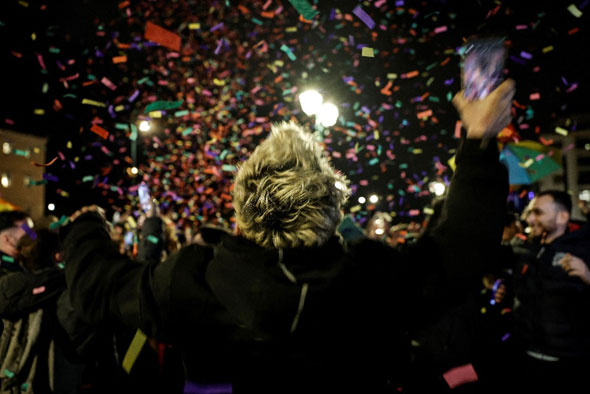
Credit: Louisa Gouliamaki/Reuters via Gallo Images

MONTEVIDEO, Uruguay, Mar 1 2024 (IPS) – After almost two decades of civil society campaigning, Greece’s parliament has passed a law enabling same-sex couples to marry and adopt children. It’s the first majority-Orthodox Christian country to realise marriage equality.


Equal marriage is now recognised in 36 countries, with Estonia last year becoming the first post-Soviet state to join the ranks. These notable firsts have however been accompanied by regression elsewhere, including in the country with the world’s biggest Orthodox Christian population, Russia.

SAME-SEX MARRIAGE AROUND THE WORLD

A long campaign

Debate on the rights of Greek same-sex couples dates back to 2006. That year and again in 2008, the centre-left PASOK party submitted bills to recognise unmarried couples, including same-sex ones. Neither made it through parliament, and a cohabitation law was eventually passed that didn’t include same-sex couples.

In 2008, LGBTQI+ rights activists exploited a loophole in a law that didn’t specify that marriage must involve a man and a woman. Despite instant backlash and legal threats, the mayor of the island of Tilos, a gay tourist destination, held a civil wedding ceremony for two same-sex couples. Courts soon annulled these weddings, but they helped put the issue on the agenda.

In the run-up to the 2009 election, the Lesbian and Gay Community of Greece sent candidates a questionnaire on LGBTQI+ rights. PASOK, which won the election, said it supported same-sex registered partnerships. But in office it dragged its heels.

LGBTQI+ activists took to regional and international human rights systems. They submitted shadow reports to the UN Human Rights Council’s review of Greece’s human rights record. In 2009, four gay couples brought two cases to the European Court of Human Rights (ECHR), stating that the restriction of civil unions to heterosexual couples amounted to unjustified discrimination.

In November 2013, the ECHR ruled that there was indeed discrimination, ordering the state to provide compensation. Within days, the PASOK-led government announced it would introduce a bill to extend civil unions to same-sex couples.

But time dragged. A year on, the government again said it was considering the change, but soon after, parliament was dissolved and snap elections were called for early 2015. Amid public anger at economic austerity measures imposed in response to Greece’s debt crisis, left-wing party Syriza won power.

Political change

The pace quickened under the Syriza-led government, and after a long and contentious December 2015 parliamentary debate, same-sex couples gained civil partnership rights. They still weren’t able to adopt or exercise parental rights over non-biological children, but the change was a vital first step. A year on, parliament further amended the law to extend some of the same rights as marriage, including labour rights.

LGBTQI+ rights activists made more gains during Syriza’s four years in power. In 2017, parliament passed a gender identity law enabling people to change gender on official documents without undergoing any medical procedure and allowing trans people to affirm their gender from 15 years onwards. Almost the entire political opposition voted against, including Kyriakos Mitsotakis, leader of the centre-right New Democracy party and current prime minister.

In June 2019, Prime Minister Alexis Tsipras promised his government would legalise same-sex marriage if it won the upcoming election. But he was defeated by New Democracy and its bill was shelved. It renewed its promise ahead of the 2023 election, but again New Democracy won.

In a surprise move, an unlikely champion introduced a same-sex marriage bill in January 2024: Prime Minister Mitsotakis, having consolidated his hold over the political right, now sought to make inroads into socially progressive territory.

On 15 February, several prominent New Democracy parliamentarians abstained or voted against the bill but opposition parties on the left compensated. Syriza lawmakers voted overwhelmingly for.

The religious factor

But powerful forces still oppose equality. According to a 2018 survey, Greece is Europe’s fourth most religious country. Around half of adults consider themselves ‘highly religious’ and 59 per cent say they believe in God with ‘absolute certainty’. Up to 98 per cent identify as Greek Orthodox Christians. For many, belonging to the church goes beyond religion – it’s bound up in Greek identity.

The church has fiercely resisted every victory of the women’s and LGBTQI+ rights movements. It’s been particularly belligerent towards the gender identity law. Church authorities condemned it as ‘a satanic deed’ and shared the same conspiracy theories as far-right groups.

With public opinion evenly divided, the debate on same-sex marriage was deeply polarising. Parliamentary debates saw a barrage of abusive language and hate speech. Far-right politicians claimed the bill was ‘anti-Christian’ and warned it would enable paedophiles. Church representatives insisted homosexuality was a ‘mortal sin’. The church insisted the bill would destroy the family. Priests propagated disinformation and threatened excommunication.

What – and where – next

As Equaldex’s Equality Index shows, the new law is way ahead of prevailing public attitudes. Activists will need to do much more work to shift public opinion to prevent regression and keep moving forward. But they’re optimistic this latest victory will help further normalise the presence of LGBTQI+ people and bring more social acceptance of diversity.

It matters too outside Greece, which is ahead of the curve among Orthodox-majority states – and could offer an example to follow.

Belarus, Russia and Moldova are the Orthodox-majority countries with the most hostile environments for LGBTQI+ people. Belarus and Russia have closed civic space, making it next to impossible to advocate for rights, and Russia has further intensified its repression of LGBTQI+ people as a matter of national identity during its full-scale invasion of Ukraine.

But Moldova, along with several other of Greece’s Orthodox-majority neighbours – Bulgaria, Montenegro and Romania – have relatively enabling civic space and active LGBTQI+ movements seeking change.

Activists in Greece will keep pushing for social change to match legal progress. And activists in neighbouring states will keep campaigning, knowing that, sustained advocacy can pay off even in hostile contexts. They’ll keep trying to force open political windows of opportunity so decades-sought change can finally materialise.

Inés M. Pousadela is CIVICUS Senior Research Specialist, co-director and writer for CIVICUS Lens and co-author of the State of Civil Society Report.
  Source