Energy Cooperatives Swim Against the Tide in Mexico

Civil Society, Development & Aid, Economy & Trade, Editors’ Choice, Energy, Environment, Featured, Green Economy, Headlines, Integration and Development Brazilian-style, Latin America & the Caribbean, Projects, Regional Categories, TerraViva United Nations
Energy

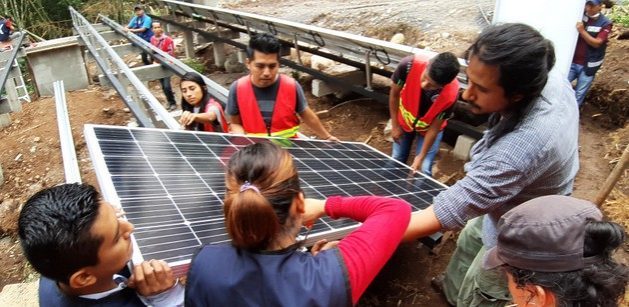
Onergia, one of the two energy cooperatives operating in Mexico today, installs photovoltaic systems, such as this one at the Tosepan Titataniske Union of Cooperatives in the municipality of Cuetzalan, in the southern state of Puebla. CREDIT: Courtesy of Onergia

Onergia, one of the two energy cooperatives operating in Mexico today, installs photovoltaic systems, such as this one at the Tosepan Titataniske Union of Cooperatives in the municipality of Cuetzalan, in the southern state of Puebla. CREDIT: Courtesy of Onergia

MEXICO CITY, Aug 31 2020 (IPS) – A Mexican solar energy cooperative, Onergia, seeks to promote decent employment, apply technological knowledge and promote alternatives that are less polluting than fossil fuels, in one of the alternative initiatives with which Mexico is seeking to move towards an energy transition.


“We organised ourselves in a cooperative for an energy transition that will rethink the forms of production, distribution and consumption to build a healthier and fairer world,” Onergia founding partner and project director Antonio Castillo told IPS. “In this sector, it has been more difficult; we have to invest in training and go against the logic of the market.”

The eight-member cooperative, created in 2017, has so far installed some 50 photovoltaic systems, mainly in the south-central state of Puebla.

“A public policy is needed that would allow us to move towards the transition. Getting people to adopt alternatives depends on public policy. It is fundamental for people to have the freedom to choose how to consume. It is our job to organise as consumers.” —
Antonio Castillo

Castillo explained by phone that the cooperative works with middle- and upper-class households that can finance the cost of the installation as well as with local communities keen on reducing their energy bill, offering more services and expanding access to energy.

In the case of local communities, the provision of solar energy is part of broader social projects in which the beneficiary organisations’ savings and loan cooperatives design the financial structure to carry out the work. A basic household system can cost more than 2,200 dollars and a larger one, over 22,000.

“The communities are motivated to adopt renewable energy as a strategy to defend the land against threats from mining or hydroelectric companies,” said Castillo. “They don’t need to be large-scale energy generators, because they already have the local supply covered. The objective is to provide the communities with alternatives.”

Onergia, a non-profit organisation, promotes distributed or decentralised generation.

In Mexico, energy cooperatives are a rarity. In fact, there are only two, due to legal, technical and financial barriers, even though the laws governing cooperatives recognise their potential role in energy among other diverse sectors. The other, Cooperativa LF del Centro, provides services in several states but is not a generator of electricity.

The Electricity Industry Law, in effect since 2014, allows the deployment of local projects smaller than one megawatt, but practically excludes them from the electricity auctions that the government had been organising since 2016 and that the administration of leftwing President Andrés Manuel López Obrador put a stop to after he took office in December 2018.

Since then, López Obrador has opted to fortify the state monopolies of the Federal Electricity Commission (CFE) and the Petróleos Mexicanos (Pemex) oil giant, which translates into favouring fossil fuels over renewable sources.

The National Electric System Development Programme 2018-2032 projects that fossil fuels will represent 67 percent of the energy mix in 2022; wind energy, 10 percent; hydroelectric, nine percent; solar, four percent; nuclear, three percent, and geothermal and bioenergy, four percent.

In 2032, the energy outlook will not vary much, as fossil fuels will account for 60 percent; wind, nuclear and geothermal energy will rise to 13, eight and three percent, respectively; hydroelectric power will drop to eight percent; while solar and bioenergy will remain the same.
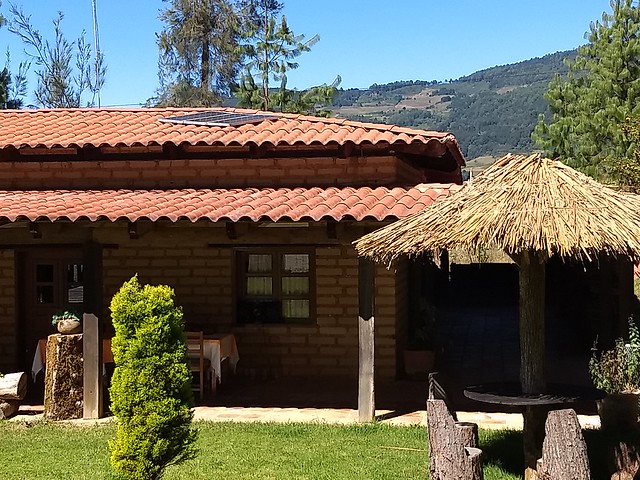
In Mexico, rural communities are guaranteeing their electricity supply by using clean sources, thus furthering the energy transition to micro and mini-scale generation. The photo shows the "Laatzi-Duu" ecotourism site (the name means "standing plain" in the Zapotec indigenous language) which is self-sufficient thanks to a solar panel installed on its roof, in the municipality of San Juan Evangelista Analco in the southern state of Oaxaca. CREDIT: Emilio Godoy/IPS

In Mexico, rural communities are guaranteeing their electricity supply by using clean sources, thus furthering the energy transition to micro and mini-scale generation. The photo shows the “Laatzi-Duu” ecotourism site (the name means “standing plain” in the Zapotec indigenous language) which is self-sufficient thanks to a solar panel installed on its roof, in the municipality of San Juan Evangelista Analco in the southern state of Oaxaca. CREDIT: Emilio Godoy/IPS

The government cancelled the call for long-term electric auctions that allowed private companies to build wind and solar plants and sell the energy to CFE. But these tenders privileged private Mexican and foreign capital and large-scale generation.

In a dialogue with IPS, independent researcher Carlos Tornel questioned the predominant energy design promoted by the 2013 reform that opened up the hydrocarbon and electricity markets to private capital, and the form of energy production based on passive consumers.

“We don’t have an effective legal framework to promote that kind of energy transition,” said the expert via WhatsApp from the northeast English city of Durham. “A free market model was pursued, which allowed the entry of megaprojects through auctions and allowed access to those who could offer a very low cost of generation, which could only be obtained on a large scale.”

With that strategy, he added, “small projects were left out. And the government did not put in place economic incentives to foment cooperative schemes.”

“We need a more active model focused on the collective good,” added Tornel, who is earning a PhD in Human Geography at Durham University in the UK.

Mexico, the second largest economy in Latin America with a population of 129 million, depends heavily on hydrocarbons and will continue to do so in the medium term if it does not accelerate the energy transition.

In the first quarter of 2019, gross generation totaled 80,225 gigawatt hours (Gwh), up from 78,167 in the same period last year. Gas-fired combined cycle plants (with two consecutive cycles, conventional turbine and steam) contributed 40,094, conventional thermoelectric 9,306, and coal-fired 6,265.

Hydroelectric power plants contributed 5,137 Gwh; wind fields 4,285; nuclear power plants 2,382; and solar stations 1,037.

The Energy Transition Law of 2015 stipulates that clean energy must meet 30 percent of demand by 2021 and 35 percent by 2024. By including hydropower and nuclear energy, the country will have no problem reaching these goals.
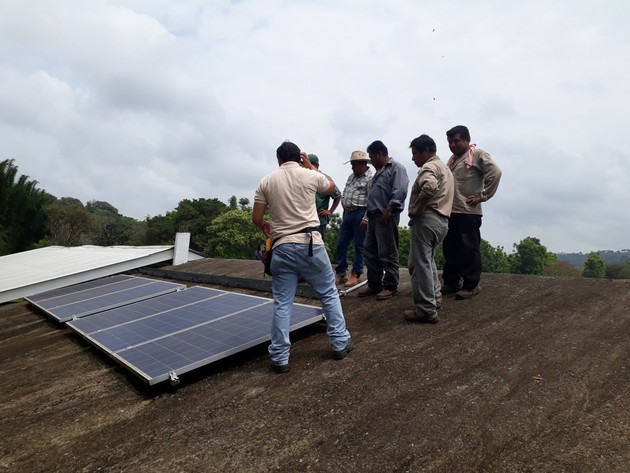
Residents of the small rural community of Amatlán, in the municipality of Zoquiapan in the state of Puebla, oversee the operation of photovoltaic panels installed by the Mexican cooperative Onergia. This type of cooperative can help rural communities in Mexico access clean energy, particularly solar power. CREDIT: Courtesy of Onergia

Residents of the small rural community of Amatlán, in the municipality of Zoquiapan in the state of Puebla, oversee the operation of photovoltaic panels installed by the Mexican cooperative Onergia. This type of cooperative can help rural communities in Mexico access clean energy, particularly solar power. CREDIT: Courtesy of Onergia

By early August, the government’s Energy Regulatory Commission (CRE) had granted 310 permits for solar generation, small-scale production and self-supply, totaling almost 22,000 Mw.

The 2017 report Renewable Energy Auctions and Participatory Citizen Projects, produced by the international non-governmental Renewable Energy Policy Network for the 21st Century (REN21), cites, with respect to Mexico, the obligation for investors to form self-sufficient companies, which complicates attempts to develop local ventures.

Onergia’s Castillo stressed the need for a clear and stable regulatory framework.

“A public policy is needed that would allow us to move towards the transition,” he said. “Getting people to adopt alternatives depends on public policy. It is fundamental for people to have the freedom to choose how to consume. It is our job to organise as consumers.”

Affected by the coronavirus pandemic, Onergia is reviewing the way it works and its financial needs to generate its own power supply. It also works with the Renewable Energies Institute of the National Autonomous University of Mexico in the design and installation of solar power systems.

In March, the government’s National Council for Science and Technology launched a strategic national programme on energy transition that will promote sustainable rural energy projects and community solar energy, to be implemented starting in 2021.

In addition, the energy ministry is set to announce the Special Energy Transition Programme 2019-2024.

But to protect the CFE, the CRE is blocking approval of the development of collective distributed generation schemes, which would allow citizens to sell surplus energy to other consumers, and the installation of storage systems in solar parks.

Tornel criticised the lack of real promotion of renewable sources.

“The Mexican government has been inconsistent in its handling of this issue,” he maintained. “They talk about guaranteeing energy security through hydrocarbons. There is no plan for an energy transition based on renewables or on supporting community projects. We have no indication that they support renewable, and that’s very worrying.”

The REN21 report recommends reserving a quota for participatory citizen projects and facilitating access to energy purchase agreements, which ensures the efficiency of tenders and the effectiveness of guaranteed tariffs for these undertakings.

In addition, it proposes the establishment of an authority for citizen projects, capacity building, promotion of community energy and specific national energy targets for these initiatives.
  Source

Semiarid Regions of Latin America Cooperate to Adapt to Climate

Civil Society, Combating Desertification and Drought, Development & Aid, Economy & Trade, Editors’ Choice, Environment, Featured, Food & Agriculture, Green Economy, Headlines, Integration and Development Brazilian-style, Latin America & the Caribbean, Projects, Regional Categories, South-South, TerraViva United Nations, Water & Sanitation

Combating Desertification and Drought

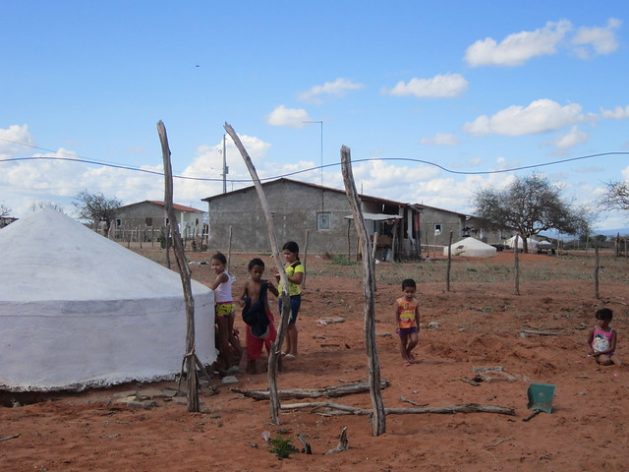
A rural settlement in the state of Pernambuco, in Brazil's semiarid ecoregion. Tanks that collect rainwater from rooftops for drinking water and household usage have changed life in this parched land, where 1.1 million 16,000-litre tanks have been installed so far. CREDIT: Mario Osava/IPS

A rural settlement in the state of Pernambuco, in Brazil’s semiarid ecoregion. Tanks that collect rainwater from rooftops for drinking water and household usage have changed life in this parched land, where 1.1 million 16,000-litre tanks have been installed so far. CREDIT: Mario Osava/IPS

RIO DE JANEIRO, Aug 27 2020 (IPS) – After centuries of poverty, marginalisation from national development policies and a lack of support for positive local practices and projects, the semiarid regions of Latin America are preparing to forge their own agricultural paths by sharing knowledge, in a new and unprecedented initiative.


In Brazil’s semiarid Northeast, the Gran Chaco Americano, which is shared by Argentina, Bolivia and Paraguay, and the Central American Dry Corridor (CADC), successful local practices will be identified, evaluated and documented to support the design of policies that promote climate change-resilient agriculture in the three ecoregions.

This is the objective of DAKI-Semiárido Vivo, an initiative financed by the United Nations International Fund for Agricultural Development (IFAD) and implemented by the Brazilian Semiarid Articulation (ASA), the Argentinean Foundation for Development in Justice and Peace (Fundapaz) and the National Development Foundation (Funde) of El Salvador.

DAKI stands for Dryland Adaptation Knowledge Initiative.

The project, launched on Aug. 18 in a special webinar where some of its creators were speakers, will last four years and involve 2,000 people, including public officials, rural extension agents, researchers and small farmers. Indirectly, 6,000 people will benefit from the training.

“The aim is to incorporate public officials from this field with the intention to influence the government’s actions,” said Antonio Barbosa, coordinator of DAKI-Semiárido Vivo and one of the leaders of the Brazilian organisation ASA.

The idea is to promote programmes that could benefit the three semiarid regions, which are home to at least 37 million people – more than the total populations of Chile, Ecuador and Peru combined.

The residents of semiarid regions, especially those who live in rural areas, face water scarcity aggravated by climate change, which affects their food security and quality of life.

Zulema Burneo, International Land Coalition coordinator for Latin America and the Caribbean and moderator of the webinar that launched the project, stressed that the initiative was aimed at “amplifying and strengthening” isolated efforts and a few longstanding collectives working on practices to improve life in semiarid areas.

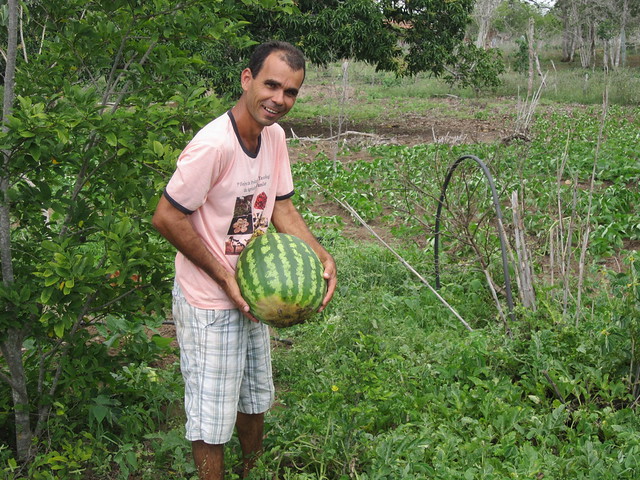
Abel Manto, an inventor of technologies that he uses on his small farm in the state of Bahia, in Brazil's semiarid ecoregion, holds up a watermelon while standing among the bean crop he is growing on top of an underground dam. The soil is on a waterproof plastic tarp that keeps near the surface the water that is retained by an underground dam. CREDIT: Mario Osava/IPS

Abel Manto, an inventor of technologies that he uses on his small farm in the state of Bahia, in Brazil’s semiarid ecoregion, holds up a watermelon while standing among the bean crop he is growing on top of an underground dam. The soil is on a waterproof plastic tarp that keeps near the surface the water that is retained by an underground dam. CREDIT: Mario Osava/IPS

The practices that represent the best knowledge of living in the drylands will be selected not so much for their technical aspects, but for the results achieved in terms of economic, ecological and social development, Barbosa explained to IPS in a telephone interview from the northeastern Brazilian city of Recife, where the headquarters of ASA are located.

After the process of systematisation of the best practices in each region is completed, harnessing traditional knowledge through exchanges between technicians and farmers, the next step will be “to build a methodology and the pedagogical content to be used in the training,” he said.

One result will be a platform for distance learning. The Federal Rural University of Pernambuco, also in Recife, will help with this.

Decentralised family or community water supply infrastructure, developed and disseminated by ASA, a network of 3,000 social organisations scattered throughout the Brazilian Northeast, is a key experience in this process.

In the 1.03 million square kilometres of drylands where 22 million Brazilians live, 38 percent in rural areas according to the 2010 census, 1.1 million rainwater harvesting tanks have been built so far for human consumption.

An estimated 350,000 more are needed to bring water to the entire rural population in the semiarid Northeast, said Barbosa.

But the most important aspect for agricultural development involves eight “technologies” for obtaining and storing water for crops and livestock. ASA, created in 1999, has helped install this infrastructure on 205,000 farms for this purpose and estimates that another 800 peasant families still need it.

There are farms that are too small to install the infrastructure, or that have other limitations, said Barbosa, who coordinates ASA’s One Land and Two Waters and native seed programmes.

The “calçadão” technique, where water runs down a sloping concrete terrace or even a road into a tank that has a capacity to hold 52,000 litres, is the most widely used system for irrigating vegetables.

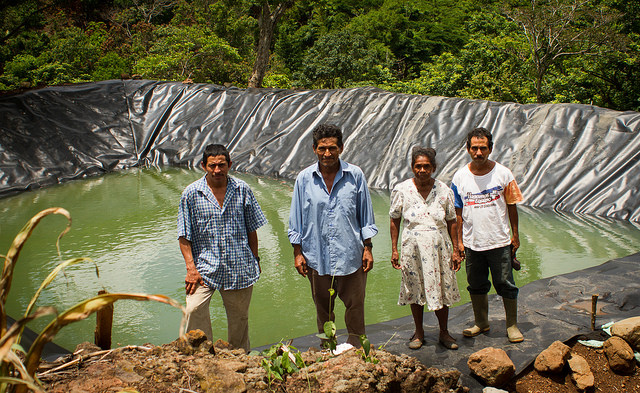
A group of peasant farmers from El Salvador stand in front of one of the two rainwater tanks built in their village, La Colmena, in the municipality of Candelaria de la Frontera. The pond is part of a climate change adaptation project in the Central American Dry Corridor. Central American farmers like these and others from Brazil's semiarid Northeast have exchanged experiences on solutions for living with lengthy droughts. CREDIT: Edgardo Ayala/IPS

A group of peasant farmers from El Salvador stand in front of one of the two rainwater tanks built in their village, La Colmena, in the municipality of Candelaria de la Frontera. The pond is part of a climate change adaptation project in the Central American Dry Corridor. Central American farmers like these and others from Brazil’s semiarid Northeast have exchanged experiences on solutions for living with lengthy droughts. CREDIT: Edgardo Ayala/IPS

And in Argentina’s Chaco region, 16,000-litre drinking water tanks are mushrooming.

But tanks for intensive and small farming irrigation are not suitable for the dry Chaco, where livestock is raised on large estates of hundreds of hectares, said Gabriel Seghezzo, executive director of Fundapaz, in an interview by phone with IPS from the city of Salta, capital of the province of the same name, one of those that make up Argentina’s Gran Chaco region.

“Here we need dams in the natural shallows and very deep wells; we have a serious water problem,” he said. “The groundwater is generally of poor quality, very salty or very deep.”

First, peasants and indigenous people face the problem of formalising ownership of their land, due to the lack of land titles. Then comes the challenge of access to water, both for household consumption and agricultural production.

“In some cases there is the possibility of diverting rivers. The Bermejo River overflows up to 60 km from its bed,” he said.

Currently there is an intense local drought, which seems to indicate a deterioration of the climate, urgently requiring adaptation and mitigation responses.

Reforestation and silvopastoral systems are good alternatives, in an area where deforestation is “the main conflict, due to the pressure of the advance of soy and corn monoculture and corporate cattle farming,” he said.

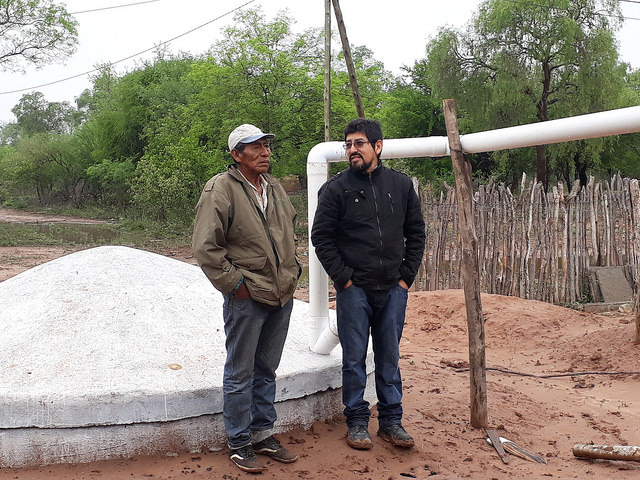
Mariano Barraza of the Wichí indigenous community (L) and Enzo Romero, a technician from the Fundapaz organisation, stand next to the tank built to store rainwater in an indigenous community in the province of Salta, in the Chaco ecoregion of northern Argentina, where there are six months of drought every year. CREDIT: Daniel Gutman/IPS

Mariano Barraza of the Wichí indigenous community (L) and Enzo Romero, a technician from the Fundapaz organisation, stand next to the tank built to store rainwater in an indigenous community in the province of Salta, in the Chaco ecoregion of northern Argentina, where there are six months of drought every year. CREDIT: Daniel Gutman/IPS

More forests would be beneficial for the water, reducing evaporation that is intense due to the heat and hot wind, he added.

Of the “technologies” developed in Brazil, one of the most useful for other semiarid regions is the “underground dam,” Claus Reiner, manager of IFAD programmes in Brazil, told IPS by phone from Brasilia.

The underground dam keeps the surrounding soil moist. It requires a certain amount of work to dig a long, deep trench along the drainage route of rainwater, where a plastic tarp is placed vertically, causing the water to pool during rainy periods. A location is chosen where the natural layer makes the dam impermeable from below.

This principle is important for the Central American Dry Corridor, where “the great challenge is how to infiltrate rainwater into the soil, in addition to collecting it for irrigation and human consumption,” said Ismael Merlos of El Salvador, founder of Funde and director of its Territorial Development Area.

The CADC, which cuts north to south through Guatemala, Honduras and El Salvador, is defined not as semiarid, but as a sub-humid region, because it rains slightly more there, although in an increasingly irregular manner.

Some solutions are not viable because “75 percent of the farming areas in the Corridor are sloping land, unprotected by organic material, which makes the water run off more quickly into the rivers,” Merlos told IPS by phone from San Salvador.

“In addition, the large irrigation systems that we’re familiar with are not accessible for the poor because of their high cost and the expensive energy for the extraction and pumping of water, from declining sources,” he said.

The most viable alternative, he added, is making better use of rainwater, by building tanks, or through techniques to retain moisture in the soil, such as reforestation and leaving straw and other harvest waste on the ground rather than burning it as peasant farmers continue to do.

“Harmful weather events, which four decades ago occurred one to three times a year, now happen 10 or more times a year, and their effects are more severe in the Dry Zone,” Merlos pointed out.

Funde is a Salvadoran centre for development research and policy formulation that together with Fundapaz, four Brazilian organisations forming part of the ASA network and seven other Latin American groups had been cooperating since 2013, when they created the Latin American Semiarid Platform.

The Platform paved the way for the DAKI-Semiárido Vivo which, using 78 percent of its two million dollar budget, opened up new horizons for synergy among Latin America’s semiarid ecoregions. To this end, said Burneo, it should create a virtuous alliance of “good practices and public policies.”

  Source

Reflections on the Charter of the United Nations on its 75th Anniversary

Civil Society, Climate Change, Development & Aid, Gender, Global, Headlines, Human Rights, Humanitarian Emergencies, IPS UN: Inside the Glasshouse, TerraViva United Nations

Opinion

Mona Juul is the seventy-fifth President of the Economic and Social Council and Permanent Representative of Norway to the United Nations.

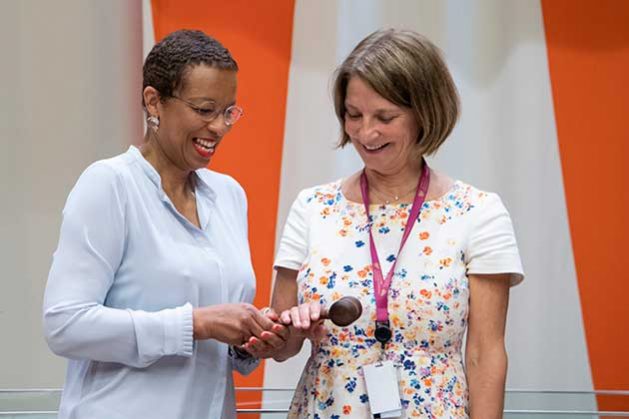
Inga Rhonda King (left), Permanent Representative of Saint Vincent and the Grenadines to the United Nations and seventy-fourth President of the Economic and Social Council (ECOSOC), hands over the gavel to Mona Juul, Permanent Representative of Norway to the United Nations and newly-elected seventy-fifth President of ECOSOC, at the opening meeting of the 2020 session of ECOSOC. New York, 25 July 2019. Credit: UN Photo/Eskinder Debebe

NEW YORK, Jul 29 2020 (IPS) – This year we celebrate the 75th anniversary of the Charter of the United Nations, written and signed during a period of great global change. Today, the world is again shifting beneath our feet. Yet, the Charter remains a firm foundation for our joint efforts.


These uncertain times of global disruption shine a light on the interdependences of our world. The COVID-19 pandemic, and the inequality it has exposed, are a global challenge that we must solve through global solutions. These solutions call for more, not less, cooperation across national borders.

Global cooperation is the enduring promise of the Charter of the United Nations. I am honoured to preside over the Economic and Social Council (ECOSOC), one of the principal organs of the United Nations, at its 75th anniversary.

In January 1946, 18 members gathered for the inaugural meeting of ECOSOC under the leadership of its first President, Sir Ramaswami Mudaliar of India. ECOSOC was vested with a powerful mandate, to promote better living for all ¬¬by fostering international cooperation on economic, social and cultural issues.

The Charter recognizes the value of social and economic development as prerequisites for stability and well-being. In a 1956 speech, Secretary-General Dag Hammarskjöld said that “while the Security Council exists primarily for settling conflicts […] the Economic and Social Council exists primarily to eliminate the causes of conflicts.”

For me, this is a reminder that sustainable peace and prosperity rely on global solidarity and cooperation.

Today, this unity of purpose to reach those furthest behind first is also the spirit of the Sustainable Development Goals (SDGs). The 2030 Agenda is our shared road map to transform the world as we recover better, protect our planet and leave no one behind. With ECOSOC serving as the unifying platform for integration, action, follow-up and review of the SDGs, our promise to eradicate poverty, achieve equality and stop climate change must drive our actions.

ECOSOC has the unique convening power to make this happen. It brings together valuable constituencies such as youth and the private sector to enhance our work and discussions. ECOSOC also remains the gateway for civil society engagement with the United Nations. Civil society has been central to progress on international economic, social and environmental cooperation, from the small but critical number of organizations present in San Francisco when the Charter was signed in 1945, to the 5,000-plus non-governmental organizations with ECOSOC consultative status today.

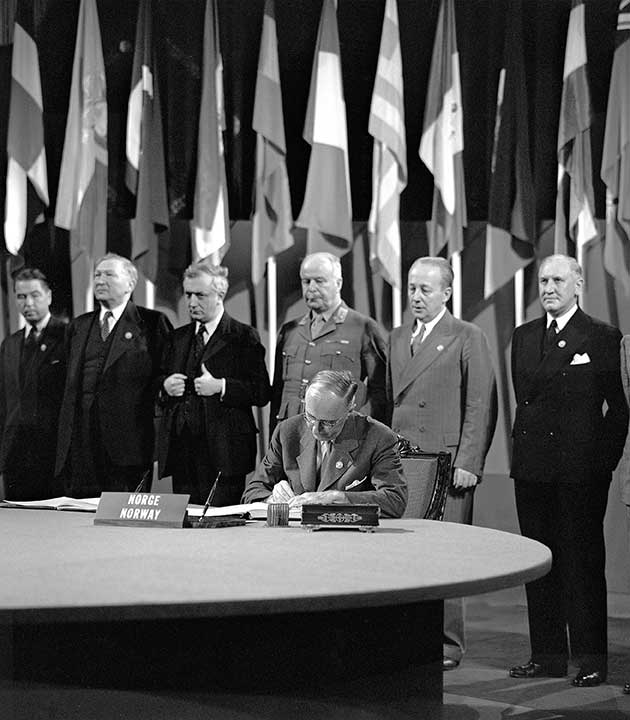
Wilhelm Munthe Morgenstierne, Ambassador to the United States, member of the delegation from Norway, signing the Charter of the United Nations at the Veterans’ War Memorial Building in San Francisco, United States, on 26 June 1945. Credit: UN Photo/McLain

The Charter also outlines that ECOSOC should promote universal respect and observance of human rights and fundamental freedoms for all, without distinction as to race, sex, language or religion. While much has shifted in our world, this mandate remains just as important today as in 1945. After all, human rights are a part of the foundation of the United Nations, quite literally. When Trygve Lie, the first Secretary-General and fellow Norwegian, laid the cornerstone of United Nations Headquarters at Turtle Bay in October 1949, it contained, together with the Charter, a copy of the Universal Declaration of Human Rights.

Human rights have always been a part of the work of ECOSOC. The former United Nations Commission on Human Rights was one of the first functional commissions created within ECOSOC and was charged with drafting the Universal Declaration. Today, ECOSOC remains committed to playing its part to promote all rights: civil and political, as well as economic, social and cultural rights.

In stark contrast to the 18 men who formed the first meeting of ECOSOC in 1946, I am proud to be the third consecutive female president of ECOSOC and one of five female presidents in its 75-year history. Although slow, this is progress, especially compared to 1945, when out of the 850 international delegates that convened in San Francisco to establish the Charter of the United Nations, only eight were women, and only four of them were signatories to the Charter. Today, the Secretary-General has achieved gender parity in all senior United Nations positions, and the Commission on the Status of Women is perhaps the highest profile part of the work of ECOSOC. The Commission’s annual session is instrumental in promoting women’s rights, documenting the reality of women’s lives throughout the world and shaping global standards on gender equality and the empowerment of women.

ECOSOC must work to place gender equality at the heart of all our work. Women’s rights and gender equality are imperative to a just world. In all my endeavours, I strive to promote and advance these rights with a vision of a more prosperous, peaceful and fair world, for the benefit of women and girls—and men and boys alike.

Before the current crisis, more people around the world were living better lives compared to just a decade ago. More people have access to better health care, decent work and education than ever before. Nevertheless, inequality, climate change and the lasting negative impacts of the COVID-19 pandemic are threatening to undo these gains. While we have technological and financial resources at our disposal, unprecedented changes will be needed to align resources with our sustainable development objectives. The United Nations must remain at the forefront of our collective efforts guided by our commitment to the Charter.

The true test of our success will be whether persons, communities and countries experience improvement in their lives and societies. The United Nations must be of value to people. To our family. To our neighbours. To our friends. Unless we achieve this, our credibility is at stake.

As we celebrate the 75th anniversary of the Charter of the United Nations, let us remind ourselves of the promise it embodies, to help the world become a more prosperous, just, equitable and peaceful place.

To me, the opening words of the Charter, “WE THE PEOPLES OF THE UNITED NATIONS”, are a humble and empowering reminder of our capability to overcome current and future challenges. Even in troubling times, there remains great hope in the power of working together. That is the founding spirit of the United Nations—and in this 75th anniversary year, as we face grave and global challenges, it is the spirit we must summon today.

This article was first published by the UN Chronicle on 26 June 2020.

  Source

‘One CGIAR’ with Two Tiers of Influence? The Case for a Real Restructuring of Global Ag-Research Centres

Civil Society, Climate Change, Development & Aid, Food & Agriculture, Global, Headlines, Humanitarian Emergencies, TerraViva United Nations

Opinion

This is an abridged version of an open letter by IPES-Food to the CGIAR on 21 July 2020.

Agroecological systems, which build resilience through crop/species diversity and natural synergies across the whole agro-ecosystem, are showing major potential. Credit: (C. Perodeaud, 2018)

BRUSSELS , Jul 22 2020 (IPS) – While the ‘CGIAR System’ may sound like a technocratic body, few organizations have exerted as much influence on today’s food systems as this network of global agricultural research centres. Since its inception at the height of the ‘Green Revolution’ in 1971, the CGIAR has driven advances in crop breeding and agricultural mechanization and modernization across multiple continents. Its mission – to develop knowledge and innovation for agriculture in the global South – is as relevant today as ever, in light of climate change, COVID-19 and a host of additional challenges.


The process now underway to reform the CGIAR is therefore of major public interest. The ‘One CGIAR’ process seeks to merge the CGIAR’s 15 legally-independent centres, headquartered in 15 countries, into one legal entity. The impetus has come from some of its biggest funders, notably the Bill and Melinda Gates Foundation, the World Bank, and the US and UK governments.

Reform of the CGIAR is long overdue. However, we are concerned that the current reform process, like previous versions, will fall short of the fundamental change that is required, and risks exacerbating major power imbalances in global agricultural development.

Firstly, the restructuring appears to have been advanced in a coercive manner, and without genuine buy-in from the global South. A ‘carrot and stick’ approach has been adopted: an increase in the overall CGIAR budget has been promised if the merger goes through, while centres resisting the move have allegedly been threatened with budget cuts. Insiders say that representatives from governments and agricultural institutes in the global South – the much-touted beneficiaries of the CGIAR and the Green Revolution – are generally against the merger, while the big funders and closely-affiliated scientific institutions are in favour. The two centres voting against the merger last week were the forest and agroforestry centres headquartered in Indonesia and Kenya respectively.

Secondly, there is insufficient diversity among the inner circle driving forward CGIAR reform. In the mid-1990s, when the CGIAR underwent an earlier restructuring, men from just four countries – the US, the UK, Canada and Australia – accounted for 85% of board chairs and directors. The CGIAR has subsequently made efforts to improve gender balance, and to bring on staff and board members from the global South. However, a true diversity of perspectives is still missing: many of those recruited have close associations with Northern universities and donor-led partnerships, while the voices of farmers, civil society and independent researchers in the global South are still largely absent. Only 7 of the 22 members of the CGIAR System Reference Group (SRG) – responsible for managing the transition process – are from the global South, of which two are already affiliated to CGIAR centres.

Thirdly, the proposed restructuring fails to equip CGIAR for the urgently-needed paradigm shift in food systems. Business-as-usual approaches to agricultural development are failing to address hunger and improve the livelihoods of smallholders, as shown by the shortcomings of the Alliance for a Green Revolution in Africa. Meanwhile, agroecological systems, which build resilience through crop/species diversity and natural synergies across the whole agro-ecosystem, are showing major potential – as recognized by the World Bank-led global agriculture assessment (‘IAASTD’), IPBES, the UN Food and Agriculture Organization (FAO), and a July 2020 statement by 366 scientists. The CGIAR has taken some steps towards systemic approaches, particularly through the work of some of its centres on participatory plant breeding, farmer-managed seed systems, varietal and species diversification for nutrition and resilience, biological control and agroforestry. But it has failed to mainstream these approaches: a 2017 study concluded that the “CGIAR environment was not conducive to implementing systems research”. Recent analysis by Biovision and IPES-Food found that, on average, CGIAR research programmes meet less than 20% of the indicators of systemic agroecological research.

While the basic shortcomings have been acknowledged in the current reform process, the CGIAR’s underlying philosophy does not appear to have shifted. The focus remains on scientific innovations being “deployed faster, at a larger scale, and at a reduced cost”, and provided to rather than developed with beneficiaries. By ushering in a single board with new agenda-setting powers, the restructuring may further reduce the autonomy of regional research agendas and reinforce the grip of the most powerful donors – many of whom have proven reluctant to diverge from the Green Revolution pathway.

Underlying all three of these problems is the disproportionate power of a handful of actors to control the purse strings and set the global agricultural development agenda. This reality risks undermining and short-circuiting the significant efforts to consult stakeholders over the past year.

It is therefore crucial to consider how these risks can be averted as the restructuring process moves forward, and to open a discussion on fundamental reform of the CGIAR. In order to rebuild its legitimacy and relevance, the CGIAR must: diversify its governance; put at centre stage the views of farmers, researchers, civil society groups, and governments in the global South; support transformative, transdisciplinary, agroecological research co-led by farmers and farmer organisations; collaborate with a broad network of regional, sub-regional and national research centres and universities to strengthen autonomous research capacity in the global South; and participate alongside the Rome-based agencies (FAO, IFAD, WFP) in the Committee on World Food Security (CFS).

Ultimately, the CGIAR system should mirror the food system we need: decentralized, context-specific, agroecological, and with more distributed and equal power relations.

*The IPES-Food expert panel: Olivier De Schutter (Co-chair), Olivia Yambi (Co-chair), Bina Agarwal, Molly Anderson, Million Belay, Nicolas Bricas, Joji Carino, Jennifer Franco, Mamadou Goïta, Emile Frison, Steve Gliessman, Hans Herren, Phil Howard, Melissa Leach, Lim Li Ching, Desmond McNeill, Pat Mooney, Raj Patel, P.V. Satheesh, Maryam Rahmanian, Cécilia Rocha, Johan Rockstrom, Ricardo Salvador, Laura Trujillo-Ortega, Paul Uys, Nettie Wiebe, Yan Hairong.

  Source

The Great Lockdown Through a Global Lens

Civil Society, Development & Aid, Editors’ Choice, Featured, Global, Global Governance, Headlines, IPS UN: Inside the Glasshouse, Poverty & SDGs, TerraViva United Nations

Opinion

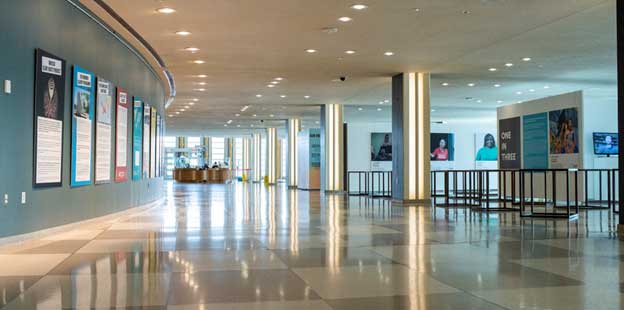
The empty corridors of a locked down UN Secretariat in New York. Credit: United Nations

WASHINGTON DC, Jun 17 2020 (IPS) – The Great Lockdown is expected to play out in three phases, first as countries enter the lockdown, then as they exit, and finally as they escape the lockdown when there is a medical solution to the pandemic.


Many countries are now in the second phase, as they reopen, with early signs of recovery, but risks of second waves of infections and re-imposition of lockdowns. Surveying the economic landscape, the sheer scale and severity of the Global Lockdown are striking.

Most tragically, this pandemic has already claimed hundreds of thousands of lives worldwide. The resulting economic crisis is unlike anything the world has seen before.

This is a truly global crisis. Past crises, as deep and severe as they were, remained confined to smaller segments of the world, from Latin America during the 1980s to Asia in the 1990s. Even the global financial crisis 10 years ago had more modest effects on global output.

For the first time since the Great Depression, both advanced and emerging market economies will be in recession in 2020. The forthcoming June World Economic Outlook Update is likely to show negative growth rates even worse than previously estimated. This crisis will have devastating consequences for the world’s poor.

Aside from its unprecedented scale, the Global Lockdown is playing out in ways that are very different from past crises. These unusual characteristics are emerging all over the world, irrespective of the size, geographic region, or production structure of economies.

First, this crisis has dealt a uniquely large blow to the services sector. In typical crises, the brunt is borne by manufacturing, reflecting a decline in investment, while the effect on services is generally muted as consumption demand is less affected.

This time is different. In the peak months of the lockdown the contraction in services has been even larger than in manufacturing, and it is seen in advanced and emerging market economies alike.

There are exceptions—like Sweden and Taiwan Province of China, which adopted a different approach to the health crisis, with limited government containment measures and a consequently proportionately smaller hit to services vis-à-vis manufacturing.

It is possible that with pent-up consumer demand there will be a quicker rebound, unlike after previous crises. However, this is not guaranteed in a health crisis as consumers may change spending behavior to minimize social interaction, and uncertainty can lead households to save more. In the case of China, one of the early exiters from lockdown, the recovery of the services sector lags manufacturing as such services as hospitality and travel struggle to regain demand.

Of particular concern is the long-term impact on economies that rely significantly on such services—for example, tourism-dependent economies.

Second, despite the large supply shocks unique to this crisis, except for food inflation, we have thus far seen, if anything, a decline in inflation and inflation expectations pretty much across the board in both advanced and emerging market economies.

Scene in New York City Subway during COVID-19 Outbreak. Credit: United Nations

Despite the considerable conventional and unconventional monetary and fiscal support across the globe, aggregate demand remains subdued and is weighing on inflation, alongside lower commodity prices. With high unemployment projected to stay for a while, countries with monetary policy credibility will likely see small risks of spiraling inflation.

Third, we see striking divergence of financial markets from the real economy, with financial indicators pointing to stronger prospects of a recovery than real activity suggests. Despite the recent correction, the S&P 500 has recouped most of its losses since the start of the crisis; the FTSE emerging market index and Africa index are substantially improved; the Bovespa rose significantly despite the recent surge in infection rates in Brazil; portfolio flows to emerging and developing economies have stabilized.

With few exceptions, the rise in sovereign spreads and the depreciation of emerging market currencies are smaller than what we saw during the global financial crisis. This is notable considering the larger scale of the shock to emerging markets during the Great Lockdown.

This divergence may portend greater volatility in financial markets. Worse health and economic news can lead to sharp corrections. We will have more to say about this divergence in our forthcoming Global Financial Stability Report.

One likely factor behind this divergence is the stronger policy response during this crisis. Monetary policy has become accommodative across the board, with unprecedented support from major central banks, and monetary easing in emerging markets including through first time use of unconventional policies.

Discretionary fiscal policy has been sizable in advanced economies. Emerging markets have deployed smaller fiscal support, constrained to some extent by limited fiscal space. Furthermore, a unique challenge confronting emerging markets this time around is that the informal sector, typically a shock absorber, has not been able to play that role under containment policies and has instead required support.

We are now in the early stages of the second phase as many countries begin to ease containment policies and gradually permit the resumption of economic activity. But there remains profound uncertainty about the path of the recovery.

A key challenge in escaping the Great Lockdown will be to ensure adequate production and distribution of vaccines and treatments when they become available—and this will require a global effort. For individual countries, minimizing the health uncertainty by using the least economically disruptive approaches such as testing, tracing, and isolation, tailored to country-specific circumstances with clear communication about the path of policies, should remain a priority to strengthen confidence in the recovery.

As the recovery progresses, policies should support the reallocation of workers from shrinking sectors to sectors with stronger prospects.

The IMF, in coordination with other international organizations, will continue to do all it can to ensure adequate international liquidity, provide emergency financing, support the G20 debt service suspension initiative, and help countries maintain a manageable debt burden.

The IMF will also provide advice and support through surveillance and capacity development, to help disseminate best practices, as countries learn from each other during this unprecedented crisis.

  Source

Predicting COVID-19 Infection Fatality Rates Around the World

Civil Society, Development & Aid, Editors’ Choice, Featured, Global, Global Governance, Headlines, IPS UN: Inside the Glasshouse, Poverty & SDGs, TerraViva United Nations

Opinion

WASHINGTON DC, Jun 16 2020 (IPS) – The world saw more new confirmed COVID-19 cases last week than any week to date. And as the pandemic grows, its epicenter is moving from advanced economies to more developing countries, including Brazil, India, and South Africa.


How is the pandemic likely to evolve as it spreads to poorer countries?

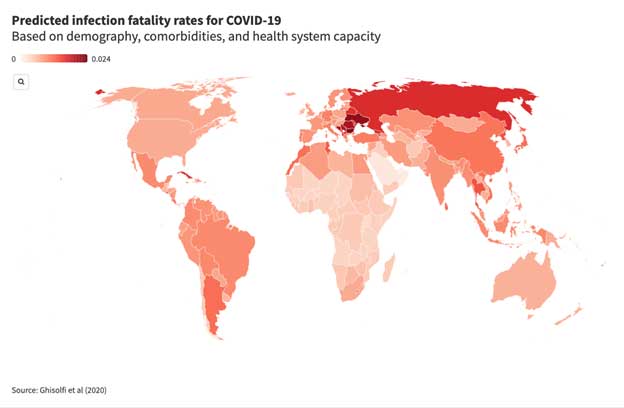
In a new working paper, we attempt to answer one piece of that question, predicting the infection fatality rate, or IFR, for COVID-19 for 187 countries based on demography, comorbidities, and the strength of health systems.

The IFR numbers we report are somewhat higher—sometimes dramatically so—than the figures given for many developing countries in earlier influential studies, including the Imperial College team’s scenarios for the global pandemic and a recent report by the WHO Africa bureau.

That difference can be chalked up to how we incorporate two factors: pre-existing health conditions, and the relative strength of health systems.

For many developing countries, comorbidities partially offset the advantages of youth

A recent study in Science by Salje et al., for instance, finds that with French-level healthcare, the probability of dying with COVID-19 rises roughly eight-fold when moving from the 60-69 age group to the 70 and above range. This is good news for developing countries, which generally have a much younger population than France.

Most previous forecasts of the COVID-19 infection fatality rate have incorporated this demographic advantage. However, they have generally not included the offsetting effect of cross-country differences in comorbidities.

Those comorbidities—such as diabetes, hypertension, and ischemic cardiovascular diseases— matter a lot. Data from Italy show that roughly 96 percent of COVID-19 fatalities report one or more relevant comorbidities.

Inverting that probability using Bayes’ rule and data on France’s IFR and comorbidity distribution, we find that the probability of dying from a COVID-19 infection for patients under 40 is roughly 134-times higher with a relevant comorbidity than without.

Developing countries generally have lower rates of relevant comorbidities compared to high-income countries (where the best measures of infection fatality rates come from). But whereas comorbidities are concentrated among the elderly in rich countries, some developing countries—such as South Africa—report a considerably higher share of these conditions among middle-aged people.

Future work would benefit from more careful treatment of comorbidities like HIV/AIDS that have higher prevalence in lower-income countries. But even a simple adjustment for comorbidities partially undermines many developing countries’ demographic advantages.

Evidence from other viral respiratory infections suggests a much bleaker scenario for COVID-19 in the developing world

So far, our estimates assume that an individual infected with COVID-19 in, say, Uganda has the same probability of dying as someone with the same sex, age, and number of comorbidities in France. Clearly that’s optimistic, given the overall capacity of Uganda’s health system relative to France’s. But exactly how optimistic?

To gauge how much fatality rates might vary with health system capacity, we draw on estimates of the infection fatality rate for another viral respiratory infection, namely influenza. We focus on children under five years old, to purge variation in age and comorbidities that typically begin later in life, and scale the odds ratio of dying from COVID-19 by the ratio of child influenza death rates across countries by income group.

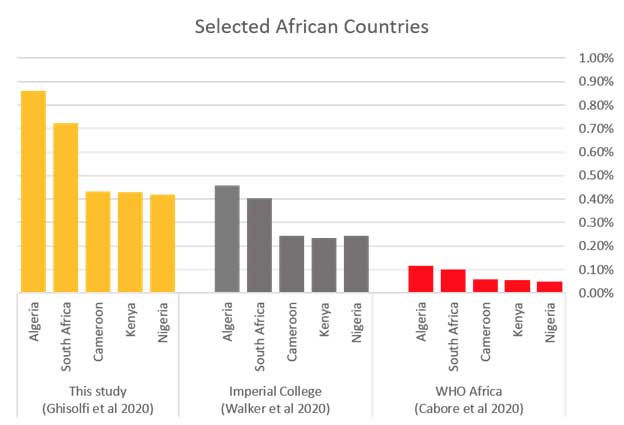
Adjusting for health-system capacity in this way yields COVID-19 infection fatality rates that are considerably higher than previous estimates for the developing world. For the five countries in Sub-Saharan Africa with the largest confirmed COVID-19 epidemics to date, our results are roughly twice as high as those from Imperial College, which does not factor in comorbidities or health system strength beyond a simple capacity constraint on hospital beds.

And they are roughly eight times higher than forecasts from the WHO Africa, which do not adjust for health system capacity and only scale the IFR downward (never upward) due to comorbidities.

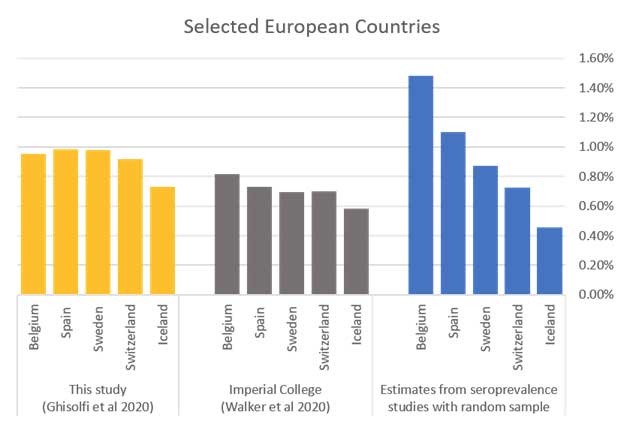
Comparing predicted COVID-19 infection fatality rates across studies

Our results are more in line with the Imperial College predictions for Europe, as shown in the bottom panel above. For the five European countries shown, we can also compare to a more “gold standard” benchmark, i.e., infection fatality rates calculated on the basis of seroprevalence studies of a random sample of the population (blue bars).

Both our results and the Imperial college results match these seroprevalence studies fairly well on average, but fail to explain much of the intra-European variance (some of which may be due to variance in how deaths are counted, e.g., Belgium’s fairly liberal definition of a COVID-19 death to include all unexplained nursing home deaths).

In short, our IFR estimates seem fairly plausible for Europe, where we have an independent reference point, and our results suggest that earlier predictions for developing countries that ignore health system capacity may be far too optimistic.

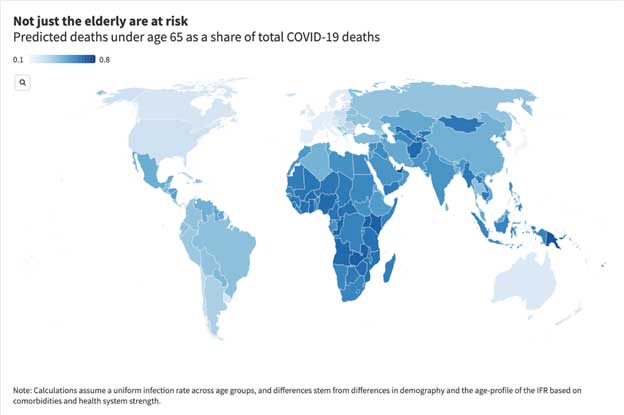
In line with recent news reports, it’s likely young people will make up a larger share of COVID-19 deaths in the developing world

In the United States to date, patients over 75 years old represent over 60 percent of COVID-19 deaths. In Italy, the number of fatalities above 70 is 85 percent.

Both demography and weak health systems explain why COVID-19 deaths are more concentrated among younger people in the developing world

Although predicted IFRs display a steep age gradient in all contexts, due to demographic differences the bulk of deaths in low- and lower-middle income countries is predicted to come from middle-aged patients (40-70).

Less obviously, differences in health system capacity are also likely to flatten the age gradient of COVID-19 deaths in developing countries. In Europe, data is consistent with the hypothesis that intensive care saves the lives of a higher proportion of young than elderly COVID-19 patients. Thus, when high-quality intensive care is lacking, the advantages of youth are more muted.

These estimates are far from the final word on this question. But we hope that our calculations provide an important cautionary note about developing countries’ demographic advantages in facing down COVID-19.

Planning for the ongoing pandemic response and calibration of containment policies should factor in the wide variation in predicted IFRs across contexts. Specifically, policymakers in low-income countries should be cognizant that any demographic advantages with respect to COVID-19 fatality rates are likely to be partially offset by disadvantages in terms of the age-distribution of comorbidities, and even more so by gaps in health system capacity.

*Justin Sandefur is a senior fellow at the Center for Global Development (CGD) ; Selene Ghisolfi is an economics post-doc at the Laboratory for Effective Anti-poverty Policies Bocconi, and a PhD student at the Institute for International Economic Studies, Stockholm University; Ingvild Almås is a professor of economics at the Institute for International Economic Studies, Stockholm University; Tillmann von Carnap is a PhD student at the Institute for International Economic Studies, Stockholm University; Jesse Heitner is a health economist at Aceso Global; and Tessa Bold is an associate professor at the Institute for International Economic Studies, Stockholm University.

  Source