How NGOs in Rich Countries Control their Counterparts in Poor Countries..and Why they Refuse to Resolve it

Aid, Civil Society, Development & Aid, Featured, Global, Headlines, Regional Categories, TerraViva United Nations

Civil Society

Paul Okumu is head of secretariat for the Africa Platform on Governance, Responsible Business and the Social Contract. He is also head of strategy at the Internet of Things Solutions Africa.

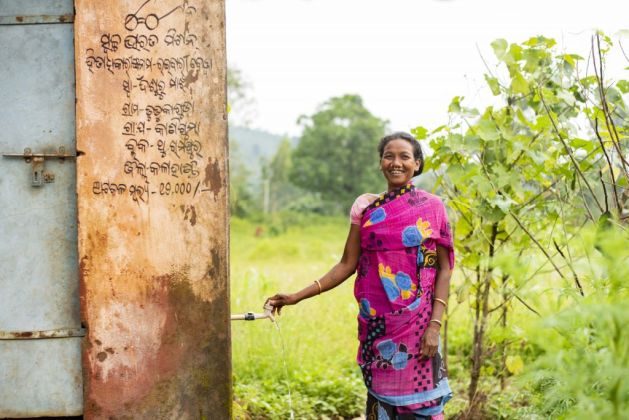
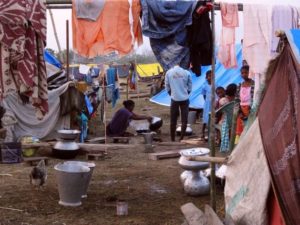
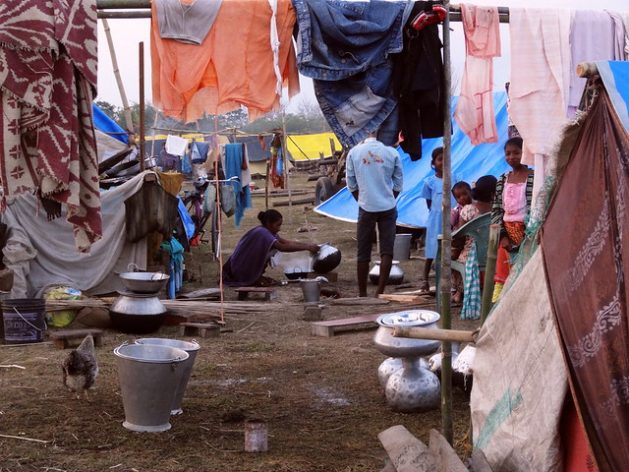
2.1 percent is the total amount of global funding that goes directly to civil society in the Global South. The remaining 97.9 percent is given directly to International Civil Society Organizations, who then sub contract 87 percent of the project delivery to Civil Society in the Global South to deliver on projects. Credit: Priyanka Borpujari/IPS

NAIROBI, Jul 12 2019 (IPS) – Many NGOs around the world are fighting inequality between the rich and the poor, between the policies that make rich countries richer, and poor countries poorer. So while Civil Society Organizations claim to be equal and are are fighting together to secure space for engagement and to work, the bigger NGOs should also ask themselves why they are unwilling to let others who are less resourced take up the space where their voice can be heard. Why are they unwilling to fight policies that keep rich NGOs richer?


Here are some numbers to show you why this is a battle no Global NGOs is willing to take on.

2.1%

The total amount of global funding that goes directly to civil society in the Global South. The remaining 97.9% is given directly to International Civil Society Organizations, who then sub contract 87% of the project delivery to Civil Society in the Global South to deliver on projects.

This is according to the UN Office for Coordination of Humanitarian Affairs, and analysis based on working statistics from the OECD Data on allocation of funds to Civil Society and the DAC and CRS Code list.

Despite attempts by Southern Civil Society Organizations to reverse this trend, Northern NGOs have had the standard response for the past ten years “We acknowledge its a problem, but its more complicated than you think.” (Read the latest debate here during the Humanitarian Summit in 2016.)

Attempts to change for Humanitarian NGOs under the Grand Bargain campaign, has hit a deadlock because of very curious reason- disagreement on who is “local”.  These goes to demonstrate just how embedded the INGOs are with their Governments.in one classic study, it was found that “while Syrian humanitarian actors were responsible for delivering 75% of the humanitarian assistance in 2014, they received only 0.3% of the direct and 9.3% of the indirect cash funding available for the overall Syria response. Despite their crucial role, Syrian NGO’s struggled to get their most basic costs covered in the sub-contracting and partnership agreements they have with international agencies. While international actors are all committed to transparency, 30% of the known funding remains unknown in terms of which humanitarian actor actually received the funding.” (Read Full study here)

$21,500

The average annual Salary of a Chief Executive from the Global South. This is equivalent to the average salary of a Junior Project Officer from any civil society Organization from the Europe or North America (including those working in the Global South) and is 11.6 times less than the average salary of a Chief Executive of the Civil Society in the North.

This is according to data derived from IRS Returns of NGOs in the US (Charity Navigator), the Report of the Charity Pay Study by the Third Sector , UK, studies in pay gap between local and international staff by Massey University, studies by Science Direct, Pay studies in developing countries such as Kenya, and analysis of advertised salaries for locals and international staff posted on the UN information and recruitment website Relief Web.

Chief Executives of Southern Civil Society that are considered International in Scope earn just slightly over $35,000 in annual pay-with one exception, BRAC. BRAC is an exception in that while it is technically a Southern NGO, it is considered the largest NGO in the world, and the most well funded, with a vast catalogue of social enterprises, government of Bangladesh Funding and Foreign Government grants for its mainly MDG-type development agenda.

According to a study by Global to Local “The issue of large salary differences between local and international NGOs/agencies 22 have a direct negative impact on capacity and capacity building for local organisations – not least when it comes to crucial staff positions such as project and finance staff. Continuously building the capacity of their staff, just to see them leave for better-paid positions with INGO’s and UN agencies (their so-called partners) is an uphill battle for local actors. One that continues to keep them locked into an ‘underdog’ position vis-à-vis international actors. This kind of continuous “brain drain” is global.”

90%

Percentage of local staff out of the total humanitarian workers in Syria who die in line of duty, according to a study mainly. This is mainly because the poor pay means local actors cannot afford the security measures needed to keep them safe, but also because being their community they tend to be closer to the conflict and respond with greater passion because International NGO Staff are either not in the field, or restrict their movements to security zones in conflict countries.This trend is noted in several other conflict areas around the world

99.1%

These studies also show that a record 99.1 % of NGOs in the Global South (that is nearly all of them) are working on a sub-grant basis by the International NGOs, meaning they effectively do not have an agenda of their own and must conform to what is known in the Development Sector as “Shifts in Donor Interests”. Hence, less than 10% of local NGOs are truly local. The negative impact of this on legitimacy, independence and objectivity of local Civil Society Organizations have been analyzed and documented. When asked why they do not give directly to local NGOs, Foreign Governments (commonly known as Donors) have given these five reasons since 1999 (they keep repeating it…See here in this article by BOND, for example;

·         Lots of southern and smaller CSOs do not have the capacity to fill in all our forms, let alone spend our money effectively.

·         We do not have the administrative capacity to give smaller amounts of money.

·         We need to channel money through a few, trusted partners so that we can manage risk and comply with our own rules.

·         We have strict anti-terror and anti-money laundering rules that make giving directly difficult.

·         We are under domestic political pressure to fund through CSOs in our home country.

17.3%

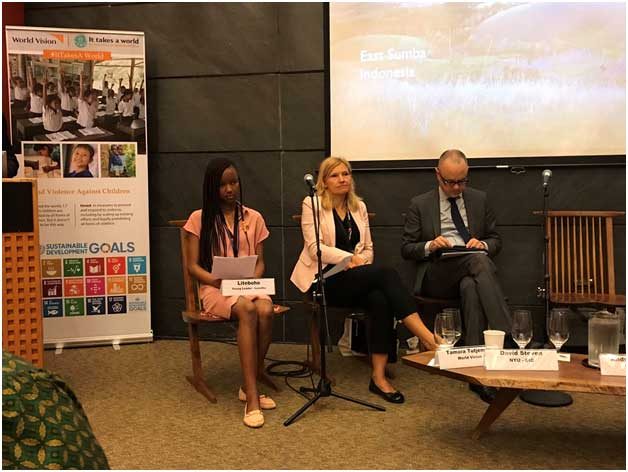
The number of NGOs from the Global South that have access and resources to attend Global Platforms such as UN Meetings, OECD Sessions, World Trade Organization meetings or World Bank Meetings. Most Global Platforms are still a preserve of Northern NGOs.

If you include attendance by Global South sub grantees who generally represent the voice and Agenda of the main International NGO sub granter, this figure falls to less than 3%, meaning Global Advocacy is still for and about a Northern Agenda. For example, over 3000 NGOs engaged with the Intergovernmental process leading the development of the Agenda 2030 for Sustainable Development (commonly known as the SDGs). Of these less than 100, or 3.3% were from the Global South.

And this was only possible because of the push by Southern Member states for ECOSOC to dedicate special funding for Civil Society Organizations from the Global South. Interestingly this concern was analyzed as way back as 1999 by the Global Policy Forum. The CARDOSO Report raised a similar concern, even offering proposals, way back in 2004.Civil Society Organizations in the Global South are still waiting to have it resolved!

$300,000

The size of a project beyond which most European Governments require Southern Civil Society Organization to receive funding through a European NGO, and must have a European Staff to oversee all or part of the leadership of the project, paid for by the grant, at European Rates. This not only significantly depletes the resources available to the Southern Civil Society to implement projects, but forces to recruit European staff with discrepancy pay while deliberately undermining the ability of local Organizations to build their capacity.

8

The number of Governments and Philanthropists that account for 87.6% of Total Funding to Civil Society around the world.This is according to OECD figures and figures from Philanthropic Organizations. Within the OECD, five countries account for nearly 70% of AID to Civil Society Organizations. In 2018 these were the US, Germany,the UK, Japan (mainly to its own NGOs), and, France (primarily to NGOs in its former colonies).

Critiques have raised concern that with so few Governments controlling such a large number of Civil Society Organizations,they are likely to exert undue influence over Policies and advocacy, especially in the knowledge of the fact that all AID is intended to achieve the ever shifting terms for what is essentially a 3D Agenda as a form of soft power (Development, Defense and Diplomacy). Over the last ten years, the concerns have heightened, with Northern Governments accused of hiding behind Aid to control and shape friendly economic and social policies under the new AID Tendering system known as Request for Proposals (RFPs).

11.1%

The total number of Civil Society from the Global South that can afford the $4000 Travel and Accommodation Budget needed to attend WEF (the individual fee of $75,000 and annual institutional fee of $675,000 is waived for Civil Society). Most Southern Organizations have budgets that are tied to specific projects, making it almost impossible to get the extra funding needed to attend advocacy spaces such as WEF

So while Civil Society Organizations are fighting together to secure space for Civil Society, we who are already inside should also ask ourselves why we are unwilling to let others who are less resourced take up the space where their voice can be heard.


Prejudice and Discrimination, the Uncured Ills of Leprosy

Civil Society, Democracy, Development & Aid, Editors’ Choice, Headlines, Health, Human Rights, Latin America & the Caribbean, Population, Regional Categories

Health

Nippon Foundation President Yohei Sasakawa and Socorro Gross, Pan American Health Organisation representative in Brazil, hold a press conference in Brasilia at the end of a 10-day visit to this country by the Japanese activist who is also World Health Organisation Goodwill Ambassador for Leprosy Elimination. Credit: Mario Osava/IPS

Nippon Foundation President Yohei Sasakawa and Socorro Gross, Pan American Health Organisation representative in Brazil, hold a press conference in Brasilia at the end of a 10-day visit to this country by the Japanese activist who is also World Health Organisation Goodwill Ambassador for Leprosy Elimination. Credit: Mario Osava/IPS

BRASILIA, Jul 11 2019 (IPS) – “The ambulance team refused to take my sick friend to the hospital because he had had Hanseniasis years before,” said Yohei Sasakawa, president of the Nippon Foundation, at one of the meetings held during his Jul. 1-10 visit to Brazil.


His friend was completely cured and had no visible effects of the disease, but in a small town everyone knows everything about their neighbours, he said.

This didn’t happen in a poor country, but in the U.S. state of Texas, only about 20 years ago, Sasakawa pointed out to underline the damage caused by the discrimination suffered by people affected by Hansen’s Disease, better known as leprosy, as well as those who have already been cured, and their families.

“The disease is curable, its social damage is not,” he said during a meeting with lawmaker Helder Salomão, chair of the Human Rights Commission in Brazil’s lower house of Congress, to ask for support in the fight against Hanseniasis, the official medical name for the disease in Brazil, where the use of the term leprosy has been banned because of the stereotypes and stigma surrounding it.

The highlight of the mission of Sasakawa, who is also a World Health Organisation (WHO) Goodwill Ambassador for Leprosy Elimination, was a meeting on Monday Jul. 8 with President Jair Bolsonaro, who posted a message on Facebook during the meeting, which had nearly 700,000 hits as of Thursday Jul. 11.

In the 13-and-a-half minute video, Bolsonaro, Sasakawa, Health Minister Luiz Mandetta and Women, Family and Human Rights Minister Damares Alves issued a call to the authorities, organisations and society as a whole to work together to eradicate the disease caused by the Mycobacterium Leprae bacillus.

A preliminary agreement emerged from the dialogues held by the Japanese activist with members of the different branches of power in Brasilia, to hold a national meeting in 2020 to step up the fight against Hanseniasis and the discrimination and stigma faced by those affected by it and their families.

The idea is a conference with a political dimension, with the participation of national authorities, state governors and mayors, as well as a technical dimension, said Carmelita Ribeiro Coriolano, coordinator of the Health Ministry’s Hanseniasis Programme. The Tokyo-based Nippon Foundation will sponsor the event.

Brazil has the second highest incidence of Hansen’s Disease in the world, with 27,875 new cases in 2017, accounting for 12.75 percent of the world total, according to WHO. Only India has more new cases.

The government established a National Strategy to Combat Hanseniasis, for the period 2019-2022, in line with the global strategy outlined by the WHO in 2016.

Brazilian Minister of Women, Family and Human Rights Damares Alves receives a gift from Yohei Sasakawa, president of the Nippon Foundation, at the beginning of a meeting in Brasilia, in which the minister promised to strengthen assistance to those affected by Hansen's Disease, including the payment of compensation to patients who were isolated in leprosariums or leper colonies in the past. Credit: Mario Osava/IPS

Brazilian Minister of Women, Family and Human Rights Damares Alves (L) receives a gift from Yohei Sasakawa, president of the Nippon Foundation, at the beginning of a meeting in Brasilia, in which the minister promised to strengthen assistance to those affected by Hansen’s Disease, including the payment of compensation to patients who were isolated in leprosariums or leper colonies in the past. Credit: Mario Osava/IPS

Extensive training of the different actors involved in the treatment of the disease and plans at the state and municipal levels, tailored to local conditions, guide the efforts against Hansen’s Disease, focusing particularly on reducing cases that cause serious physical damage to children and on eliminating stigma and discrimination.

Before his visit to Brasilia, Sasakawa, who has already come to Brazil more than 10 times as part of his mission against Hansen’s Disease, toured the states of Pará and Maranhão to discuss with regional and municipal authorities the obstacles and the advances made, in two of the regions with the highest prevalence rate.

“In Brazil there is no lack of courses and training; the health professionals are sensitive and give special attention to Hanseniasis,” said Faustino Pinto, national coordinator of the Movement for the Reintegration of People Affected by Hanseniasis (MORHAN), who accompanied the Nippon Foundation delegation in Brasilia.

“Promoting early diagnosis, to avoid serious physical damage, and providing better information to the public and physical rehabilitation to ensure a better working life for patients” are the most necessary measures, he told IPS.

Pinto’s case illustrates the shortcomings in the health services. He was not diagnosed as being affected with Hansen’s Disease until the age of 18, nine years after he felt the first symptoms. It took five years of treatment to cure him, and he has serious damage to his hands and joints.

His personal plight and the defence of the rights of the ill, former patients and their families were outlined in his Jun. 27 presentation in Geneva, during a special meeting on the disease, parallel to the 41st session of the Human Rights Council, the highest organ of the Office of the United Nations High Commissioner for Human Rights.

Pinto is an eloquent advocate of the use of Hanseniasis or Hansen’s Disease, rather than leprosy, a term historically burdened with religious prejudice and stigma, which aggravates the suffering of patients and their families, but continues to be used by WHO, for example.

Yohei Sasakawa (2nd-L), president of the Nippon Foundation, accompanied by two members of his delegation, took part in a meeting with Congressman Helder Salomão (C), chair of the Human Rights Commission of the Brazilian Chamber of Deputies, who pledged to support initiatives to eliminate leprosy in his country. Faustino Pinto (2nd-R), national coordinator of the Movement for the Reintegration of Persons Affected by Hanseniasis (MORHAN), also participated. Credit: Mario Osava/IPS

Yohei Sasakawa (2nd-L), president of the Nippon Foundation, accompanied by two members of his delegation, took part in a meeting with Congressman Helder Salomão (C), chair of the Human Rights Commission of the Brazilian Chamber of Deputies, who pledged to support initiatives to eliminate leprosy in his country. Faustino Pinto (2nd-R), national coordinator of the Movement for the Reintegration of Persons Affected by Hanseniasis (MORHAN), also participated. Credit: Mario Osava/IPS

Discrimination against people with the disease dates back to biblical times, when it was seen as a punishment from God, said Sasakawa during his meeting with Minister Damares Alves, a Baptist preacher who describes herself as “extremely Christian”.

In India there are 114 laws that discriminate against current or former Hansen’s Disease patients, banning them from public transport or public places, among other “absurdities”, he said.

In India, they argue that these are laws that are no longer applied, which justifies even less that they remain formally in force, he maintained during his meetings in Brasilia to which IPS had access.

Prejudice and misinformation not only subject those affected by the disease to exclusion and unnecessary suffering, but also make it difficult to eradicate the disease by keeping patients from seeking medical care, activists warn.

His over 40-year battle against Hansen’s Disease has led Sasakawa to the conclusion that it is crucial to fight against the stigma which is still rife in society.

He pressed the United Nations General Assembly to adopt in 2010 the Resolution for the Elimination of Discrimination against Persons Affected by Leprosy and their Families.

He said these attitudes and beliefs no longer make sense in the light of science, but persist nonetheless.

Treatment making isolation for patients unnecessary in order to avoid contagion has been available since the 1940s, but forced isolation in leprosariums and leper colonies officially continued in a number of countries for decades.

In Brazil, forced segregation officially lasted until 1976 and in practice until the following decade.

With multi-drug treatment or polychemotherapy, introduced in Brazil in 1982, the cure became faster and more effective.

Information is key to overcoming the problems surrounding this disease, according to Socorro Gross, the Pan American Health Organisation (PAHO) representative in Brazil who also held meetings with the Nippon Foundation delegation.

“Communication is essential, the media has a decisive role to play” to ward off atavistic fears and to clarify that there is a sure cure for Hansen’s Disease, that it is not very contagious and that it ceases to be so shortly after a patient begins to receive treatment, Gross, a Costa Rican doctor with more than 30 years of experience with PAHO in several Latin American countries, told IPS.


A Lifelong Battle Against the “Disease of Silence”

Civil Society, Development & Aid, Editors’ Choice, Featured, Headlines, Health, Latin America & the Caribbean, Population, Poverty & SDGs, Regional Categories

Health

Mario Osava interviews YOHEI SASAKAWA, president of the Nippon Foundation

Yohei Sasakawa, president of the Nippon Foundation, is interviewed by IPS in the Brazilian capital, where he concluded a tour of the country aimed at promoting the elimination of Hansen's Disease, better known as leprosy, and also the stigma that make it the "disease of silence.” Credit: Mario Osava/IPS

Yohei Sasakawa, president of the Nippon Foundation, is interviewed by IPS in the Brazilian capital, where he concluded a tour of the country aimed at promoting the elimination of Hansen’s Disease, better known as leprosy, and also the stigma that make it the “disease of silence.” Credit: Mario Osava/IPS

BRASILIA, Jul 10 2019 (IPS) – Yohei Sasakawa has dedicated half of his 80 years of life to combating the “disease of silence” and is still fighting the battle, as president of the Nippon Foundation and World Health Organisation (WHO) goodwill ambassador for elimination of leprosy, formally known as Hansen’s Disease.


His current emphasis is on combating the discrimination, prejudice and stigma that aggravate the suffering of people with leprosy, their families and even those who have already been cured. They also stand in the way of treatment, because people with the disease keep silent out of fear of hostility, he told IPS in an interview in the Brazilian capital.

“I travel around the world and speak out against the discrimination that marginalises those affected by the disease. But these are prejudices that have existed for 2,000 years; they cannot be overcome in two or three years. Many share my viewpoint and accompany me in the struggle. One day the discrimination will end. It is more difficult to cure the disease that plagues society than the illness itself. My effort is to hold a dialogue with presidents and ministers, people in positions of leadership, so that my message acquires political strength and can lead to a solution.”

Sasakawa visited Brazil Jul. 1 to 10, as part of his activism aimed at reducing the prevalence and social impacts of a disease stigmatised since biblical times. In Brasilia, he mobilised President Jair Bolsonaro, legislators and health and human rights officials to promote more intense efforts against the disease.

The idea of holding a national conference on Hansen’s Disease emerged from the meetings, with the political objective of disseminating knowledge and bolstering the disposition to eradicate prejudice, and the technical goal of improving strategies and efforts against the disease.

Brazil is second only to India with respect to the number of new infections diagnosed each year. The country implemented a National Strategy to Combat Hanseniasis from 2019 to 2022, with plans also at the level of municipalities and states, tailored to the specific local conditions.

The Tokyo-based Nippon Foundation is funding several projects and is preparing to support new initiatives in Brazil.

Brazil and Japan abolished the word leprosy from their medical terminology, due to the stigma surrounding it, and adopted the term Hanseniasis to refer to the disease caused by the Mycobacterium leprae bacillus. Sasakawa used this name during his interview with IPS, even though the WHO continues to employ the term leprosy.

IPS: Why did you choose as your mission the fight against Hansen’s Disease and the different kinds of harm it causes to patients and their families?

YOHEI SASAKAWA: It started with my father, the founder of the Nippon Foundation, who as a young man fell in love with a young woman who suddenly disappeared when she was taken far away and put in isolation. My father was appalled by the cruelty and, driven by a spirit of seeking justice, he started this movement. No one discussed the reason she was taken away, but I sincerely believe it was because she had Hanseniasis.

Later my father built hospitals in different places, including one in South Korea, where I accompanied him to the inauguration. On that occasion I noticed that my father touched the hands and legs of the patients, even though they had pus. He hugged them. That impressed me.

I was surprised for two reasons. It frightened me that my father so easily embraced people in those conditions. Besides, I wasn’t familiar with the disease yet. I saw people with a sick, unhealthy pallor. They were dead people who were still alive, the living dead, abandoned by their families.

I was filled with admiration for my father’s work and immediately decided that I should continue it.

IPS: What are the main difficulties in eradicating Hanseniasis?

YS: In general, when faced with a problem specialists and intellectuals come up with 10 reasons why it’s impossible to solve. I have the strong conviction that it is possible, and that’s why I address the problem in such a way that I can identify it and at the same time find a solution.

The people who find it difficult generally work in air-conditioned offices pushing around papers, studying the data. The most important thing is to have the firm conviction that the problem can be solved and then begin to take action.

The president of the Nippon Foundation, Yohei Sasakawa (C) is seen meeting with the president of Brazil, Jair Bolsonaro (L), in an IPS screen capture from the video that the president broadcast on Facebook to raise public awareness about the importance of eliminating Hansen's Disease, better known as leprosy, and eradicating the prejudice faced by patients and their families. Credit: IPS

The president of the Nippon Foundation, Yohei Sasakawa (C) is seen meeting with the president of Brazil, Jair Bolsonaro (L), in an IPS screen capture from the video that the president broadcast on Facebook to raise public awareness about the importance of eliminating Hansen’s Disease, better known as leprosy, and eradicating the prejudice faced by patients and their families. Credit: IPS

Since the 1980s more than 16 million people have been cured of Hansen’s Disease. Today, 200,000 patients a year are cured around the world.

IPS: What role do prejudice, stigma and discrimination play in the fight against this disease?

YS: That is a good question. After working for many years with the WHO, focusing mainly on curing the disease, I realised that many people who had already been cured could neither find work nor get married; they were still suffering the same conditions they faced when they were sick.

I concluded that Hanseniasis was like a two-wheeled motorcycle – the front one is the disease that can be cured and the back one is the prejudice, discrimination and stigma that surround it. If you don’t cure both wheels, no healing is possible.

In 2003, I submitted to the United Nations Commission on Human Rights a proposal to eliminate discrimination against Hanseniasis. After seven years of paperwork and procedures, the 193-member General Assembly unanimously approved a resolution to eradicate this problem that affects the carrier of the disease as well as those who have been cured, and their families.

But this does not mean that the problem has been solved, because prejudice and discrimination are the disease plaguing society.

People believe that Hanseniasis is a punishment from God, a curse, a hereditary evil. It’s hard to eradicate this judgment embedded in people’s minds. Even today there are many patients who have recovered and are totally healed, who cannot find a job or get married. In spite of the new laws, their conditions do not improve, because of the prejudice in people’s hearts.

In Japan, several generations of the family of someone who had the disease were unable to marry. This is no longer the case today.

That’s why I travel the world and speak out against the discrimination that marginalises those affected by the disease. But these are prejudices that have existed for 2,000 years; they cannot be overcome in two or three years.

Many share my viewpoint and accompany me in the struggle. One day the discrimination will end. It is more difficult to cure the disease that plagues society than the illness itself.

My effort is to hold a dialogue with presidents and ministers, people in positions of leadership, so that my message acquires political strength and can lead to a solution.

IPS: How did Japan manage to eradicate Hansen’s Disease?

YS: One way was the collective action of people who had the disease. Long-term media campaigns were conducted to spread knowledge about the disease. Movies, books and plays were also produced.

In Japan, Hanseniasis ceased to be the ‘disease of silence’. The nation apologised for the discrimination and compensated those affected. But in other countries, people affected by the disease have not yet come together to fight. Brazil, however, does have a very active movement.

IPS: As an example of what can be done, you cite Brazil’s Movement for the Reintegration of People Affected by Hanseniasis, MORHAN. Are there similar initiatives in other countries?

YS: Morhan really stands out as a model. Organisations have been formed by patients in India and Ethiopia, but they still have limited political influence. The Nippon Foundation encourages such movements.

IPS: You’ve visited Brazil more than 10 times. Have you seen any progress on this tour of the states of Pará and Maranhão, in the north, and in Brasilia?

YS: On that trip we couldn’t visit patients’ homes and talk to them, but we did see that the national, regional and local governments are motivated. We will be able to expand our activities here. In any country, if the highest-level leaders, such as presidents and prime ministers, take the initiative, solutions can be accelerated.

We agreed to organise a national meeting, promoted by the Health Ministry and sponsored by the Nippon Foundation, if possible with the participation of President Jair Bolsonaro, to bolster action against Hanseniasis.

We believe that this would generate a strong current to reduce the prevalence of Hanseniasis to zero and also to eliminate discrimination and prejudice. If this happens, my visit could be considered very successful.

IPS: What would you emphasise about the results of your visit?

YS: The message that President Bolsonaro spread directly to the population through Facebook during our meeting, with his view addressed to all politicians, to his team and and to all government officials on the need to eliminate the disease. I feel as if I have obtained the support of a million people who will work with us.


Chilean Schools Recycle Greywater to Combat Drought

Active Citizens, Civil Society, Climate Change, Combating Desertification and Drought, Development & Aid, Editors’ Choice, Education, Environment, Featured, Headlines, Integration and Development Brazilian-style, Latin America & the Caribbean, Population, Poverty & SDGs, Projects, Regional Categories, Special Report, Water & Sanitation

Water & Sanitation

The principal of the Samo Alto rural school, Omar Santander, shows organic tomatoes in the greenhouse built by teachers, students and their families, who raise the crops irrigated with rainwater or recycled water in Coquimbo, a region of northern Chile where rainfall is scarce. Credit: Orlando Milesi/IPS

The principal of the Samo Alto rural school, Omar Santander, shows organic tomatoes in the greenhouse built by teachers, students and their families, who raise the crops irrigated with rainwater or recycled water in Coquimbo, a region of northern Chile where rainfall is scarce. Credit: Orlando Milesi/IPS

OVALLE, Chile, Jul 4 2019 (IPS) – Children from the neighboring municipalities of Ovalle and Río Hurtado in northern Chile are harvesting rain and recycling greywater in their schools to irrigate fruit trees and vegetable gardens, in an initiative aimed at combating the shortage of water in this semi-arid region.


And other youngsters who are completing their education at a local polytechnic high school built a filter that will optimise the reuse and harvesting of water.

“The care of water has to start with the children,” Alejandra Rodríguez, who has a son who attends the school in Samo Alto, a rural village on the slopes of the Andes Mountains in Río Hurtado, a small municipality of about 4,000 inhabitants in the Coquimbo region, told IPS.

“My son brought me a tomato he harvested, to use the seeds. For them, the harvest is the prize. He planted his garden next to the house and it was very exciting,” said Maritza Vega, a teacher at the school, which has 77 students ranging in age from four to 15.

The principal of the school, Omar Santander, told IPS during a tour of rural schools in the area involved in the project that “the Hurtado River (which gives the municipality its name) was traditionally generous, but today it only has enough water for us to alternate the crops that are irrigated, every few days. People fight over watering rights.”

The Samo Alto school collects rainwater and recycles water after different uses. “The water is then sent to a double filter,” he explained, pointing out that they have a pond that holds 5,000 liters.

The monthly water bill is much lower, but Santander believes that the most important thing “is the awareness it has generated in the children.”

“There used to be water here, and the adults’ habits come from back then. The students help raise awareness in their families. We want the environmental dimension to be a tool for life,” he said.

For Admalén Flores, a 13-year-old student, “the tomatoes you harvest are tastier and better,” while Alexandra Honores, also 13, said “my grandfather now reuses water.”

El Guindo primary school, located 10 kilometers from the city of Ovalle, the municipal seat, in a town known as a hotspot for drug sales, performed poorly in tests until three years ago.

At that time, the principal, Patricio Bórquez, and the science teacher, Gisela Jaime, launched a process of greywater recovery. They also planted trees and native species of plants to adapt to the dry environment of the municipality of 111,000 inhabitants, located about 400 kilometers north of Santiago.

Four students, ages 13 and 14, talk to IPS about how the water reuse project has made them aware of the importance of taking care of water in the semi-arid territory where they live, in a classroom at the rural school of El Guindo, in the municipality of Ovalle, Chile. Credit: Orlando Milesi/IPS

Four students, ages 13 and 14, talk to IPS about how the water reuse project has made them aware of the importance of taking care of water in the semi-arid territory where they live, in a classroom at the rural school of El Guindo, in the municipality of Ovalle, Chile. Credit: Orlando Milesi/IPS

“The project was born because there was no vegetation,” said the teacher. Today they recover 8,000 litres of water a month. “Teaching care for the environment provides a life skill,” said Bórquez.

“Our school had the stigma of being in a place rife with drug addiction. Today in Ovalle we are known as the school with the most programs. We placed third in science,” she said.

Jaime described the experience as “gratifying” because it has offered “tools to grow and create awareness among children and the entire community about the importance of caring for water and other resources.”

Geographer Nicolás Schneider, founder of the “Un Alto en el Desierto” Foundation, told IPS that his non-governmental organisation estimates that one million litres of greywater have been recovered after eight years of work with rural schools in Ovalle.

In this arid municipality with variable rainfall, “only 37.6 mm of rainwater fell in 2018 – well below the normal average for the 1981-2010 period of 105.9 mm,” Catalina Cortés, an expert with Chile’s meteorology institute, told IPS from Santiago.

Schneider describes the water situation as critical in the Coquimbo region, which is on the southern border of the Atacama Desert and where 90 percent of the territory is eroded and degraded.

“Due to climate change, it is raining less and less and when it does, the rainfall is very concentrated. Both the lack of rain and the concentration of rainfall cause serious damage to the local population,” she said.

Innovative recycling filter

With guidance from their teachers, students at the Ovalle polytechnic high school built a filtration system devised by Eduardo Leiva, a professor of chemistry and pharmacy at the Catholic University. The filter seeks to raise the technical standard with which greywater is purified.

Duan Urqueta, 17, a fourth-year electronics student at the Ovalle polytechnic high school, describes the award-winning greywater filter he helped to build. Initially, units will be installed in eight rural schools in this municipality in northern Chile. Credit: Orlando Milesi/IPS

Duan Urqueta, 17, a fourth-year electronics student at the Ovalle polytechnic high school, describes the award-winning greywater filter he helped to build. Initially, units will be installed in eight rural schools in this municipality in northern Chile. Credit: Orlando Milesi/IPS

The prototype recycles the greywater from the bathrooms used by the 1,200 students at the polytechnic high school. This water is used to irrigate three areas with 48 different species of trees. Similar filters will be installed in eight rural schools in Ovalle.

The quality of the recovered water will improve due to the filter built thanks to a project by the Innovation Fund for Competitiveness of the regional government of Coquimbo, with the participation of the Catholic University, the “Un Alto en el Desierto” Foundation, and the Ovalle polytechnic high school.

The prototype was built by 18 students and eight teachers of mechanics, industrial assembly, electronics, electricity and technical drawing, and includes two 1,000-litre ponds.

The primary pond holds water piped from the bathroom sinks by gravity which is then pumped to a filter consisting of three columns measuring 0.35 meters high and 0.40 meters in diameter.

“The filter material in each column…can be activated charcoal, sand or gravel,” said Hernán Toro, the head teacher of industrial assembly.

Toro told IPS that “the prototype has a column with zeolite and two columns of activated charcoal. The columns are mounted on a metal structure 2.60 meters high.”

View of the water cleaning filter designed at the Ovalle polytechnic high school and built by a group of teachers and students with funding from the government of the region of Coquimbo, in northern Chile. Each unit costs 2,170 dollars and it will promote water recycling in the schools in the semi-arid municipality. Credit: Orlando Milesi/IPS

View of the water cleaning filter designed at the Ovalle polytechnic high school and built by a group of teachers and students with funding from the government of the region of Coquimbo, in northern Chile. Each unit costs 2,170 dollars and it will promote water recycling in the schools in the semi-arid municipality. Credit: Orlando Milesi/IPS

The water is pumped from the pond to the filter’s highest column, passes through the filter material and by gravity runs sequentially through the other columns. Finally, the water is piped into the secondary pond and by means of another electric pump it reaches the irrigation system.

Duan Urqueta, a 17-year-old electronics student, told IPS that they took soil and water samples in seven towns in Ovalle and “we used the worst water to test the filter that is made here at the high school with recyclable materials.”

In 2018, “we won first place with the filter at the Science Fair in La Serena, the capital of the region of Coquimbo,” he said proudly.

Pablo Cortés, a 17-year-old student of industrial assembly, said the project “changed me as a person.”

Toro said the experience “has been enriching and has had a strong social impact. We are sowing the seeds of ecological awareness in the students.”

“It’s a programme that offers learning, service, and assistance to the community. Everyone learns. We have seen people moved to the point of tears in their local communities,” the teacher said.

Now they are going to include solar panels in the project, which will cut energy costs, while they already have an automation system to discharge water, which legally can only be stored for a short time.

Eight schools, including the ones in Samo Alto and El Guindo, are waiting for the new filters, which cost 2,170 dollars per unit.

Schneider believes, however, that at the macro level “water recycling is insufficient” to combat the lack of water in this semi-arid zone. And he goes further, saying “there is an absence of instruments for territorial planning or management of watersheds.”

“Under the current water regulatory framework, the export agribusiness, mainly of fruit, has taken over the valleys, concentrating water use…and the government turns a blind eye,” he complained.


Indigenous Rights Approach a Solution to Climate Change Crisis

Biodiversity, Civil Society, Climate Change, Conferences, Development & Aid, Environment, Featured, Global, Headlines, Human Rights, Indigenous Rights, Sustainability, TerraViva United Nations

Indigenous Rights

The Global Landscapes Forum (GLF) was held in Bonn, Germany and focused on how to give land rights the visibility needed to showcase that a rights approach, particularly when it comes to indigenous people, is a solution to the climate change crisis. Courtesy: Pilar Valbuena/GLF

Jun 29 2019 (IPS) – The Global Landscapes Forum (GLF) was held in Bonn, Germany to rally behind a new approach to achieving a future that is more inclusive and sustainable than the present – through the establishment of secure and proper rights for all.


On Jun. 22 and 23, experts, political leaders, NGOs and indigenous peoples and communities gathered to deliberate on a methodology that emphasises rights for indigenous peoples and local communities in the management and perseveration of landscapes. The forum took place alongside the  United Nations Framework Convention on Climate Change Bonn Climate Change Conference.

The forum focused giving land rights the visibility needed to showcase that a rights approach is a solution to the climate change crisis, and to develop a ‘gold standard’ for rights.

Indigenous peoples, local communities, women and youth, are believed to be the world’s most important environmental stewards but they are also among the most threatened and criminalised groups with little access to rights.

“We’re defending the world, for every single one of us,” said Geovaldis Gonzalez Jimenez, an indigenous peasant leader from Montes de María, Colombia.

But industries such as fossil fuels, large-scale agriculture, mining and others are not only endangering landscapes but also the lives of the people therein.

Already this year, said Gonzalez, his region witnessed 135 murders, adding that the day before the start of the GLF a local leader was killed in front of a 9-year-old boy.

According to the United Nations, the land belonging to the 350 million indigenous peoples across the globe is one of the most powerful shields against climate change as it holds 80 percent of the world’s biodiversity and sequesters nearly 300 billion metric tons of carbon

It is for this reason that amid the urgency to meet Sustainable Development Goals (SDGs) under pressure from the climate threat, dialogues about the global future have begun to wake up to the fact that indigenous peoples’ relationships with the natural world are not only crucial to preserve for their own sakes, but for everyone’s.

The drafting of the document of rights was led by Indigenous Peoples Major Group (IPMG) for Sustainable Development and the Rights and Resources Initiative in the months leading up to the GLF.

Wider discussions and workshops over the two days served as a consultation on the draft (which is expected to be finalised by the end of the year) as a concrete guide for organisations, institutions, governments and the private sector on how to apply different principles of rights. This includes the rights to free, prior and informed consent; gender equality; respect to cultural heritage; and education.

U.N. Special Rapporteur on the Rights of Indigenous Peoples Vicky Tauli-Corpuz said lands managed by indigenous peoples with secure rights have lower deforestation rates, higher biodiversity levels and higher carbon storage than lands in government-protected areas.

But Diel Mochire Mwenge, who leads the Initiative Programme for the Development of the Pygme in the Democratic Republic of Congo (DRC), one of the largest indigenous forest communities in Central Africa, said he has witnessed more than one million people being evicted from the national parkland where they have long lived. He explained that they had not been given benefits from the ecotourism industries brought in to replace them and were left struggling to find new income sources.

“Our identity is being threatened, and we need to avoid being completely eradicated,” said Mwenge.

In Jharkhand, India, activist Gladson Dungdung, whose parents were murdered in 1990 for attending a court case over a local land dispute, said an amendment to India’s Forest Rights Act currently being reviewed by the Supreme Court could see 7.5 million indigenous peoples evicted from their native forest landscapes. The act can impact a further 90 million people who depend on these forests’ resources for their survival, he said.

The amendment, Dungdung said, would also give absolute power to the national forest guard; if a guard were to see someone using the forest for hunting or timber collection, they could legally shoot the person on-sight.

“Indigenous peoples are right on the frontline of the very real and dangerous fight for the world’s forests,” said actor and indigenous rights activist Alec Baldwin in a video address.

“Granted that indigenous peoples are the superheroes of the environmental movement,” Jennifer Morris, president of Conservation International wondered why they are not heard until they become victims. “Why do we not hear about these leaders until they’ve become martyrs for this cause?”

The examples of intimidation, criminalisation, eviction and hardship shared throughout the first day clearly showcased what indigenous peoples and local communities go through to preserve the forests or ‘lungs of the earth’.

The rights approach, according to conveners of the GLF, aims to strengthen respect, recognition and protection of the rights of indigenous peoples and local communities as stewards and bearers of solutions to landscape restoration, conservation, and sustainable use. It also aims to end persecution of land and environment defenders; build partnerships to enhance engagement and support for rights-based approaches to sustainable landscapes across scales and sectors; and, scale up efforts to legally recognise and secure collective land and resource rights across landscapes.

“By implementing a gold standard, we can both uphold and protect human rights and develop conservation, restoration and sustainable development initiatives that embrace the key role Indigenous peoples and local communities are already playing to protect our planet,” said Joan Carling, co-convener of IPMG.

IPMG recognises that indigenous and local communities are bearers of rights and solutions to common challenges.

“This will enable the partnership that we need to pave the way for a more sustainable, equitable and just future,” added Carling.

And the Center for International Forestry Research (CIFOR) Director General, Robert Nasi, said when rights of local communities and indigenous peoples are recognised, there are significant benefits for the fight against climate change and environmental degradation.

“Whoever controls the rights over these landscapes has a very important part to play in fighting climate change,” he said.

In the climate and development arenas, the most current alarm being sounded is for rights–securing the land rights and freedoms of indigenous peoples, local communities and the marginalised members therein.

How can these custodians of a quarter of the world’s terrestrial surface be expected to care for their traditional lands if the lands don’t, in fact, belong to them? Or, worse, if they’re criminalised and endangered for doing so?

The basic principles of a ‘gold standard’ already exist, such as free, prior and informed consent, according to Alain Frechette of the Rights and Resources Initiative (RRI). What has been lacking, he said, is the application of principles that could be boosted by high-level statements that could “spur a race to the top”.


India’s Most Significant Innovations Have Roots in Civil Society

Asia-Pacific, Civil Society, Development & Aid, Headlines

Opinion

Handpumps, participatory rural appraisals, wadi programmes, and so on, all came from an innovation or technology developed by civil society | Picture courtesy: Aga Khan Rural Support Programme (India)

Handpumps, participatory rural appraisals, wadi programmes, and so on, all came from an innovation or technology developed by civil society | Picture courtesy: Aga Khan Rural Support Programme (India)

AHMEDABAD, GUJARAT, India, Jun 4 2019 (IPS) – When we look at some of the things we take for granted in India today, there is a common thread to all of them. Every single one. They all originated from civil society.


People hear the word civil society and react differently; and it depends on where they come from. For the business leader, social and environmental concerns are impediments to business. “Environment ke liye poora project band hojata hai, what about growth, what about the economy?” (Entire projects have to be shut down for the sake of the environment).

I’ve also been in conversations with some government officers who say, “woh kaam chhota karte hain aur credit bahut le lete hain. Kaam toh hum karte hain paisa toh hamara hai.” (The nonprofits hardly do any work but take all the credit. We are the ones who do the work, the ones who put in the money).

But nothing is farther from the truth. When we look at rural India, and look at some of the things we take for granted todaybe it women self-help groups (SHGs), ASHA workers, biogas plants, RTI applications, and so onthere is a common thread to all of them. Every single one. They all originated as innovations in civil society.

Our largest government programmes were born in civil society

1. National Rural Livelihoods Mission (NRLM) and Self Help Groups (SHGs)

When we look at rural India, and look at some of the things we take for granted today—be it women self-help groups (SHGs), ASHA workers, biogas plants, RTI applications, and so on—there is a common thread to all of them. Every single one. They all originated as innovations in civil society.

One of the largest programmes of the governmentthe National Rural Livelihood Mission (NRLM)is based on women self help groups (SHGs). And the concept of an SHG was developed by Aloysius Fernandes and his team at MYRADA.

In the 1970s, MYRADA was working with large primary agriculture cooperative societies (PACS), all of whom seemed to be failing. In some of the geographies however, while the cooperatives had collapsed, there were some villages where small groups were saving and giving credit to each other.

Aloysius and the MYRADA team saw this, identified them as empowered groups that the banks could lend to, gave it form and structure, and took it to NABARD.

NABARD realised the value of what MYRADA was helping build, because they themselves were trying to reach out to the poor and their existing institutional portfolio was failing because the cooperatives weren’t functioning. They supported MYRADA and then pushed the banks to lend to these groups of poor women who saved regularly.

So, in a sense the SHG movement was started by MYRADA and to some extent, NABARD. The state was not in the picture at that time.

Then the first SERP programme came up in Andhra Pradesh. They used the base created by NABARD and MYRADA and they promoted the SHGs. And because the SERP programme worked, and because the World Bank was funding SERP, when the government created the NRLM, they used the same principles and structures.

Today the NRLM, which rides almost entirely on the SHG infrastructure, is the only large-scale institutional arrangement that the government has to reach out to poor. Every government uses it, regardless of what end of the political spectrum they occupy. It is pro-poor and still has elements of the marketthe state can extend its entitlements directly to the people, while also enabling them to be self-reliant by promoting enterprises. But if there hadn’t been MYRADA, we probably wouldn’t have had NRLM today.

2. Mahatma Gandhi National Rural Employment Guarantee Act (MGNREGA) 

India’s most talked about government programme MGNREGA came about because Jean Drèze and others in civil society drafted it, and advocated for it.

The idea of MGNREGA did borrow from an earlier employment guarantee programme that was started in Maharashtra by Mr Vitthal Sakharam Pagechair of the Maharashtra State Legislative Council, and a social activistwho wrote the first draft in 1965. But it was only when several civil society activists fought for it in the early 2000s, that it became something that the Central government took seriously and passed into national law.

3. Integrated Water Management Programme (IWMP)

The early work around watershed management was done in Sukhomajri in Haryana. A more integrated approach was later piloted at Ralegan Siddhi by Anna Hazare. This, and the Hiware Bazar model by Popatrao Pawar became models to emulate, and the IWMP guidelines that are in place today are a result of contributions from many nonprofits.

These are just few examples but the story repeats itself again and again regardless of the sector. Consider these two others examples; one old and one relatively recent:

  • ASHA workers: The concept of ASHA workers was born in Jamkhed. The ArolesDr Mabelle and Dr Rajstarted a programme in 1970 which involved semi-literate women delivering home-based care to mothers and newborns. It was taken to scale by the government, and our country now has over six lakh ASHA workers.
  • 108 Service: The 108 service that everyone lauds as a model of efficiency and scale was started as a service by EMRIa nonprofit in Andhra Pradesh under the aegis of Satyam Foundation (EMRI was later taken over by the GVK Foundation). It was handed over to the Andhra Pradesh government, and later, other state governments implemented it. Today it runs across 15 states and two union territories.

The list continueshandpumps, participatory rural appraisals, wadi programmes, and so on. Essentially, almost any government programme worth its salt came from an innovation or technology developed by civil society. This is not to belittle the role of the state, which is by far the major development actor, but to emphasise the role of civil society in nation building.

Despite this, we are seeing a marginalisation of the civil society sector by markets and the government because we haven’t told our story well enough.

Civil society is too self-effacing

What is the philosophy of a civil society? We believe that we will develop solutions which over time the community will own and the state or market will support. When that happens, we believe our work is done.

In a way, it’s a very phoenix-like approachyou create and you disband. And you start all over again on some other problem. We don’t patent anything; we don’t take credit for anything.

And perhaps this is because we know that something as complex as social change requires the contribution of many peoplecommunities, grassroots organisations, the state, funders, and so on. But we have gone to the other extreme. We don’t even acknowledge our role in the change; in fact, we undermine it.

When people ask us if we have successfully run a programme, we say “Nahi humne toh kuch kiya nahi hai, ye toh sab gaonwalon ne kiya hai” (No, we didn’t do anything, it was the villagers who did everything). And while it might be politically correct to say that we are only the catalysts, and the real work is done the community; it’s not always an accurate representation.

Civil society is more than the catalyst; we are innovatorstechnical innovators and idea innovators. We take really complex problems and come up with new ways to address them. We do effective work but refuse to take credit for it. And our refusal to take credit only feeds into the government’s view pointif the community is doing everything and civil society isn’t doing anything, then we will deal with the community directly.

People don’t understand our unique proposition

Because we have undermined ourselves, our unique proposition is not known. Our value to society is not only what we do or how we do it, but also at what cost we do what we do.

Many of us work at ridiculously low costs but we don’t document it, and we don’t measure it. So, some corporates, who want to work on social programmes, believe that they don’t need nonprofits. All they have to do is take the nonprofit’s staff and implement it on their own because it seems easy and cheap to do so.

The reality is different. Running a programme is complex. It takes years to build trust. And it requires humility, rigour, and persistence. It requires training, all-weather support, and hand-holdingall things that lead to an enabling ecosystem that a good nonprofit creates.

But some corporates don’t know this; they just want to take on the programmes because they believe they can do it better on their own rather than share space with nonprofits. It’s we who are at fault because we allowed this to happen.

The assumption is that nonprofits cannot scale

Scale is the new measure of ‘success’, where others find civil society wanting. Small, local and specialised civil society organisations are disappearing, and are not considered relevant in this new India which is in a hurry.

If one studies what has worked in the past, one realises that many, relatively small organisations have transformed the country. Consider MKSS, which started its work in a small village in Rajasthan, and even at its peak, worked largely in Rajasthan for the citizens’ right to information. That the RTI Act eventually became one of the most effective legislations by the state to hold itself accountable to its citizens, is a story of how impact is not necessarily a function of size.

We are constantly told by corporates and governments that we can’t scale. But then I reflect on what is it that a large corporate that has scaled typically does? They pick one slice of a human being’s life, for instance, the fact that people might like to drink cold sweet water in summer. It is one needone would think a very unhealthy need but nevertheless a need. And then a multi-billion-dollar soft drink industry gets created around this need. You serve nothing; in fact, you take a poor man’s good water and convert it into this sweet water and charge him INR 20 for it. That is your net value addition to society. So that is all you know. To understand one very small slice of a human being’s need and address it.

Now compare that to what civil society is trying to do. We are trying to transform the conditions in which human beings live. This is dramatically different from creating a market for one small need of an individual.

It’s easy to scale a product that is uni-dimensional, serves a very specific micro-need, to which you can throw a ton of resourcesmoney, talent, technology. But can you do it when it involves changing entrenched social norms across all aspects of a person’s life and livelihood?

The problem is while we in the sector might know how to do some of this, we don’t know how to articulate it and how to measure it.

And because we haven’t articulated it, we cannot argue for resources, for space, for anything really.

Even if the state hasn’t failed, we will always need civil society

Civil society is that critical third pillar of the samaj-sarkar-bazaar (society-government-market) triangle. Without it, no society can function. Even in most successful countries across the world there will always be people who are marginalised, and issues that are not on government or company radars.

There will always be a human problem which the market will never take up and the state will not realise either, because it is too buried, or too out there in the future. Even in its best form, the government is not designed to look at these things. And countries that have a majoritarian democracy will ignore those who are not a part of their majority. It’s a design problem.

So, who will look out for these people, who will help change entrenched social norms, who will build awareness of issues that matter?

Apoorva Oza is the chief executive officer of Aga Khan Rural Support Programme (India). He is also actively involved in founding and supporting nonprofits and nonprofit networks, as well as influencing government policy. A mechanical engineer with a diploma in rural management from the Institute of Rural Management, Anand, he has also completed courses from Cranford University, United Kingdom, and Cornell University, USA.

This story was originally published by India Development Review (IDR)