Shining a Spotlight on the Strengths & Challenges of Civil Society in the Balkans

Armed Conflicts, Civil Society, Development & Aid, Europe, Headlines, Human Rights, Population, Press Freedom, TerraViva United Nations

Opinion

This article is part of a series on the current state of civil society organisations (CSOs), which is the focus of International Civil Society Week (ICSW), sponsored by CIVICUS, and scheduled to conclude in Belgrade, April 12.

 
Lysa John, Secretary-General of CIVICUS, in her opening address to the International Civil Society Week (ICSW)

Credit: CIVICUS

BELGRADE, Apr 11 2019 (IPS) – It is an incredible privilege to welcome you all to the ‘International Civil Society Week’. I am going to remind us of the reasons that make it so important for us to be here in Belgrade this week.


This is our 16th global convening of civil leaders and 4th edition of the International Civil Society Week in particular – following on from events held in South Africa, Colombia and Fiji.

Our first World Assembly, as it was known then, was held in Hungary in 1997, and this time we have gathered in the Balkans – and we are very grateful to our peers in Serbia for hosting us.

Serbia currently features on the CIVICUS Monitor’s “Watch List” which draws attention to countries where there are serious and ongoing threats to civic space.

By hosting ICSW 2019 in Serbia, we hope to shine a spotlight on the strengths and challenges of civil society in this region, and find ways to amplify and support their efforts.

Civic freedoms are currently under attack in 111 countries. In other words, over six billion people face serious challenges in the exercise of freedoms of expression, association and peaceful assembly which are essential to an empowered and enabled civil society.

There is a continuing crisis facing civil society organisations and activists across the world – a global civic space emergency. Our job is to find ways to ensure this does not become the ‘new normal’.

We cannot be the generation that lost the fight to protect civic freedoms and democratic values. We owe the citizens, civic leaders and communities of the future a significantly stronger basis to organise for and achieve their rights.

There aren’t many people in the world who can genuinely claim to wake up every morning thinking about how to make the world a more just, more honest and more compassionate place. And yet, we have close to 1,000 people in this very room who do just that.

With over 900 delegates from 100+ countries gathered here, you can safely expect to meet every major form of civil society that works to defend and promote human rights worldwide – ranging from community groups, social entrepreneurs, academic organizations, campaigning networks, think tanks and foundations — in one place over the next few days.

We have the opportunity to connect lessons and inspirations while we are together here. Yet it is the changes that we will test and activate when we return to our personal and professional spaces that make being here worthwhile.

This could be refreshed strategies to challenge discrimination and exclusion or new ways to demonstrate innovation and accountability as a sector.

Our deliberations must reflect the urgency and intent required to make the changes we need to see in the real world – and in this gathering right here we have exactly the kind of determination and optimism needed to see this through. Thank you for being here – we wish you a truly inspired week!

I cannot end without thanking again our hosts in Serbia, Civic Initiatives and the Balkans Civil Society Network, for their warm and generous hospitality without which we wouldn’t be here.

A special mention is also due to the hosts of the previous ICSW held in Fiji – the Pacific Island NGO Forum – who are also here. Thank you for the lessons and achievements of our last gathering, which has enabled us to be more prepared and more ambitious this year.


Attacks on Media in the Balkans Sound Alarm Bells for Democracy

Armed Conflicts, Civil Society, Development & Aid, Europe, Featured, Headlines, Human Rights, Population, Press Freedom, TerraViva United Nations

Opinion

This article is part of a series on the current state of civil society organisations (CSOs), which is the focus of International Civil Society Week (ICSW), sponsored by CIVICUS, and scheduled to conclude in Belgrade, April 12.

 
Susan Wilding is the head of the Geneva office at CIVICUS, a global alliance of civil society organisations.

GENEVA, Apr 11 2019 (IPS) – Anti-government protesters invading Serbia’s state-owned television station, demanding that their voices be heard. Journalism bodies writing to the Albanian prime minister over plans to censor online media outlets. A Belgrade corruption-busting reporter forced to flee his house that had been torched; a Montenegrin investigative journalist shot in the leg outside her home.


These are just some of the violations emerging from the western Balkans as a clampdown on media freedom – and civil liberties – undermines Serbia’s and Montenegro’s bids to join the European Union.

It’s little wonder that Serbia tumbled 10 spots to rank 76th on the 2018 Reporters without Borders Press Freedom Index, which states bluntly: “Serbia has become a country where it is unsafe to be a journalist.” Its neighbours fare little better: Albania is in 75th place, Kosovo is ranked 78th and Montenegro is a dismal 103rd.

Smear campaigns against courageous journalists; impunity for those assaulting media players; collusion between politicians and brown-envelope reporters; high levels of concentration of media ownership in a few hands; threats of cripplingly expensive litigation; the chilling effect of self-censorship on reportage. The list of media abuses in the Balkans goes on and on.

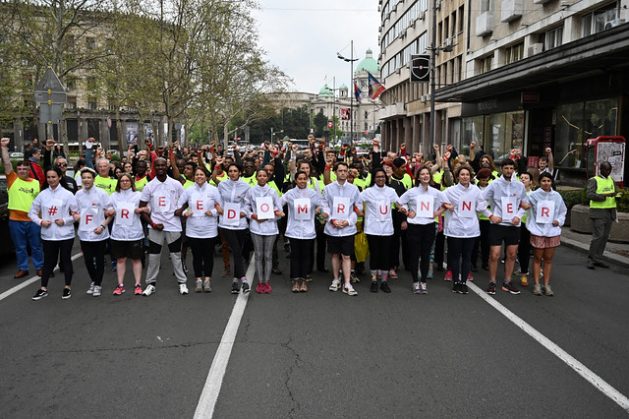
Belgrade, Serbia is playing host to International Civil Society Week, running thro Friday April 12, bringing together over 900 delegates to debate solutions to some of the world’s most pressing challenges. Some of the questions on the agenda will be: What more can we, as civil society, do to ease this stranglehold on free expression? How can we raise our voices to protect individual and media liberties?

Such restrictions on the media are incompatible with participatory democracy, which depends on three fundamental human rights – freedom of peaceful assembly, freedom of association and freedom of expression – which are also protected under international law. Any government that claims to have free and fair elections, and claims to be a democracy, cannot deny its citizens access to information and the right to be heard.

According to findings by the CIVICUS Monitor, an online platform that tracks threats to civil society in 196 countries, states are generally using two types of tactics to restrict civic freedoms, and the crack down on media freedoms is no exception.

The first is legal: imposing or enforcing laws that restrict democratic freedoms and criminalise free speech. For example, this includes bringing trumped-up judicial charges against journalists or media houses, thereby diverting energy and resources from watchdog journalism.

The second type comes in the form of extrajudicial means and are even more contemptible: including intimidating the media into submission through carefully coordinated smear campaigns and public vilification, and sometimes through physical intimidation and outright repression.

While such states may make an elaborate show of using (or abusing) the laws of the land to rein in the media, such censorship is clearly a perverse parody of democracy – an expression of a growing trend in which the ‘rule by law’ replaces the rule of law.

Sometimes these attacks on media are coming from “strongmen” leaders with the ambition of concentrating power and eliminating any checks and balances. In other instances, we see these kinds of restrictions imposed by governments that feel threatened and see media clampdowns as another way to hold onto power.

A weakened state or leaders who came to power through dubious means or with a small majority are likely to mute the civic space to cling to power. It may therefore, not be surprising that it’s happening in the Balkans, given the area’s fraught political history.

When popular dissent swells against unpopular policies and actions, a vulnerable state’s first target is the media, because of their potential role in unseating power. It is also something we see as a classic copy-and-paste tactic: questionable leaders see their regional neighbours getting away with it, with few if any repercussions, and follow suit.

Even the online space – the ultimate democratic arena of the 21st century, where the gladiatorial thrust and parry of views is essential to robust debate – is not being spared in this battle to seize ideological control of the marketplace of ideas.

Some countries have already shown that it’s entirely possible to shut down or control social media platforms, denying citizens their fundamental right to participate in debate and in policymaking.

The reasons that States give for silencing media vary but often include similar statements such as journalists are writing “defamatory” articles or disseminating “fake news”. Often, they maintain, the reportage is “unpatriotic”, “goes against our culture or values” or “does not advance our nationalist agenda”.

With the restrictions on media freedoms increasing in the Balkans, we should be highlighting the situation and sharing tried and tested strategies for pushing back and opening the space for a free and independent media.

We should be concerned that the world so easily shifted its attention away from the region after the terrible conflict that claimed so many lives 20 years ago. Why did we not linger a while to monitor the aftermath? Do we turn a blind eye to human rights abuses, as is the case in China and elsewhere, as long as there is peace, development and economic prosperity?


The Amazon Seeks Alternatives that Could Revolutionise Energy Production

Civil Society, Conferences, Development & Aid, Economy & Trade, Editors’ Choice, Energy, Environment, Featured, Green Economy, Headlines, Human Rights, Indigenous Rights, Integration and Development Brazilian-style, Latin America & the Caribbean, Projects, Regional Categories, TerraViva United Nations

Energy

Milton Callera (holding the microphone) and Nantu Canelos, members of the indigenous Achuar community, explain how the two solar boats built to transport their people on the Amazon rivers of Ecuador work. The project is from the Kara Solar Foundation, which is promoting an alliance to "solarise" river transport in the Amazon rainforest. Credit: Mario Osava/IPS

Milton Callera (holding the microphone) and Nantu Canelos, members of the indigenous Achuar community, explain how the two solar boats built to transport their people on the Amazon rivers of Ecuador work. The project is from the Kara Solar Foundation, which is promoting an alliance to “solarise” river transport in the Amazon rainforest. Credit: Mario Osava/IPS

MANAUS, Brazil, Apr 5 2019 (IPS) – A large steel wheel, 14 meters in diameter and 1.3 meters wide, could be the energy solution of the near future, generating 3.5 megawatts – enough to supply a city of 30,000 people, according to a company in the capital city of the state of Amazonas in northwest Brazil.


An internal fluid, which expands through a chemical reaction in contact with an ink, drives the rotation that produces electricity without interruption for at least five years, say executives at Eletro Roda, a company in the city of Manaus that is marketing the invention and is building its first demonstration unit.

“Installation of the unit costs less than half that of an equivalent solar power plant and occupies an area of just 200 square meters, compared to 50,000 square meters for solar and 5,000 square meters for wind power,” Fernando Lindoso, the director of the company in which he is a partner, told IPS.

In other words, in the space occupied by a wind power plant that generates 3.5 megawatts (MW), 25 electro-wheels could be installed, multiplying the generating capacity by a factor of 25.

In addition, it has the advantage of stable generation, “free of the intermittency of other sources,” said Lindoso, who estimated the cost of each 3.5 MW unit at around five million dollars, a price that is reduced for social projects.

There are interested parties in Japan, India and other countries in Asia, as well as in European and Middle Eastern countries, based on earlier prototypes that never made it to market, he said.

There will be a smaller version, generating one MW, “30 percent cheaper”, of identical dimensions, but with three tons of the fluid that is biodegradable, instead of the four used in the other model.

This was one of the alternatives presented at the Fair and Symposium on Energy Solutions for Communities in the Amazon, which brought together more than 500 participants and 39 companies and institutions in Manaus Mar. 25-28.

“My favorite is the solar boat, a good example of how to find solutions,” said Sam Passmore, director of the Environmental Programme at the U.S.-based Charles Stewart Mott Foundation, one of the meeting’s eight international sponsors.

A large metal wheel that can be taken apart in order to facilitate transport produces electricity by rotating driven by an internal fluid, which is expanded by a chemical reaction. Producing 3.5 megawatts, the generator to be sold by Eletro Roda could produce a steady supply of electricity on just 200 square meters of space. Credit: Courtesy of Eletro Roda

A large metal wheel that can be taken apart in order to facilitate transport produces electricity by rotating driven by an internal fluid, which is expanded by a chemical reaction. Producing 3.5 megawatts, the generator to be sold by Eletro Roda could produce a steady supply of electricity on just 200 square meters of space. Credit: Courtesy of Eletro Roda

An alliance for solar-powered transportation in the Amazon is propose by the Kara Solar Foundation, of the indigenous Achuar people of Ecuador, who since 2017 have built two 18-passenger boats powered by electricity from a rooftop made of photovoltaic panels.

Kara means dream in the Achuar language and it is about maintaining the sustainable culture of river transport, as opposed to “the roads that threaten our territory, presented as if they represented development,” project coordinator Nantu Canelos told IPS during the fair.

“We want to build 300, 400 solar boats,” said Milton Callera, technical director of the Coordinating Committee of Indigenous Organisations of the Amazon Basin (Coica).

Riverside dwellers and indigenous people in Brazil are also seeking to “solarise” their boats, especially the small ones, dedicated to fishing and the transportation of a few people. The problem is where to put the solar panels on the so-called “flying boats”, without slowing them down.

The discussions at the symposium, however, focused on the need to universalise energy. “There are still 500,000 people, or 100,000 families, without access to electricity in Brazil’s Amazon region,” according to Paulo Cerqueira, coordinator of Social Policies at the Ministry of Mines and Energy.

Attorney Joenia Wapichana, the first indigenous woman to hold a seat in Brazil's Chamber of Deputies, speaks at the opening of the Symposium on Energy Solutions for Communities in the Amazon, in the city of Manaus. She is from Roraima, the state with a high indigenous population in northwest Brazil that is suffering a serious energy crisis due to the interruption of supplies from neighboring Venezuela. Credit: Mario Osava/IPS

Attorney Joenia Wapichana, the first indigenous woman to hold a seat in Brazil’s Chamber of Deputies, speaks at the opening of the Symposium on Energy Solutions for Communities in the Amazon, in the city of Manaus. She is from Roraima, the state with a high indigenous population in northwest Brazil that is suffering a serious energy crisis due to the interruption of supplies from neighboring Venezuela. Credit: Mario Osava/IPS

The Light for All Programme, launched in 2003, benefited more than 16 million people, according to the ministry, in this country of 208 million people. But so far, isolated and remote communities, not reached by the power grid, have been excluded.

There are also millions of families who do have electricity, but are outside the National Integrated System, including the entire state of Roraima, in the northeast, with 580,000 inhabitants, on the border with Venezuela, from where it received most of its electricity until the supply crisis that erupted in March in the neighboring country.

Isolated communities in the state receive electricity mainly from diesel- or other petroleum-fueled generators.

The slogan for such cases is to replace costly, slow and unreliable transportation fueled by fossil fuels on the Amazon rainforest rivers, and to prioritise clean sources of energy. Solar power is presented as the most feasible solution, since the Amazon rainforest is not windy.

The exception is Roraima, where the state´s numerous indigenous people are studying the adoption of wind farms to help defend themselves from the impacts of the Venezuelan crisis.

Autonomous solar generation projects are mushrooming in the Amazon, in indigenous villages and riverbank settlements, sometimes funded by non-governmental institutions and international assistance, such as the German Agency for International Cooperation (GIZ) and the Rainforest Foundation of Norway.

Willi Seilert, from the I9SOL Institute, explains how his solar panels are manufactured, during the Fair and Symposium on Energy Solutions for Amazonia, held in Manaus. He has a project to disseminate a thousand small solar panel factories in Brazil, in order to make photovoltaic generation cheaper in poor communities. Credit: Mario Osava/IPS

Willi Seilert, from the I9SOL Institute, explains how his solar panels are manufactured, during the Fair and Symposium on Energy Solutions for Amazonia, held in Manaus. He has a project to disseminate a thousand small solar panel factories in Brazil, in order to make photovoltaic generation cheaper in poor communities. Credit: Mario Osava/IPS

As a result, companies such as Fabortec Solar, which installs photovoltaic systems and sells equipment, focused on designing and offering off-grid projects, incorporating batteries and equipment that ensure operation and maintenance by the users themselves.

“The Amazon is a great market for those who don’t mind long trips and can work in places that are difficult to access,” a company technician told IPS.

The expansion of solar energy in many parts of Brazil, not only in the Amazon, prompted Willi Seilert to design a plan to promote 1,000 solar panel micro-factories throughout the country.

This could make the product cheaper and facilitate access by poor families and communities to solar energy, in addition to training, employing and generating income for nearly 20,000 people in the country, he estimated.

That’s why he founded the I9SOL Institute, where the “9” stands for innovation.

A 50-square-meter office, at least 10 people trained by two instructors, a glass-top table, an oven and a few tools are enough to produce small solar panels, he told IPS.

“The main obstacle is the import of photovoltaic cells, which Brazil does not produce and which has to pay too high a tariff, because of a strange legal measure adopted in 2012,” he lamented.

In addition to this, there are two industrial processes for processing silicon, and “the rest is packaging work that trained people can do without difficulty,” he said, before pointing out that this continues to be the case in China and India, which provides employment for millions of workers, especially women.

The project is to be launched in Teófilo Otoni, a city of 140,000 people in the southeastern state of Minas Gerais, whose mayor plans to employ prisoners nearing release in the solar industry, Seilert said.

There are more energy alternatives in the Amazonian region. Experiments with the use of oil from the babassu (Attalea speciosa) palm tree abundant in the Amazon and neighboring areas, and from andiroba (Carapa guianensis), a tree with oilseeds, for electricity generation were presented at the symposium.

Railton de Lima, the inventor of the Eletro Roda, which he called a “voluntary engine for mechanical energy generation,” also developed a system for converting urban waste into charcoal briquettes to generate electricity, making it easier to recycle metals.

This technology is already used in several Brazilian cities, including Manaus. Of Lima’s 28 inventions, more than half are already being used in the market, and others are being developed for energy purposes.

Creativity, which helps to seek more suitable alternatives, is also found in poor communities.

“The idea of the right to energy is powerful” and stimulates solutions, said Passmore of the Mott Foundation. In the same sense, the diversity of peoples and communities represented at the Manaus meeting was “a very positive factor,” he concluded.


South-South Cooperation: a Path to Implementing UN’s 2030 Agenda

Civil Society, Conferences, Development & Aid, Editors’ Choice, Featured, Global, Global Governance, Globalisation, Headlines, IPS UN: Inside the Glasshouse, Poverty & SDGs, TerraViva United Nations

Opinion

António Guterres, is Secretary-General of the United Nations

BUENOS AIRES, Mar 25 2019 (IPS) – I see five issues that will be central to implementing the Paris Agreement on climate change and achieving the 2030 Agenda for Sustainable Development. South-South Cooperation can offer solutions to all of them.

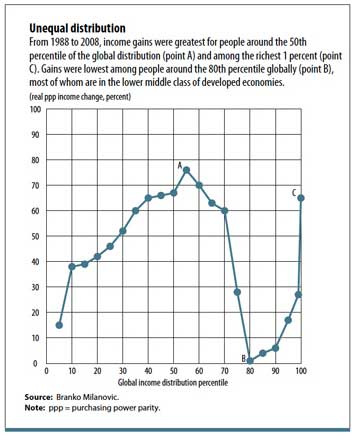
First, rising inequality both between and within countries is eroding trust and deepening a sense of injustice. Globalization has enabled many people to escape poverty – but its benefits are not shared equitably and its costs fall disproportionately on the poor and vulnerable.


António Guterres

Cooperation can enable developing countries to learn from each other and grow more quickly, close income gaps and build inclusive, resilient societies.

Second, climate change is the defining issue of our time, and we are losing the race. 2018 was the fourth hottest year on record and natural disasters are impacting nearly every region.

That is why I am bringing world leaders together at a climate action summit in New York in September. I am calling on leaders to bring concrete, realistic plans that raise ambition on mitigation, adaptation, finance and innovation.

We must enhance nationally determined contributions by 2020, in line with reducing greenhouse gas emissions by 45 percent over the next decade.

We need fundamental shifts to support green financing and increase investment in climate action from billions to trillions.

The Green Climate Fund must become fully resourced and operational. And the pledge to mobilize 100 billion dollars a year by 2020 for climate action in the developing world, including mitigation and adaptation, must be implemented.

South-South cooperation will be vital to ensure mutual support and exchange of best practices, to enhance adaptation and increase the resilience of developing countries and communities facing the devastating impacts of climate change.

South-South Cooperation can also support the transformation of economies dependent on fossil fuels, with strategies that reinforce both sustainable development and environmental protection.

Third, infrastructure and energy needs are set to expand enormously, thanks to population growth and urbanization in the Global South.

Some 60 percent of the area that is expected to become urban by 2030 has yet to be built. If we get this wrong, we will lock ourselves into a high-emissions future with potentially catastrophic consequences.

But if we get infrastructure right, it will be an opportunity for development cooperation, industrial transition and growth, cross-border trade and investment, climate change mitigation and adaptation, and sustainable development.

Fourth, gender has been described as the docking station for the SDGs, since it offers opportunities to engage on different crosscutting issues. It must be at the heart of all efforts if we are to succeed.

We have seen significant progress for women over the past forty years. More girls are in school; more women are doing paid work. Harmful practices like female genital mutilation and child marriage are in decline.

But this progress is not complete; indeed, we are seeing a pushback against our efforts and in some cases the gender equality gap is widening.

This affects us all, because where women are better represented in politics, we see improved social protection and increased spending on development. When women have access to land and credit, harvests increase. When girls are educated, they contribute more to their communities and break cycles of poverty.

And let’s not forget that countries with the highest number of women in parliament, in national security institutions, and as farmers, are indeed in the Global South.

Fifth, the multilateral development system must be better positioned to support South-South cooperation and implement the 2030 Agenda.

South-South cooperation has evolved significantly over the last decades – but multilateral institutions, including the United Nations, have not kept up.

I am grateful to Member States for recognizing the role of the United Nations in the outcome document for the South-South Conference (in Buenos Aires). We will take up the mandates you are entrusting to us, and you can count on my personal commitment to make sure the ongoing reforms of the United Nations reinvigorate our support for South-South cooperation.

We also need to realign financing for sustainable development and unlock the trillions that will deliver the 2030 Agenda.

South-South cooperation can never be a substitute for official development assistance or replace the responsibilities of the Global North set out in the Addis Ababa Action Agenda and the Paris Agreement.

South-South Cooperation must also involve young people, civil society, the private sector, academia and others, building innovative partnerships and extending the reach of initiatives. It must harness the potential of new technologies and digitalization that create opportunities and promote inclusivity.

South-South cooperation is a global exercise of all countries of the South to benefit everyone, including the Least Developed Countries. Every country, every partner has something to share or teach, whatever their circumstances.

This conference is a starting point.

Later this year, over the course of a week in September, Heads of State will gather in New York for the Sustainable Development Goals Summit and the Climate Action Summit. They will discuss Universal Health Coverage, Financing Sustainable Development and the Global Partnership to support Small Island Developing States.

All these meetings are aimed at accelerating implementation of the 2030 Agenda and the Paris Agreement, which were born from a consensus on the common interests that bind us together.

Now is the time to stake out that common ground again and take bold and transformative action.

Together, we can achieve the Sustainable Development Goals, we can beat climate change, and transform the lives of people around the world.

I thank the Government and people of Argentina for hosting this Conference.

Forty years ago, the landmark international conference on South-South Cooperation resulted in the Buenos Aires Plan of Action for Promoting and Implementing Technical Cooperation among Developing Countries.

Since then, the Buenos Aires Plan of Action, known as BAPA, has been the foundation and reference point for South-South cooperation, based on principles of national ownership, equality and non-conditionality.

BAPA transformed the dynamics of international cooperation.

It highlighted the value of a different form of cooperation, based on the exchange of knowledge and appropriate technologies among nations facing similar development challenges.

Across the global South, we have seen remarkable advances since BAPA. Thanks in part to South-South cooperation, millions of women, men and children have been lifted out of extreme poverty. Developing countries have achieved some of the fastest economic growth rates ever seen and have set global standards for sustainable development.

As we gather again in Buenos Aires, we recognize and celebrate the long journey we have walked together.

But we also recognize our common challenges.

Today, we are here to ensure that South-South cooperation remains responsive to the evolving realities of global development and the changing needs of developing countries as they implement the 2030 Agenda.

We have an opportunity to develop and strengthen frameworks for South-South cooperation; improve systems and tools; increase transparency; and strengthen accountability.

*Extracts from a keynote address by Secretary-General Antonio Guterres to the Conference on South-South Conference in Buenos Aires on March 20, 2019.


South-South Cooperation Now Triangulates with the North

Civil Society, Conferences, Development & Aid, Editors’ Choice, Featured, Global, Global Governance, Globalisation, Headlines, IPS UN: Inside the Glasshouse, Latin America & the Caribbean, Poverty & SDGs, Regional Categories, TerraViva United Nations

South-South

The Second High-Level United Nations Conference on South-South Cooperation was held at the Exhibition and Convention Centre in the Argentine capital, forty years after the Conference on Technical Cooperation among Developing Countries produced the Buenos Aires Plan of Action (BAPA) in 1978. Credit: Daniel Gutman/IPS

The Second High-Level United Nations Conference on South-South Cooperation was held at the Exhibition and Convention Centre in the Argentine capital, forty years after the Conference on Technical Cooperation among Developing Countries produced the Buenos Aires Plan of Action (BAPA) in 1978. Credit: Daniel Gutman/IPS

BUENOS AIRES, Mar 23 2019 (IPS) – It sounds like a contradictory play on words, but the countries of the industrialised North are currently the big supporters of South-South cooperation, as was demonstrated at the United Nations Second High-Level Conference on this subject, held in the Argentine capital.


If there is one thing that the three-day meeting in Buenos Aires, which ended on Friday Mar. 22, made clear, it is that the space created 40 years ago as an arena for mutual assistance and exchange of experiences among countries of the South, aimed at mutually promoting their development, no longer belongs only to them and has in fact become triangular.

Francisco Quintanar is a Salvadoran engineer who was in the Argentine capital to participate in the conference – not as a representative of El Salvador, but as part of the German delegation attending the meeting, which brought together 1,500 representatives from 193 countries.

“In the past, triangular cooperation was seen simply as a way of adding funding to South-South collaborative projects, but in which donors were passive actors. Now, instead, we do joint projects.” — Noel González Segura

He came to tell the story of an energy efficiency project born in February 2016, which benefited 10 textile, chemical and other companies in El Salvador and Nicaragua. The initiative was developed with technical assistance from Mexican experts and German funding.

“The Salvadoran companies were able to reduce their energy consumption by the equivalent of 2.5 million dollars a year thanks to this project, so the positive result was not only economic but also environmental,” Quintanar told IPS.

“This is an example of triangular cooperation: Germany provided the resources, Mexico provided technical expertise, and El Salvador and Nicaragua were the beneficiaries,” he added.

Hundreds of similar projects were exhibited at events parallel to the conference, which was inaugurated on Wednesday, Mar. 20 by U.N. Secretary General Antonio Guterres, along with Argentine President Mauricio Macri, and featured South-South/North triangular cooperation.

The meeting took place forty years after the U.N. Conference on Technical Cooperation among Developing Countries, held in 1978 also in Buenos Aires, when the last military dictatorship of this South American country (1976-1983), responsible for serious human rights violations, was at the height of its power.

In the midst of the Cold War, that conference was characterised as an effort by countries in Africa, Latin America, the Caribbean and Asia, aimed at strengthening their negotiating power and making their voices heard more on the international stage, while at the same time promoting mutual cooperation between their countries and regions.

The result of the 1978 conference was the Buenos Aires Plan of Action (BAPA), which built a bridge of political collaboration and economic and social cooperation among developing countries in what is now called the global South.

Salvadoran engineer Francisco Quintanar (L) was part of the German delegation that attended the South-South Cooperation Conference in Buenos Aires. His project on energy efficiency is an example of triangular cooperation between countries of the South, with the support of one or more countries of the industrialised North. Credit: Daniel Gutman/IPS

Salvadoran engineer Francisco Quintanar (L) was part of the German delegation that attended the South-South Cooperation Conference in Buenos Aires. His project on energy efficiency is an example of triangular cooperation between countries of the South, with the support of one or more countries of the industrialised North. Credit: Daniel Gutman/IPS

Forty years later, in the gigantic lobby of the Buenos Aires Exhibition and Convention Centre, a two-storey underground building inaugurated less than two years ago, it looked like just another international meeting, similar to any other major U.N. conference.

On the stage of the High Level Conference, known in U.N. slang as BAPA+40, the sober suits of the diplomats from Japan, Norway or Switzerland contrasted with the colourful outfits of the African representatives.

And in the exhibition hall the participants could visit the stands of the Spanish or German development aid agencies, or the stand of Argentina’s Foreign Ministry, since it does not have a cooperation agency.

“The United Nations Sustainable Development Goals (SDGs) and the climate agenda make it necessary for the world to work in a very different way than it has in the past,” said Marc-André Blanchard, Canada’s permanent representative to the U.N.

“Neither the North nor the South can do it alone. That’s why Canada was so eager to be here,” he told IPS.

“Think of foreign aid to emerging countries. It is essential for them, but it is only two percent of the money needed to implement Agenda 2030 for Sustainable Development,” which is articulated in the 17 SDGs, he added.

Blanchard concluded: “We need to find the remaining 98 percent and we can only do that with new forms of collaboration. That’s why countries in the South need countries like Canada as partners.”

The South-South Cooperation Conference was accompanied by a number of parallel events, organised for example by the Food and Agriculture Organisation (FAO), the International Fund for Agricultural Development (IFAD) and the World Food Programme (WFP), which discussed how to promote direct farmer-to-farmer cooperation among developing countries. Credit: Daniel Gutman/IPS

The South-South Cooperation Conference was accompanied by a number of parallel events, organised for example by the Food and Agriculture Organisation (FAO), the International Fund for Agricultural Development (IFAD) and the World Food Programme (WFP), which discussed how to promote direct farmer-to-farmer cooperation among developing countries. Credit: Daniel Gutman/IPS

“We have knowledge or financial resources, but they are limited,” admitted Noel González Segura, director of planning at the Mexican Agency for International Development Cooperation.

“So through triangular cooperation with a traditional partner like the United States, Germany or Spain, we can multiply our capacity for action in favour of third countries,” he told IPS.

According to González Segura, “in the past, triangular cooperation was seen simply as a way of adding funding to South-South collaborative projects, but in which donors were passive actors. Now, instead, we do joint projects.”

“So, for example, the Germans come with money, knowledge and proposals, we add an international organisation and together we build a stronger partnership,” he said.

The Final Document of the Buenos Aires Conference, which unusually was distributed before the beginning of the meeting, speaks of the need to “better understand triangular cooperation and to provide more evidence and rigorous information on its magnitude, scope and effects.”

The text, signed by heads of delegations and senior government representatives, argues that triangular cooperation “offers an adaptable and flexible approach to the evolving problems of development.”

One of the cases reported during the conference was the cooperation of technicians from the National Institute of Agricultural Technology (INTA) of Argentina to help rural Haitians improve their ability to grow food after the devastation caused by Hurricane Jeanne, which in 2004 left more than 3,000 dead in the Caribbean island nation.

“After the tragedy there was a tremendous lack of fresh food. We traveled and worked there with Haitian technicians and 4,000 volunteers, 60 percent of whom were women,” said Francisco Zelaya, a technician at INTA, which depends on the Secretariat of Agroindustry.

“We reached 40,000 families and developed 13 local species of seeds,” he told IPS.

Zelaya said that “Argentina did not have the financial capacity to collaborate on a project like this. So the initiative was planned with Canada, which acted as a funder because it has a particular interest in Haiti, since it tends to receive many migrants from that country.”

For Roberto Ridolfi, assistant to the Director-General of the U.N. Food and Agriculture Organisation (FAO), “we must abandon the idea that two countries in the South can make a wonderful agreement and then ask a third country to foot the bill.”

“What we need are triangles, in which everyone brings something and takes something away. Innovative forms of South-South cooperation must be found. If we want to replicate North-South collaboration projects, it will be difficult,” he told IPS.

“It is about finding ways to combine skills, money and human resources from the three sides of the triangle. We don’t want to measure everything by money, but development is supported by investment,” Ridolfi said.


People Affected by Leprosy in Latin America Unite for Their Rights and Their Voice

Active Citizens, Civil Society, Conferences, Development & Aid, Editors’ Choice, Featured, Global Governance, Headlines, Health, Human Rights, IPS UN: Inside the Glasshouse, Latin America & the Caribbean, Population, Regional Categories, TerraViva United Nations

Health

Family photo of part of the 111 participants in the First Latin American and Caribbean Assembly of Organisations of People Affected by Hansen's Disease, on the steps of the Morisco Palace, the headquarters of the Oswaldo Cruz Foundation, which hosted the three-day meeting in Rio de Janeiro, Brazil. Credit: Mario Osava/IPS

Family photo of part of the 111 participants in the First Latin American and Caribbean Assembly of Organisations of People Affected by Hansen’s Disease, on the steps of the Morisco Palace, the headquarters of the Oswaldo Cruz Foundation, which hosted the three-day meeting in Rio de Janeiro, Brazil. Credit: Mario Osava/IPS

RIO DE JANEIRO, Mar 14 2019 (IPS) – With the decision to found a regional coalition to promote rights and greater participation in national and international forums and decisions, the First Latin American and Caribbean Assembly of Organisations of People Affected by Hansen’s disease, popularly known – and stigmatised – as leprosy, came to an end.


The final session of the meeting, on Mar. 14, approved 40 of the 58 proposals presented by the 111 participants in three days of debates at the headquarters of the Oswaldo Cruz Foundation, a renowned scientific, medical and epidemiological research centre in Rio de Janeiro, Brazil.

José Picanço, 46, separated from his family and taken as a newborn to an orphanage because his parents were diagnosed with the disease in 1972, is one of those affected whose right to reparations remains unfulfilled. His three siblings are in the same situation.

When the family was reunited eight years later, the father turned his back on the children. The mother took them in, but died shortly afterwards. “I only lived with her, a saint, for five months,” Picanço recalled, barely managing to hold in his tears while giving testimony at the meeting.

“Humiliated as the children of lepers, suffering bullying and sexual harassment, many of the other children who were with me at the orphanage fell into drug abuse and alcoholism. It was a holocaust,” he said. “I hit my brother on the head, not knowing he was my own brother.”

“Of the 15,000 to 20,000 children separated from their families, more than 80 percent suffer from depression,” said Picanço in an interview with IPS, detailing some of the damage caused by the old rule of segregating the people then called “lepers”.

Mandatory isolation was widespread around the world, during different historical periods, and continues in some countries, even though it is known that the disease is curable and that patients cease to be contagious shortly after starting treatment.

Officially, Brazil abolished this practice in 1976, although it actually lasted 10 more years. Its direct victims were compensated starting in 2007, but their children were not. The activists gathered in Rio de Janeiro called for working for policies of reparations for children separated from their families.

Their complaints and proposals will be taken to the World Congress of associations of people affected by leprosy in Manila in September, which will also receive contributions from Africa and Asia, approved at recent similar regional assemblies.

“The goal is to form a large network of activists, to strengthen the movement” for the eradication of the disease and for care and reparations for those affected, said Kiyomi Takahashi of the independent Nippon Foundation, which is driving this international process of debate and cooperation.

The meeting in Rio de Janeiro fostered “a high-level dialogue, the result of Morhan and Felehansen’s long history of activities,” the Japanese expert told IPS, referring to the Movement for the Reintegration of People Affected by Hanseniasis (Morhan) in Brazil, and the National Federation of Entities Affected by Leprosy or Hansen’s Disease (Felehansen) in Colombia, the two organisers of the regional meeting.

Brazilian activists José Picanço (front) and Evelyne Leandro testified about how Hansen's disease affected them during a Latin American and Caribbean meeting in Rio de Janeiro. Picanço was separated from his parents when they were diagnosed with leprosy when he was born in 1972 and was only reunited with them eight years later, shortly before his mother died. Leandro wrote a book about the difficulties of being diagnosed with the disease in Germany, where she lives. Credit: Mario Osava/IPS

Brazilian activists José Picanço (front) and Evelyne Leandro testified about how Hansen’s disease affected them during a Latin American and Caribbean meeting in Rio de Janeiro. Picanço was separated from his parents when they were diagnosed with leprosy when he was born in 1972 and was only reunited with them eight years later, shortly before his mother died. Leandro wrote a book about the difficulties of being diagnosed with the disease in Germany, where she lives. Credit: Mario Osava/IPS

“Morhan is my safe haven, to preach that separated children should be heard and have opportunities,” said Picanço, who explained that he joined the movement in 1992. Today he gives talks on the direct and indirect effects of the stigma still surrounding the disease, that is suffered by those affected and their families.

A blessing

The disease “was a blessing for me,” Isaias Dussan Weck, 50, the vice-president of the Colombian association Felehansen, told IPS without hesitation.

The diagnosis in 2006 destroyed him, he said. He lost the desire to work or to go out, he let his business of supplying cleaning products to companies go bankrupt, he even contemplated suicide. He ignored the stains on his body that did not prevent him from working and traveling, until they spread to his face, and he noticed that parts of his body were going numb.

He received treatment and was cured, left with only slight numbness in one arm and pains in his left leg.

But everything went badly for him until he was invited to meetings with other people affected by leprosy. “I began to understand, when I heard their testimonies and tears, why a young black girl with severe disabilities said that leprosy was a blessing to her,” Dussan said.

Activism for the benefit of those affected, against the stigma and the damage caused by the disease, in the association of the department of Huila, in southwestern Colombia, allowed him “to gain new meaning for life and to understand and practice love for my neighbour.”

“Helping and seeing a patient’s life improve is a wonderful emotion, and you help other people want to live,” he concluded. That new passion led him to Felehansen, where he took on leadership roles in the federation.

Irma Romero, 42, president of the Nuevo Amanecer Foundation in Barranquilla, on Colombia’s northern coast, had a similar experience. Her lengthy odyssey to a specialist’s diagnosis five years ago reveals the medical system’s shortcomings when it comes to detecting and treating the disease, also known as hanseniasis, which is still viewed by many as “a divine punishment.”

Romero stopped working in the textile industry due to disability and depression. “I couldn’t even walk,” she recalled. “I even denied God,” she told IPS.

Colombian activist Irma Romero, a native of the city of Barranquilla, sitting on the bus that transported the participants of the First Latin American and Caribbean Assembly of Organisations of People Affected by Hansen's Disease, held Mar. 12-14 in Rio de Janeiro, Brazil. Credit: Mario Osava/IPS

Colombian activist Irma Romero, a native of the city of Barranquilla, sitting on the bus that transported the participants of the First Latin American and Caribbean Assembly of Organisations of People Affected by Hansen’s Disease, held Mar. 12-14 in Rio de Janeiro, Brazil. Credit: Mario Osava/IPS

Treatment using medicinal herbs, self-medication, rejection by relatives, attempts to separate her from her two children and abandonment by her husband all formed part of her suffering, which did not end with her treatment and cure.

The only permanent physical effects are numbness in her hands and feet, and sciatic nerve pain. But the discrimination continued.

“My life changed when I joined the association of affected people” four years ago, she said. “There I found people who had things in common with me, and a newfound love of my neighbour that I did not feel before,” said the activist, who became president of the Foundation the following year and reconciled with God.

Her foundation currently has 60 members. In Barranquilla she estimates that there are “about 200 affected people, but many more are hidden.”

The foundation is one of the 10 associations that make up Felehansen, eight of which call the disease hanseniasis or Hansen’s disease, one of which uses the term leprosy, and another of which refers to disabled people and is made up of patients who received a very late diagnosis.

The World Health Organisation (WHO) defines leprosy – the term it uses – as an infectious and chronic disease “transmitted by air through droplets from the nose and mouth, during close and frequent contacts with untreated cases.” It also specifies that leprosy is “one of the least infectious diseases.”

WHO reports that in 2017 there were 211,009 new cases worldwide, according to official data from 159 countries. That amounts to 0.3 cases per 10,000 inhabitants, which means it classifies as having been “eliminated,” according to WHO criteria.

Change of name: another recommendation

Proposing hanseniasis as the official name for the disease is one of the proposals that came out of the Latin American meeting, headed by Brazil, which has already adopted it, even prohibiting the mention of leprosy in the health system since 1995.

They are different concepts, because leprosy and leper have very negative connotations of “dirt, plague, impurities and divine punishment,” strengthened by numerous mentions with that moral burden in the Bible, argued Faustino Pinto, one of Morhan’s national coordinators.

But the activists from Colombia are not convinced. “People only know leprosy, they don’t know it’s Hanseniasis. To explain the issue to the population, you have to mention leprosy,” argued Romero.

“It will be necessary to educate the new generations about the concept of Hansen,” the Norwegian doctor Gerhard Hansen who discovered the bacillus that causes the disease, because adults are not likely to forget the stigma, said Dussan. “It’s harder to unlearn than to learn,” he added.

Another proposal of the Latin American Assembly is to extend the current Committee for Assistance to Brazilian Immigrants Affected by Hanseniasis to all Latin Americans and people from the Caribbean, in addition to extending it to other regions.

The reference point in this is Evelyne Leandro, a 37-year-old Brazilian who has lived in Germany for nine years and had a lot of difficulties getting diagnosed with the disease in a country where it is very rare and where very few doctors are familiar with it.

She was helped by her mother’s suspicion, awakened in Brazil by an outreach campaign on the disease, and by the Institutes of Tropical Medicine in Germany.

Her case and those of other immigrants in Europe are recounted in her book “The Living Death: the struggle with a long forgotten disease”.