As Civil Society Is Silenced, Corruption and Inequality Rise

Active Citizens, Asia-Pacific, Civil Society, Climate Change, Climate Change Justice, Conferences, COP30, Democracy, Editors’ Choice, Environment, Featured, Global, Headlines, Human Rights, Press Freedom, Sustainable Development Goals, TerraViva United Nations
Civil Society

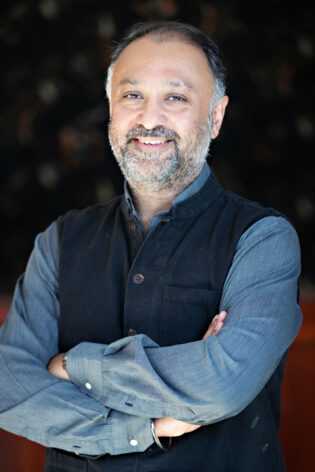
Mandeep Tiwana, Secretary General, CIVICUS Global Alliance. Credit: CIVICUS

Mandeep Tiwana, Secretary General, CIVICUS Global Alliance. Credit: CIVICUS

BULAWAYO & BANGKOK, Oct 31 2025 (IPS) – From the streets of Bangkok to power corridors in Washington, the civil society space for dissent is fast shrinking. Authoritarian regimes are silencing opposition but indirectly fueling corruption and widening inequality, according to a leading global civil society alliance.


The warning is from Mandeep Tiwana, Secretary General of CIVICUS Global Alliance, who points to a troubling trend: civil society is increasingly considered a threat to those in power.

That is a sobering assessment from CIVICUS, which reports that a wave of repression by authoritarian regimes is directly fueling corruption and exploding inequality.

“The quality of democracy on hand around the world is very poor at the moment,” Tiwana tells IPS in an exclusive interview. “That is why civil society organizations are seen as a threat by authoritative leaders and the negative impact of attacking civil society means there is a rise in corruption, there is less inclusion, there is less transparency in public life and more inequality in society.”

His comments come ahead of the 16th International Civil Society Week (ICSW) from 1–5 November 2025 convened by CIVICUS and the Asia Democracy Network. The ICSW will bring together more than 1,300 delegates comprising activists, civil society groups, academics, and human rights advocates to empower citizen action and build powerful alliances. ICSW pays tribute to activists, movements, and civil society achieving significant progress, defending civic freedoms, and showing remarkable resilience despite the many challenges.

The ICSW takes place against a bleak backdrop. According to the CIVICUS Monitor, a research partnership between CIVICUS and over 20 organizations tracking civic freedoms, civil society is under attack in 116 of 198 countries and territories. The fundamental freedoms of expression, association, and peaceful assembly face significant deterrents worldwide.
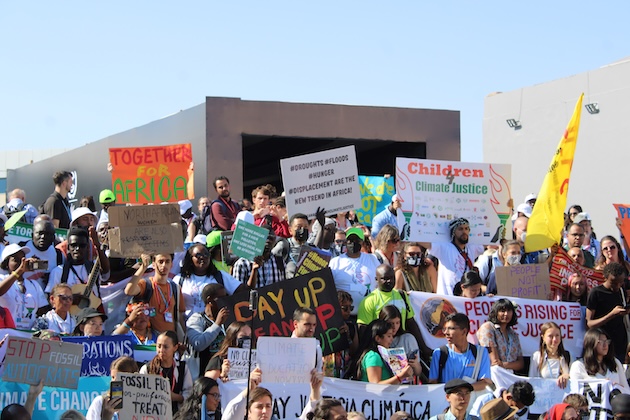
Protests at COP27 in Egypt. Mandeep Tiwana, Secretary General of CIVICUS Global Alliance, is hopeful that COP30, in Belém, Brazil, will be more inclusive. Credit: Busani Bafana/IPS

Protests at COP27 in Egypt. Mandeep Tiwana, Secretary General of CIVICUS Global Alliance, is hopeful that COP30, in Belém, Brazil, will be more inclusive. Credit: Busani Bafana/IPS

“It is becoming increasingly dangerous to be a civil society activist and to be the leader of a civil society organization,” Tiwana tells IPS. “Many organizations have been defunded because governments don’t like what they do to ensure transparency or because they speak out against some very powerful people. It is a challenging environment for civil society.”

Research by CIVICUS categorizes civic freedom in five dimensions: open, narrowed, obstructed, repressed, and closed. Alarmingly, over 70 percent of the world’s population now lives in countries rated in the two worst categories: ‘repressed’ and ‘closed.’

“This marks a regression in democratic values, rights, and accountability,” Tiwana noted, adding that even in the remaining 30% of nations, restrictions on civic freedoms remain.

Repression Tools in Tow

The ICSW, being held under the theme ‘Celebrating citizen action: reimagining democracy, rights, and inclusion for today’s world,’ convenes against this backdrop.

Multifaceted tools are used by governments to stifle dissent. Governments are introducing laws to block civil society organizations from receiving international funding while simultaneously restricting domestic resources. Besides, laws have also been enacted in some countries to restrict the independence of civil society organizations that scrutinize governments and promote transparency.

For civil society activists, the consequences are sobering.

“If you speak truth to power, uncover high-level corruption and try to seek transformative change in society, whether it’s on gender equality or inclusion of minorities you  can be subjected to severe forms of persecution,” Tiwana explained. “This includes stigmatization, intimidation,  imprisonment for long periods, physical attacks, and death.”

Multilateralism Tumbles, Unilateralism Rises

Tiwana said there is an increasing breakdown in multilateralism and respect for international laws from which civil society draws its rights.

This erosion of civic space is reflected in the breakdown of the international system. Tiwana identified a surge in unilateralism and a disregard for the international laws that have historically safeguarded the rights of civil society.

“If you look at what’s happening around the world, whether with regard to conflicts in Palestine, in the Congo, in Sudan, in Myanmar, in Ukraine, in Cameroon, and elsewhere, governments are not respecting international norms,” he observed, remarking that authoritarian regimes were abusing the sovereignty of other countries, ignoring the Geneva conventions, and legalizing attacks on civilians, torturing and persecuting civilians.

This collapse of multilateralism has enabled a form of transactional diplomacy, where narrowly defined national interests trump human rights. Powerful states now collude to manipulate public policy, enhancing their wealth and power. When civil society attempts to expose these corrupt relationships, it becomes a target.

“They are colluding to game public policy to suit their interests and to enhance their wealth.  The offshoot of this is that civil society is attacked when it tries to expose these corrupt relationships,” said Tiwana, expressing concern  about the rise in state capture by oligarchs who now own vast swathes of the media and technology landscapes.

Citing countries like China and Rwanda, which, while they have different ways of functioning, Tiwana said both are powerful authoritarian states engaging in transactional diplomacy and are opposed to the civil society’s power to hold them to account.

The election of Donald Trump as US President in 2025 has shattered the foundation of the US as a democracy, Tiwana noted. The country no longer supports democratic values internationally and is at home with  attacks on the media and defunding of civil society.

The action by the US has negative impacts, as some leaders around the world are taking their cue from Trump in muzzling civil society and media freedoms, he said, pointing to how the US has created common cause with authoritarian governments in El Salvador, Israel,  Argentina, and Hungary.

The fight Goes On

Despite facing repression and threats, civil society continues to resist authoritarian regimes. From massive street protests against corruption in Nepal, and Guatemala  to pro-democracy movements that have removed  governments in Bangladesh  and Madagascar,

“People need to have courage to stand up for what they believe and to speak out when their neighbors are persecuted,” Tiwana told IPS. “People still need to continue to speak the truth and come out in the streets in peaceful protest against the injustice that is happening. They should not lose hope.”

On the curtailing of civil society participation in climate change negotiations, Tiwana said the upcoming COP30 in Brazil offered hope. The host government believes in democratic values and including civil society at the table.

“Past COPs have been held in petro states—Azerbaijan, the United Arab Emirates and Egypt—which are all authoritarian states where civil society has been attacked, crushed, and persecuted,” he said. “We are hopeful that there will be greater inclusion of voices and the commitments that will be made to reduce emissions will be ambitious but the question is really going to be after the COP and if those commitments will be from governments that really don’t care about civil society demands or about the well-being of their people.”

Young people, Tiwana said, have shown the way. Movements like Fridays for Future  and the Black Lives Matter have demonstrated the power of solidarity and unified action.

But, given the massive protests, has this resistance led to change of a similar scale?

“Unfortunately, we are seeing a rise in military dictatorships around the world,” Tiwana admitted, attributing this to a fraying appetite by the international community to uphold human rights and democratic values.

“Conflict, environmental degradation, extreme wealth accumulation, and high-level corruption are interlinked because it’s people who want to possess more than they need.”

Tiwana illustrated what he means by global priorities.

“We have USD 2.7 trillion in military spending year-on-year nowadays, whereas 700 million people go to bed hungry every night.”

“As civil society, we are trying to expose these corrupt relationships that exist. So the fight for equality, the struggle to create better, more peaceful, more just societies—something CIVICUS supports very much—are some of the conversations that we will be looking to have at the International Civil Society Week.”

IPS UN Bureau Report
  Source

Vanishing Wisdom of the Sundarbans–How climate change erodes centuries of ecological knowledge

Asia-Pacific, Civil Society, Climate Change, Climate Change Finance, COP30, Development & Aid, Editors’ Choice, Environment, Featured, Headlines, Human Rights, Migration & Refugees, Natural Resources, Sustainable Development Goals, TerraViva United Nations

Climate Change

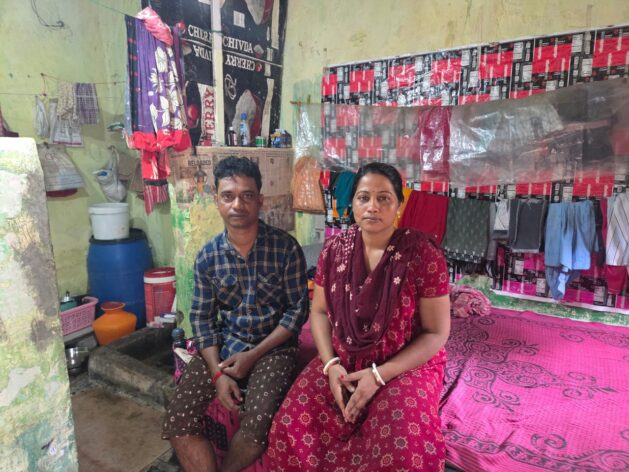
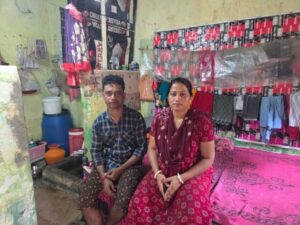
Bapi Mondal and his wife Shanti in Bangalore. Climate change has forced the couple from their traditional livelihoods in the Sundarbans. Credit: Diwash Gahatraj/IPS

Bapi Mondal and his wife Shanti in Bangalore. Climate change has forced the couple from their traditional livelihoods in the Sundarbans. Credit: Diwash Gahatraj/IPS

BANGALORE & PAKHIRALAY, India, Oct 15 2025 (IPS) – Bapi Mondal’s morning routine in Bangalore is a world away from his ancestral village, Pakhiralay, in the Sundarbans, West Bengal. He wakes before dawn, navigates heavy traffic, and spends eight long hours molding plastic battery casings. It’s not the life his honey-gathering forefathers knew, but factors like extreme storms, rising seas, and deadly soil salinity forced the 40-year-old to abandon centuries of family tradition and travel miles away to work in a concrete suburban factory.


Bapi still remembers his traditional skills—walking through a mangrove forest to find a tree with a honeycomb, mending boats and fishing nets, and singing and acting in the traditional plays. His 19-year-old son, Subhodeep—working alongside in the factory—has lost the heritage.

Bapi’s home, the Sundarbans—the world’s largest mangrove forest—is on the frontlines of climate change, and local livelihoods are taking the hit. In this watery maze where land and sea meet, villagers who once relied on fishing, honey collection and farming are now grappling with rising tides, saltier water, and more frequent storms. For many, life is becoming a struggle to hold on to centuries-old ways.

Sea levels in the Sundarbans are rising nearly twice the global rate, flooding villages and forcing families out. Saltwater ruins rice fields and ponds, making farming and fishing harder. Mawalis, the honey gatherers, also struggle as climate change disrupts flowering and damages mangroves, reducing wild bee populations.

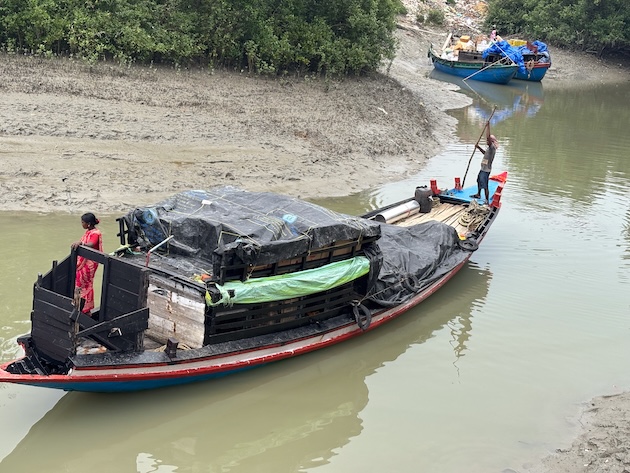
A fisherman in Sundarbans. Credit: Diwash Gahatraj/IPS

A fisherman in the Sundarbans. Credit: Diwash Gahatraj/IPS

The crisis doesn’t end with the water. Salinity, once held at bay by freshwater flows, is climbing year after year, disrupting both fishing and farming. Pollution, ill-managed embankments, and overexploitation of resources add to the challenge. As incomes shrink and lands disappear, thousands leave for nearby cities, hoping for work but often finding only life in urban slums.

City life is unforgiving for migrants like Mondal. He spends eight grueling hours on his feet, molding battery casings six days a week in harsh factory conditions. At the end of each day, he returns to a small one-room apartment. He shares this space with his wife Shanti and son, Subhodeep. The family struggles financially. Bapi earns ₹19,000 per month (about USD 215)—barely enough to get by. Despite the hardships, he says the work is still his choice.

“A hard choice, but a choice,” he explains.

Morning rush is hectic for the Mondal family. He points to the wall clock and asks his wife to pack lunch quickly. “All three of us work in different factories in the area,” Mondal says. “We all have to reach work by 8 am.”

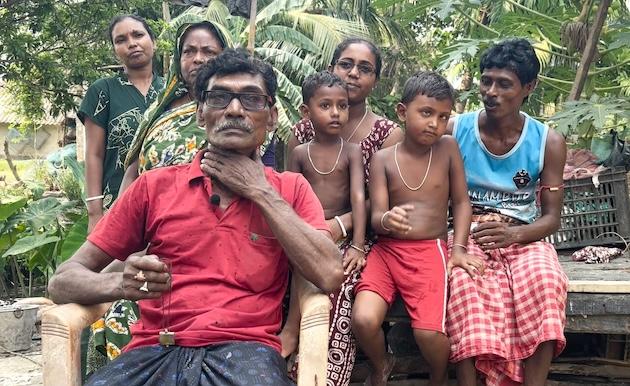
Gopal Mondal and his family in the Sundarbans. Credit: Diwash Gahatraj/IPS

Gopal Mondal and his family in the Sundarbans. Gopal still ventures into the forests to collect wild honey. Credit: Diwash Gahatraj/IPS

Shanti, Bapi’s wife, spends her days at a garment factory pressing clothes with a hot iron. She works eight-hour shifts with just one weekly break, earning ₹15,000 per month (about USD 169). Their 19-year-old son, Subhodeep, has also joined his father at the plastic factory. All three now work in Bommasandra, Bangalore’s industrial belt, pooling their wages to survive.

The migration has split their family apart.

“We have an 11-year-old daughter who lives with my in-laws in the Sundarbans,” Shanti explains. The cost of city life forced them to leave their youngest child behind. “It breaks my heart to be apart from my daughter, but we want her to have a good education and life—that’s why we sacrifice,” says Shanti. Her daughter attends school back in the village.

Her job gave her economic independence and a voice in family decisions, like building their new house. Bapi’s family, rooted in the village for centuries, were Mawalis, honey gatherers who knew the forest through knowledge passed down generations.

Still Rooted

Bapi’s father, Gopal Mondal, still ventures into the dangerous forests of Sunderbans. He risks tiger attacks and deadly cyclones to collect wild honey. But the forest that once fed families is now failing them.

Climate change has disrupted everything. Cyclones strike more often and with greater force. The natural flowering cycle has gone haywire. Fish populations in the waters have crashed.

“The honey harvest keeps shrinking and prices keep falling,” Gopal explains.

As Gopal tried to hold on to tradition, his son Bapi could no longer see a future in the same waters and forests.

“The forest no longer provides enough honey or fish,” Bapi shares. The rhythms his ancestors lived by for centuries suddenly made no sense. Faced with shrinking opportunities, Bapi tried other work back home. Besides going to the jungle for honey with his father during the season (April-May), he operated a van gaari—a battery-powered three-wheeler with a wooden platform for passengers. But even that barely paid enough to survive. “There was a time when I struggled to buy a saree for my wife,” he recalls. Migration was the only choice left.

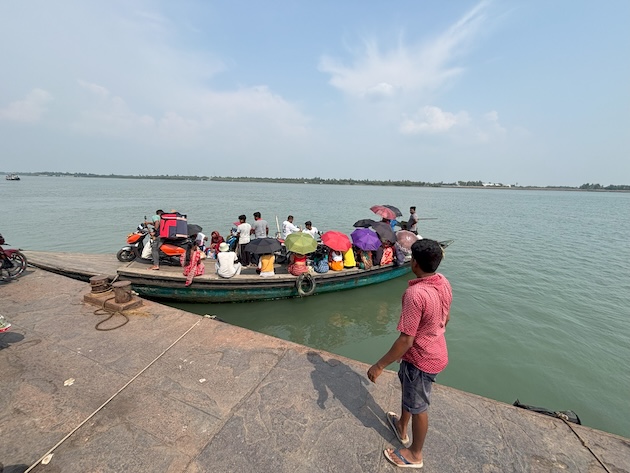
A boat ferries passengers in Sundarbans. Credit: Diwash Gahatraj/IPS

A boat ferries passengers in Sundarbans. Credit: Diwash Gahatraj/IPS

From Forests to Factories

Apart from forced migration, climate change erodes memory, identity, and ancestral knowledge. Leaving the Sundarbans has cost the family more than a homeland.

Bapi still carries traditional skills—navigating treacherous waters by boat and collecting honey deep in the forest.

“I know how to catch shrimp and crabs from the river and sea,” he says. “My father and uncles taught me these skills when I was young.”

His wife, Shanti, nods, adding that she was an expert crab and shrimp collector back in the Sundarbans. “I think I still have it in me,” she says with quiet pride.

But the chain of knowledge is breaking. “I could not pass on that wisdom to my son,” Bapi admits with regret.

Subhodeep represents this lost generation. He finished tenth grade and left his village to join his parents in Bangalore. He has not learned the skills that defined his family for generations. “I have never entered the forest to collect honey or fish back in the village,” Subhodeep explains. “My parents were against it.”

Bon bibi temple in Pakhiralay village. Along with losing traditional livelihoods, religion and cultural life are also in jeopardy. Credit: Diwash Gahatraj/IPS

Bon bibi temple in Pakhiralay village. Along with losing traditional livelihoods, religion and cultural life are also in jeopardy. Credit: Diwash Gahatraj/IPS

The irony is stark. Bapi’s parents encouraged him to learn these ancestral skills. But when environmental collapse made these traditions dangerous and unprofitable, Bapi chose to shield his son from them.

For the Mondals, the forest has become too dangerous and unreliable.

“Going to collect honey or catch fish is very unpredictable now,” Bapi explains. Catch volumes have fallen, and tiger attacks have grown. Bapi’s family knows the risk; his grandfather was killed while gathering honey in the forest.

Years earlier, a tiger also attacked Gopal Mondal. He was luckier—he escaped alive but still carries scars on his hand.

These brutal realities shaped Bapi’s decision about his son’s future. “I don’t want my next generation to have such a risky occupation,” he says. The choice is clear. Families can either cling to dangerous traditions that no longer pay enough to survive or abandon their ancestral practices for safer work in distant cities.

Are there other reasons behind the changes in the Sundarbans?

“We can’t just blame climate change and ignore human activities making things worse,” says Professor Tuhin Ghosh of Jadavpur University’s School of Oceanographic Studies. Human activity and climate change create a deadly combination.

People cleared mangroves for farms and fish ponds and built embankments that blocked tidal flows. The result is salt contamination, poisoned soil and water, vanishing species, and a broken landscape.

Uninhabitable Home

About 4.5 million people live across the Sundarbans region in Bangladesh and India. A recent survey reveals the massive scale of climate migration: nearly 59% of households have at least one family member who has moved away for work.

Some studies report 60,000 people migrated from parts of the Sundarbans by 2018. But household surveys show much higher rates because they measure affected families, not just individuals.

These local figures reflect a much bigger crisis. Across Bangladesh, weather-related disasters displaced 7.1 million people in 2022 alone, showing how climate change drives mass movement.

On the Indian side in West Bengal, researchers document large seasonal and permanent migration flows to cities and other states. Families routinely send members to work elsewhere, though official counts are scarce.

Loss Beyond Dollars

Over the past two decades, the Sundarbans has been hit by cyclones made stronger by climate change. They uprooted thousands and caused millions in losses. But beyond disaster relief and migration, a quieter crisis unfolds: the erosion of centuries-old ecological wisdom, culture, and tradition.

Gopal Mondal, in his early sixties, sits outside his modest home in Pakhiralay. When asked about protective equipment for his dangerous work collecting honey in the Sundarbans forest, he holds up a small amulet—a tabeej.

“This and my prayers to Bon Bibi are my protection,” says Mondal, who leads a team of honey collectors into the mangrove forests. “They shield us from storms and babu (tigers).”

The elderly collector recites mantras passed down through generations—teachings from his father or cousins, though he cannot recall exactly who taught him.

“The whole community worships Bon Bibi,” he explains simply

For Sundarbans communities like Mondal’s, Bon Bibi—the “Lady of the Forest”—is a guardian of the mangroves. For centuries, fishermen, honey collectors, and wood gatherers have sought her protection in tiger territory and cyclone-prone waters. Her worship is more than faith; it reflects the people’s bond with a dangerous yet life-sustaining environment, offering both comfort and identity where safety tools are scarce.

When asked about traditional knowledge slipping away from his family, Mondal’s weathered face shows a faint smile.

“Earlier, every fisherman’s family had someone —a son or grandson—who knew how to repair torn nets or mend boats,” he explains. “But in my family, things are slowly changing. My grandsons and sons live too far away, and their visits home are too short to learn these skills.”

The honey collector pauses, watching the distant mangroves. “The younger generation shows very little interest in our profession,” he adds quietly.

Climate migration expert M. Zakir Hossain Khan of Change Initiative, a Bangladesh-based think tank focused on solving critical global challenges, warns that climate-driven displacement from the Sundarbans is destroying centuries-old ways of life that depend entirely on deep knowledge of the forest and rivers.

Fishermen carry rare knowledge of tides, breeding cycles, and mangrove routes, passed down through years of practice. With youth leaving for city jobs, few inherit it. Honey gatherers know how to find hives, protect bees, and survive in tiger territory. As young people turn away, honey collection is fading from the Sundarbans.

A Vanishing Heritage

This generational shift reflects a broader transformation across the Sundarbans. Traditional skills that once defined coastal communities—net weaving, boat building, reading weather patterns, and forest navigation—are disappearing as young people migrate to cities primarily  for employment and a few for education.

“Similarly, mangrove-based handicrafts and boat-making using leaves, bamboo, and mangrove wood to make mats, roofing materials, and small boats demand both ecological understanding and artisanal skill, which are now rarely passed down,” comments Khan from Change Initiative.

He adds that herbal medicine and spiritual rituals practiced by local healers using plants like sundari bark and hental are also at risk, as migration and urbanization erode the cultural setting that sustains them.

Culture at Crossroads

Ghosh, who has spent over 30 years working in the Sundarbans, points to a troubling pattern.

“Migration is killing our folk arts,” he says. “Bonbibi stories, jatra pala theater, fishermen’s songs—they’re all disappearing. The people who used to perform during festivals are getting old. And there’s no one to replace them.”

The Sundarbans face a cultural crisis. Traditional performances that once brought villages together during religious festivals now struggle to find performers. Young people who might have learned these arts from their elders are instead leaving for cities for a better life

Once central to life in the Sundarbans, folk traditions like Jatra Pala, Bonbibi tales, and fishermen’s songs now fade with their aging performers. With few young apprentices, a rich cultural heritage risks disappearing—leaving behind a region not just economically changed, but culturally empty.

Note: This story was produced with support from Internews’ Earth Journalism Network

IPS UN Bureau Report
  Source

Global South Can Rebalance Climate Agenda in Belém, Says Gambian Negotiator

Active Citizens, Africa, Climate Change, Climate Change Finance, Climate Change Justice, COP30, Development & Aid, Editors’ Choice, Environment, Featured, Global, Headlines, International Justice, Latin America & the Caribbean, Sustainable Development Goals, TerraViva United Nations

COP30


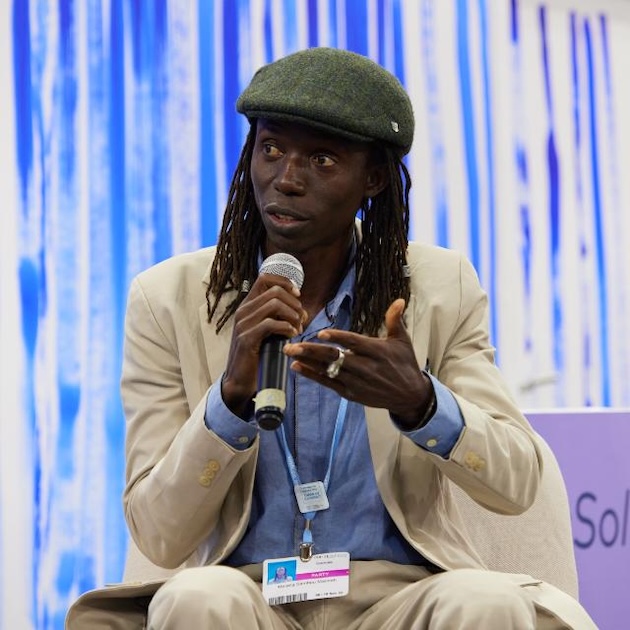
COP30 negotiator Malang Sambou Manneh believes the method of countering growth in fossil fuel development lies in technology. Showcasing alternatives that work provides the opportunity for the global South to take the lead and present best practices in renewables.

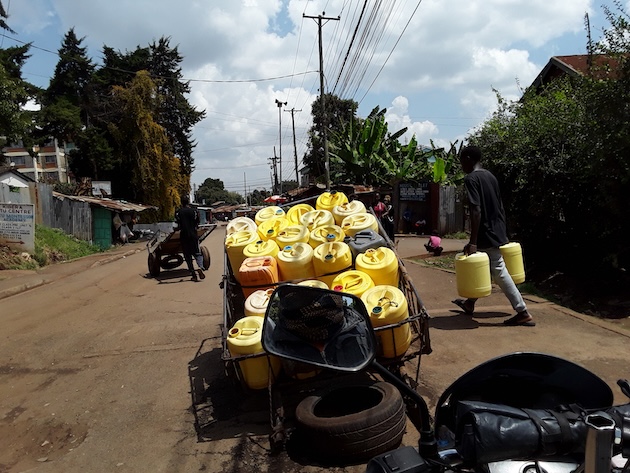
Climate change is a significant contributor to water insecurity in Africa. Water stress and hazards, like withering droughts, are hitting African communities, economies, and ecosystems hard. Credit: Joyce Chimbi/IPS

Climate change is a significant contributor to water insecurity in Africa. Water stress and hazards, like withering droughts, are hitting African communities, economies, and ecosystems hard. Credit: Joyce Chimbi/IPS

NAIROBI, Oct 14 2025 (IPS) – The Gambia’s lead negotiator on mitigation believes that COP30 presents a unique opportunity to rebalance global climate leadership.


“This COP cannot be shrouded in vagueness. Too much is now at stake,” Malang Sambou Manneh says in an interview with IPS ahead of the climate negotiations. He identified a wide range of issues that are expected to define COP30 climate talks.

The global community will shortly descend on the Amazon rainforest, the world’s largest intact forest, home to more than 24 million people in Brazil alone, including hundreds of thousands of Indigenous Peoples. Here, delegates will come face-to-face with the realities of climate change and see what is at stake.

Malang Sambou Manneh

Malang Sambou Manneh.

COP30, the UN’s annual climate conference, or the Conference of Parties, will take place from November 10-21, 2025 in the Amazonian city of Belém, Brazil and promises to be people-centered and inclusive. But with fragmented and fragile geopolitics, negotiations for the best climate deal will not be easy.

Sambou, a lead climate negotiator who has attended all COPs, says a unified global South is up to the task.

He particularly stressed the need for an unwavering “focus on mitigation or actions to reduce or prevent greenhouse gas emissions.” Stating that the Mitigation Work Programme is critical, as it is a process established by the United Nations Framework Convention on Climate Change (UNFCCC) at COP26 to urgently scale up the ambition and implementation of efforts to mitigate climate change globally.

Sambou spoke about how COP30 differs from previous conferences, expectations from the global South, fossils fuels and climate financing, stressing that “as it was in Azerbaijan for COP29, Belem will be a ‘finance COP’ because climate financing is still the major hurdle. Negotiations will be tough, but I foresee a better outcome this time round.”

The Baku to Belém Roadmap to 1.3T is expected to be released soon, outlining a framework by the COP 29 and COP 30 Presidencies for scaling climate finance for developing countries to at least USD 1.3 trillion annually by 2035.

Unlike previous conferences, COP30 focuses on closing the ambition gap identified by the Global Stocktake, a periodic review that enables countries and other stakeholders, such as the private sector, to take inventory to assess the world’s collective progress in meeting its climate goals.

The first stocktake was completed at COP28 in 2023, revealing that current efforts are insufficient and the world is not on track to meet the Paris Agreement. But while the Paris Agreement, a legally binding international treaty on climate change, set off on a high singular note when it entered into force in November 2016, that unity is today far from guaranteed.

Malang Sambou Manneh with She-Climate Fellows. Credit: Clean Earth Gambia/Facebook

Malang Sambou Manneh with She-Climate Fellows. Credit: Clean Earth Gambia/Facebook

Unlocking high-impact and sustainable climate action opportunities amidst geopolitical turbulence was always going to be difficult. Not only did President Donald Trump pull the United States out of the Paris Agreement, but he is now reenergized against climate programs and robustly in support of fossil fuels—and there are those who are listening to his message.

Sambou says while this stance “could impact the transition from fossil fuels to clean energy, many more countries are in favor of renewable energy than against.”

“But energy issues are complex because fossil fuels have been a way of life for centuries, and developed countries leveraged fossil fuels to accelerate development. And then, developing countries also started discovering their oil and gas, but they are not to touch it to accelerate their own development and must instead shift to renewables. It is a complex situation.”

Ilham Aliyev, the President of Azerbaijan, famously described oil as a “gift from God” at COP29 to defend his country’s reliance on fossil fuels despite climate change concerns. This statement highlights the complexity of the situation, especially since it came only a year after the landmark COP28 hard-won UAE Consensus included the first explicit reference to “transitioning away from all fossil fuels in energy systems” in a COP agreement.

As a negotiator, Sambou says he is very much alive to these dynamics but advises that the global community “will not successfully counter fossil fuels by saying they are bad and harmful; we should do so through technology. By showcasing alternatives that work. This is an opportunity for the global South to take the lead and present best practices in renewables.”

And it seems there is evidence for his optimism. A recent report shows the uptake of renewables overtaking coal generation for the first time on record in the first half of 2025 and solar and wind outpacing the growth in demand.

This time around, the global south has its work cut out, as it will be expected to step up and provide much-needed leadership as Western leaders retreat to address pressing problems at home, defined by escalating economic crises, immigration issues, conflict, and social unrest.

It is in the developing world’s leadership that Sambou sees the opportunities—especially as scientific evidence mounts on the impacts of the climate crisis.

The World Meteorological Organization projects a continuation of record-high global temperatures, increasing climate risks and potentially marking the first five-year period, 2025-2029.

Sambou says all is not lost in light of the new and ambitious national climate action plans or the Nationally Determined Contributions.

This past September marked the deadline for a new set of these contributions, which will guide the COP30 talks. Every five years, the signatory governments to the Paris Agreement are requested to submit new national climate plans detailing more ambitious greenhouse gas emission reduction and adaptation goals.

“Ambition has never been a problem; it is the lack of implementation that remains a most pressing issue. Action plans cannot be implemented without financing. This is why the ongoing political fragmentation is concerning, for if there was ever a time to stand unified, it is now. The survival of humanity depends on it,” he emphasizes.

“Rather than just setting new goals in Belém, this time around, we are better off pushing for a few scalable solutions, commitments that we can firmly hold ourselves accountable to, than 200 pages of outcomes that will never properly translate into climate action.”

Despite many competing challenges and a step forward, two steps backwards here and there, from the heart of the Amazon rainforest, COP30’s emphasis on the critical role of tropical forests and nature-based solutions is expected to significantly drive action for environmental and economic growth.

Note: This interview is published with the support of Open Society Foundations.

IPS UN Bureau Report
  Source

Quo Vadis UN @80?

Civil Society, Democracy, Editors’ Choice, Global, Global Governance, Headlines, Human Rights, IPS UN: Inside the Glasshouse, TerraViva United Nations

Opinion

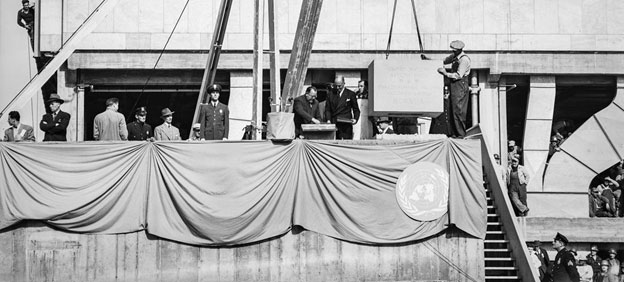
The corner-stone of the UN headquarters building was laid on UN Day at a special open-air General Assembly meeting held on 24 October 1949. Credit: UN Photo

KATHMANDU, Nepal, Oct 13 2025 (IPS) – The United Nations turned 80 this year. What should have been a moment of pride and celebration at the high-level session of the UN General Assembly in September 2025 turned instead into an occasion of bitter irony.


At the UN Headquarters in New York—fittingly located in the host country that once helped found and champion the organization—the loudest fireworks came not from commemoration but condemnation.

The President of the United States, boasting that he had “ended seven wars in seven months while the UN did nothing,” derided the very purpose of the institution. He dismissed climate change as a hoax, renounced the Sustainable Development Goals, and mocked multilateralism as an obsolete bureaucracy.

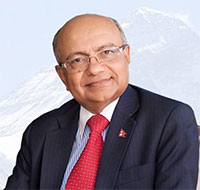
Kul Chandra Gautam

That outburst was shocking, but not surprising. The UN has long been an easy target for populist politicians. Yet even as it endures ridicule and neglect, the truth remains: if the UN did not exist, the world would have to create it again.

An Imperfect but Indispensable Institution

The UN’s failures are glaring and often heartbreaking. As the wars in Ukraine and Gaza rage on—each aided and abetted by two Permanent Members of its Security Council—the organization looks helpless, capable only of issuing pleas and providing meager humanitarian aid.

Its impotence is evident again in Haiti’s gang warfare, Myanmar’s and Sudan’s military atrocities, Afghanistan’s gender apartheid, and North Korea’s saber-rattling, just to name a few.

It is easy to blame “the UN,” but the real culprits are its Member States—especially the five veto-wielding powers of the Security Council, who too often place narrow national interests above global security. Many others strangle the UN with grand resolutions and lofty mandates but fail to fund them.

Hiding behind sovereignty, many governments oppress their citizens, foster corruption, and neglect their global commitments. Meanwhile, the richest nations, capable of lifting millions from poverty, pour trillions of dollars into their militaries.

Still, despite its flaws and frustrations, humanity cannot afford to abandon the United Nations. The challenges of our time— poverty, climate change, pandemics, terrorism, cybercrime, and mass displacement—are “problems without passports.” No nation, however powerful, can solve them alone. Only collective action through a multilateral system can address the interconnected crises that define the 21st century.

For smaller or poorer nations, the UN is an amplifier of voice and leverage. Acting together, they can negotiate more fairly with the powerful. For big and powerful nations, the UN provides legitimacy and a framework for cooperation that unilateral action can never achieve.

The UN, for all its imperfections, remains a mirror of our world: it reflects both our aspirations and our divisions. Its hypocrisy is our hypocrisy; its failures are our failures. Resolutions without resolve and promises without action are the true reasons for its ineffectiveness.

Yet amid the cynicism, it is worth recalling that the UN and its agencies have earned 14 Nobel Peace Prizes—more than any other institution in history. That is no small testament to its contributions to peacekeeping, humanitarian relief, human rights, and development.

But it cannot rest on past laurels. If the UN is to remain relevant, it must transform itself to meet the demands of a rapidly changing world.

Time for Tough Love and Real Reform

UN Secretary-General António Guterres has launched the UN@80 Initiative to sharpen the system’s impact and reaffirm its purpose. A recent system-wide Mandate Implementation Review uncovered a staggering reality: over 30% of mandates created since 1990 are still active, and 86% have no sunset clause. Many require the Secretariat and specialized agencies to carry them out “within existing resources”—an impossible task.

Hundreds of overlapping resolutions and reports clog the UN’s machinery, sustained by bureaucratic inertia and Member States’ appetite for endless paperwork. Too many meetings produce too little action.

Technology now offers a way out. Artificial intelligence can consolidate and streamline reporting, freeing up resources for real work. Likewise, the frequency of governing board meetings—three times a year for agencies like UNDP, UNICEF, UNFPA, UN Women, and WFP—could be reduced without sacrificing accountability.

Facing financial crisis, political hostility from major donors, and a proliferation of unfunded mandates, the UN has no choice but to rationalize its structure. Some agencies will have to merge or move their operations from costly headquarters in New York and Europe to lower-cost locations in Africa, Asia, and the Middle East.

UNICEF has already taken the lead with its “Future Focus Initiative,” with plans to cut headquarters budgets by 25% and relocate 70% of its staff to more affordable hubs such as Bangkok, Nairobi, or Istanbul. Such moves can reduce expenses, bring the organization closer to the field, and align it better with the realities of today’s world.

At the same time, the UN must take advantage of the tremendous growth in professional capacity within developing countries. Many of these nations now produce highly qualified experts who can serve effectively—and at lower cost—than expatriates from the Global North.

UNICEF pioneered this decades ago by hiring national professionals in its field offices. Expanding this practice system-wide would not only save money but also strengthen local ownership and credibility.

These are sensible, short-term measures. But they only scratch the surface. The real test of leadership lies in tackling the deep structural reforms that have eluded the UN for decades.

The Hard Reforms: Power, Accountability, and Money

1. Democratizing the UN

The UN’s mission is to promote peace, democracy, development and human rights—but its own structure remains profoundly undemocratic. The Security Council’s five permanent members hold veto power that can paralyze action even in the face of genocide or aggression.

That provision might have made sense in 1945, but it is indefensible in 2025. Yet changing it requires the consent of those same five powers. Only enlightened leadership in those countries and sustained public pressure globally can bring about reform.

Democratization must also extend to how the UN’s top leaders are chosen. The Secretary-General and heads of major agencies are still selected through opaque bargains among powerful nations. These posts are often “reserved” for certain nationalities rather than awarded on merit. The UN must move toward a transparent, merit-based system if it hopes to regain credibility.

2. Reviving the “Responsibility to Protect”

Too many regimes hide behind the shield of sovereignty to oppress their own people. The world leaders agreed at the UN Millennium Summit in 2005 that when a government fails to protect its citizens—or worse, becomes their tormentor—the international community has a Responsibility to Protect (R2P). The 2024 Pact for the Future reaffirmed that principle.

But R2P has rarely been applied because powerful nations invoke it selectively—protecting their allies and condemning their rivals. True leadership would mean upholding R2P universally, without double standards.

3. Rebalancing Priorities: Disarmament and Development

The UN was founded to prevent war. Yet worldwide military spending now exceeds $2.7 trillion a year—nearly $7.5 billion every day. NATO countries are expanding their defense budgets even as social spending shrinks and commitments to the poor are cut.

This is moral madness. Humanity needs fewer weapons and more investment in sustainable development. Redirecting even a fraction of global military spending toward the Sustainable Development Goals would do more to secure peace than all the bombs in the world.

4. Fixing the UN’s Finances

Money and power often speak louder than moral authority at the UN. The United States contributes about a quarter of the UN’s regular budget—and uses that leverage to exert disproportionate influence. Other large donors do the same.

In 1985, Swedish Prime Minister Olof Palme proposed a simple remedy: no single country should pay—or be allowed to pay—more than 10% of the UN’s budget. That would reduce dependence on any one donor while requiring modest increases from others. Ironically, Washington opposed it, fearing it might lose influence.

Reviving that proposal today could help depoliticize UN financing and make it more sustainable. The UN should also expand partnerships with private philanthropy, foundations, and innovative sources such as taxes on global financial transactions or the use of the global commons. Such mechanisms could liberate the organization from the recurring hostage drama of budget threats and withheld dues.

A Hopeful Horizon

History rarely moves in straight lines. Progress often comes two steps forward and one step back. Today, the post-World War II international order is fraying, and populist nationalism is resurgent. But in the long arc of human history, the movement toward global cooperation is irreversible.

We are slowly—but surely—evolving from primitive tribalism to modern nationalism and onward toward shared global solidarity. Multilateralism may be under siege, but it will rise again, reimagined and renewed, because our interdependence leaves no alternative.

I take hope from the energy and courage of Generation Z across the world—from Nepal and Bangladesh to Kenya, Indonesia, Morocco, and beyond. Young people are challenging corruption, inequality, and authoritarianism, and they see themselves increasingly as global citizens, connected through technology and united by shared aspirations rather than divided by borders or dogma.

If we can offer these young citizens opportunity and justice instead of inequality and despair, we will see the dawn of a more cooperative, humane, and equitable world. That, in turn, will breathe new life into the United Nations—still imperfect, still indispensable, and still humanity’s best hope for promoting peace and prosperity.

Kul Chandra Gautam, a former Deputy Executive Director of UNICEF and Assistant Secretary-General of the United Nations, is the author of ‘Global Citizen from Gulmi: My Journey from the Hills of Nepal to the Halls of United Nations’.

IPS UN Bureau

  Source

Beijing+30: A Culmination of International, Intergenerational Dialogue

Conferences, Development & Aid, Editors’ Choice, Gender, Gender Identity, Gender Violence, Global, Headlines, Human Rights, Population, Sustainable Development Goals, TerraViva United Nations, Women & Climate Change, Women & Economy, Women in Politics, Women’s Health

IPS UN: Inside the Glasshouse

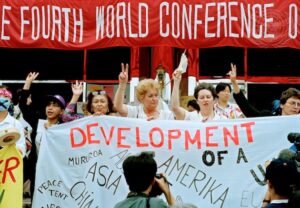
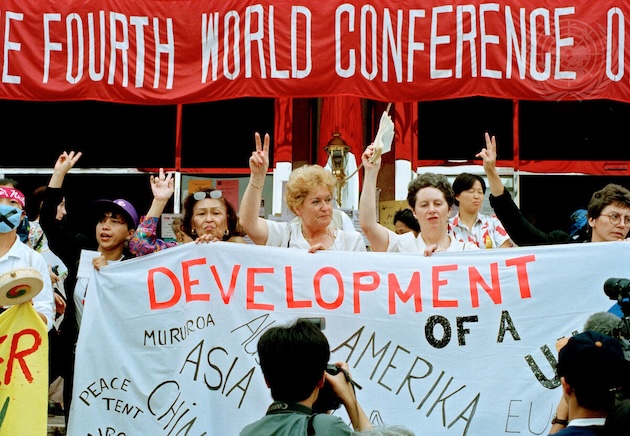
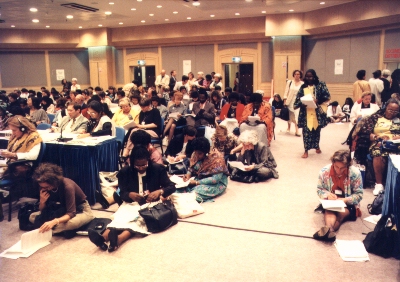
Participants at the Non-Governmental Organizations Forum meeting held in Huairou, China, as part of the United Nations Fourth World Conference on Women held in Beijing, China, on 4-15 september 1995. Credit: UN Photo/Milton Grant

Participants at the Non-Governmental Organizations Forum meeting held in Huairou, China, as part of the United Nations Fourth World Conference on Women held in Beijing, China, on 4-15 september 1995. Credit: UN Photo/Milton Grant

UNITED NATIONS, Sep 30 2025 (IPS) – Thirty years since the UN Fourth World Conference on Women in Beijing, the resolve that defined and united the world toward a global agenda for gender equality make it just as relevant in 2025.


The Beijing Conference represents a turning point for the global movement in gender equality. It is marked by the adoption of the Beijing Declaration and Platform for Action, which is still held up as a landmark document in presenting a comprehensive blueprint to achieve gender equality.

The Beijing Conference was just “one stop in a long and continuing journey of feminist advocacy,” said Sia Nowrojee, a Kenyan women’s rights advocate with more than thirty years’ experience.

“Even though it’s thirty years later, it’s absolutely relevant. It was the culmination of twenty years of advocacy and gender equality.” Nowrojee is the UN Foundation’s Associate Vice President of their Girls and Women Strategy division.

The Beijing Conference was the first time that the international community integrated gender equality into the global development and rights agenda. It was recognition that securing the rights and dignities for all women and girls would be integral to achieving widespread development. This was key for the countries that had emerged in the post-colonial era.

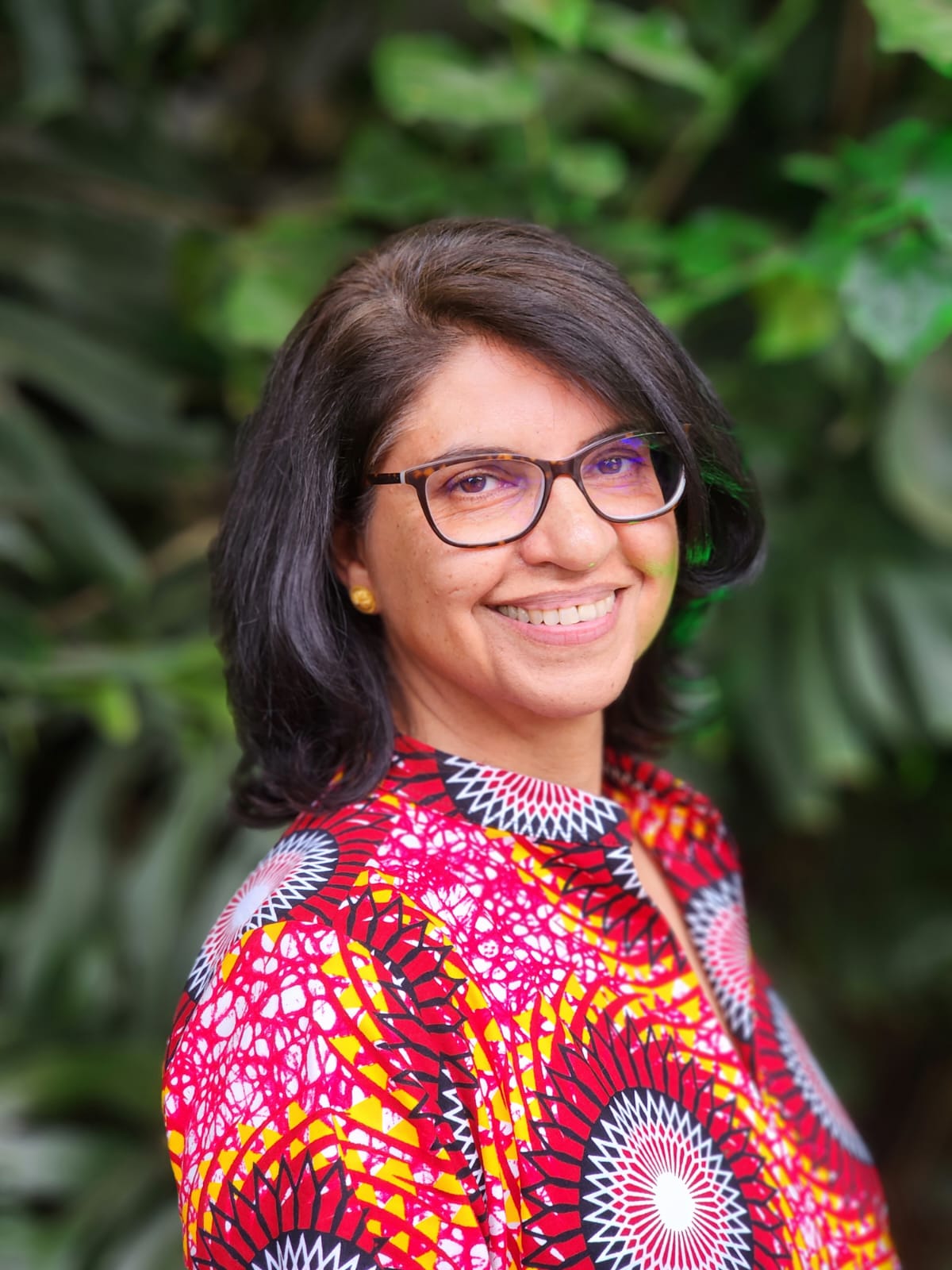
Sia Nowrojee, UN Foundation’s Associate Vice President of Girls and Women Strategy. Credit: UN Foundation

Sia Nowrojee, UN Foundation’s Associate Vice President of Girls and Women Strategy. Credit: UN Foundation

The leadership of advocates from the Global South was instrumental to the Beijing PoA. Representatives from Africa, Asia, and Latin America pushed for the measures that make the framework as inclusive as it is. Nowrojee gave the example of girls’ rights being recognized thanks to the efforts of African feminists in the lead-up to Beijing.

Hibaaq Osman, a Somali human rights activist and founder of El-Karama, considers that the Global South activists had been uniquely prepared to participate as they had lived through their countries’ great political upheavals against colonialism and racism.

Osman attended Beijing 1995 as part of the Center of Strategic Initiatives of Women, a civil society network.

Hibaaq Osman, a Somali human rights activist and founder of El-Karama. Credit: UN Foundation

Hibaaq Osman, a Somali human rights activist and founder of El-Karama. Credit: UN Foundation

“For me, as a young woman, I was shocked by the things that I heard. I was raised to believe that everything was a privacy. But to hear a woman speaking for herself and sharing things that I never thought you could share with others, including violence against women… It absolutely opened my eyes and made me see, ‘Oh my god, I can actually share things with other women,’” Osman told IPS.

For Osman, the Beijing conference represented the possibilities of what could be achieved through a shared agenda and a shared sense of hope. The unique energy from that conference drove her advocacy work through groups like the Strategic Initiative for Women in the Horn of Africa (SIHA) and then El-Karama, which is working to end violence against women in the Arab region and South Sudan.

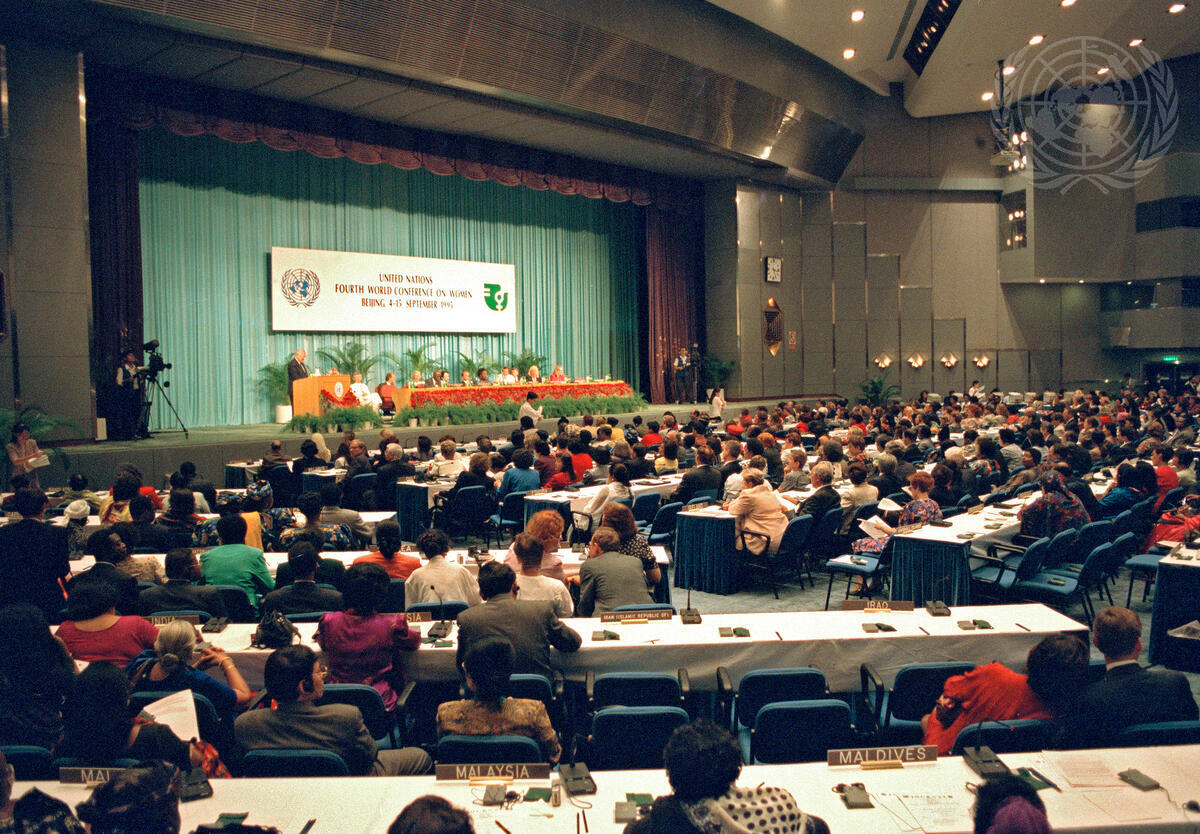
General view of the opening session of the Fourth World Conference on Women in Beijing. Credit: UN Photo/Milton Grant

General view of the opening session of the Fourth World Conference on Women in Beijing. Credit: UN Photo/Milton Grant

Beijing 1995 also provided the expectation of accountability from governments and policy makers if they did not implement the PoA. “That had never happened before. There was a mechanism for the first time…,” said Osman. “You can hold governments and policymakers accountable. But you also have the connection with grassroots. That it was no longer the individual woman that could claim that she was the leader, but having accountability to your own people, I think that whole thing was fantastic.”

“I think the legacy of Beijing 1995 honestly, it gave us a legacy of getting out of our corners and just wide open to the rest of the women. And I think that vision, that framework is still working.”

Delegates working late into the night to draft the Beijing Declaration and Platform for Action. Credit: UNDP/Milton Grant

Delegates working late into the night to draft the Beijing Declaration and Platform for Action. Credit: UNDP/Milton Grant

The success of the Women’s Conferences also demonstrated the UN’s role as a space to build up the gender equality movement, Nowrojee remarked. The UN has also served as a platform for emerging countries to raise their issues to the international community and to shape global agendas on their terms.

Prior to Beijing, the UN World Conference on Women had previously been held in Nairobi (1985), Copenhagen (1980) and Mexico City (1975). These were also key forums for people from all parts of the world to build relationships and for there to be a “cross-pollination of ideas and experiences”, laying down the groundwork for what was later achieved in Beijing.

Nowrojee was 18 years old when she attended the Nairobi 1985 Conference as part of a school/youth delegation. The experience was formative in listening to women’s activists from the region impart their wisdom and insights.

“To see the world’s women come to my home and talk about the fact that we mattered was life-changing for me,” Nowrojee said. “I made friends who I still work with and love and see today. And I think there is that sort of personal part, which is both personally sustaining, but it’s a critical part of feminist movement building.”

Each conference built up momentum that saw no sign of slowing down. Osman and Nowrojee explained that as gains were being made at local, national and global levels, this encouraged those in the movement to act with urgency and go further. This provided them the spaces to learn how to refine the messages for local contexts.

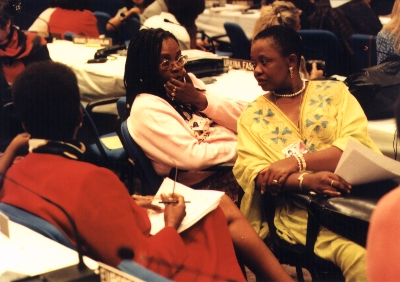
Delegates at the Fourth UN World Conference on Women in Beijing 1995.' Credit: UNDPI /UN Women

Delegates at the Fourth UN World Conference on Women in Beijing 1995. Credit: UNDPI /UN Women

The gains towards gender equality should be noted: the codification of women’s rights around the world, their increased participation in politics and in peace negotiations. Evidence has shown that investing in women’s participation in society through health, education and employment leads to economic growth and prosperity. More women in the workforce mean greater economic gains and stability. Increased social protections for women lead to more stability in communities.

And yet, there was backlash to the momentum. Recent years have seen the rise of anti-rights and anti-gender movements gain greater traction, combined with increasing attempts to strip women of their rights. UN Women has warned that one in four countries are reporting a backlash to women’s rights.

Nowrojee remarked that the autocratic leaders that champion these movements target women’s rights because it threatens their own agenda. “If you are silencing half the human family, and you are hampering their ability to make decisions about their bodies, to participate in political process… these are very, very effective ways of undermining democracy, development, peace and the achievement of all the goals and values that we hold dear.”

“They understand that if you bring women down, you are bringing society down, because women are the core of society,” Osman added.

The modern movements are also well-funded and well-organized. But there is an irony to it in that they use the same tactics that feminist movements have been using for decades by organizing at the grassroots level before moving their influence up to the national level and beyond. But this should not be where activists fall to despair. Instead they should understand, Osman and Nowrojee remarked, that women in this space already know what actions need to be taken to regain lost momentum.

“I’m sure that Sia and I and many, many others who were part of that are also thinking about today and what’s happening, and we know the space for civil society is shrinking,” Osman said. “The space for democracy, human rights, justice, reproductive rights, for all of that, there is absolutely a rollback, But it’s not going to delay us. We are just going to be more sophisticated and ask ourselves “Where are the blocks, how do we build… diverse constituencies?”… So it is hard, but we are not slowing down whatsoever.”

Today, it may seem the pursuit of gender equality is an ongoing struggle that faces the threat of autocratic movements that sow distrust and division. For the people who championed the women’s rights movement and can recall a time before the Beijing PoA, they are all too aware of what is at stake. The leaders in modern movements today need to look back to the past to take lessons, and to take courage.

IPS UN Bureau Report
 

New Report Investigates Violence Against Women and Girls Through Surrogacy, Sparks Global Dialogue

Active Citizens, Civil Society, Development & Aid, Editors’ Choice, Featured, Gender, Gender Violence, Global, Headlines, Health, IPS UN: Inside the Glasshouse, Sustainable Development Goals, TerraViva United Nations, Women’s Health

United Nations Special Rapporteur Reem Alsalem recently released her report on violence against women and girls with a focus on surrogacy, one of the most controversial topics in the medical field.

United Nations Special Rapporteur Reem Alsalem. Credit: UN Photo/Loey Felipe

United Nations Special Rapporteur Reem Alsalem. Credit: UN Photo/Loey Felipe

UNITED NATIONS, Sep 19 2025 (IPS) – A United Nations report calling for the global abolition of surrogacy has sparked intense debate among experts, with critics arguing that blanket bans could harm the very women the policy aims to protect.


Reem Alsalem, the United Nations Special Rapporteur on violence against women and girls, issued a report on violence against women and girls with a specific focus on surrogacy as a form of exploitation. The report, officially titled “The different manifestations of violence against women and girls in the context of surrogacy,” was published on July 14, 2025, and is slated for discussion at the upcoming UN General Assembly session in October.

The report calls surrogacy “direct and exploitative use of a woman’s bodily and reproductive functions for the benefit of others, often resulting in long-lasting harm and in exploitative circumstances.”

It further delves into the danger of surrogacy business models, in particular, which embrace the ambiguity of international law to churn a profit, often at the expense of both the surrogate and the prospective family. Alsalem recommends the abolition of surrogacy and asks member states to “work towards adopting an international legally binding instrument prohibiting all forms of surrogacy.”

One of the largest problems with surrogacy today, according to Senior Lecturer at Swinburne University Jutharat Attawet, is a lack of comprehensive education and legal standards around the practice. This results in social alienation and false conceptions, which worsen exploitation of people who participate in surrogacy—they are not provided adequate resources

Attawet, who specializes in surrogacy healthcare and domestic policy, considers surrogacy itself a beneficial tool for nontraditional family building. However, she acknowledges the steps it has to take to ensure autonomy and respect for surrogates.

Attawet’s research, cited in Alsalem’s report, shows that approximately 1 percent of babies born in Australia are from surrogates, so although the number has doubled over the past decade, doctors are not familiar with the process. Furthermore, legislation is primarily top-down rather than region- or area-specific. Since doctors in places like Australia are “intimidated by the language” surrounding surrogacy due to minimal education, they are less willing to openly engage with the procedures. This pushes families to seek surrogates elsewhere, where laws are less stringent and doctors more comfortable with the procedures.

Another incentive for overseas surrogacy, Attawet says, is lack of national support for surrogacy. Since it does not fulfill the criteria of most healthcare insurance plans, prospective parents often seek a more affordable surrogacy birth internationally. This further contributes to the exploitation both she and Alsalem note in their respective research—international surrogacy is much more difficult to regulate between different countries’ laws and often primarily harms the surrogate and the child, who is less likely to know their birth mother from an international surrogacy.

Alsalem criticized the practice of international surrogacy as an exploitative technique to perpetuate wealth inequality between different countries, but many experts argue that the job is one of the few accessible, well-paying jobs for child-bearing people who need to care for their family full-time. Polina Vlasenko, a researcher whose work was also cited in Alsalem’s report, explained to IPS that international surrogacy in Ukraine and the Republic of Georgia “is the type of job you can combine with having a kid and being a full-time caretaker of your kid… it still benefits women.”

Vlasenko elaborated, saying that most workers in the surrogacy industry, including intermediaries and clinicians, were women who had some sort of pre-existing connection to the process—often being former surrogates. To ban surrogacy entirely, Vlasenko argues, would merely harm women in all facets of the industry rather than resolving wealth gaps. She said, “this inequality is much deeper than services of surrogacy.”

Social worker and professor at Ohio State University Sharvari Karandikar similarly opposes the Special Rapporteur’s recommendation of abolition. In an interview with IPS, Karandikar explained that “in countries like India, it’s really hard to implement policies in a uniform way, and I think that one needs to have proper oversight of medical professionals and how they’re engaging in surrogate arrangements and medical tourism. Blanket bans do not work.”

She emphasized the dangers of surrogacy without regulation, saying it would only do more harm.

Instead, Karandikar advocates for “the safety, the better communication, more education, more informed choice and decision, more safeguards, better treatment options, and long-term health coverage for women who engage in surrogacy” as “a wonderful way to speak about women’s choices, decisions and their health instead of penalizing anyone.”

However, in order for the global conversation surrounding surrogacy to center around female agency, experts like Vlasenko say the perception of surrogates needs to change. She said, “sex work is not seen as violence or exploitation when it’s done for free… it’s the same with childbirth… surrogate mothers are taking the only work that, in their situation, allows them to fulfill certain responsibilities like childcare and income generation. They think that they’re agents in this process, but society sees them as victims.”

Ultimately, the surrogacy debate reflects broader questions about women’s autonomy, economic inequality and reproductive rights. As Vlasenko noted, addressing the “much deeper inequality” that pushes women to surrogacy may prove more effective than focusing solely on limiting the practice itself.

IPS UN Bureau Report
  Source