Oil Shocks, Political Upheaval and the One Solution Governments Keep Ignoring

Active Citizens, Armed Conflicts, Civil Society, Climate Action, Climate Change, Crime & Justice, Development & Aid, Economy & Trade, Energy, Environment, Featured, Financial Crisis, Global, Headlines, Human Rights, Natural Resources, TerraViva United Nations
Opinion

Oil Shocks, Political Upheaval and the One Solution Governments Keep Ignoring

Credit: Marcelo Del Pozo/Reuters via Gallo Images

LONDON, Mar 16 2026 (IPS) – Once again, global oil prices are spiking, driven by the Israeli-US war against Iran. With Iran retaliating by attacking infrastructure and transport hubs and blocking the Strait of Hormuz, through which one-fifth of the world’s oil passes, oil supplies from the region are being choked, pushing up prices. The cost of a barrel of Brent crude – the international benchmark for oil prices – stood at US$73 before the conflict but has surged beyond US$100 since. It could go higher still as war continues.


The impacts are already being felt when drivers fill up their petrol- and diesel-powered vehicles. But they go much wider. Bigger household energy bills will likely result, while businesses will pass on their increased costs in the form of higher prices. Russia’s 2022 full-scale invasion of Ukraine sent oil prices soaring and sparked a global cost-of-living crisis, and now, as many economies seemed to be recovering, the war in the Gulf has brought another shock. Impacts could be political as well as financial: in numerous countries, the cost-of-living crisis helped drive voters towards right-wing populist and nationalist politicians. Recent years have seen Gen Z-led protests erupt in countries around the world, fuelled in part by young people’s anger at failing economies.

In a world increasingly characterised by conflict and with powerful states tearing up the international rulebook in pursuit of material interests, more oil shocks and big economic and political impacts seem inevitable. Governments typically react with economic policies that fail to protect those with the least, and by meeting political unrest with repression. They should consider another way.

The world will remain vulnerable to oil price shocks only for as long as it stays dependent on oil. The climate crisis compels a rapid move away from fossil fuel dependency to abate the worst impacts of global heating. Increasingly, this should also be seen as a matter of economic and political security.

Some steps have been taken in the right direction. Renewables now provide over 30 per cent of global electricity. Investments in renewables more than double those in fossil fuels. But fossil fuel companies have immense power and are determined not to give it up. That was reflected in the fact that 1,600 fossil fuel lobbyists attended the latest global climate summit, COP30 in Brazil, and succeeded in preventing any new commitment to end fossil fuel extraction. Their power is shown in the lawsuit an oil company brought against Greenpeace, leading to a widely criticised trial in North Dakota, USA, with the campaigning organisation facing a punitive US$345 million damages bill. Their influence was reaffirmed by Donald Trump’s election win, after a campaign in which fossil fuel companies gave US$450 million in donations to Trump and his allies – and they were rewarded by US intervention in Venezuela.

Fossil fuel companies are determined to hold back the tide of renewables for as long as possible, because every day of delay is another day of profit, even though every fraction of a degree of temperature rise means avoidable suffering for millions of people. Delay is the new climate denial.

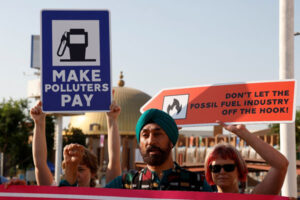
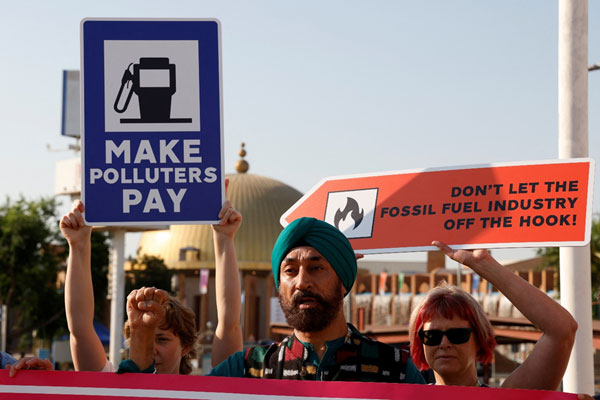
As the latest State of Civil Society Report points out, civil society’s working to make the difference, urging governments to hasten the transition and calling on global north states to make funding available for global south states to decarbonise and adapt to climate impacts. Civil society is exposing the environmental devastation caused by extraction and the complicity of fossil fuel companies in human rights abuses. Its strategies include advocacy, public campaigning, protests, direct action and, increasingly, litigation.

In 2025, climate litigation scored some big successes. The International Court of Justice (ICJ) issued an unprecedented advisory opinion, ruling that states have a legal duty to prevent environmental harm, which requires them to mitigate emissions and adapt to climate change. This victory originated in civil society: in 2019, student groups from eight countries formed the Pacific Islands Students Fighting Climate Change network to persuade their governments to seek an ICJ ruling.

Following extensive civil society engagement, the Inter-American Court of Human Rights issued a similar ruling. The African Court for Human and Peoples’ Rights is set to issue its advisory opinion following a petition brought by the African Climate Platform, a civil society coalition.

These rulings can seem symbolic, but they strengthen national-level efforts to hold states and corporations accountable. These have paid off recently too. In 2025, two South African groups stopped an offshore oil project after a court found its environmental assessments were deeply flawed. More litigation is coming, including in New Zealand, where civil society has filed a lawsuit after the government weakened its emissions reduction plan.

But civil society faces a backlash. Around the world, climate and environmental activists and their allies, Indigenous and land rights defenders, experience severe state and corporate repression.

Last year in Uganda, authorities arrested 11 activists for protesting against the construction of the East African Crude Oil Pipeline. In Peru, police used teargas and non-lethal weapons against people blocking a road to protest against a mine. In Cambodia, five young activists from the Mother Nature environmental group have been in jail since July 2024.

The French government has repeatedly vilified environmental campaigners and deployed police violence against protests, while last year the German government launched an inquiry into public funding of environmental groups and the Dutch parliament adopted a motion condemning Extinction Rebellion and urging the removal of its tax-exempt status.

As the latest oil price shocks reverberate around the global economy, governments should learn the lessons. As economies deteriorate, the temptation will be to say that transition is a luxury, something that can be put off even further. This is the wrong lesson: recent research in the UK suggests that the cost of achieving net zero will be about the same as the cost of another oil price crisis. Economic and political security lies in ending fossil fuel dependency as quickly as possible. To learn the right lessons, governments should stop repressing climate activism and instead listen to and work with civil society.

Andrew Firmin isCIVICUS Editor-in-Chief, co-director and writer for CIVICUS Lens and co-author of the State of Civil Society Report.

For interviews or more information, please contact research@civicus.org

  Source

VENEZUELA: ‘An Economically Stable Authoritarian Model Could Become Entrenched’

Active Citizens, Civil Society, Crime & Justice, Democracy, Economy & Trade, Energy, Featured, Headlines, Human Rights, Latin America & the Caribbean, Migration & Refugees, TerraViva United Nations

Mar 11 2026 (IPS) –  
CIVICUS discusses the situation in Venezuela following US intervention and the ousting of President Nicolás Maduro with Verónica Zubillaga, a Venezuelan sociologist who specialises in urban violence, state repression and community responses to armed violence.


Verónica Zubillaga

In late January, the interim government led by Delcy Rodríguez announced an amnesty for political prisoners, coinciding with a rapprochement with the USA driven by oil interests. It is unclear whether this represents the beginning of a genuine opening or is an attempt by the government to gain international legitimacy without relinquishing power. In a country with millions of migrants and exiles, a historically fragmented opposition and a civil society that has faced brutal repression for years, it remains to be seen whether recent changes will create space for democracy or lead to the consolidation of economically stable authoritarianism.

Is the recently announced amnesty a real opening or a strategic manoeuvre?

We are at an unprecedented crossroads. Venezuela and its Chavista regime, under US tutelage and despite two decades of anti-imperialist rhetoric, are reconfiguring themselves in such a way that some opening could result. However, there is still a risk that an authoritarian model will be consolidated, with economic and humanitarian concessions, but without real democratisation.

The release of political prisoners — a constant demand in all negotiations with international support, and a low-cost form of early opening for the interim government that has taken over from Maduro — could function as a stepping stone towards democratisation. The restoration of civil, political and social rights will be a difficult and lengthy struggle in this context of such deprivation, in which our rights have been violated for so long.

In the first half of February, there were partial and gradual releases, but hundreds of people remained in detention. The enactment of the Amnesty Law on 19 February has accelerated the releases.

The announcement was presented as a political concession, not as a recognition of the extensive human rights violations committed by Maduro’s government. There has been no mention yet of initiating processes to seek the truth, hold those responsible accountable, provide reparations or dismantle the repressive apparatus, which are urgent.

We therefore need to react with caution. The release of people deprived of their liberty for political reasons is essential, but it cannot replace a broader agenda of justice, reparation and institutional transformation.

How has civil society worked to keep this issue at the centre of the debate?

The cause of political prisoners is cross-cutting. There are detained people of different ages, social classes and political backgrounds. In a society as polarised as ours, this is one of the few causes around which there is broad consensus.

After the results of the presidential election of 28 July 2024, which the opposition clearly won, were disregarded, it was mainly people from the working classes who took to the streets to protest. Many young people, including teenagers, were arrested and imprisoned. This situation significantly deepened the social dimension of the problem, highlighted the break between the ruling party and its traditional base and consolidated the brutally authoritarian nature and illegitimacy of Maduro’s government.

There is also an important gender dimension. While many young men are in prison, it is women – mothers, sisters and other relatives – who have organised committees, vigils and public actions demanding their release. Symbolically, the figure of the grieving mother demanding the release of her children is particularly powerful. It is a symbol that appeals to the Latin American imagination about women and their cries for democratisation, justice and reparation in the context of crumbling authoritarian regimes.

Recently, the demand for the release of political prisoners has also been raised by the student movement in its call for a rally at the Central University of Venezuela. After a year and a half of brutal repression following the 2024 election, which emptied the streets and created a climate of widespread fear, any public demonstration is a significant sign that could trigger a chain of progressive demands and the vindication of civil, political and social rights.

What has been the impact of the USA’s renewed interest in Venezuelan oil?

It is clear that the Trump administration is fixated on oil and investment opportunities and completely disregards democracy and human rights. The part of the opposition represented by María Corina Machado has been stunned by its exclusion from key decision-making despite its efforts to gain Donald Trump’s attention. This exclusion has altered the internal political balance.

Historically, there has been tension within the Venezuelan opposition between those who favour resorting to external pressure and those who prioritise internal negotiation strategies. Since 2014, two main strategies have coexisted: one that is more confrontational, demanding the immediate end of the government, and another favouring negotiation or elections. Civil society mirrors these same divisions. One of the difficulties of the Venezuelan process is this constant fragmentation and internal disagreements within the opposition. As the government has become more authoritarian, these divisions have prevented more powerful coordinated political action. It is important for the opposition to coordinate strategies and, instead of wearing itself down in these disagreements, coordinate efforts to move strategically between confrontation and negotiation.

Whenever the opposition has managed to coordinate, as in the 2015 legislative and 2024 presidential elections, it made significant gains. During the 2024 campaign led by Machado, the opposition achieved an unprecedented level of coordination, generating enormous collective hope, particularly with regard to the prospect of family reunification in a country with over eight million migrants. This situation affects people of all social classes and political ideologies. But in response, the government redoubled its repression and consolidated the dictatorship. This led to frustration, demobilisation and further fragmentation. The opposition lacked a long-term strategy to sustain its gains and withstand setbacks. This is still one of the biggest challenges today.

What should the international community do to contribute to real democratisation?

The international community, and Latin American states in particular, could have taken a firmer stance after the 2024 electoral fraud. Silence and a lukewarm approach weakened the defence of democracy. Now it should not repeat that mistake. Beyond Maduro’s profound delegitimisation, the US military operation in Venezuela is a sign of what could happen to any Latin American country under the US government’s new national security strategy.

With the USA as an imperial power primarily concerned with its geostrategic interests and oil resources, demands for democratisation may take a back seat. An authoritarian model that is economically stable but without real democratisation could become entrenched.

In this context, the USA’s prioritisation of energy interests is worrying. It is an unprecedented scenario in which external intervention and the permanence of the ruling party in power coexist. The situation is highly volatile, and this has only just begun. A period of instability and political violence could follow if the civil-military coalition in power breaks down, which may happen given the tradition of anti-imperialist discourse rooted in the armed forces during the two and a half decades of Chavista rule.

Ironically, the USA’s focus on energy interests could result in the defence of sovereignty becoming a new unifying cause for the Venezuelan opposition, potentially leading to basic agreements between the ruling party post-Maduro and the opposition to defend Venezuelan oil interests. What’s at stake is recovering politics as an exercise involving conflict and struggle, as well as recognition and exchange for democratic coexistence — something we have lost, particularly over the past decade.

CIVICUS interviews a wide range of civil society activists, experts and leaders to gather diverse perspectives on civil society action and current issues for publication on its CIVICUS Lens platform. The views expressed in interviews are the interviewees’ and do not necessarily reflect those of CIVICUS. Publication does not imply endorsement of interviewees or the organisations they represent

GET IN TOUCH
LinkedIn
Twitter

SEE ALSO
‘Although the repressive architecture remains intact, a small window of hope has opened’ CIVICUS Lens | Interview with Luz Mely Reyes 05.Feb.2026
Venezuela: democracy no closer CIVICUS Lens 29.Jan.2026
‘We are seeing an economic transition, but no democratic transition’ CIVICUS Lens | Interview with Guillermo Miguelena 26.Jan.2026

  Source

Ukraine: Mass Russian drone strike hits Odesa port and energy sites

CopyRight @2009 The Maravi Post , An Eltas EnterPrises INC Company Since @2005. Publishing and Software Consulting company

Contact us: contact@maravipost.com

The Maravi Post

Venezuela at a Crossroads

Active Citizens, Civil Society, Crime & Justice, Democracy, Economy & Trade, Energy, Featured, Headlines, Human Rights, International Justice, Latin America & the Caribbean, TerraViva United Nations

Opinion

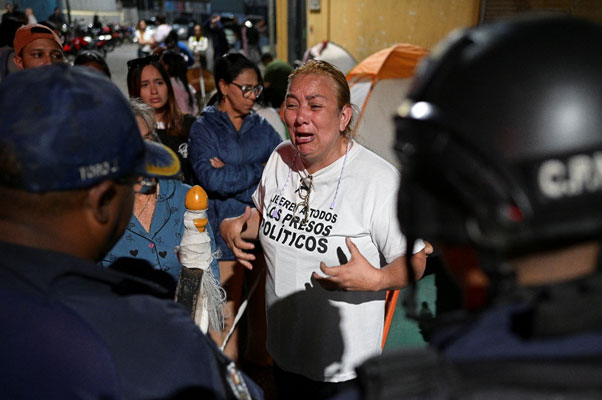
Evelis Cano, mother of political prisoner Jack Tantak Cano, pleads with the police for her son’s release outside a detention centre in Caracas, Venezuela, 20 January 2026. Credit: Gaby Oraa/Reuters via Gallo Images

MONTEVIDEO, Uruguay, Feb 2 2026 (IPS) – When US special forces seized Nicolás Maduro and his wife from the presidential residence in Caracas on 3 January, killing at least 24 Venezuelan security officers and 32 Cuban intelligence operatives in the process, many in the Venezuelan opposition briefly dared hope. They speculated that intervention might finally bring the democratic transition thwarted when Maduro entrenched himself in power after losing the July 2024 election. But within hours, those hopes were crushed. Trump announced the USA would now ‘run’ Venezuela and Vice-President Delcy Rodríguez was sworn in to replace Maduro. Venezuela’s sovereignty had been violated twice: first by an authoritarian regime that usurped the popular will, and then by an external power that deliberately violated international law.


A cynical intervention

Under Trump, the USA has abandoned any pretence of promoting democracy. Trump wrapped the intervention in the rhetoric of anti-narcotics operations while openly salivating over Venezuela’s oil reserves, rare earth deposits and investment opportunities. He repeatedly made clear that US regional hegemony is the number one priority. His contempt for Venezuelans’ right to self-determination was explicit: when asked about opposition leader María Corina Machado, Trump dismissed her as lacking ‘respect’ and ‘capacity to lead’. The message to Venezuela’s democratic movement was clear: your struggle doesn’t matter, only our interests do.

Ironically, the US intervention achieved what years of Maduro’s propaganda failed to do, giving anti-imperialist rhetoric a shot in the arm. For decades, Latin American authoritarian regimes have justified repression by pointing to the threat of US intervention, even though this was a largely historical grievance. Not anymore: Trump has handed every Latin American dictator the perfect justification for continuing authoritarian rule.

The global response has been equally revealing. The loudest defenders of national sovereignty are authoritarian powers such as China, Iran and Russia: states that routinely violate their citizens’ rights expressed their ‘solidarity with the people of Venezuela’ and positioned themselves as champions of international law. By blatantly violating a foundational principle of the post-1945 international order, Trump made the leaders of some of the world’s most repressive regimes look like the adults in the room. And across Latin America, the political conversation has now shifted dramatically: the question is no longer how to restore democracy in Venezuela, but how to prevent the next US military adventure in Latin America.

Authoritarianism continues

Meanwhile, Venezuela’s authoritarian regime remains intact. Maduro may be in a New York courtroom, but the structures that kept him in power – the corrupt military, embedded Cuban intelligence, patronage networks and the repressive apparatus – continue unchanged. Rodríguez will likely try to run down the clock, claiming Maduro could return at any moment to avoid calling elections while quietly negotiating oil deals with US companies and reasserting authoritarian control. For both Rodríguez and Trump, democracy seems like an inconvenient obstacle to resource extraction.

For Venezuelan civil society, this creates real dilemmas. As she was sworn in, Rodríguez denounced the operation that put her in charge and vowed that Venezuela would ‘never again be a colony of any empire’. She has wrapped herself in the flag, framing regime continuity as a patriotic stand against western imperialism, and can now easily paint opposition activists who have long demanded international pressure for democracy as treasonous collaborators with foreign powers. This is despite being an insider of a regime that welcomed Cuban intelligence, Iranian oil traders and Russian military advisers, and is now negotiating oil deals with the USA and crossing its own red line by promising legal changes to enable private investment.

A Venezuelan solution for Venezuela

But there may be some cracks in the regime. With Maduro gone, frictions inside the ruling party have become apparent. For instance, there have been obvious disagreements on how to handle the pressure to free Venezuela’s over 800 political prisoners. These may yield opportunities the democracy movement can exploit.

This is the time for the democratic opposition to reclaim the narrative. In the immediate aftermath of the intervention, families of political prisoners mounted vigils outside detention centres, demanding releases the government has only partially delivered. Civil society must amplify these voices, making clear that any transitional arrangement requires the dismantling of the repressive apparatus, not merely a change of faces at the top.

A broad coalition of civil society organisations has issued 10 demands that chart a path to democratic transition. They call for the immediate and unconditional release of political prisoners, the dismantling of irregular armed groups, unfettered access for human rights monitors and humanitarian aid and, crucially, a free and fair presidential election with international observers. These demands deserve international backing, not as conditions for oil contracts, but as non-negotiable requirements for any government that can claim to represent Venezuela.

Venezuela’s democratic forces can either accept marginalisation as Trump and Rodríguez carve up their country’s resources, or use this chaotic moment to advance a genuinely Venezuelan democratic agenda. That means rejecting both Maduro’s authoritarianism and Trump’s intervention, and insisting that any legitimacy Rodríguez’s government claims must come from Venezuelan voters, not US armed forces or oil contracts. Any window of opportunity may however be closing fast. The question is whether Venezuela’s democratic movement can seize it to build the country they have strived for, or whether they will remain spectators while others decide their fate.

Inés M. Pousadela is CIVICUS Head of Research and Analysis, co-director and writer for CIVICUS Lens and co-author of the State of Civil Society Report. She is also a Professor of Comparative Politics at Universidad ORT Uruguay.

For interviews or more information, please contact research@civicus.org

  Source

Instantly Elevate Jeans in These 17 Rich Mom Sweaters — Up to 60% Off

If you’re like Us, a sweater and jeans combo is part of your winter uniform — but that doesn’t mean your outfits should be basic (or require a splurge). Thanks to Nordstrom’s Half-Yearly Sale, you can score up to 60% off these 17 luxurious sweaters from Lauren Ralph, Vince Camuto, Free People and more. With these cozy, expensive-looking finds, you’ll appear rich and put together from coffee dates to business meetings.

Nordstrom’s sale event runs now through January 5, but don’t wait until then to shop. The best fashion pieces are disappearing before our eyes. Chunky knits, drapey silhouettes and buttery-soft fabrics are just a few elements to look forward to. Read on to grab a live-in sweater to wear now and all through May!

17 Cozy, Luxe Sweaters on Sale at Nordstrom — Up to 60% Off

1. Luxe Alert: Look like a Hamptons rich mom in this sophisticated cardigan that’s enhanced with gold buttons, a ribbed hem and a chic cape detail — was $109, now $49!

2. Fabric Snob-Approved: If you’re a fabric snob, you’ll adore this fuzzy boatneck sweater. Made with a blend of wool and acrylic, it’s stretchy, warm and breathable — was $90, now $49!

3. Pretty and Playful: Fair Isle sweaters aren’t just for Christmas. At 60% off, this darling CeCe option is flying off the shelves — was $69, now $28!

4. Free People: Give your wardrobe a boho twist with this wear-everywhere cardigan that comes in five colors (and are all on sale) — was $158, now $79!

5. Winter Staple: Turtleneck sweaters never go out of style. This plush BP. number has a slouchy, casual silhouette that we love — was $70, now 38!

I’m a Shopping Writer: These 21 New Year’s Fashion Deals Are Worth It

6. Petite-Friendly: Finally! A cardigan sweater that doesn’t overwhelm petite figures. This sparkle-embellished cardigan is truly for everyone and every winter outfit — was $89, now $60!

7. Oh-So Huggable: This boyfriend-style sweater is visibly soft and fluffy, so be prepared for hugs from everyone you encounter — was $80, now $44!

8. Royal Vibes: Imagine Kate Middleton‘s bow blouse style but in sweater form. This polished tie-neck cardigan should cost thousands — was $69, now $28!

9. Boutiquey Pick: Hundreds of shoppers give this everyday crewneck five stars, noting the trendy exposed seam, relaxed fit and endless color options — was $69, now $35!

10. Flower Girl: This knit cardigan has the cutest flower print that gives it a timeless and slightly groovy appeal — was $79, now $32!

11. Preppy Princess: Channel Nantucket socialite energy in this polo-style sweater that features three-quarter sleeves, front buttons and a spread collar — was $69, now $38!

12. Frills and Fuss: If you love the frilly things in life, this wool-blend sweater has your name on it. Ruffles and pointelle stitching are just two highlights — was $90, now $54!

13. So Splurge-Worthy: Score nearly half off this Fair Isle cardigan that reminds Us of Jennifer Lopez‘s Max Mara version — was $345, now $181!

14. Could Be Cashmere: Need a fail-proof sweater? This scallop-hem wonder delivers for day-to-day wear and special occasions alike — was $68, now $40!

15. Old Money: This wrap and sweater combo gives quiet luxury a new meaning. You’ll look effortlessly European — was $69, now $38!

16. Lounge Day: Sporty and lightweight, this rugby sweater is the perfect layering piece. We love styling it over a tank top and jeans  — was $59, now $32!

17. Timeless Pick: Cashmere fabric makes this elegant V-neck sweater as comfy as it is classy. We’re obsessed with the loose fit that hangs in all the right places — was $149, now $90!

I Used to Shop at Zara — Now, I’m Grabbing These 19 Affordable Lookalikes

Us Weekly has affiliate partnerships. We receive compensation when you click on a link and make a purchase. Learn more!

Discover more from The Maravi Post

Subscribe to get the latest posts sent to your email.

The Maravi Post

‘Zambia Has Environmental Laws and Standards on Paper – the Problem Is Their Implementation’

Active Citizens, Africa, Civil Society, Crime & Justice, Energy, Environment, Featured, Food and Agriculture, Headlines, Health, TerraViva United Nations

Dec 29 2025 (IPS) –  
CIVICUS discusses environmental accountability in Zambia with Christian-Geraud Neema, Africa editor at the China Global South Project, an independent journalism initiative that covers and follows China’s activities in global south countries.


Zambia has environmental laws and standards on paper – the problem is their implementation’

Christian-Geraud Neema

A group of 176 Zambian farmers has filed a US$80 billion lawsuit against a Chinese state-owned mining company over a major toxic spill. In February, the collapse of a dam that was supposed to control mining waste released 50 million litres of toxic wastewater into the Kafue River system, killing fish, destroying crops and contaminating water sources for thousands of people. The compensation demand highlights broader questions about mining governance, environmental oversight and corporate accountability.

What’s this lawsuit about, and why are farmers seeking US$80 billion?

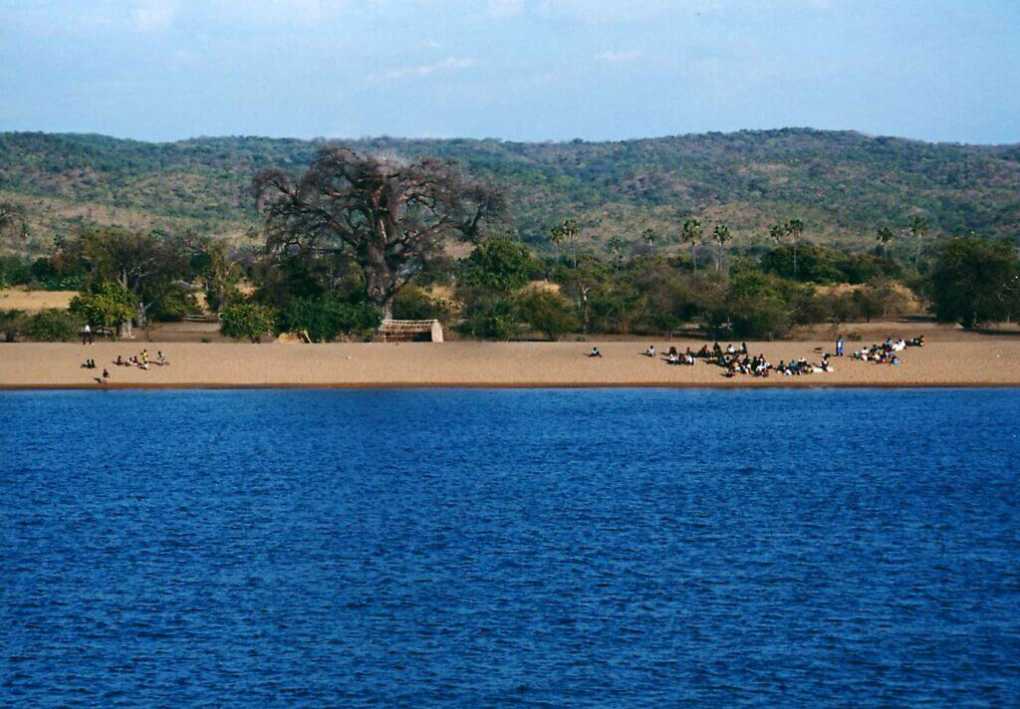
The farmers are suing Sino-Metals Leach Zambia, a subsidiary of the Chinese state-owned China Nonferrous Metal Mining Group, because on 18 February, the company’s tailings dam collapsed, releasing an estimated 50 million litres of acidic, toxic wastewater and up to 1.5 million tonnes of waste material into the Kafue River. This led to water pollution affecting communities in Chambishi and Kitwe, far beyond the immediate mining area.

The lawsuit reflects real harm and frustration. From the farmers’ perspective, the company is clearly responsible. Their livelihoods have been destroyed, their land contaminated and their future made uncertain. In that context, seeking accountability through the courts is a rational response.

That said, the US$80 billion figure is likely exaggerated. It shows the absence of credible damage assessments rather than a precise calculation. When no one provides clear data on losses, communities respond by anchoring their claims in worst-case scenarios.

This case also highlights a broader accountability gap. Mining companies should be held responsible, but governments must also be questioned. These projects are approved, inspected and regulated by state authorities. If a dam was unsafe, why was it authorised? Why was oversight insufficient?

It should be noted that Zambia’s legal framework allows communities to bring such cases domestically, which is a significant step forward compared to earlier cases where affected communities had to sue foreign companies in courts abroad.

What caused the toxic spill?

There is no single, uncontested explanation. There were clear structural weaknesses in the tailings dam. Reports from civil society and media suggest the dam was not built to the required standards under Zambian regulations. But the company argues the dam complied with existing standards and that it was encroachment by surrounding communities that weakened the structure over time.

These two narratives are not mutually exclusive. Even if community interactions with the site occurred, the primary responsibility still lies with the company. Mining operations take place in complex social environments, and companies are expected to anticipate these realities and design infrastructure that is robust enough to withstand them. Ultimately, this incident reflects governance and regulatory failures. It was not an isolated accident.

What were the consequences of the spill?

The impacts have been severe and multidimensional. The spill polluted large sections of the Kafue River, reportedly extending over 100 kilometres. It killed large numbers of fish, contaminated riverbeds and disrupted ecosystems. Agriculturally, farmers using river water for irrigation saw their crops destroyed or rendered unsafe. Livestock and soil quality were also affected. Acidic and toxic substances entered water sources used daily for cooking, drinking and washing, and communities were exposed to serious health risks.

What makes the situation particularly troubling is the lack of reliable and independent data. There has been no transparent and comprehensive assessment released by the government, the company or an independent body. This absence has left communities uncertain about long-term environmental damage and health effects, and fuelled emotionally charged debates instead of evidence-based responses.

Was the disaster preventable?

Absolutely. At a technical level, stronger infrastructure, better-quality materials and stricter adherence to safety standards could have significantly reduced the risk. At an operational level, companies know mining sites are rarely isolated, and community proximity, informal access and social dynamics must be factored in when designing and securing tailings dams.

But prevention also depends heavily on governance. Mining companies are profit-driven entities, and in weak governance environments, the temptation to cut costs is high. This is not unique to Chinese firms. The main difference in how companies operate is not their origin but their context: the same companies often operate very differently in countries with weak or strong regulatory oversight. Where rules are enforced, behaviour improves; where oversight is weak, shortcuts become the norm.

The key issue here is enforcement. Zambia has good environmental laws and standards on paper. The problem is their implementation.

Could this case set a precedent?

This case has the potential to strengthen existing accountability mechanisms rather than create a new precedent. Zambia has seen similar cases before, including lawsuits involving western mining companies. What is different now is the increased legal space for communities to act locally.

If successful, the case could reinforce civil society advocacy for responsible mining, greater transparency and stronger enforcement of environmental regulations. It could also raise awareness among communities living near mining sites about their rights and the risks they face.

GET IN TOUCH
Website
Facebook
TikTok
Twitter
YouTube
Christian-Geraud Neema/LinkedIn

SEE ALSO
South Africa: ‘Environmental rights are enforceable and communities have the right to be consulted and taken seriously’ CIVICUS Lens | Interview with The Green Connection 12.Dec.2025
DRC: ‘International demand for coltan is linked to violence in the DRC’ CIVICUS Lens | Interview with Claude Iguma 09.Jul.2025
Ghana: ‘We demand an immediate ban on illegal mining and strict enforcement of environmental laws’ CIVICUS Lens | Interview with Jeremiah Sam 29.Oct.2024

  Source