World Living Beyond Its Means: Warns UN’s Global Water Bankruptcy Report

Armed Conflicts, Climate Change, Combating Desertification and Drought, Conferences, Conservation, Editors’ Choice, Environment, Featured, Global, Headlines, Migration & Refugees, Natural Resources, Sustainable Development Goals, TerraViva United Nations
Water & Sanitation

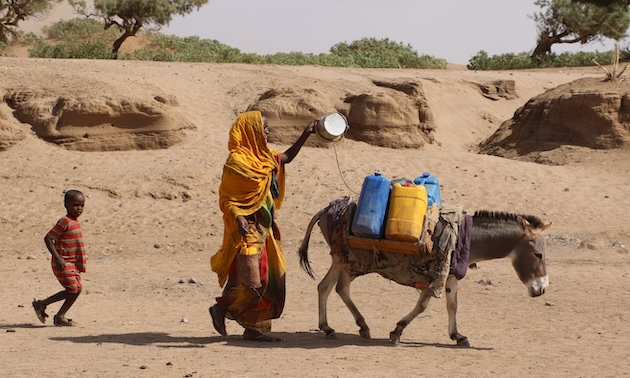
Collecting water in Ethiopia. A new report, ‘Global Water Bankruptcy: Living Beyond Our Hydrological Means in the Post Crisis Era’ warns that many of the earth’s water resources have been pushed to a point of permanent failure. Credit: EU/ECHO/Anouk Delafortrie/IPS

Collecting water in Ethiopia. A new report, ‘Global Water Bankruptcy: Living Beyond Our Hydrological Means in the Post Crisis Era’ warns that many of the earth’s water resources have been pushed to a point of permanent failure. Credit: EU/ECHO/Anouk Delafortrie/IPS

UNITED NATIONS & SRINAGAR, India, Jan 20 2026 (IPS) – The world has entered what United Nations researchers now describe as an era of Global Water Bankruptcy, a condition where humanity has irreversibly overspent the planet’s water resources, leaving ecosystems, economies, and communities unable to recover to previous levels.


The new report, released by the United Nations University Institute for Water, Environment and Health, titled Global Water Bankruptcy: Living Beyond Our Hydrological Means in the Post-Crisis Era. The report argues that decades of overextraction, pollution, land degradation, and climate stress have pushed large parts of the global water system into a permanent state of failure.

“The world has entered the era of Global Water Bankruptcy,” the report reads, adding that “in many regions, human water systems are already in a post-crisis state of failure.”

According to the report, the language of “water crisis” is no longer sufficient to explain what is happening. A crisis implies a shock followed by recovery. Water bankruptcy, by contrast, describes a condition where recovery is no longer realistically possible because natural water capital has been permanently damaged.

In an exclusive interview with Inter Press Service, former Deputy Head of Iran’s Department of Environment  Prof. Kaveh Madani, who currently is the Director at United Nations University, Institute for Water, Environment and Health, said that declaring that the planet has entered the era of water bankruptcy must not be interpreted as universal water bankruptcy, as not all basins, aquifers, and systems are water bankrupt.
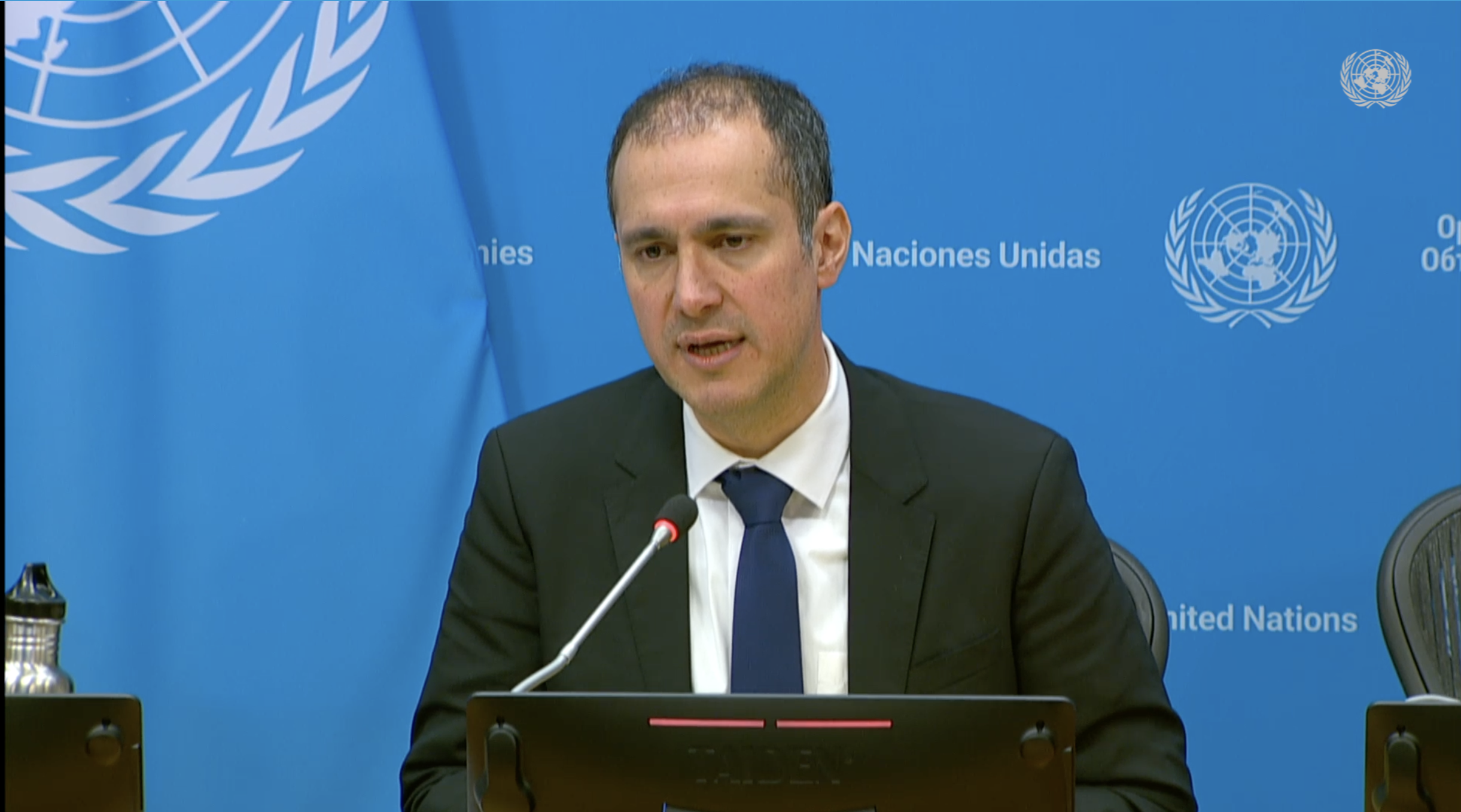
 Prof. Kaveh Madani, Director at the United Nations University, Institute for Water, Environment and Health, addresses the UN midday press briefing. Credit: IPS

Prof. Kaveh Madani, Director at the United Nations University, Institute for Water, Environment and Health, addresses the UN midday press briefing. Credit: IPS

“But we now have enough critical basins and aquifers in chronic decline and showing clear signs of irreversibility that the global risk landscape is already being reshaped. Scientifically, we know recovery is no longer realistic in many systems when we see persistent overshoot (using more than renewable supply) combined with clear markers of irreversibility—for example aquifer compaction and land subsidence that permanently reduce storage, wetland and lake loss, salinization and pollution that shrink usable water, and glacier retreat that removes a long-term seasonal buffer. When these signals persist over time, the old “bounce back” assumption stops being credible,” Madani said.

According to the report, over decades, societies have drawn down the renewable flow of rivers and rainfall besides long-term reserves stored in aquifers, glaciers, wetlands, and soils. At the same time, pollution and salinization have reduced the share of water that is safe or economically usable.

“Over decades, societies have withdrawn more water than climate and hydrology can reliably provide, drawing down not only the annual income of renewable flows but also the savings stored in aquifers, glaciers, soils, wetlands, and river ecosystems,” the report says.

The scale of the problem, as per the report, is global. Nearly three-quarters of the world’s population now lives in countries classified as water insecure or critically water insecure.

Around 2.2 billion people still lack safely managed drinking water, while 3.5 billion lack safely managed sanitation. About 4 billion people, as per the report findings, experience severe water scarcity for at least one month every year.

Madani said, adding that water bankruptcy is best assessed basin by basin and aquifer by aquifer, not by country.

“Please note that, based on the water security definition used by the UN system, water insecurity and water bankruptcy are not equivalent. Water bankruptcy can drive water insecurity, but water insecurity can also stem from limited financial and institutional capacity to build and operate infrastructure for safe water supply and sanitation, even where physical water is available,” he explained.

Madani added that the regions most consistently closest to irreversible decline cluster in the Middle East and North Africa, Central and South Asia, parts of northern China, the Mediterranean and southern Europe, the southwestern United States and northern Mexico (including the Colorado River system), parts of southern Africa, and parts of Australia.
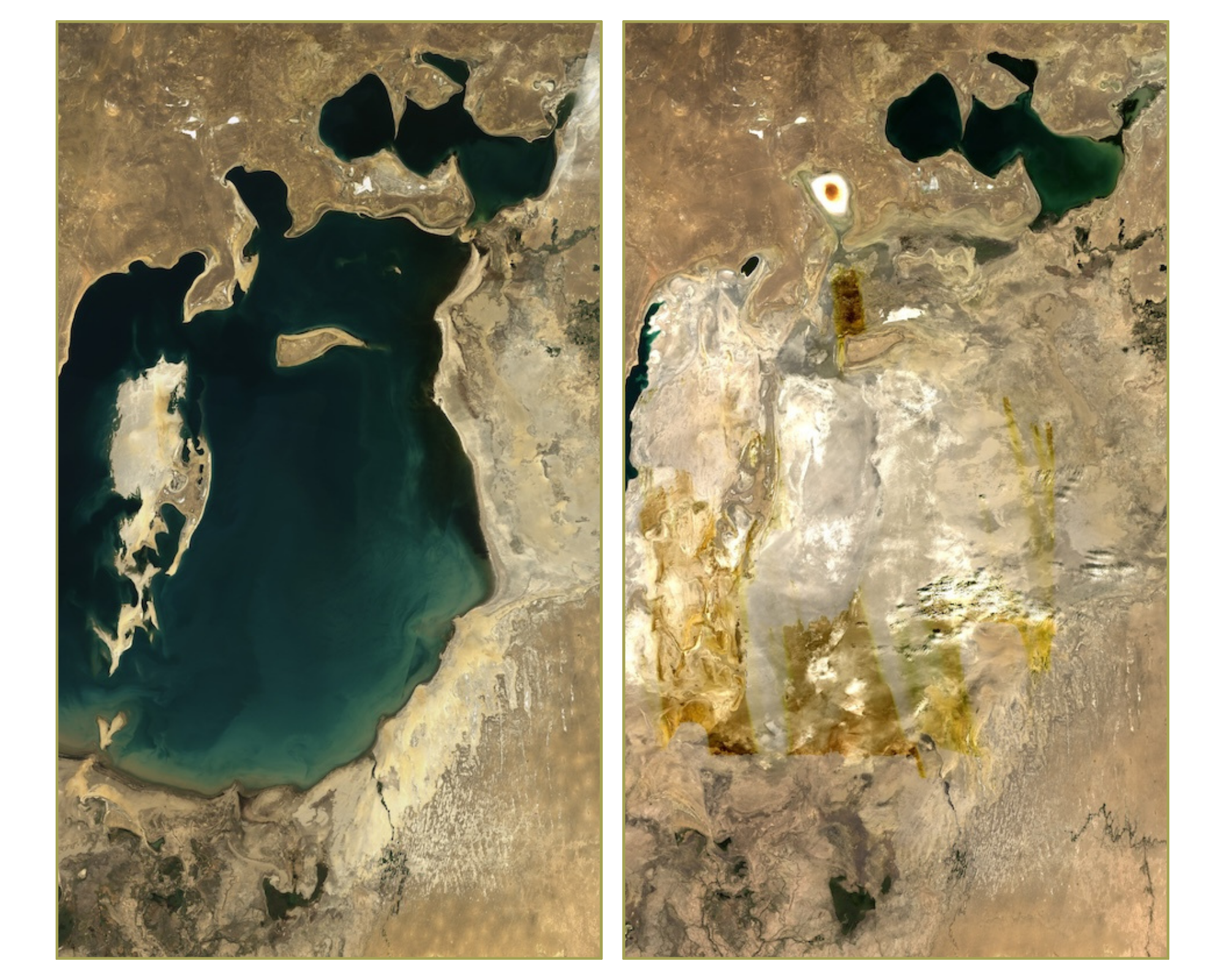
The Aral Sea, which lies between Kazakhstan and Uzbekistan shows dramatic water loss between 1989 and 2025. Credit: UNU-INWEH

The Aral Sea, which lies between Kazakhstan and Uzbekistan, shows dramatic water loss between 1989 and 2025. Credit: UNU-INWEH

Surface Water Systems Are Shrinking Rapidly

The report shows how more than half of the world’s large lakes have lost water since the early 1990s, affecting nearly one quarter of the global population that depends directly on them. Many major rivers now fail to reach the sea for parts of the year or fall below environmental flow needs.

Massive losses have occurred in wetlands, which serve as natural buffers against floods and droughts. Over the past five decades, the report claims that the world has lost roughly 410 million hectares of natural wetlands, almost the size of the European Union. The economic value of lost ecosystem services from these wetlands exceeds 5.1 trillion US dollars.

Groundwater depletion is one of the clearest signs of water bankruptcy. Groundwater, says the report, now supplies about 50 percent of global domestic water use and over 40 percent of irrigation water. Yet around 70 percent of the world’s major aquifers show long-term declining trends.

“Excessive groundwater extraction has already contributed to significant land subsidence over more than 6 million square kilometers,” the report says, warning that in some locations land is sinking by up to 25 centimeters per year, permanently reducing storage capacity and increasing flood risk.

In coastal areas, overpumping has allowed seawater to intrude into aquifers, rendering groundwater unusable for generations. In inland agricultural regions, falling water tables have triggered sinkholes, soil collapse, and the loss of fertile land.
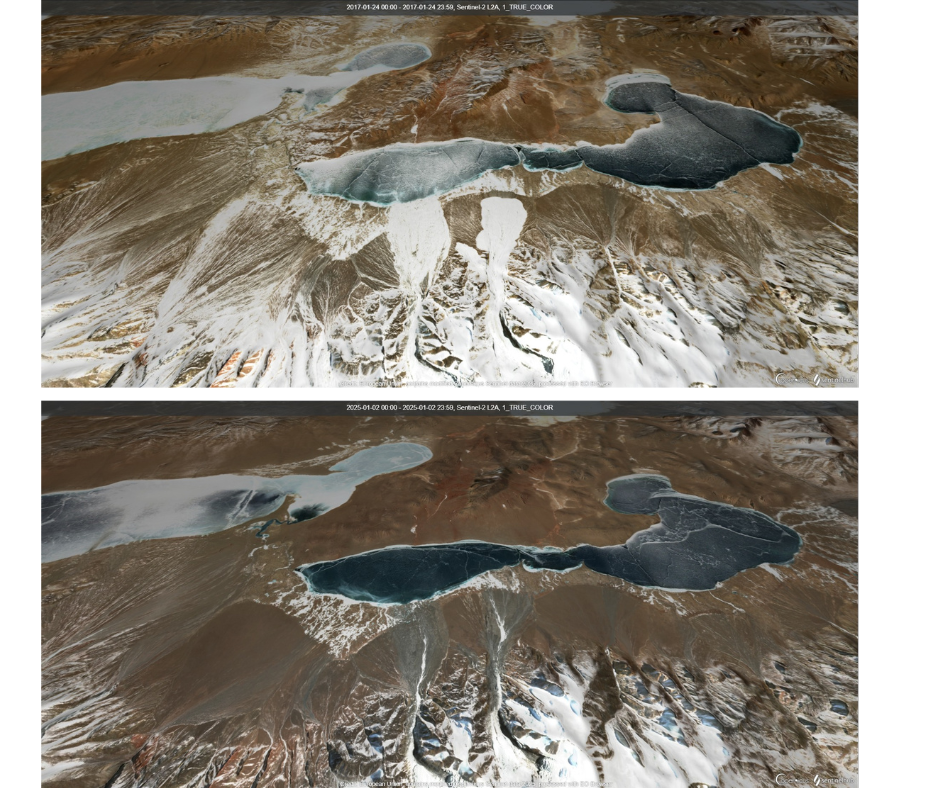
These satellite images show a dramatic impact of the Aru glacier collapses in western Tibet. First image was taken in 2017 and the second in 2025. Credit: UNU-INWEH

These satellite images show a dramatic impact of the Aru glacier collapses in western Tibet. First image was taken in 2017 and the second in 2025. Credit: UNU-INWEH

The cryosphere, glaciers and snowpacks that act as natural water storage systems are also being rapidly liquidated. The world has already lost more than 30 percent of its glacier mass since 1970. Several low- and mid-latitude mountain ranges could lose functional glaciers within decades.

“The liquidation of this frozen savings account interacts with groundwater depletion and surface water over-allocation to lock many basins into a permanent worsening water deficit state,” says the report.

This loss, as per the report, threatens the long-term water security of hundreds of millions of people who depend on glacier- and snowmelt-fed rivers for drinking water, irrigation, and hydropower, particularly in Asia and the Andes.

Madani said the biggest failure was treating groundwater as an unlimited safety net instead of a strategic reserve.

He says that when surface water tightened, many systems defaulted to “drill deeper” without enforceable caps.

“Authorities often recognize the consequences when it is already late, and meaningful action then faces major political barriers. For example, reducing groundwater use in farming can trigger unemployment, food insecurity, and even instability unless farmers are supported through short-term compensation and a longer-term transition to alternative livelihoods,” he added.

According to Madani, that kind of transition cannot be implemented overnight.

“So, business as usual continues. The result is predictable: groundwater gets “liquidated” to postpone hard choices, and by the time the damage is obvious, recovery is no longer realistic,” he told IPS news.

Agriculture Lies at the Heart of the Crisis

According to the report, farming accounts for approximately 70 percent of global freshwater withdrawals. About 3 billion people and more than half of the world’s food production are located in regions where total water storage is already declining or unstable.

The report states that more than 170 million hectares of irrigated cropland are under high or very high water stress. Land and soil degradation are making matters worse by reducing the ability of soils to retain moisture. The degradation of more than half of the global agricultural land is now moderate or severe.

Drought, once considered a natural hazard, is increasingly driven by human activity. Overallocation, groundwater depletion, deforestation, land degradation, and climate change have turned drought into a chronic condition in many regions.

“Drought-related damages, intensified by land degradation, groundwater depletion and climate change rather than rainfall deficits alone, already amount to about 307 billion US dollars per year worldwide,” the report states.

Water quality degradation further shrinks the usable resource base. Pollution from untreated wastewater, agricultural runoff, industrial effluents, and salinization means that even where water volumes appear stable, much of that water is unsafe or too costly to treat.

The report adds that the planetary freshwater boundary has already been crossed. Both blue water, surface and groundwater, and green water, soil moisture, have been pushed beyond a safe operating space.

Current governance systems, the authors argue, are not fit for this reality. Many legal water rights and development promises far exceed degraded hydrological capacity. Existing global agendas, focused largely on drinking water access, sanitation, and incremental efficiency gains, are inadequate for managing irreversible loss.

“Water bankruptcy must be recognized as a distinct post-crisis state, where accumulated damage and overshoot have undermined the system’s capacity to recover,” the report says.
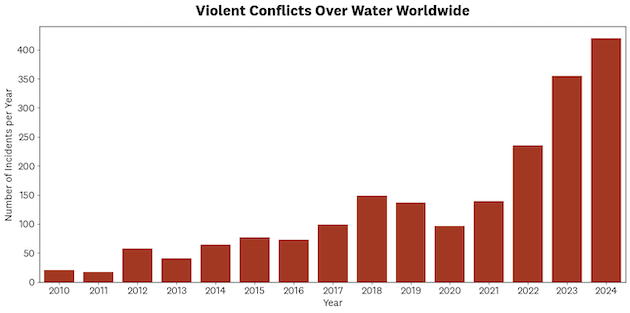
Water bankruptcy could result in an increase in conflicts. Credit: UNU-INWEH

Water bankruptcy could result in a further increase in conflicts. Credit: UNU-INWEH

It warns that the implications of water bankruptcy are dire.

UN Under-Secretary-General Tshilidzi Marwala, Rector of UNU explains,  “Water bankruptcy is becoming a driver of fragility, displacement, and conflict. Managing it fairly—ensuring that vulnerable communities are protected and that unavoidable losses are shared equitably—is now central to maintaining peace, stability, and social cohesion.”

Policy Implications

Instead of crisis management aimed at restoring the past, the report actually pitches for bankruptcy management. That means acknowledging insolvency, accepting irreversibility, and restructuring water use, rights, and institutions to prevent further damage.

The authors lay stress on the fact that water bankruptcy is also a justice and security issue. The costs of overshoot fall disproportionately on small farmers, rural communities, women, Indigenous peoples, and downstream users, while benefits have often accrued to more powerful actors.

“How societies manage water bankruptcy will shape social cohesion, political stability, and peace,” the report warns.

Furthermore, it urges governments and international institutions to use upcoming UN Water Conferences in 2026 and 2028 as milestones to reset the global water agenda, calling for water to be treated as an upstream sector central to climate action, biodiversity protection, food security, and peace.

“This is about a crisis that might arrive in the future. The world is already living beyond its hydrological means,” reads the report.

When asked why the report frames water bankruptcy as a justice and security issue and how governments can implement painful demand reductions without triggering social unrest or conflict, Madani said the demand reduction becomes dangerous when it is treated as a technical exercise instead of a political economy reform. In many water-bankrupt regions, according to him, water is effectively a jobs policy: it keeps low-productivity farming and local economies afloat.

“If you cut water without an economic transition, you create unemployment, food insecurity, and unrest. So the practical pathway is to decouple livelihoods and growth from water consumption. In many economies, water and other natural resources are used to keep low-efficiency systems alive. In most places, it is possible to produce more strategic food with less water and less land, and with fewer farmers—provided that farmers are supported through a transition and offered alternative livelihoods.”

According to Madani, governments should protect basic needs but target the big reductions where most water is used, especially agriculture and besides that, pair caps with a just transition package for farmers—compensation, insurance, buy-down or retirement of water entitlements where relevant, and real income alternatives.

He further suggests that the governments should invest in diversification, including services, industry, value-added agri-processing, and urban jobs, so communities can earn a living without expanding water withdrawals.

“In short, you avoid conflict by making demand reduction part of a broader economic transition, not a standalone water policy.”

IPS UN Bureau Report


Greening Malawi: A new season of growth unfolds

Phalombe-(MaraviPost)-Second Vice President Enock Chihana is presiding over the launch of this year’s 2025/2026 tree planting season at Mpata Primary School in Phalombe District, under the theme “Trees and Forests for Community Resilience.”

The event marks a significant milestone in Malawi’s efforts to enhance environmental sustainability and community resilience.

Chihana has planted fruit trees in Karama Village to mark the official launch, setting an example for others to follow.

He is accompanied by Minister of Natural Resources, Alfred Gangata, highlighting the government’s commitment to environmental conservation.

Other dignitaries include the Democtric Progressive Party Regional Governor for the South, Charles Mchacha, Mayor of Blantyre City, Isaac Jomo Osman, and senior government officials, underscoring the collaborative effort to promote tree planting.

The Department of Forestry says it has planned to plant over 41 million trees during the season, which started on 15 December and will end on 15 April, a ambitious target that requires collective action.

This initiative aims to make a tangible impact on Malawi’s environment and communities, promoting a greener future for all.

The Maravi Post

Tracking the Invisible: Monitoring Air Pollution from Space

Asia-Pacific, Civil Society, Climate Change, Development & Aid, Environment, Featured, Headlines, Humanitarian Emergencies, Sustainable Development Goals, TerraViva United Nations

Opinion

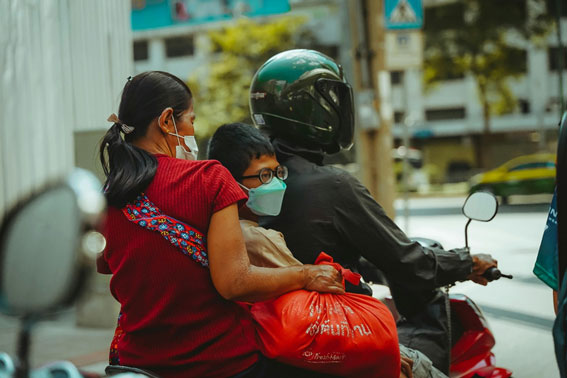
A mother and a son with mask were riding on a motorcycle in a street of Bangkok. The capital of Thailand experienced high level of PM2.5 particle pollution. Credit: Pexels/Maksim Romashkin

BANGKOK, Thailand, Jan 14 2026 (IPS) – Take a deep breath.

Did you know that in many countries in Asia and the Pacific, the air we breathe falls short of the safety standards for air quality set by the World Health Organization? While the start of a new year signals new beginnings, it also marks the continuation of the recurring air quality crisis across many countries in the region.


In 2024, 25 of the most polluted cities were in the Asia-Pacific region, with dangerous levels of fine particulate matter (PM2.5) that significantly exceeded the annual maximum levels of 5 micrograms per cubic meter.

Oftentimes, when we think of air pollution, we associate it with car exhaust and factory chimneys belching black smoke. But air pollution is not just the cost of urban development – it is a multi-hazard crisis caused by wildfires, sand and dust storms, and volcanic eruptions that respect no borders. Access to clean air is a human right and countries who contribute the least to air pollution are often the most vulnerable.

Rising temperatures create a vicious cycle: rising heat leads to intensifying wildfires, releasing toxic smoke composed of carbon dioxide, carbon monoxide, and PM2.5 into the air we breathe. Furthermore, heat accelerates the breakdown of waste, generating even more pollutants.

Volcanic eruptions add sulfur dioxide and volcanic ash to the mix, and these pollutants can linger in the atmosphere for months. The result? Climate change exacerbates air pollution, which in turn aggravates the climate crisis — a feedback loop that puts both human health and ecosystems at risk and transforms local hazards into regional challenges.

Can a heavily polluted environment be restored? In principle, yes, but doing so requires transformative change and collective action in our economy and society. Improving urban mobility requires prioritizing efficient public transport, including low-emission vehicles, cleaner, greener alternatives such as walking, cycling, and ride-sharing.

Nature-based solutions, including green cooling corridors, can further improve air quality by lowering surface temperatures and providing buffers against desertification, land degradation, drought, and sand and dust storms.

However, not all sources of air pollution can be addressed through emission reductions alone. There are inherent limits to prevention at the source, particularly for air pollution caused by natural hazards. This requires a shift in focus from mitigation toward adaptation and preparedness.

Earth observation plays a critical role in monitoring, early warning, and informed decision-making. Advanced sensors aboard platforms such as Sentinel-5 Precursor and Geostationary Environment Monitoring Spectrometer (GEMS) detect key atmospheric pollutants including nitrogen dioxide (NO2), sulfur dioxide (SO2), tropospheric ozone, and carbon monoxide at unprecedented spatial and temporal scales.

The collaboration of ESCAP with regional partners for the Pan-Asia Partnership for Geospatial Air Pollution Information exemplifies how satellite data can be integrated with surface observations to create robust monitoring systems. These datasets enable tracking transboundary pollution events, from agricultural fire smoke to volcanic sulfur emissions to urban photochemical smog.

Satellites bridge the existing gaps from ground-based observations, providing authorities with the spatial coverage needed to understand and monitor air pollution and formulate effective policies.

The Clean Air for Sustainable ASEAN project recognizes that addressing the transboundary air pollution crisis requires strengthened monitoring and decision-making capacities enabled by technology-driven solutions. The application, Check Phoon (Thai: Phoon, meaning dust), or the PM2.5 Monitoring System, developed by the Geo-informatics Information and Space Technology Development Agency of Thailand, is an innovative platform that leverages space technology to support air quality monitoring and public health protection by providing real-time, high-resolution PM2.5 concentration data across Thailand.

The application is available in both web-based and mobile applications, and the system integrates satellite data, such as from Himawari, meteorological information, PM2.5 sources including hotspots (active fire detections), and ground-based validation from PM2.5 monitoring stations.

Building on the framework of SatGPT for flood hotspot mapping, an iteration of SatGPT for volcanic hazards has been proposed with potential to support the understanding and management of air pollution linked to volcanic activity. has been proposed with potential to support the understanding and management of air pollution linked to volcanic activity.

The Regional Action Programme on Air Pollution advances air quality management through science-based cooperation, sharing of best practices, and strengthened technical and financial support across ESCAP member States.

Complementing this effort, the Regional Space Applications Programme facilitates the sharing of Earth observation data and expertise that are critical for monitoring air pollution and assessing the impacts.

These initiatives contribute to accessible and actionable geospatial information that strengthens early warning systems, enabling authorities to forecast and quantify air quality with greater precision.

The transboundary nature of air pollution demands a stronger and more urgent call to action. While the Asia-Pacific region has demonstrated remarkable resilience in the face of cascading disasters, regional cooperation must accelerate to match the scale and pace of this evolving crisis.

Keran Wang is Chief of Space Applications Section, ESCAP; Sheryl Rose Reyes is Consultant, Space Applications Section, ESCAP; Taisei Ukita is former Intern, Space Applications Section, ESCAP.

The authors would like to thank Sangmin Nam, Director of the Environment and Development Division of ESCAP, for his contributions to this article.

IPS UN Bureau

  Source

Richest 1% have Blown Through their Fair Share of Carbon Emissions for 2026 –in just 10 Days

Civil Society, Climate Change, Development & Aid, Environment, Featured, Global, Headlines, Humanitarian Emergencies, Sustainable Development Goals, TerraViva United Nations

Opinion

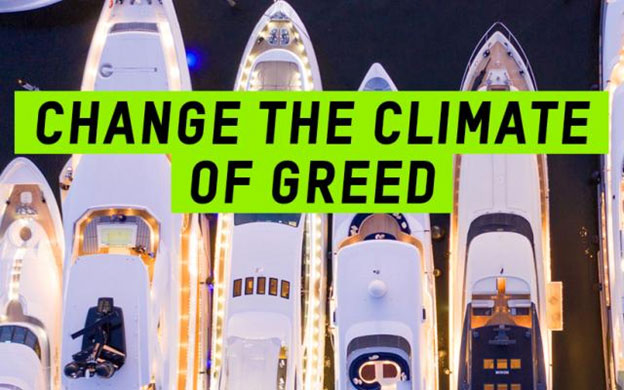
Credit: Oxfam

LONDON, Jan 13 2026 (IPS) – The richest 1% have exhausted their annual carbon budget – the amount of CO2 that can be emitted while staying within 1.5 degrees of warming – only ten days into the year, according to new analysis from Oxfam. The richest 0.1% already used up their carbon limit on the 3rd January.


This day – named by Oxfam as ‘Pollutocrat Day’ – highlights how the super-rich are disproportionately responsible for driving the climate crisis.

The emissions of the richest 1% generated in one year alone will cause an estimated 1.3 million heat-related deaths by the end of the century. Decades of over consumption of emissions by the world’s super rich are also causing significant economic damage to low and lower-middle income countries, which could add up to $44 trillion by 2050.

To stay within the 1.5 degrees limit, the richest 1% would have to slash their emissions by 97% by 2030. Meanwhile, those who have done the least to cause the climate crisis – including communities in poorer and climate-vulnerable countries, Indigenous groups, women and girls – will be the worst impacted.

“Time and time again, the research shows that governments have a very clear and simple route to drastically slash carbon emissions and tackle inequality: by targeting the richest polluters.

By cracking down on the gross carbon recklessness of the super-rich, global leaders have an opportunity to put the world back on track for climate targets and unlock net benefits for people and the planet,” said Oxfam’s Climate Policy Lead Nafkote Dabi.

On top of their lifestyle emissions, the super-rich are also investing in the most polluting industries. Oxfam’s research finds that each billionaire carries, on average, an investment portfolio in companies that will produce 1.9 million tonnes of CO2 a year, further locking the world into climate breakdown.

The wealthiest individuals and corporations also hold disproportionate power and influence. The number of lobbyists from fossil fuel companies attending the recent COP summit in Brazil, for example, was more than any delegation apart from the host nation, with 1600 attendees.

“The immense power and wealth of super-rich individuals and corporations have also allowed them to wield unjust influence over policymaking and water down climate negotiations.” Dabi added.

Oxfam calls on governments to slash the emissions of the super-rich and make rich polluters pay through:

Increase taxes on income and wealth of the Super-rich and proactively support and engage on the negotiations for the UN Convention of International Tax Cooperation to deliver a fairer global architecture.

Excess profit taxes on fossil fuel corporations. A Rich Polluter Profits Tax on 585 oil, gas and coal companies could raise up to US $400 billion in its first year, equivalent to the cost of climate damages in the Global South.

Ban or punitively tax carbon-intensive luxury items like super-yachts and private jets. The carbon footprint of a super-rich European, accumulated from nearly a week of using super yachts and private jets, matches the lifetime carbon footprint of someone in the world’s poorest 1 percent

Build an equal economic system that puts people and planet first by rejecting dominant neoliberal economics and moving towards an economy based on sustainability and equality. 

The International Court of Justice (ICJ), the world’s highest court, has confirmed that countries have a legal obligation to reduce emissions enough to protect the universal rights to life, food, health, and a clean environment. 

IPS UN Bureau

  Source

Natural Restoration Recovers Lagoon and Environmental Justice in Brazil: VIDEO

Civil Society, Environment, Headlines, Latin America & the Caribbean, Multimedia, TerraViva United Nations, Video

Environment

NITERÓI, Brazil, Jan 9 2026 (IPS) – “We moved from a context of socio-environmental exclusion to one of environmental justice,” said Dionê Castro, coordinator of the Sustainable Oceanic Region Program which led Brazil’s largest nature-based solutions project.


Having won national and global awards, the Orla Piratininga Park (POP) built 35,000 square meters of filtering gardens and improved the water quality of the Piratininga lagoon, in the oceanic south of Niterói, a municipality in metropolitan Rio de Janeiro, across the Guanabara Bay.

The project, named after the late Brazilian environmentalist Alfredo Sirkis, began in 2020, and aims to environmentally restore an area of 680,000 square meters on the lagoon’s shores whose waters cover an area of 2.87 square kilometers.

[embedded content]

At the heart of the project are the treatment systems for the waters of the Cafubá, Arrozal, and Jacaré rivers, which flow into the lagoon. Sedimentation and pollution were deteriorating the water resource and the quality of life in the surrounding area.

A weir, which receives the river flow, a sedimentation pond, which removes solid waste, and the filtering gardens make up the chain that partially cleans the water before releasing it into the lagoon, reducing environmental impacts, in a process called phytoremediation.

The gardens are small reservoirs where aquatic plants called macrophytes are planted, which feed on the nutrients from the pollution, explained Heloisa Osanai, the biologist specialized in environmental management of the Sustainable Oceanic Region Program (PRO Sustainable).

Three polluted water treatment stations are in the neighborhoods crossed by the rivers, based on natural resources, “without the use of electrical energy, chemicals, or concrete,” explained Castro, the coordinator of PRO Sustainable.

Furthermore, some macrophytes produce abundant flowers. Only native Brazilian species are planted, with priority given to biodiversity, added Osanai.

Along with these water treatment systems, 10.8 kilometers of bike paths, 17 recreation centers, a 2,800-square-meter Eco-Cultural Center, and other environmental works with social goals were built.

The bike path, generally along a pedestrian sidewalk, caters to physical and leisure activities but is also a factor in protecting the lagoon shoreline by blocking urban occupation and real estate invasions, explain the officials.

The area where the water system was built at the mouth of the Cafubá river was highly degraded by an open-air dump and flooding. A reformed “belt channel,” in some sections also reinforced by macrophyte islands, corrected the waterlogging.

On the other side of the lagoon, 3.2 kilometers of bioswales improve the drainage of rainwater. They are trenches with pipes, stones, and other materials, plus vegetation, that accelerate drainage and prevent pollutants from reaching the lagoon.

The main result, according to Castro, reconciled the local population with the lagoon. The old houses that “turned their backs on the lagoon” are joined by new buildings facing the water, some with balconies overlooking the new landscape, said Mariah Bessa, the engineer in charge of hydraulic aspects of the project.

The local population was highly involved in the design and construction of the new environmental and social facilities that transformed the lagoon shoreline. This led to new attitudes, such as not littering on the ground or in the water and preventing others from doing so, according to Castro.

The Ecocultural Center promotes permanent environmental education, with films, children’s games, audiovisual resources, and a large space for visits and classes.

“We moved from a context of socio-environmental exclusion to one of environmental justice,” said the coordinator of PRO Sustainable.

  Source

From floodwaters to fragility

The 2025–2026 rainy season has exposed Malawi’s deep vulnerability to climate-induced disasters, with widespread floods causing destruction and a deepening food insecurity crisis.

The floods have affected all regions, with southern and lakeshore districts bearing the heaviest burden, destroying crops, livestock, homes, and critical infrastructure.

Malawi’s food system, heavily dependent on rain-fed agriculture, has been severely impacted.

Thousands of hectares of farmland were submerged, damaging maize, rice, beans, and other crops, leading to a sharp decline in household food availability.

Effects of climate change

The destruction of irrigation schemes and river diversion structures has further undermined prospects for recovery.

The floods have also claimed large numbers of livestock, stripping families of a crucial coping mechanism and reducing their ability to purchase food or recover.

Thousands of homes have been destroyed, leaving families without secure shelter and exacerbating food insecurity.

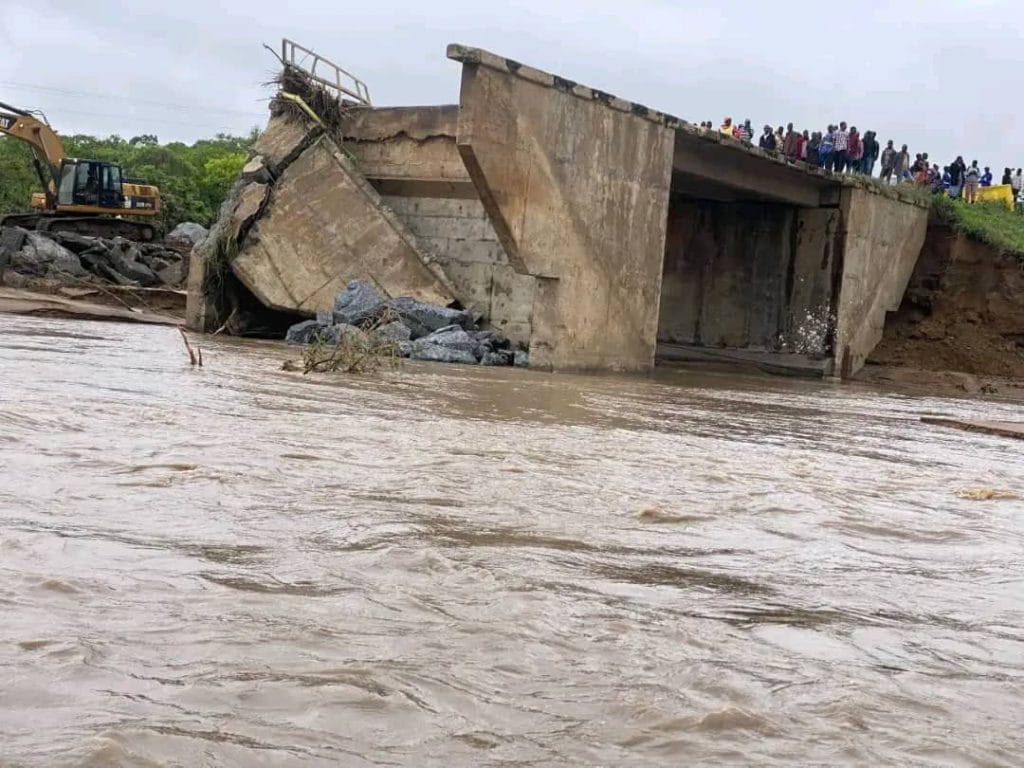
The damage to roads and bridges has isolated communities, disrupting access to markets, healthcare, and humanitarian assistance.

The cost of transporting goods has risen sharply, contributing to shortages and price spikes.

The floods have worsened public health conditions, increasing the risk of cholera, malaria, and other water- and vector-borne diseases.

Children, pregnant women, the elderly, and people with disabilities have been disproportionately affected.

The destruction of healthcare facilities and sanitation infrastructure has further compromised the ability of affected communities to access essential services.

The economic impacts of the floods are also significant.

The destruction of crops, livestock, and infrastructure has led to substantial losses, estimated to be in the millions of dollars.

The floods have also disrupted trade and commerce, with many businesses forced to close due to the damage.

The government’s response to the floods has been swift, with the declaration of a state of disaster in affected areas.

The Malawi Defence Force has been deployed to assist with evacuation efforts, and emergency supplies have been distributed to affected communities.

However, the response has been hampered by limited resources and infrastructure.

The 2025–2026 floods offer critical lessons for Malawi.

Climate shocks are no longer exceptional events, and planning must assume recurrence.

Infrastructure vulnerability amplifies disaster impacts, requiring investment in resilient infrastructure.

Early warning systems and preparedness remain insufficient.

To build a more resilient Malawi, the government must prioritize climate-resilient infrastructure, promote flood-tolerant crop varieties, and strengthen social protection systems.

Disaster risk reduction and climate adaptation must be mainstreamed into national development strategies.

This includes investing in climate-smart agriculture, improving drainage systems, and constructing flood-resistant homes and infrastructure.

The government must also strengthen its emergency response capacity, including improving early warning systems, enhancing coordination among agencies, and increasing funding for disaster response and recovery efforts.

The international community also has a critical role to play in supporting Malawi’s recovery and resilience-building efforts.

Recommendations include prioritizing climate-resilient infrastructure, promoting flood-tolerant crop varieties, strengthening social protection systems, mainstreaming disaster risk reduction and climate adaptation into national development strategies, improving early warning systems, and increasing funding for disaster response and recovery efforts.

Specifically, the government should:

First, invest in climate-smart agriculture practices, such as conservation agriculture and agroforestry, to improve soil health and reduce erosion.

Second, implement flood-resistant infrastructure, such as raised foundations and flood-proof buildings, in high-risk areas.

Third, strengthen social protection systems, including emergency cash transfers and livelihood support, to help households recover from disasters.

Fourth, establish a national disaster risk reduction and management policy, with clear roles and responsibilities for government agencies and stakeholders.

Fifth, develop and implement early warning systems that can provide timely and accurate information to communities at risk.

Finally, increase funding for disaster response and recovery efforts, including the establishment of a national disaster fund.

Malawi stands at a crossroads. With deliberate investment and strong political will, the country can transform this crisis into an opportunity to build a more resilient, food-secure future.

Without such action, floods will continue to wash away not only harvests and homes, but also the hopes of millions of Malawians striving for stability and dignity.

The path forward is clear. Malawi must prioritize climate resilience, invest in disaster risk reduction, and strengthen social protection systems.

The government, international partners, and civil society must work together to build a more resilient Malawi, one that is better equipped to withstand the impacts of climate change.

In conclusion, the 2025–2026 floods have exposed Malawi’s deep vulnerabilities to climate-induced disasters.

The government must take urgent action to build resilience, prioritize climate adaptation, and strengthen social protection systems.

With deliberate investment and strong political will, Malawi can transform this crisis into an opportunity for sustainable development and food security.

The future of Malawi depends on the actions taken today.

The government, international partners, and civil society must work together to build a more resilient Malawi, one that is better equipped to withstand the impacts of climate change and ensure a food-secure future for all Malawians.

Feedback: +265884433313
Email: bonnetmunthali2101@gmail.com


Discover more from The Maravi Post

Subscribe to get the latest posts sent to your email.

The Maravi Post