Dr. Amina Schartup, Marine Chemist, sharing insights on mercury pollution and its global impact at COP29, Ocean Pavilion, Baku, Azerbaijan. Credit: Aishwarya Bajpai/IPS
BAKU, Nov 19 2024 (IPS) – Mercury pollution from burning coal is contaminating our oceans and seafood, threatening global health.
Dr. Amina Schartup, a marine chemist at the Scripps Institution of Oceanography, has spent nearly 20 years studying the mercury cycle. Her research sheds light on how this heavy metal, released through industrial activities like coal burning, affects ecosystems and people worldwide.
“Mercury is released into the environment through various industries, with coal burning being a major source,” she explains. The problem goes beyond carbon dioxide (CO2) emissions, as mercury travels globally, settling in places as remote as the Arctic and high mountains.
When mercury reaches the oceans, it is transformed by microbes into methylmercury, a highly toxic form. “This form accumulates in seafood, especially in larger predatory fish like tuna and swordfish, which many humans consume,” Schartup says. This poses serious health risks, including developmental issues in children and cardiovascular problems in adults.
How Widespread Is Mercury Exposure?
Fish consumption is the primary way mercury enters the human body. According to Schartup, “If 3 billion people rely on seafood, then 3 billion people are exposed to mercury through fish.”
The health impacts, however, are complex.
“Fish consumption is generally healthy, supporting brain development, but consuming too much fish with high mercury levels can offset those benefits,” she notes. This makes balancing seafood consumption tricky, especially for communities heavily dependent on it.
Mercury exposure is a chronic issue, with small amounts accumulating in the body over time. The toxic effects, especially on fetal development, can result in reduced IQ and other developmental problems.
Mercury and Climate Change: A Dangerous Mix
Climate change intensifies mercury’s impact on oceans and seafood. Schartup explains, “The mercury cycle is connected to the environment, so any changes—like rising temperatures or melting sea ice—will affect it.”
For instance, warming oceans change the behavior of fish and microbes. “Warmer waters can cause fish to eat more, which increases their mercury levels,” she says. Melting sea ice, which acts as a cap on the ocean, alters mercury exchange between the air and water. Freshwater inputs from melting glaciers or rivers also bring more mercury into the oceans.
These factors combine to make mercury levels in seafood even more unpredictable, creating additional challenges for public health.
Global Pollution, Local Consequences
One of the most alarming aspects of mercury pollution is its global reach. Once released into the atmosphere, mercury can travel thousands of miles before settling. “It can deposit in pristine areas like the Arctic, far from the emission sources,” Schartup explains.
Microbial activity in different environments determines where mercury is transformed into its toxic form. “It happens everywhere,” she says, emphasizing that no region is immune to this problem.
What Needs to Change?
At COP29, Schartup is advocating for a broader understanding of how emissions impact the environment and human health. “Climate change isn’t just about CO2. Burning coal also releases mercury, which contaminates fish and affects the health of millions,” she says.
Reducing coal usage could address both carbon and mercury pollution.
“By solving the CO2 crisis, we can tackle mercury contamination as well. This isn’t just about climate; it’s about health too,” she stresses.
Schartup believes this issue should resonate with everyone, especially those who eat fish regularly. “Turning on the light switch is linked to mercury in the fish we eat. It’s all connected,” she explains.
Protecting Vulnerable Communities
Some populations are more affected than others, particularly those relying heavily on seafood. These communities face a double burden: the health risks from mercury and the challenges of adapting to climate change.
Schartup emphasizes the need for policies to protect these vulnerable groups. Reducing coal emissions and investing in cleaner energy sources could lessen mercury pollution and its far-reaching effects.
A Call to Action
Mercury pollution is a hidden crisis, but its effects on human health and the environment are profound. Schartup’s research underscores the urgency of addressing this issue as part of global climate action.
“We have a chance to solve multiple problems at once,” she says. Reducing coal emissions won’t just cut CO2; it will also protect our oceans, seafood, and health.
This interconnected approach, she believes, is key to creating a sustainable future for all.
Roland Kupers, a lead architect at the United Nations Environment Programme’s (UNEP) International Methane Emissions Observatory
BAKU, Nov 18 2024 (IPS) – Methane emissions have emerged as a focal point of discussion as global leaders congregate at COP29 in Baku to tackle the escalating climate crisis.
The Methane Problem: Sectoral Challenges and Opportunities
“Methane emissions are not a singular issue but rather a collection of problems spanning five key sectors: oil and gas, coal, waste, rice, and livestock,” Kupers said. He adds that each sector requires tailored solutions.
“UNEP has prioritized the oil and gas industry due to its substantial potential for reduction.”
“The oil and gas industry could achieve a 75 percent reduction in methane emissions by 2030. It’s not only affordable but also feasible, given the industry’s access to technology, capital, and expertise,” Kupers said, adding that the waste sector also presents significant opportunities, although organizing mitigation measures in this sector poses logistical challenges.
UNEP’s approach includes creating detailed programs to address emissions in high-impact industries like oil, gas, and steel.
“Methane emissions account for a third of the climate footprint of steel production, yet they can be eliminated at a cost of less than 1% of steel’s production price.”
Data: A Cornerstone for Action
Kupers also underlined the critical role of accurate data in driving methane mitigation efforts.
“Data is essential for human agency. Without precise, measurement-based data, it’s impossible to identify and address the specific sources of emissions effectively.”
According to him, many existing datasets rely on emission factors derived from outdated studies. UNEP advocates transitioning to real-time, site-specific measurements to better target interventions.
“When you gather accurate data, you often find emissions in unexpected places, stressing the need for precise monitoring.”
Systemic Shifts in the Energy Sector
To align with the 2030 climate goals, Kupers argues for a fundamental transformation of the global energy system.
“While mitigating methane emissions is crucial, it’s not a substitute for decarbonization. The ultimate objective must be to eliminate fossil fuels entirely.”
He also highlighted the health benefits of reducing methane emissions.
“Methane, both directly and through incomplete combustion, contributes to significant local health hazards.”
The Financial Perspective
While climate discussions often center around the financial challenges of adaptation and mitigation, Kupers believes that addressing methane emissions, particularly in the oil and gas sector, is not a financial burden.
“The oil and gas industry is highly profitable and well-resourced. It has no excuse for not addressing its methane emissions,” Kupers said, adding that even oil and gas operations in developing countries operate in highly sophisticated, well-funded environments.
Responsibilities of Developed Nations
The methane issue differs from broader climate equity debates, Kupers explained.
“For methane emissions in oil and gas, the responsibility to act is universal. Whether in Nigeria, Argentina, or Indonesia, the industry operates with the same high standards and capabilities as in developed countries.”
This universality makes methane mitigation a “climate good news story,” as it bypasses some of the equity challenges seen in broader decarbonization debates.
Barriers to Progress
Despite decades of climate discussions, significant hurdles remain in addressing global warming. He attributes the slow progress to a lack of prioritization and awareness about methane’s role.
“Methane has only recently gained prominence on the global agenda. The science highlighting its importance has emerged in the past decade,” Kupers said. Policymakers are often unaware of methane’s substantial climate footprint or the cost-effective solutions available.
Key COP-29 Objectives
“UNEP has established ambitious goals for methane mitigation. The Oil and Gas Methane Partnership (OGMP 2.0), a UNEP-led initiative, currently includes companies responsible for 42 percent of global oil and gas production. Kupers urged more companies to join, with the aim of achieving 80 percent participation,” Kupers said.
Another critical initiative is the Methane Alert and Response System (MARS), which integrates data from a dozen satellites to identify significant emission sources. UNEP then notifies governments and companies of these emissions.
“Over the past year, we’ve sent 1,200 notifications to governments, but the response rate has been dismal—just 1 percent,” Kupers said, a disappointing lack of engagement that points to the need for stronger accountability measures at COP29.
The Stakes: Why Methane Matters
Human-induced methane emissions are responsible for a third of the current warming. Unlike CO2, which is often a byproduct of energy use, methane emissions are largely waste streams. This makes them easier to address and a critical opportunity for climate action.
“Methane mitigation is not just an environmental necessity but a low-hanging fruit. It’s a solvable problem, and we must seize this opportunity,” Kupers said.
Jagadish Vasudev, known widely as Sadhguru, at COP29. Credit: IPS
BAKU, Nov 16 2024 (IPS) – A sudden flurry of activity as Jagadish Vasudev, known widely as Sadhguru, emerges from an interview room in the COP29 media centre. It’s early days of the conference and there is energy and excitement at the venue in Baku.
With his long flowing beard and blue turban, it’s clear that many journalists are keen to interview the influential spiritual leader from India and the founder of the Isha Foundation, which has been dedicated to humanitarian projects since 1992. His initiative, Cauvery Calling, aims to support Indian farmers by encouraging the planting of 2.4 billion trees through agroforestry to restore the Cauvery River basin.
Now in Baku for COP29, Sadhguru shares his insights in an exclusive interview with IPS.
Inter Press Service: Sadhguru, climate change has been a known crisis for over four decades. Yet despite numerous conferences and terms like “loss and mitigation” and “climate finance,” we’re still facing rising temperatures, floods, and droughts. Why are we not succeeding? Are we missing the right approach?
Sadhguru: “Succeeding in what, exactly? The problem is that there’s no clear, actionable goal. We talk about economic development, which many nations pursue without pausing to consider its impact on the planet. At the same time, those who have already achieved a certain quality of life tell others not to follow the same path. It’s a paradox. We tell people to give up hydrocarbons—coal, oil—yet offer no viable alternatives. If we shut off hydrocarbons today, this very conference wouldn’t last ten minutes!
We’re all focused on what to give up but lack sustainable, scalable alternatives. Solar, wind, and similar sources only cover a tiny fraction of our energy needs—less than 3 percent. For real change, we need technology that provides clean, non-polluting energy, but we’re far from that. Nuclear energy is a powerful option, yet there’s too much activism and fear surrounding it. Meanwhile, electric cars, often touted as solutions, don’t really address ecological well-being; they just reduce urban air pollution.”
IPS: So, what would be a more pragmatic approach?
Sadhguru: It’s simple. We need to focus on soil restoration. Changing the soil composition can mitigate up to 37 percent of climate issues, according to studies. The emphasis has shifted a bit from ‘oil’ to ‘soil,’ and that’s a good sign. But beyond that, our entire mindset needs to shift from activism to pragmatic, science-based solutions. Over the past 70 years, we’ve lost 84 percent of wildlife, 92% of freshwater aquatic life, and 84 percent of insect life. The soil lacks organic content, and without it, trillions of microorganisms essential to life are perishing. Most scientists warn that if we continue at this pace, we may only have 40–50 harvests left—about 25–30 years of viable farming.
IPS: Climate change is often seen as a distant, scientific issue. Many people don’t connect with it. Why is that?
Sadhguru: An idea must have legs to walk. If it can’t, it won’t go anywhere. Rather than lofty ideals, we need simple, actionable goals. Soil is foundational to life: we eat from it, and when we die, we go back to it. Ninety-five percent of life forms depend on it, and over half the human population interacts with it daily. We must invest in soil regeneration, not just technologies to replace oil.”
IPS:How do we make this understandable for the common person?
Sadhguru: The common person doesn’t need to grasp all the details. It’s the responsibility of governments to act—to create laws and policies that enforce soil conservation. Blaming consumerism misses the point. People aspire to improve their lives, and those who criticize ‘consumerism’ often hold to a double standard. You can’t stop human aspirations. If anything, we need to reduce our population’s environmental impact over time, but even mentioning that sparks controversy. The truth is, over the past century, life expectancy has increased dramatically—from an average of 28 years in 1947 to over 70 years today. As people live longer, reproduction should be adjusted to balance the population. But people resist even these pragmatic realities.
IPS: You have been advocating for a long time to make living in a village a lucrative affair. How can we make village life sustainable and attractive?
Sadhguru: Yes, but it’s about making rural life viable, not romanticizing it. If the soil is rich, rural life can be economically rewarding. Today, people pay more for organic produce. Imagine if we branded food by the soil’s organic content—consumers would pay more for nutrient-dense produce, and this would incentivize soil conservation. Our agriculture needs to move beyond rice and wheat dependency, which was a temporary solution during the Green Revolution. Now we must transition from that ‘bridge’ to sustainable practices.
IPS:This needs government policies but there are few. Why don’t we see climate change as a political agenda?
Sadhguru: In a democracy, politicians focus on what their voters demand, which often isn’t long-term environmental policies. To enact meaningful change, citizens need to express this desire. For example, our Save Soil movement reached 3.91 billion people in a hundred days. This kind of widespread support influences policy. We’re already seeing action in countries like China, India, and parts of Europe, though it’s gradual. Unfortunately, sometimes governments wait for a disaster before they act. Then only I understand there is a flood. It entered your house somewhere. I think, after all, it’s in the flooding region, you know.
IPS: And you’ve also mentioned that thirty percent of the human diet should come from trees. Could you elaborate on that?
Sadhguru: In Kashmir, for example, over thirty percent of people’s diet used to come from trees. They eat a lot of local fruits. When Hyun Tsang visited India, he observed that the intellect of Indian people was sharper because of the high fruit intake. Today, unfortunately, most fruit is bought in supermarkets, often imported from far-off places. The local connection is being lost, and this has implications for health. Eating local fruit is more than just cultural. The microorganisms in our body and in the soil where we live are continuously in contact. This link between diet and our microbiome is often ignored, yet it affects us deeply. The biome in your body has “cousins” in the land where you live. In yoga, we advise eating foods from within a radius that you can walk in a day. This keeps your body strong and in sync with the environment.
IPS: One critical issue back in India is farmer suicide. What can be done to address this?
Sadhguru: They’re not dying out of choice but out of desperation. When they take loans and cannot repay, life becomes unbearable. Many have inherited farming skills but lack alternatives. If someone with an MBA or MSc in agriculture were given land, they would struggle to match the knowledge and skill of a farmer, yet society undervalues this knowledge. Due to small land holdings—less than a hectare on average—they can neither sustain their families nor avoid debt.
In the past, villagers worked together as a community. Today, small farmers fence their tiny plots and install their own bore wells. The costs are immense and lead to further debt. We need to restore community support, enlarge land holdings, or provide viable alternatives to prevent this tragic cycle.
IPS: And what about faith? Can it play a role in addressing the climate crisis?
Sadhguru: Let’s not focus on faith in the context of climate change. It’s our responsibility to act. When things go wrong due to human error, people often call it fate or God’s will. But this crisis is of our making. And the crisis we talk about isn’t the planet’s—it’s a crisis for human survival. Life on Earth relies on delicate interconnections, from insects to microbes. If these were wiped out, life on the planet would soon collapse. Ironically, if humans disappeared, the planet would thrive. This is the perspective we need: climate change threatens our existence, not the Earth’s.
Financial solutions for the global South are under the spotlight during COP29. Credit: UN Climate Change/ Habib Samadov
BAKU, Nov 13 2024 (IPS) – Riad Meddeb, Director of the Sustainable Energy Hub at the United Nations Development Programme (UNDP), stressed the urgency of finding innovative financial solutions during COP29.
Meddeb was speaking to IPS in an exclusive interview at the conference. He said the negotiations were expected to focus heavily on finance—a core issue that has historically hampered climate action in developing and least-developed nations.
The Finance COP Expectations
Meddeb highlighted the historical challenge of meeting the USD 100 billion annual target for climate finance, which has been a central but elusive goal in previous COPs. He noted that Azerbaijan’s COP 29 presidency aims to overcome this by ensuring the necessary funds are available, especially for countries most vulnerable to climate impacts.
“This year’s COP is considered the ‘Finance COP’ because it’s crucial we not only set targets but also mobilize the resources to help countries adapt and mitigate climate impacts,” he explained.
A key focus will be developing sustainable financing mechanisms for countries that struggle with debt. Many nations in the global South face significant financial burdens, and accelerating their energy transitions requires resources that may be challenging to secure within their existing economic constraints. Meddeb also stressed the need for concrete financial schemes that can attract private sector investments to supplement international climate funding.
Riad Meddeb, Director of the Sustainable Energy Hub at the United Nations Development Programme (UNDP).
Progress at COP 28 and Hopes for COP 29
Reflecting on COP 28, Meddeb noted key successes, including establishing the Loss and Damage Fund and reaching consensus on a targeted increase in renewable energy capacity.
“The agreement to triple renewable energy and double energy efficiency by 2030 was a significant breakthrough at COP28,” he said. “Now, COP29 must translate that ambition into action by securing the financial support needed to achieve these goals.”
Making sure that the commitments made at COP28 are more than just empty words is one of the main challenges going forward, according to Meddeb.
“By COP30, we want a global commitment on the pathway to adaptation and mitigation,” he added.
UNDP’s Role in the Climate Action Landscape
UNDP plays a critical role in translating international climate targets into real, on-the-ground actions. Through initiatives like the UN’s “Climate Promise,” UNDP supports countries in implementing Nationally Determined Contributions (NDCs) and operationalizing climate goals. Meddeb explained that UNDP is uniquely positioned to facilitate these efforts due to its extensive network of country offices in 170 nations. This network enables UNDP to address climate issues from a development perspective, integrating energy solutions into broader sectors such as health, education, and poverty alleviation.
“UNDP’s approach is not just about energy,” he said. “It’s about sustainable energy for development. We link energy needs with development needs, connecting climate action to real improvements in health, education, and economic opportunities. This is the difference UNDP makes.”
Addressing the Debt Issue in Climate Finance
A significant portion of the interview focused on the complex financial situations faced by many global South nations, where debt often limits capacity to implement ambitious climate plans. Meddeb pointed out that addressing these financial constraints is essential for equitable progress toward climate goals. He suggested that international financial institutions should provide debt relief or restructuring options to allow these countries to invest more readily in clean energy and climate adaptation.
“Pushing countries with heavy debt burdens to accelerate their energy transition requires a nuanced approach,” Meddeb said. “We need financial structures that acknowledge their debt situations while still allowing them to contribute meaningfully to global climate targets.”
Implementation of the Paris Agreement: From Words to Action
Meddeb stressed the importance of shifting the Paris Agreement’s commitments from paper to practice, especially regarding emission reductions by developed nations. He believes that developed countries have a moral obligation to reduce their carbon footprints, given their historical contribution to climate change and their financial capacity.
“The plan is clear, and it’s agreed upon by all parties in the Paris Agreement. Now it’s just about accelerating implementation,” he asserted. “We don’t need to reinvent the wheel—we need to get it moving.”
When asked whether the current pace of implementation is sufficient, Meddeb offered a candid view: “The Secretary General was very clear—it’s now or never. We need optimism and ambition but also an unyielding focus on practical solutions. There are obstacles, yes, but there are solutions too. Together, we can save our planet.”
The Responsibility of Developed Nations Toward Vulnerable Countries
As climate impacts disproportionately affect poorer nations, Meddeb urged developed countries to support those bearing the brunt of climate change. He pointed to the Loss and Damage Fund as a critical mechanism for this purpose. Set up at COP28, the fund has already garnered around USD 700 million, and Meddeb hopes COP29 will build on this initial success by accelerating funding mobilization.
After all, as the UN secretary general António Guterres noted this week, while the Loss and Damage Fund was a victory, the initial capitalization of USD 700 million doesn’t come close to righting the wrong inflicted on the vulnerable. “USD 700 million is roughly the annual earnings of the world’s ten best-paid footballers,” Guterres said.
Meddeb agrees. “Mobilizing funds for loss and damage is a positive first step. But we must continue pushing to ensure that the support reaches the most affected communities quickly and effectively.”
A Call to Action
For Meddeb, the stakes could not be higher, and the time for incremental progress is over. He said that COP 29 must not only focus on setting ambitious goals but also make real progress on securing the necessary financing to turn aspirations into achievements.
“Now is the moment to turn pledges into action,” he said. “We’ve reached a point where the world cannot afford to wait any longer. This is the COP for finance, and we need to ensure the resources are in place for meaningful climate action.”
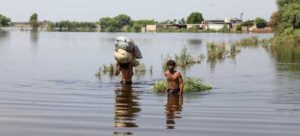
A flooded village in Matiari, in the Sindh province of Pakistan. Credit: UNICEF/Asad Zaidi
NAIROBI, Nov 7 2024 (IPS) – The United Nations Environment Programme’s (UNEP) 2024 Adaptation Gap Report has warned that adaptation actions are not keeping pace with the surging demands of a warming planet. Released ahead of the COP29 climate conference in Baku, Azerbaijan, the report—titled Come Hell and High Water—projected a bleak future where vulnerable communities bear the brunt of climate-induced hardships.
It stresses that robust, well-funded adaptation strategies are vital to safeguarding those most at risk and calls for immediate, substantial global action in adaptation planning, finance, and implementation. With the surging demands of a warming planet. Released ahead of the COP 29 climate conference in Baku, Azerbaijan, the report—titled Come Hell and High Water—projects a bleak future where vulnerable communities bear the brunt of climate-induced hardships.
It stresses that robust, well-funded adaptation strategies are vital to safeguarding those most at risk and calls for immediate, substantial global action in adaptation planning, finance, and implementation.
Wildfires, floods, and rising temperatures continue to inflict devastating impacts on people worldwide, especially the poor. UNEP Executive Director Inger Andersen has underlined the urgency of scaling up adaptation efforts: “The world is failing to adapt to current climate impacts, let alone those that will come if we do not cut greenhouse gas emissions decisively.
“It is time to treat adaptation as one of humanity’s top priorities, alongside emissions reduction. Those already facing the consequences deserve effective, fair adaptation actions that address their unique needs.”
Furthermore, the report stresses that the scale of climate impacts is moving faster than the world’s response.
“Adaptation is no longer a distant option; it is now a priority,” says UNEP’s Chief Scientific Editor Henry Neufeldt, summarizing the report’s call for urgent action. The report arrives at a time when nations are expected to boost their financial commitments for adaptation as part of the Glasgow Climate Pact.
This Pact urges developed countries to double adaptation finance to developing nations by 2025, a goal that aligns with the need for a New Collective Quantified Goal (NCQG) on climate finance, slated for negotiation at COP29.
Also, UNEP notes that adaptation finance reached only USD 28 billion in 2022, up from USD 22 billion the previous year. While this is a notable increase, it remains far below what is needed to address the vast scale of climate change impacts. According to UNEP, estimated global adaptation needs range between USD 215 billion and USD 387 billion per year through 2030, leaving a significant financing shortfall. Even doubling current financing flows would close only a small fraction of the adaptation finance gap.
“We can’t rely on one source alone. The financial burden is too great,” says Neufeldt. “We must pursue creative financing models and mobilize both public and private sectors to ensure resources reach those who need them most.”
According to the report, 87 percent of the world’s countries have at least one adaptation plan in place, though the quality and coverage vary significantly.
Out of the 197 UN member countries, 171 have established at least one national adaptation instrument, yet 10 nations—most grappling with internal conflict or political instability—are yet to initiate formal adaptation planning. Furthermore, many adaptation plans lack specific timeframes and budgets, undermining their effectiveness.
Anne Hammill from the International Institute for Sustainable Development, who co-authored a chapter on adaptation planning, writes in the report, “There’s a noticeable increase in awareness and preparation for adaptation planning globally. However, for some nations, fragility and limited capacity present obstacles to formulating and executing these plans.”
Moreover, UNEP finds that only 68 percent of countries with national adaptation plans align these strategies with their Nationally Determined Contributions (NDCs), the climate pledges under the Paris Agreement. This disconnect, as per the report, has resulted in overlapping efforts and inefficient resource use.
“When countries update their NDCs, they must ensure these are harmonized with adaptation plans,” Hammill notes. “This alignment is essential to avoid duplicated efforts and to streamline investments where they matter most.”
The uneven quality of adaptation plans means that even those countries with established strategies may struggle with execution. In many cases, adaptation projects—particularly those with international funding—don’t have long-lasting effects. For example, almost half of the projects evaluated were rated either unsatisfactory or unsustainable without continued external funding.
“Adaptation actions need long-term funding and local support to be effective. Temporary measures, while beneficial in the short run, often fail to address underlying vulnerabilities in the long term,” reads the report.
Slow Implementation Leaves Vulnerable Communities Exposed The report reveals that implementation of adaptation measures lags significantly behind planning efforts, leaving at-risk communities dangerously exposed to climate impacts. An analysis of data shows that adaptation implementation has not kept pace with the accelerating rate of climate change. Floods, wildfires, and extreme weather events increasingly affect millions, yet financial and institutional barriers stymie progress in implementing effective adaptation measures.
The report elaborates, “The data on adaptation implementation is concerning. Many countries start strong with initial adaptation projects, but sustaining them has proven challenging. This gap between planning and action often leads to severe consequences for vulnerable communities.”
In addition to the need for more robust financing mechanisms, UNEP underlines the importance of inclusive adaptation measures that integrate the voices of marginalized communities. Many of the most impacted groups, including women, indigenous peoples, and economically disadvantaged populations, are frequently excluded from the planning process.
“Adaptation must be inclusive and equitable,” Hammill says. “Vulnerable groups often face the worst climate impacts, yet their voices remain underrepresented in the adaptation process.”
The Adaptation Finance Gap: A Call for New Approaches A central focus of the report is the persistent adaptation finance gap. Although public adaptation finance flows to developing countries saw a record year-on-year increase, UNEP stresses that even substantial gains fall far short of what is required. “Current financing levels are simply inadequate. Doubling the finance might reduce the gap by about 5%, but we need much more ambitious targets to meet the needs.”
To bridge the finance gap, the report advocates a shift from reactive, project-based funding to a more proactive, transformative approach. This requires financing for anticipatory and systemic adaptation actions, such as building climate-resilient infrastructure and enhancing social protection. According to UNEP, innovative financing instruments, such as resilience bonds, risk insurance, and payments for ecosystem services, could mobilize new sources of adaptation funding.
The report points out that the private sector has a key role to play. “While public funds are essential, we need private investments to scale up adaptation,” it explains, adding that in sectors such as agriculture, water, and infrastructure, private finance can be instrumental if de-risking measures are implemented. However, private finance is often inaccessible to the most vulnerable; there is a need for public-private partnerships and targeted government support.
Capacity-Building and Technology Transfer for Effective Adaptation Beyond finance, UNEP’s report also calls for stronger investments in capacity-building and technology transfer. These efforts are vital to empowering developing nations to manage climate impacts effectively. According to the report, developing countries require additional support for building local adaptation capacity in sectors like agriculture, water management, and public health.
The report also highlights the importance of a multifaceted approach. “Capacity-building must go beyond technical solutions. It requires investing in human resources, policy frameworks, and long-term community engagement. While we see capacity needs highlighted in many national plans, a strategic, coordinated approach is still missing.”
The report indicates that sectors such as food and agriculture receive the most technology-related development finance, yet other crucial areas like coastal protection and disaster preparedness need more support. For example, developing countries face obstacles in adopting technologies like solar-powered irrigation due to high installation and maintenance costs, making widespread use challenging. It suggests that bridging this technology gap will require both public investment and private sector involvement.
Path Forward at COP 29 and Beyond As COP 29 approaches, the 2024 Adaptation Gap Report has pinned the need for decisive action in Baku to secure global adaptation commitments. At the heart of these discussions is the establishment of a New Collective Quantified Goal (NCQG) on climate finance, a successor to the USD 100 billion annual goal set in 2010. This new target, UNEP argues, must prioritize adaptation and recognize the unique challenges faced by developing nations.
Andersen, who will lead UNEP’s delegation to COP 29, expresses hope that the international community will rally around adaptation as a central theme.
In addition to setting an ambitious finance goal, COP 29 will discuss mechanisms for better tracking adaptation actions, establishing loss and damage funding, and addressing the debt burdens that restrict developing nations from prioritizing adaptation investments. UNEP advocates for debt relief and restructuring as a way to free up funds for climate adaptation, particularly in nations where high debt costs eclipse adaptation funding.
Submerged structure in Tubigon, Philippines. Credit: Greenpeace
In the Philippines, a group of islands is rapidly sinking due to an unprecedented rise in sea levels. This blog dives into how these coastal communities are utilizing marine resources and ecosystems to find solutions and build resilience against climate risks.
KUALA LUMPUR, Malaysia, Nov 6 2024 (IPS) – Imagine living with water up to your knees for half of the year, where homes are flooded, and people constantly fear that the sea might one day engulf the town and everyone in it.
This is the reality for the sinking islands in the Philippines—a cluster of four island barangays in Tubigon located in the south-central region of Bohol. Here, the sea level is rising at an alarming rate of 10.8 millimeters per year, three times faster than the global average. If this continues, these islands could disappear by 2100.
Tubigon sank by one meter after being hit by a 7.2 magnitude earthquake over a decade ago. While still recovering, the islands were devastated by a super typhoon in 2021, unleashing four-meter-high tidal waves that destroyed over 1.7 million homes and displaced more than 3 million people. This year, the islands were declared inhabitable by the government.
Existential Climate Threats to Coastal Communities
Coastal communities like the Philippines are severely threatened by accelerating sea level rise compounded by extreme weather events. Similar to small island developing states, also known as SIDS, low-lying coastal areas are the most vulnerable to climate change.
Their geographic location leaves them highly-exposed to natural disasters and hazards like cyclones and tidal flooding. These vulnerabilities exacerbate coastal communities’ unique development challenges.
The Intergovernmental Panel on Climate Change (IPCC) reports that with the current 1.5 degree temperature increase, global sea levels will continue to rise and low-lying coastal regions are to experience extreme sea events such as storm surges and massive tides annually by 2050.
SIDS, including Tuvalu and the Maldives, along with the sinking islands of Tubigon, are proof of the existential threats of climate change. These communities are at risk of vanishing unless urgent action is taken.
Bouncing Back from Climate Risks
While island communities are under threat, they are not powerless. Many of them have shown commitment to addressing climate-related risks in their national climate action plans. Their goal is to build climate resilience.
The term “resilience” is often mentioned in climate change discussions, but what does it really mean? It comes from the Latin verb resilire, meaning “to bounce back.” Resilience refers to the ability to recover from risks, which, in the context of climate change, is determined by the degree of vulnerability and exposure to climate-related threats.
For coastal communities and low-lying islands, rising sea levels pose a significant risk, so they must build resilience to endure and recover from climate-related hazards and disasters.
Turning to Blue Carbon Ecosystems for Solutions
Many SIDS set a good example in piloting measures to build resilience and adapt to the impacts of climate change. Similarly, the residents of Tubigon, many of whom are fisherfolks, have learned to adapt to the rising tides.
The local community has developed resilience strategies and initiatives to help them sustain their lives on the islands. One promising solution involves utilizing the sea and its resources, part of what is called the blue carbon ecosystem.
Blue carbon ecosystem is a collective term for natural marine resources such as mangroves, seagrasses, and marshes known for their ability to capture and store carbon dioxide from the atmosphere. Research shows that these coastal resources can transfer and store carbon ten times more effective than tropical forests.
These ecosystems also support fishery production, protect shorelines and reduce flooding, and provide habitats for wildlife and migratory species. Studies indicate that conserving blue carbon ecosystems is a timely and cost-effective strategy to help coastal communities adapt to climate change.
Harnessing Coastal Resources for Climate Change Adaptation
Tubigon and the Bohol region have long implemented measures to protect their blue carbon ecosystems, helping residents adapt to climate-related risks. Their strategy is two-fold: eliminating destructive fishing practices and conserving coastal resources particularly mangroves.
The local community has designated bantay dagat (which translates literally to sea protectors) to patrol its marine area spanning 156 hectares of coral reefs and 335 hectares of mangroves. These protectors report illegal fishing activities and safeguard the mangrove forests.
Over time, many locals have transitioned from destructive fishing methods, such as dynamite and cyanide use, to more sustainable aquaculture and alternative livelihoods, including crab and squid jigging, grouper farming, and ecotourism.
Moreover, particular focus is given to mangrove conservation. The vast mangrove area in Tubigon is considered a valuable blue ecosystem resource playing an important role in sequestering carbon. Experts estimate that a 4-decade mangrove plantation can store over 370 tons of carbon per hectare.
Additionally, mangroves act as natural seawalls, reducing wave energy and shielding residents from rising sea levels and tidal flooding. By investing in the preservation of blue carbon ecosystems, coastal communities like Tubigon tap into an essential resource that supports their livelihoods and enhances their resilience to the effects of climate change.
Turning the Tide
The islands of Tubigon stay afloat amidst the intensifying battle against climate threats. Most recently, the Philippines joined an alliance to build the resilience of coastal communities. It was also selected as the host of a fund dedicated to supporting countries to respond to loss and damage, enabling them to recover and rebuild from the adverse effects of the climate crisis.
Allowing islands to sink and entire communities to disappear is unimaginable, especially when we have the resources and tools to address the planet’s most significant crisis. Time is running out, but there is still hope to turn the tide.
This article is originally published in Global Dev as part of its Climate Resilience series.
Anne Cortez is a communications and knowledge management consultant with over a decade of experience working with governments, academic institutions, and international organizations including the UN, ADB, and The Asia Foundation. She has spearheaded and managed development programs and capacity building initiatives promoting climate action, digital inclusion, and health equity across Asia and the Pacific. Previously, she led the knowledge and communications team at the UN think tank for global health based in Malaysia, and the social mobilization division at the Department of Education in the Philippines. Anne has a master’s degree in international studies and an undergraduate degree in communications. Learn more about her work here.